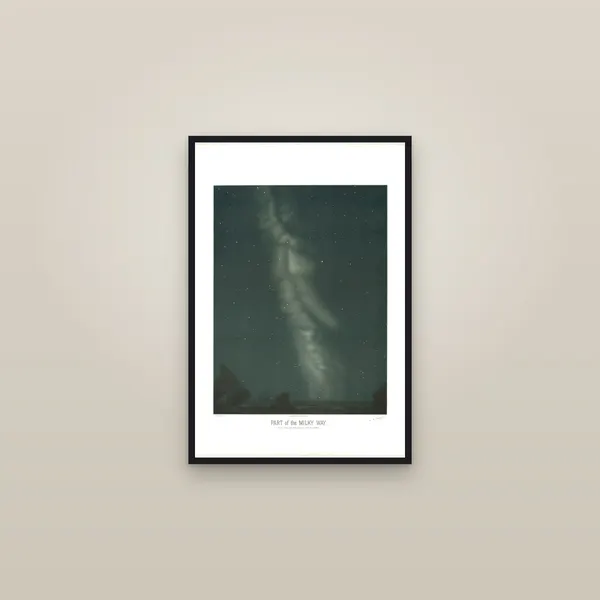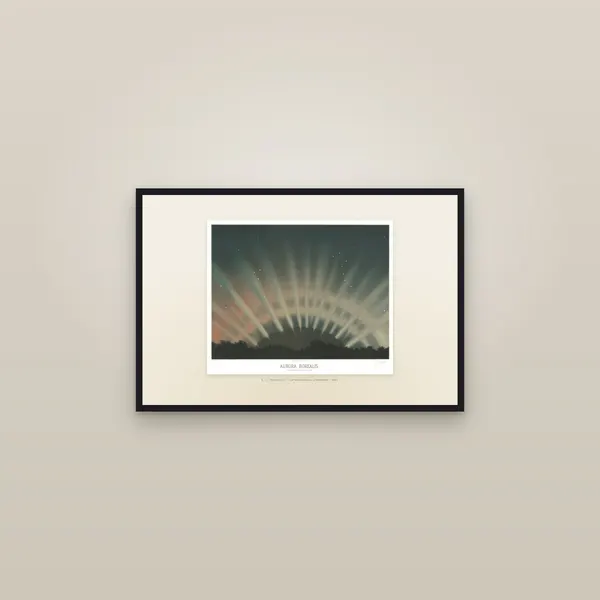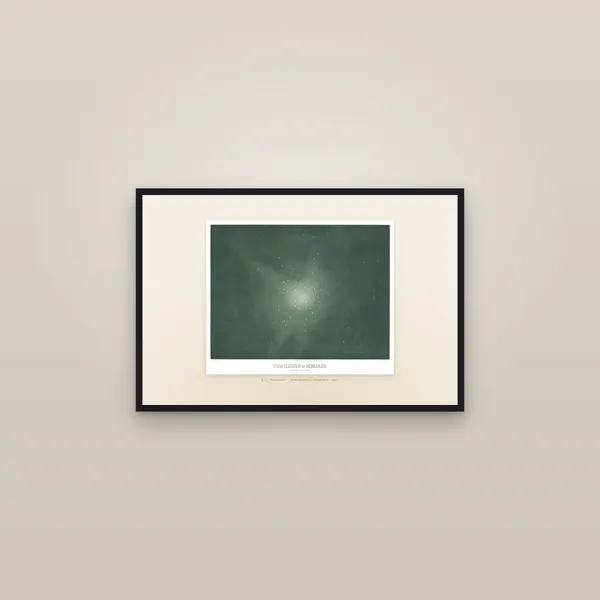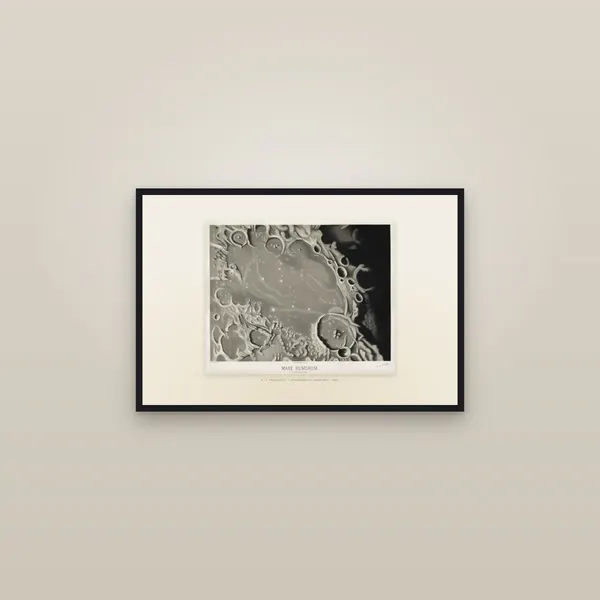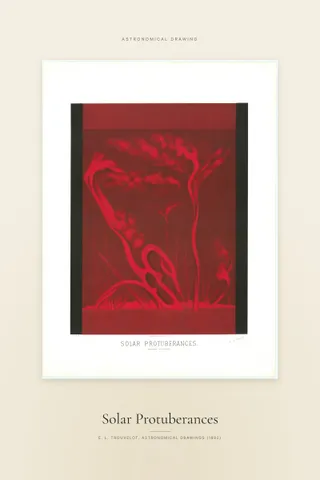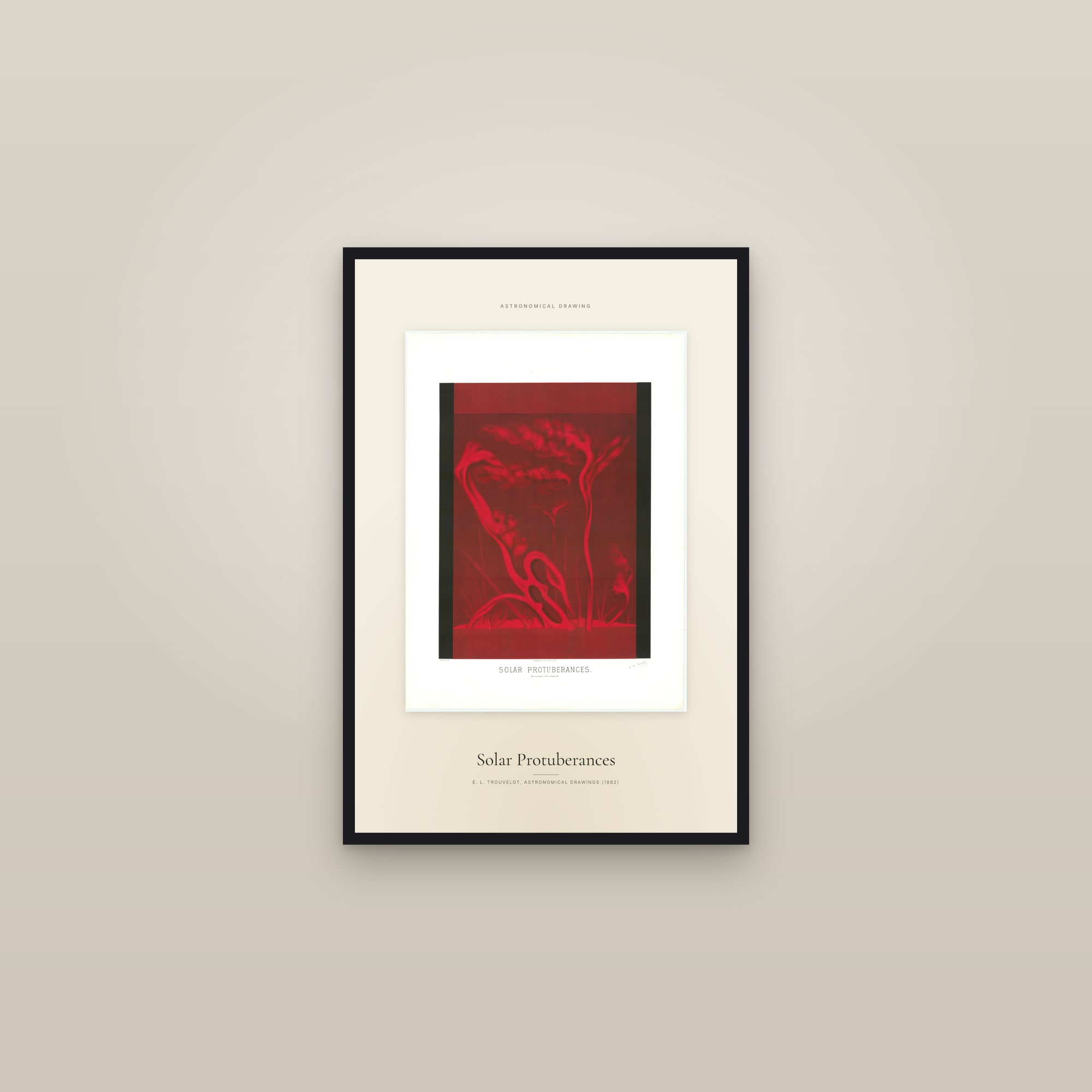
Solar Protuberances
Solar Protuberances — É. L. Trouvelot, Astronomical Drawings (1882).
The whole plate on a cream ground with a museum-style label.
Museum-quality archival paper: heavyweight, acid-free, resists yellowing
- Printed to order, arrives in 4–9 business days
- Ships to the US, Canada, the UK, Ireland, 16 countries in Europe, Australia, New Zealand, Japan and Singapore
- Arrives perfect or we reprint it, free
- Secure checkout with Stripe
- Questions? hello@madten.com
Where it works
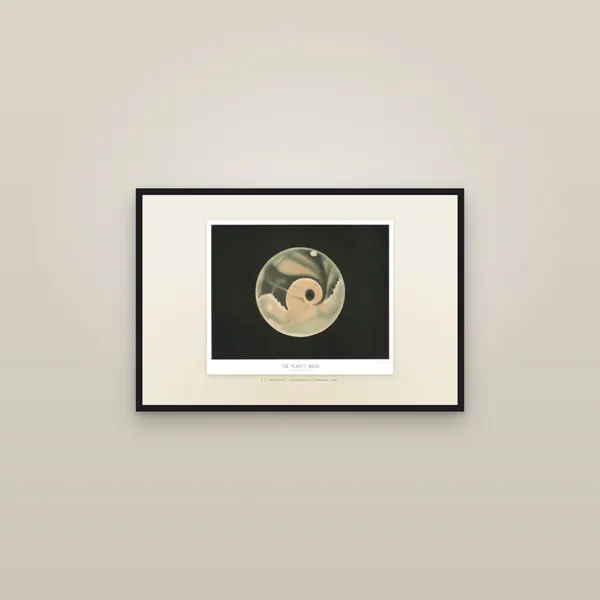
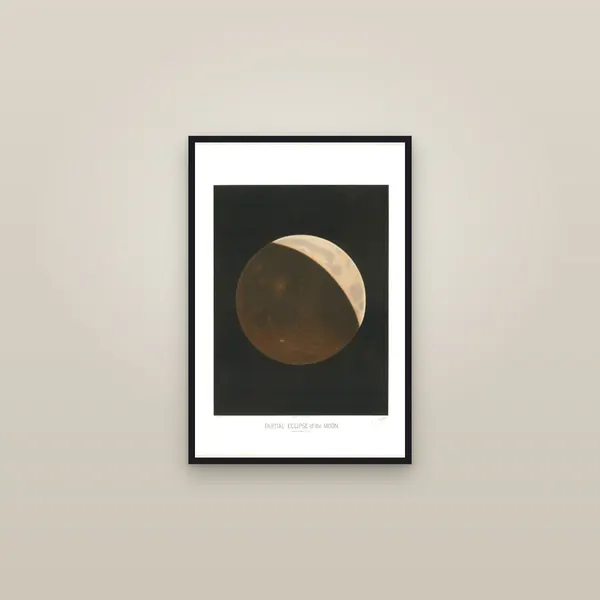
Trouvelot's solar protuberances, looping crimson flames rising from a red horizon on a deep red field between two black bands, with a printed caption below. The most intense color in the celestial set, it suits a dining room or bar wall on charcoal or burgundy at 24×36 in black, no mat.
Size, framing & materials
- Style
- Antique natural-history plate
- Era
- 19th century
- Orientation
- Portrait
- Palette
- red, burgundy, black
- Mood
- dramatic, bold
- Rooms
- dining room, home bar, bedroom, hallway or entryway
- Good gift for
- housewarming, anniversary
Size. We'd hang this one at 24×36. Prints at 12×18, 16×24, 24×36 in — 12×18 for a shelf, desk or a gallery-wall grid; 16×24 above a desk, console or in a hallway; 24×36 as the statement piece above a sofa or bed. See it to scale on your wall →
Framing. The label ground is its own mat: a slim black or dark wood frame, no extra mat.
Pairing. Hangs alone or as a matched pair; three or more prints are 10% off.
- Restored in-house from the original public-domain plate, cleaned and colour-trued at museum resolution
- Museum-quality archival paper: heavyweight, acid-free, resists yellowing
- Framed option: wood frame in black or dark wood, 12 mm wide and 22 mm deep, with a plexiglass front and no mat; the print is mounted inside and the frame's outside measures the listed size
- Made to order; colours may vary slightly from screen
Shipping & returns
Which versions are there?
About this plate: all 15 of Trouvelot’s Astronomical Drawings, with the date of each observation
In the Journal: Trouvelot, the astronomer who let loose the spongy moth