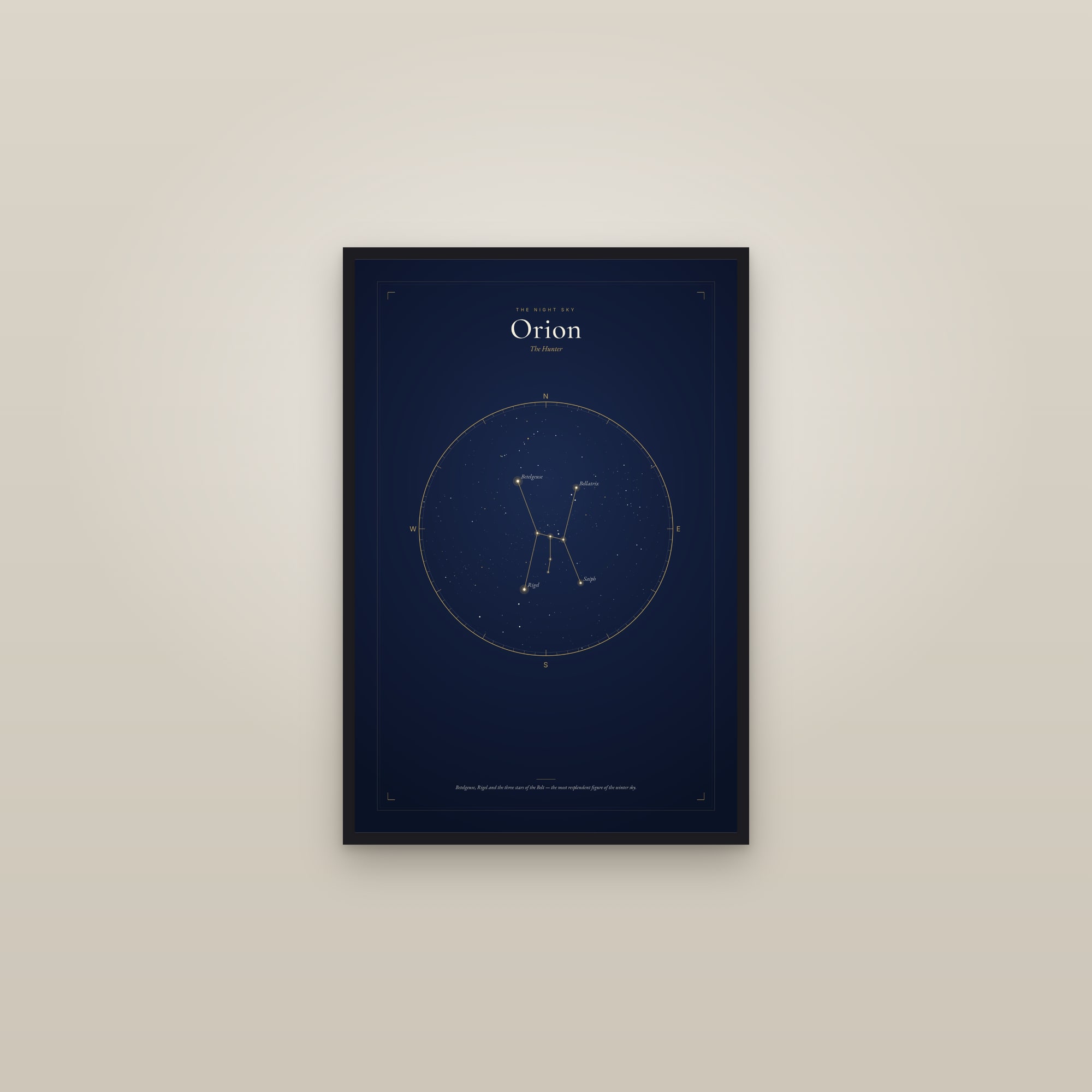
Jean-François Millet Prints
1814–1875 · French · Realism / Barbizon school
Wall art by Jean-François Millet, restored in-house and printed to order on heavyweight matte fine-art paper.
5 prints · printed to order on heavyweight matte paper · framed or unframed

About Jean-François Millet
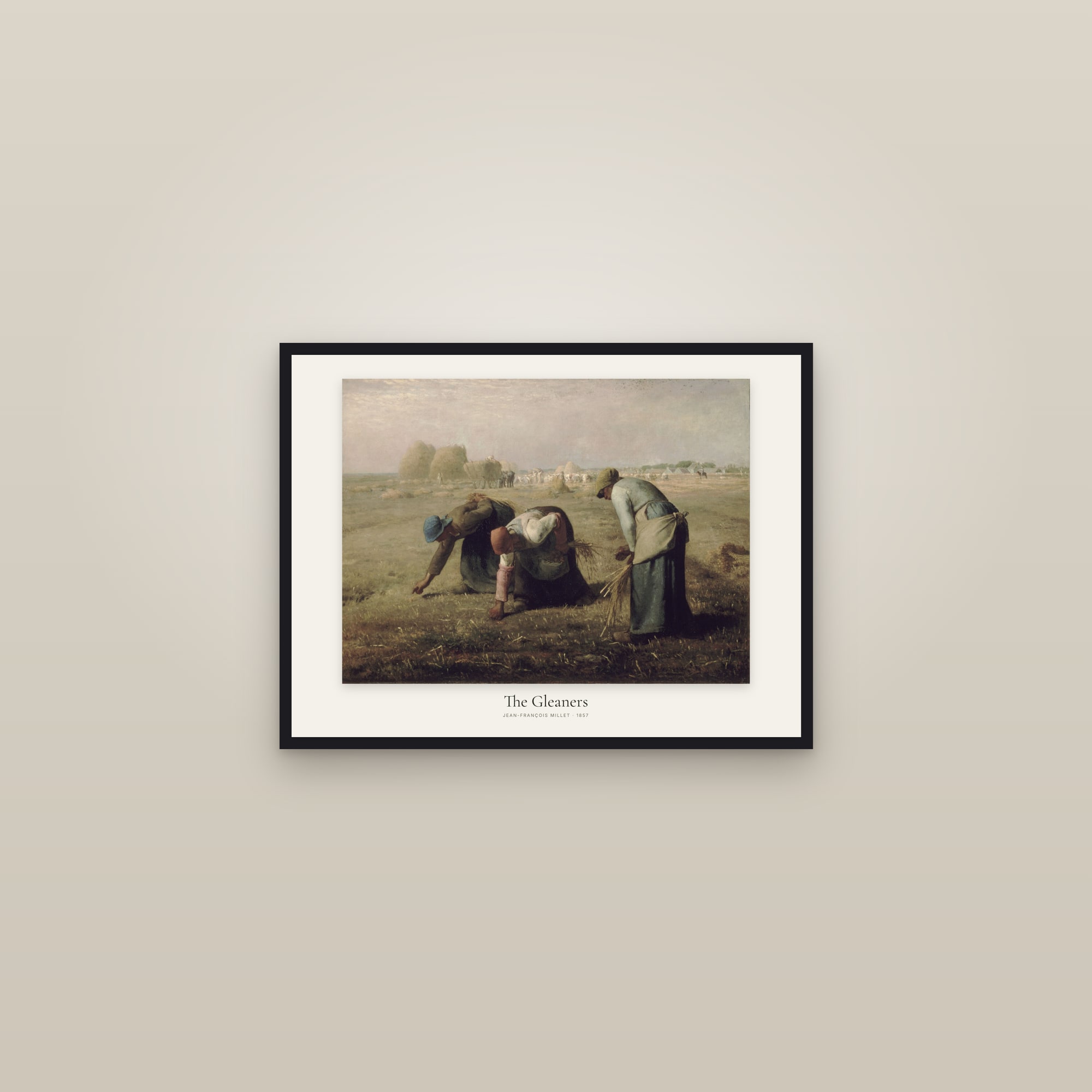
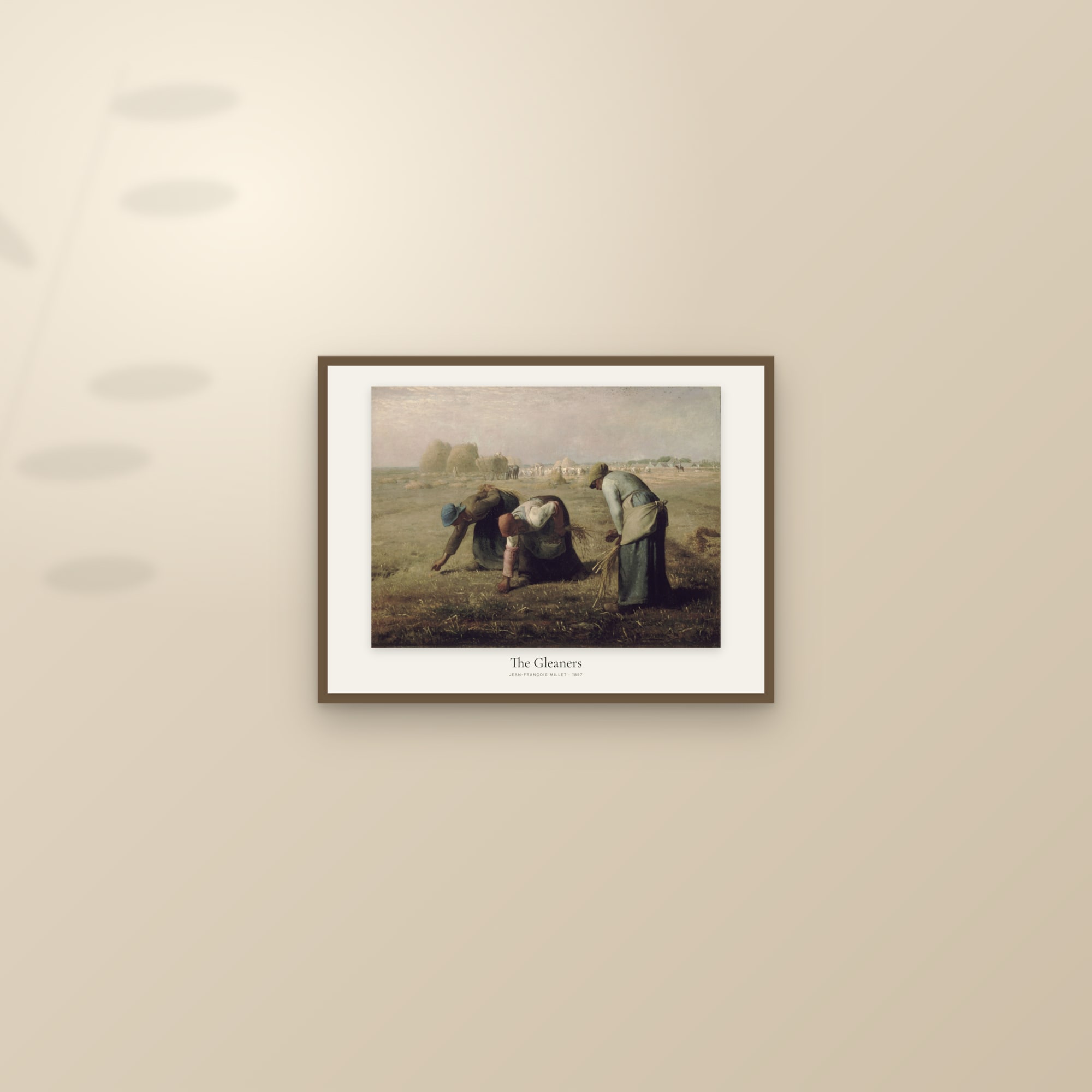
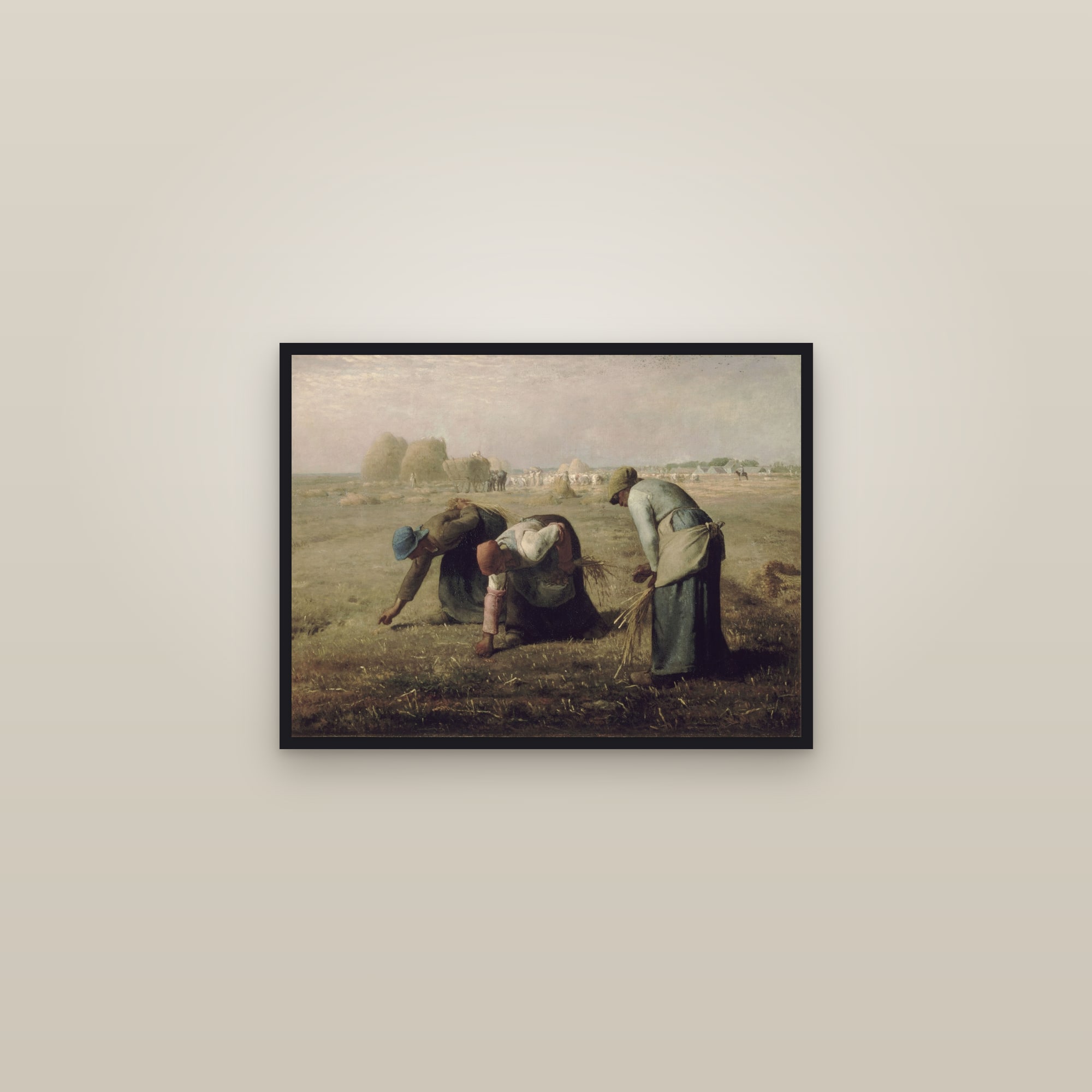
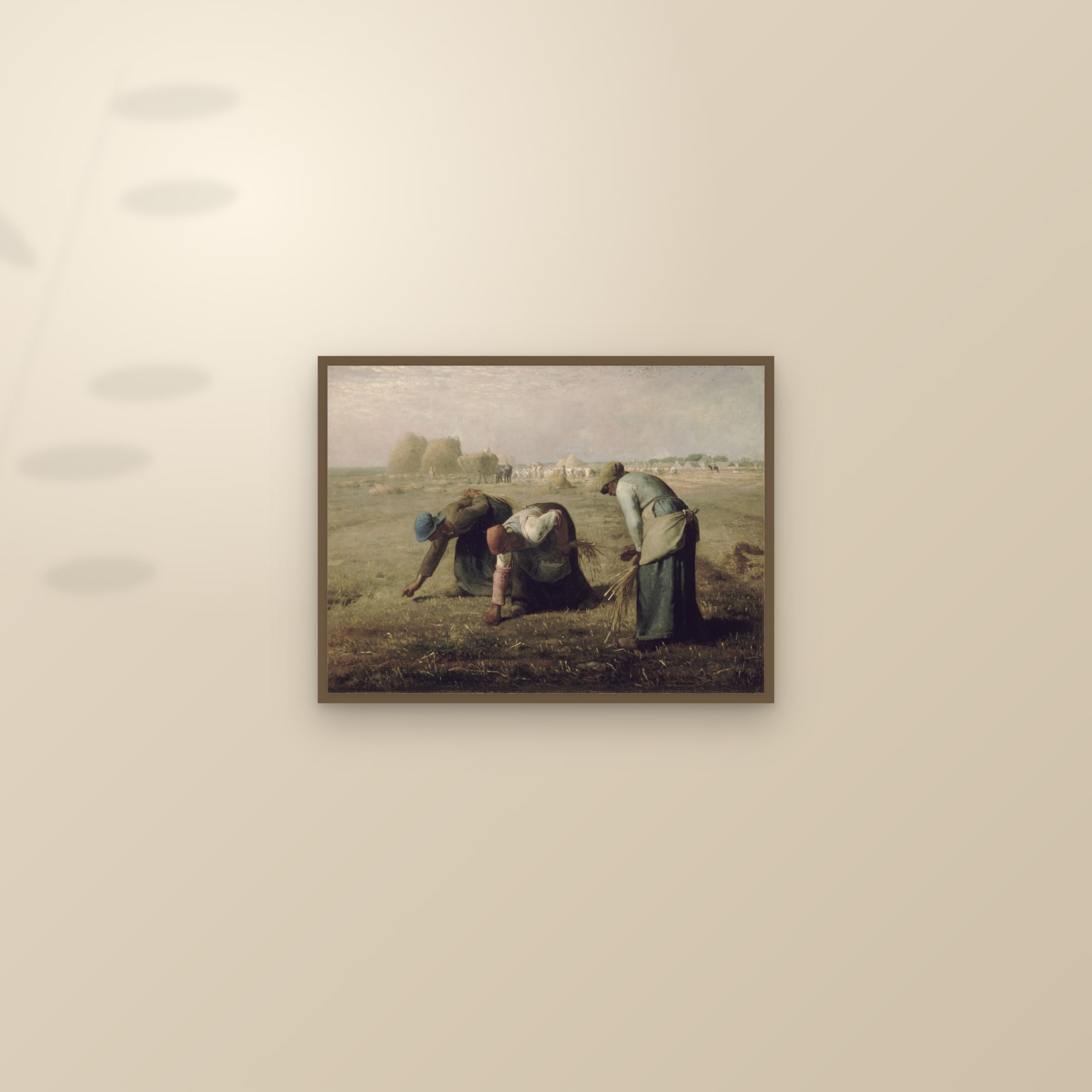
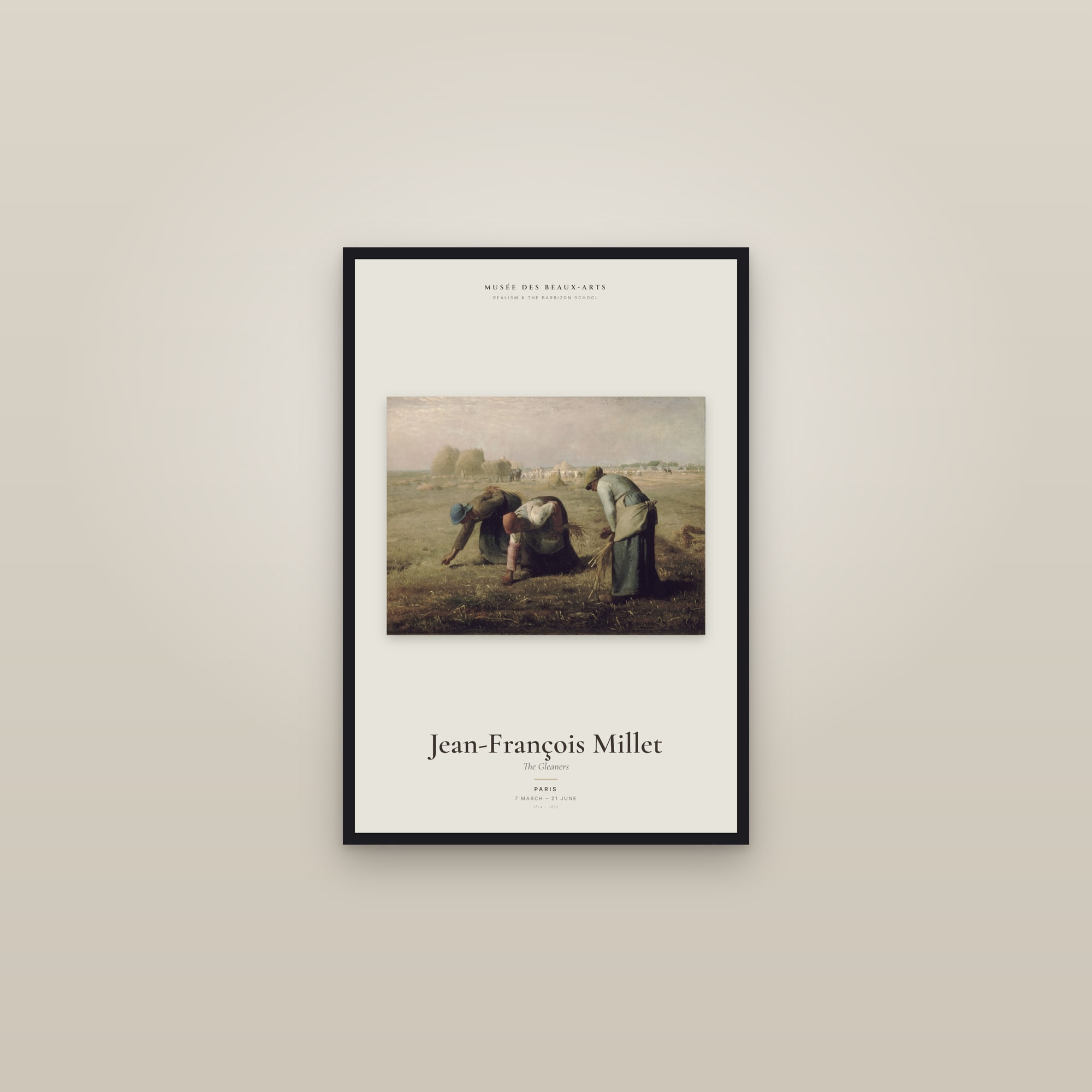
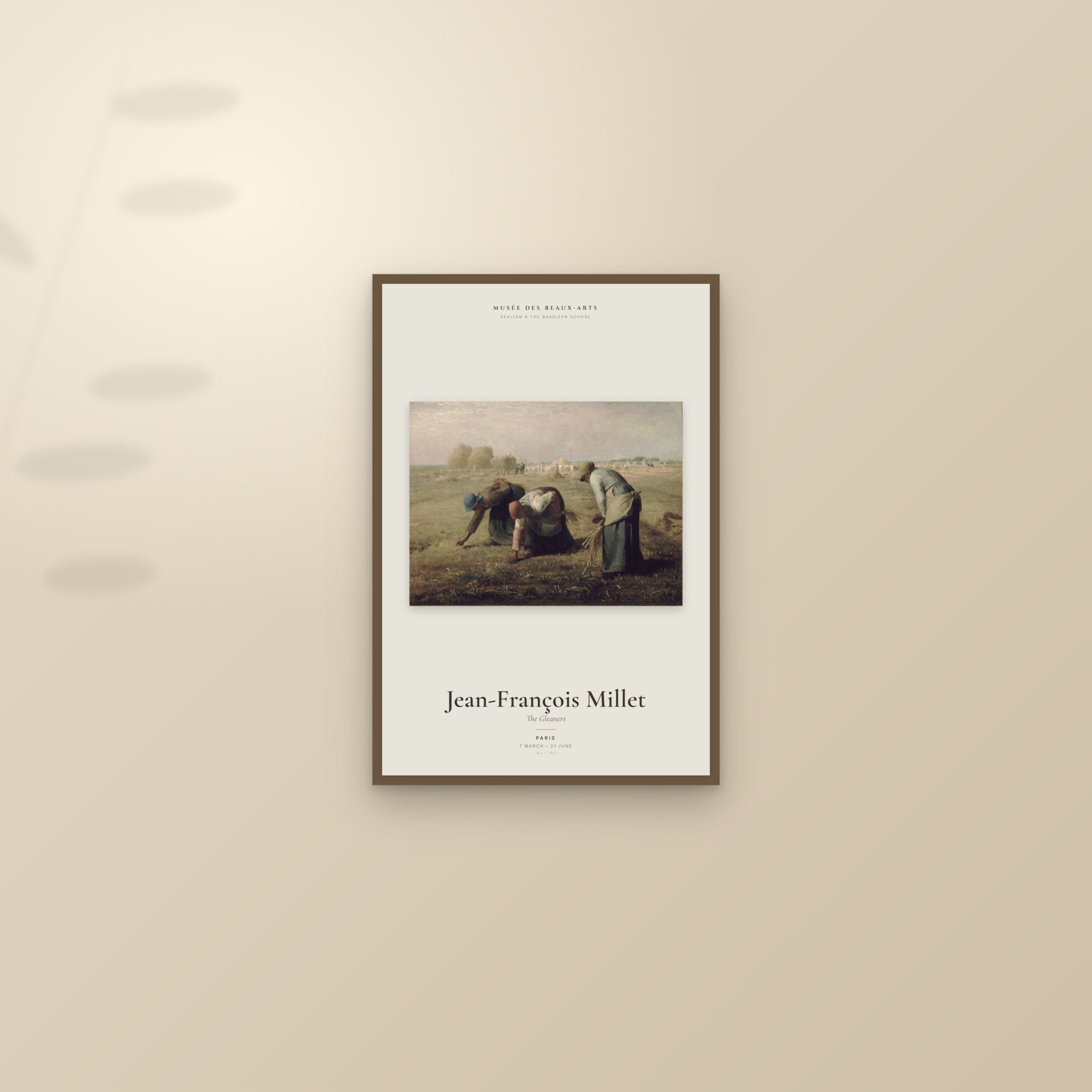
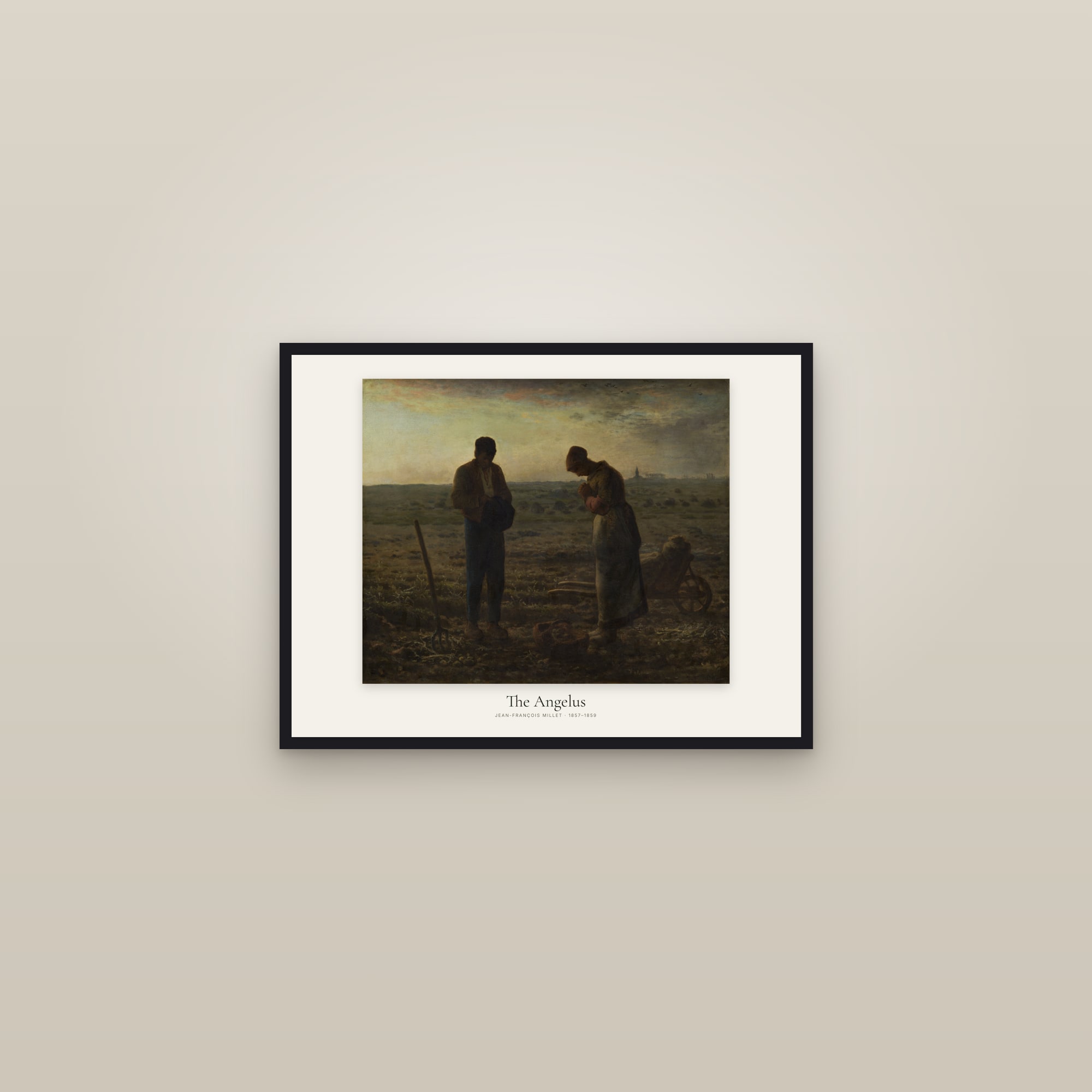
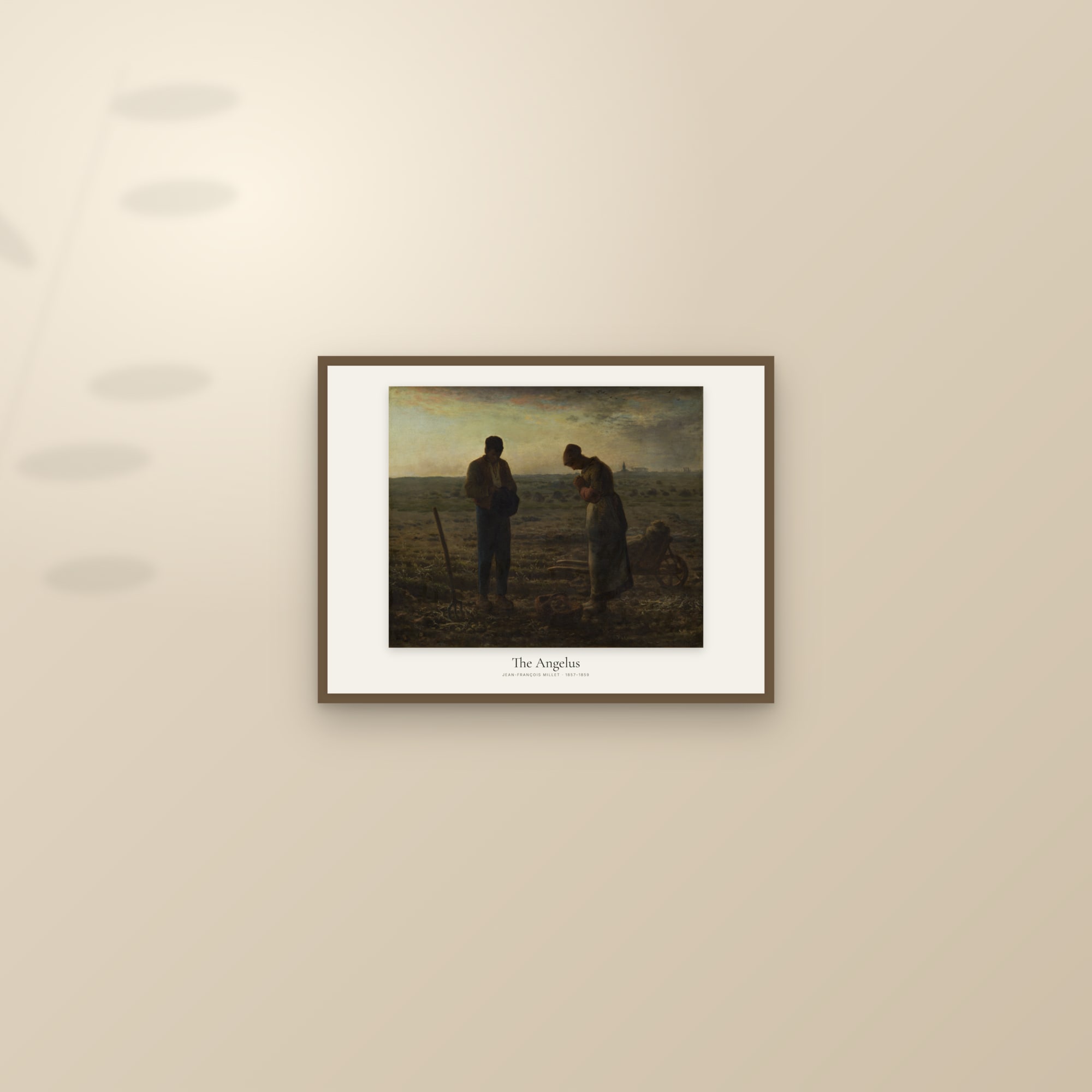
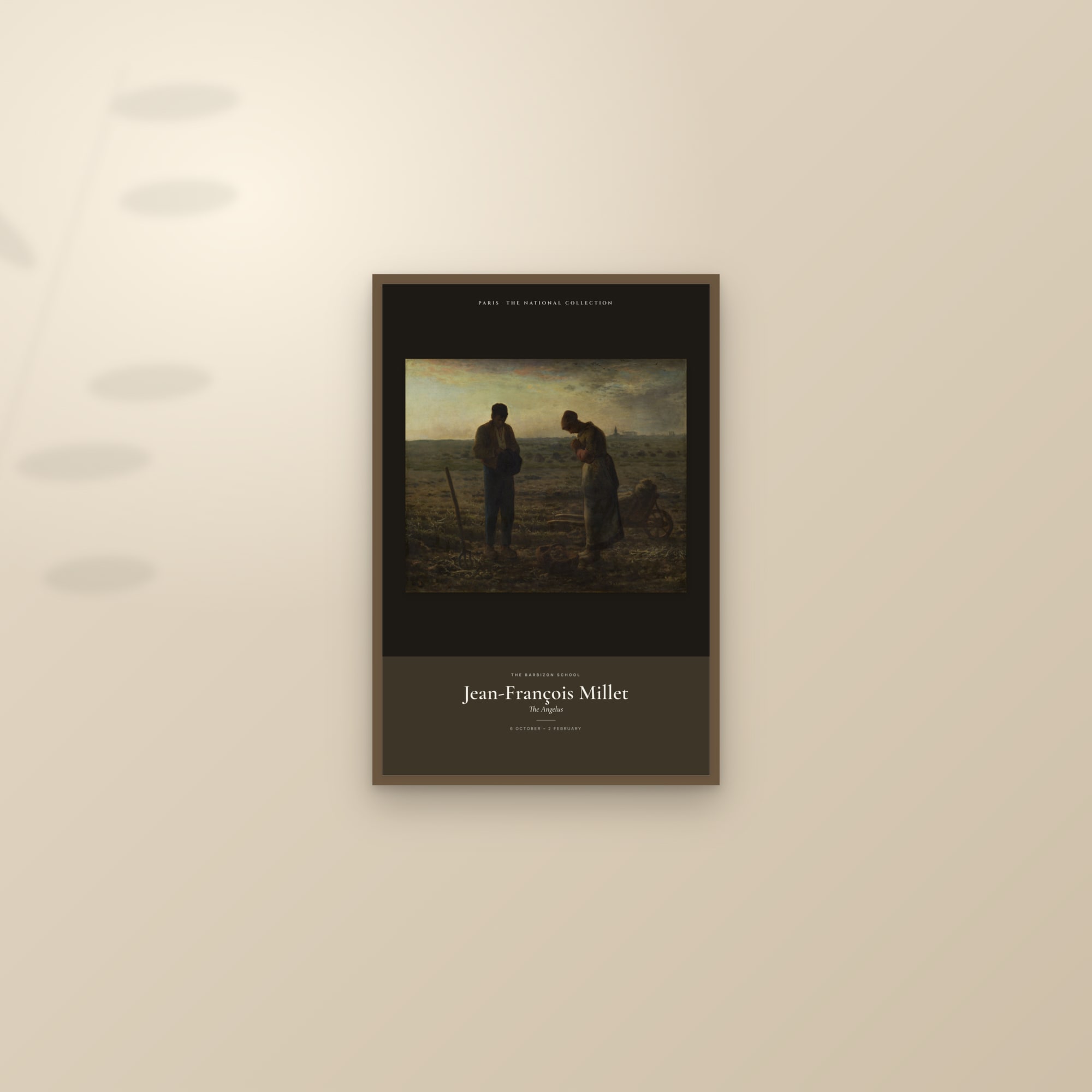
Jean-François Millet was born in October 1814 at Gruchy, a hamlet on the Normandy coast, into a farming family, and that upbringing supplied the subject of his mature work. He studied in Cherbourg and from 1837 in Paris under Paul Delaroche, painting portraits and pastorals for a living until, in June 1849, he moved with his family to Barbizon on the edge of the Forest of Fontainebleau, where he lived until his death in January 1875. There, with Théodore Rousseau and others, he became a founder of the Barbizon school. The Sower, shown at the Salon of 1850, The Gleaners of 1857 and The Angelus of 1857 to 1859 gave peasant labour the scale and gravity that academic painting reserved for history; the last two are in the Musée d'Orsay. Critics at the time read the pictures as political, but Millet's interest was in the bent back, the heavy sack, the pause at dusk. Vincent van Gogh copied him repeatedly and called him the painter he most wanted to follow. On a wall these images have a quiet, monumental calm: a few figures, a flat field, a low light, and nothing moving fast.