William Morris Prints & Patterns
1834–1896 · English · Arts and Crafts
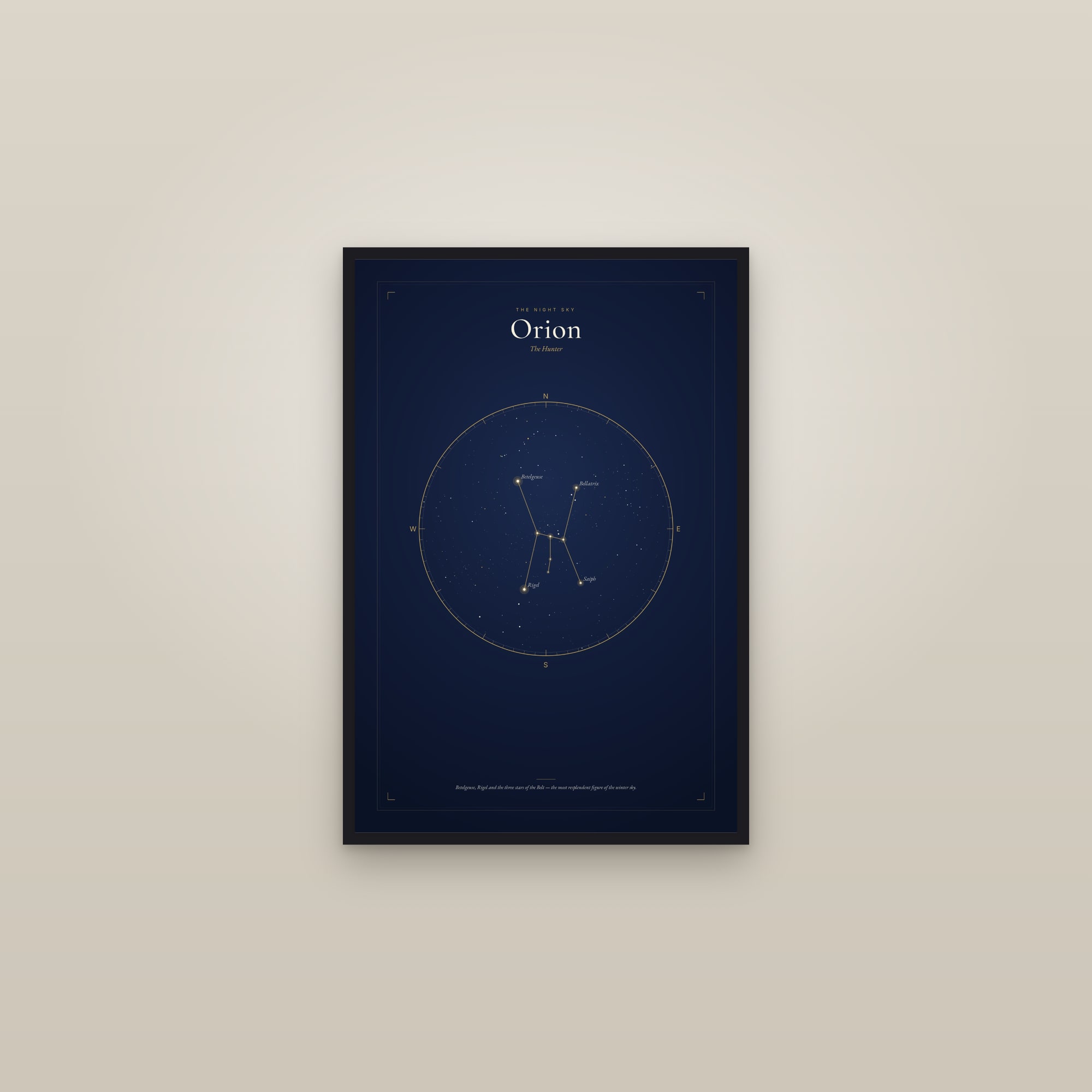
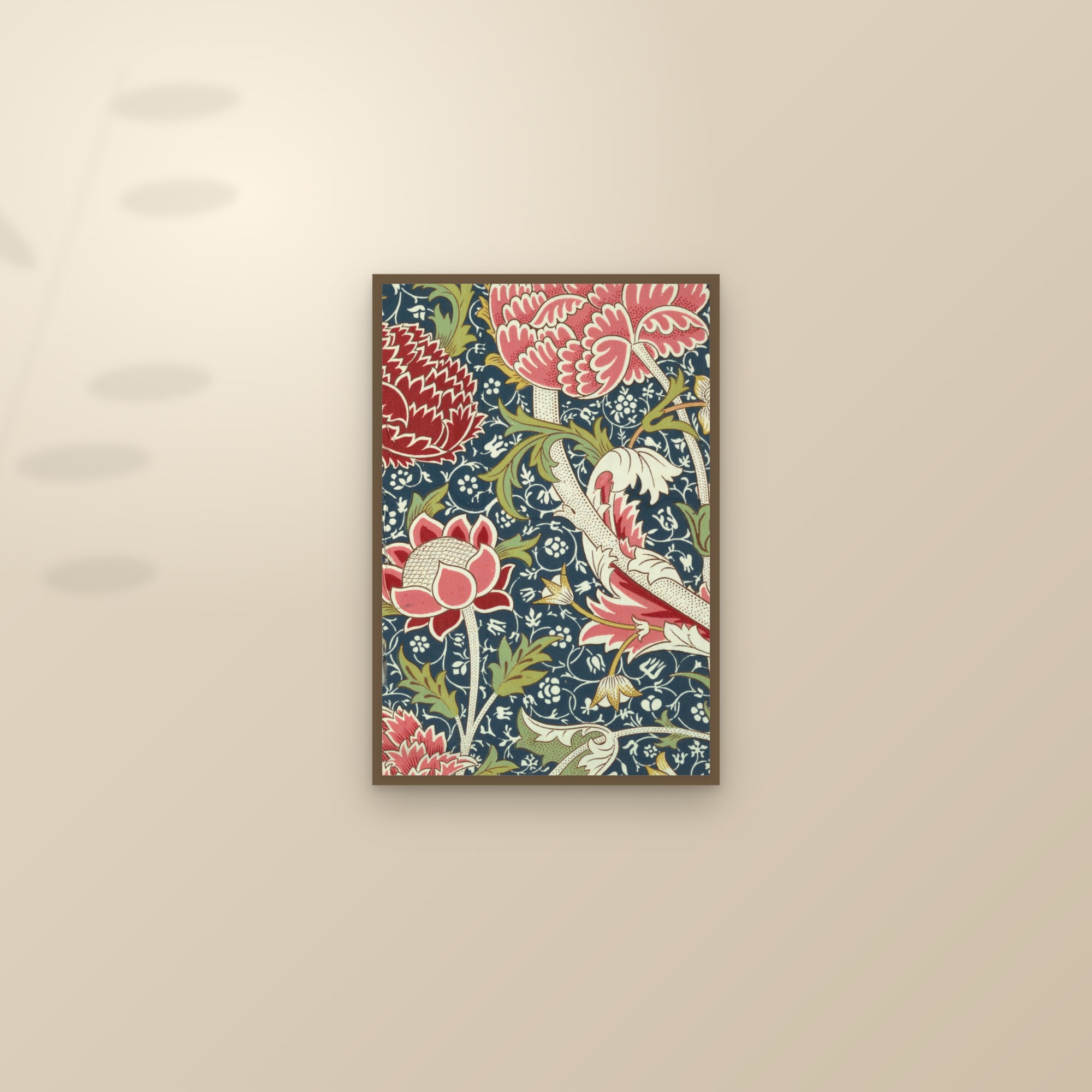
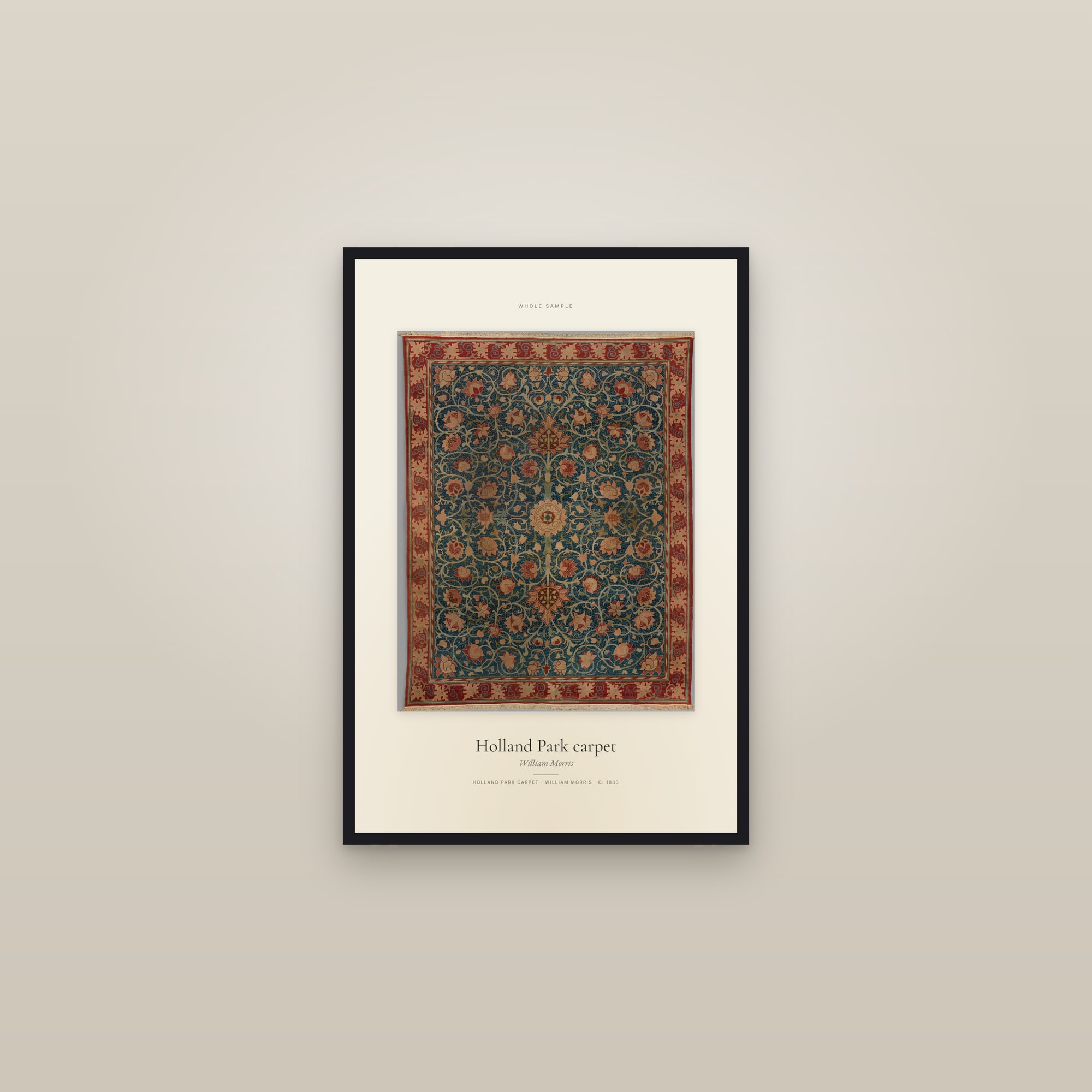
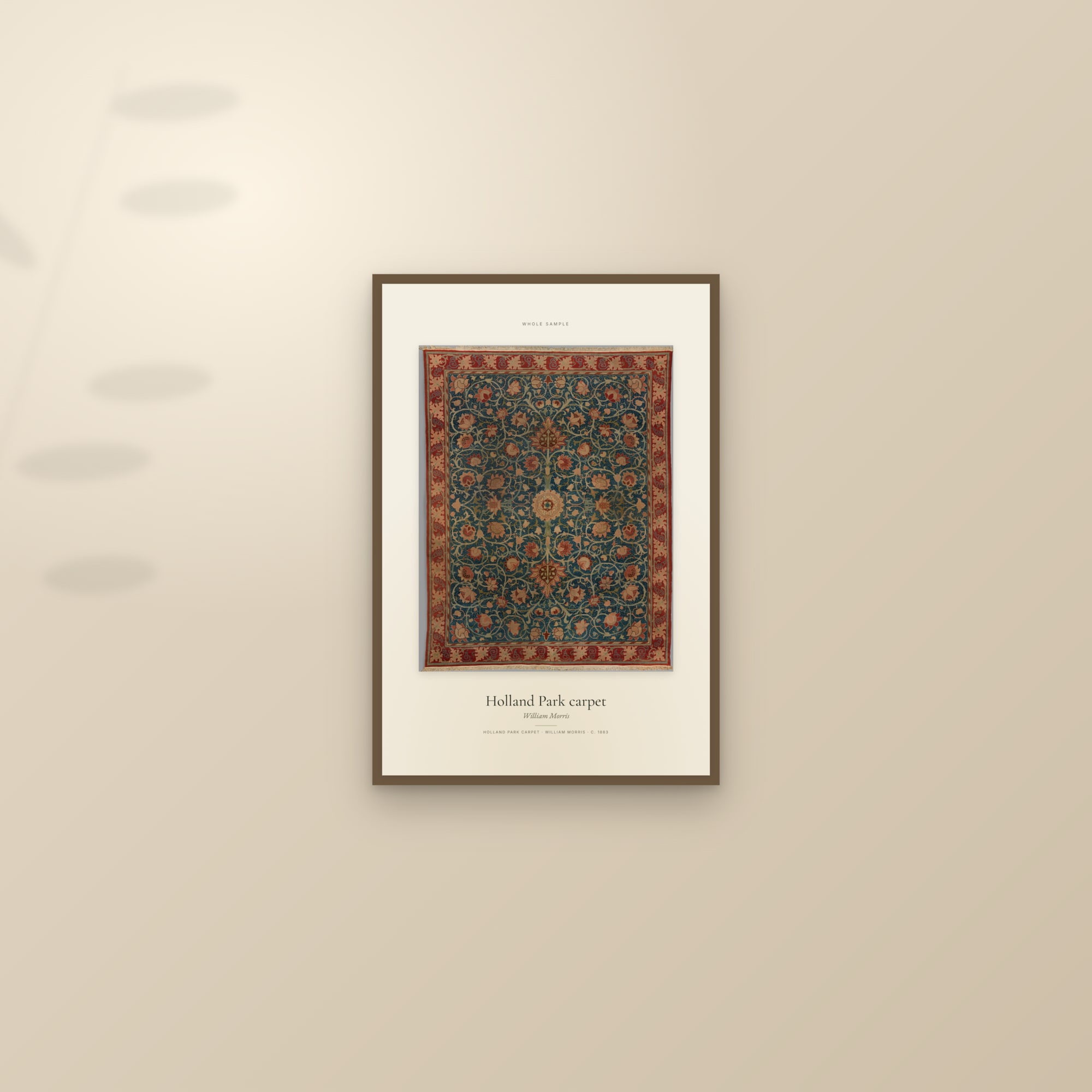
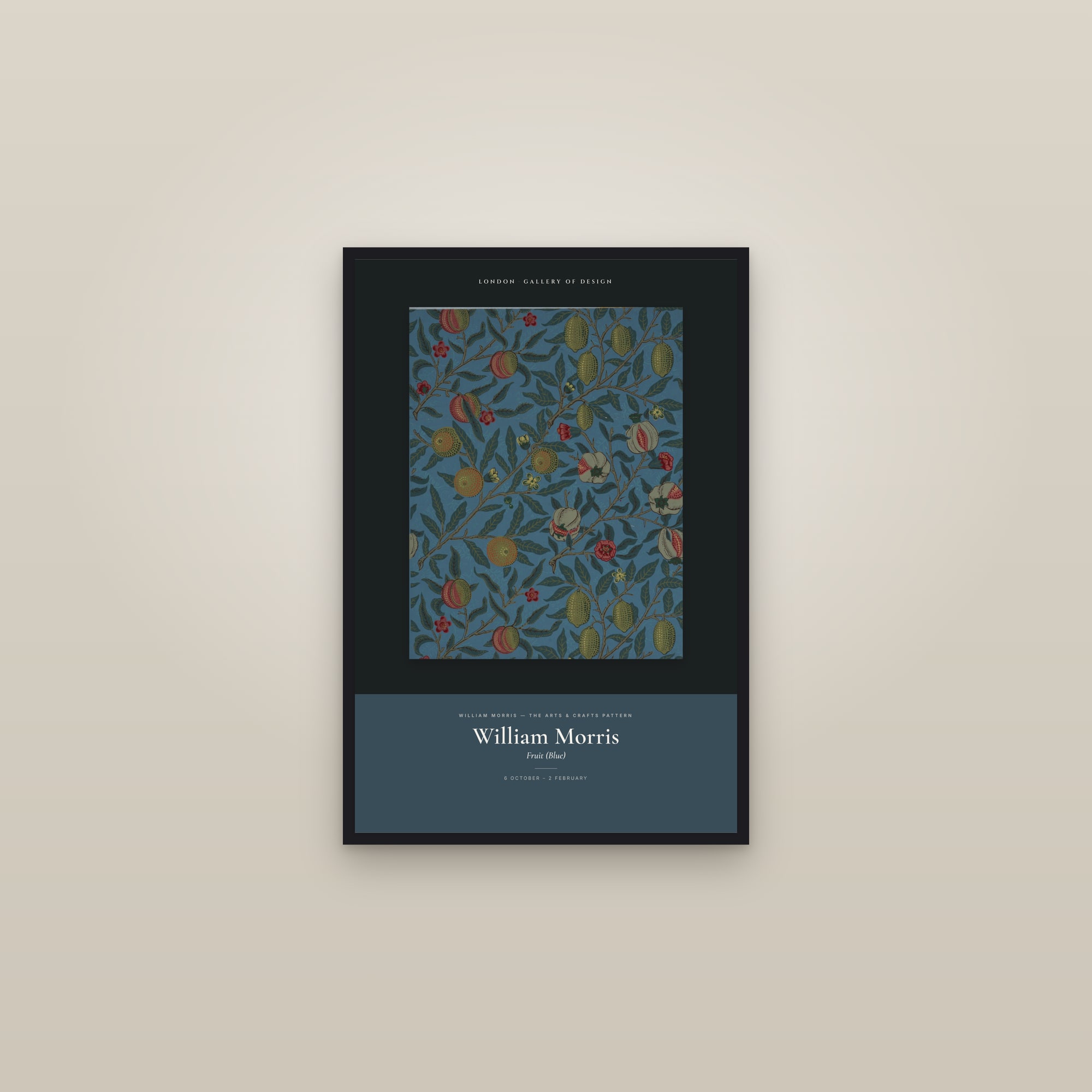
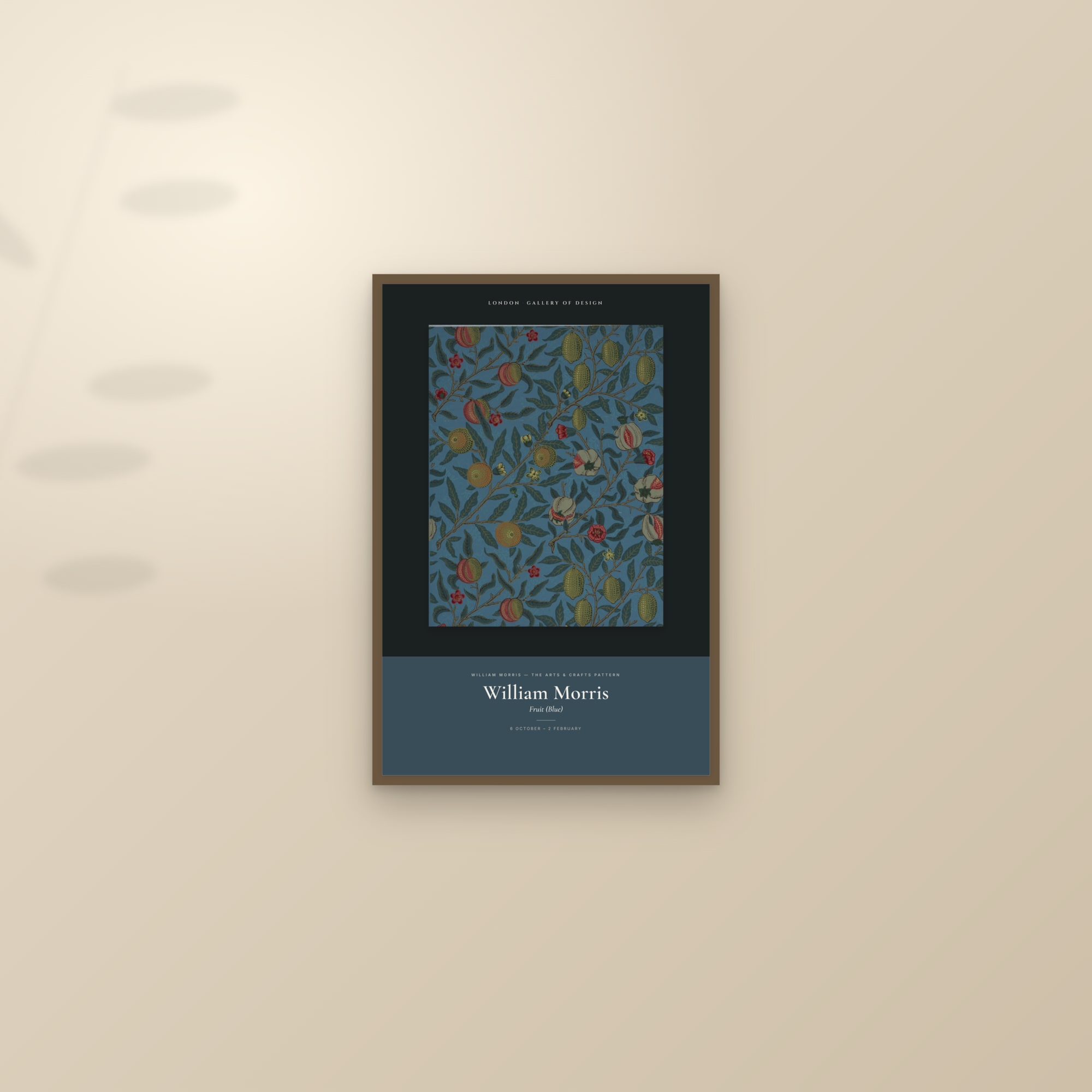
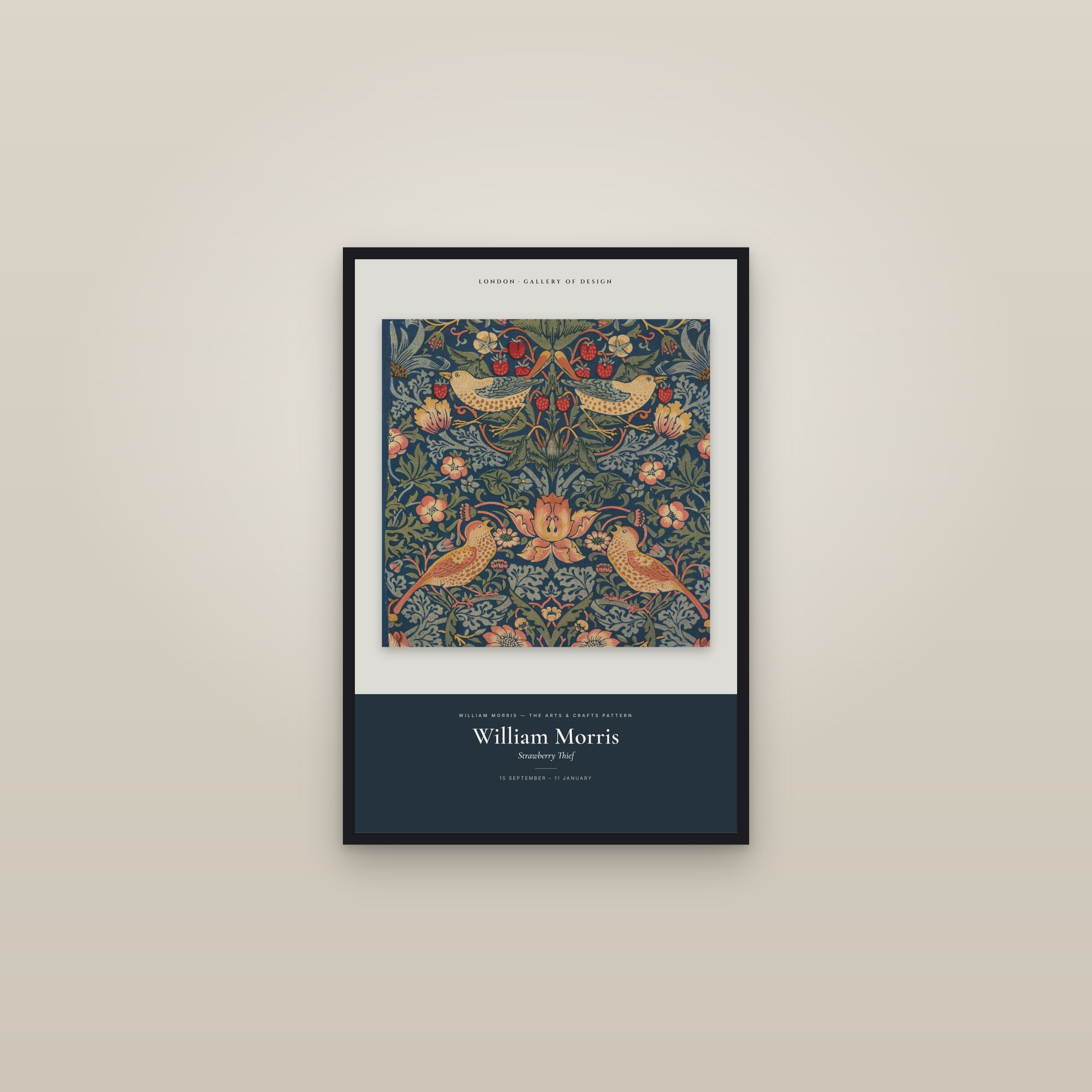
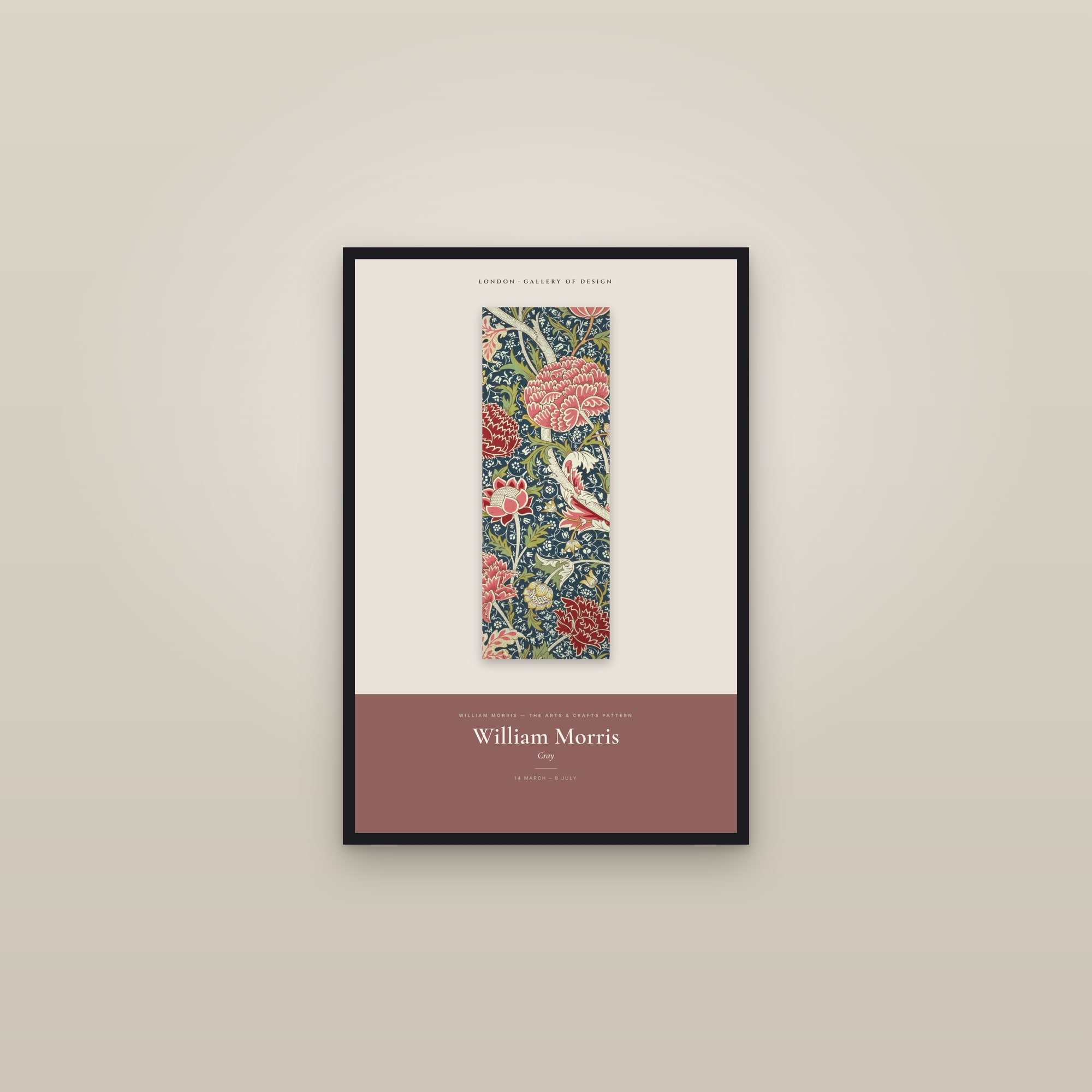
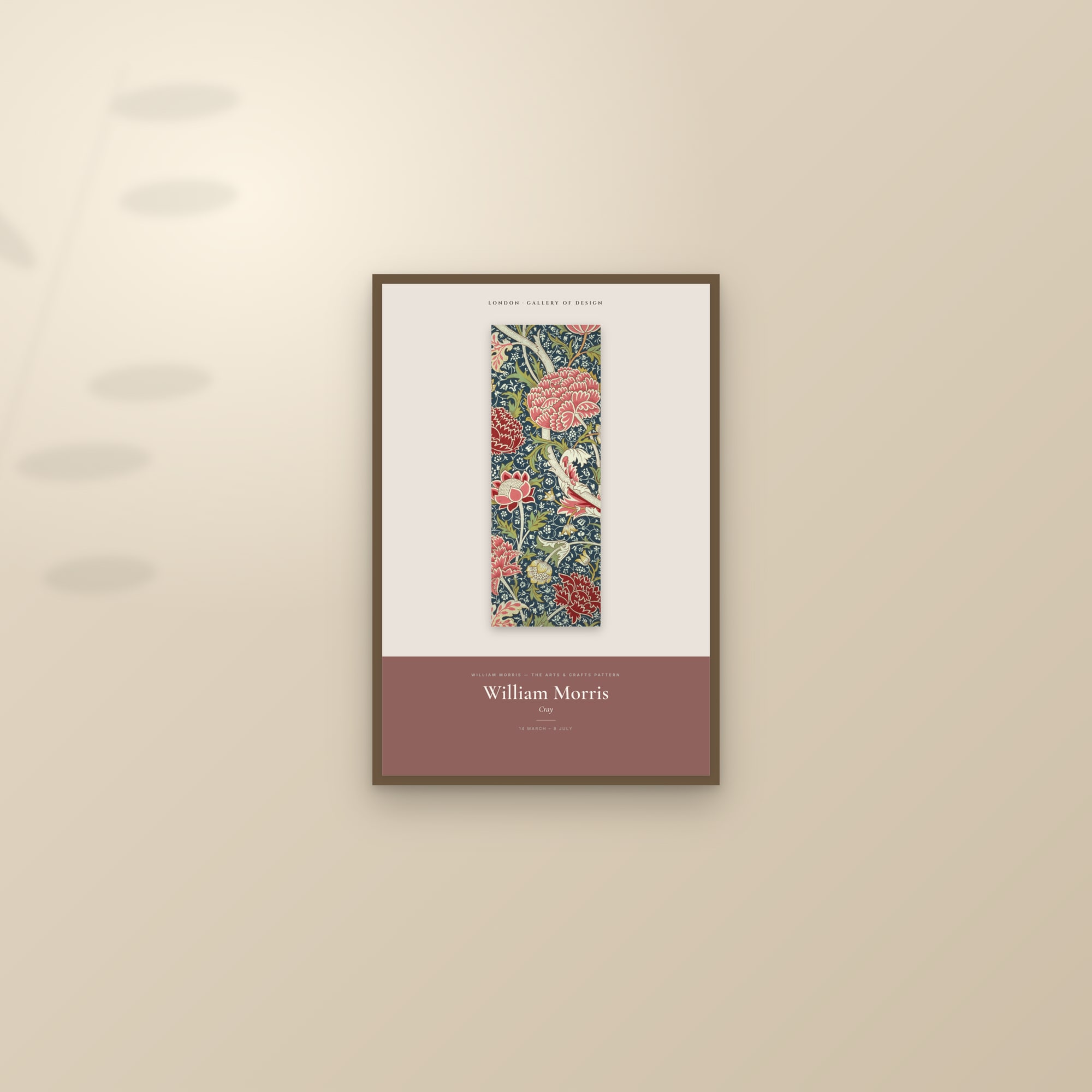
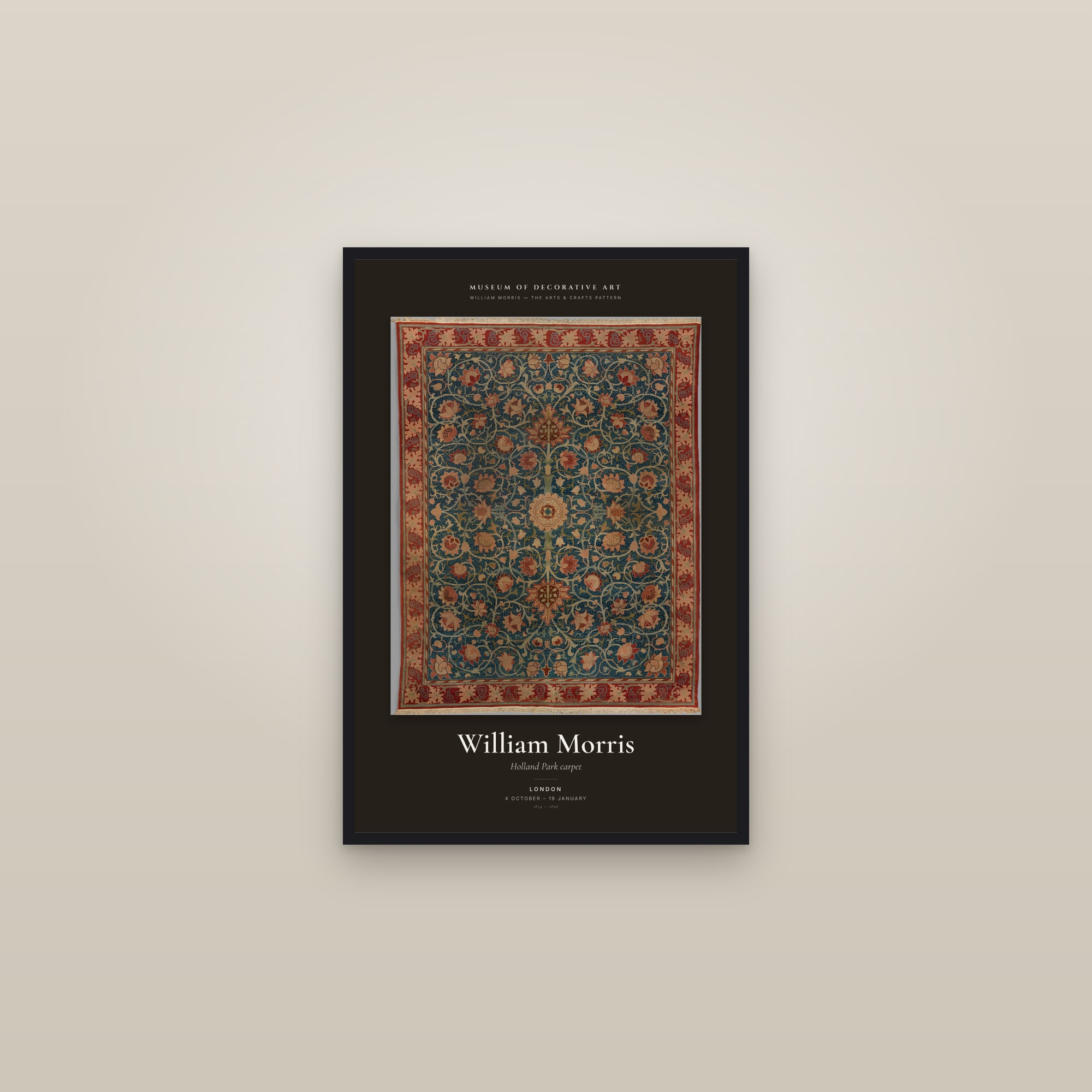
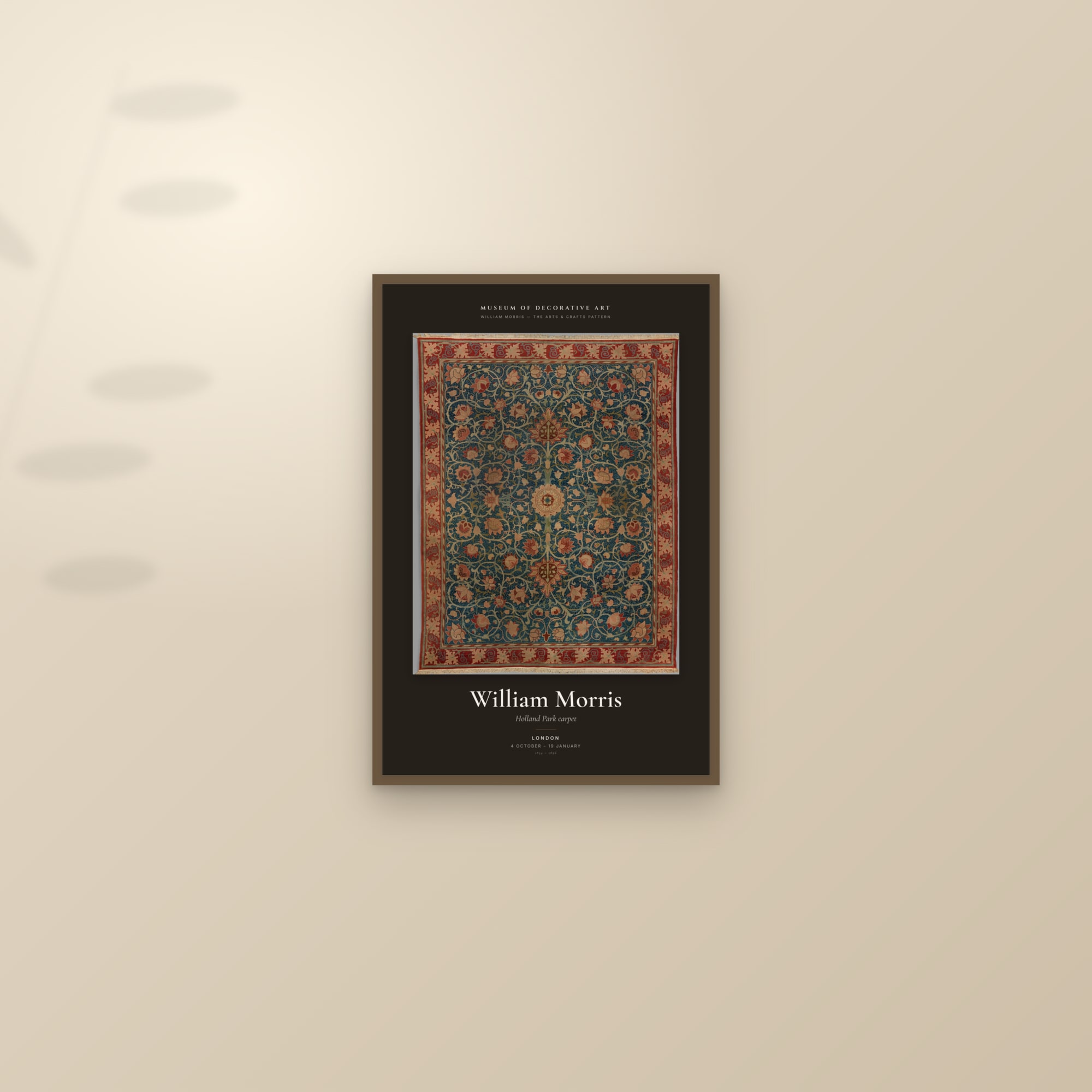
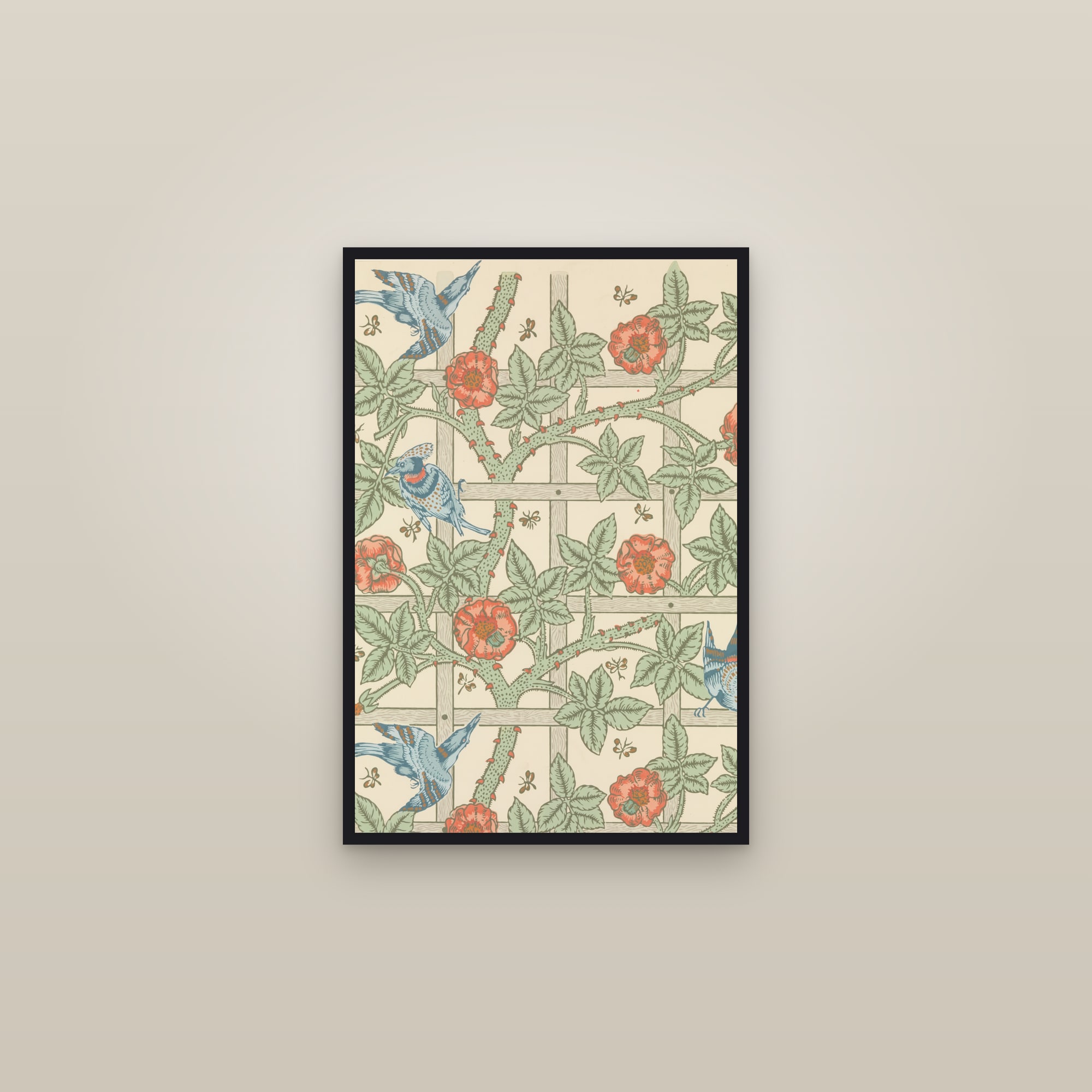
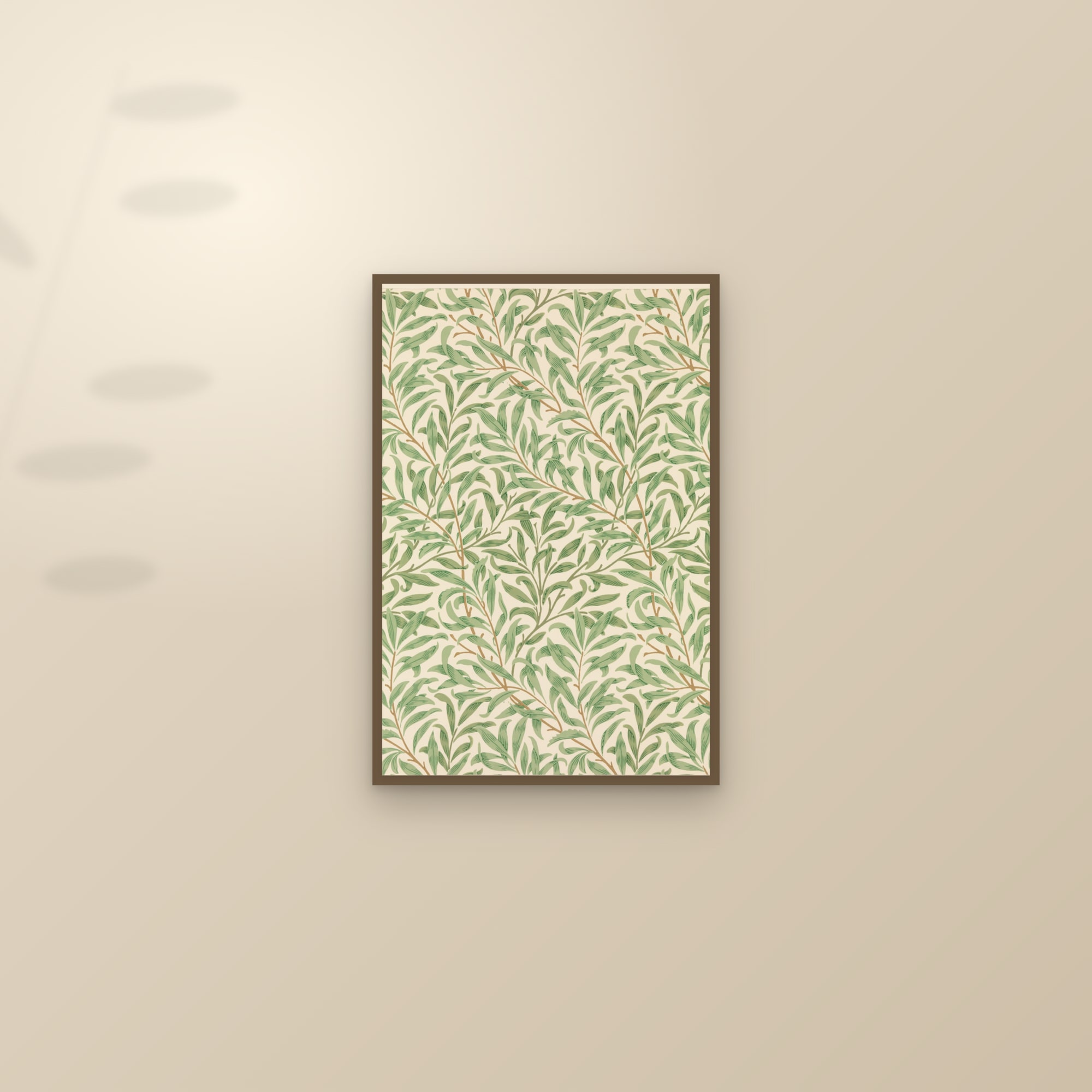
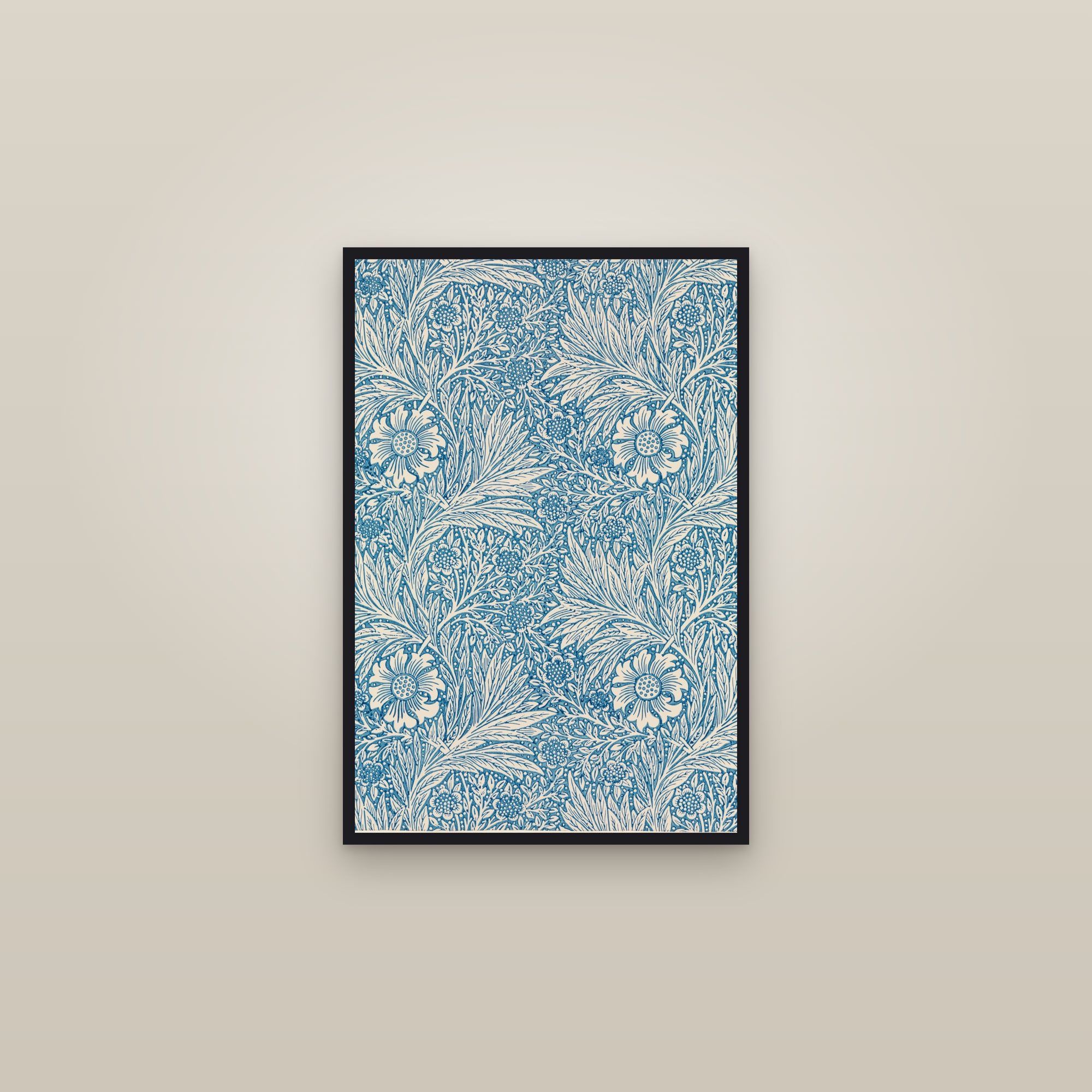
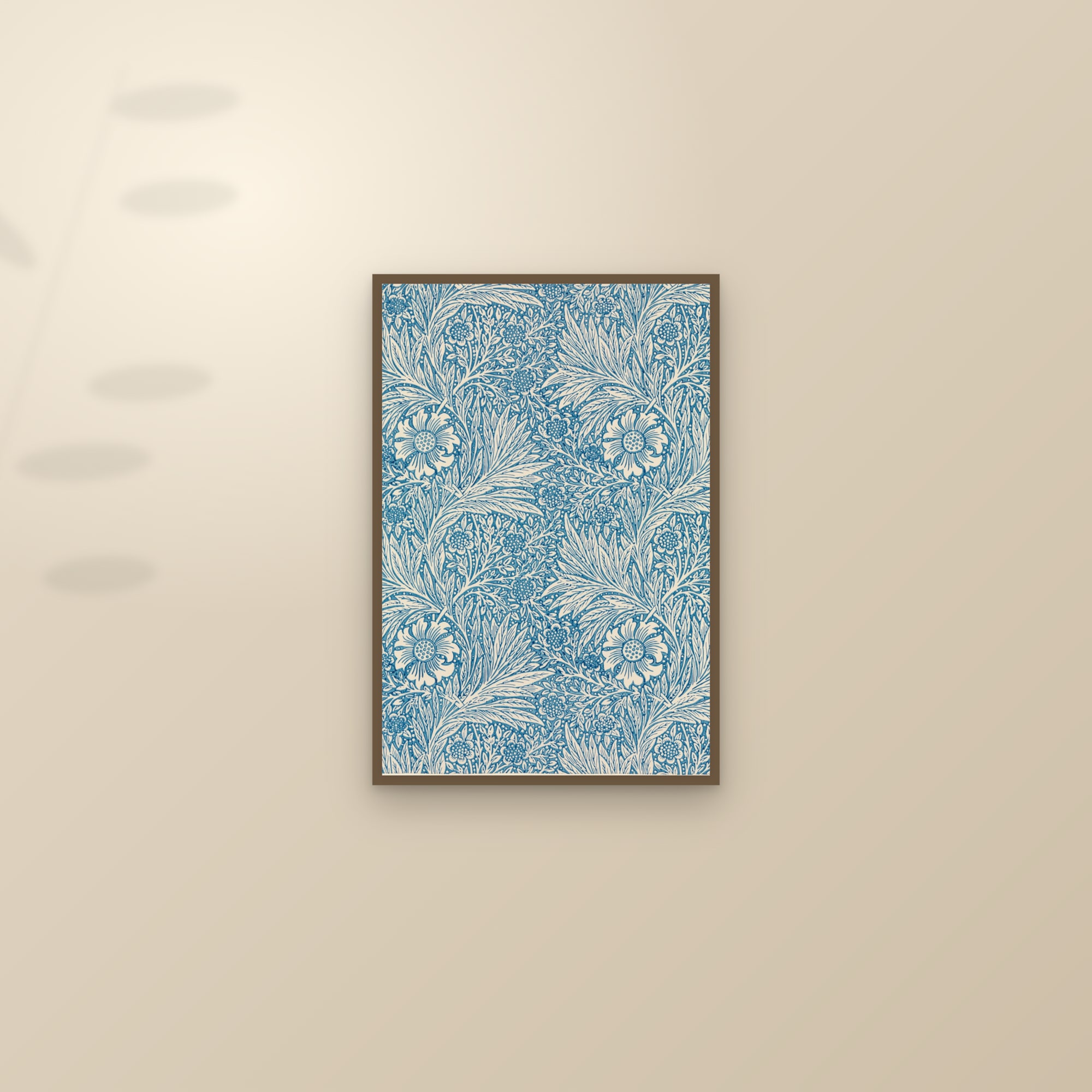
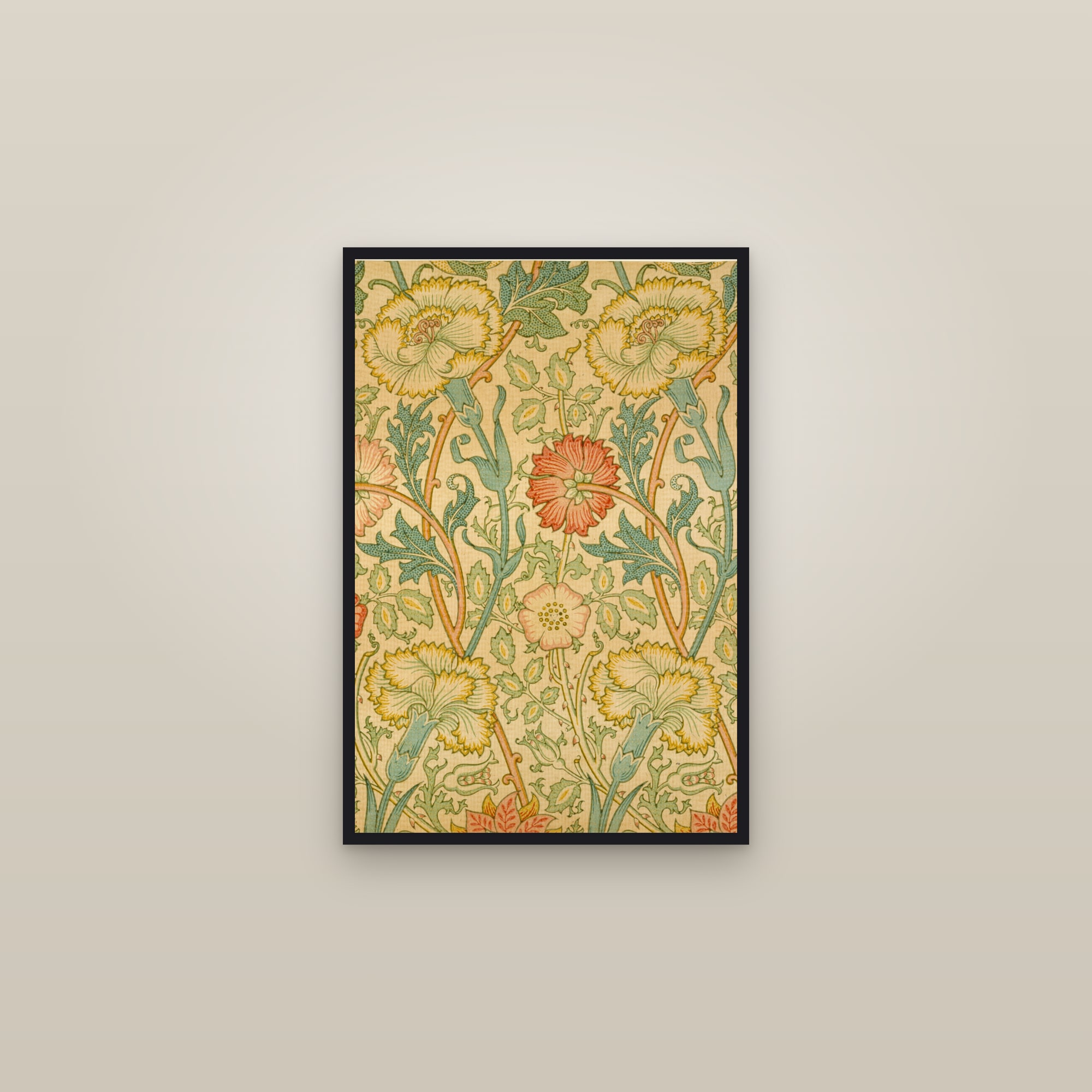
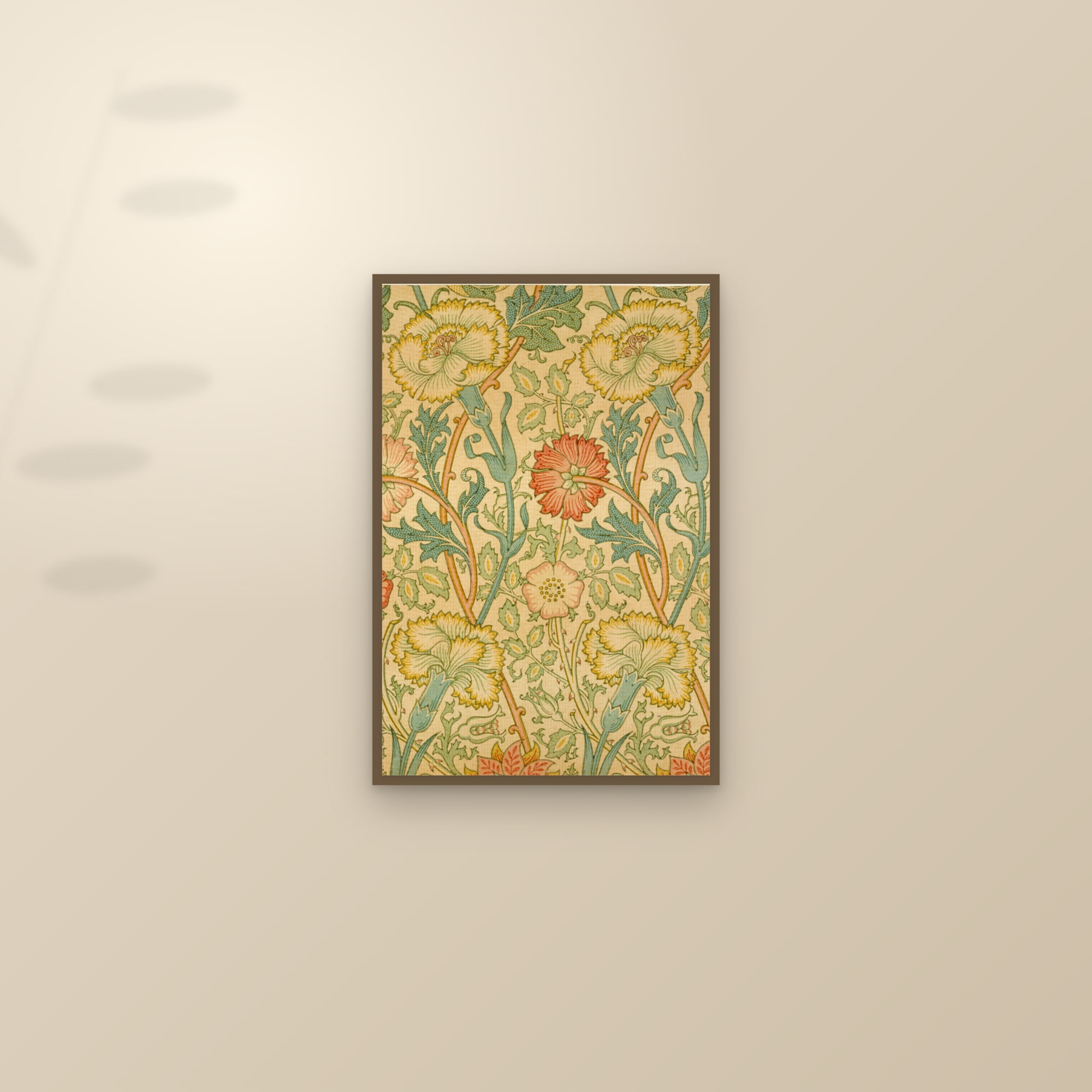
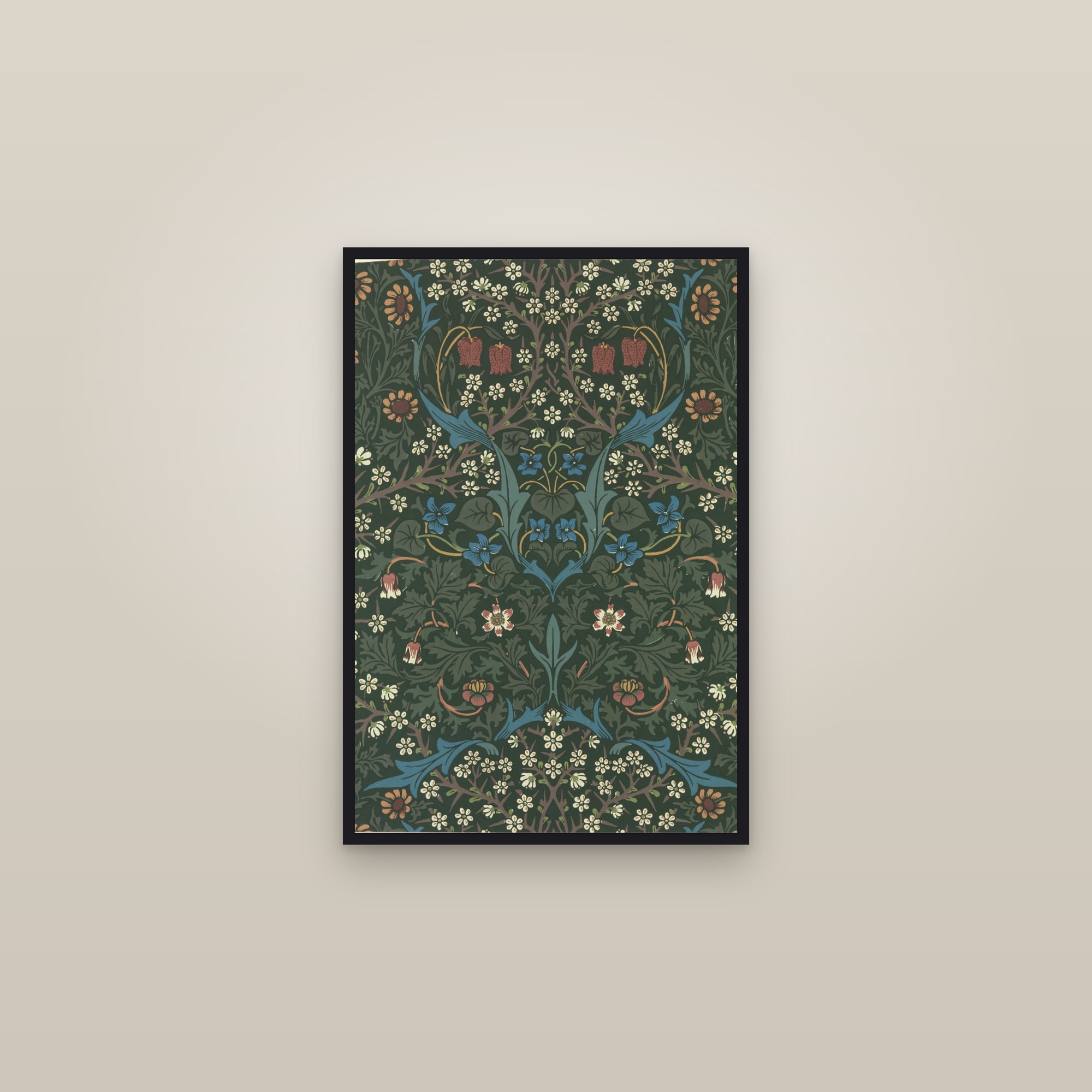
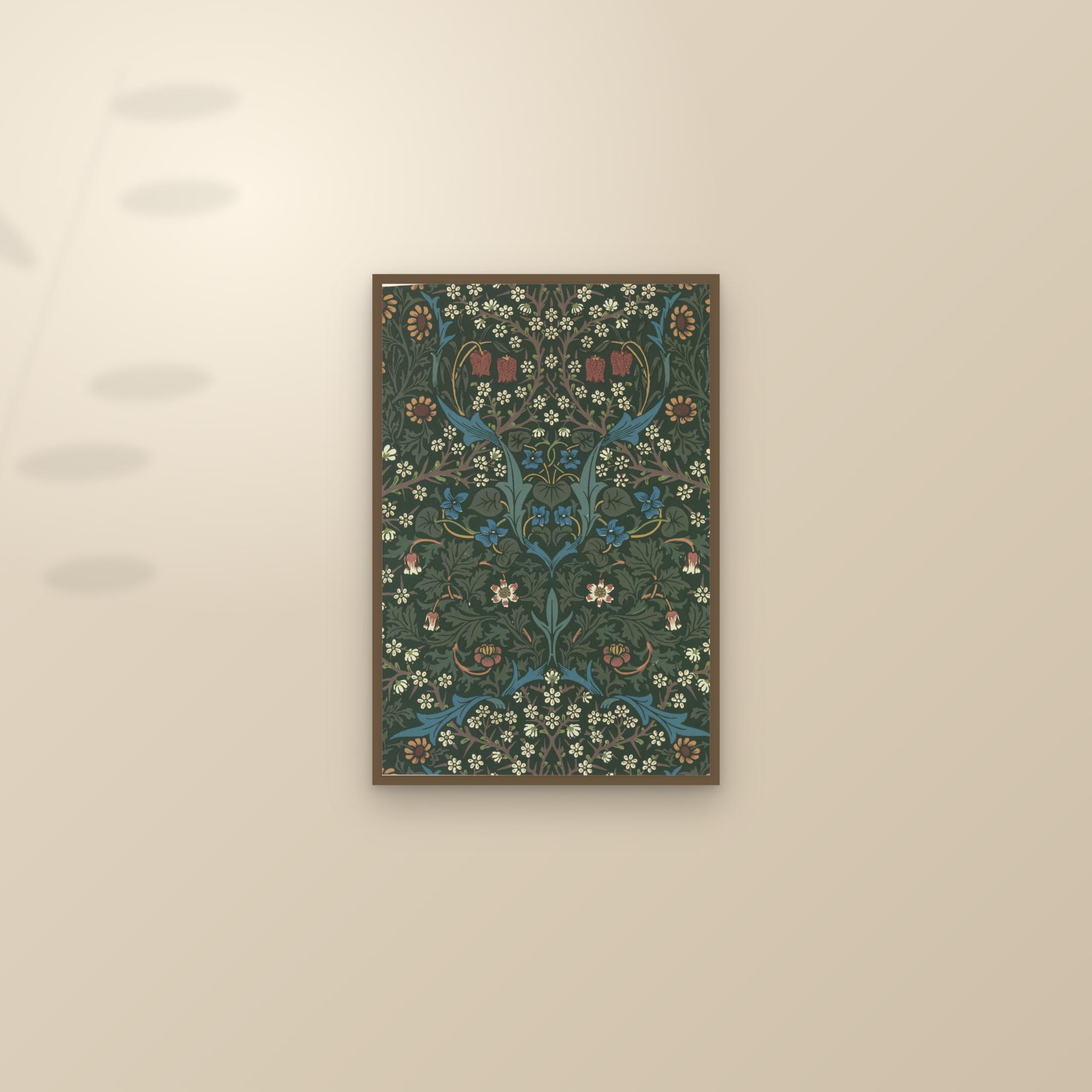
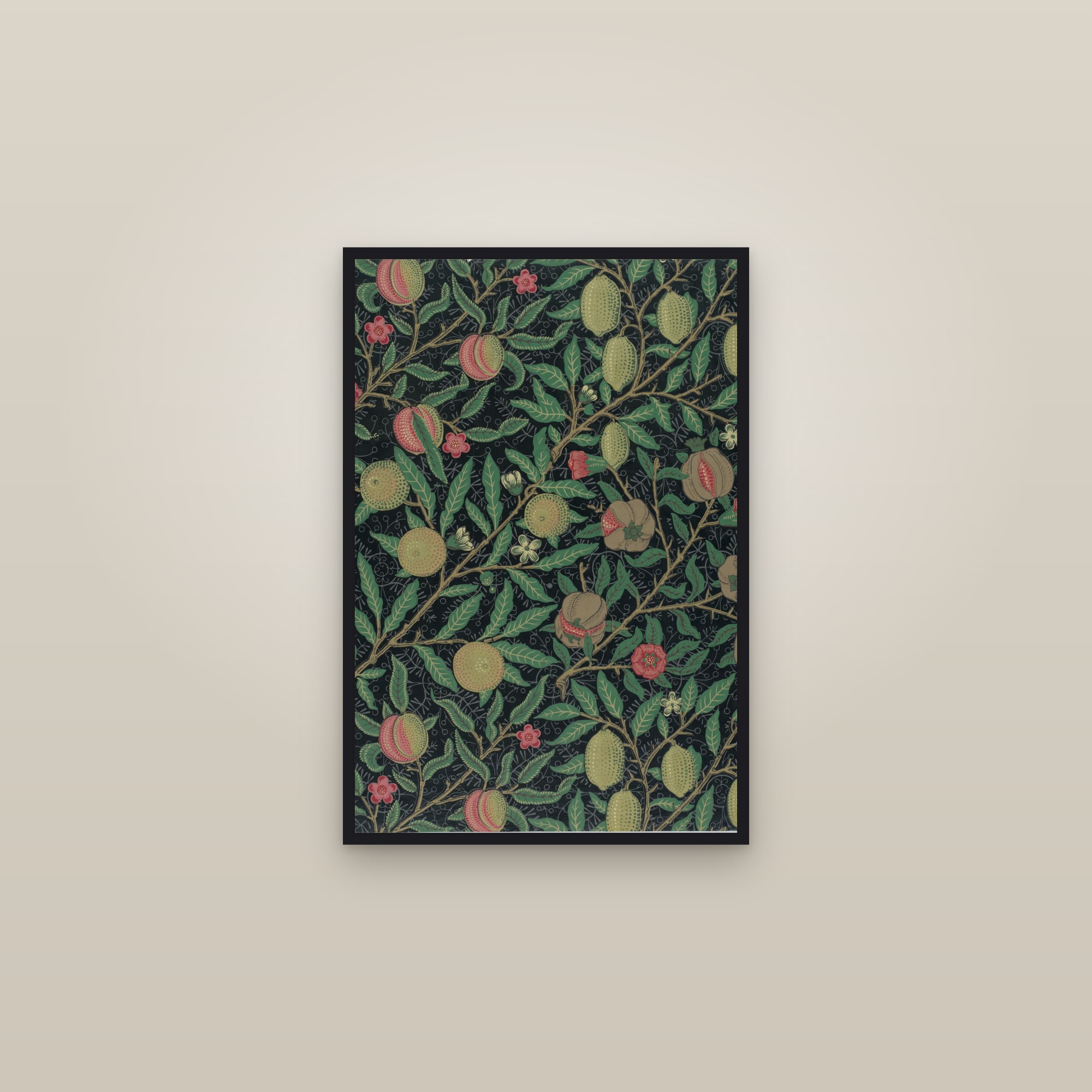
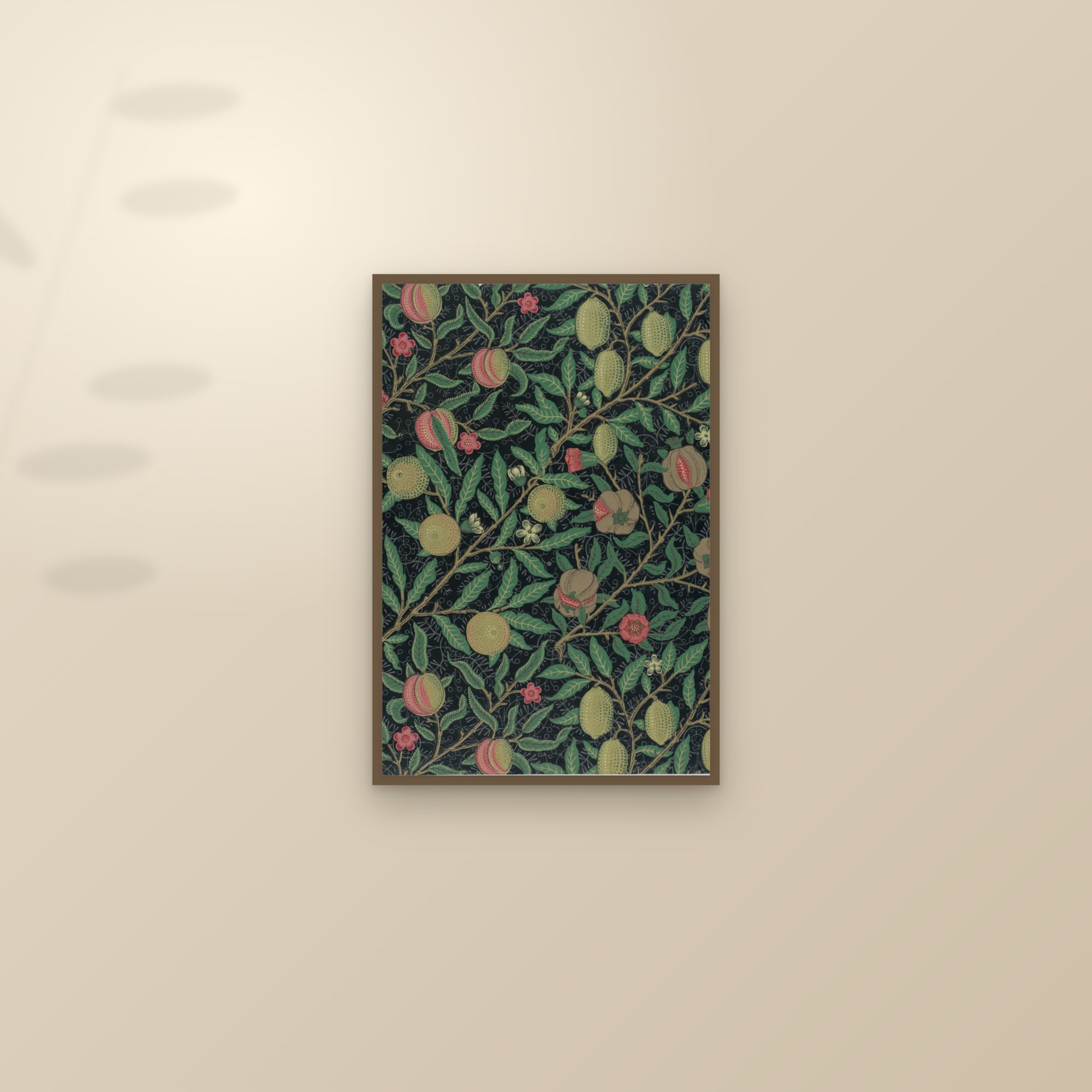
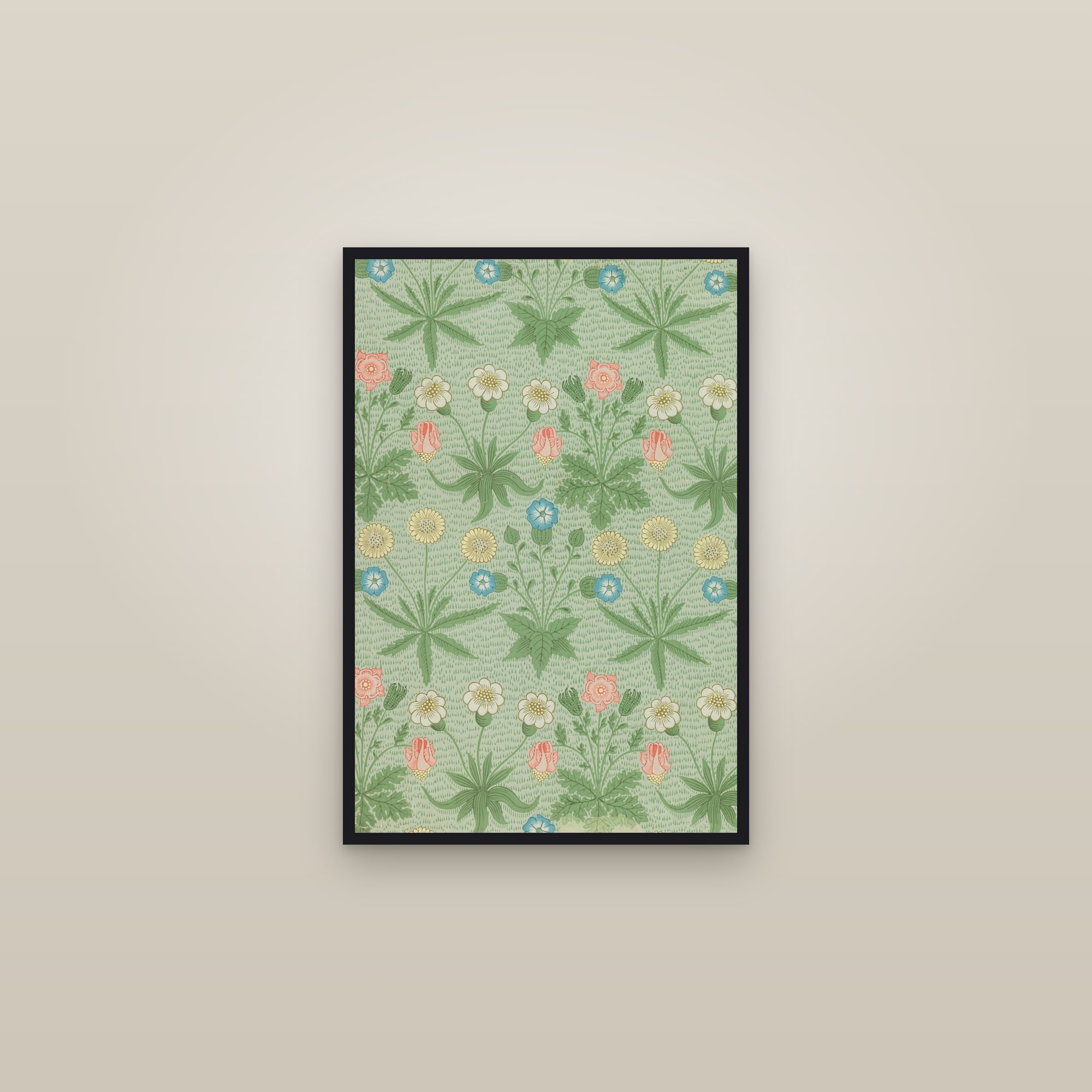
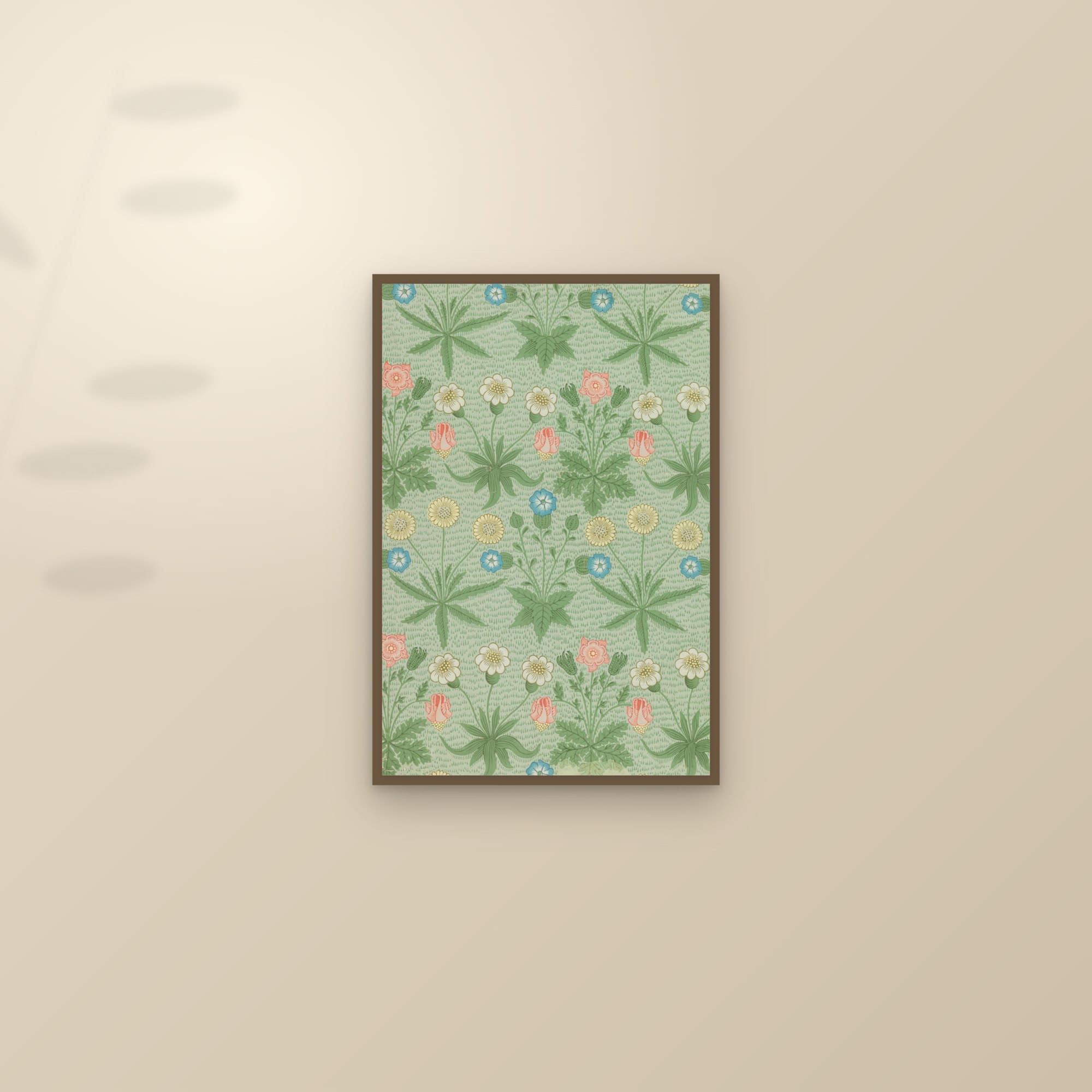
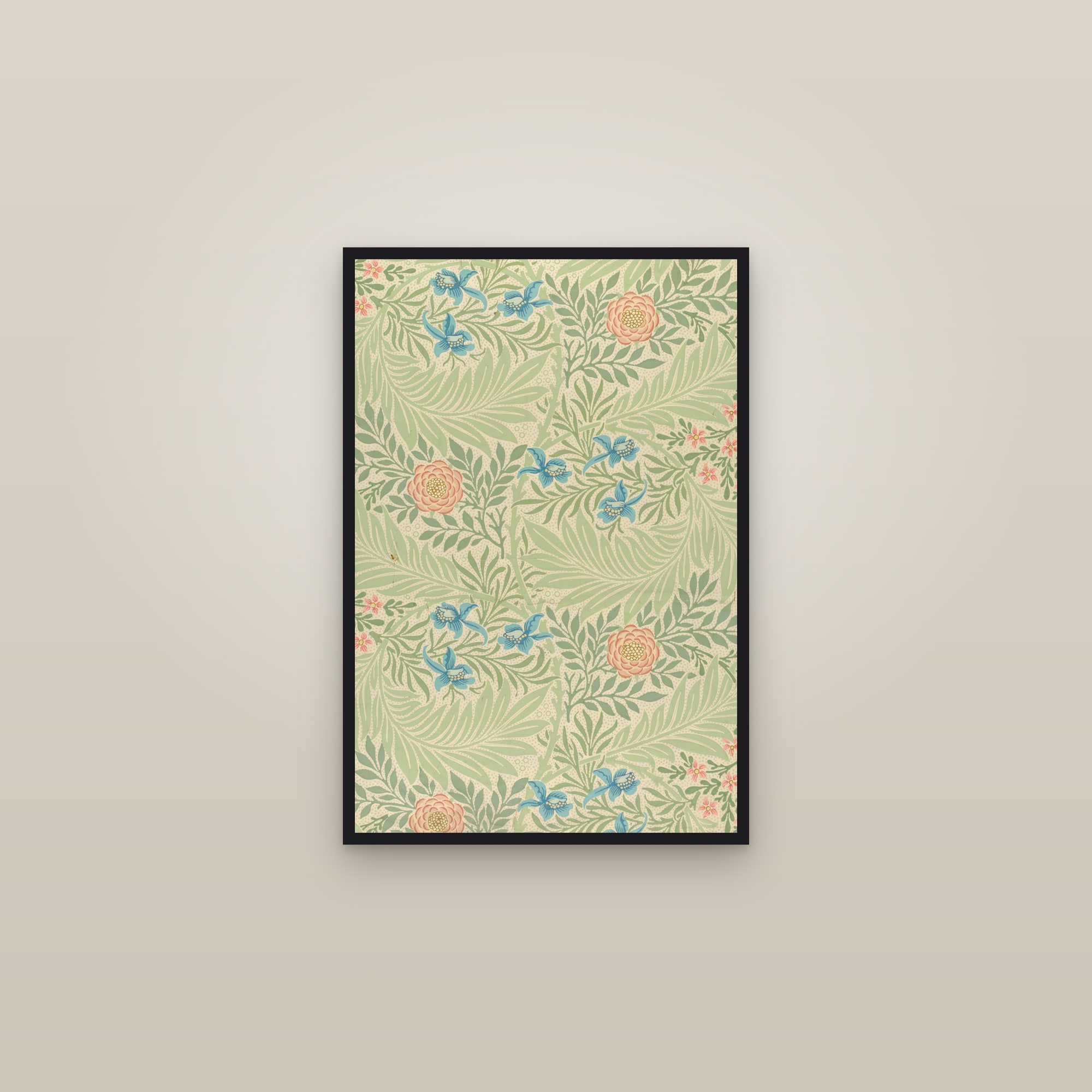
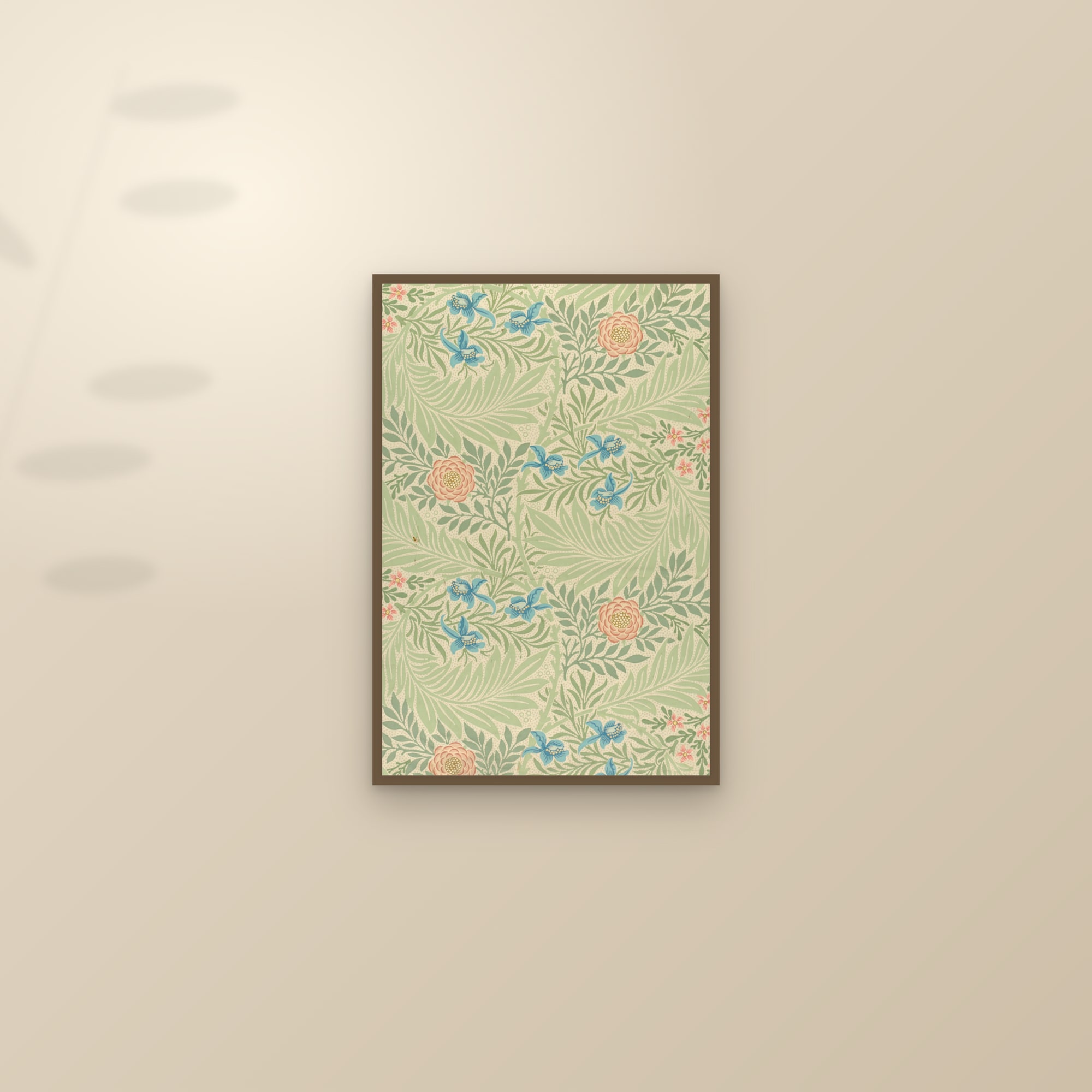
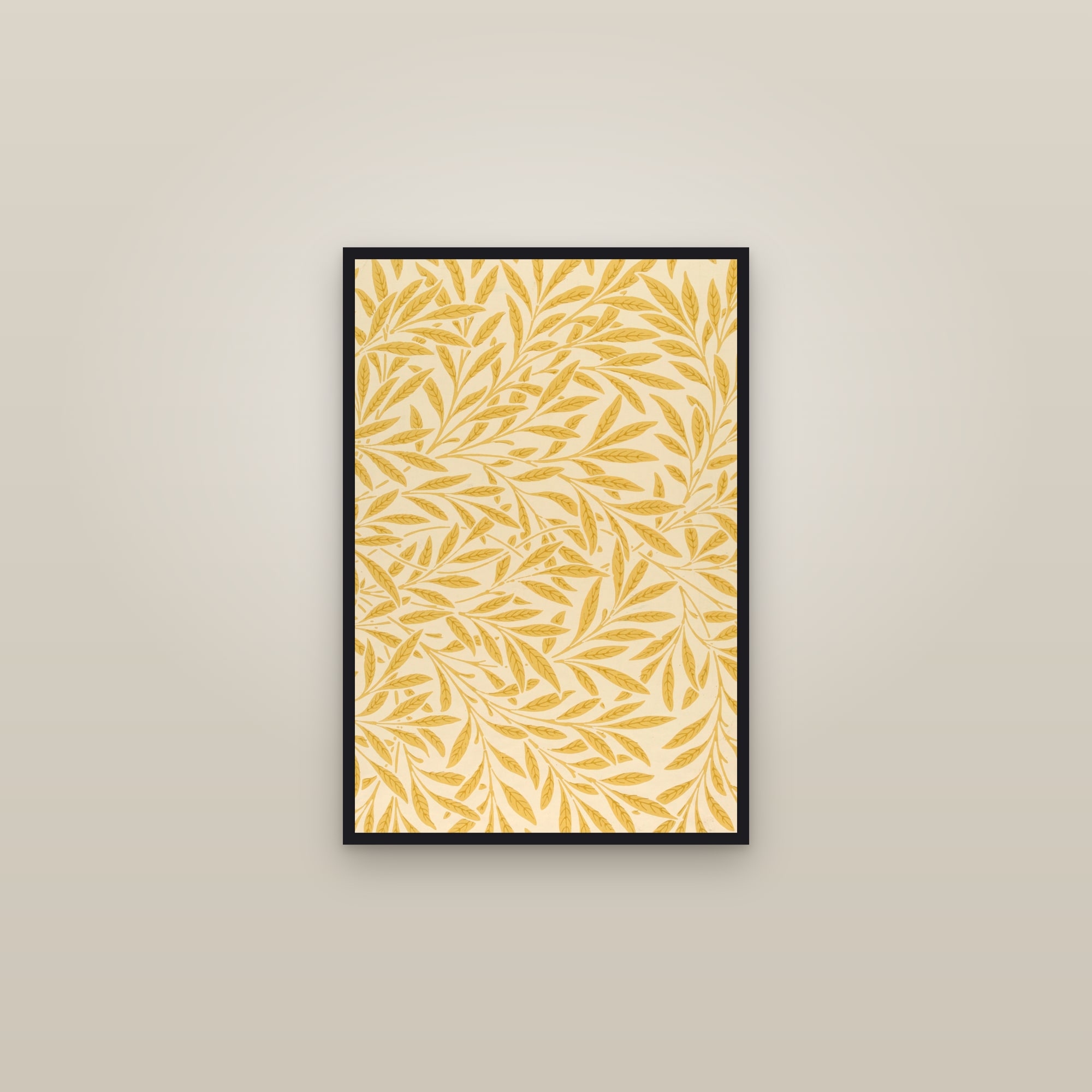
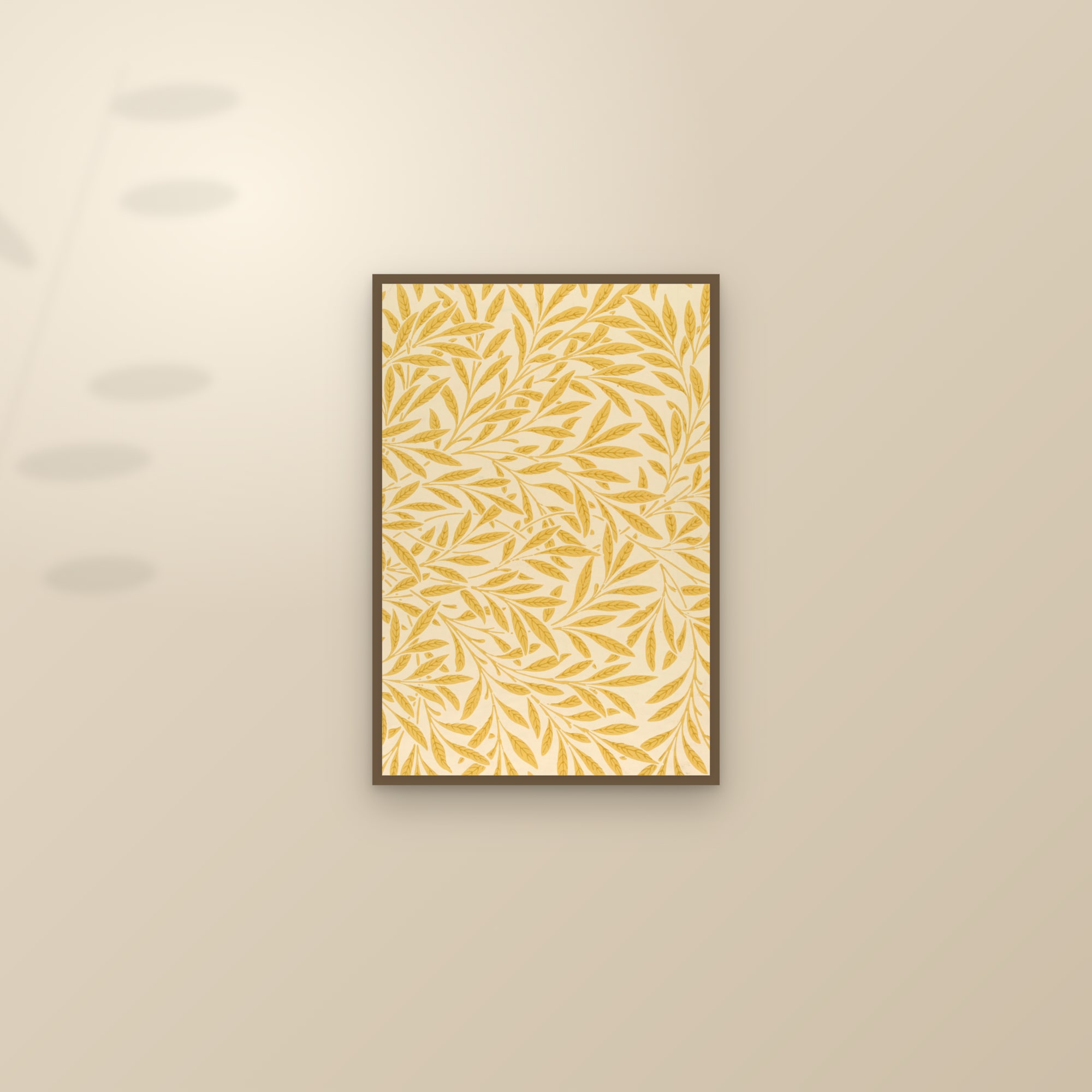
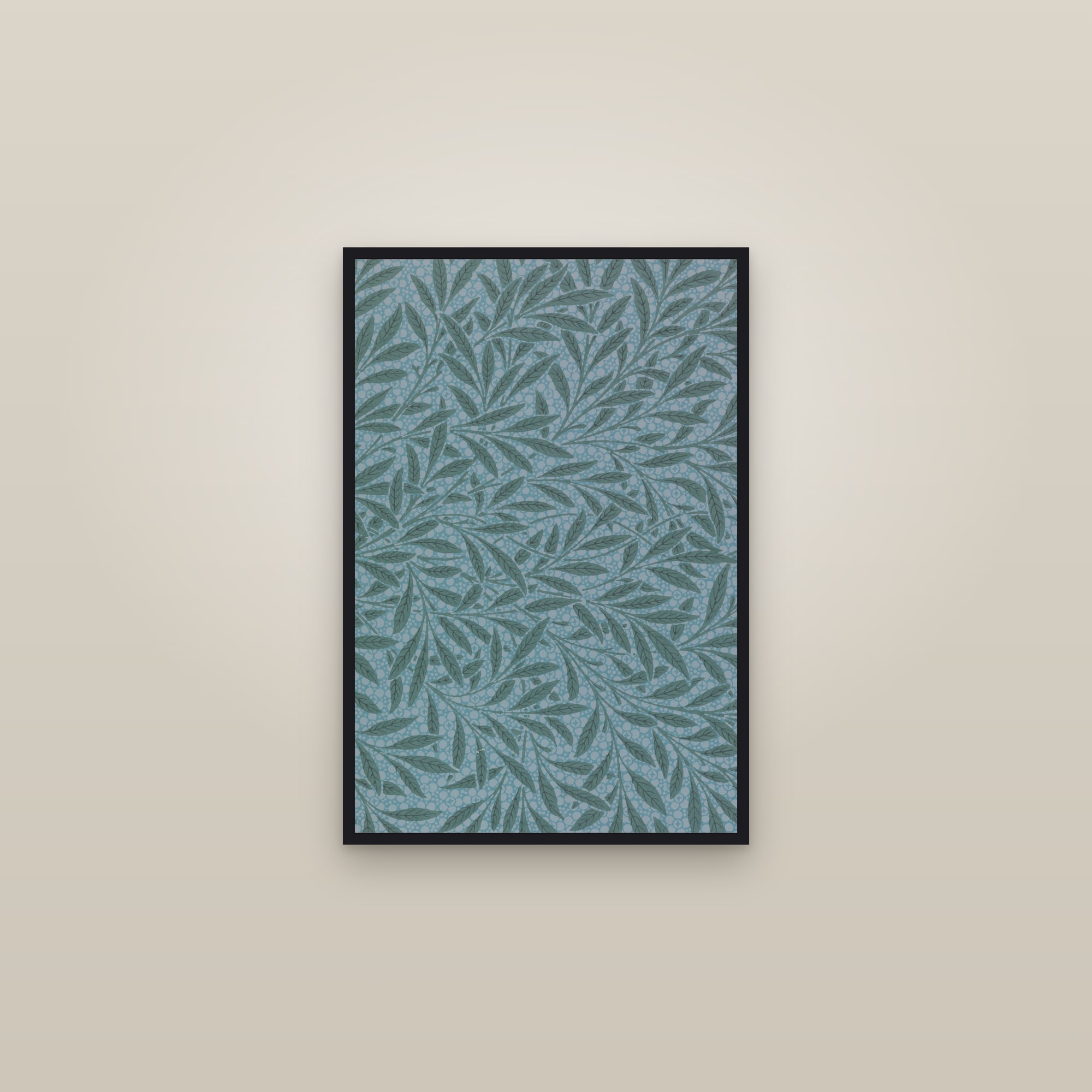
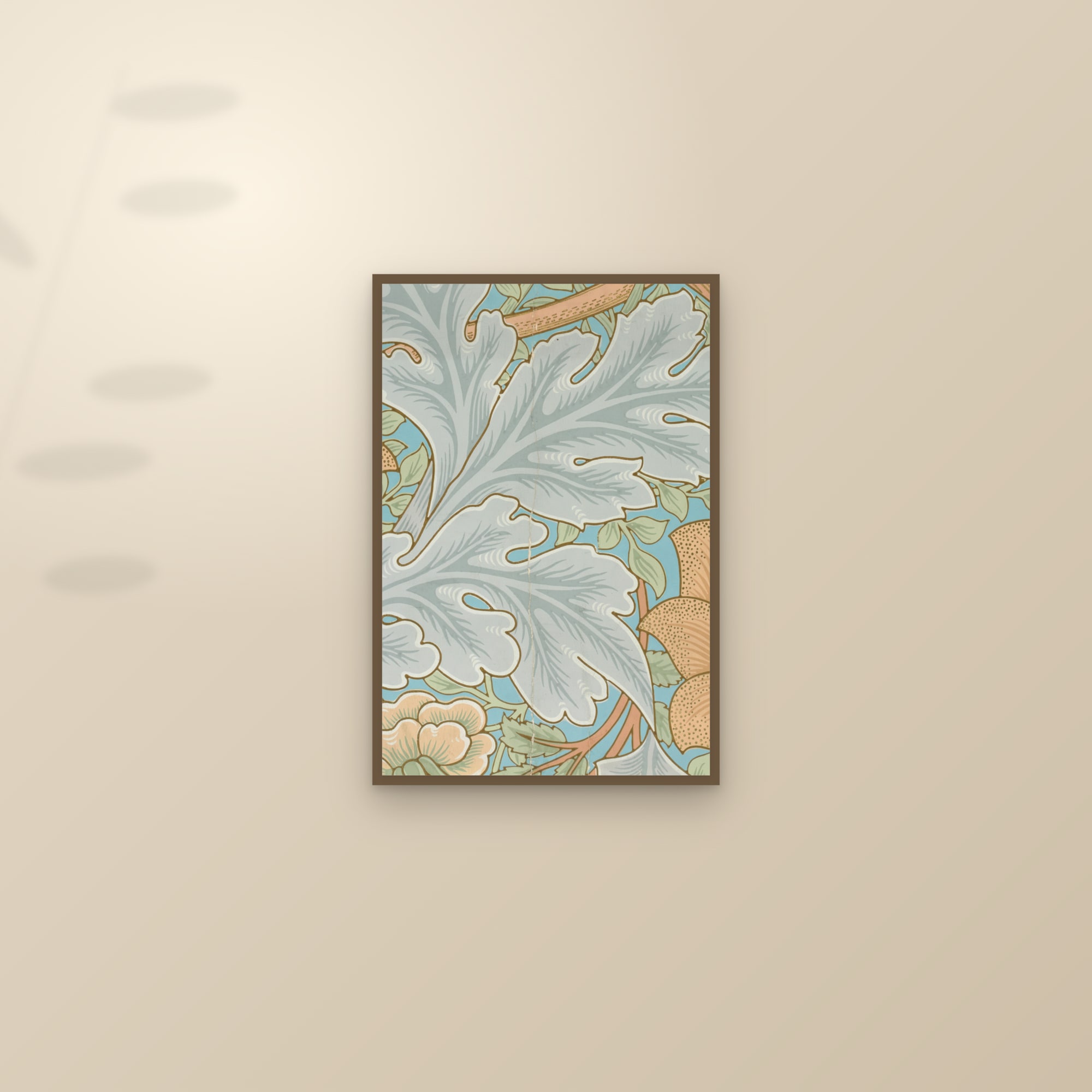
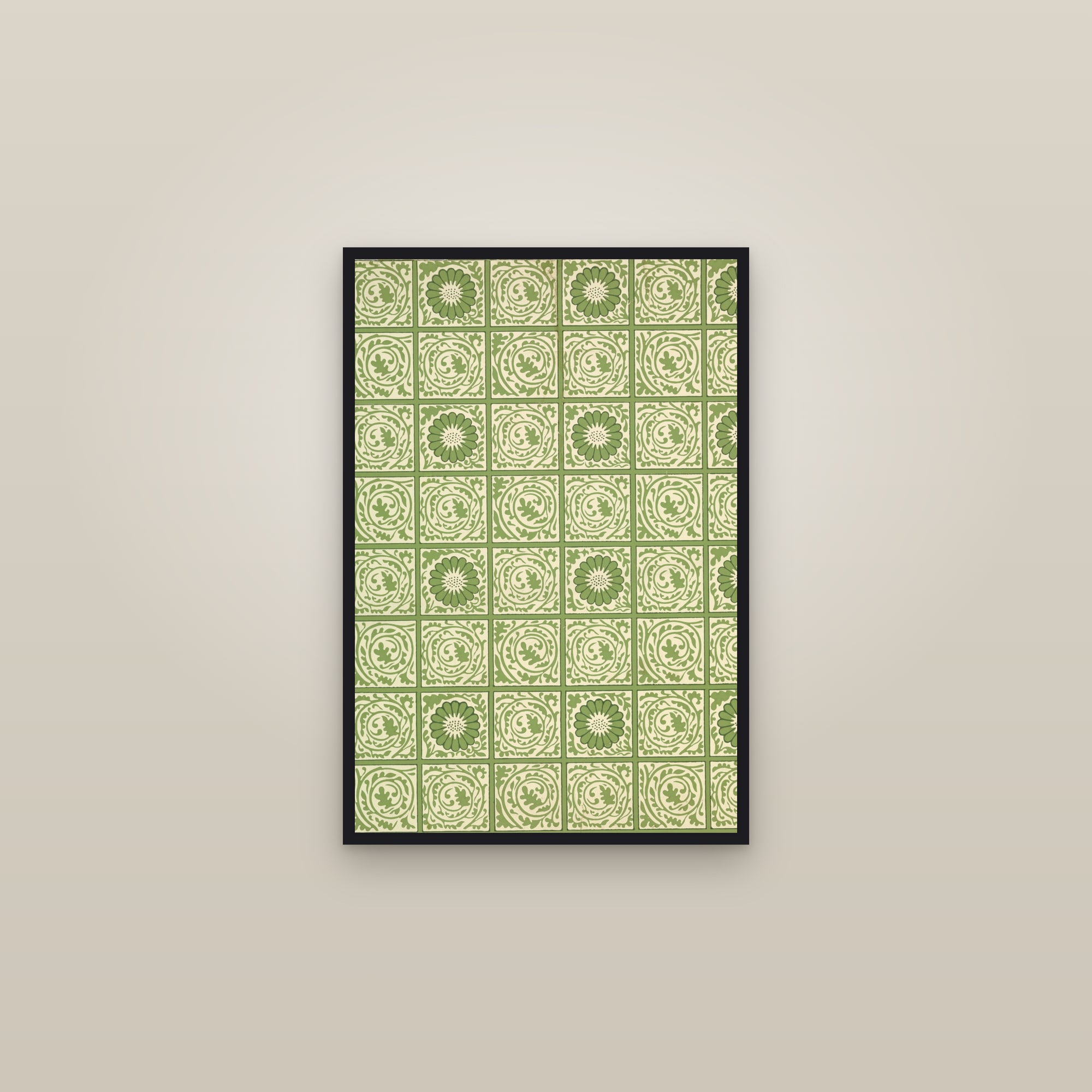
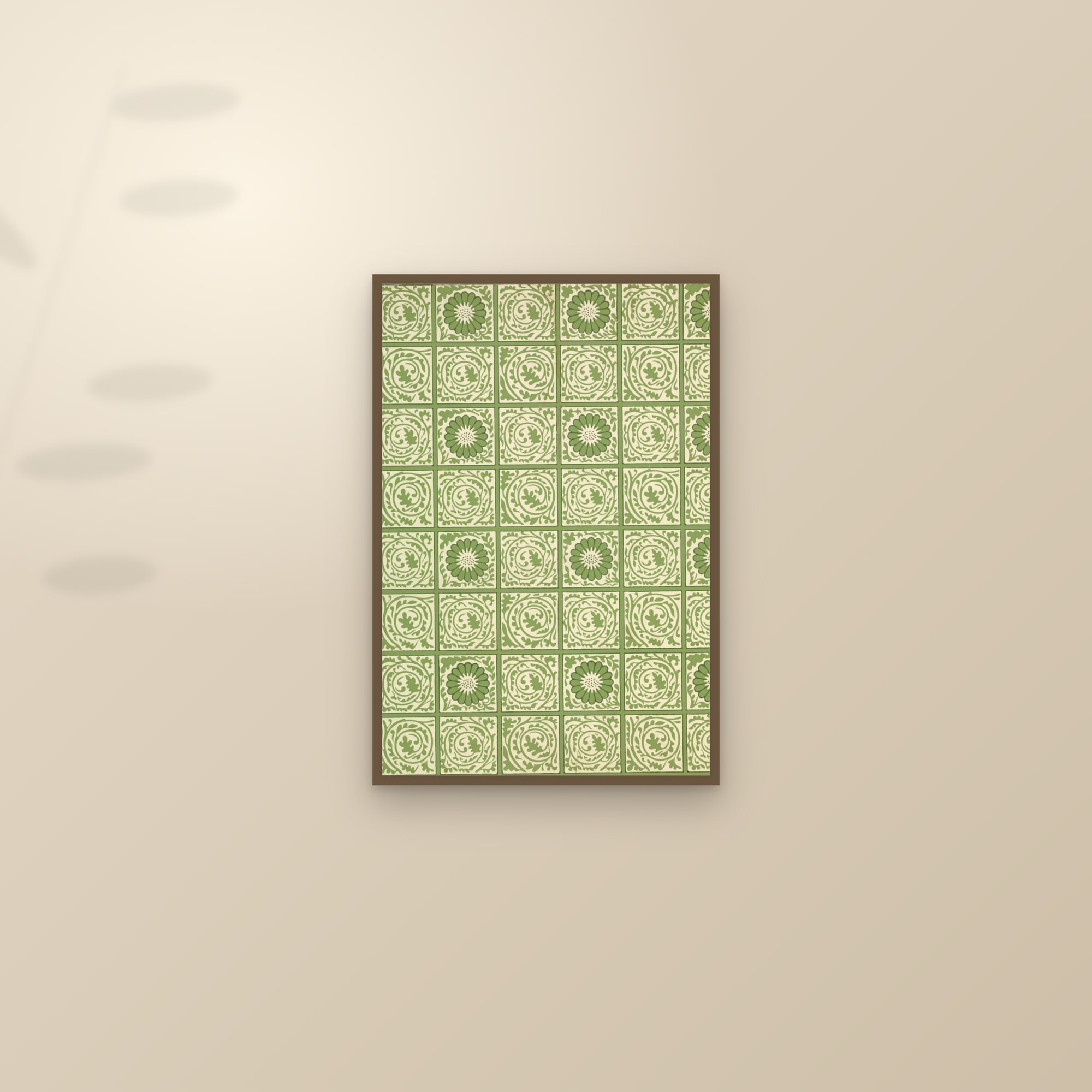
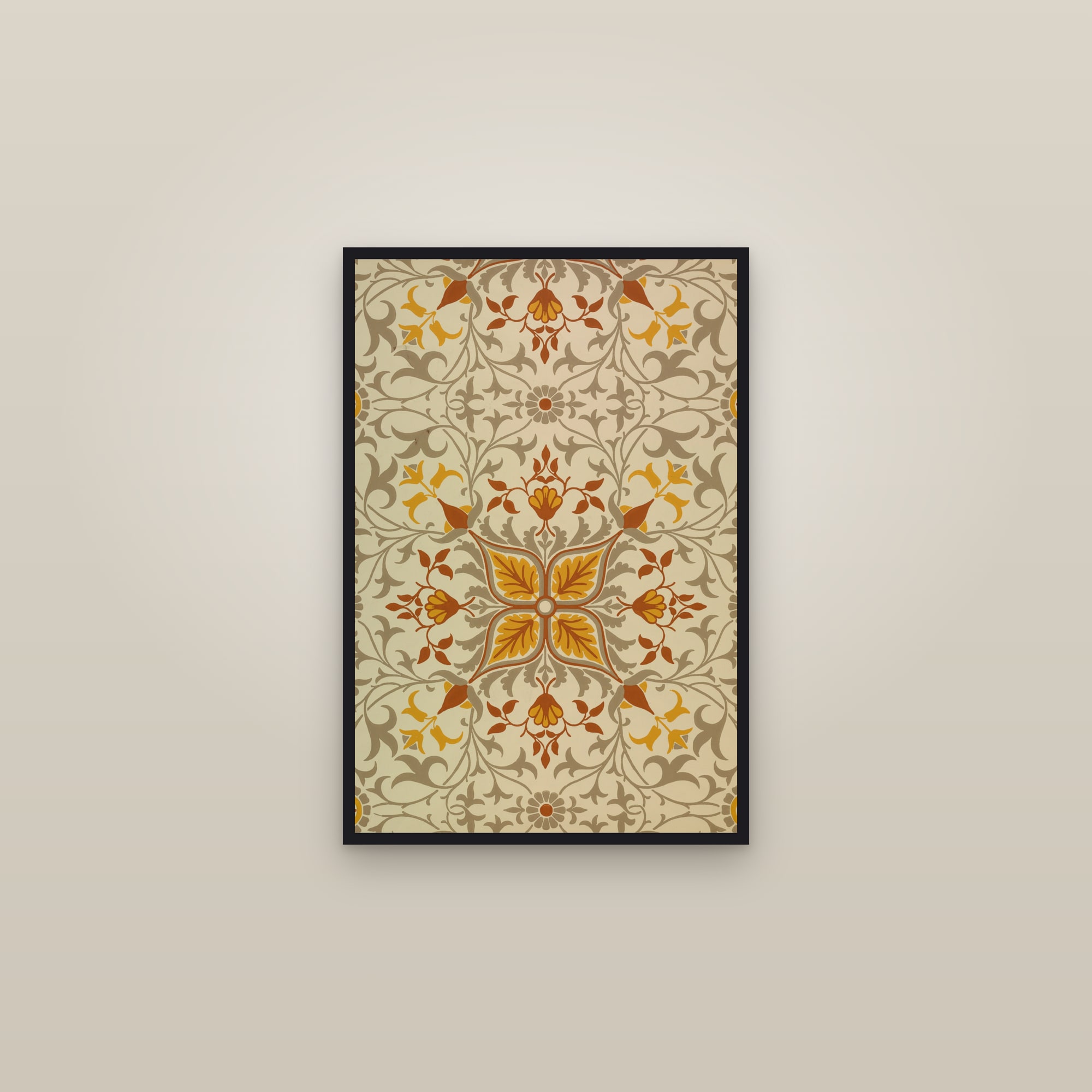
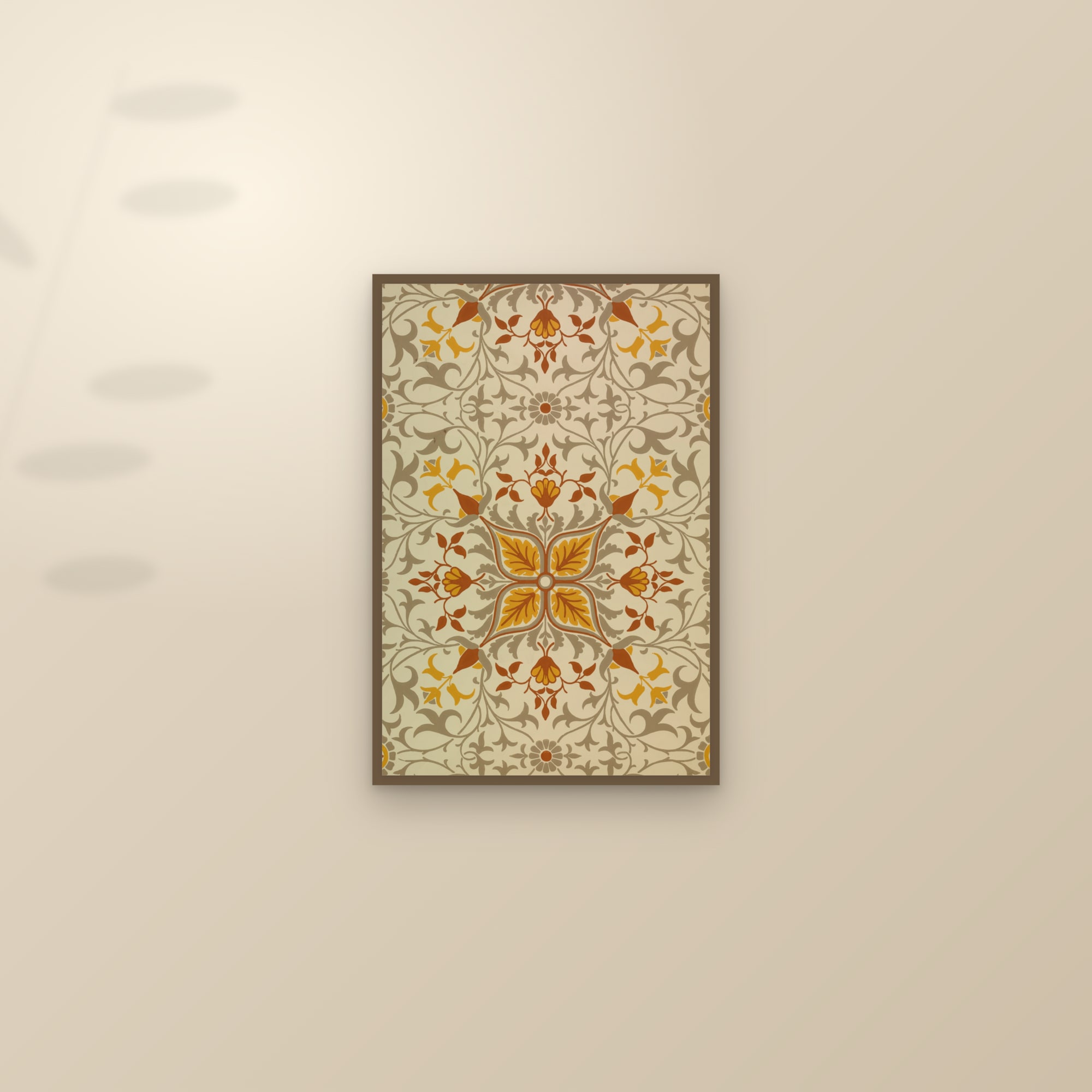
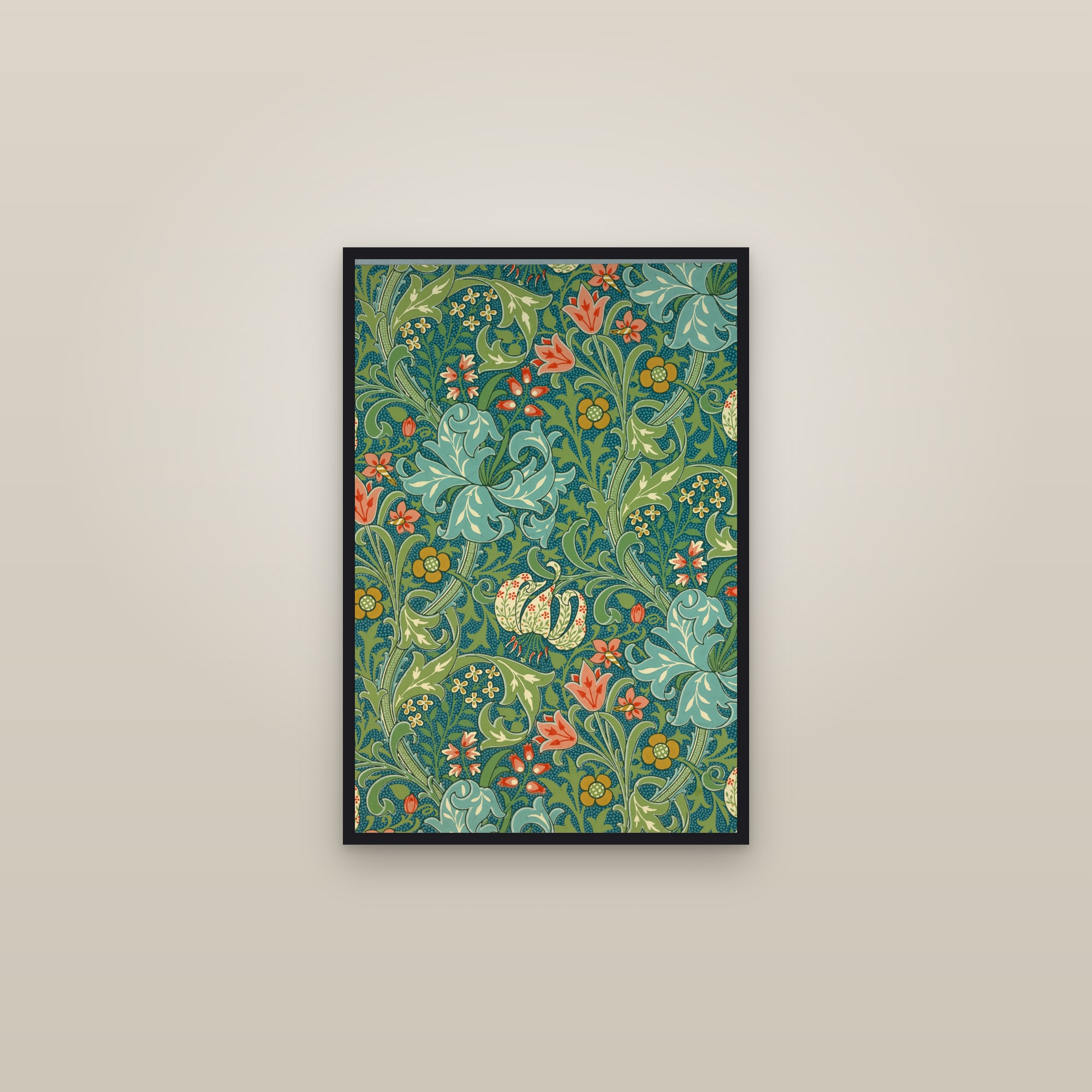
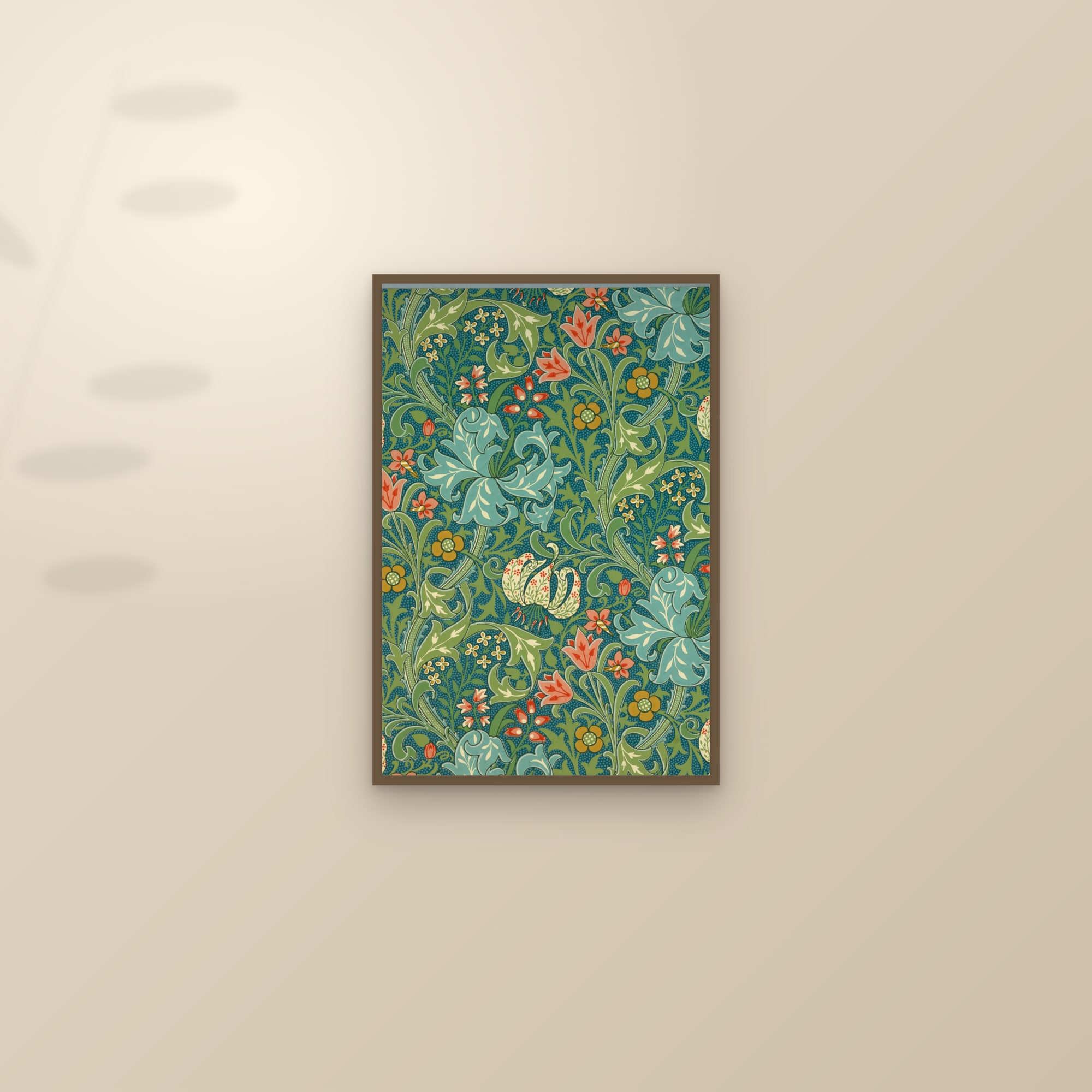
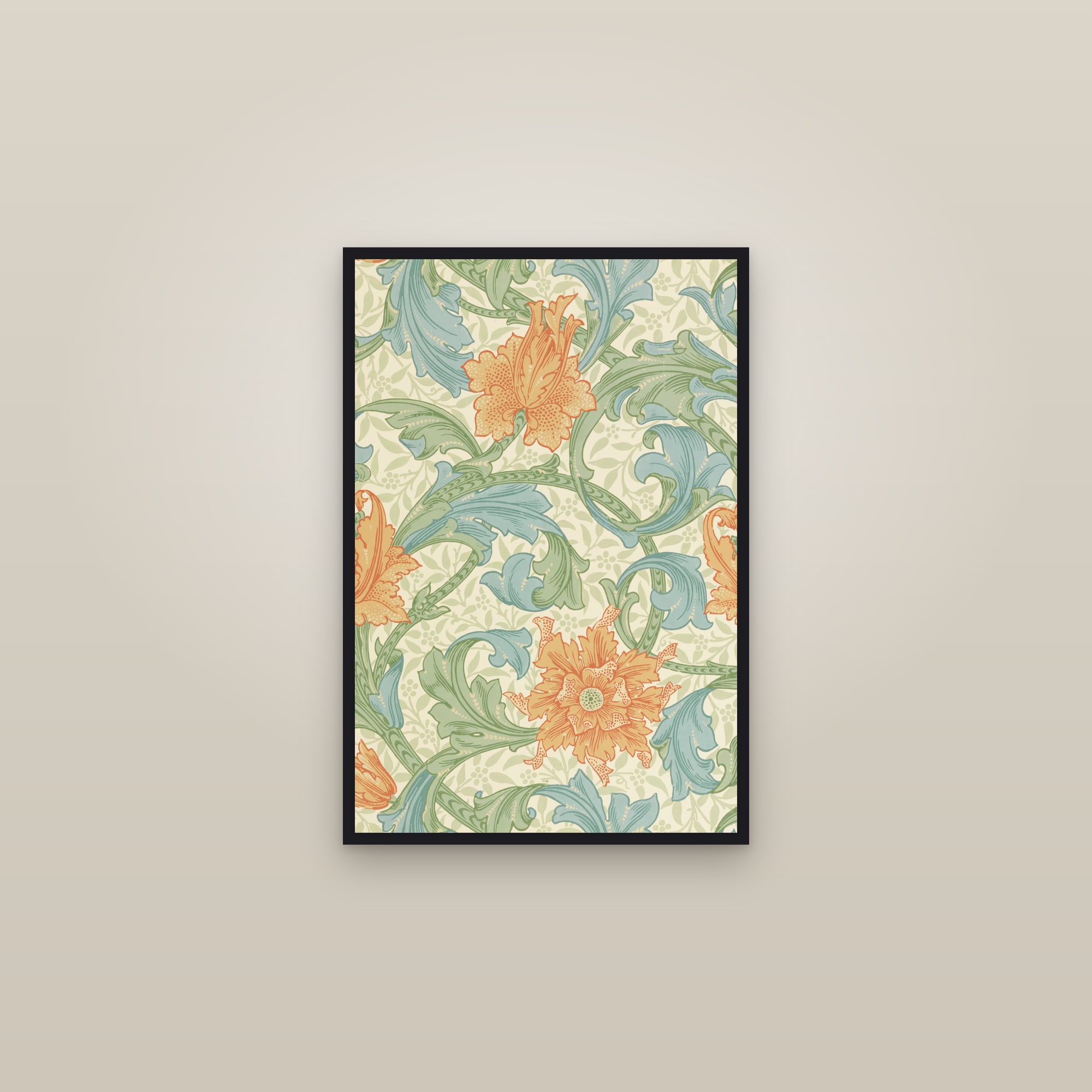
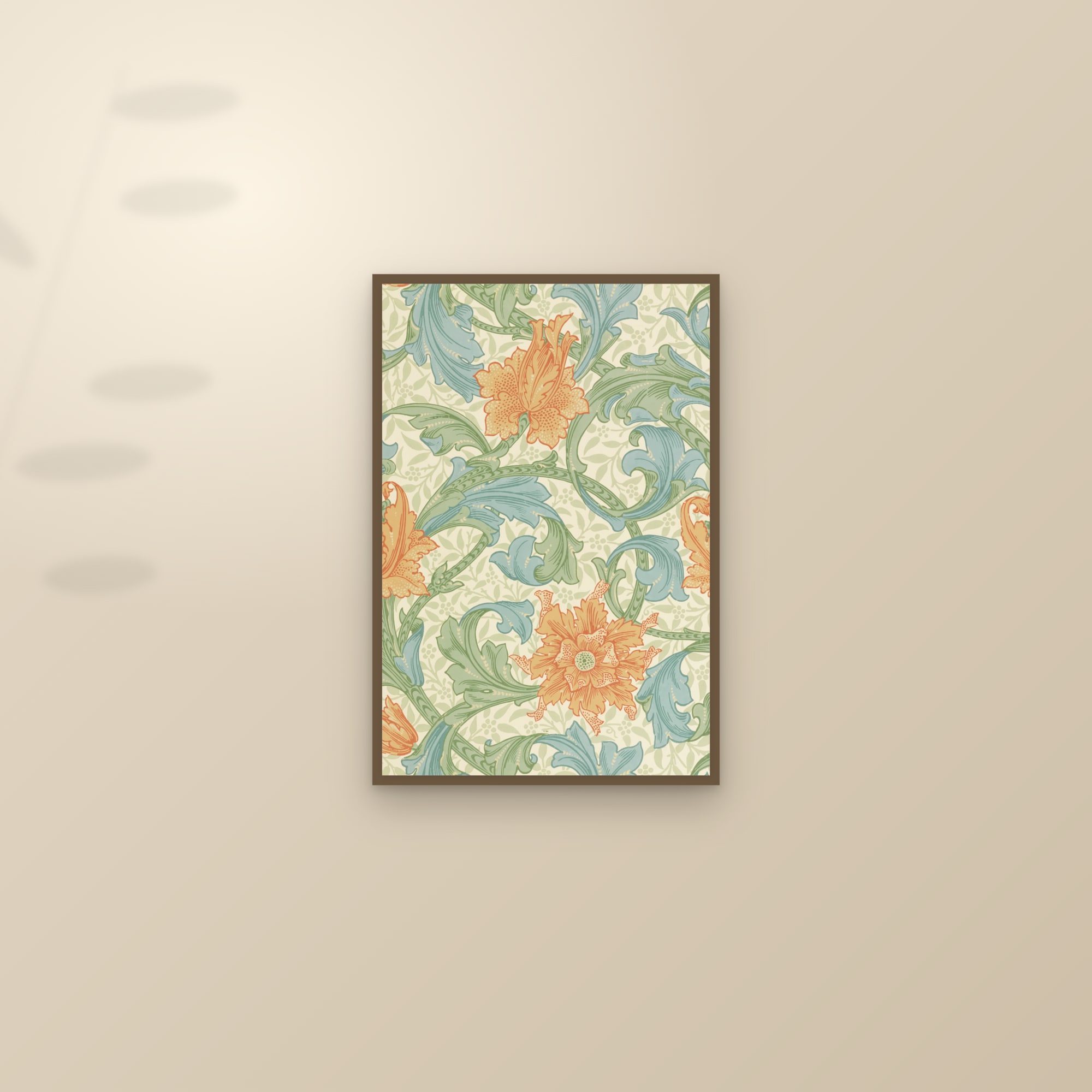
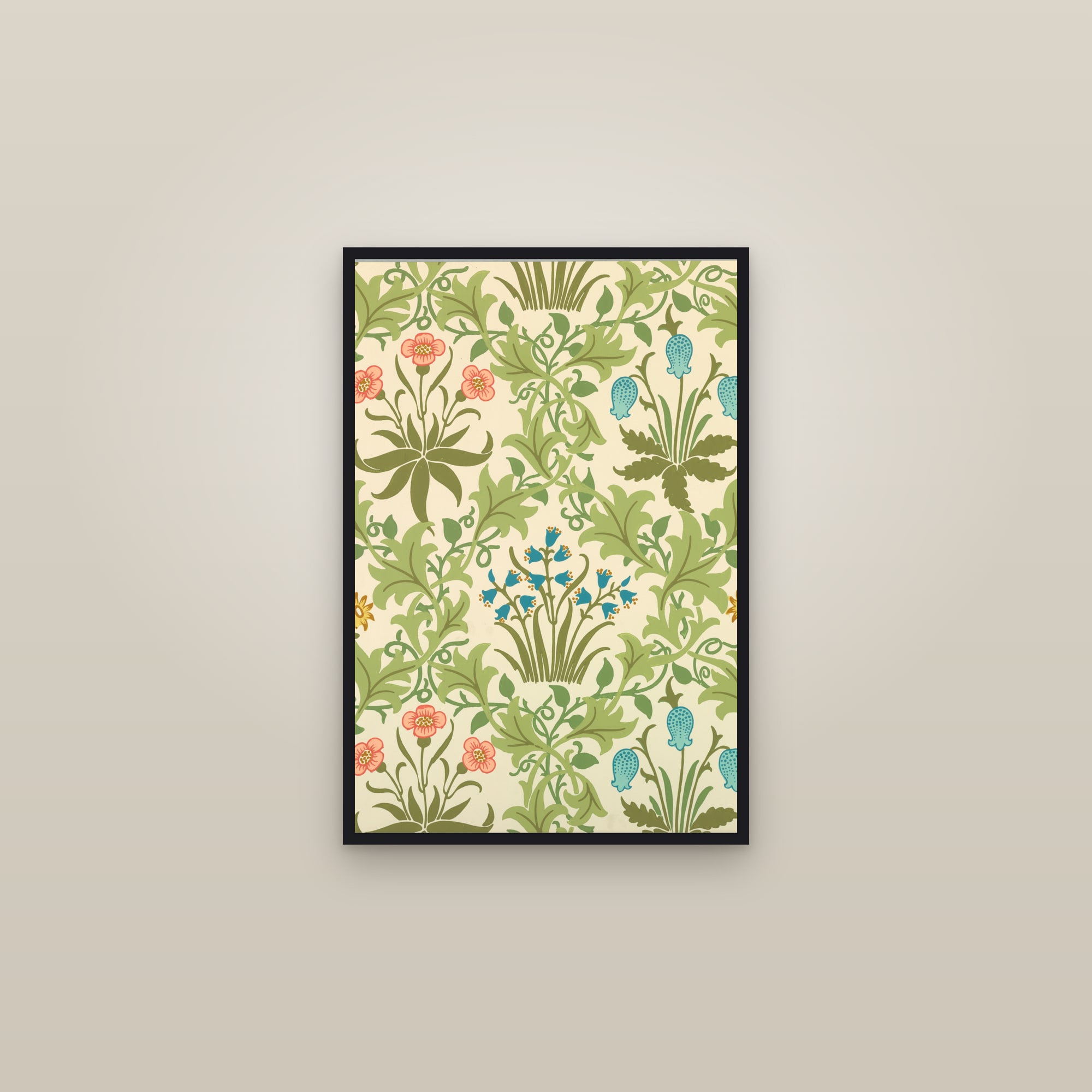
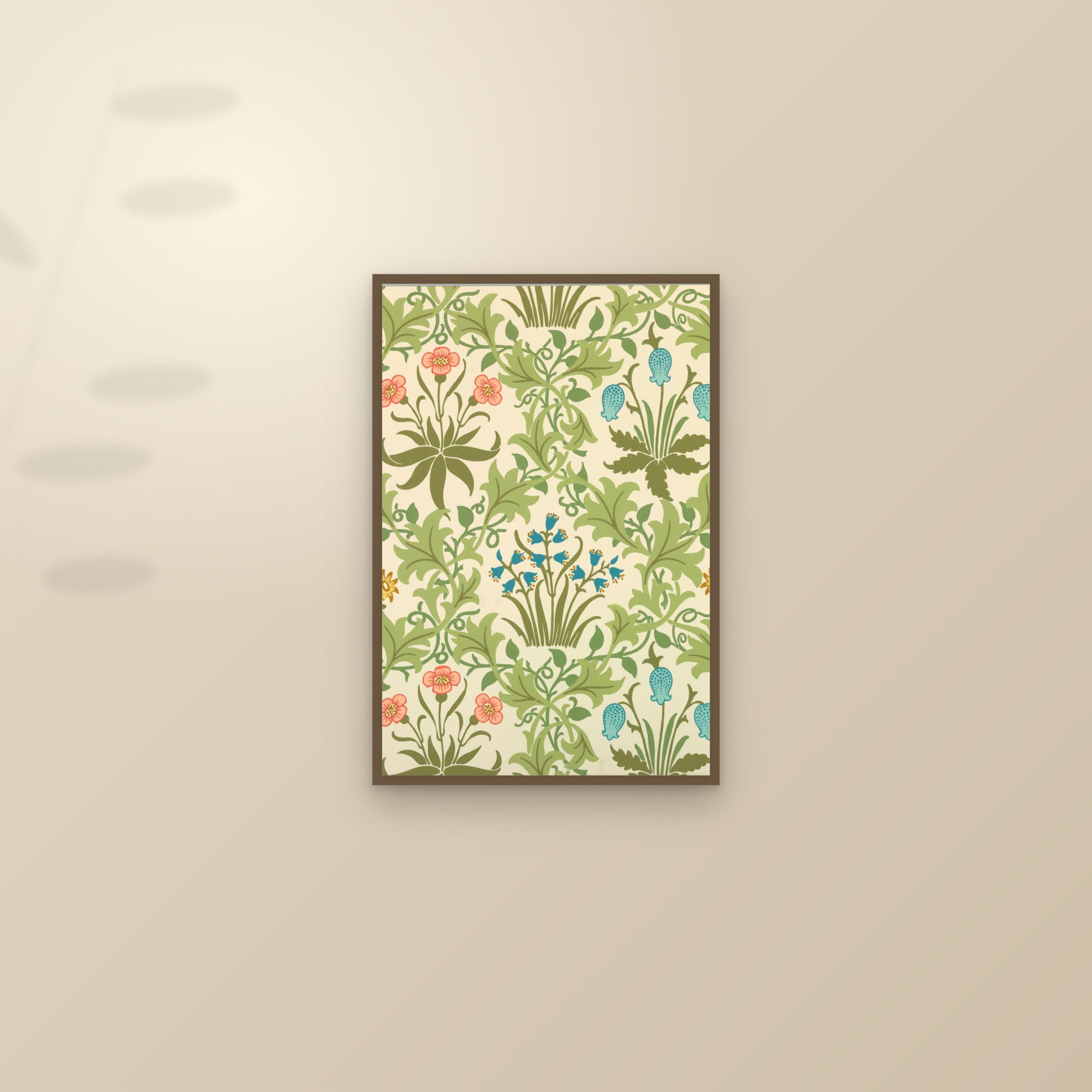
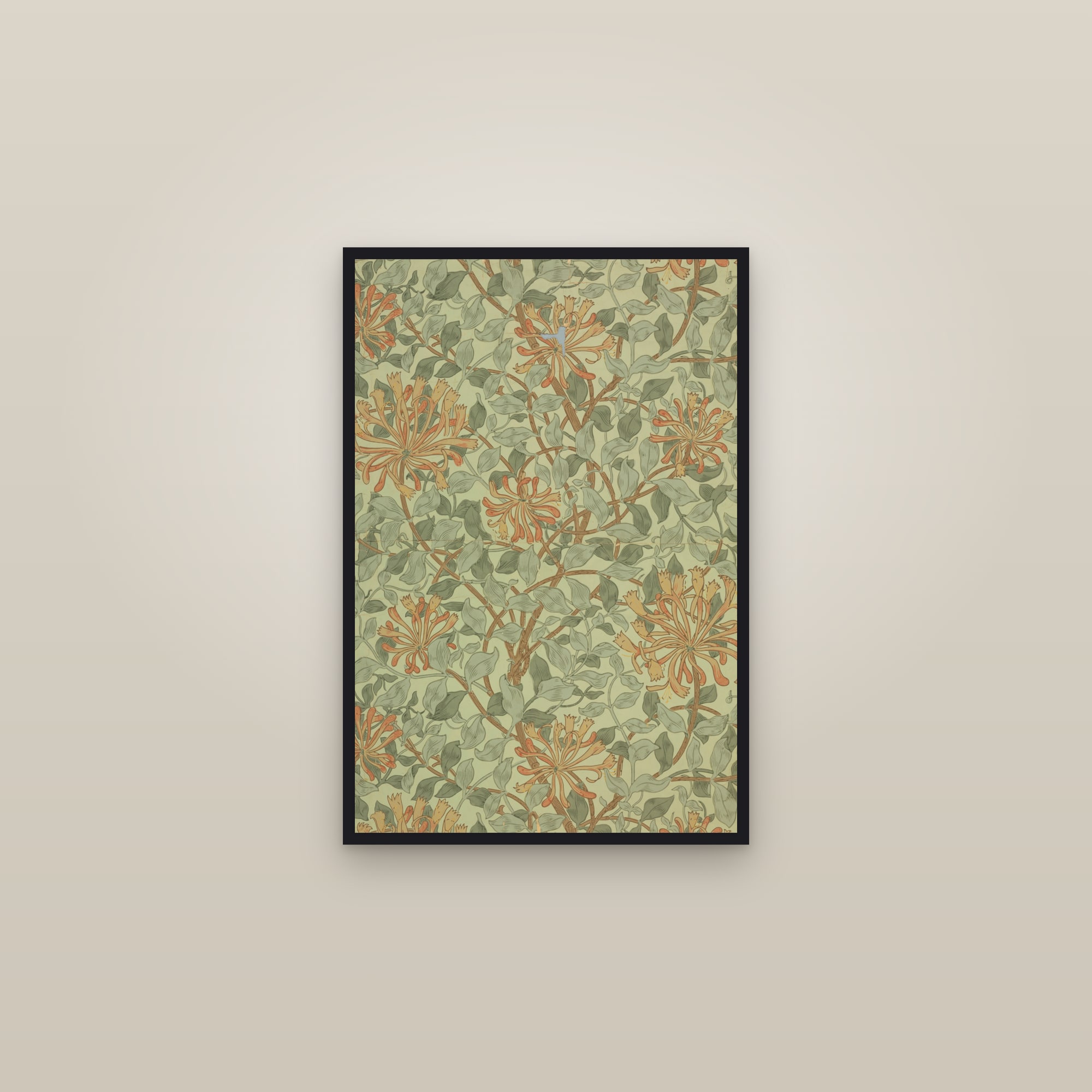
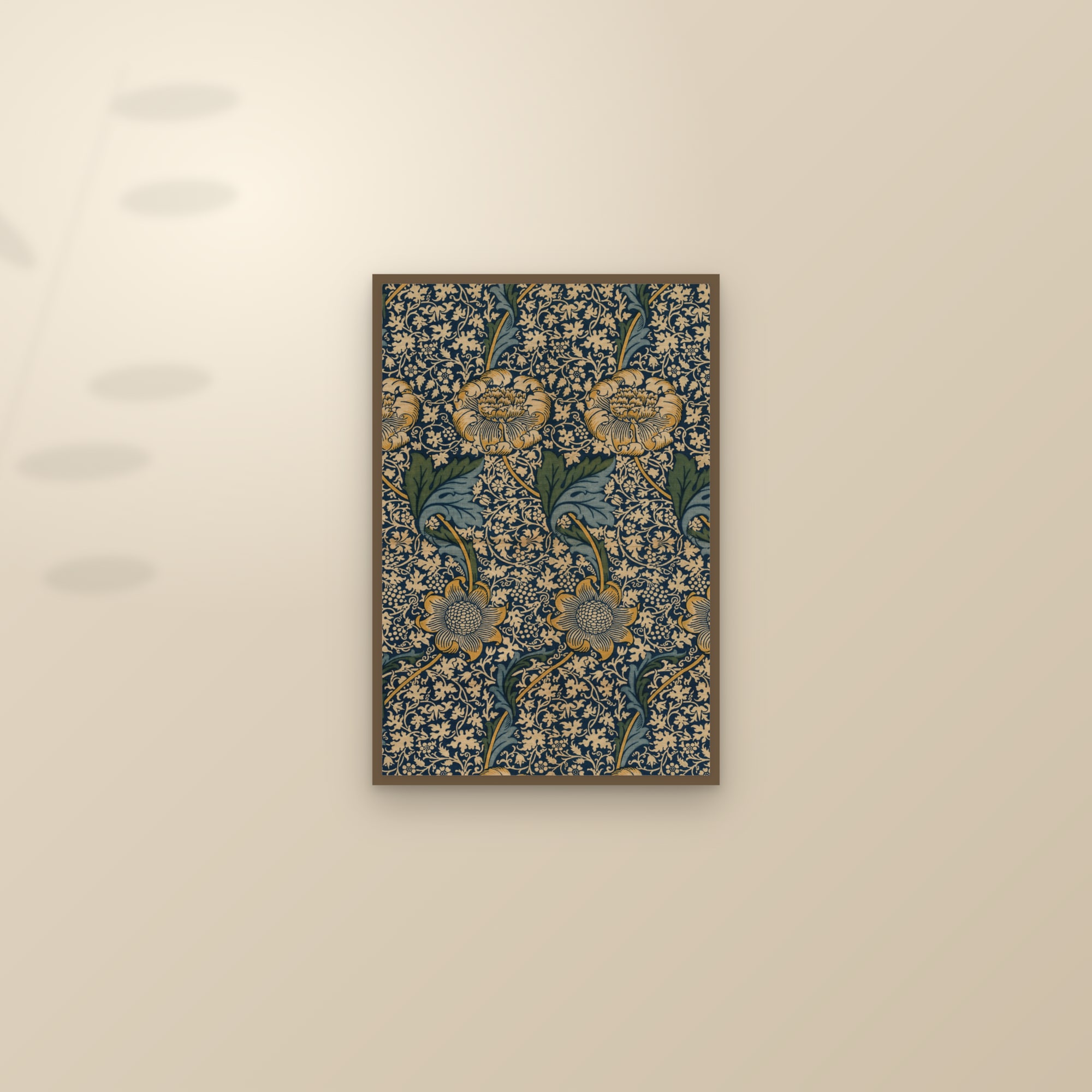
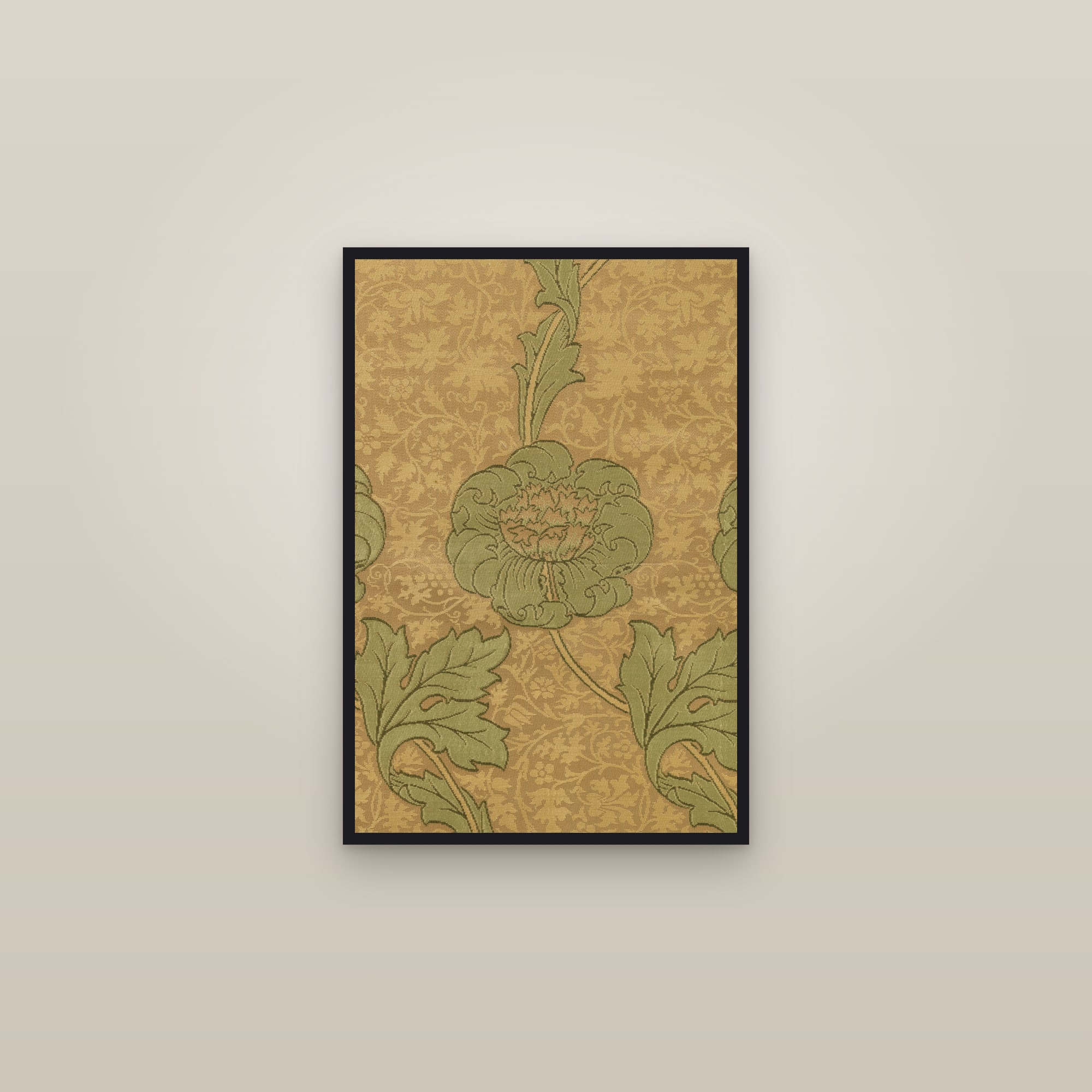
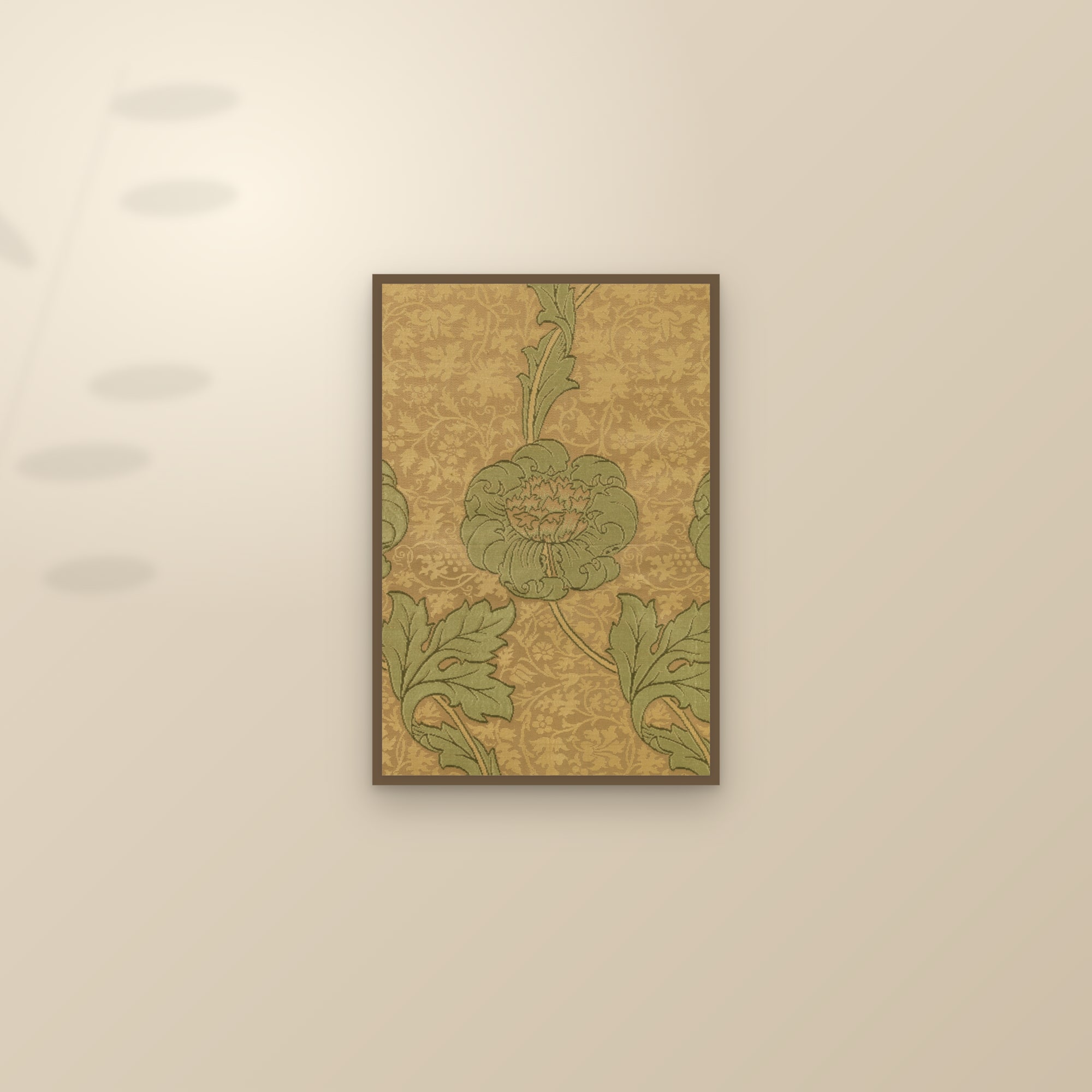
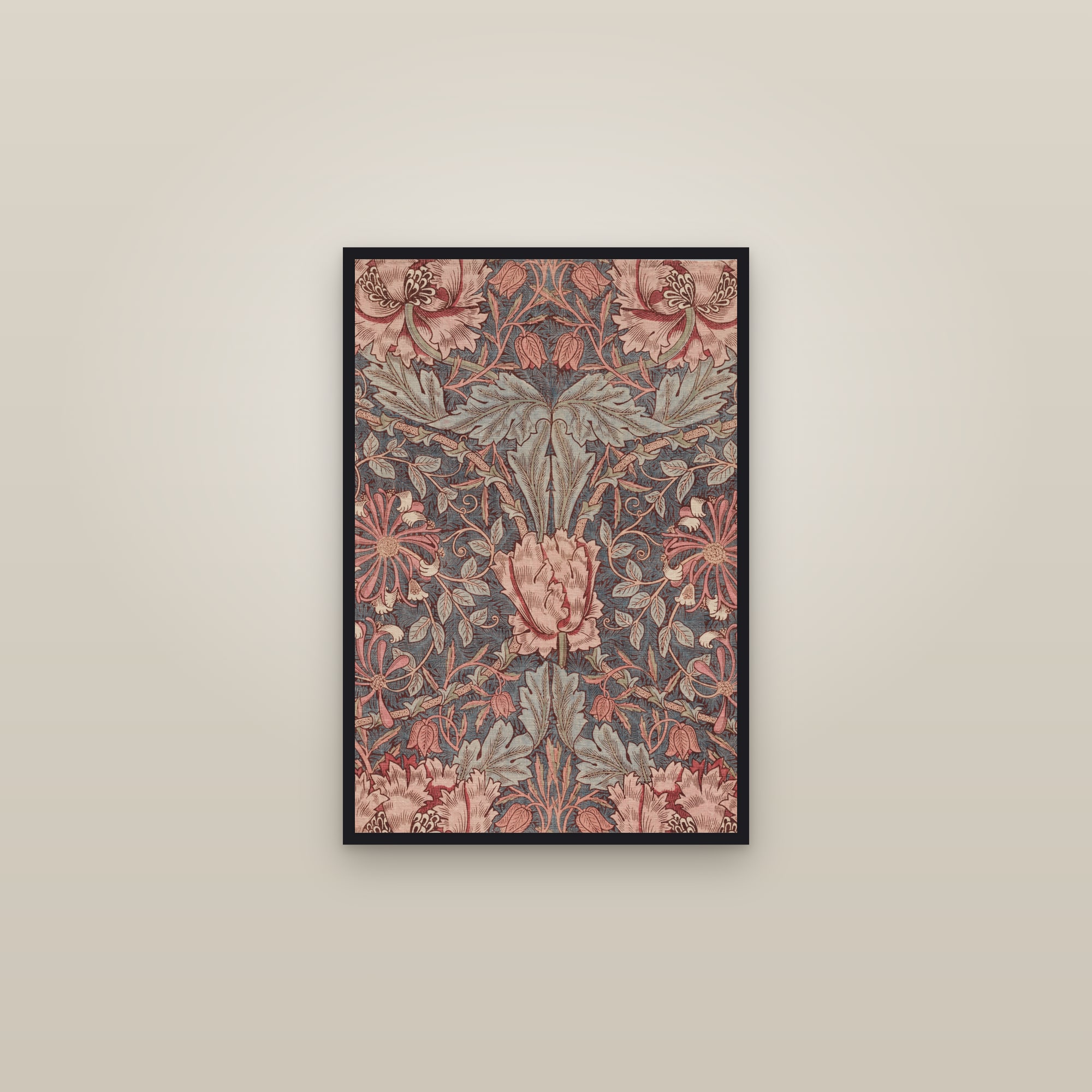
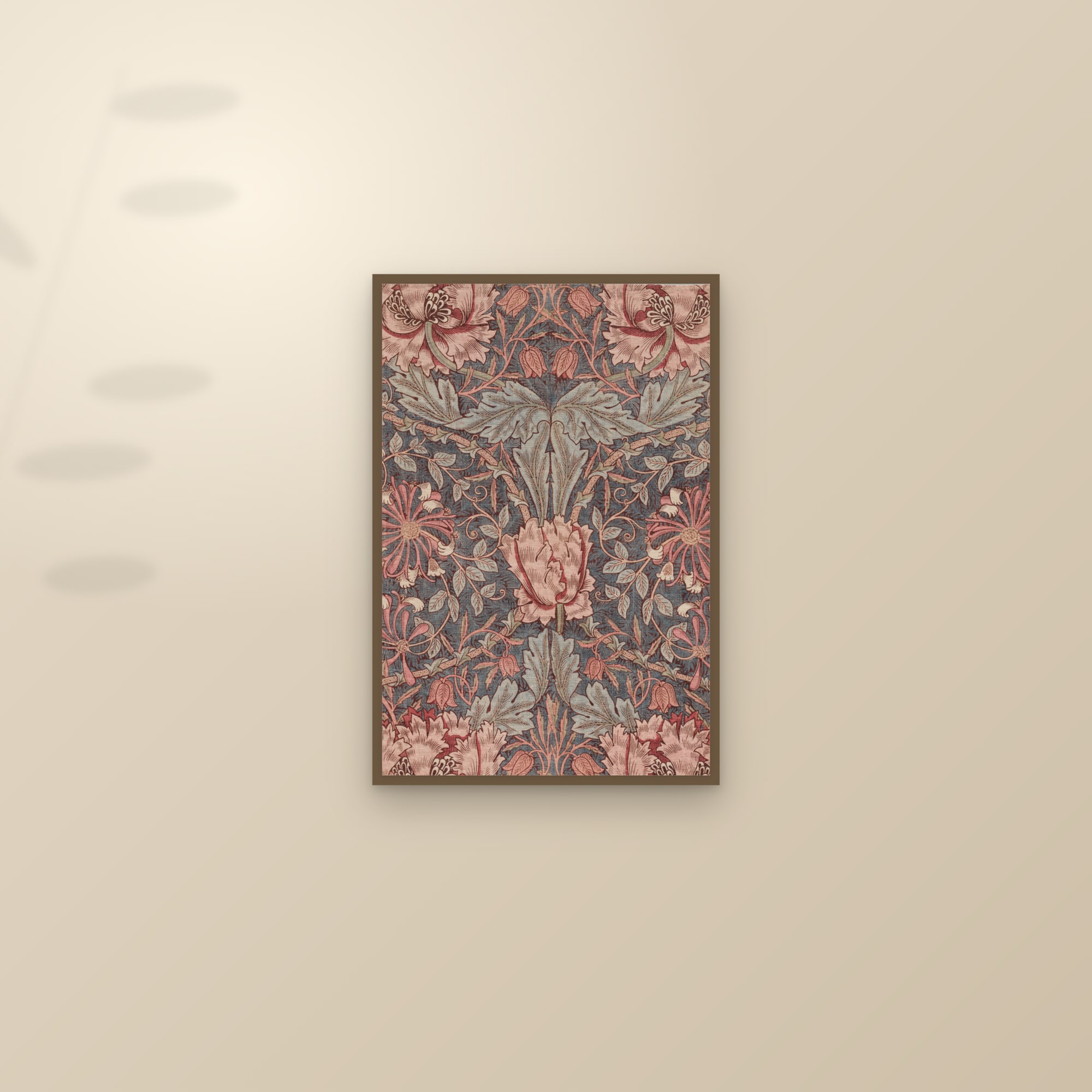
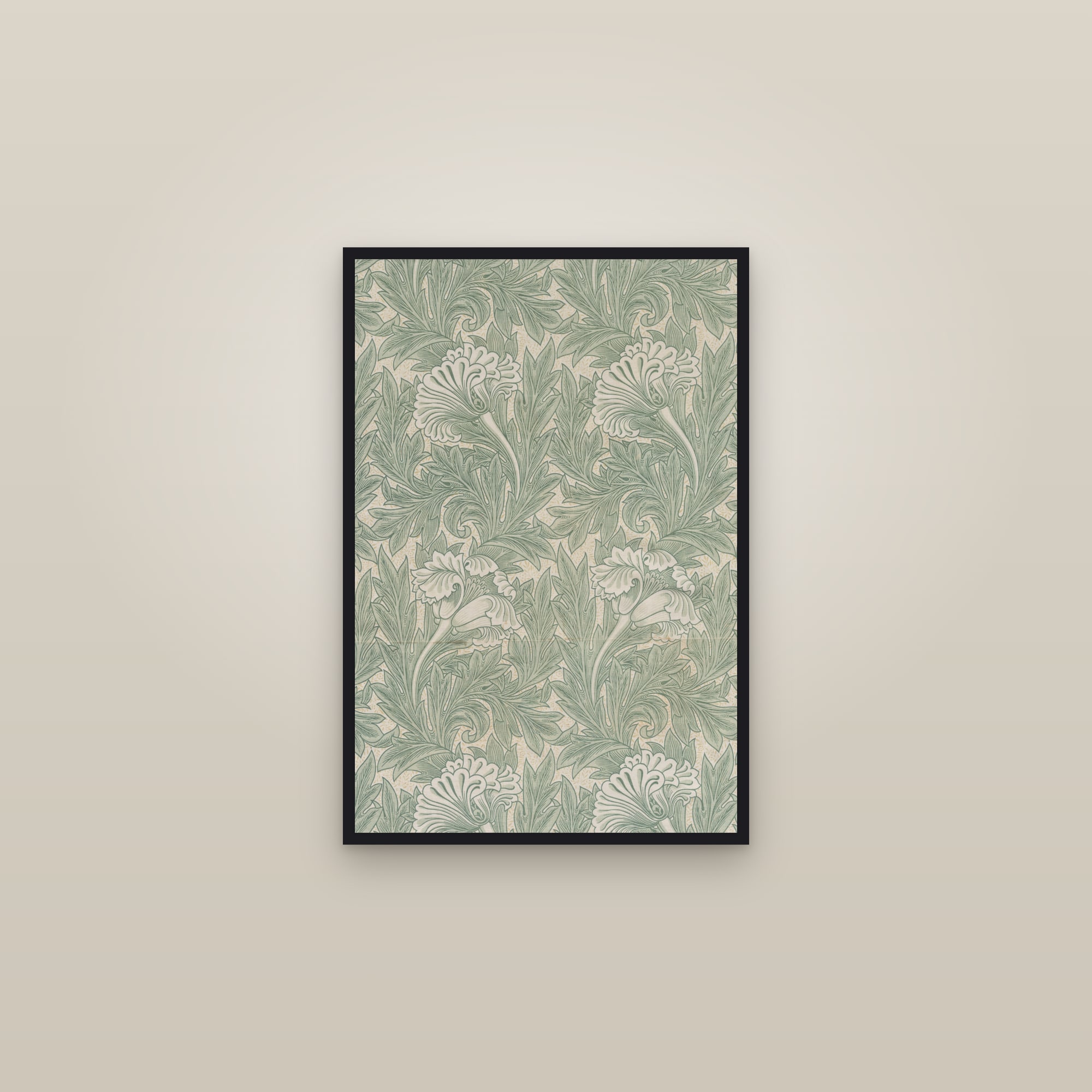
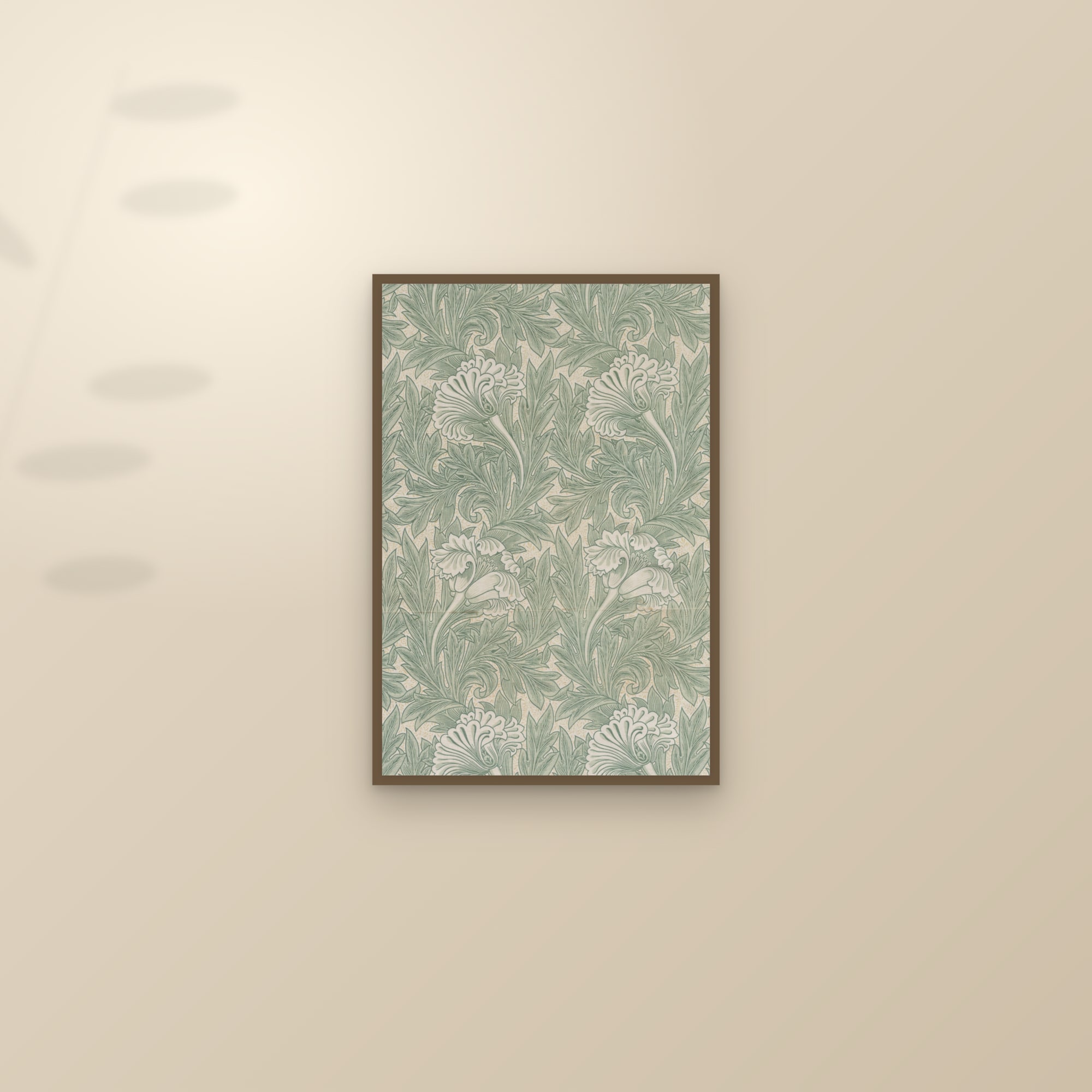
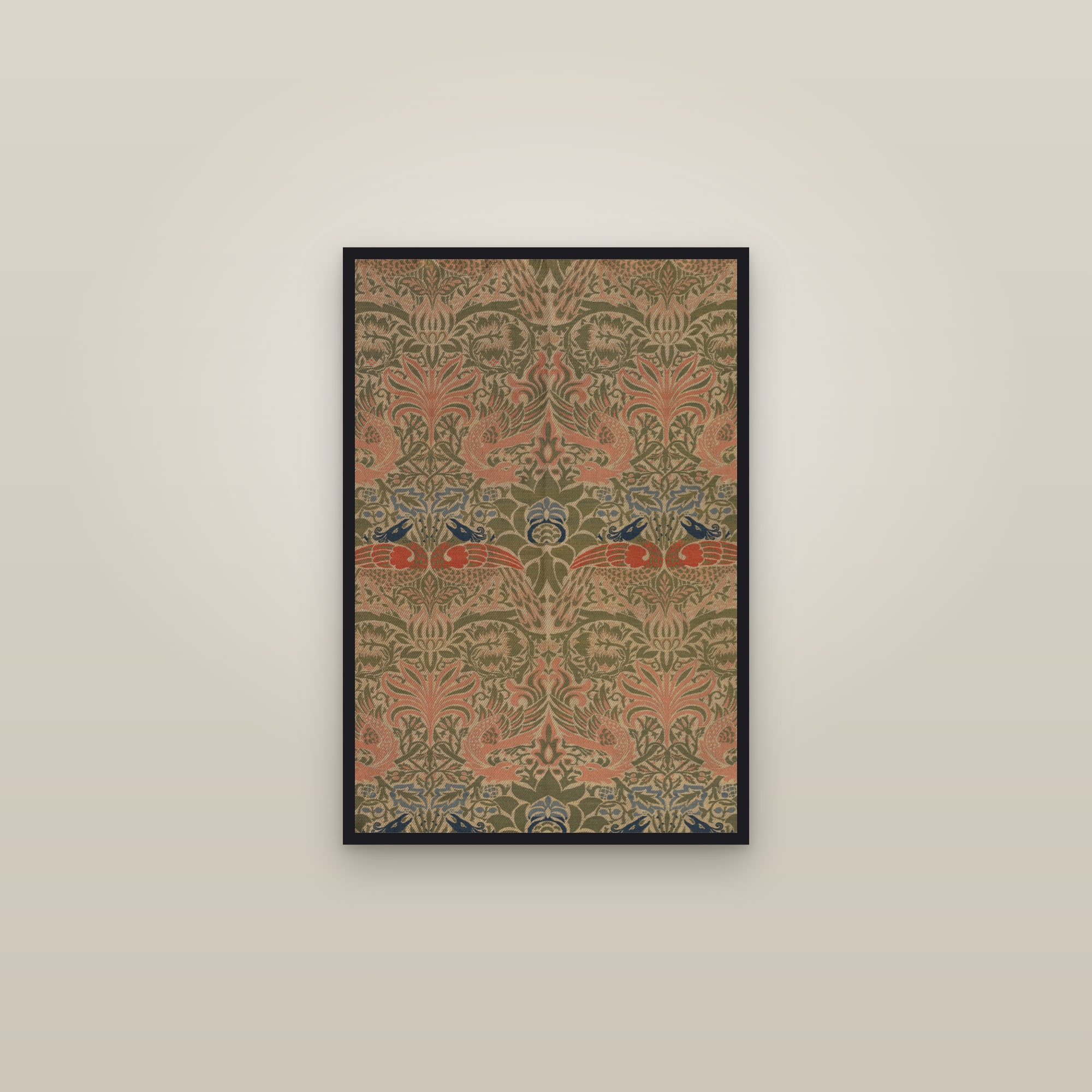
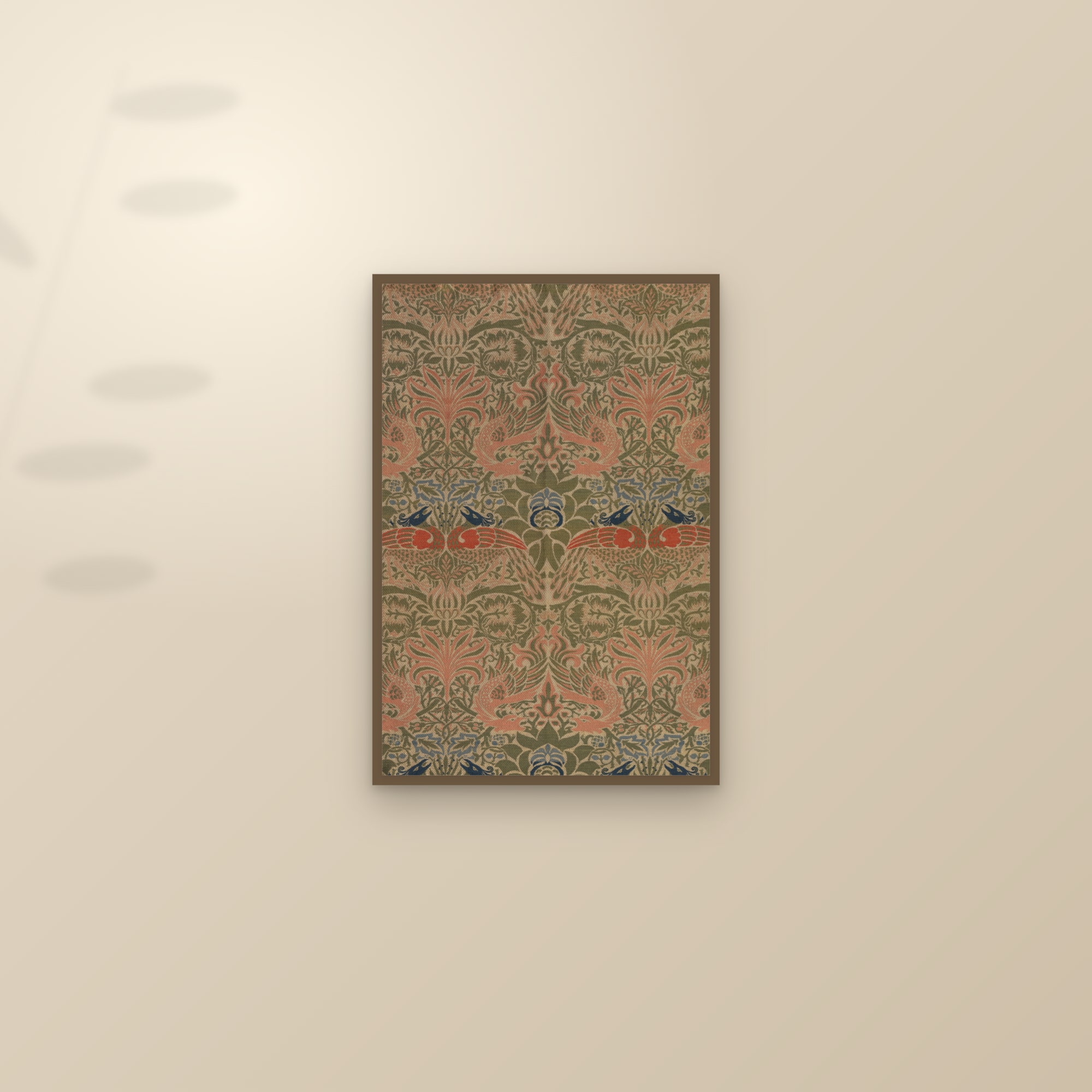
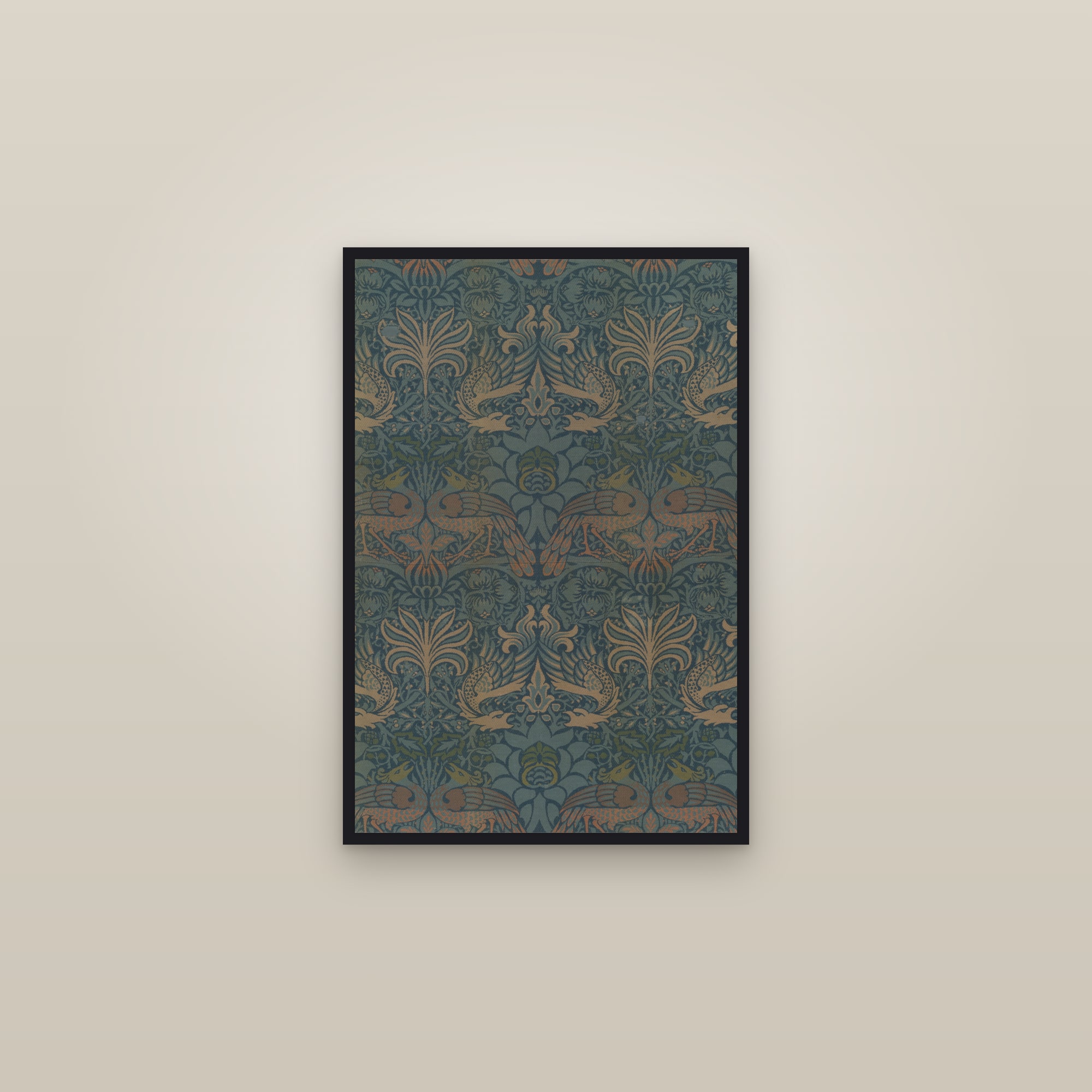
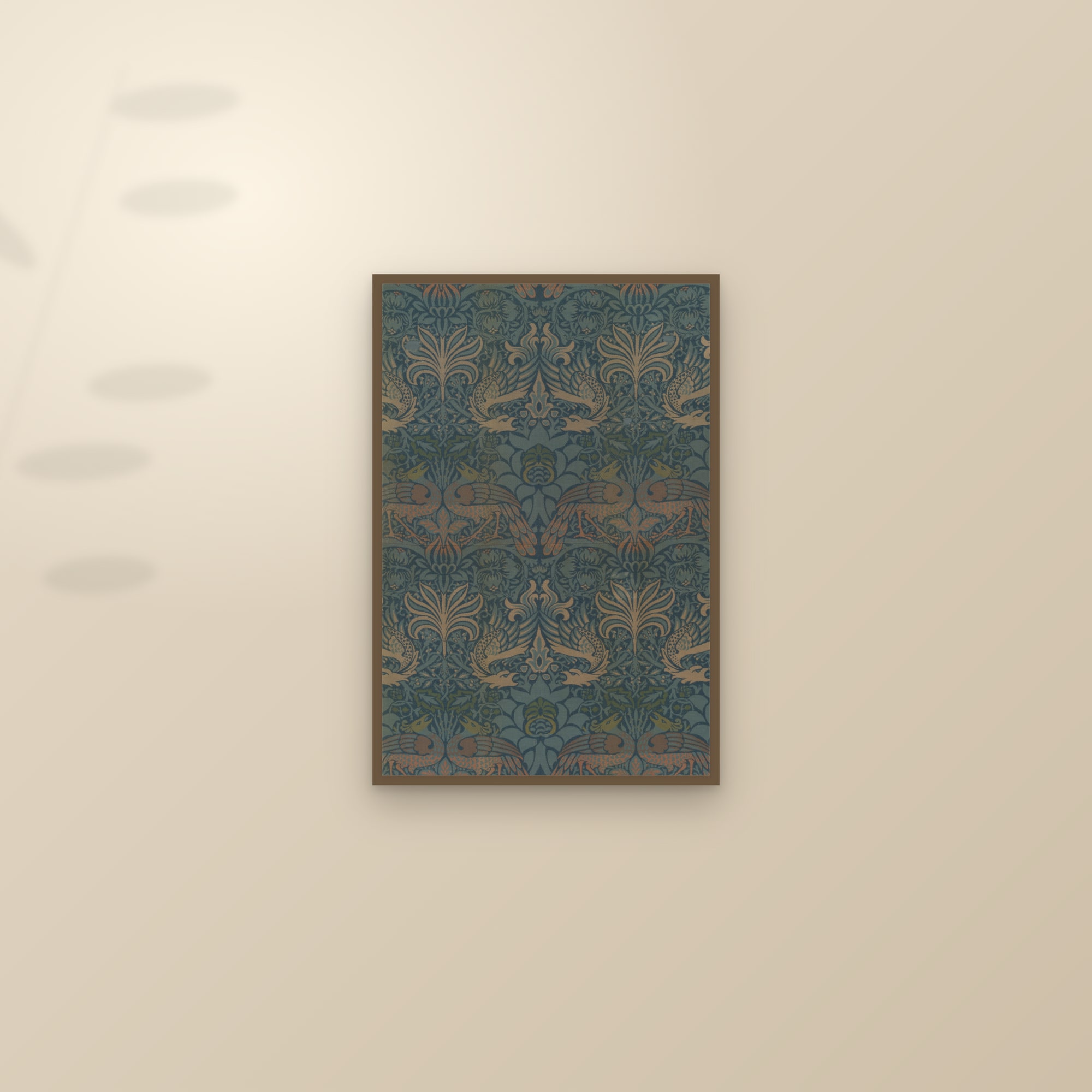
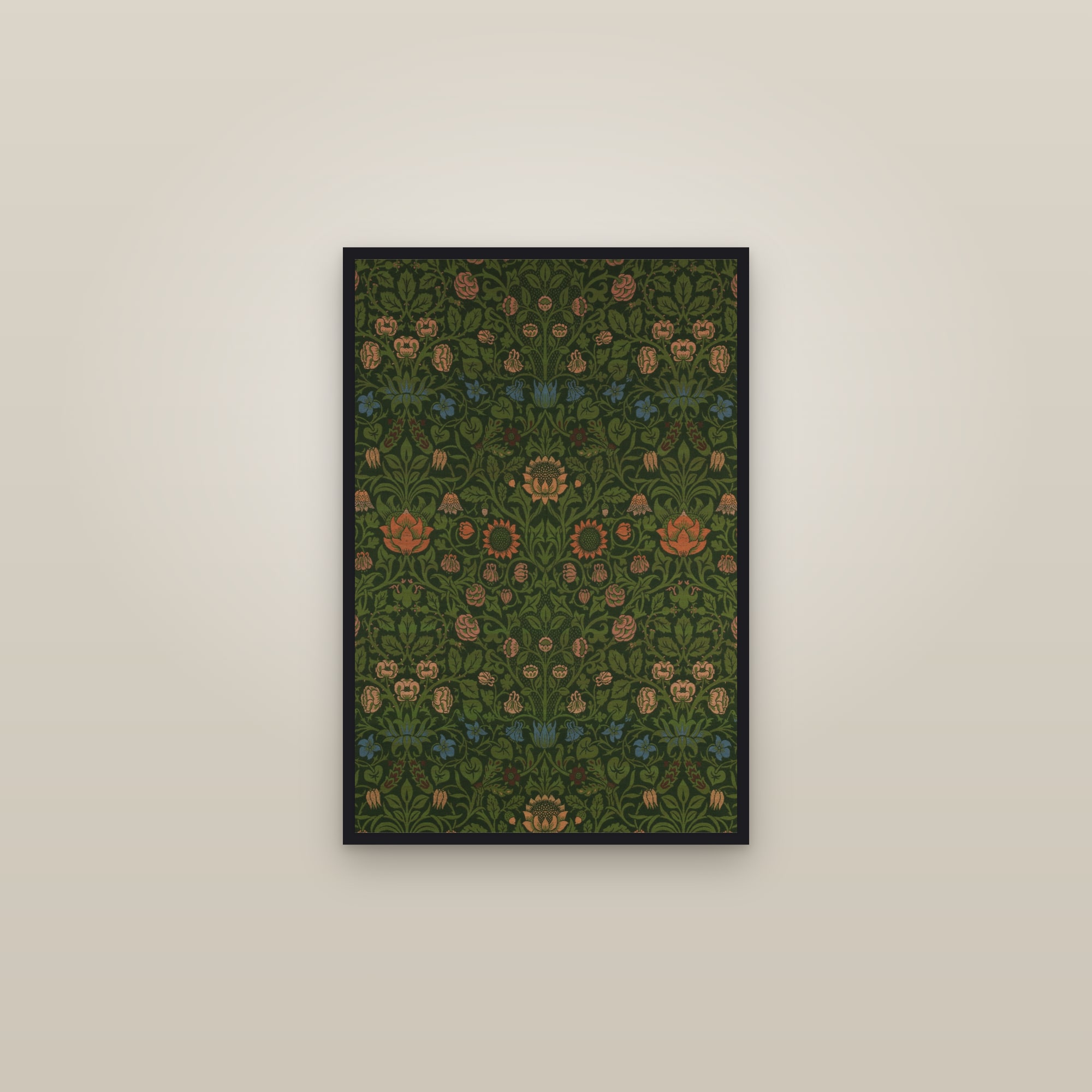
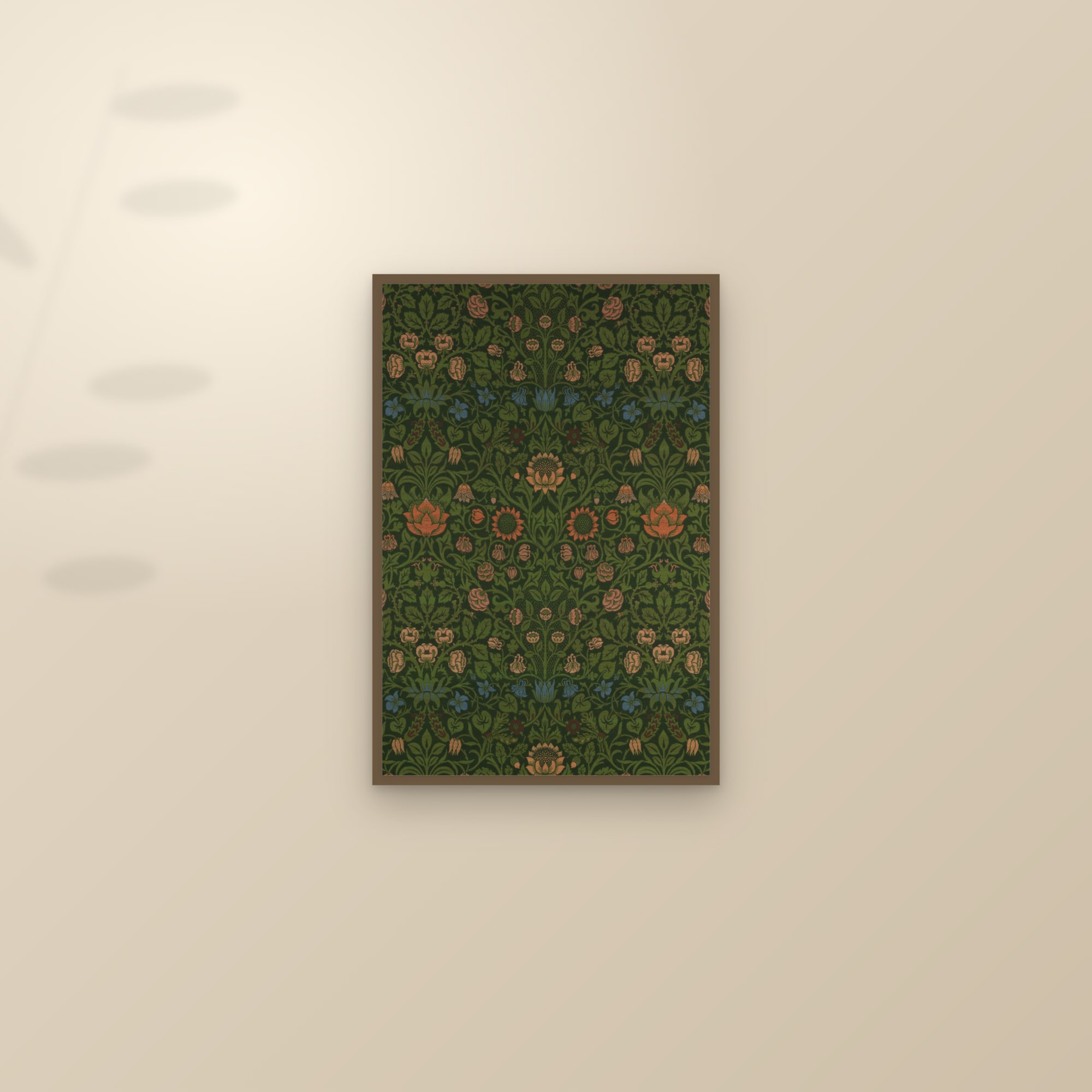
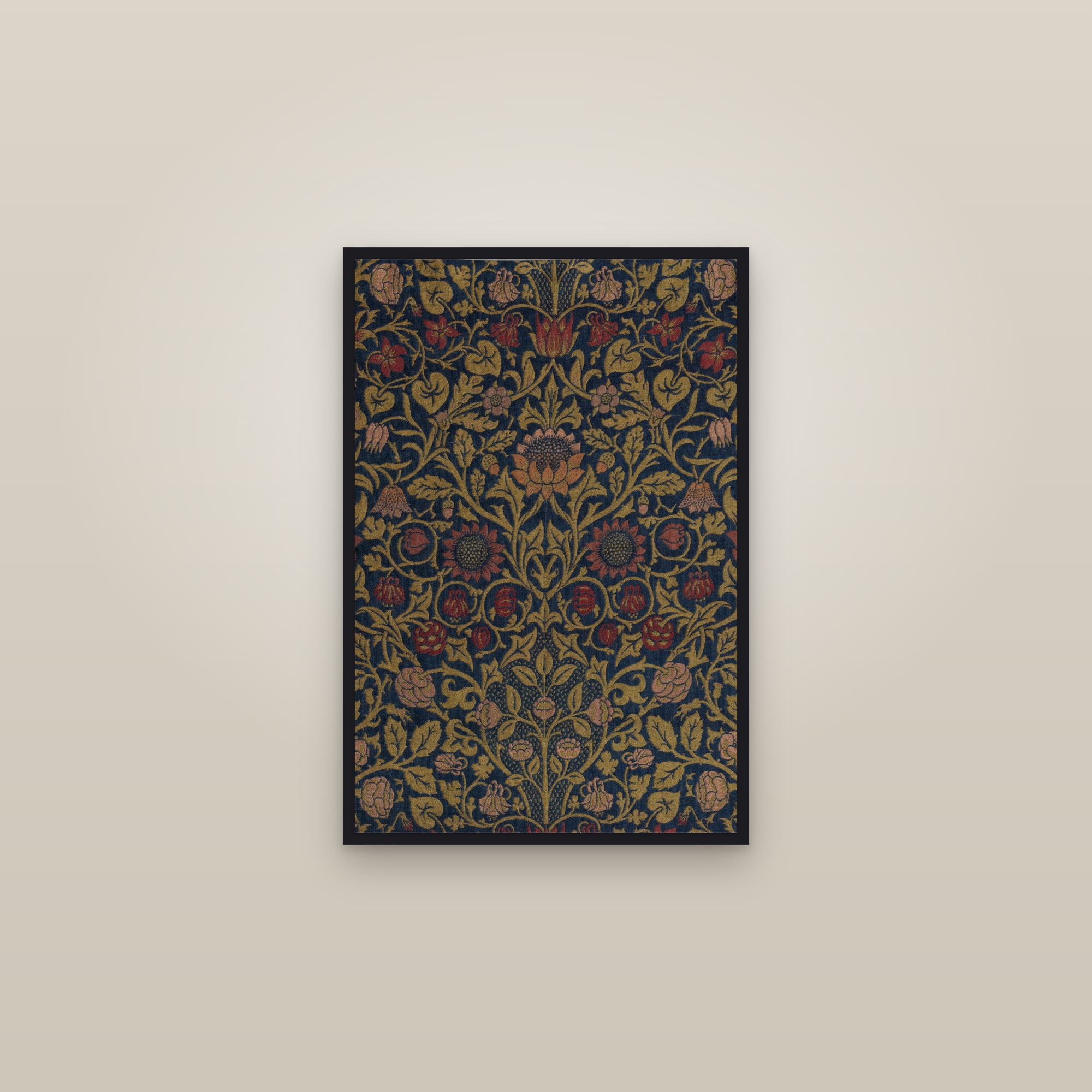
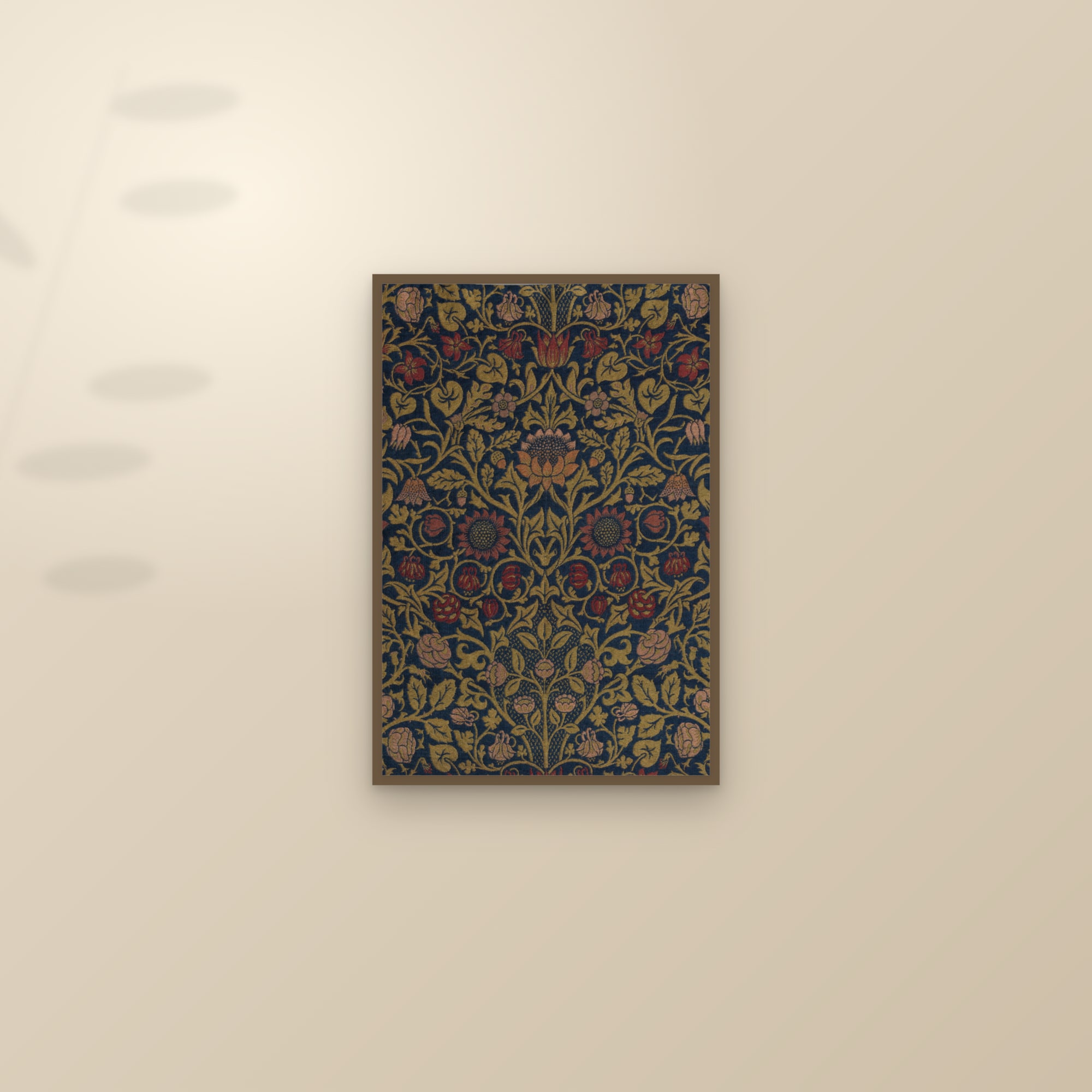
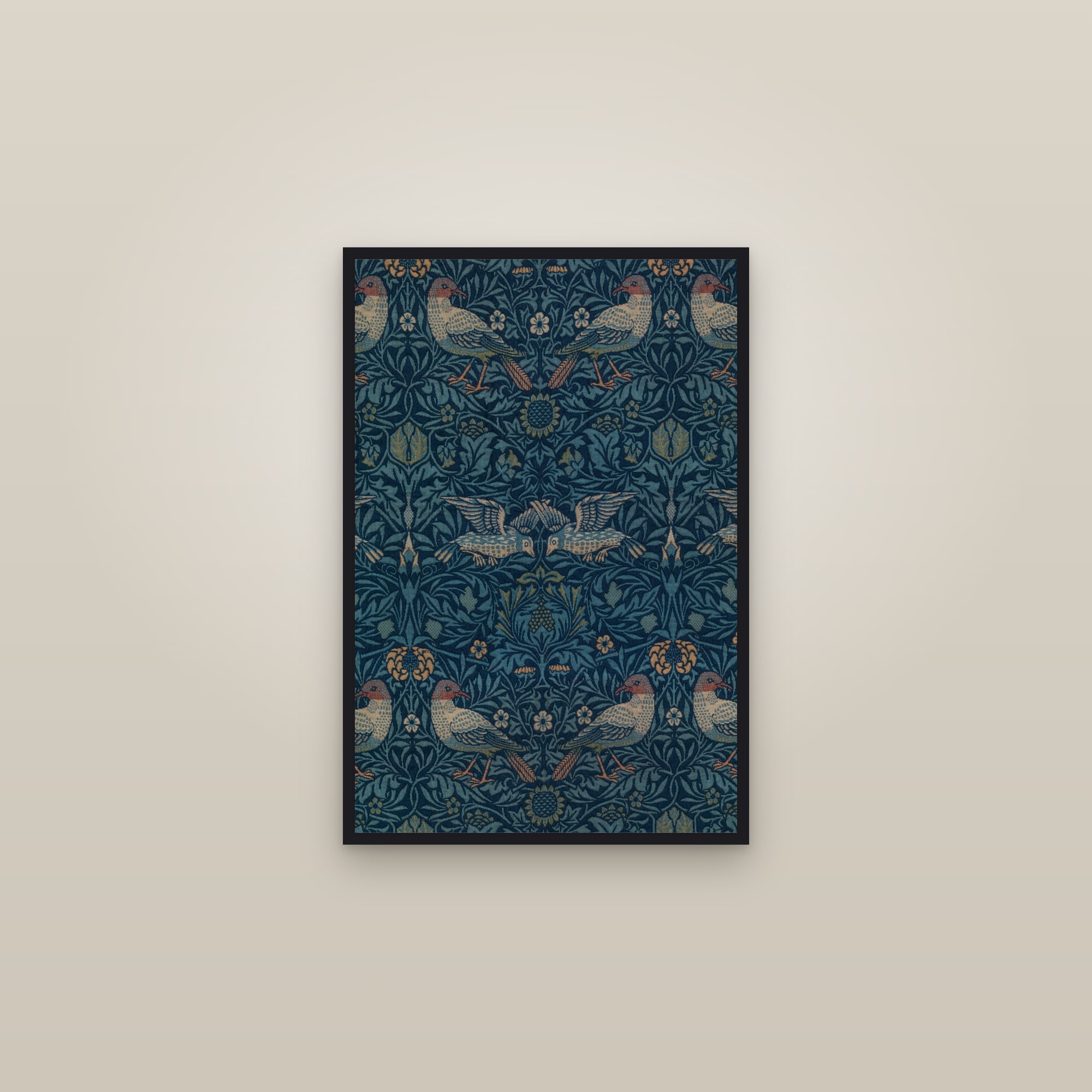
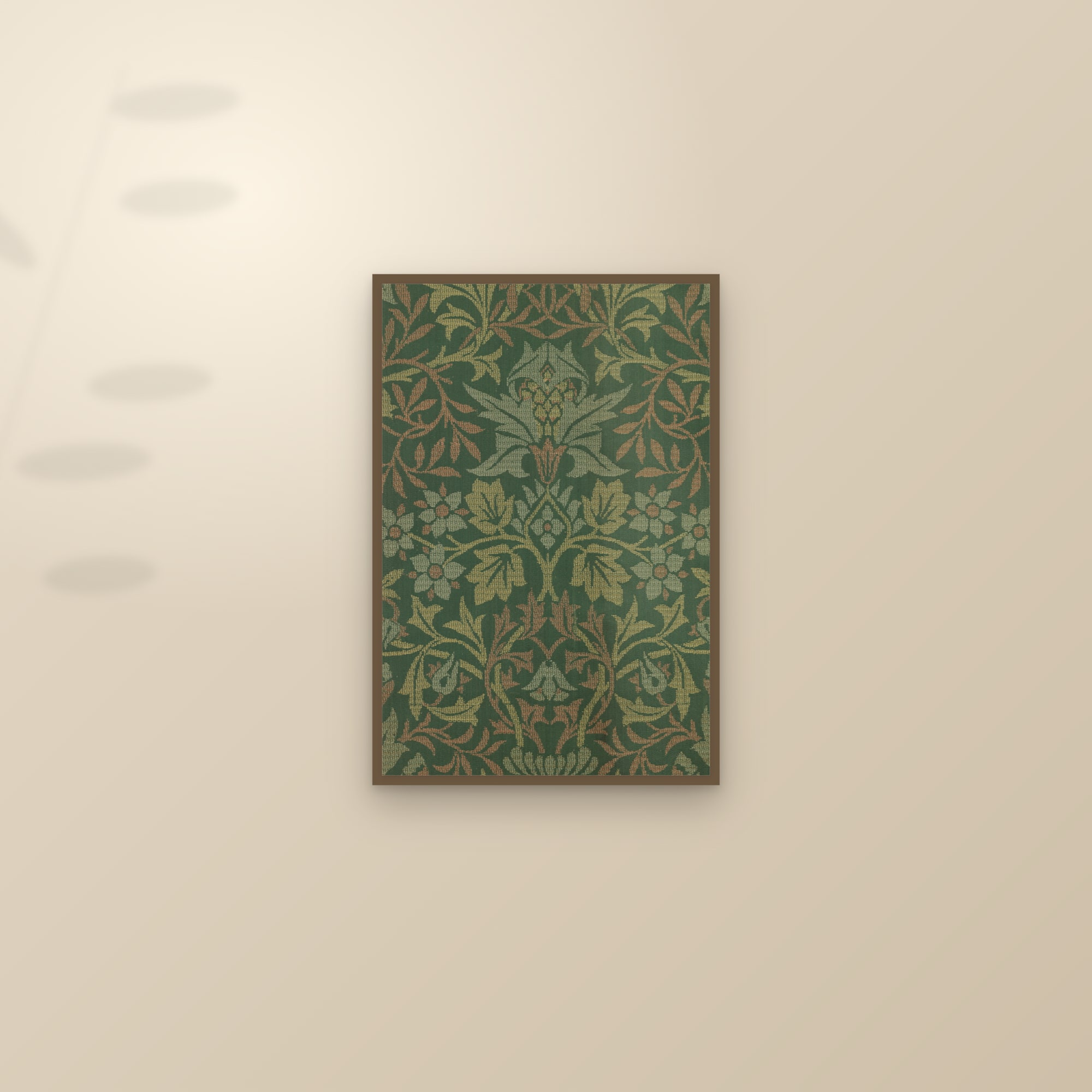
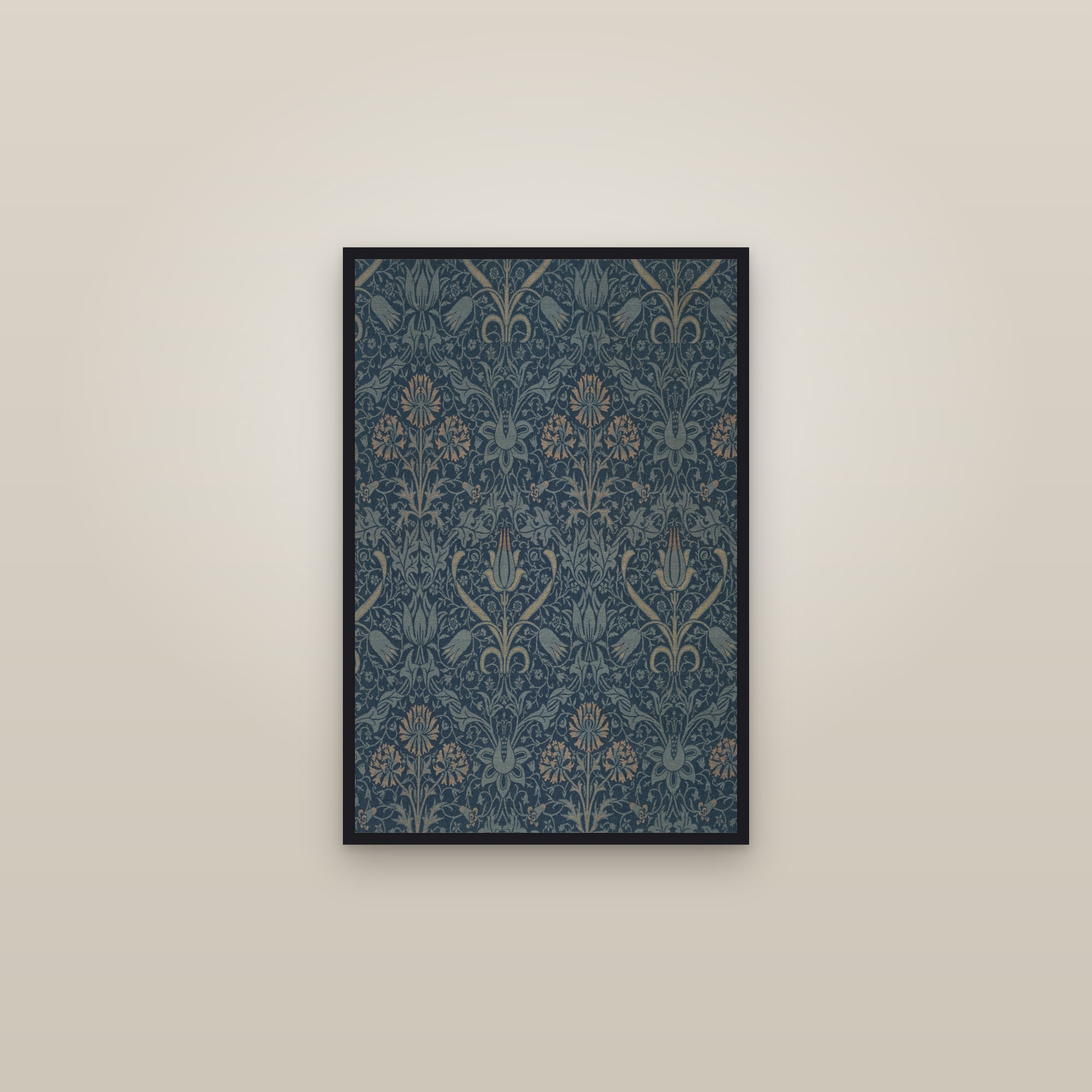
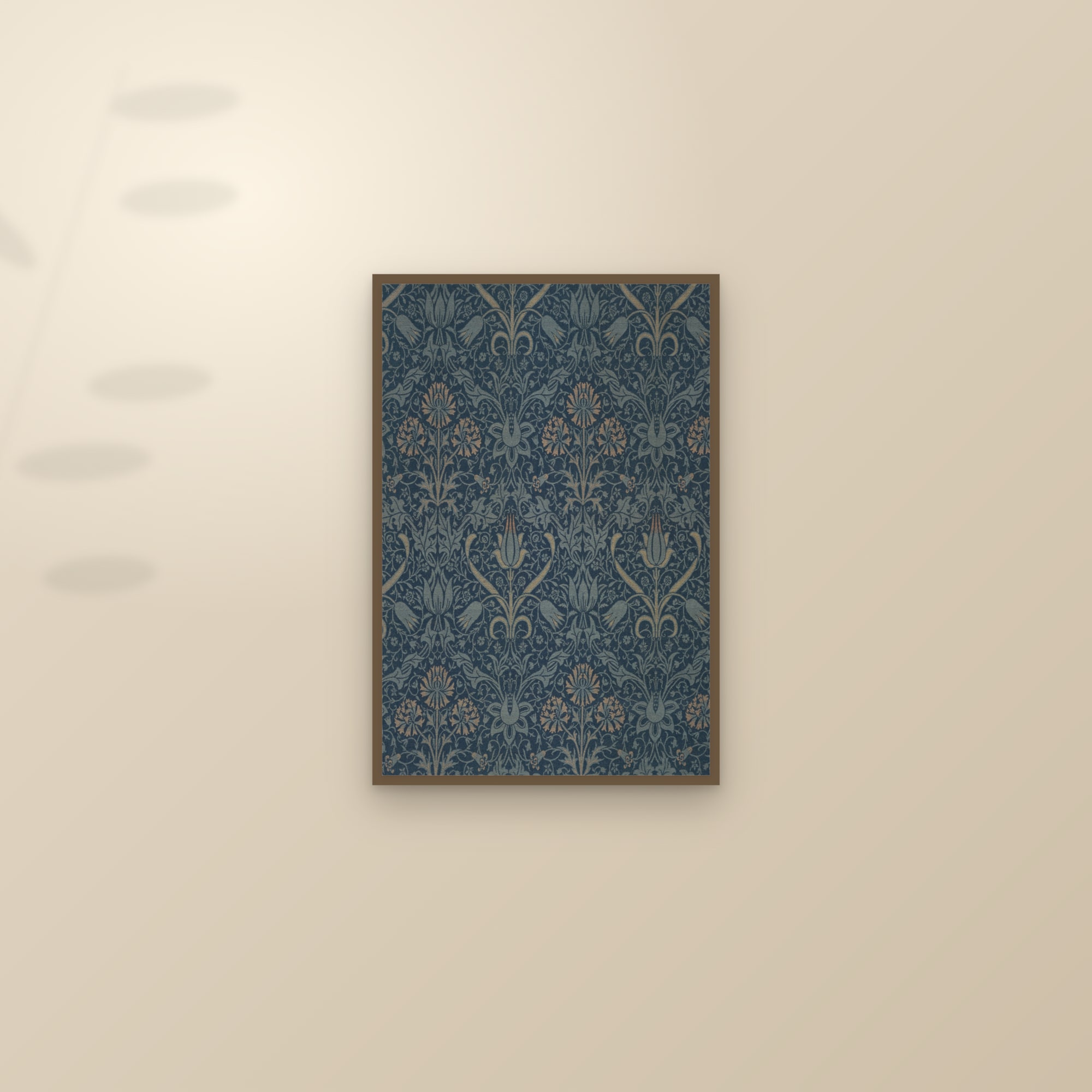
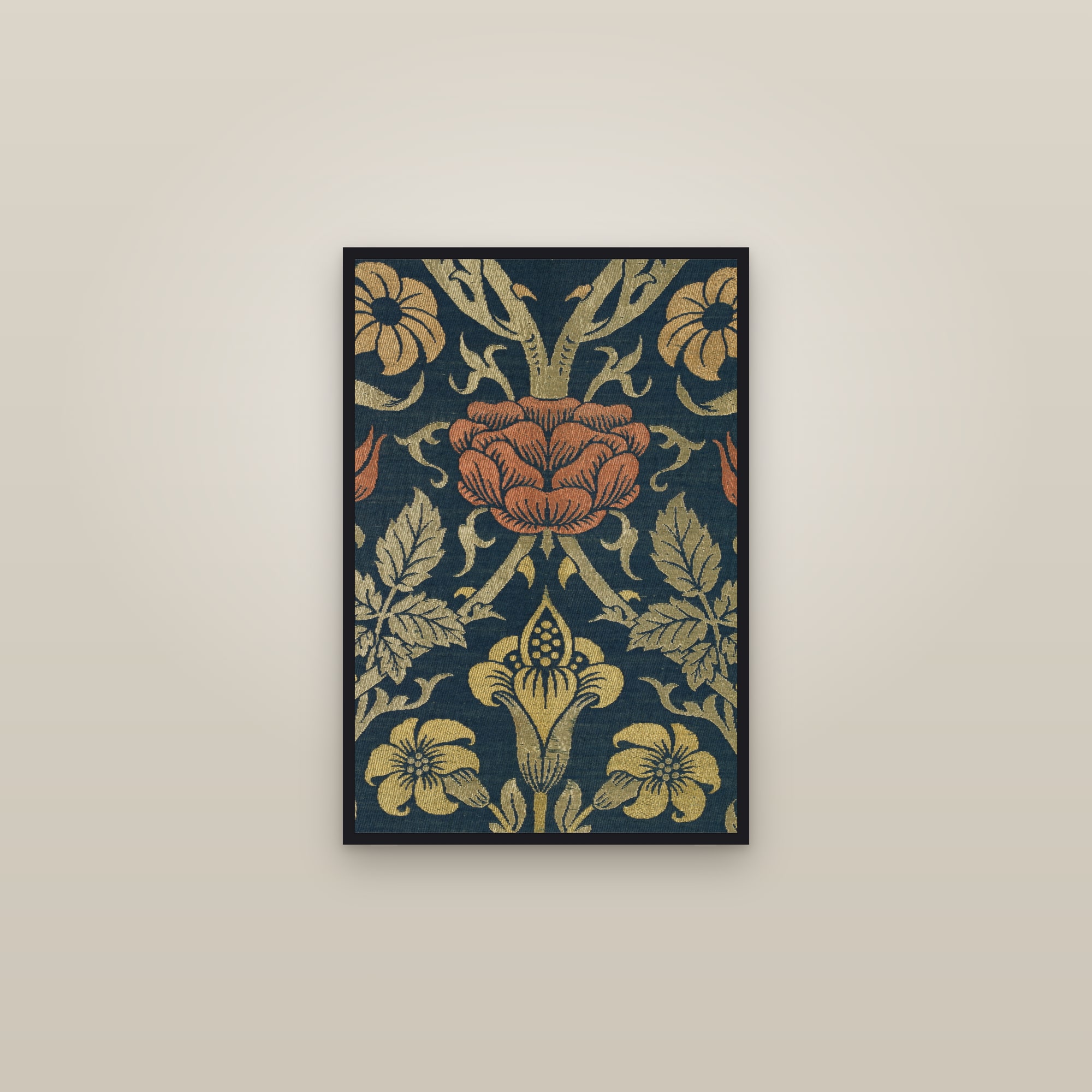
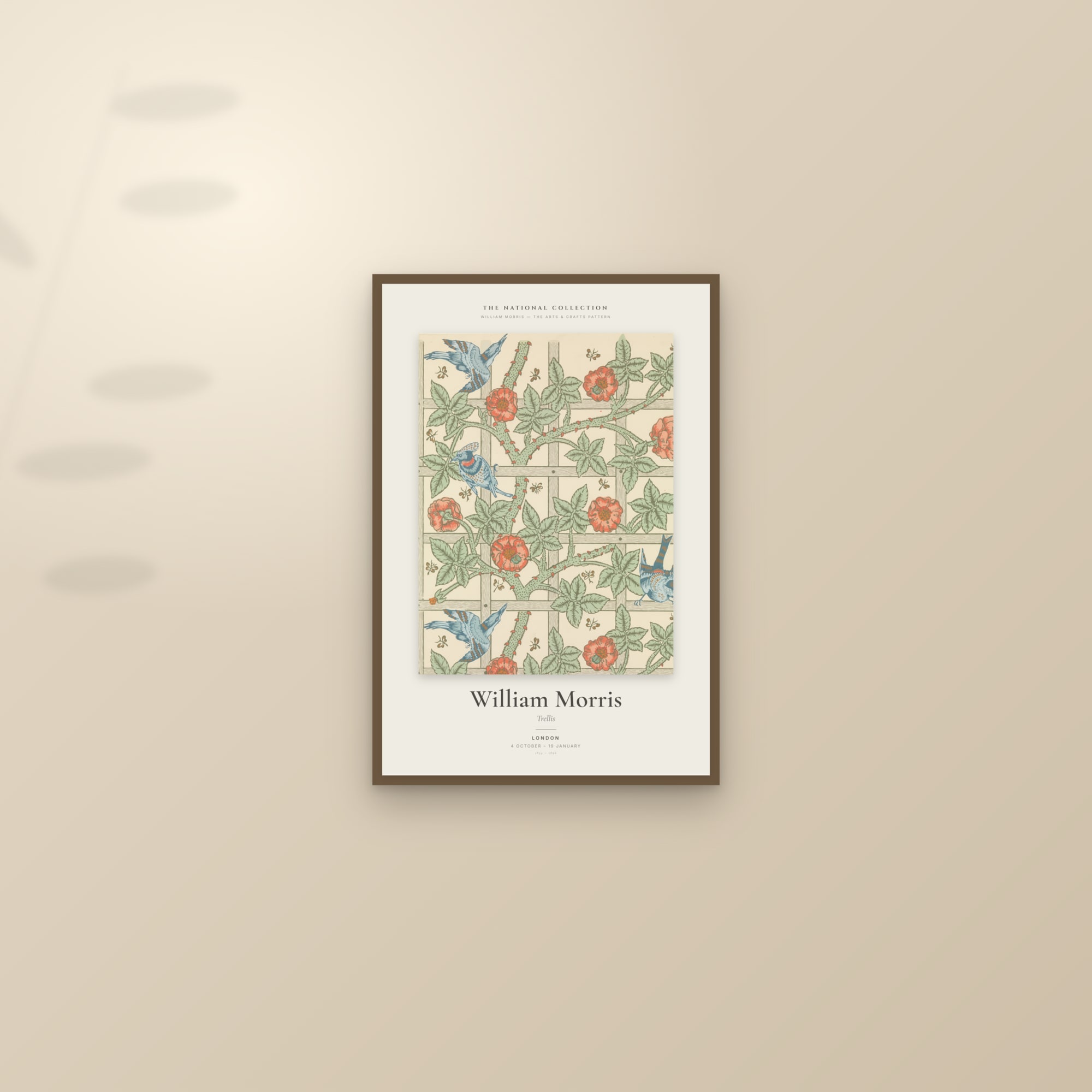
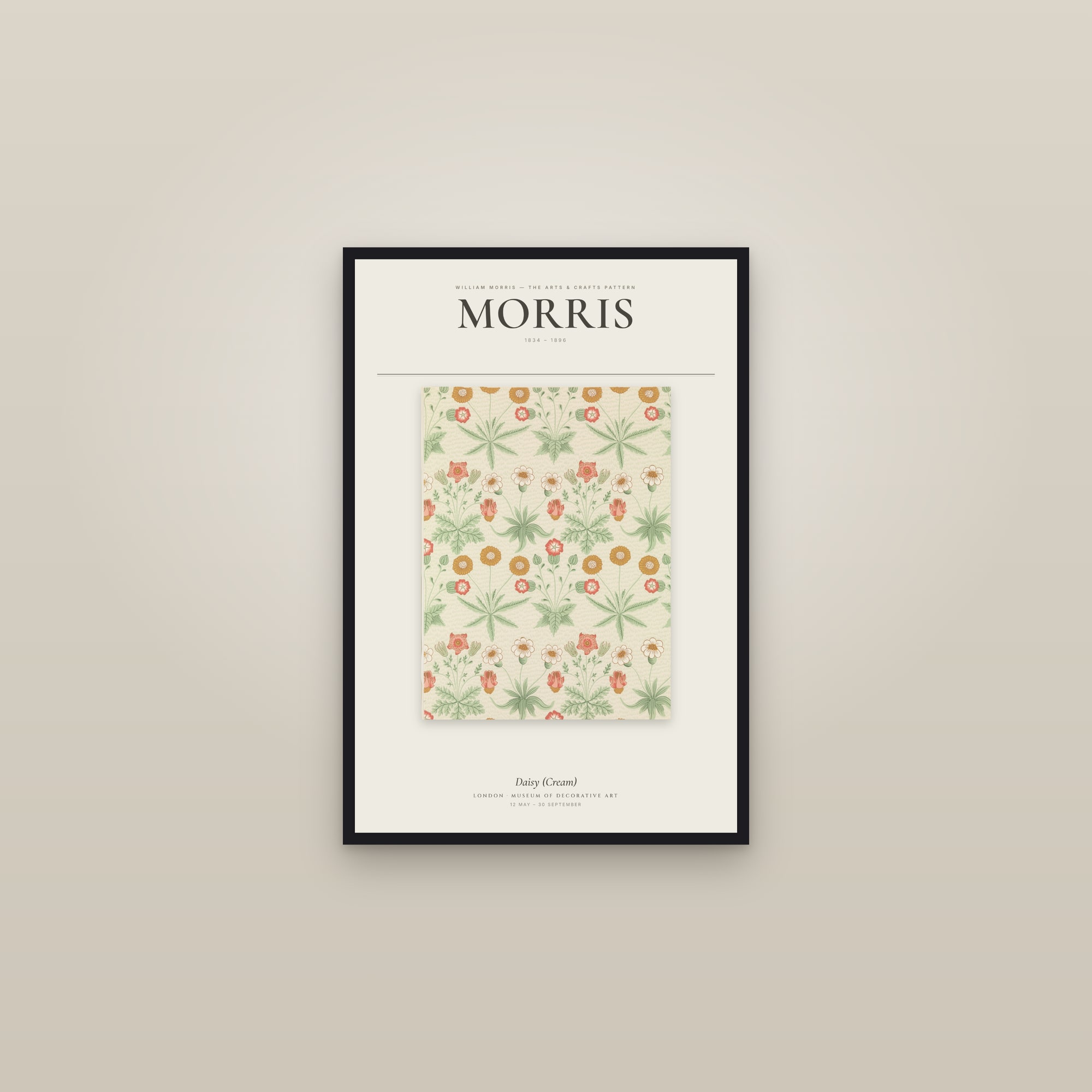
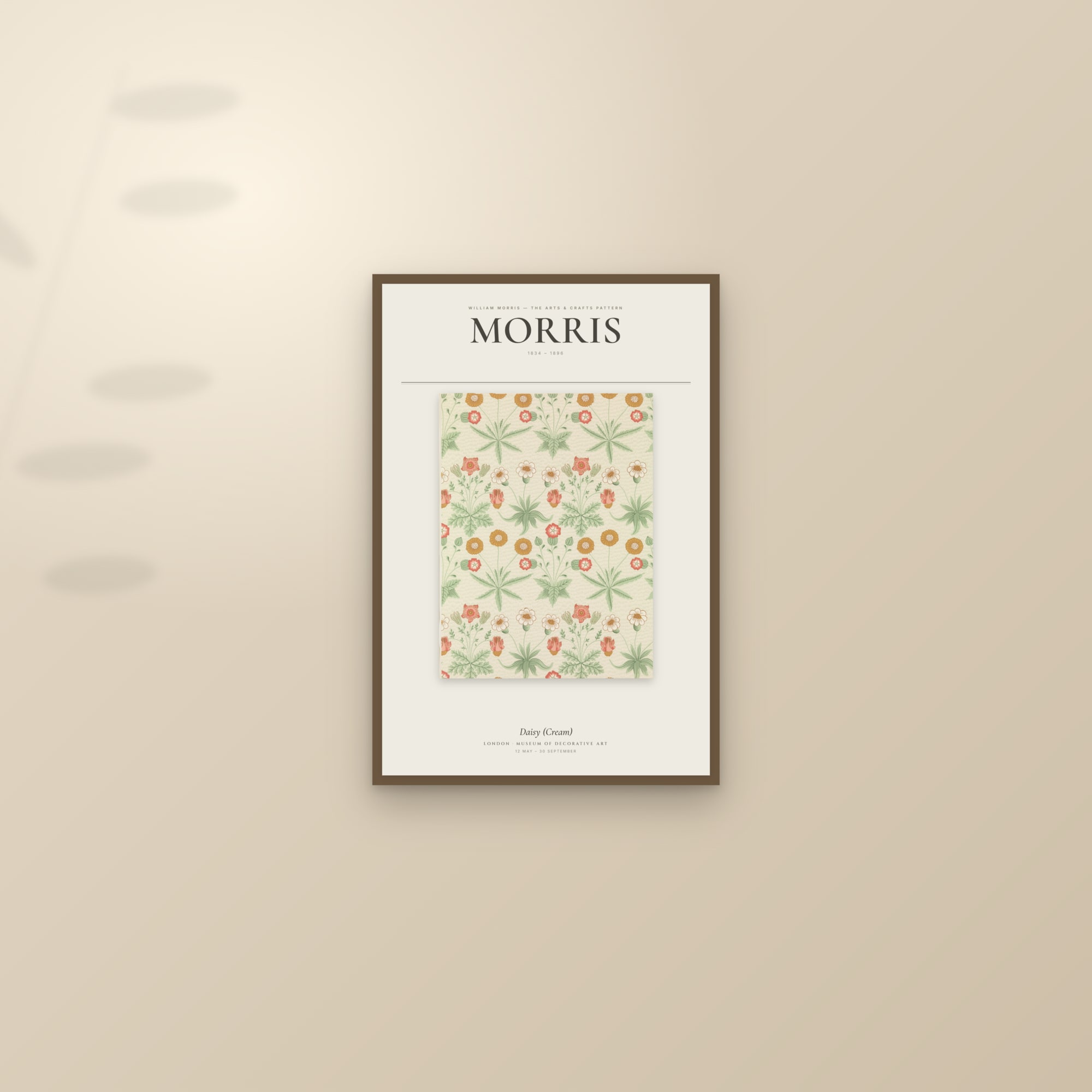
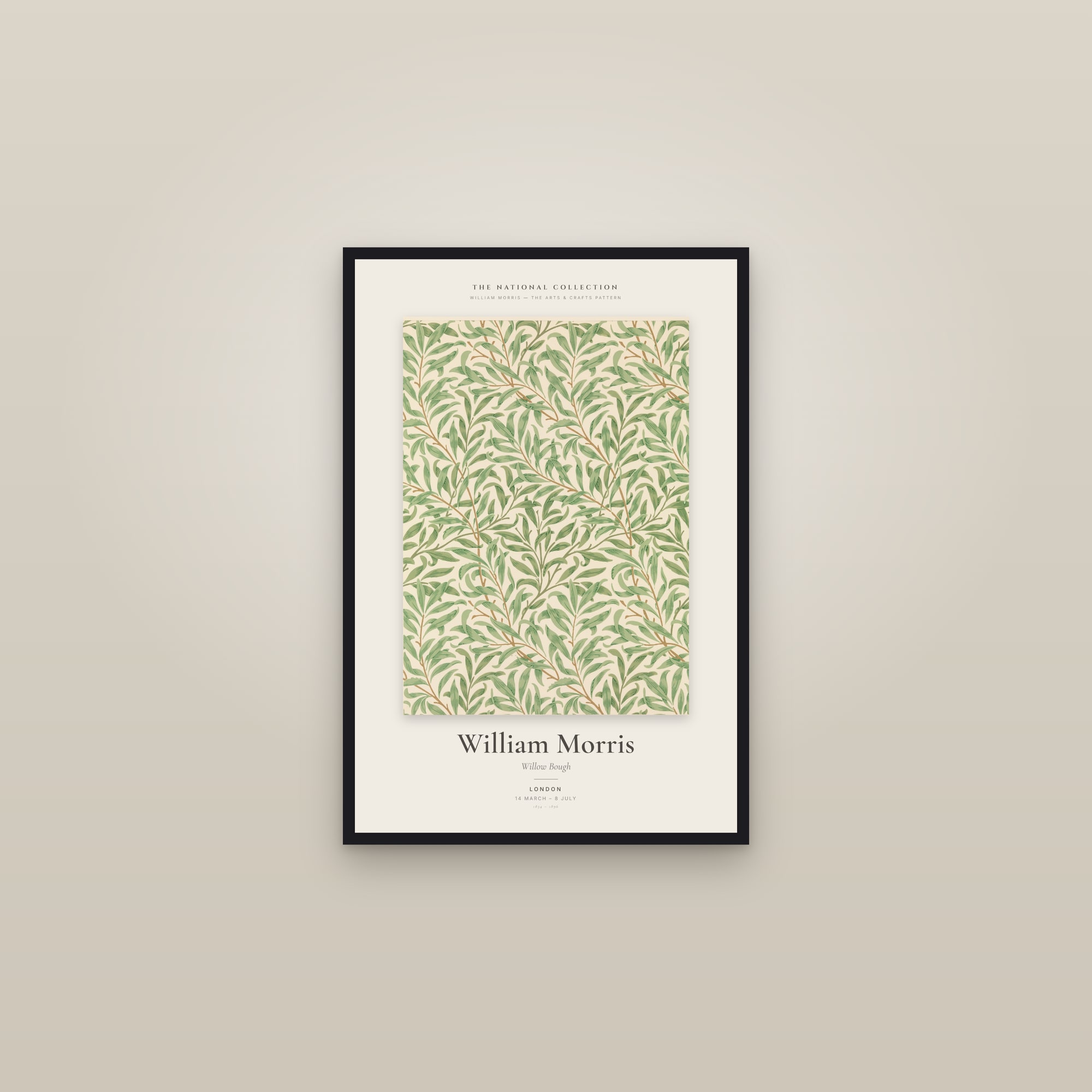
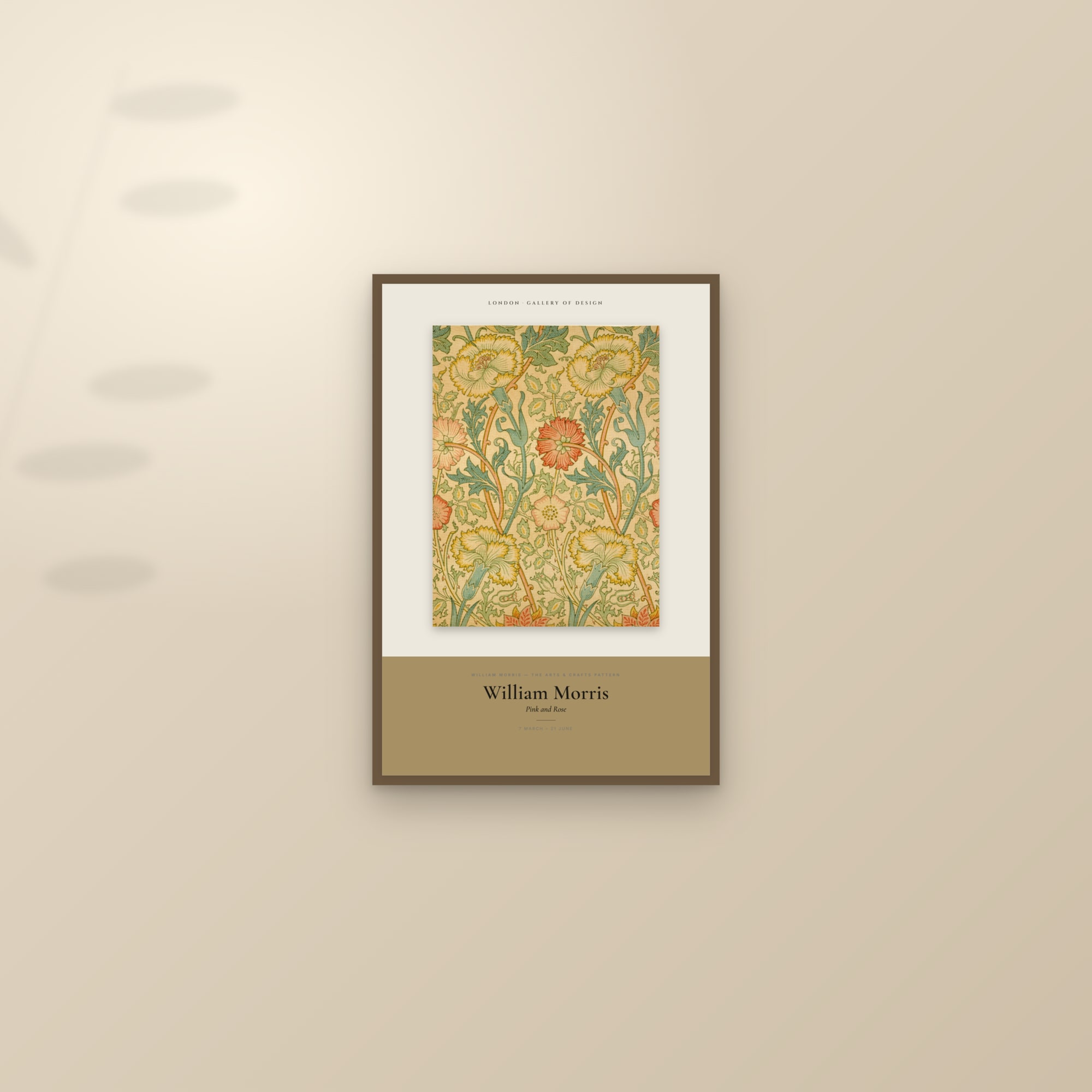
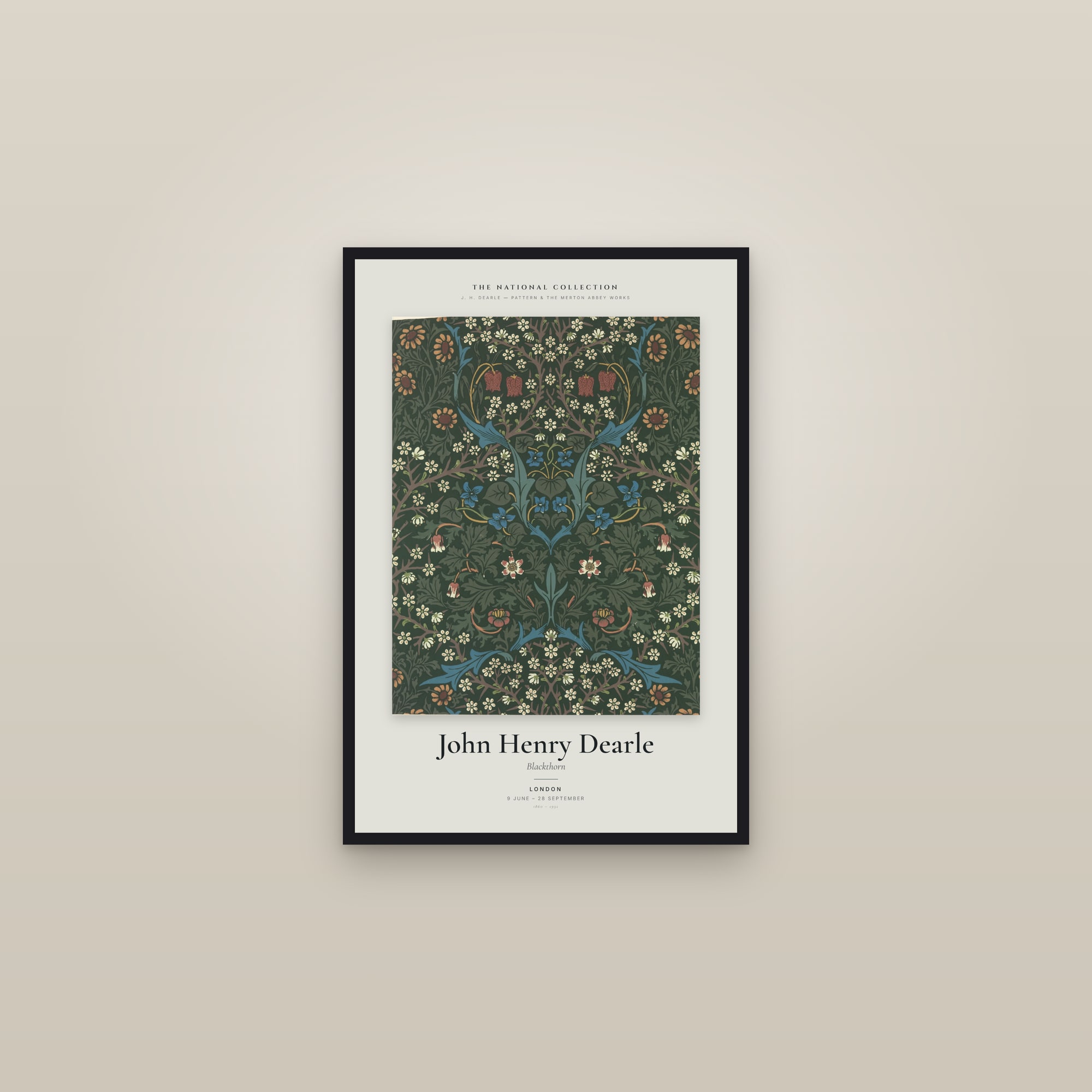
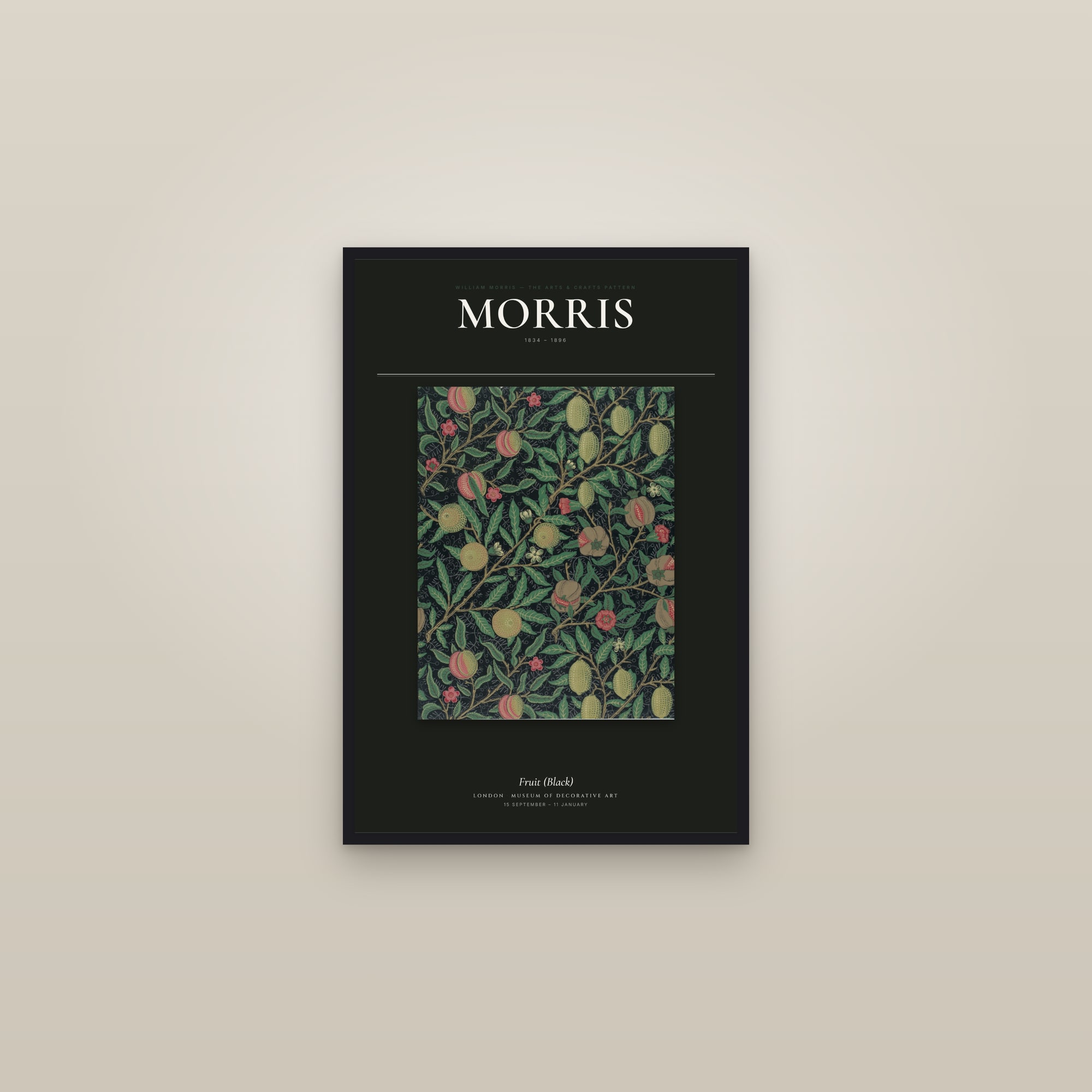
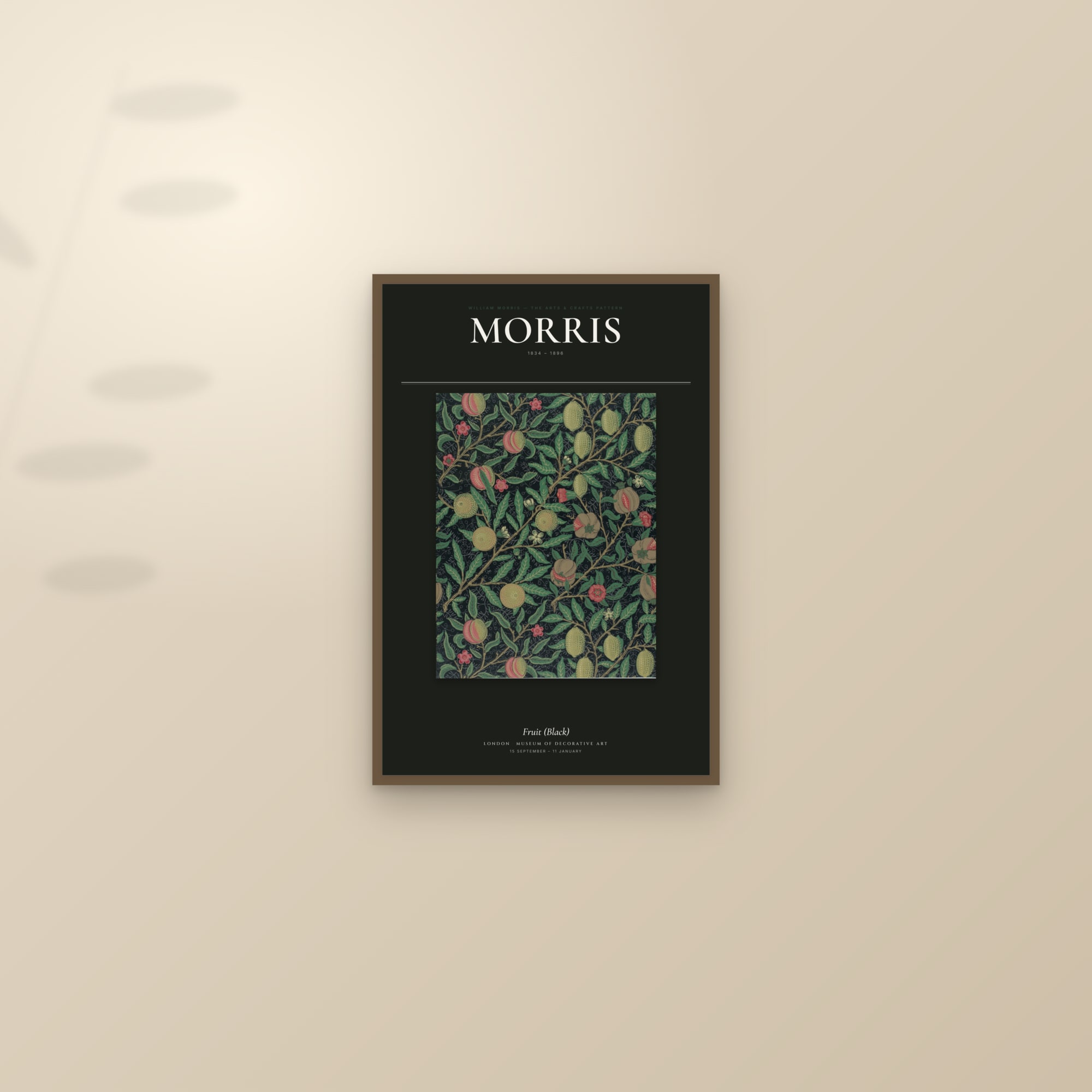
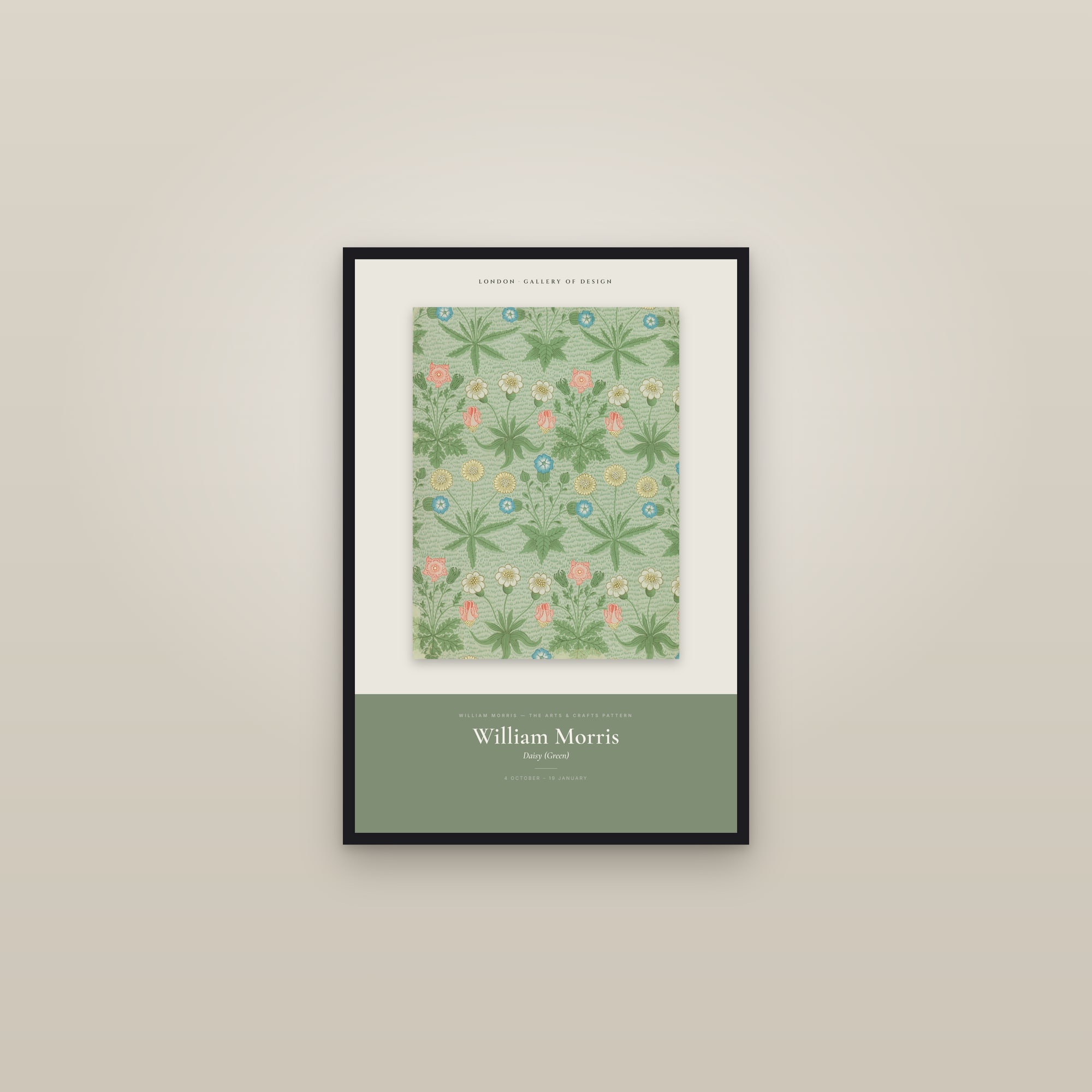
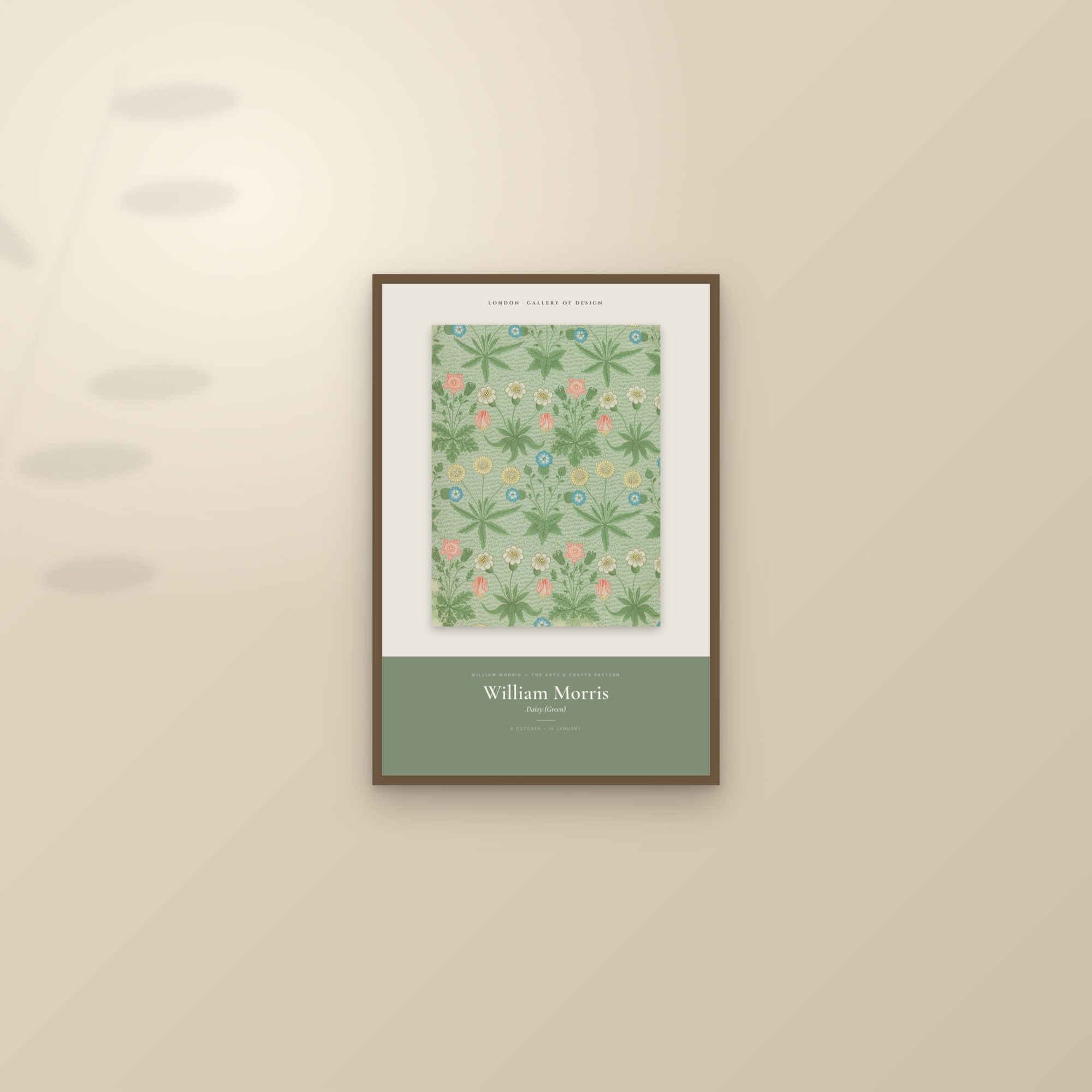
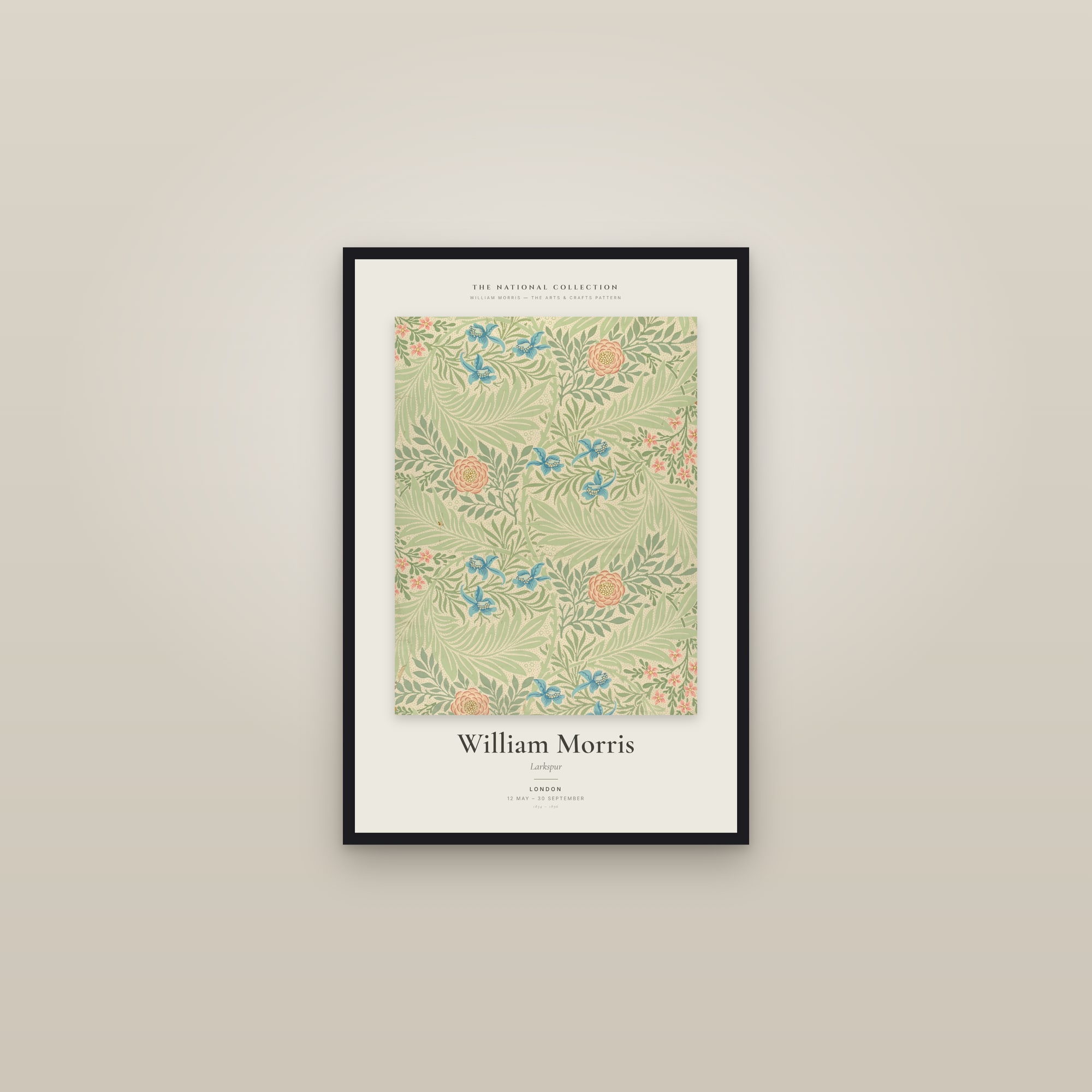
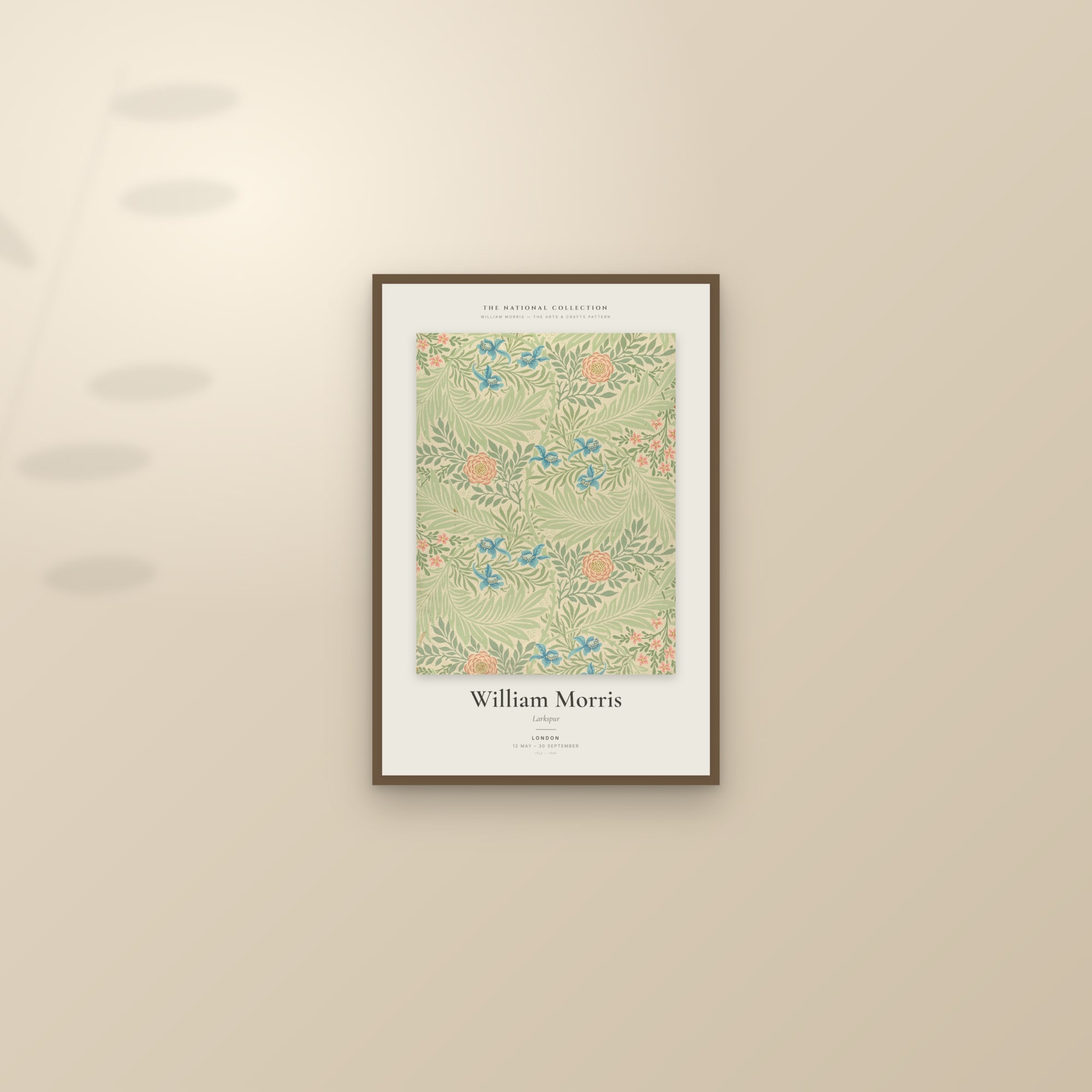
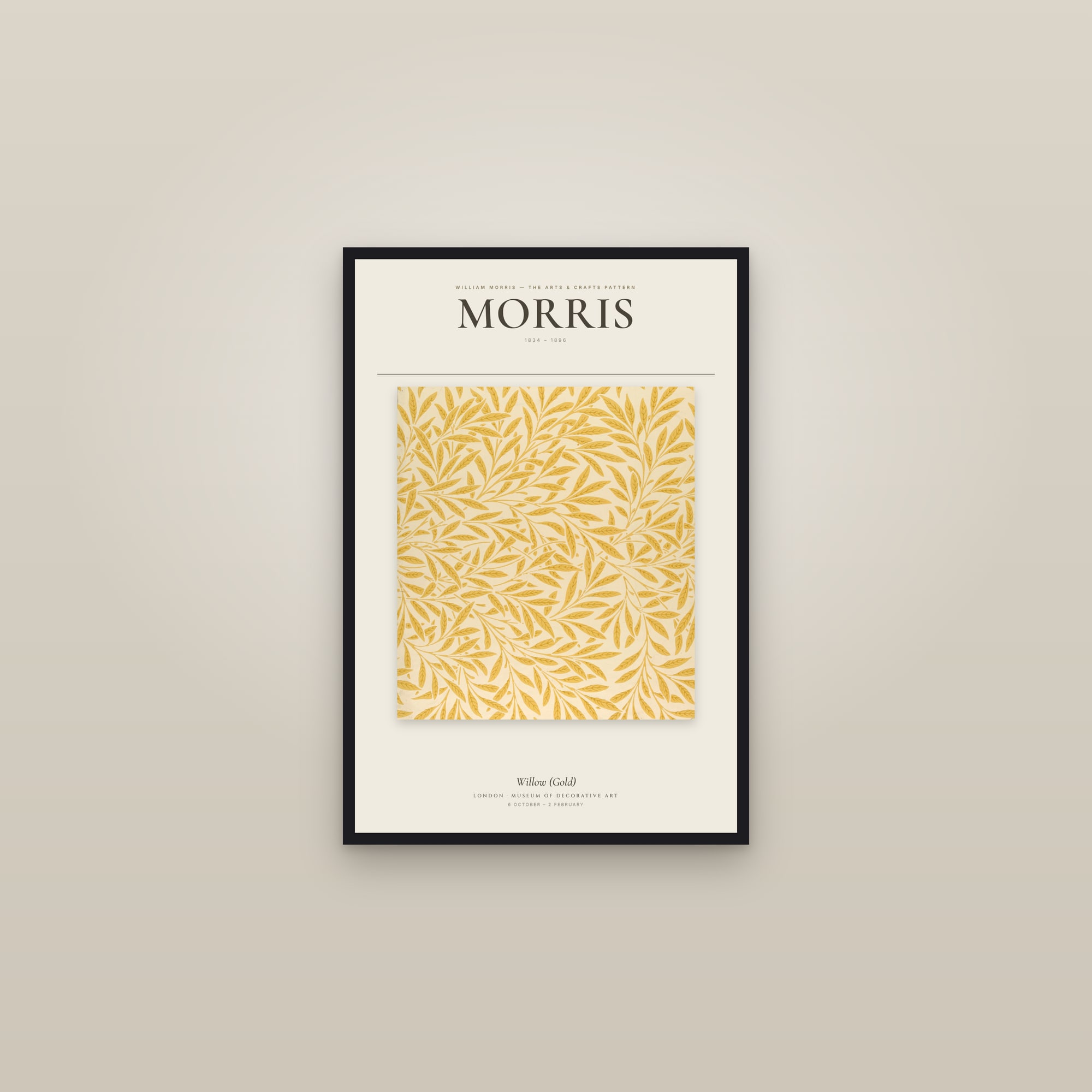
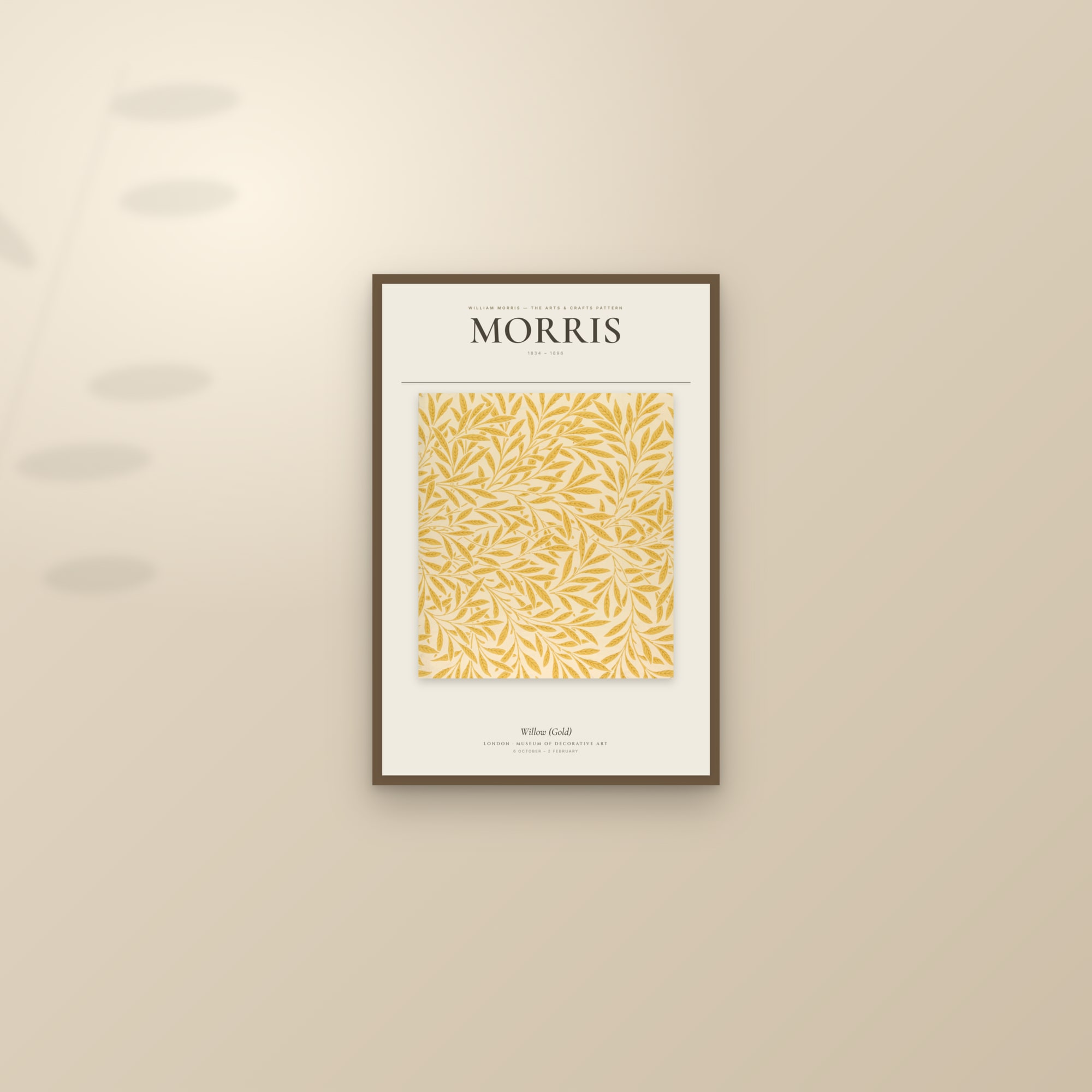
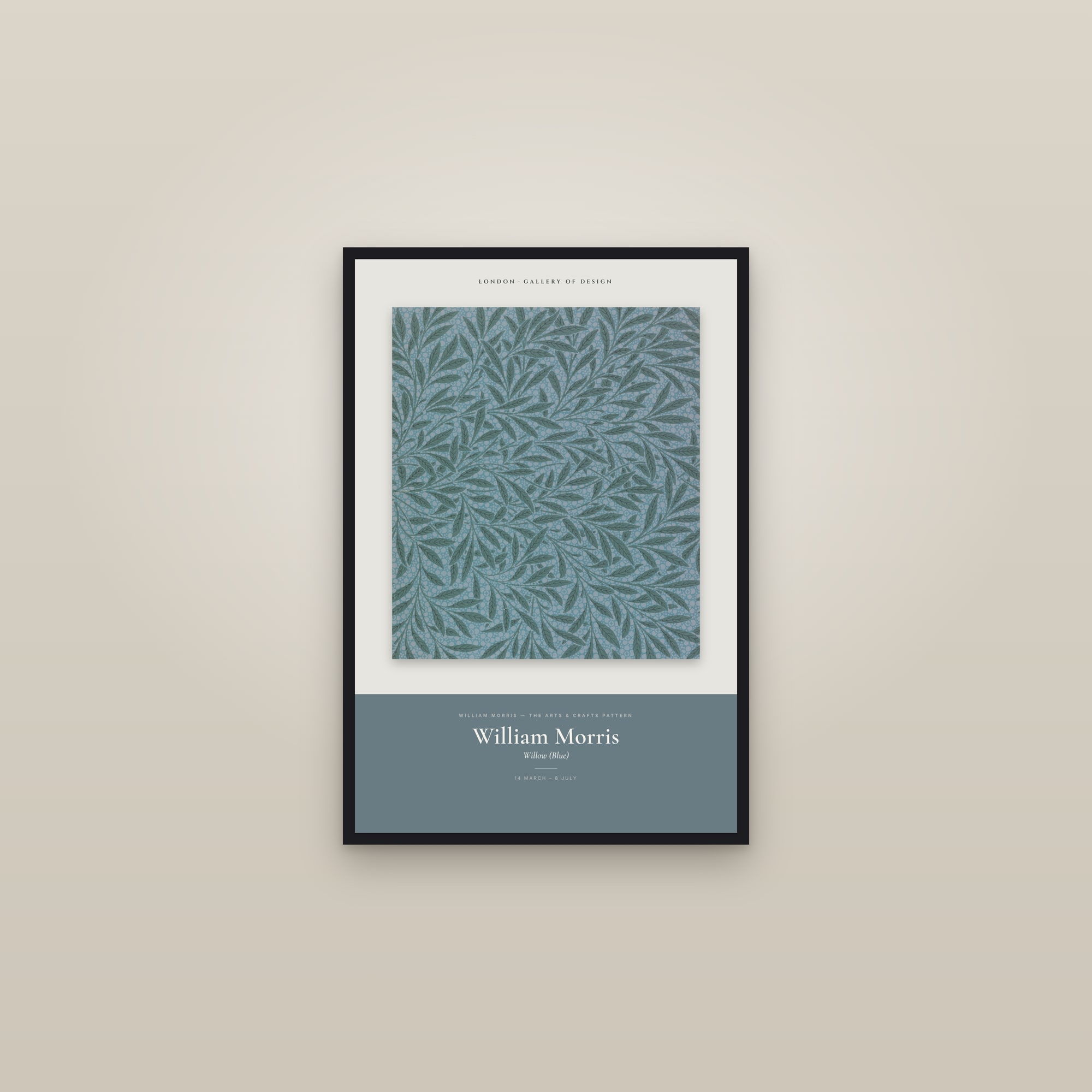
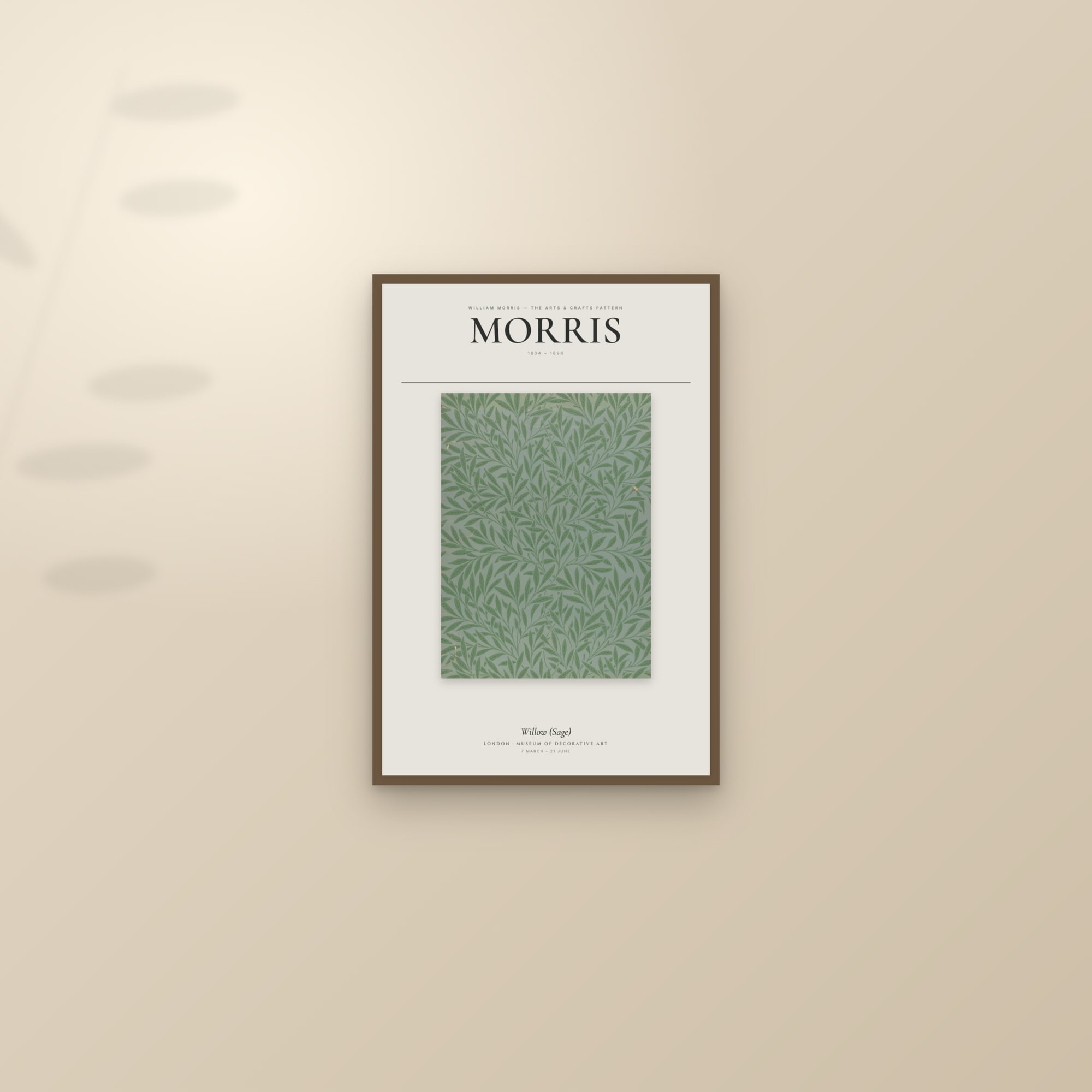
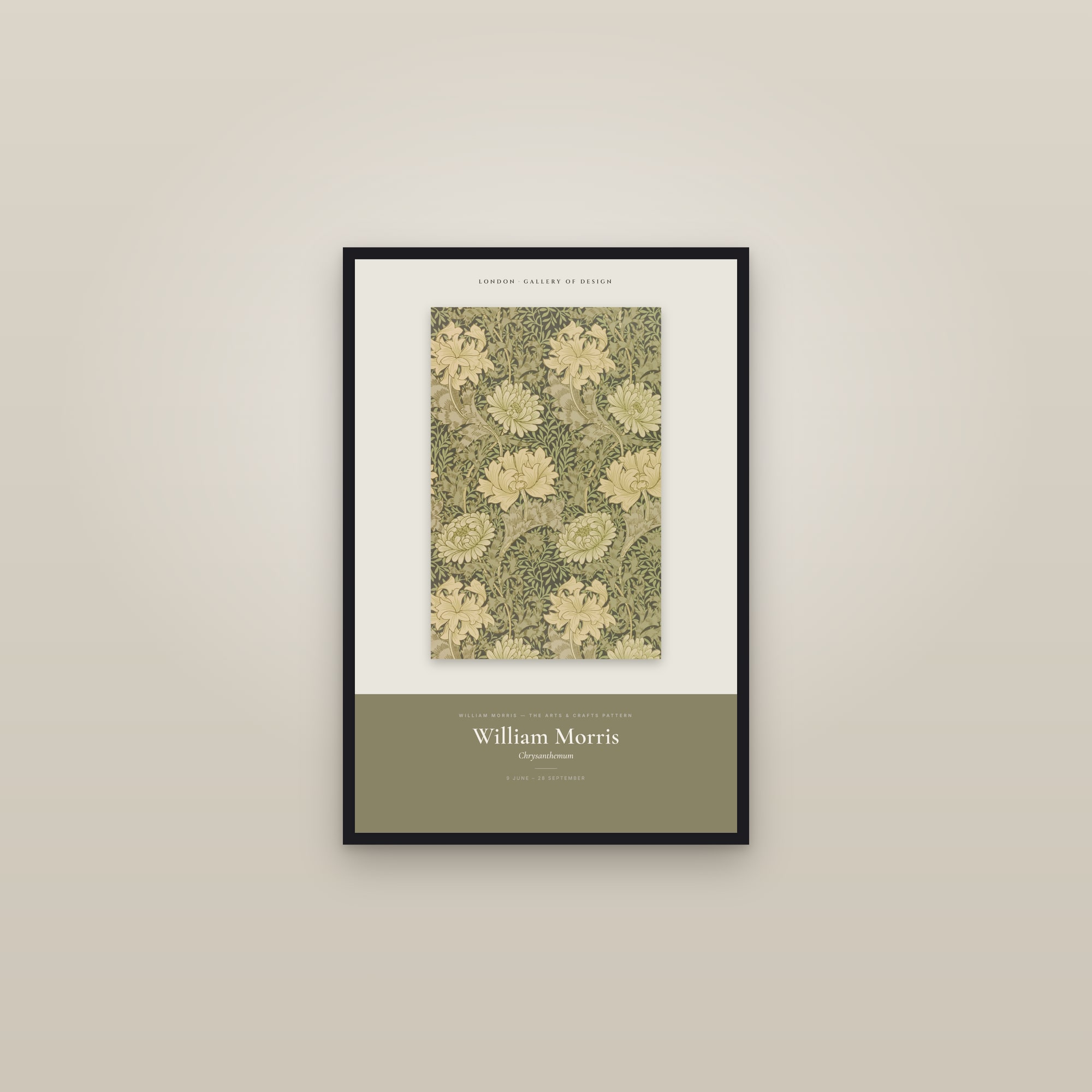
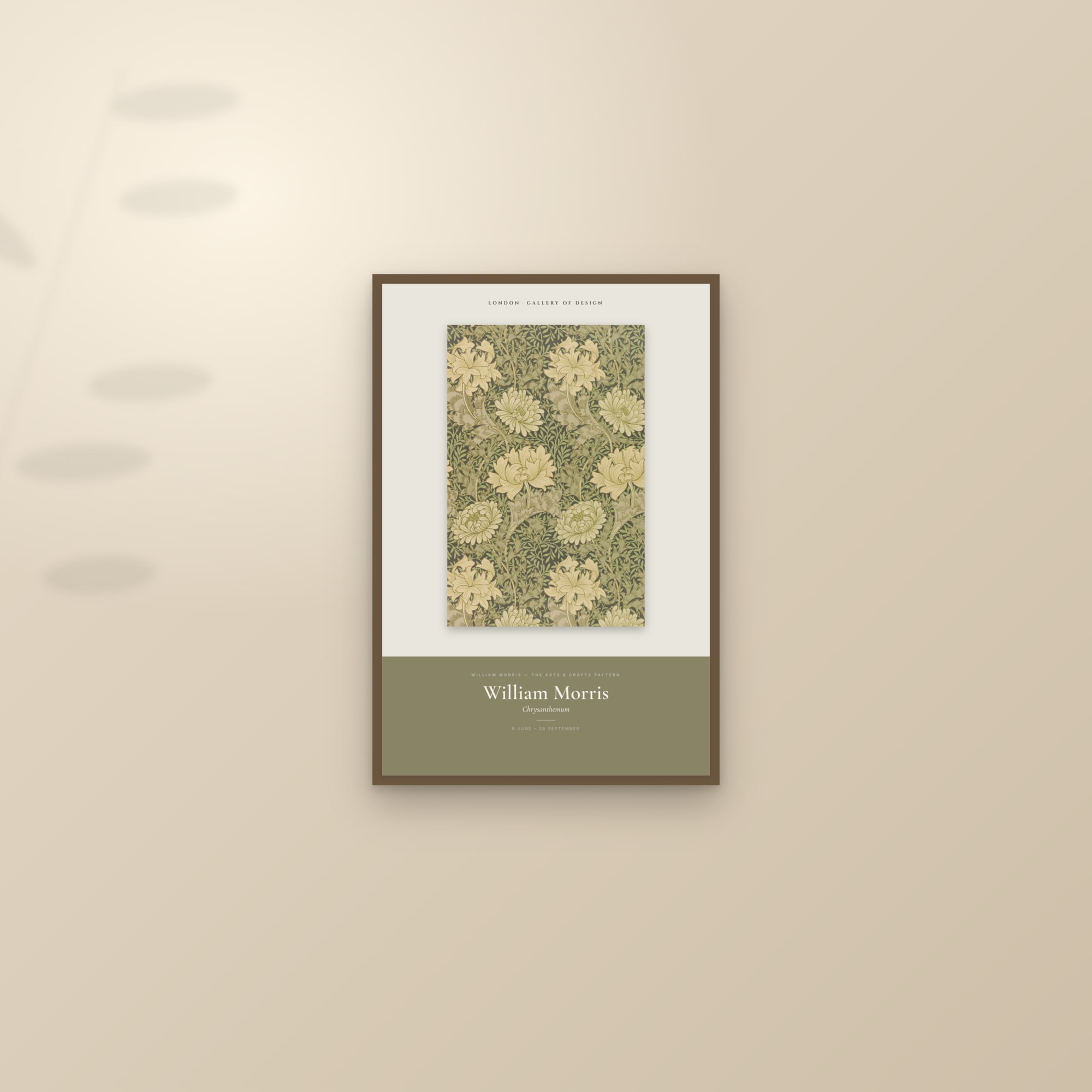
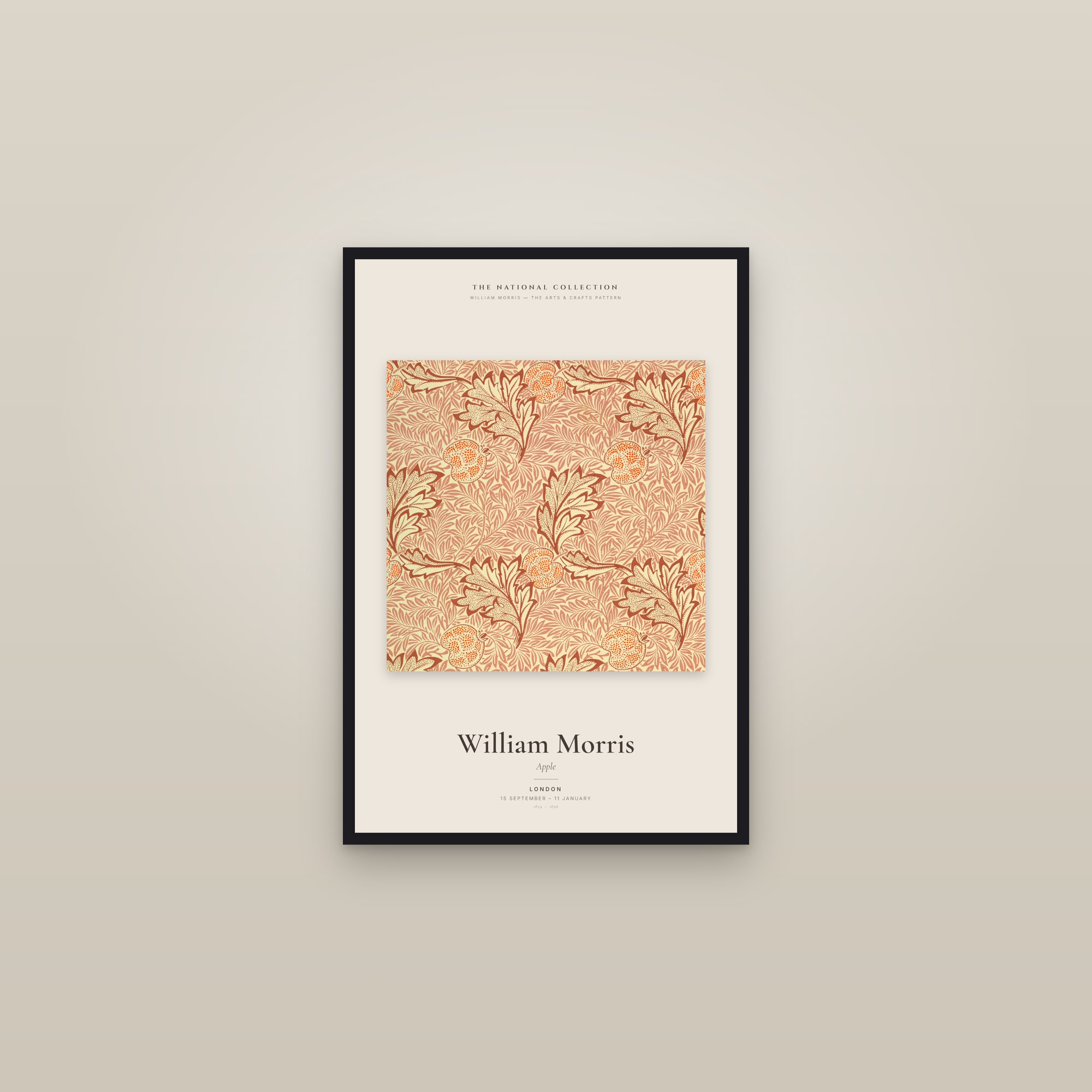
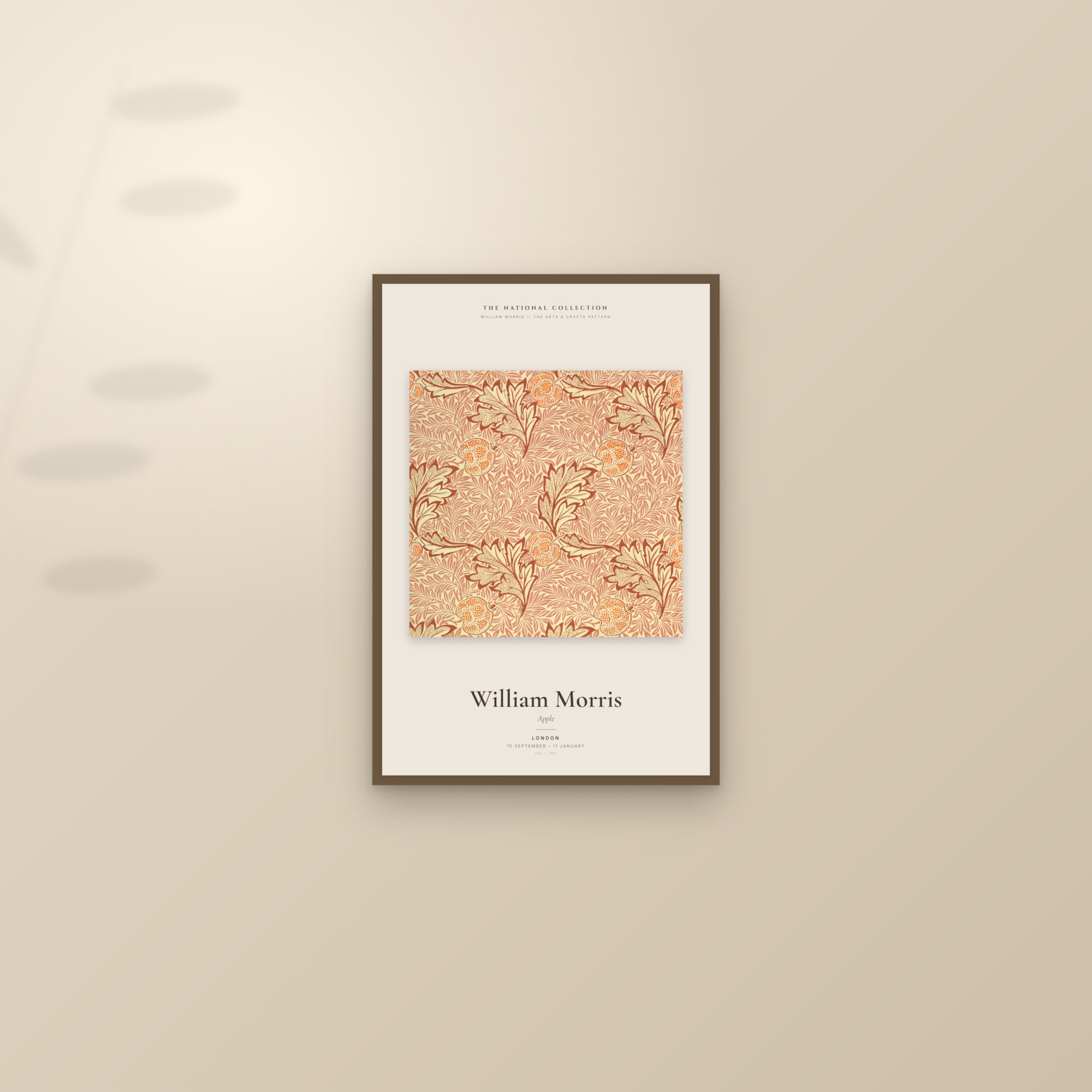
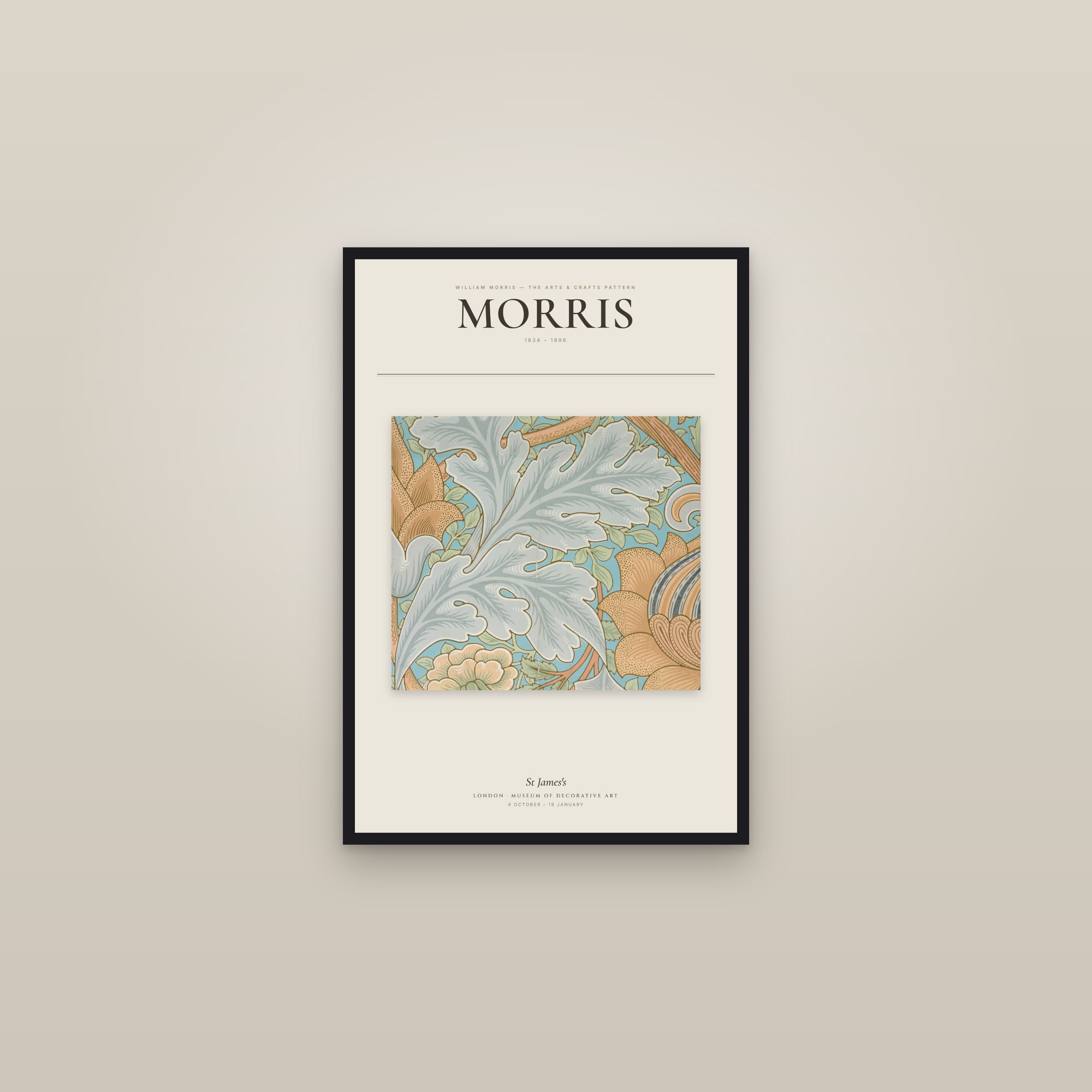
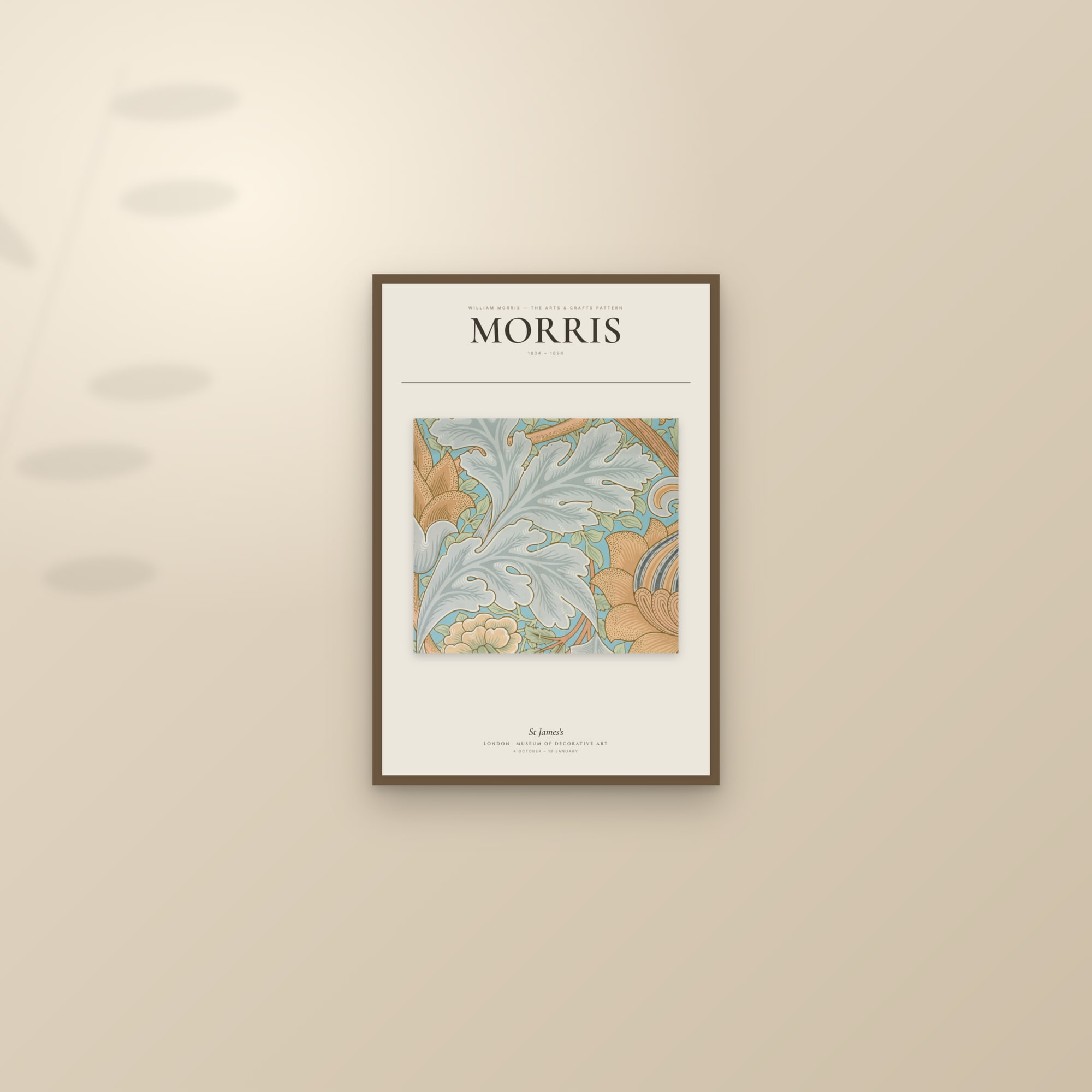
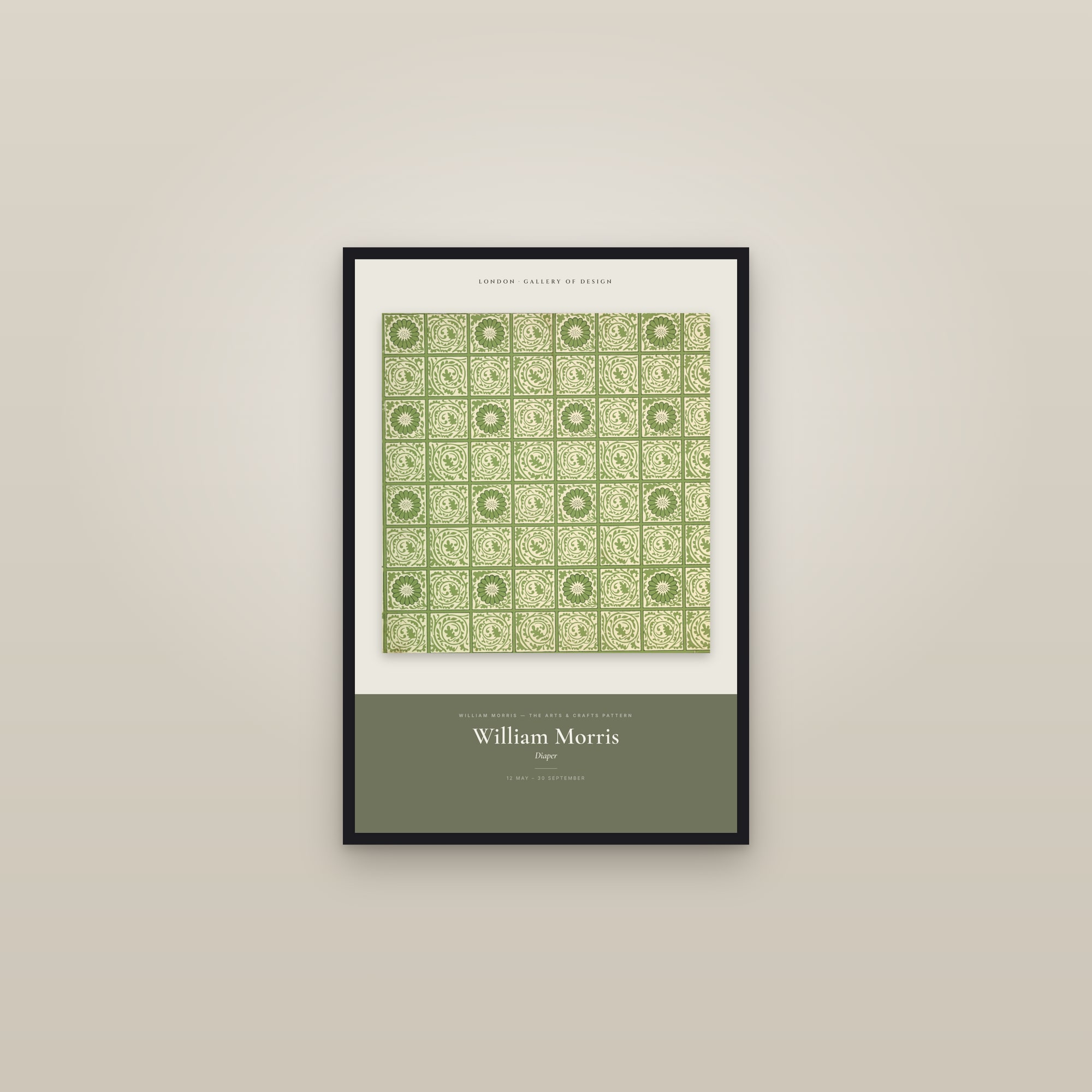
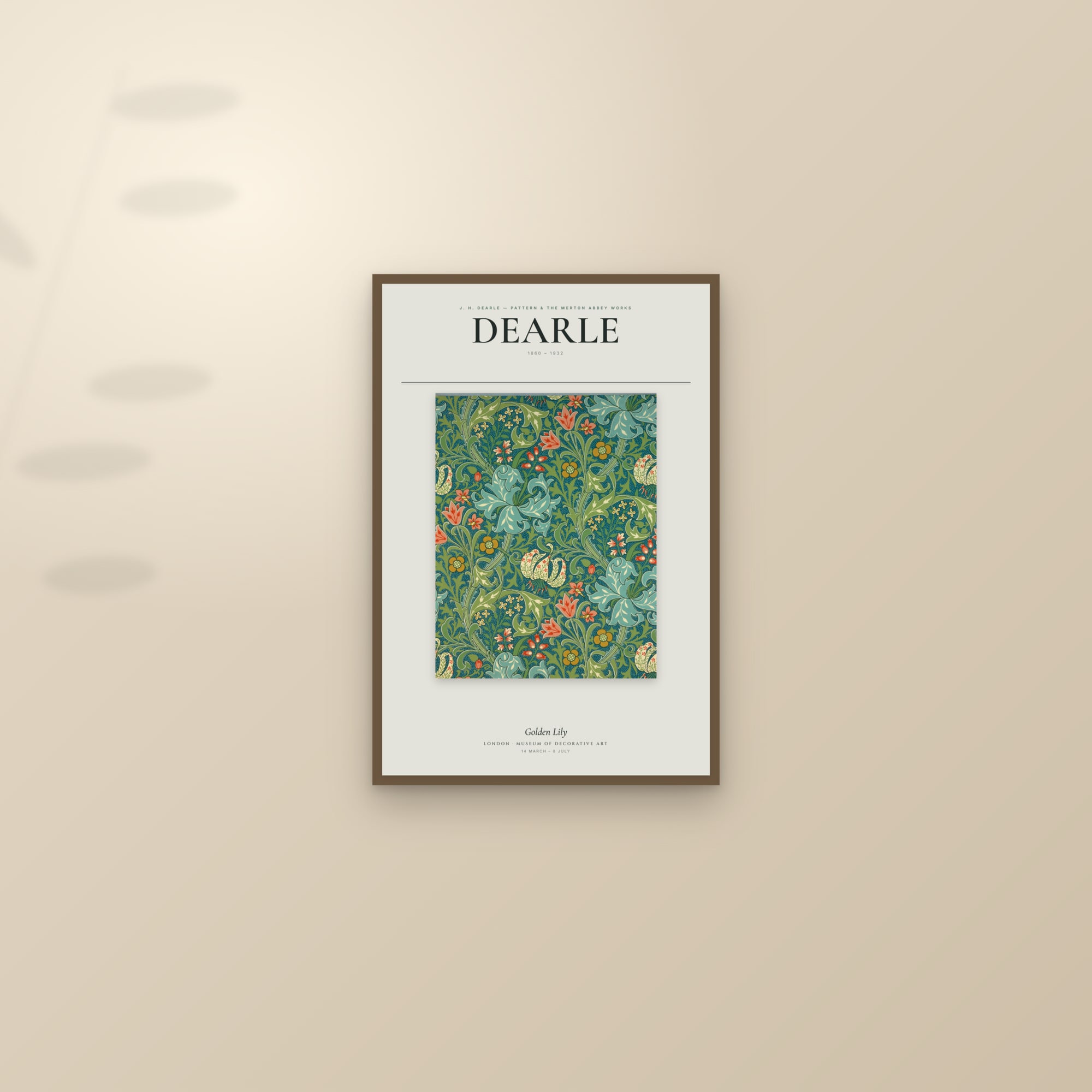
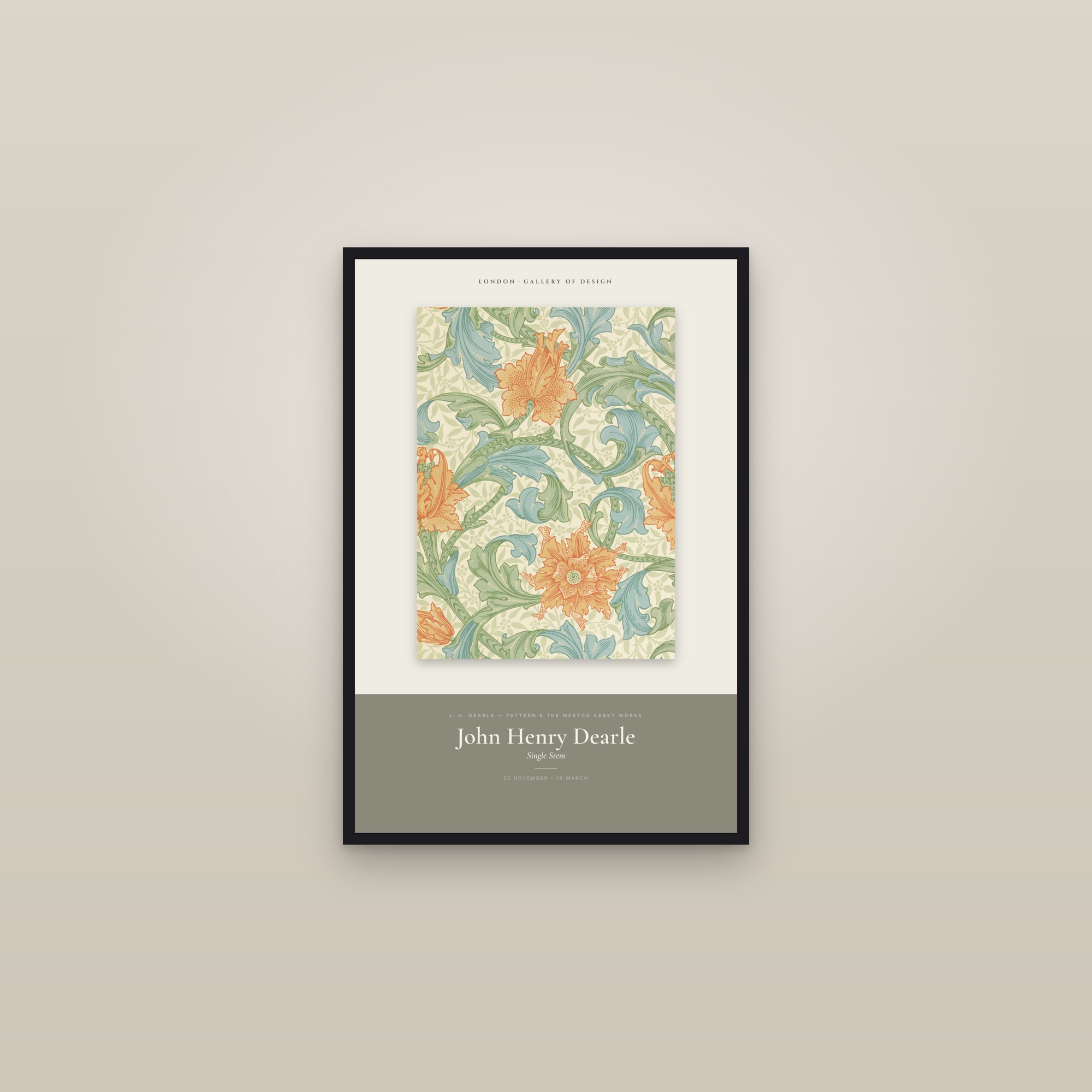
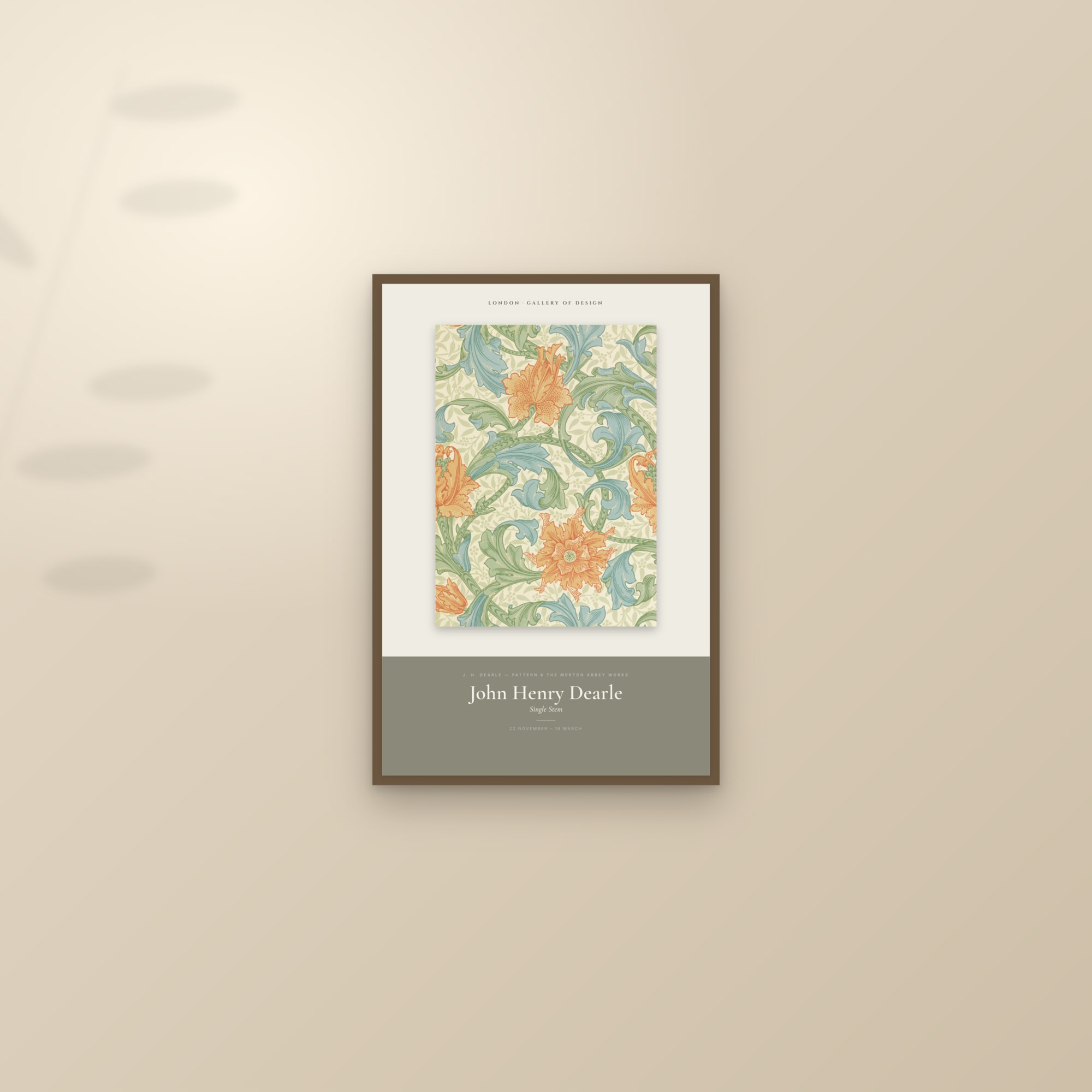
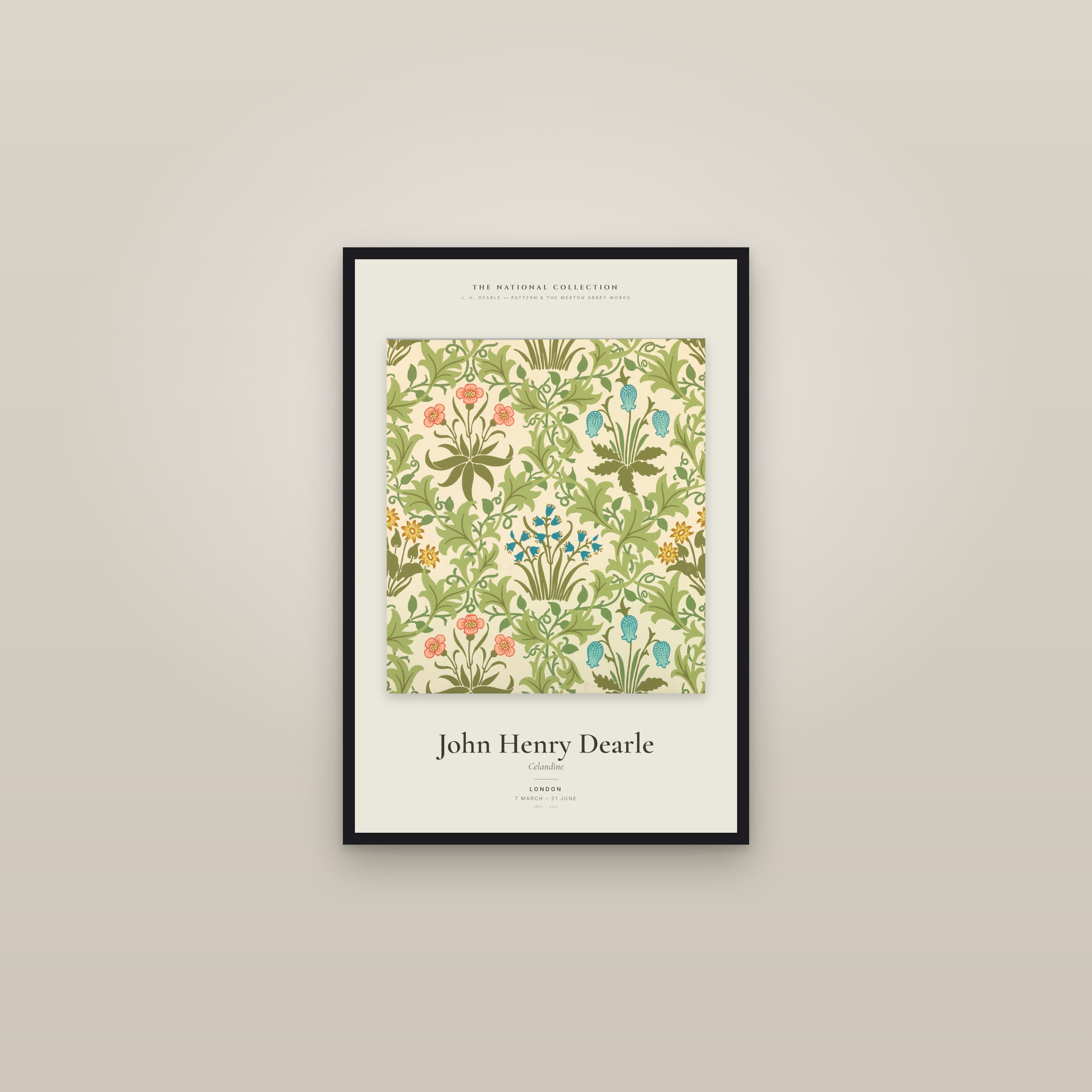
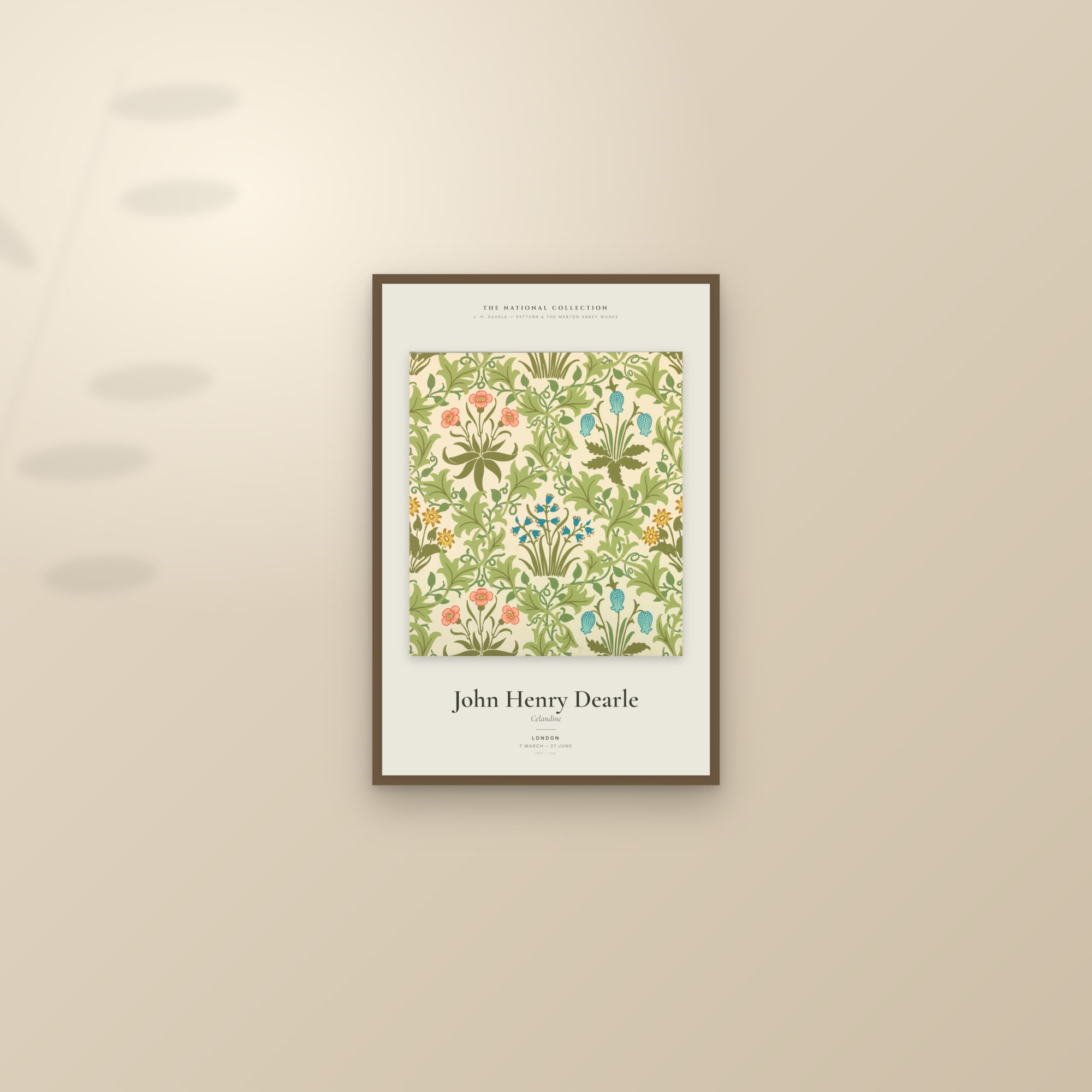
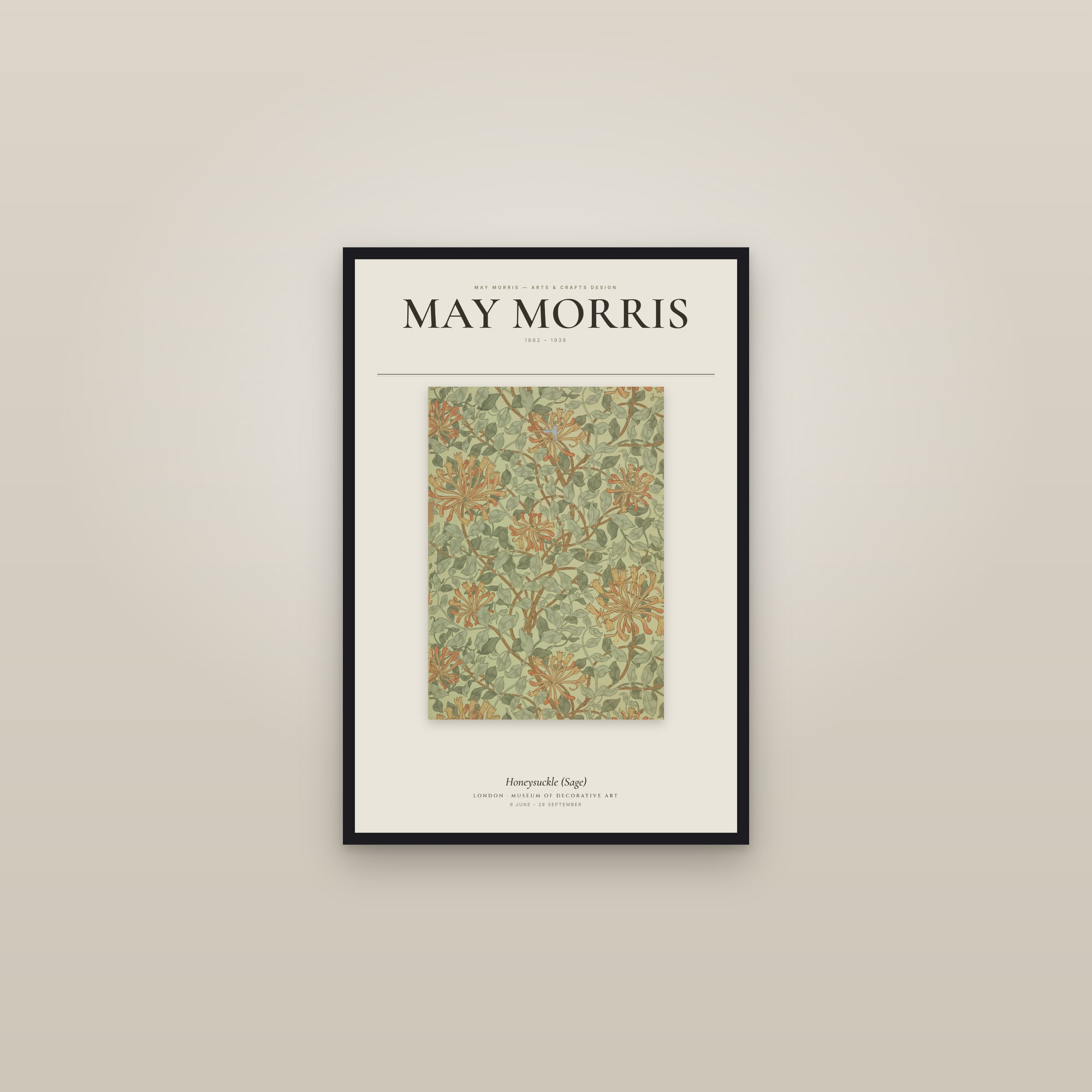
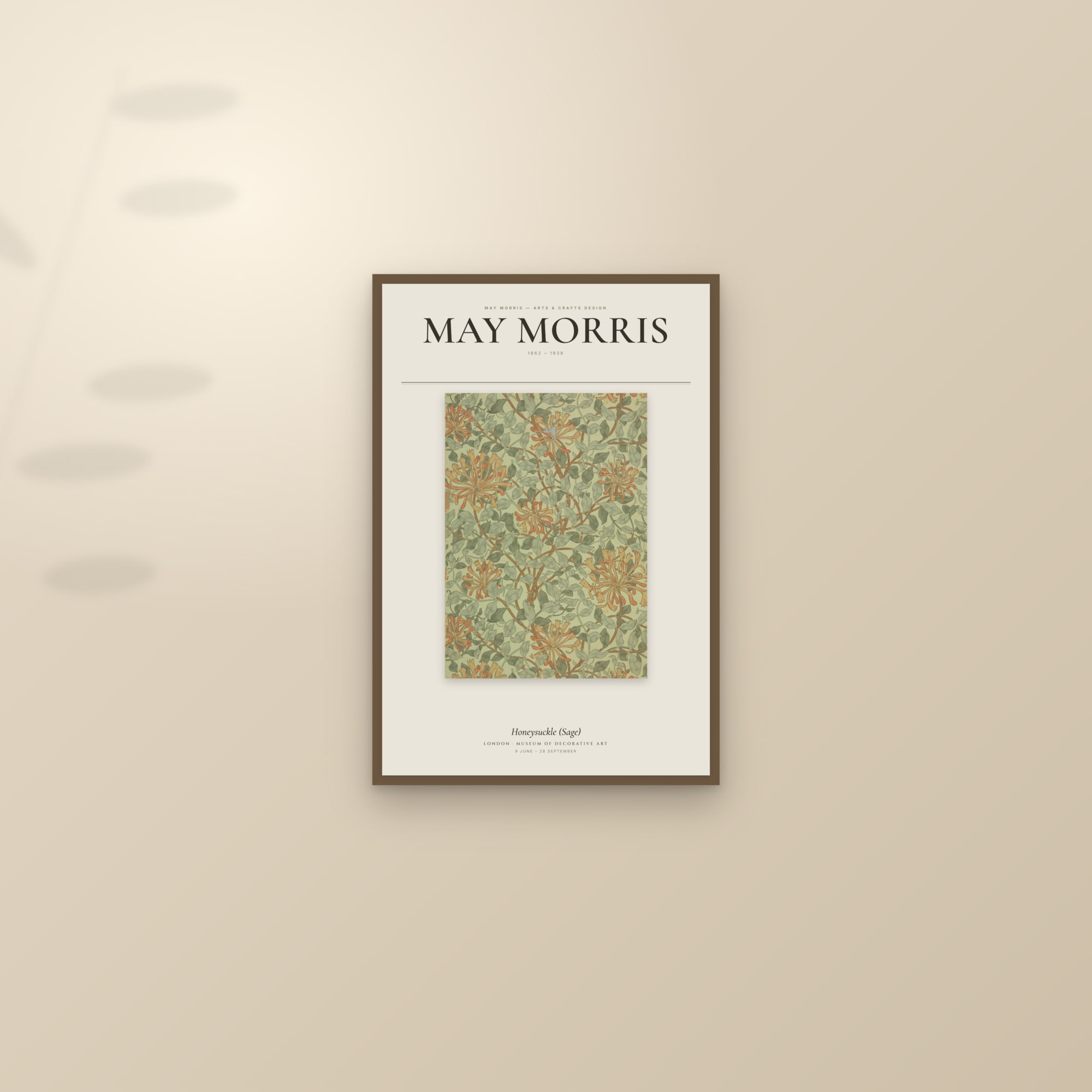
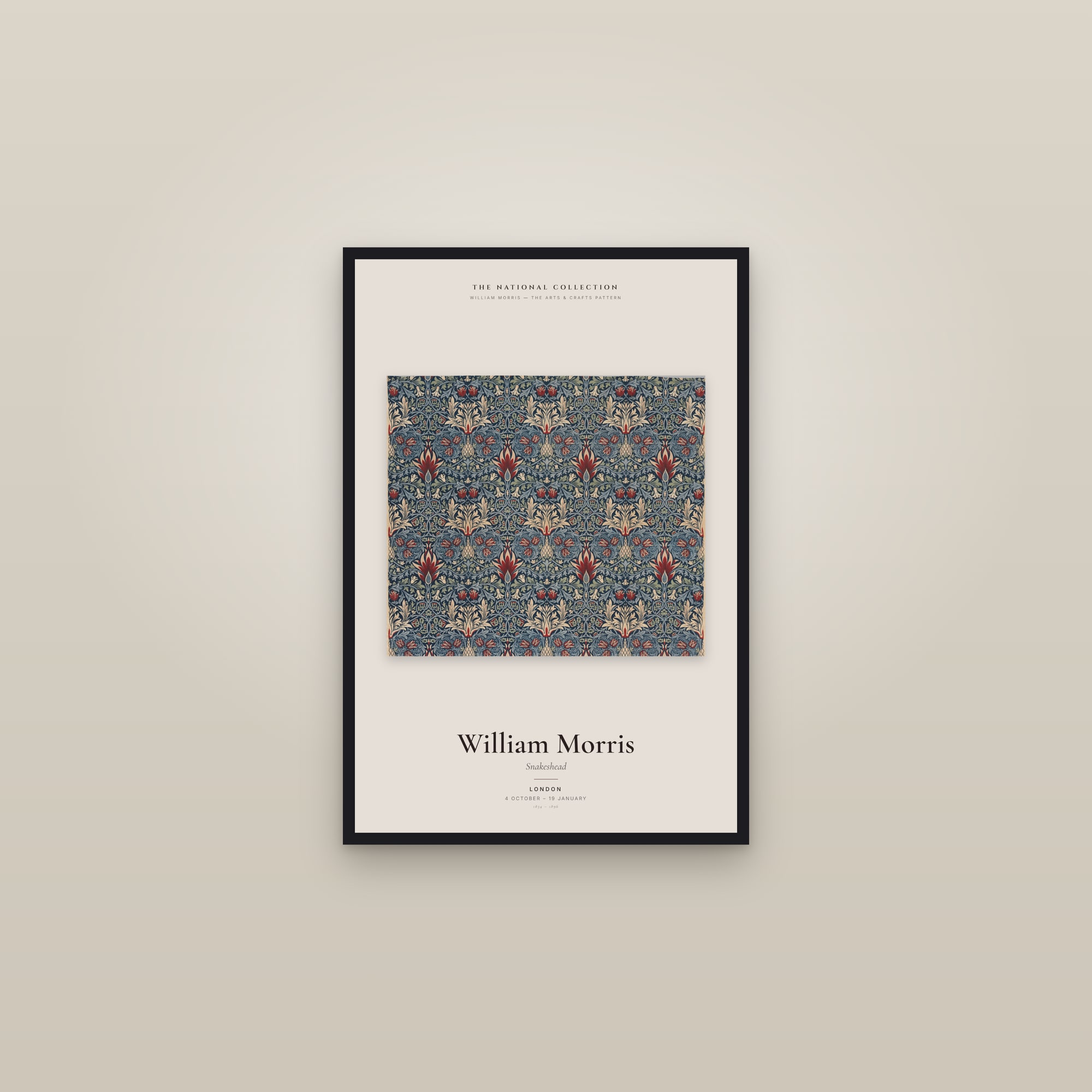
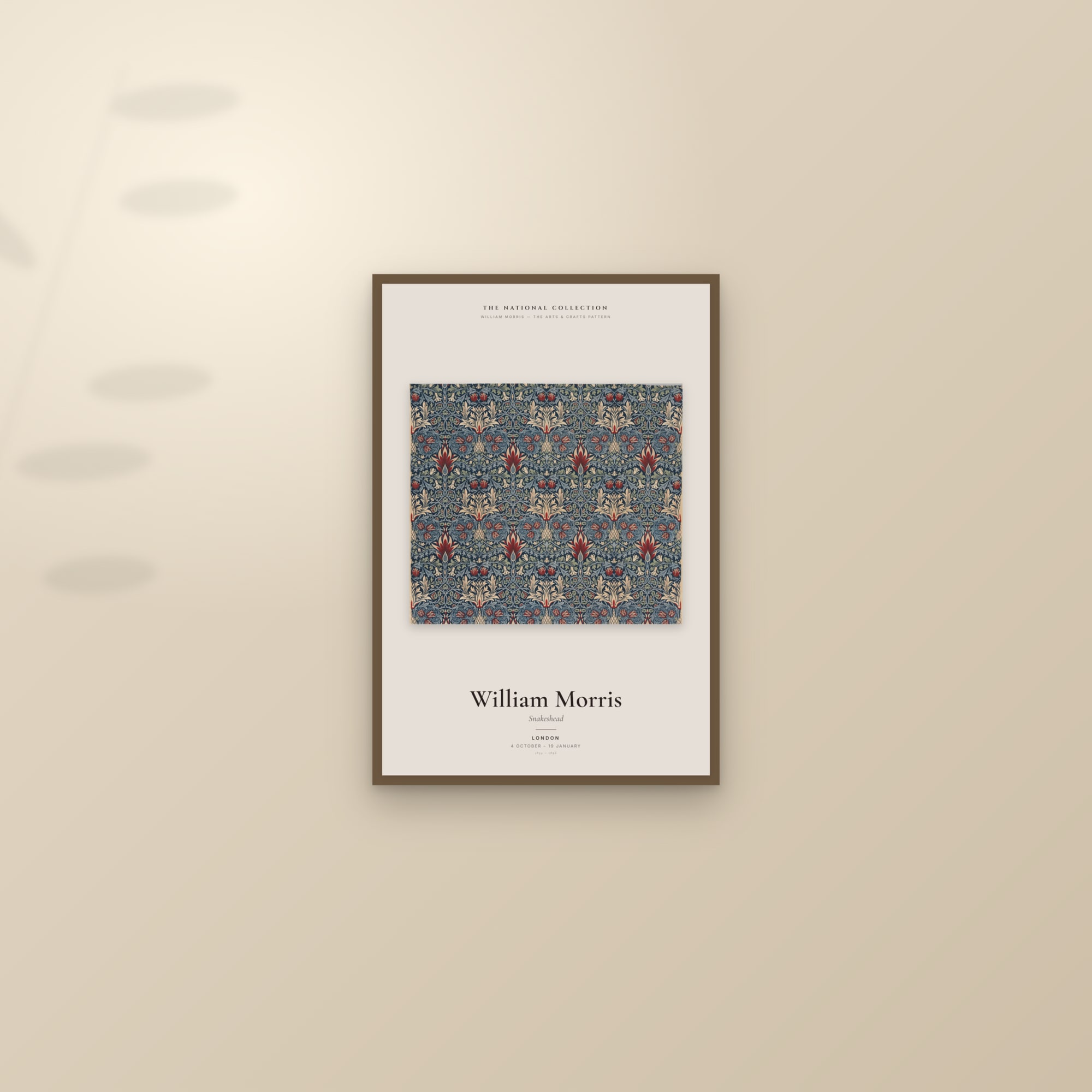
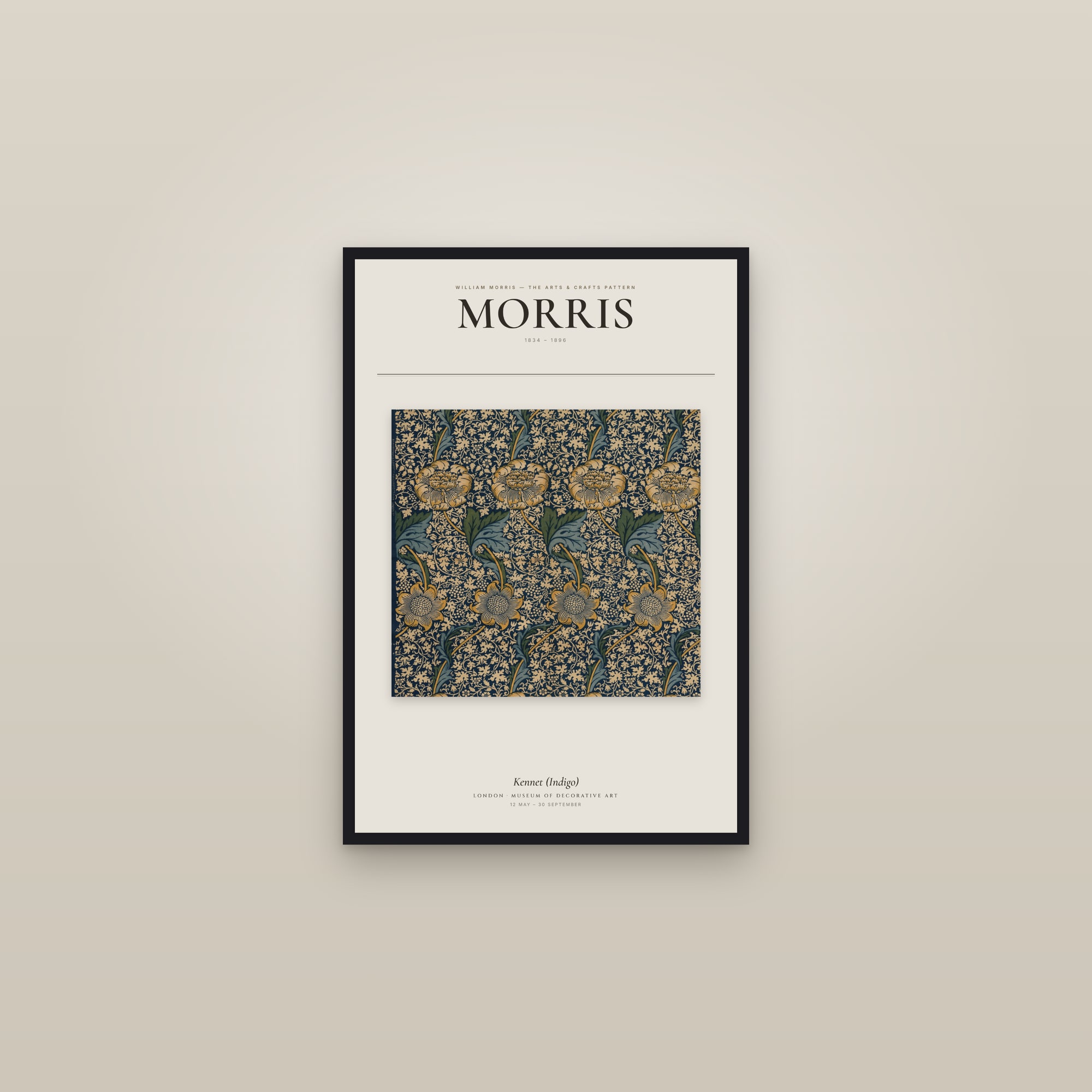
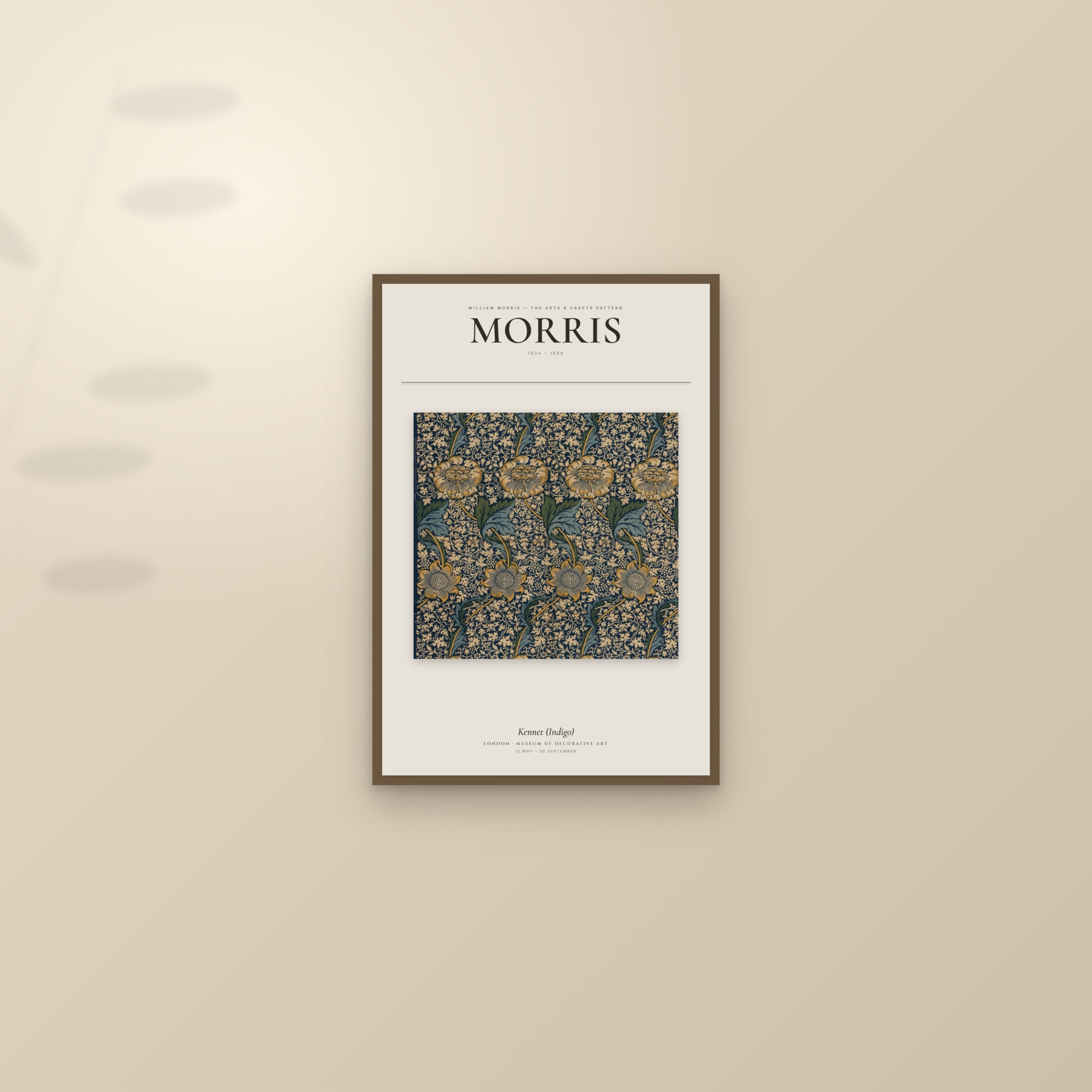
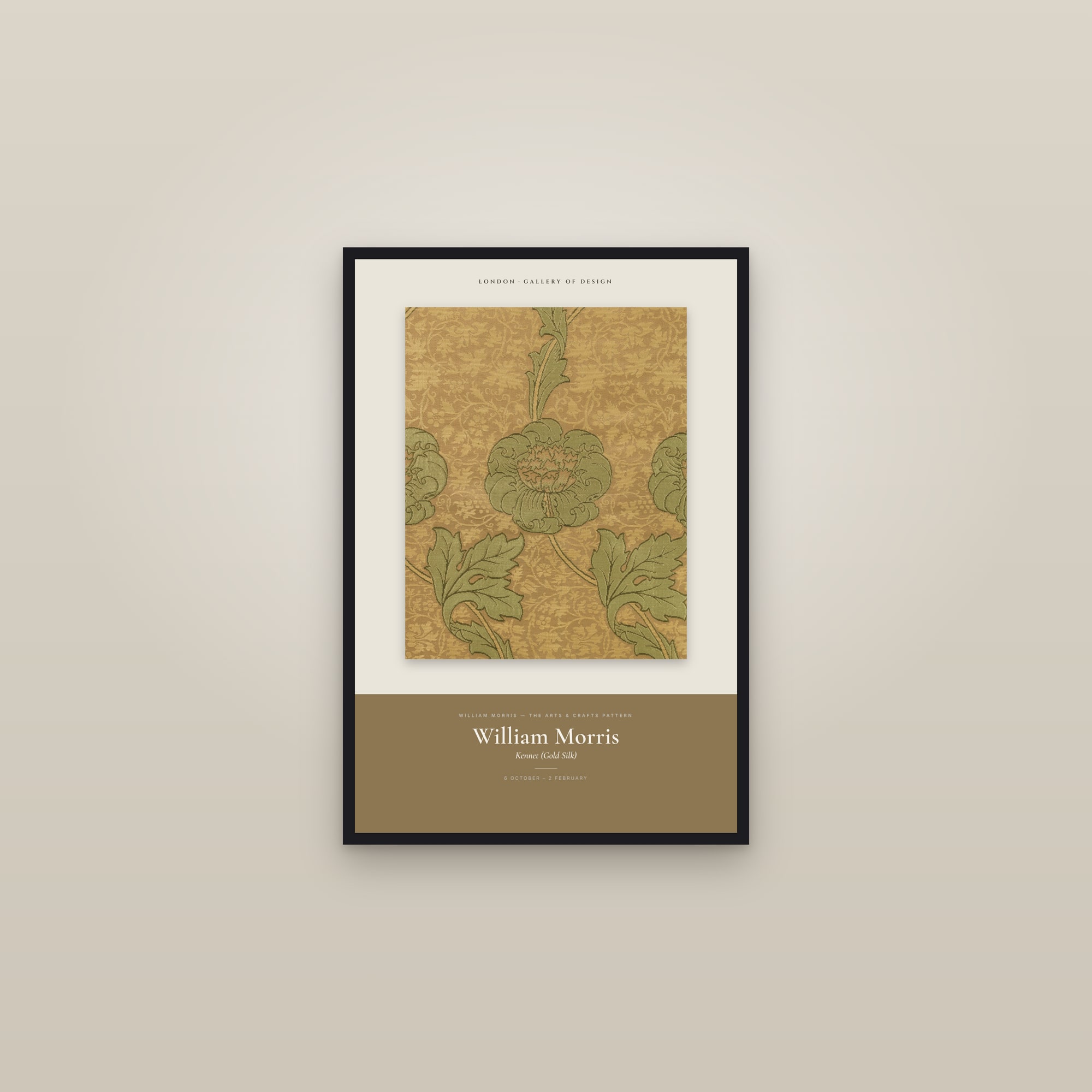
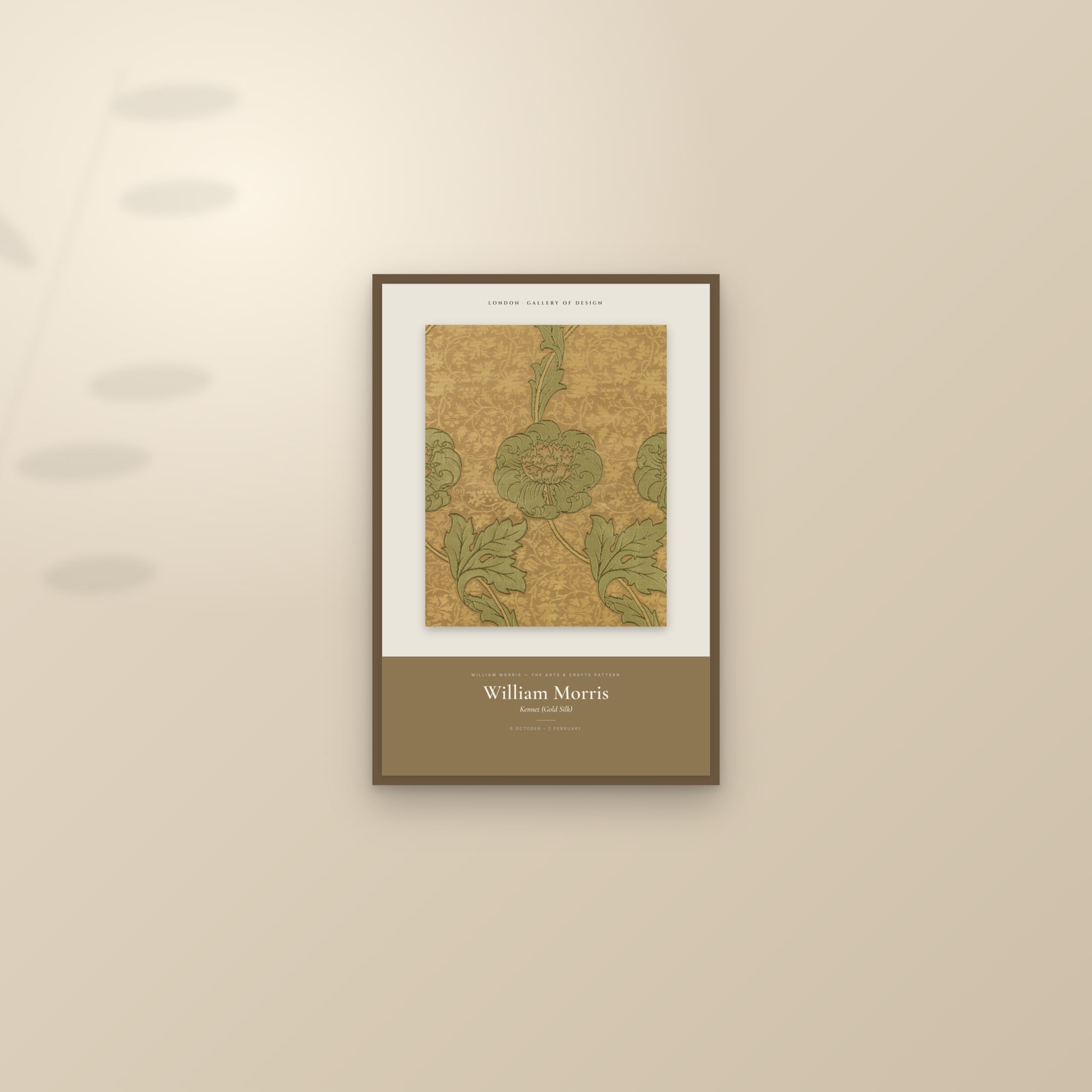
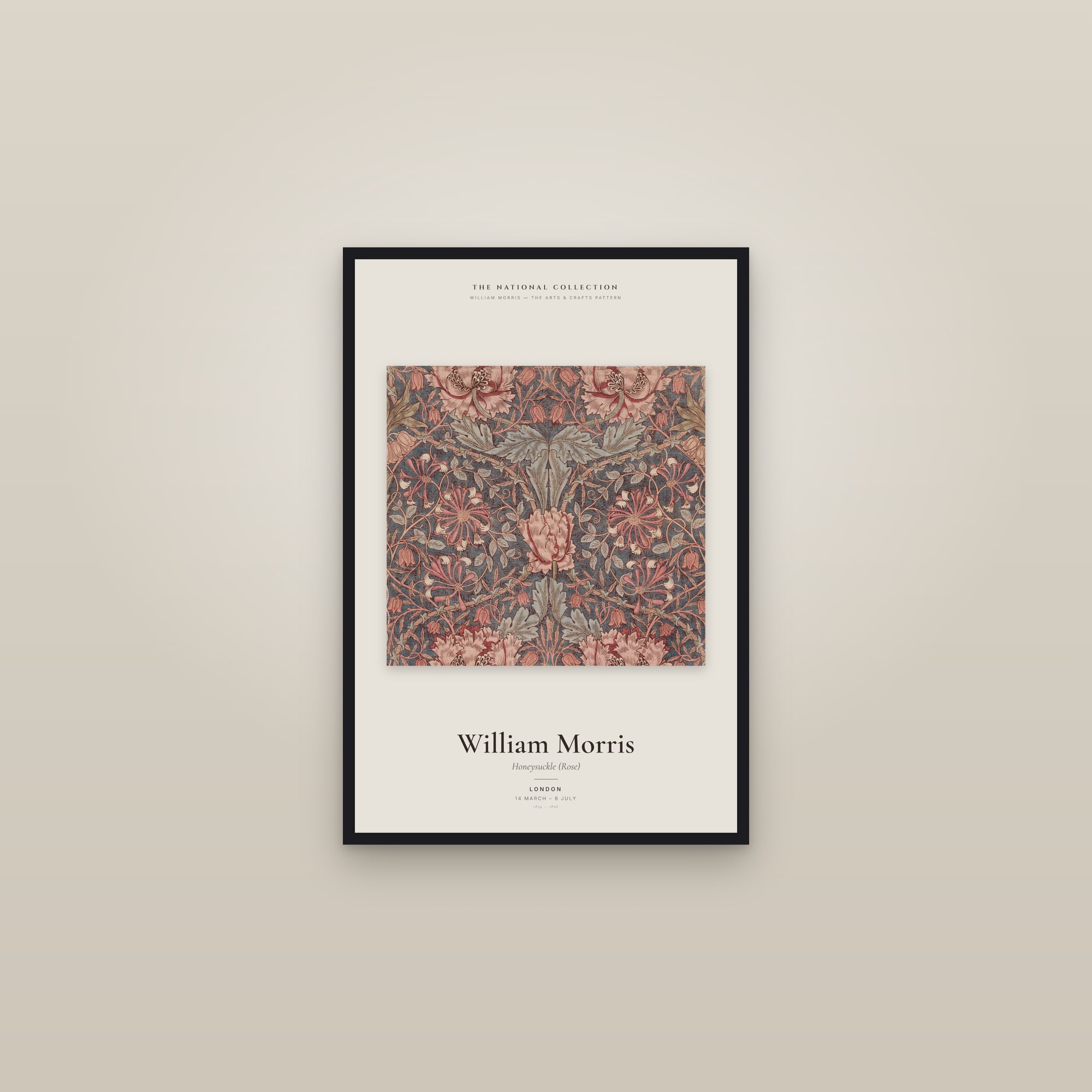
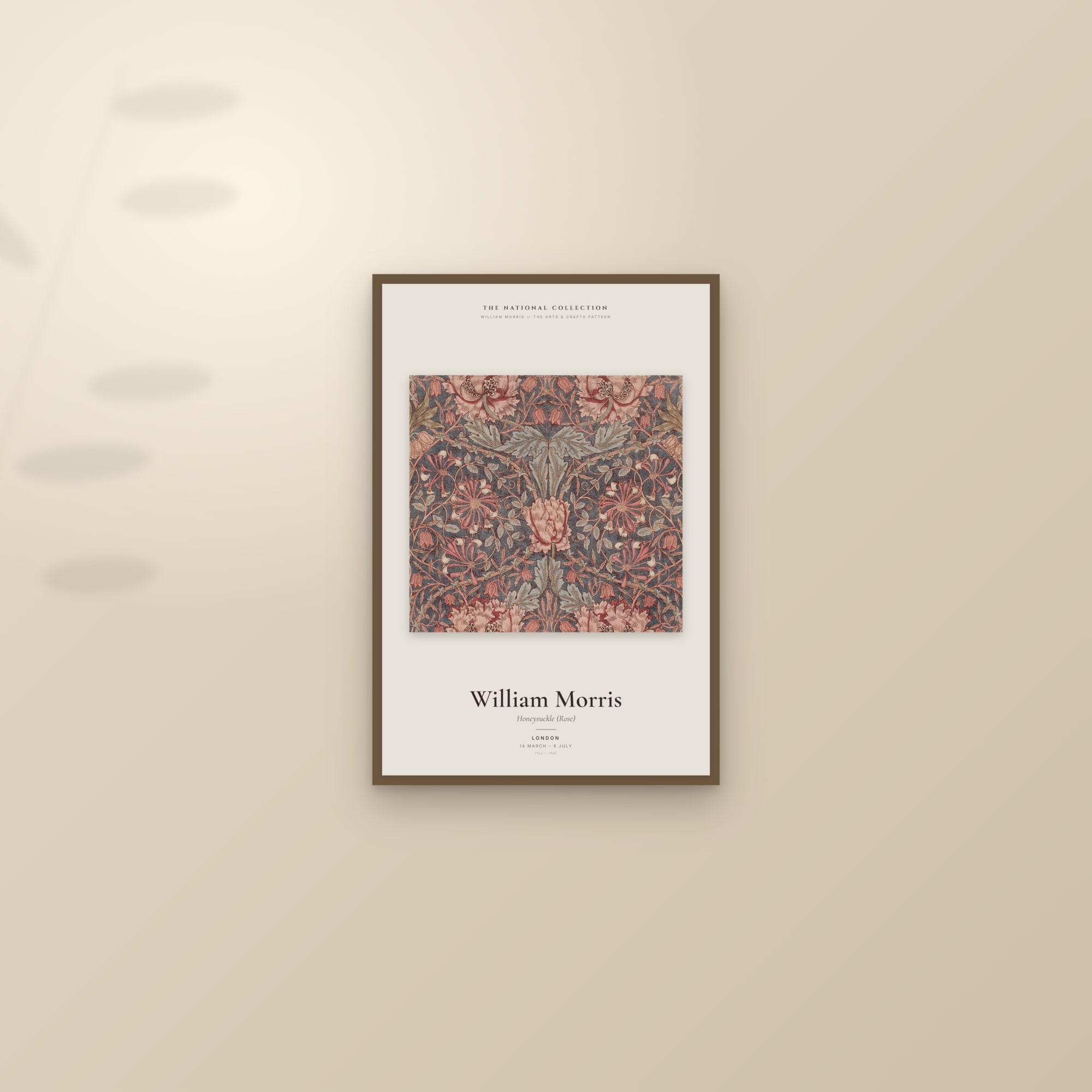
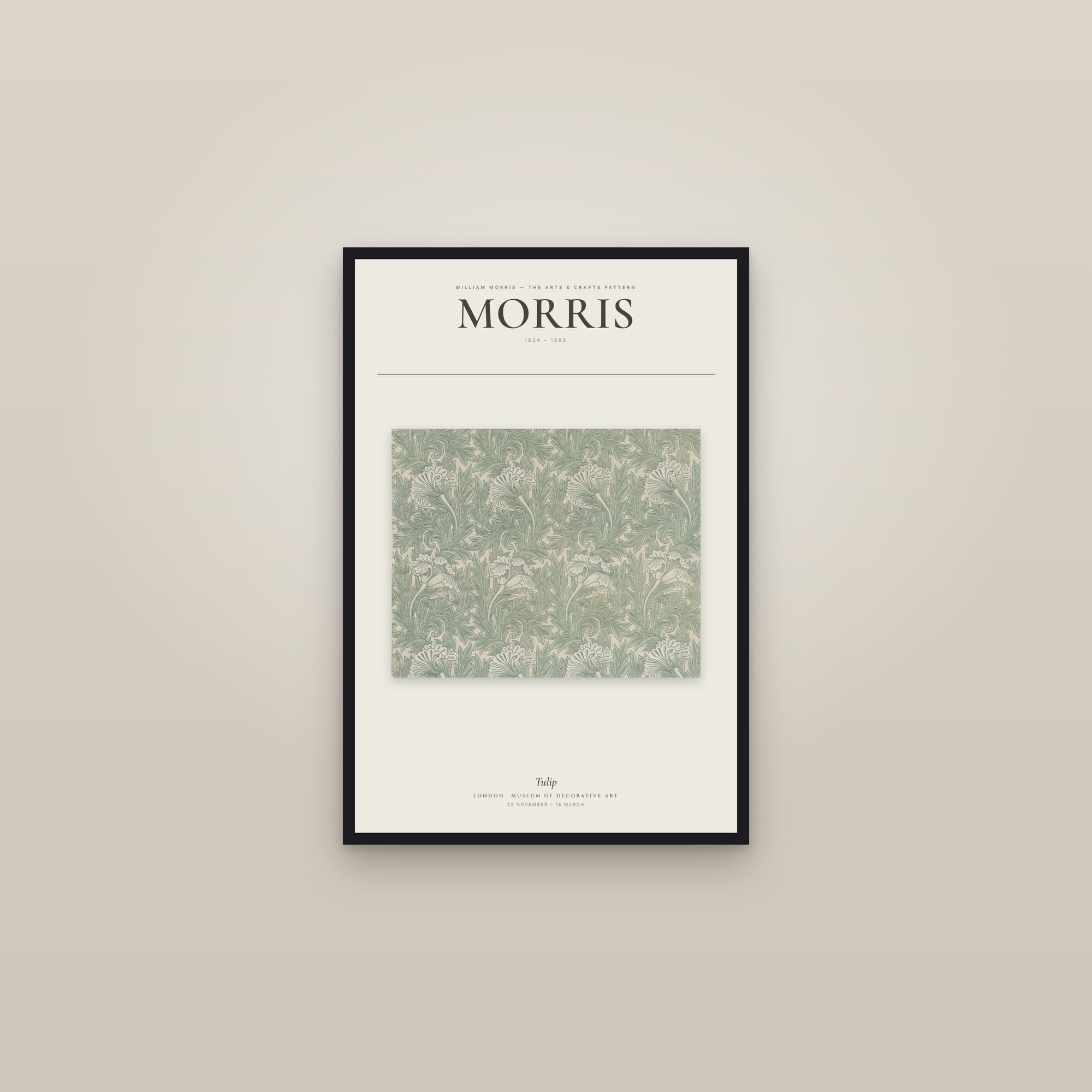
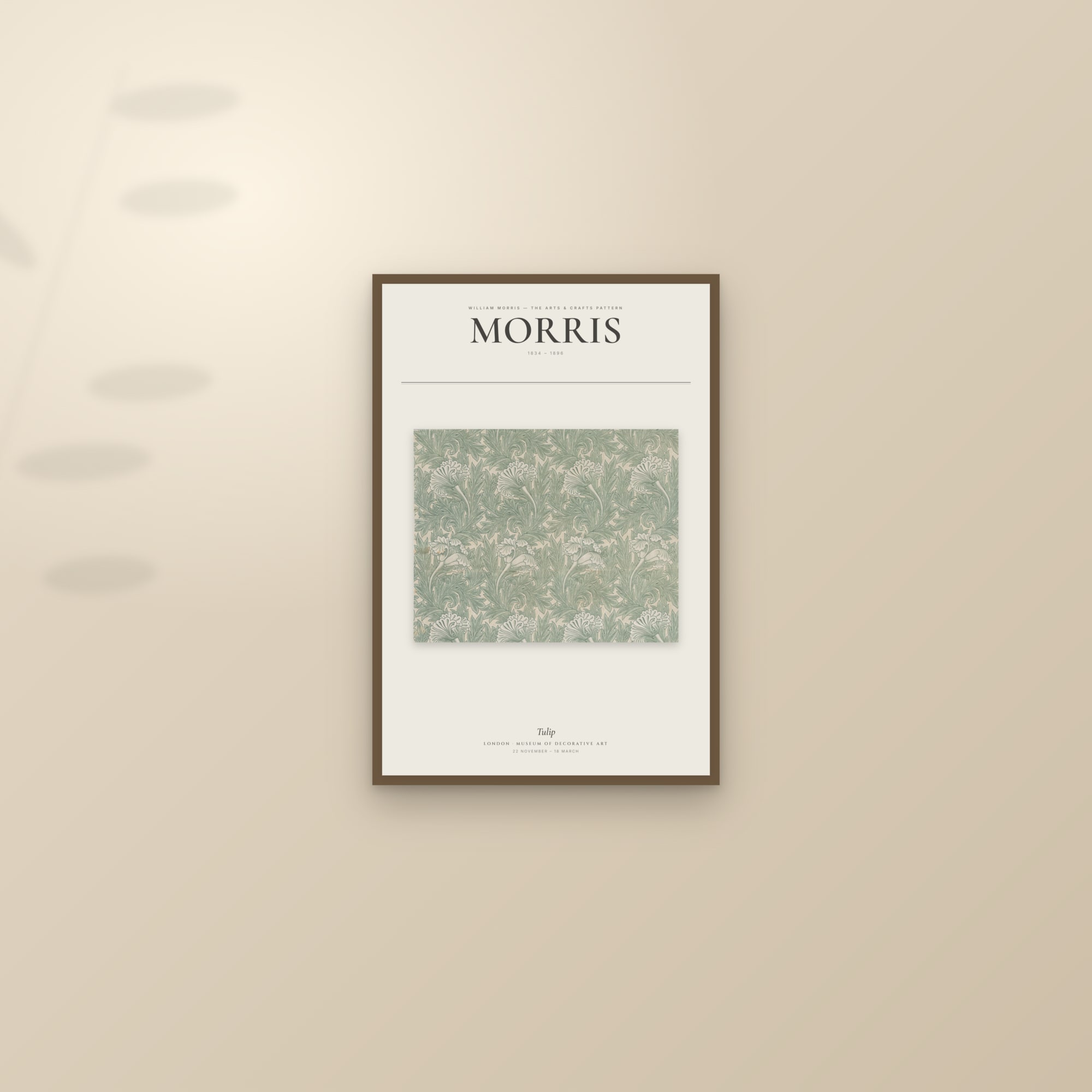
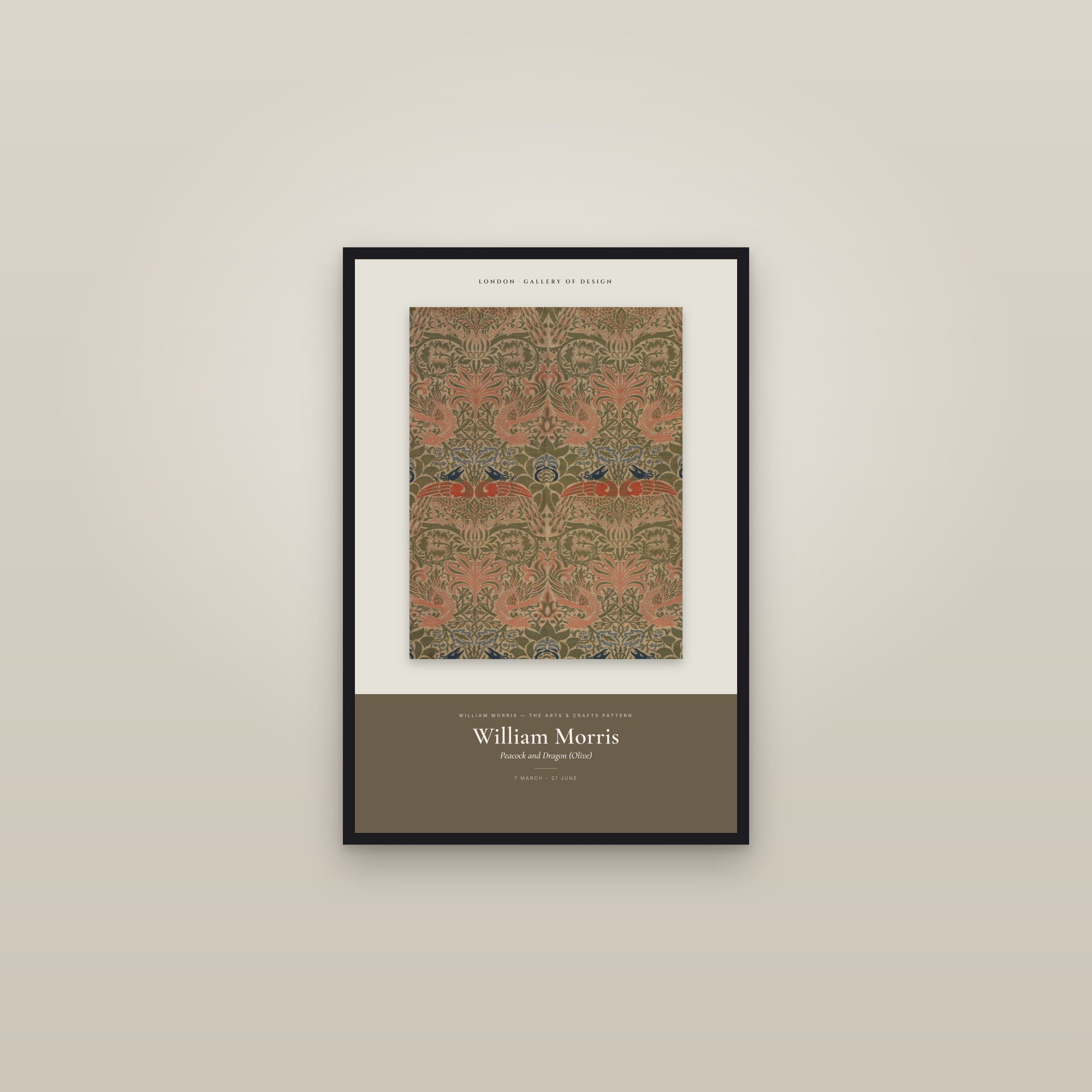
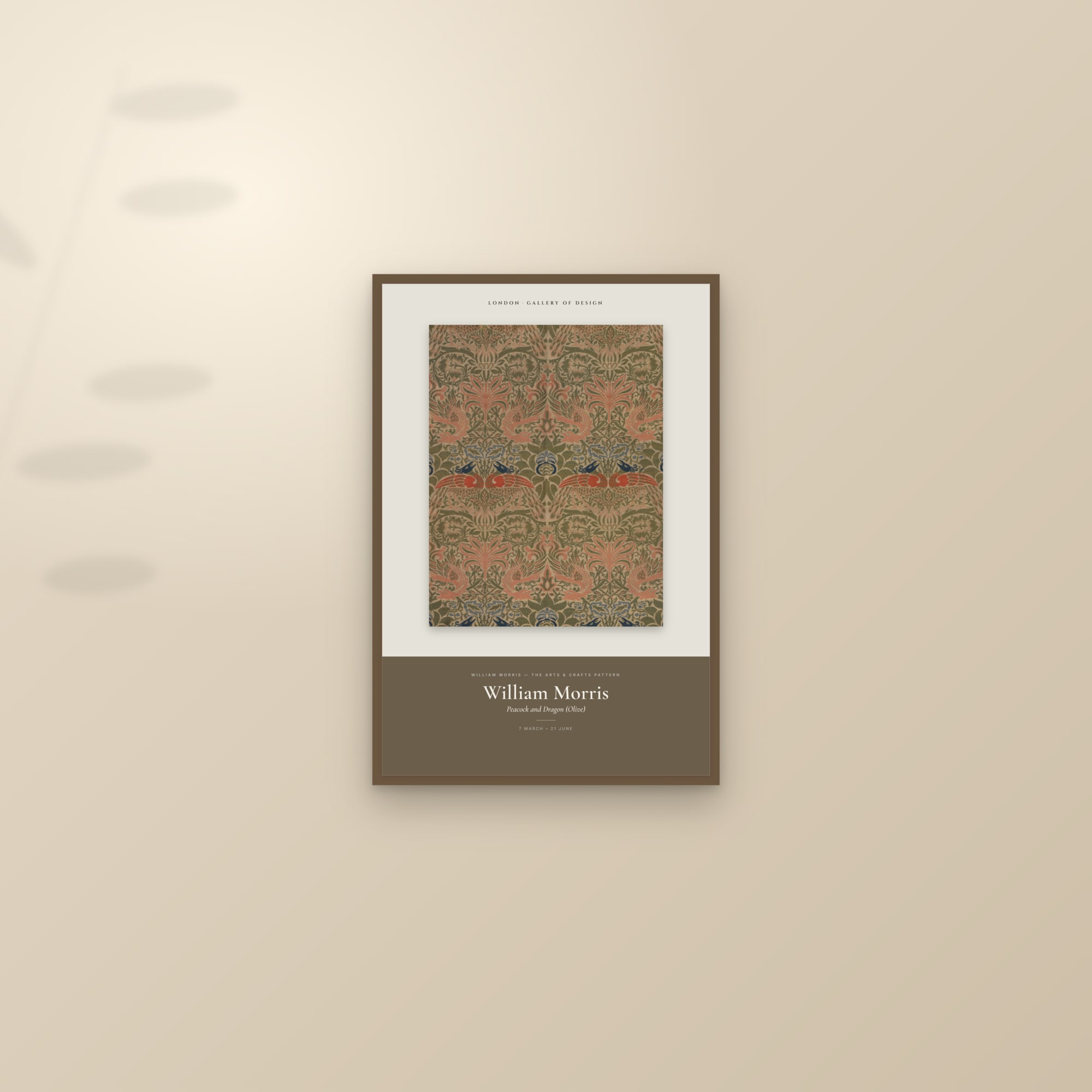
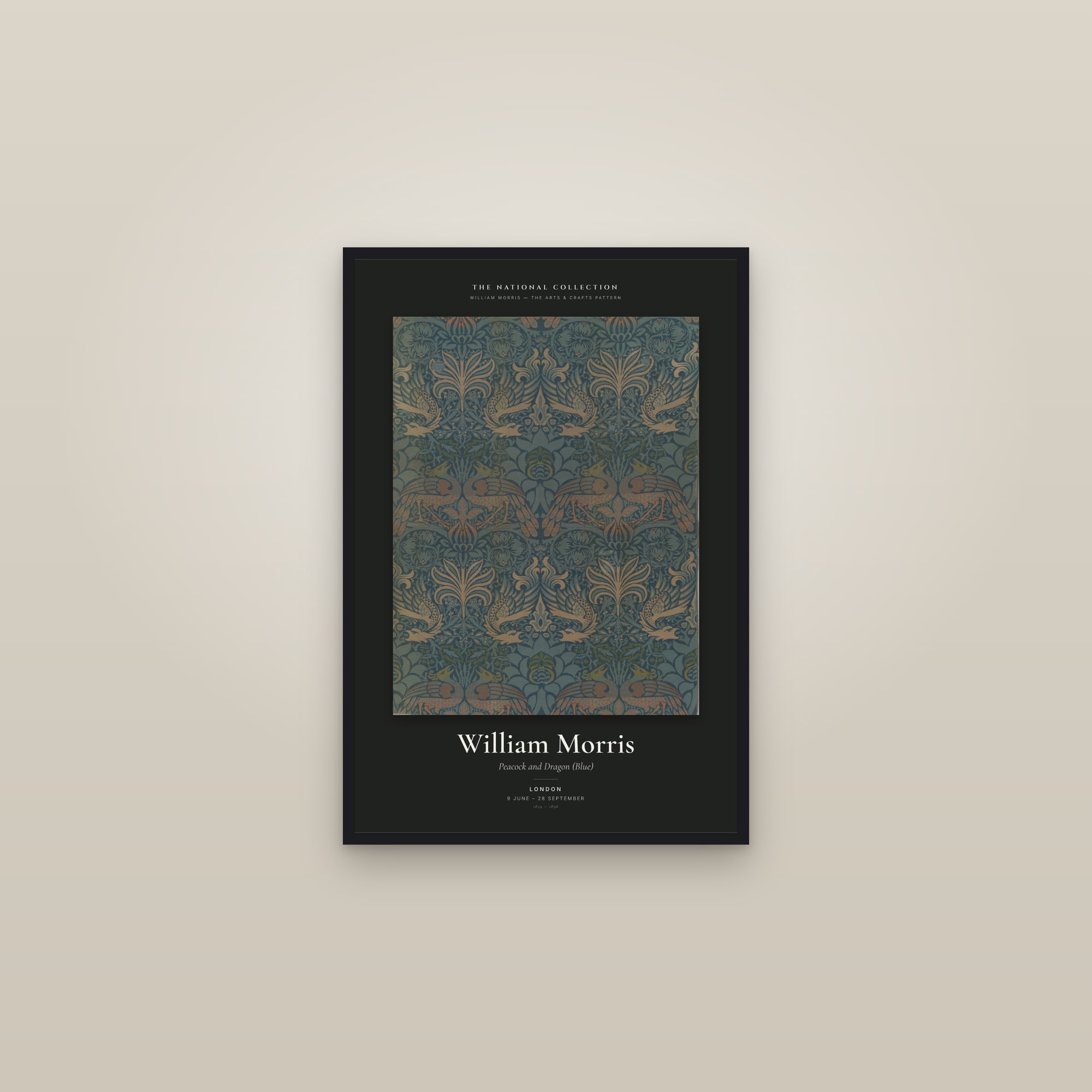
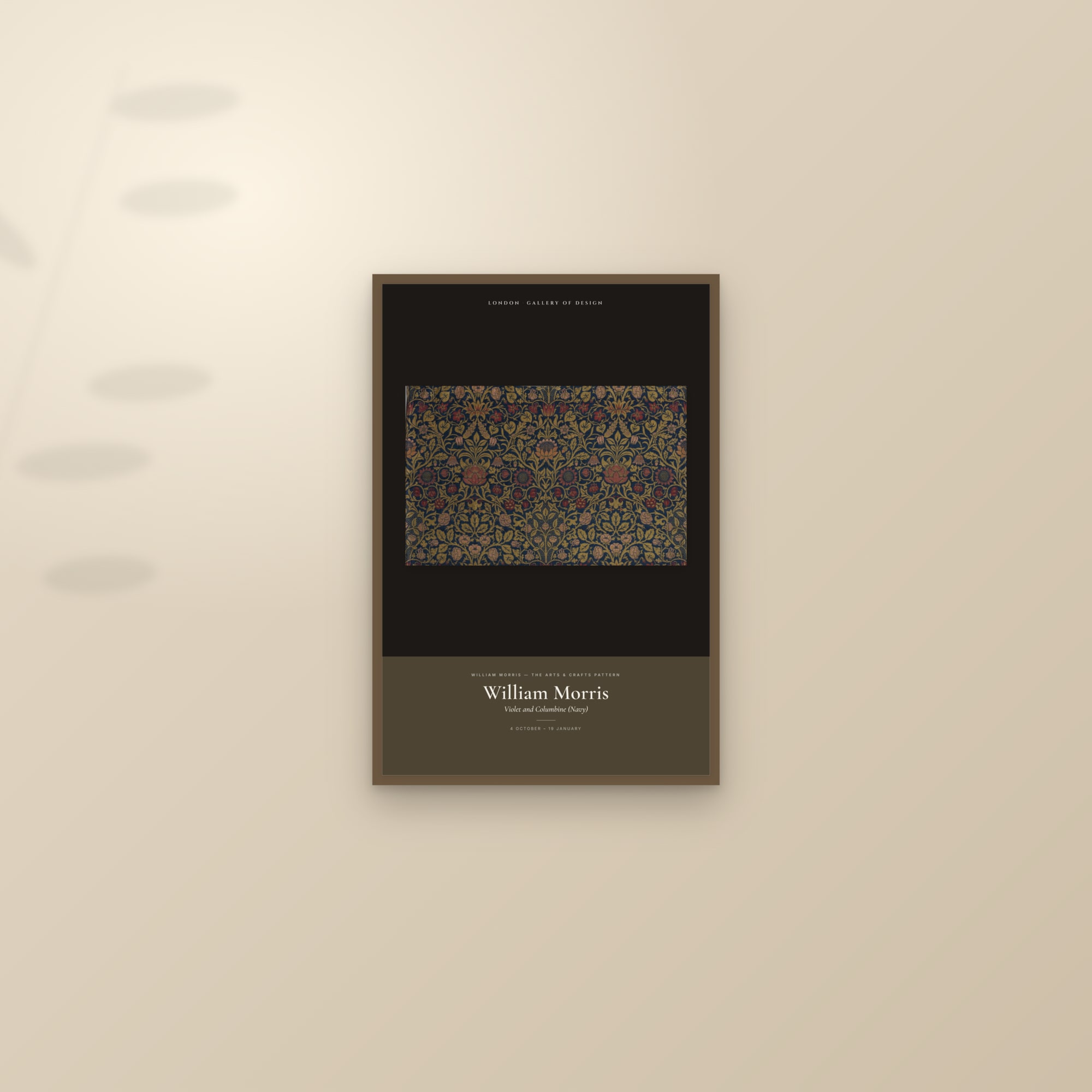
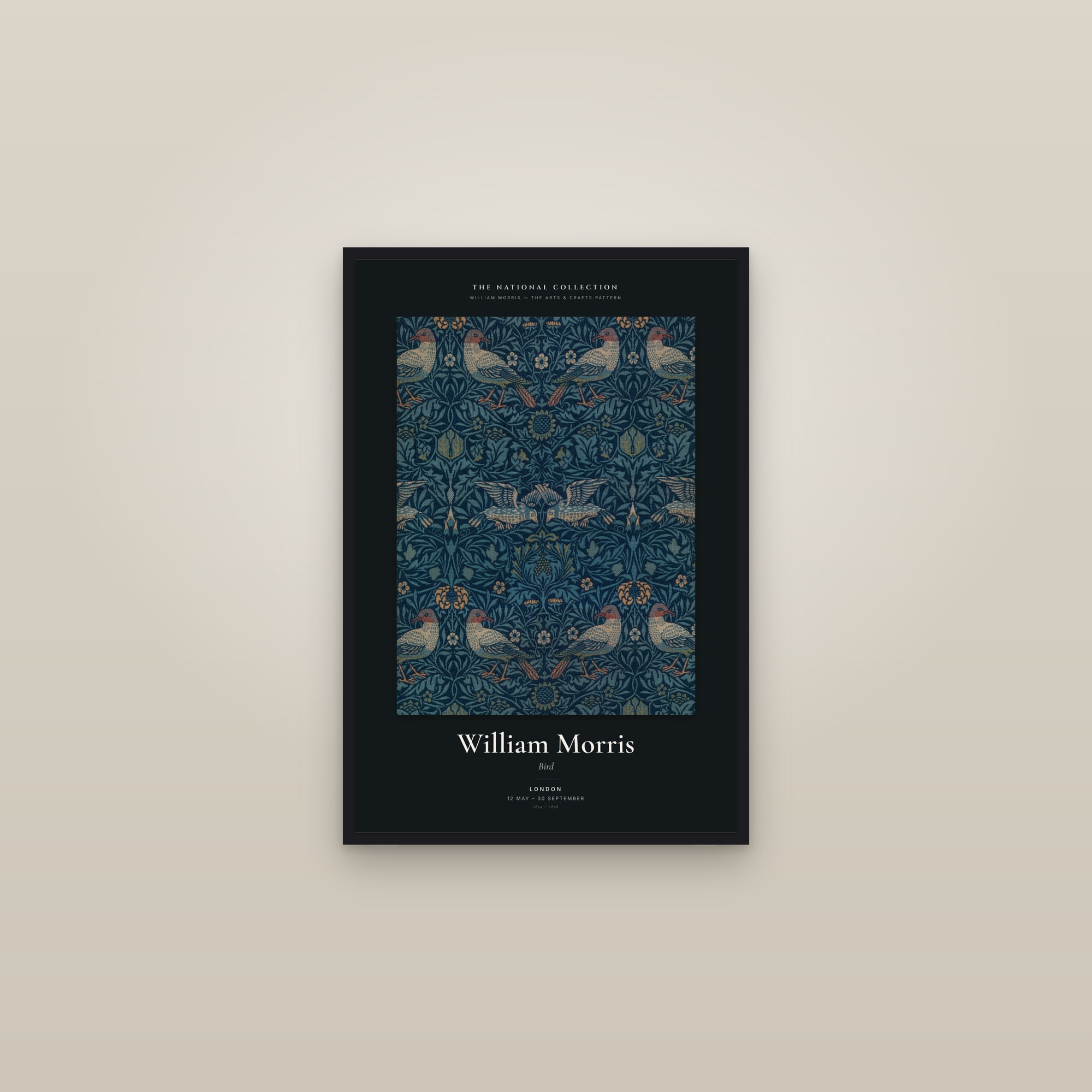
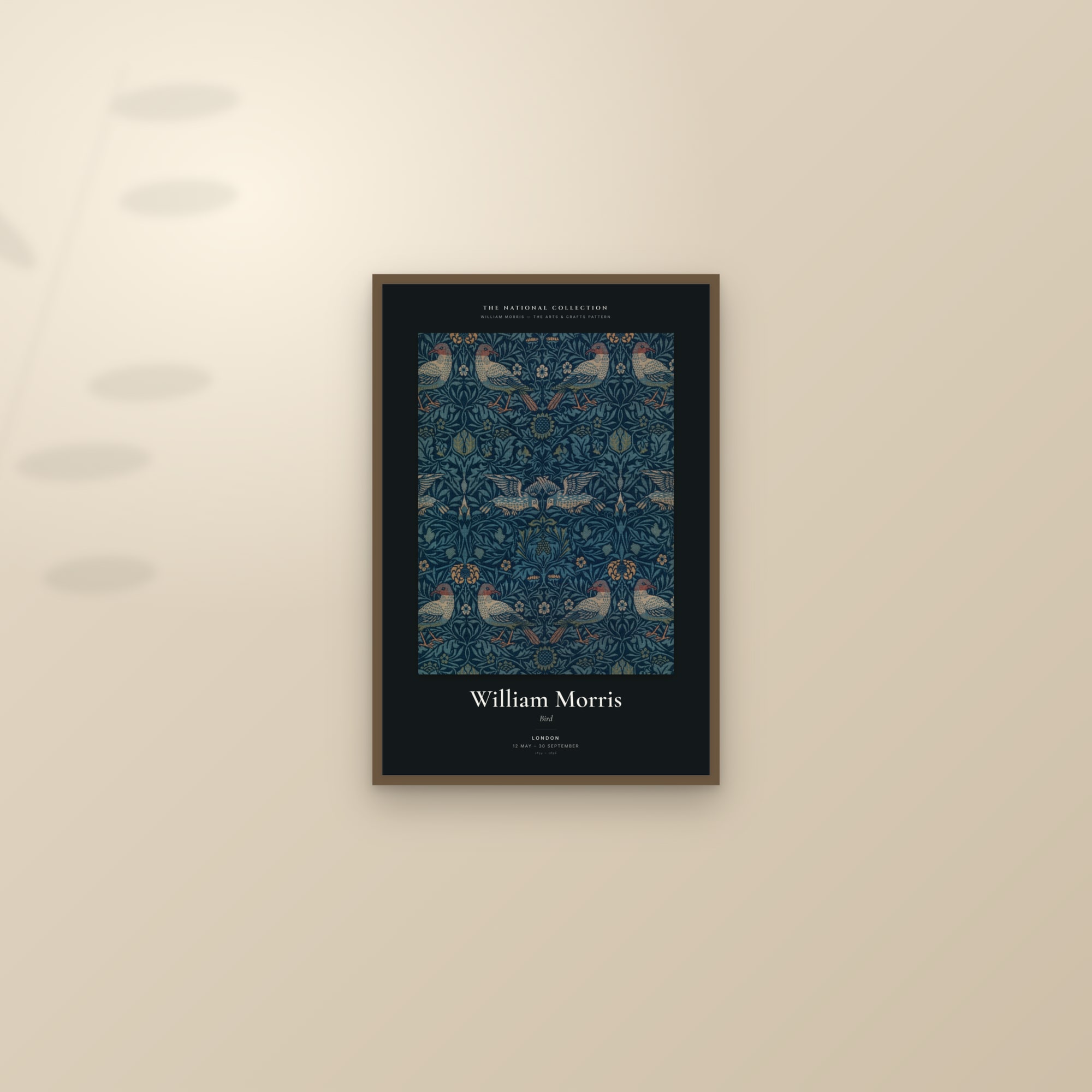
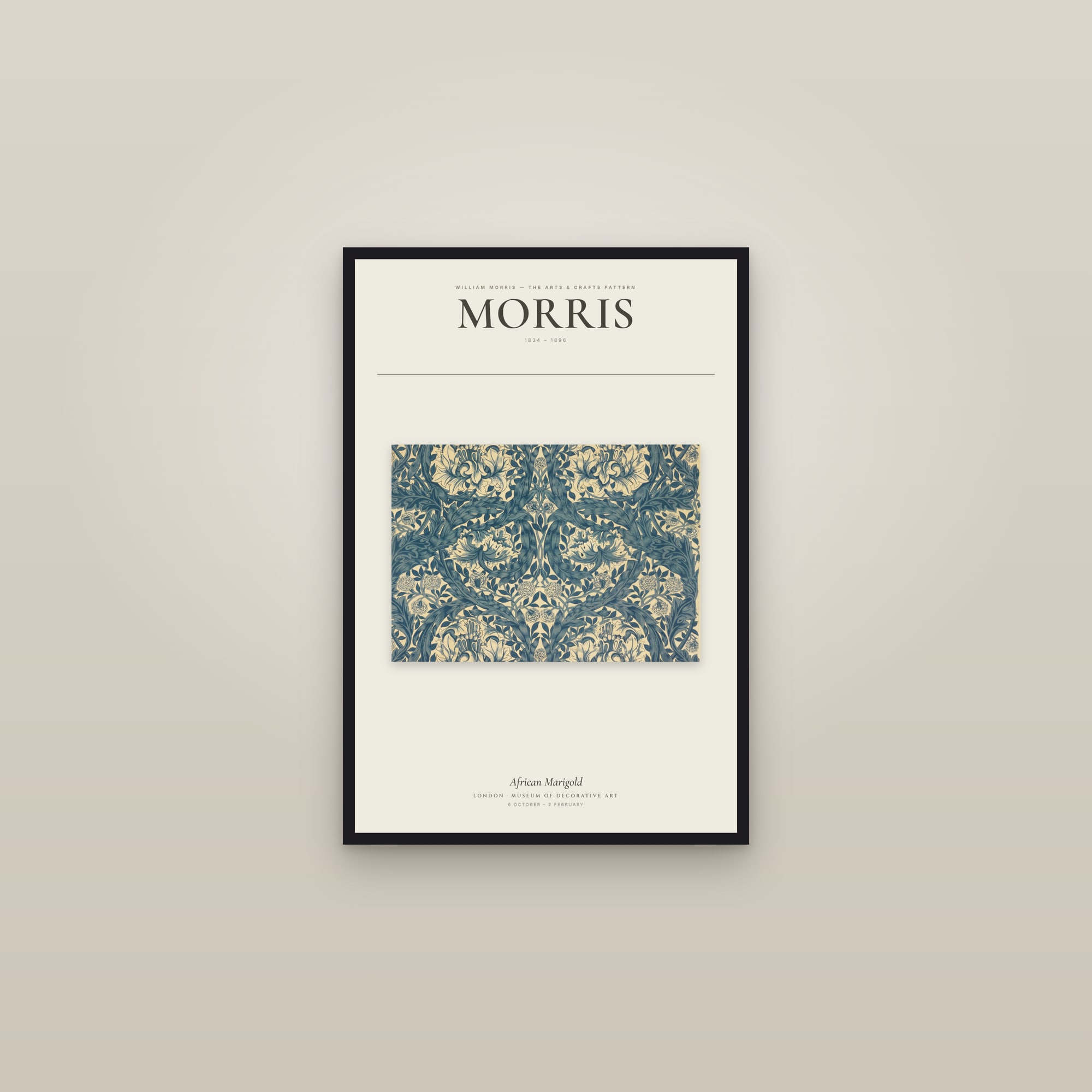
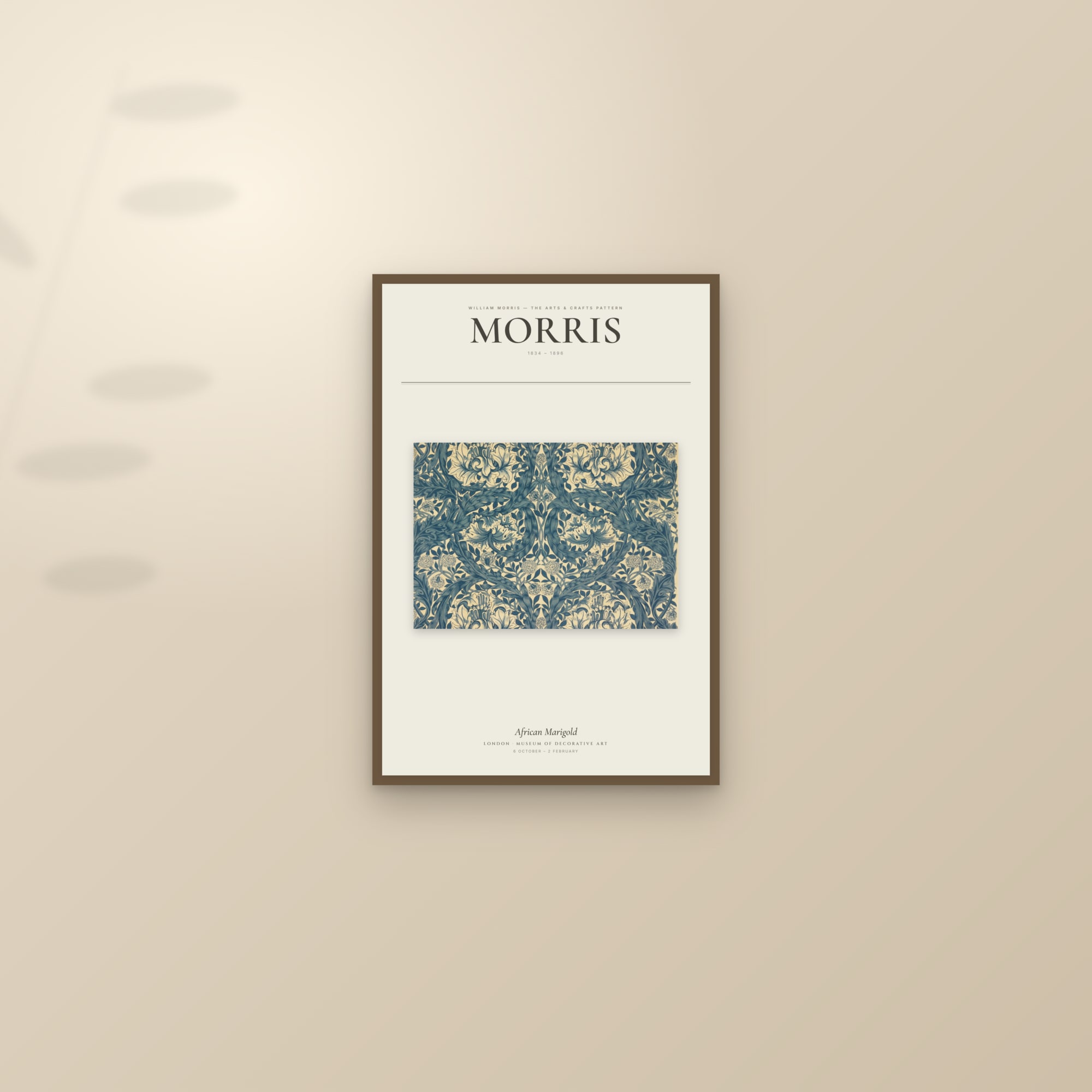
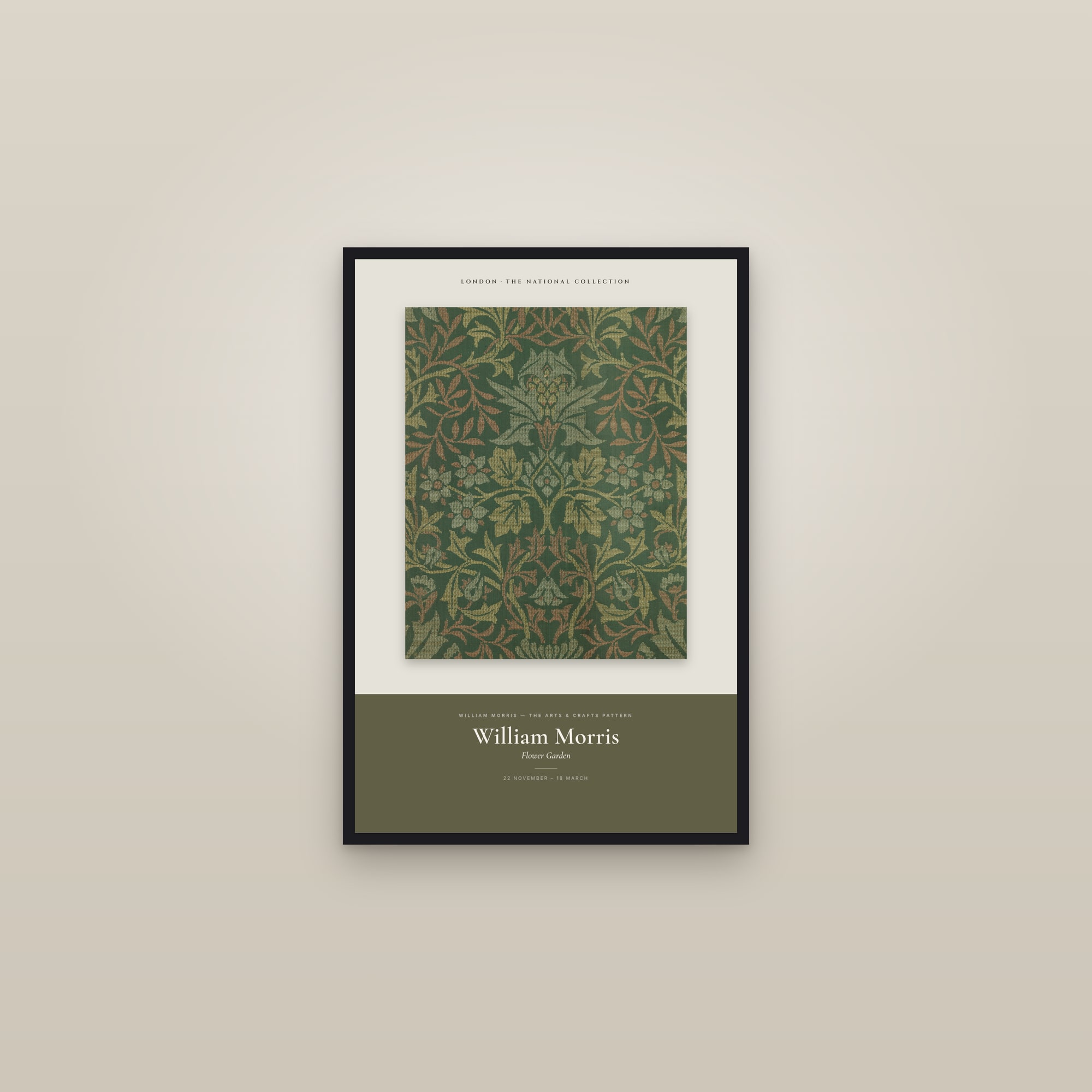
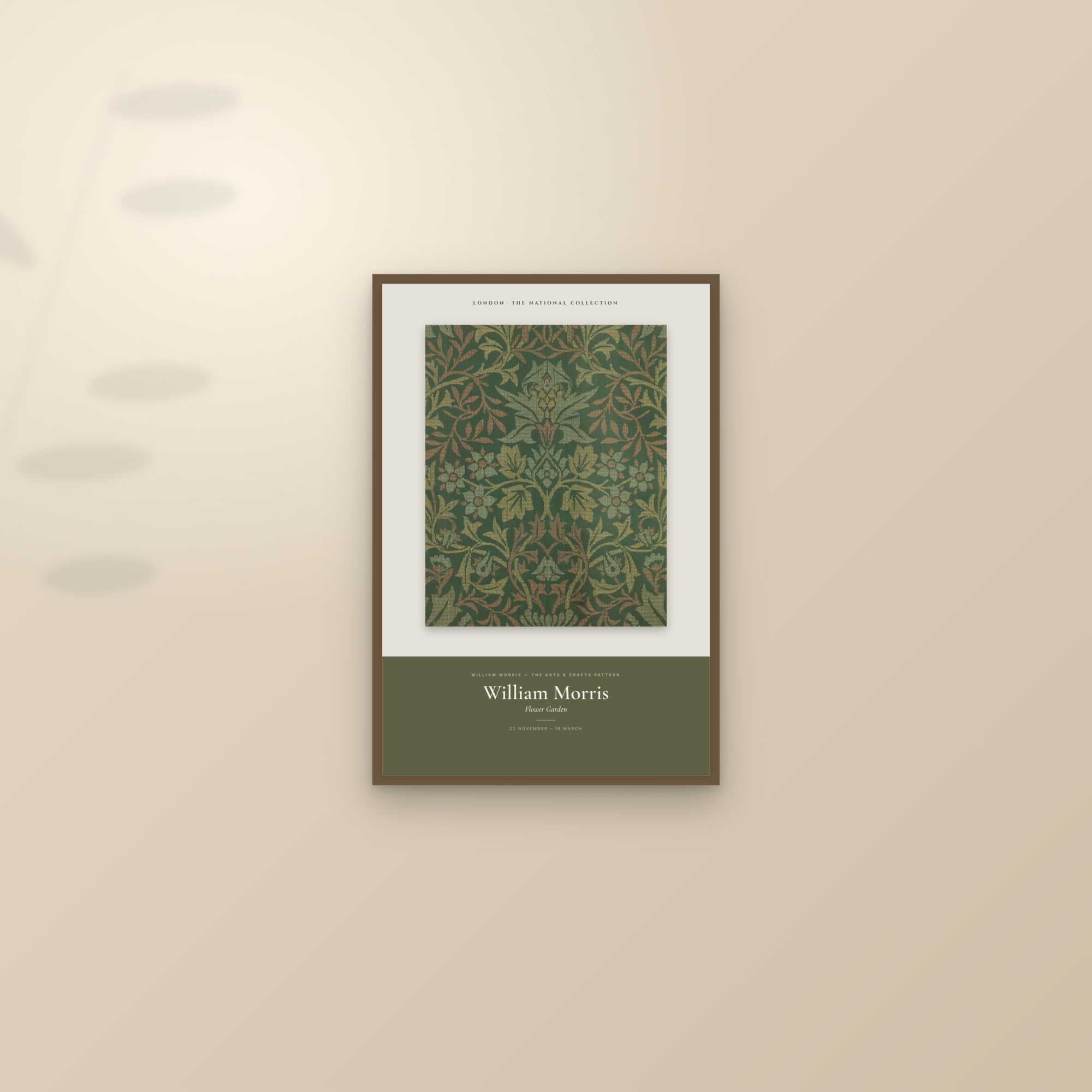
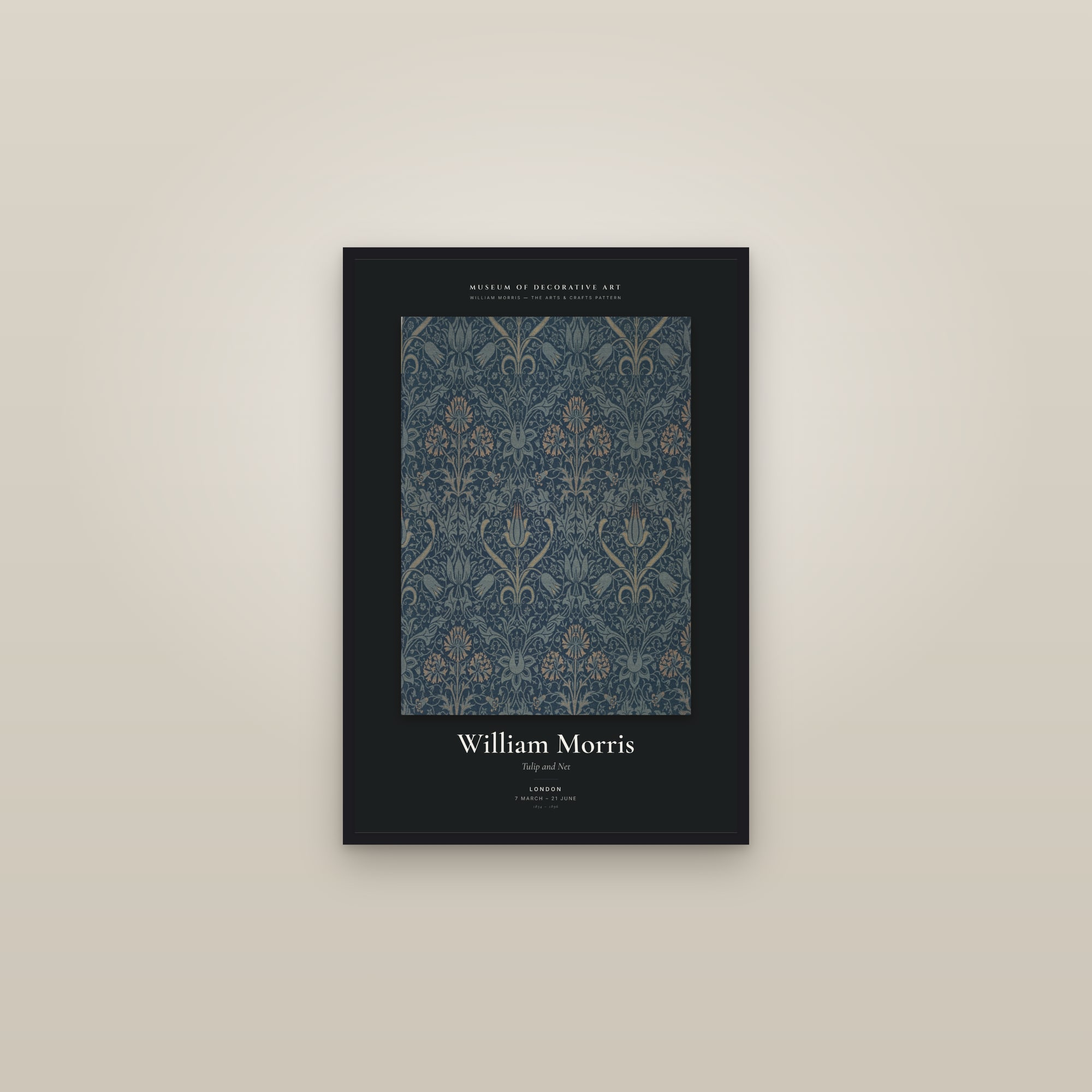
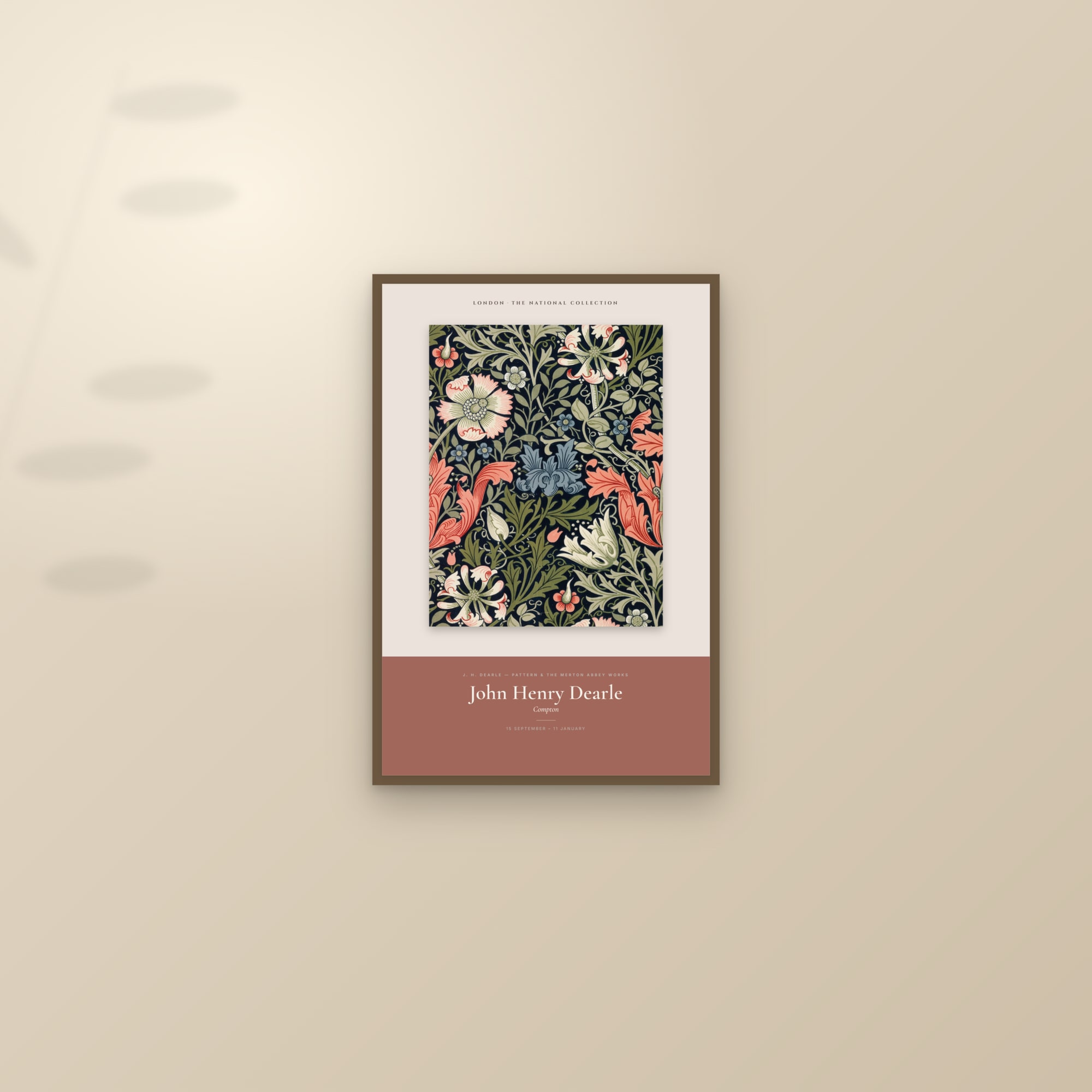
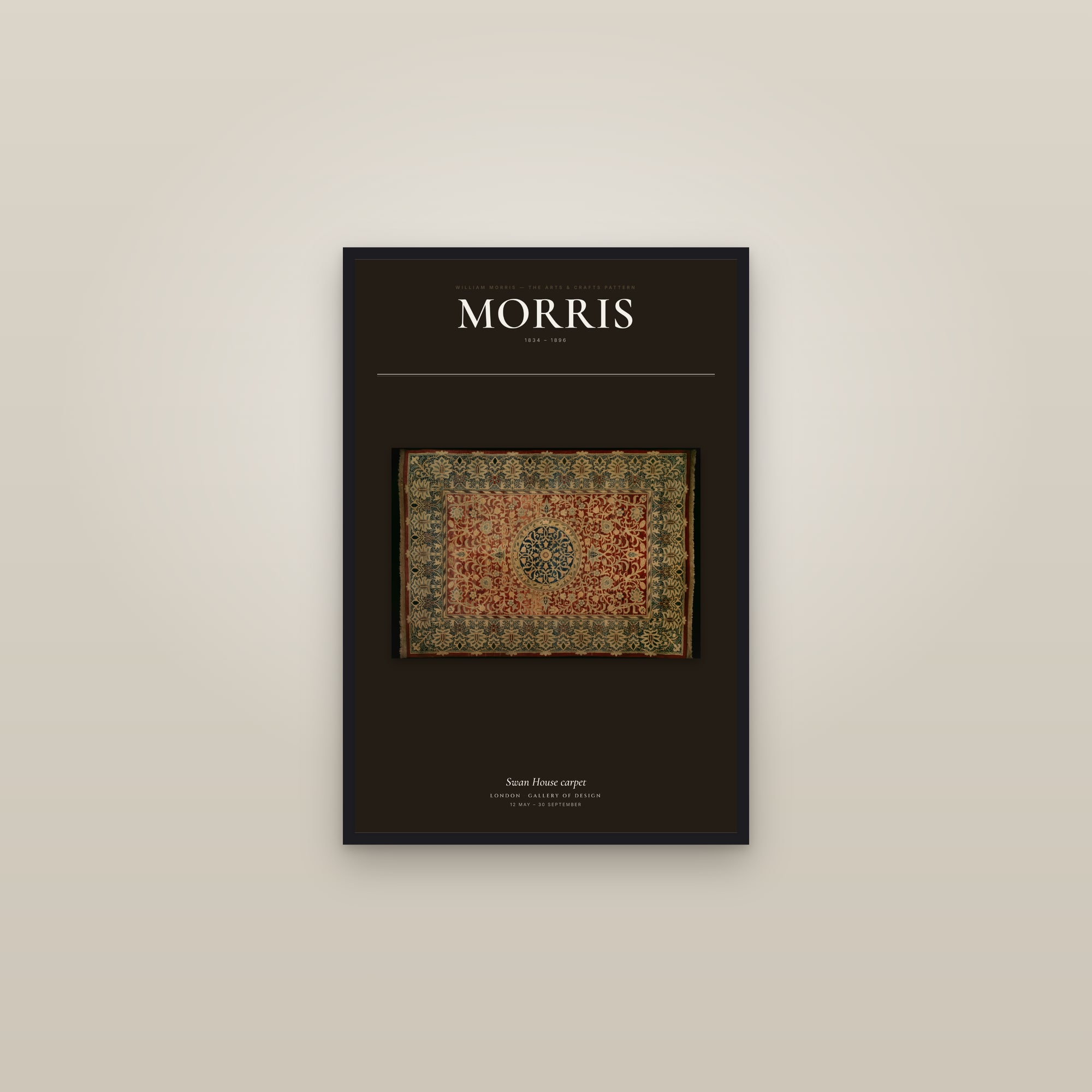
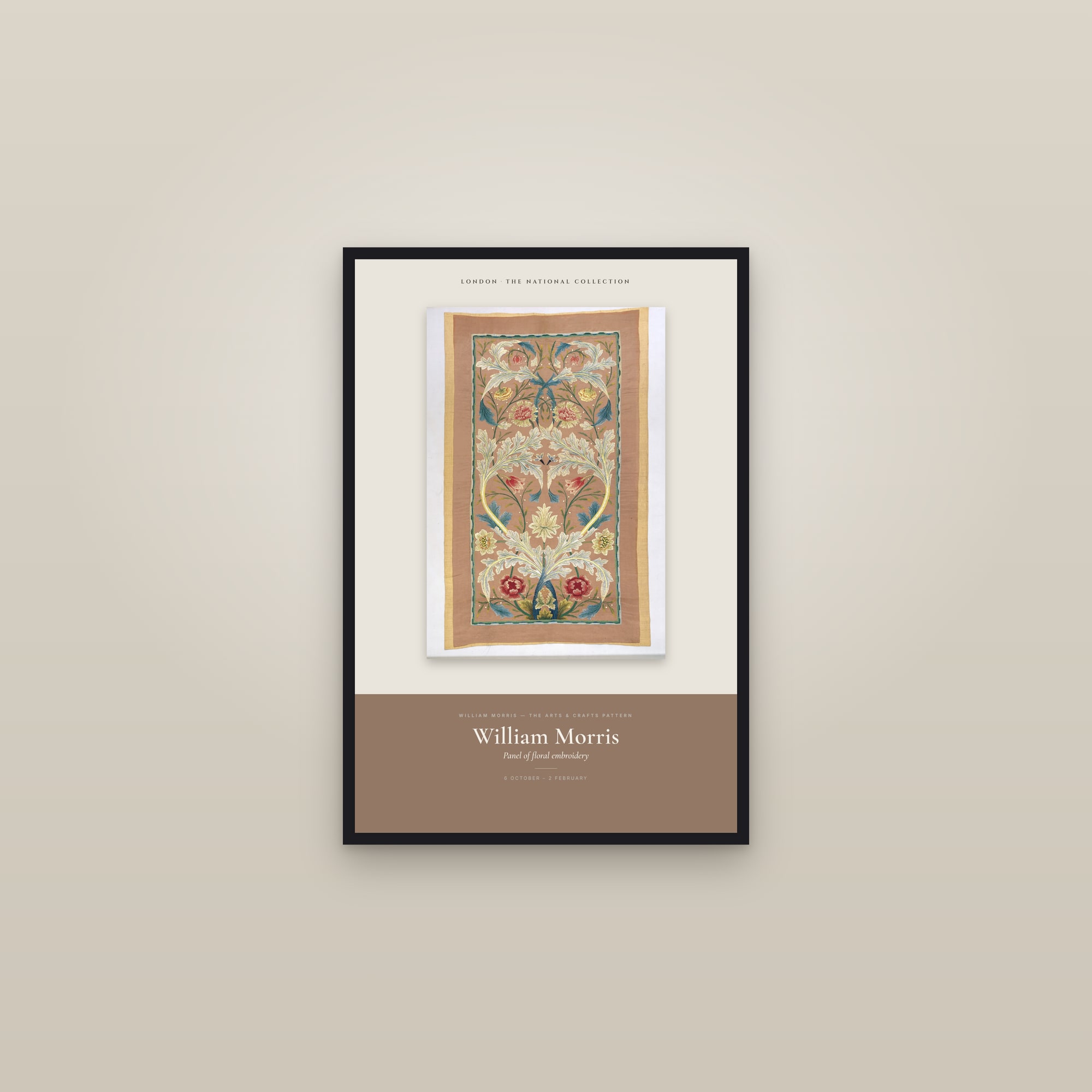
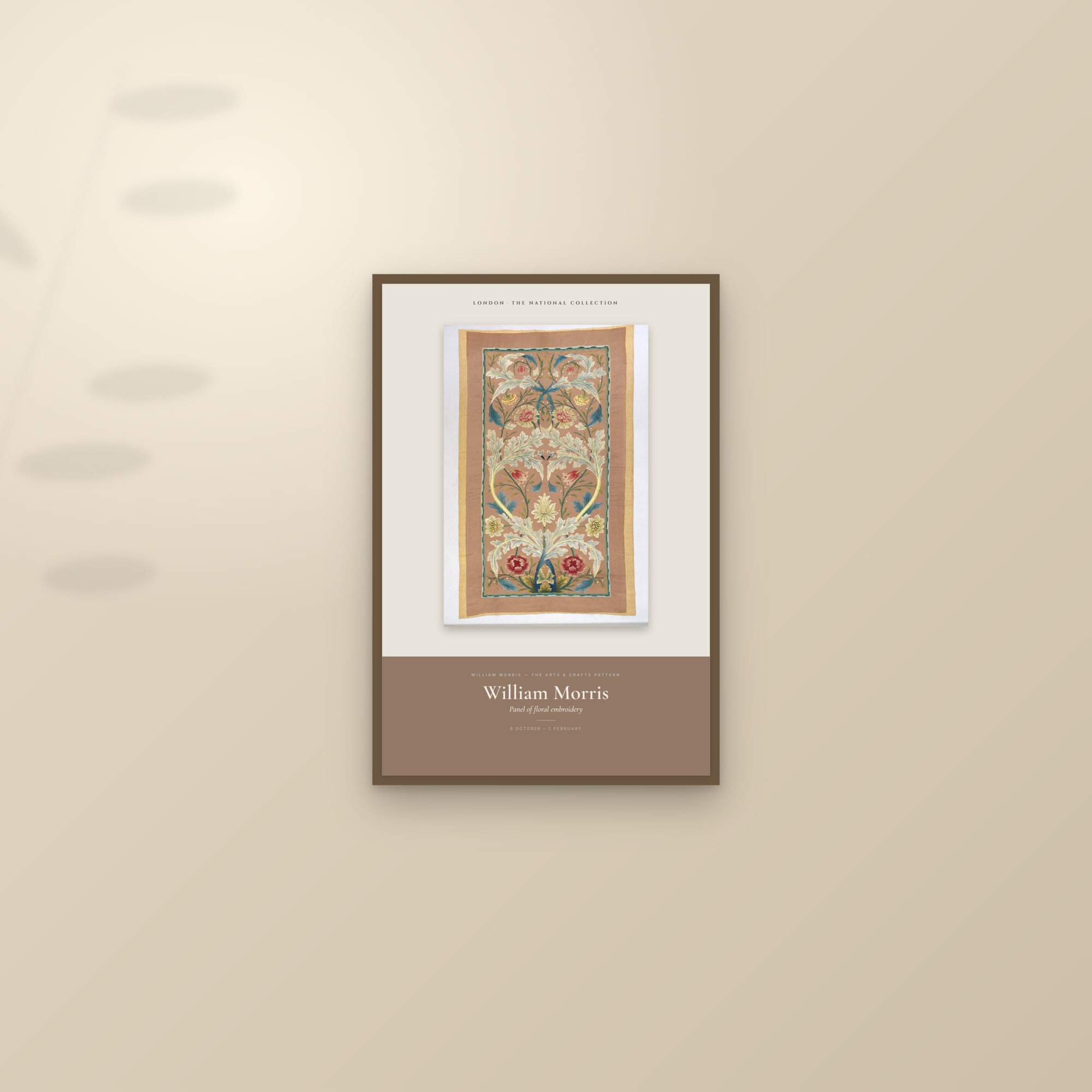
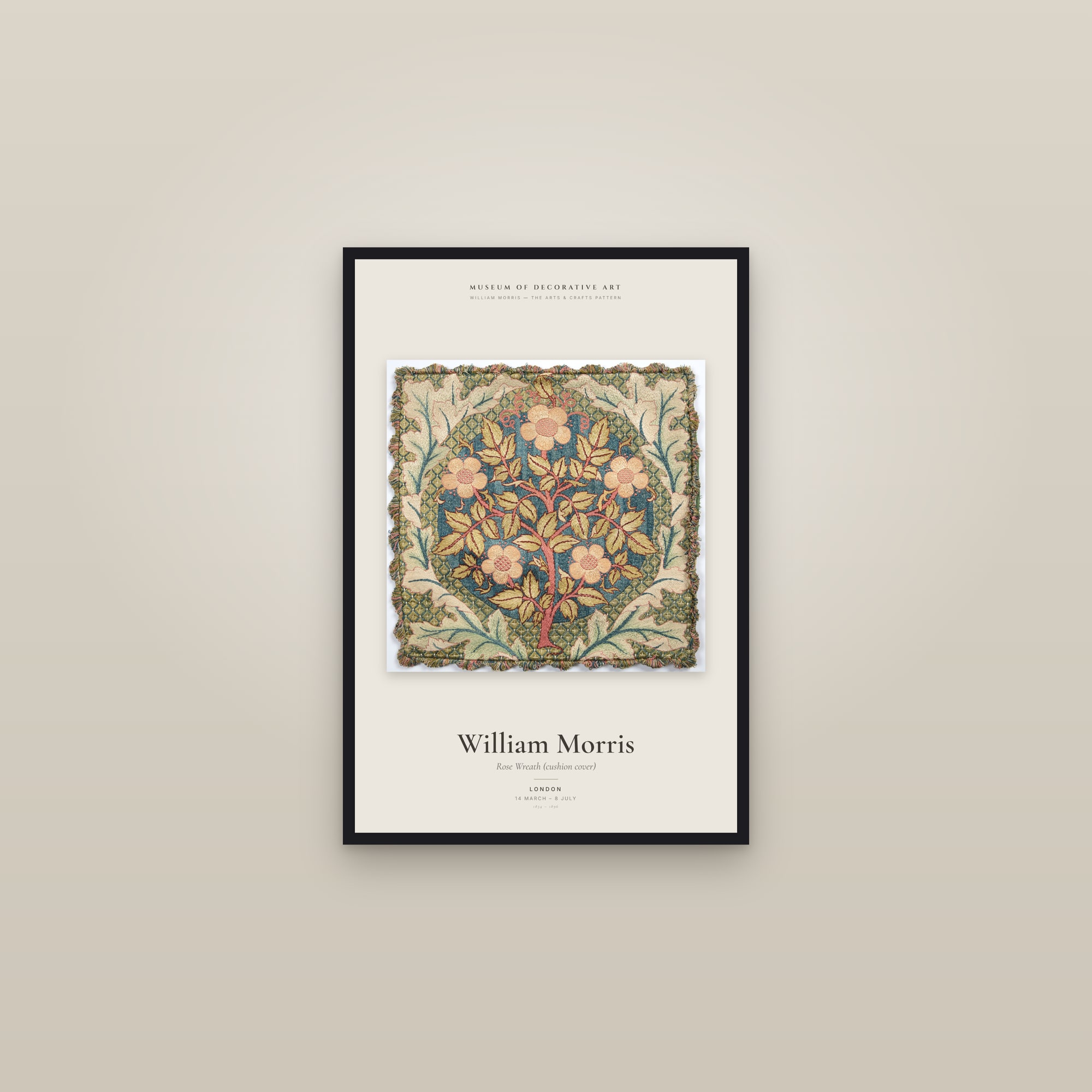
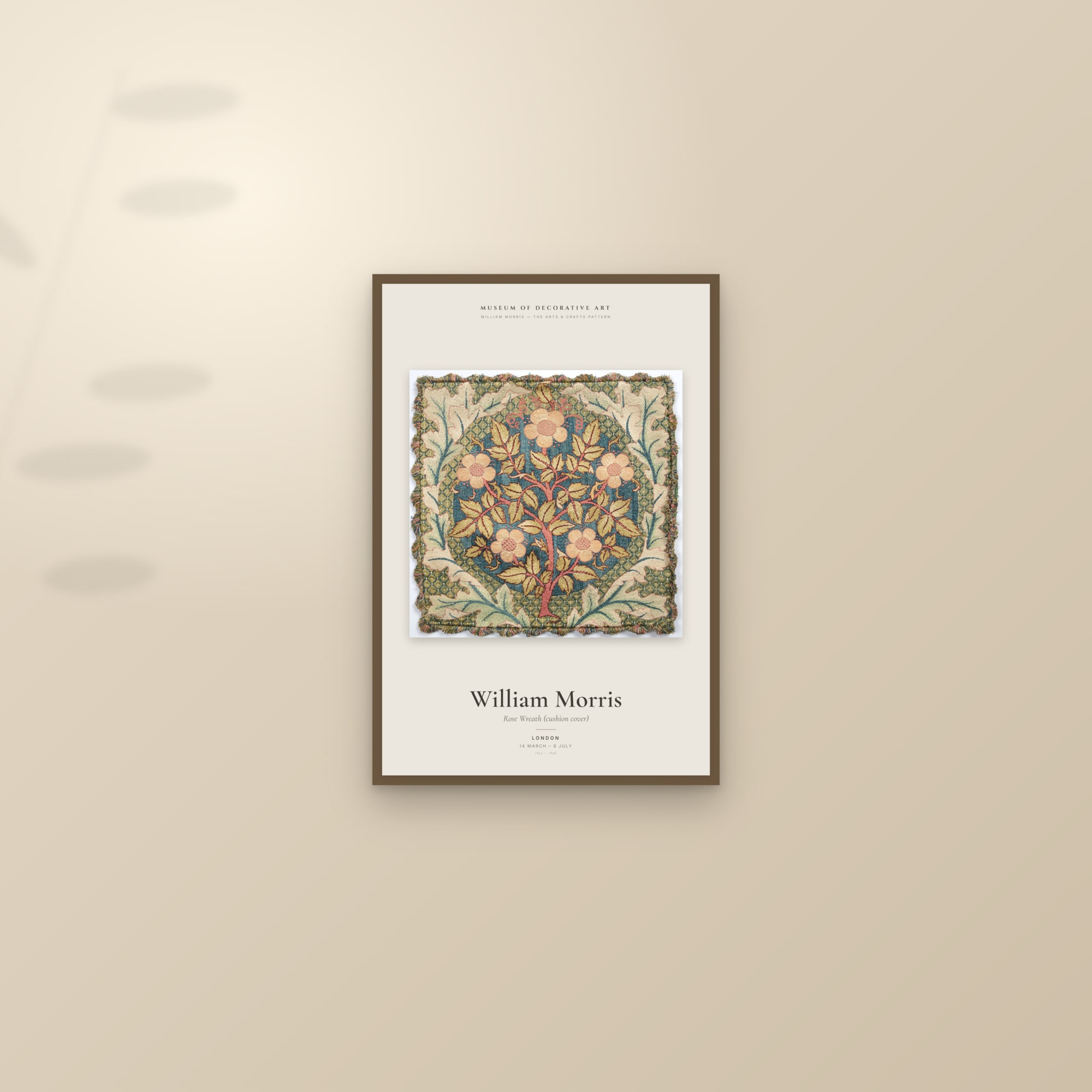
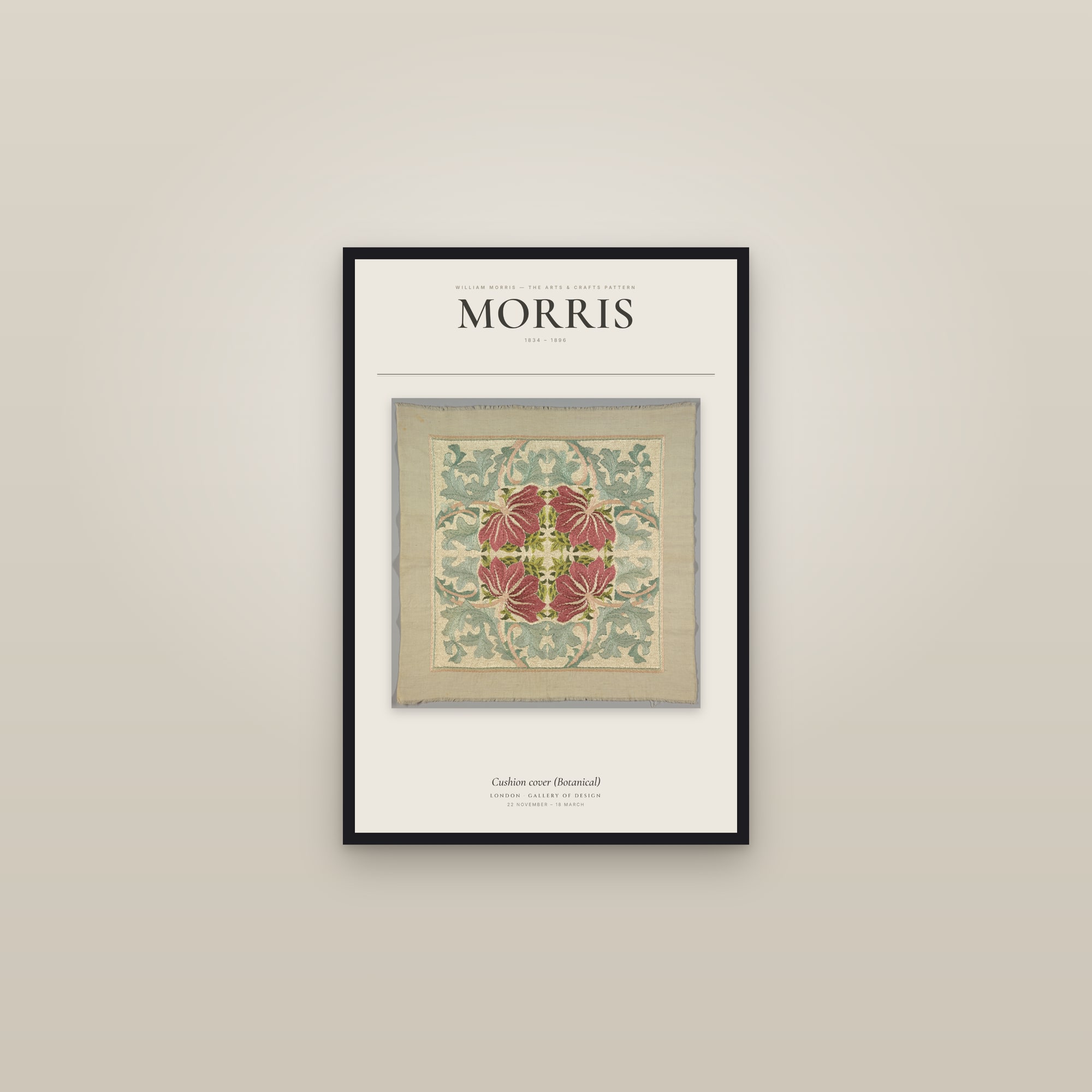
The wallpapers and textiles of William Morris and the designers of his firm, John Henry Dearle and May Morris — printed edge to edge from museum scans of the originals, or as exhibition posters.
90 prints · printed to order on heavyweight matte paper · framed or unframed
About William Morris
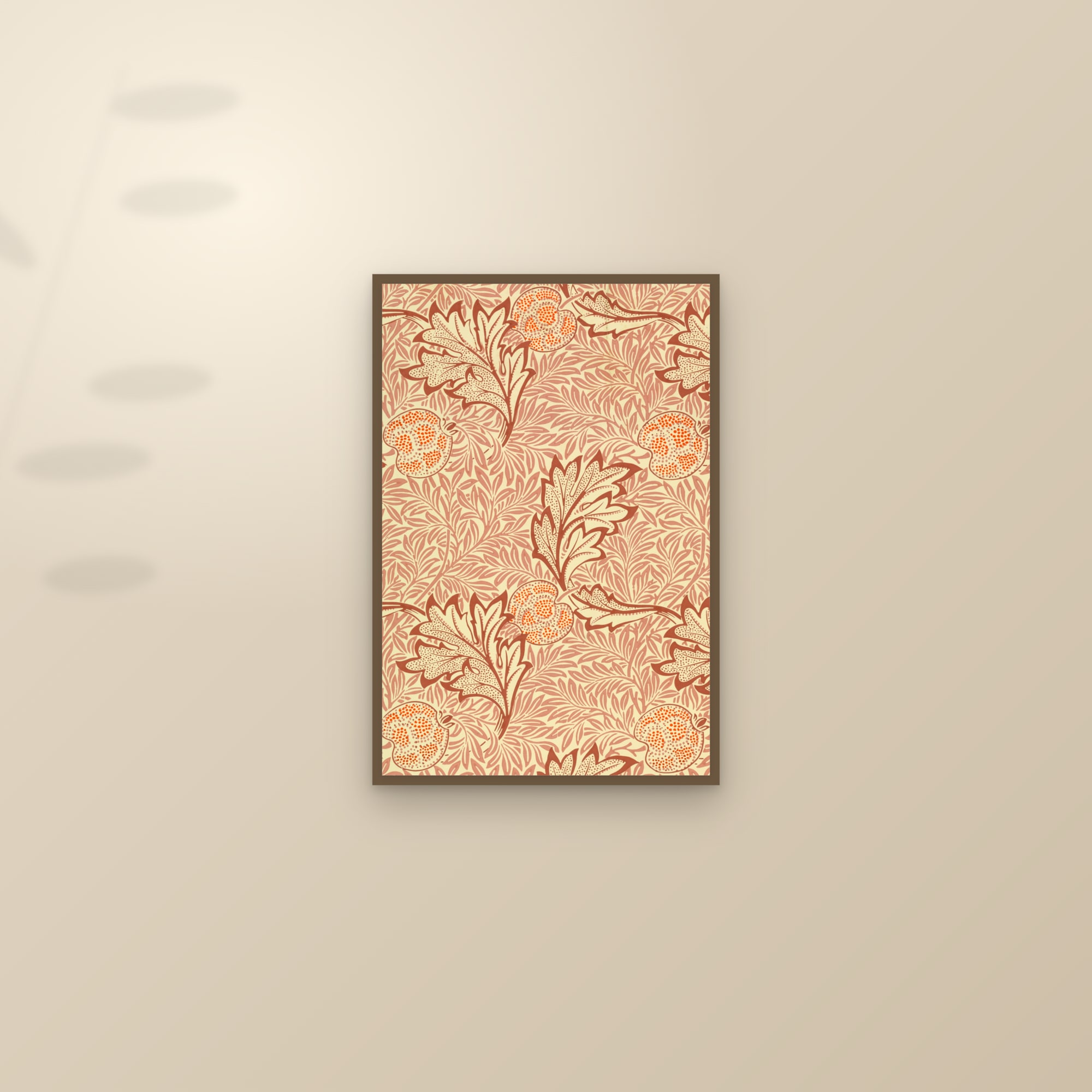
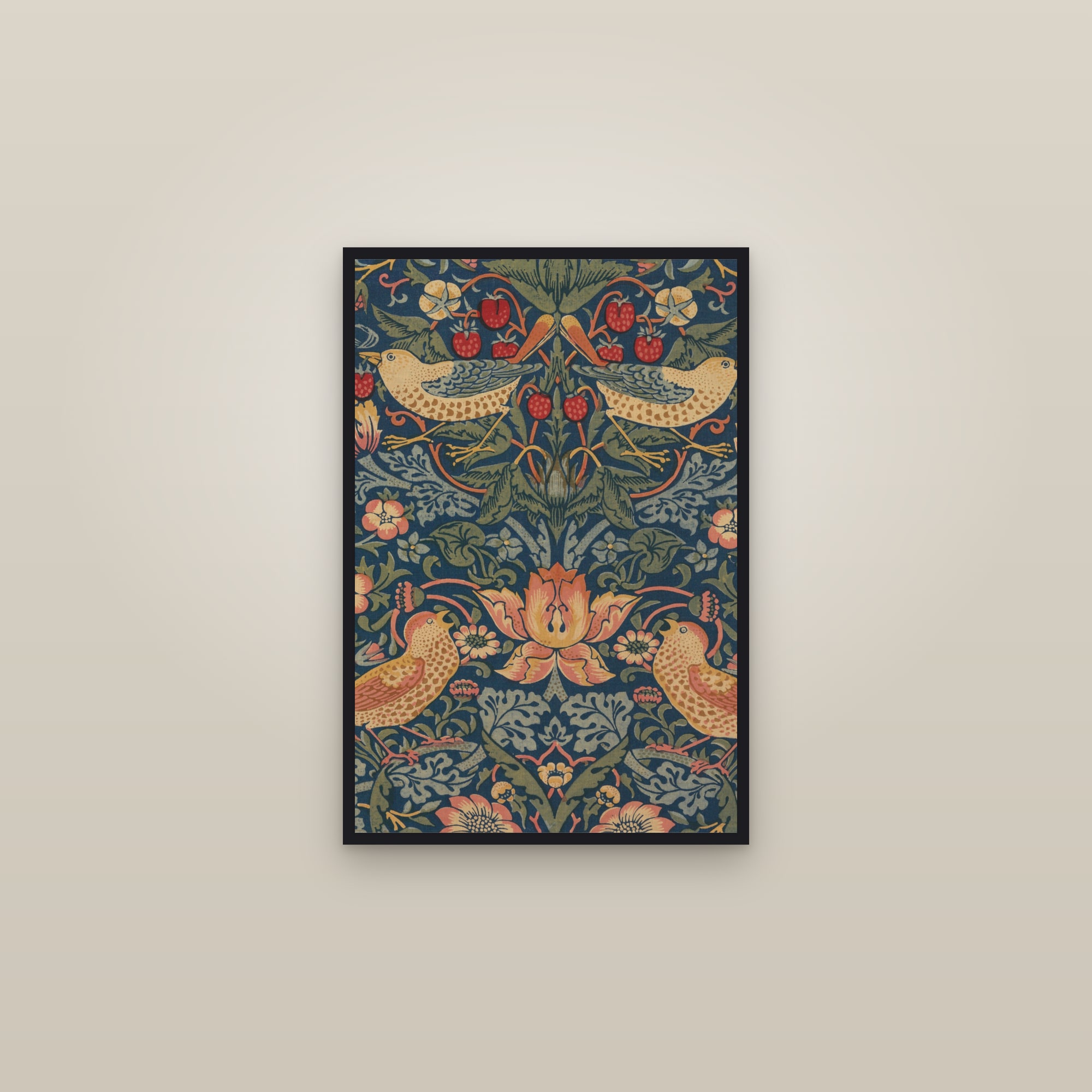
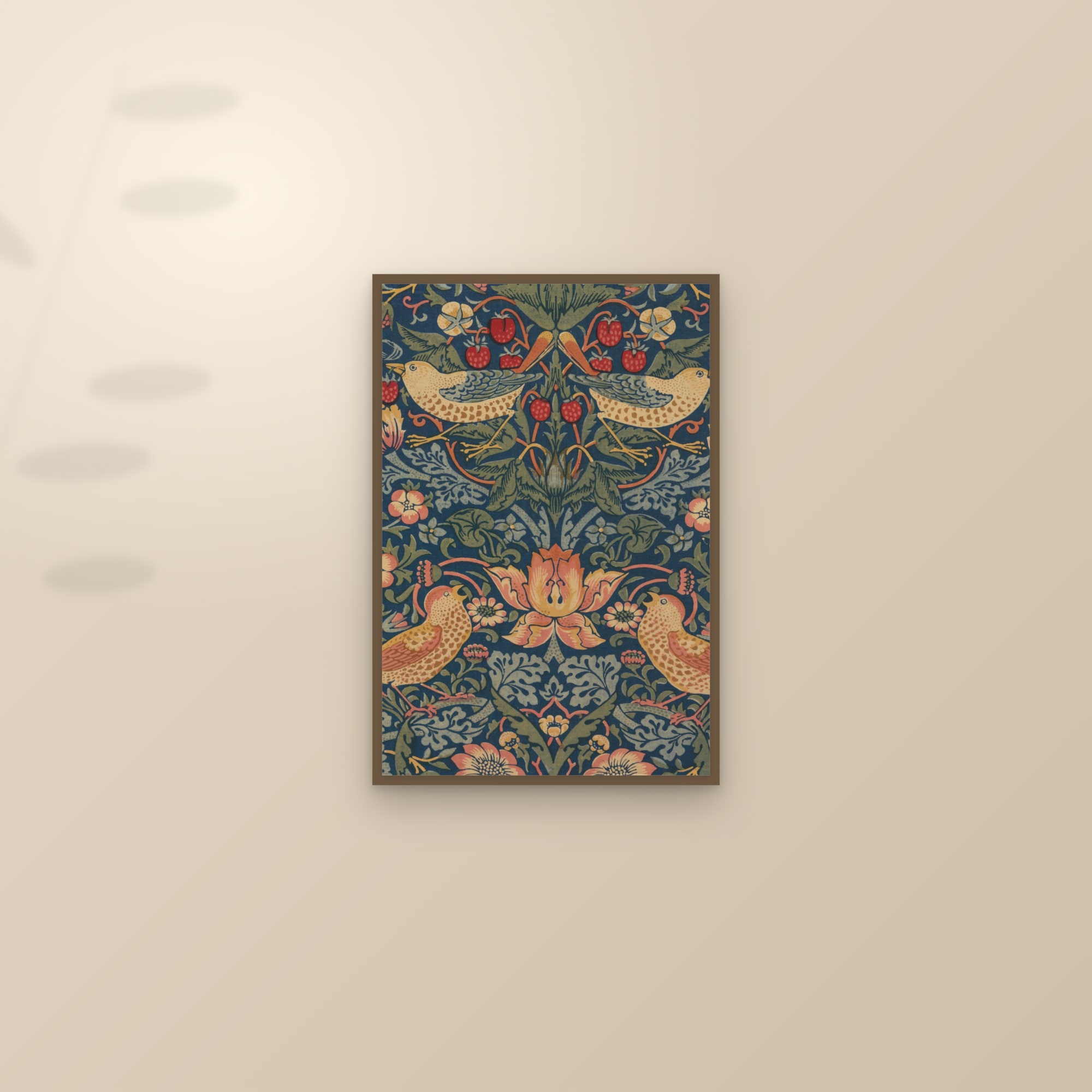
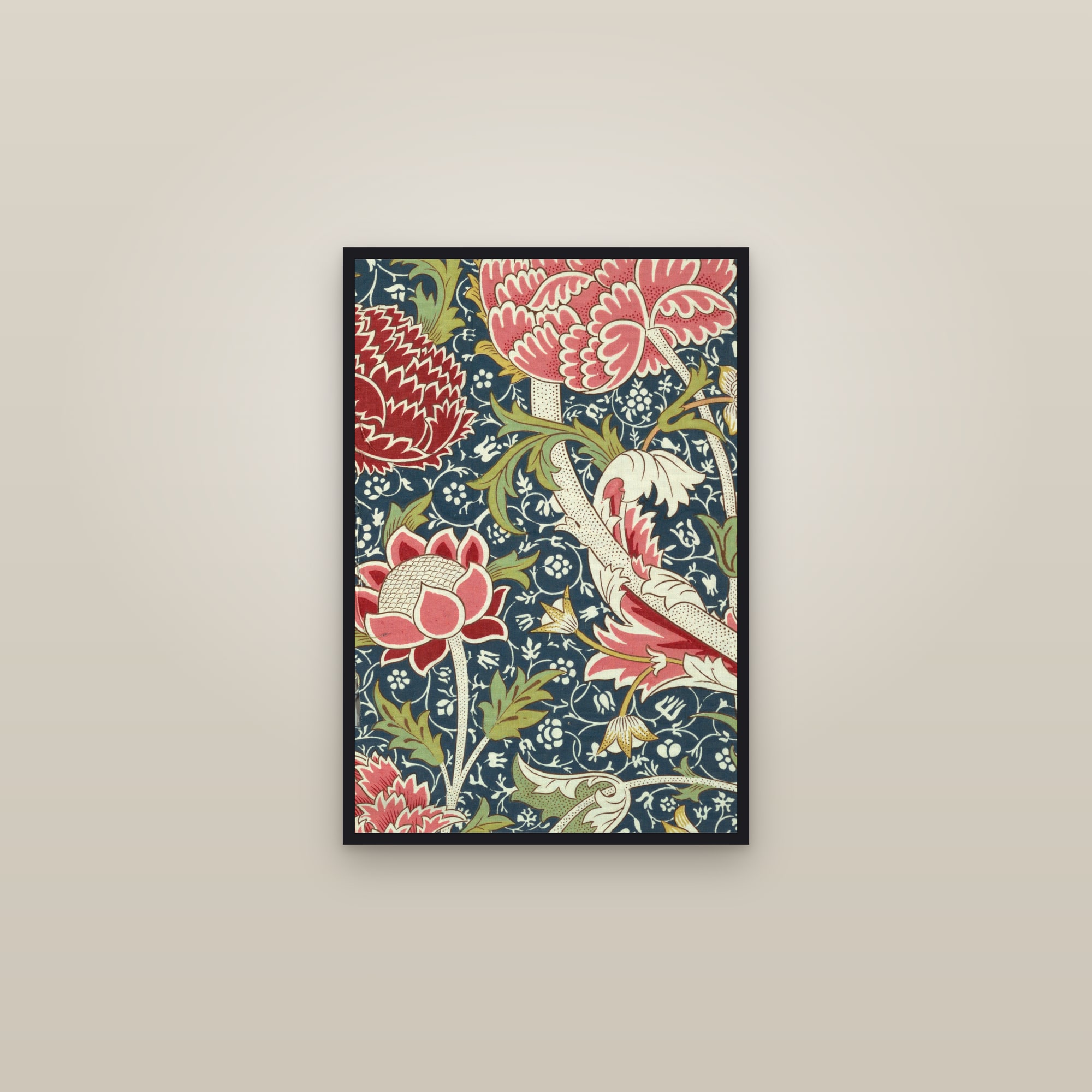
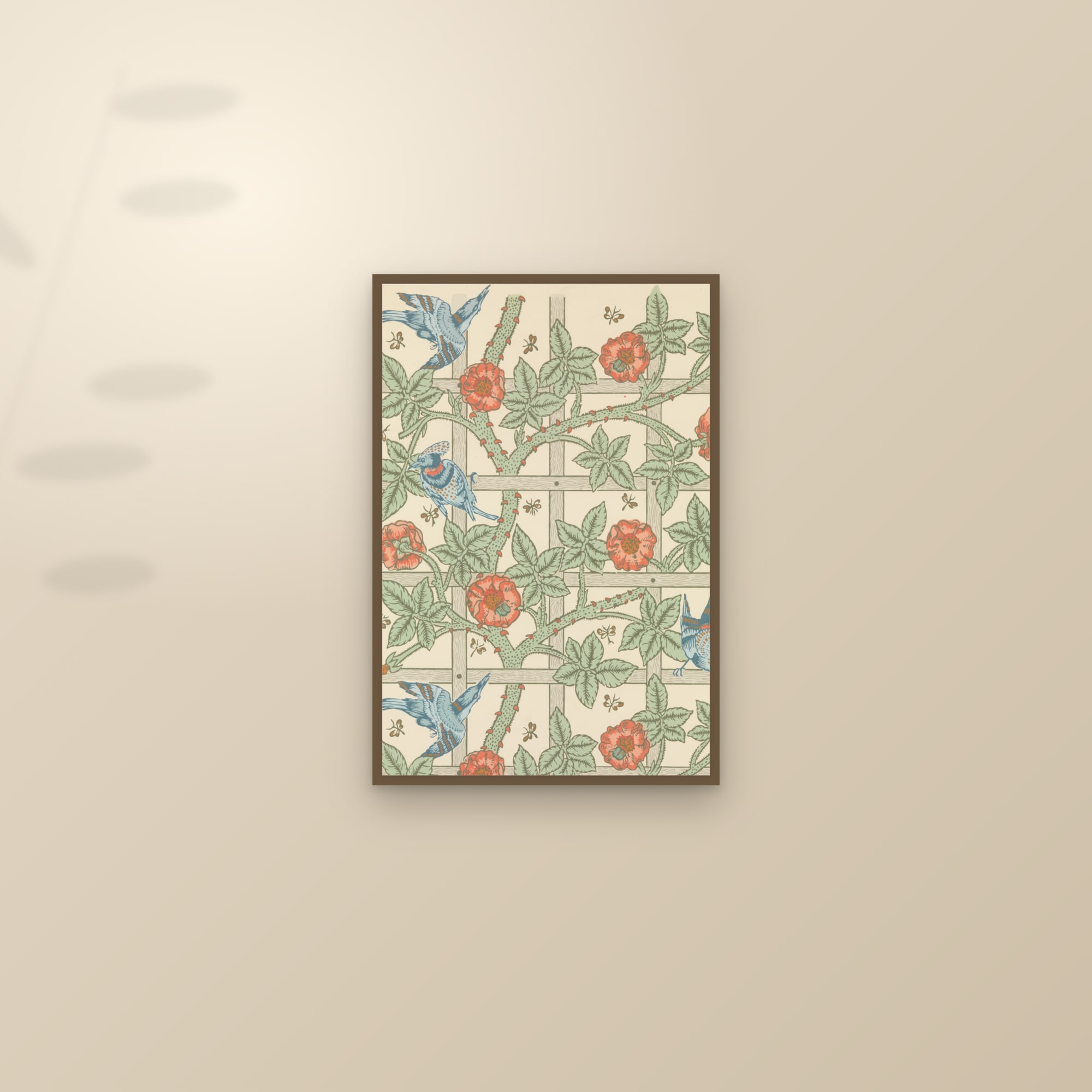
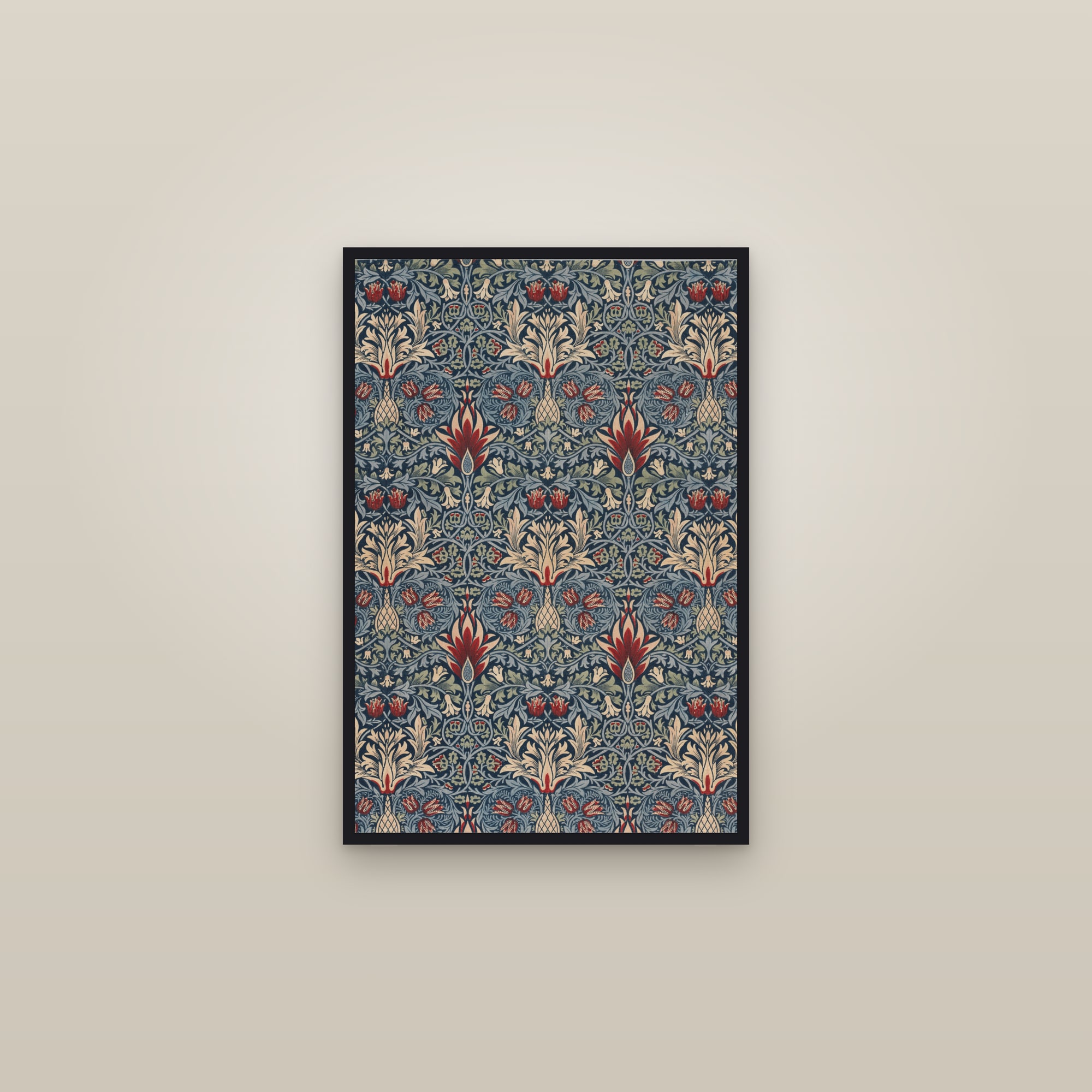
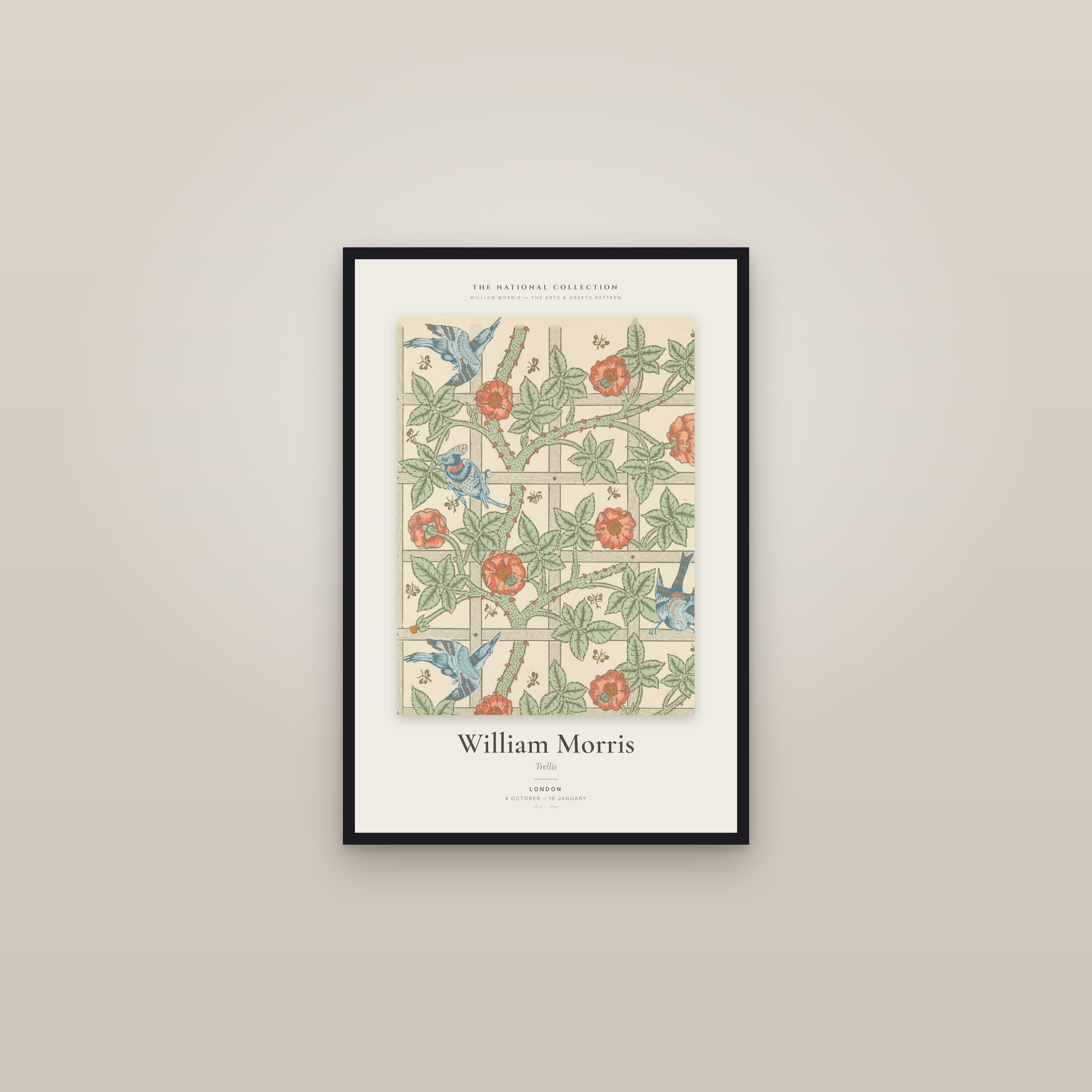
William Morris was born in 1834 at Walthamstow, then a village in Essex, and studied at Exeter College, Oxford, where he met Edward Burne-Jones and turned from the Church towards art. In 1859 he married Jane Burden and, with the architect Philip Webb, built Red House at Bexleyheath; furnishing it by hand led to the firm he founded in 1861, Morris, Marshall, Faulkner & Co., which made stained glass, furniture, wallpaper and textiles. He took sole control in 1875 and renamed it Morris & Co. His first wallpaper, Trellis, was designed in 1862, and from 1864 his papers were printed by Jeffrey & Co. from hand-cut pearwood blocks, one block for each colour. Morris taught himself the old vegetable dyes, and in 1881 moved the works to Merton Abbey on the River Wandle, where the indigo-discharge cottons such as Strawberry Thief (1883) were printed, dyed and re-dyed over several days. He was also a poet, a translator of the Icelandic sagas, a founder of the Socialist League in 1884 and, from 1891, of the Kelmscott Press. He died at Kelmscott House, Hammersmith, in 1896. His patterns are drawn from English hedgerows and gardens, birds, willow and fruit, set in a repeat so carefully worked out that the joins disappear, which is why they still hang so easily in a modern room: dense and lively up close, calm from across it.
Morris and the Arts and Crafts pattern
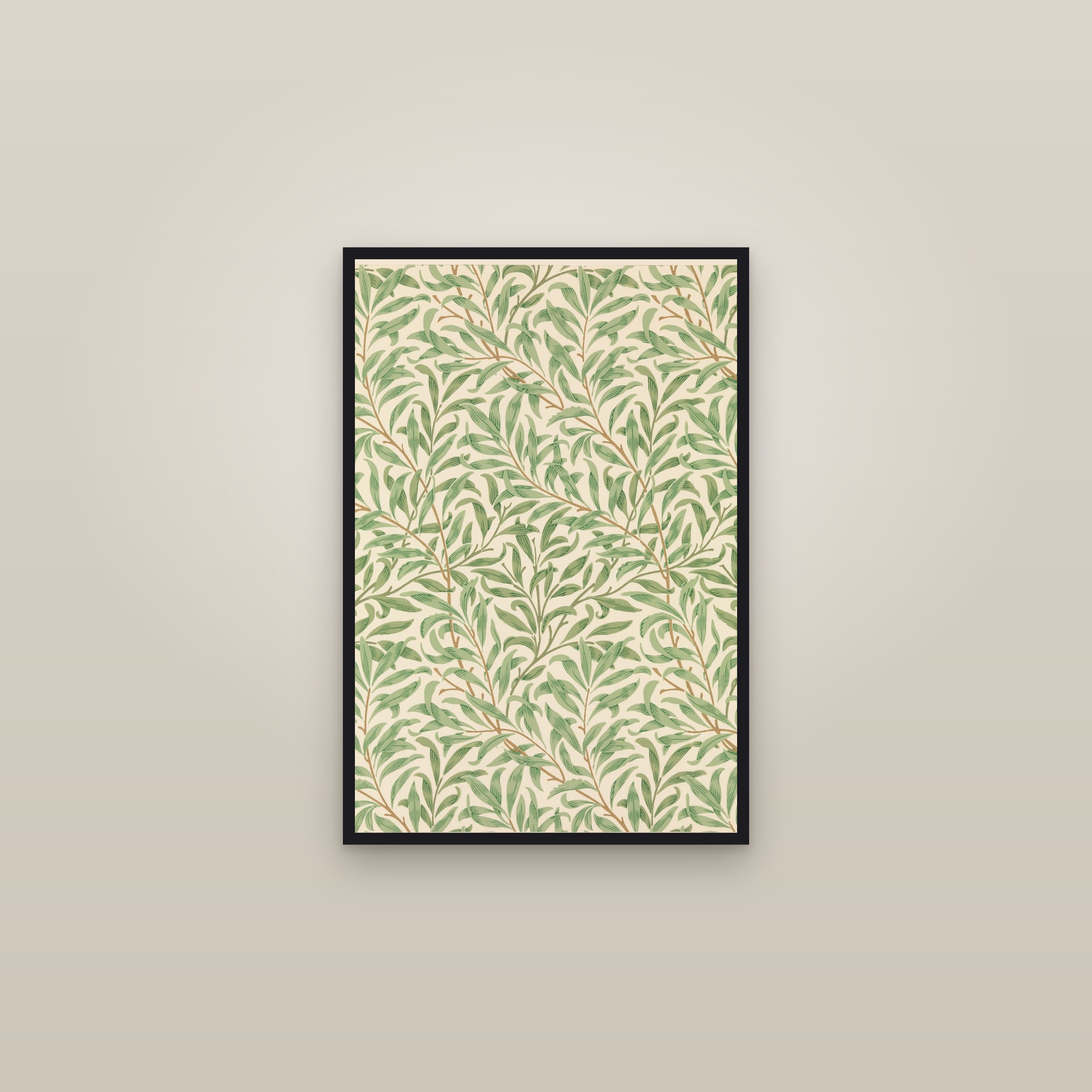
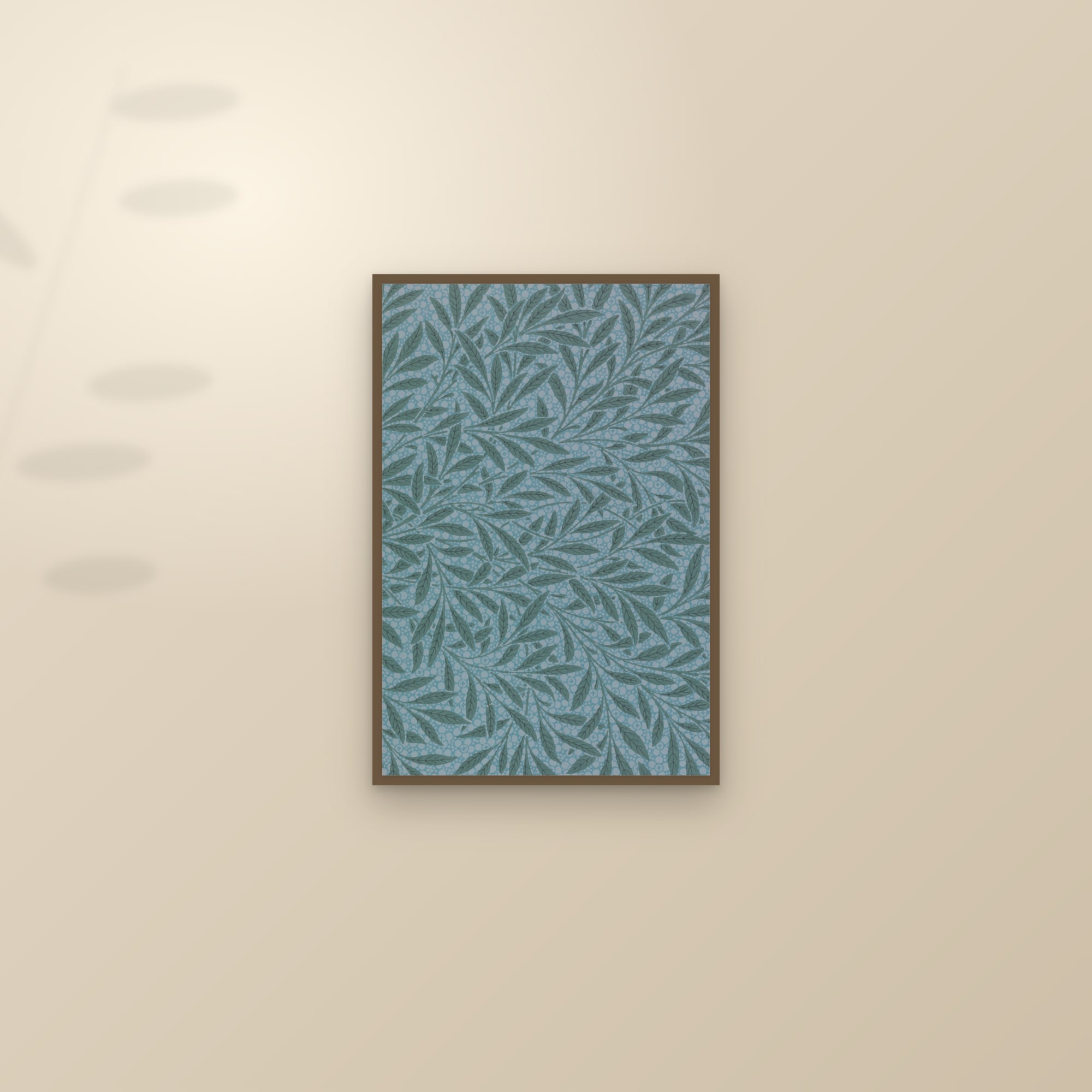
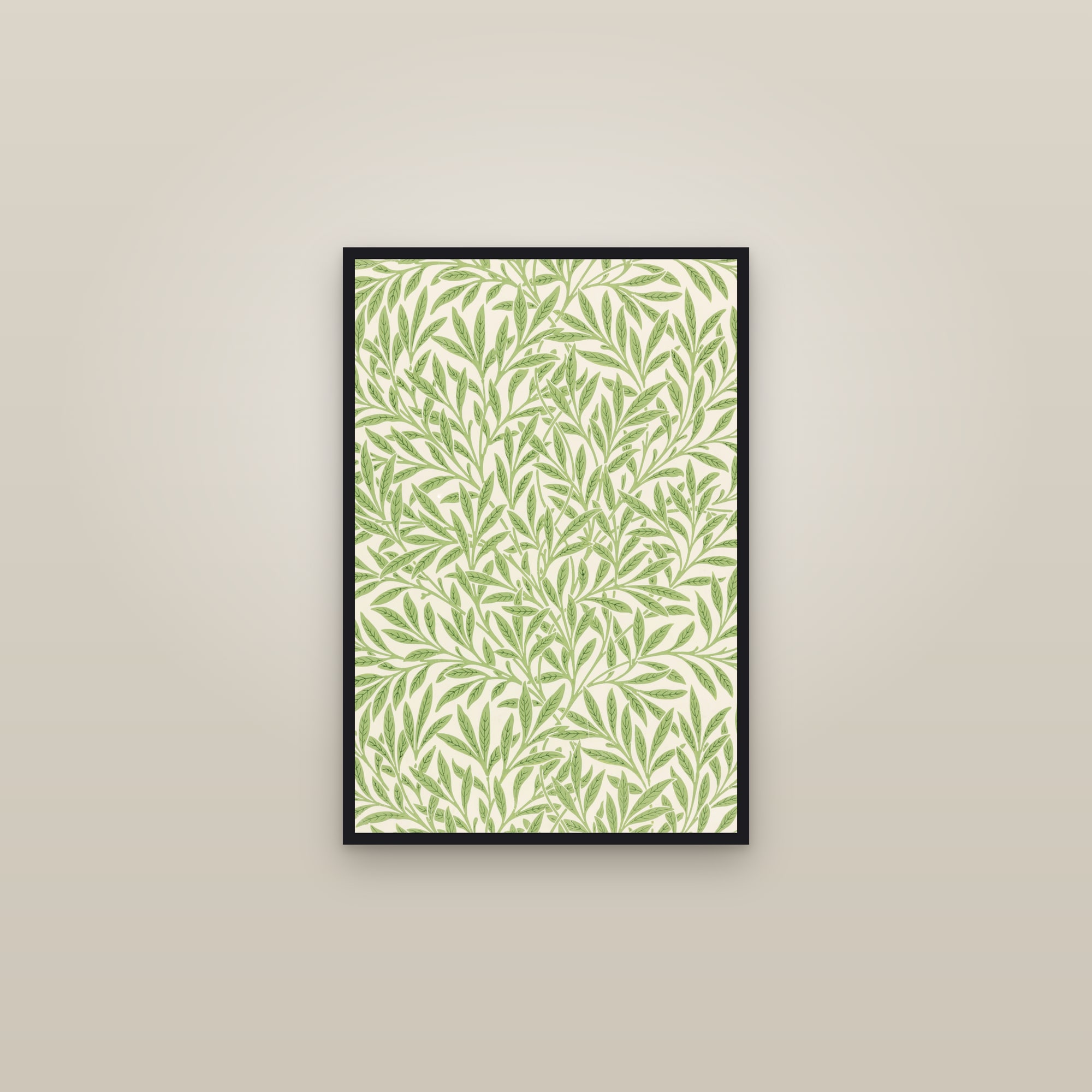
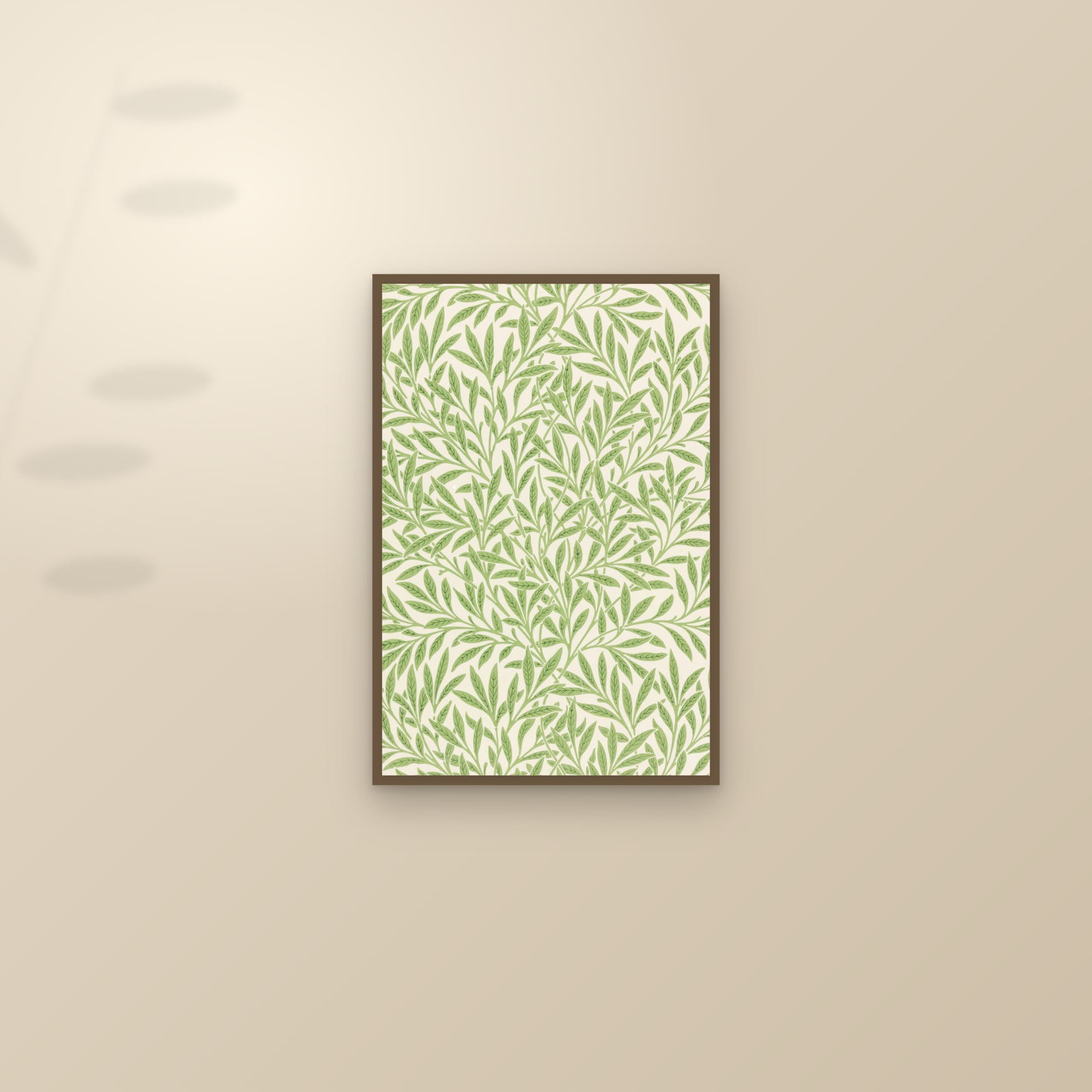
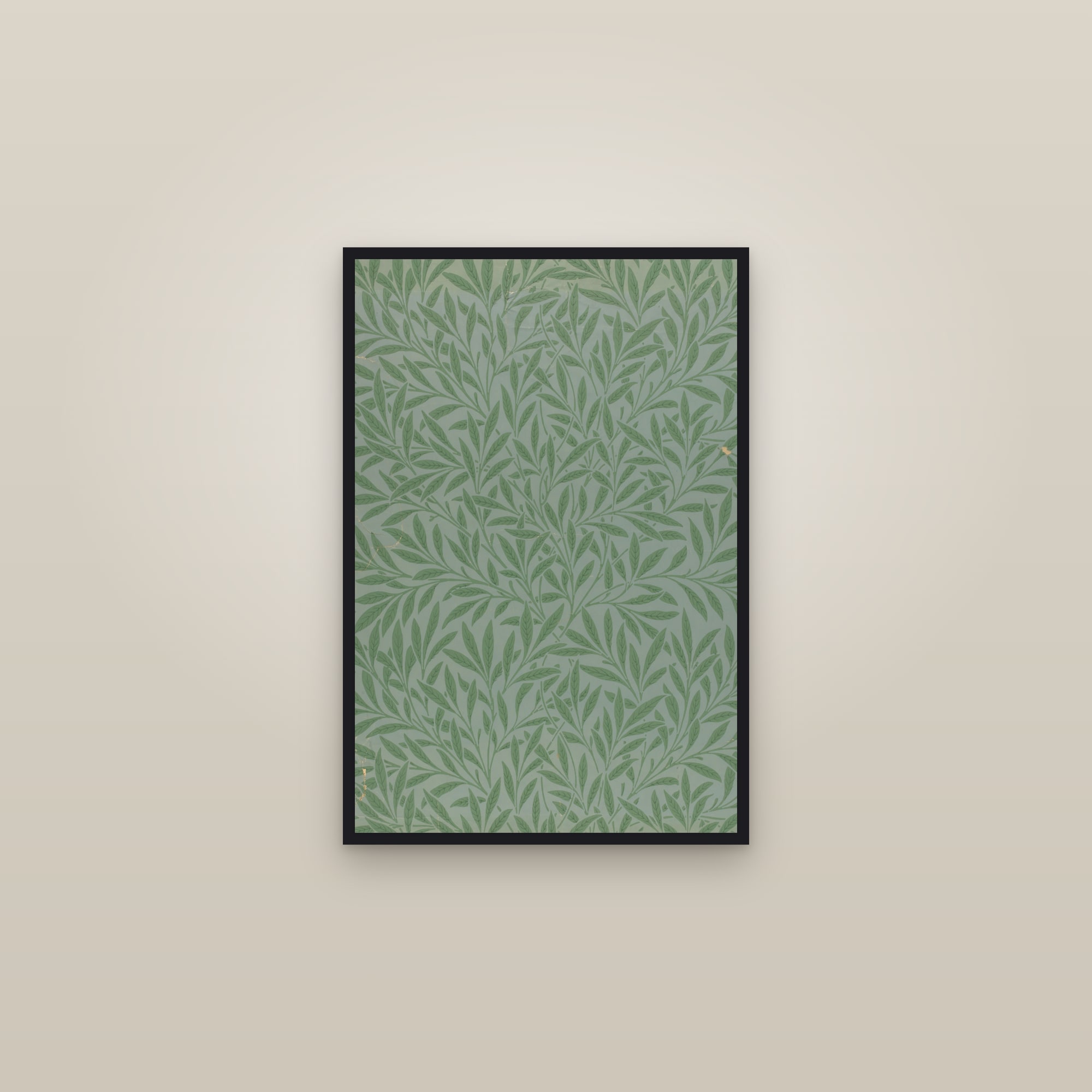
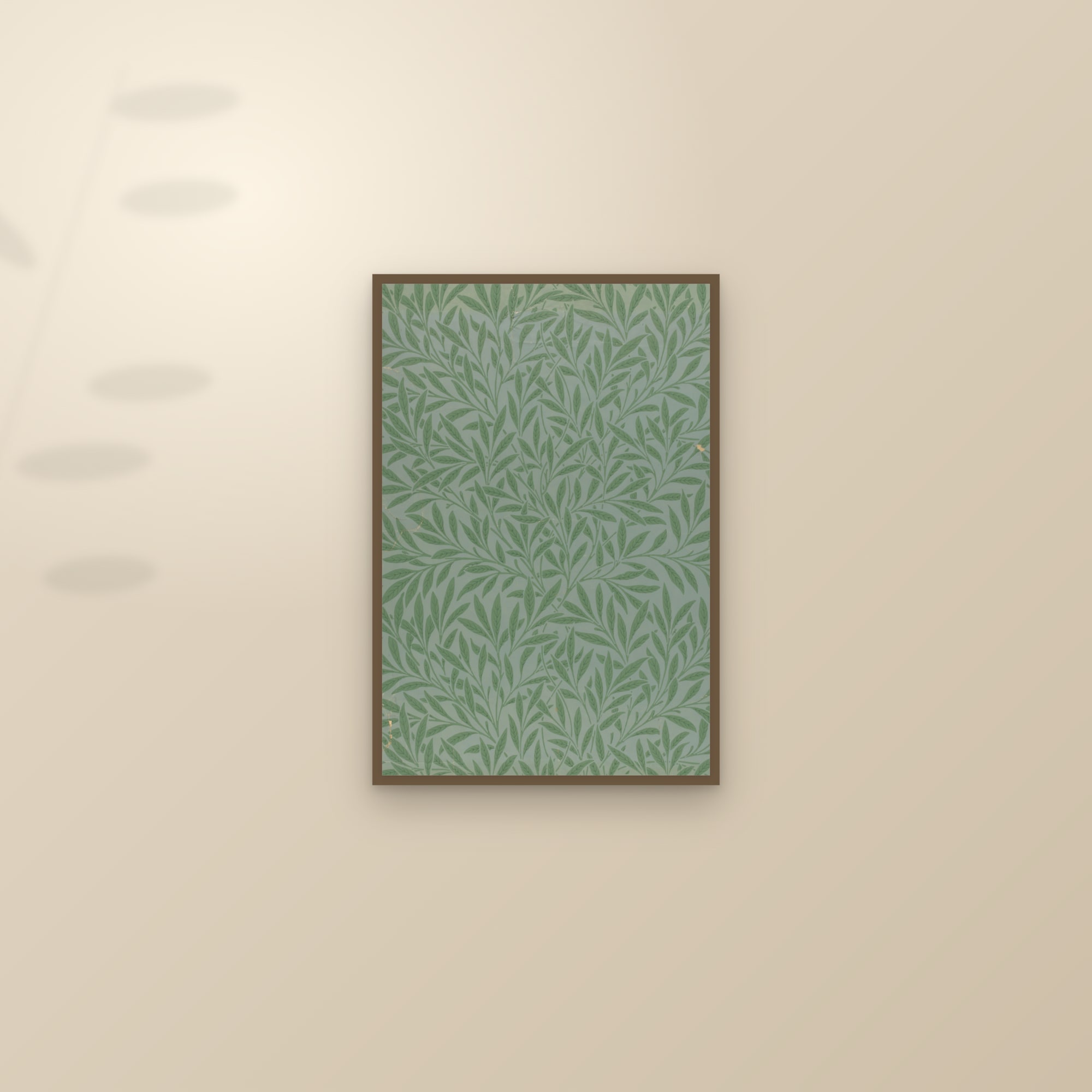
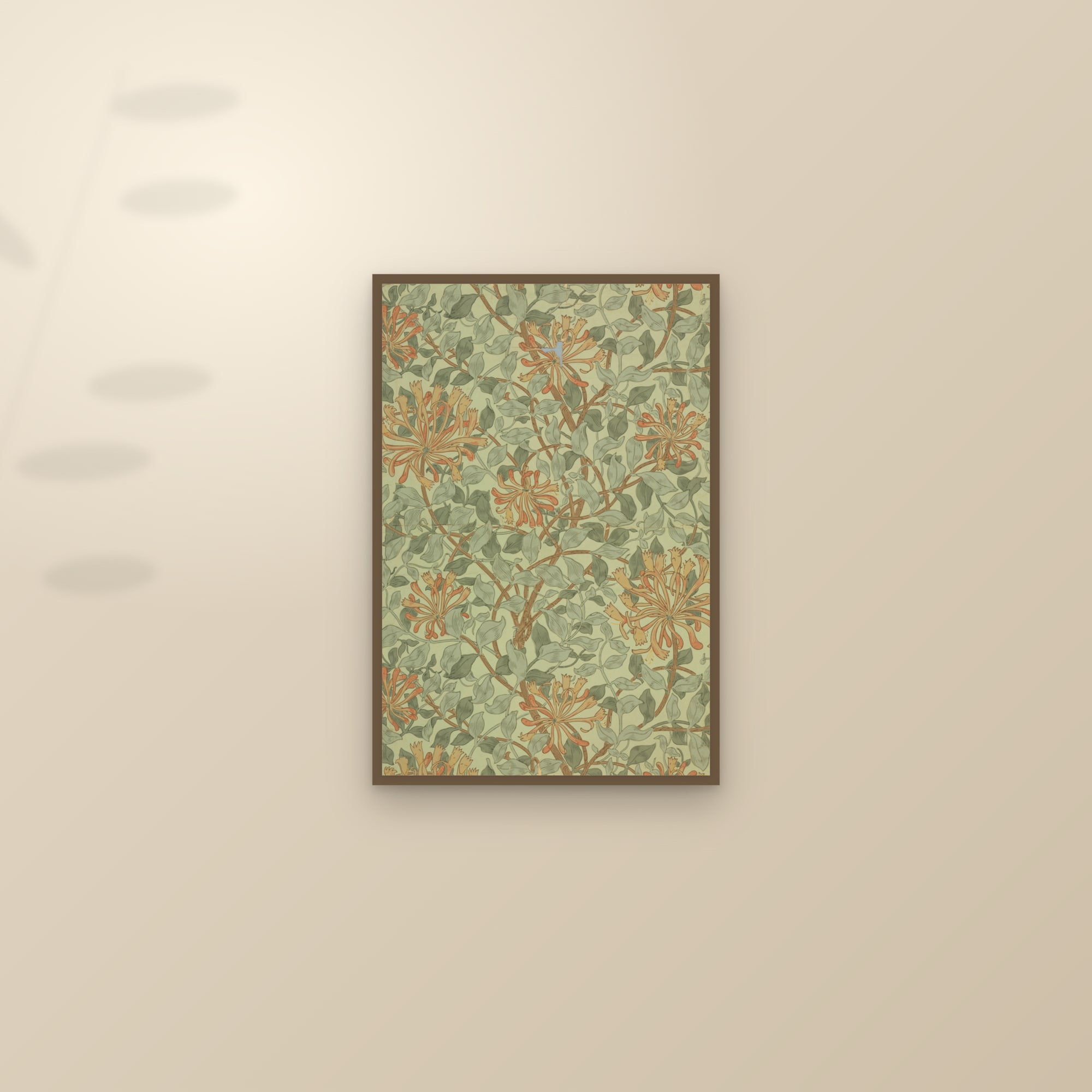
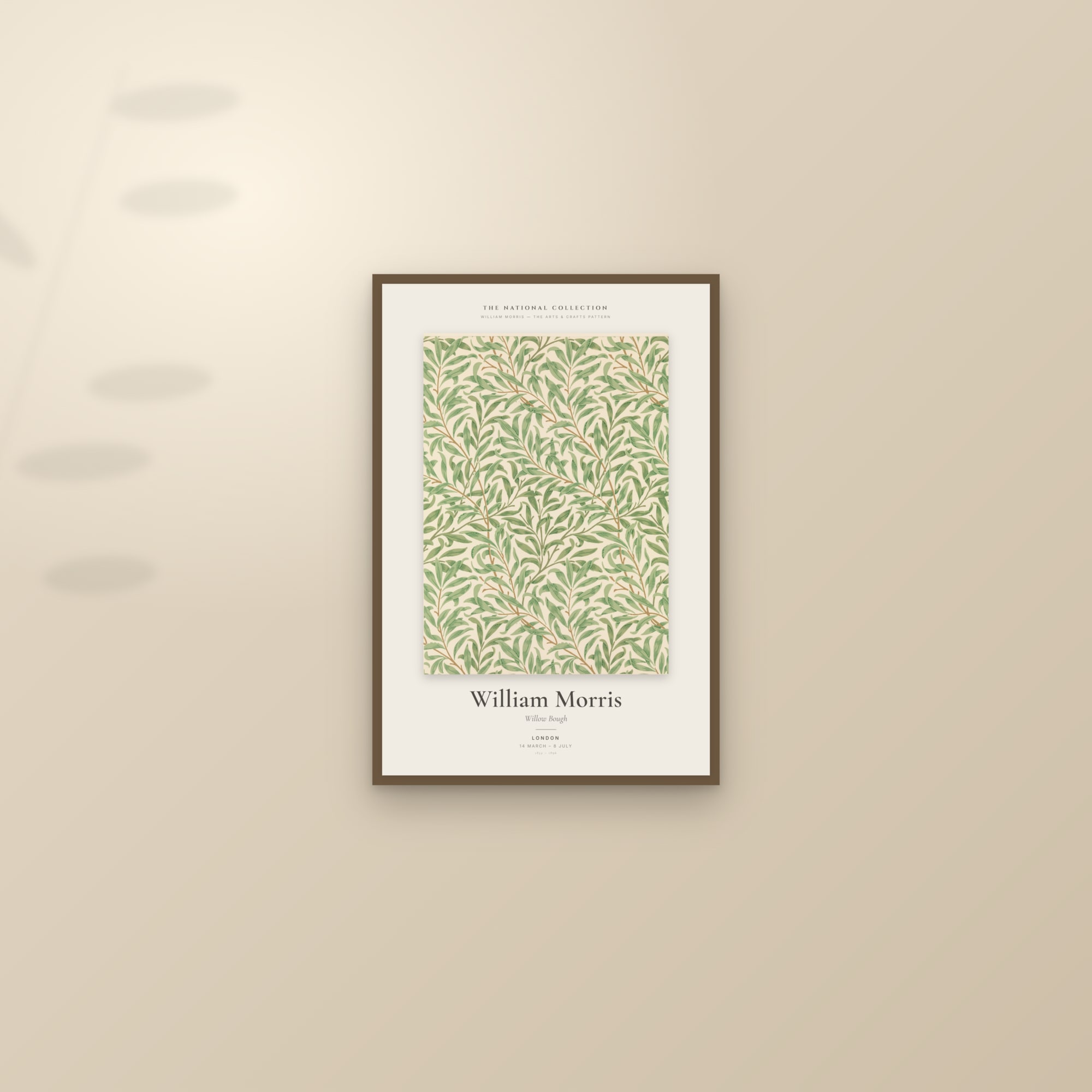
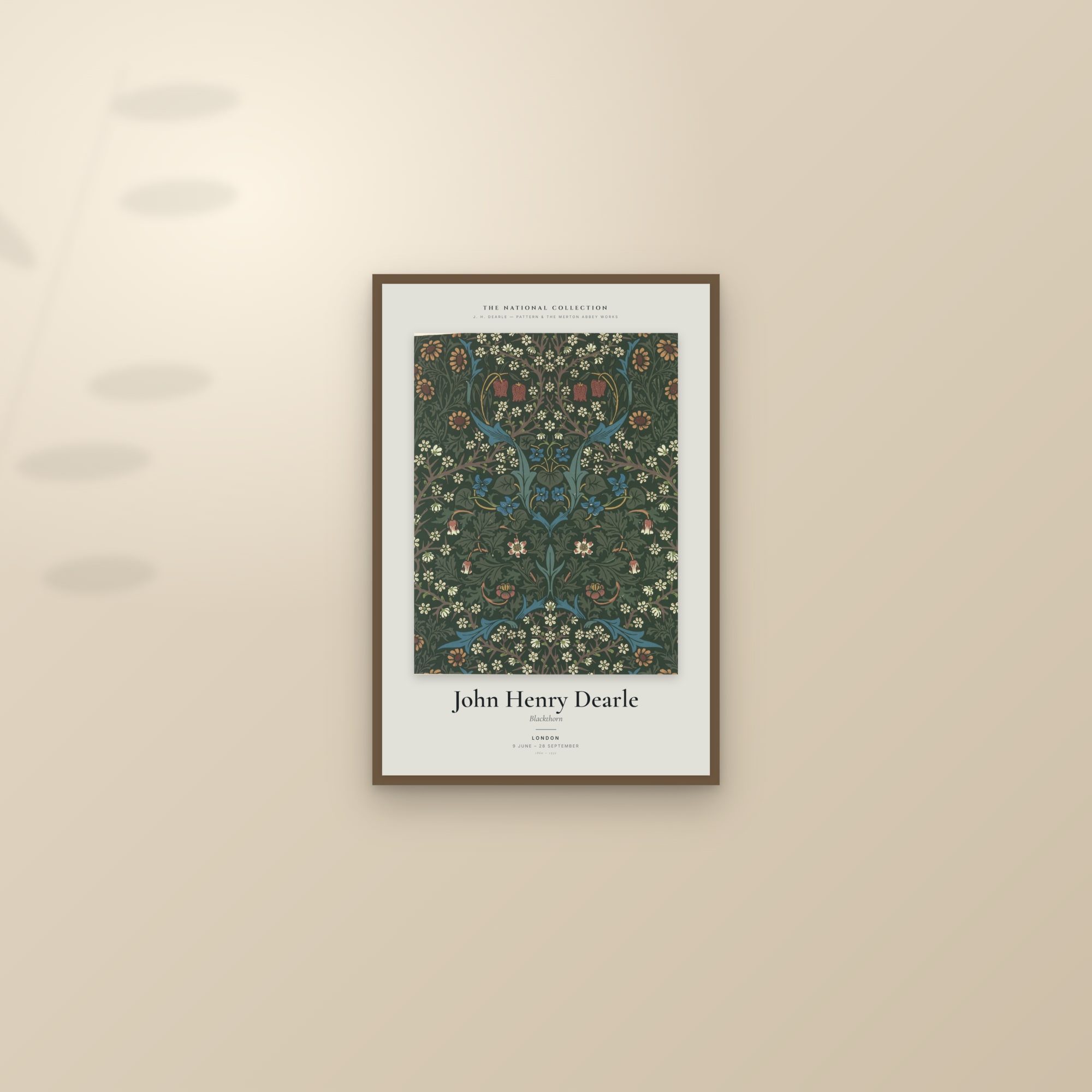
William Morris (1834–1896) drew his patterns from the English countryside: willow leaves on the river at Kelmscott, thrushes stealing strawberries from the kitchen garden, fritillaries and honeysuckle. He had them printed by hand with carved wooden blocks and, from 1881, dyed and printed at his own works at Merton Abbey, where he revived indigo discharge printing. John Henry Dearle, trained in his workshops, became the firm's chief designer after Morris's death; May Morris, his daughter, ran its embroidery department.
Two ways to hang them
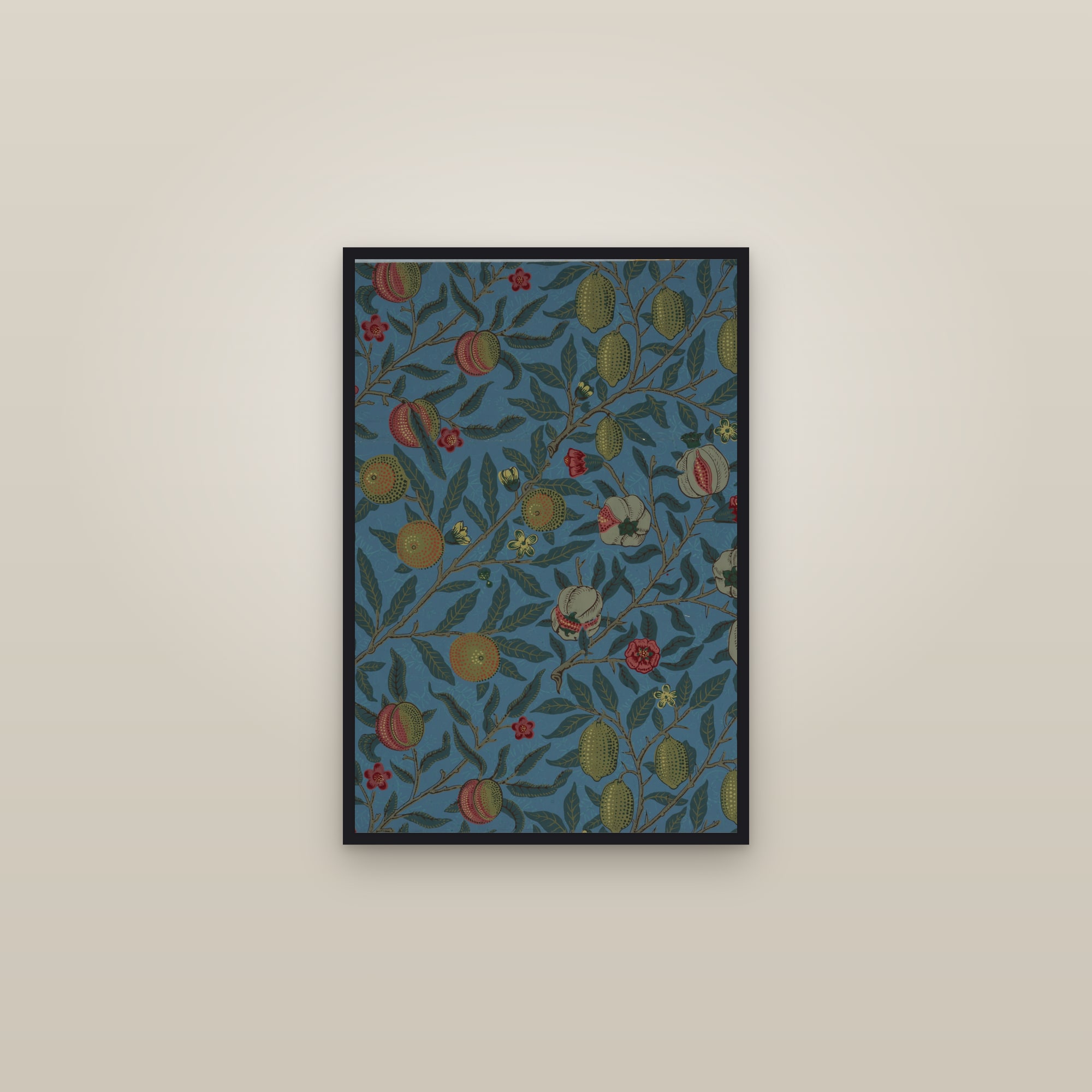
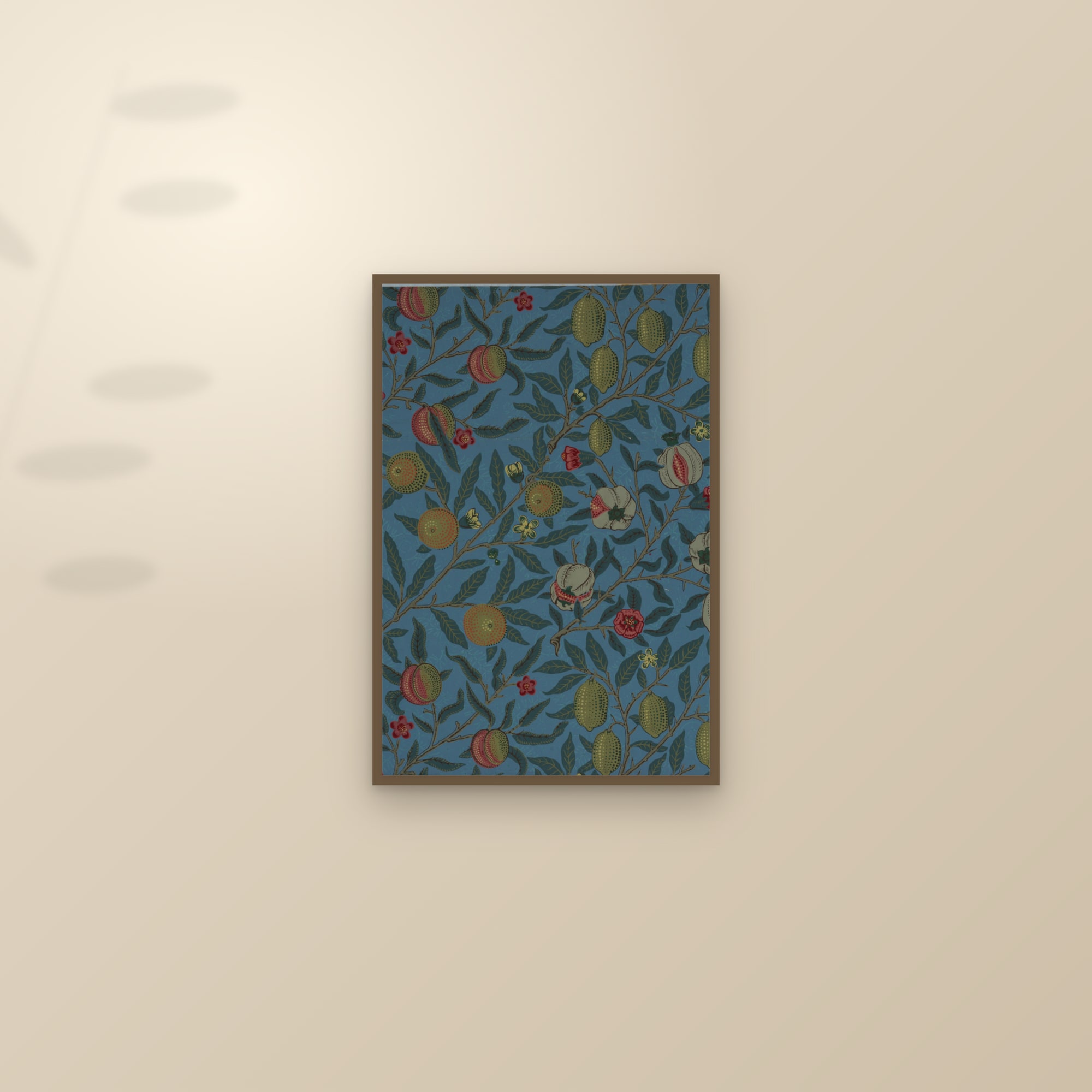
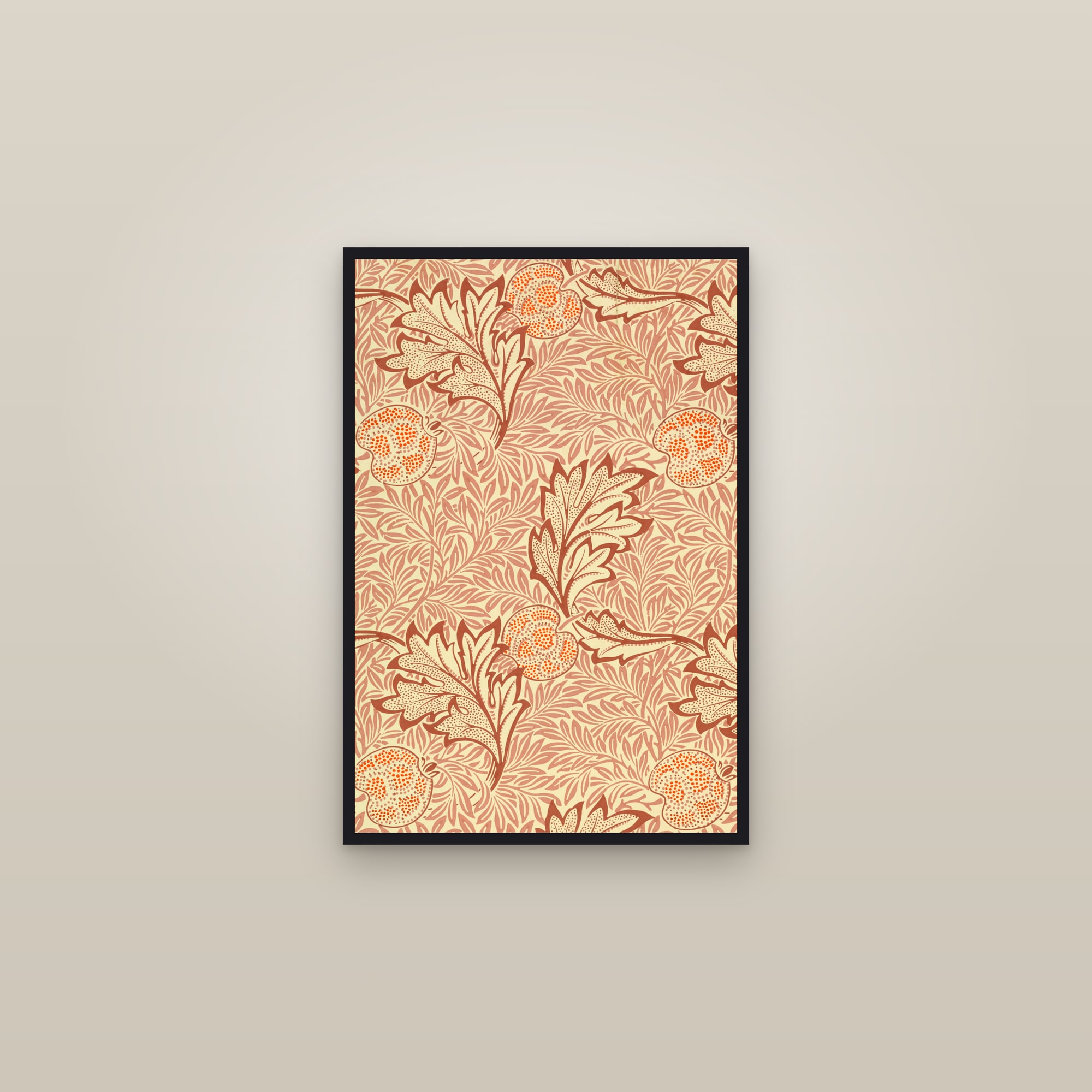
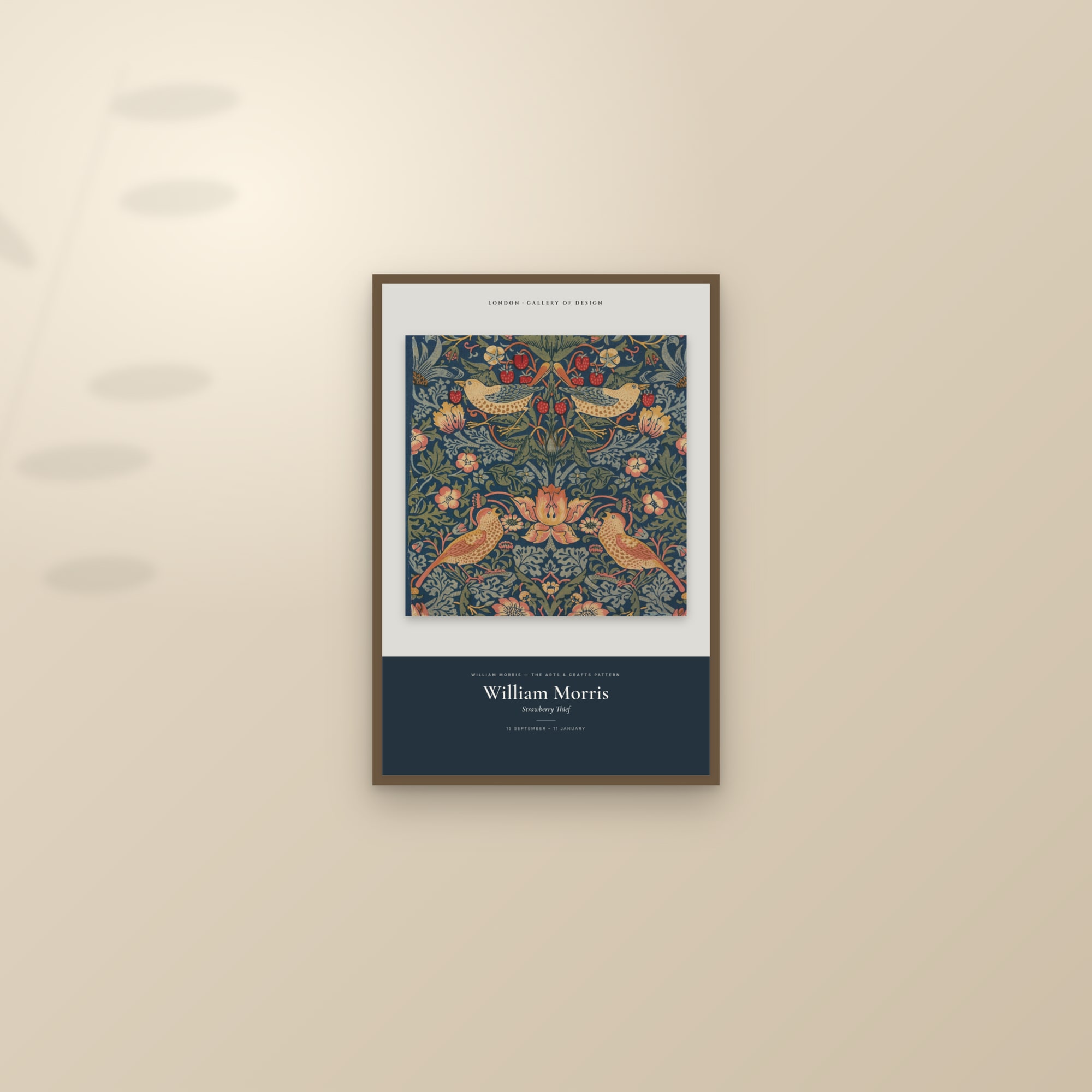
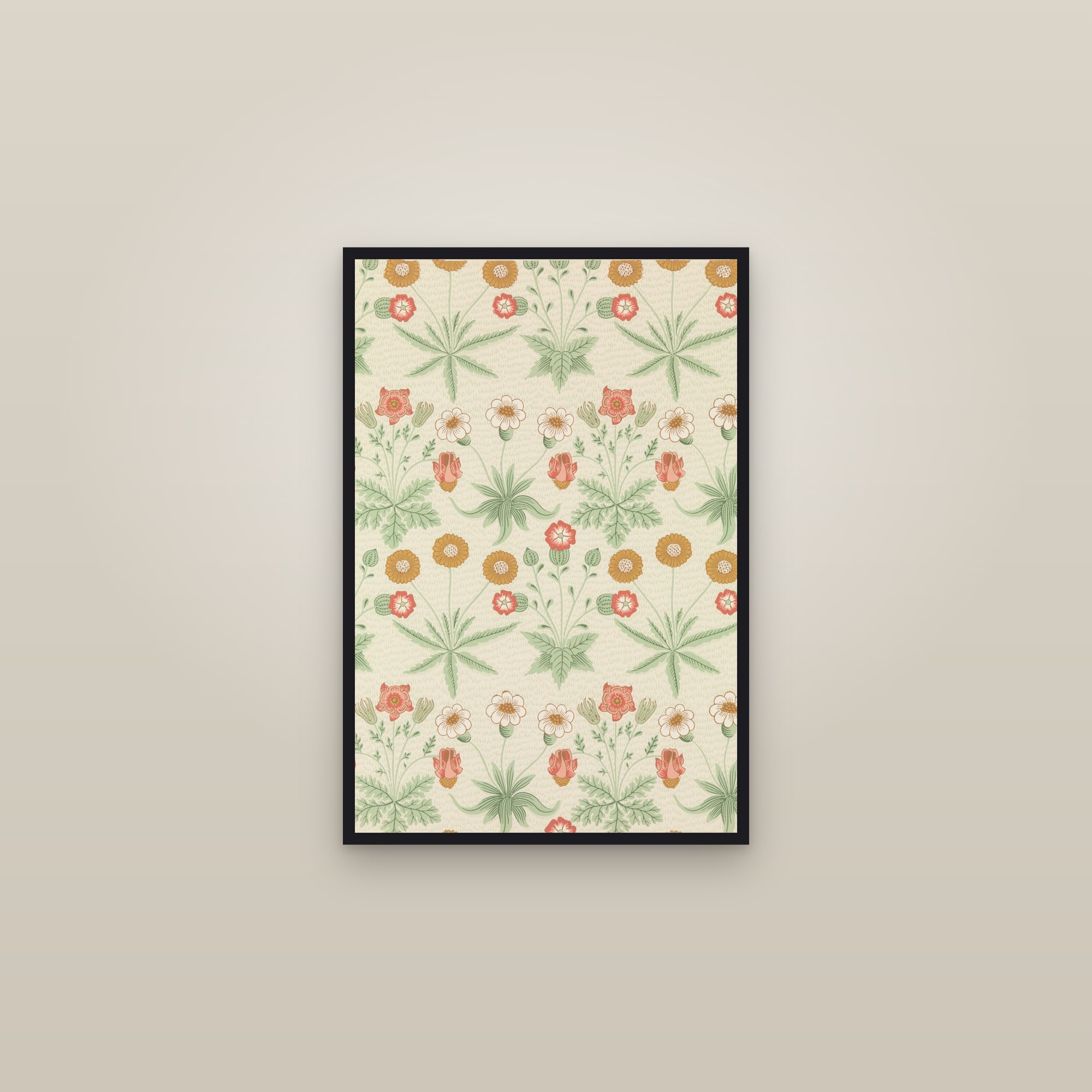
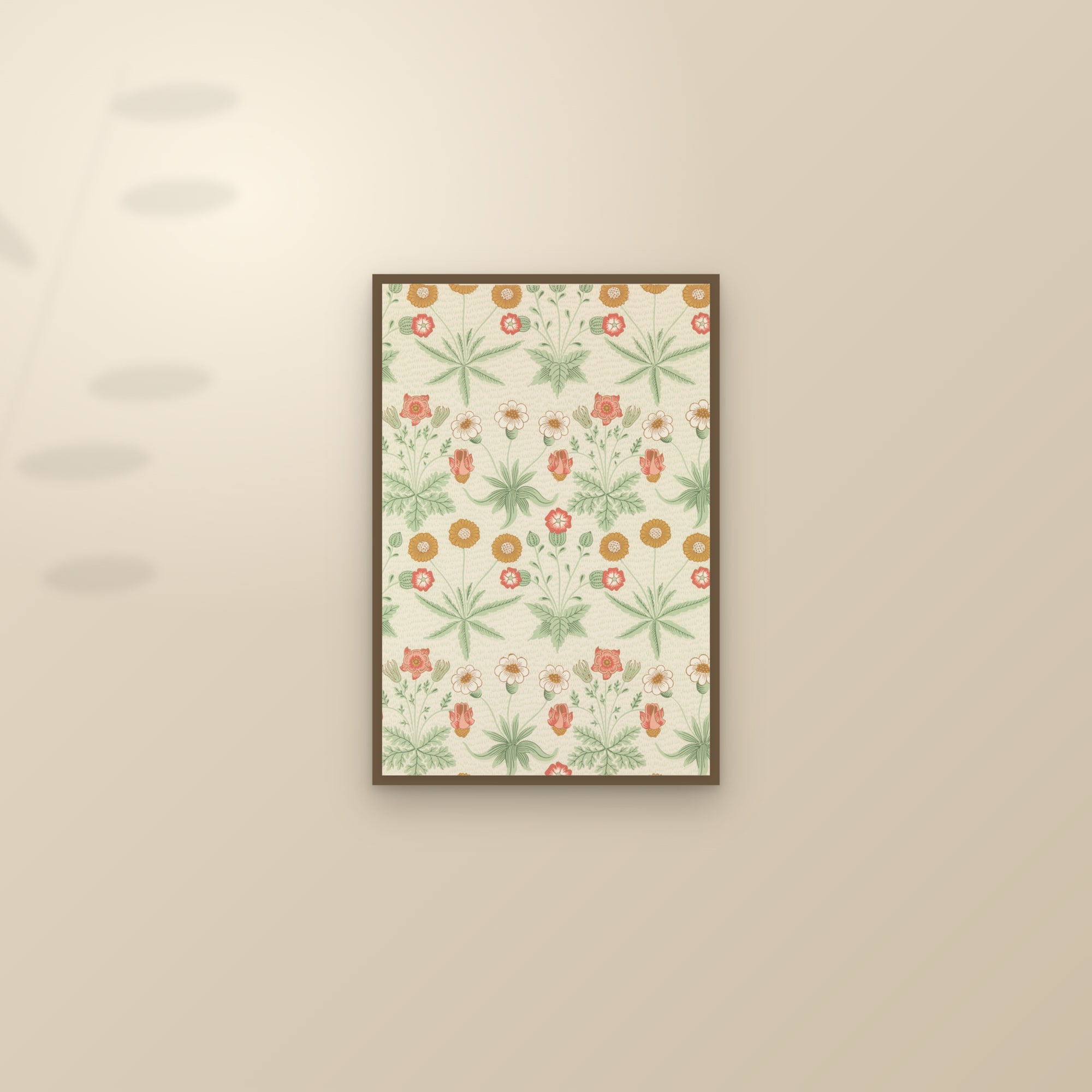
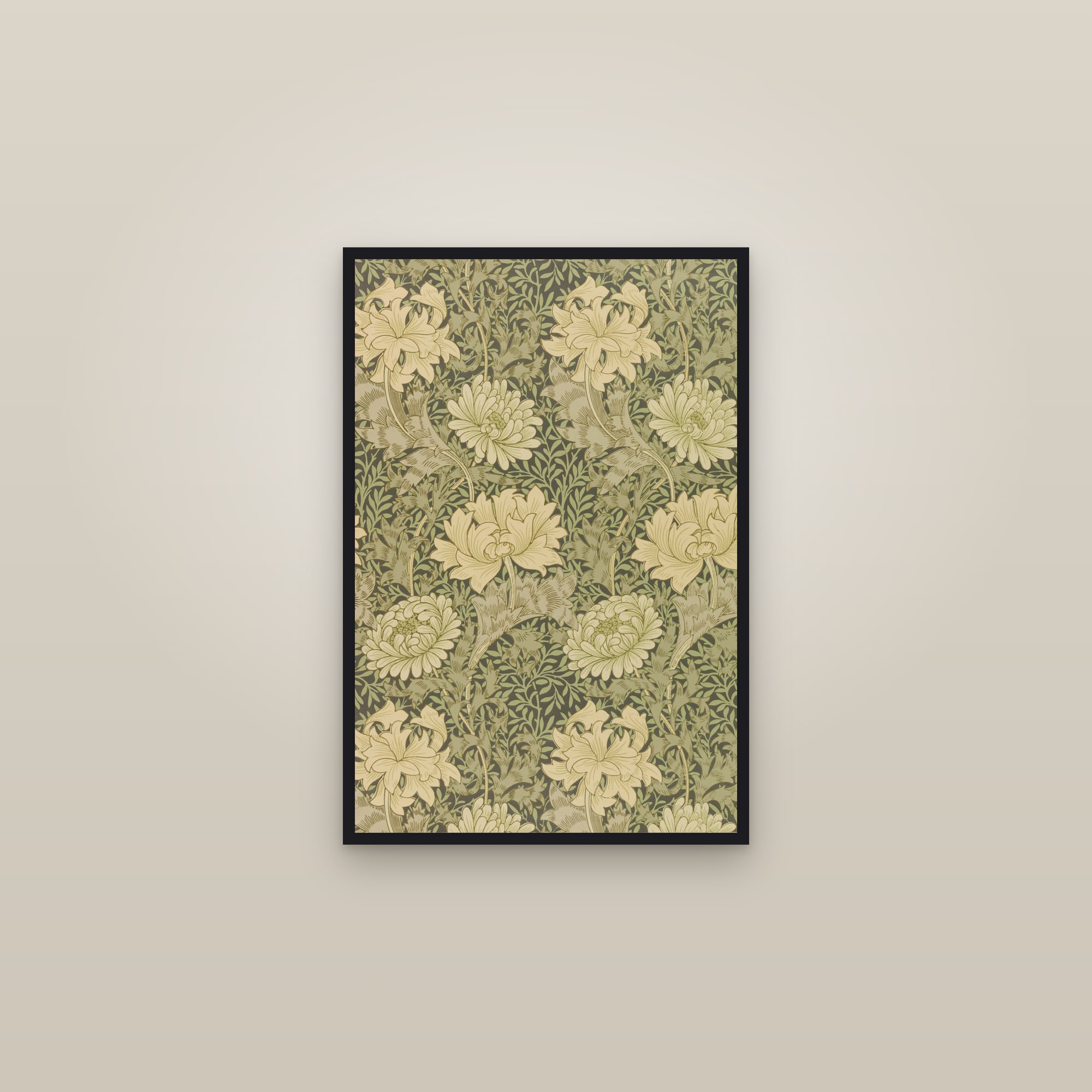
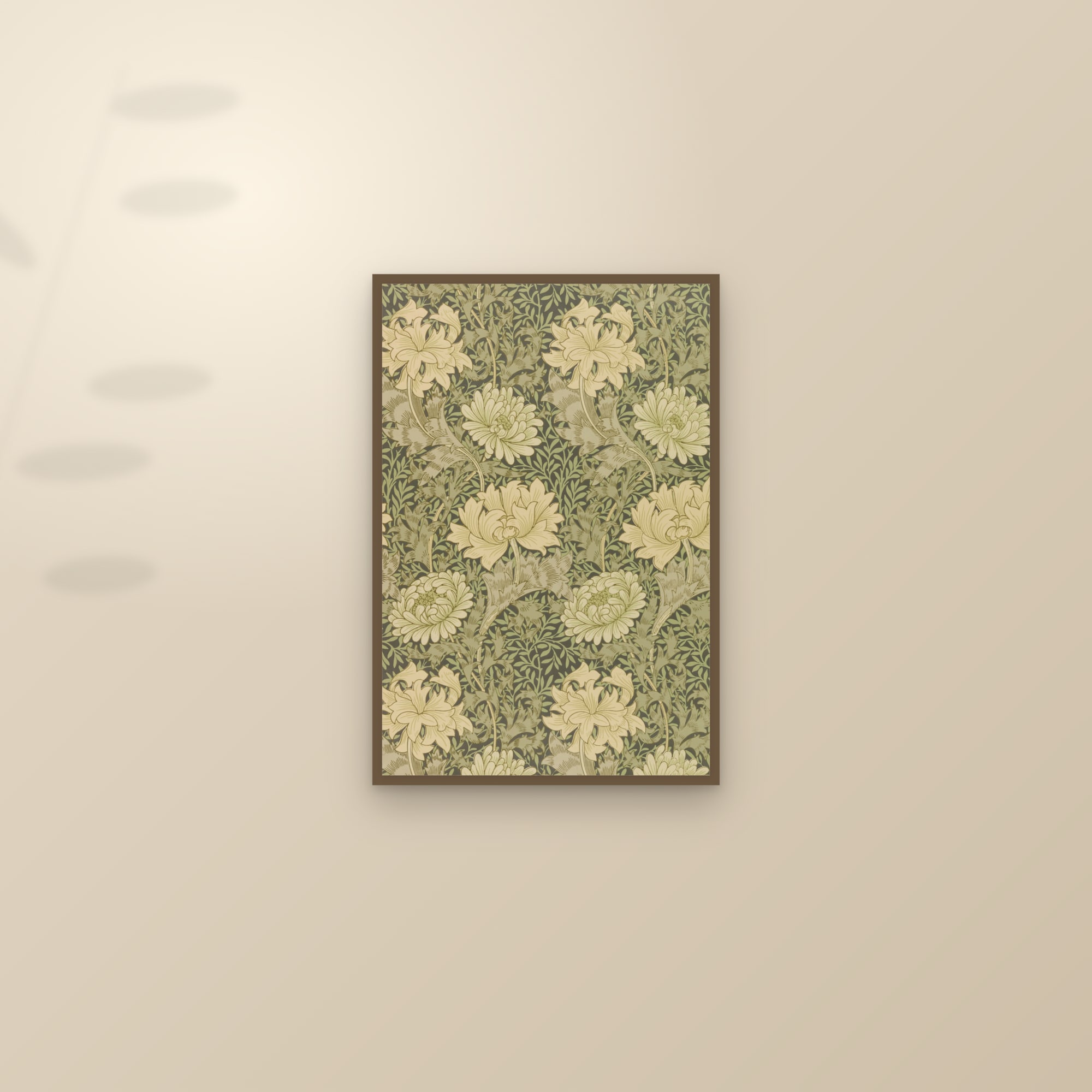
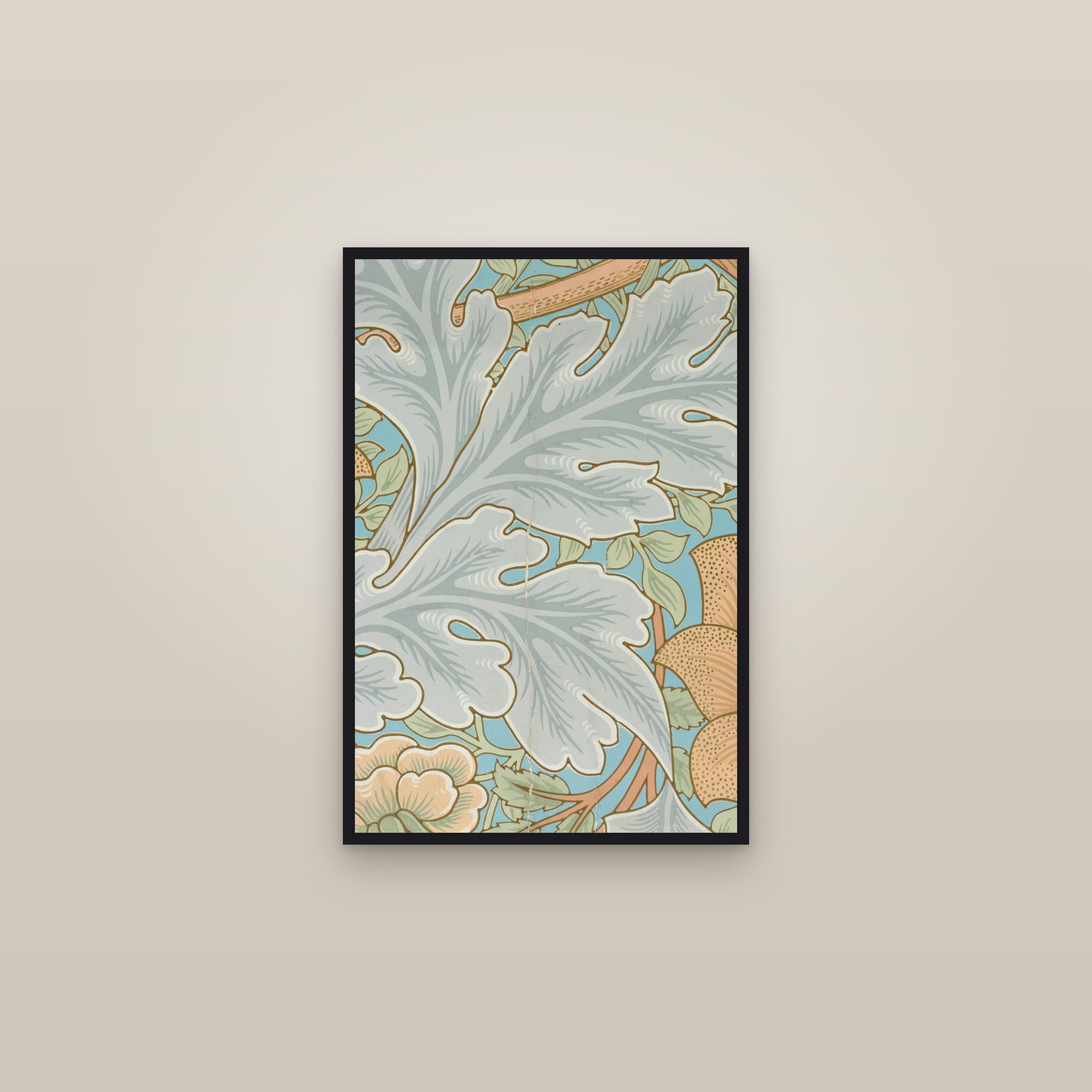
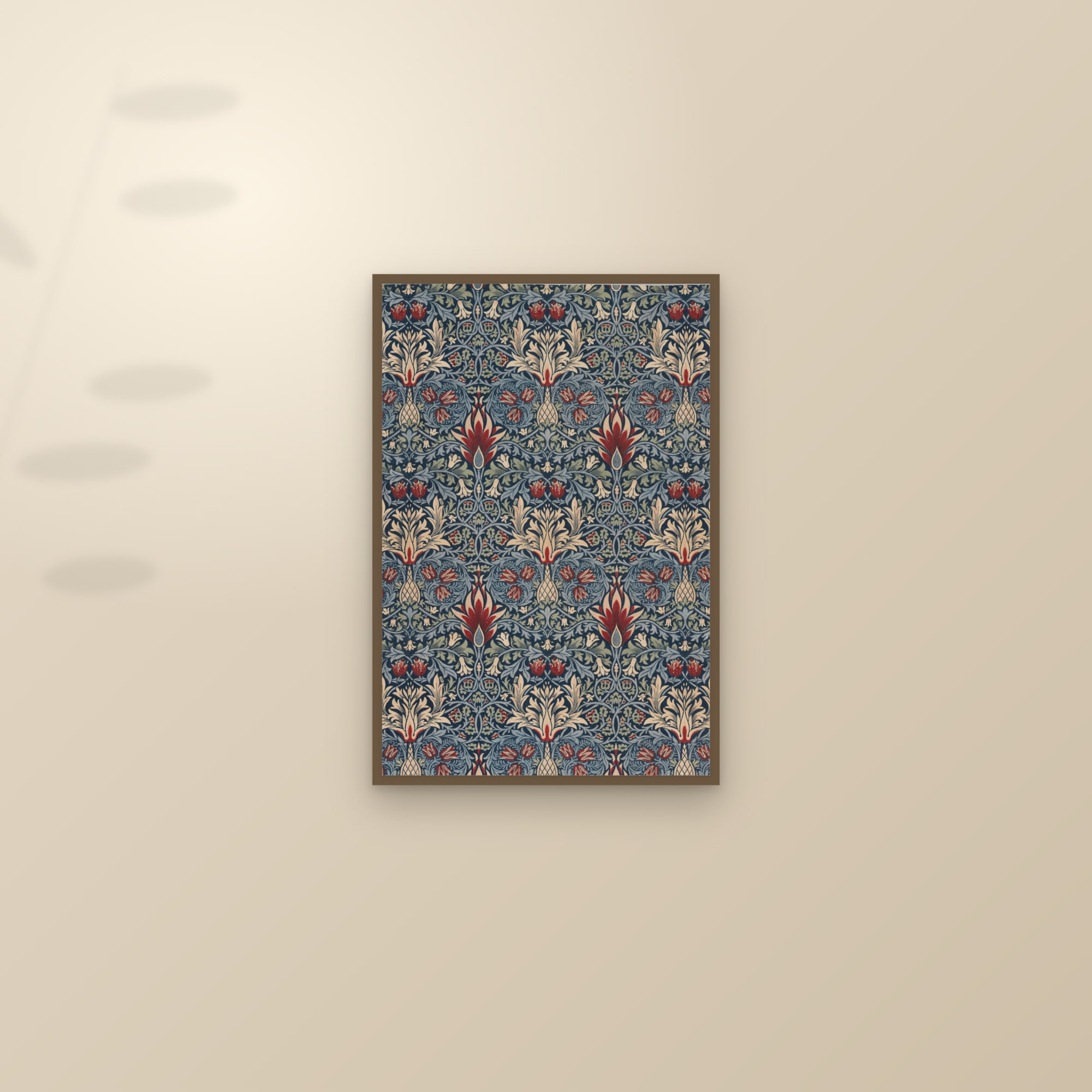
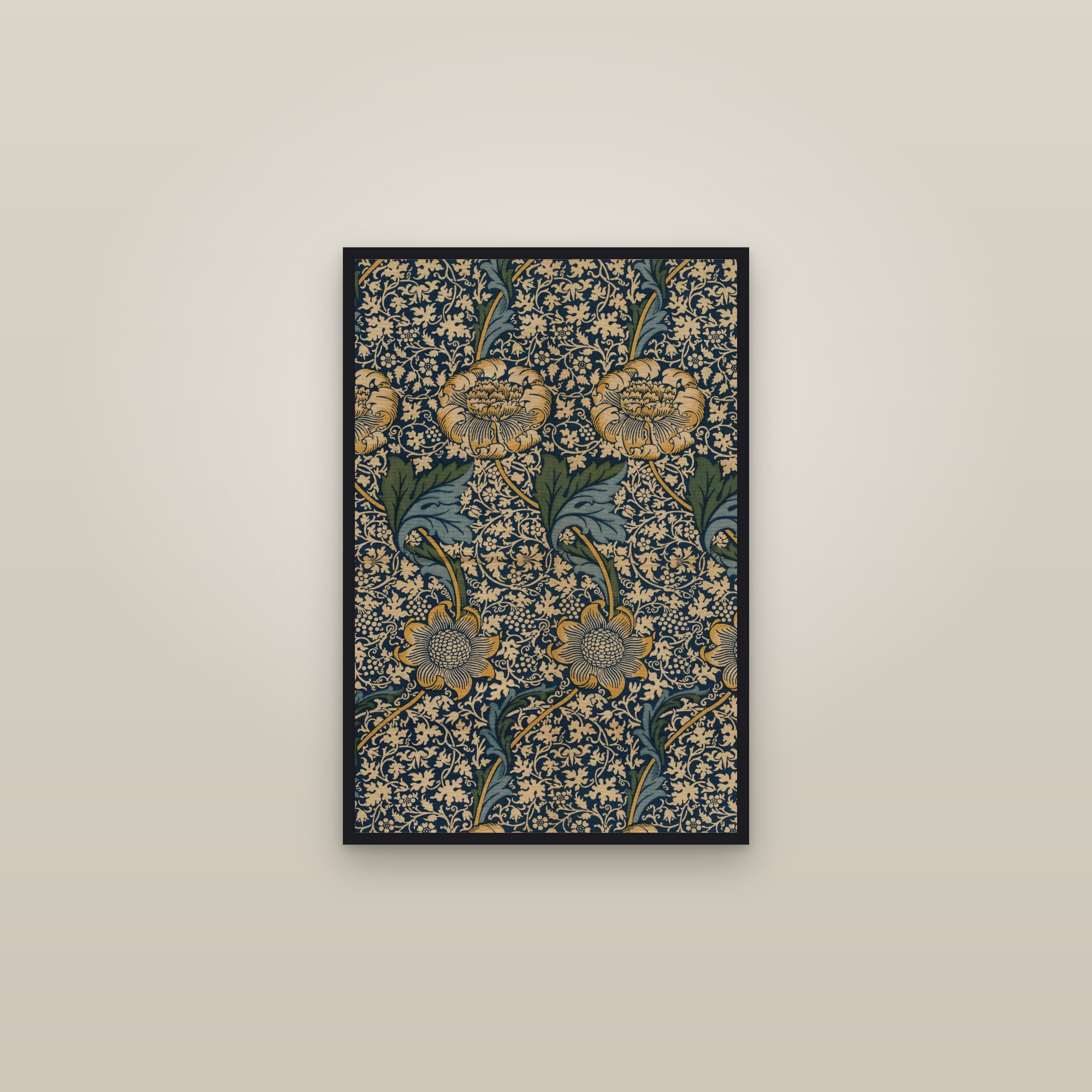
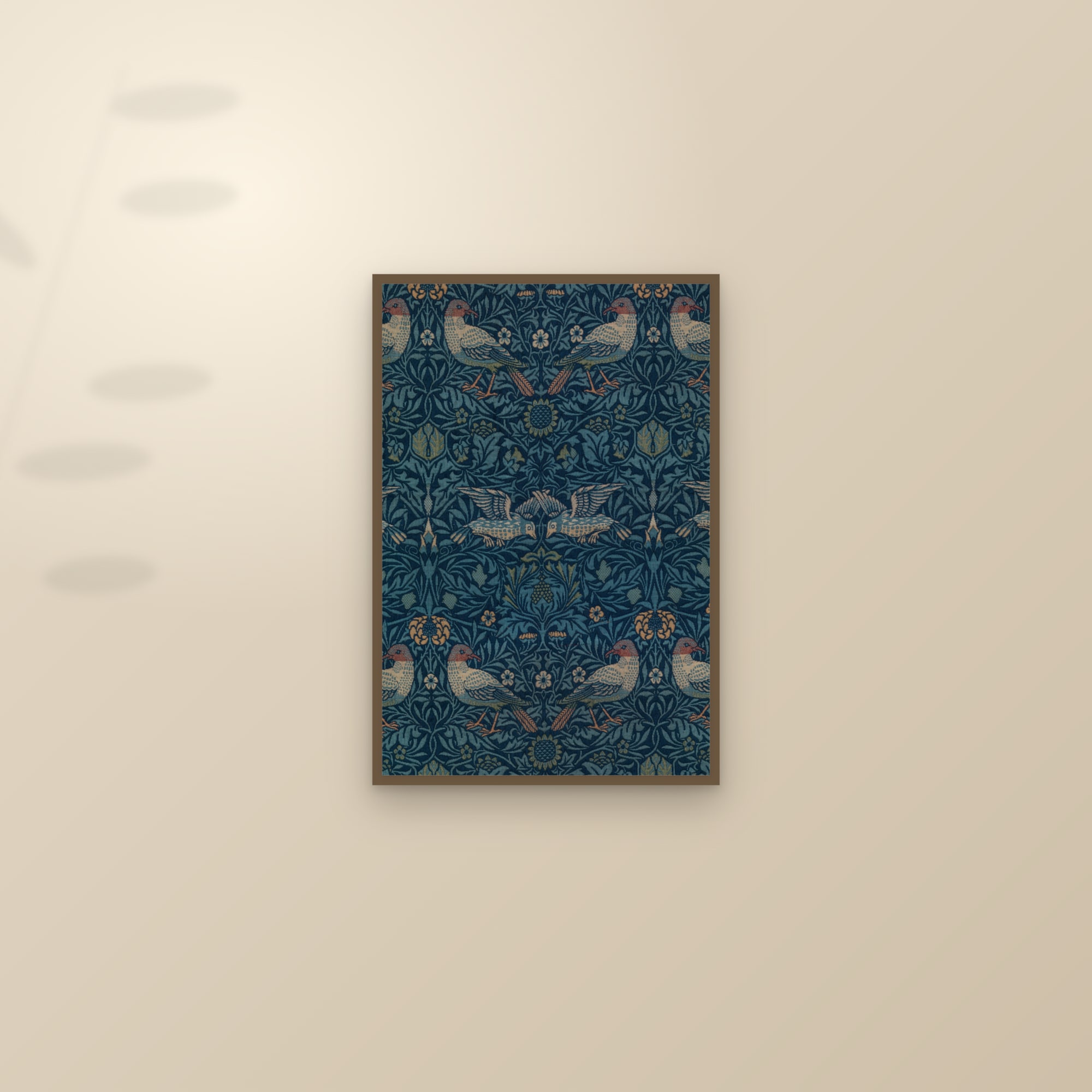
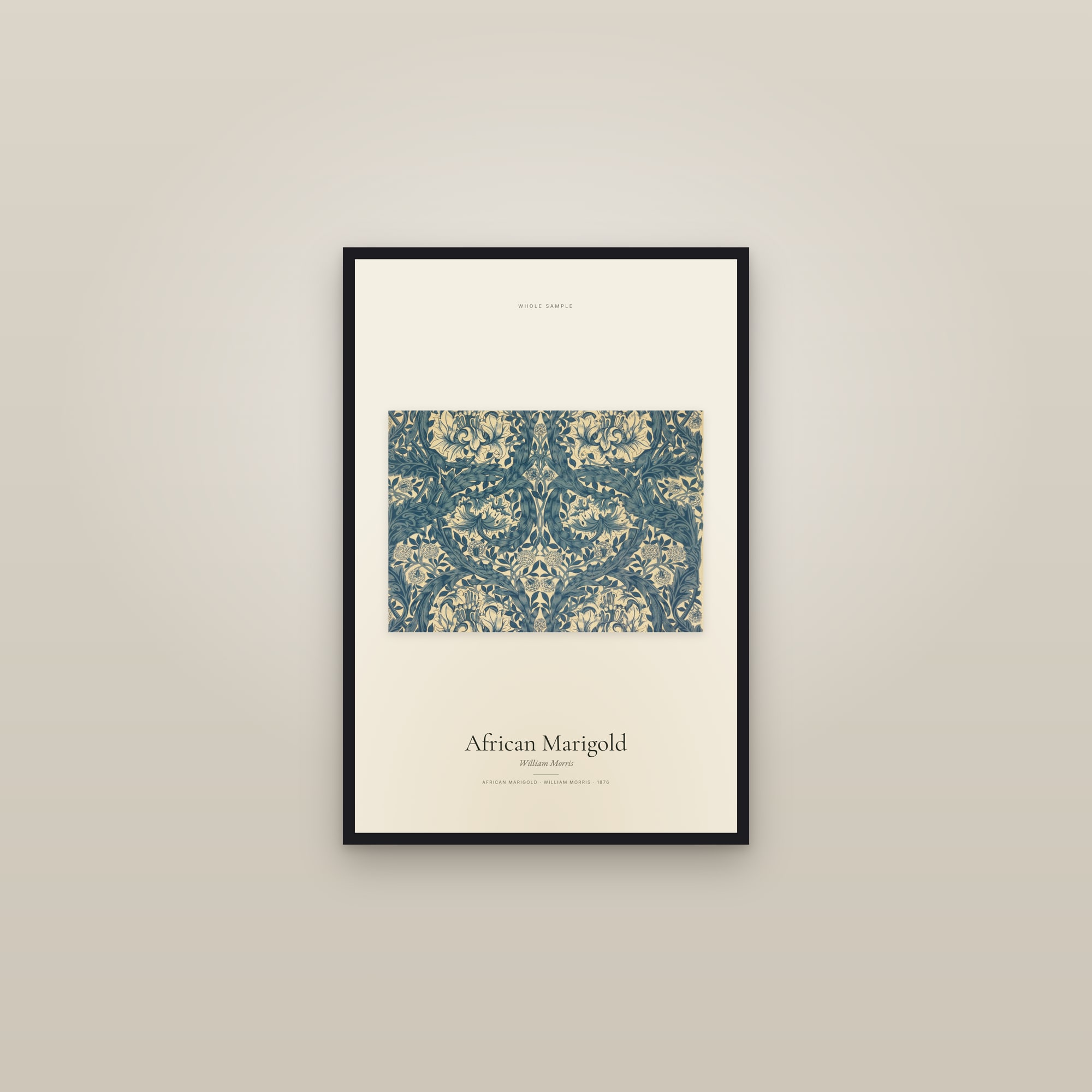
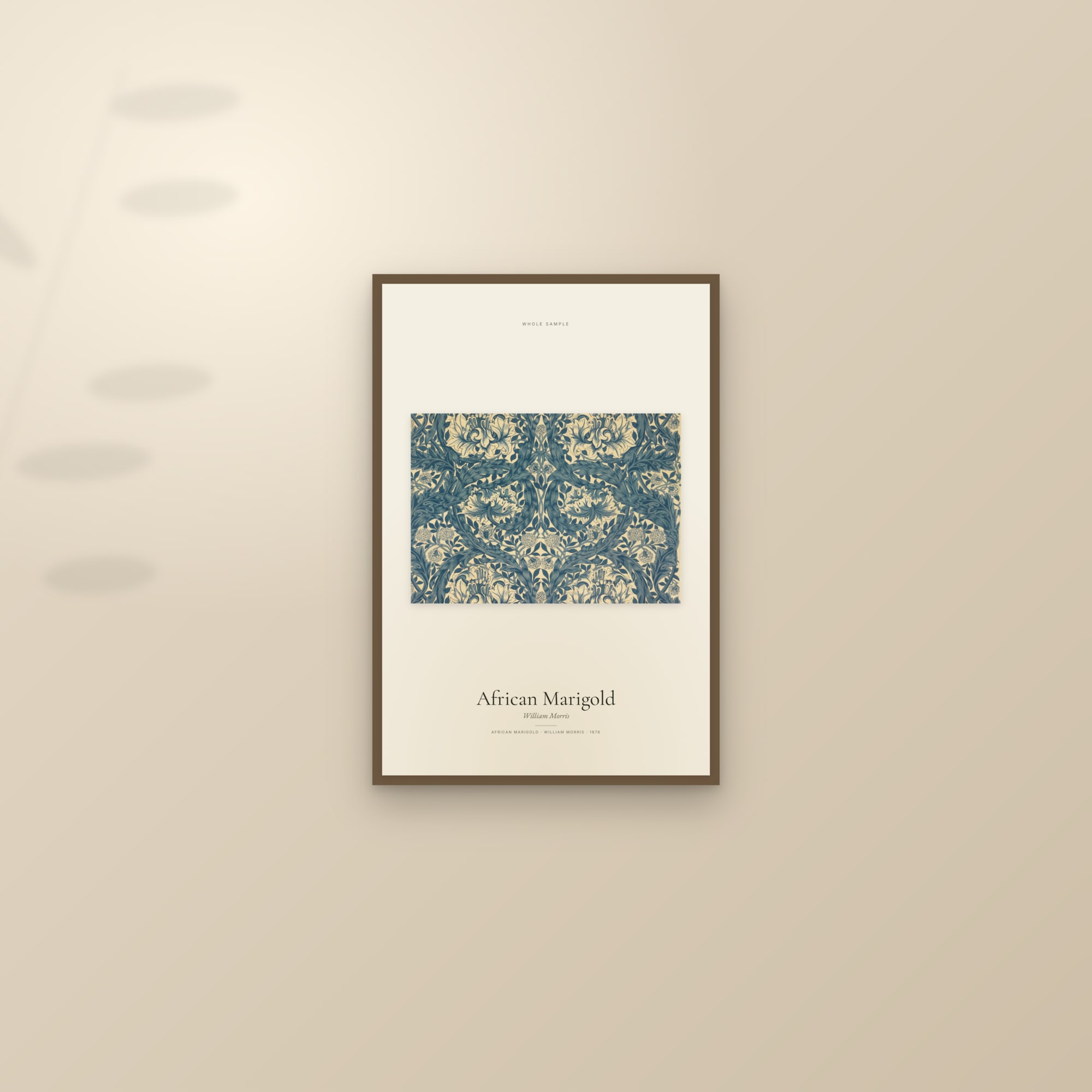
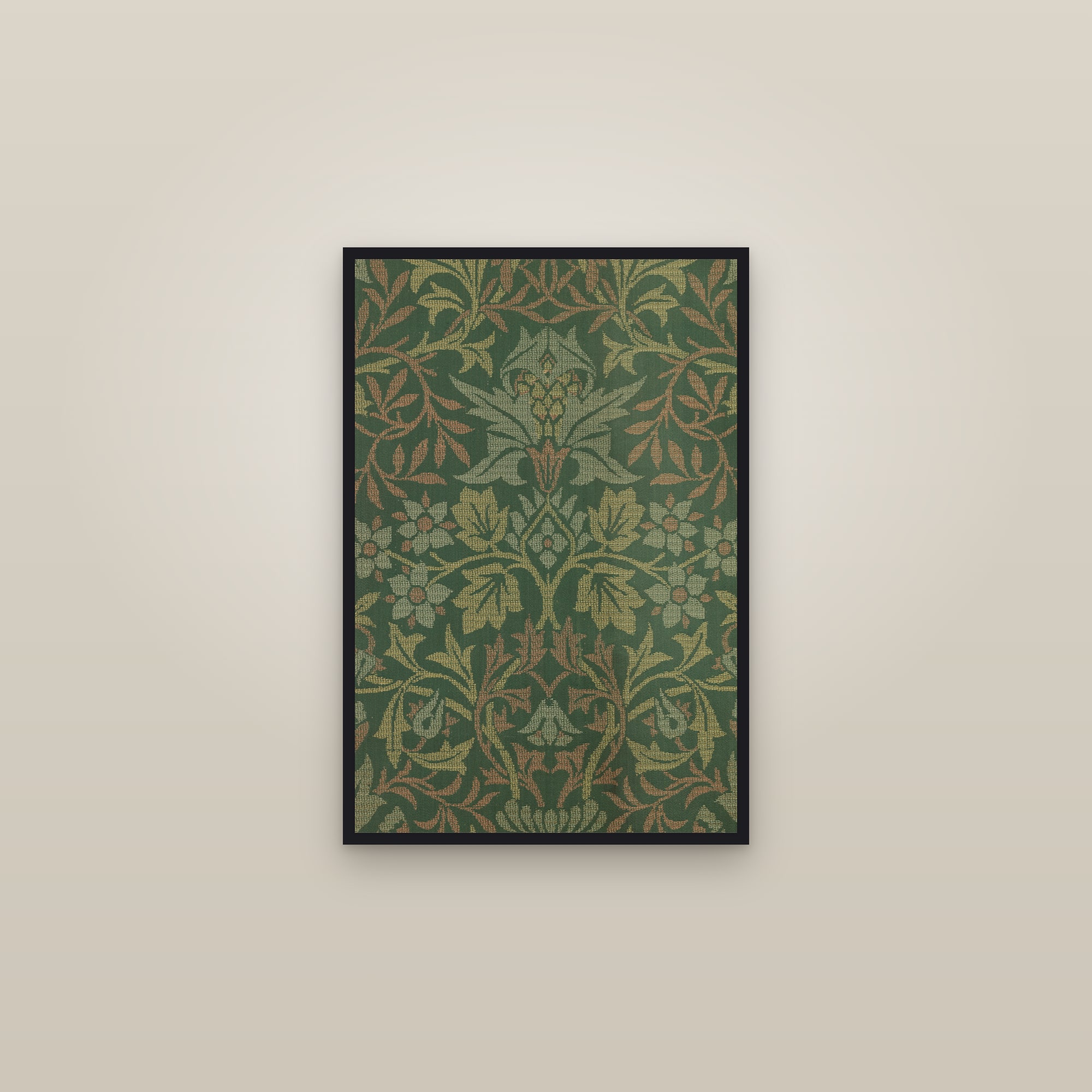
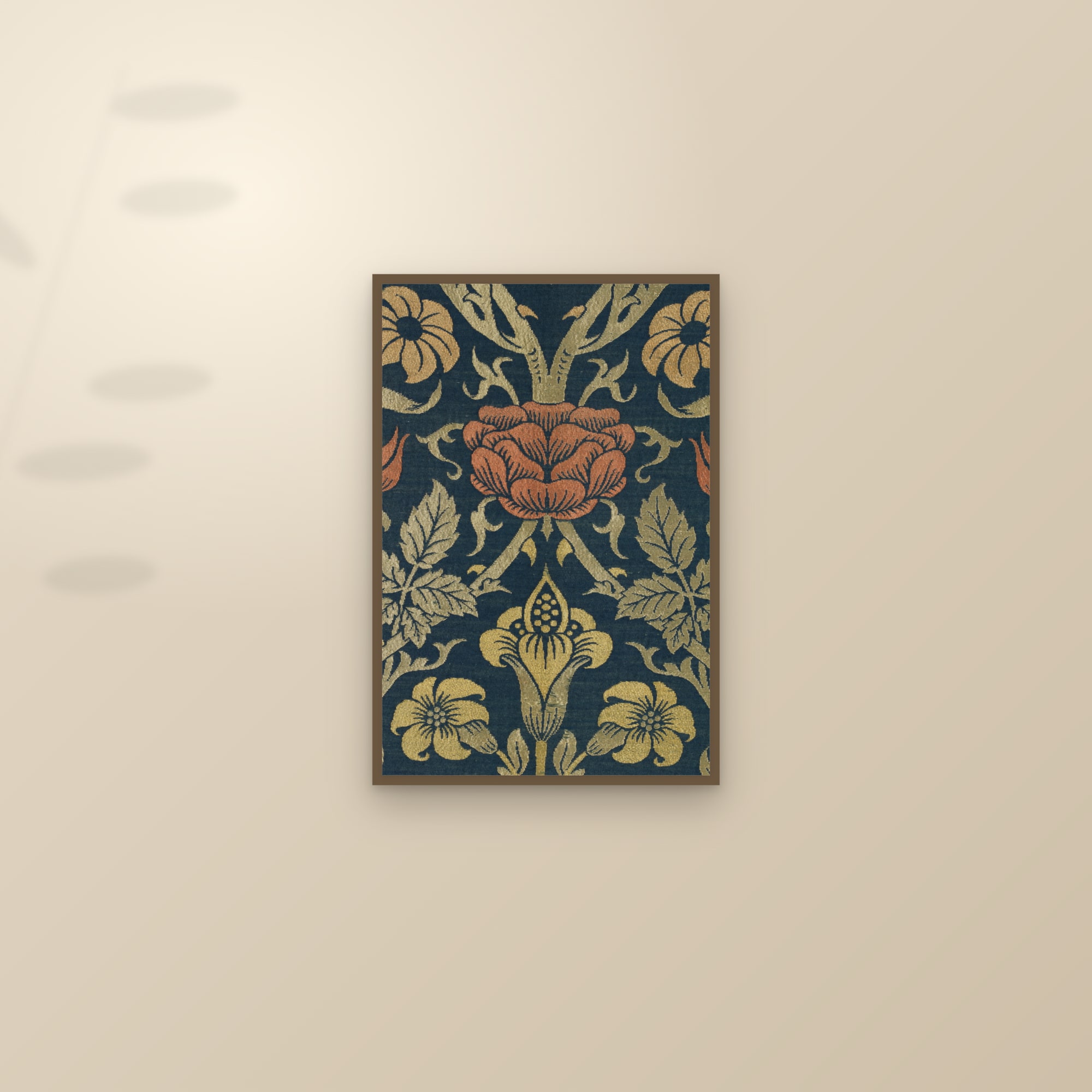
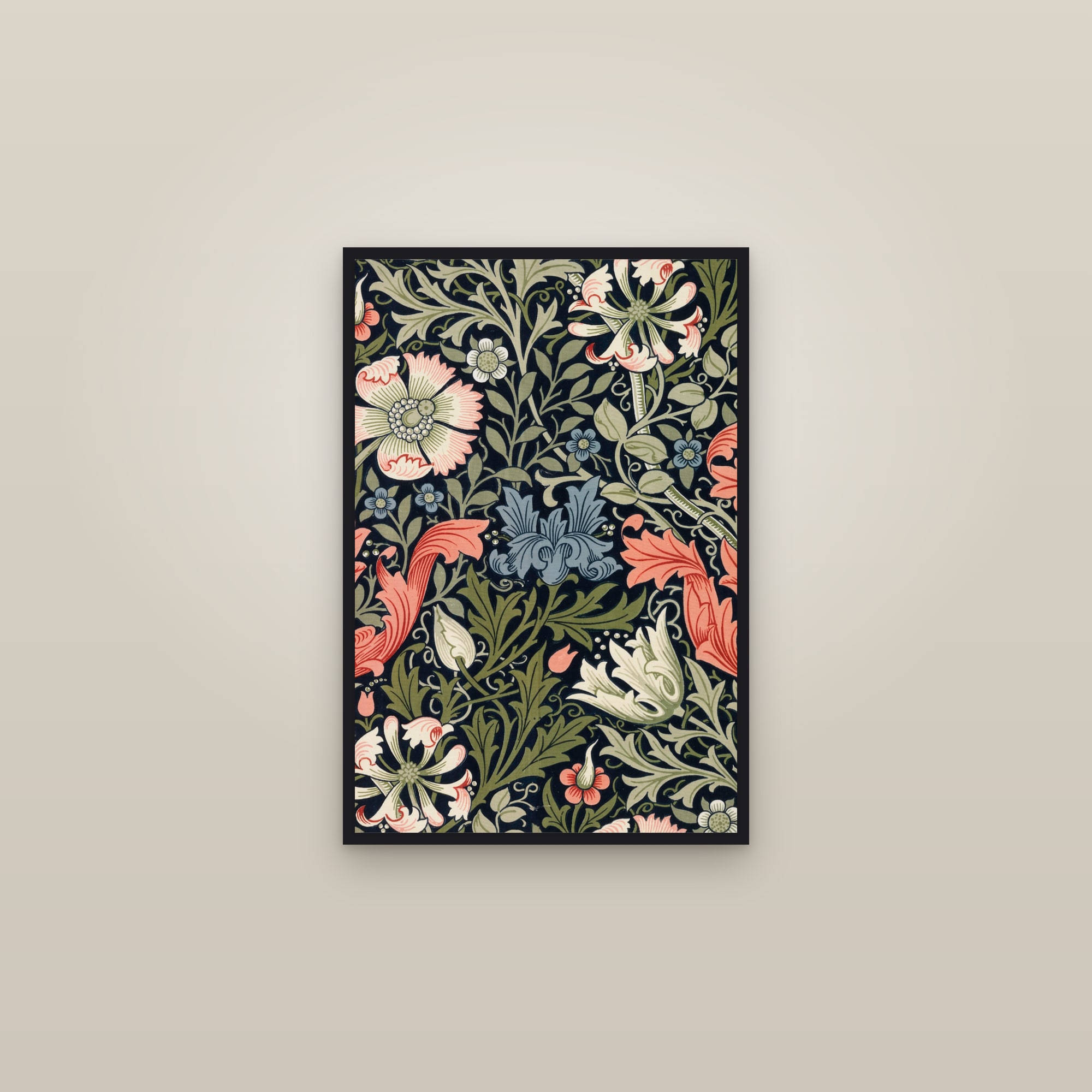
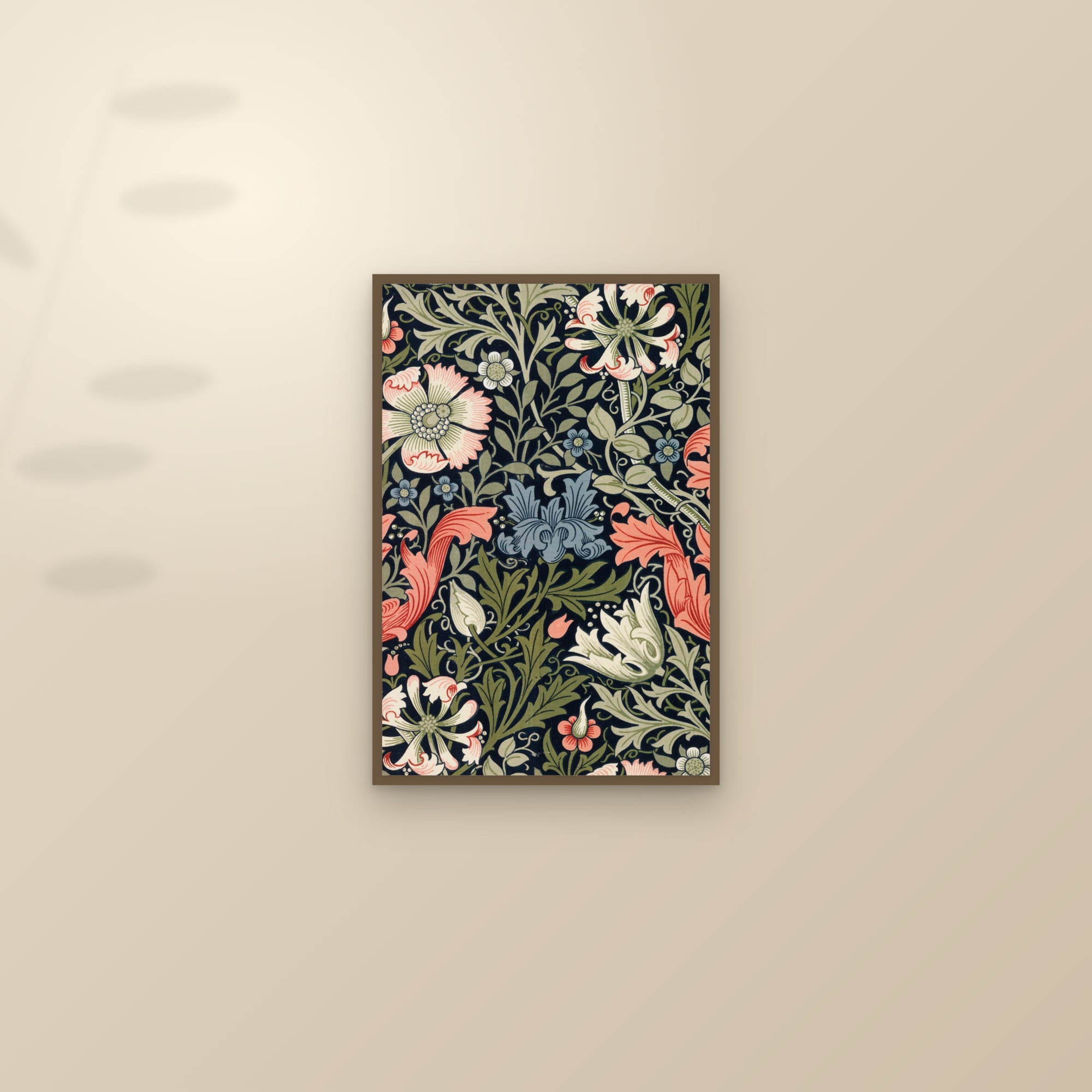
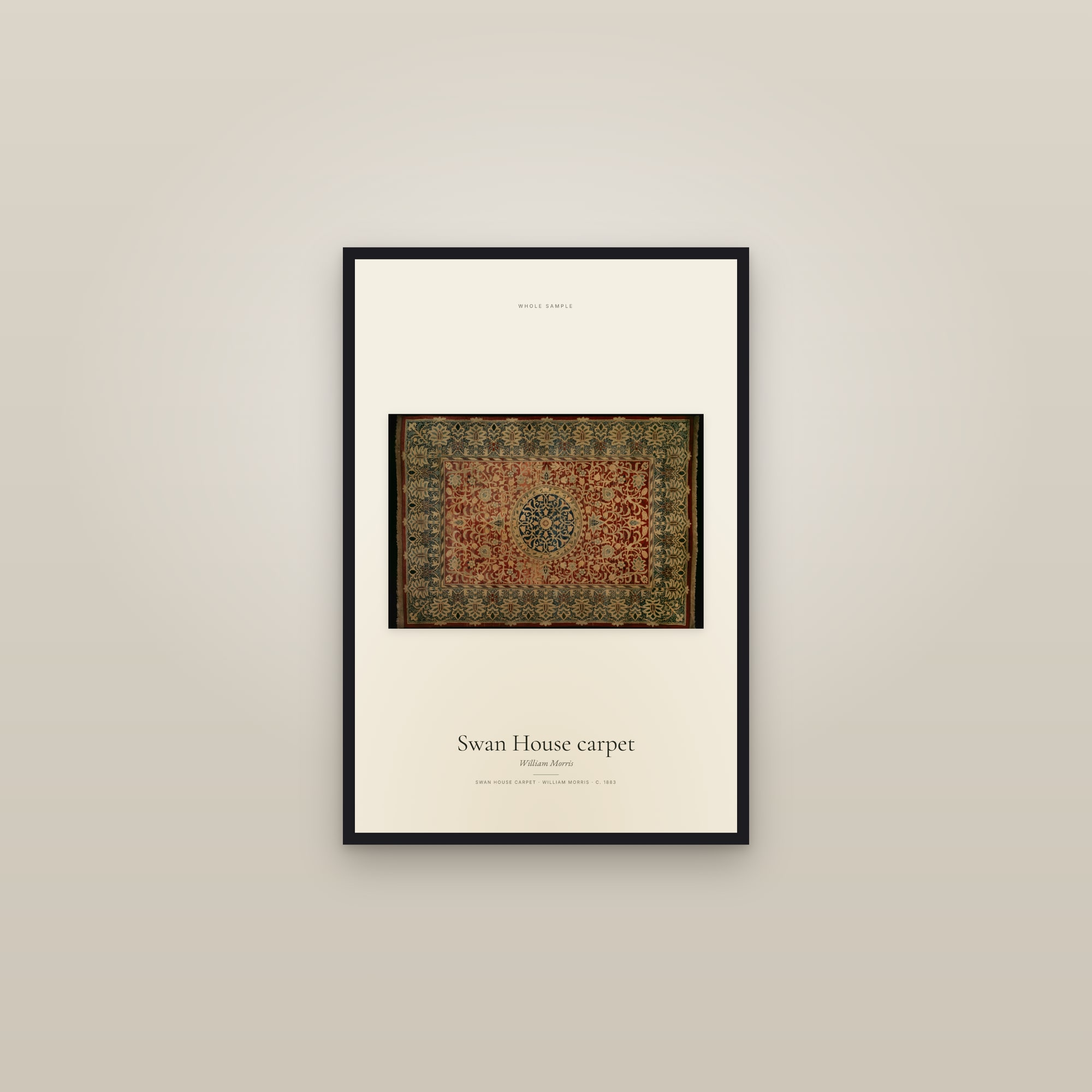
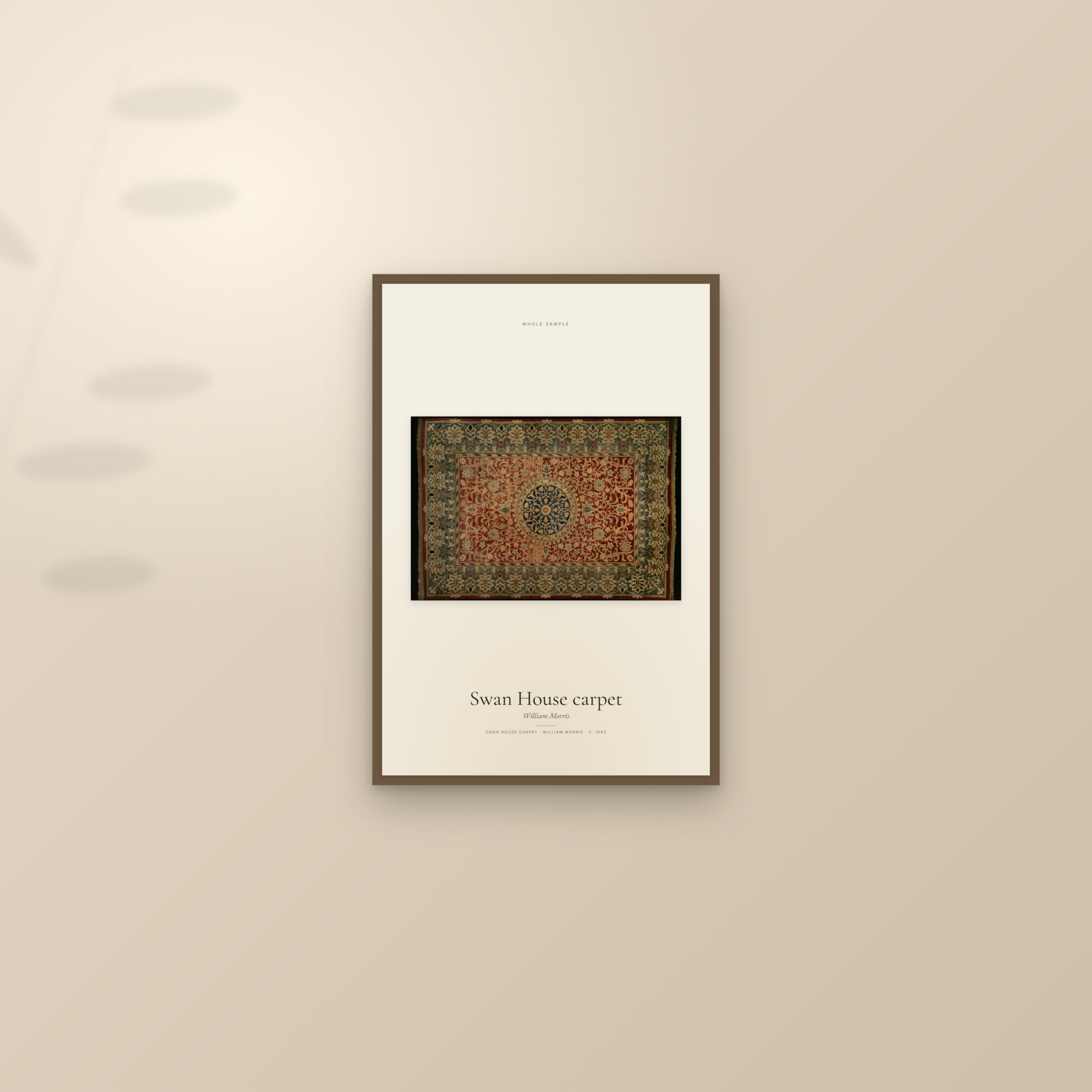
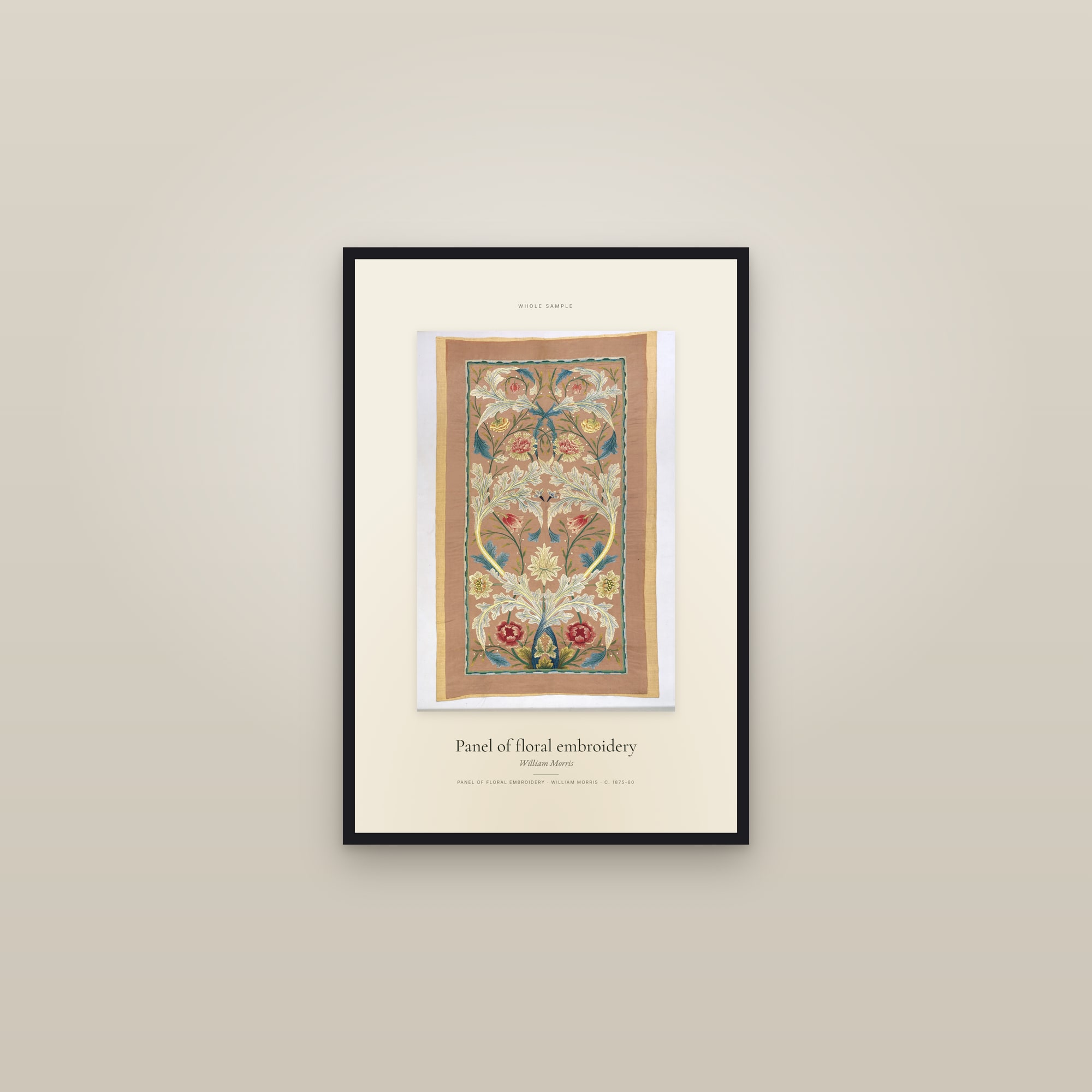
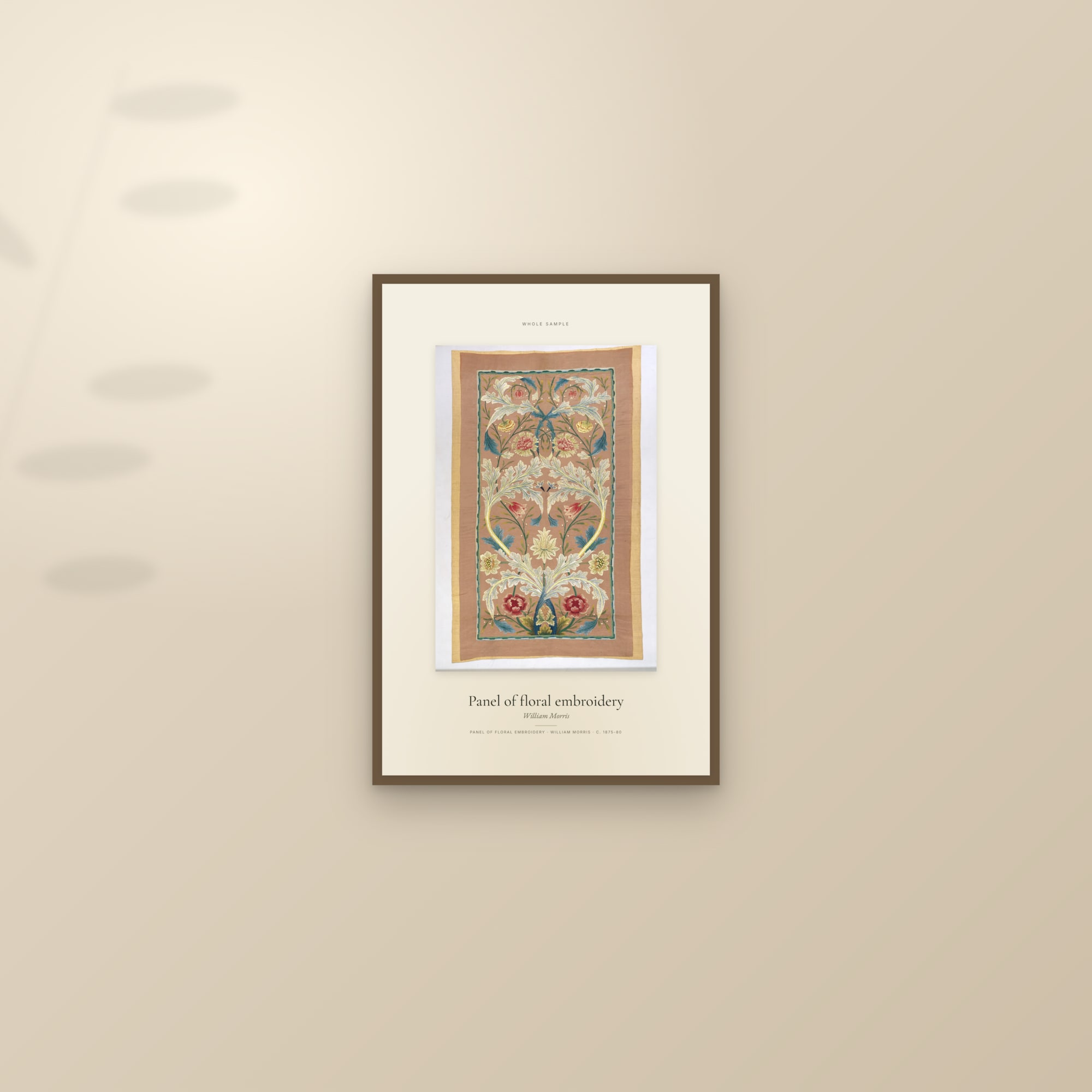
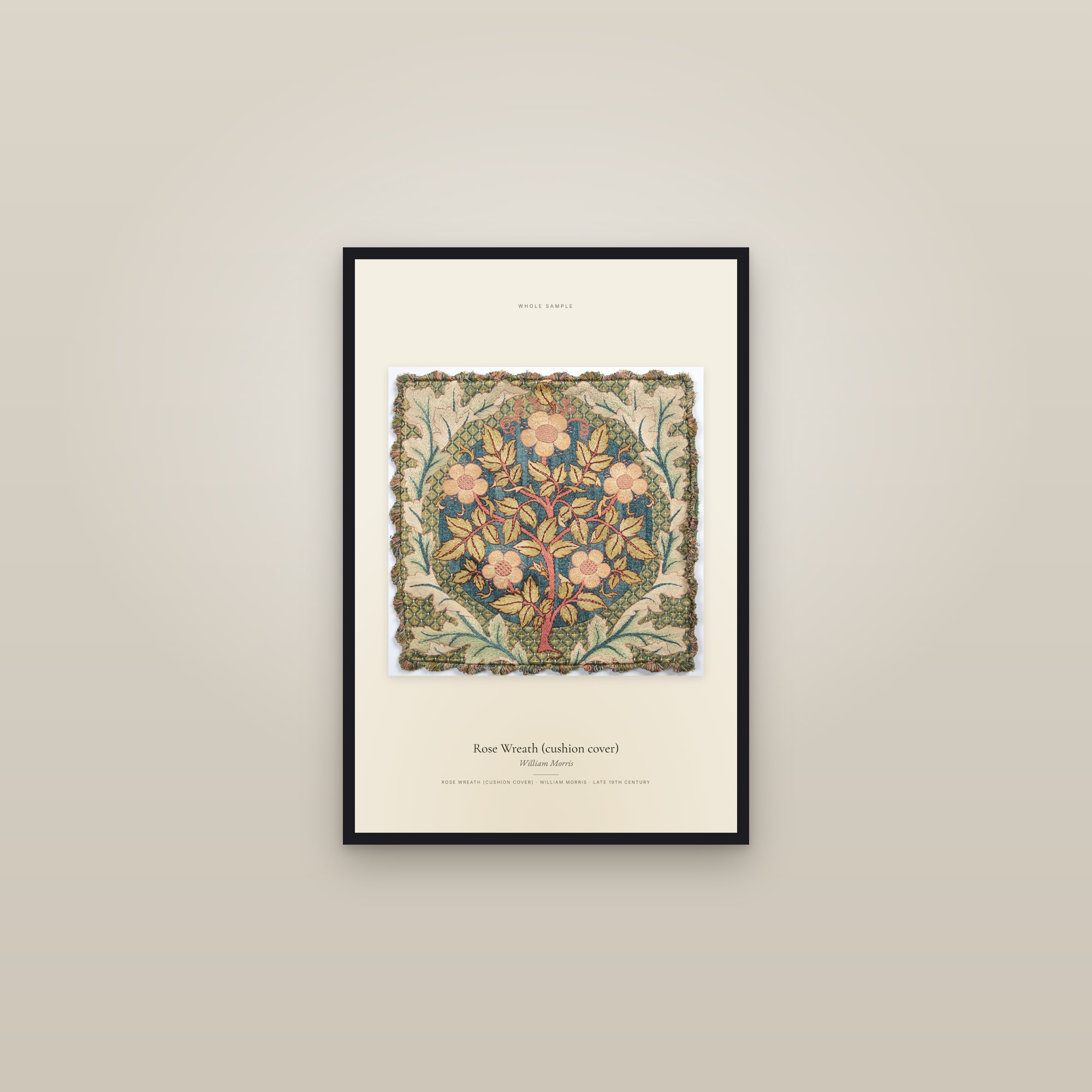
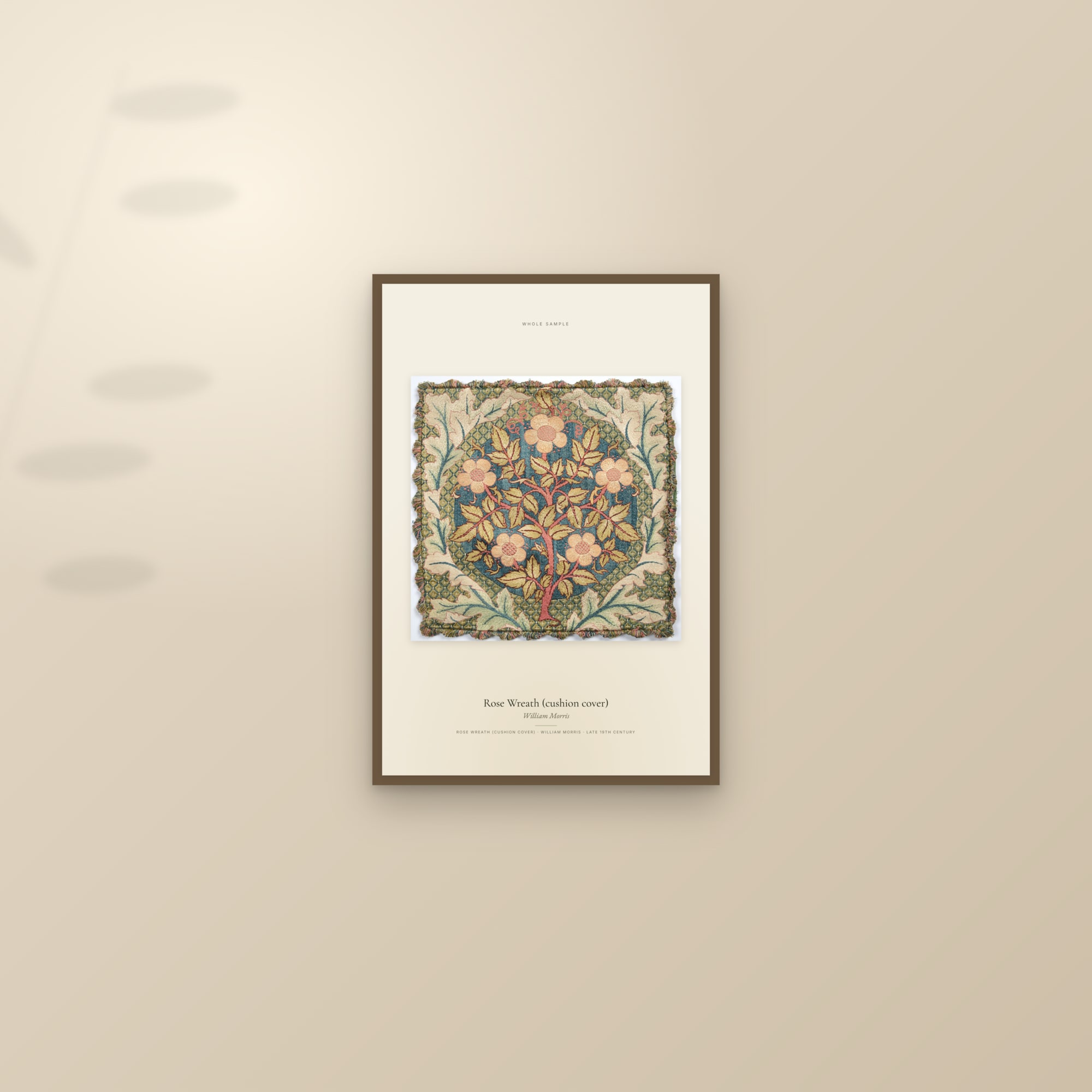
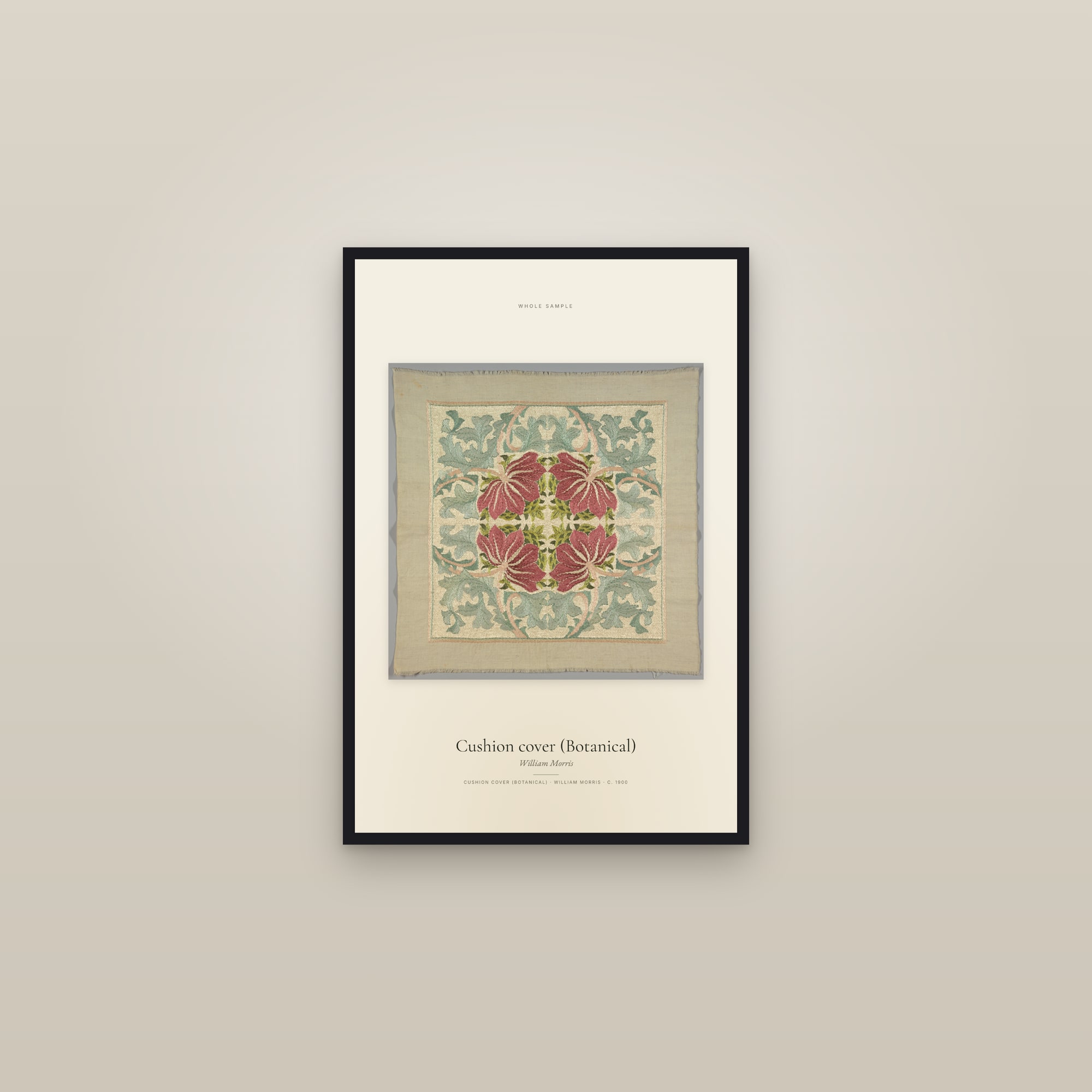
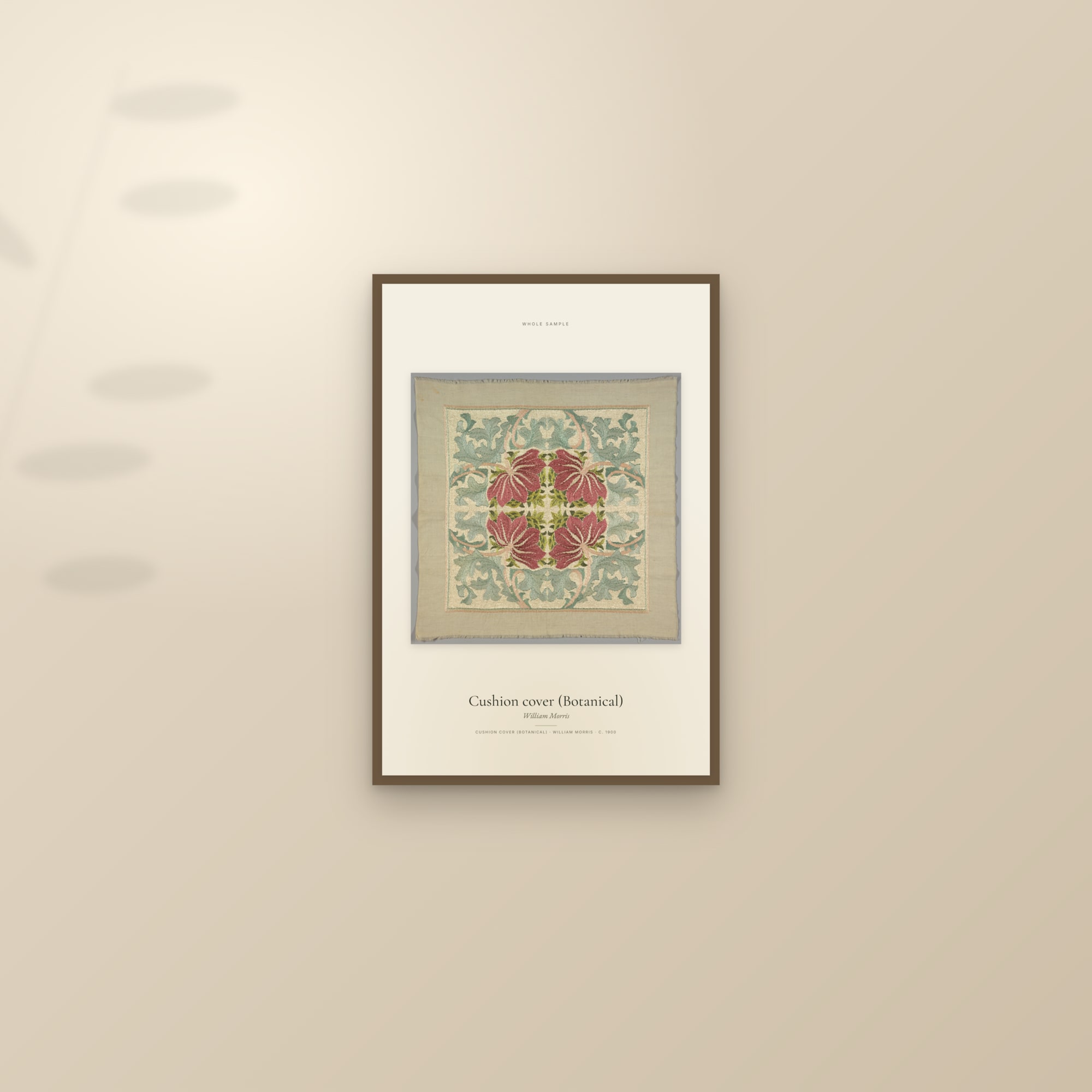
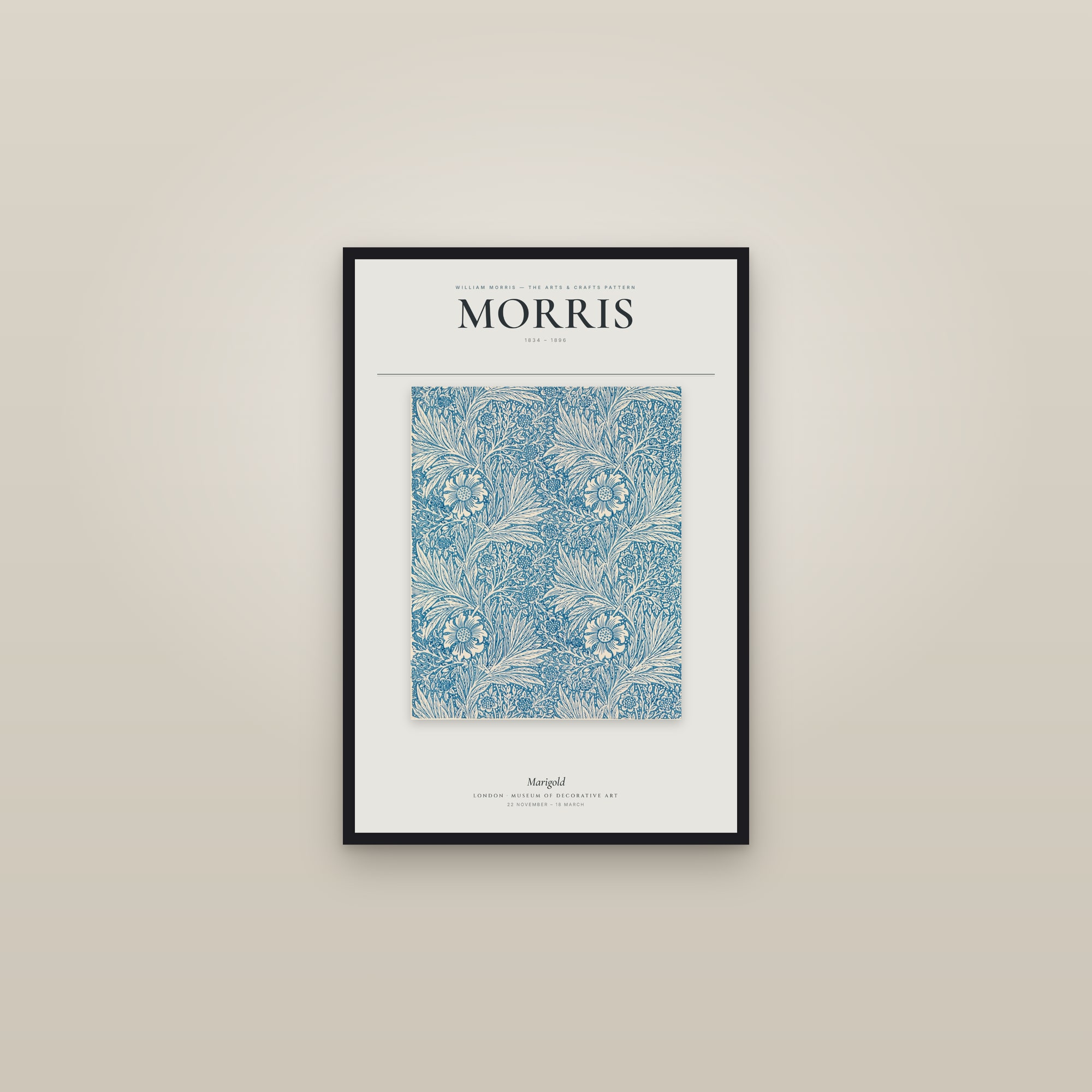
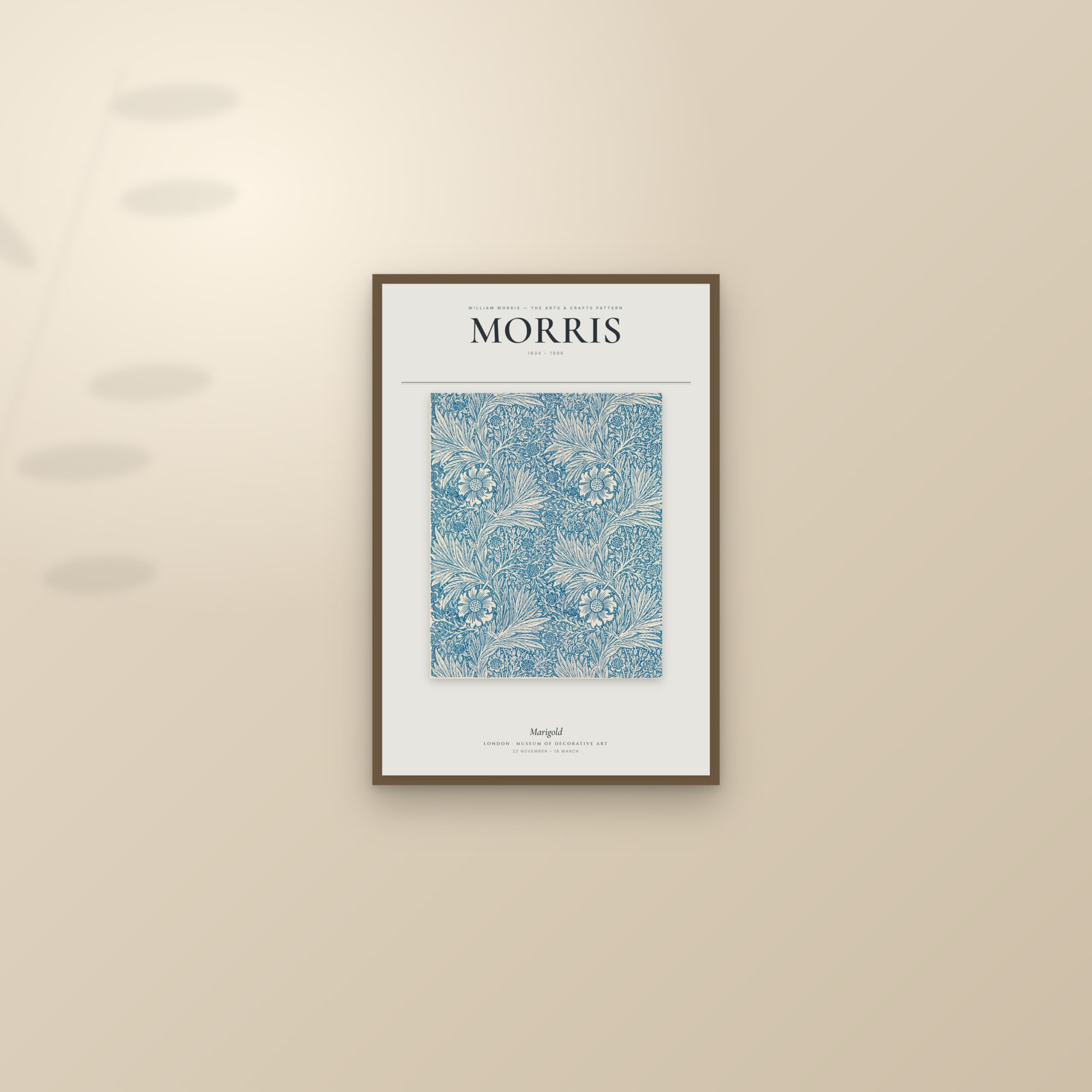
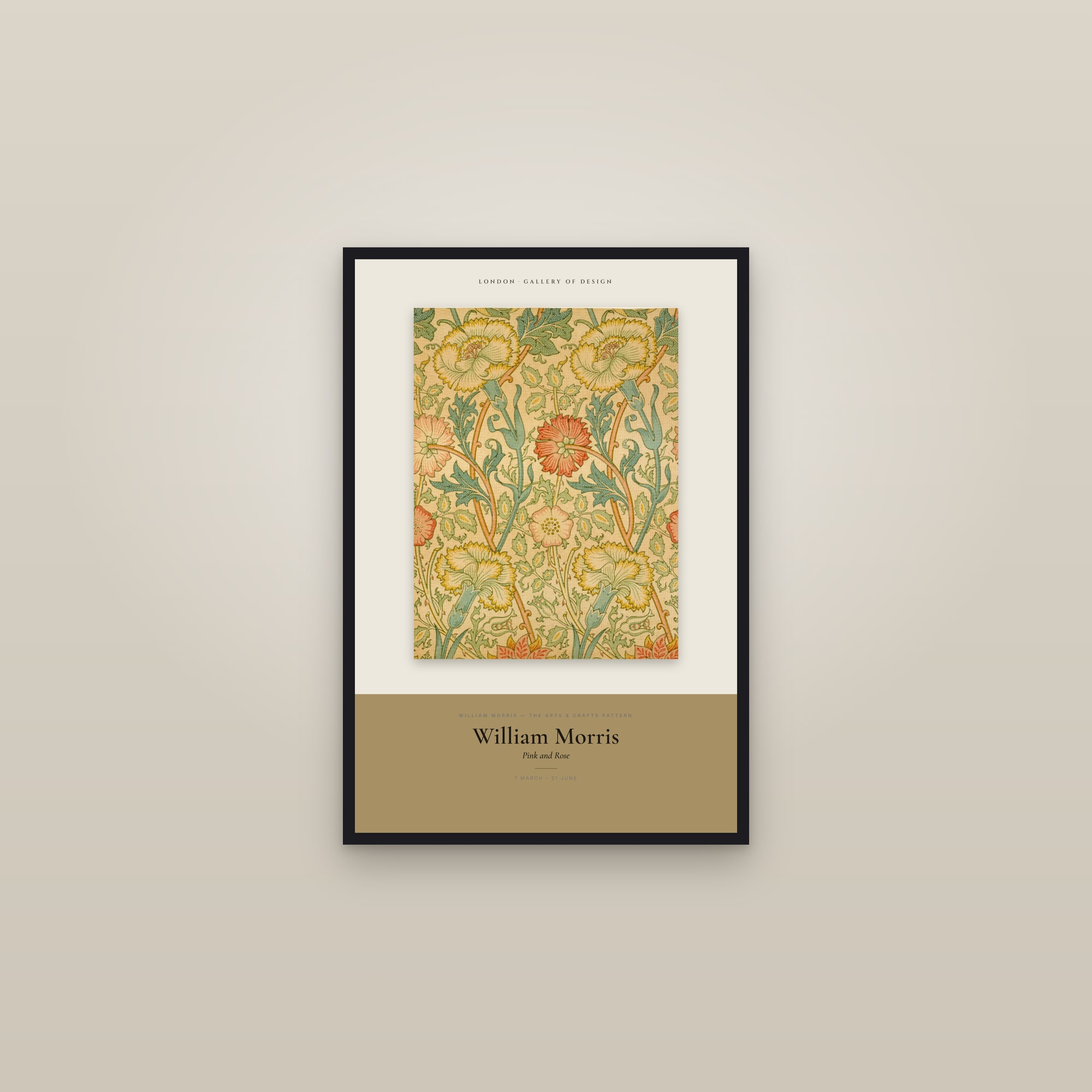
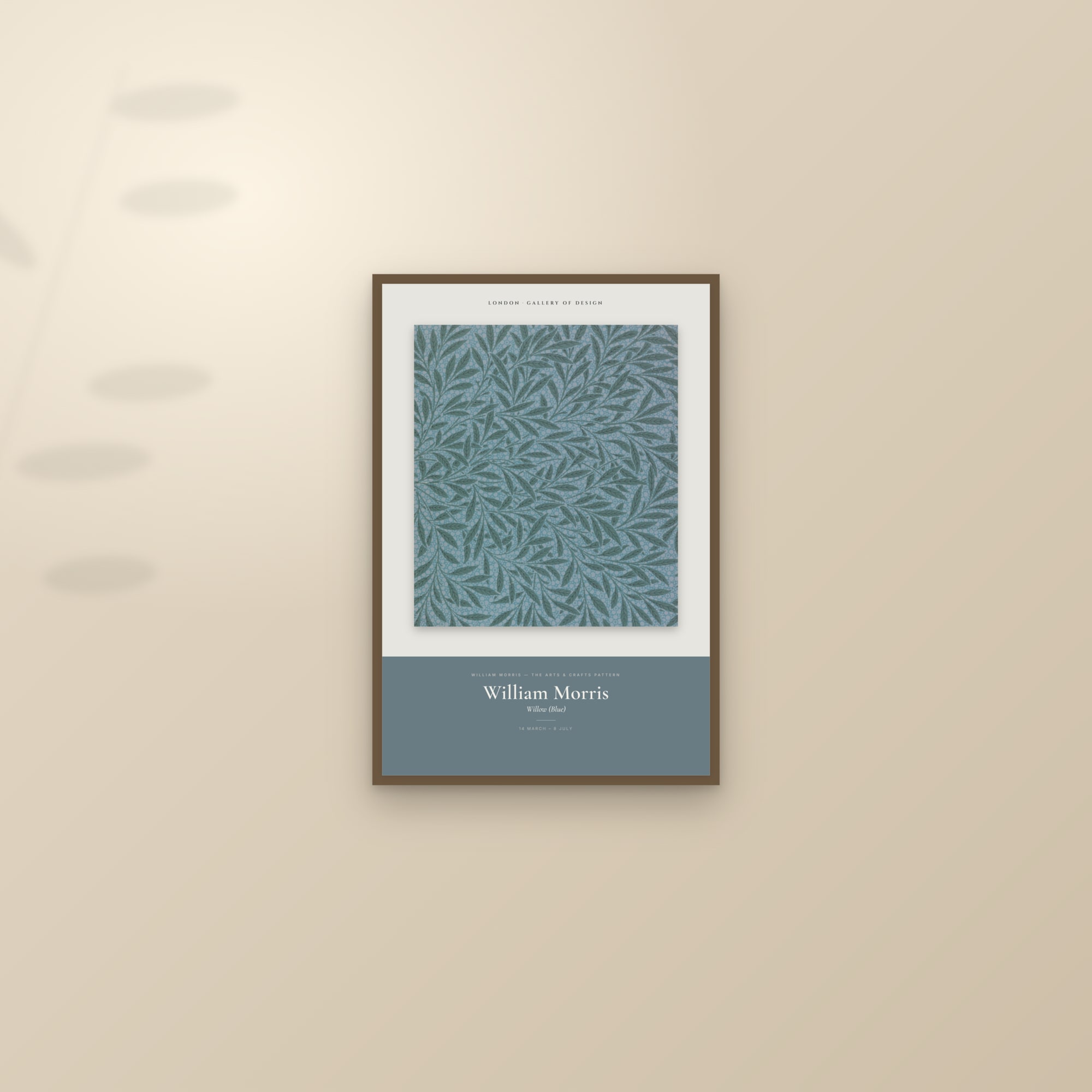
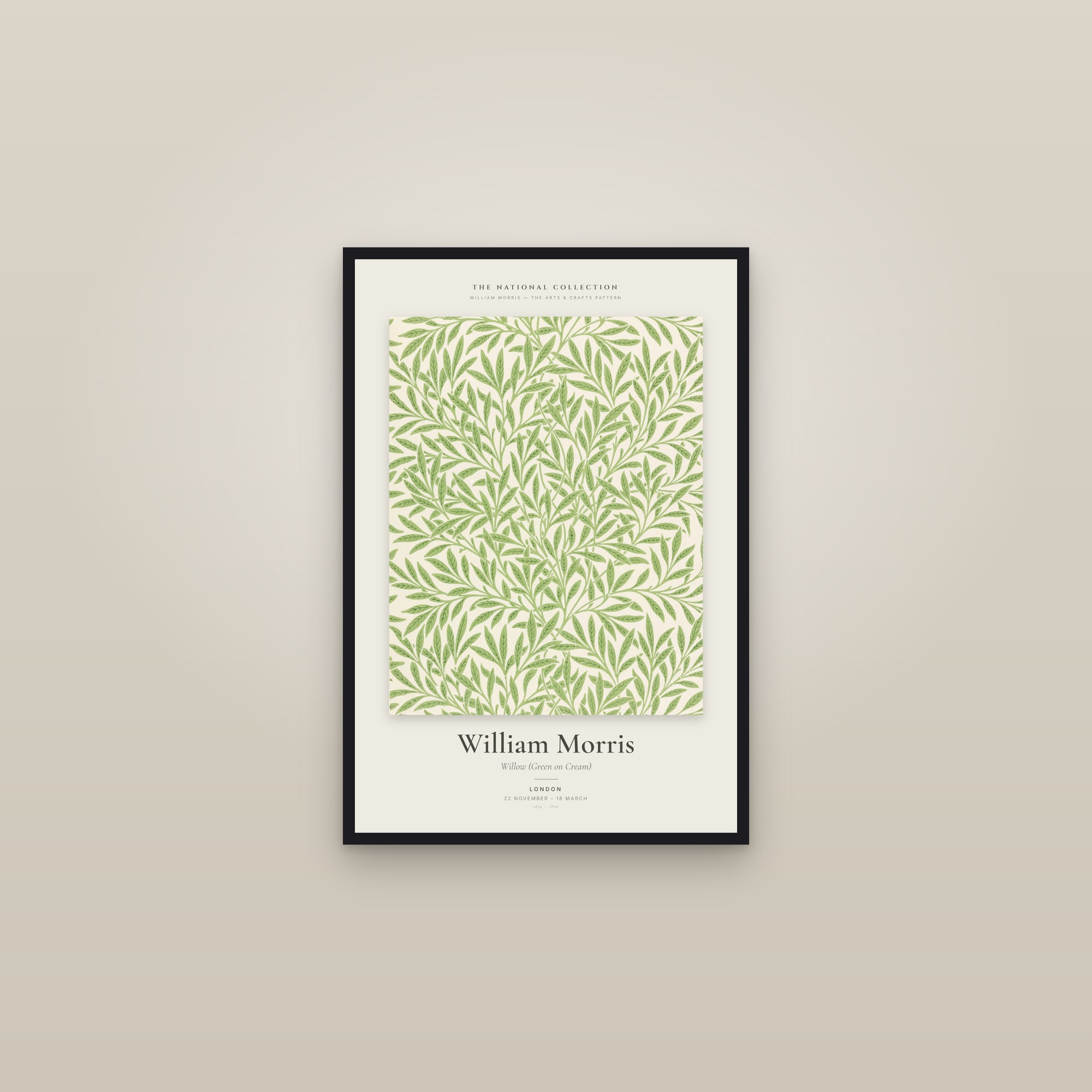
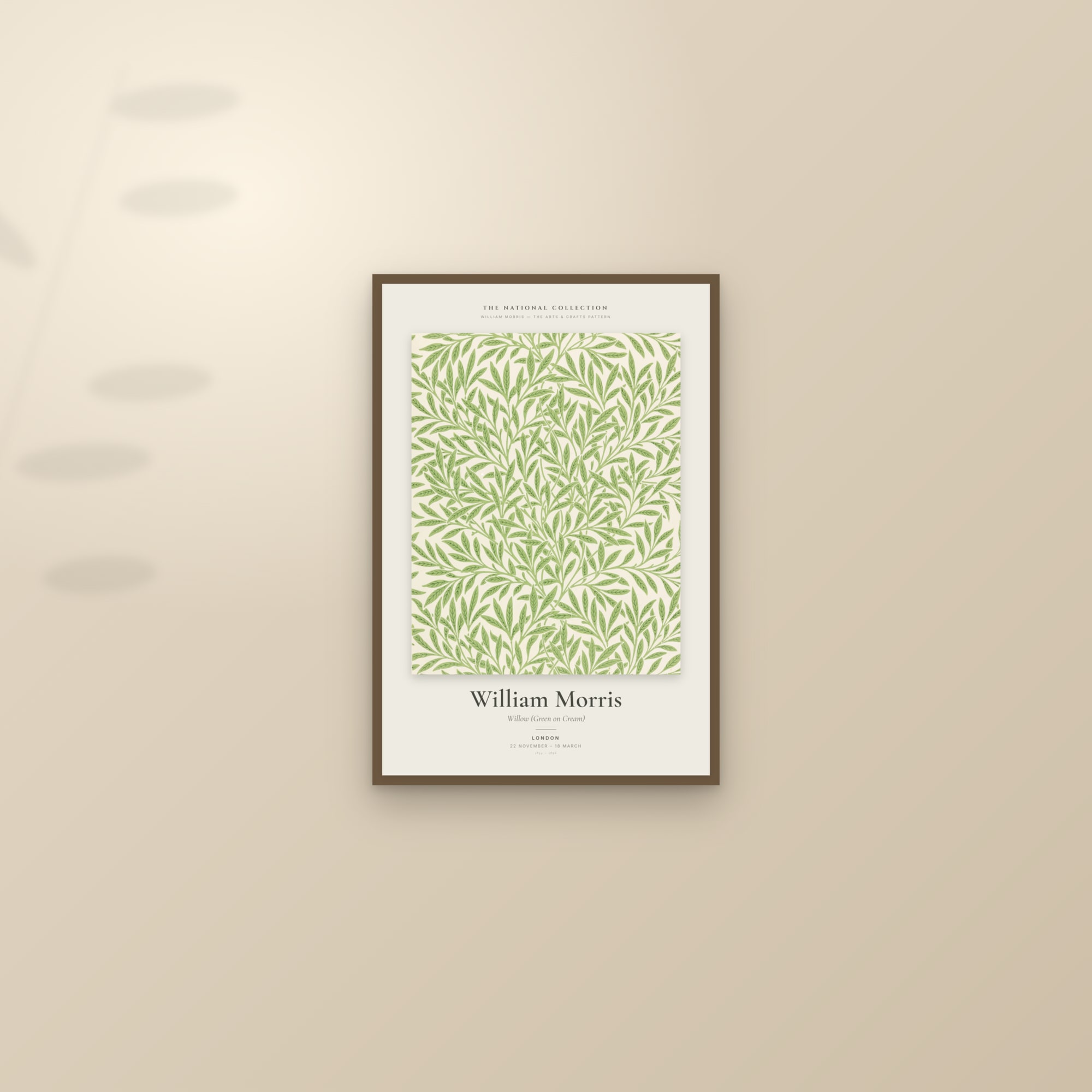
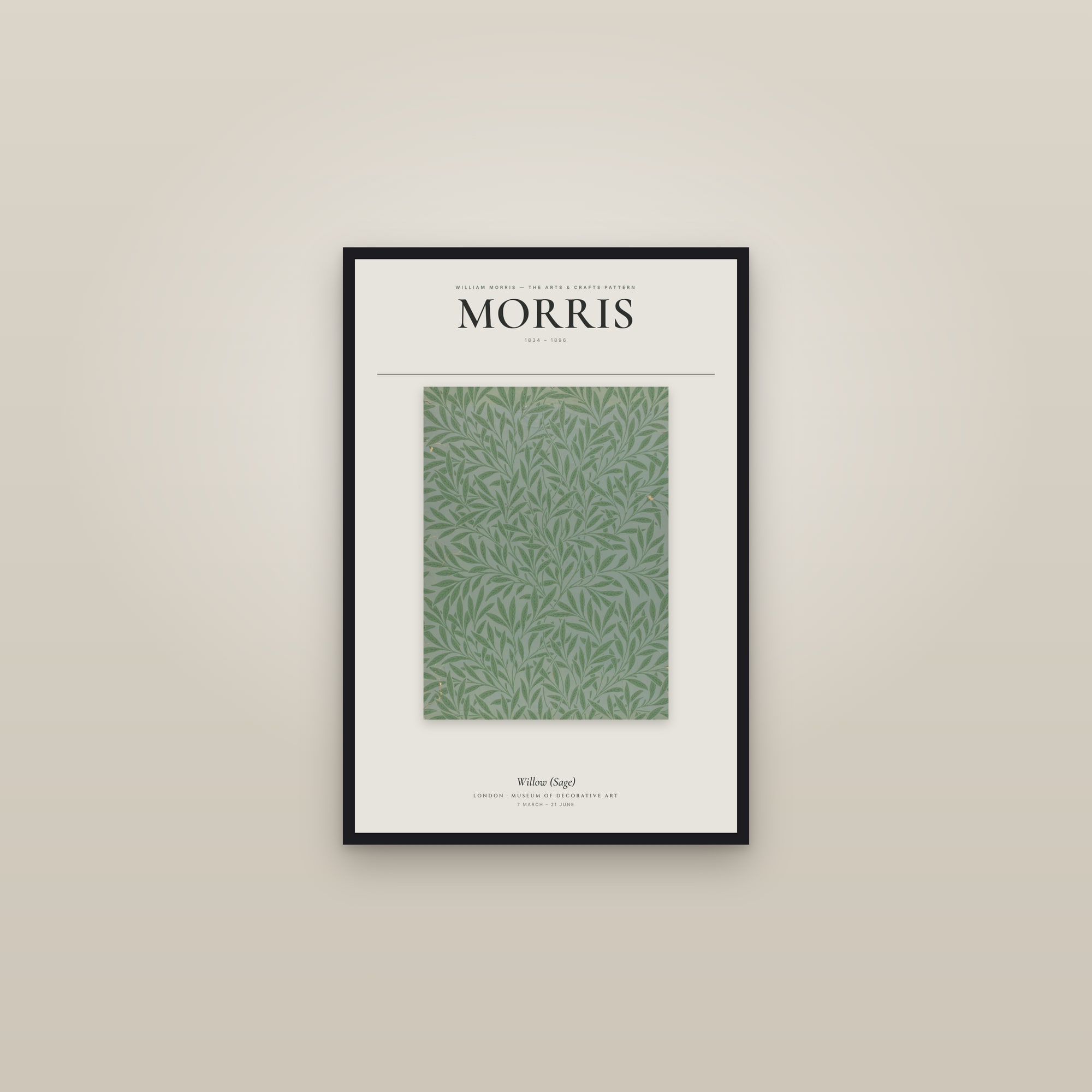
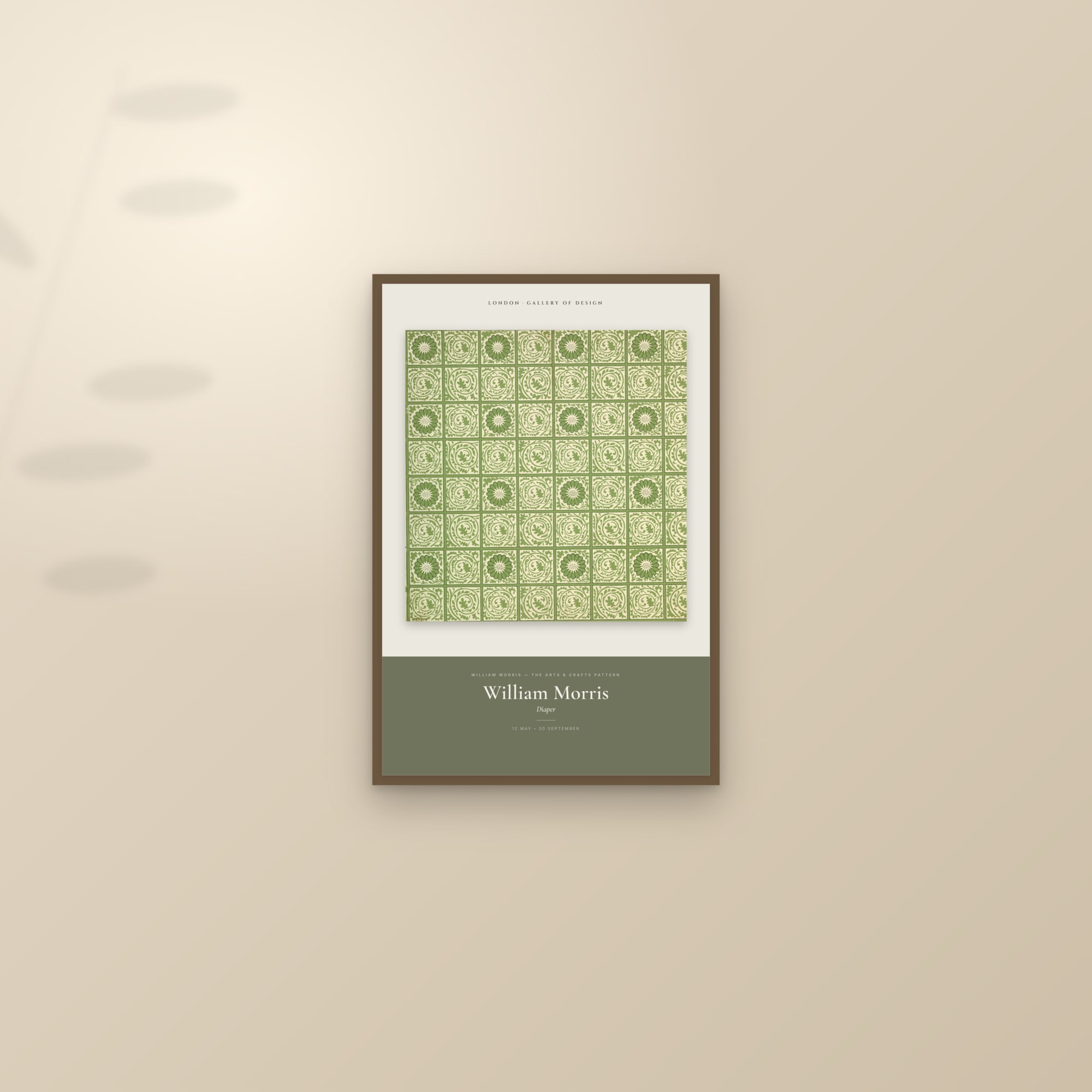
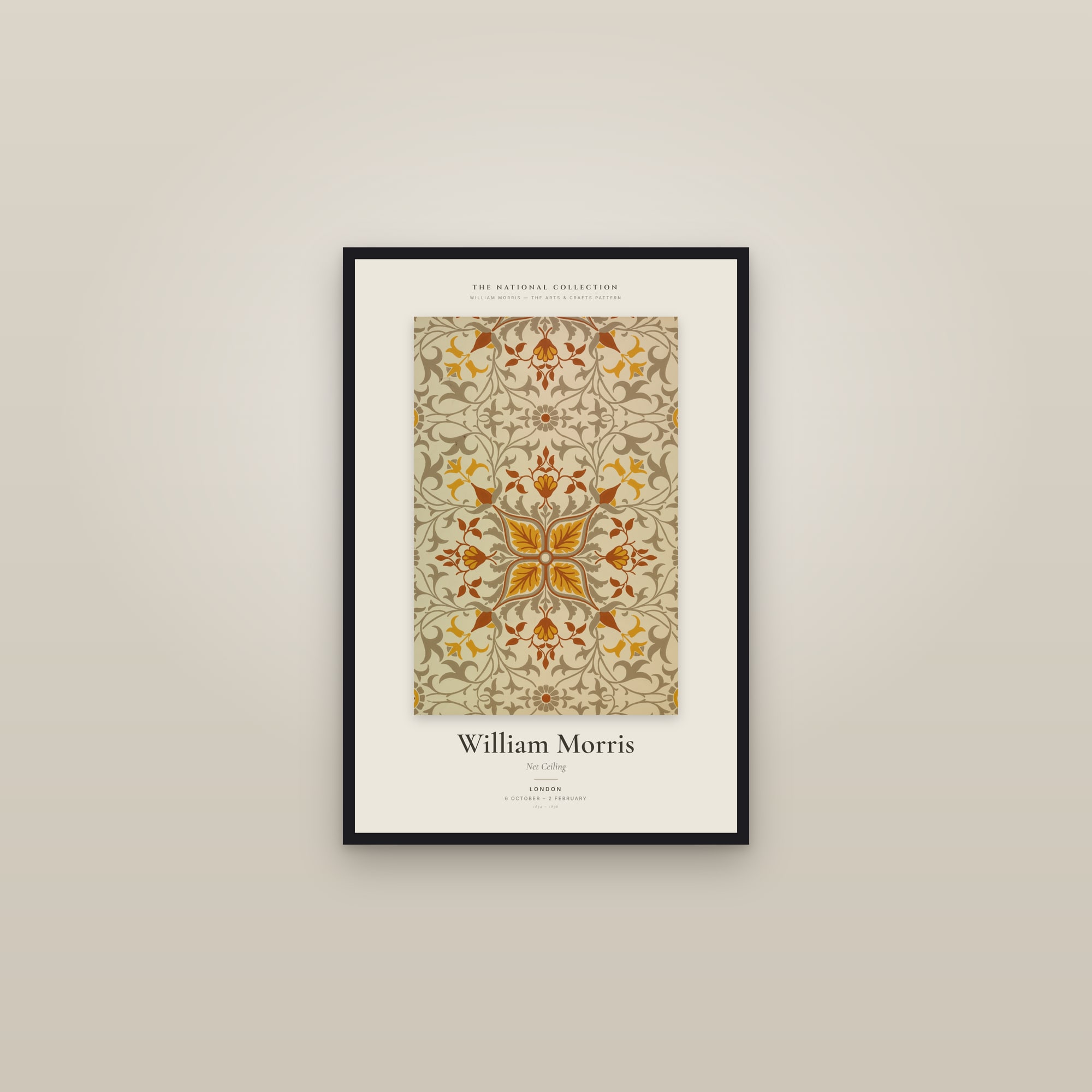
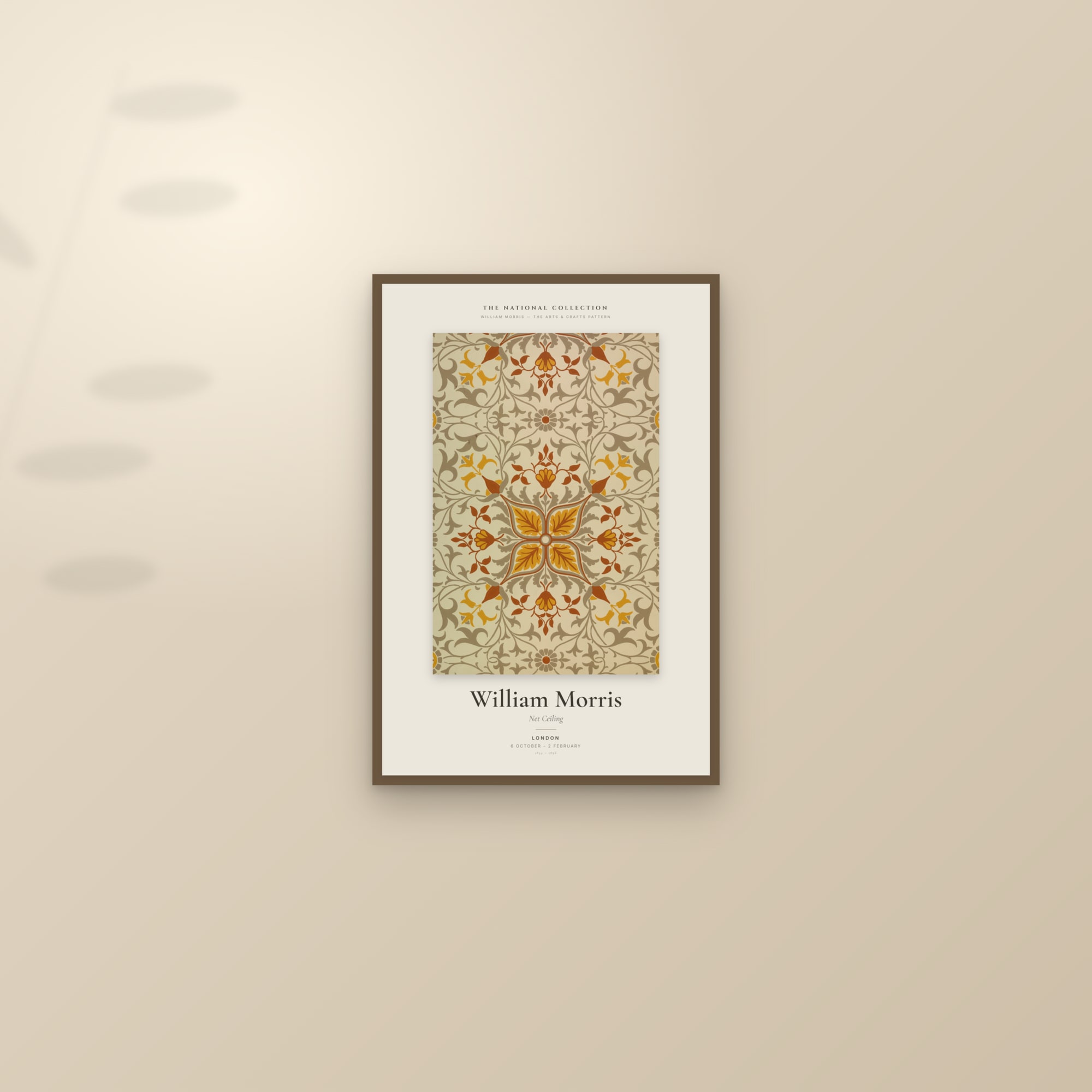
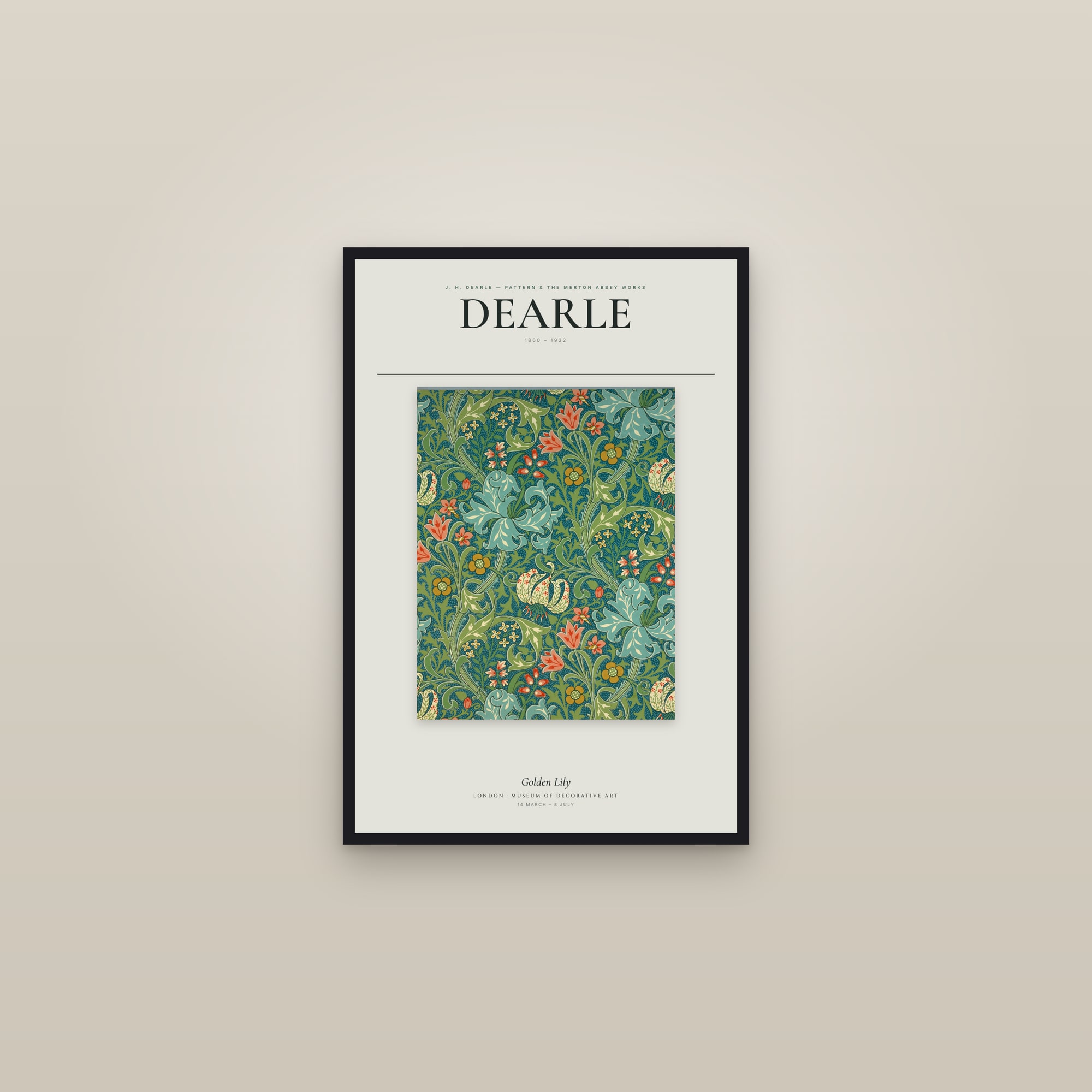
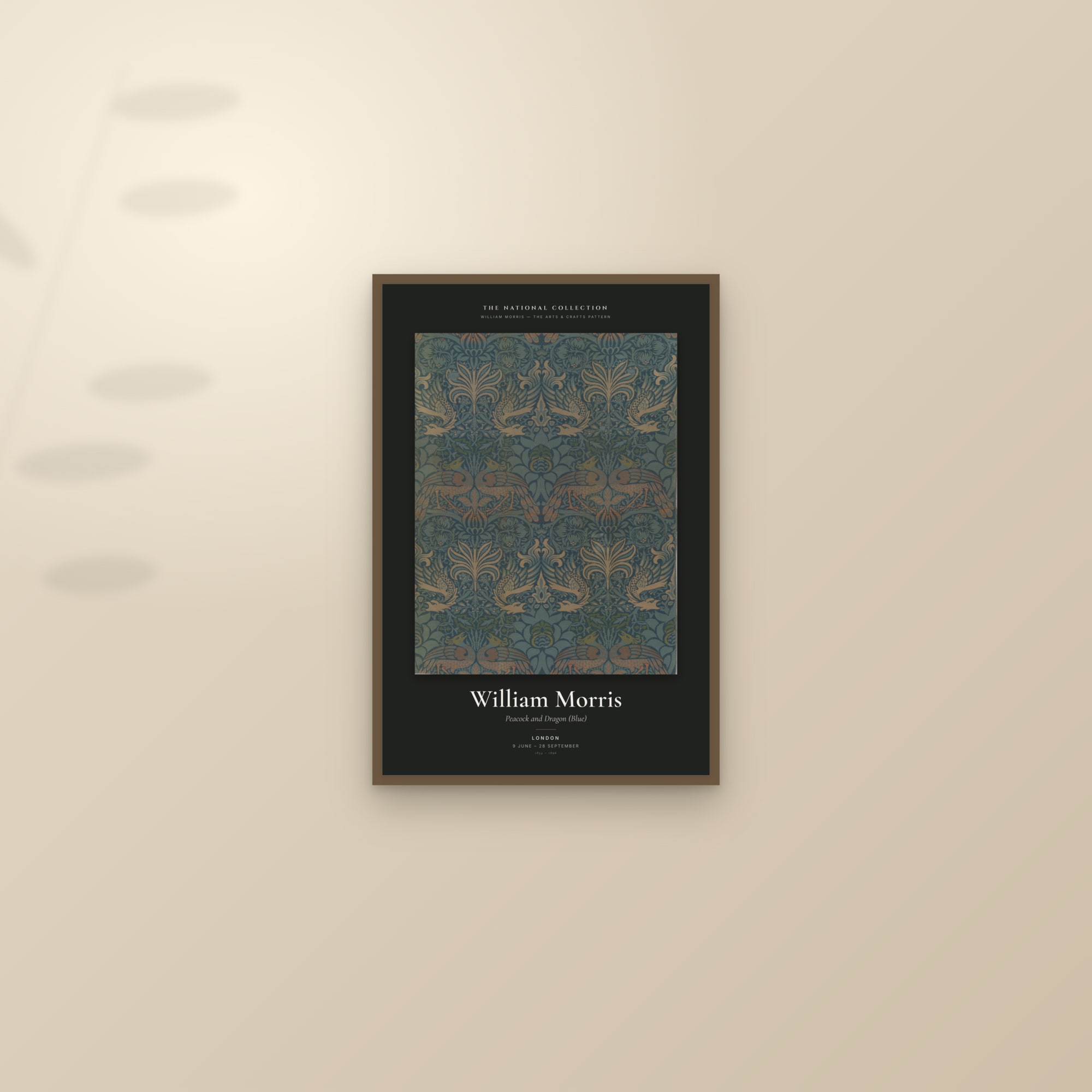
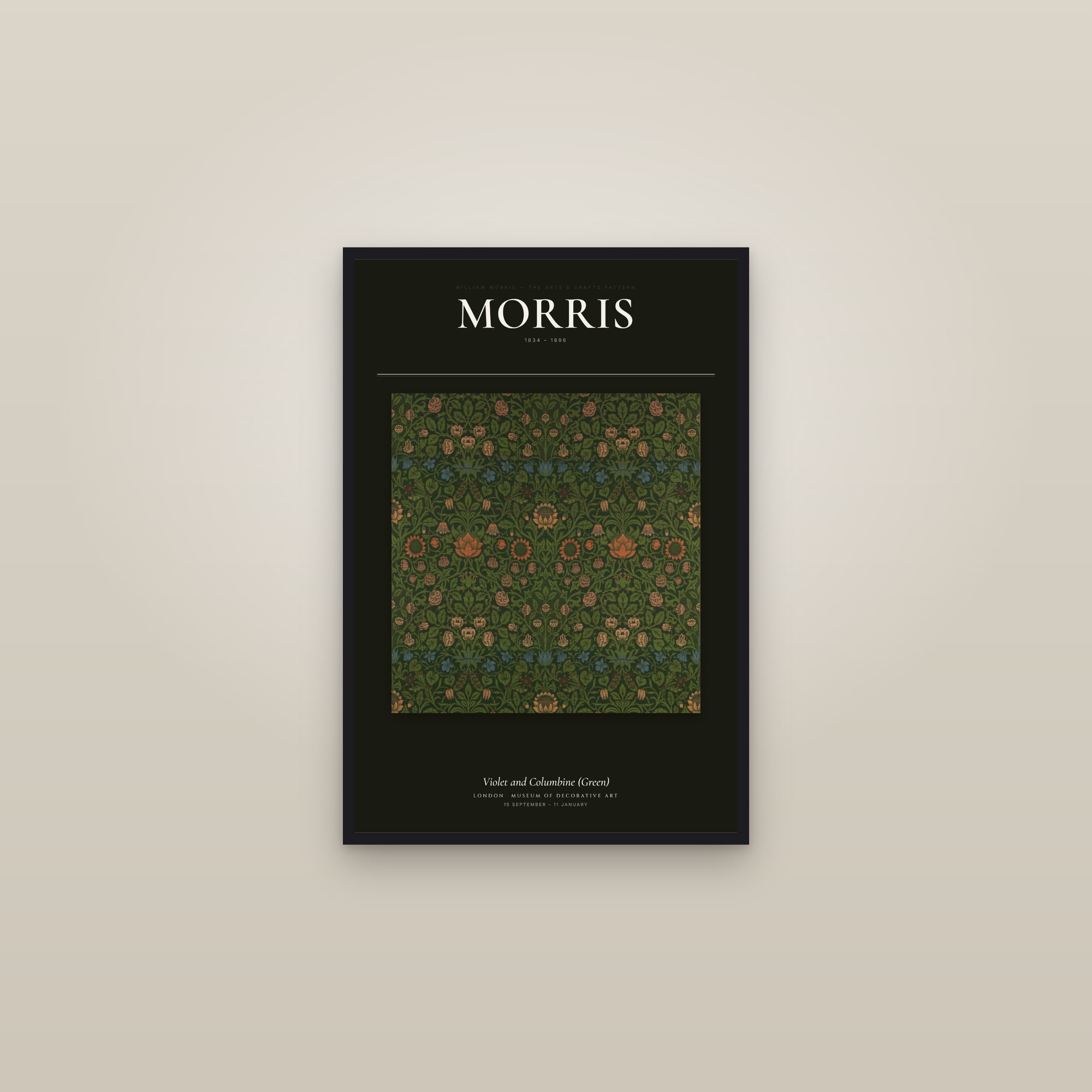
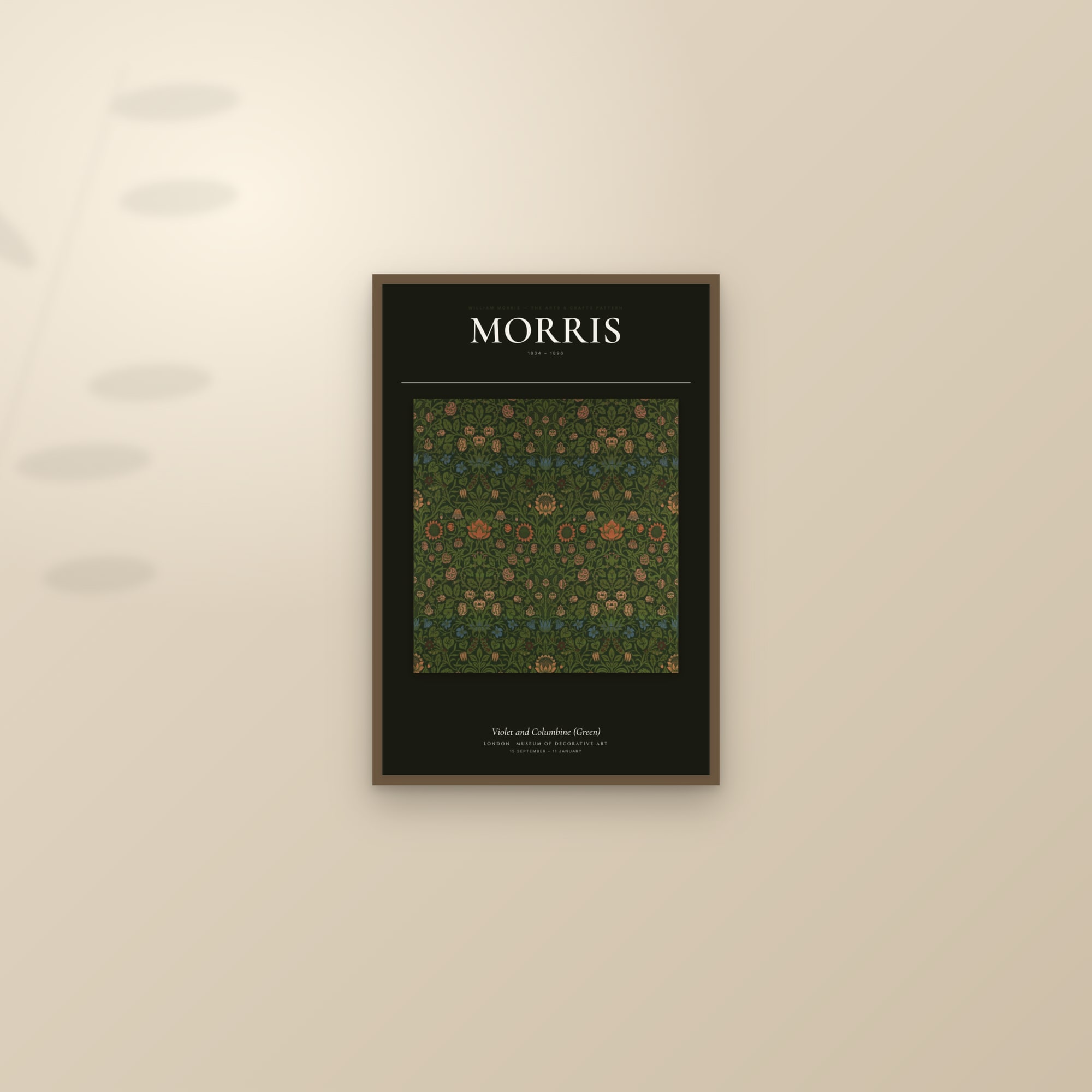
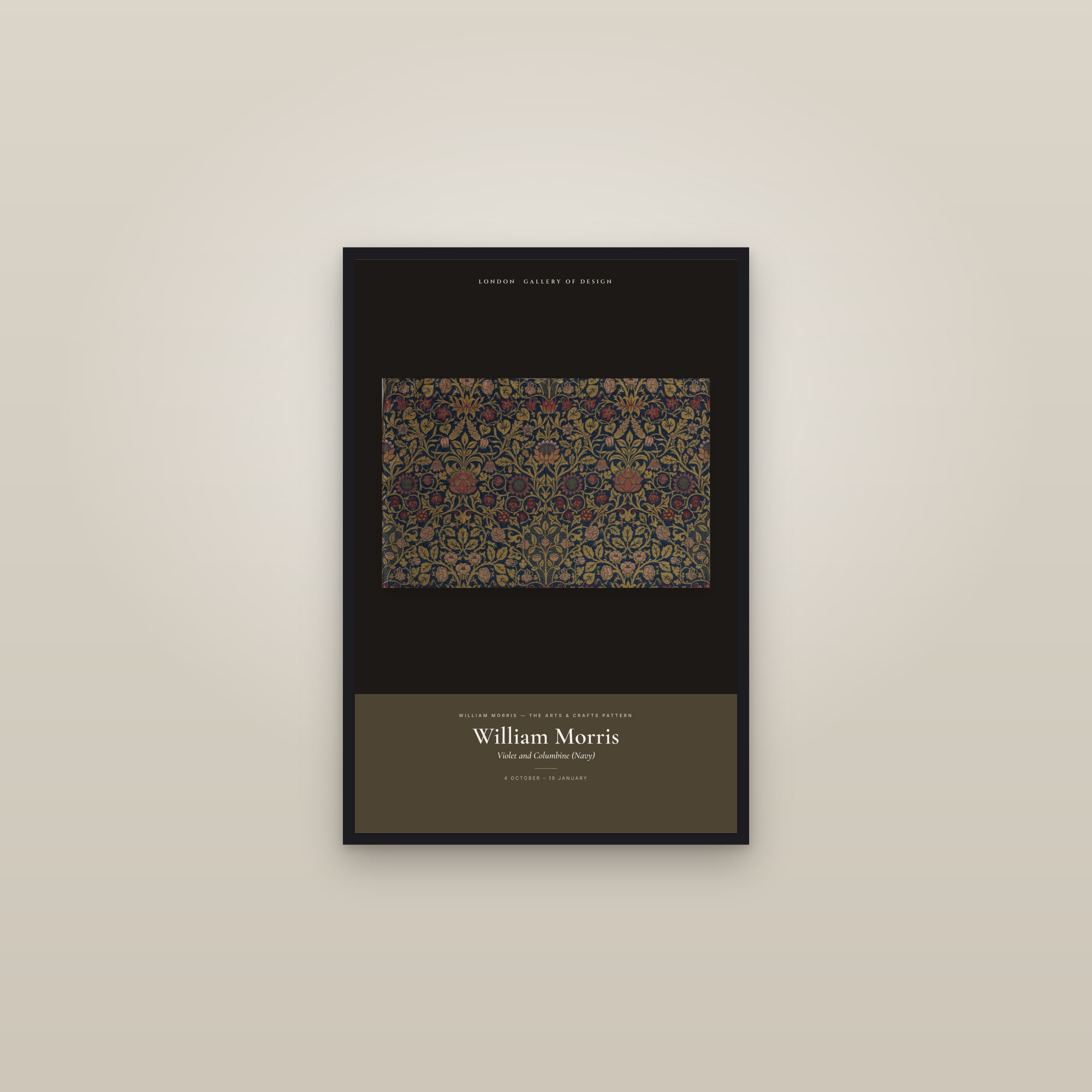
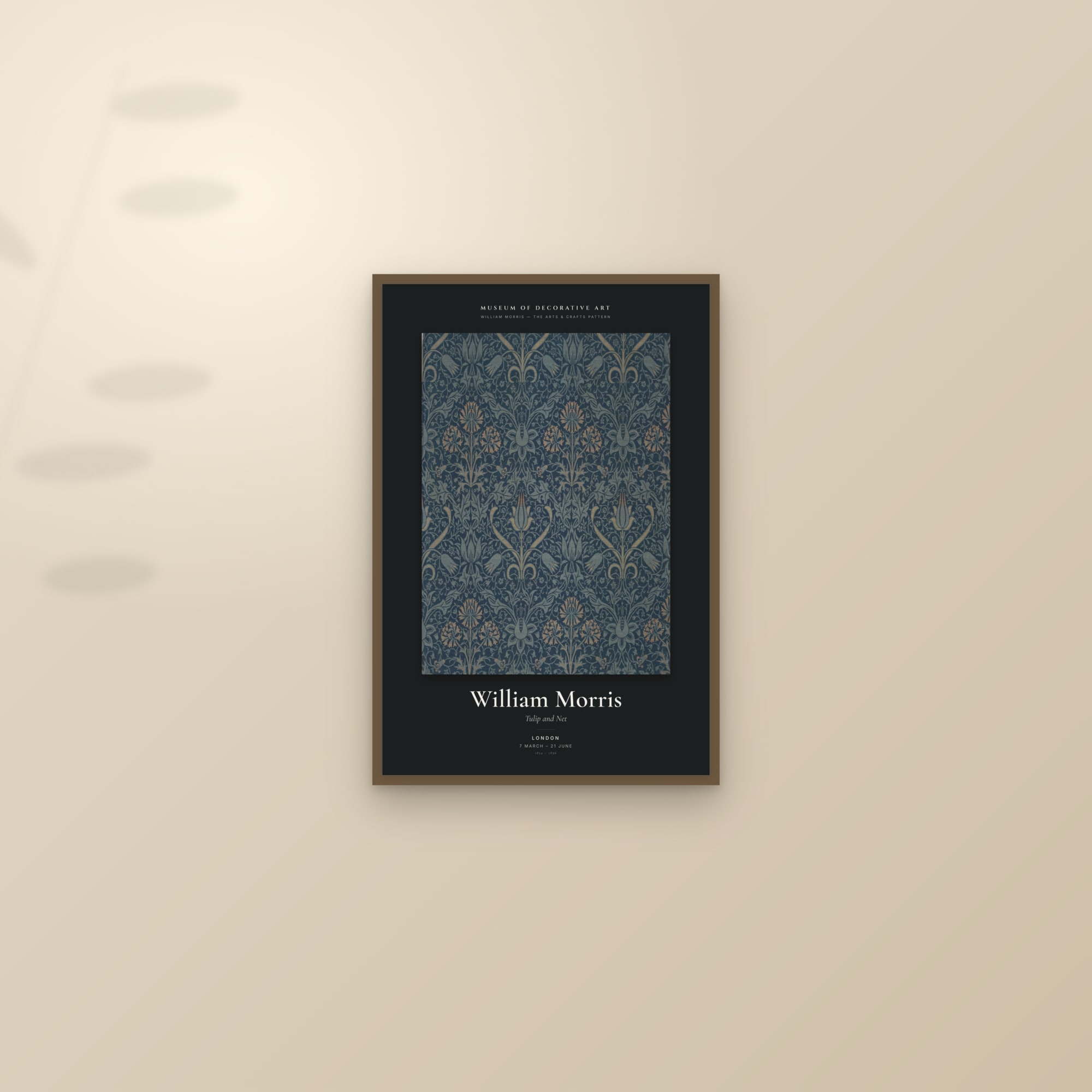
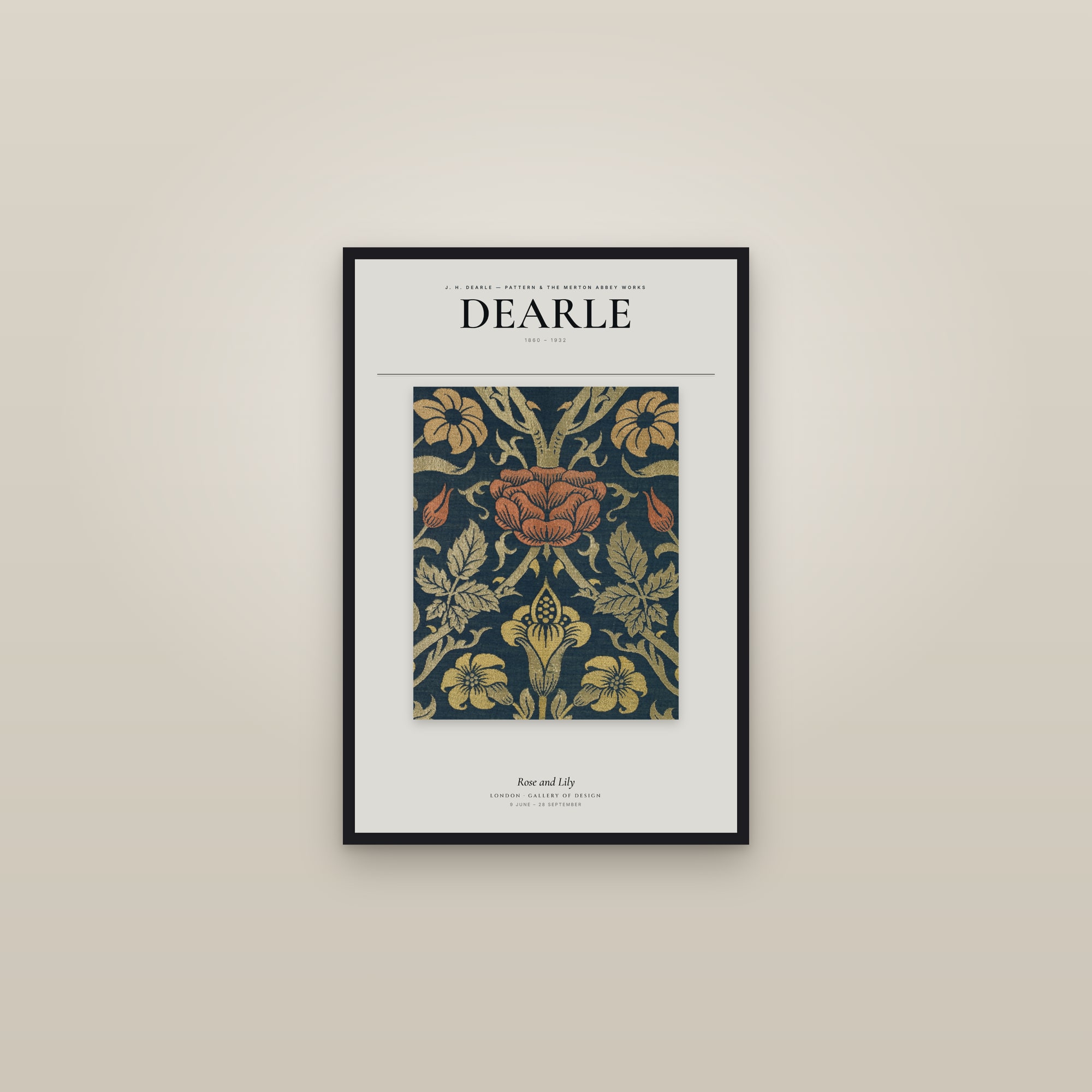
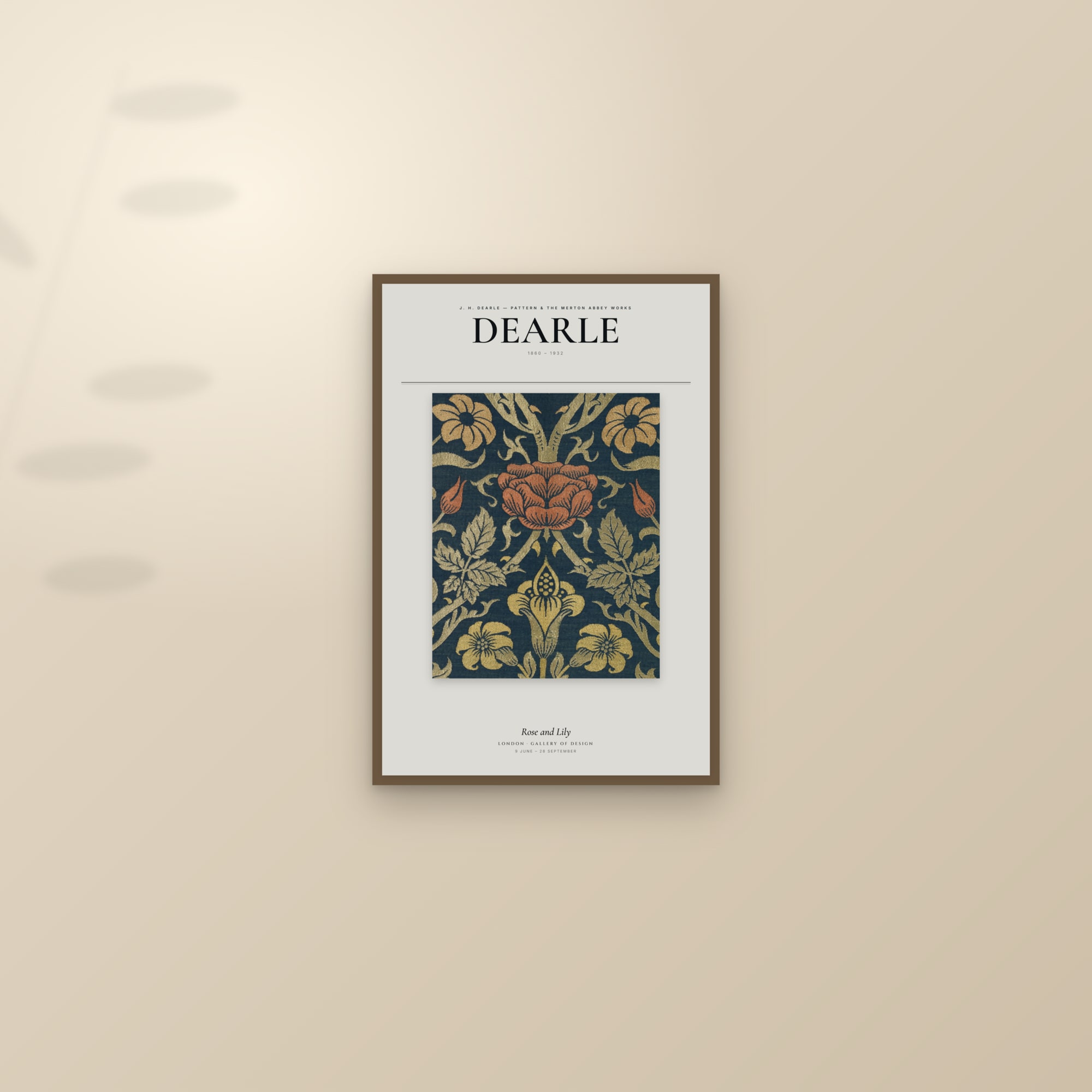
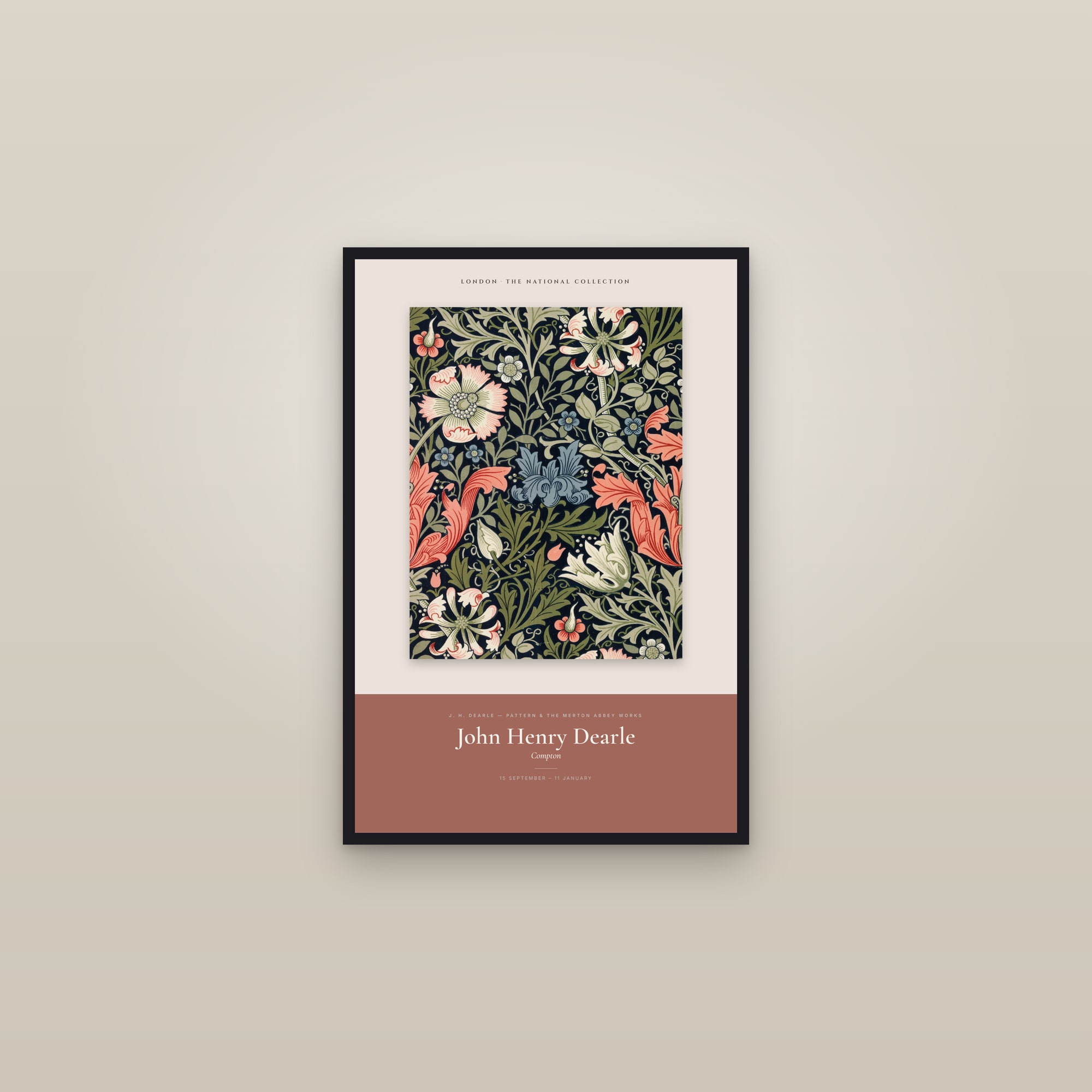
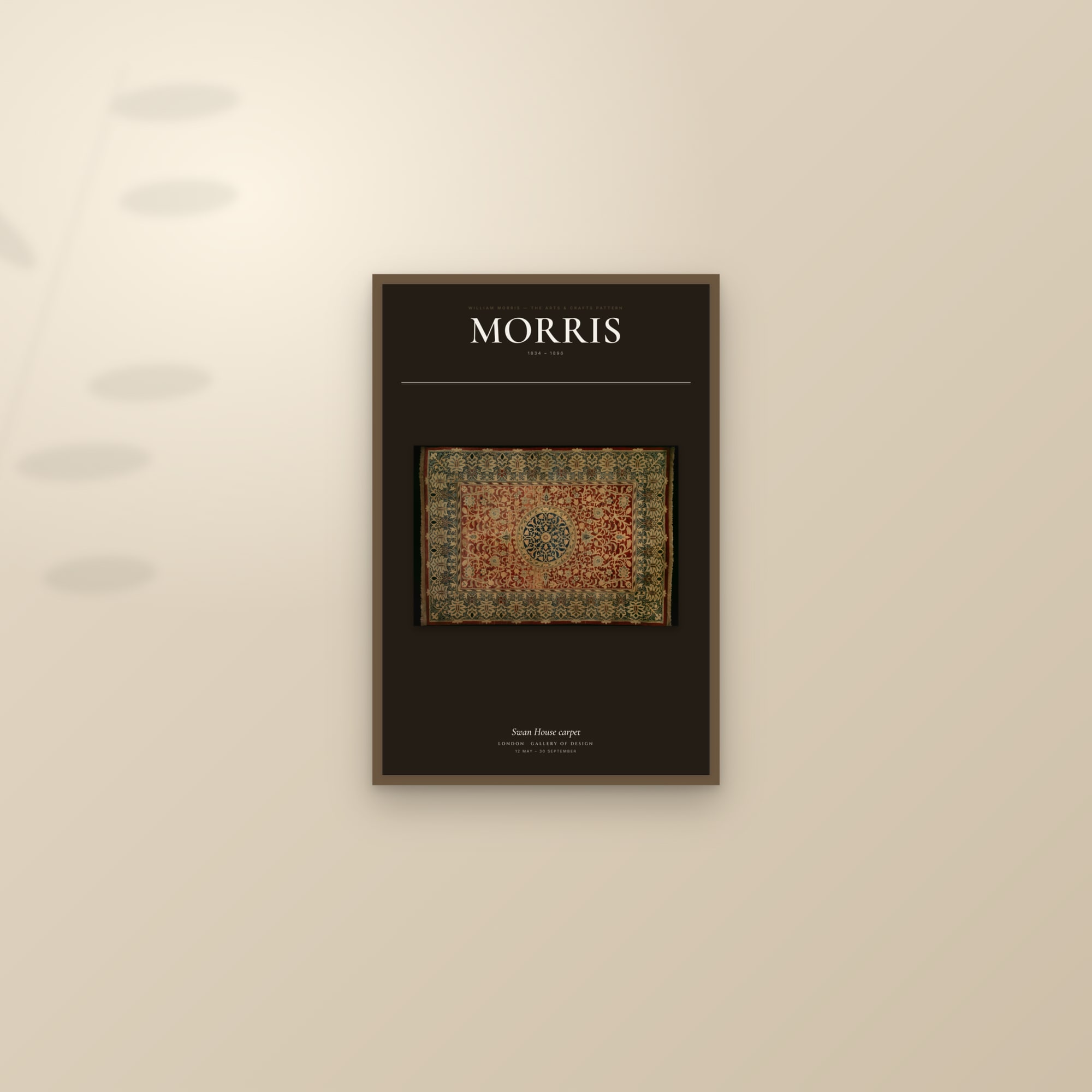
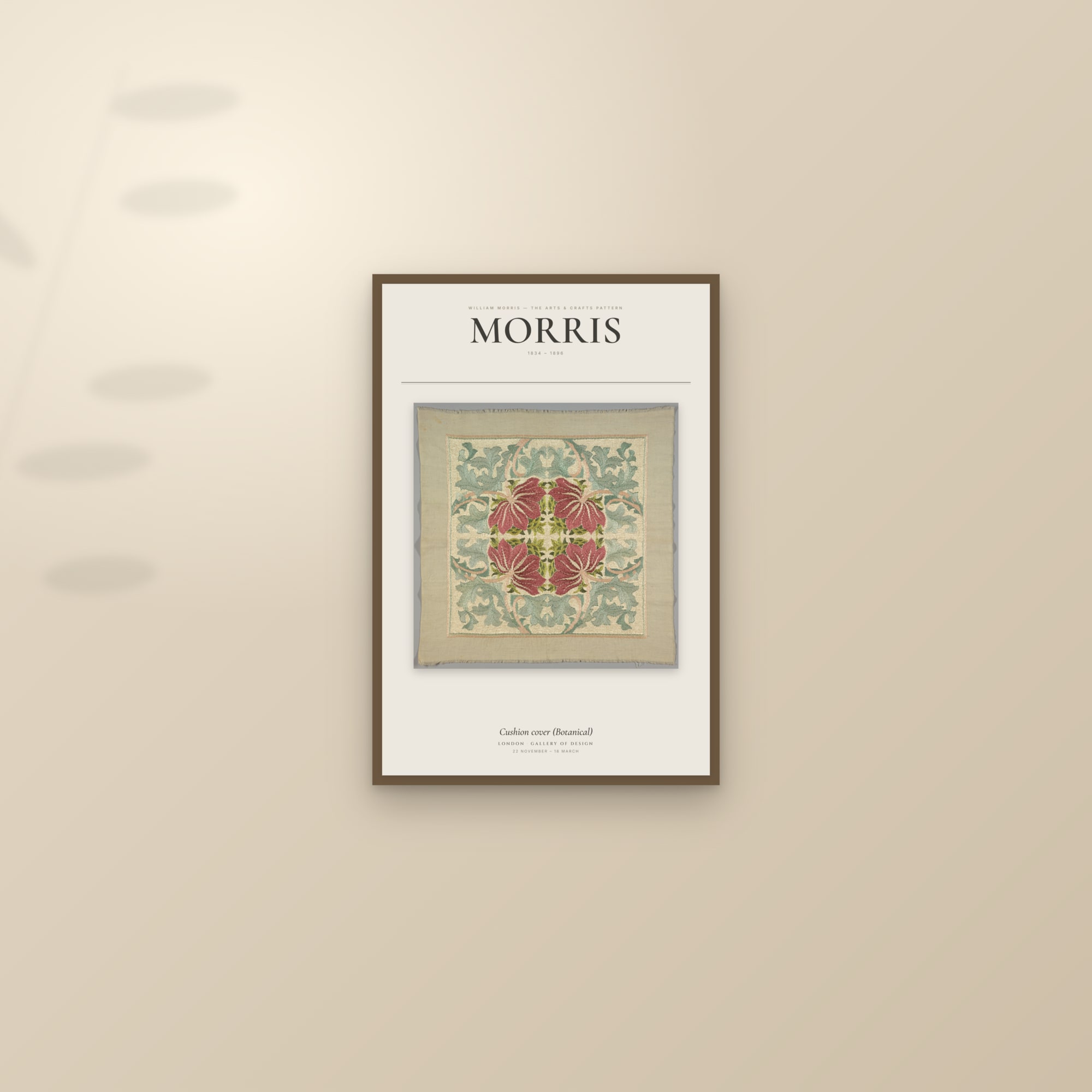
The full-bleed print fills the sheet with the pattern, like a panel of the original wallpaper — strongest in a set of two or three colourways side by side. The exhibition poster shows the whole sample under gallery typography and reads as a single statement piece. Every image comes from the open-access collections of the Metropolitan Museum of Art, the Cooper Hewitt, the Cleveland Museum of Art and the Art Institute of Chicago.