Anatomy of the Organs — Viscera Prints
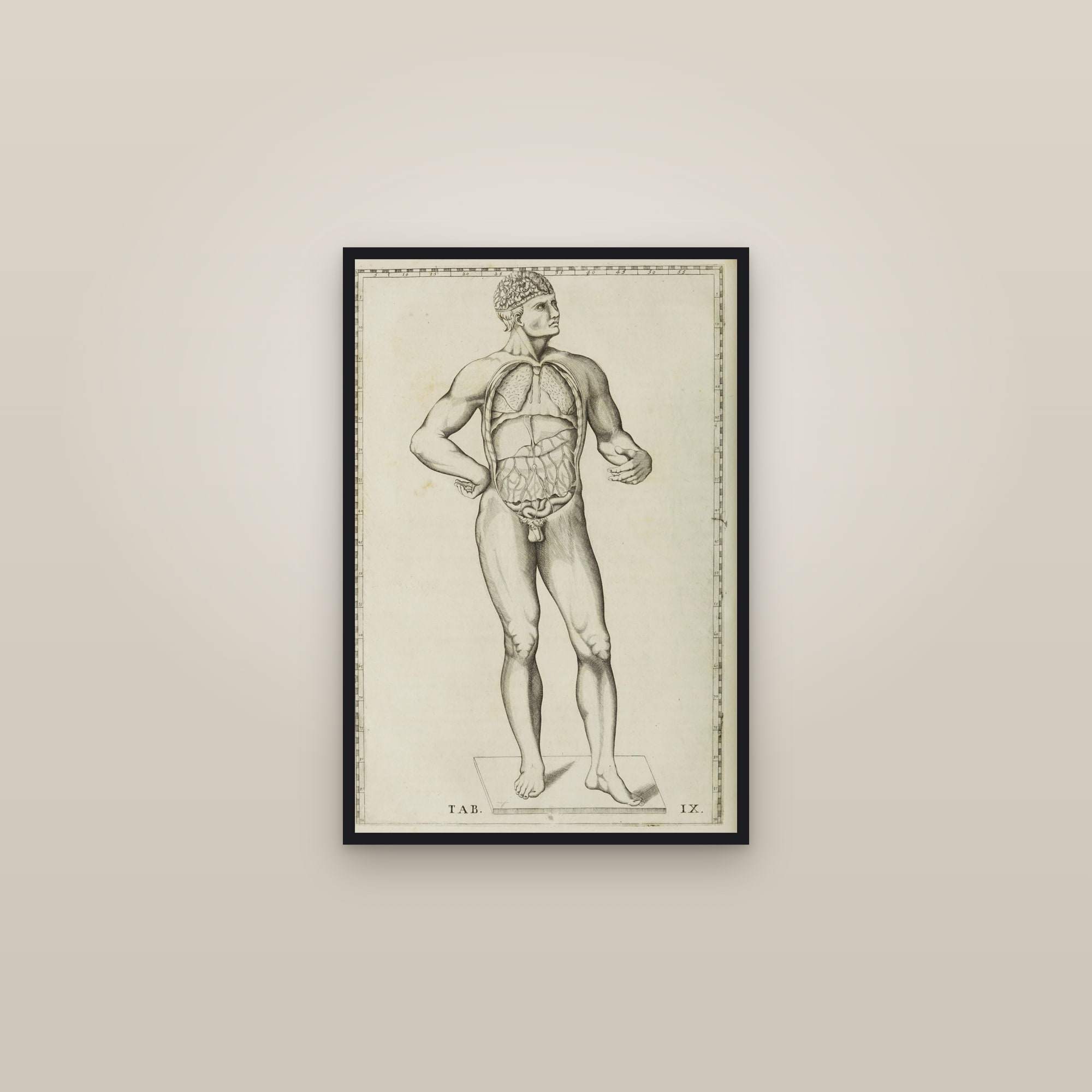
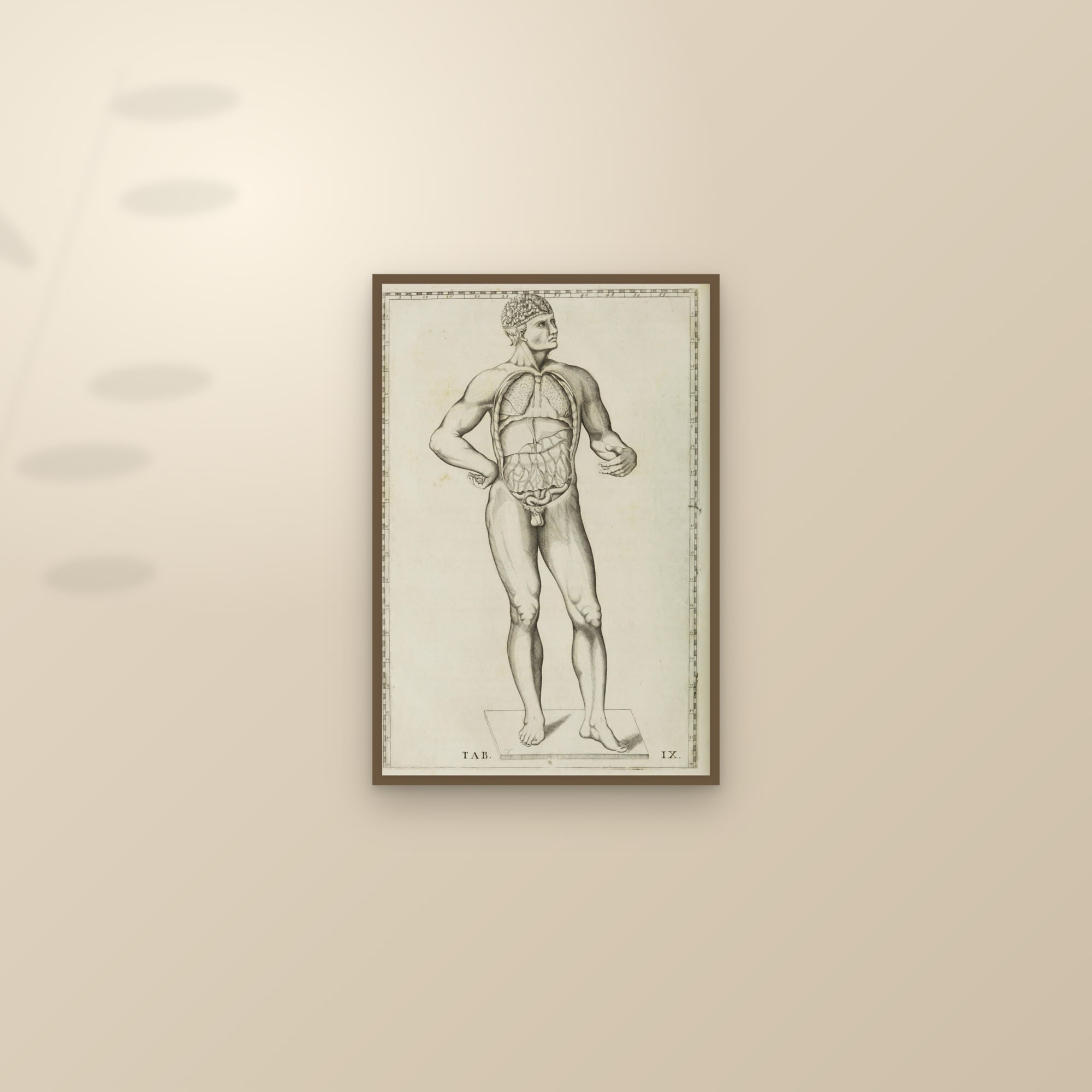
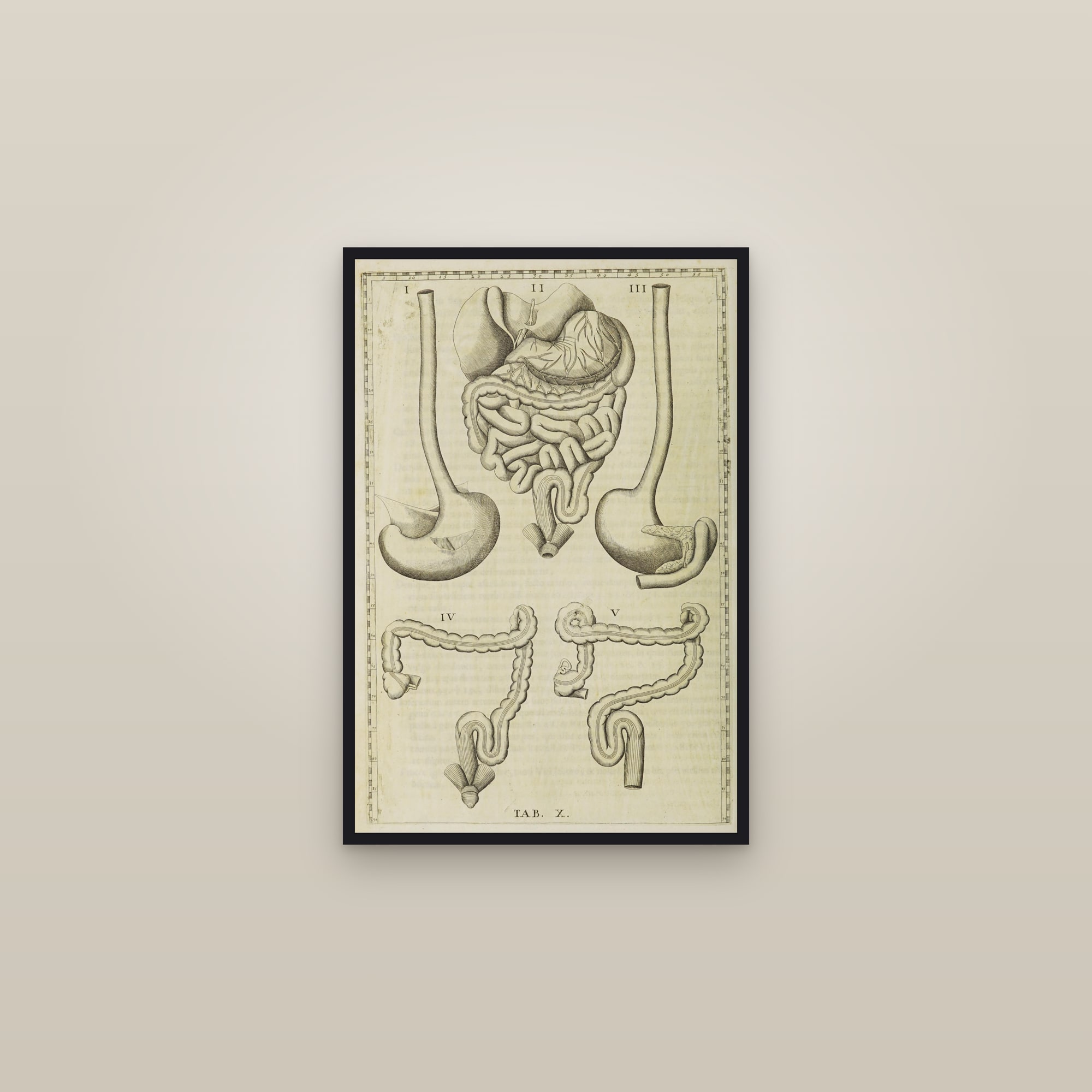
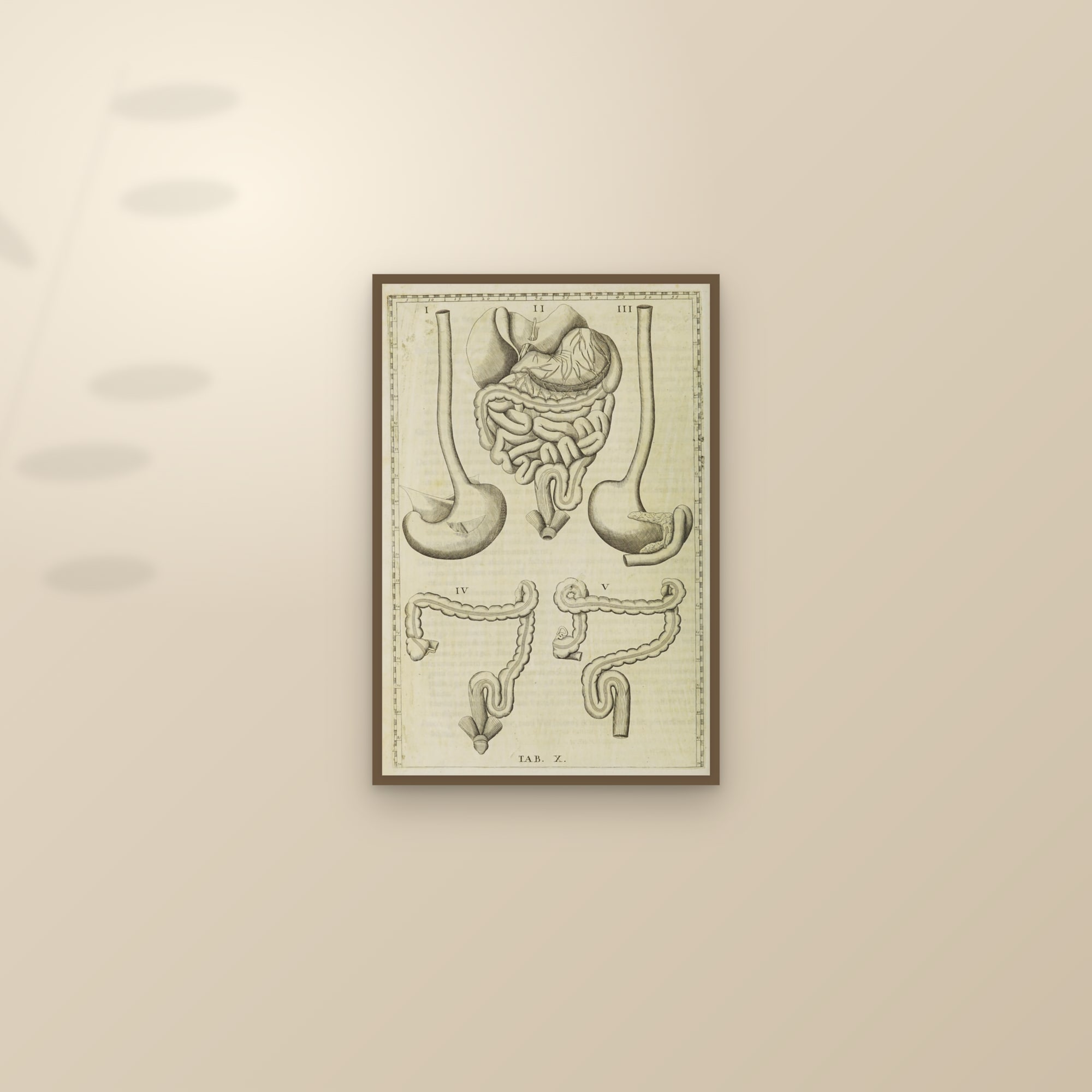
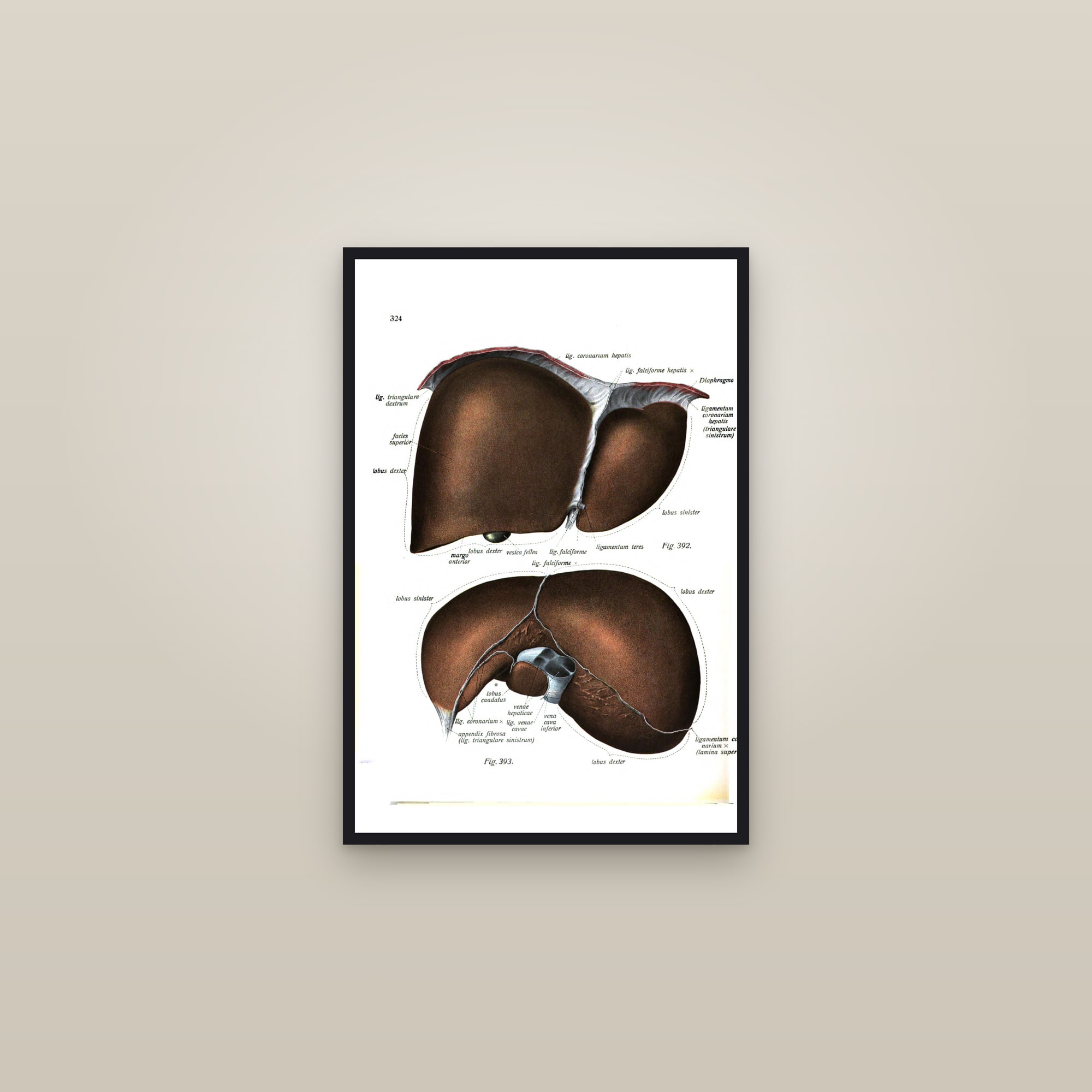
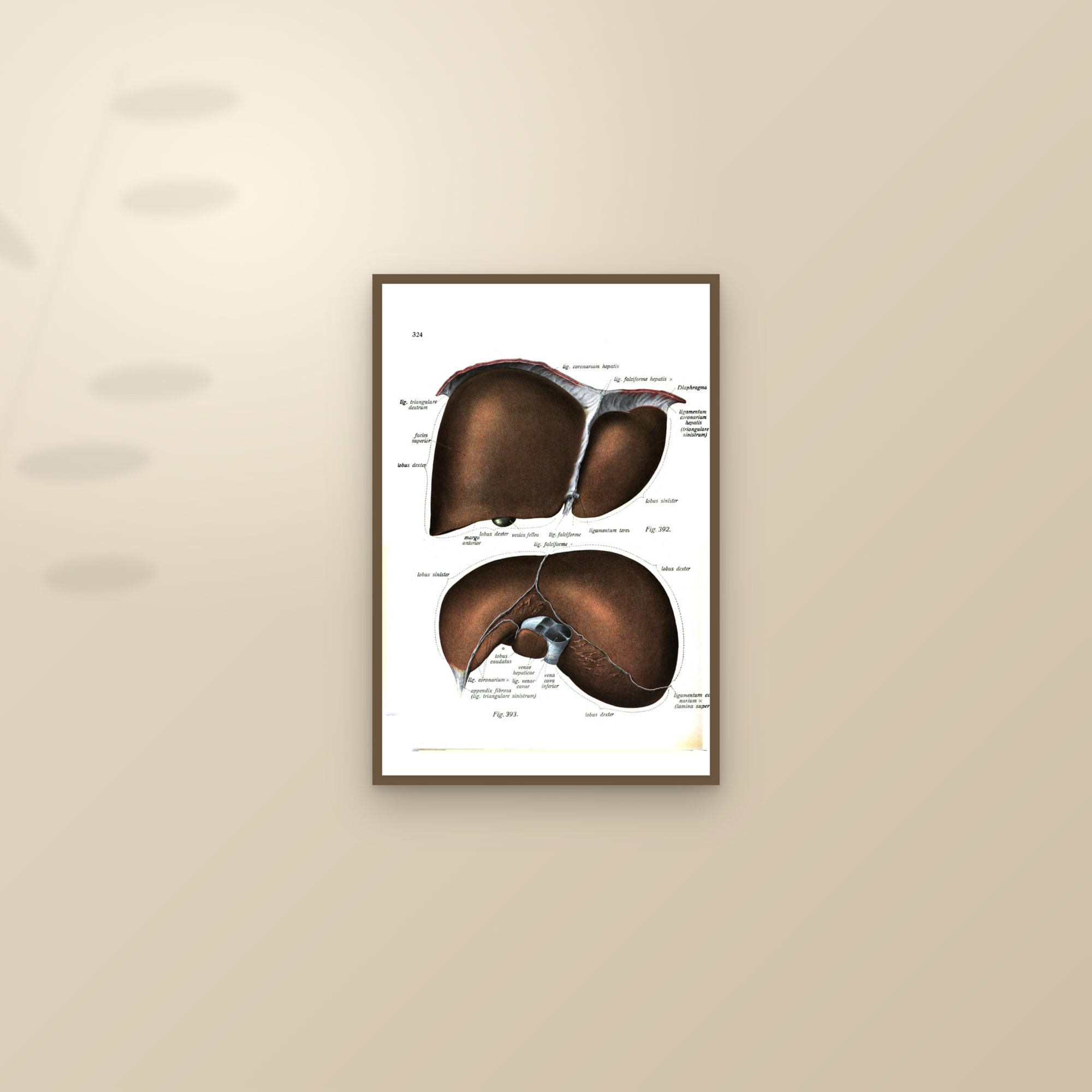
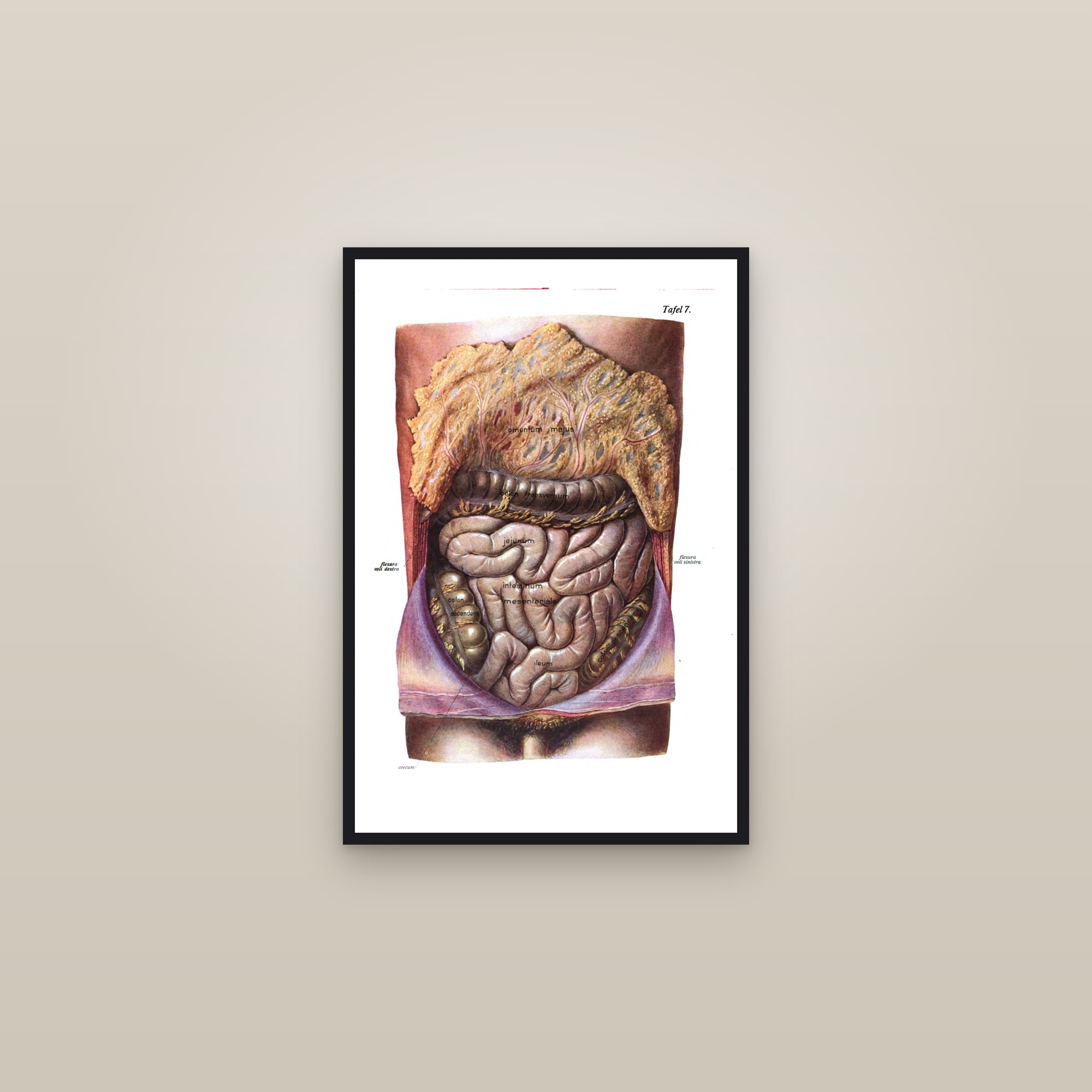
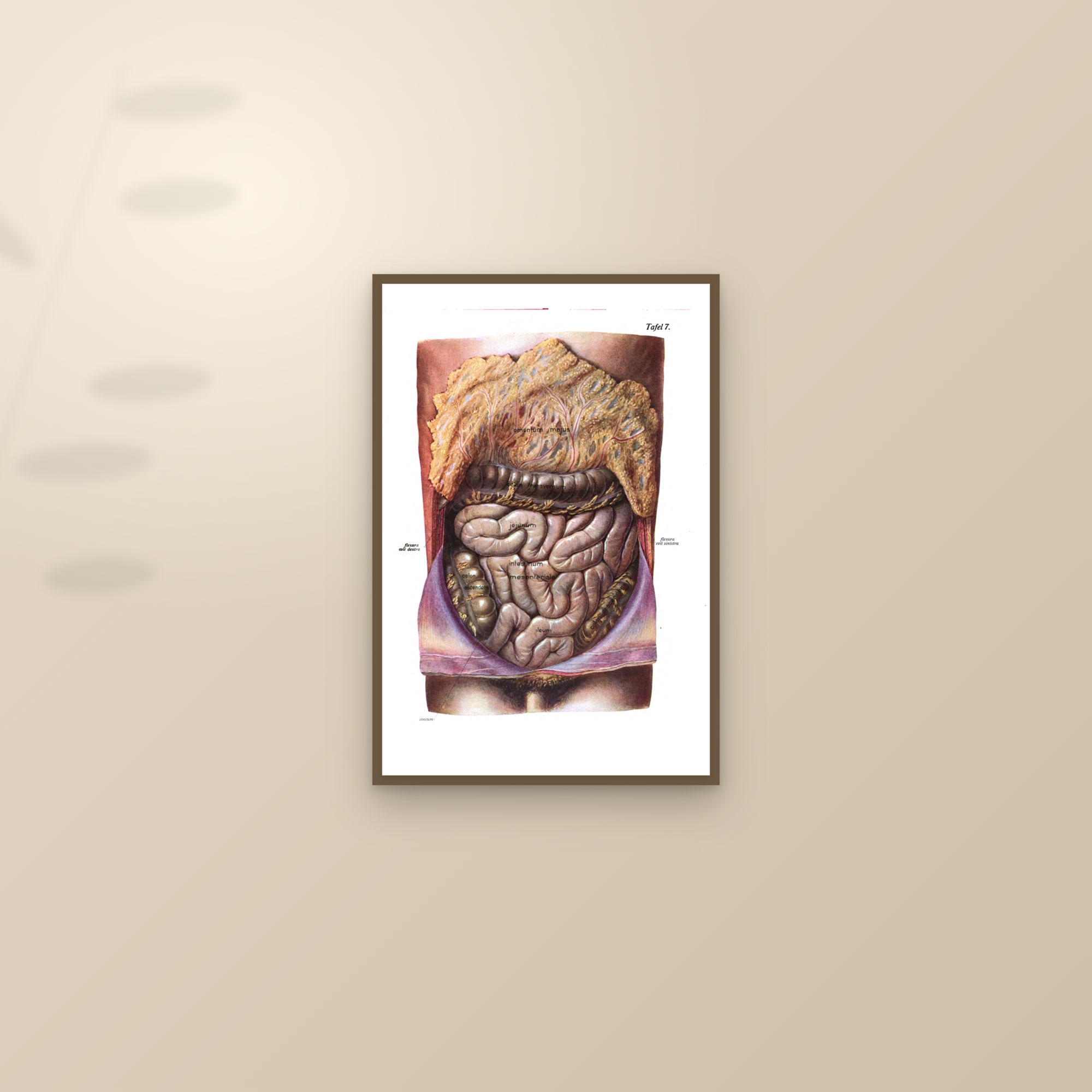
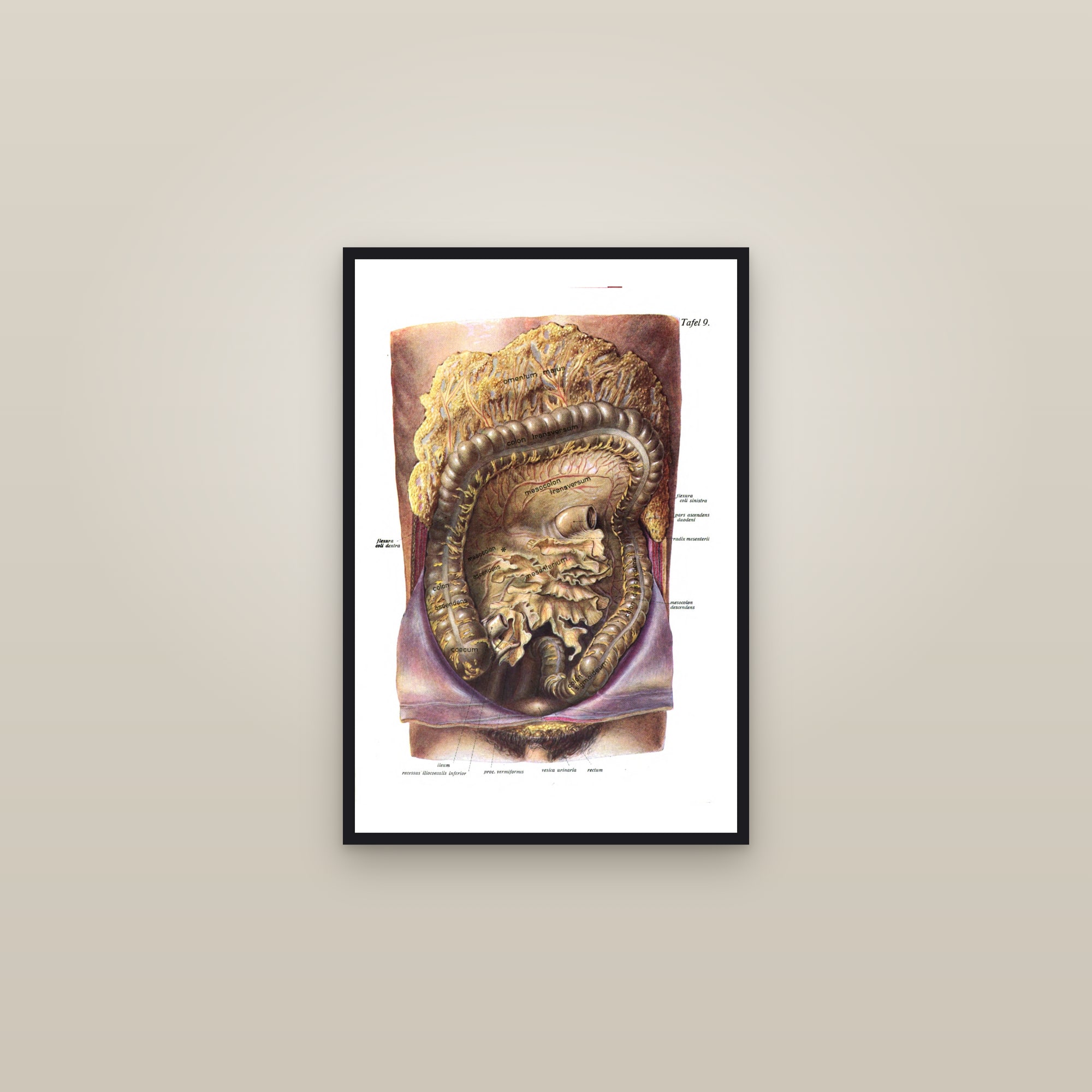
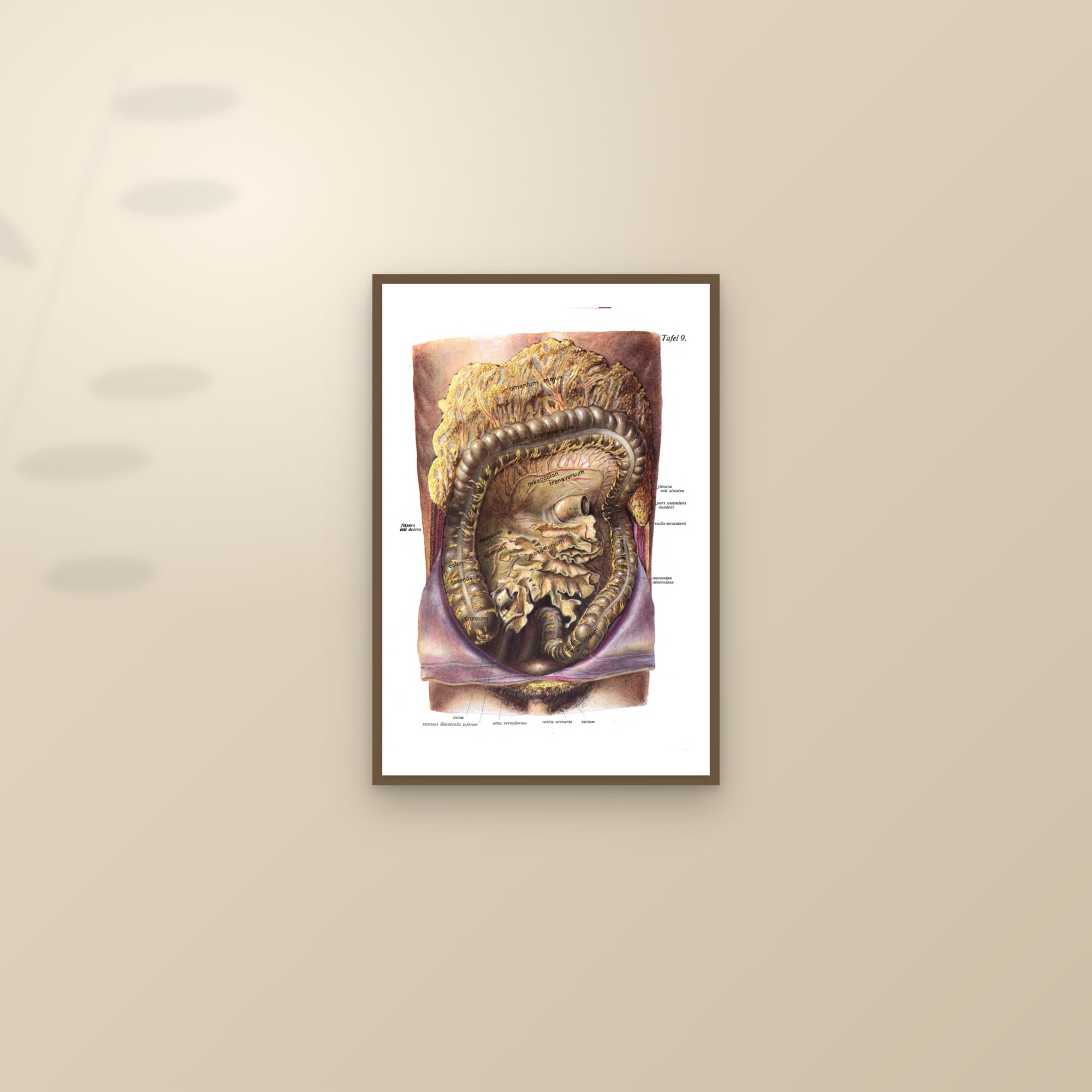
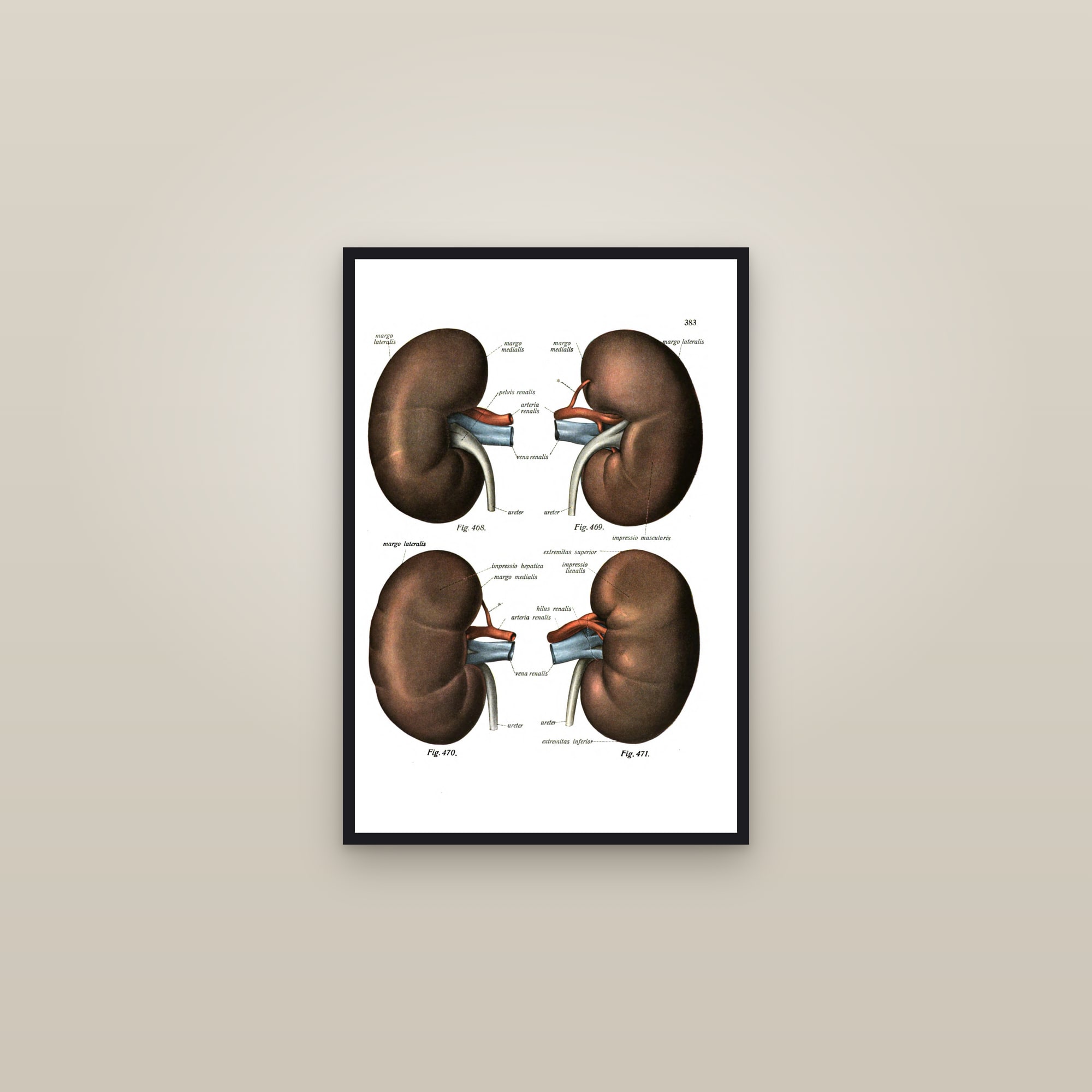
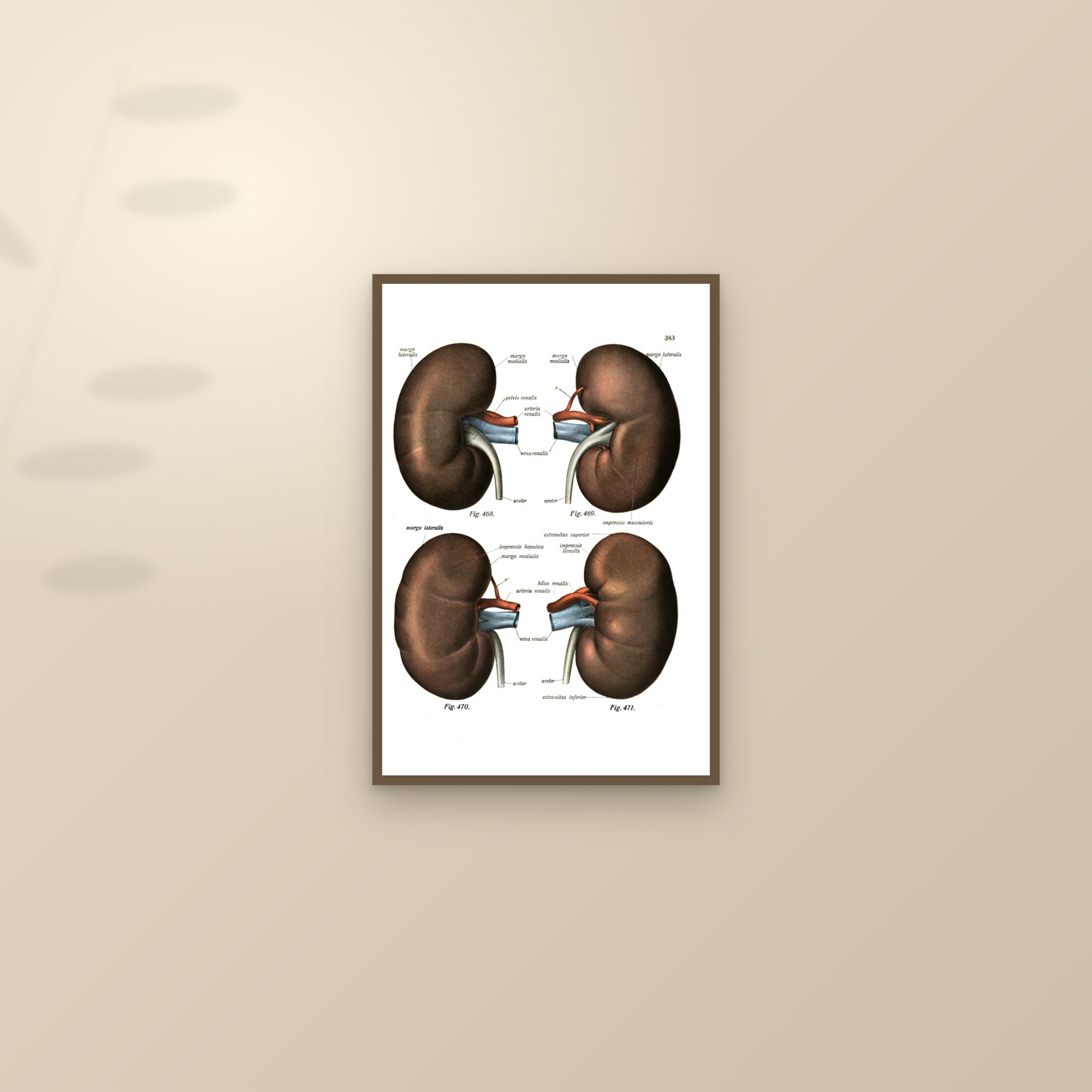
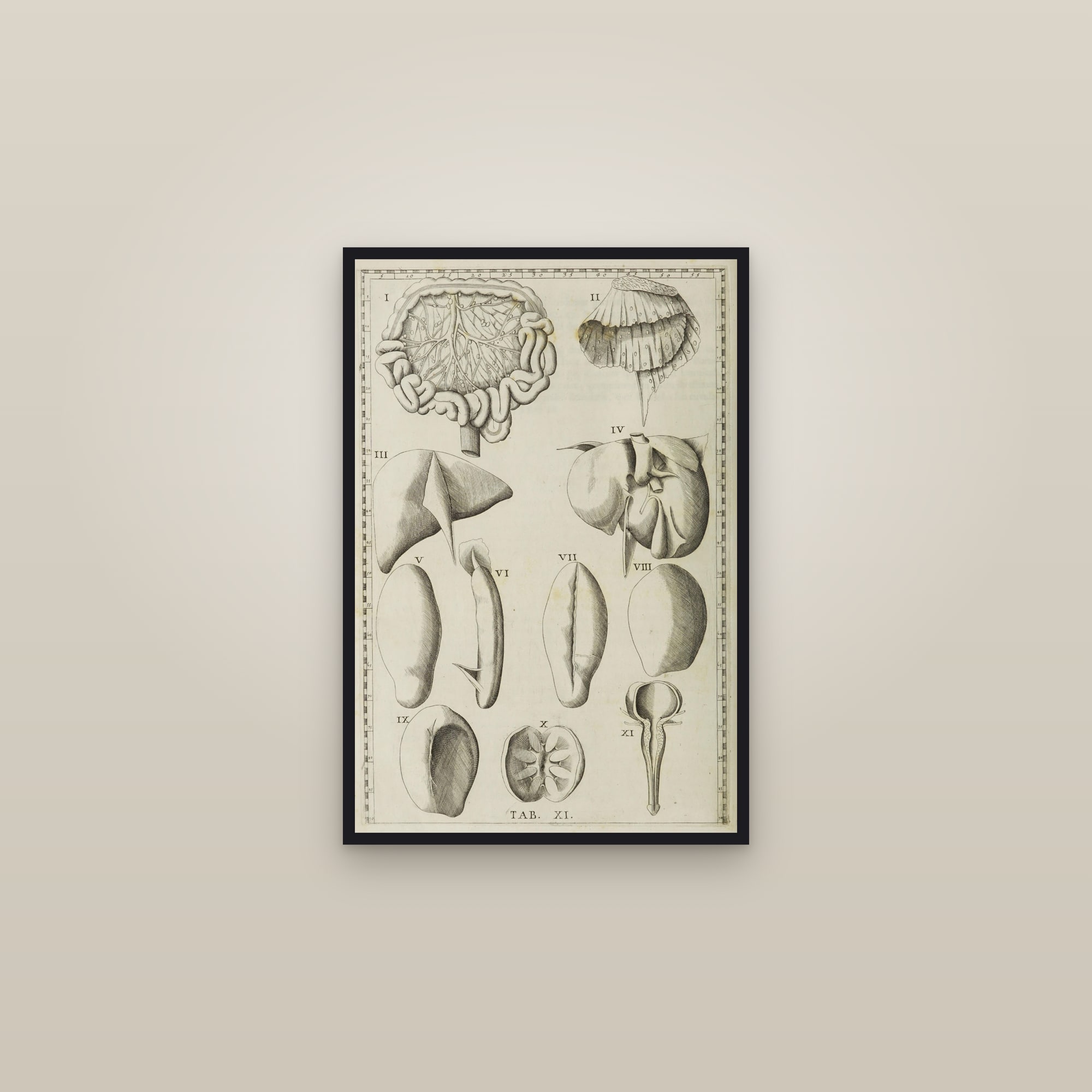
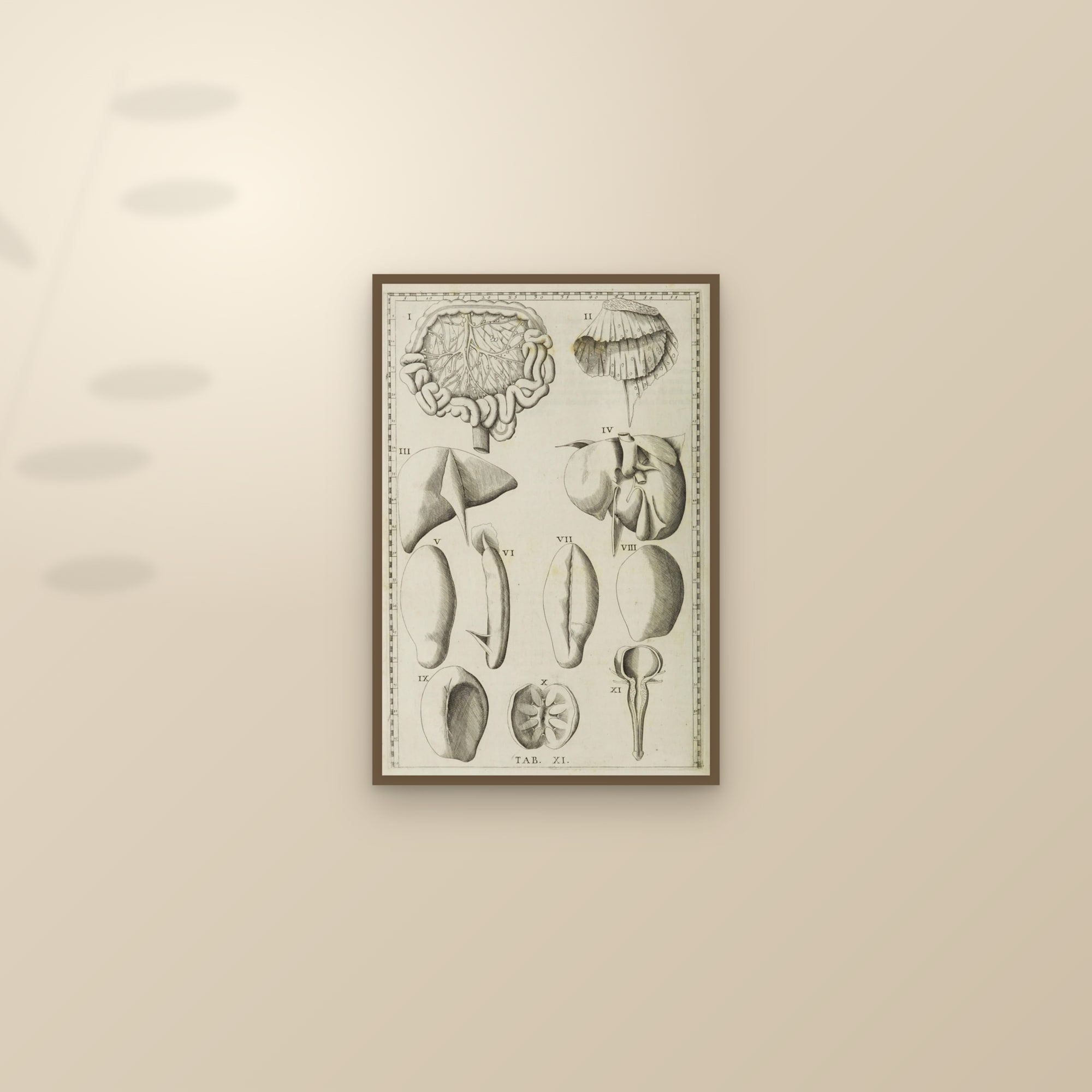
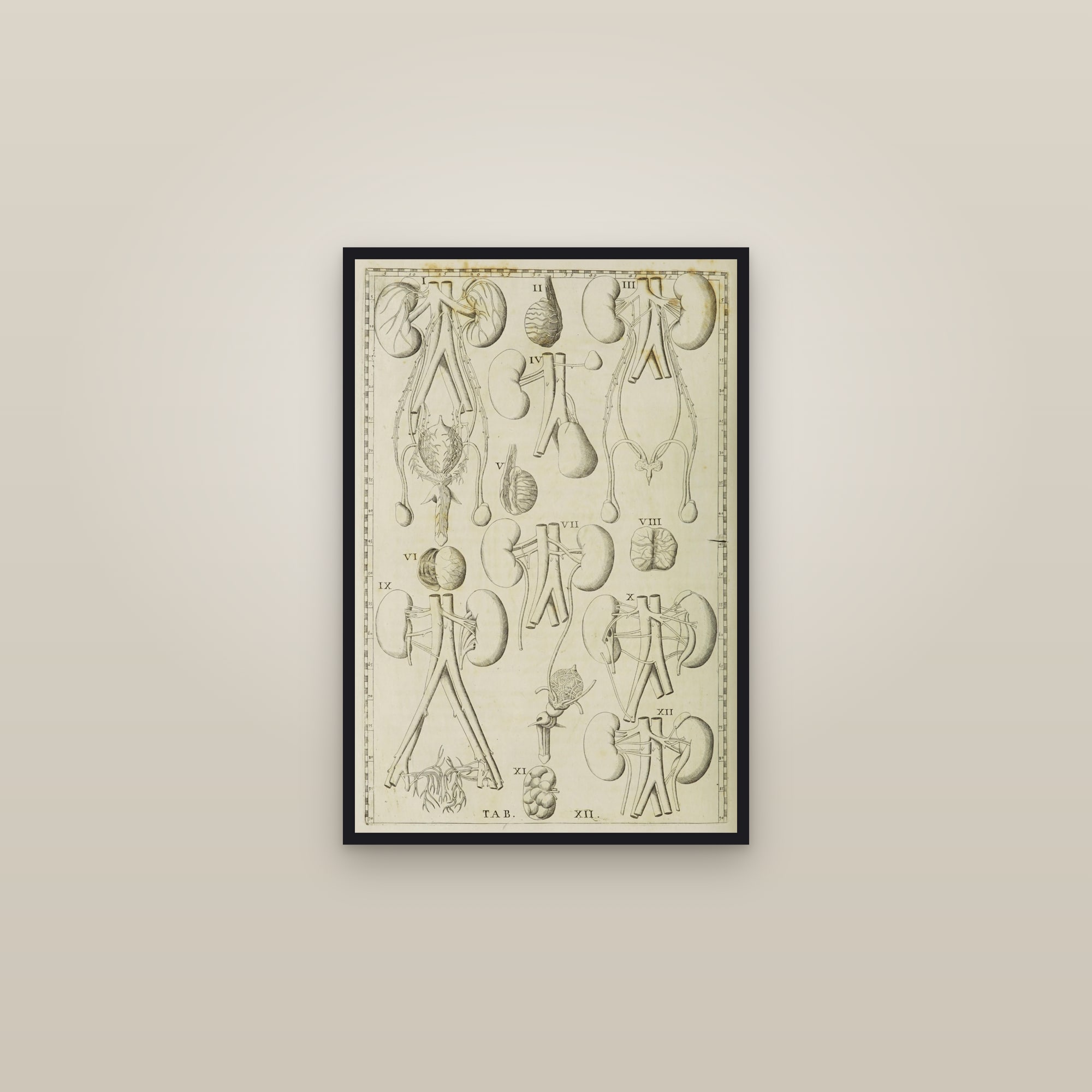
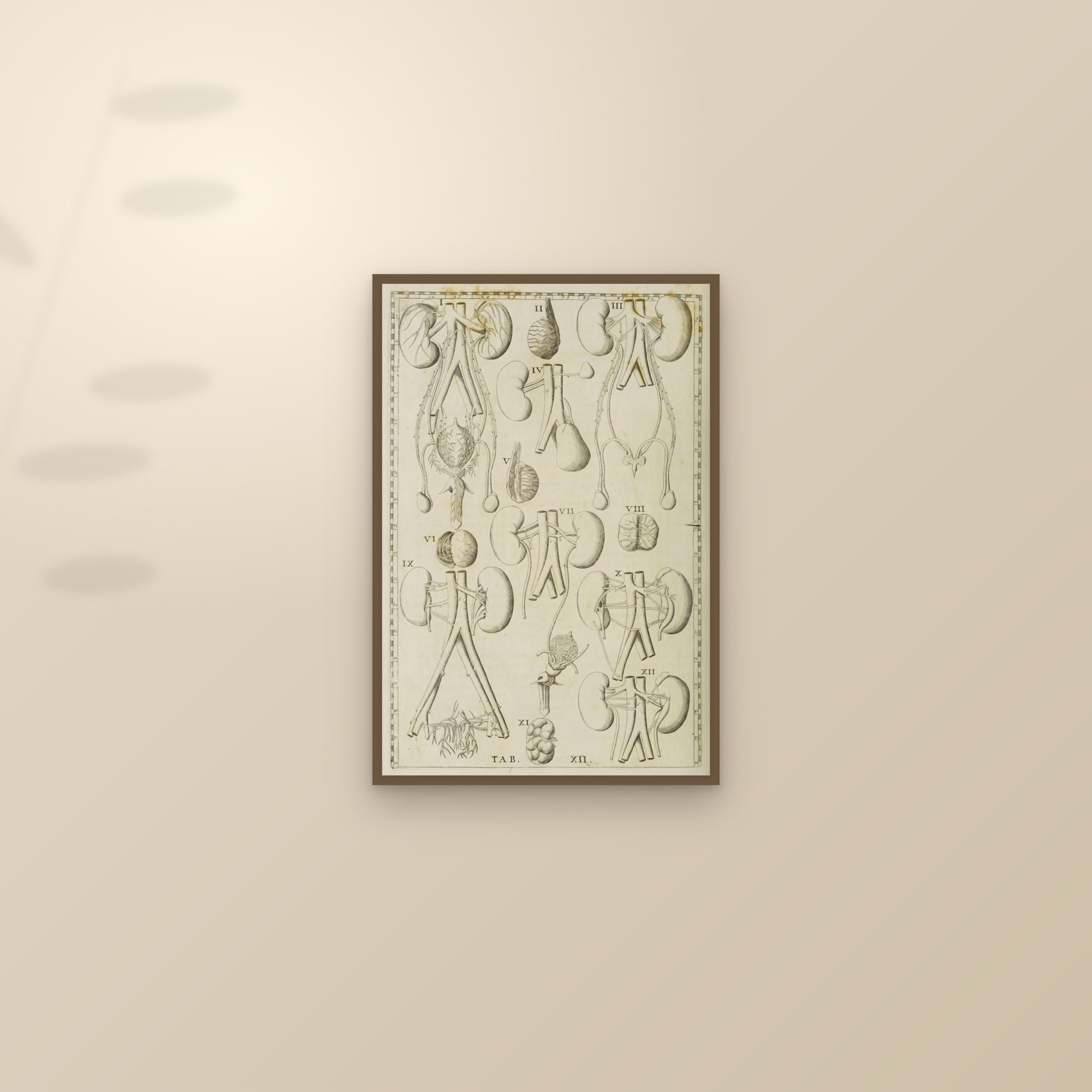
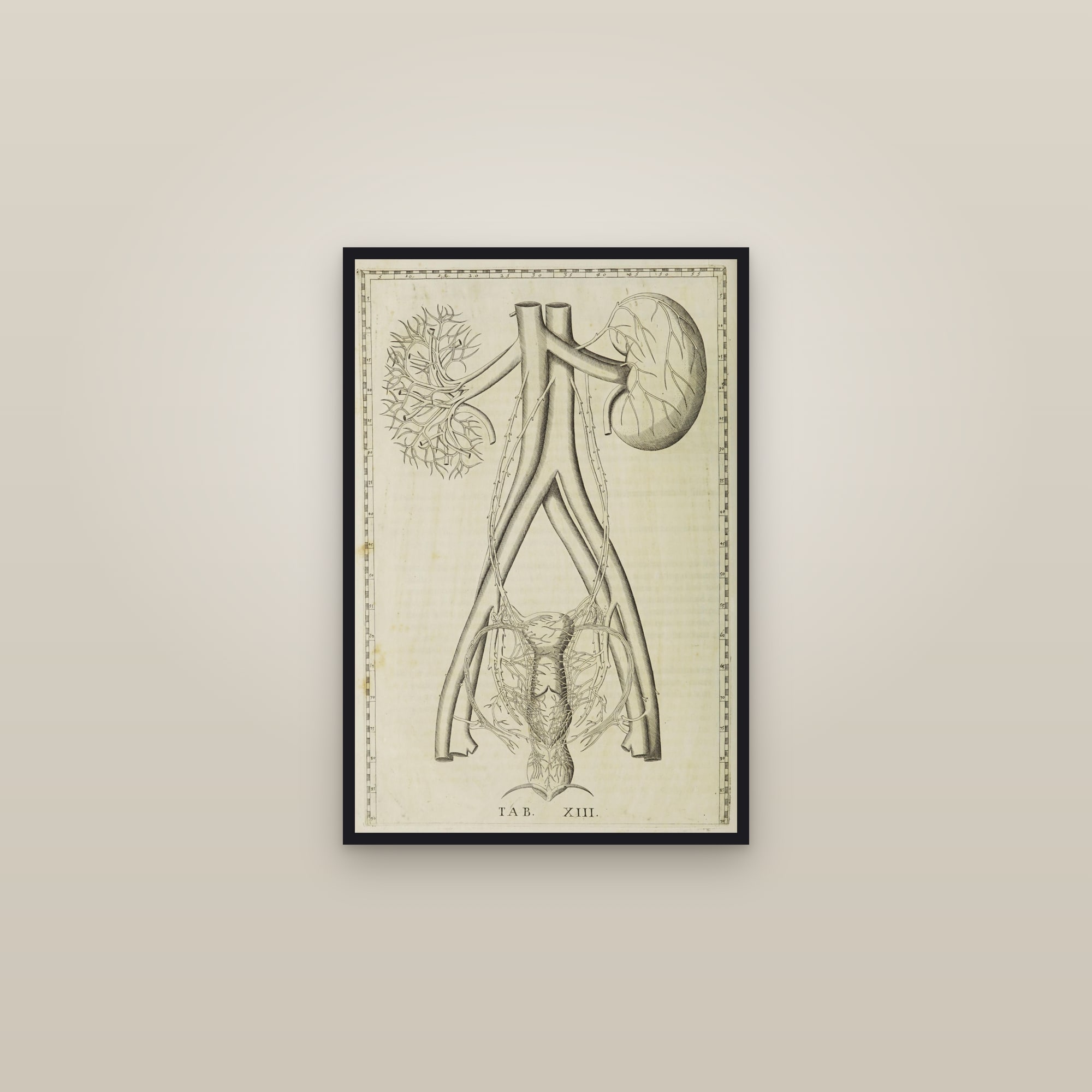
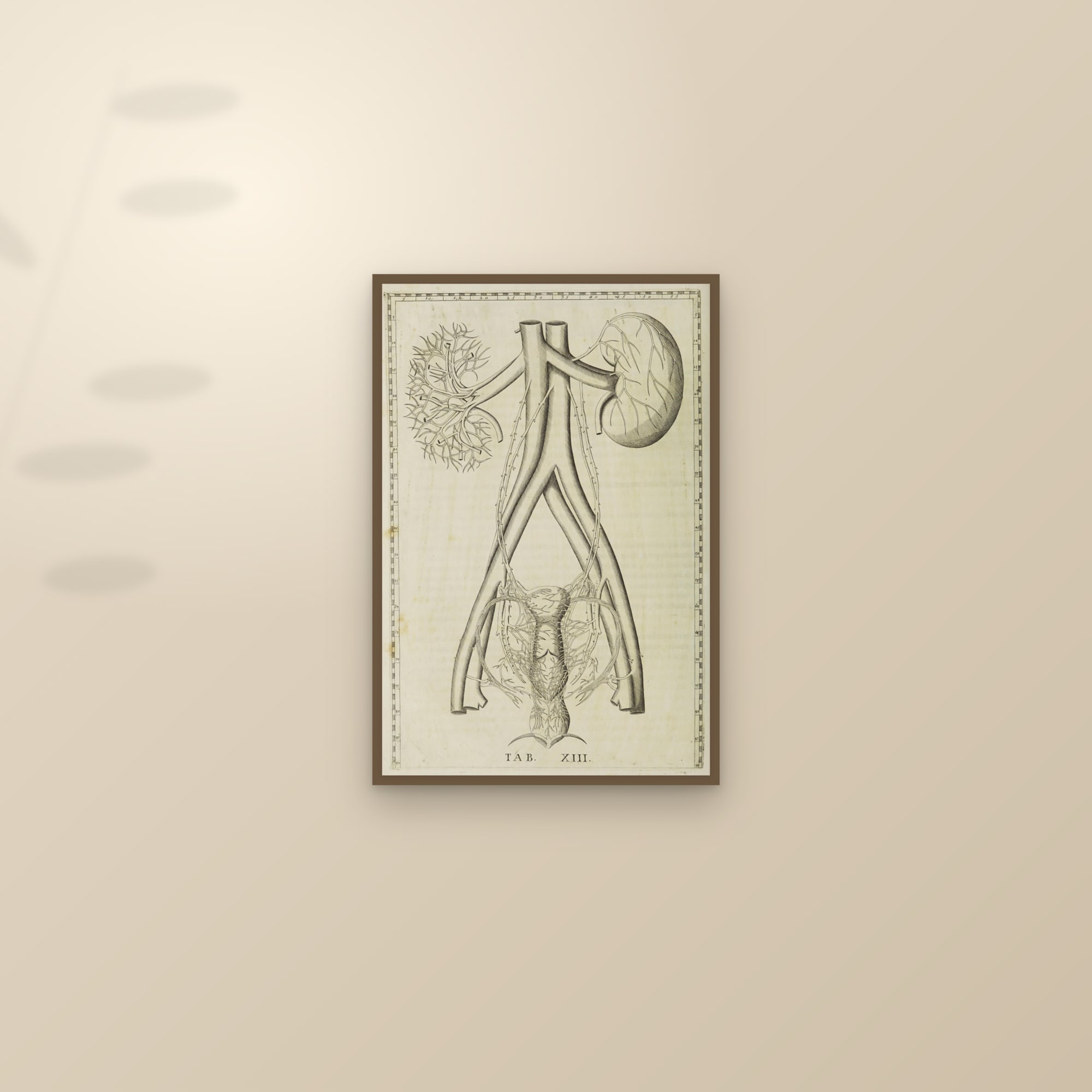
The organs of the body from two atlases two centuries apart: Johannes Sobotta's colour plates of 1920, the abdominal organs in place with the omentum and with the intestines, the organs of the chest and abdomen together, the liver in two views and the kidneys front and back; and Bartolomeo Eustachi's engravings of 1714, the stomach and intestines, the liver, spleen and stomach, the kidneys with their vessels, the kidneys with the aorta and vena cava, the larynx, tongue and throat, the blood vessels of the viscera in fifteen dissections, and the figure of a man with the viscera in place.
9 prints · printed to order on heavyweight matte paper · framed or unframed
Sobotta's organs in colour
Five plates from the second volume of the Atlas der deskriptiven Anatomie des Menschen, 1920, show the organs as a surgeon meets them: the abdominal organs in place beneath the omentum, then with the omentum lifted to show the intestines, the organs of the chest and abdomen together in one opened figure, the liver in two views and the kidneys from the front and the back. The chromolithography gives the liver its red-brown, the omentum its yellow, the kidneys their colour, and the plates hang as still lifes of the body rather than diagrams.
Eustachi's viscera
Eight plates from the Tabulae anatomicae of 1714 take the same organs in copper engraving: the stomach and intestines, the liver, spleen and stomach, the kidneys and bladder with their vessels, the kidneys with the aorta and vena cava, the larynx, tongue and throat, the larynx and hyoid in fourteen dissections, the blood vessels of the viscera in fifteen, and the standing figure of a man with the viscera in place, the plate that opens the sequence. Each sits inside Eustachi's numbered border, which is why the plates read cleanly without a label on the body.
Who hangs the organs
Gastroenterologists, hepatologists, urologists, nephrologists and general surgeons, in the consulting room and the office; ENT surgeons take the larynx plates. At home these are study and library pieces. Sobotta plates print up to 24×36, the Eustachi engravings up to 16×24. Each is offered full-bleed or as a captioned specimen on cream, unframed or framed in black or dark wood with no mat; the liver and the kidneys make a quiet pair at 16×24, and three or more prints take 10% off automatically.