Écorché Prints — Muscle Men, Vein Men & the Anatomical Figure
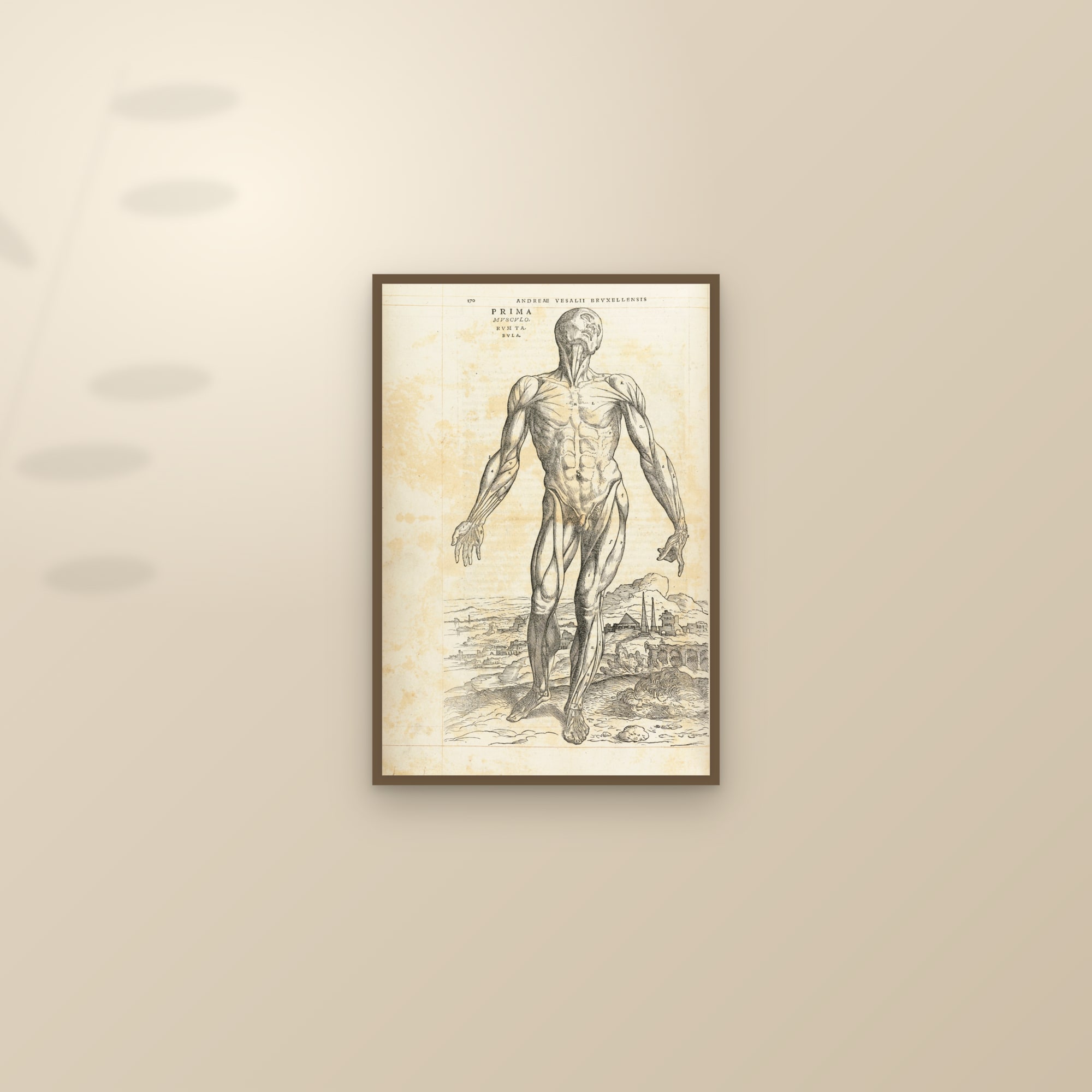
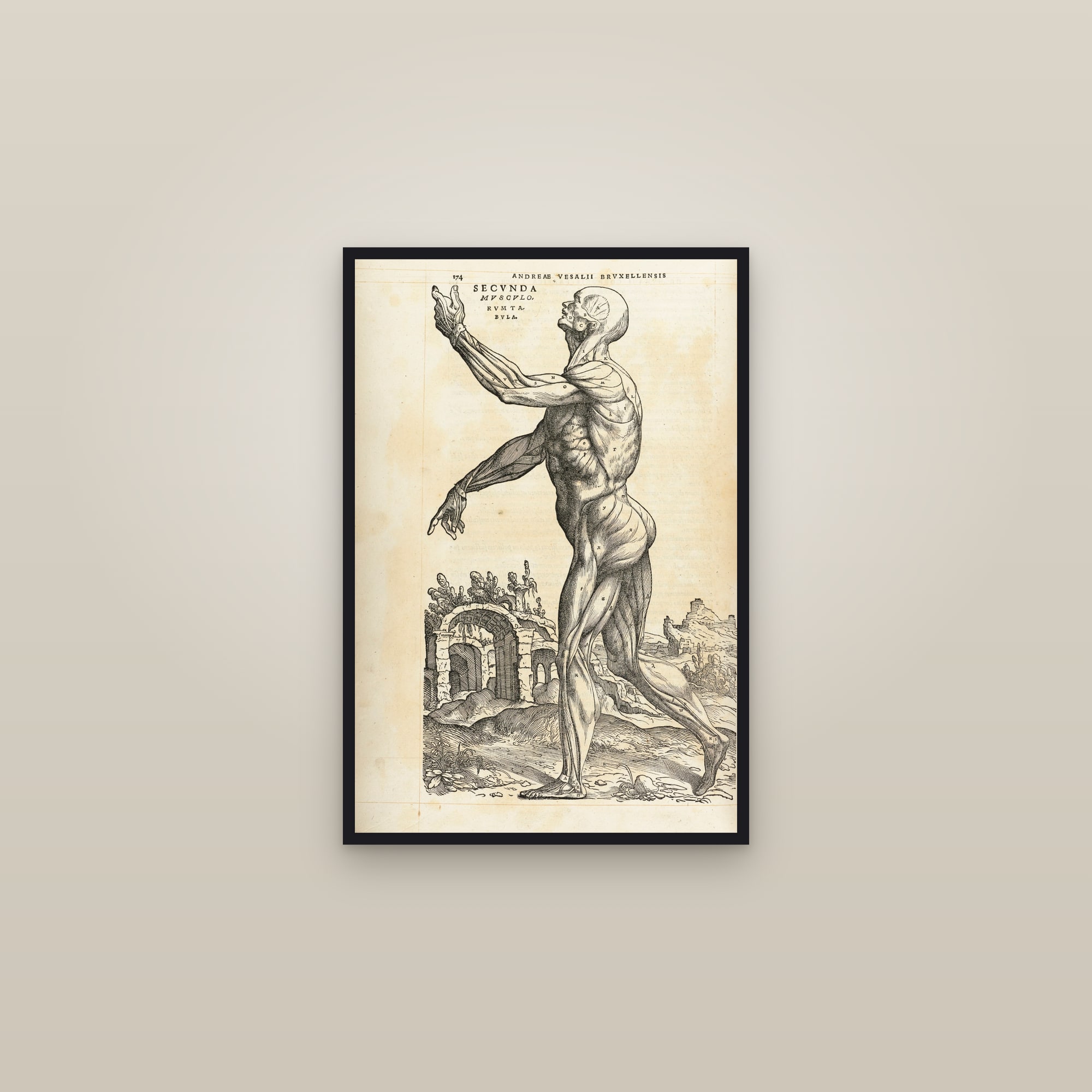
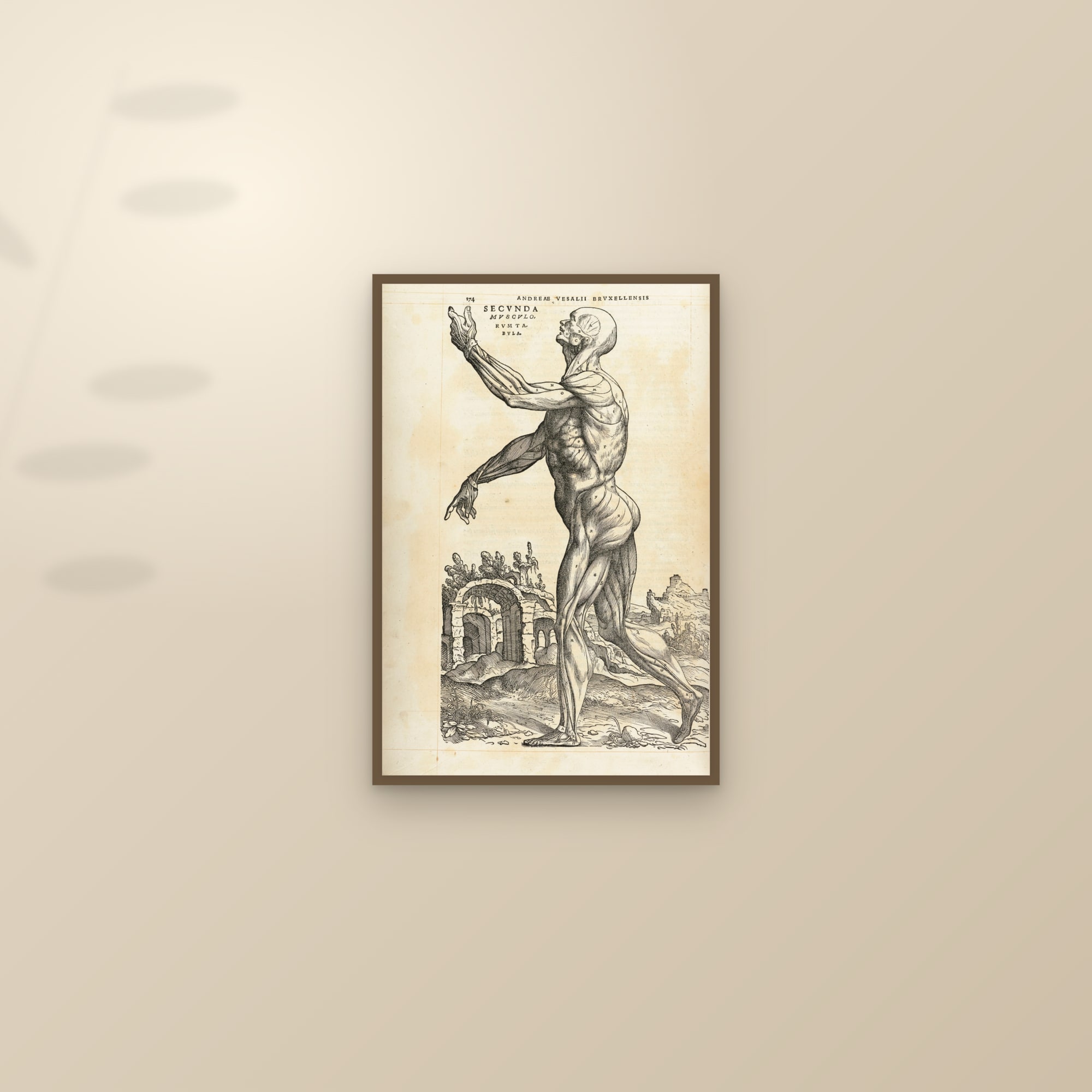
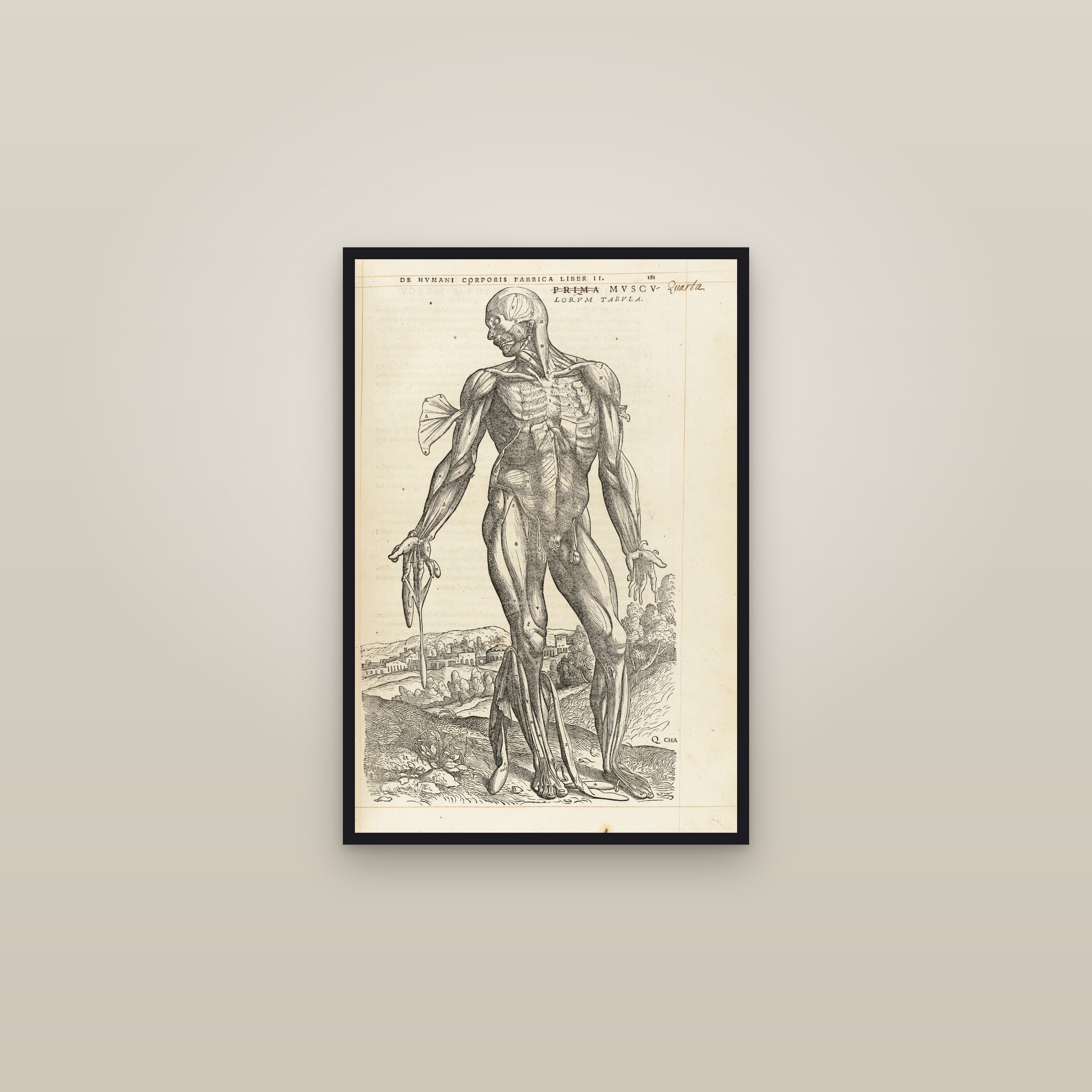
The anatomical figure as a work of art: the flayed muscle men of Vesalius (1543), Albinus (1747) and Eustachi (1714), the vein men and artery men that map the circulation on a standing body, the nerve man, the Fabrica title page with its crowded anatomy theatre, and Sobotta's blood vessels of the whole body in colour. Drawn for anatomists, hung for three centuries by artists.
38 prints · printed to order on heavyweight matte paper · framed or unframed
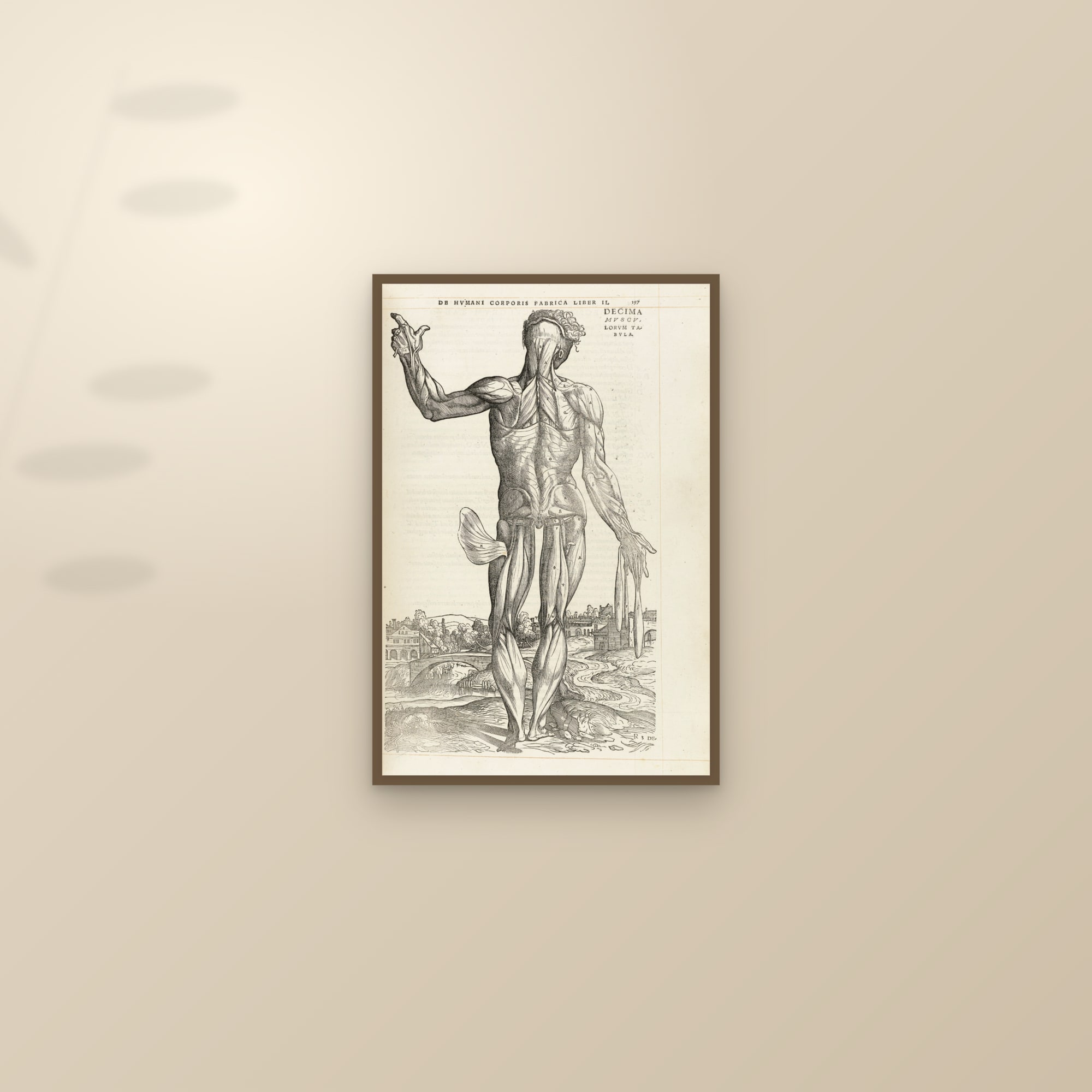
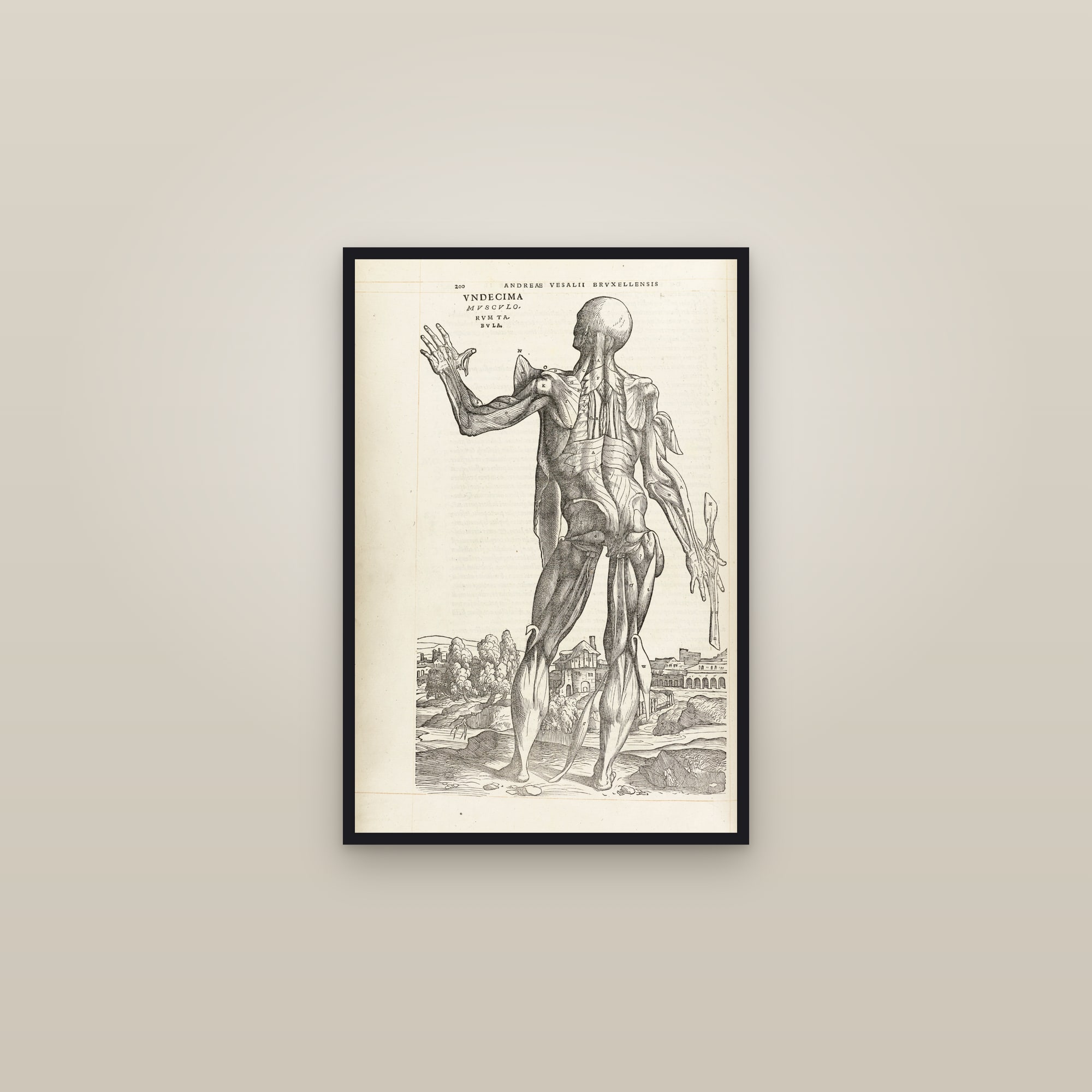
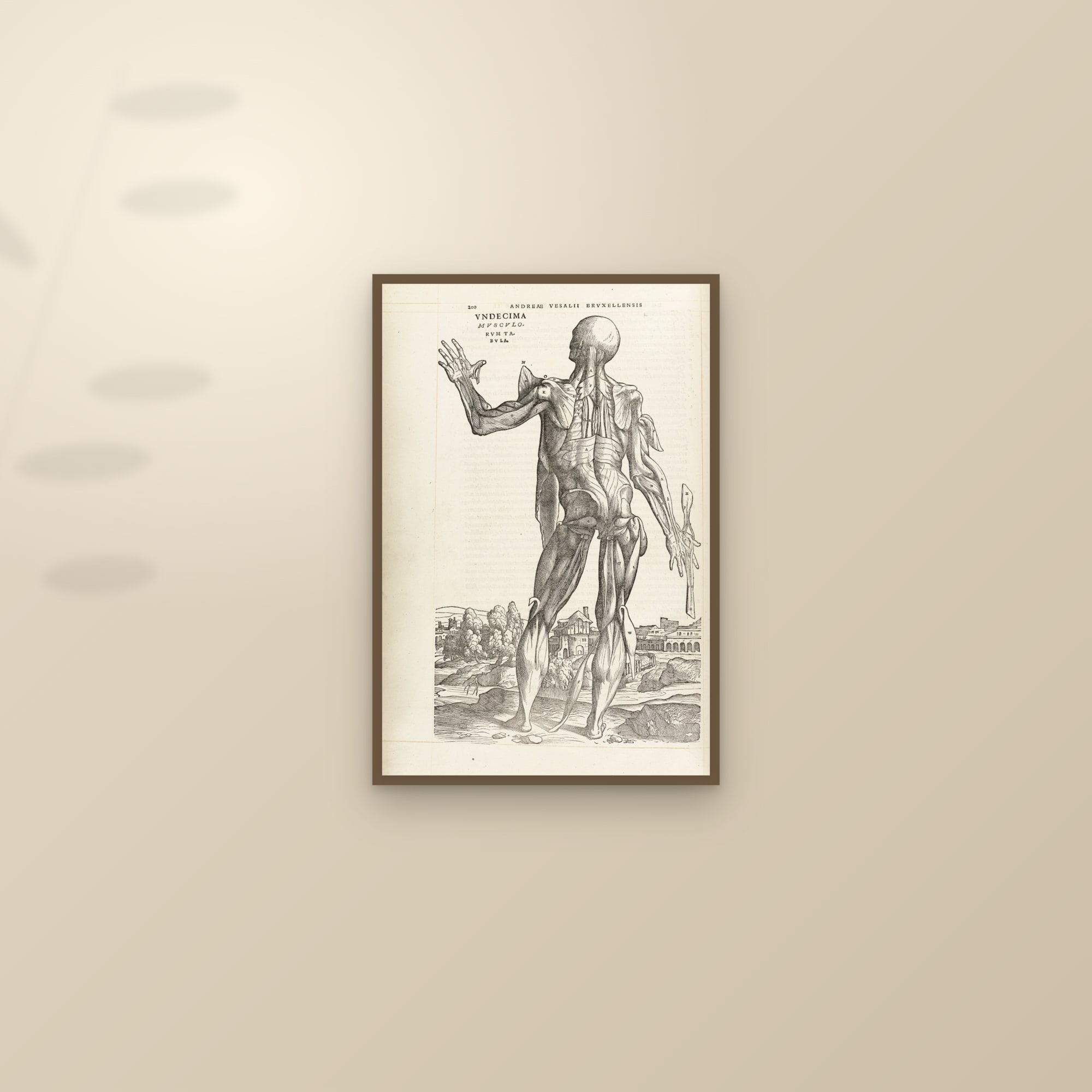
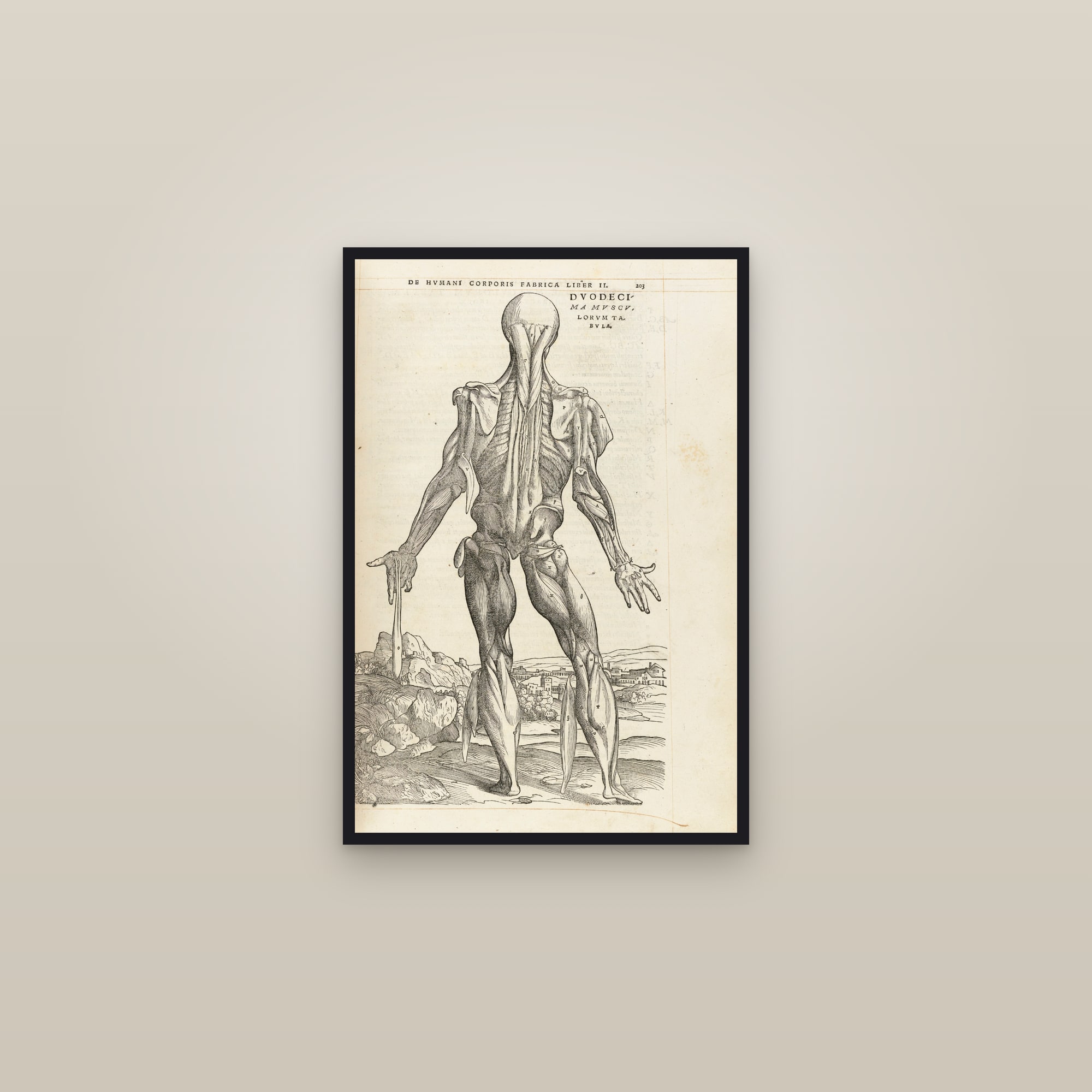
What an écorché is
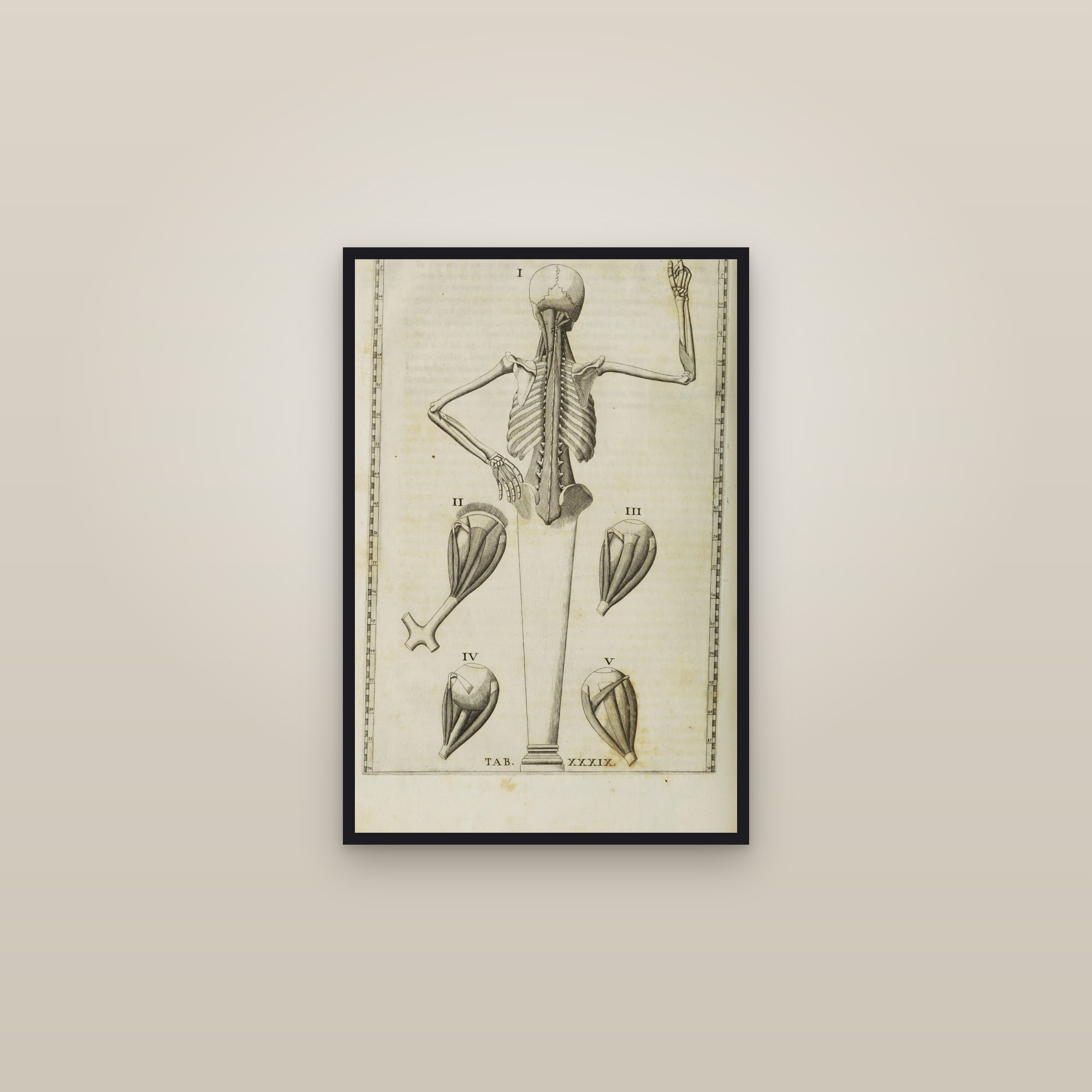
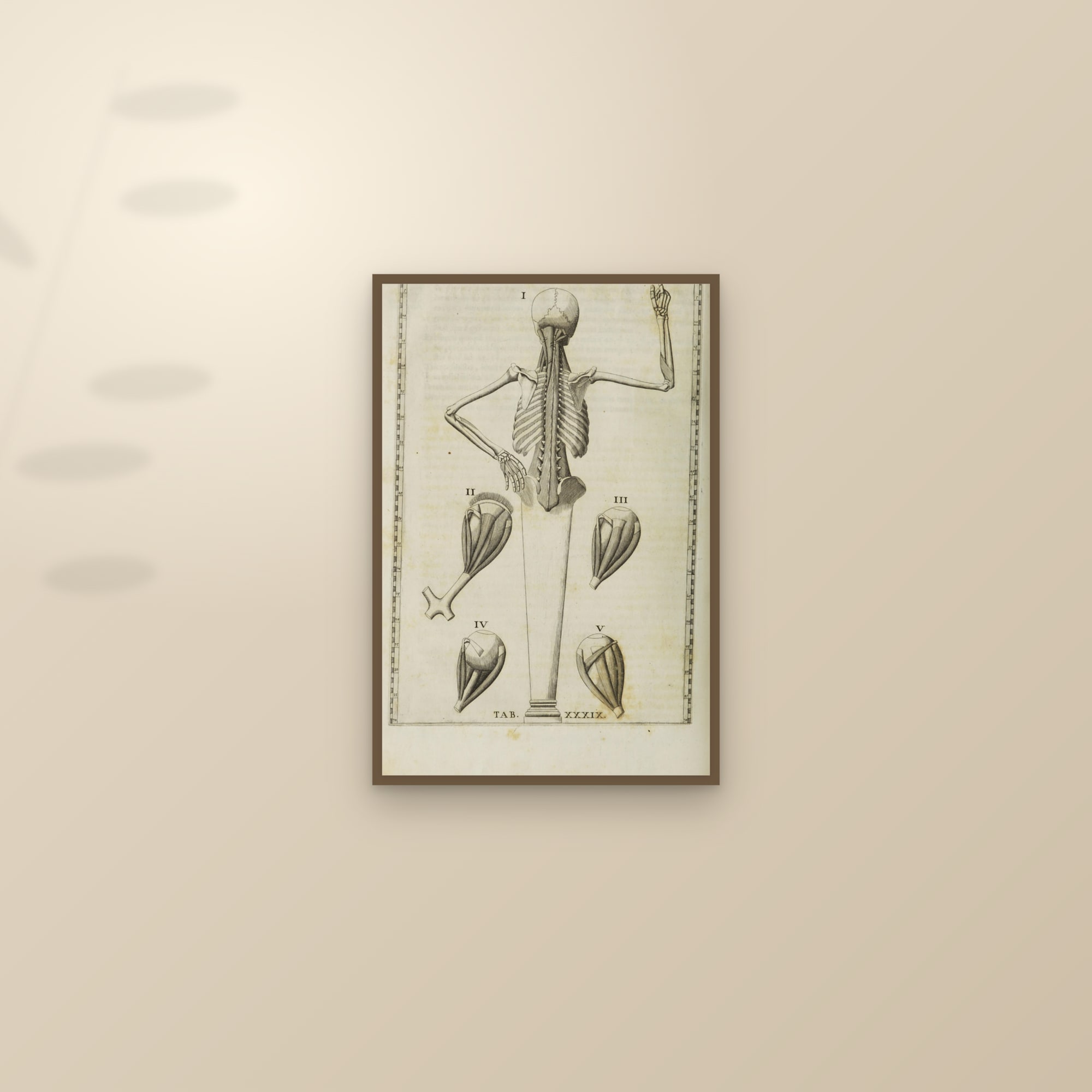
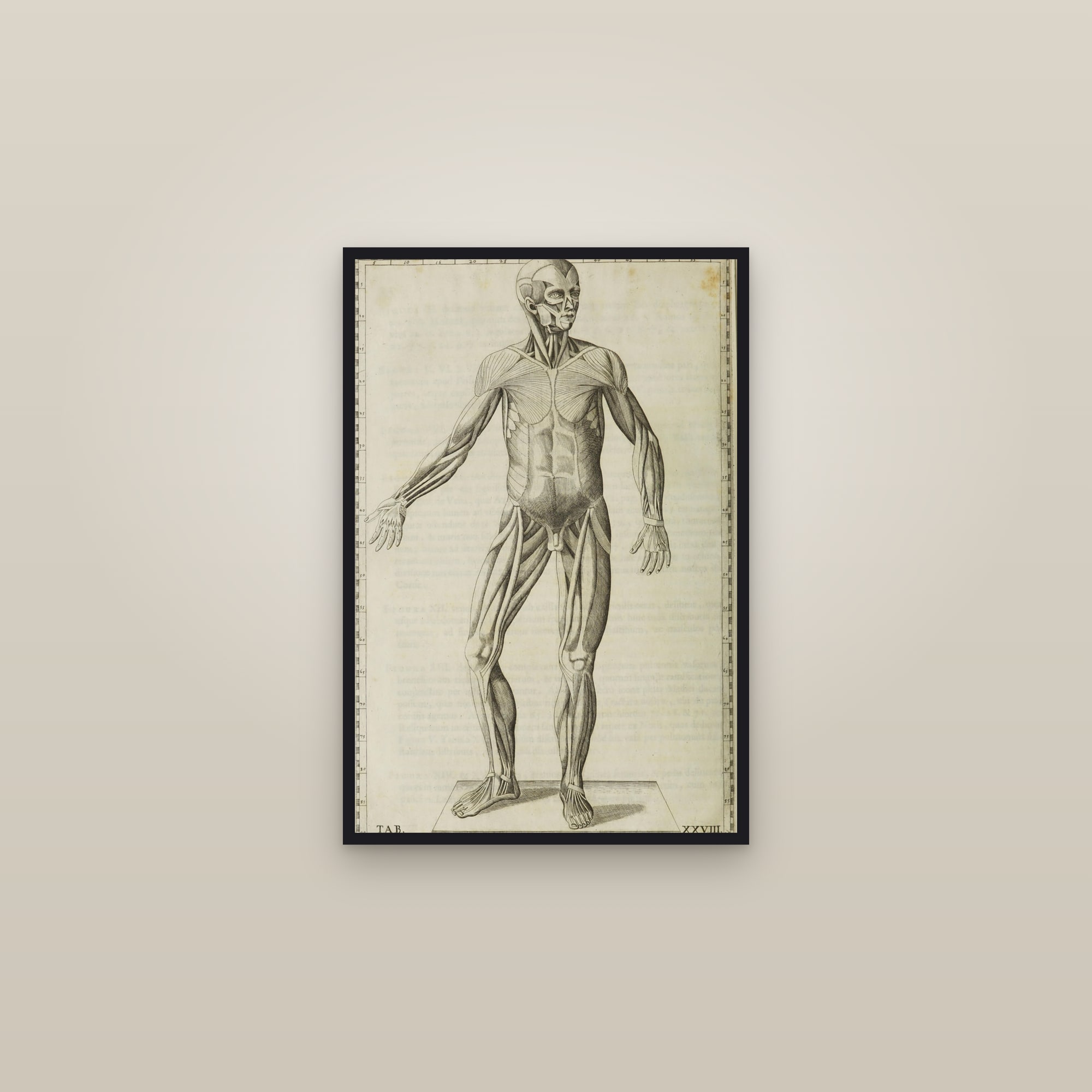
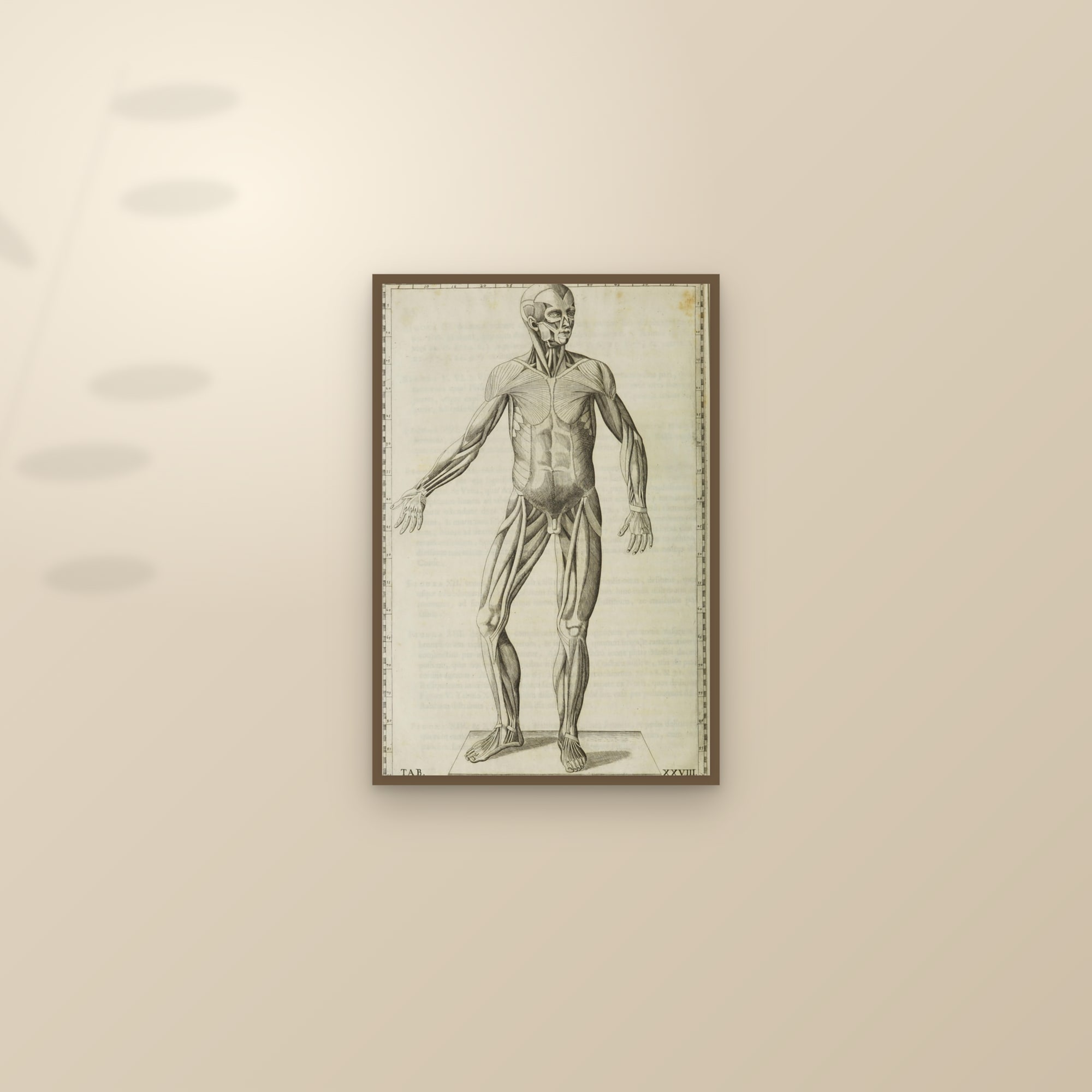
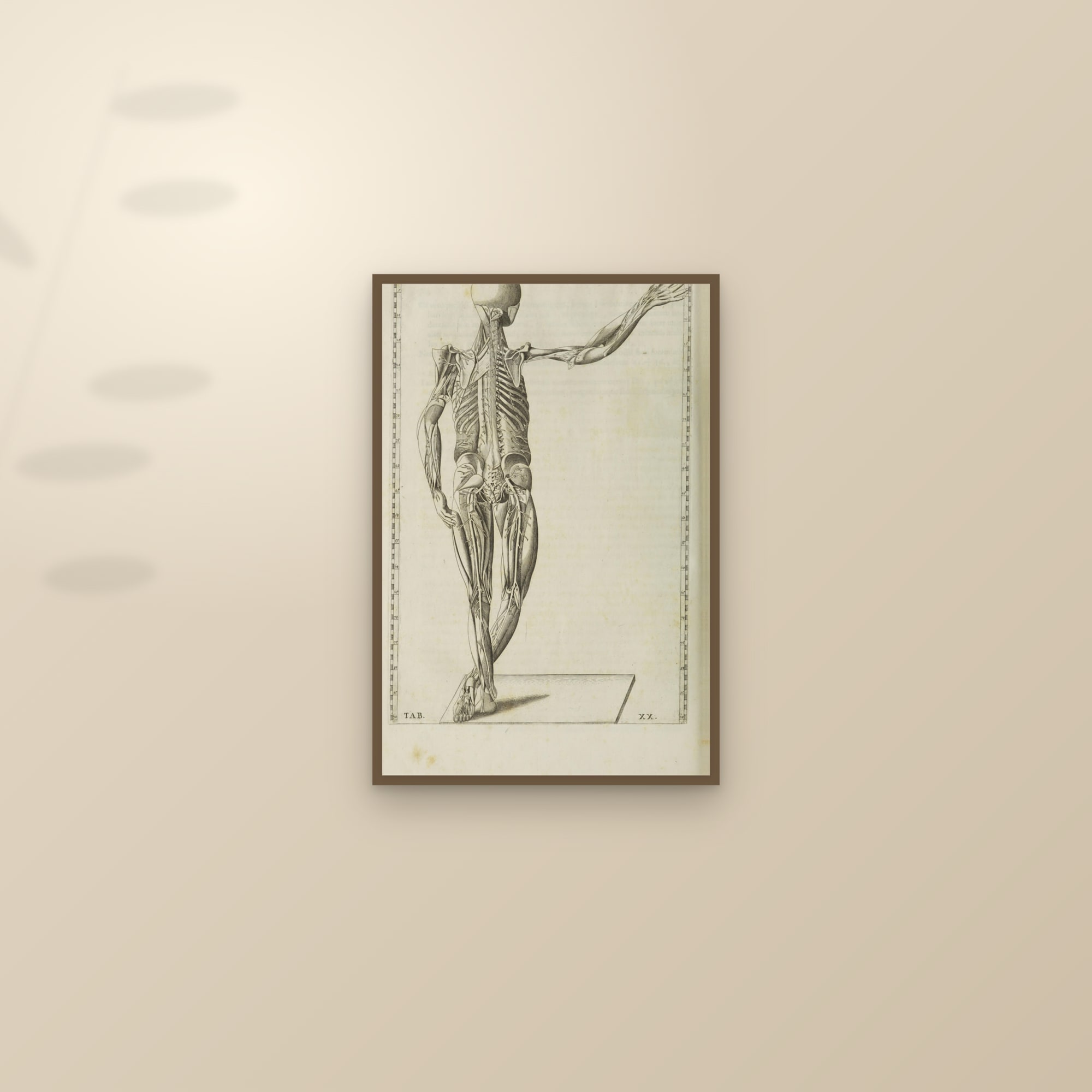
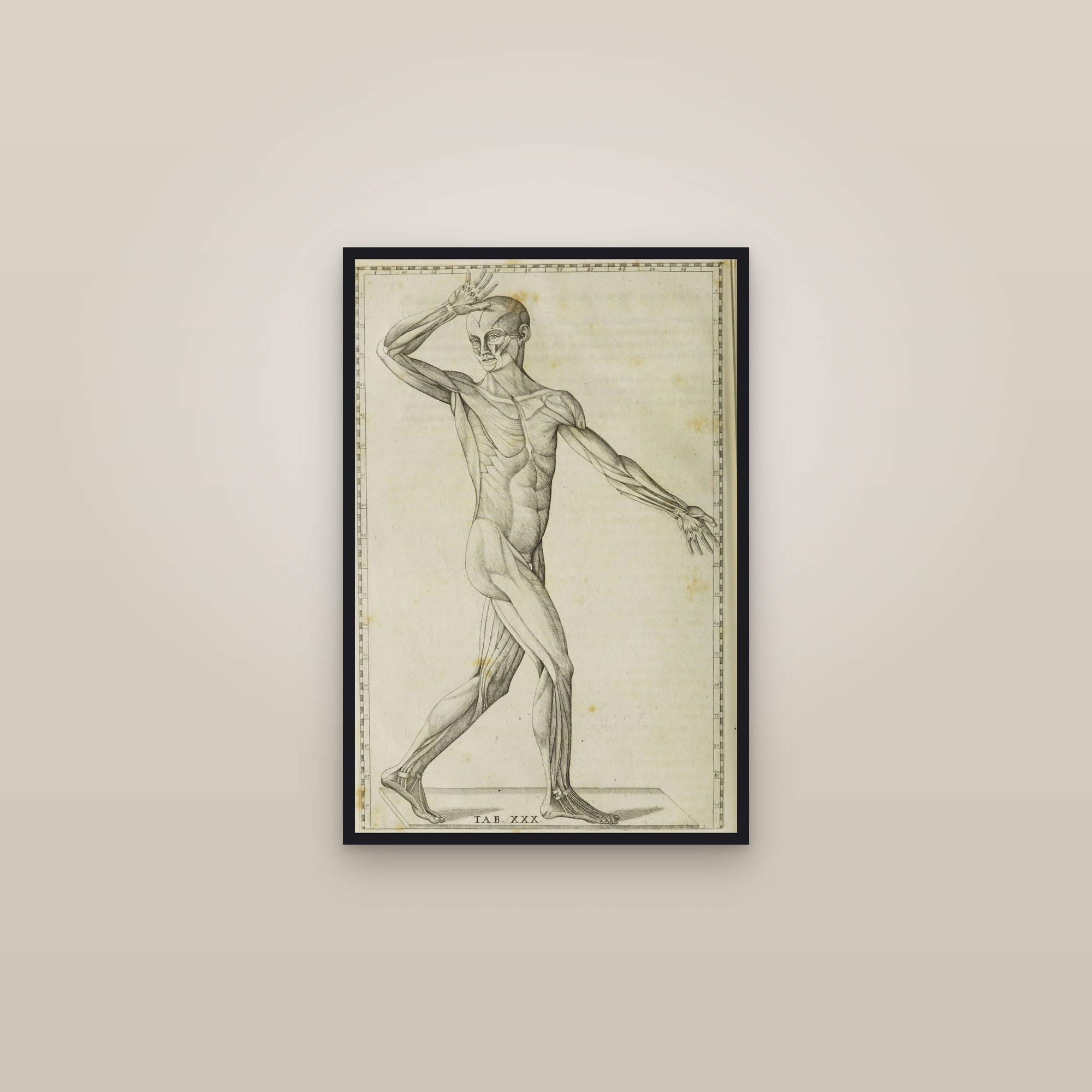
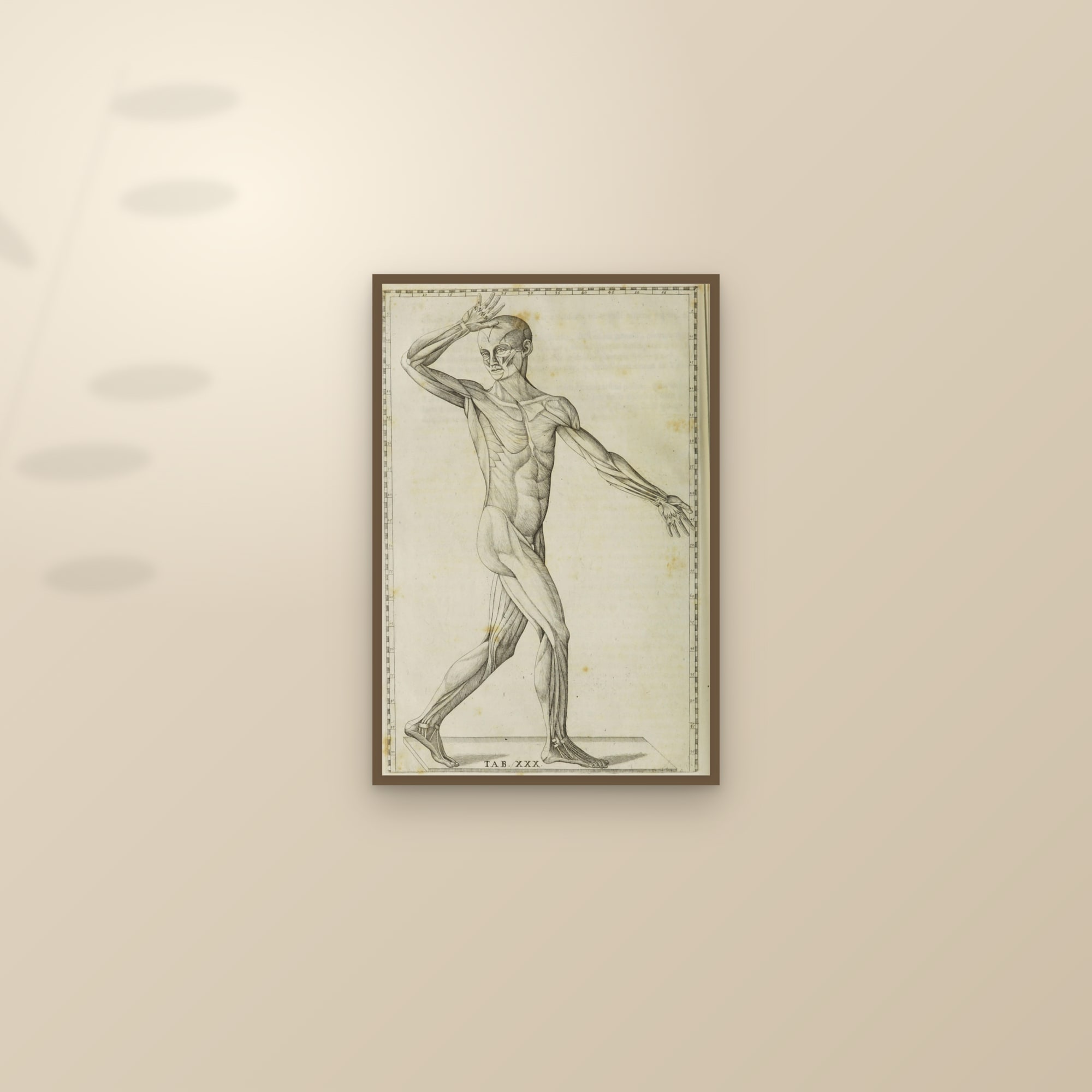
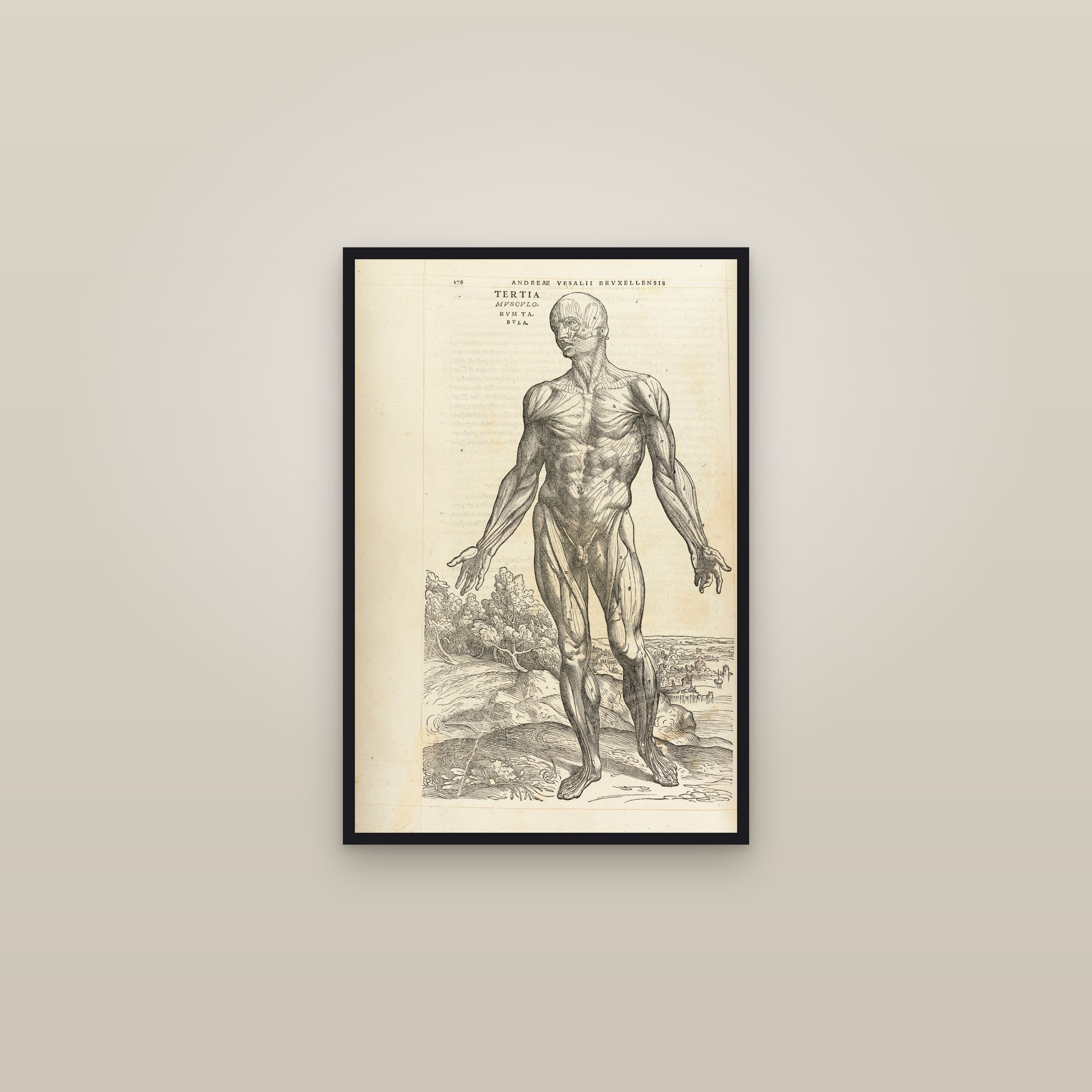
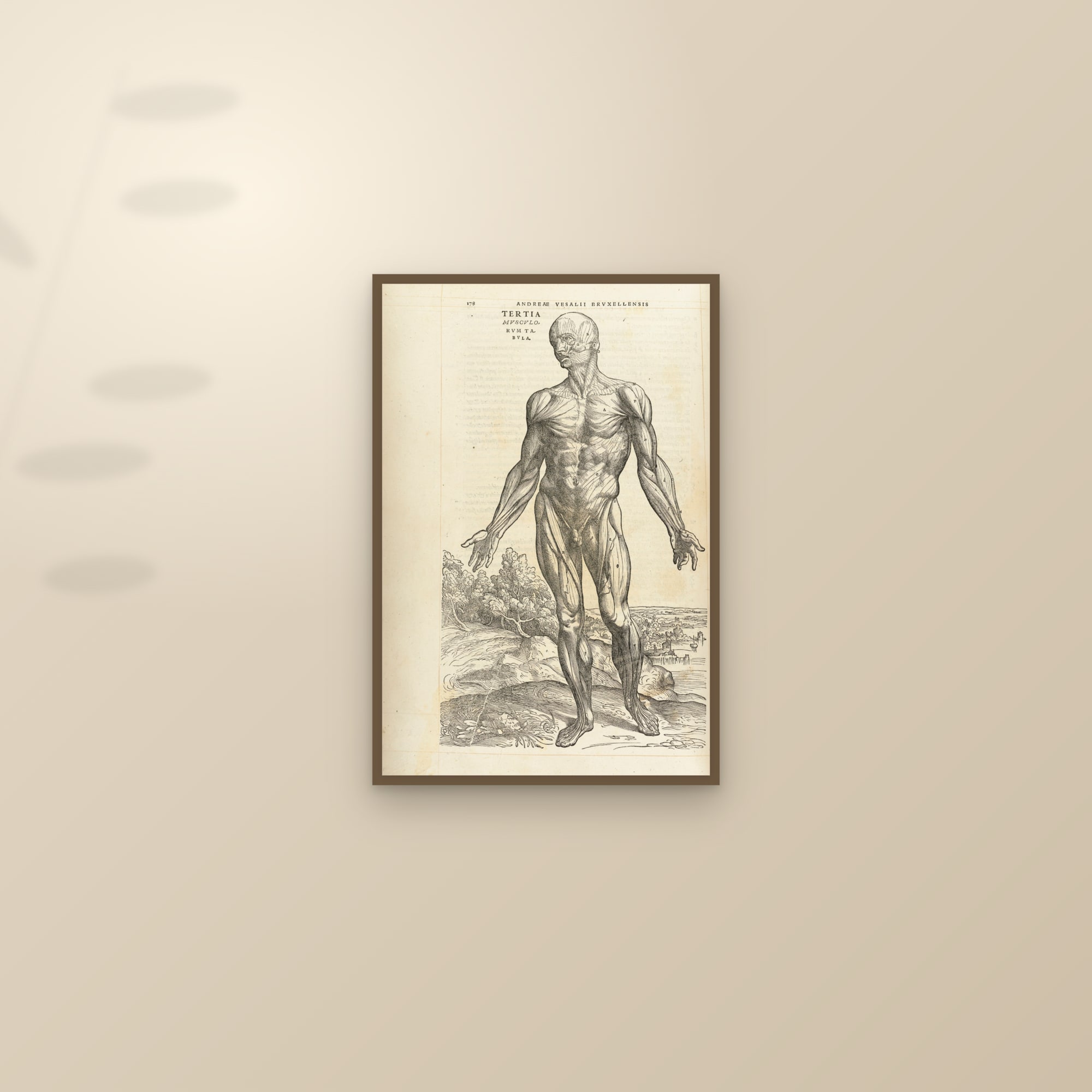
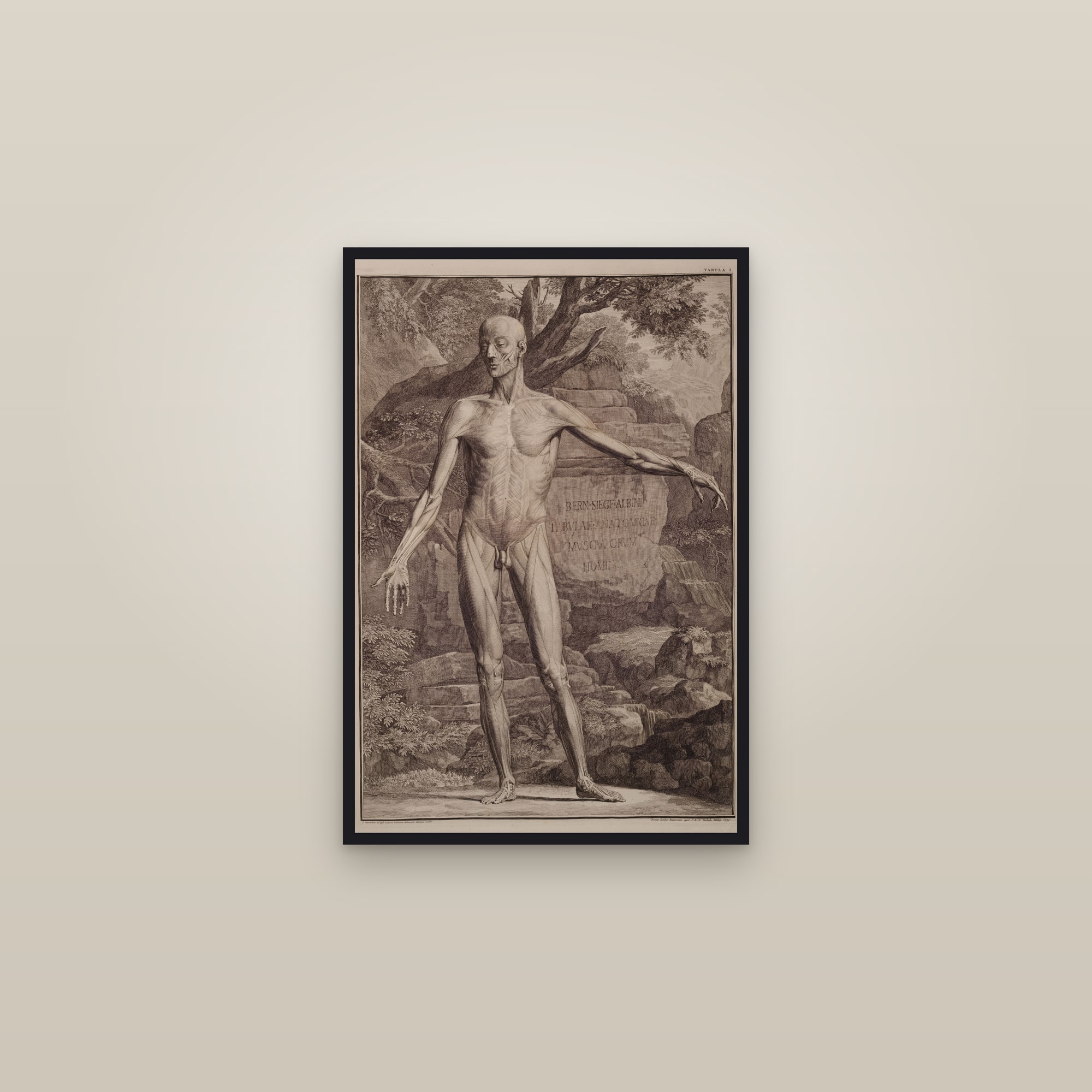
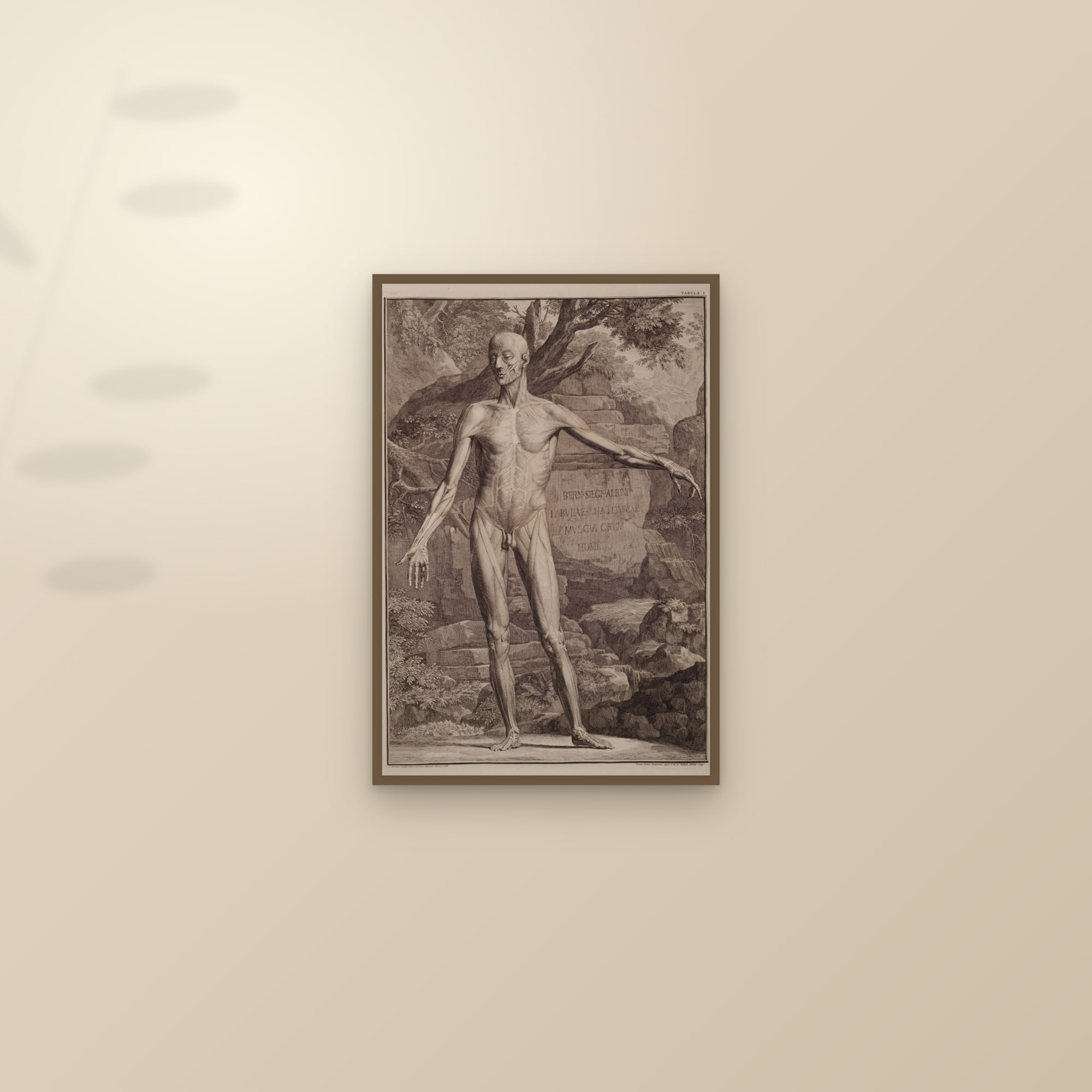
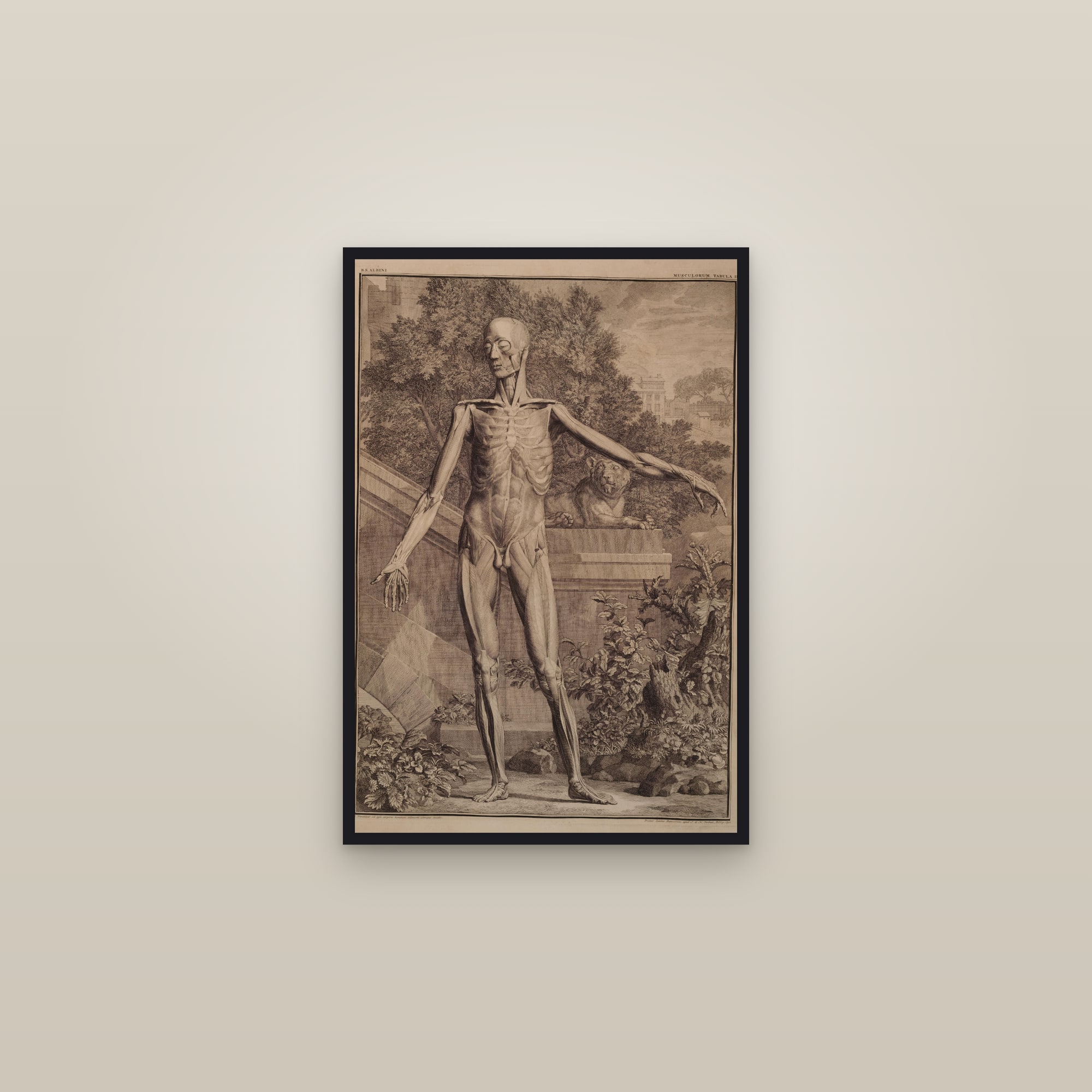
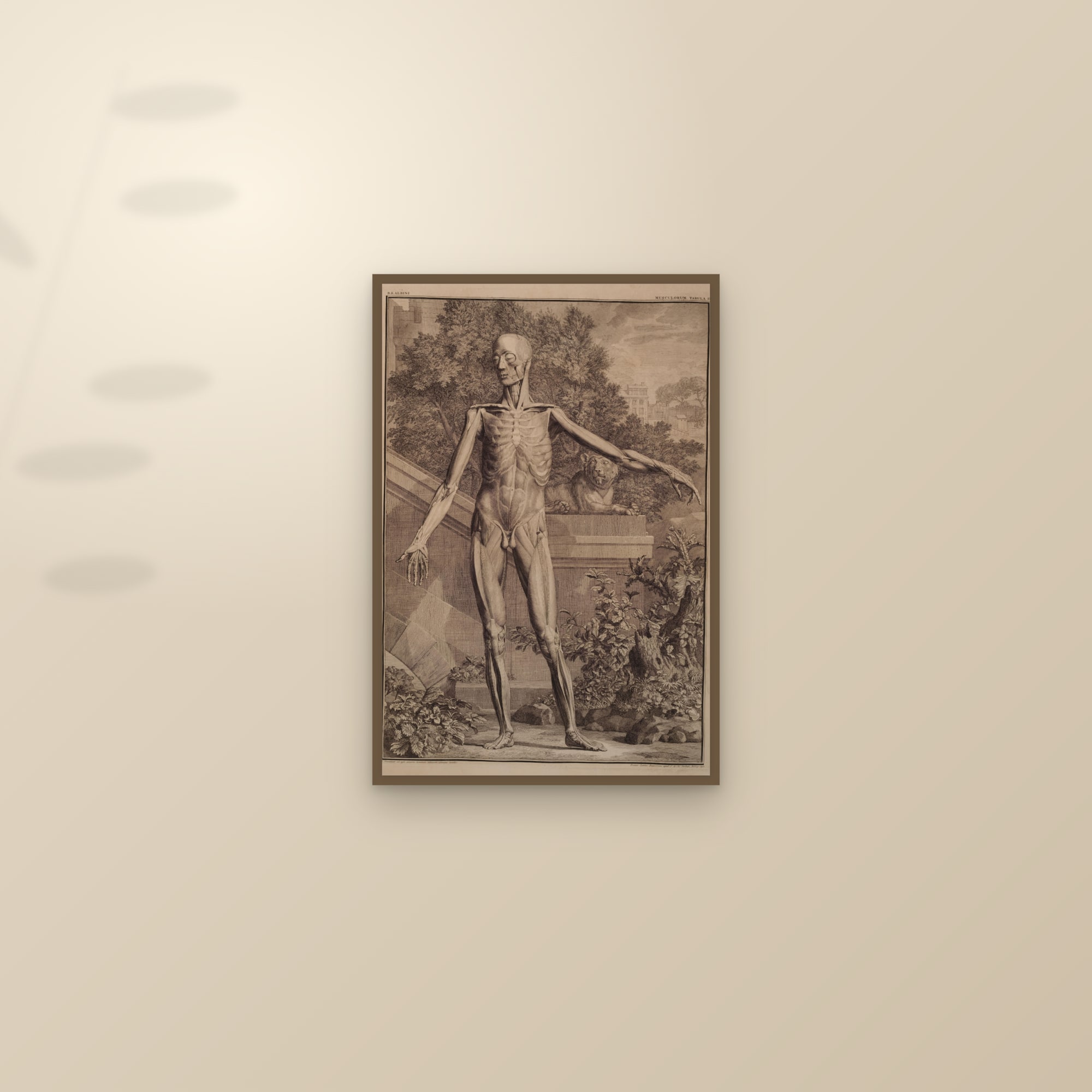
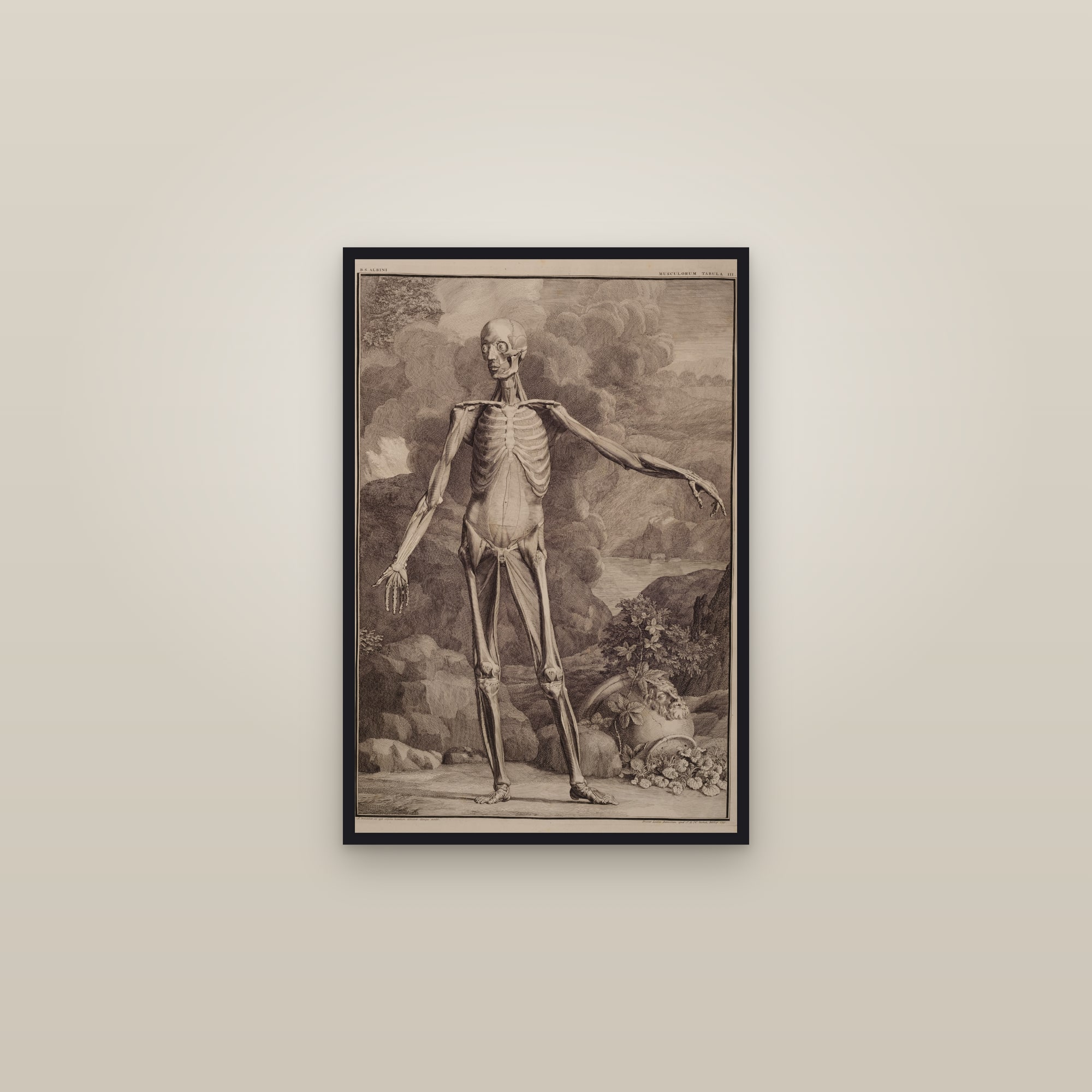
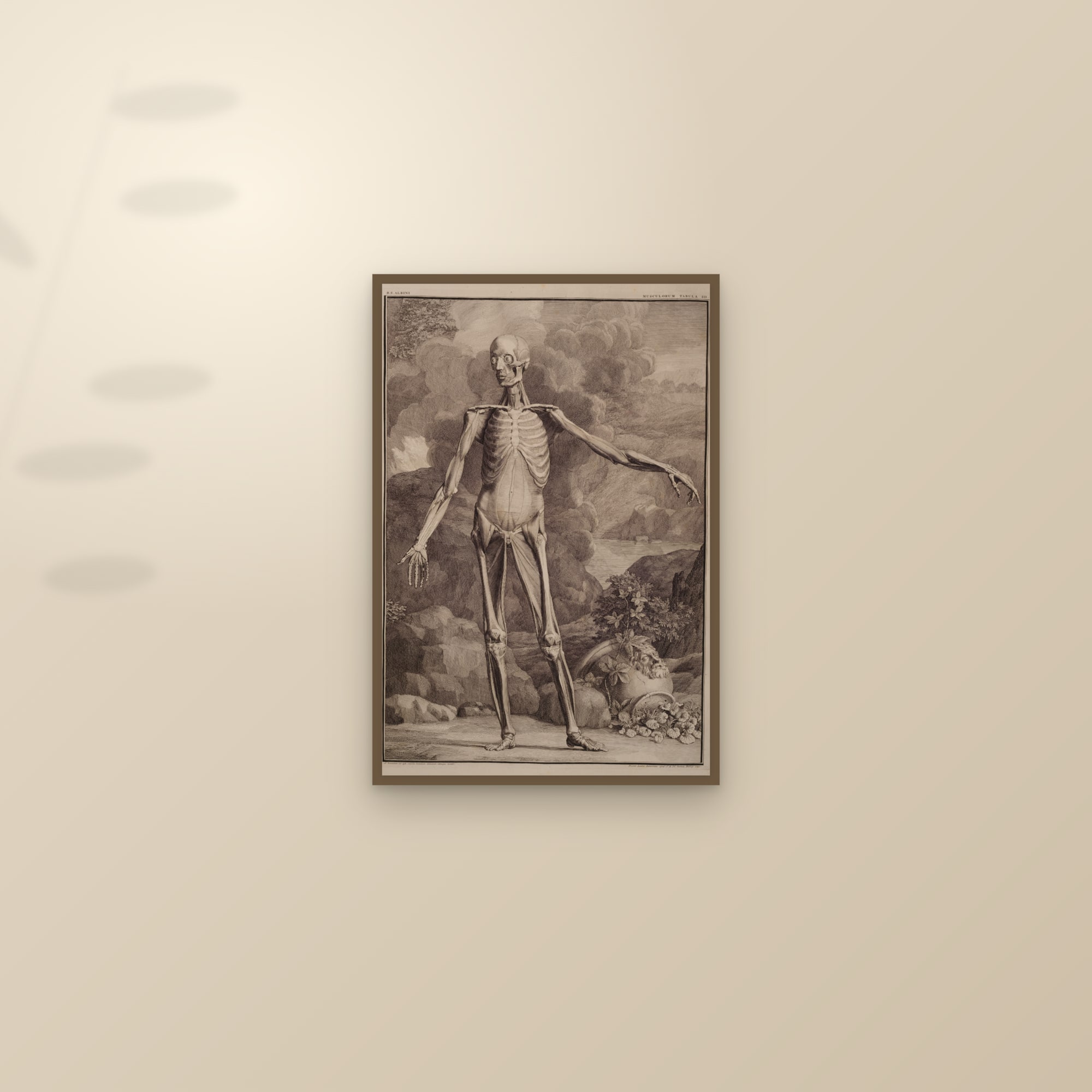
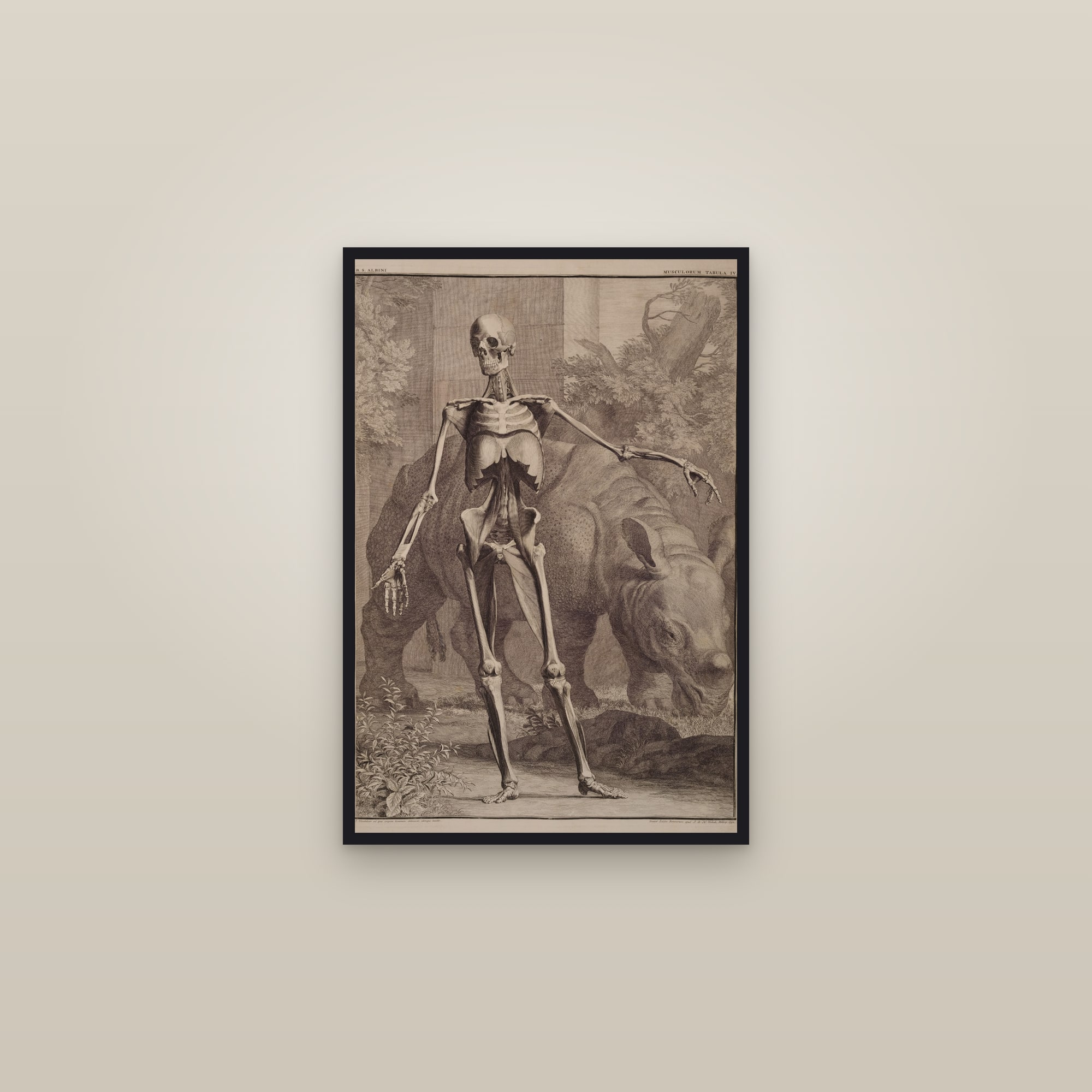
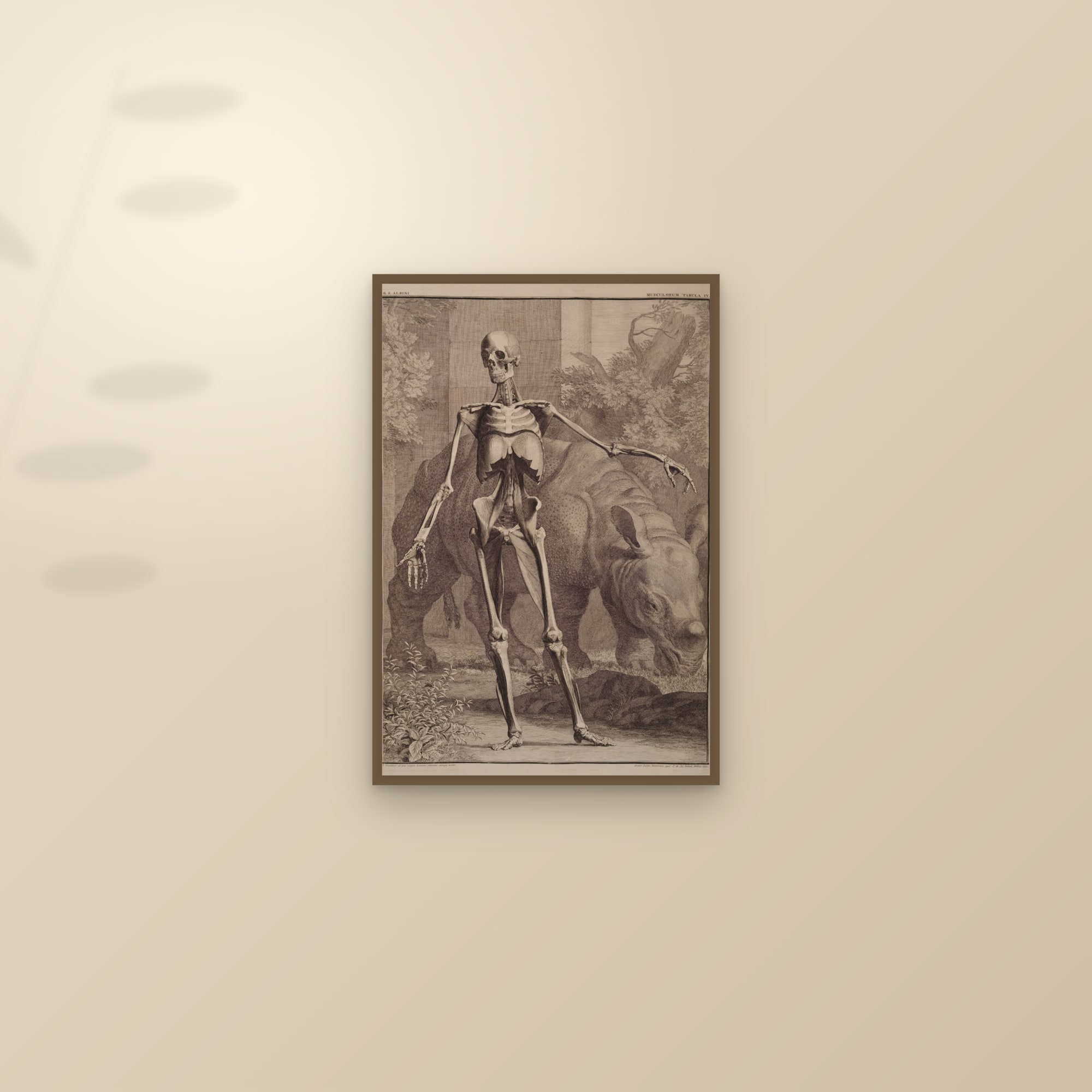
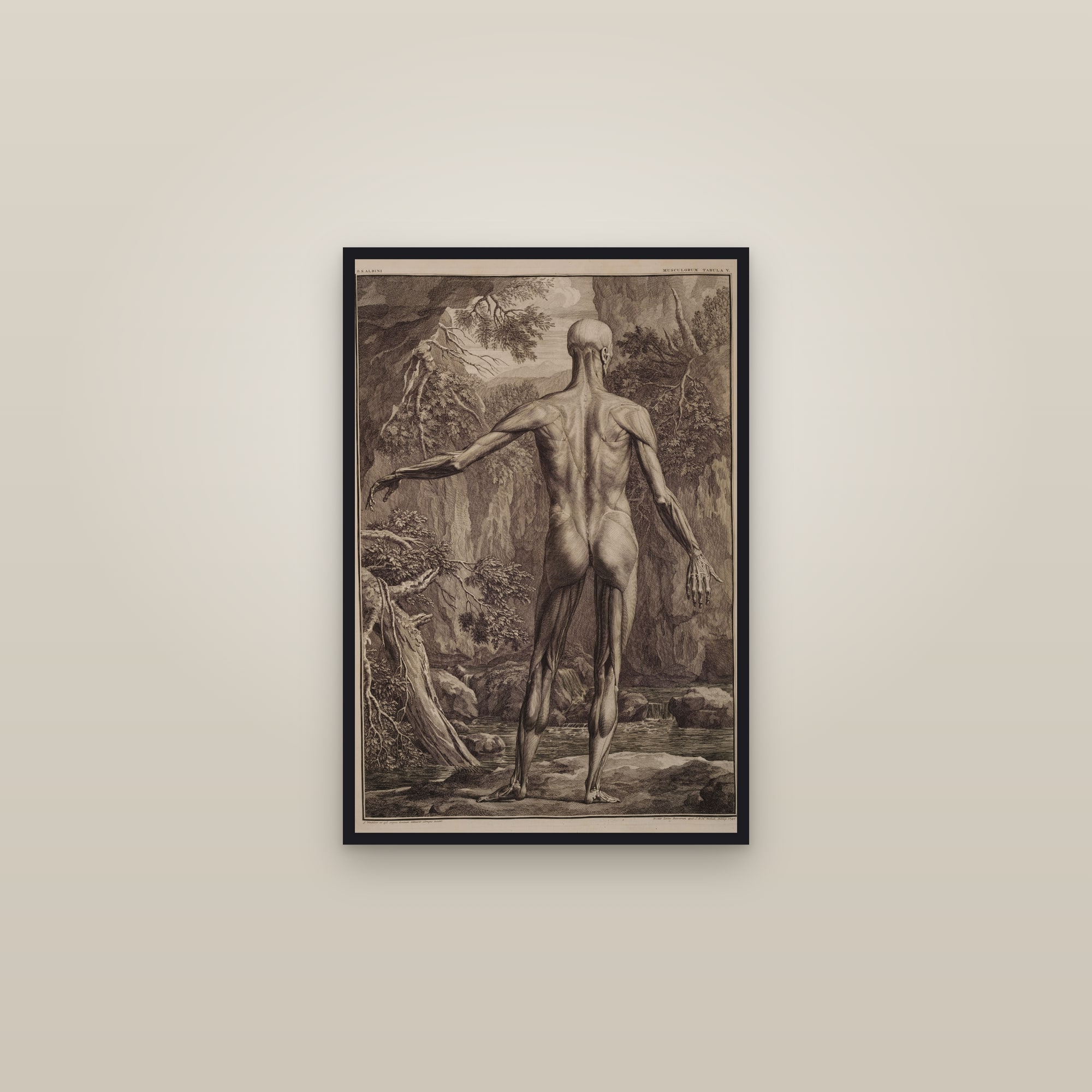
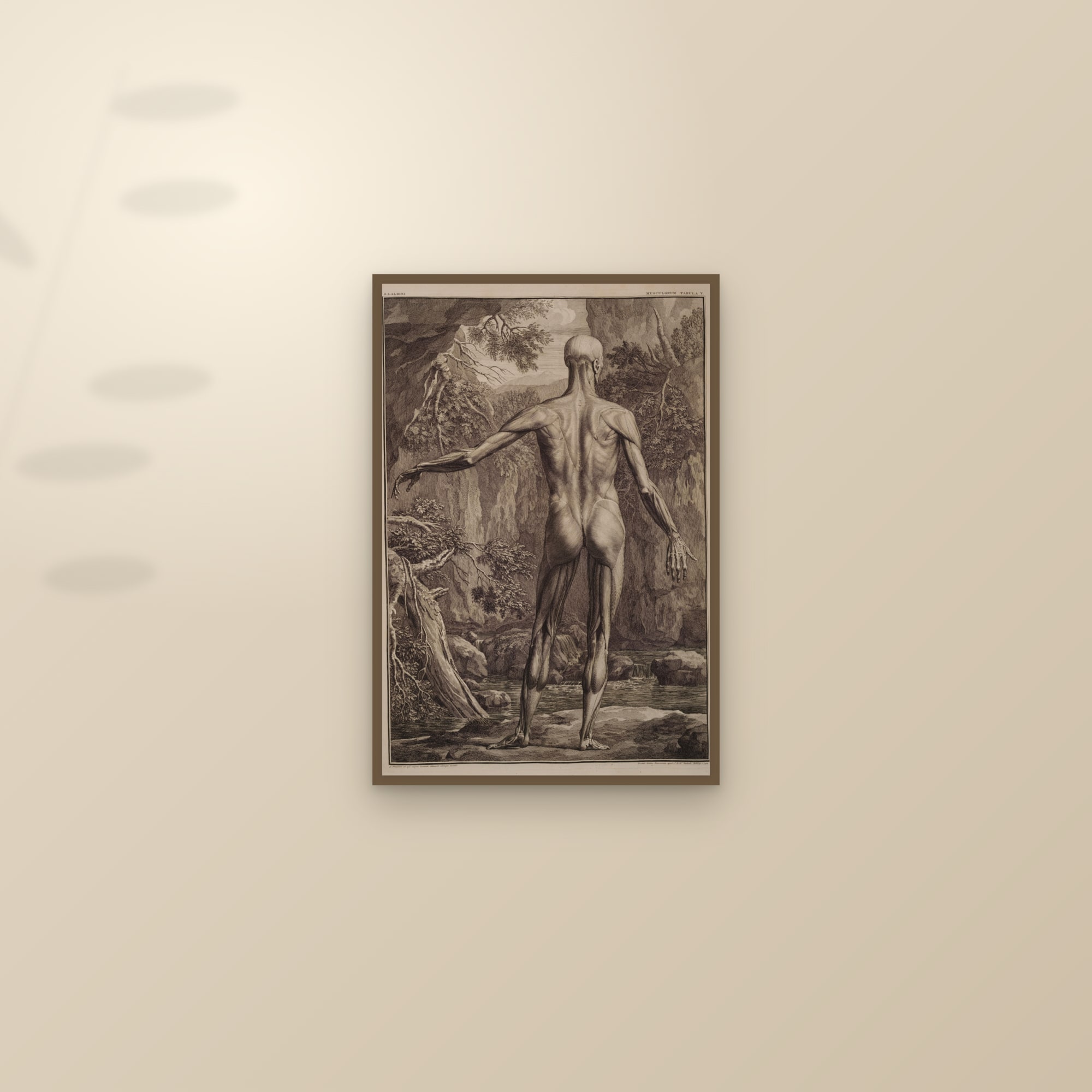
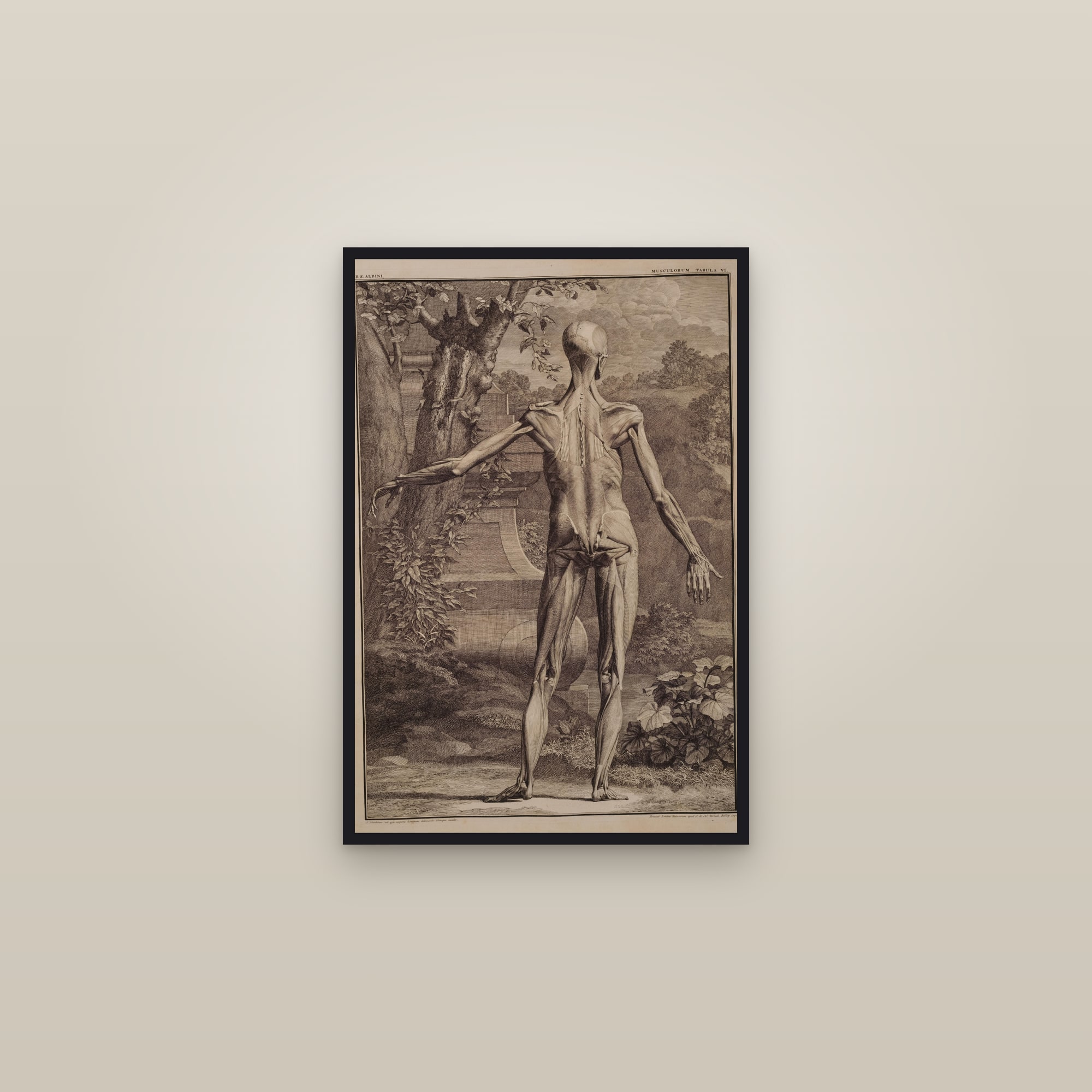
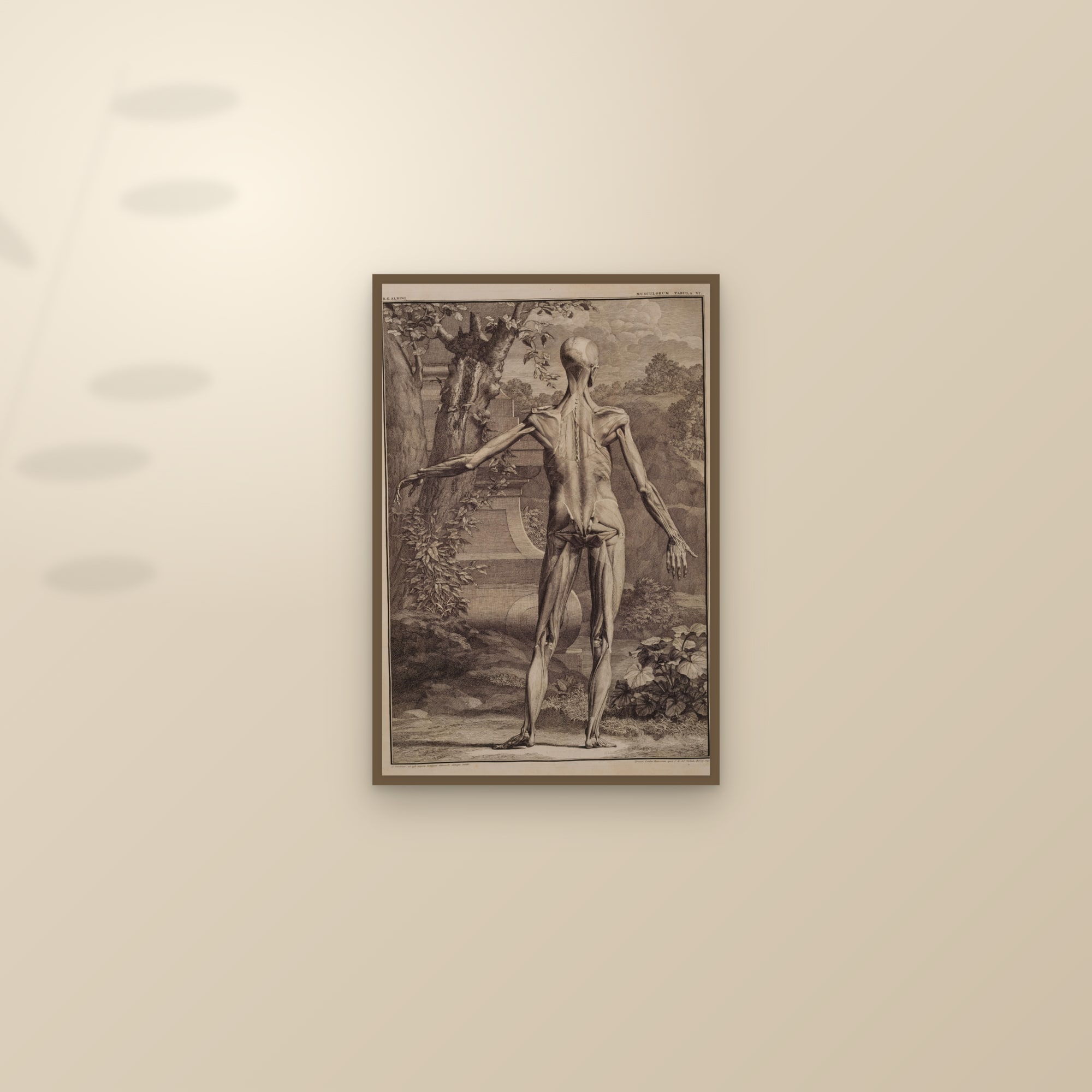
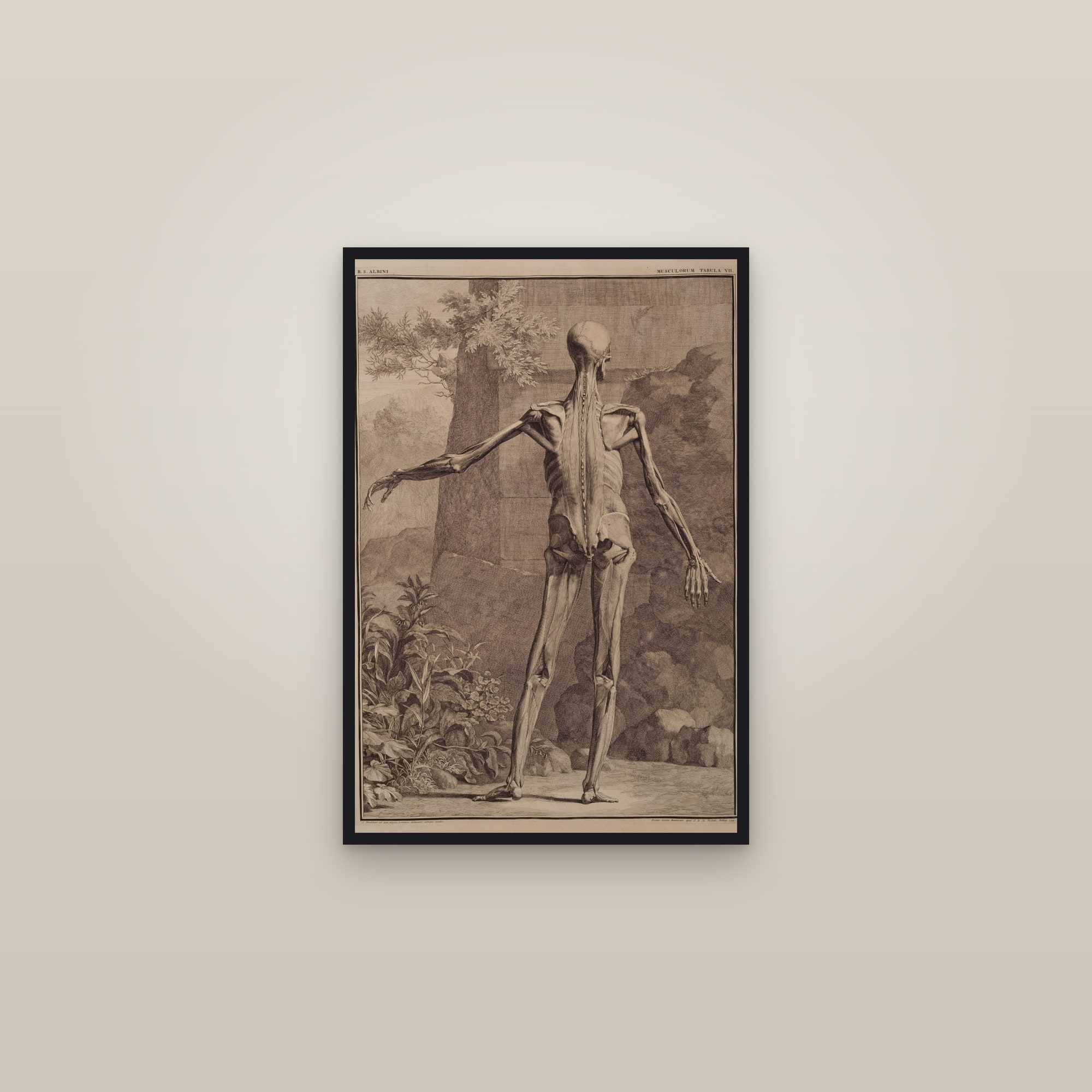
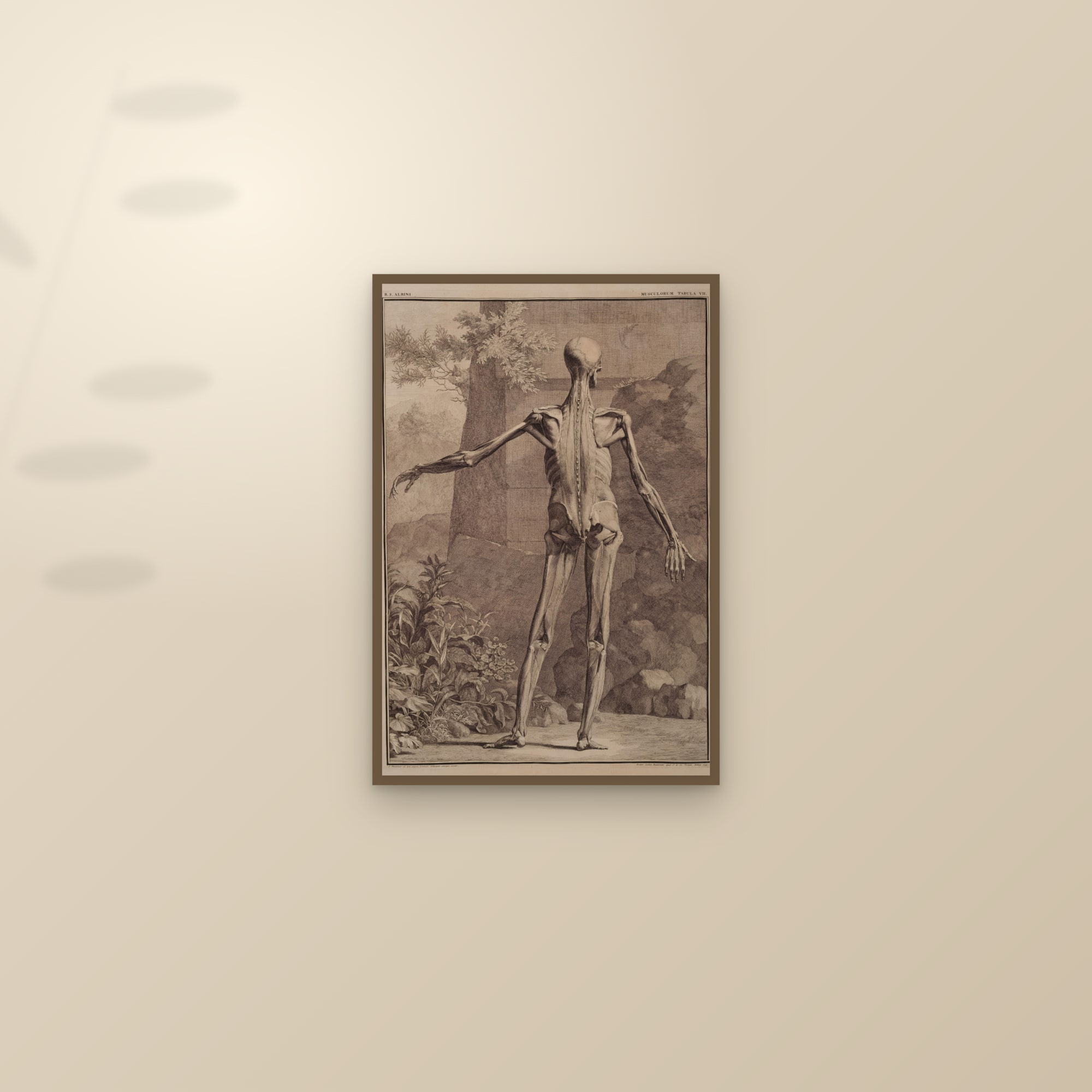
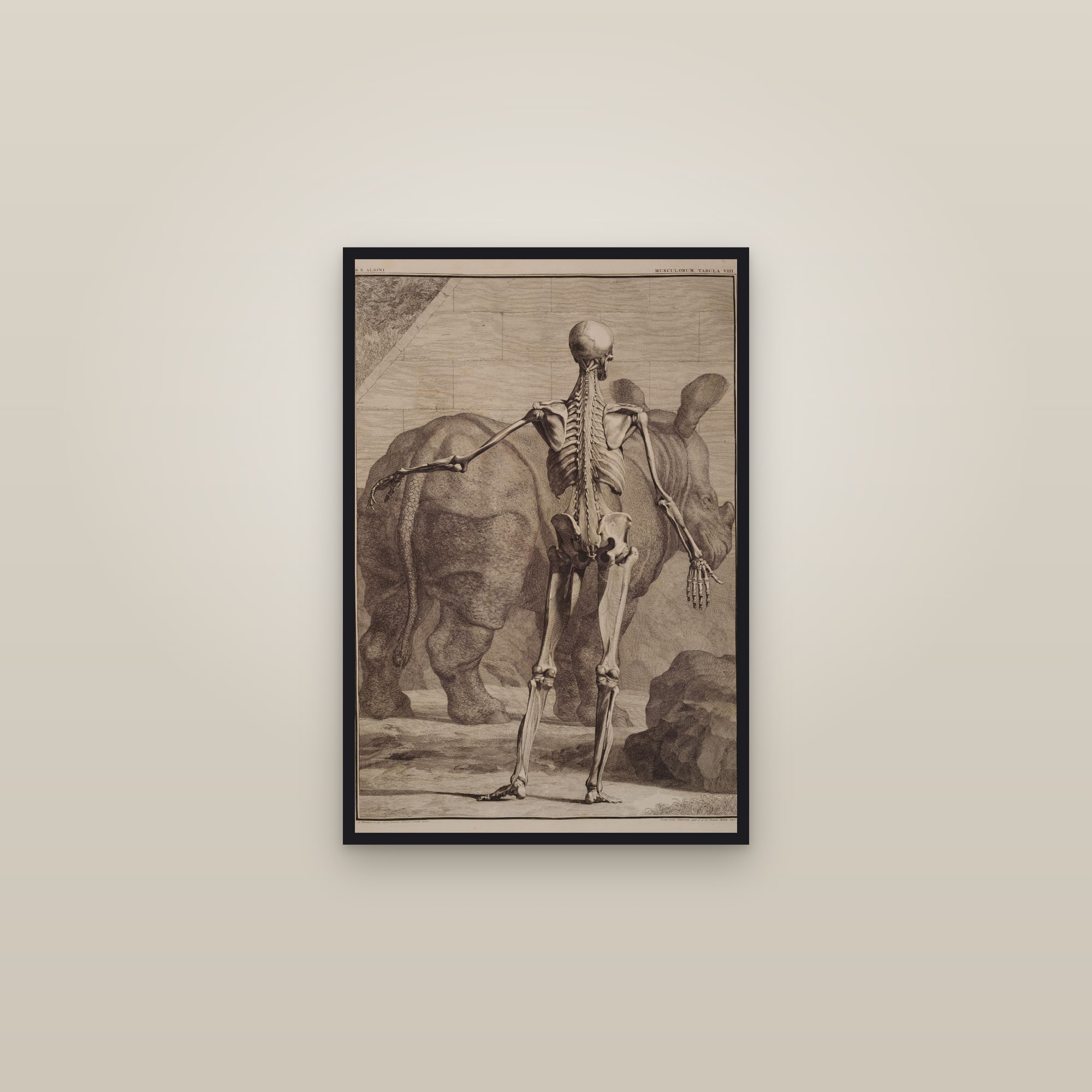
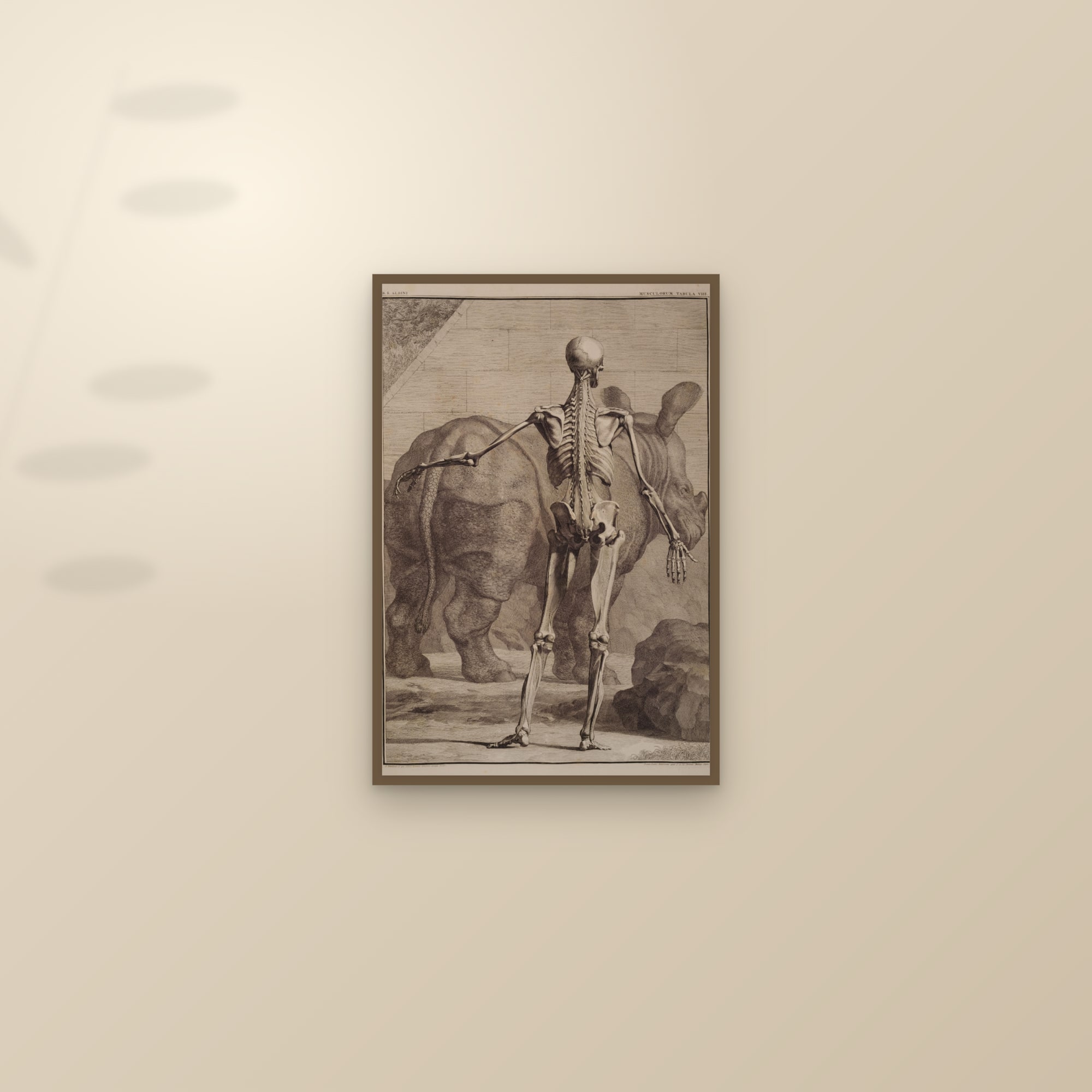
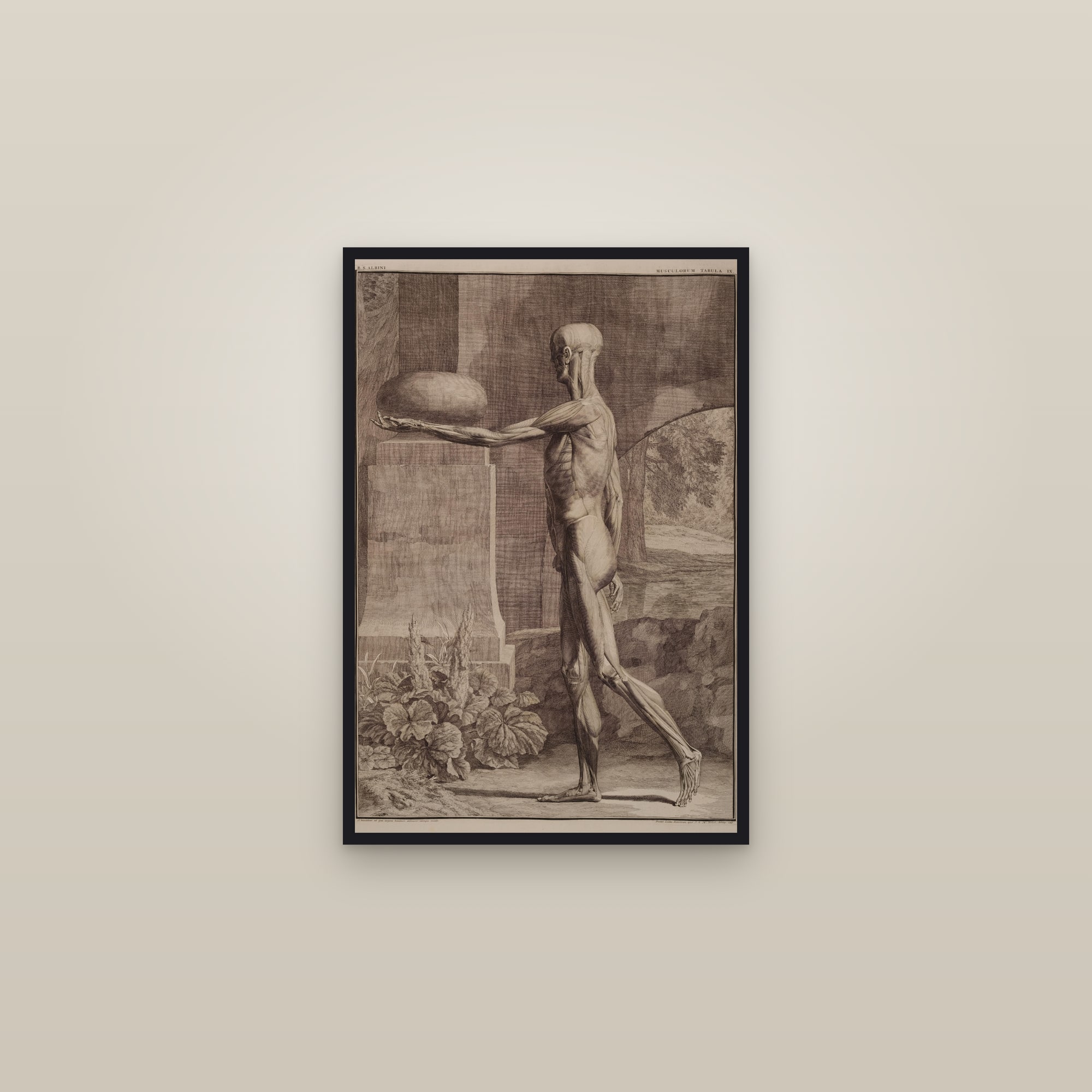
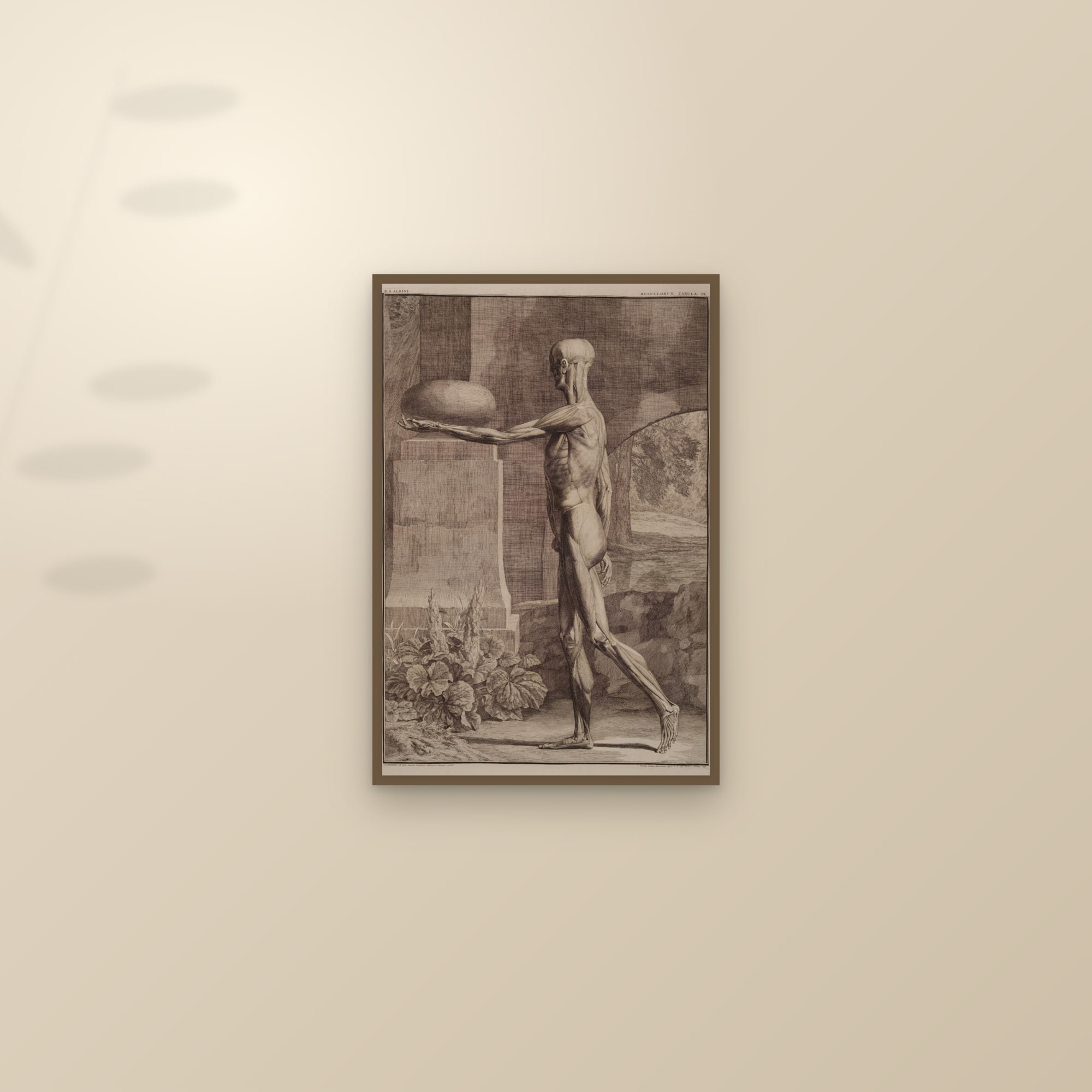
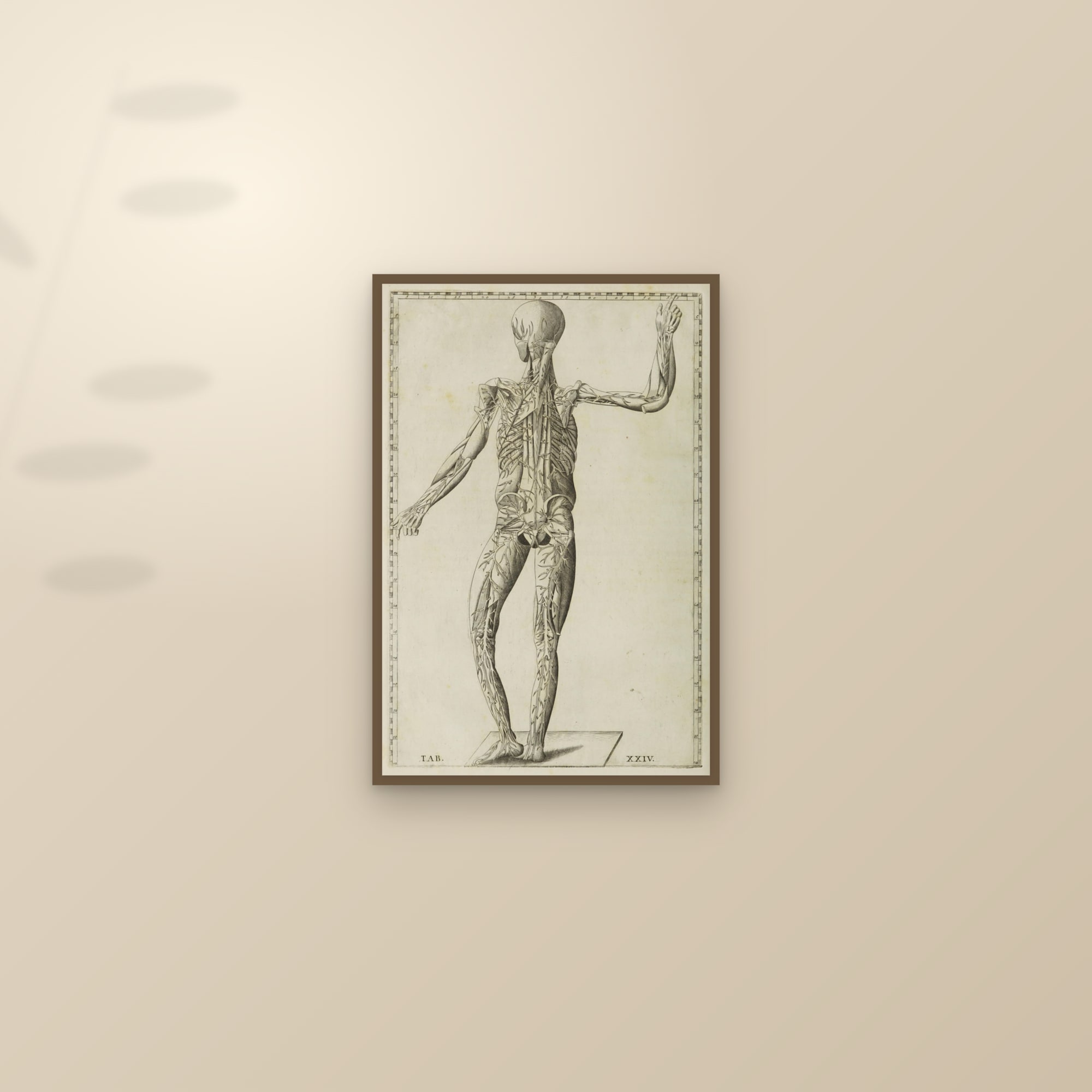
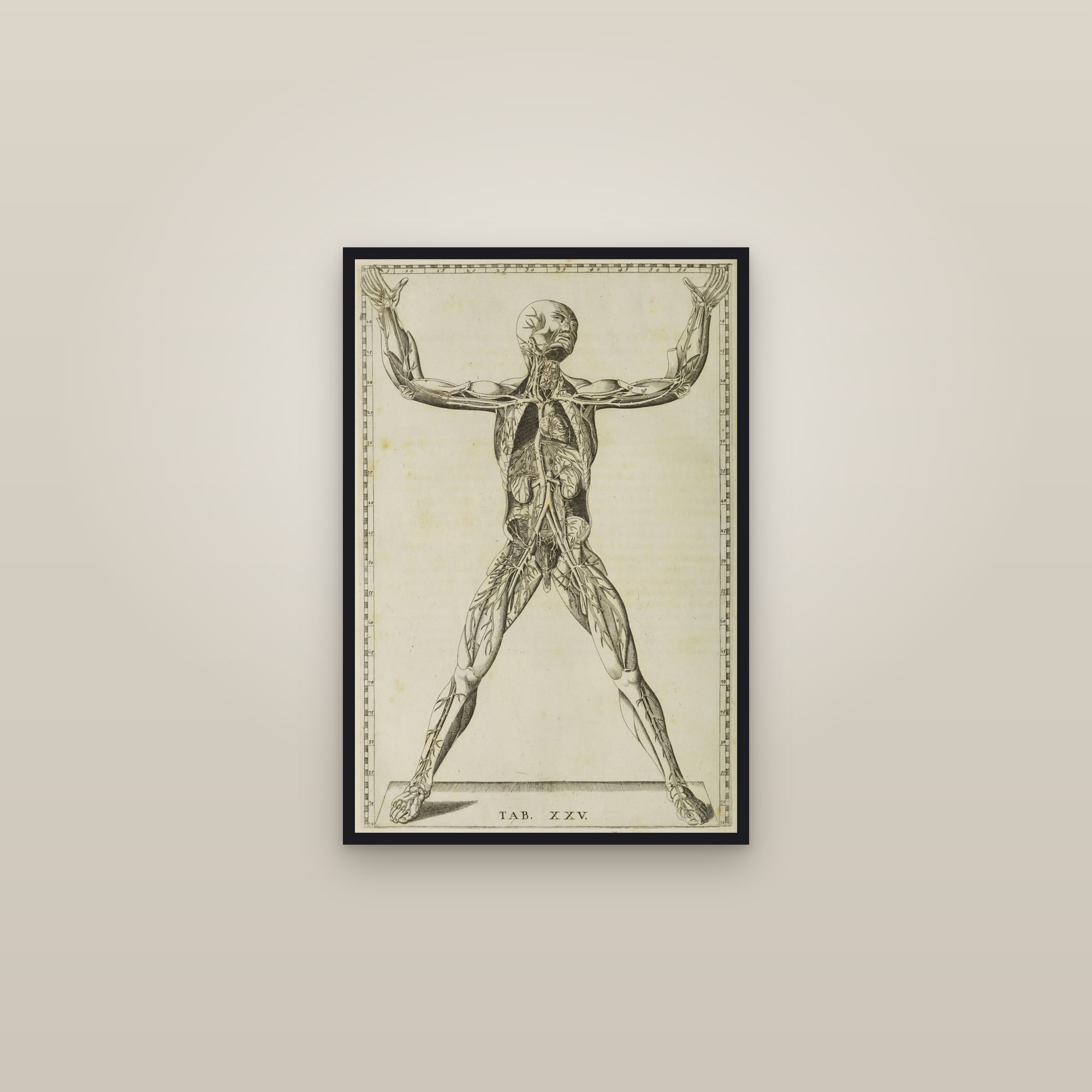
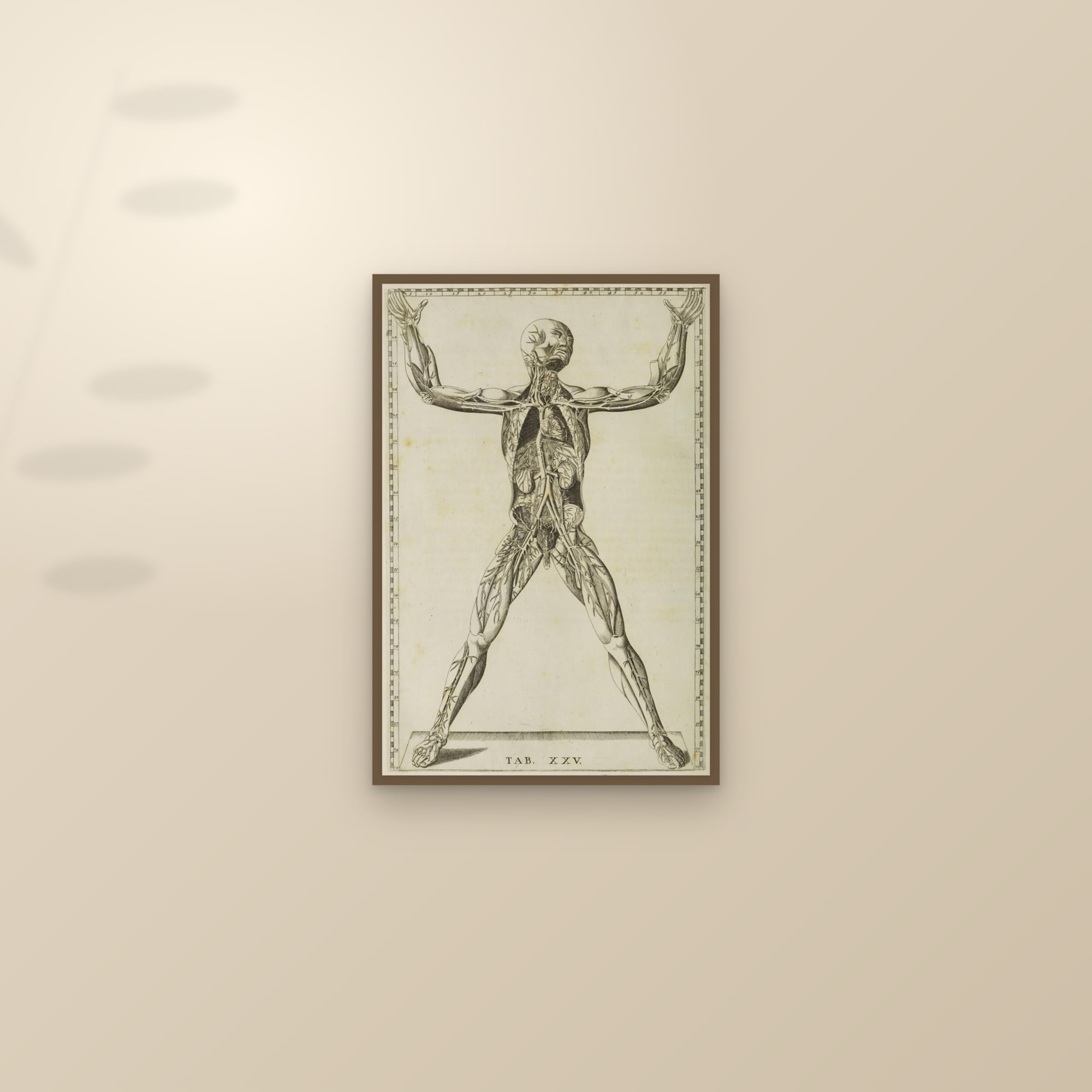
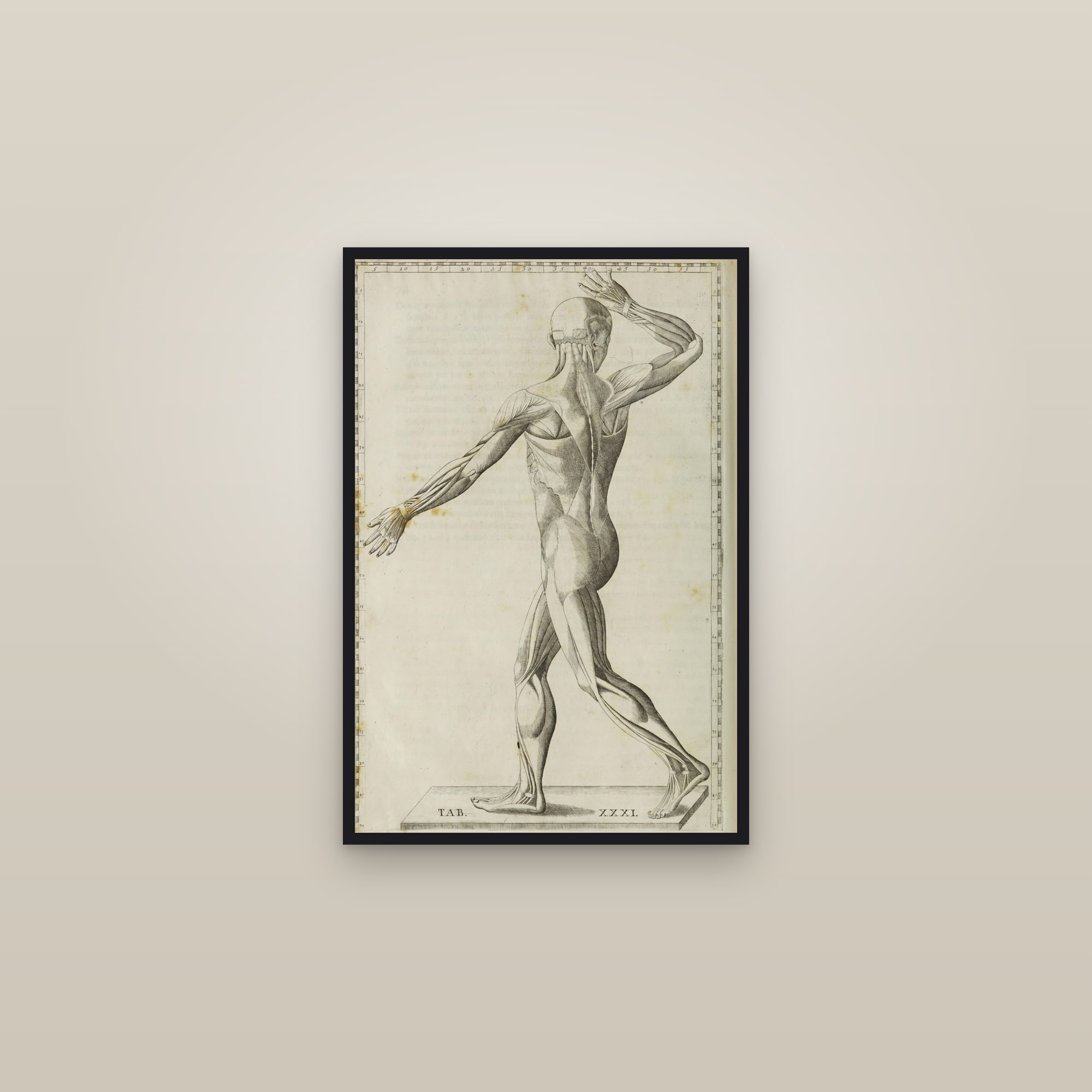
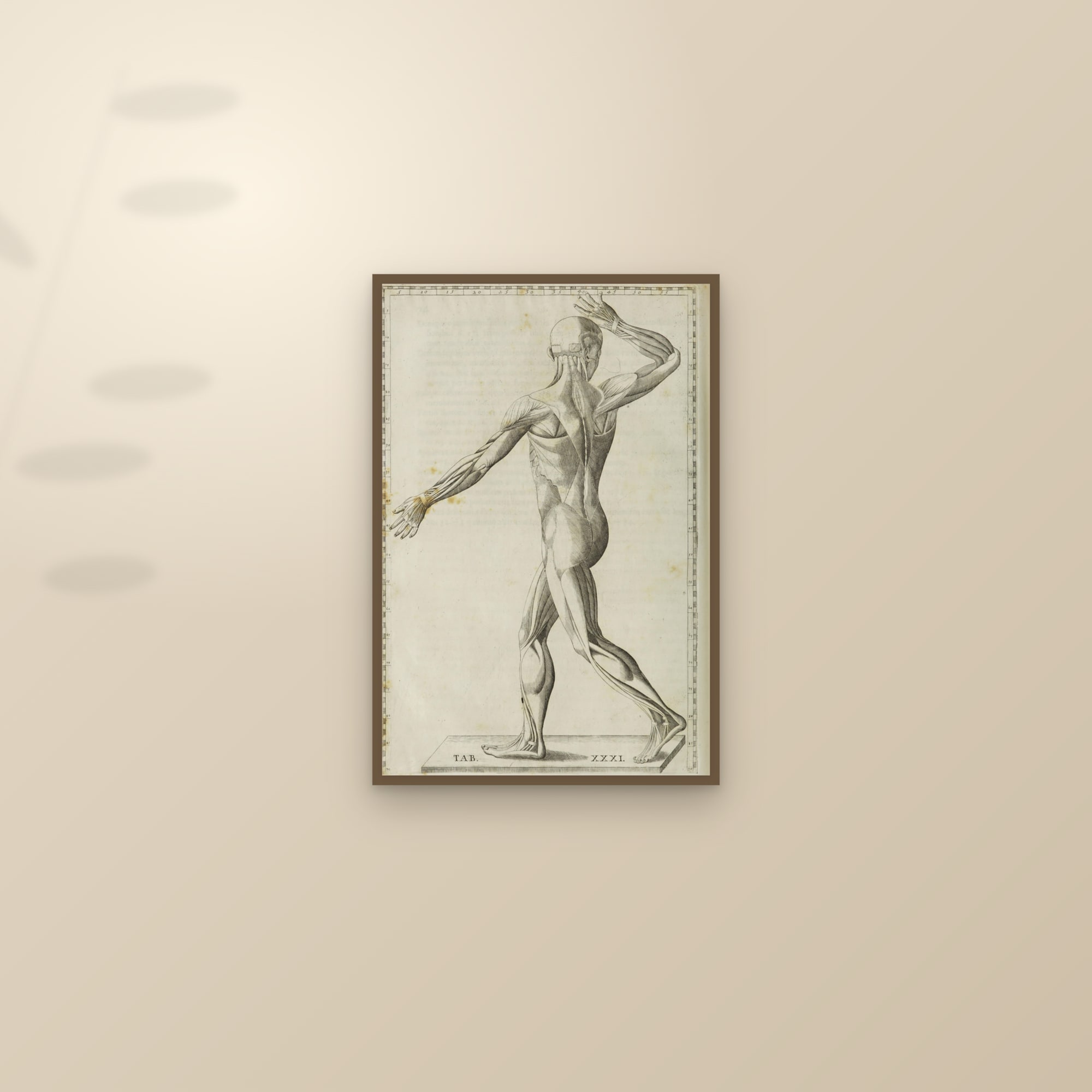
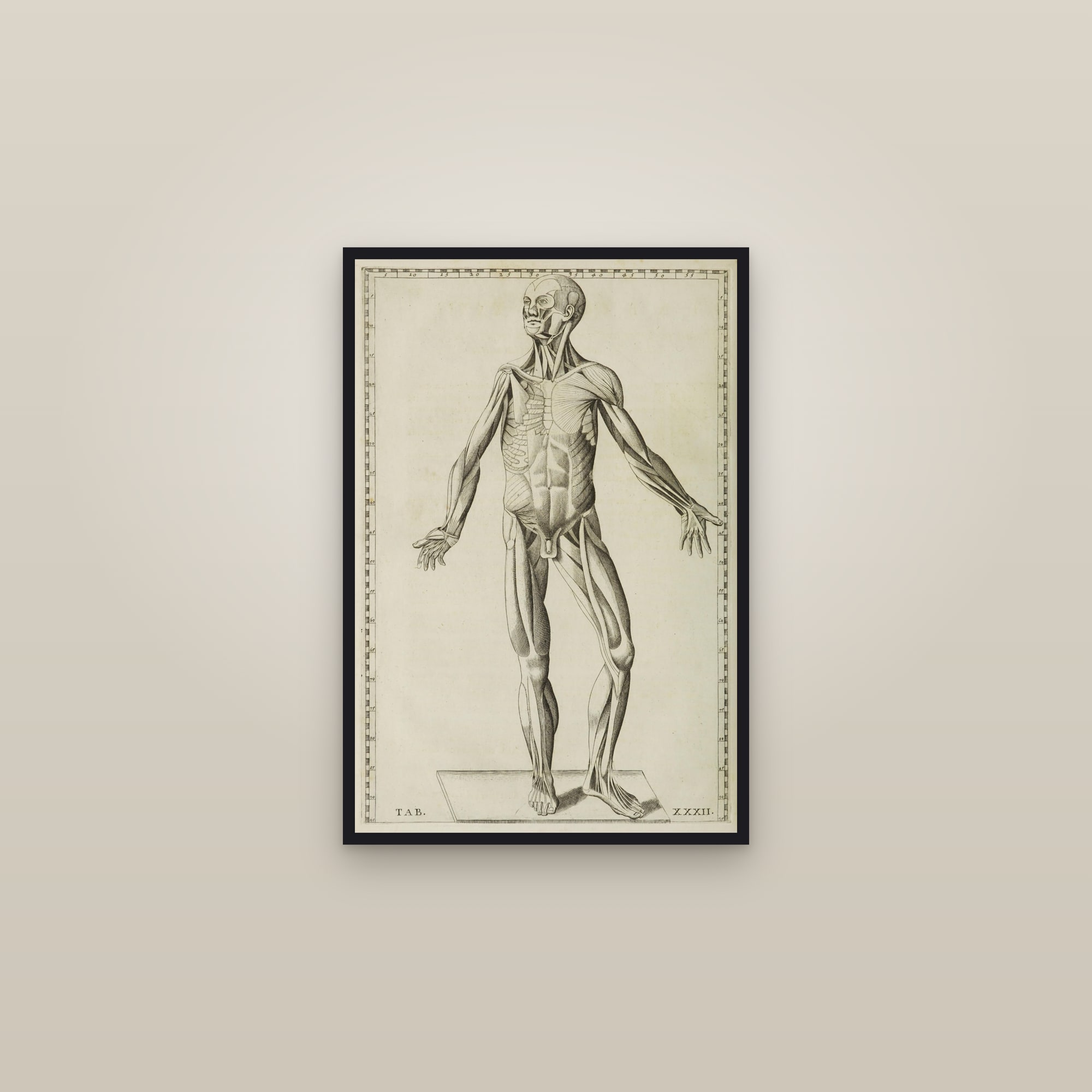
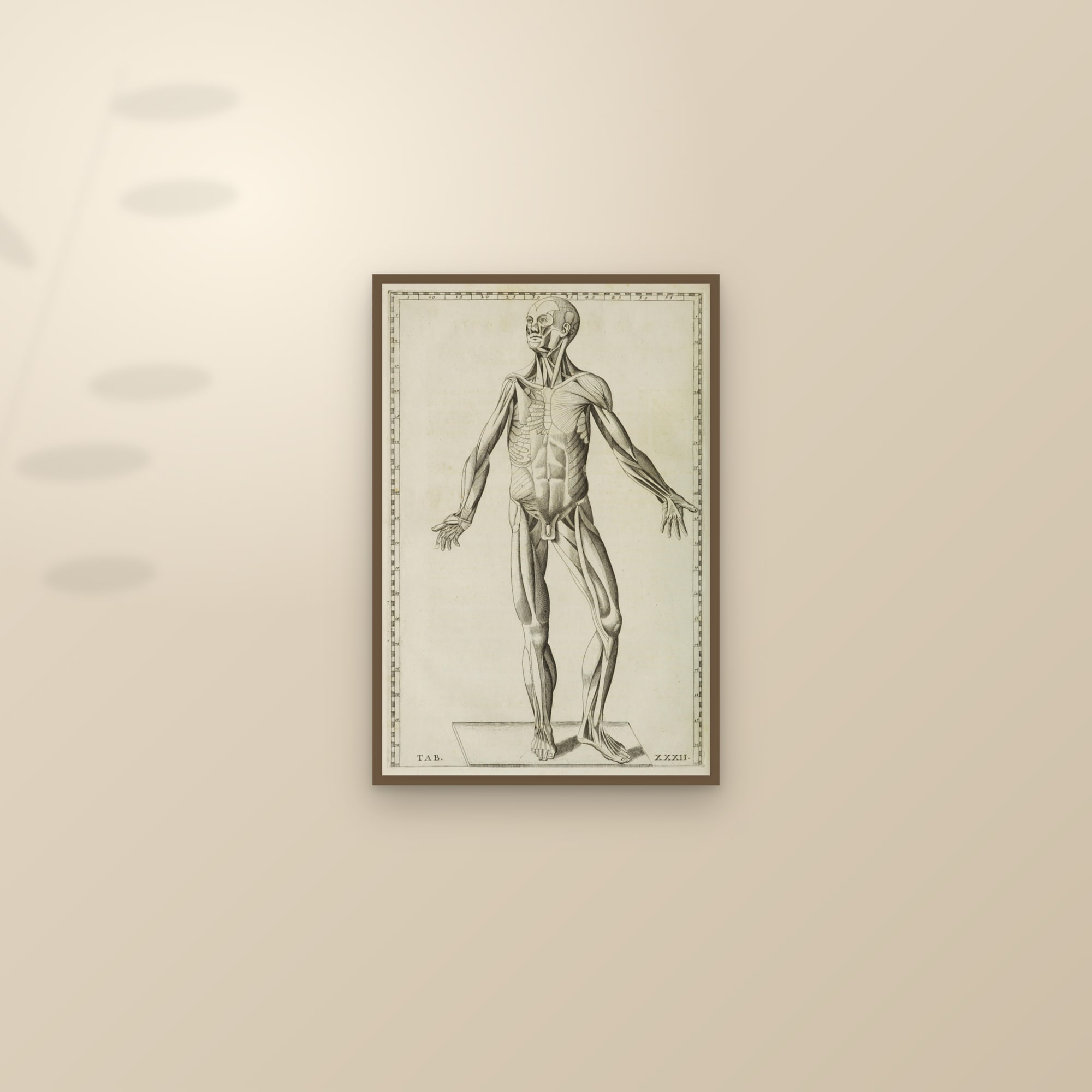
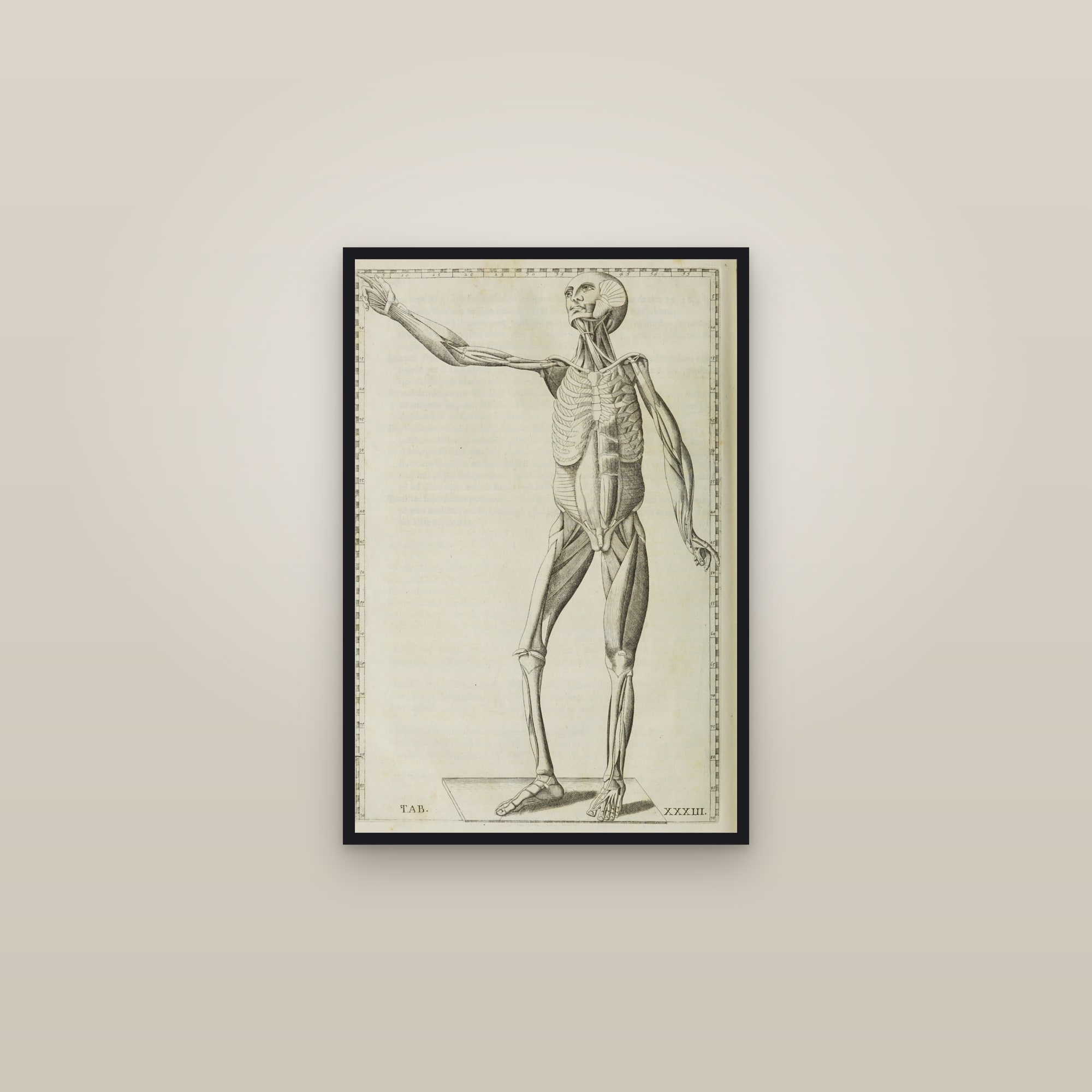
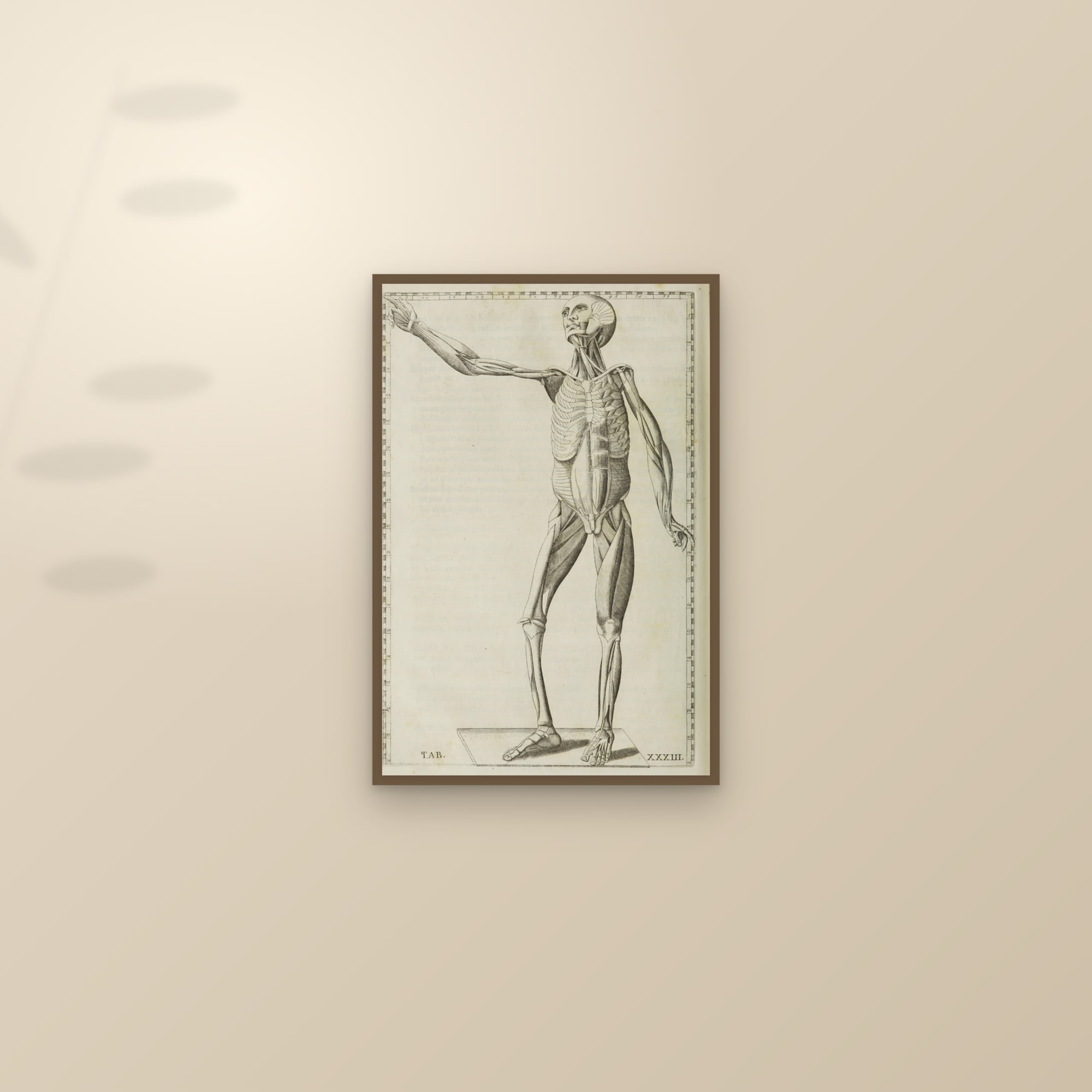
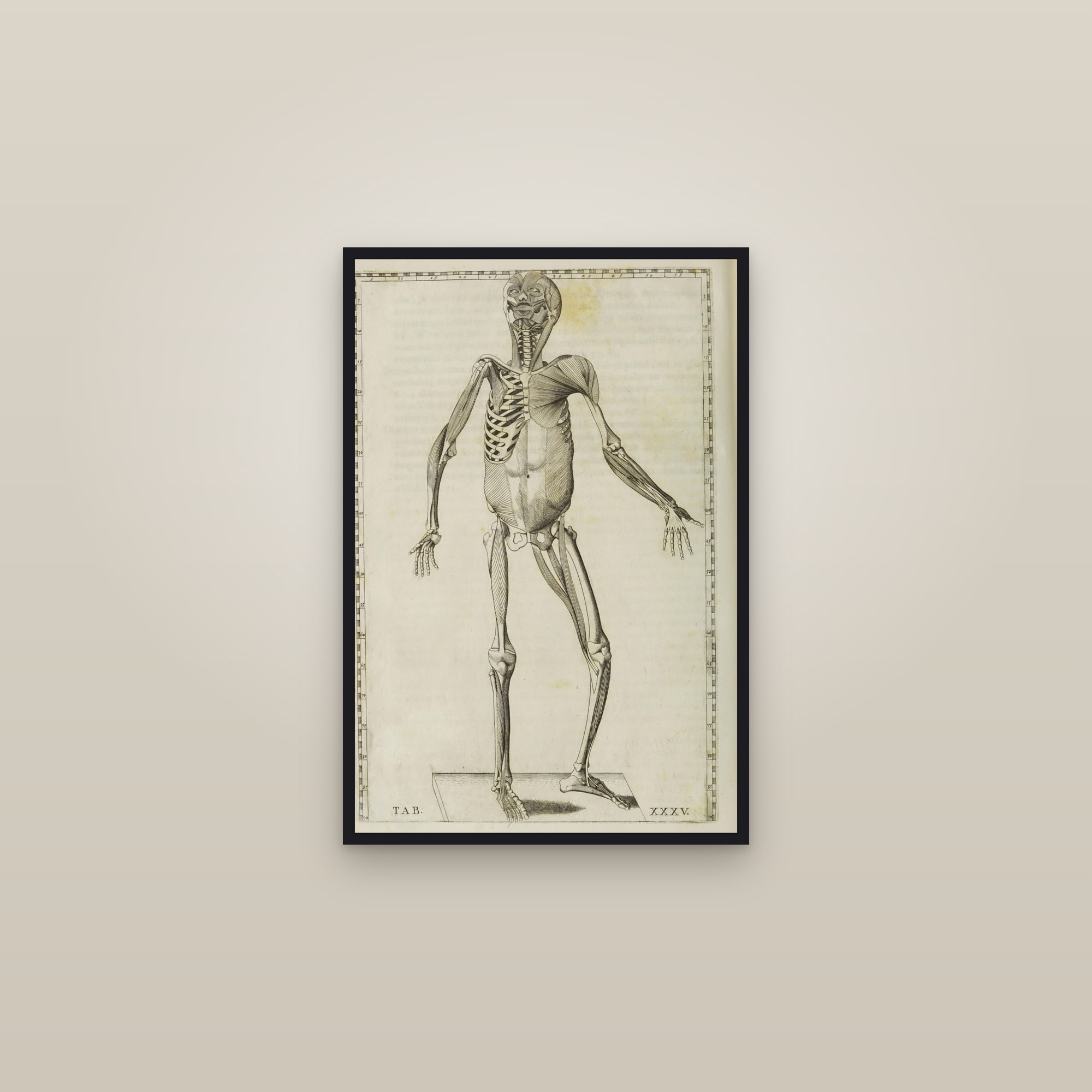
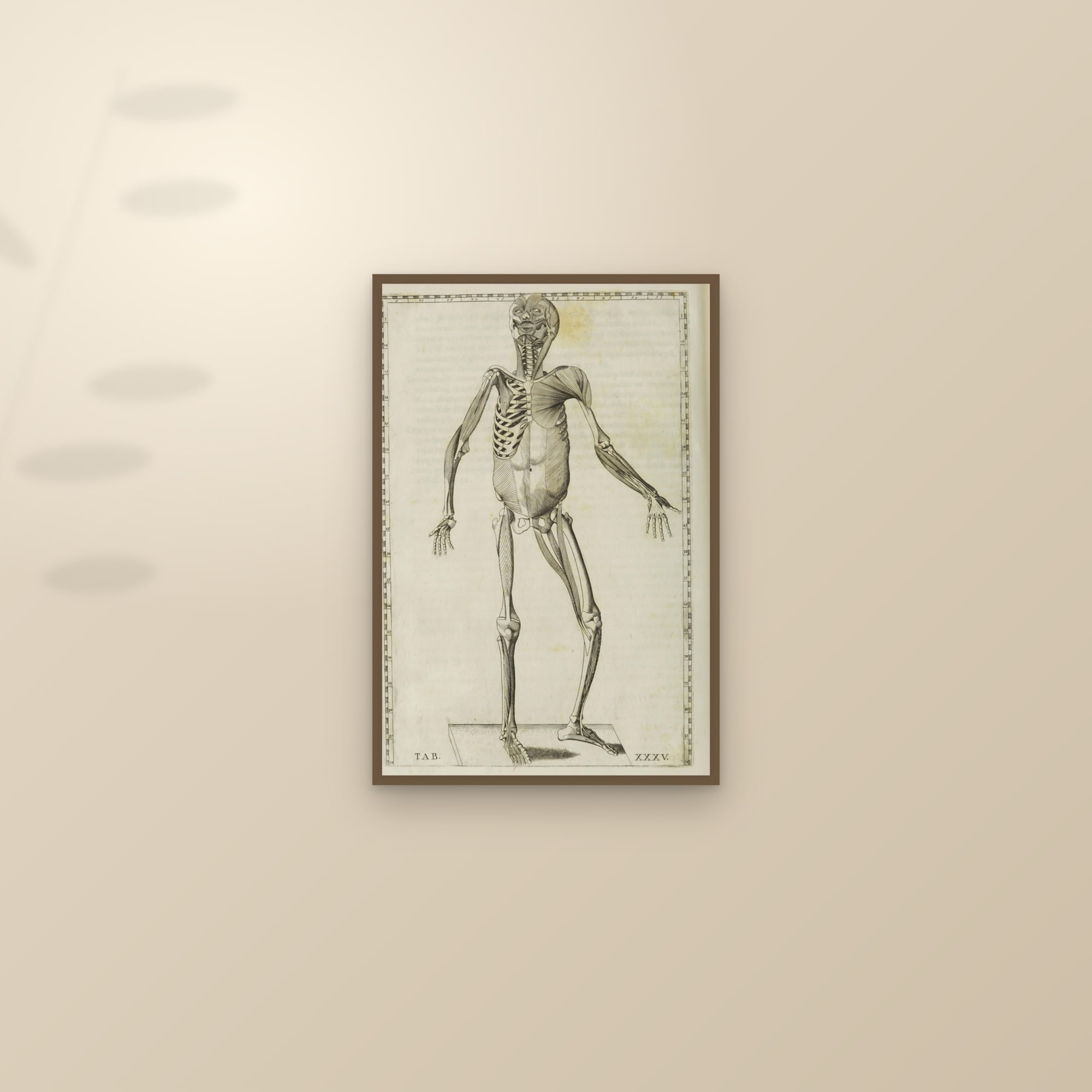
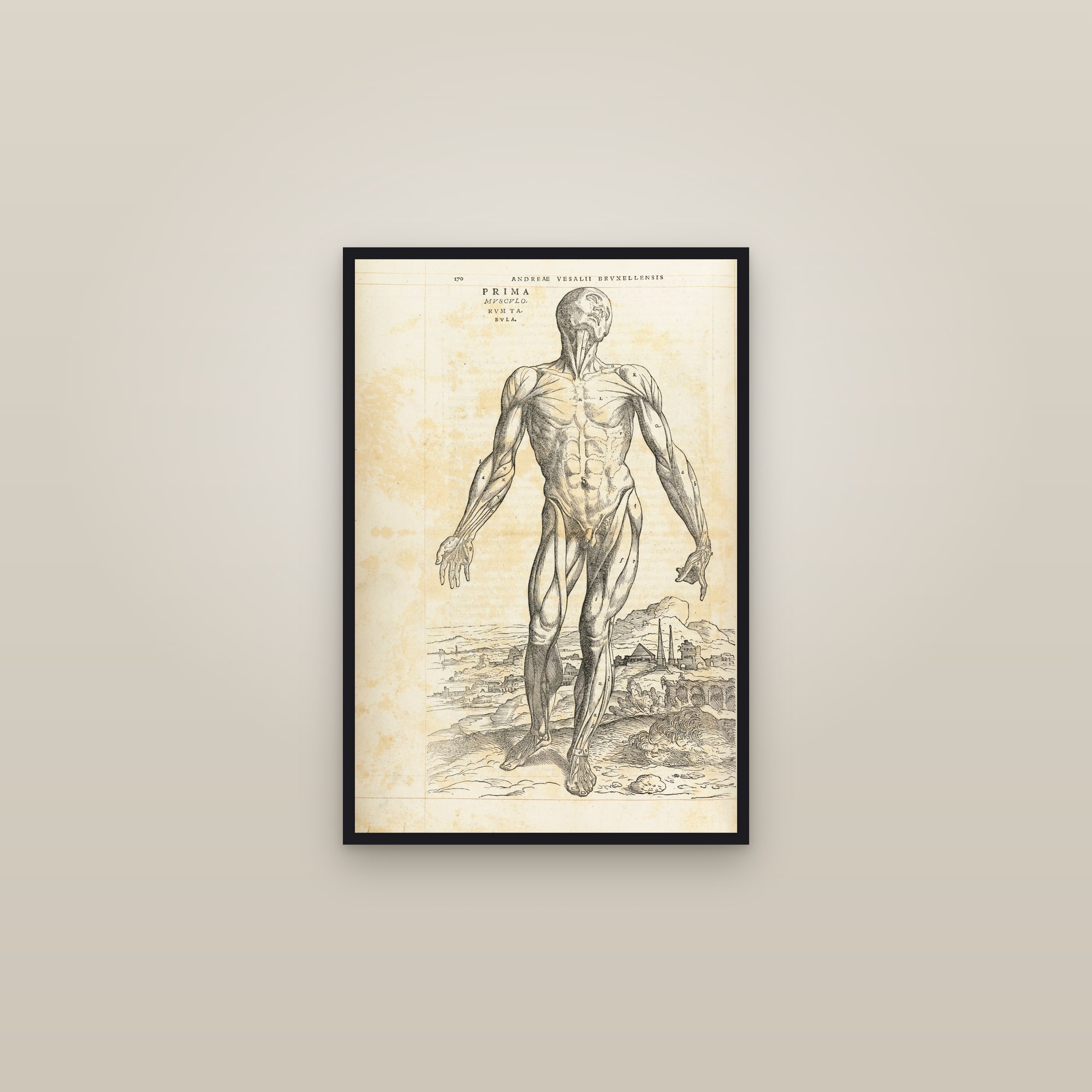
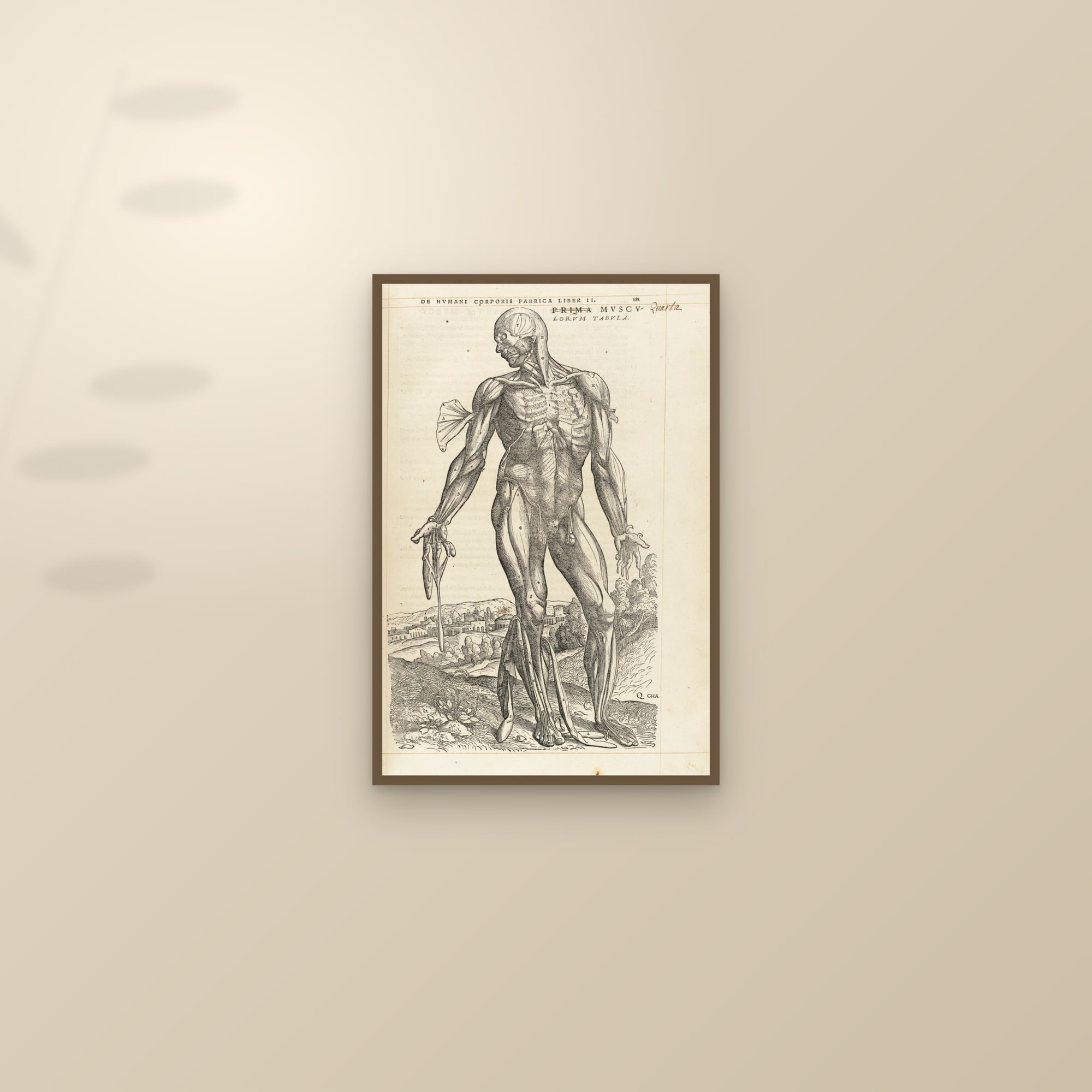
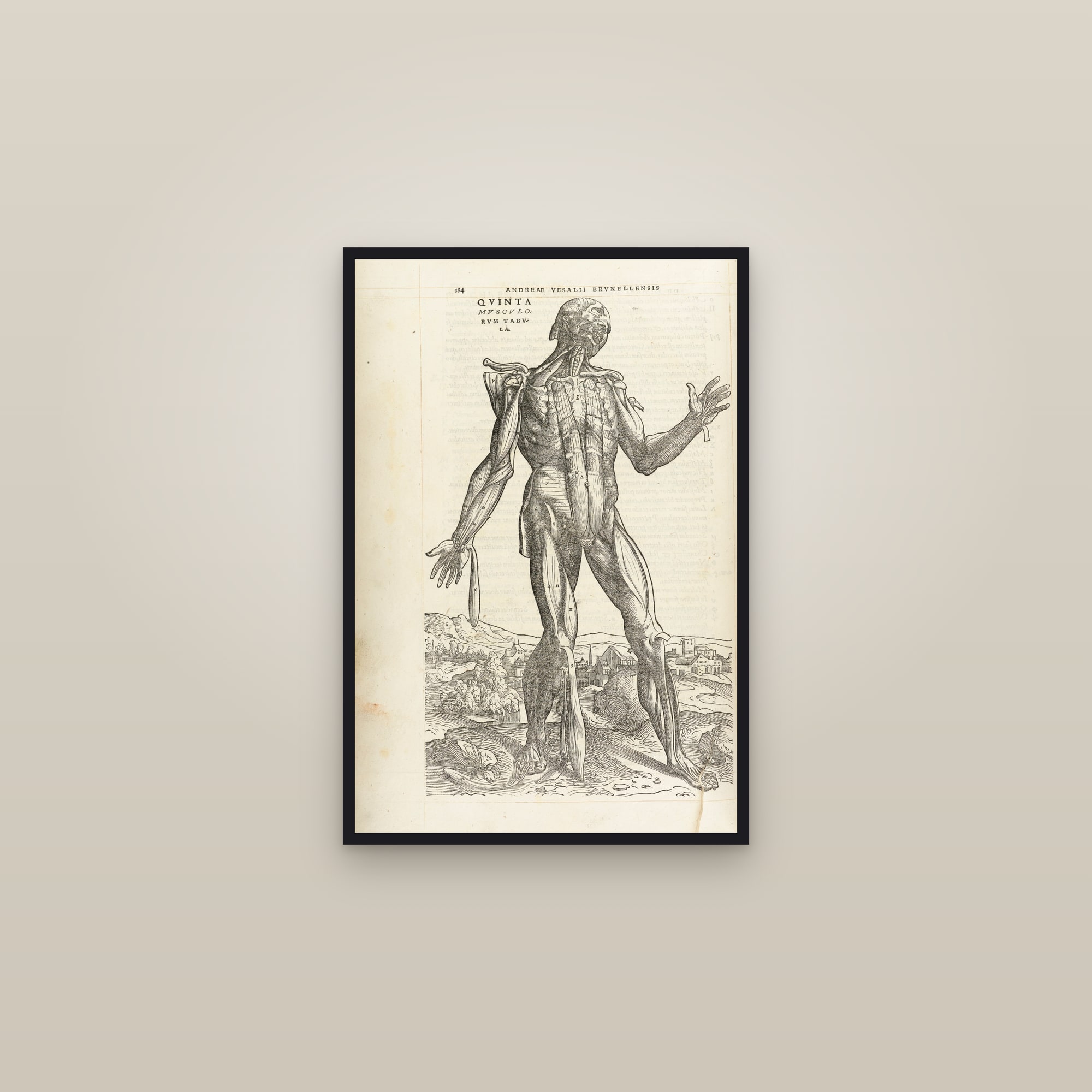
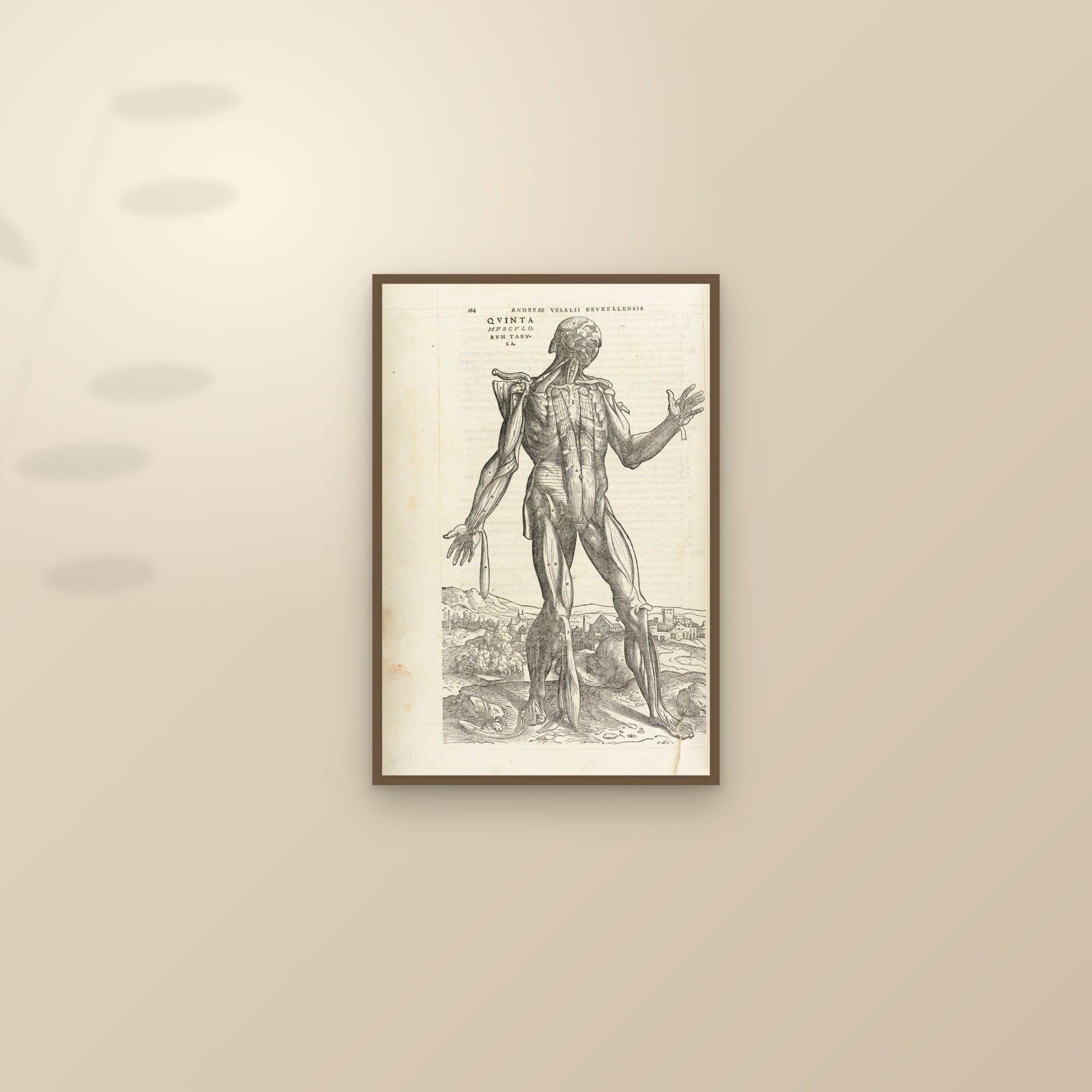
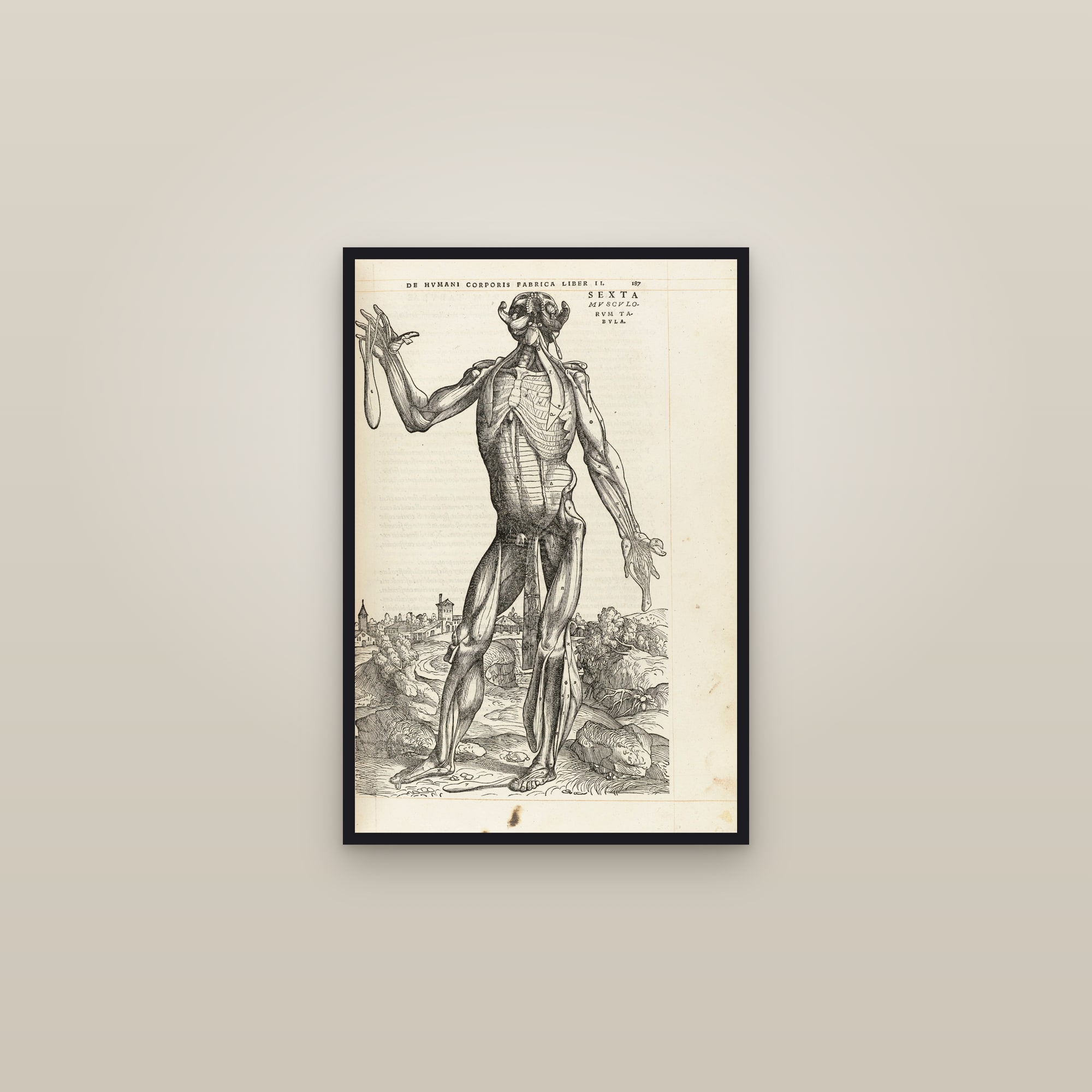
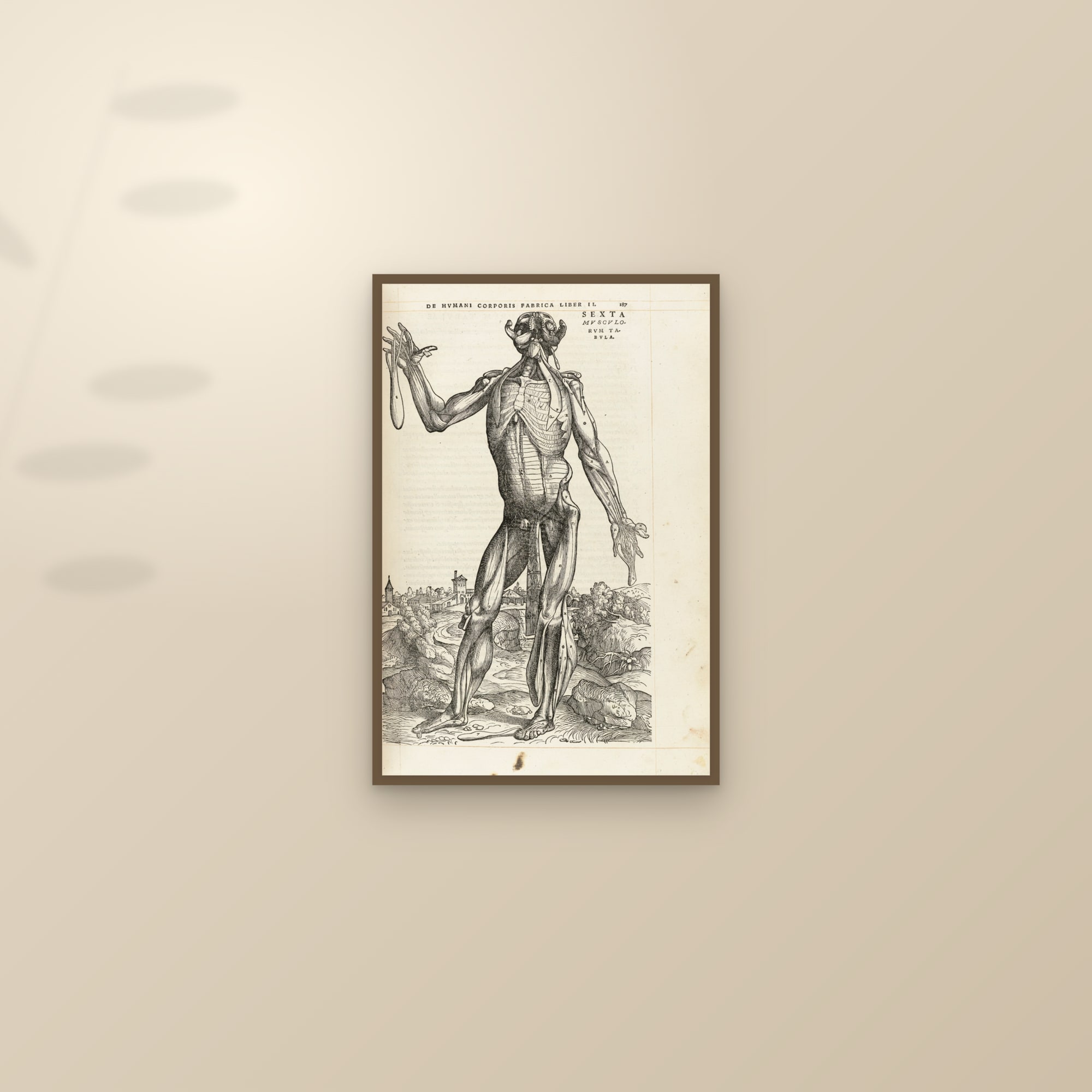
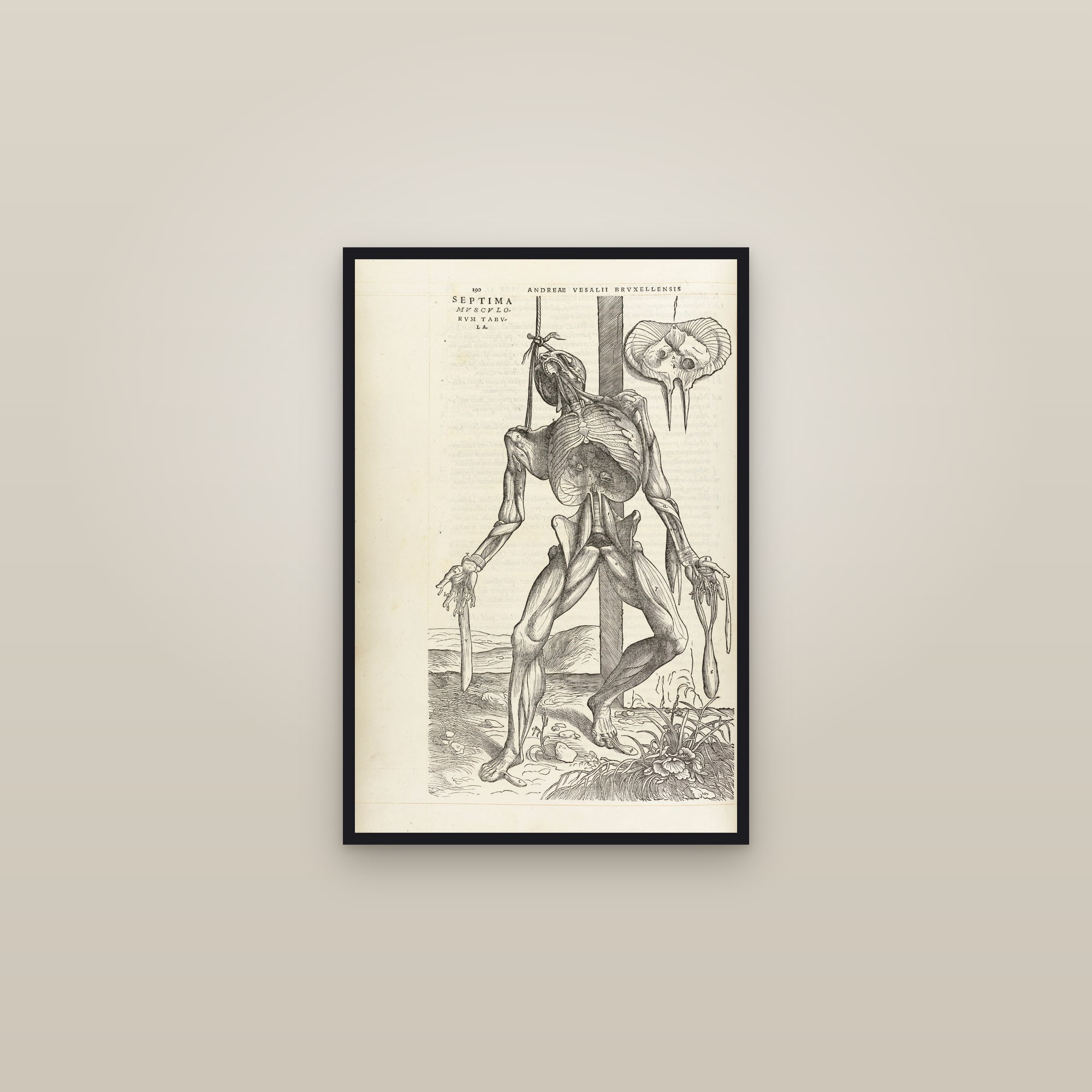
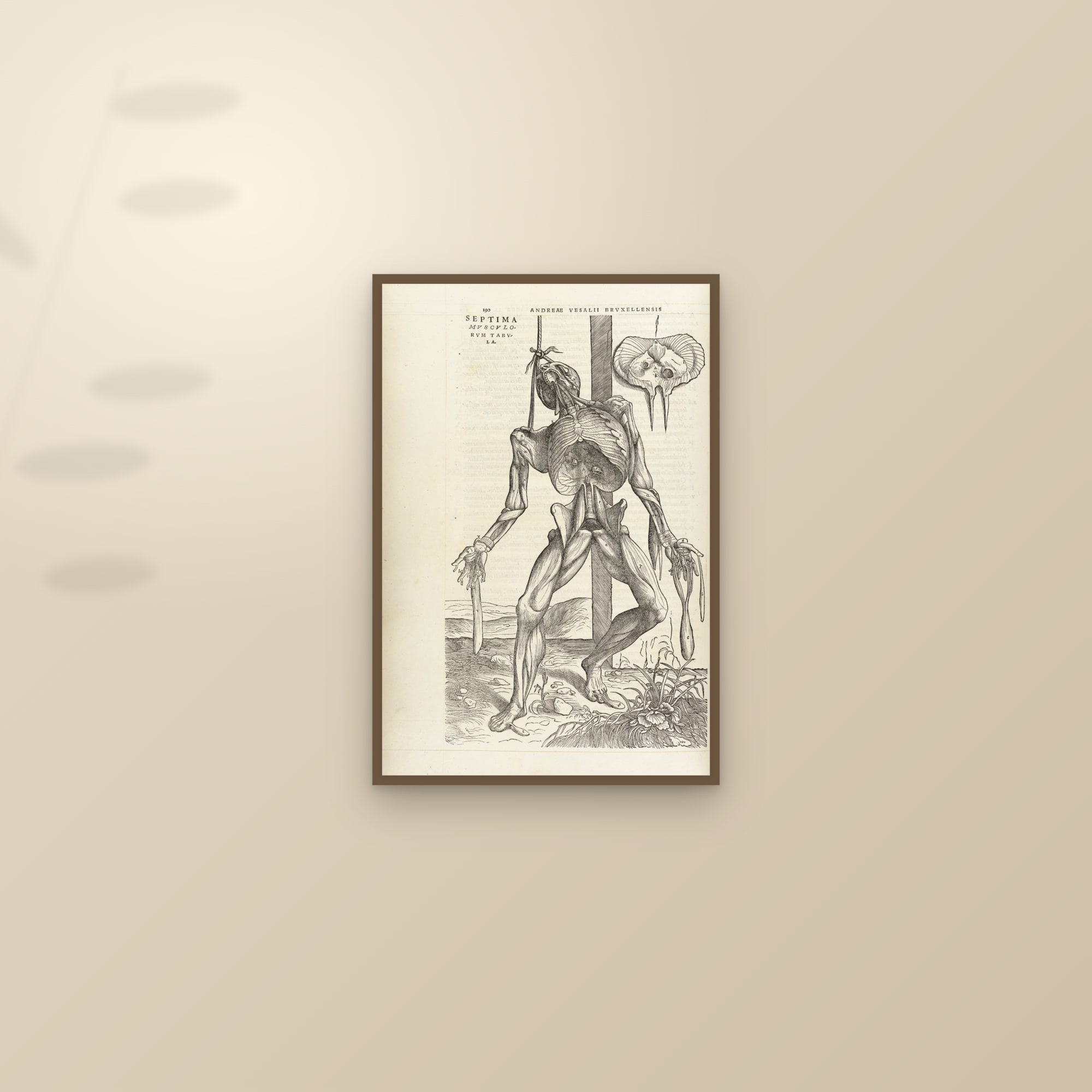
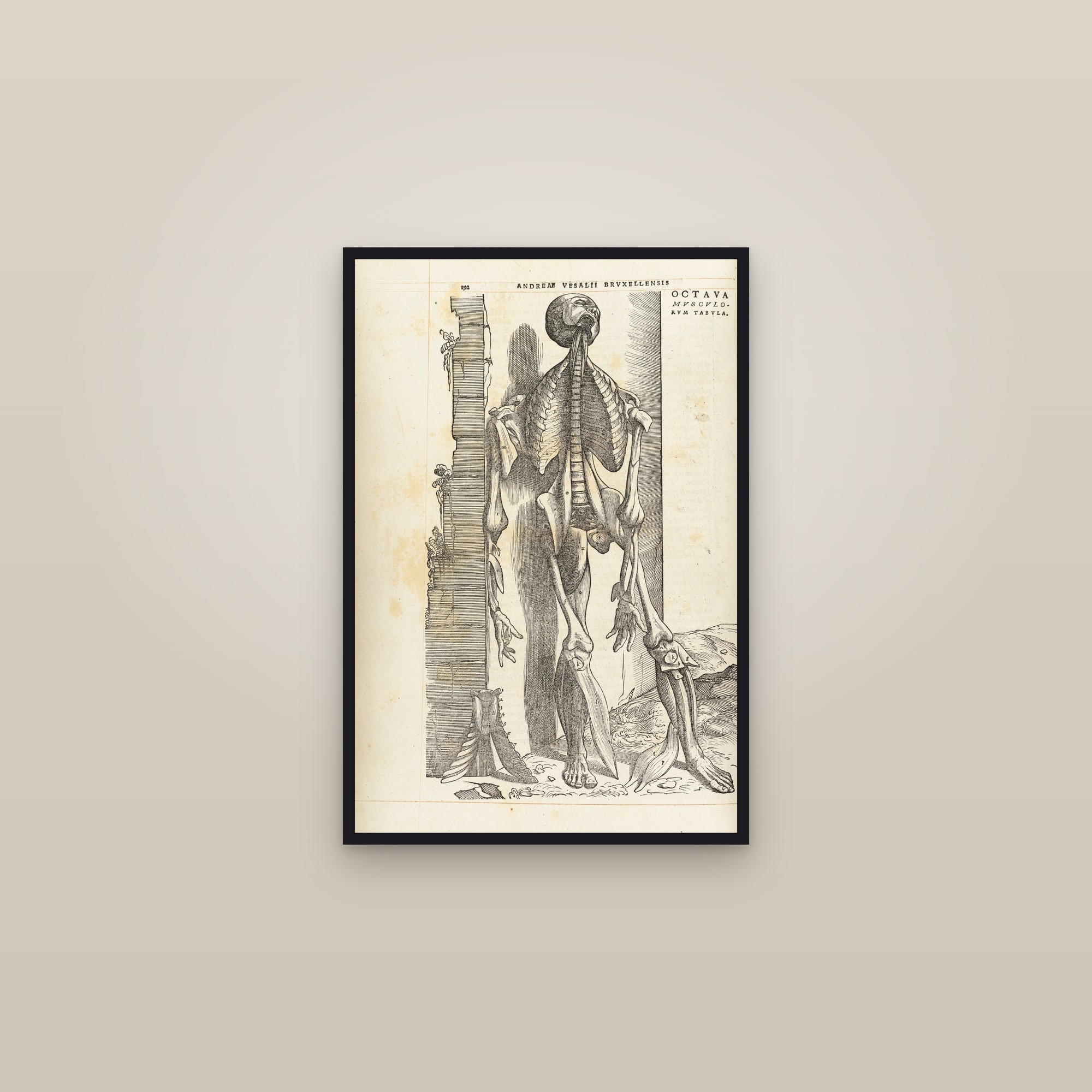
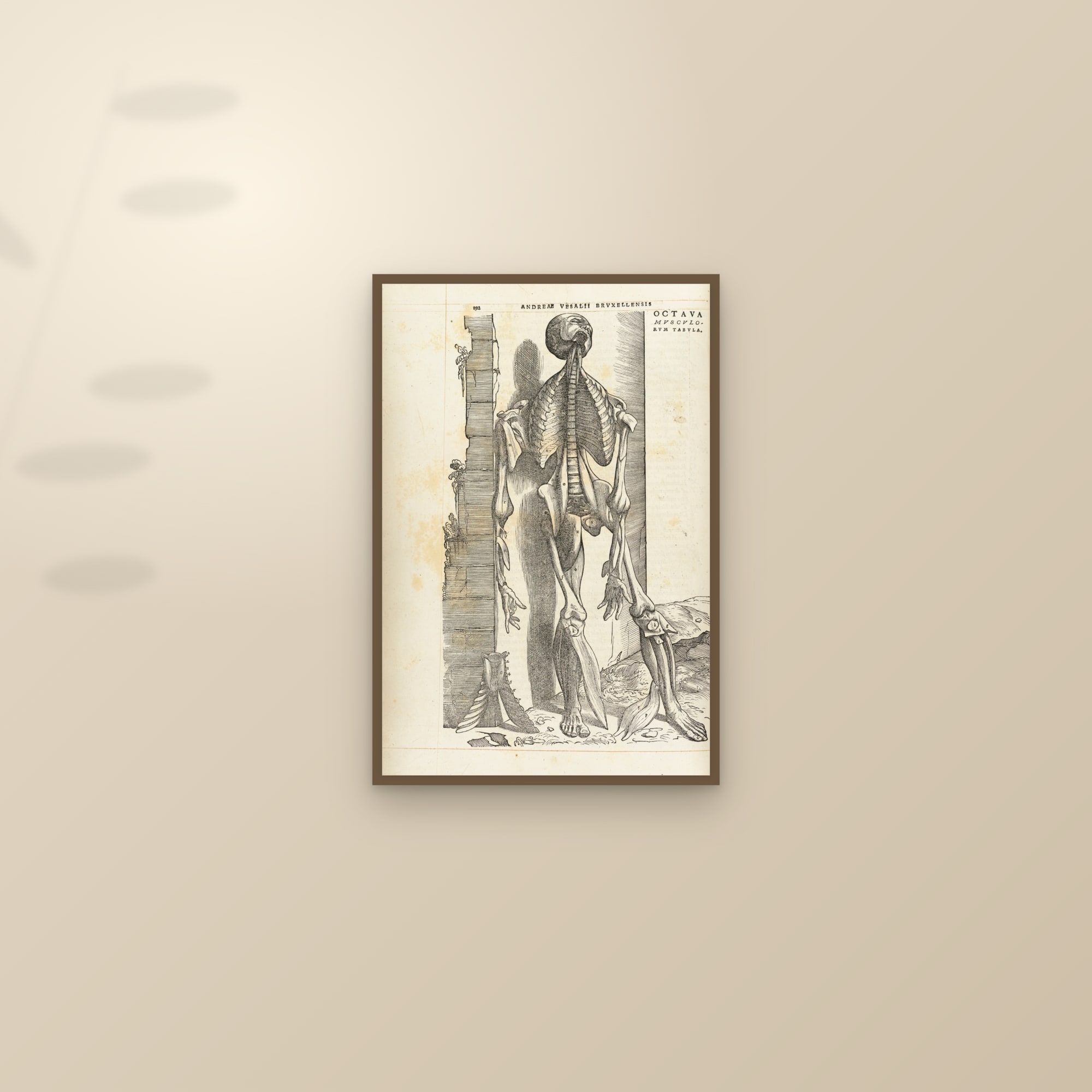
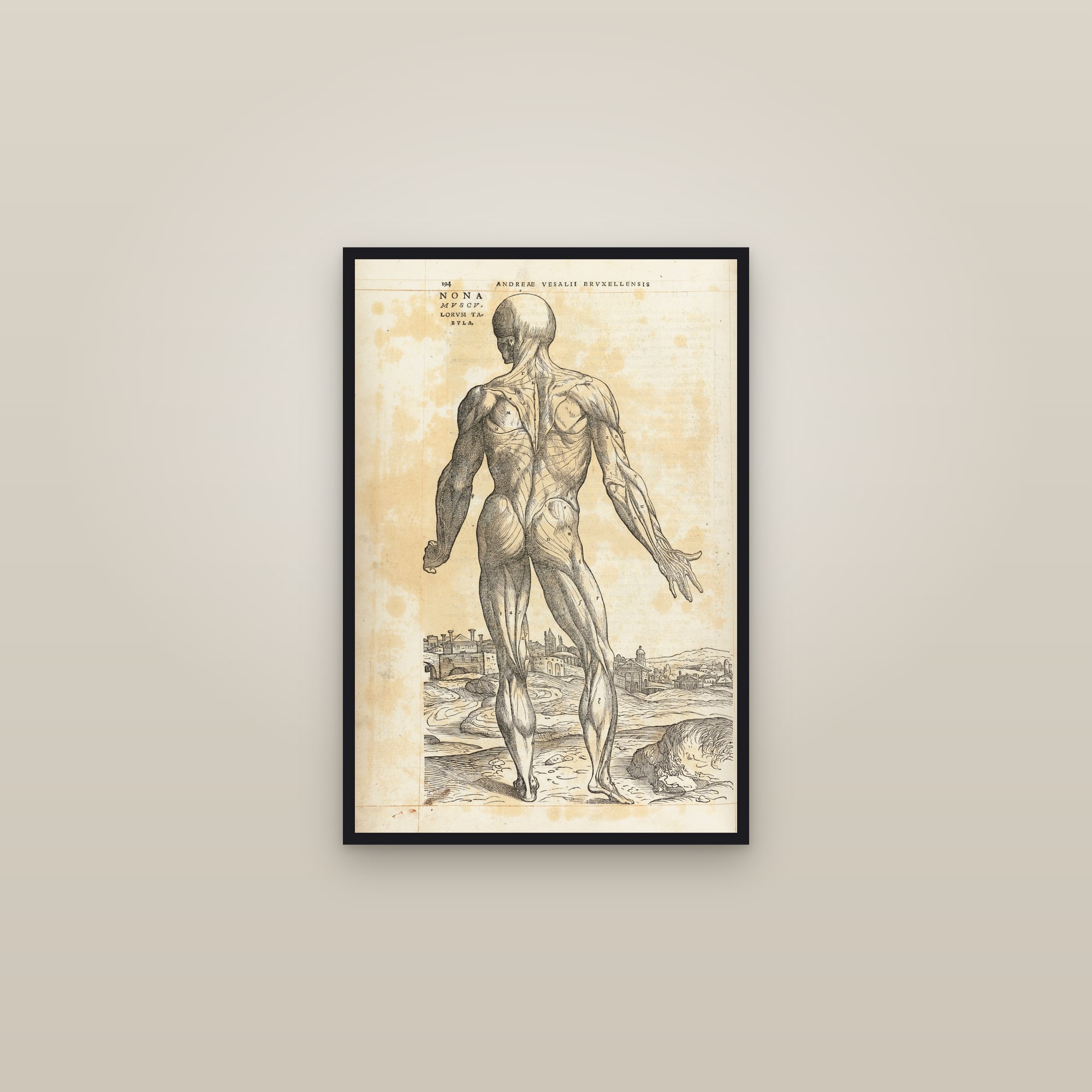
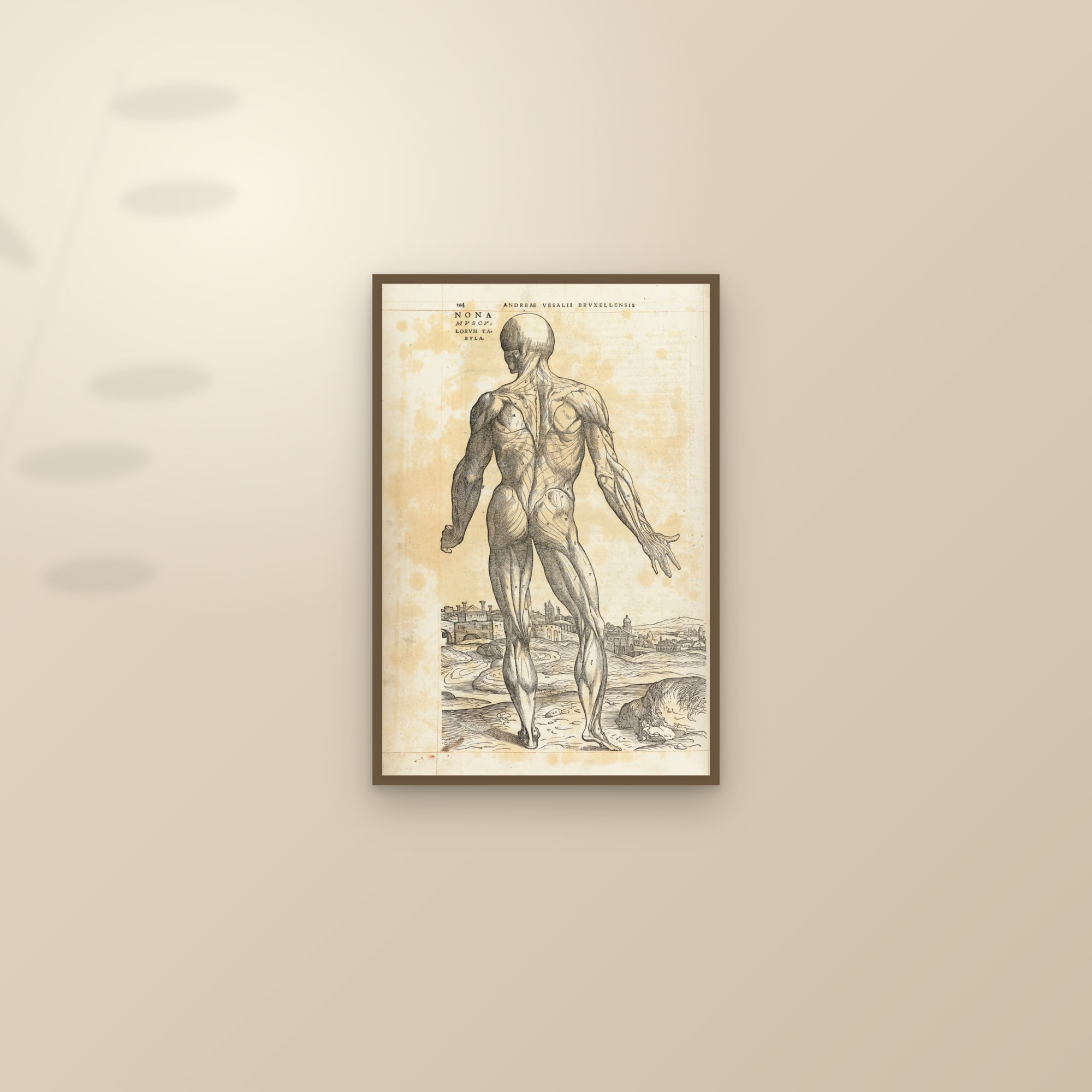
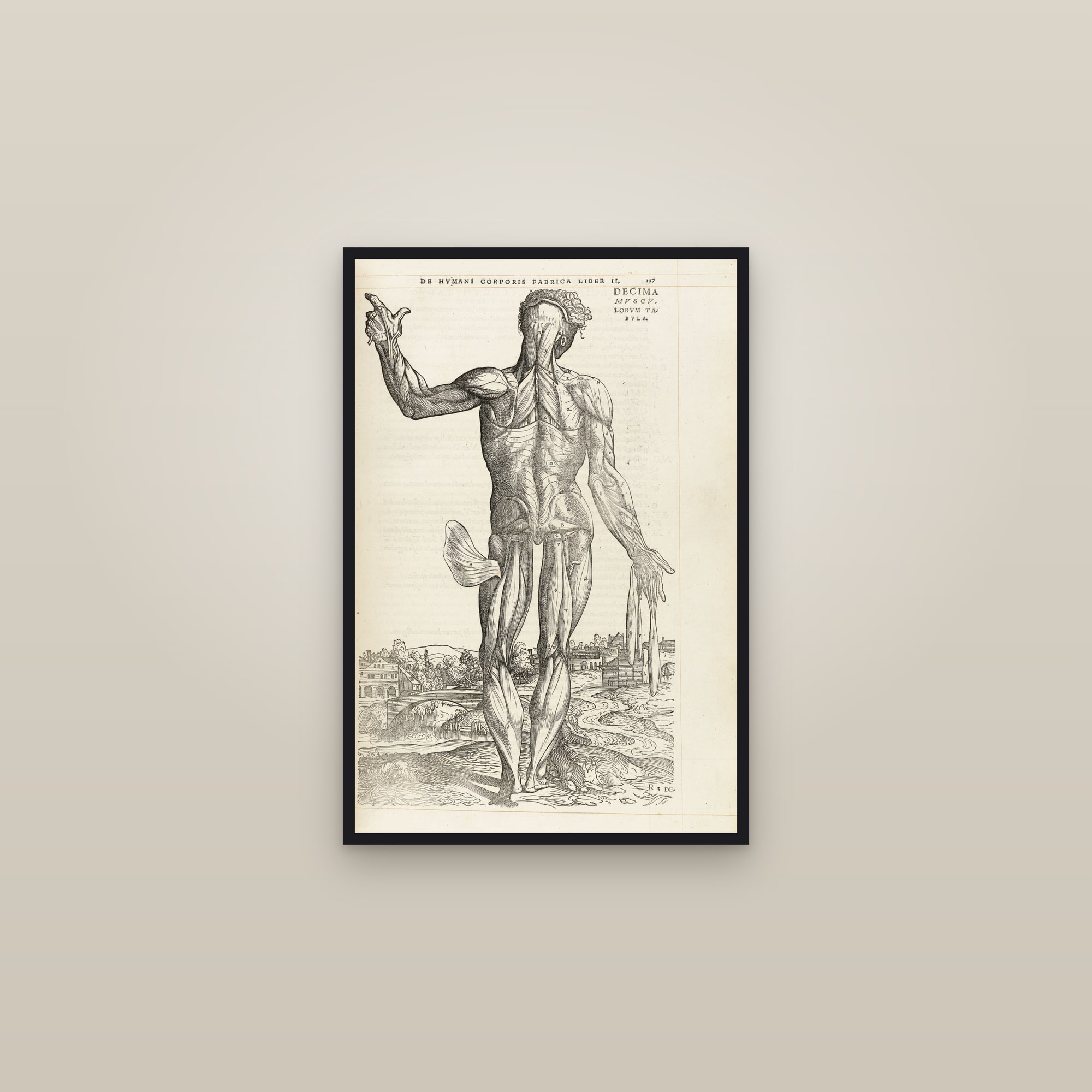
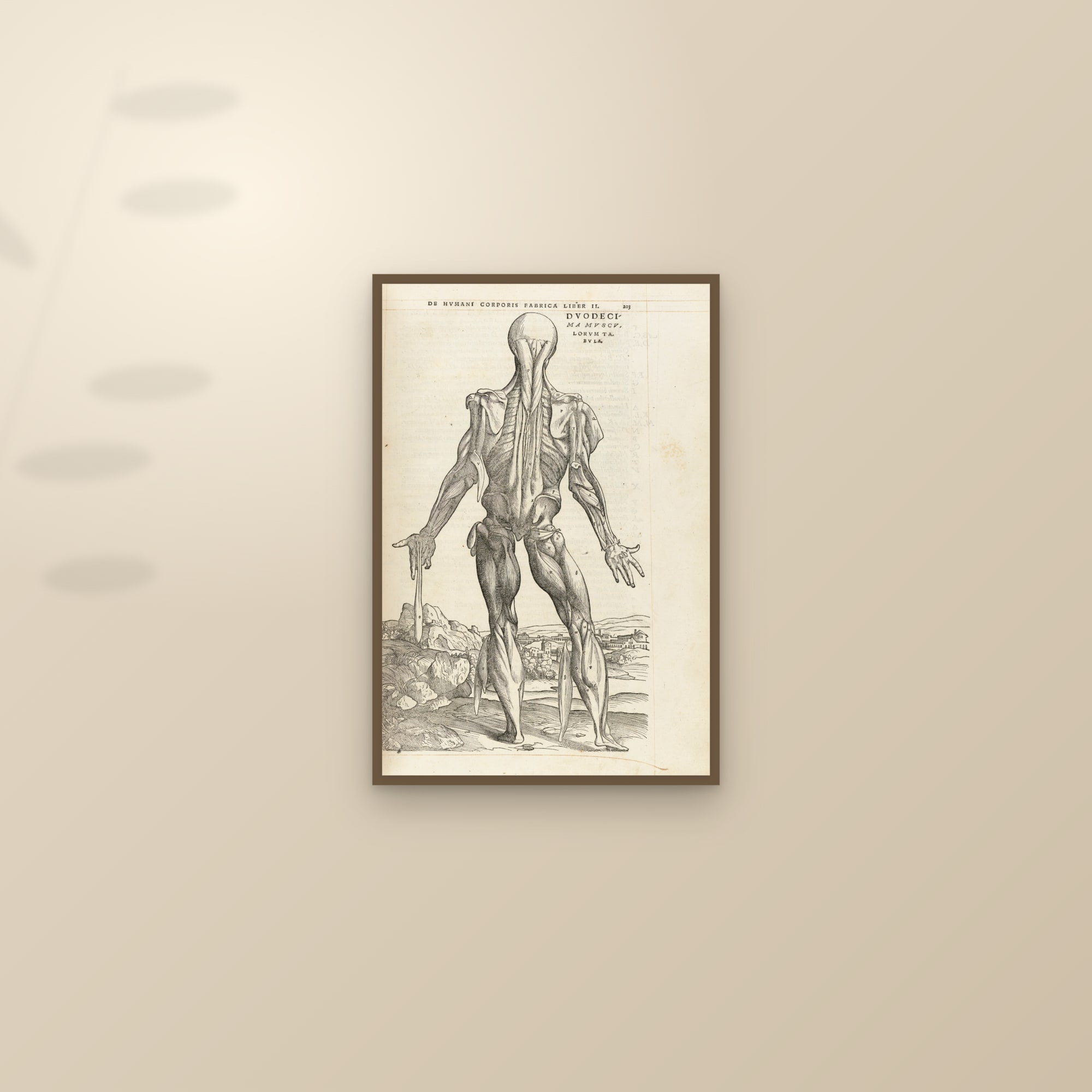
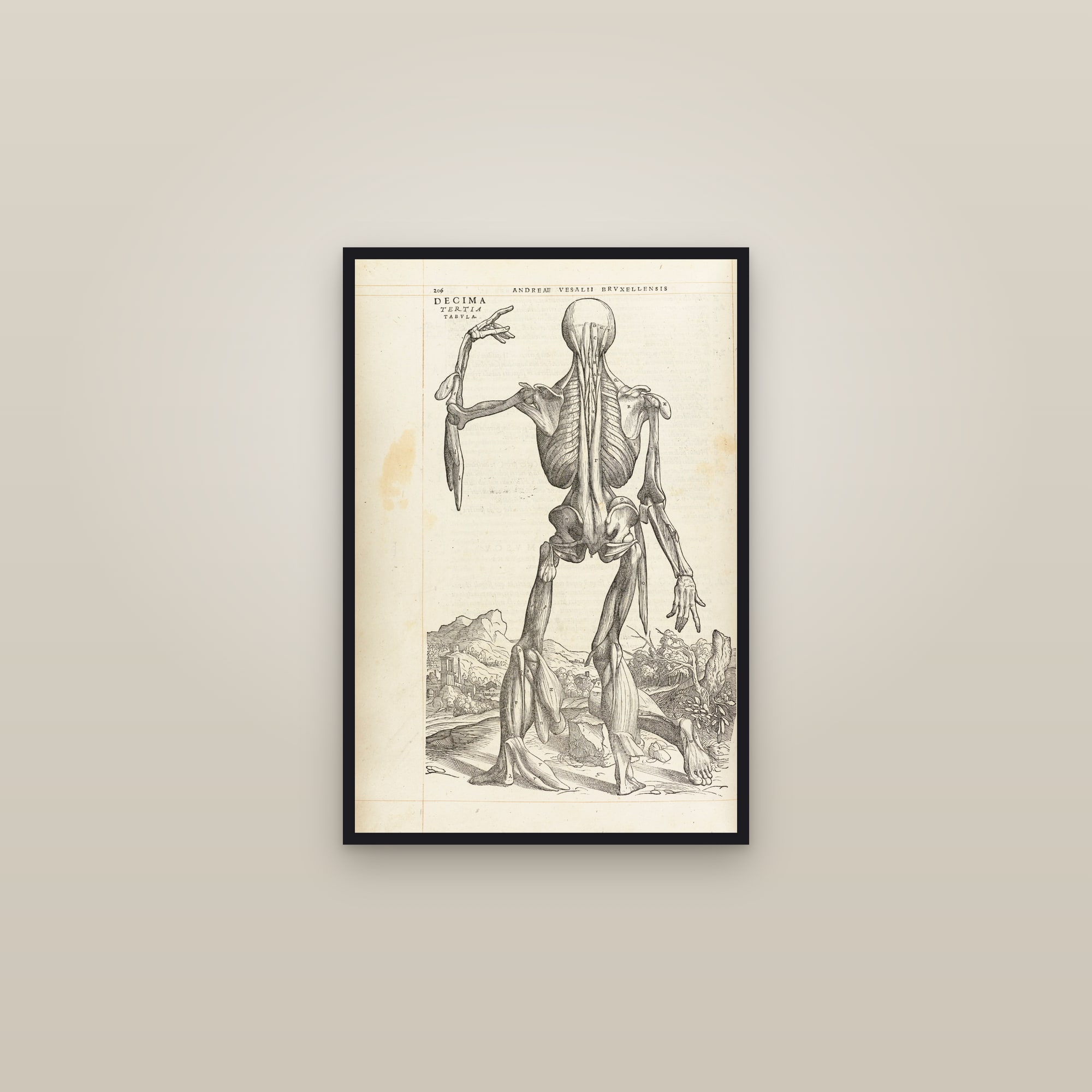
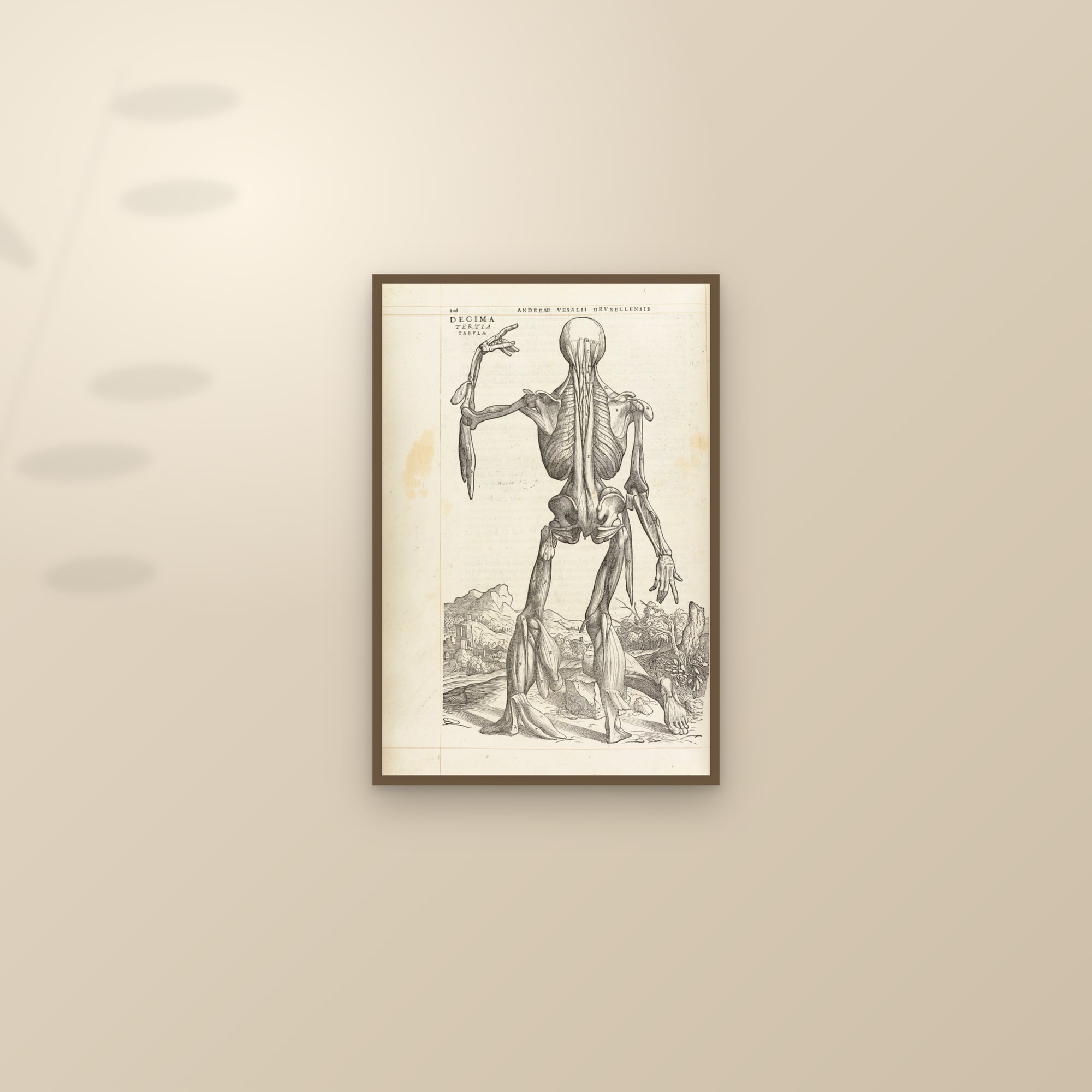
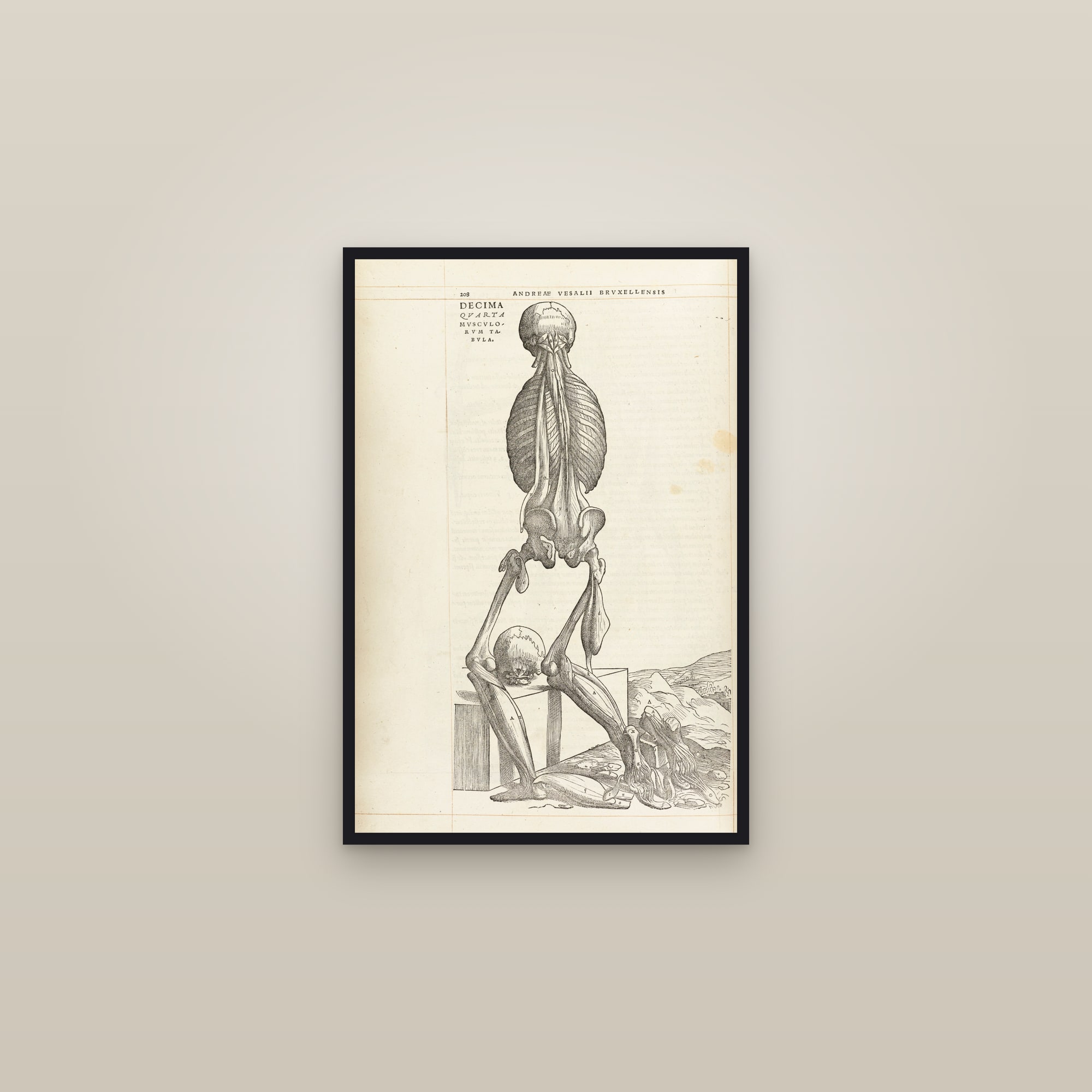
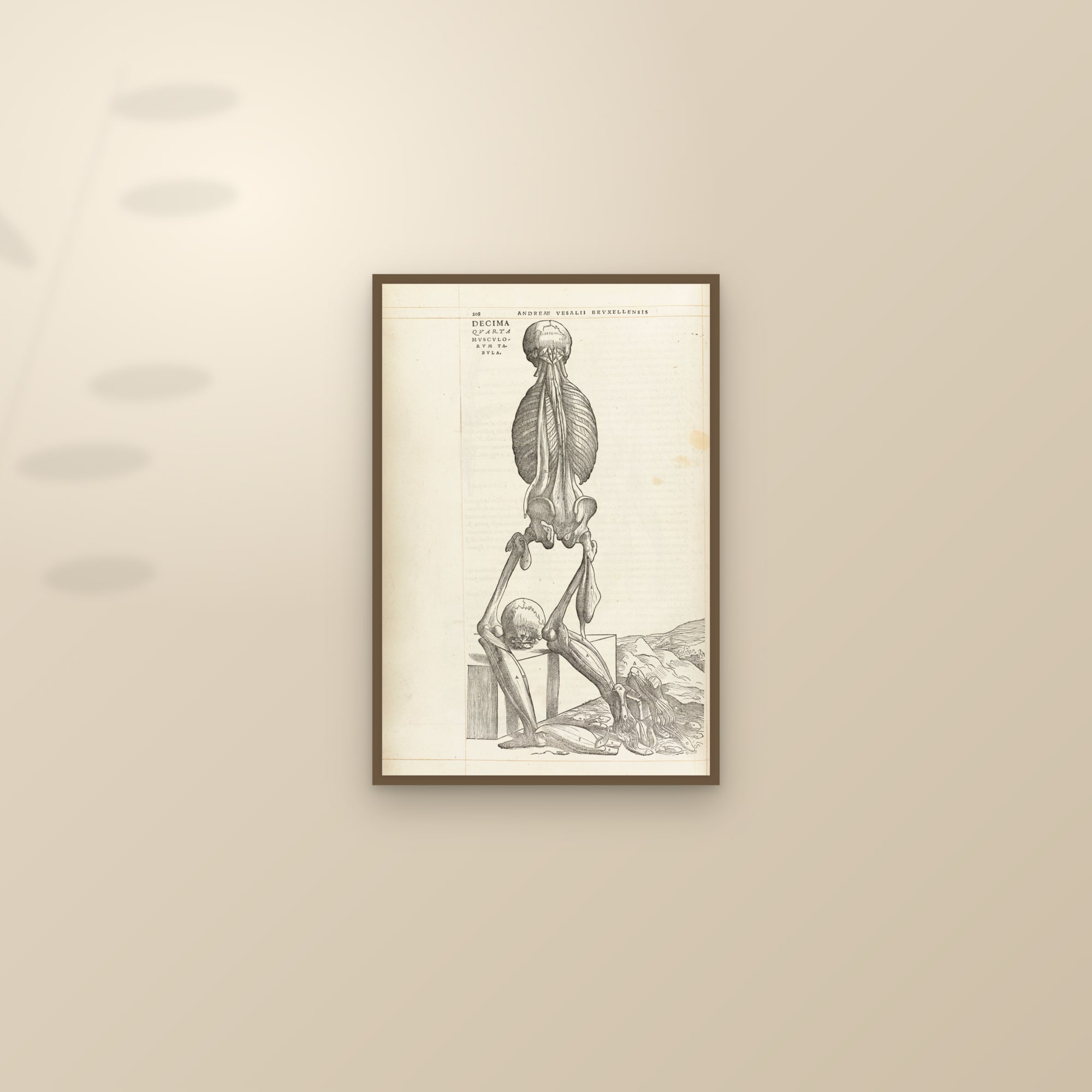
An écorché, French for flayed, is a figure shown without its skin so the muscles can be studied, and it has been the meeting point of anatomy and art since the Renaissance. Vesalius's fourteen muscle men of 1543, woodcuts of a figure stripped a layer at a time against a landscape, set the type; Eustachi's copper écorchés, engraved in the sixteenth century and published in 1714, pose the figure turning and reaching; Albinus's engravings of 1747 give the muscles in four orders, front and back, two of them beside a rhinoceros. Artists have drawn from all three for centuries.
Vein men, artery men and the title page
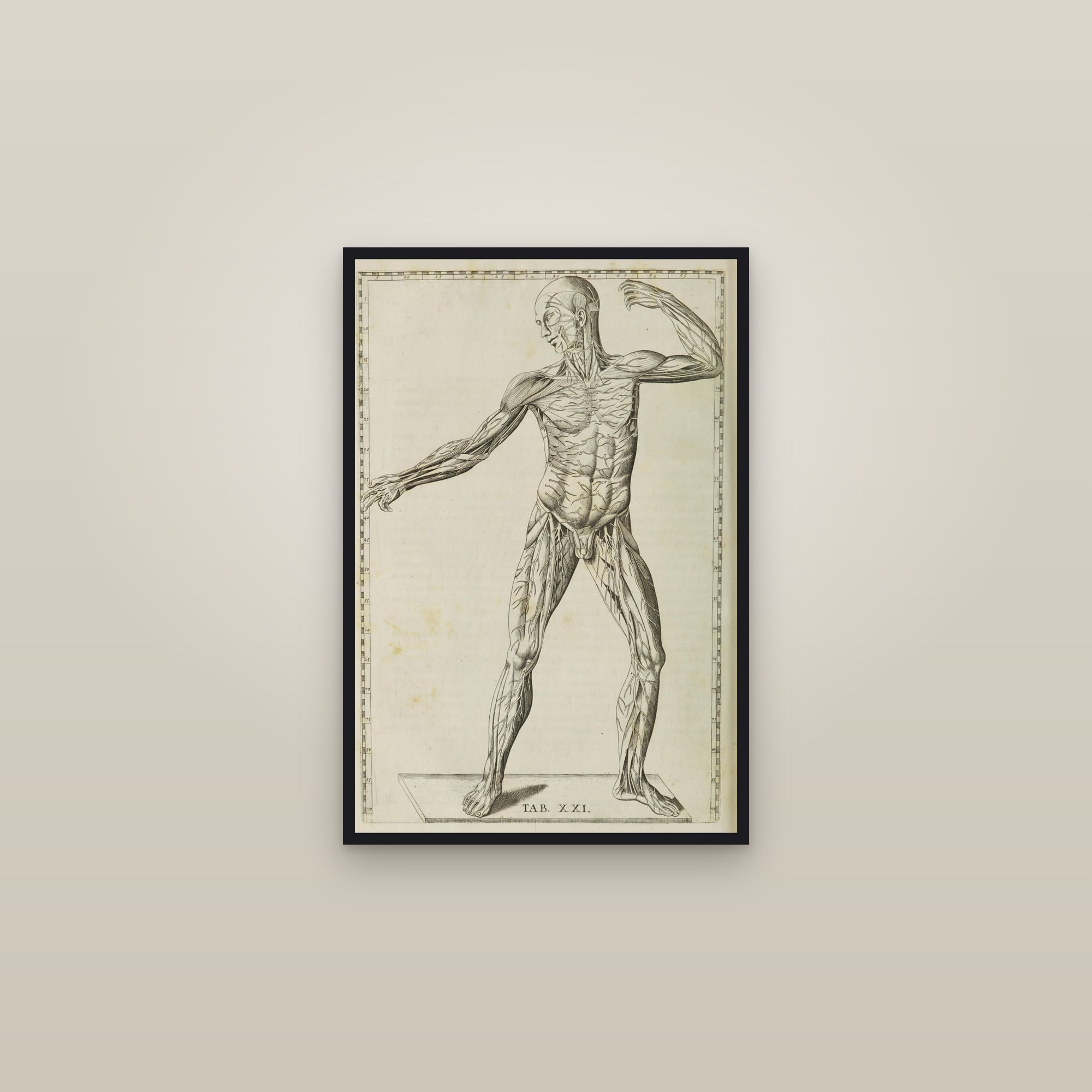
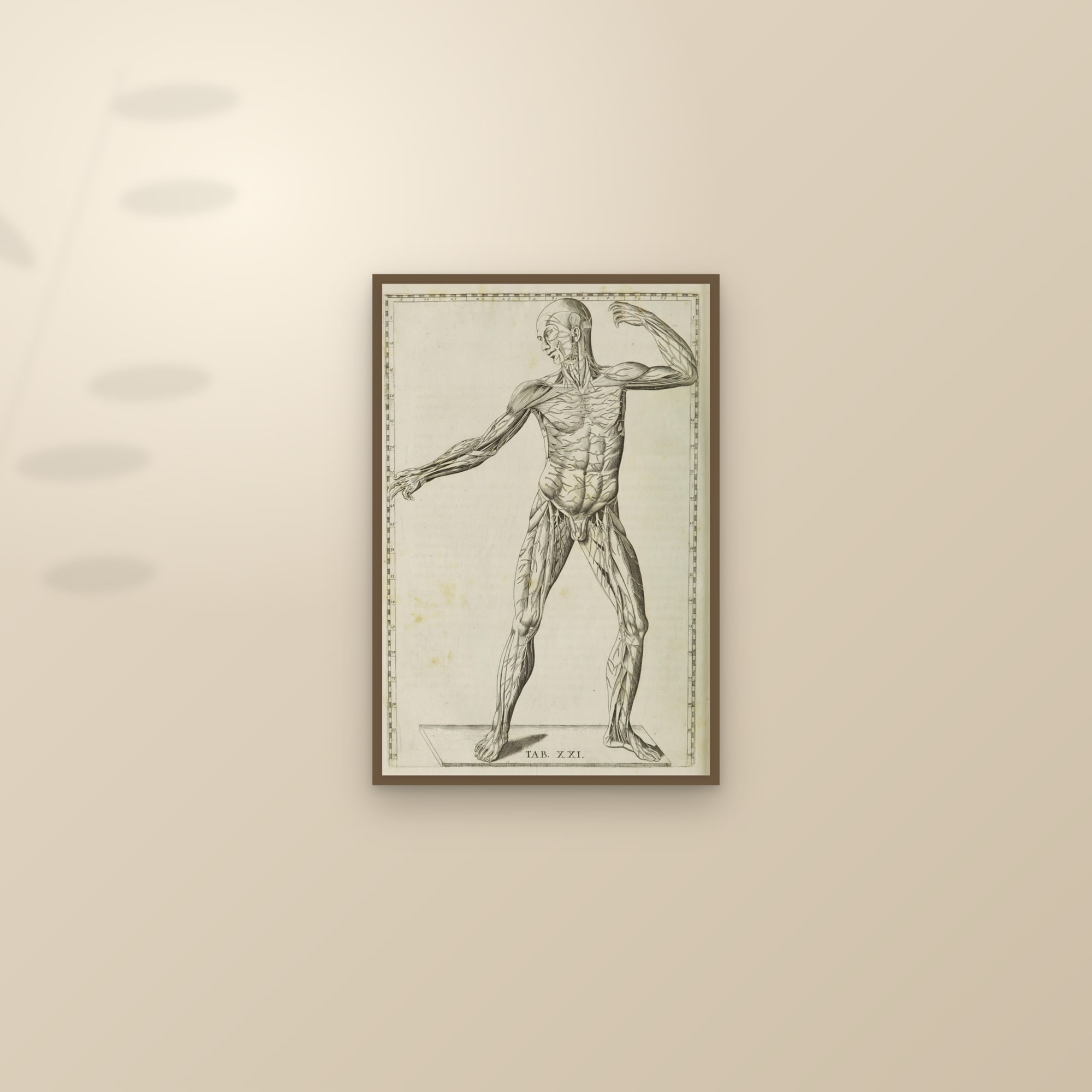
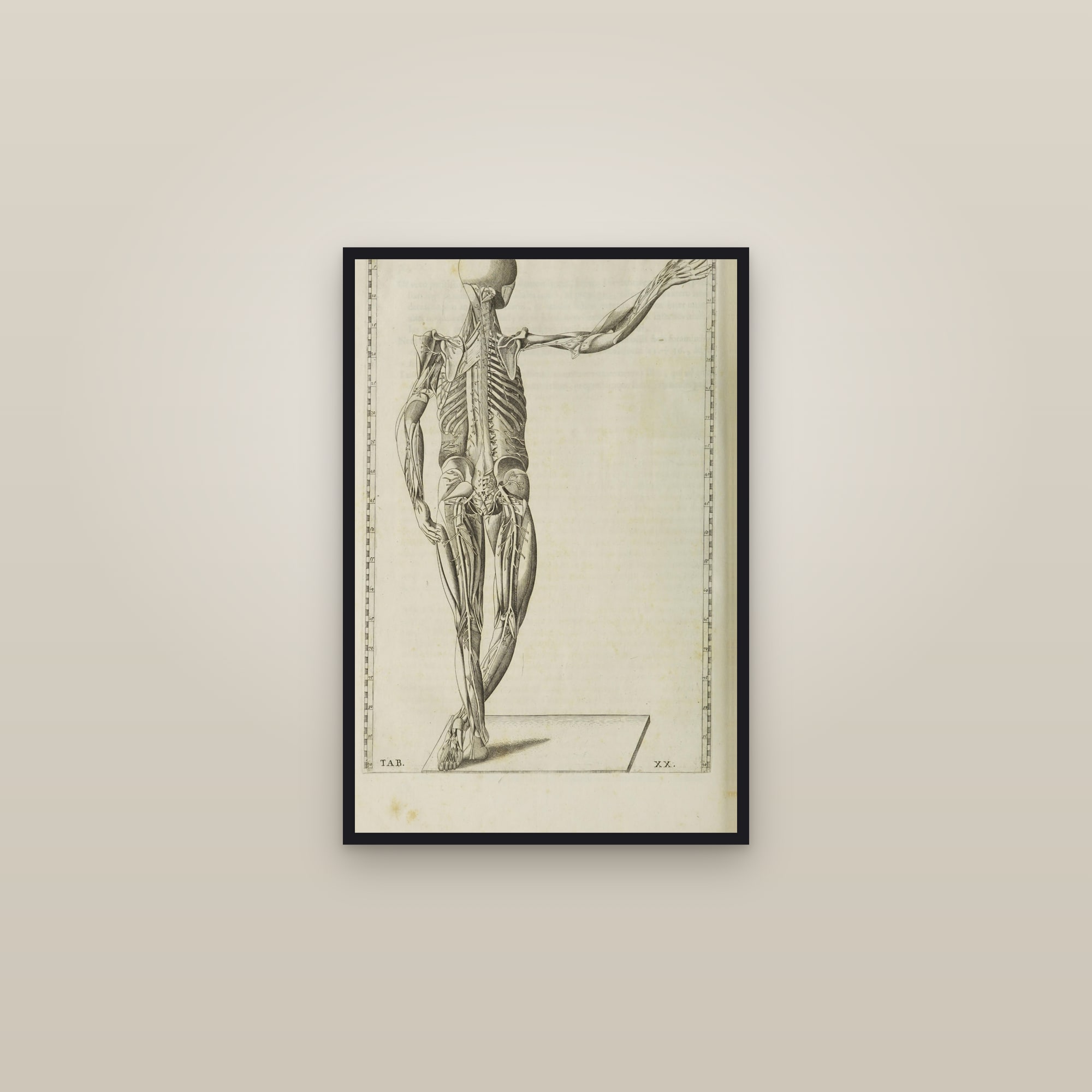
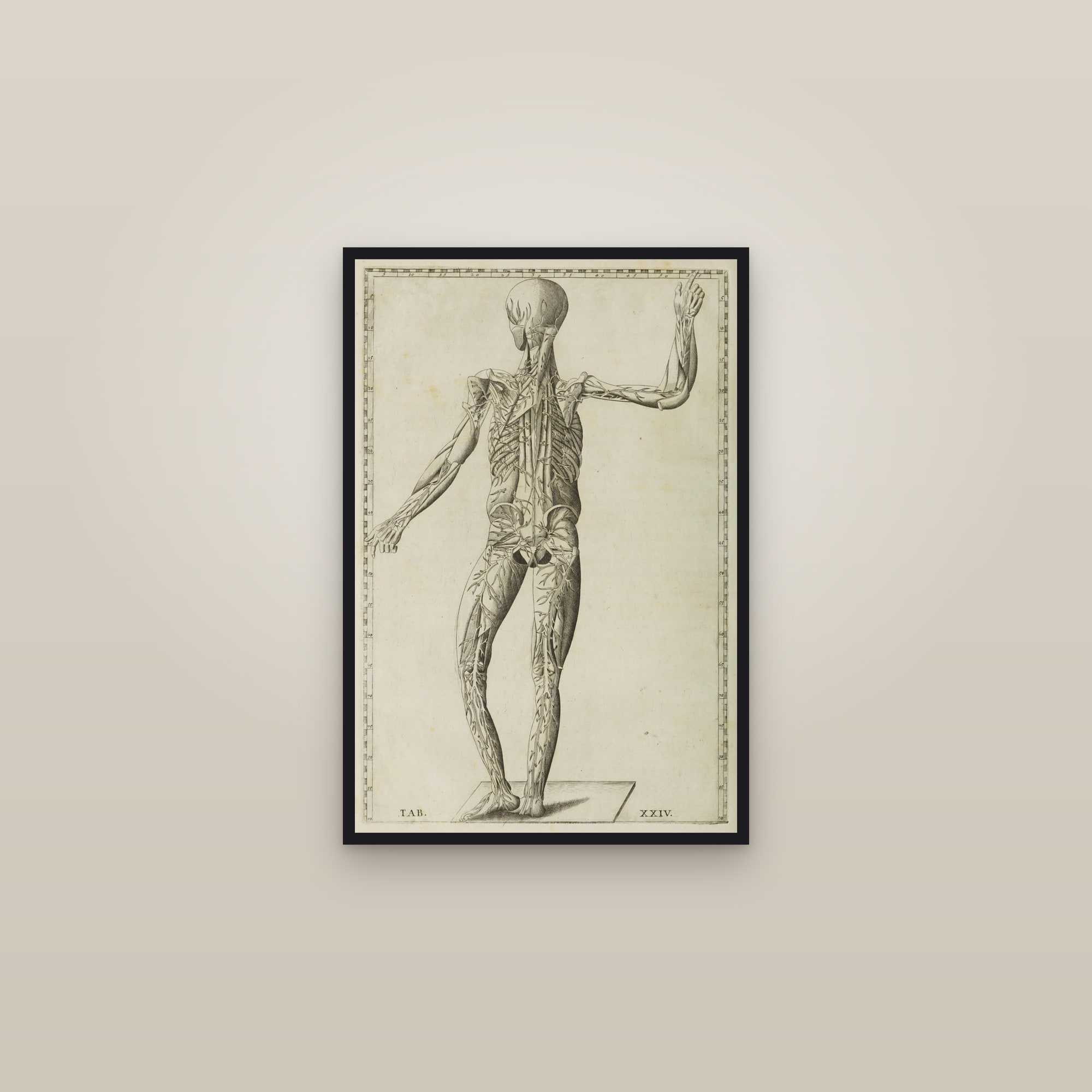
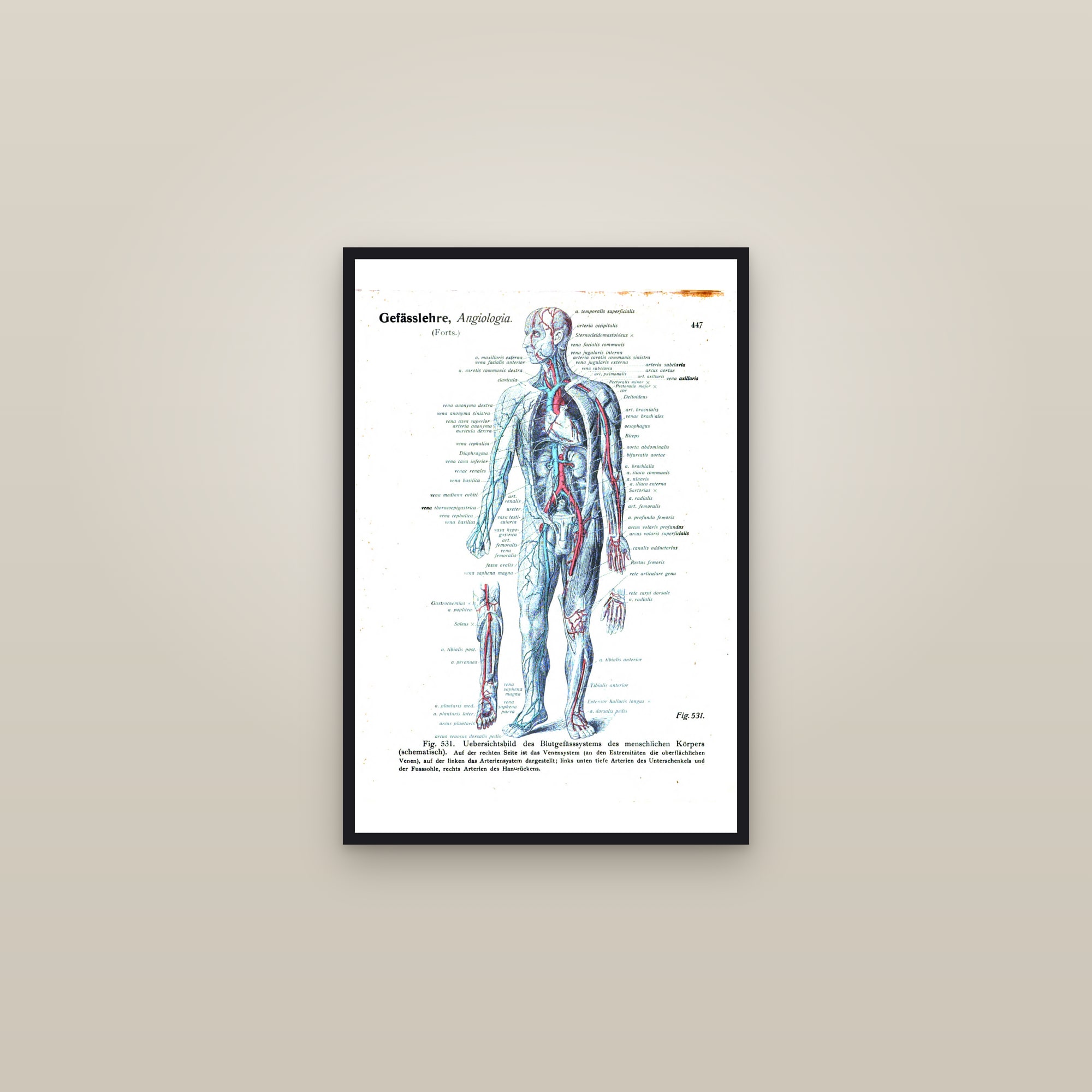
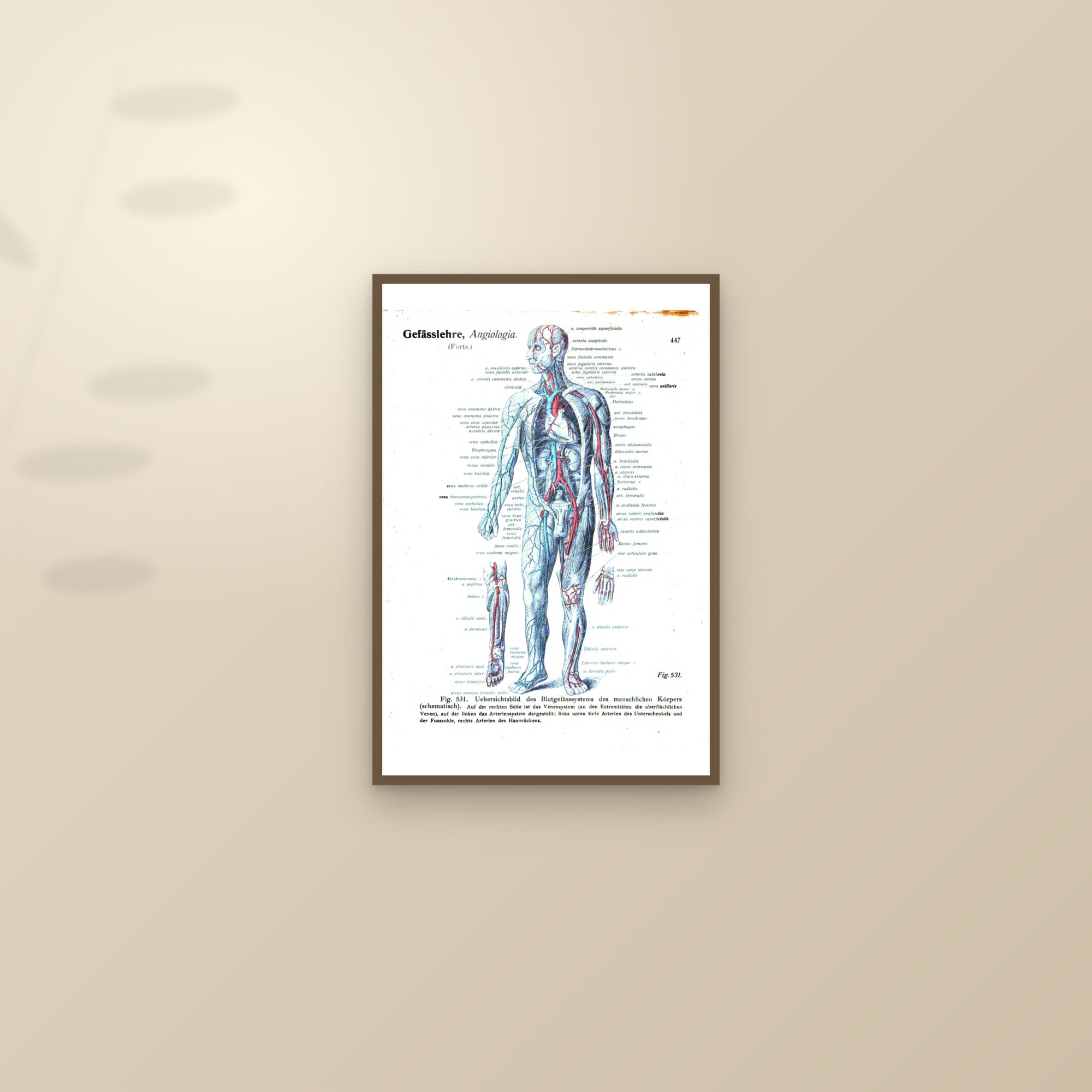
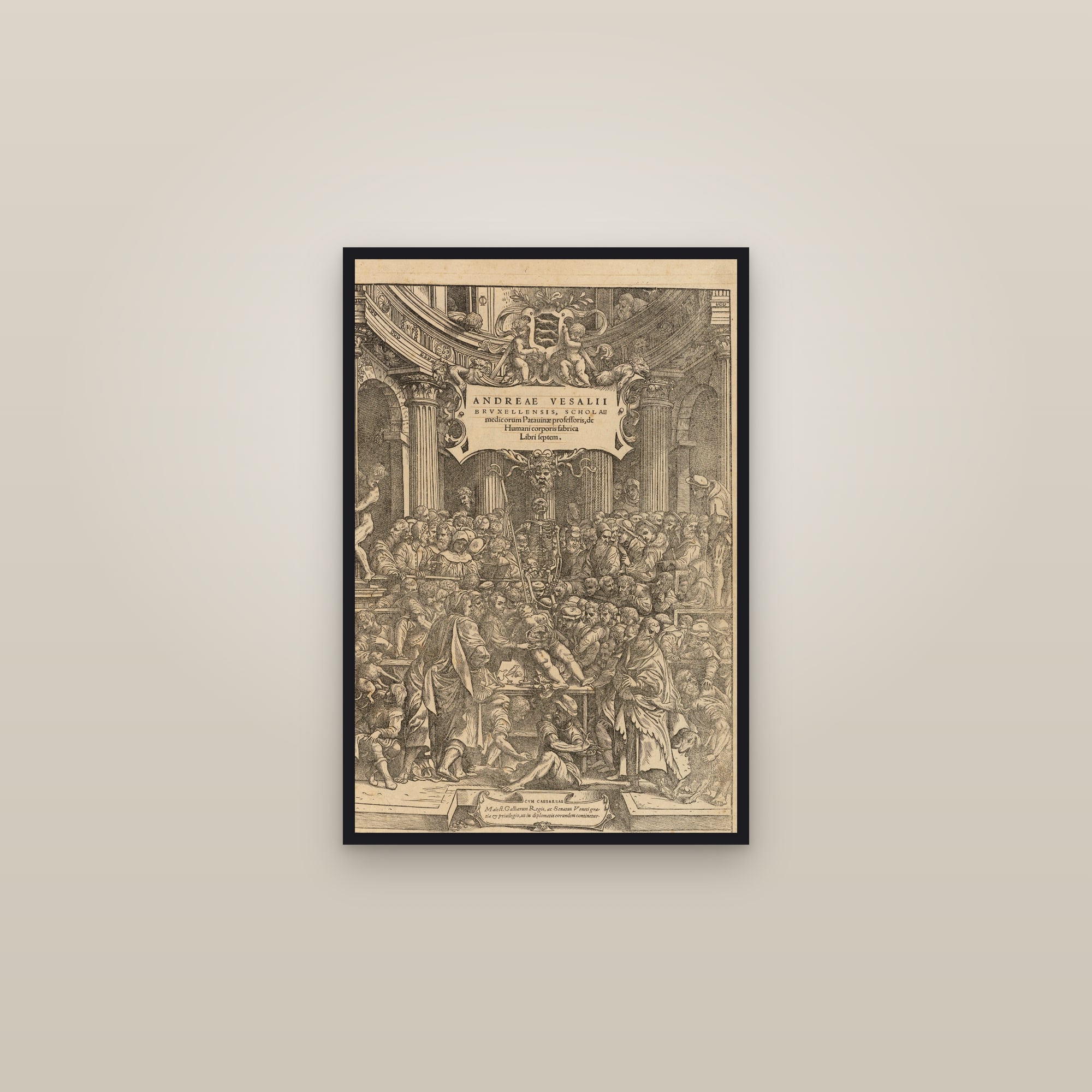
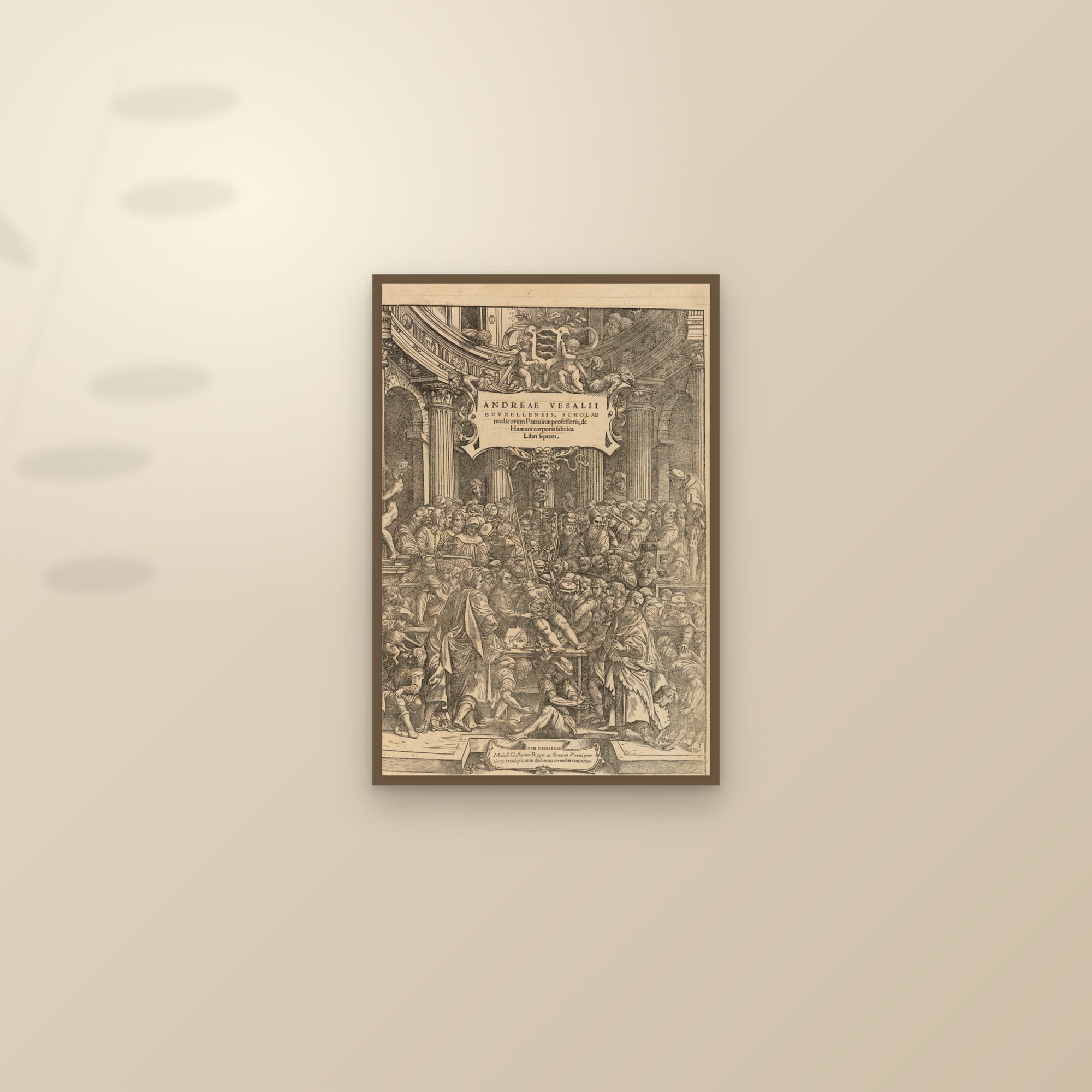
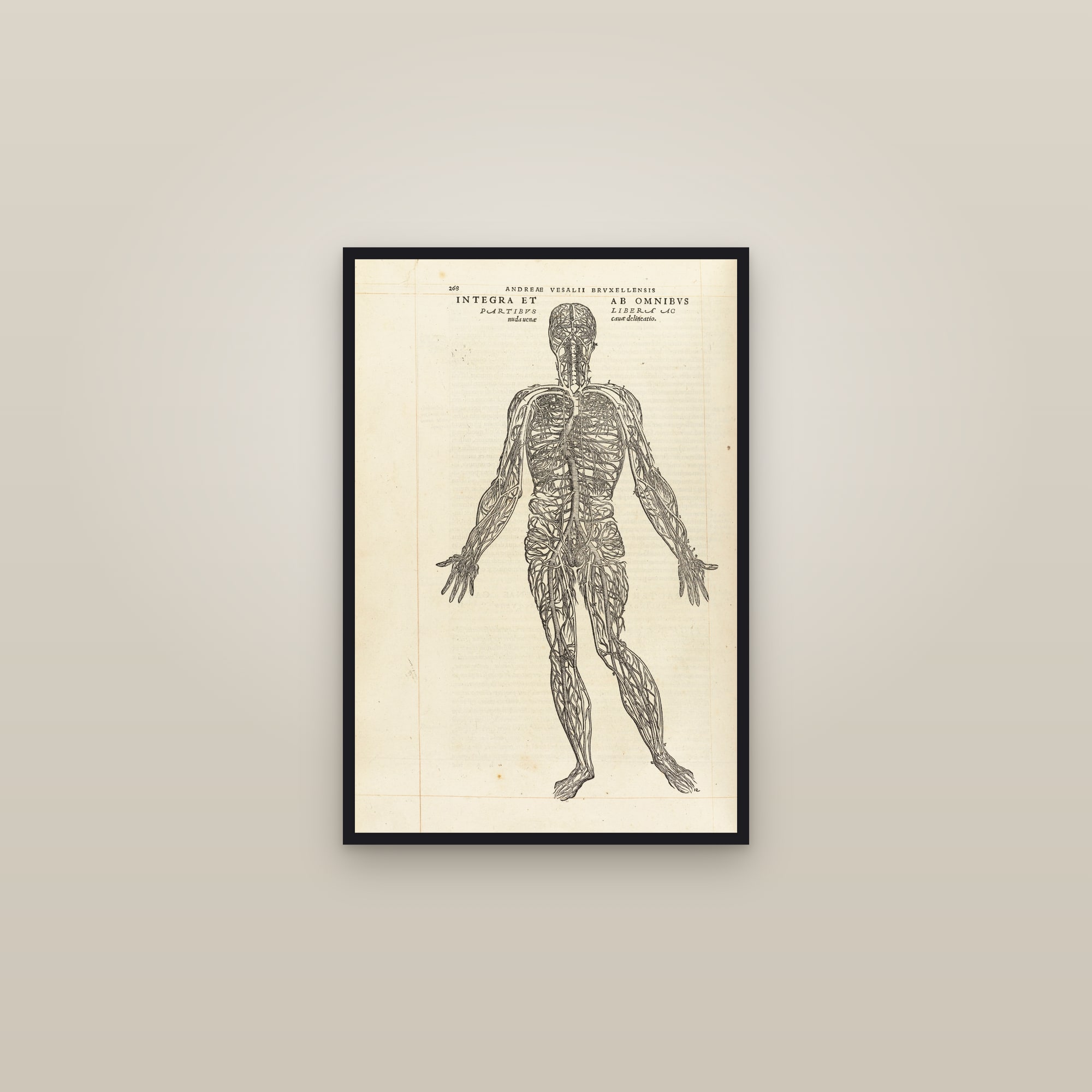
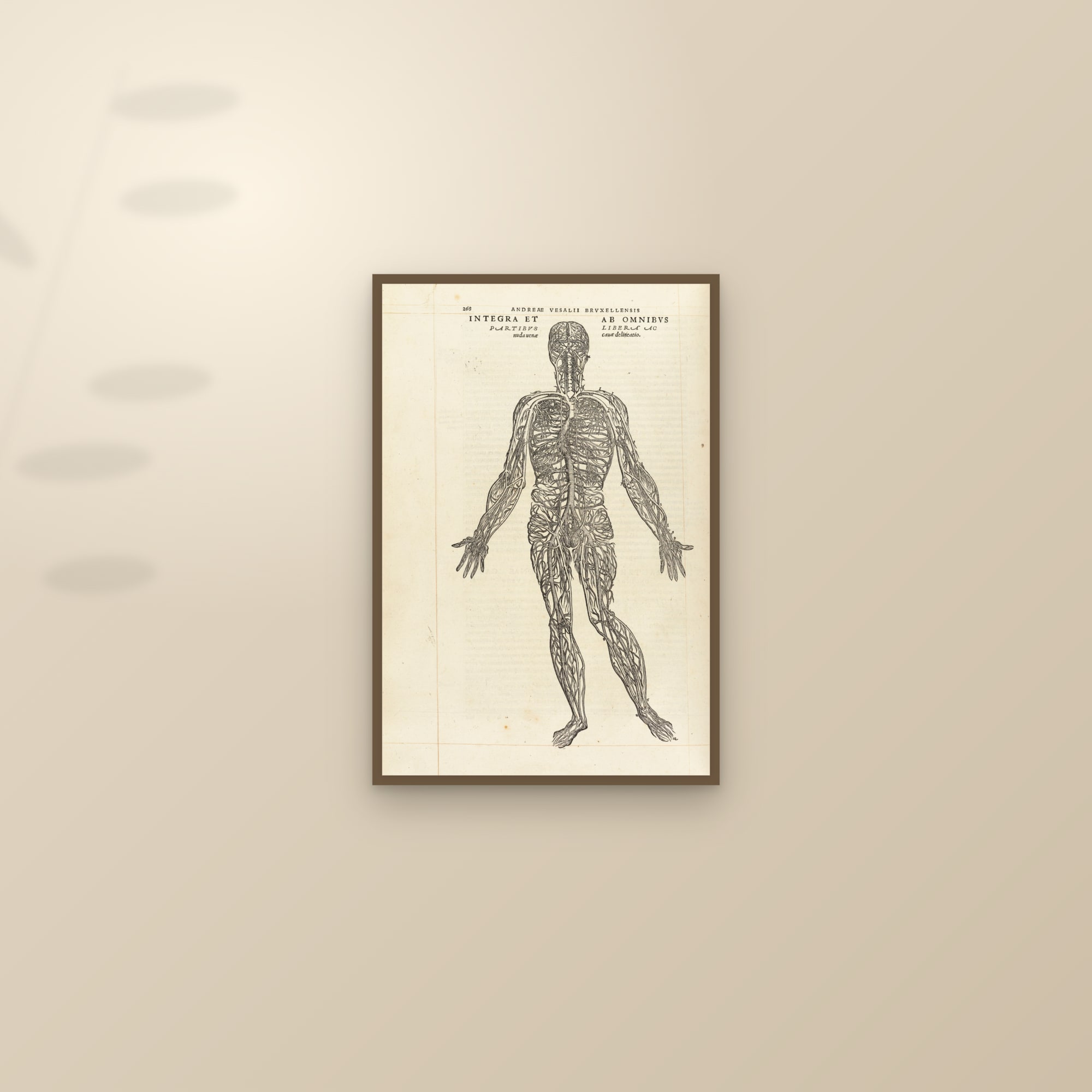
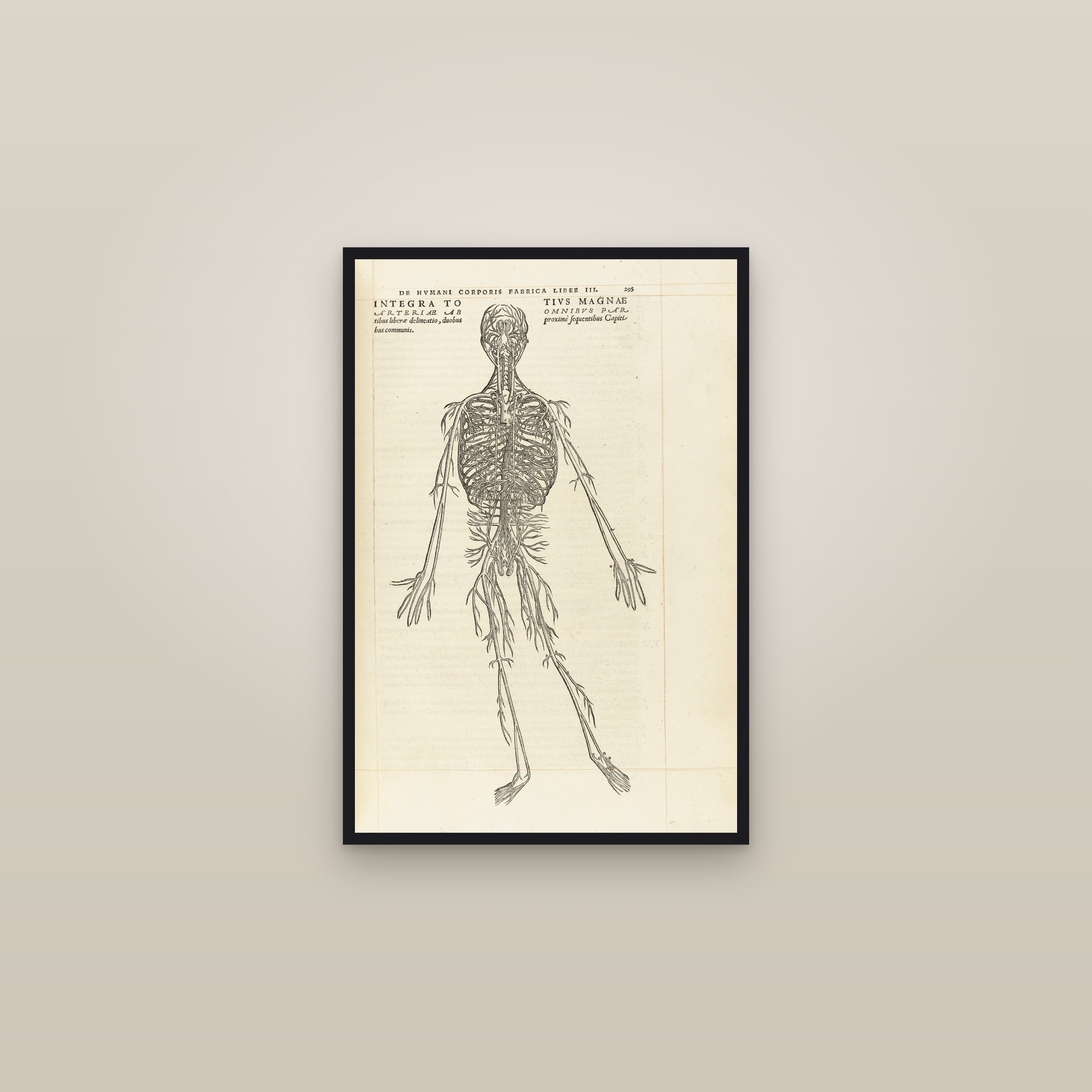
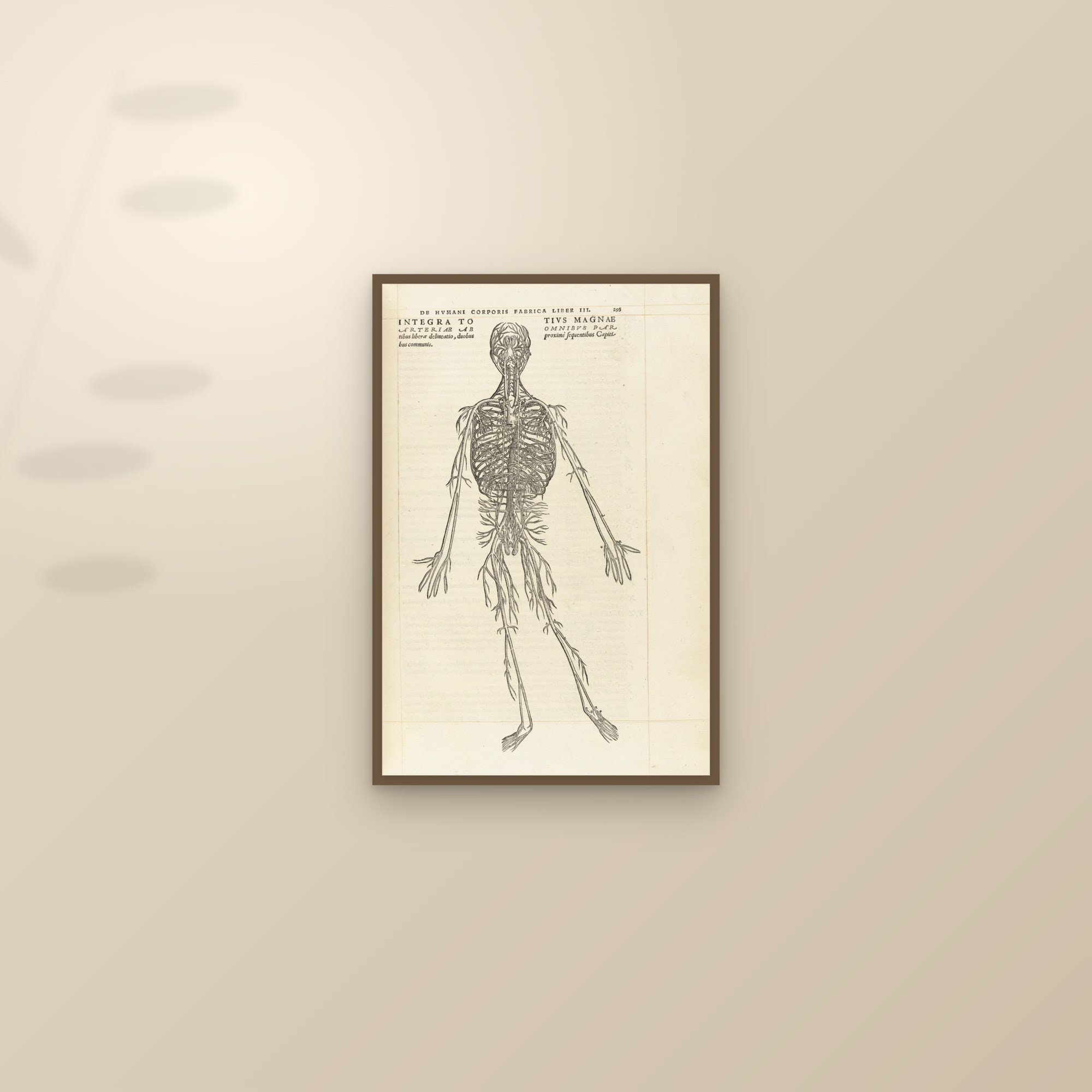
Beside the muscle figures stand the plates that map the circulation and the nerves on a whole body: Vesalius's vein man, artery man and nerve man from the Fabrica; Eustachi's veins of the body from the front, side and back and arteries of the body from the front and with the arms raised; and Sobotta's blood vessels of the body of 1920, the same idea in colour. The Fabrica title page, with Vesalius dissecting before a crowd in a packed anatomy theatre, is among the most famous images in the history of medicine and a standing doctor's-office print.
Where they hang, and how
The studio, the life-drawing room, the loft, the study and the tattoo parlour, where an écorché is read as a figure drawing; the consulting room, where the muscle men and vessel figures earn their place by being useful. These are full-figure plates and want size: 24×36 for a Vesalius or Albinus, or 16×24 as a front-and-back pair. Vesalius, Albinus and Sobotta plates print up to 24×36, the Eustachi engravings up to 16×24. Each comes full-bleed or as a captioned specimen on cream, unframed or framed in black or dark wood with no mat.