Dental Anatomy Prints — Teeth, Jaw & Skull
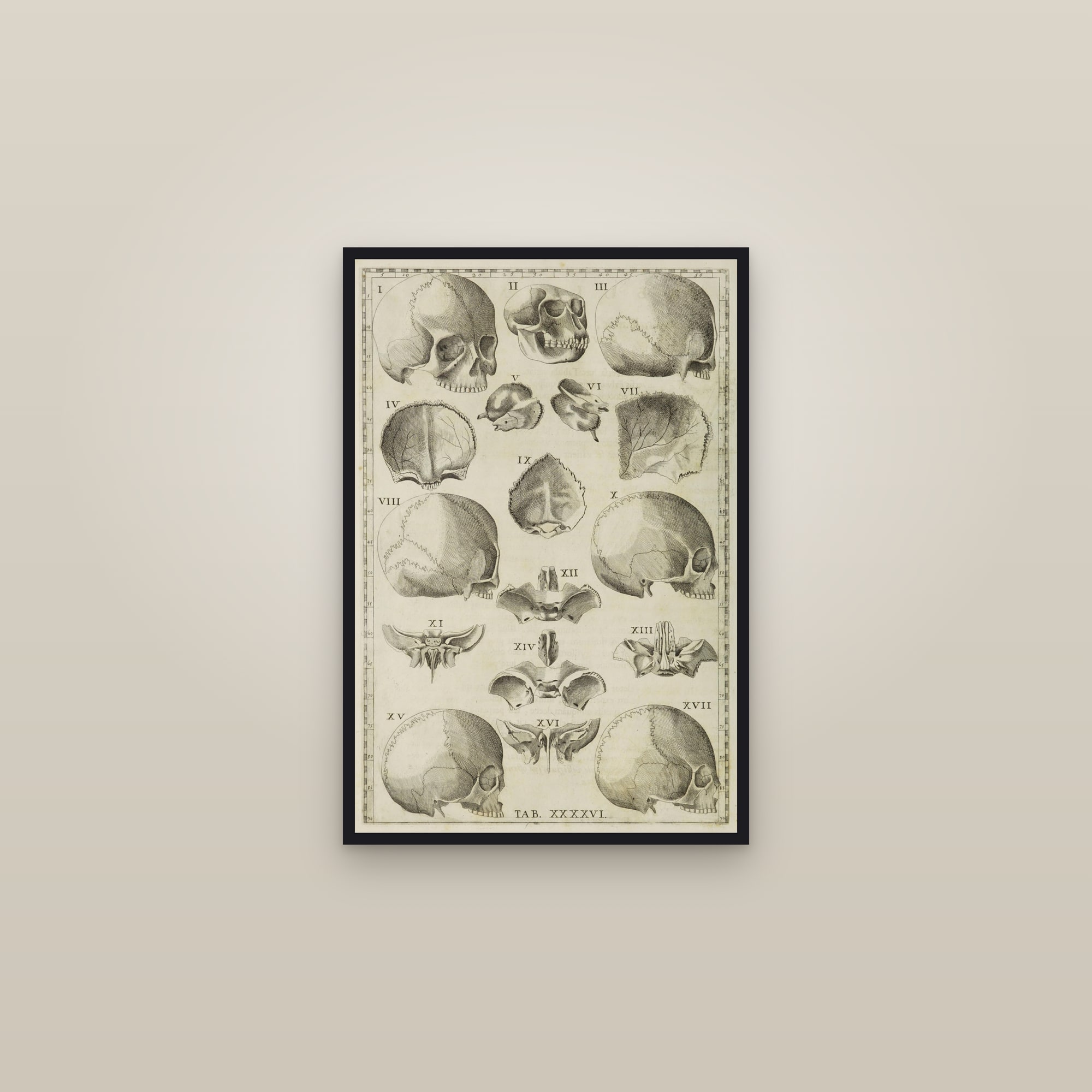
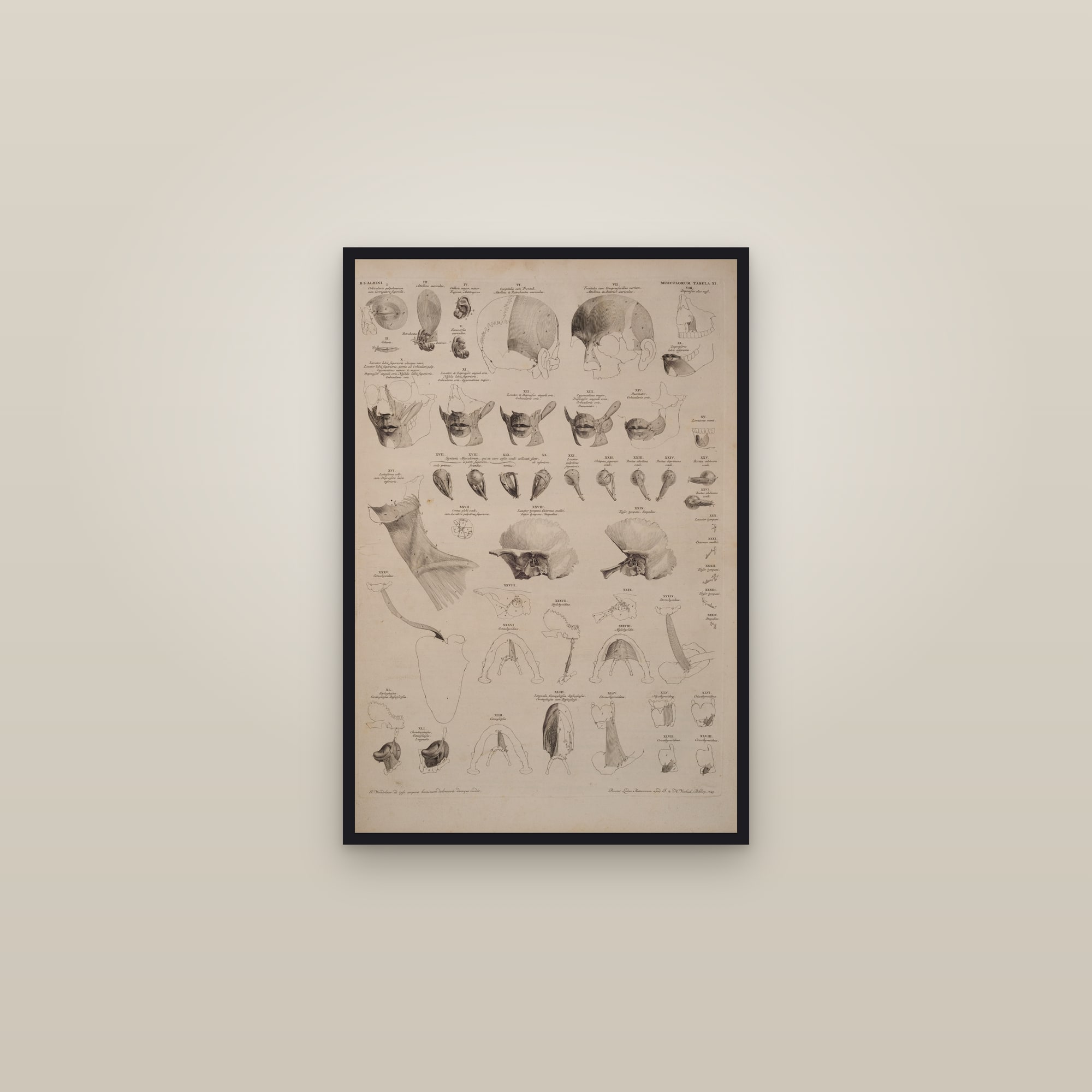
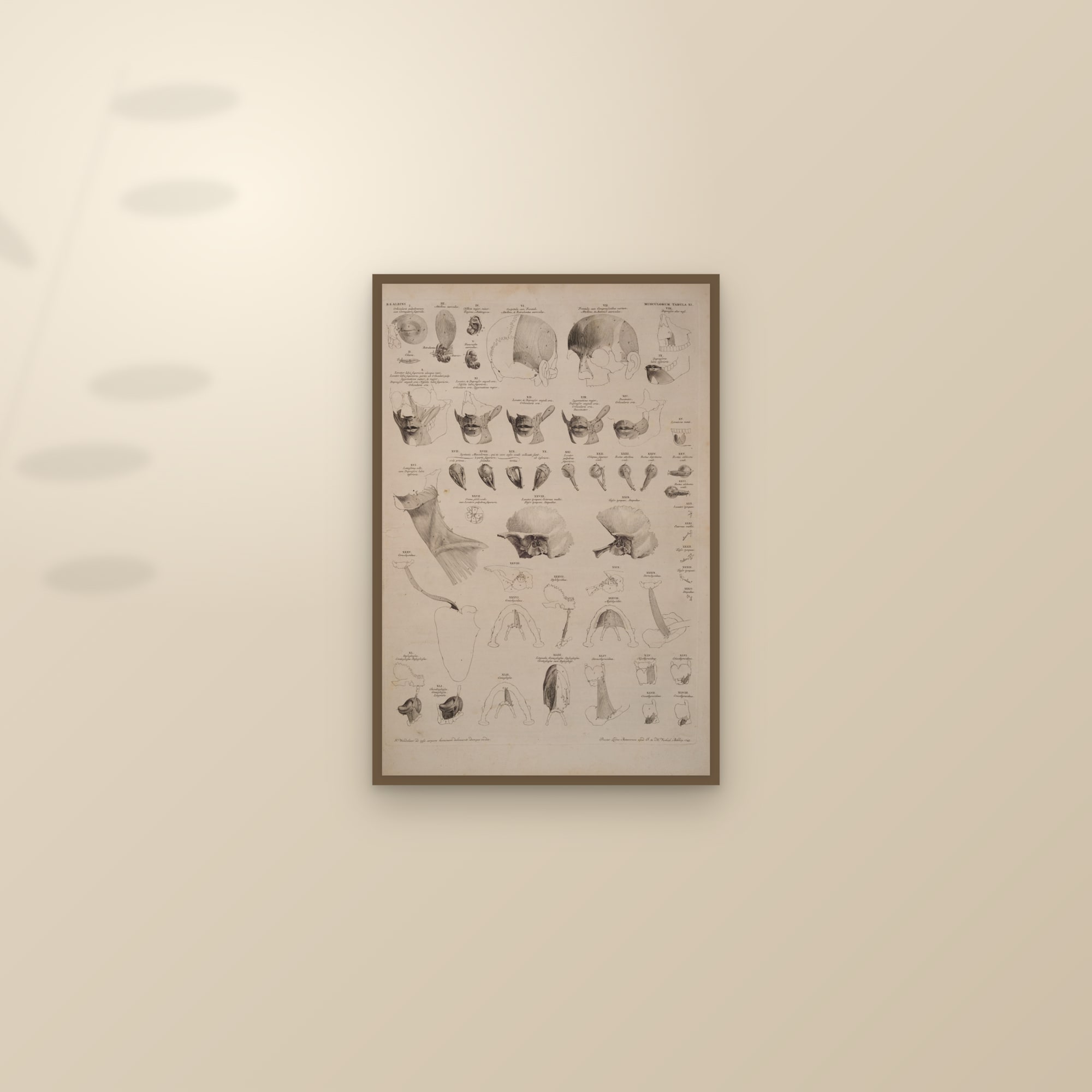
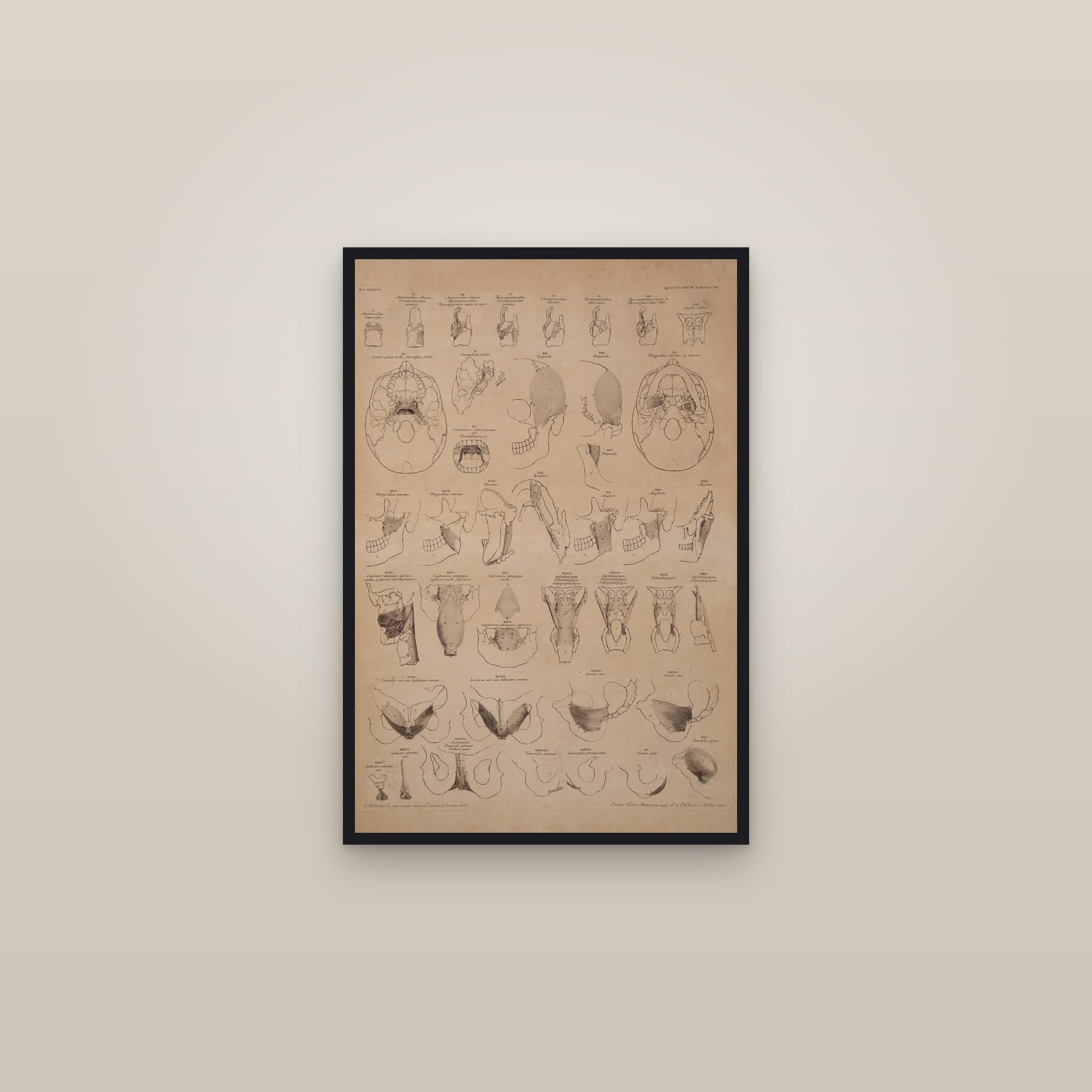
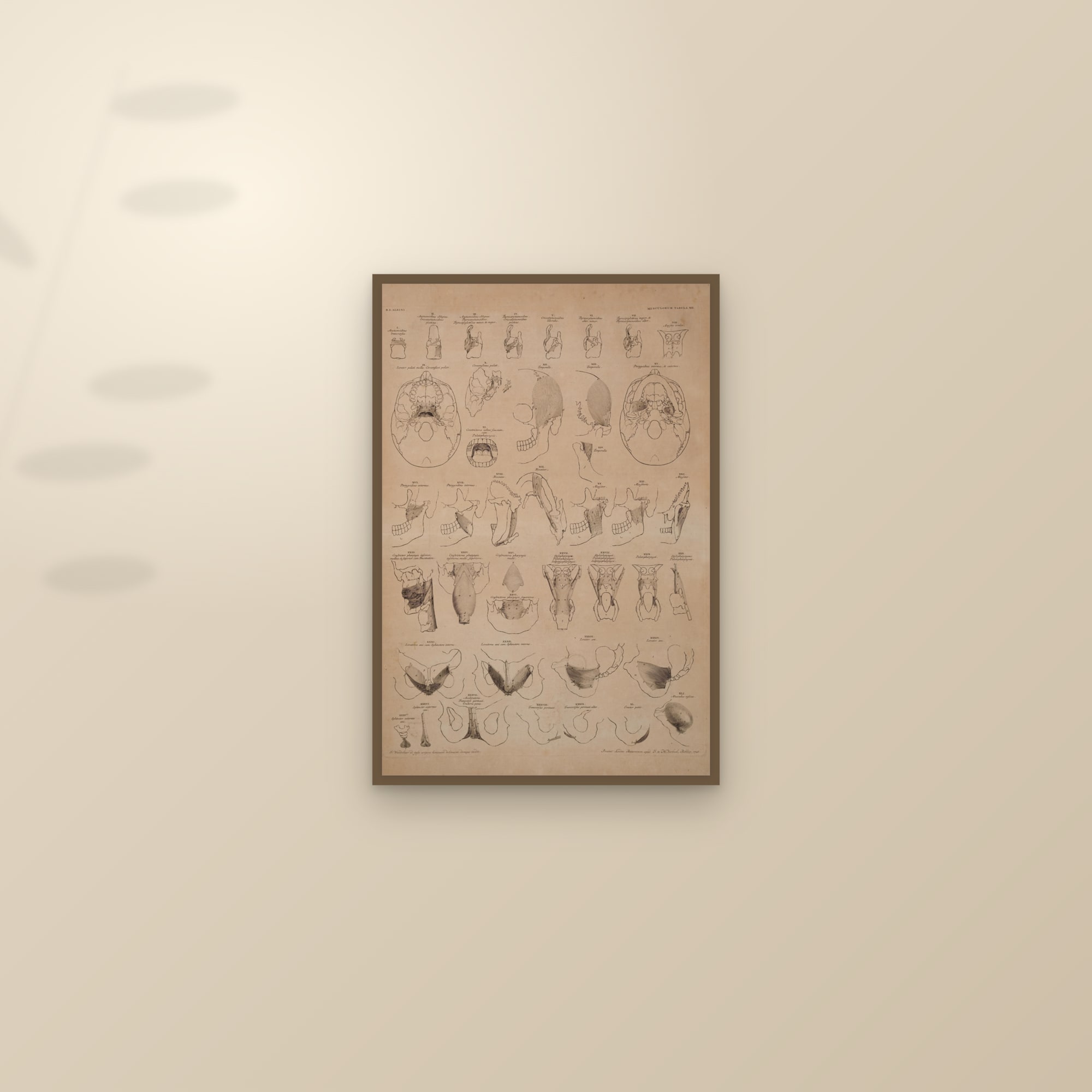
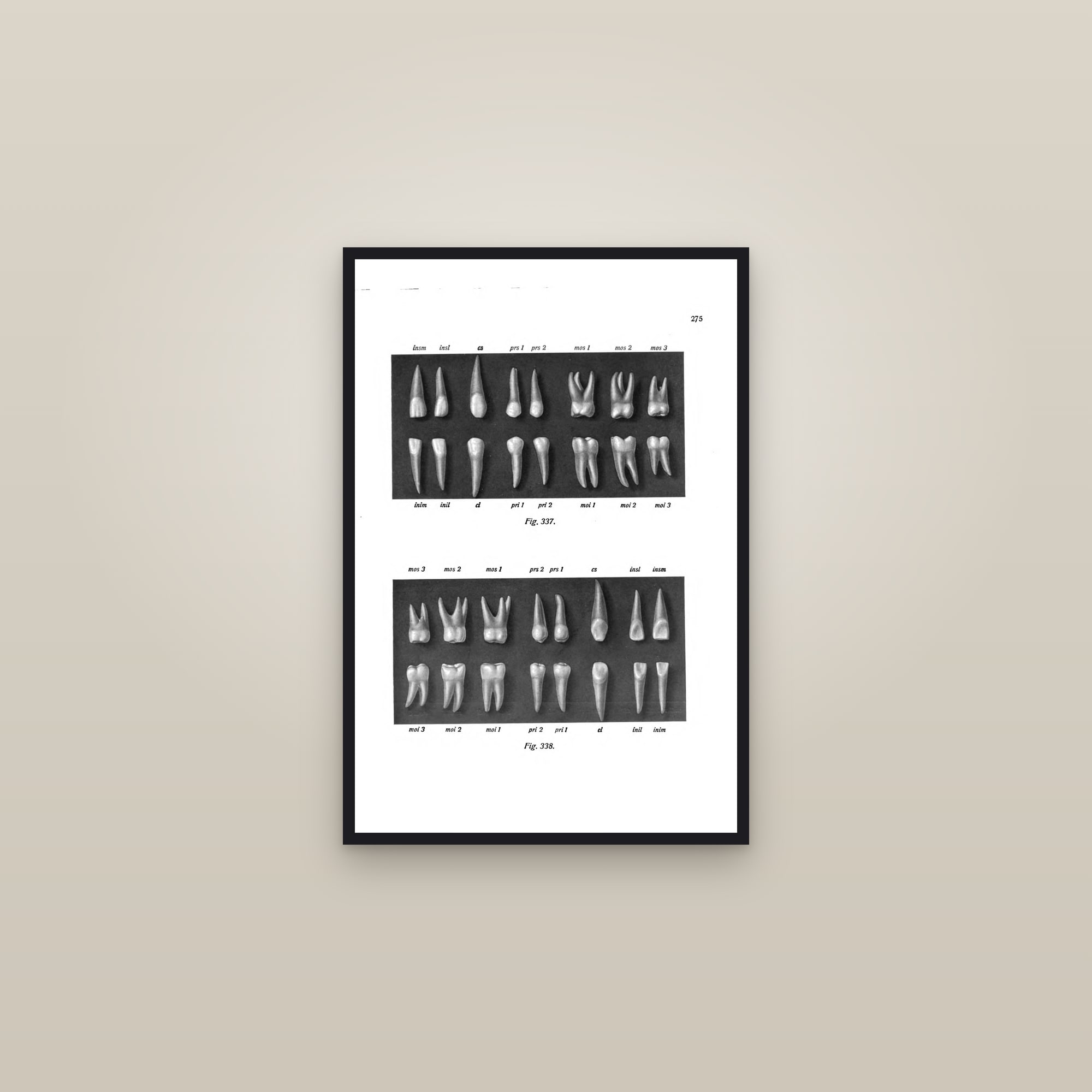
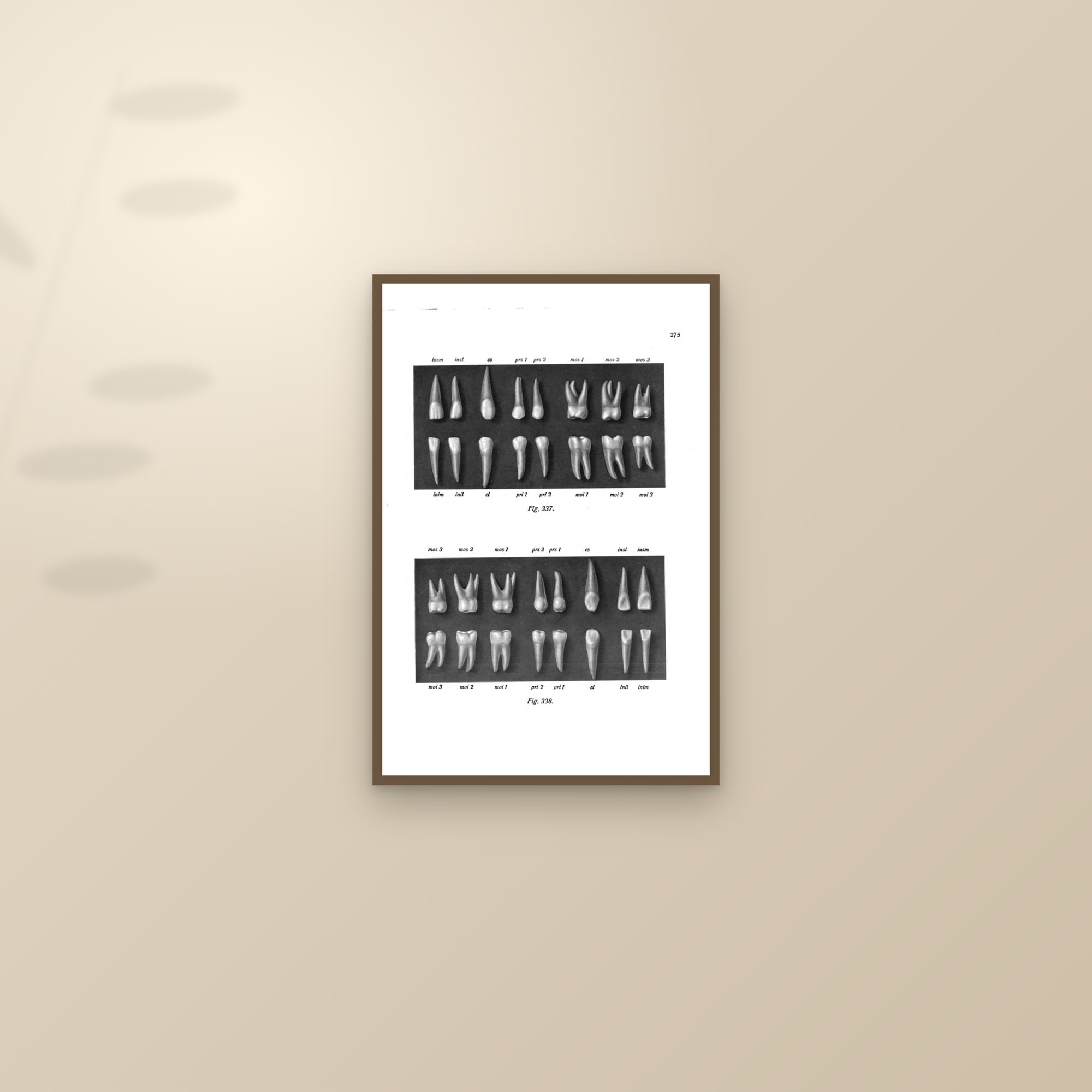
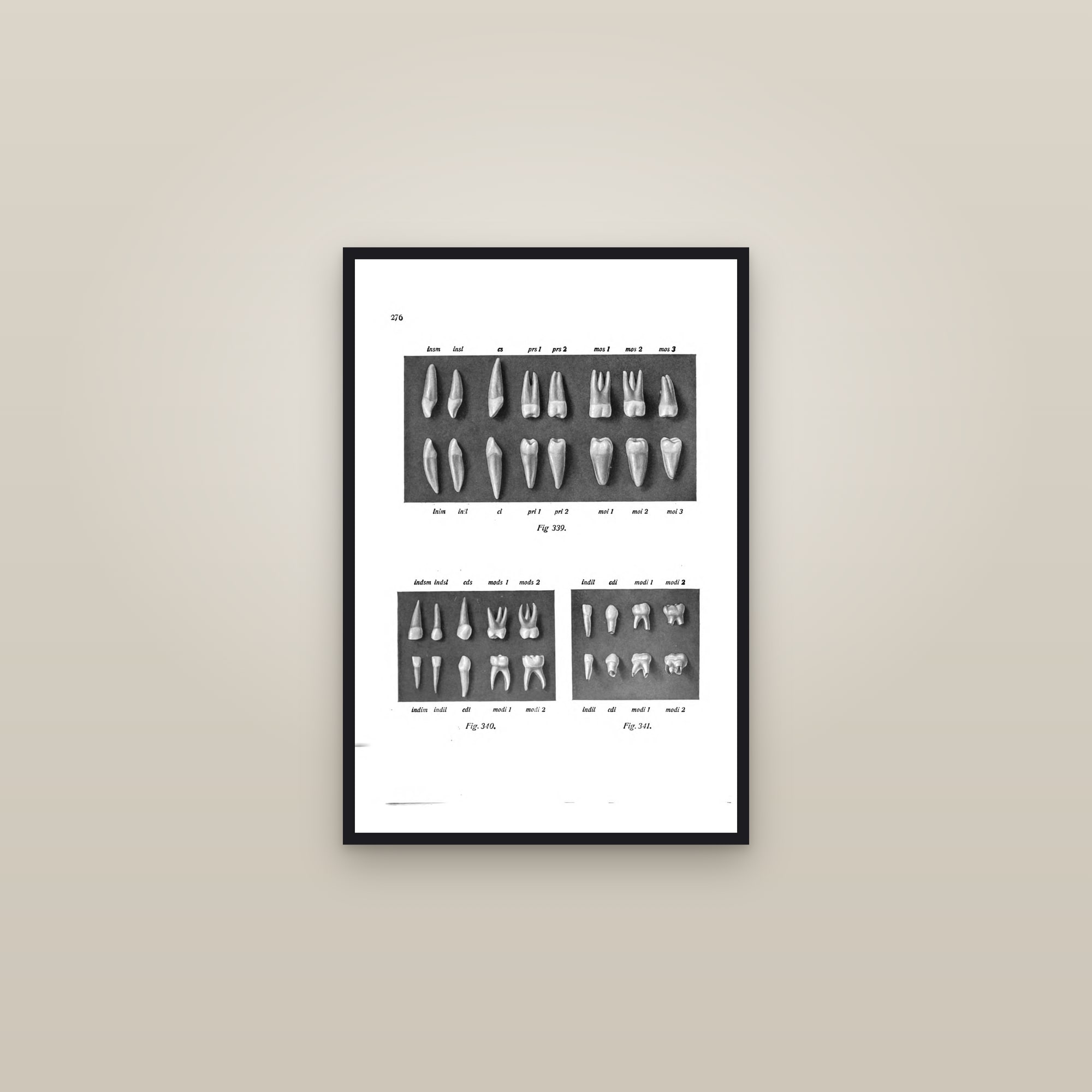
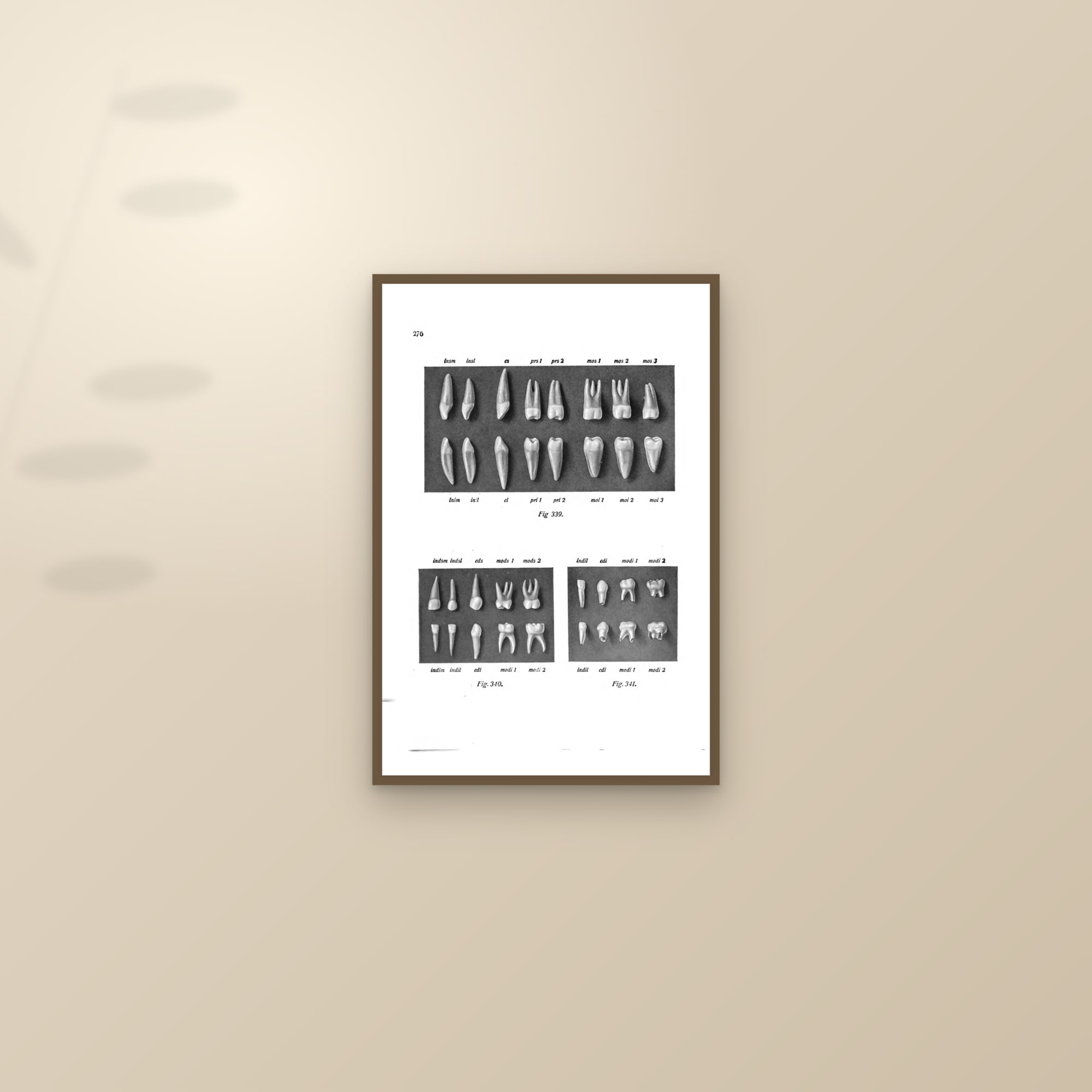
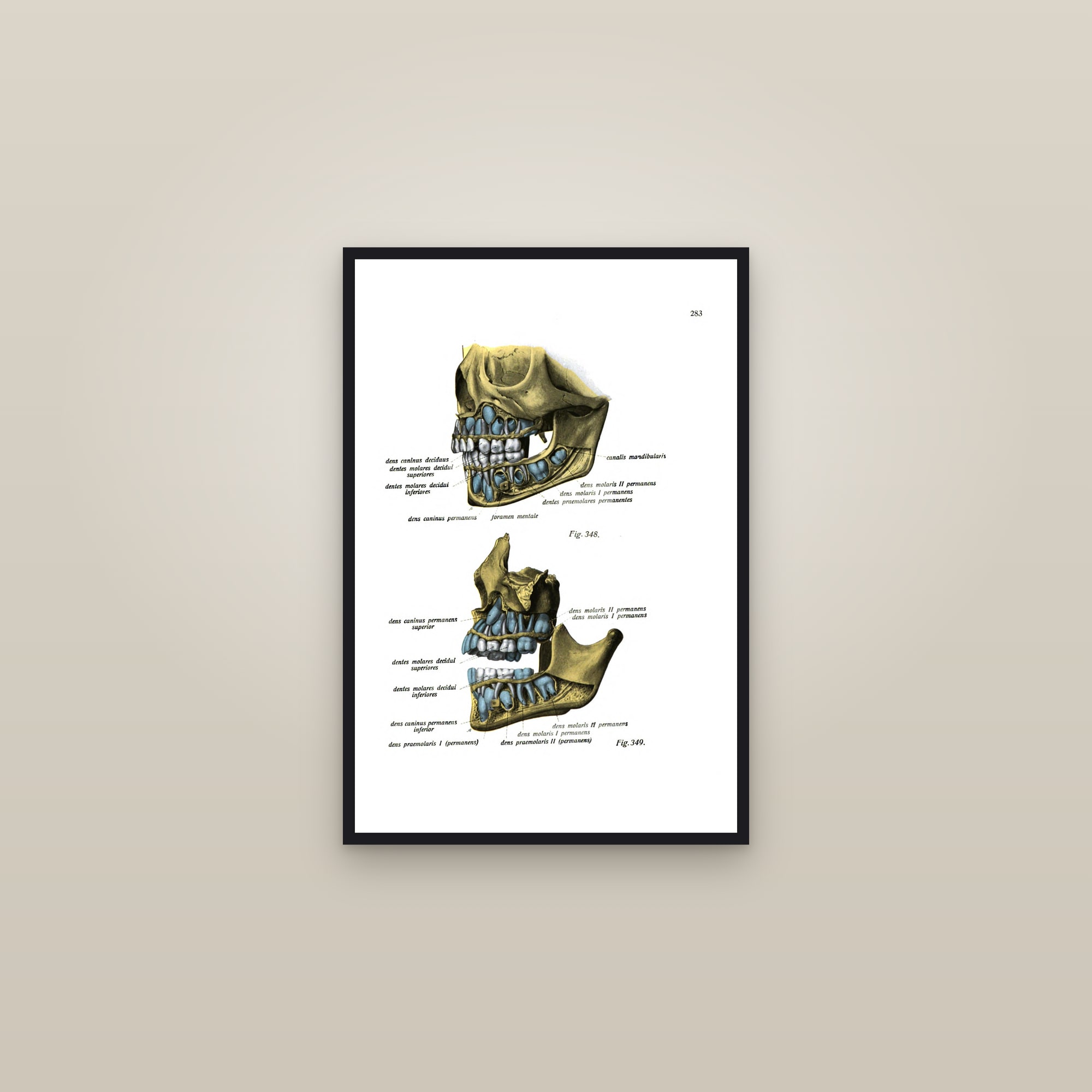
The teeth and the jaw as the atlases drew them: six colour plates from Johannes Sobotta's atlas of 1920, the permanent dentition upper and lower, the milk teeth beside the permanent teeth, the skull with the teeth in place, the upper and lower jaw, and two plates of children's skulls with the developing teeth; with Bartolomeo Eustachi's engraving of the skull in seventeen views from 1714 and Albinus's study plates of the muscles of the jaw from 1747.
7 prints · printed to order on heavyweight matte paper · framed or unframed
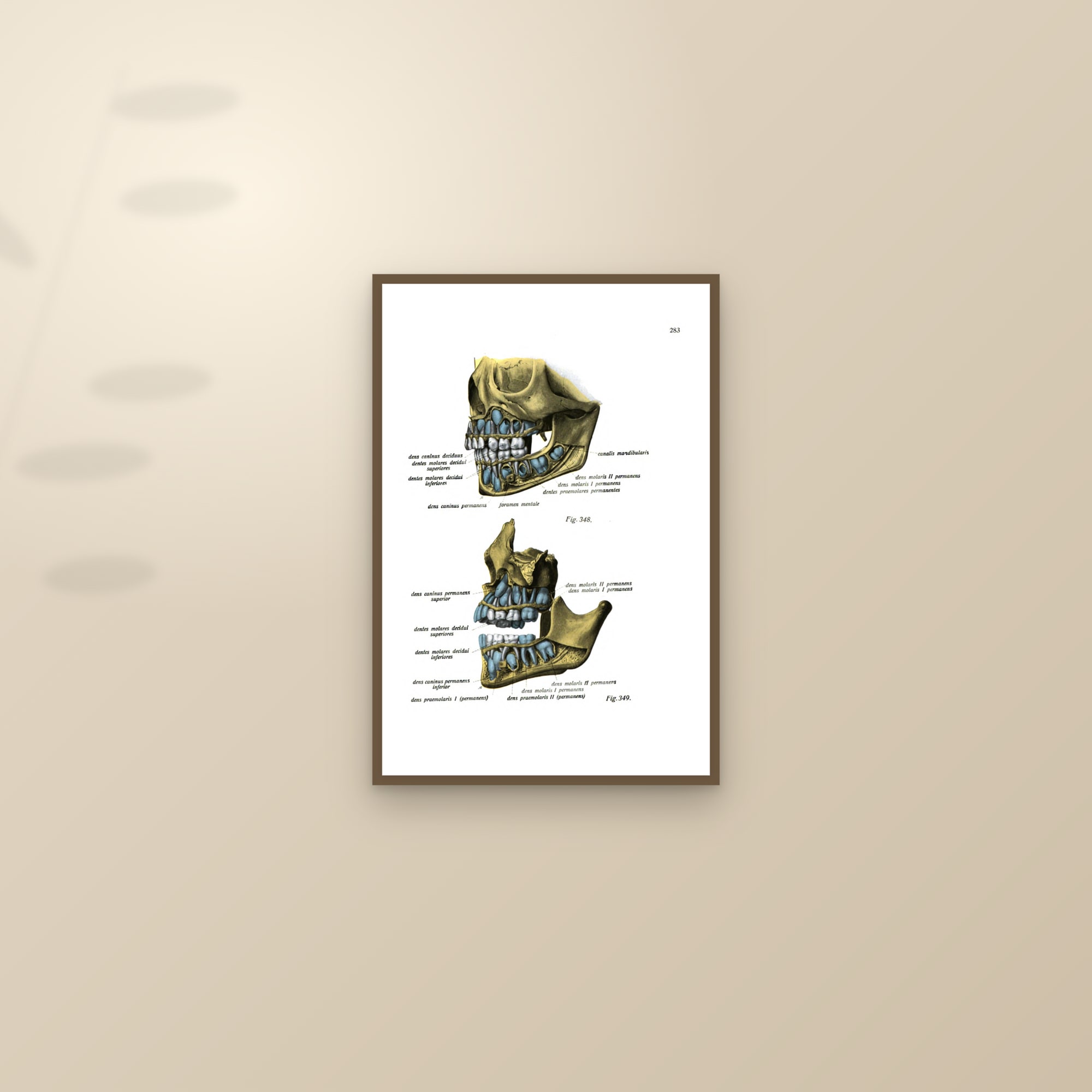
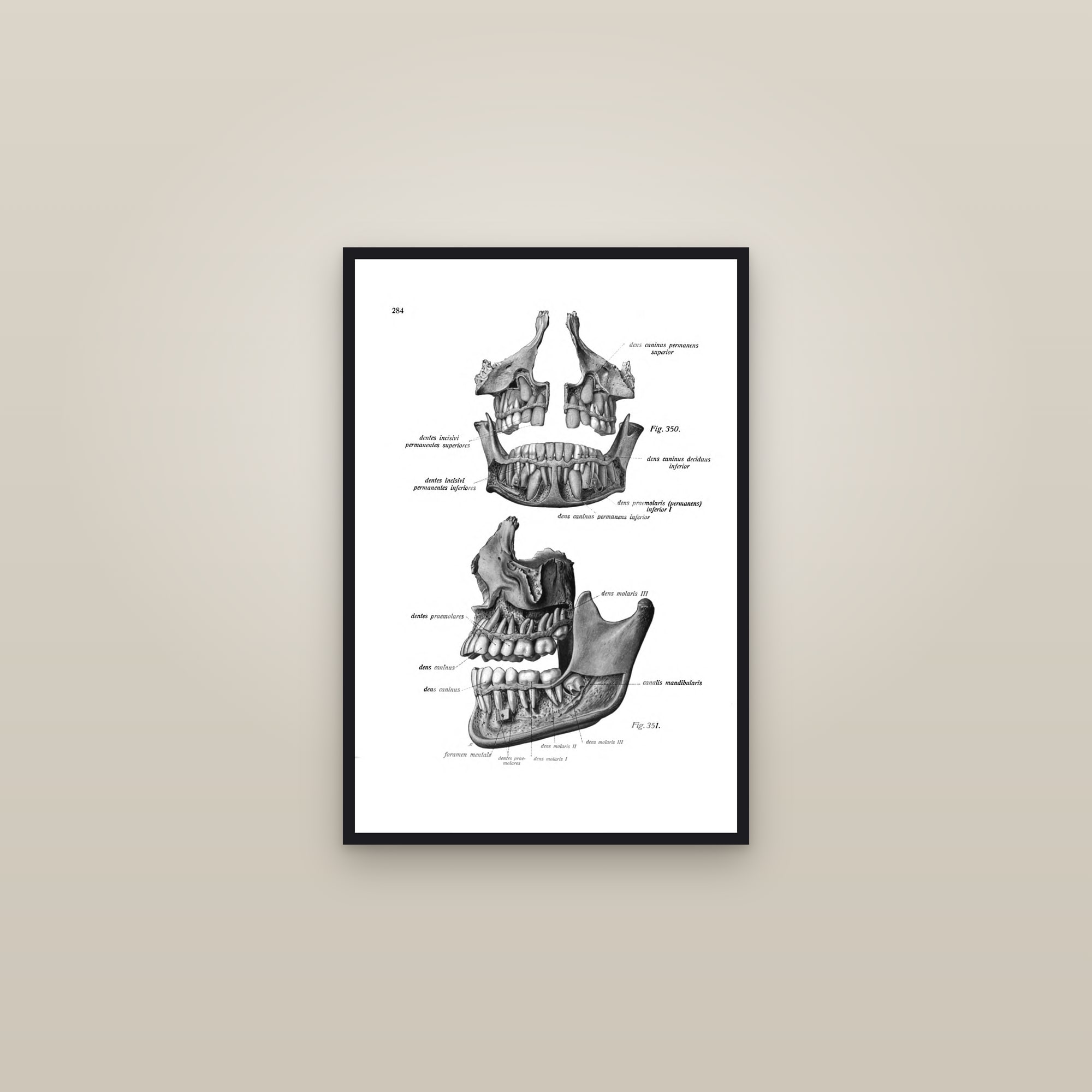
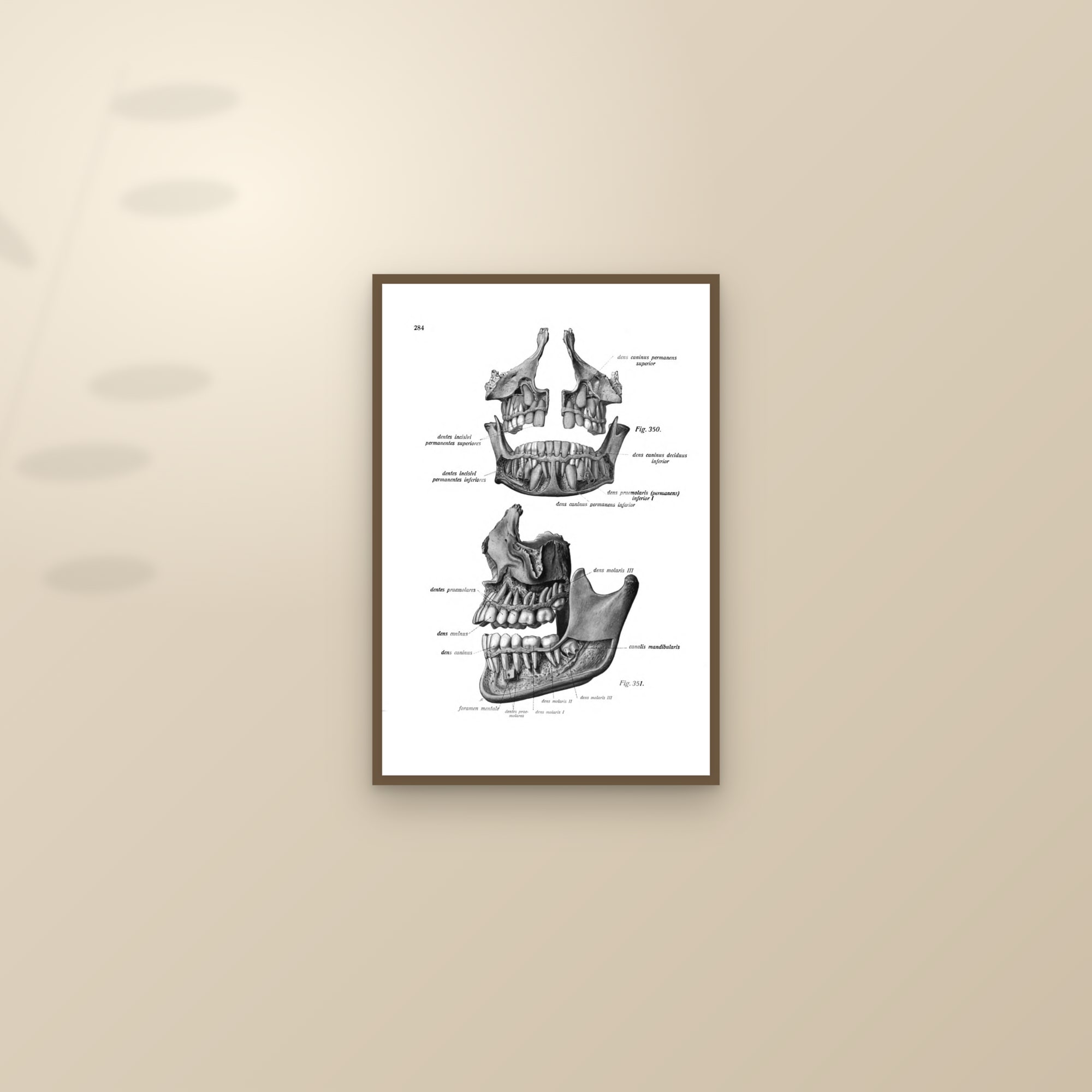
Sobotta's dentition plates
The six Sobotta plates come from the second volume of the Atlas der deskriptiven Anatomie des Menschen, published in 1920, and they are the dental plates most often hung: the full permanent dentition, upper and lower, drawn tooth by tooth; the milk teeth set beside the permanent teeth that replace them; the skull with the teeth in their sockets; the upper and lower jaw opened out; and two plates of a child's skull cut away to show the permanent teeth forming above and below the milk teeth. The chromolithography gives the enamel, the root and the bone their own tones.
The skull and the jaw
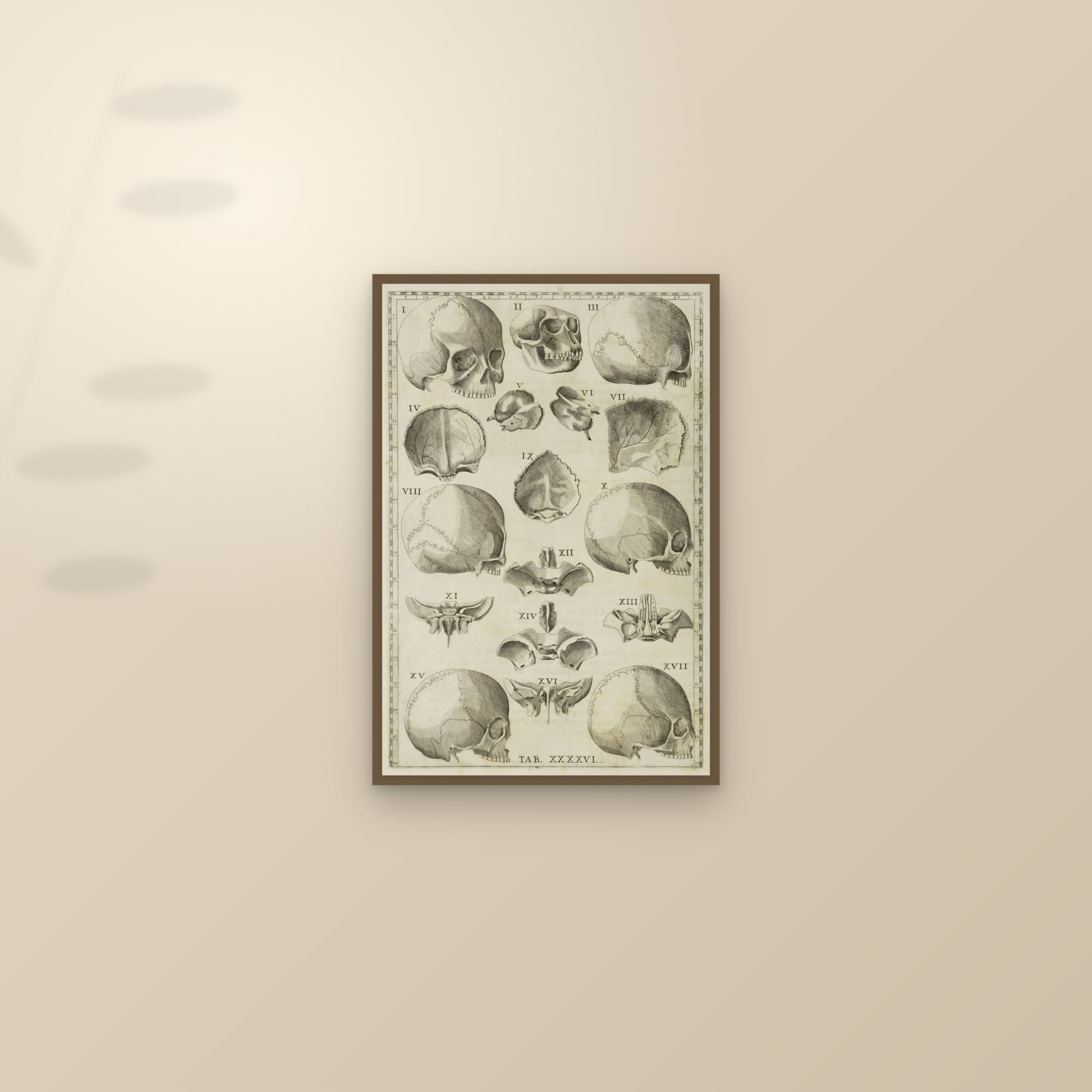
Two older plates widen the set. Eustachi's skull in seventeen views, engraved in the sixteenth century and published in Rome in 1714, turns the skull through every angle on one sheet and has served dentists and sculptors as a reference for three centuries. Albinus's study plates of 1747 show the muscles of the face, ear and jaw and of the larynx, jaw and pharynx, the muscles of chewing and swallowing drawn in the clean engraved line of the Tabulae sceleti et musculorum.
In the practice and at home
These are the plates for the dental surgery, the orthodontist's waiting room and the dental school, and the graduation gift for a new dentist or hygienist; the milk-teeth plate is the one paediatric dentists hang. Sobotta and Albinus plates print up to 24×36, the Eustachi skull up to 16×24. Each comes full-bleed or as a captioned specimen on cream, on 250 gsm archival paper, unframed or framed in black or dark wood with no mat. The permanent-teeth and milk-teeth plates make the classic pair.