Skeleton Prints — Vintage Anatomical Plates of the Human Skeleton
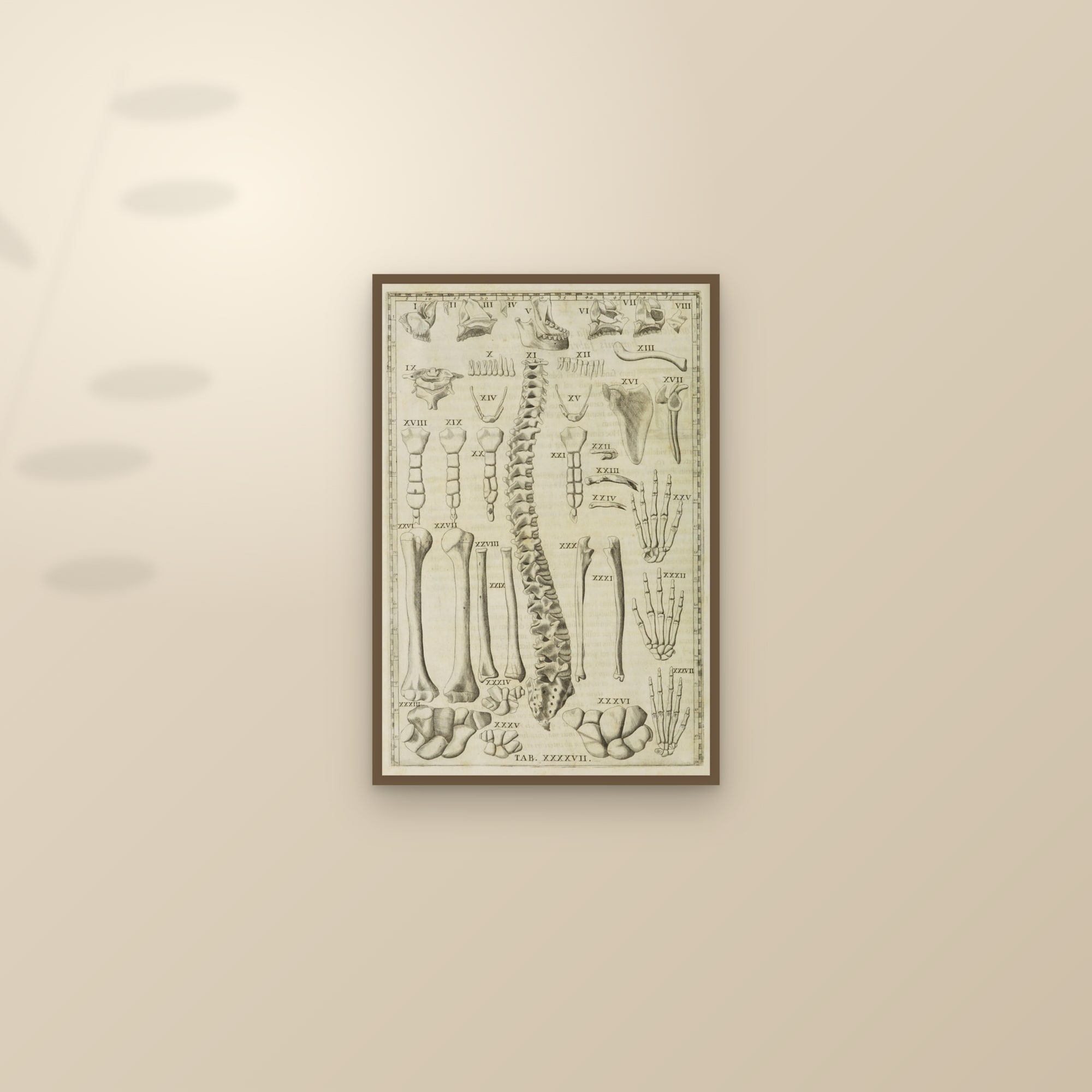
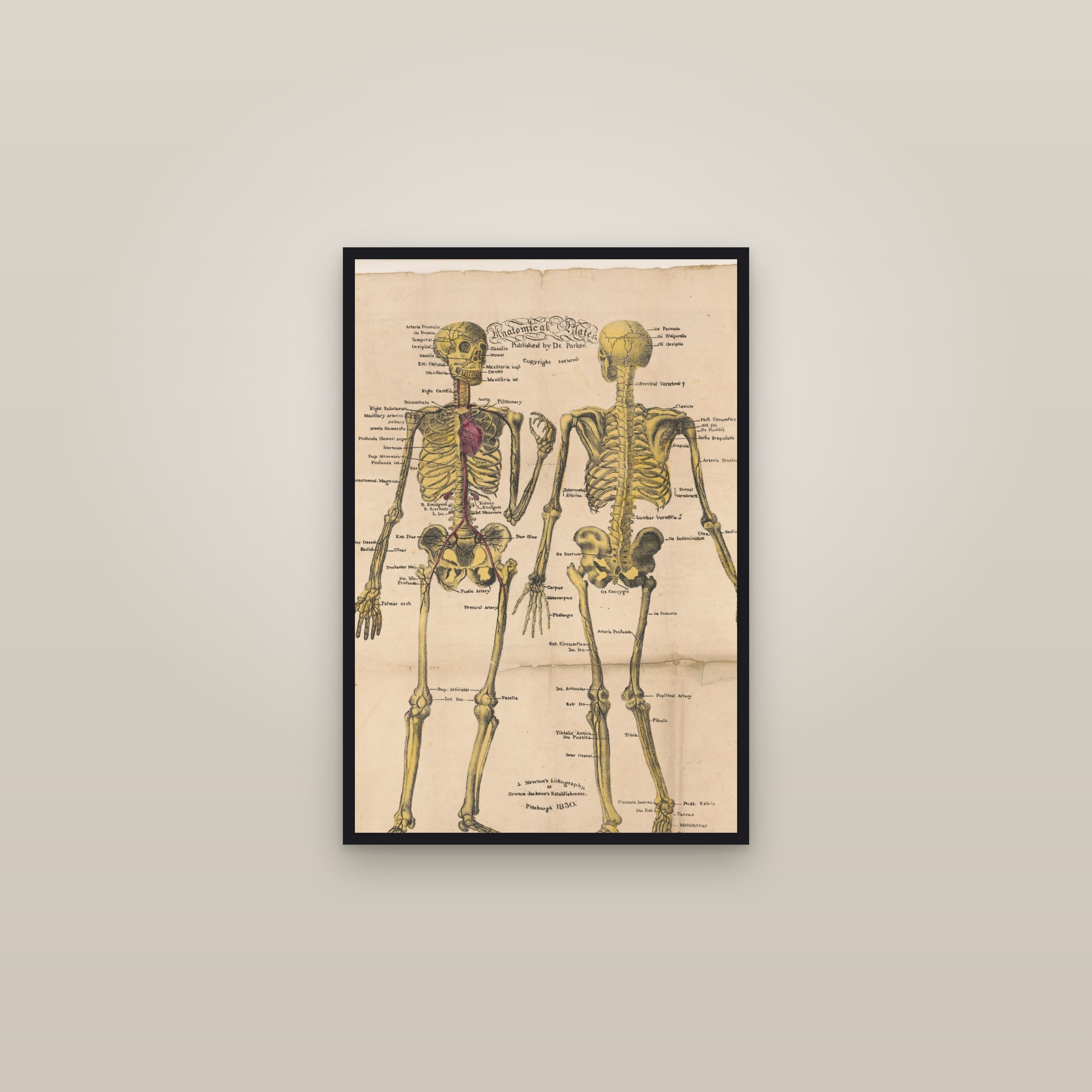
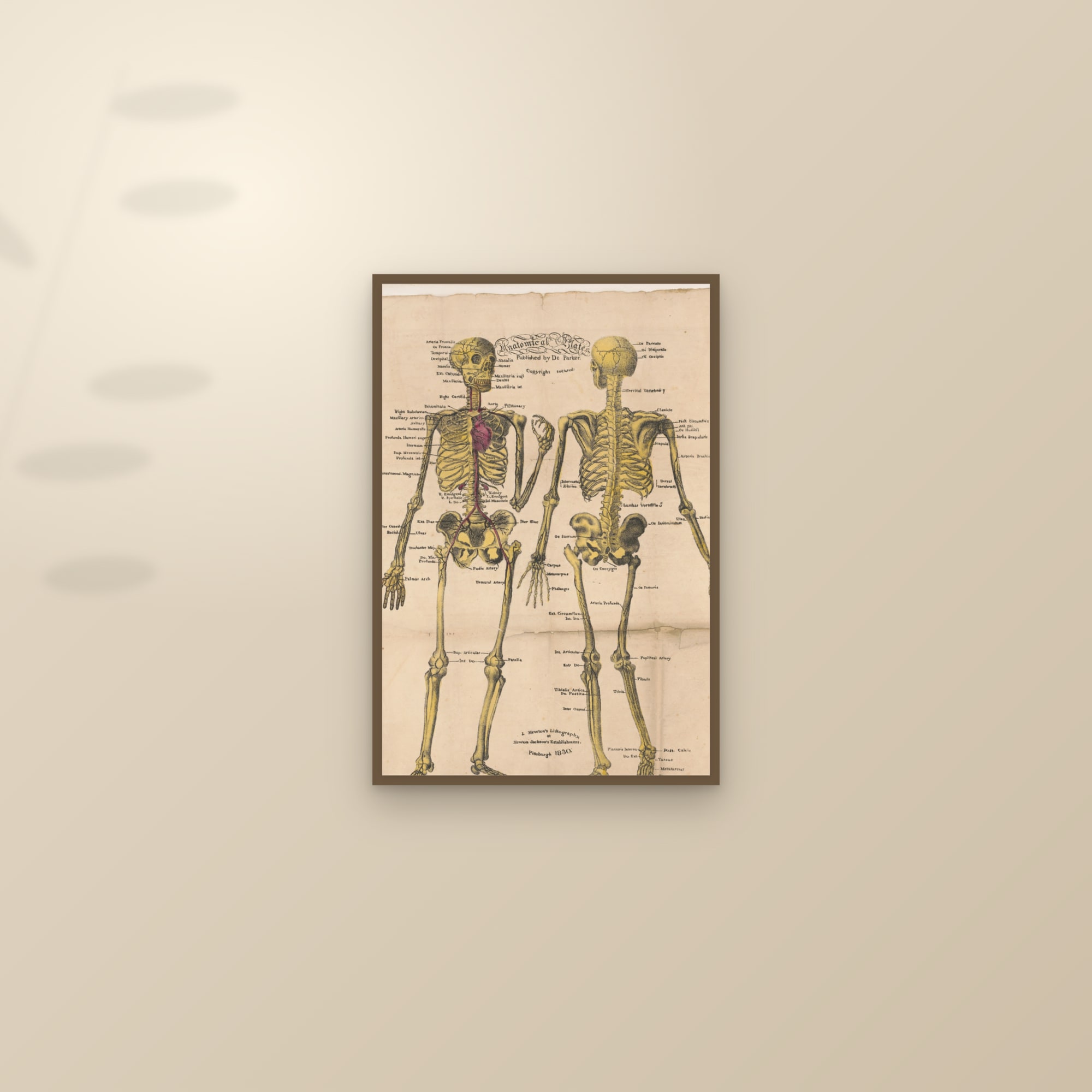
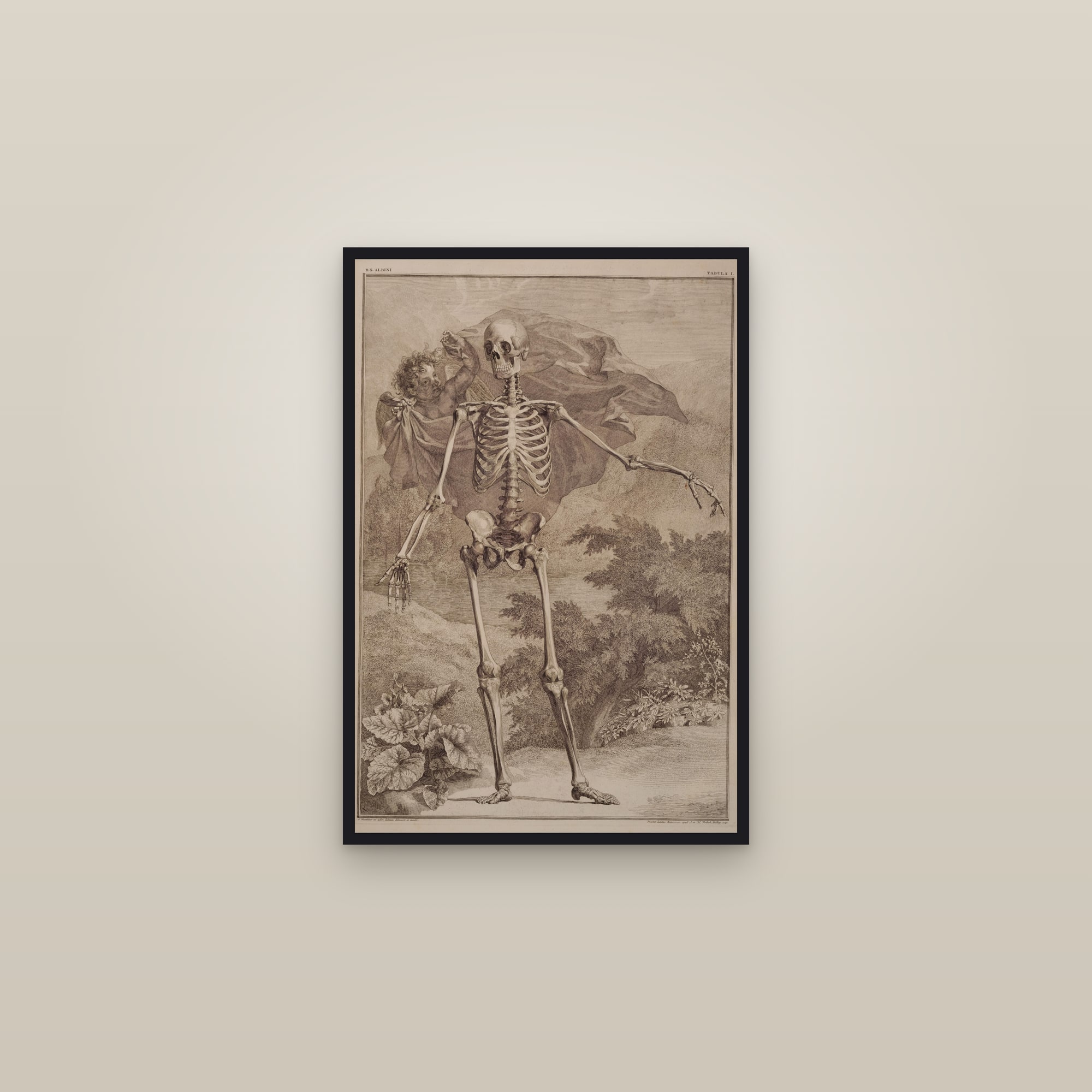
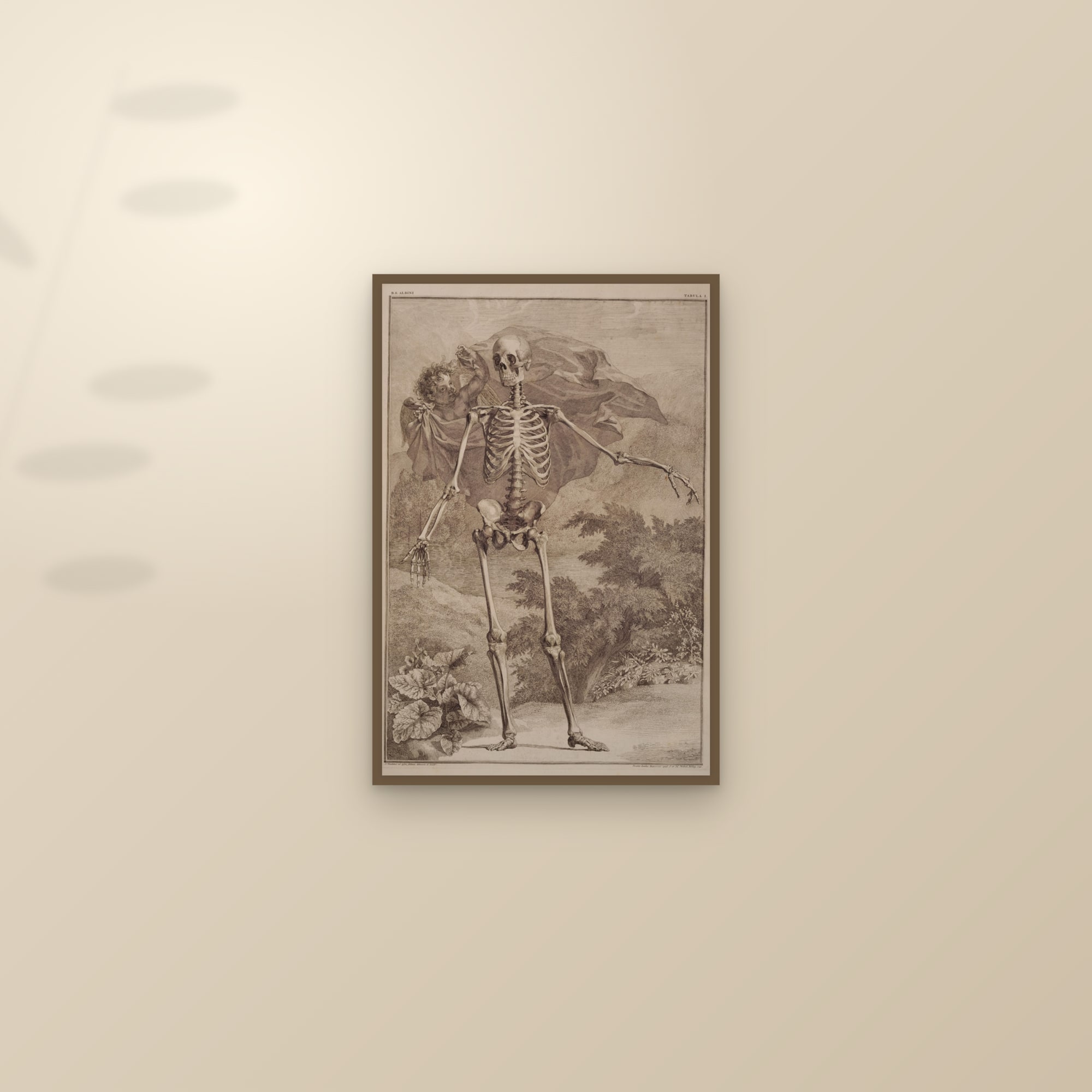
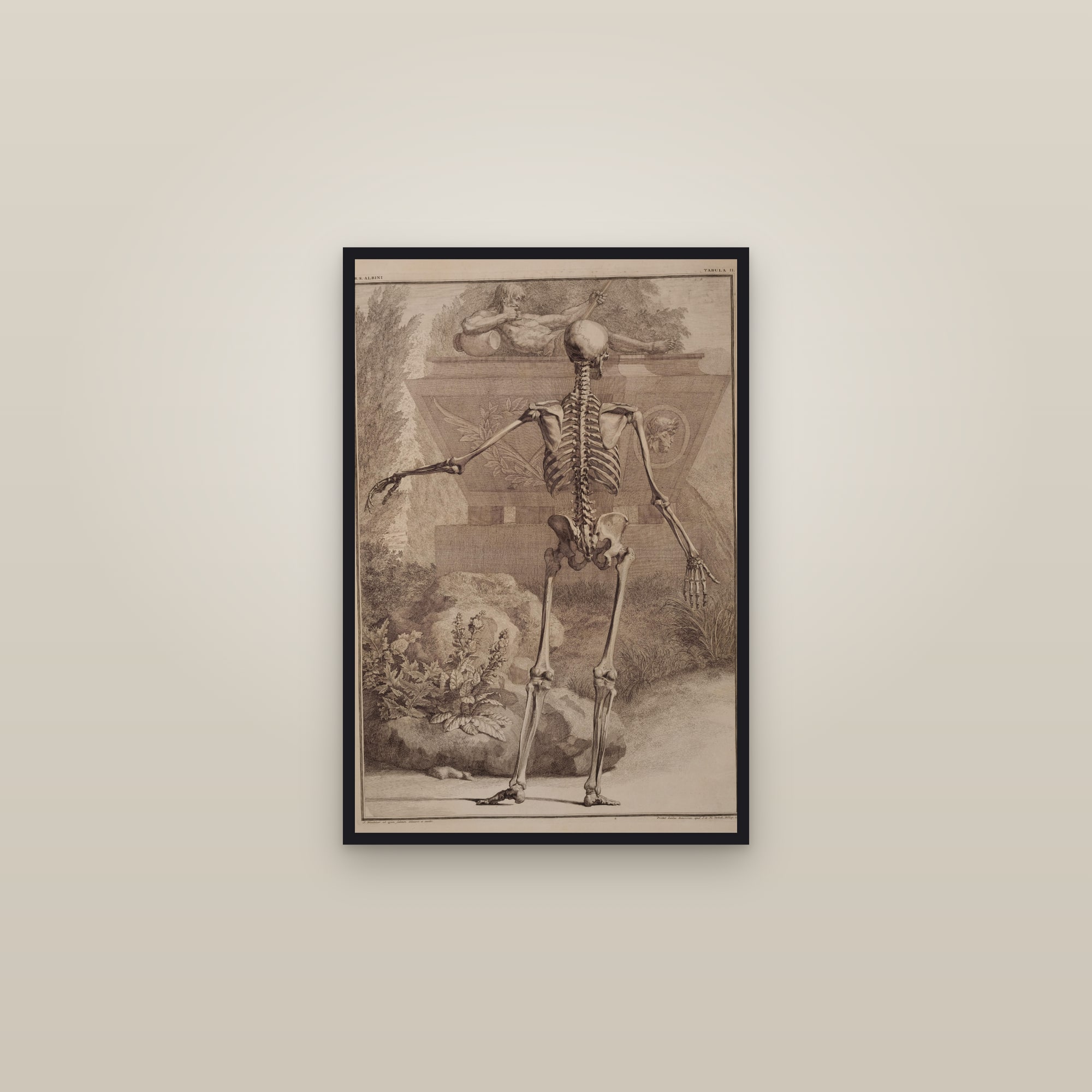
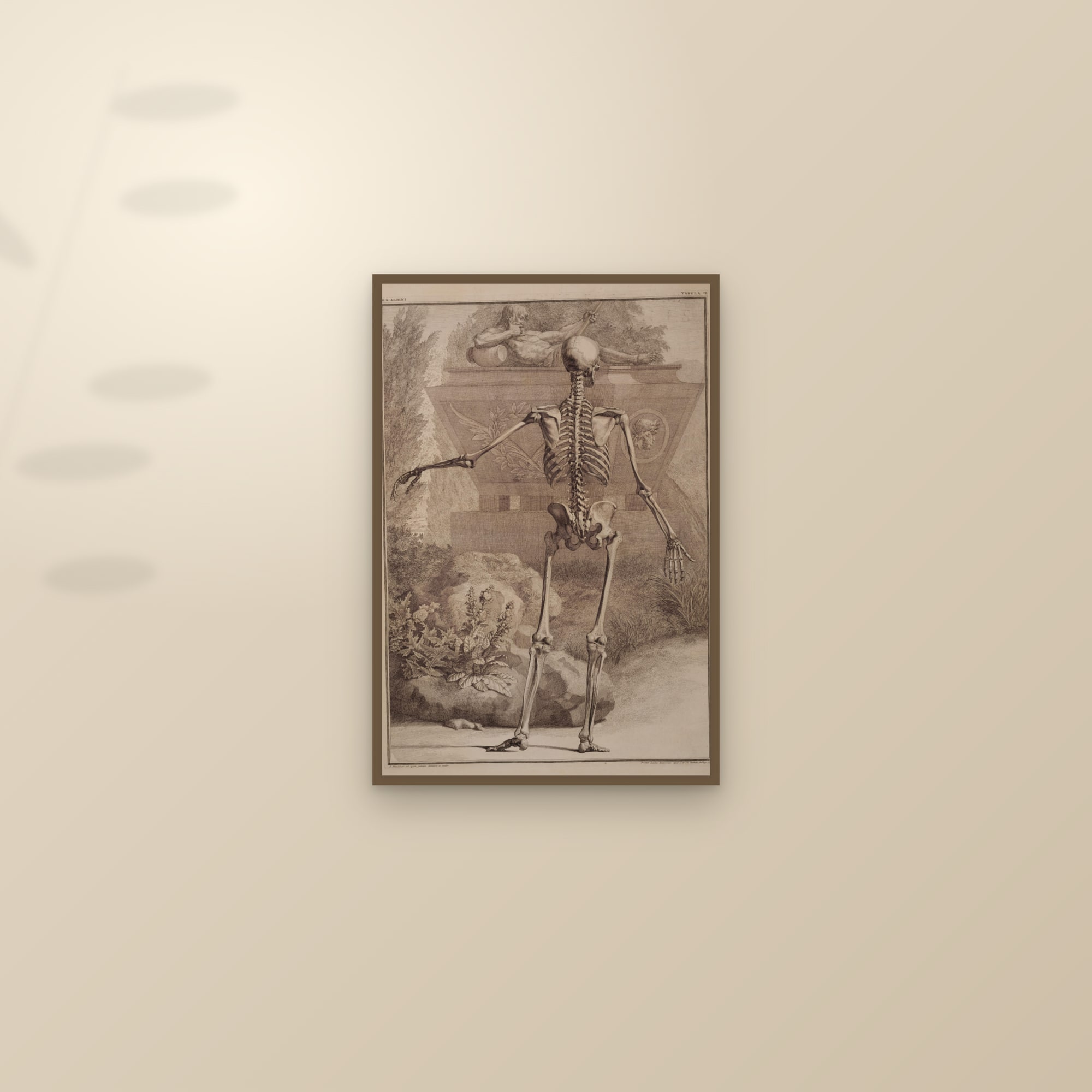
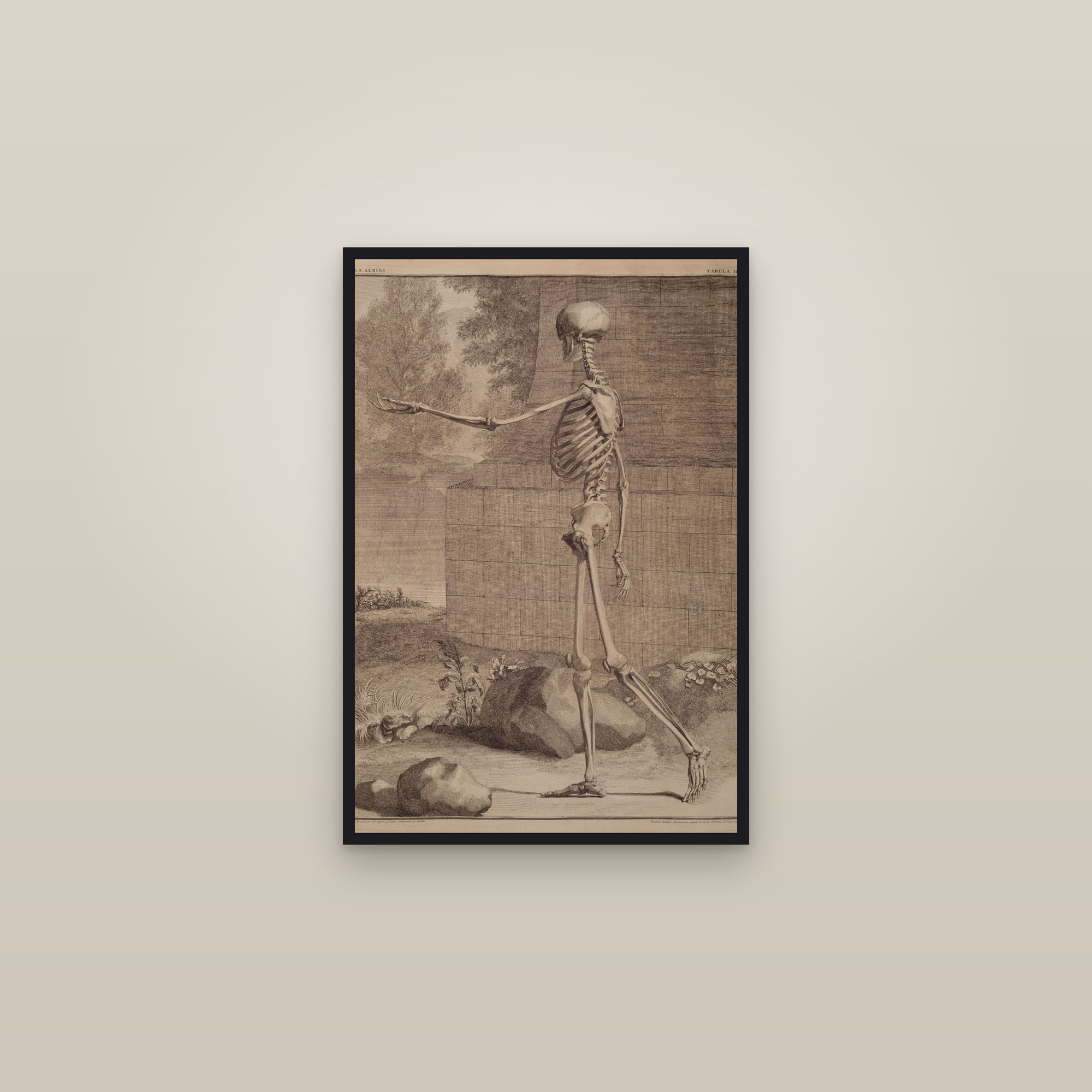
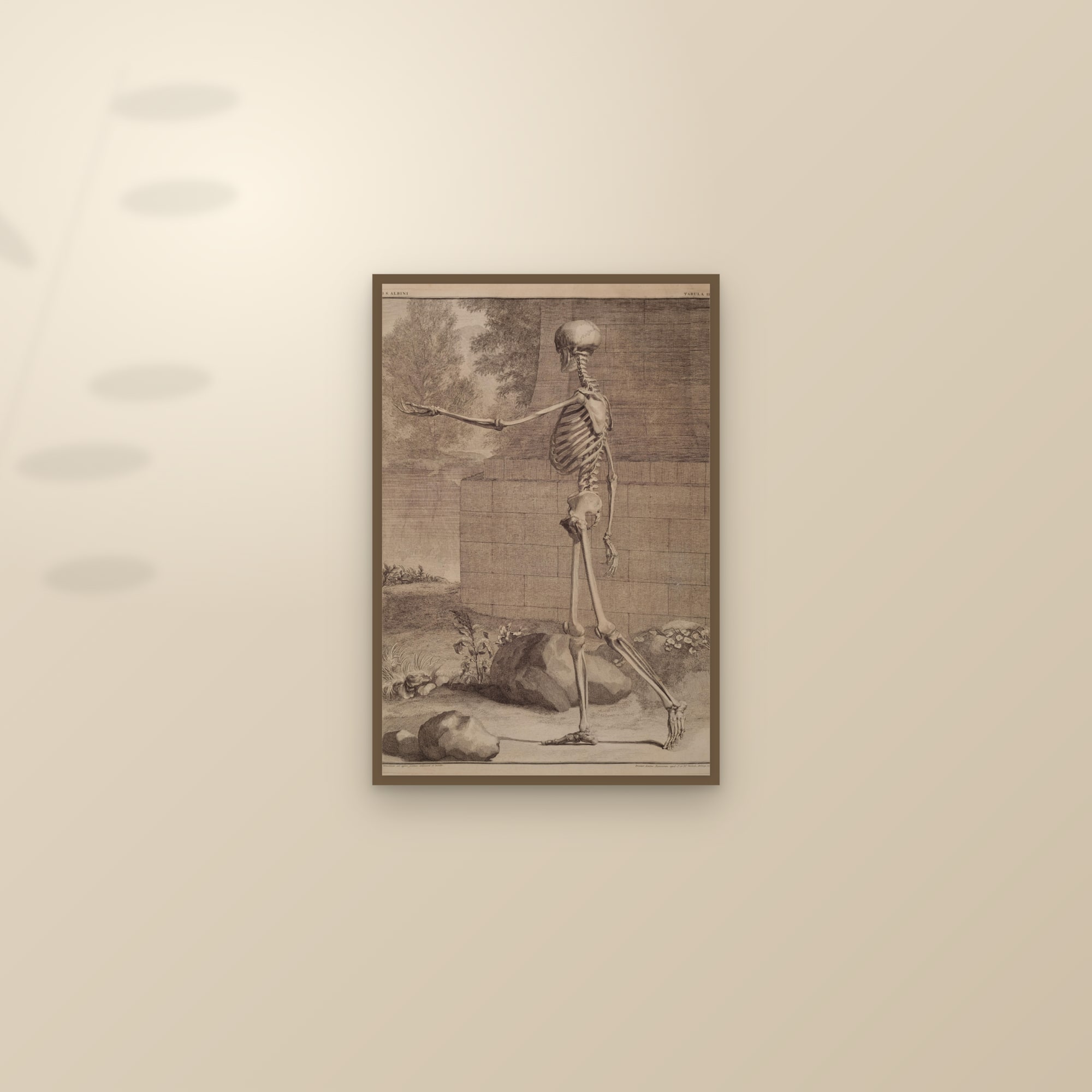
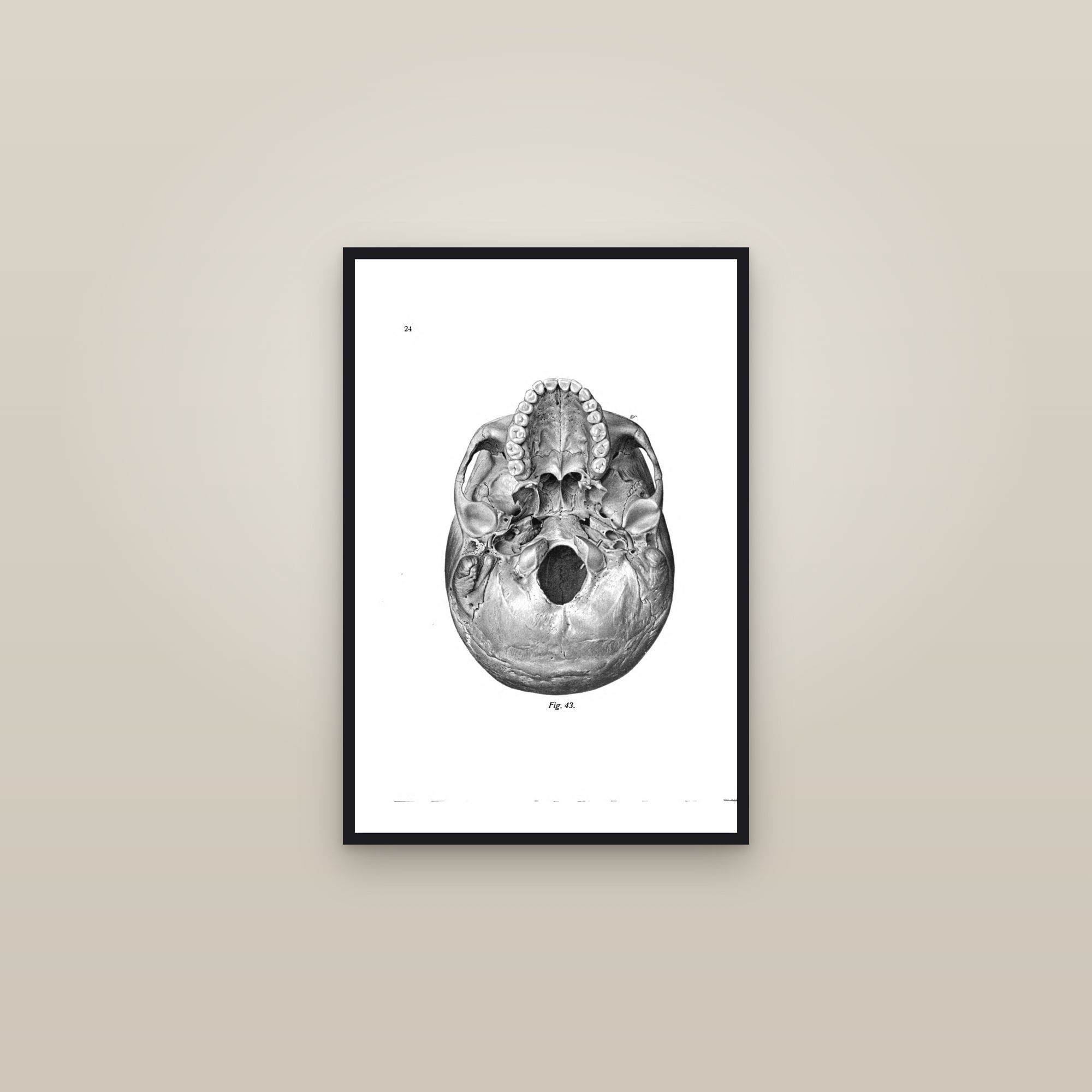
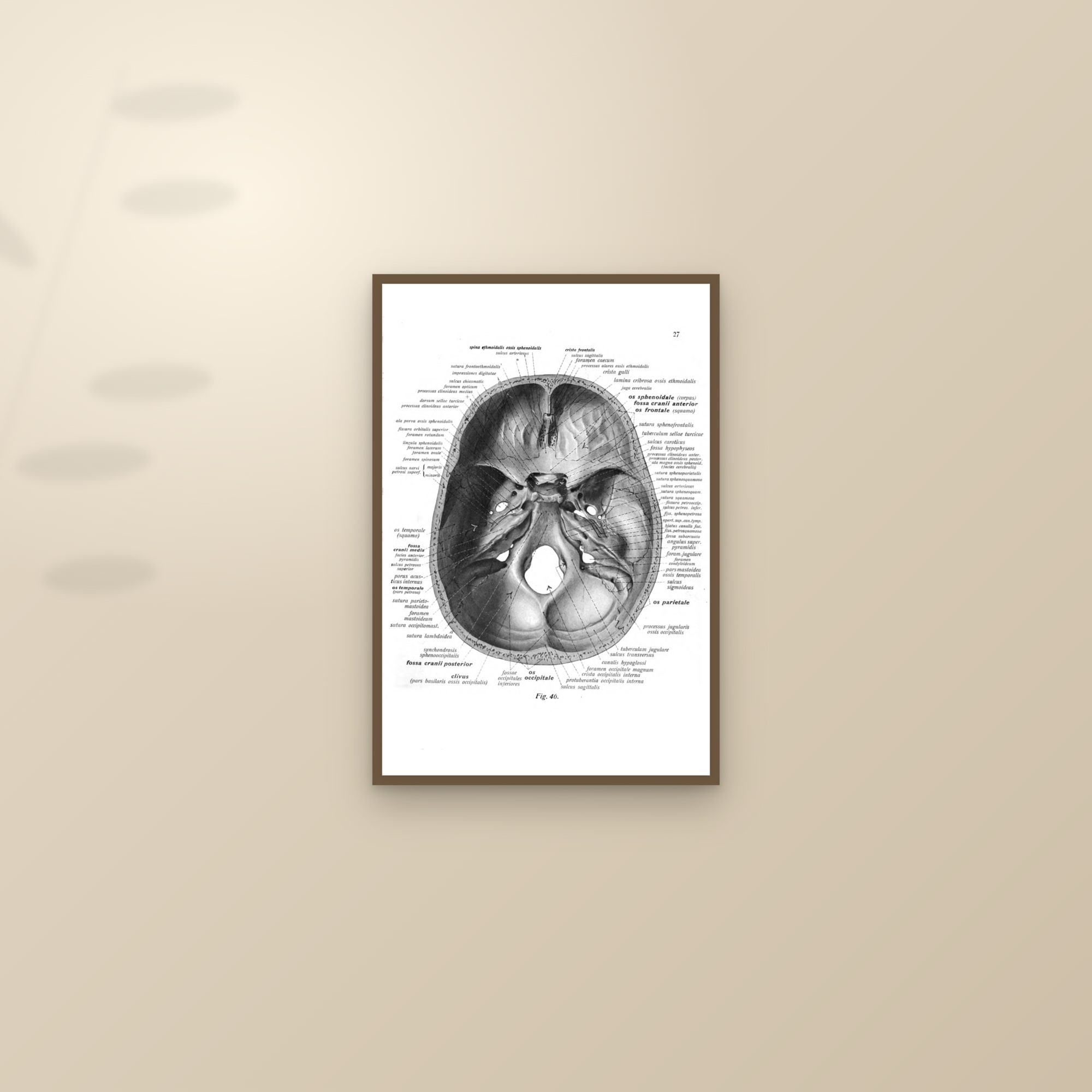
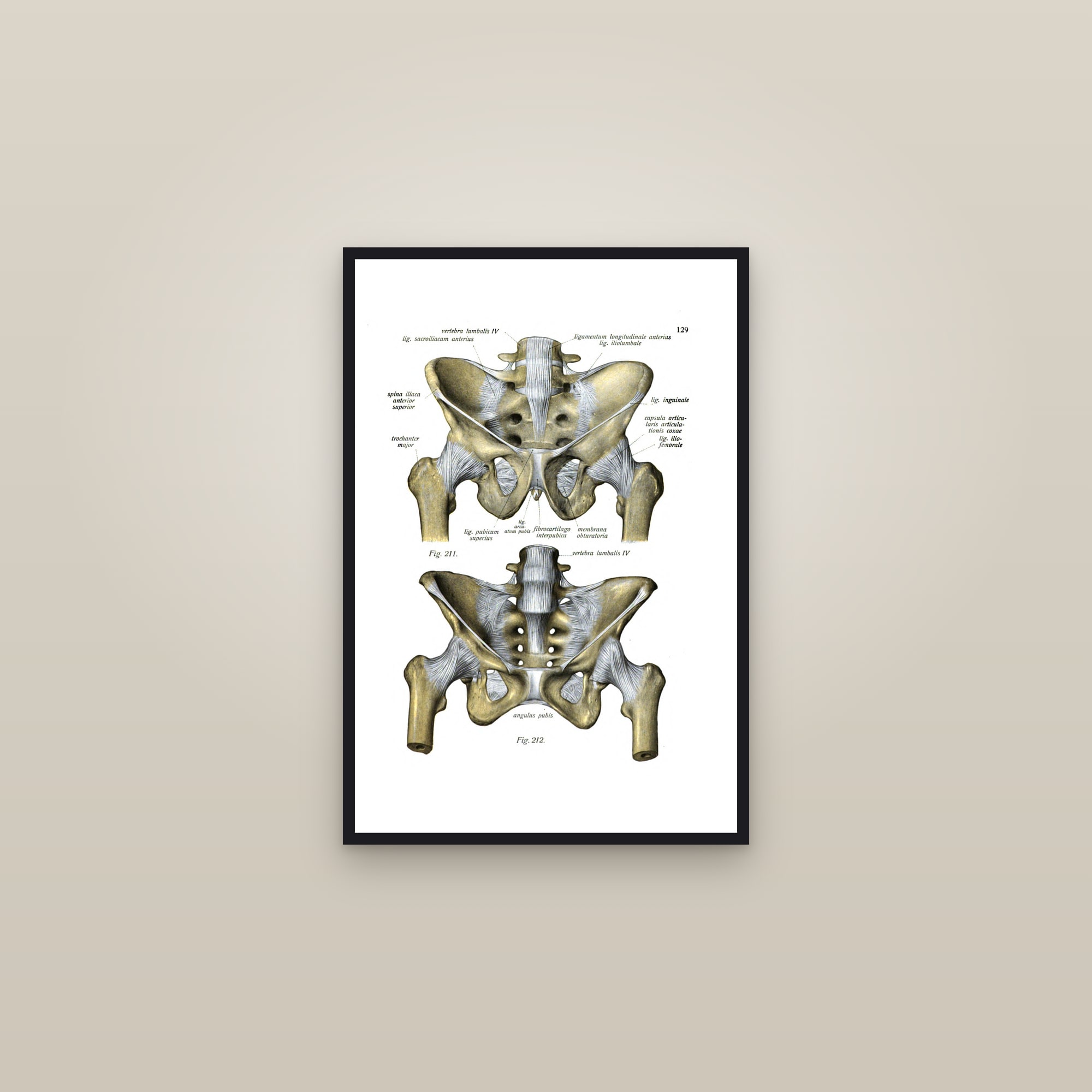
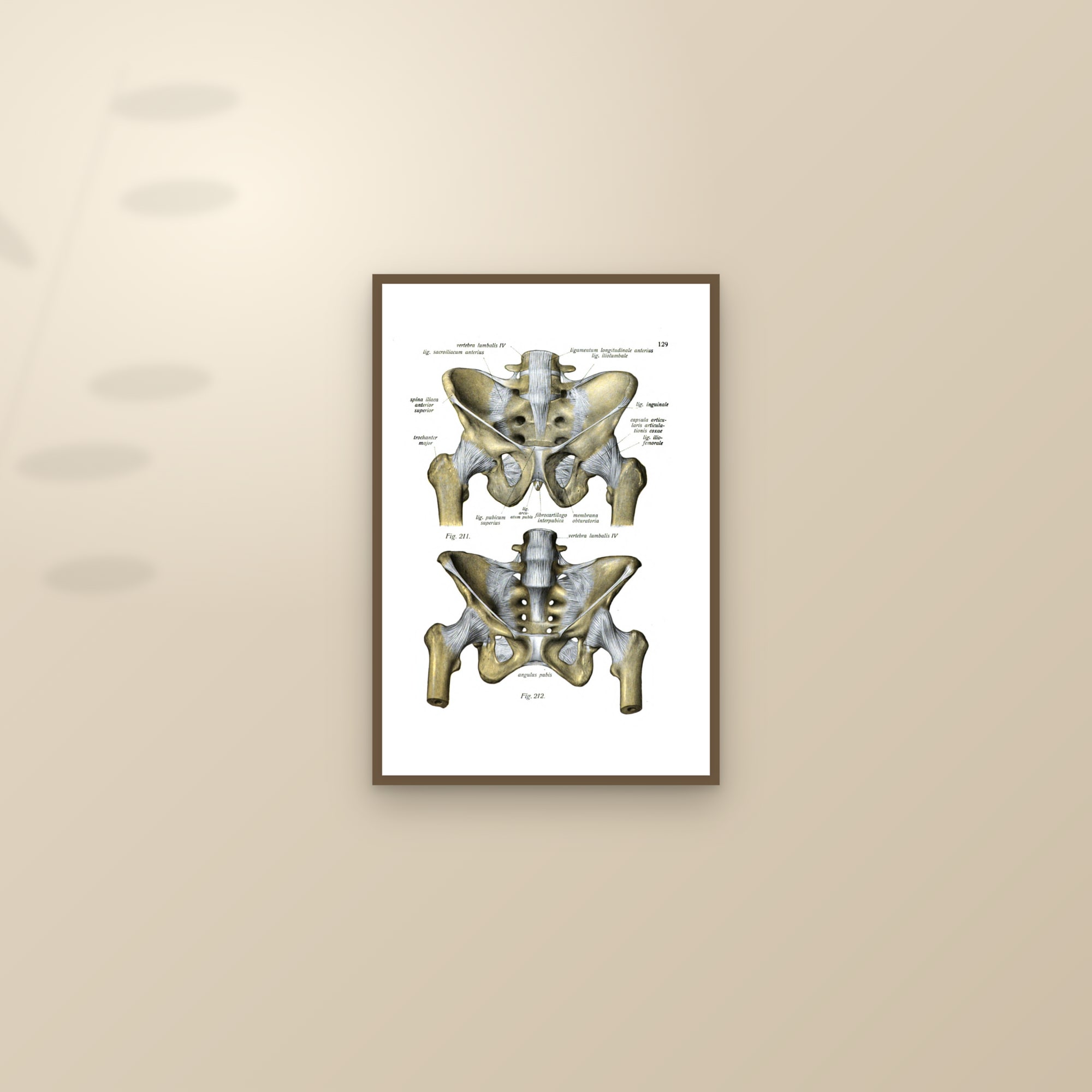
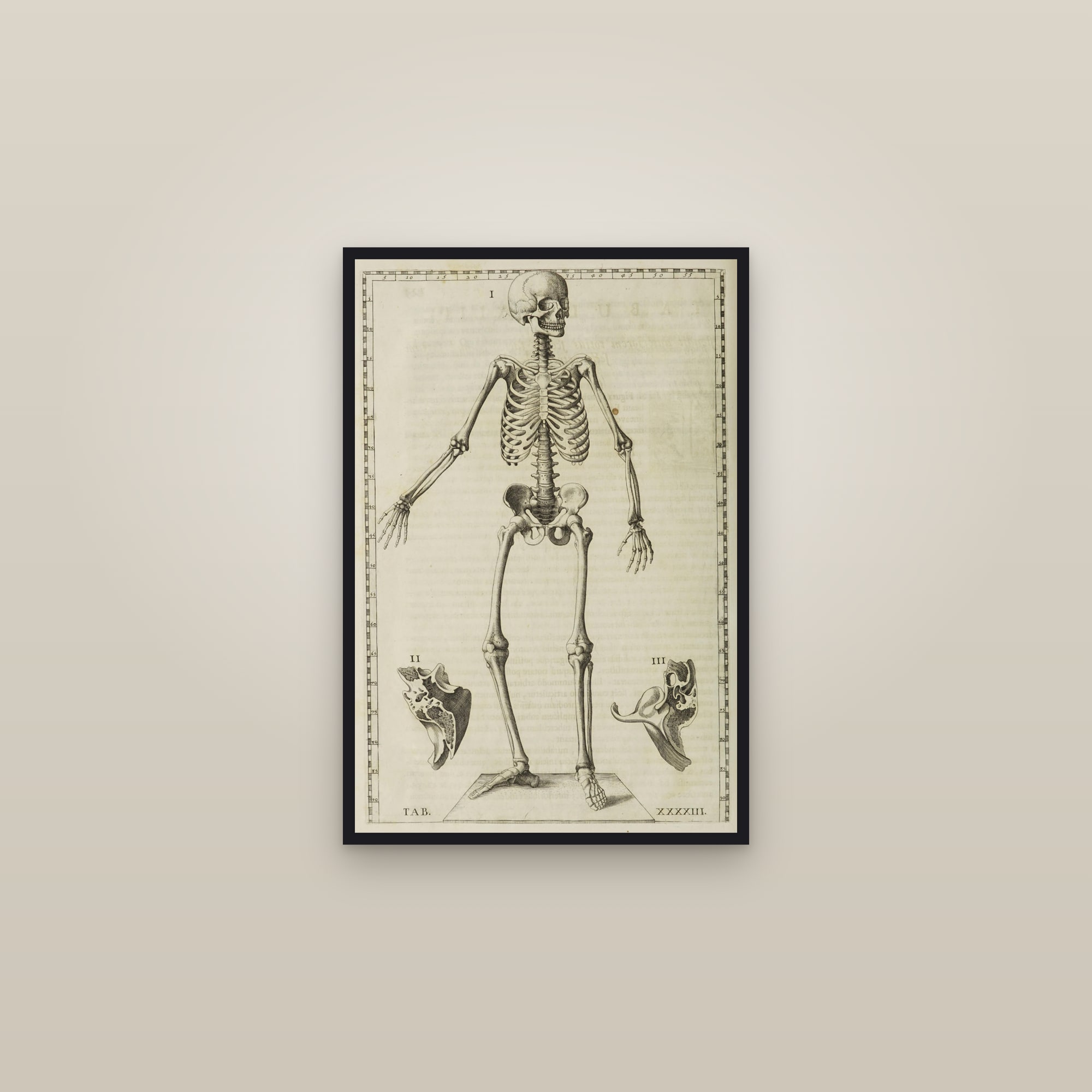
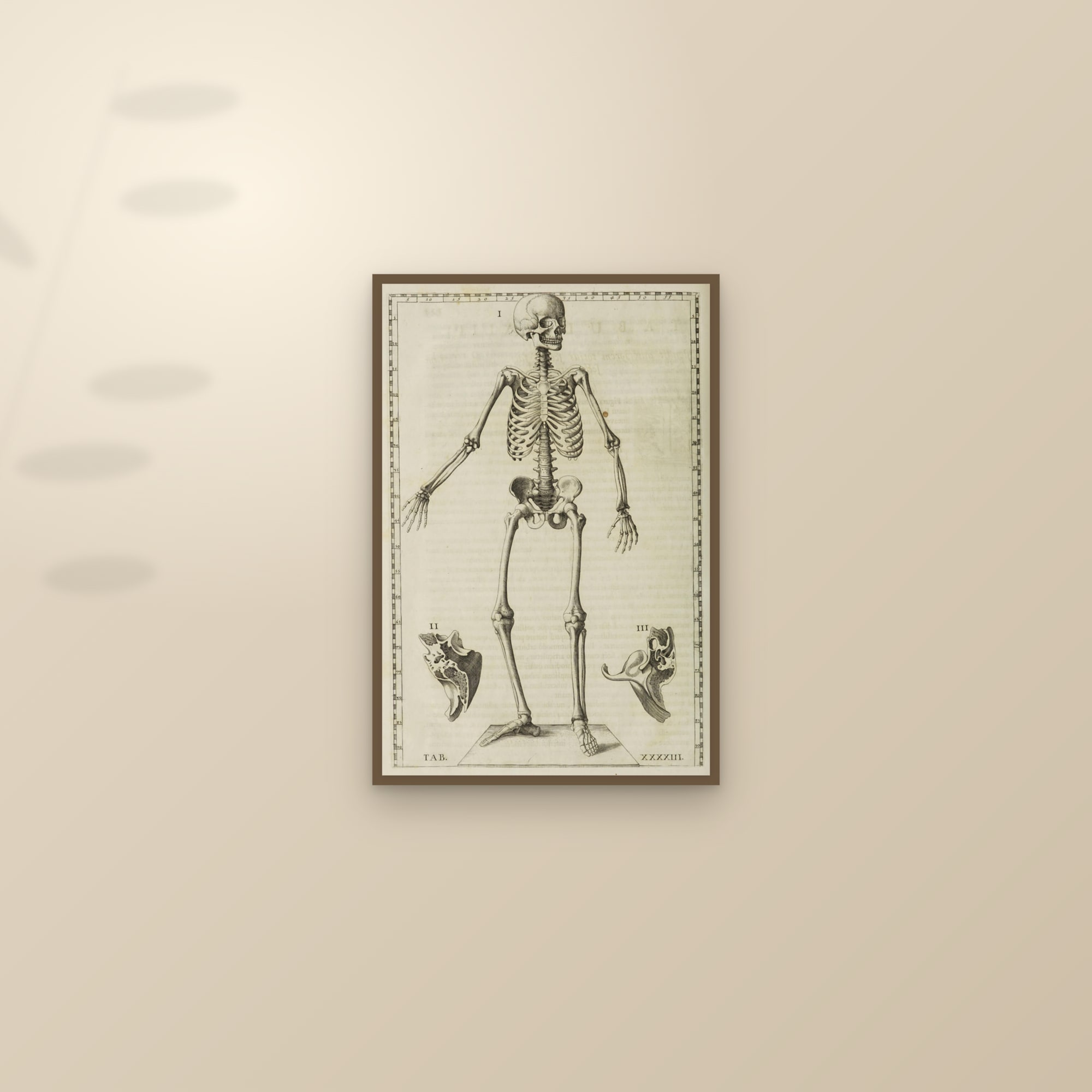
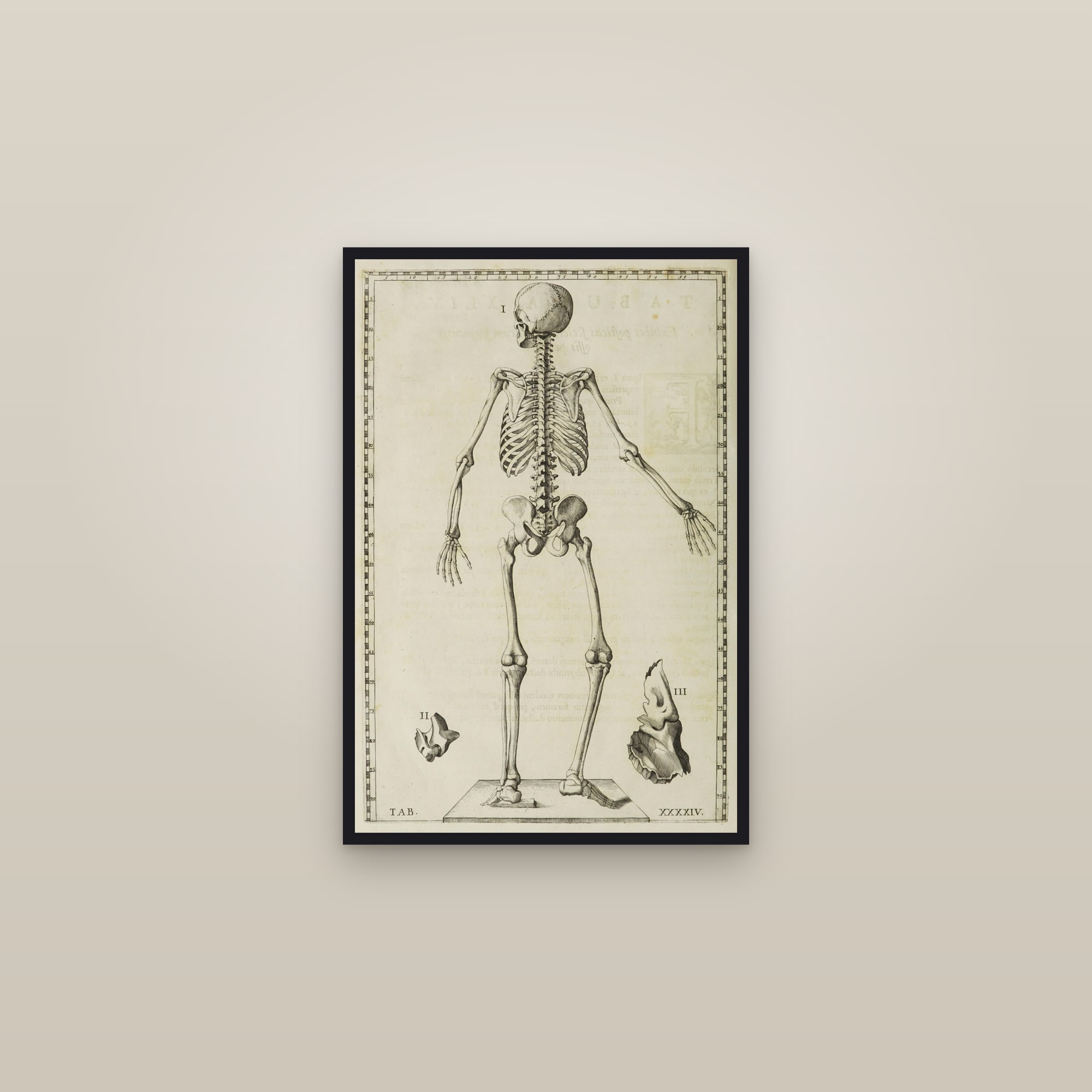
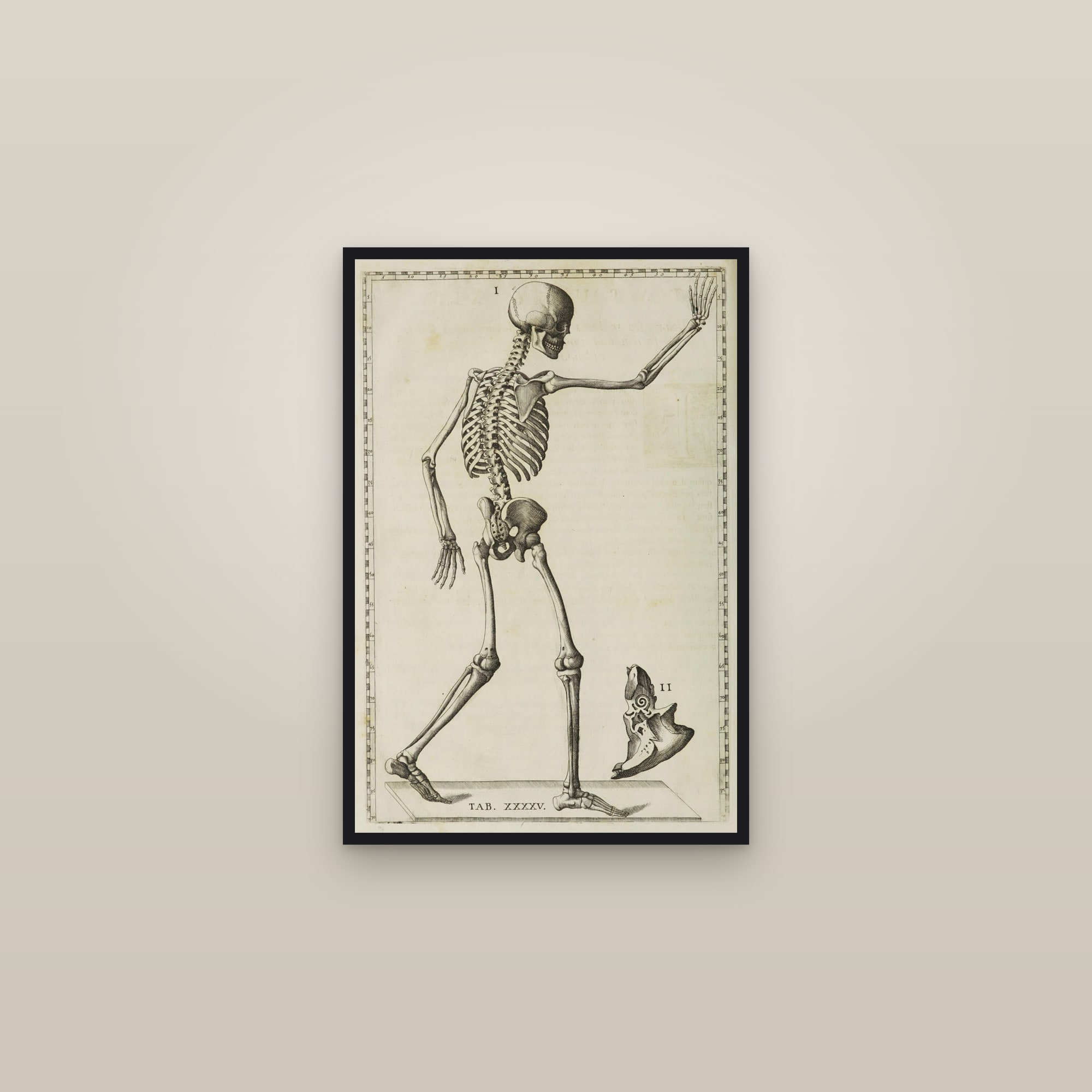
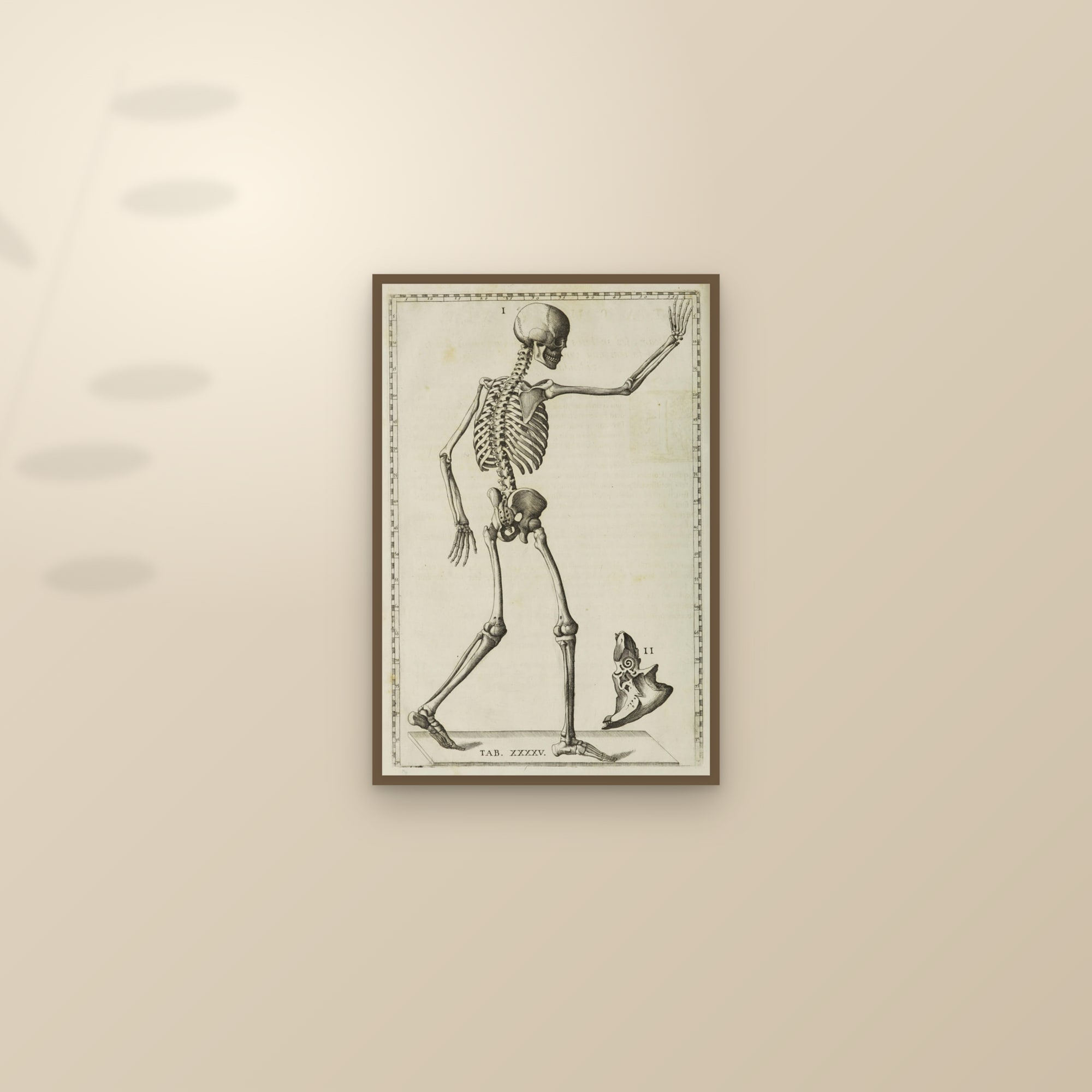
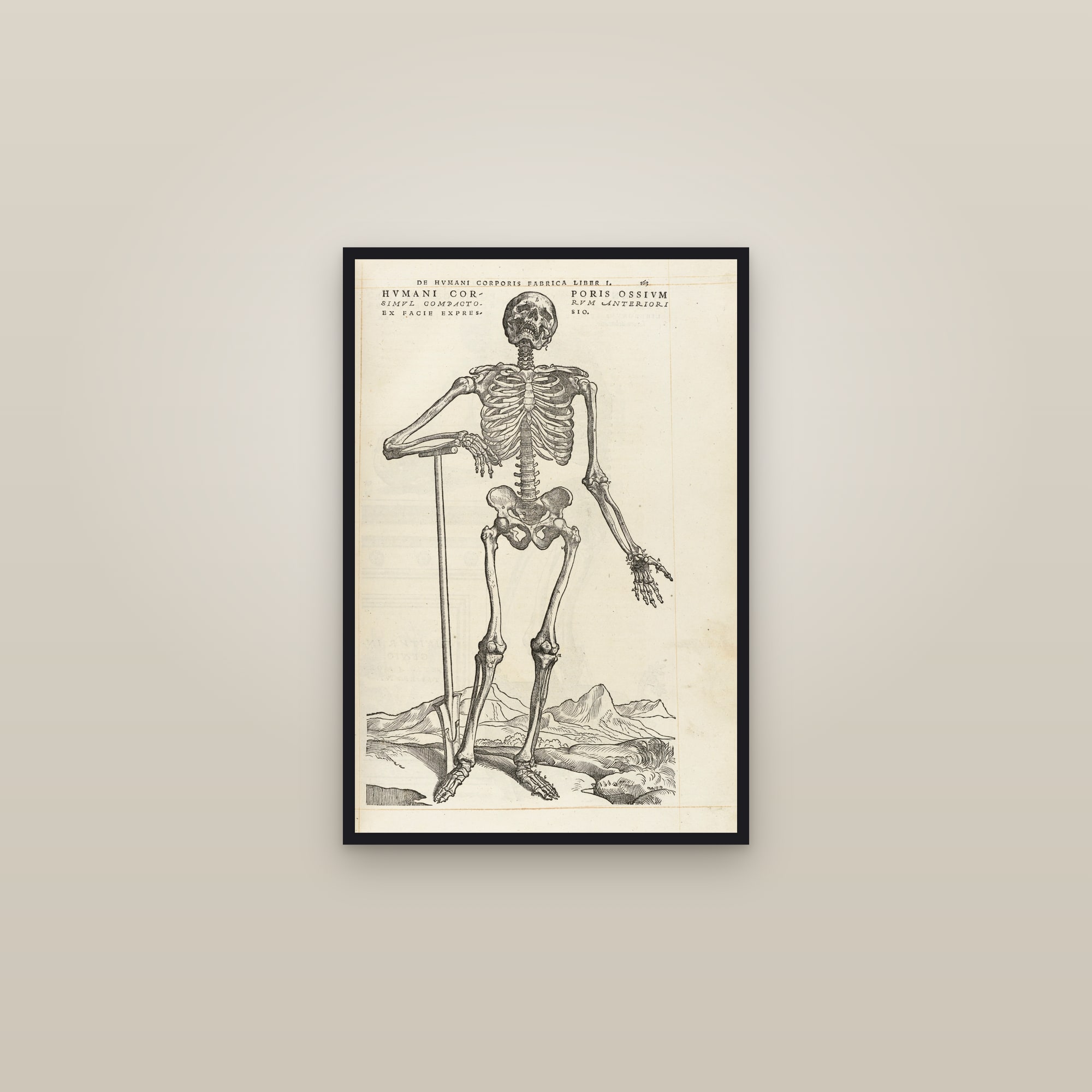
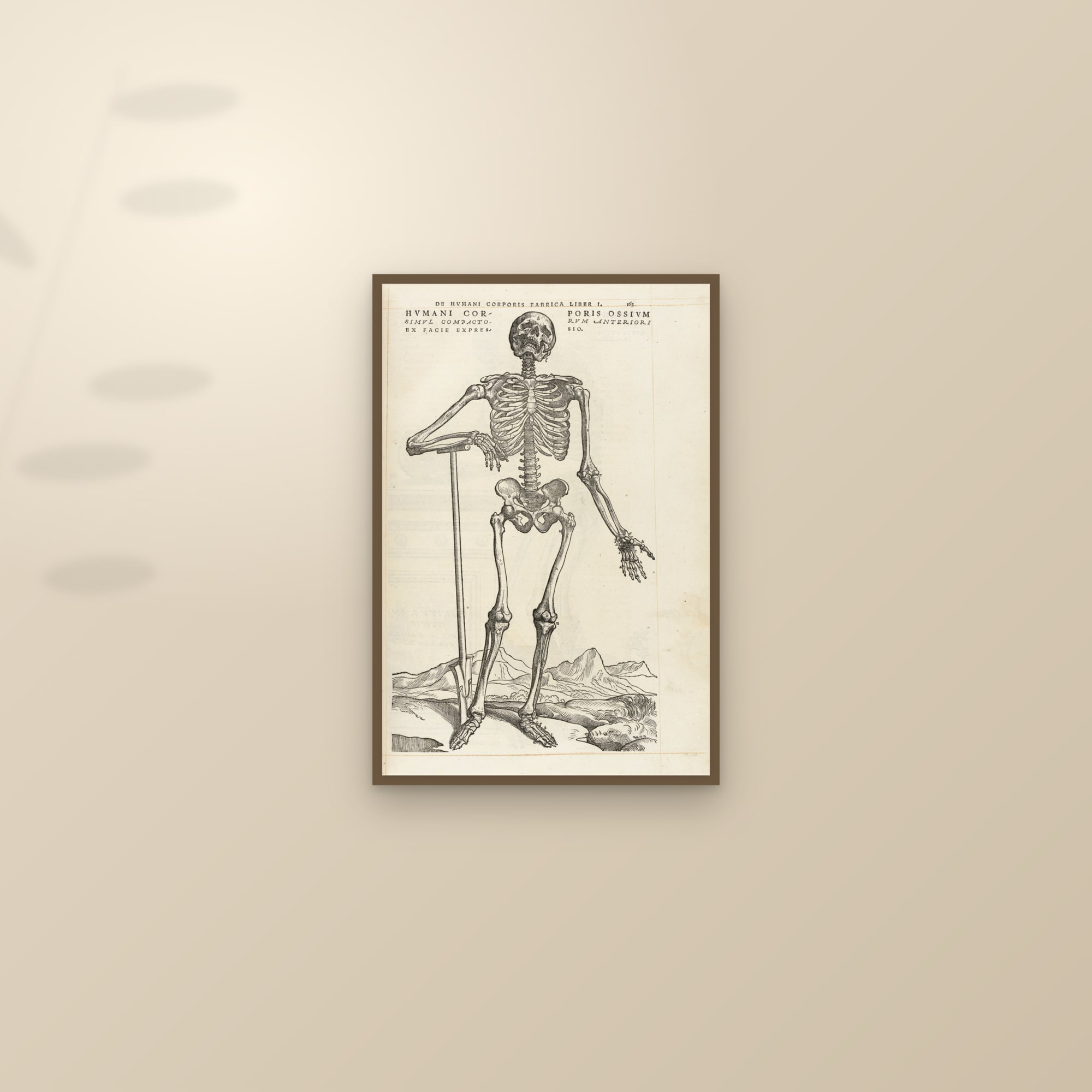
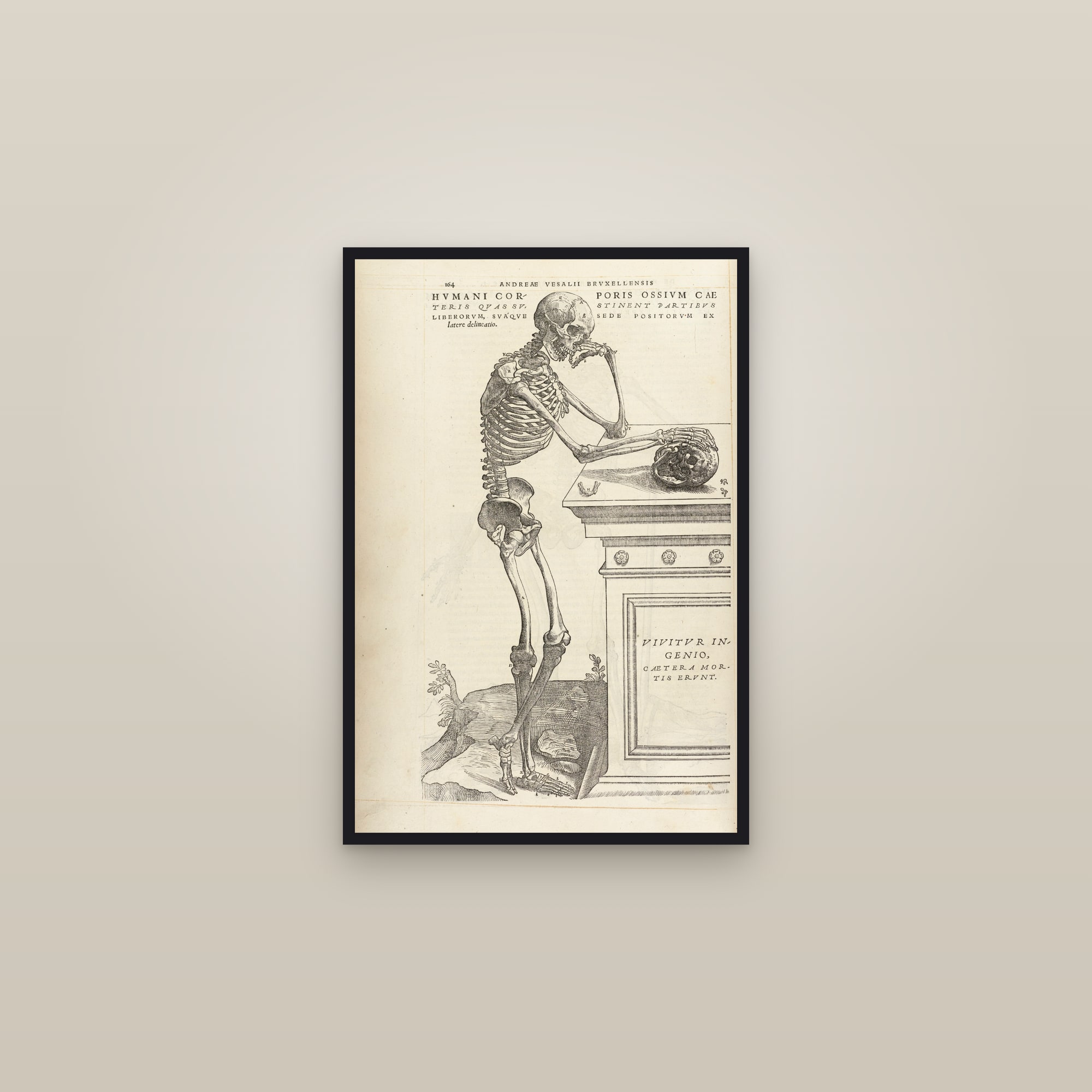
The human skeleton as four centuries of anatomists drew it: Vesalius's woodcut skeletons of 1543, one leaning on a spade and one contemplating a skull; Albinus's three skeletons of 1747, posed in a landscape, from the front, back and side; Eustachi's engraved skeleton of 1714 in three views; Sobotta's colour plates of the skull, the thorax and the pelvis; and the labelled skeleton-and-arteries sheet of 1830.
14 prints · printed to order on heavyweight matte paper · framed or unframed
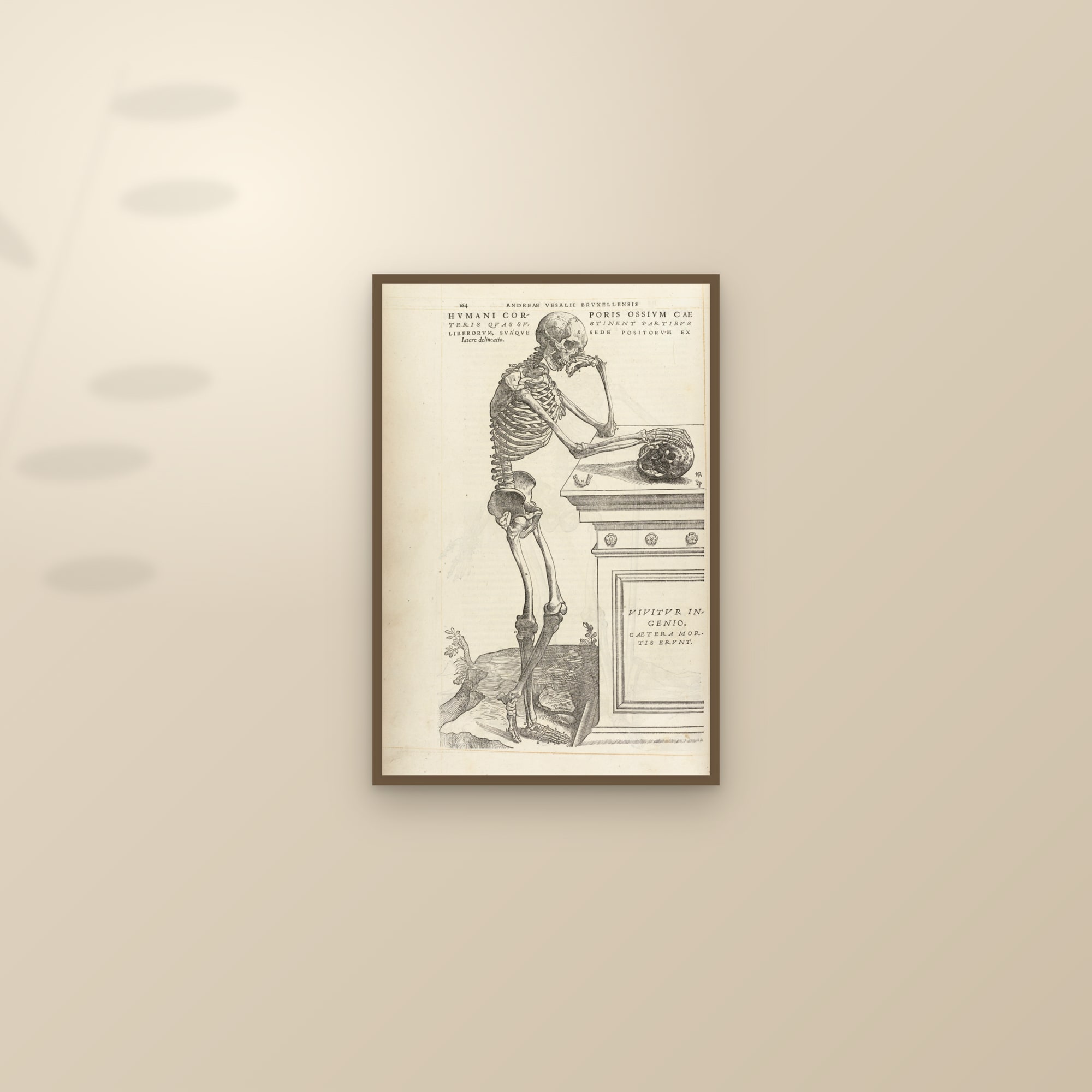
Four skeletons, four centuries
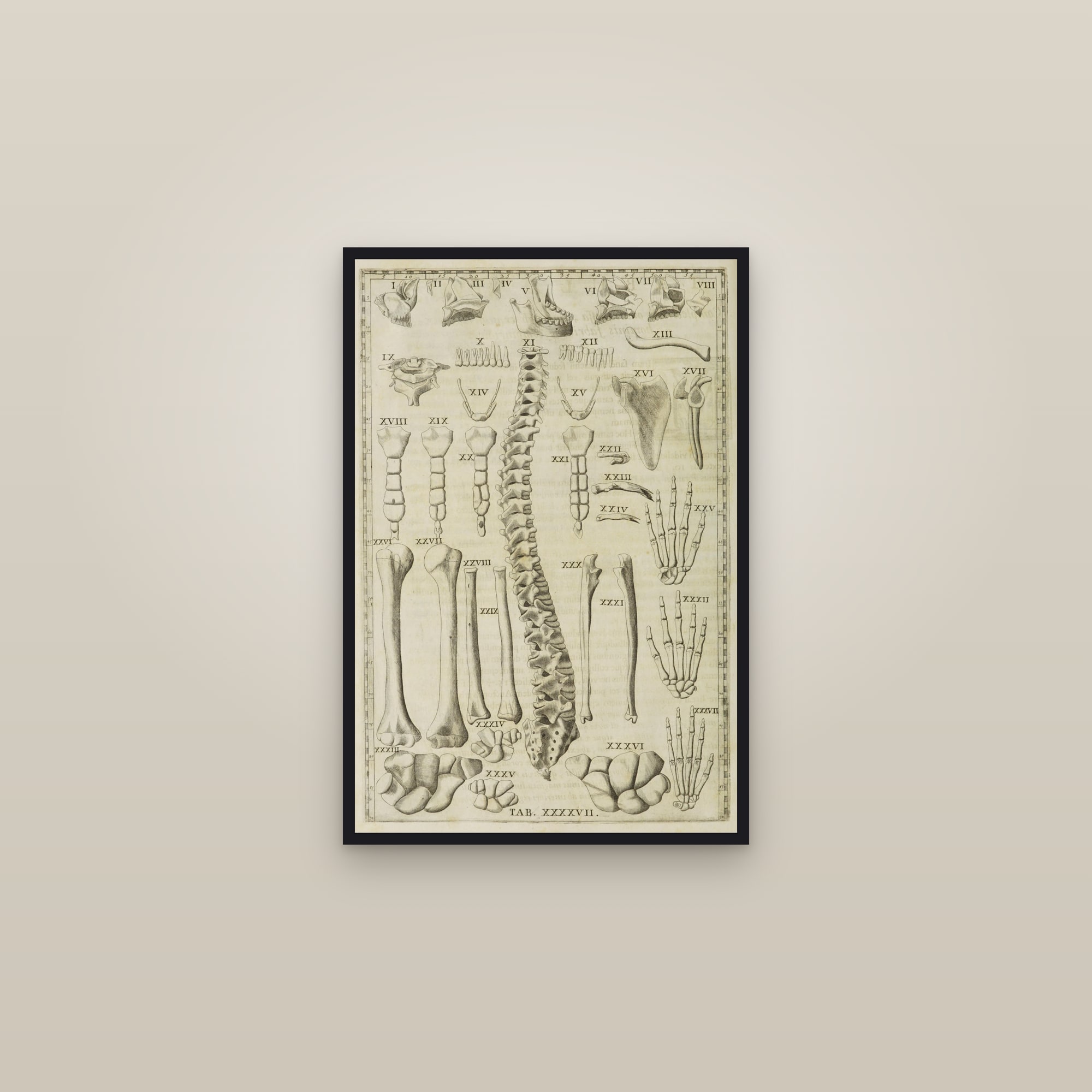
Vesalius's skeletons from De humani corporis fabrica of 1543 are the founding images of the subject, woodcuts of a skeleton standing in a landscape, leaning on a spade or resting its hand on a skull. Albinus's Tabulae sceleti of 1747 refined the idea into three engraved skeletons, front, back and side, each set in a garden landscape so the figure had somewhere to stand. Eustachi's skeletons, engraved in the sixteenth century and published in 1714, are plainer and more anatomical, three views inside his numbered border. All three sets are here, with Parker's lithographed skeleton and arteries of 1830.
The skull and the bones in colour
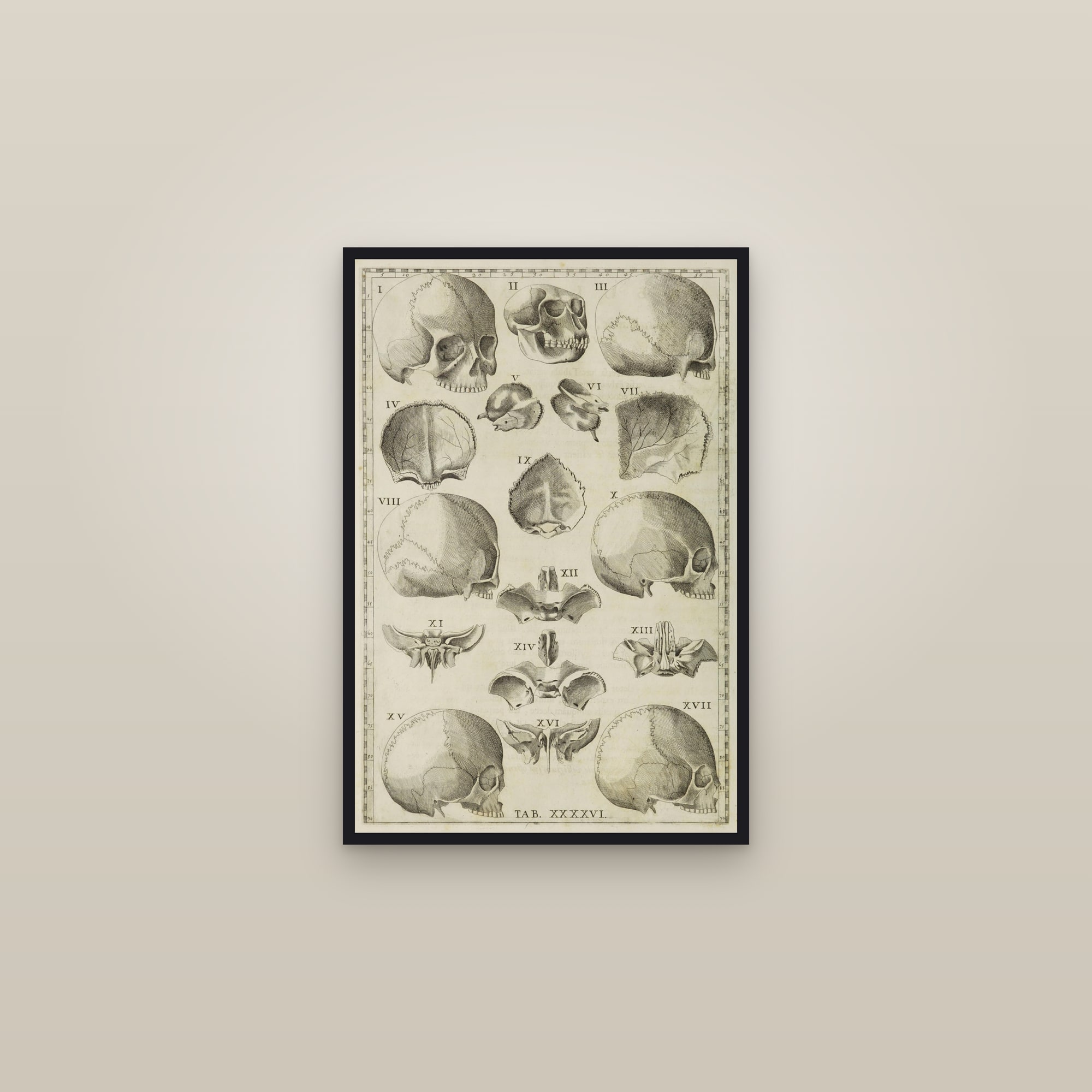
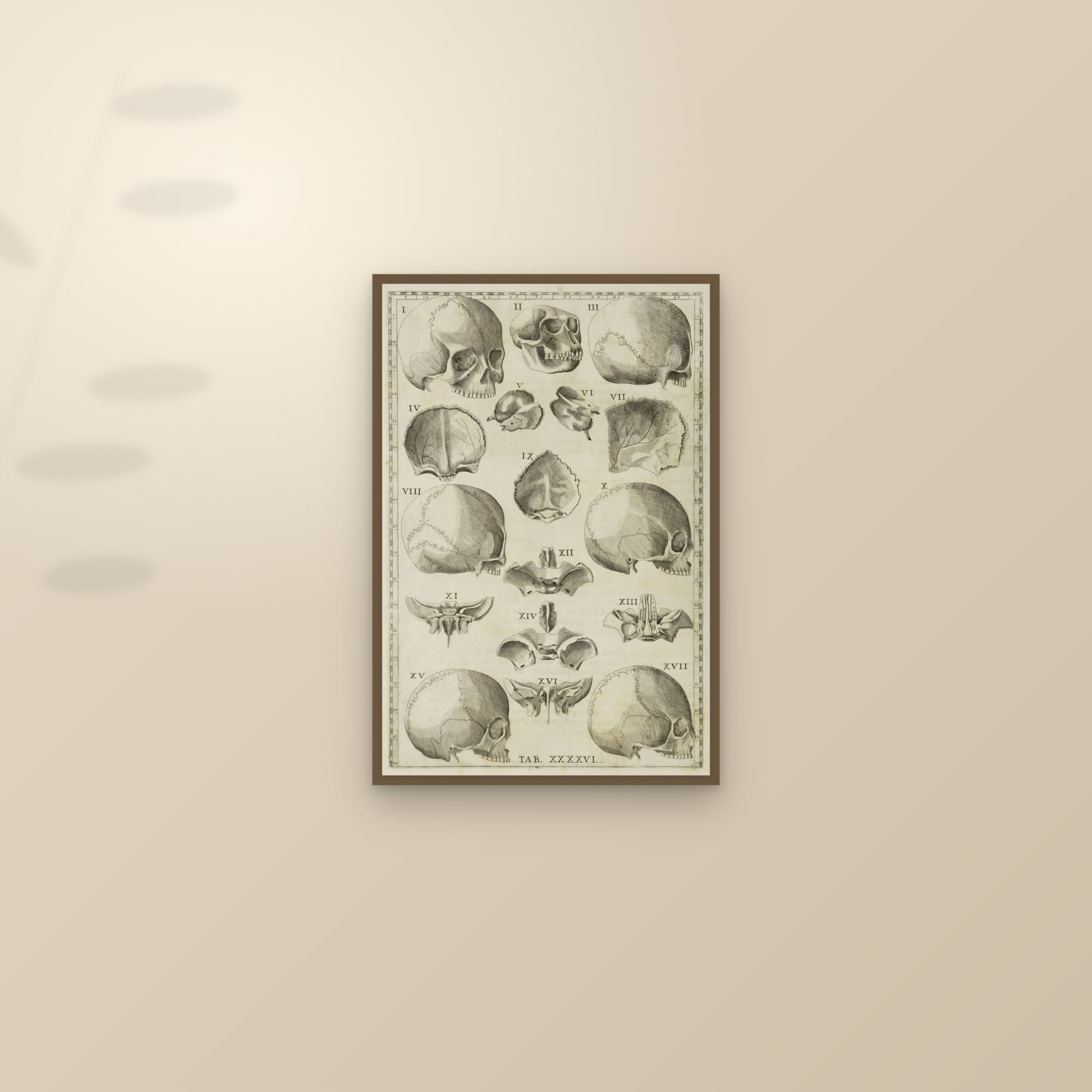
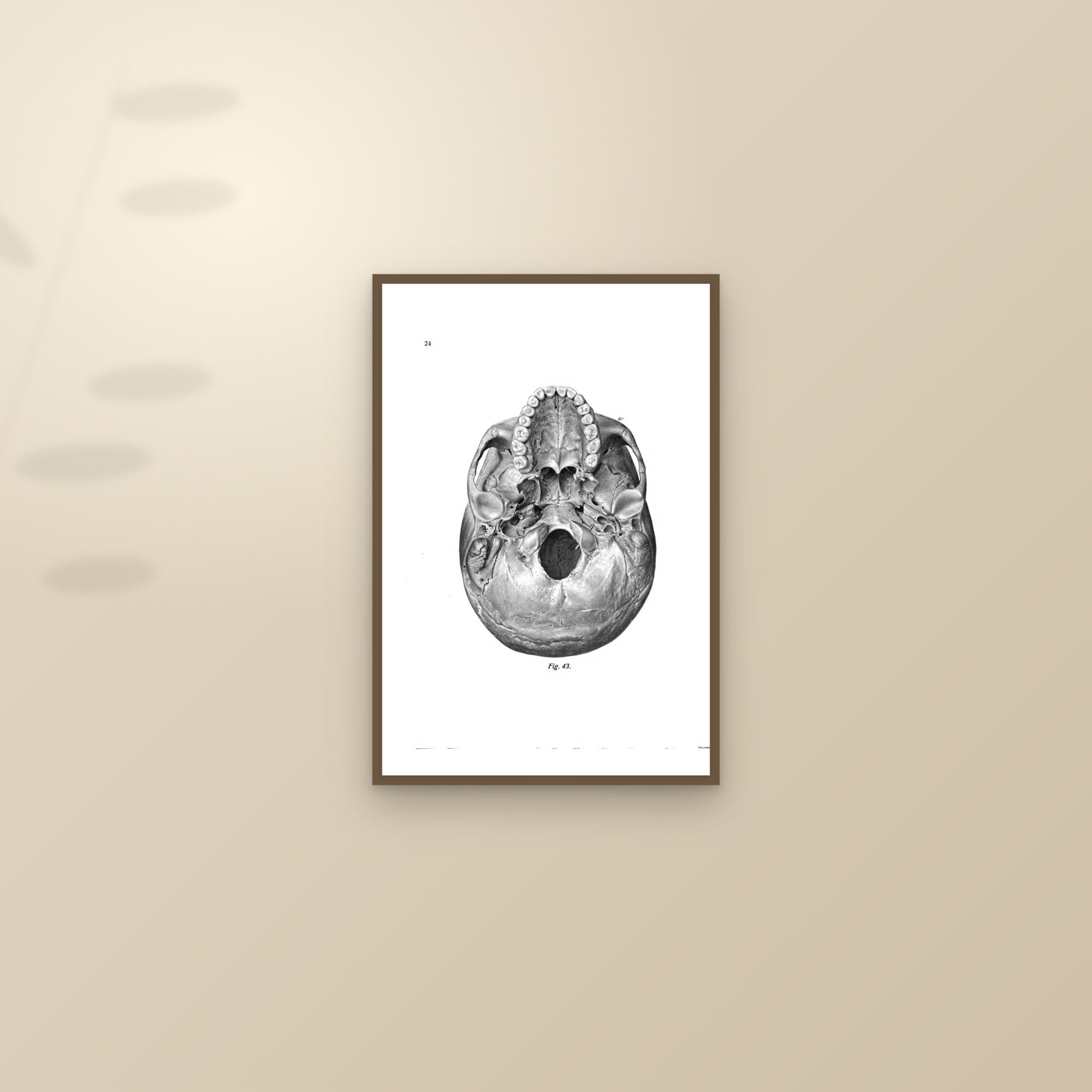
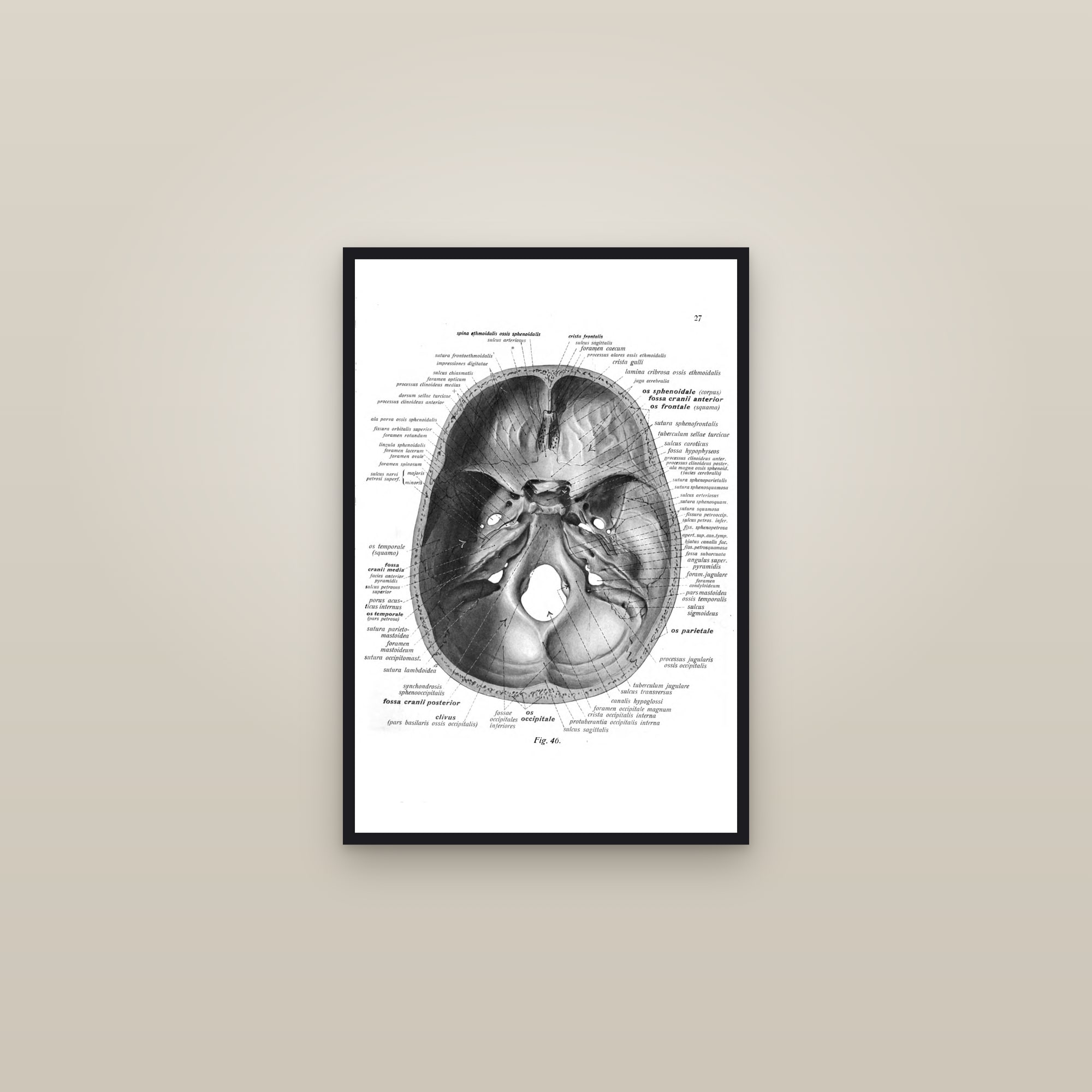
The skull has its own plates: Eustachi's famous sheet of the skull in seventeen views, and Sobotta's four chromolithographs of 1919, the skull from the front and from the side and the base of the skull seen from below and from inside. Sobotta also supplies the thorax with its ribs, sternum and spine, and the pelvis, both in the soft colour of the 1919 atlas. These are the plates a chiropractor, osteopath or physiotherapist hangs where a patient can see the bone being discussed.
Sizes and framing
The Albinus and Vesalius skeletons are full-figure plates and read best large: 24×36 on the wall of a study, a loft or a treatment room, or 16×24 as a facing pair, front and back. Albinus, Vesalius and Sobotta plates print up to 24×36; the Eustachi and Parker plates up to 16×24. Each comes full-bleed or as a captioned specimen on cream, on 250 gsm archival paper, unframed or framed in black or dark wood with no mat. Three or more prints take 10% off.