Heart Anatomy Prints
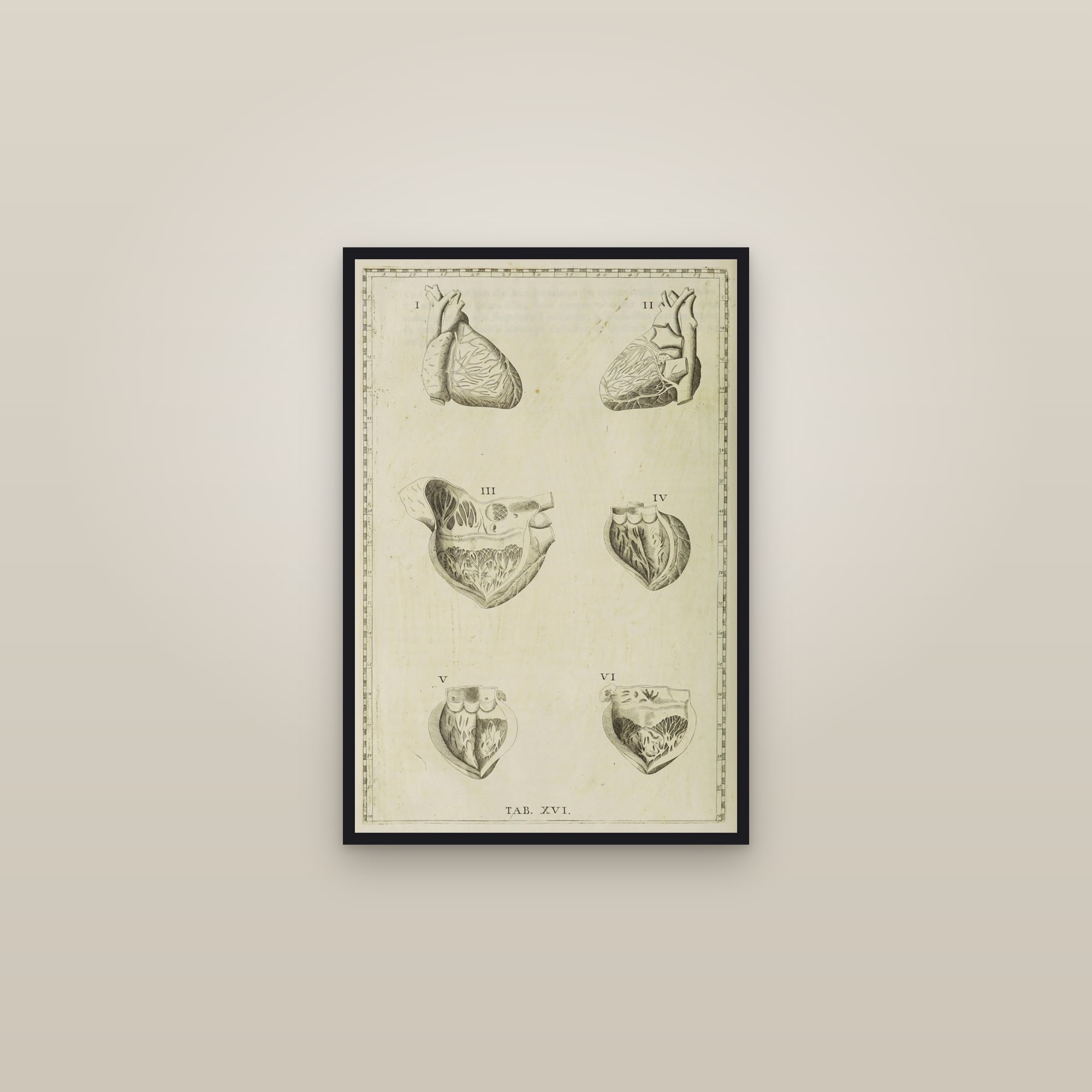
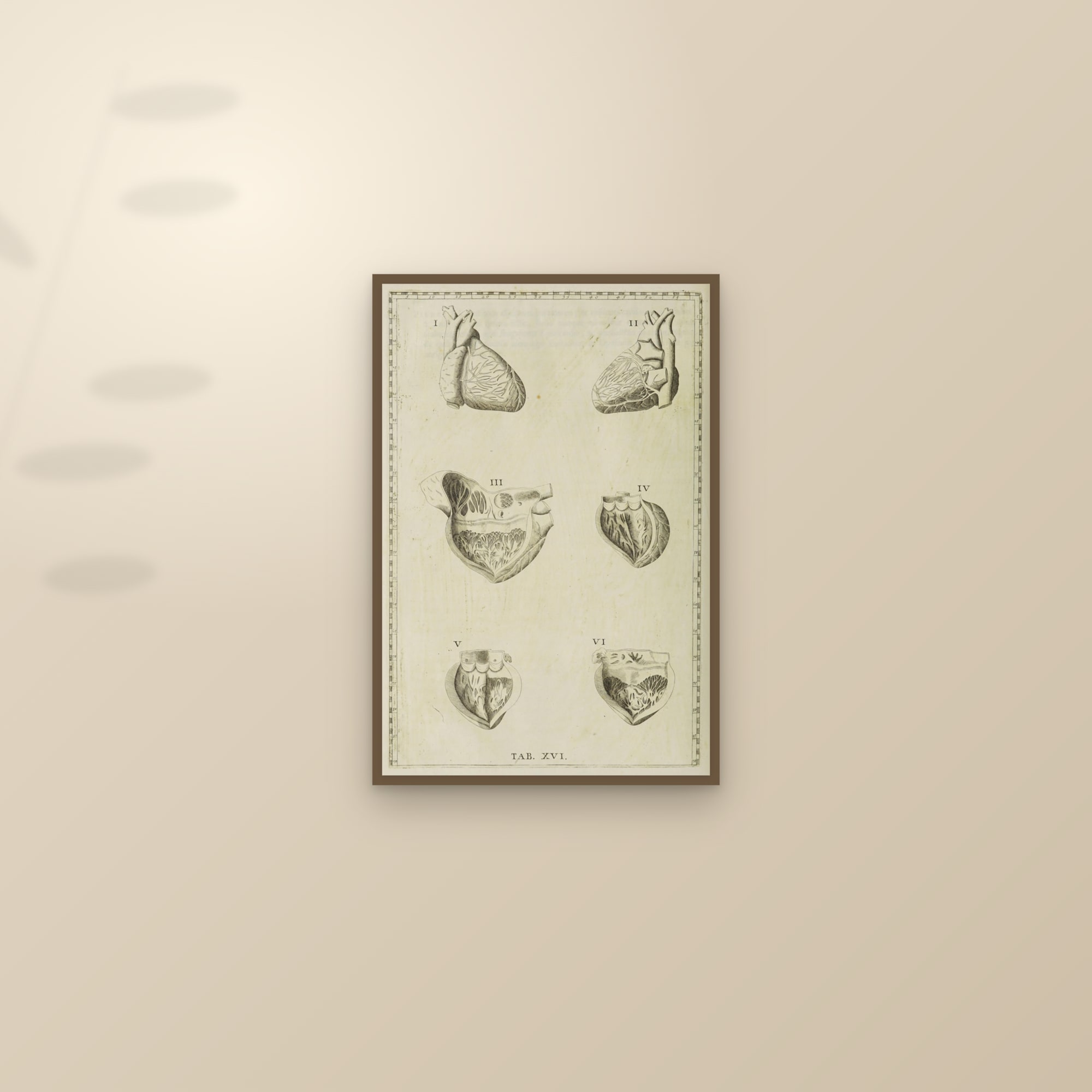
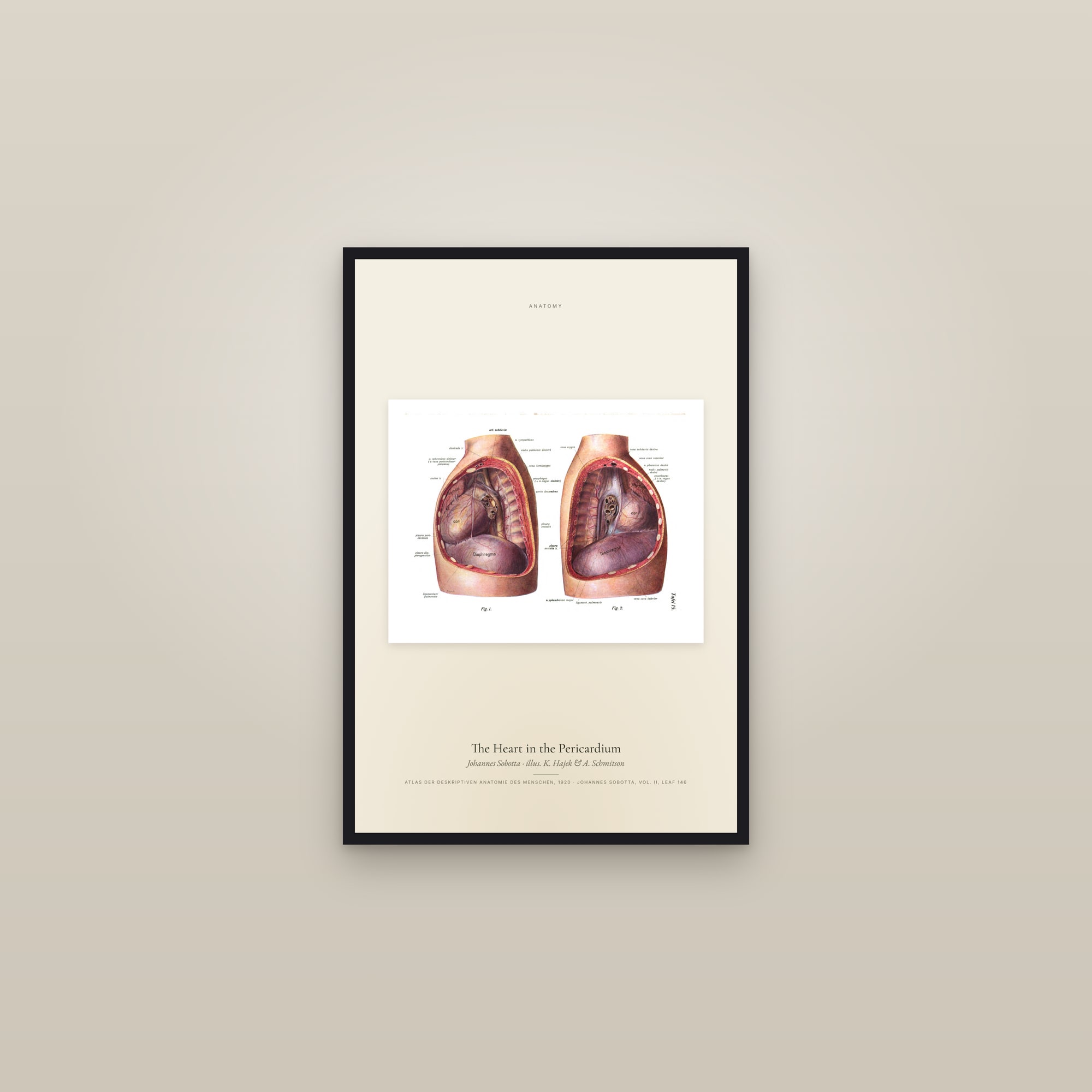
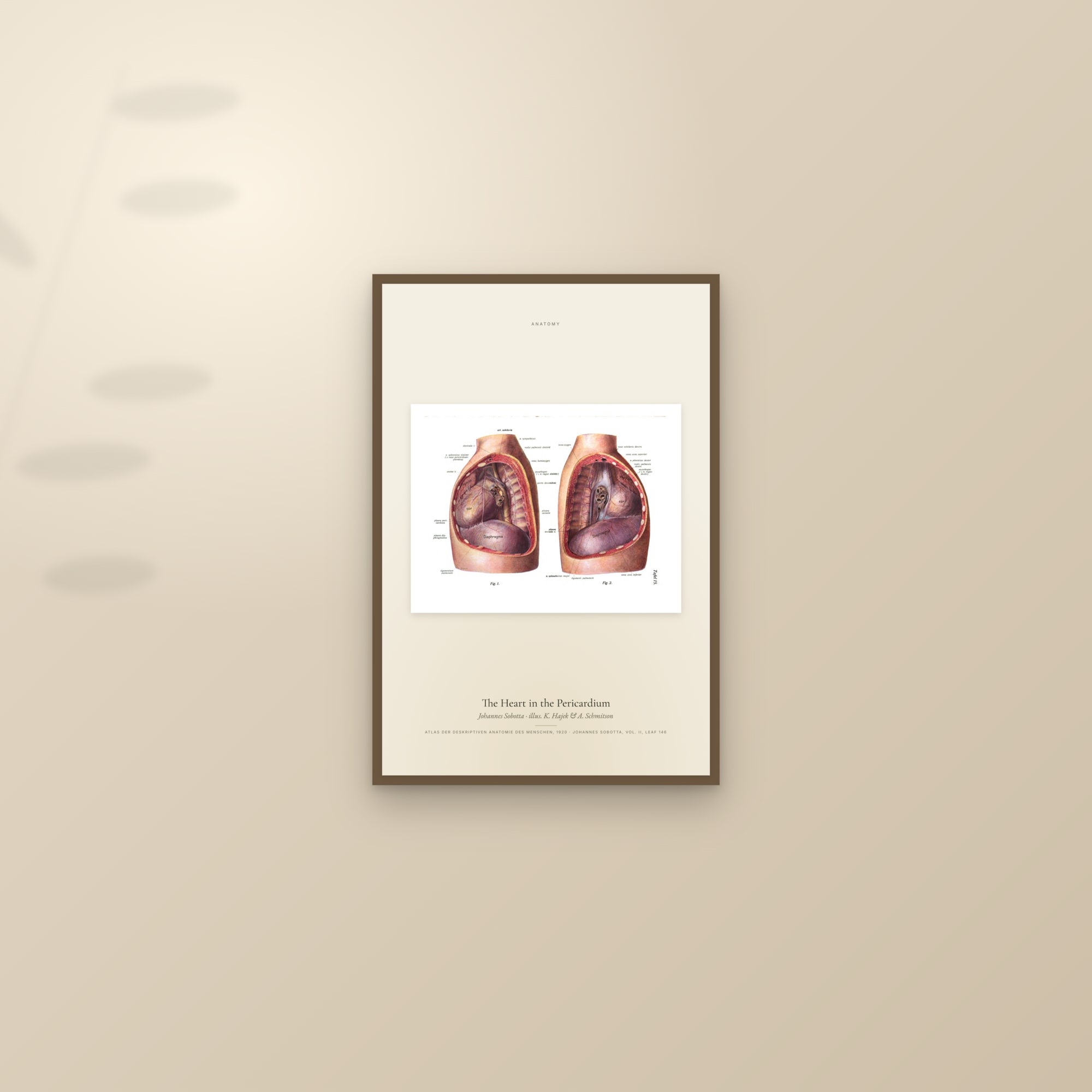
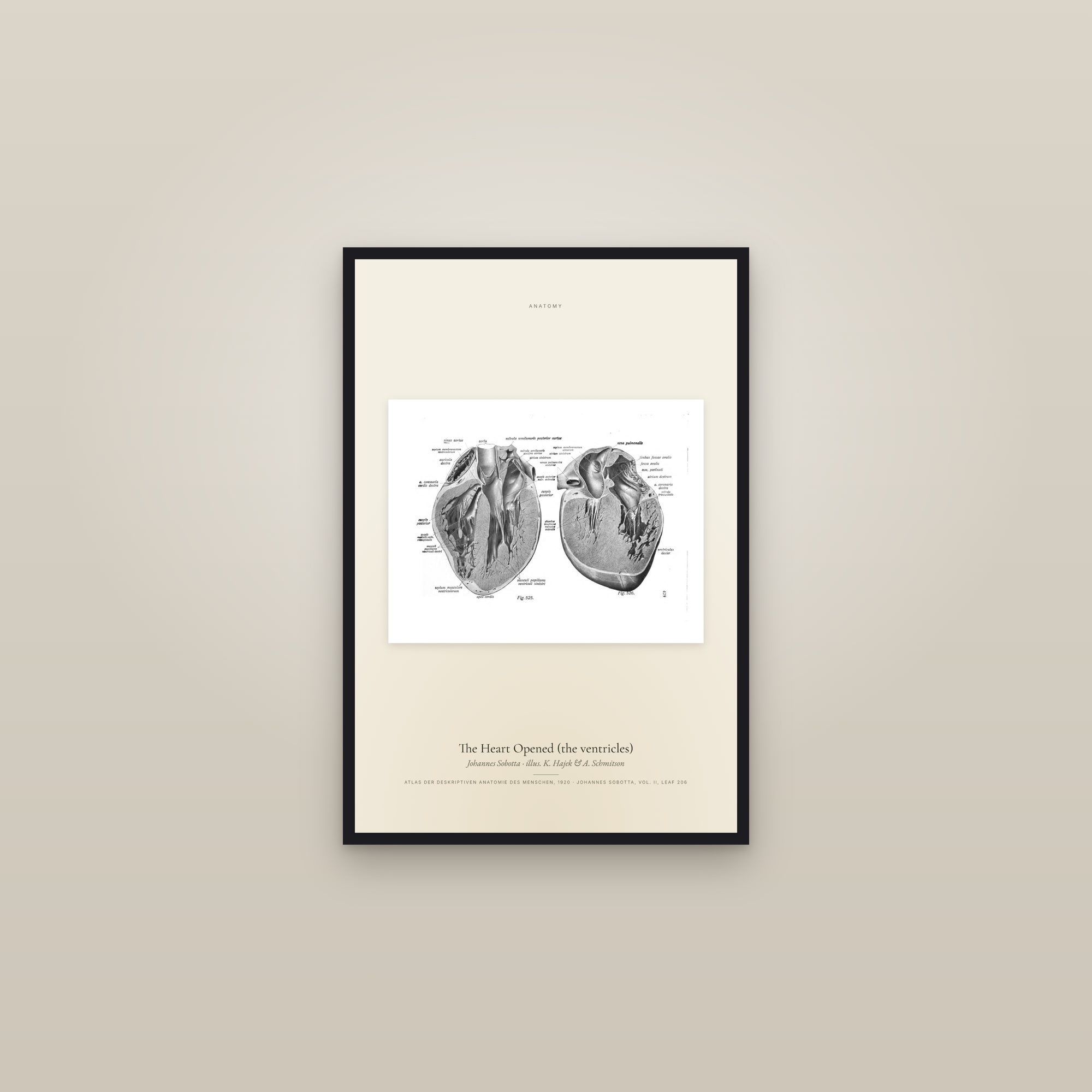
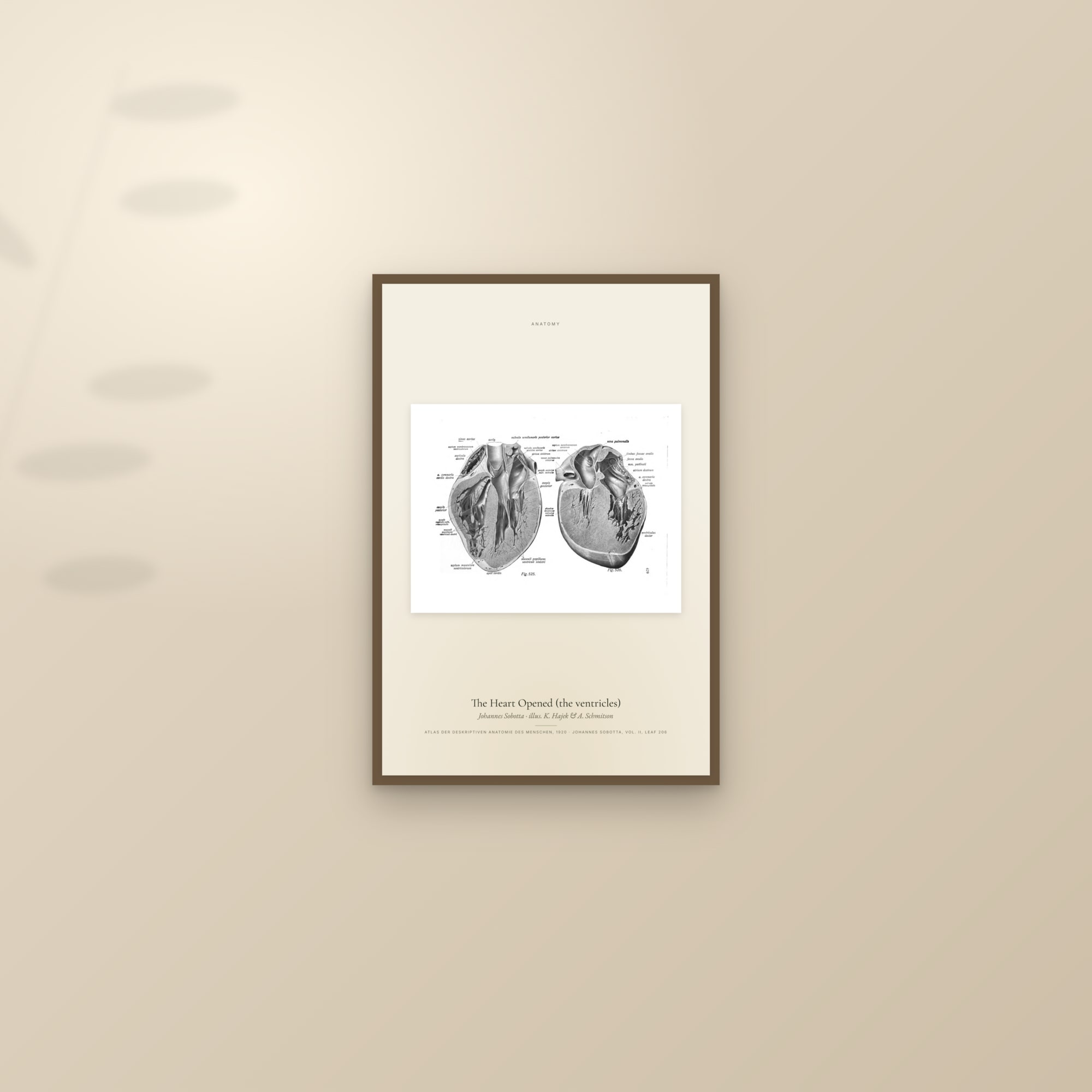
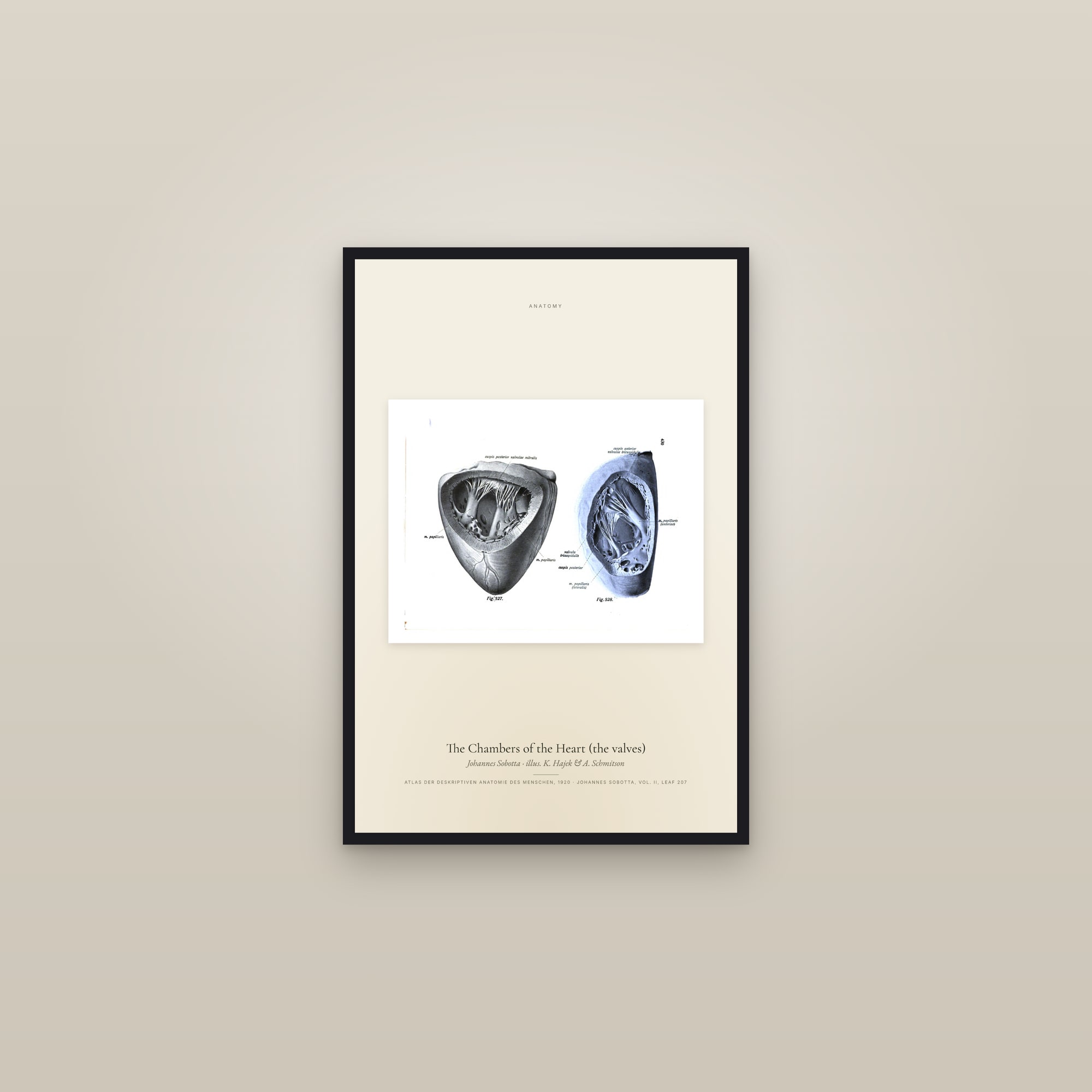
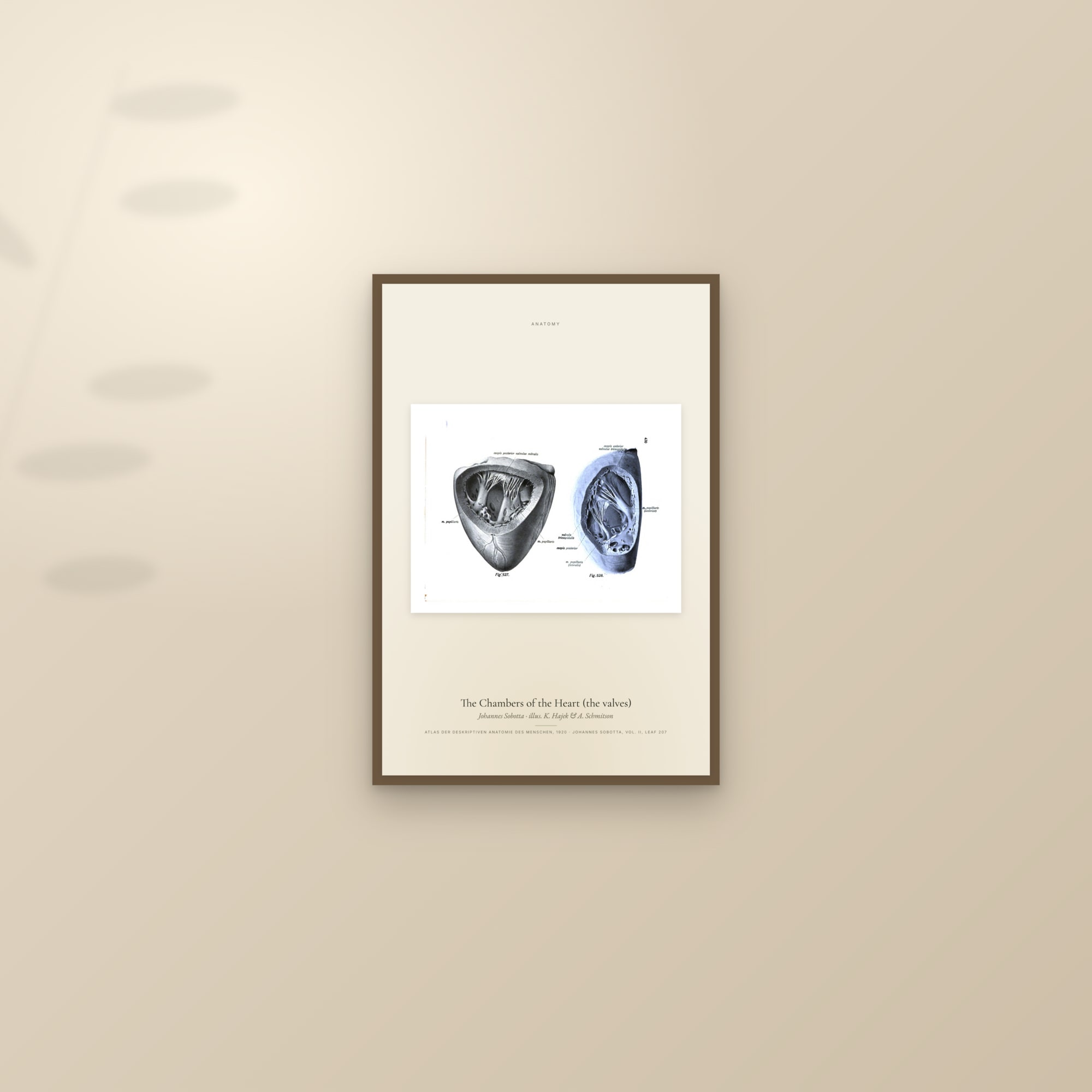
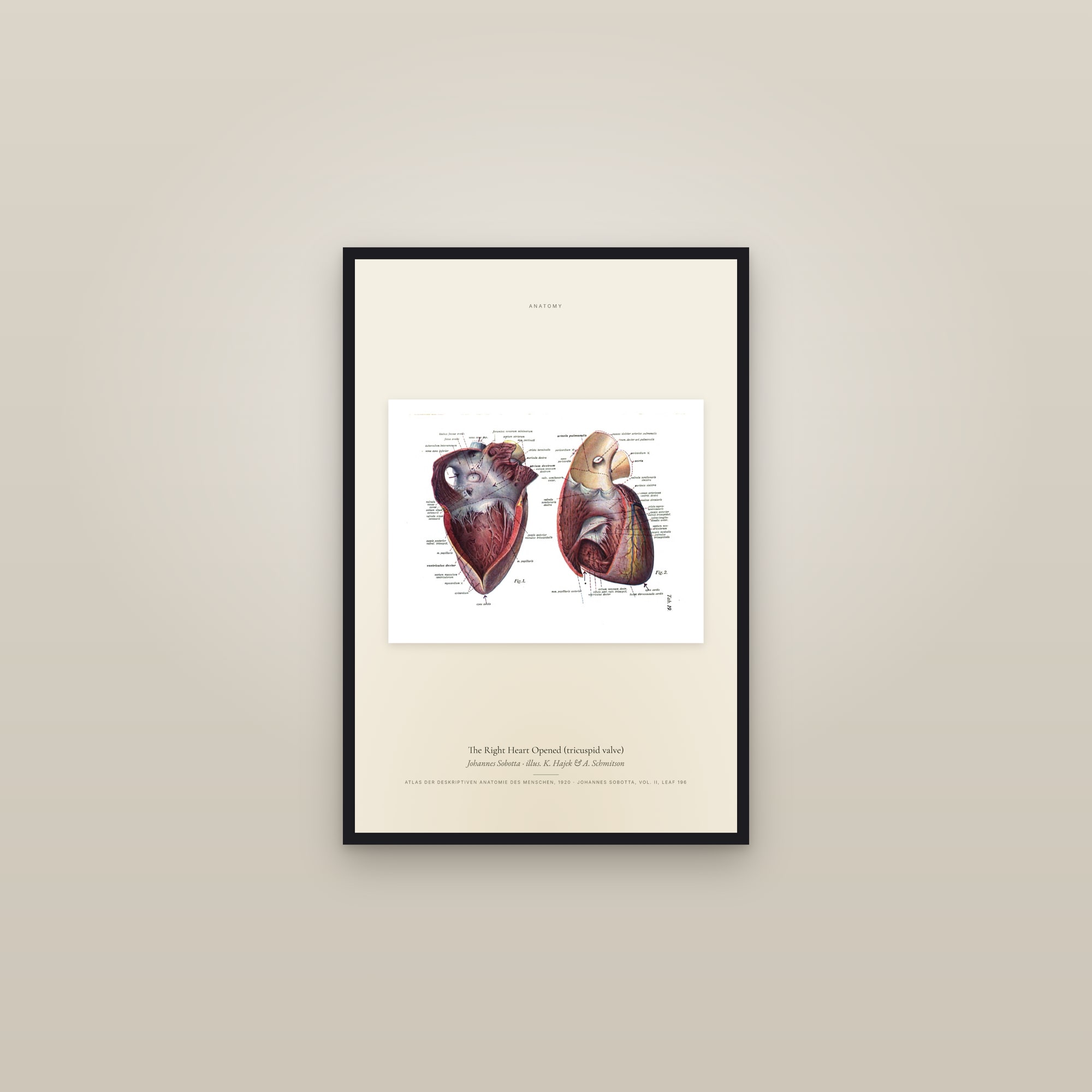
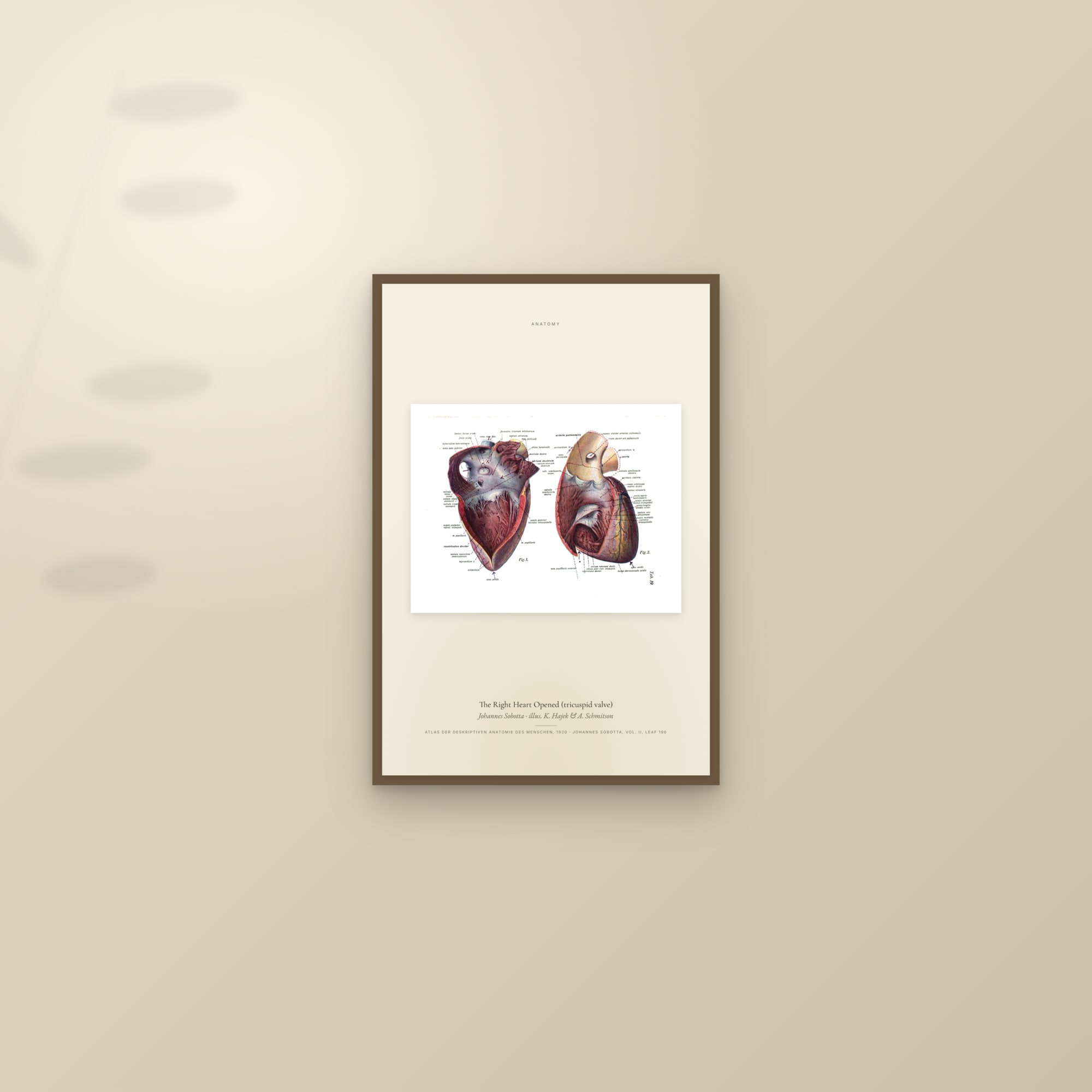
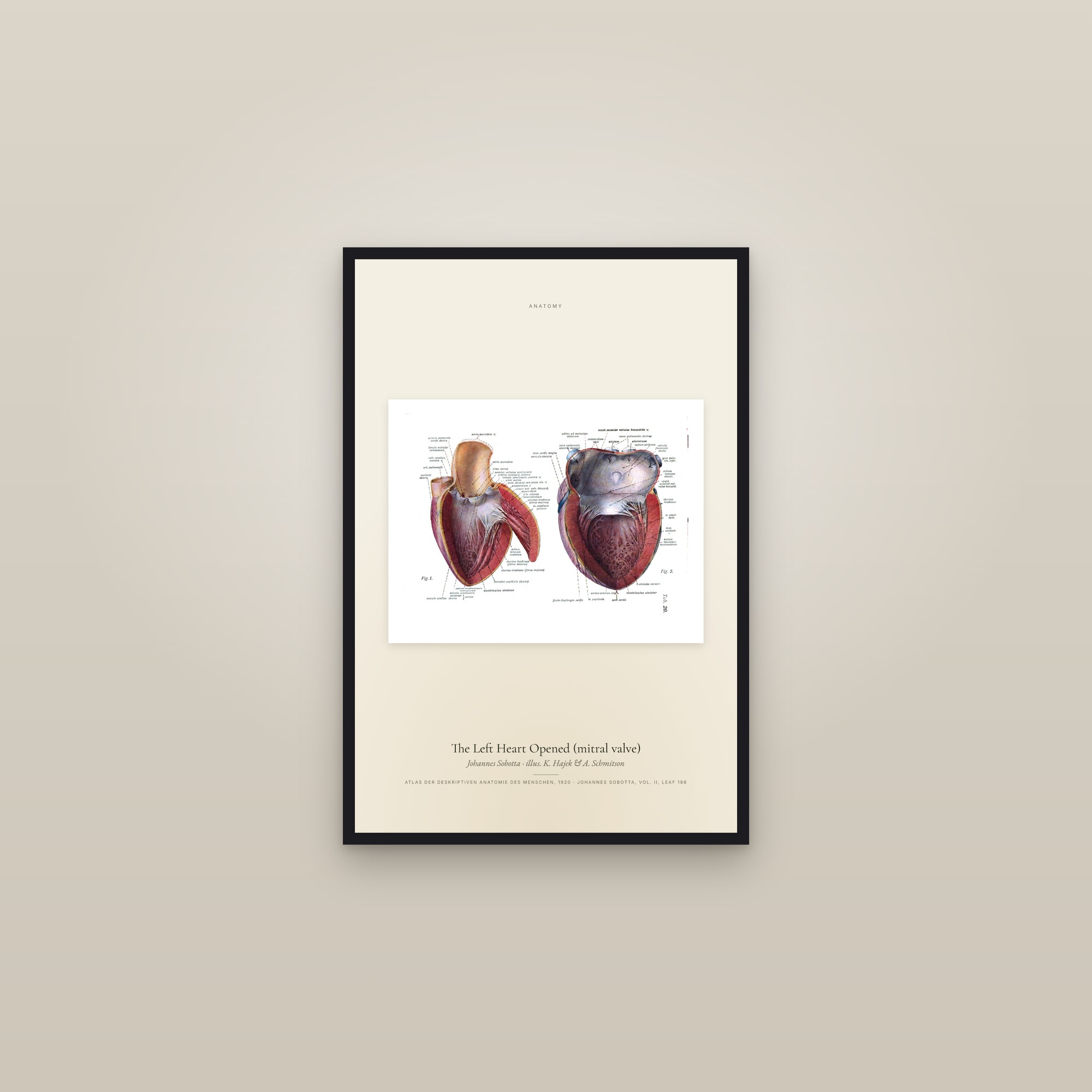
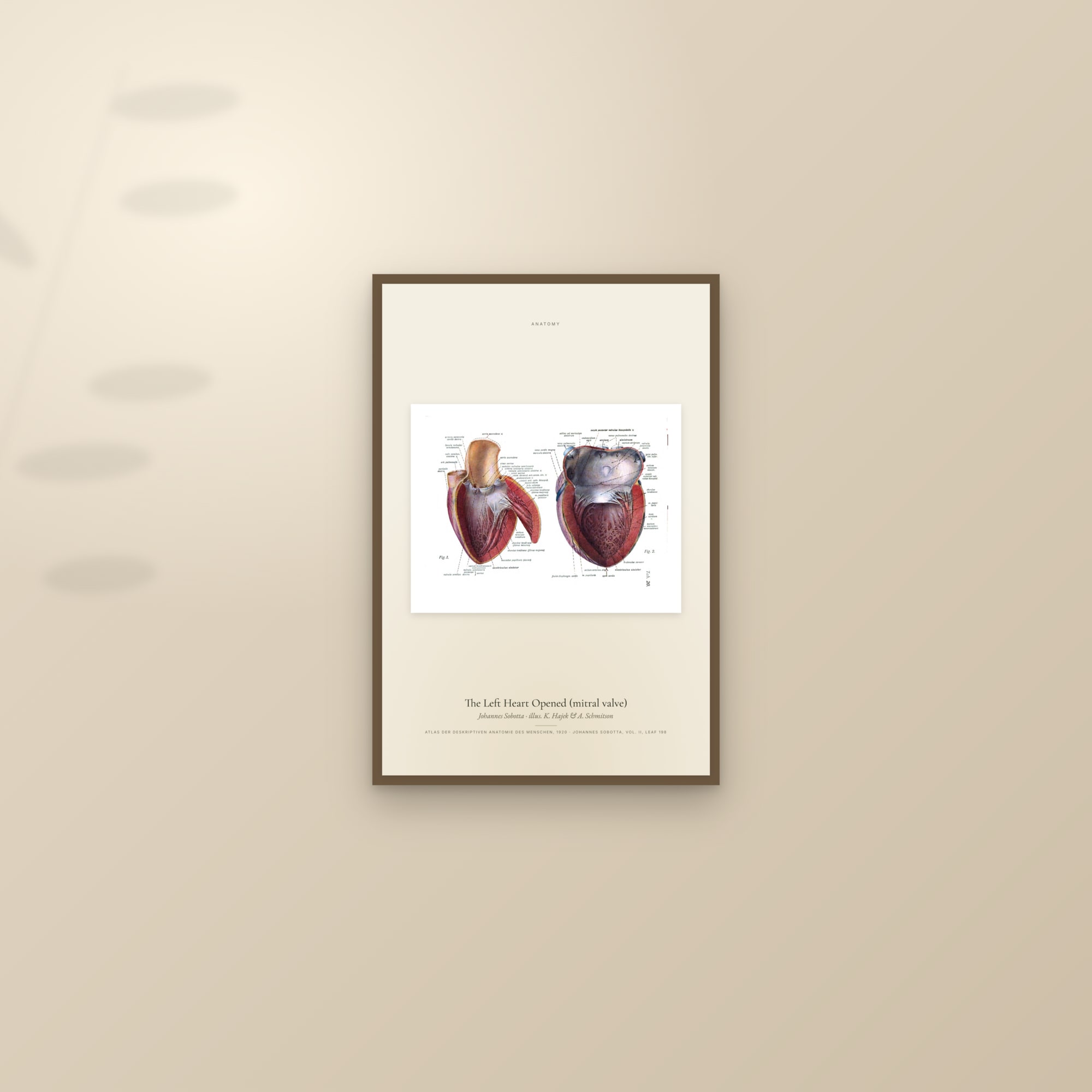
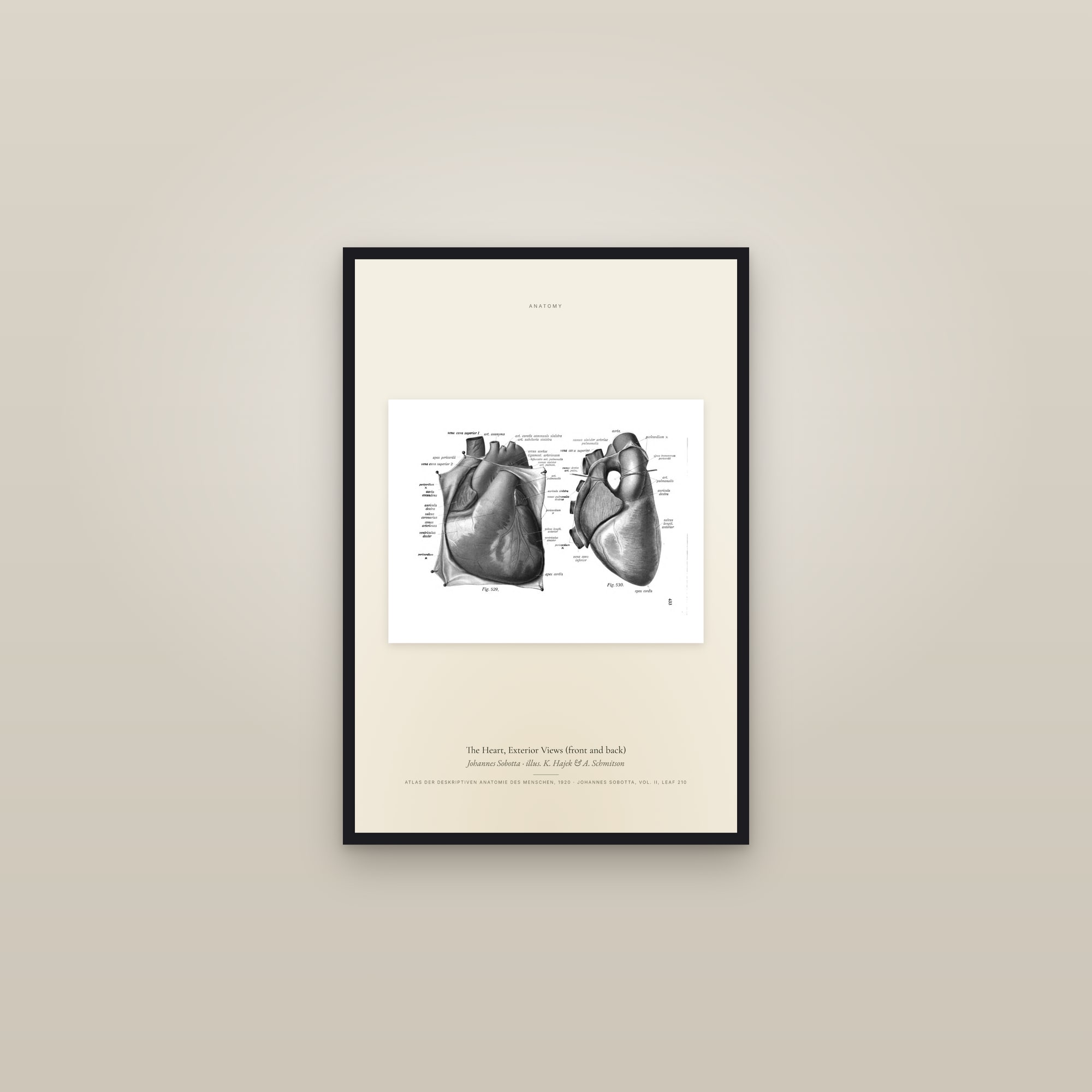
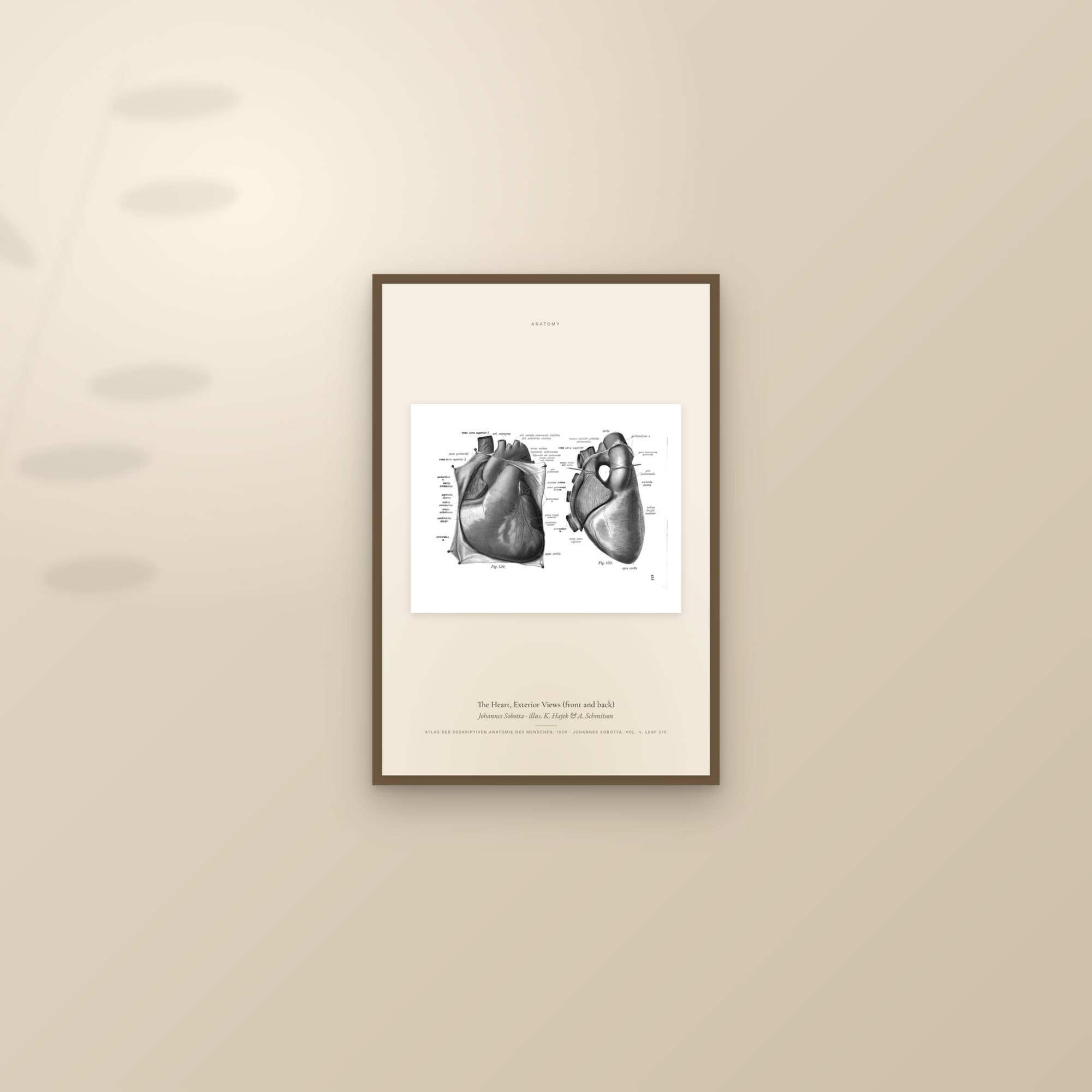
The human heart as the anatomists drew it: Johannes Sobotta's colour plates of 1920, showing the heart from the front and back, opened to the ventricles and valves, in section and inside the pericardium, alongside Bartolomeo Eustachi's engraving of the heart in six views from the Tabulae anatomicae of 1714. Each plate is offered full-bleed or as a captioned specimen on cream.
7 prints · printed to order on heavyweight matte paper · framed or unframed
The plates
Five of the seven come from Sobotta's Atlas der deskriptiven Anatomie des Menschen, the chromolithographed atlas of 1919–20 that became one of the standard anatomical atlases of the twentieth century: the heart seen from the front and from behind, the heart opened to show the ventricles, the chambers with their valves, the heart in section, and the heart lying in its opened pericardium. The seventh is older by two centuries, Eustachi's copper engraving of the heart in six views, published in Rome in 1714. Together they show the organ as a coloured anatomical object and as a black-line engraving, and the two registers hang well side by side.
Who hangs a heart print
Cardiologists and cardiac nurses first, in the consulting room and the office, where a Sobotta heart reads as a precise, handsome drawing rather than a textbook figure. Then the anniversary and the Valentine's wall: an anatomical heart is the standing alternative to a sentimental one, and the front-view plate is the one most often given. Med students and nurses graduating into cardiology get the framed 16×24. The red and blue of the Sobotta plates sit well against grey, navy and dark green walls, and the Eustachi engraving against white.
Sizes and framing
Every plate comes two ways: full-bleed, the printed page running to the edge of the sheet, or as a specimen, the whole plate on a cream ground with its title, atlas and date typeset beneath. Scans of real plates print on 250 gsm off-white archival paper. The Sobotta plates run to 24×36; the Eustachi engraving is offered up to 16×24, which is what its scan honestly supports. Frames are black or dark wood, with a plexiglass front and no mat; the cream specimen ground is its own mat. Three or more prints take 10% off automatically.