Lung Anatomy Prints
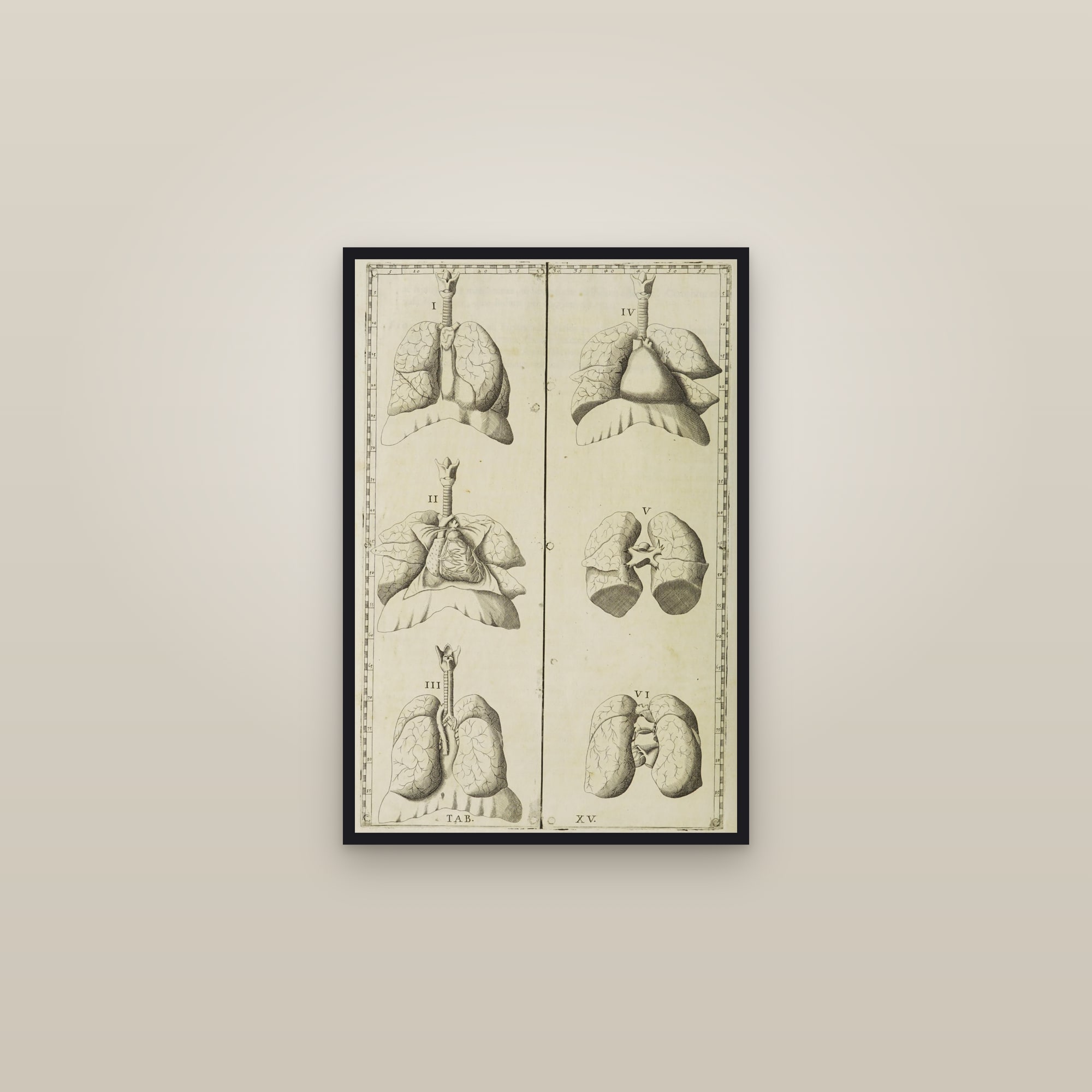
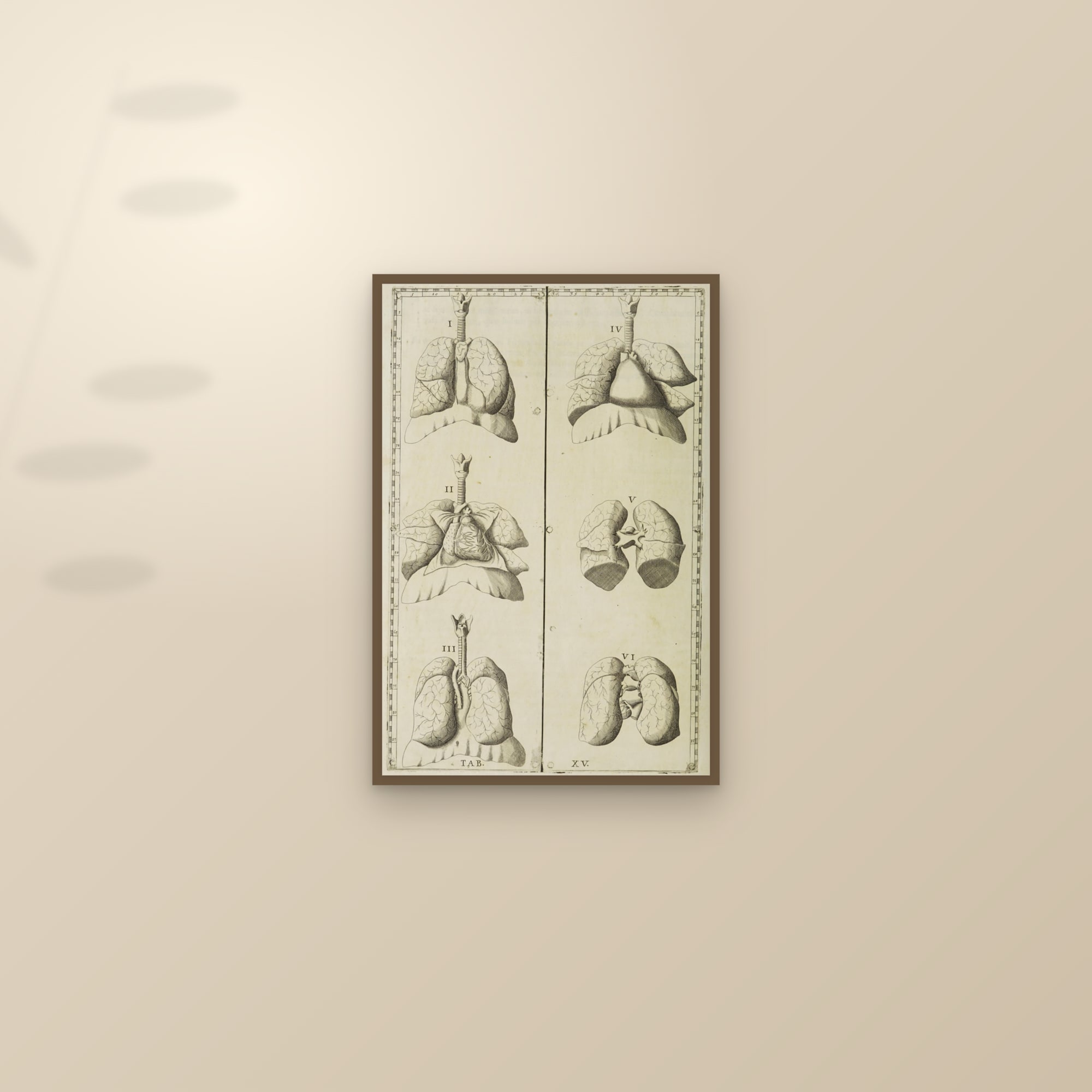
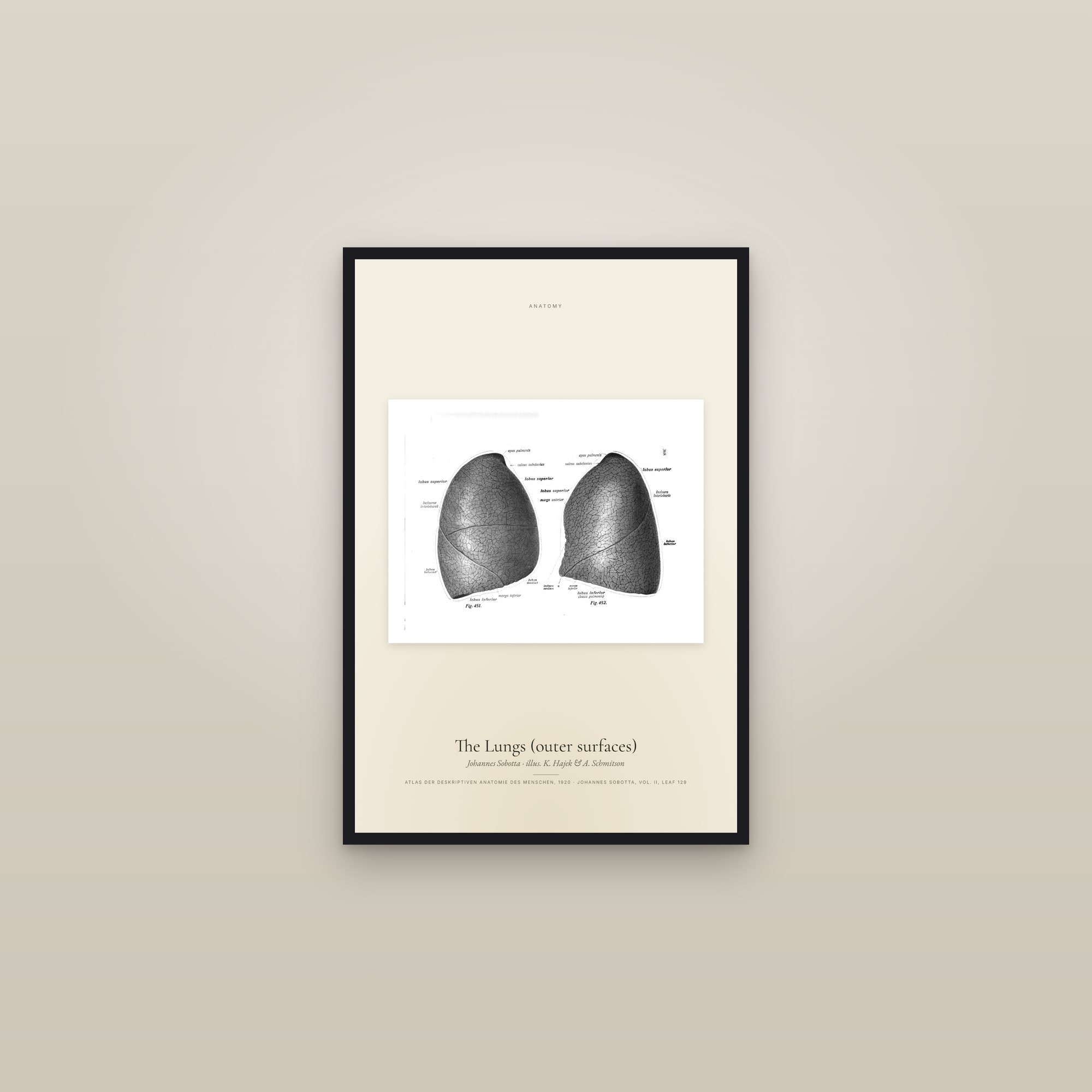
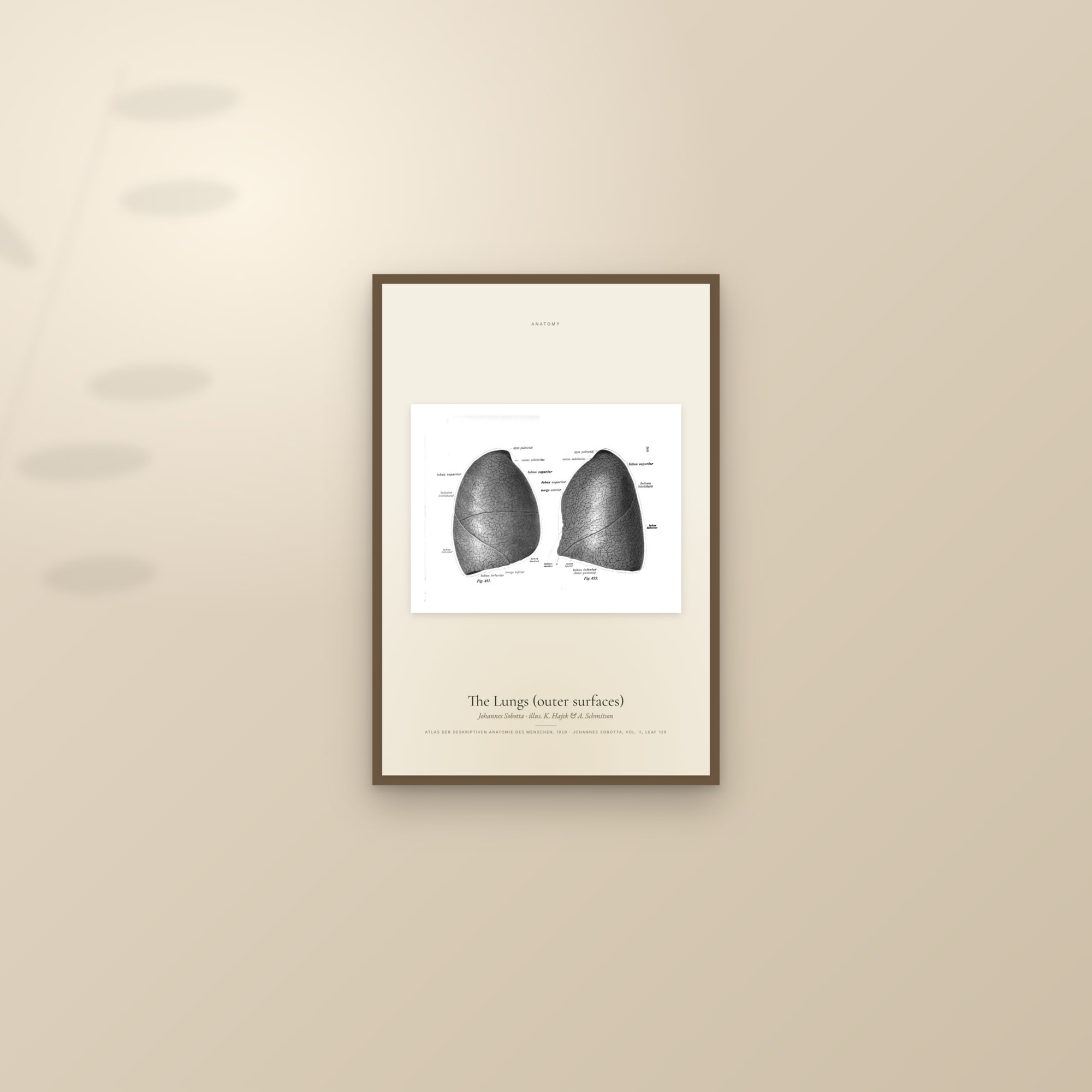
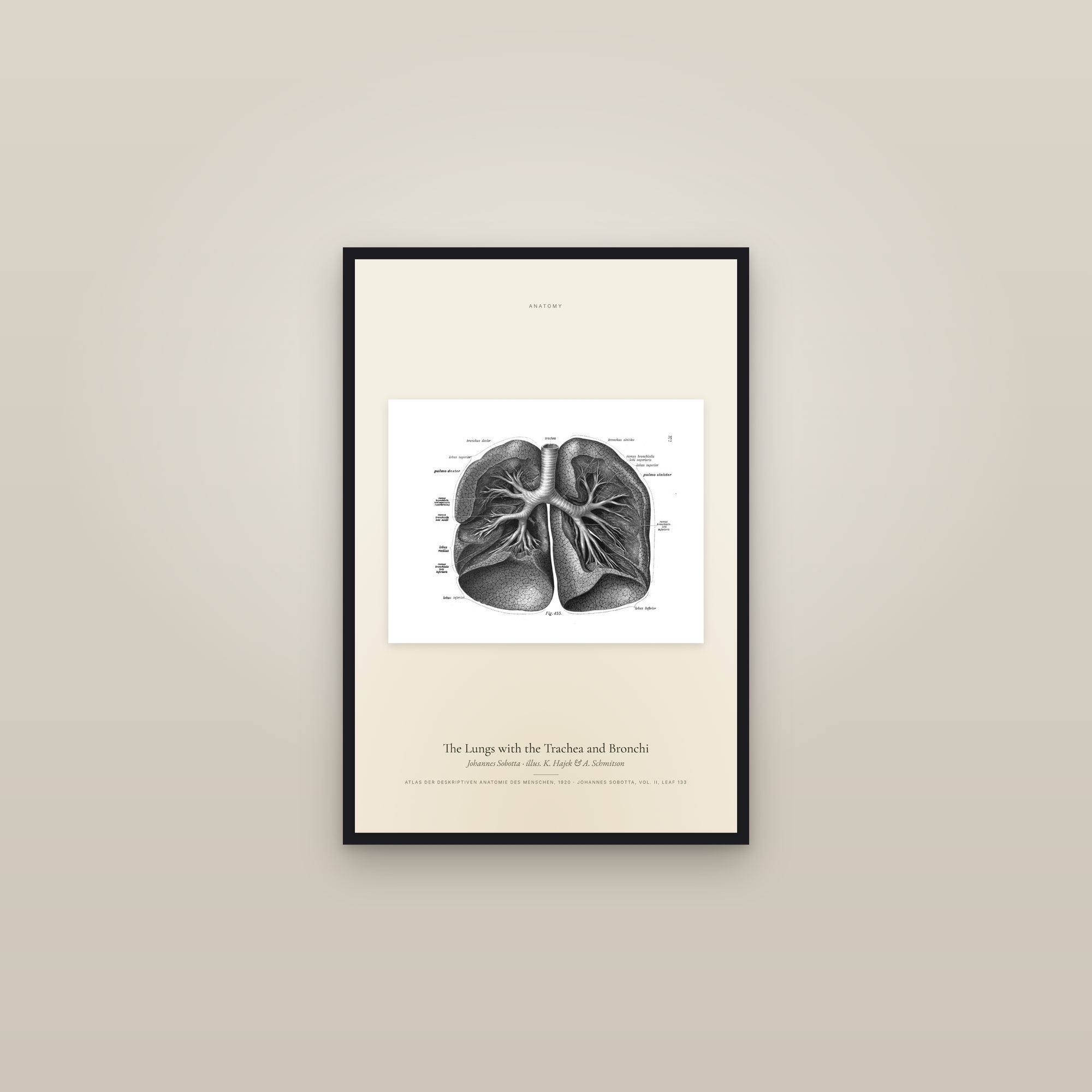
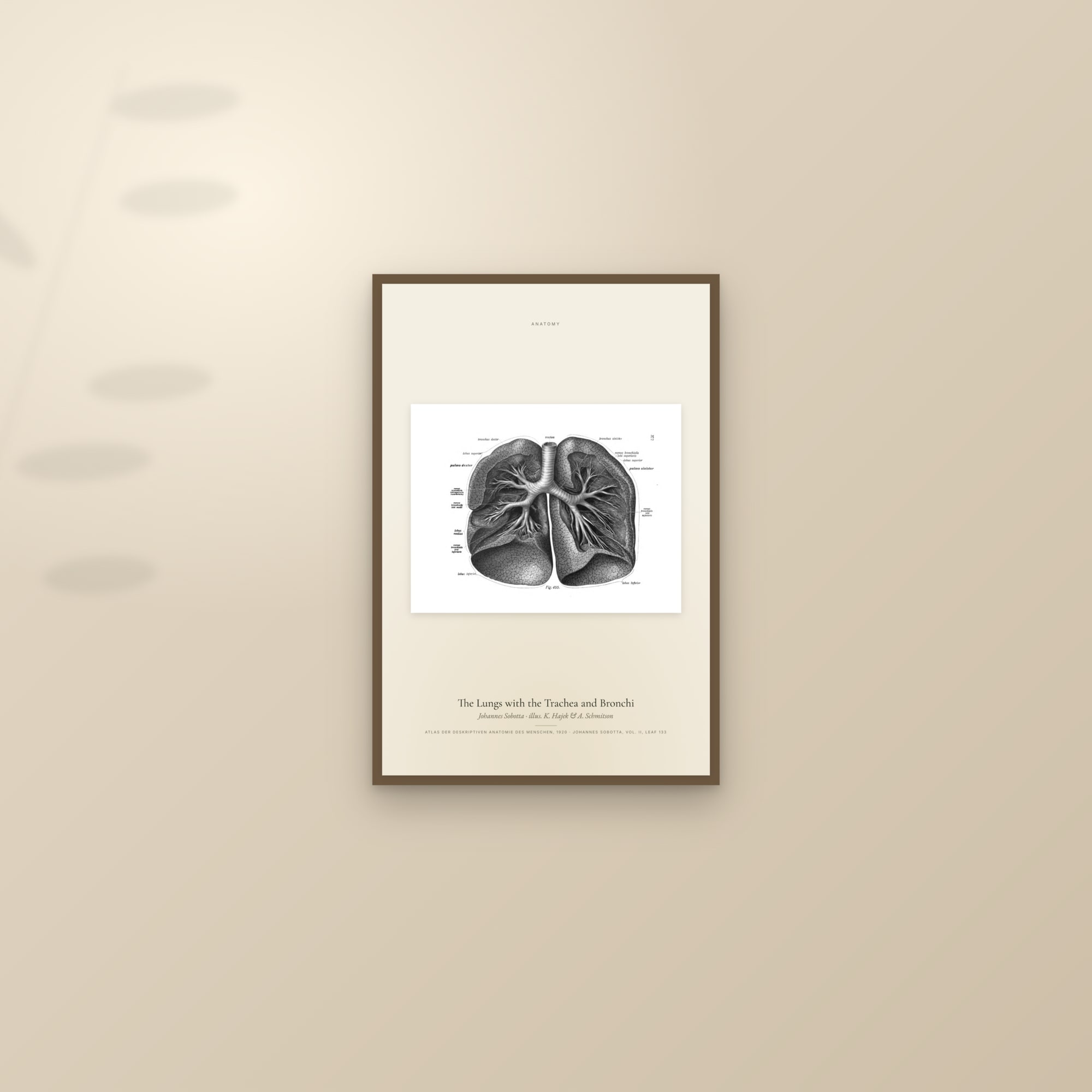
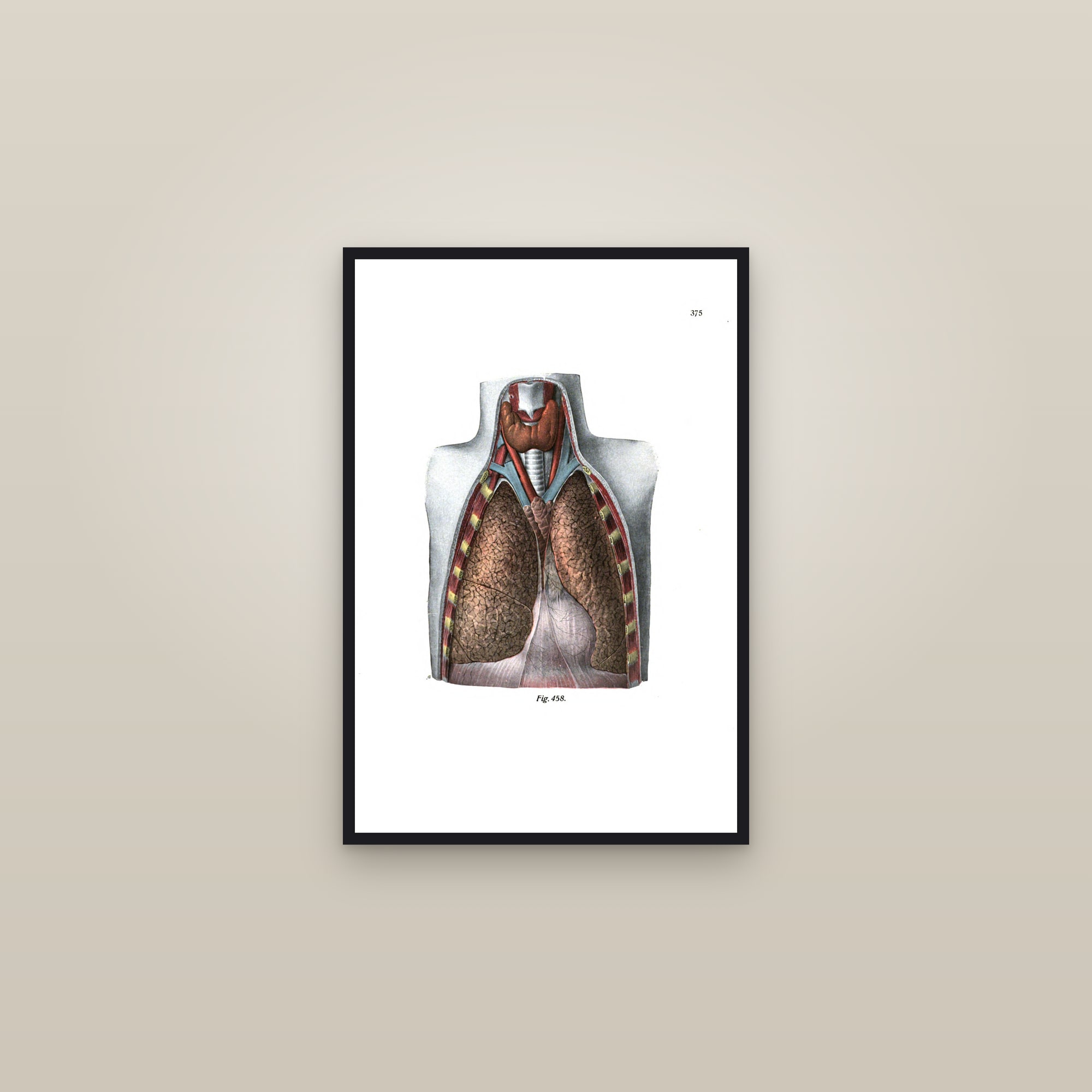
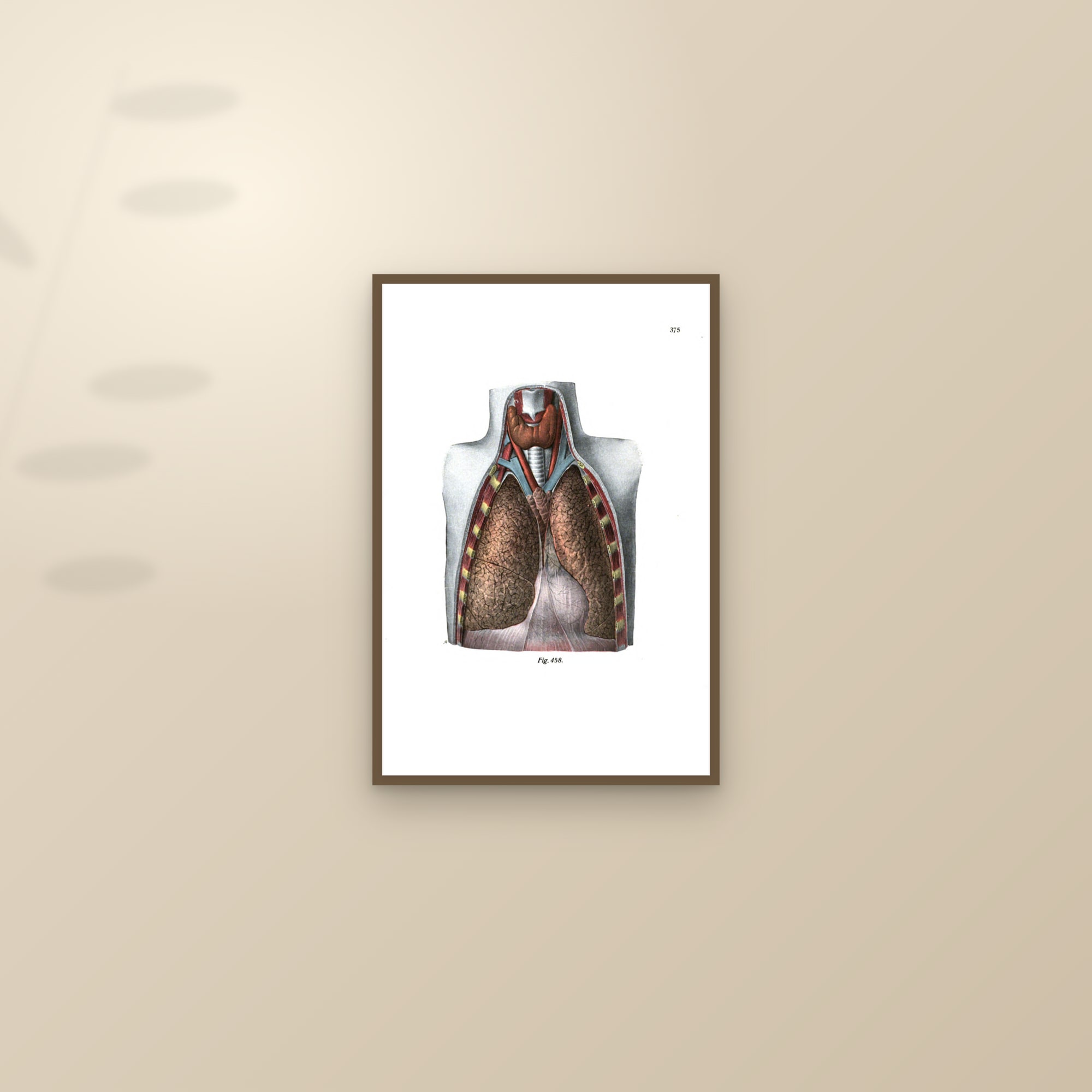
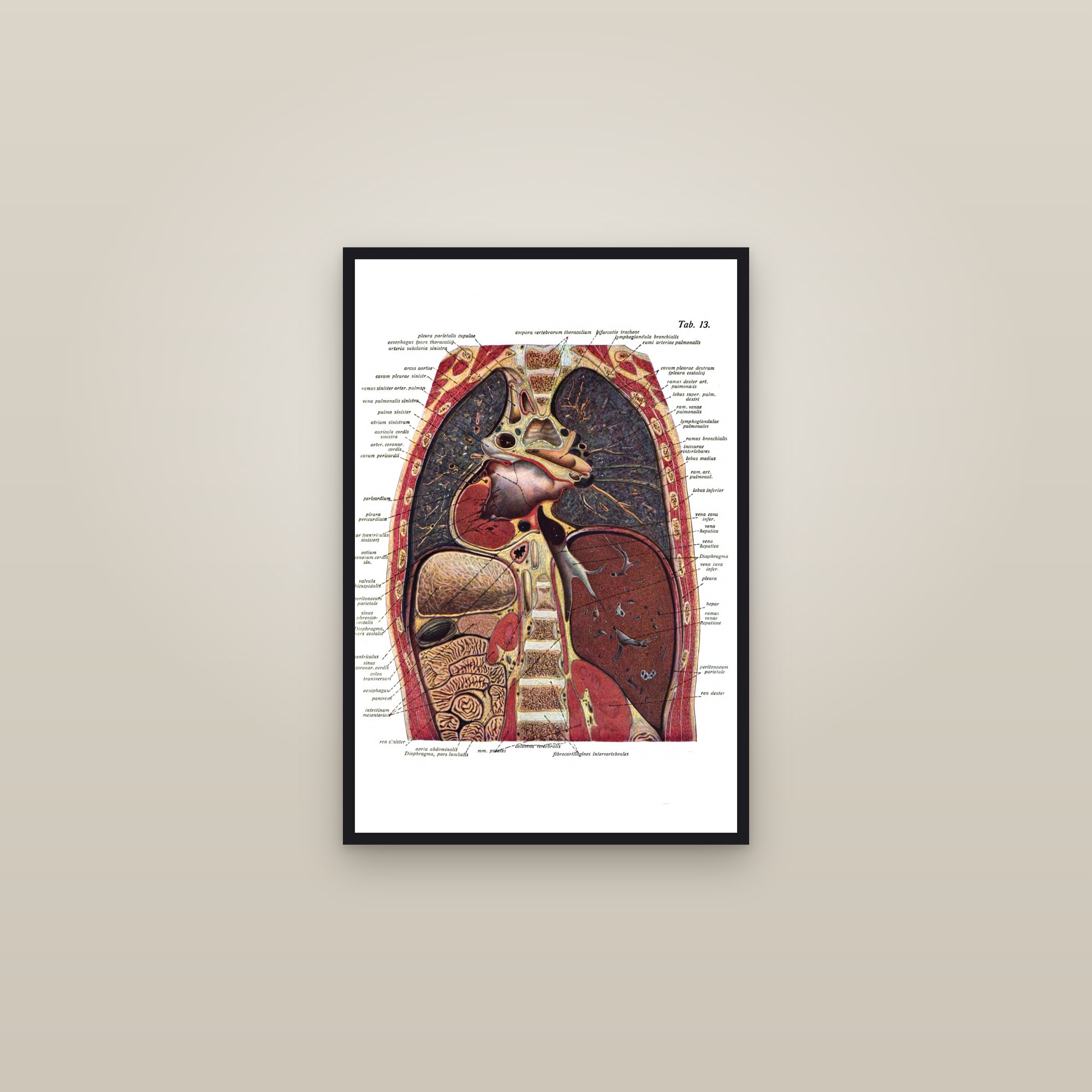
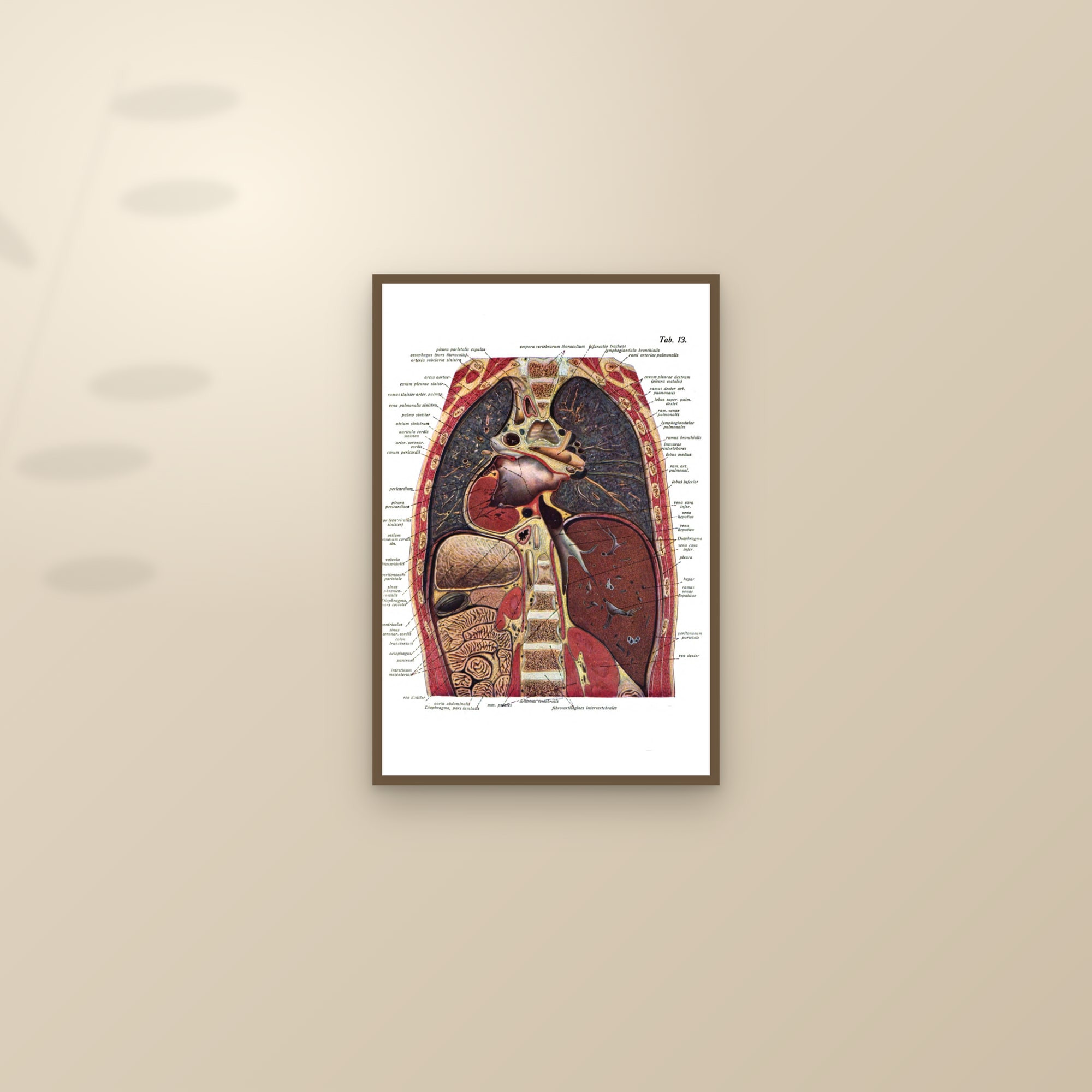
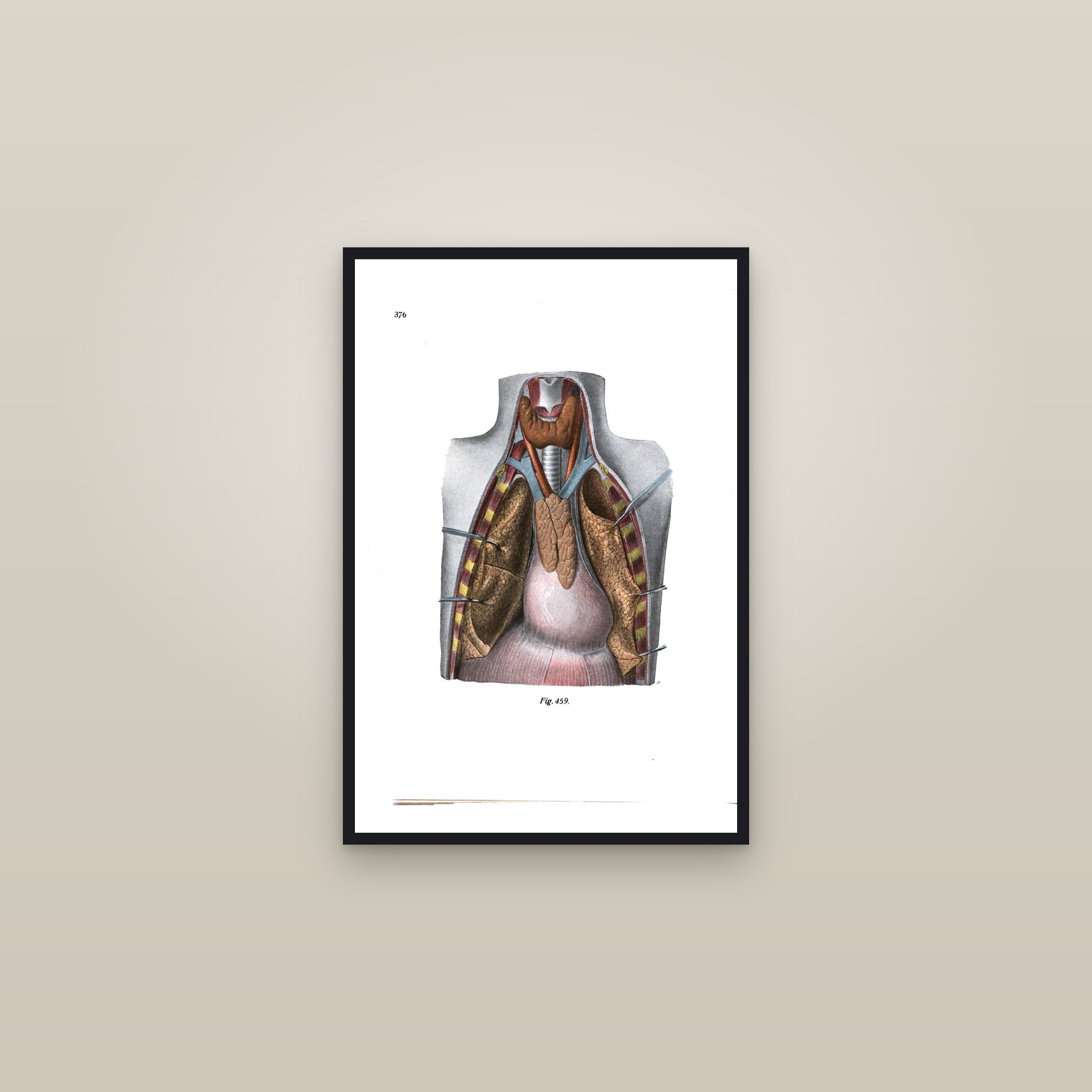
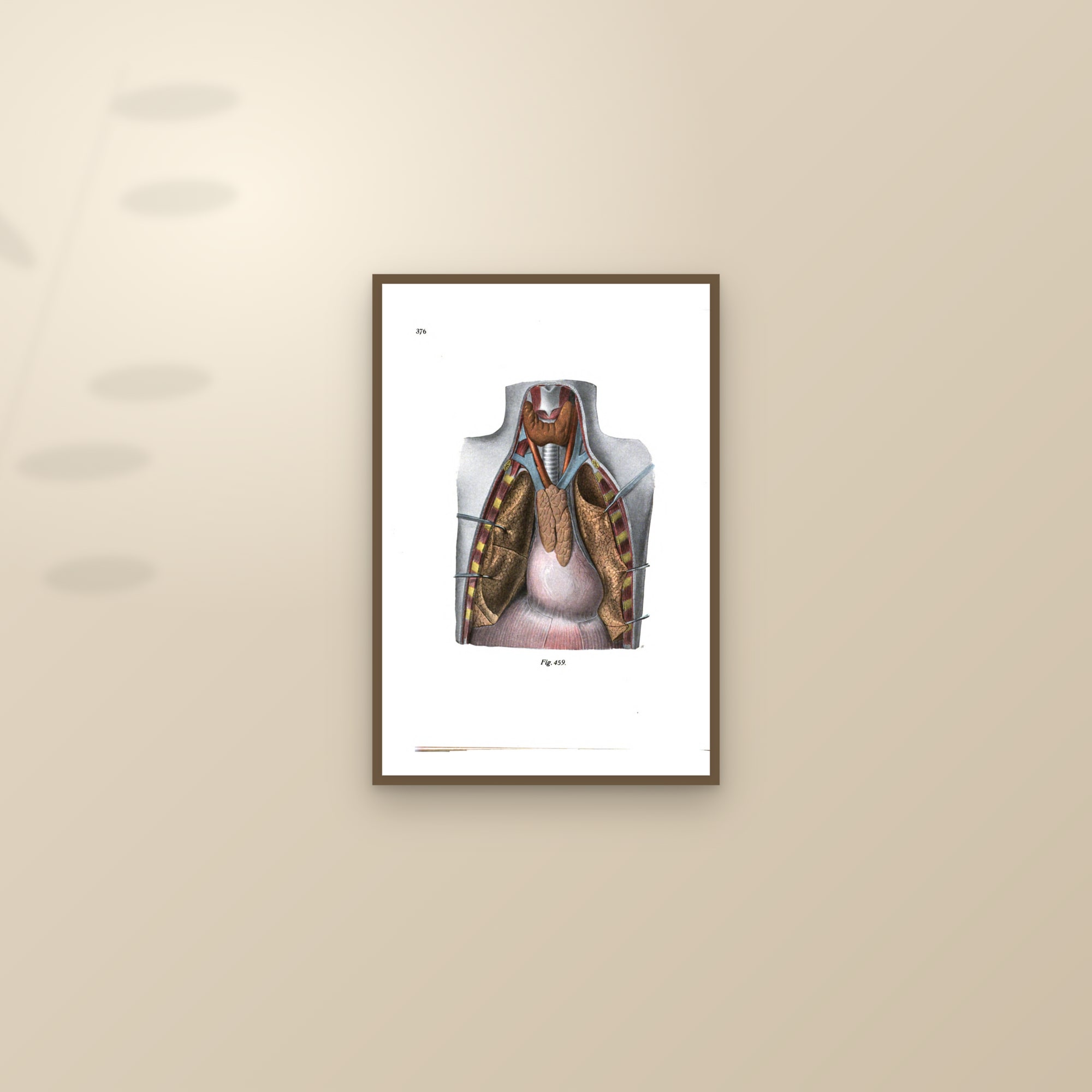
The lungs and the chest from the atlases: Johannes Sobotta's colour plates of 1920, the lungs' outer surfaces, the lungs with the trachea and bronchi, the lungs and heart in the open chest, the heart and lungs with the pericardium opened, and the chest in section with heart, lungs and diaphragm; with Bartolomeo Eustachi's engraving of the lungs, trachea and heart, published in 1714.
6 prints · printed to order on heavyweight matte paper · framed or unframed
The plates
Five Sobotta chromolithographs from the second volume of the atlas, 1920, cover the lungs from outside in: the two lungs with their lobes and fissures, the lungs with the trachea branching into the bronchi, the lungs and heart as they lie in the opened chest, the heart and lungs with the pericardium opened, and the chest in section, heart, lungs and diaphragm in one cut. The sixth plate is Eustachi's copper engraving of the lungs, trachea and heart from the Tabulae anatomicae of 1714, the same organs two centuries earlier in black line inside his numbered border.
Who hangs them
Pulmonologists, respiratory therapists, thoracic surgeons and anaesthetists, in the consulting room and the department corridor; the trachea-and-bronchi plate, the lungs drawn as a branching tree, is the one most often chosen and the one that reads as a botanical print to a patient. At home it goes in the study, and it is the gift for a respiratory nurse or a med student headed for chest medicine. The Sobotta colours, rose lung and cream ground, sit well on grey, sage and navy walls.
Sizes and framing
Sobotta plates print up to 24×36, the Eustachi engraving up to 16×24. Each comes full-bleed, with the printed page running to the edge of the sheet, or as a specimen, the whole plate on a cream ground with its title, atlas and date typeset beneath, on 250 gsm off-white archival paper. Frames are black or dark wood with no mat. Lungs and heart hang as a natural pair, and three or more prints take 10% off automatically.