Chiropractic Wall Art — Spine, Skeleton & Back Muscle Prints
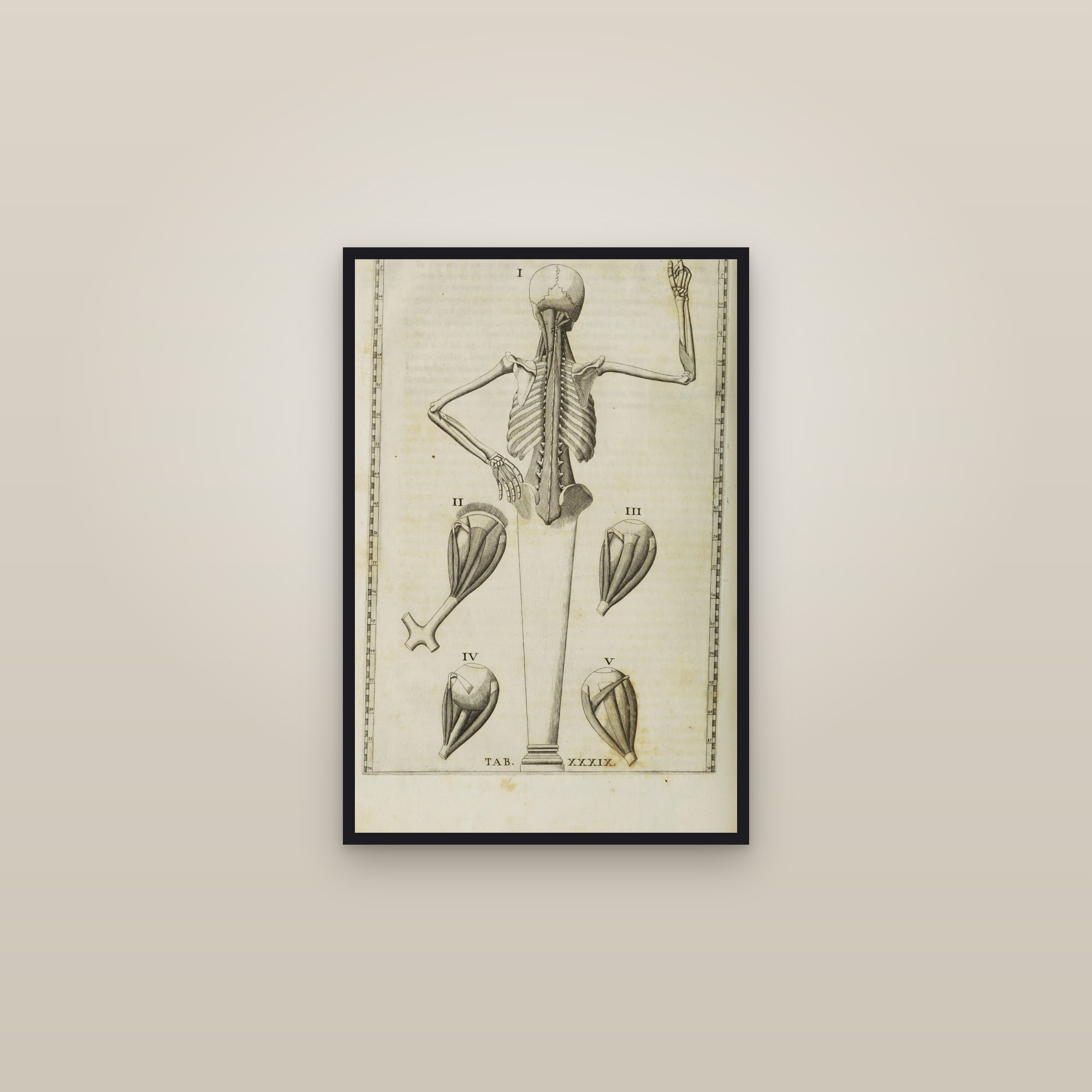
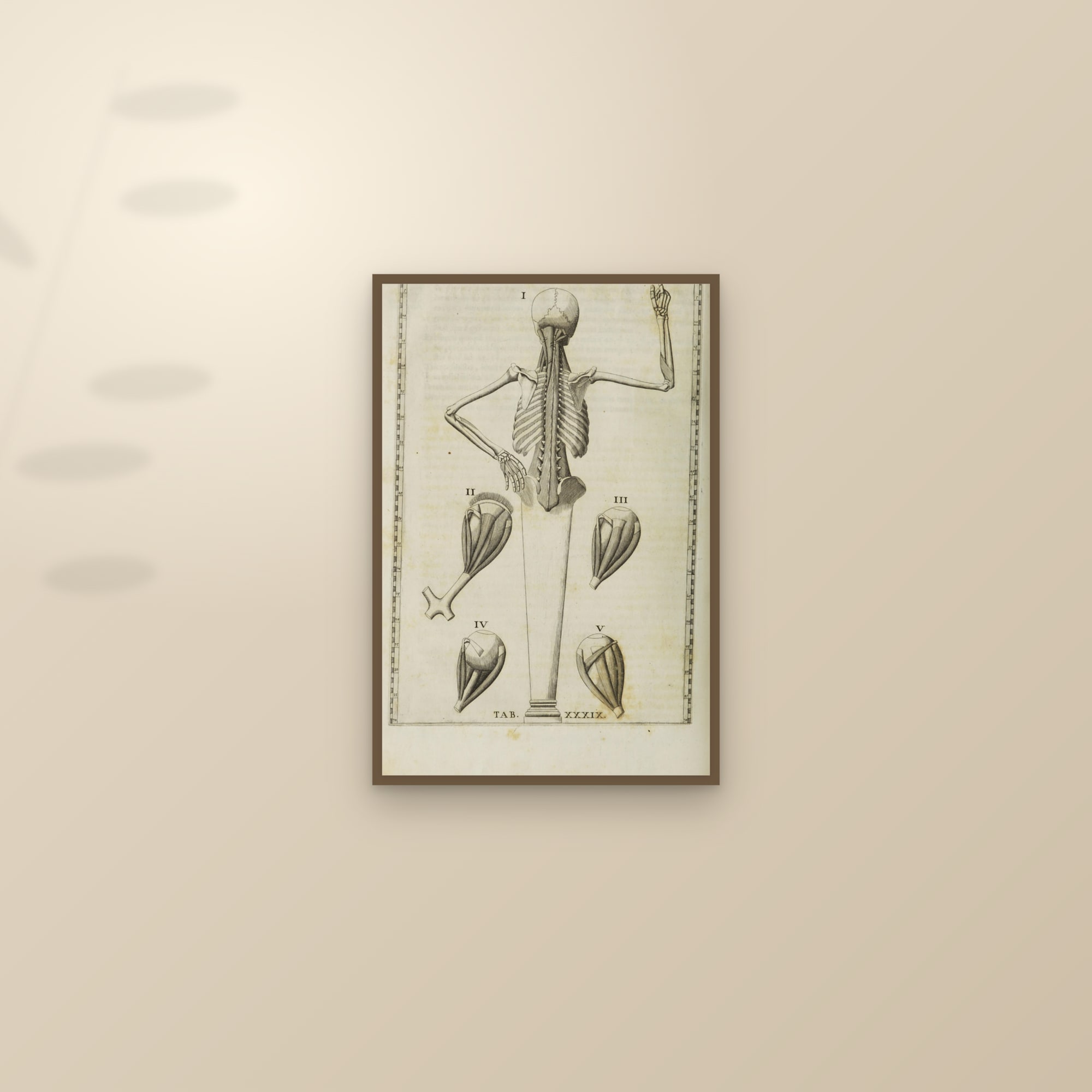
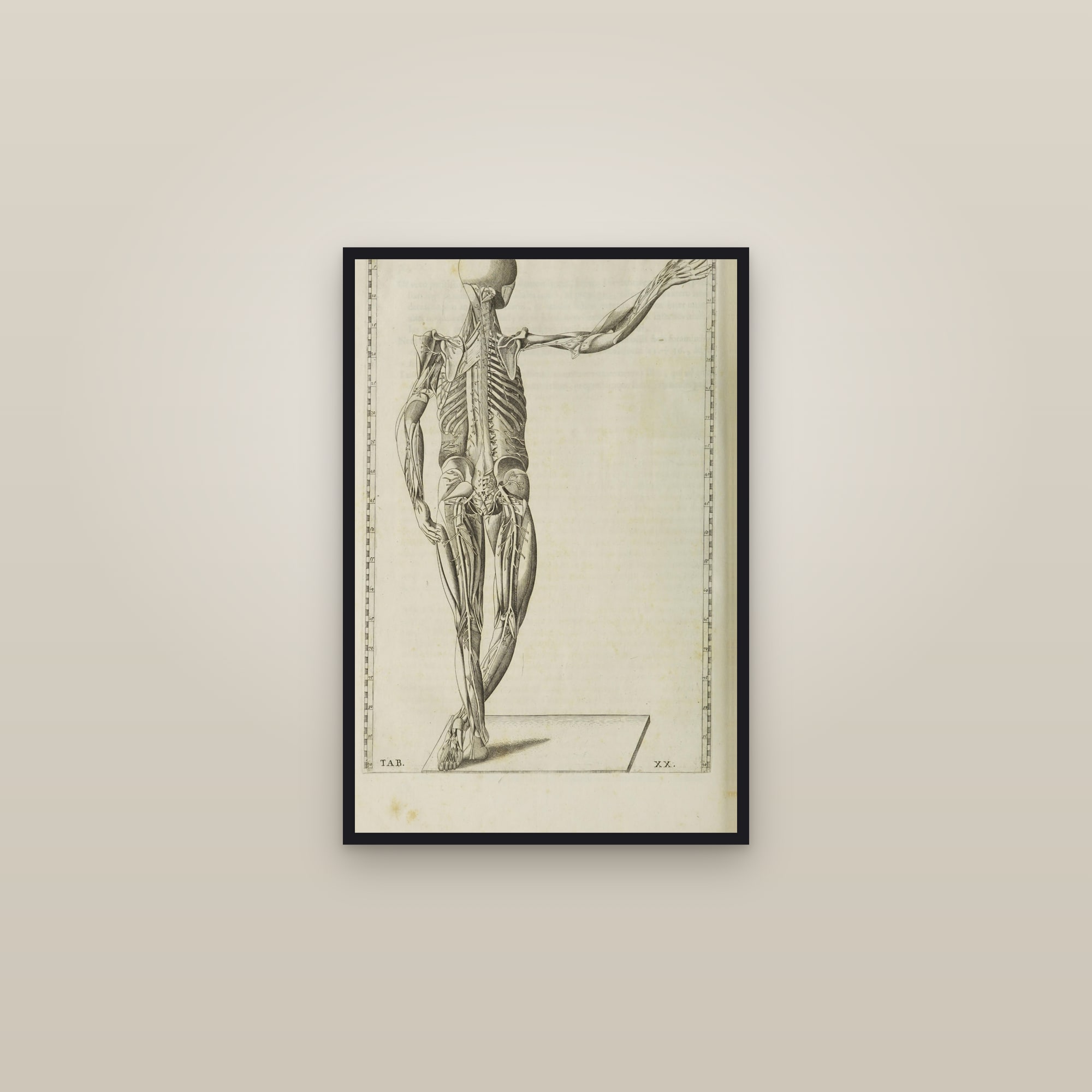
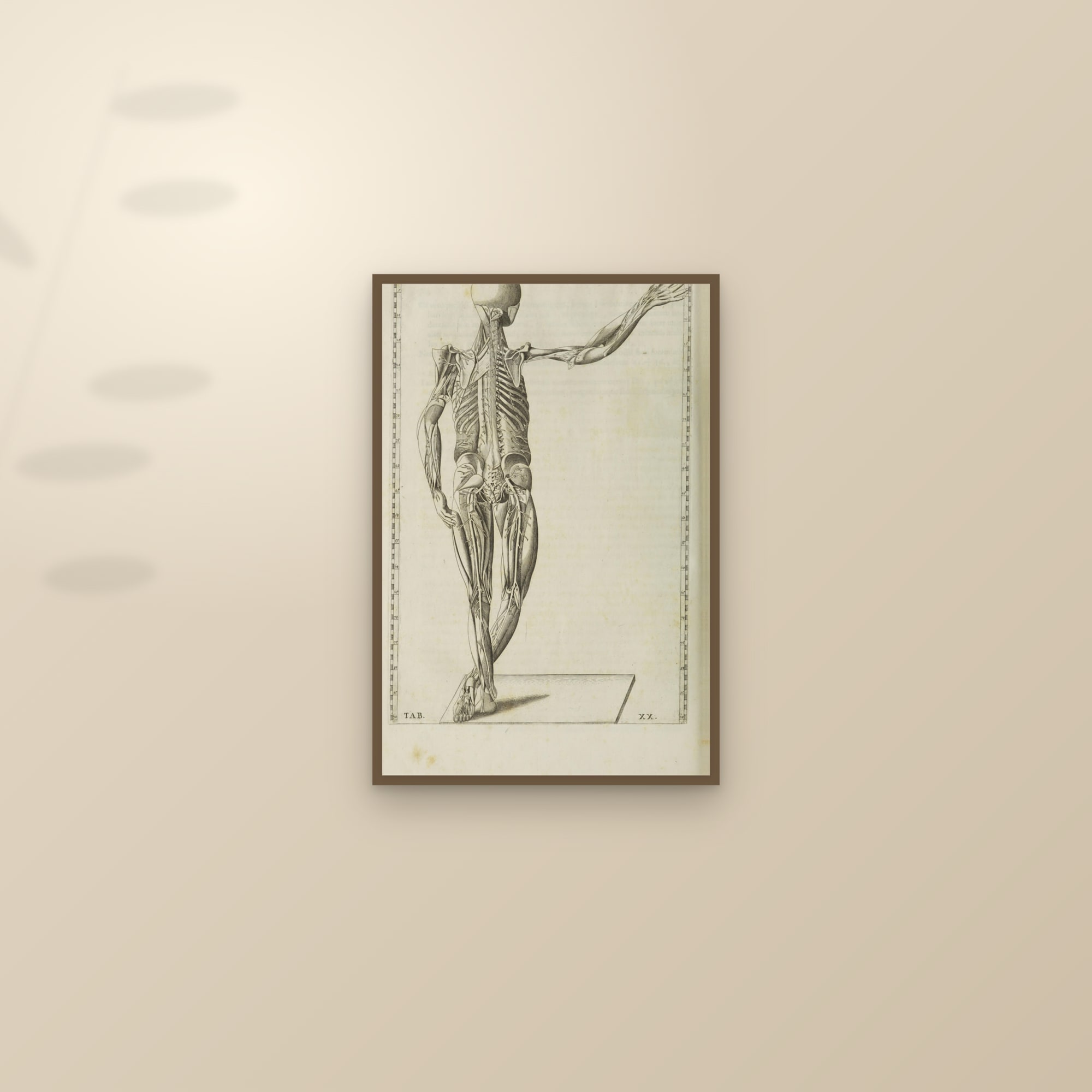
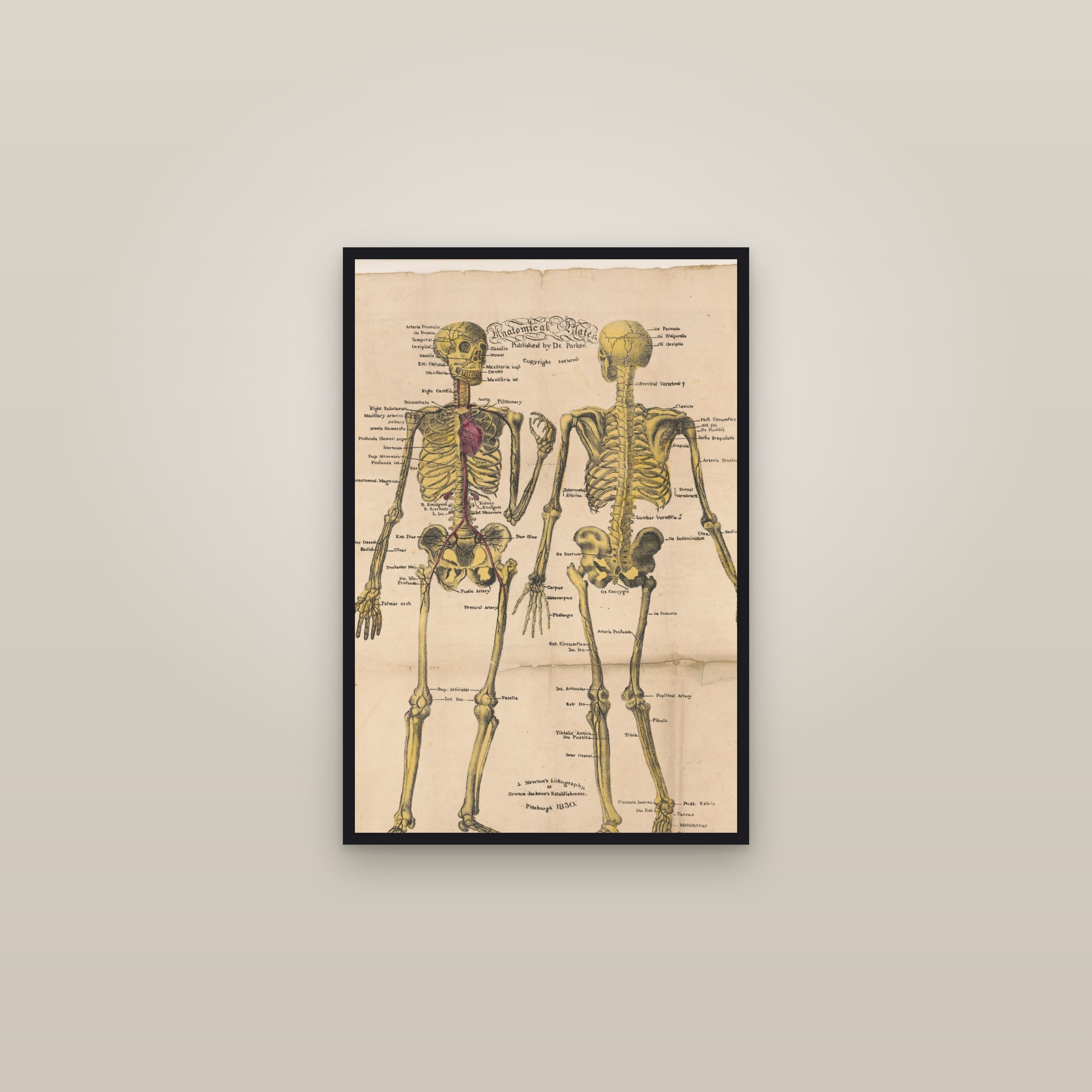
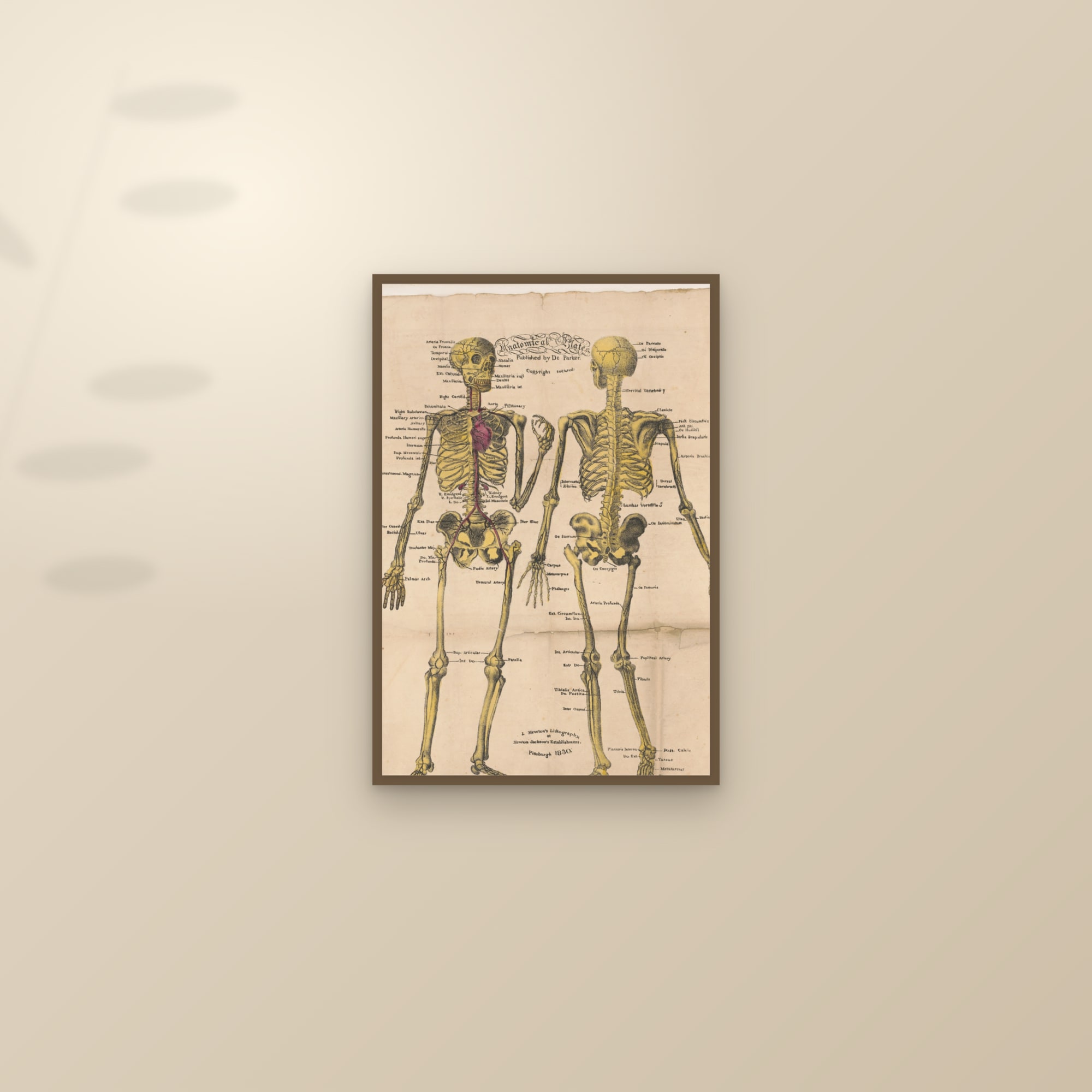
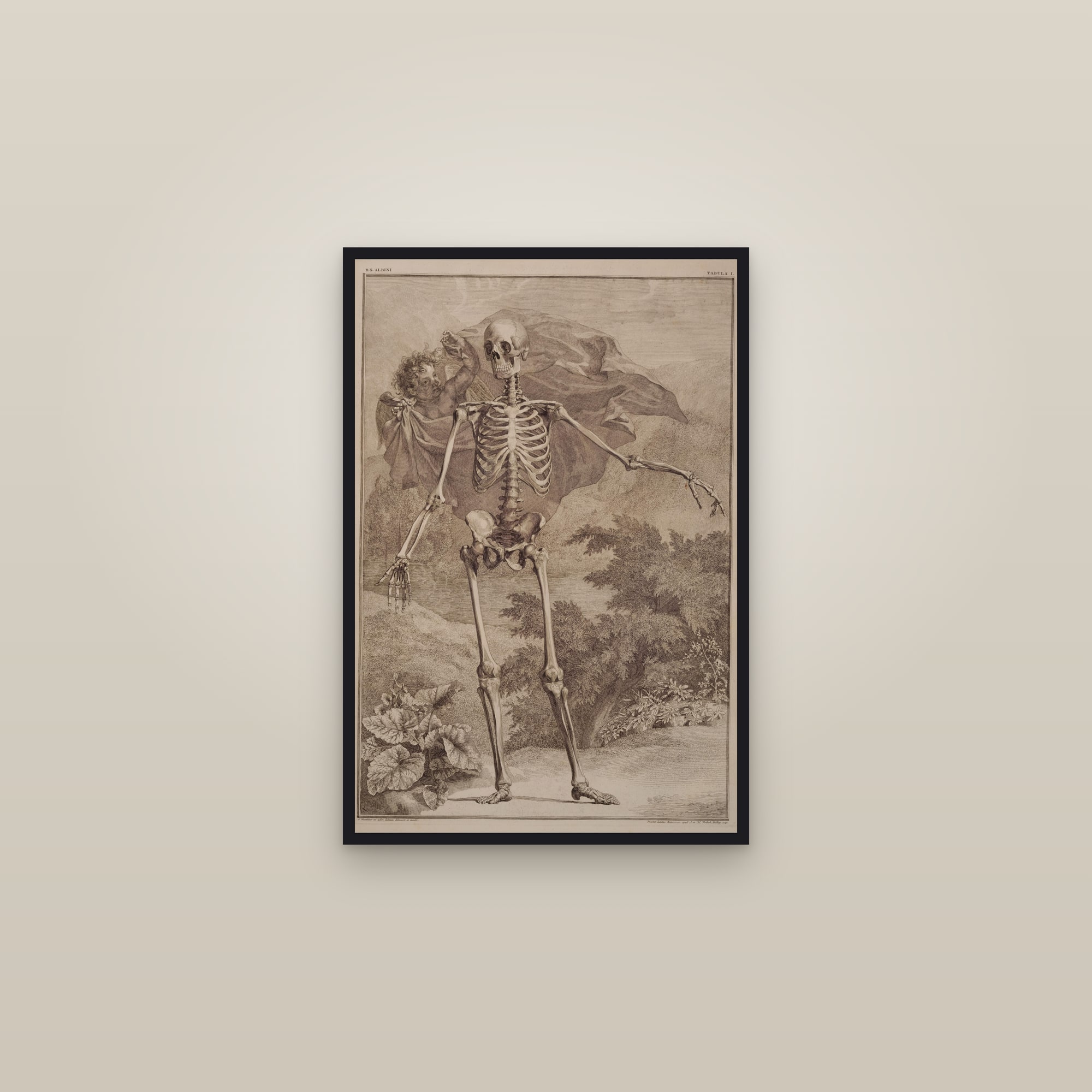
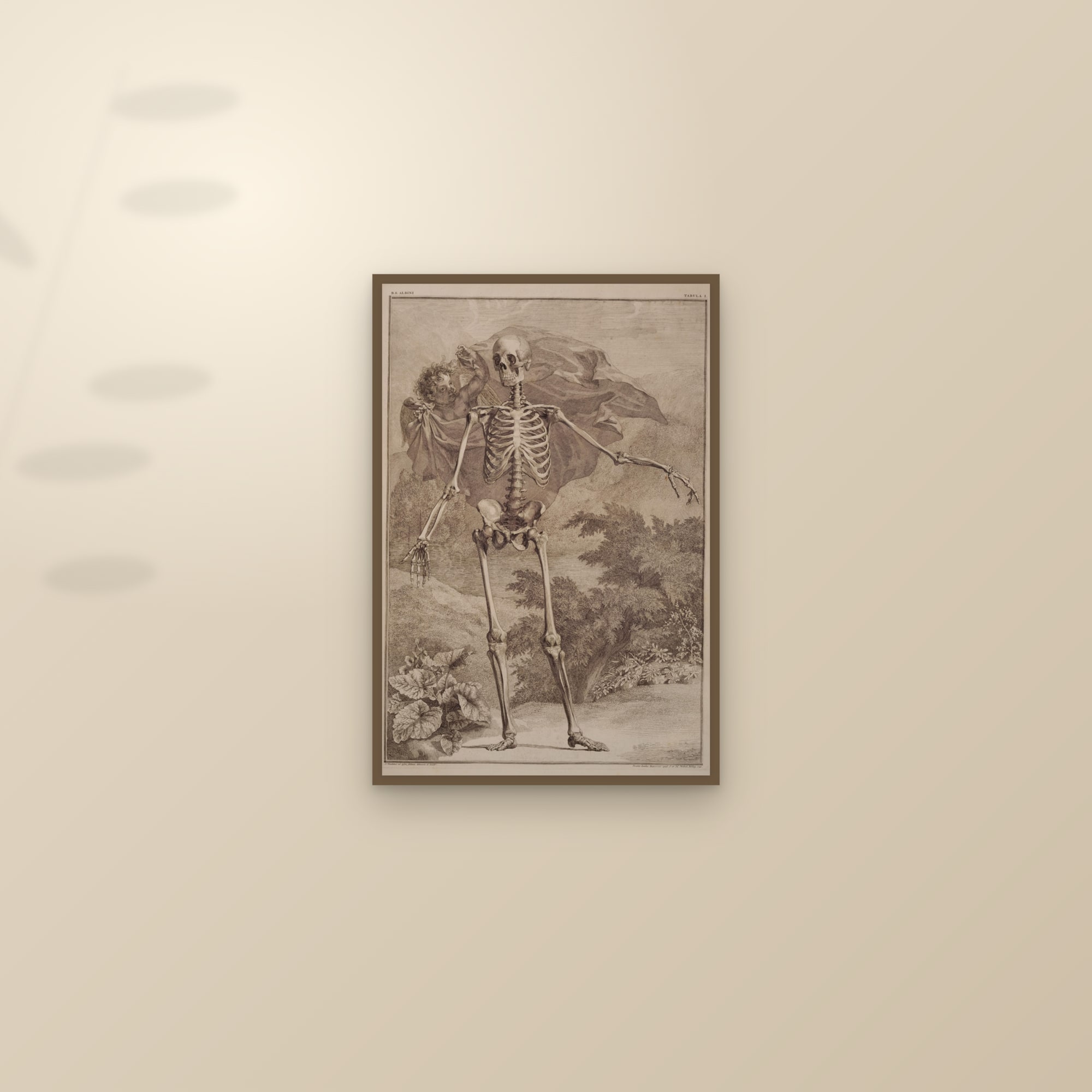
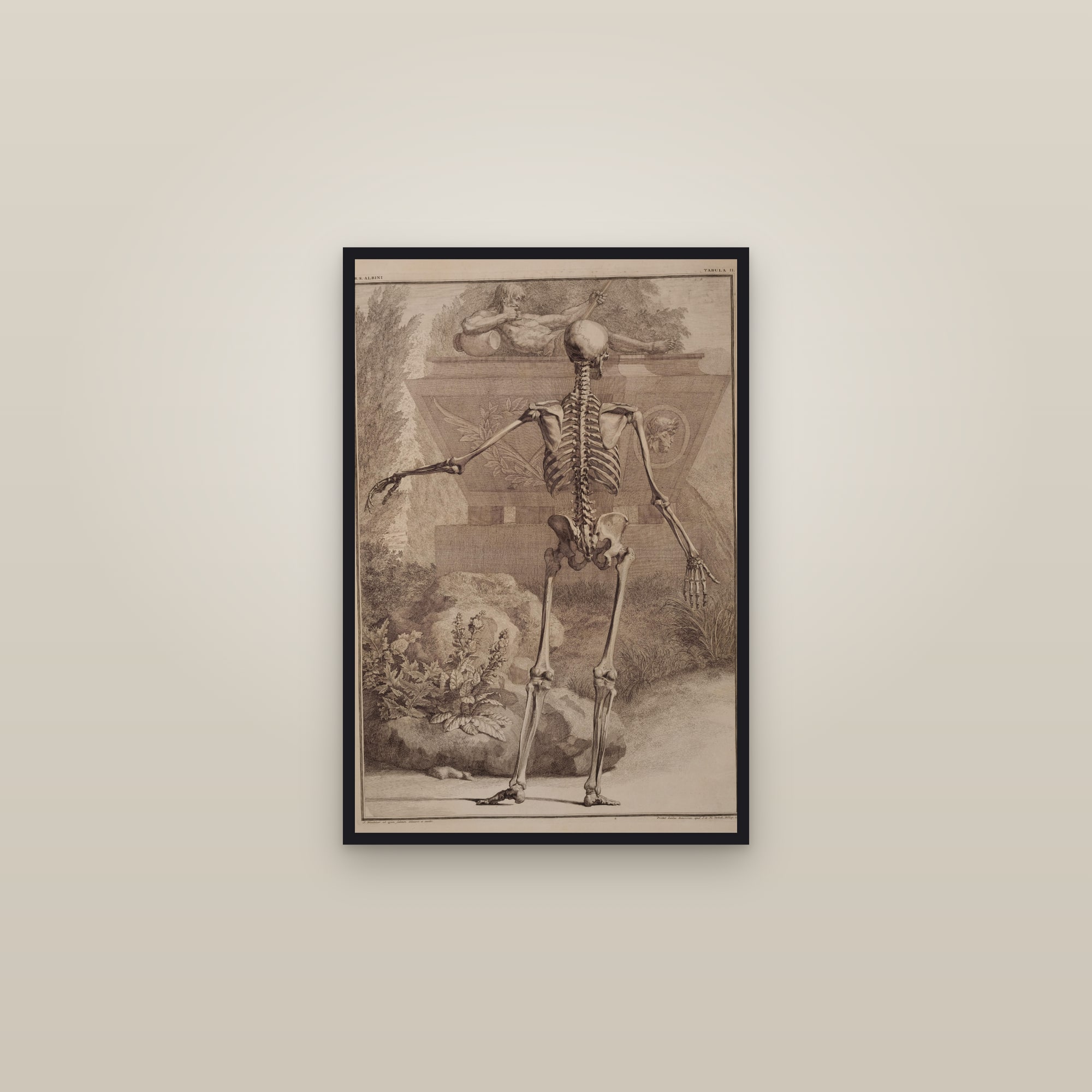
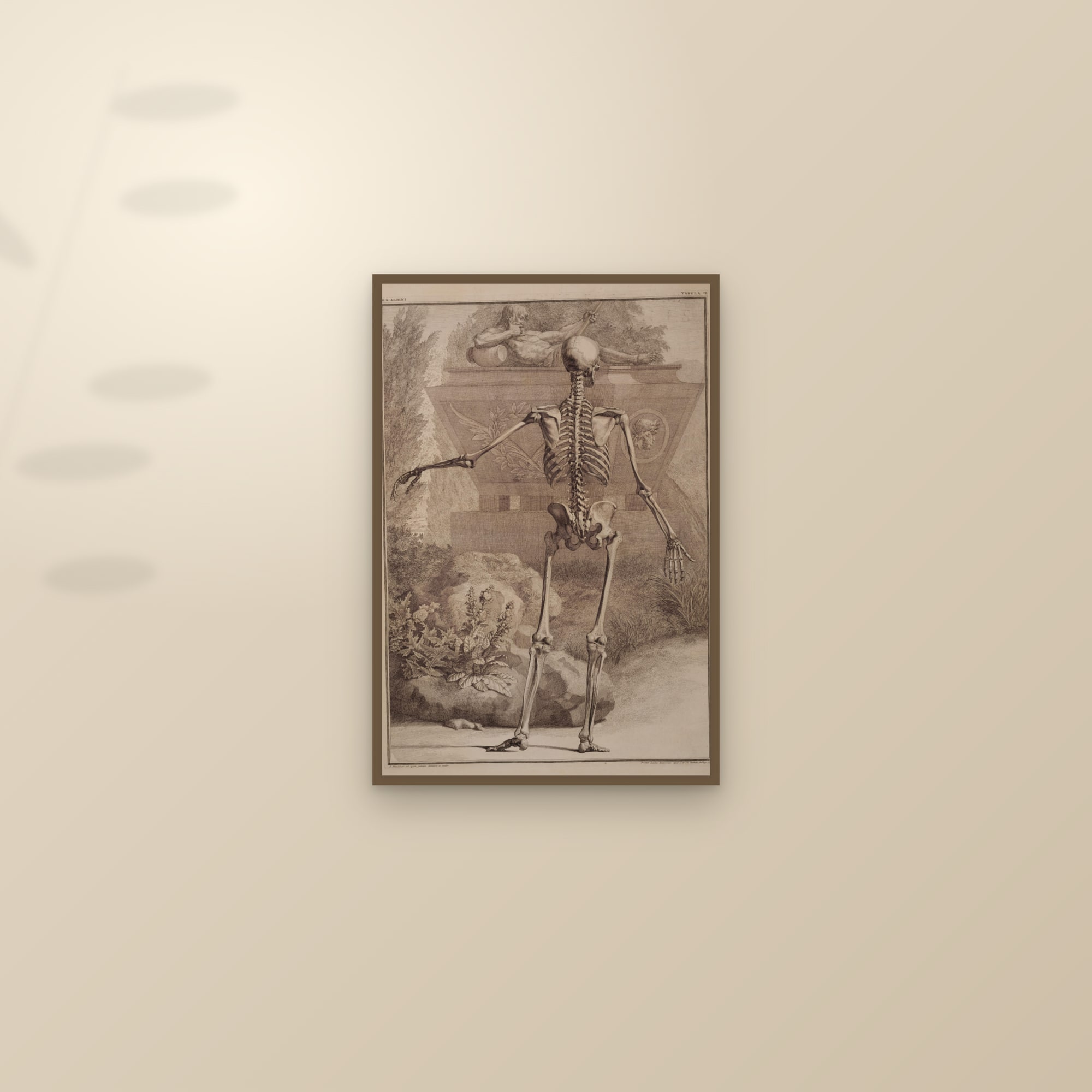
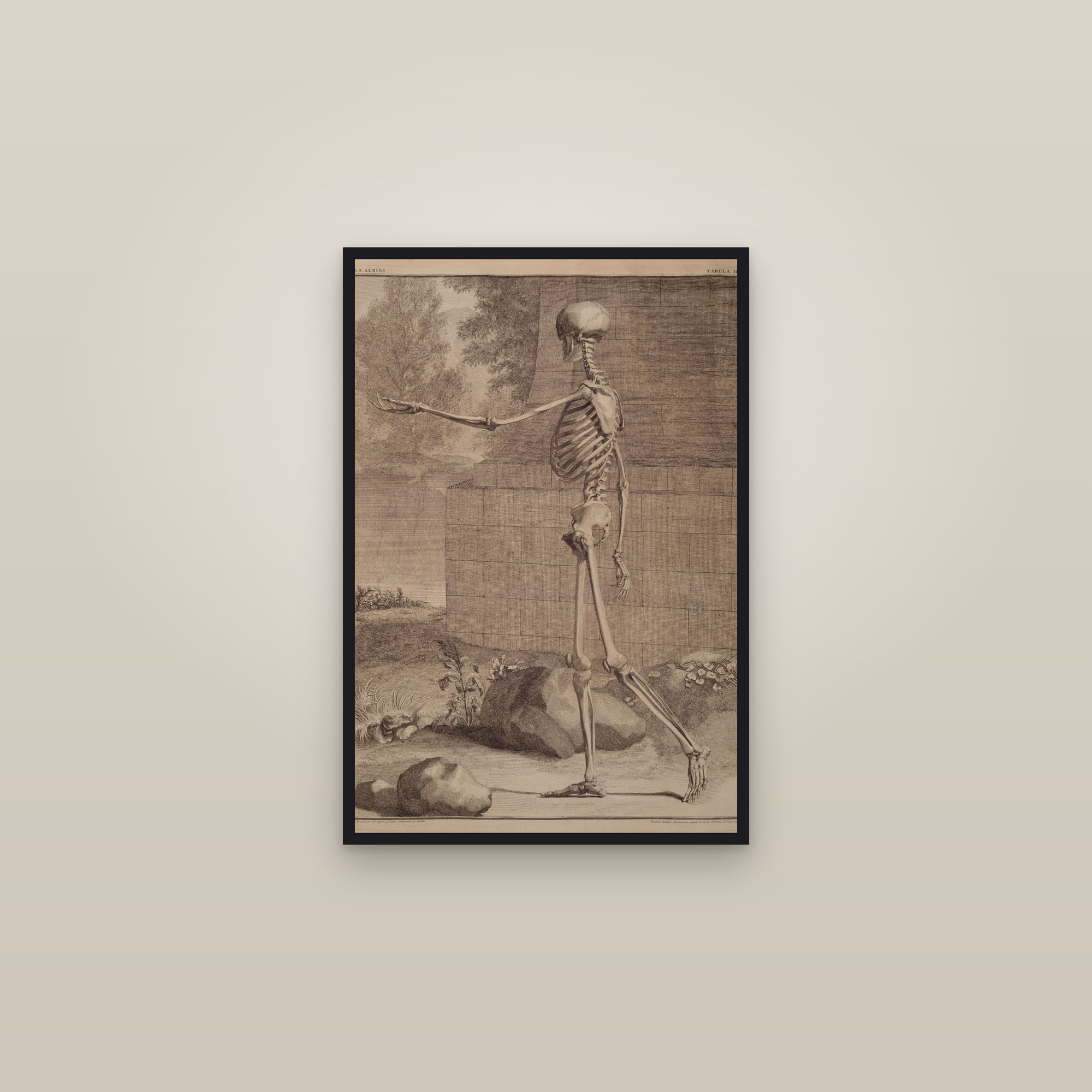
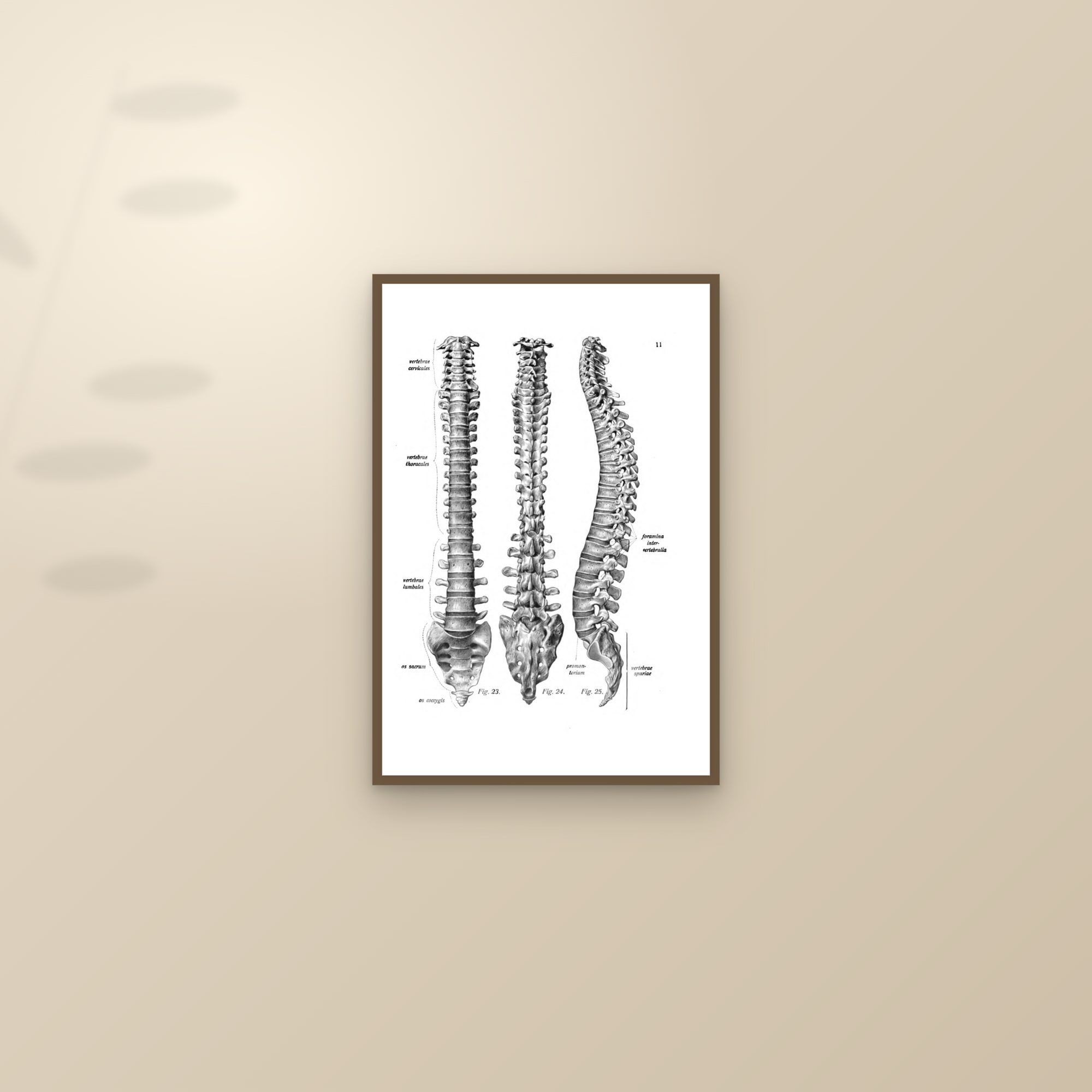
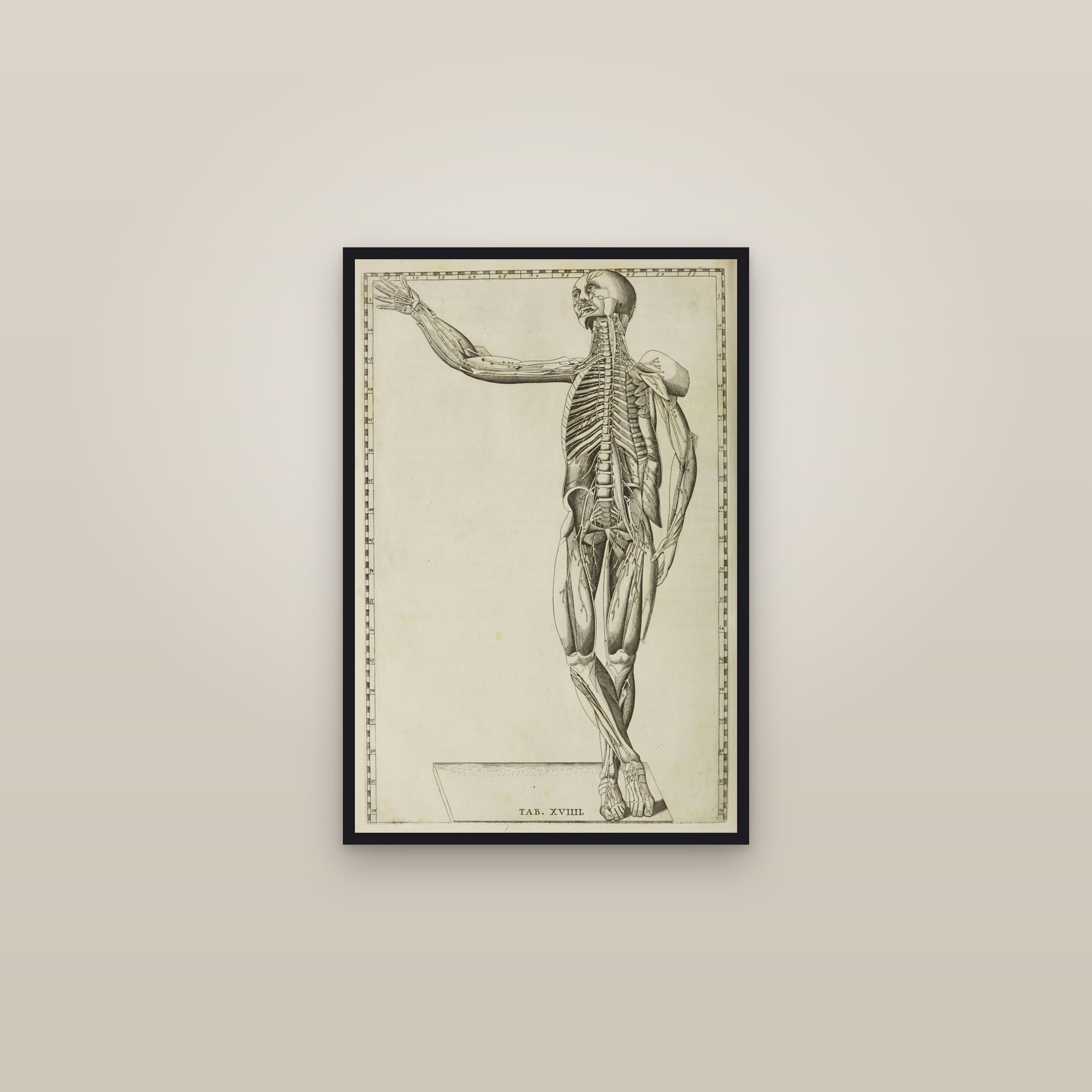
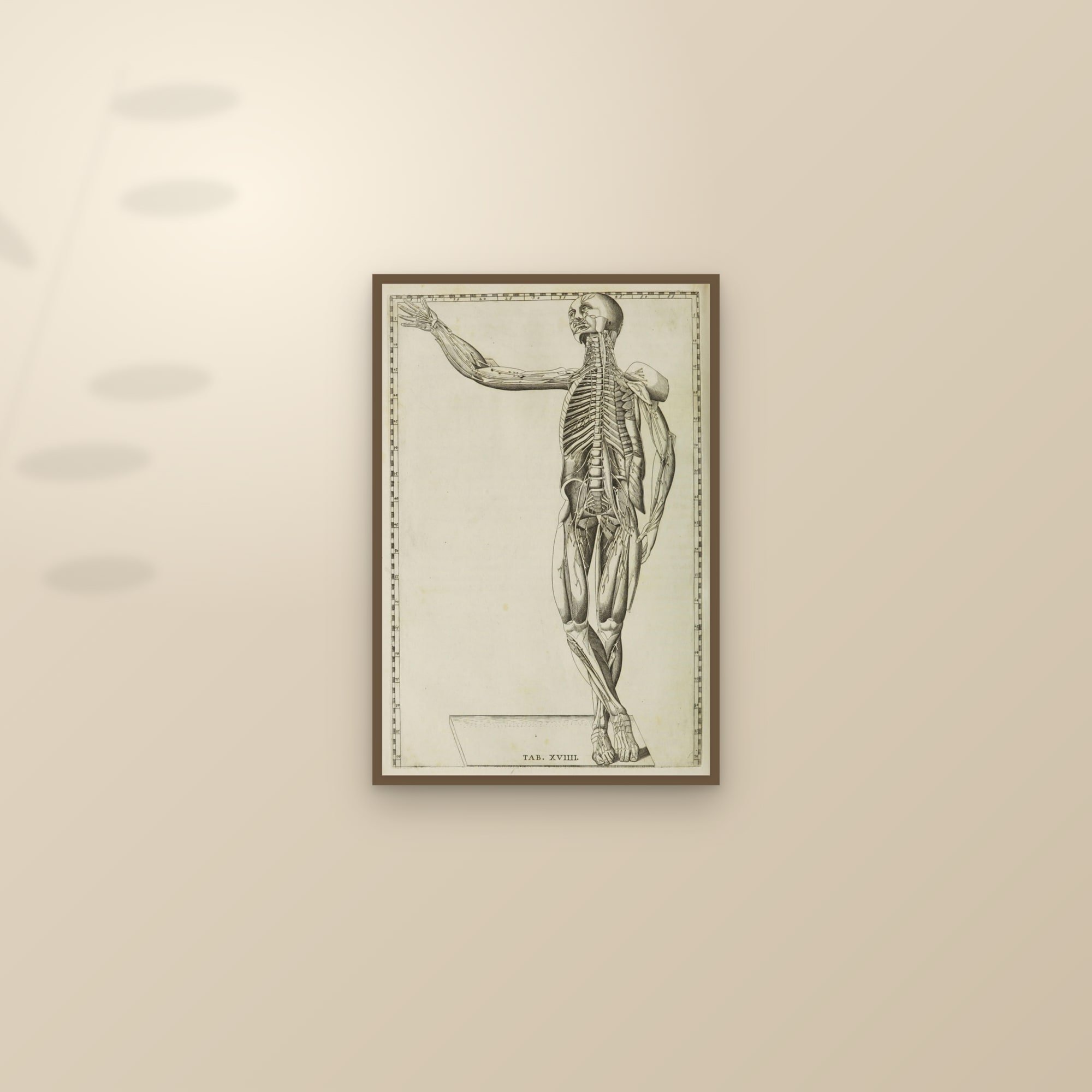
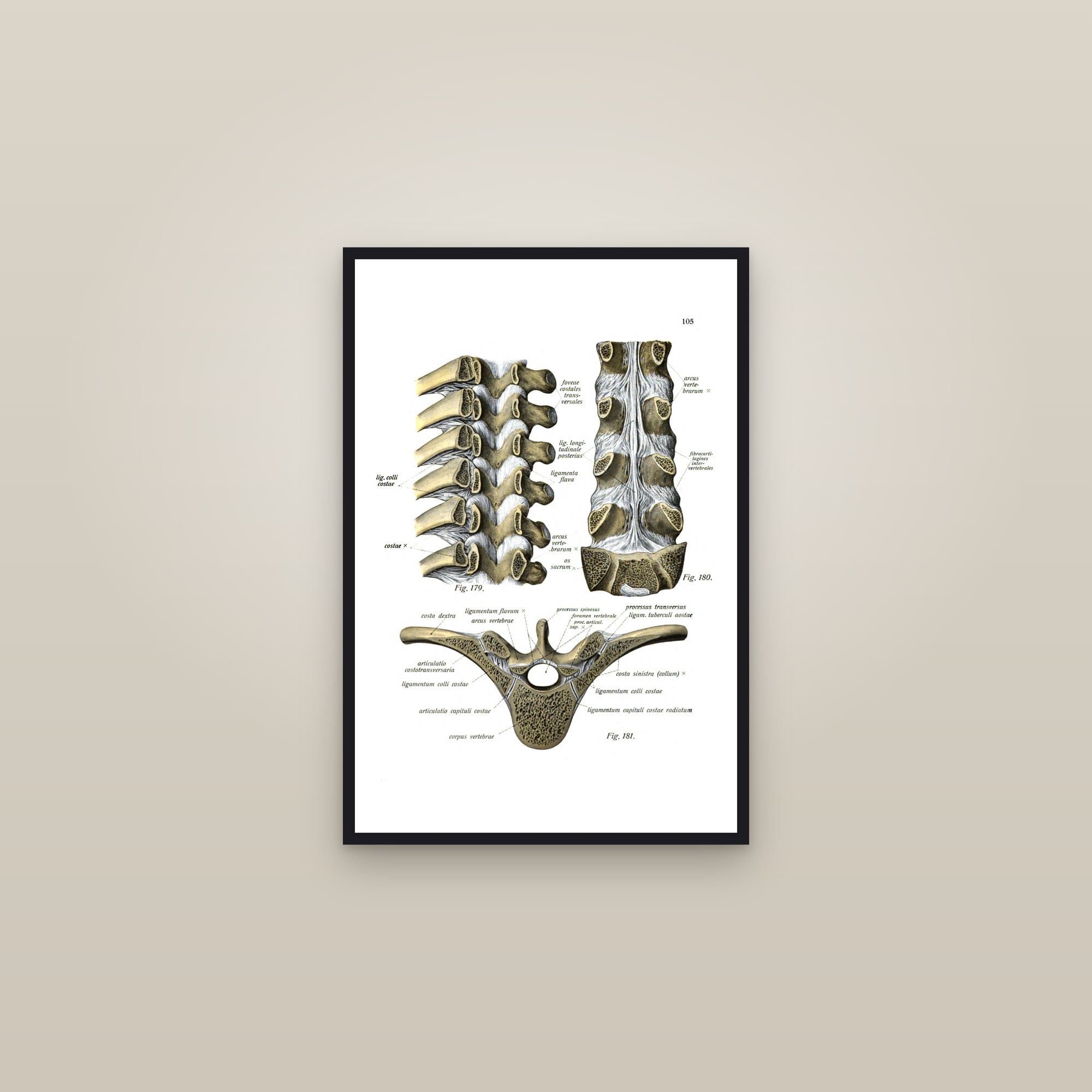
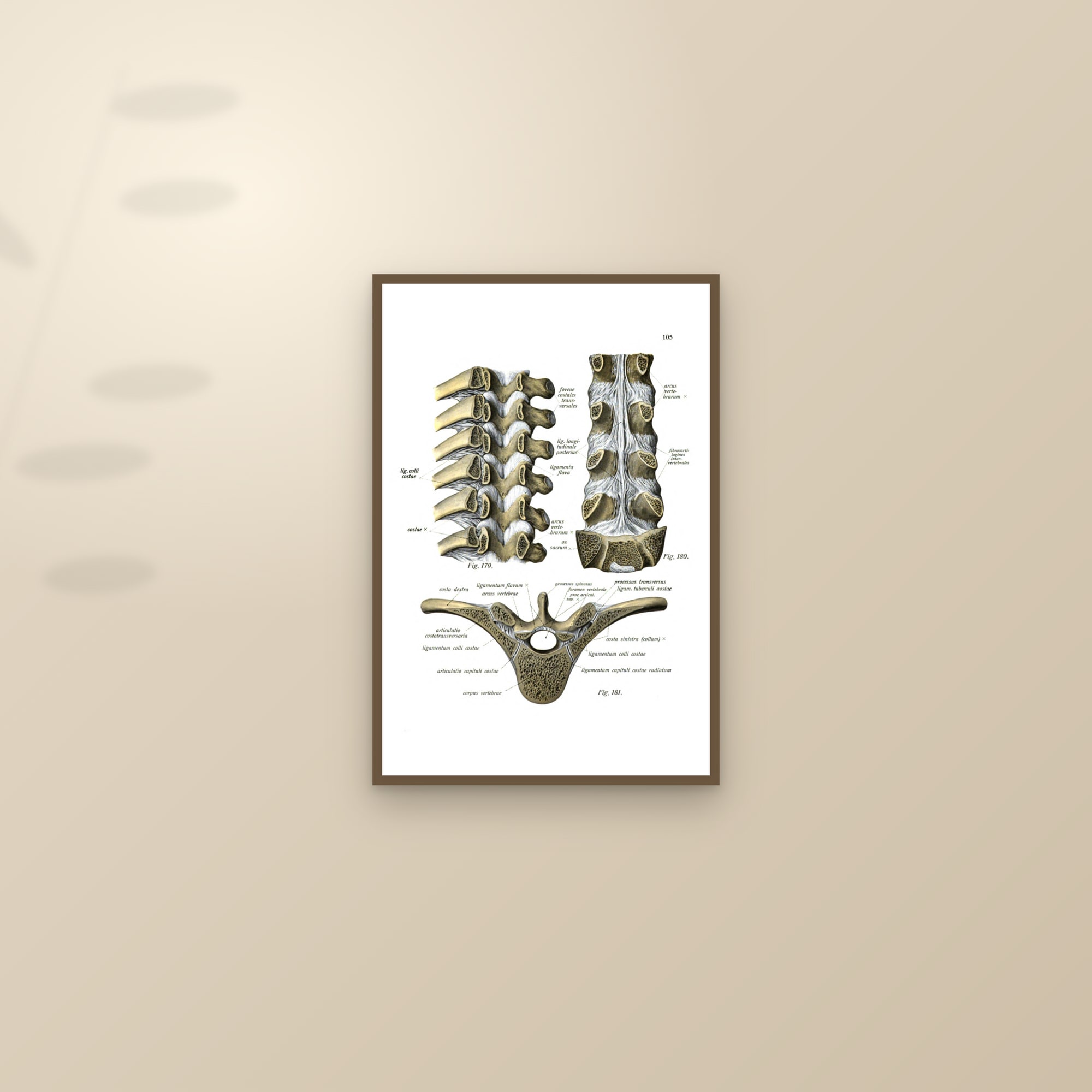
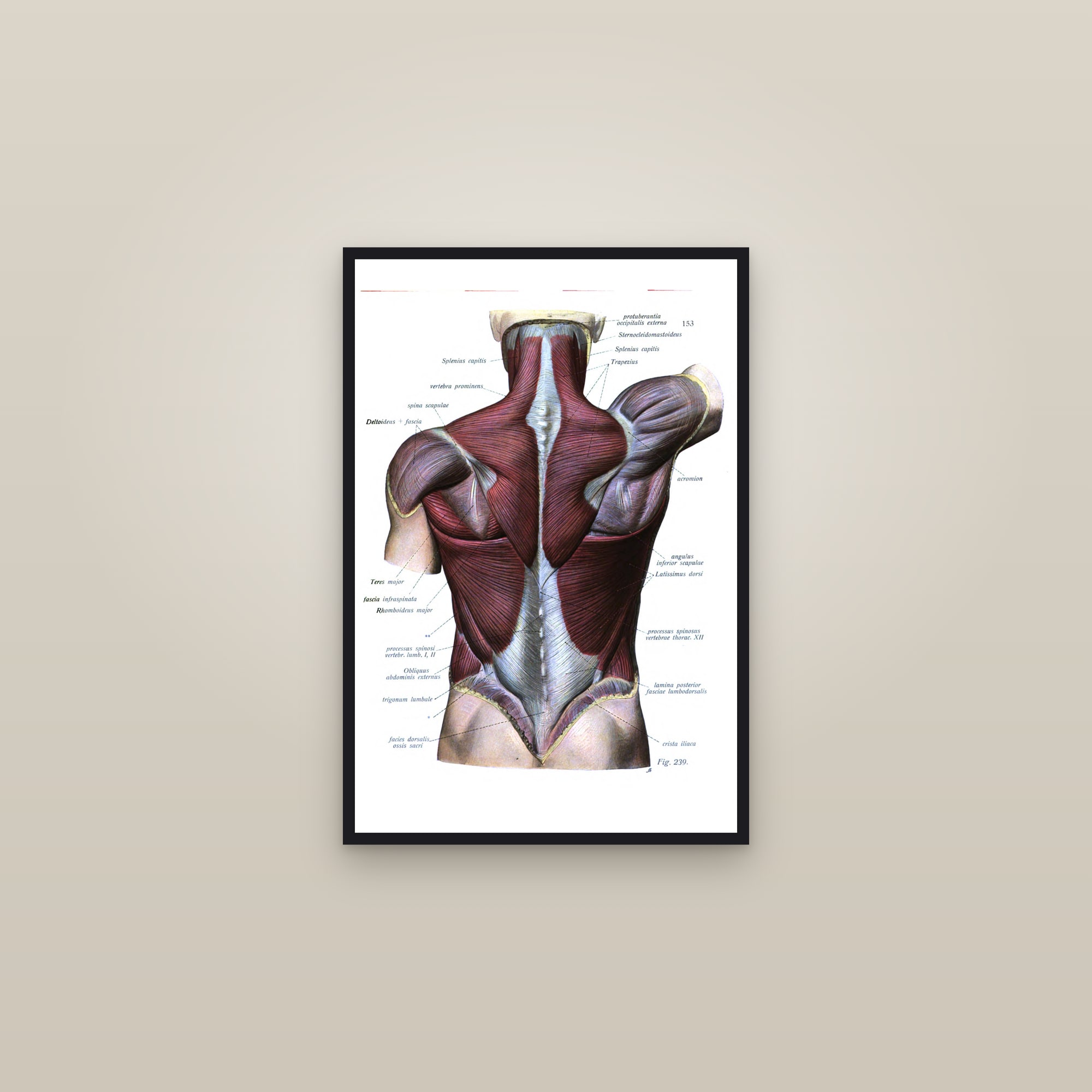
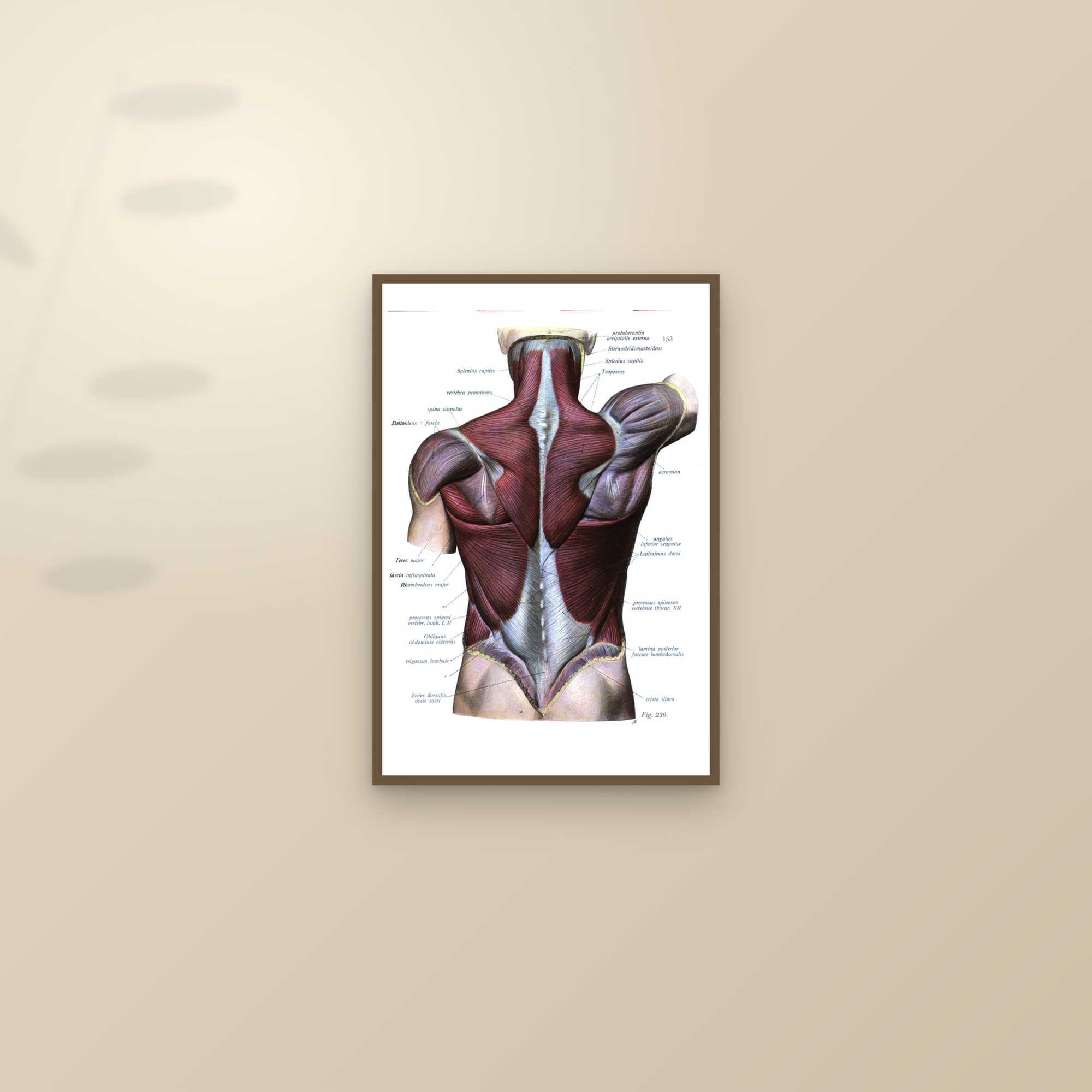
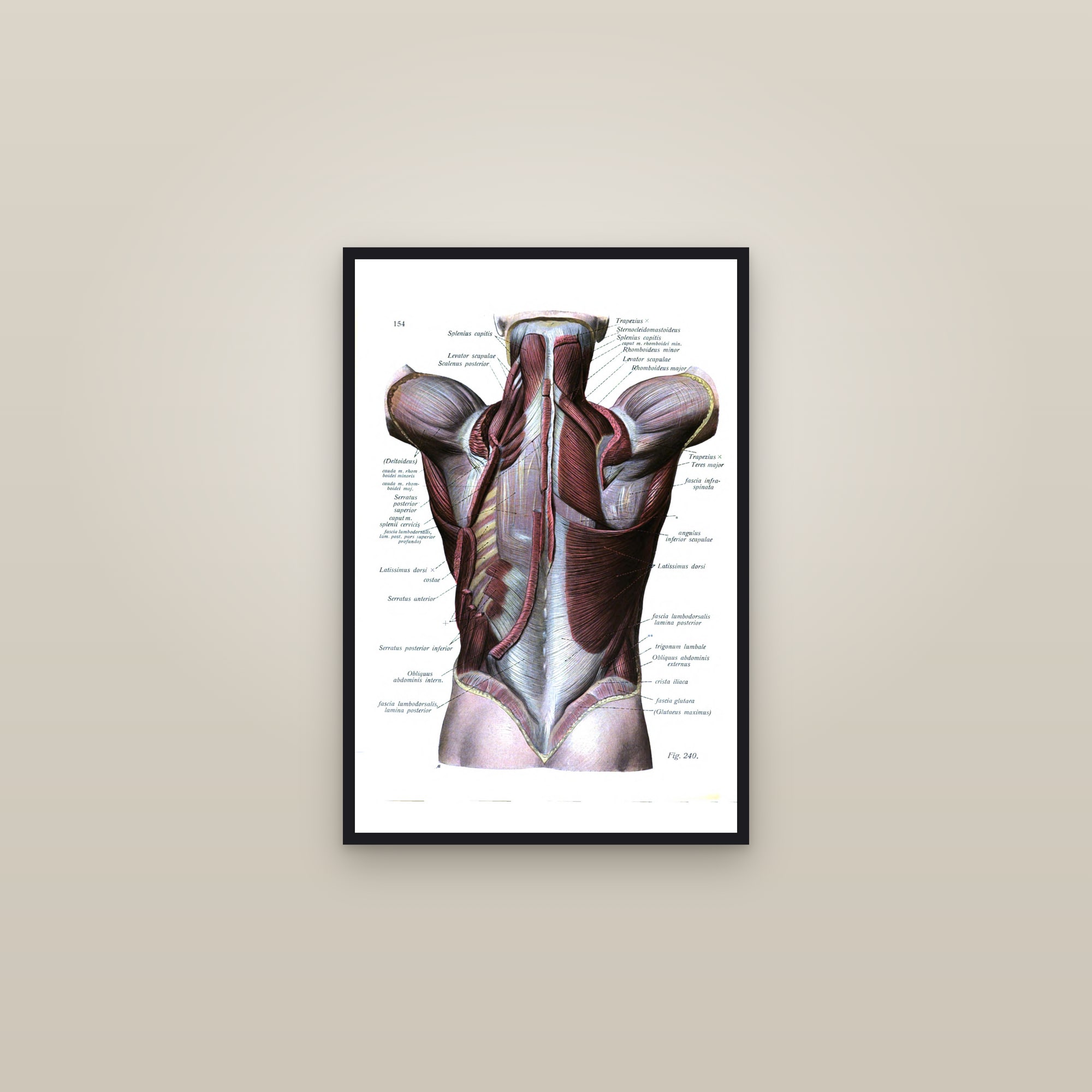
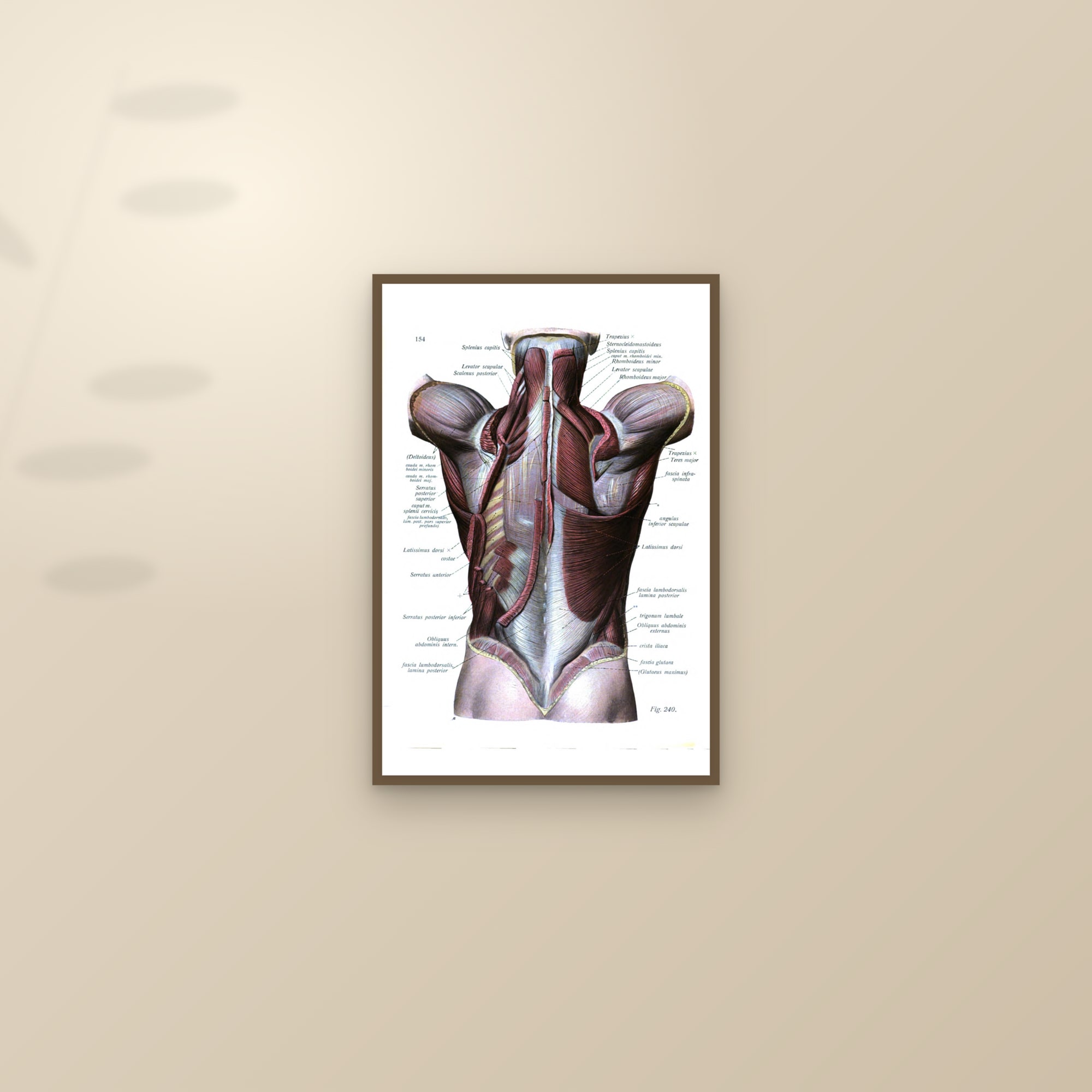
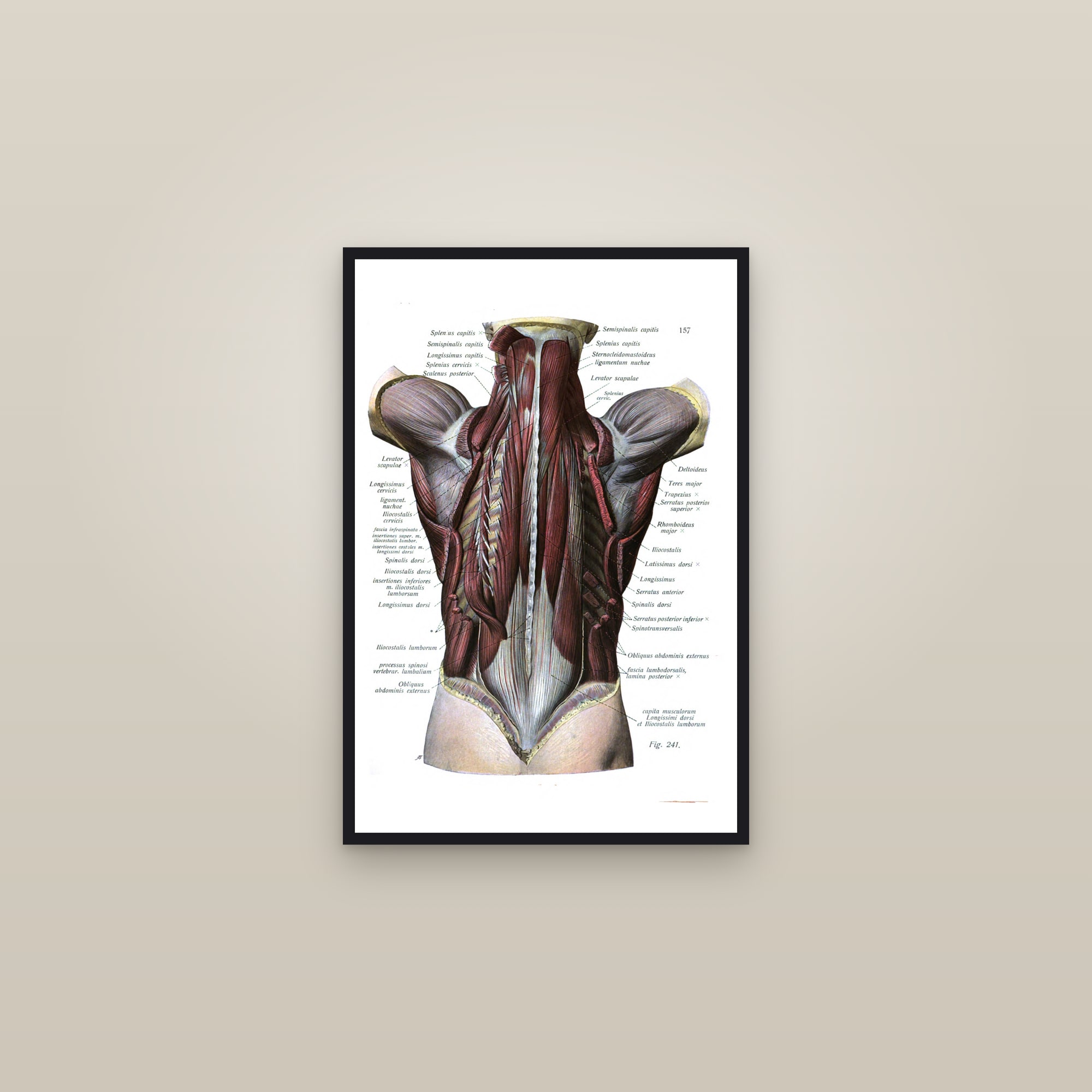
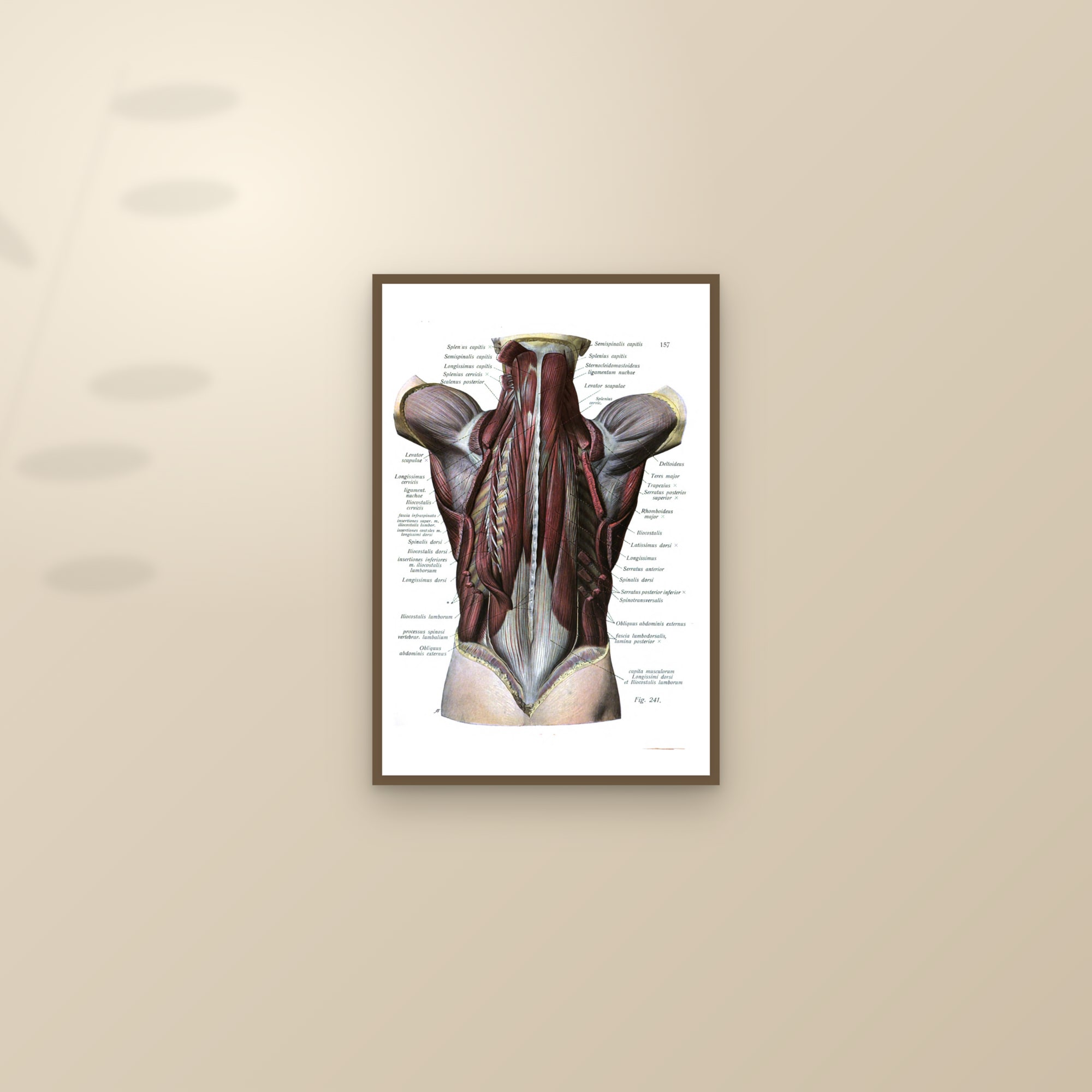
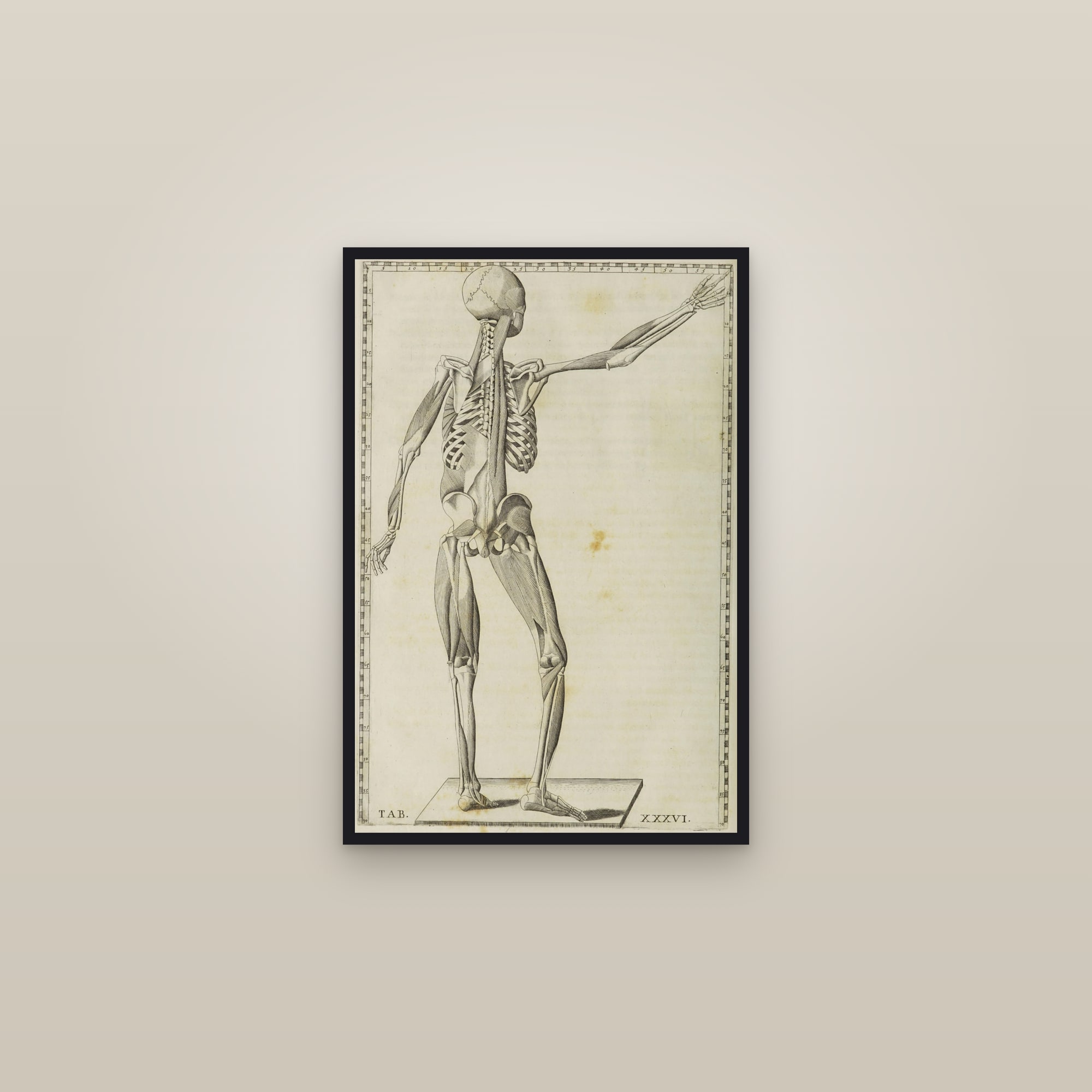
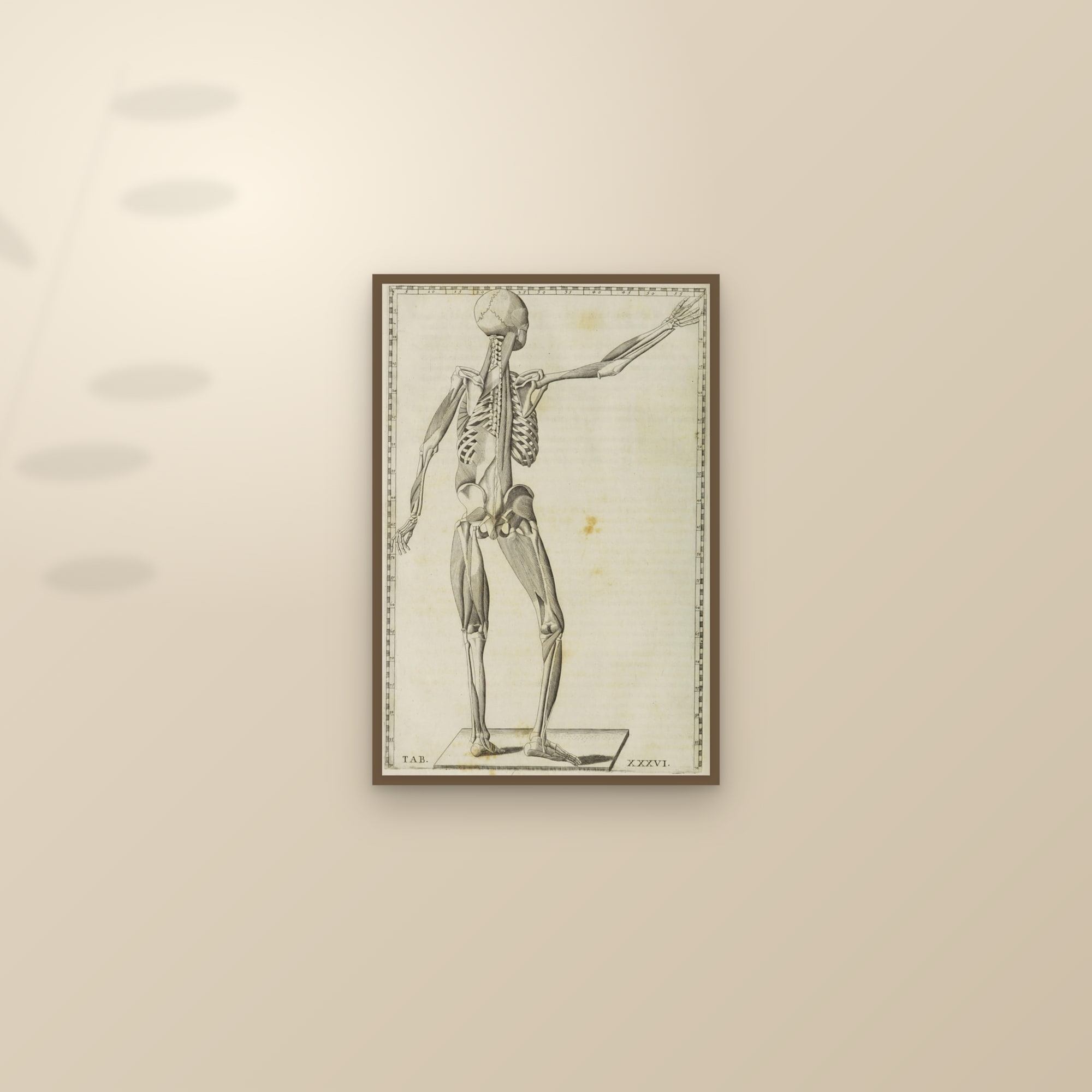
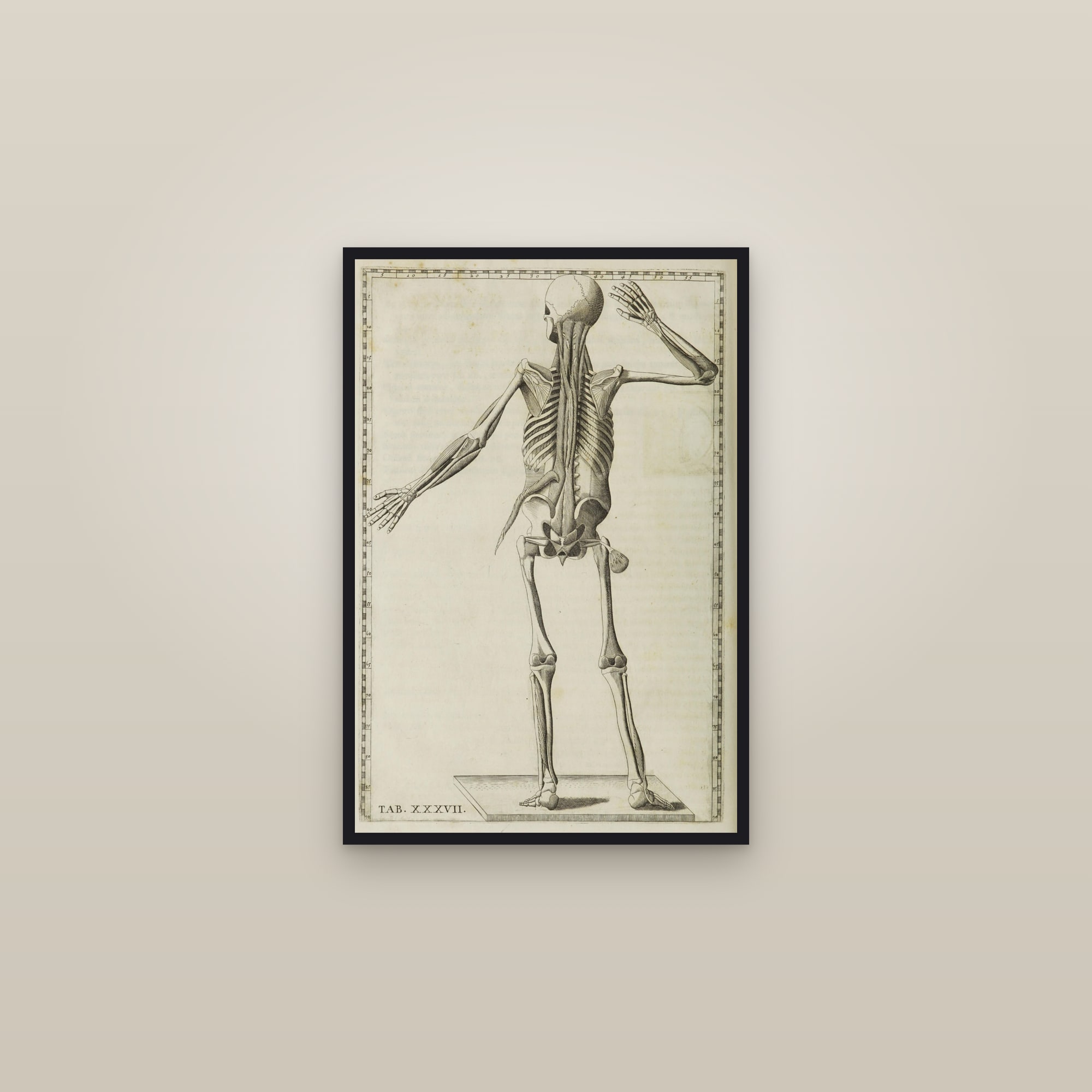
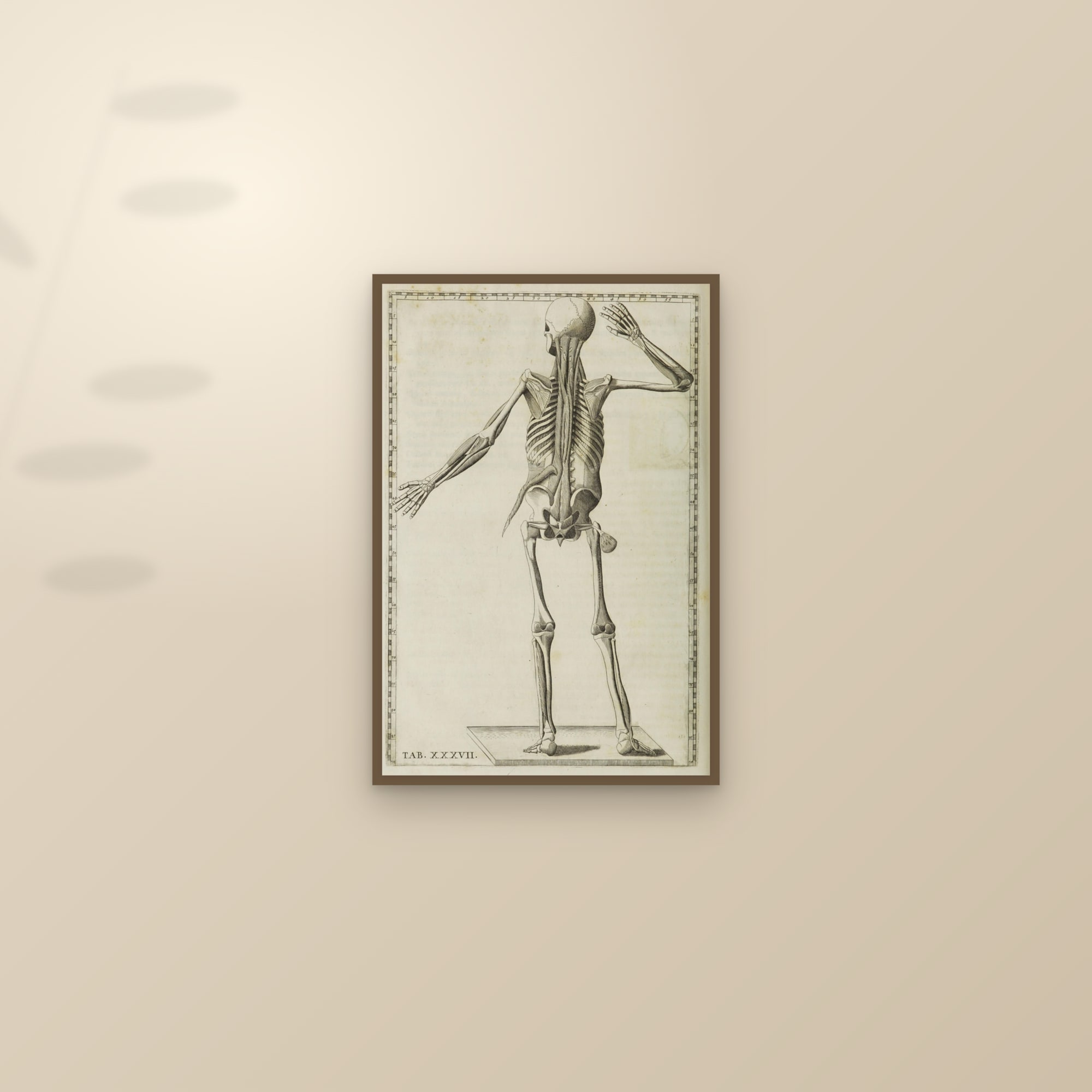
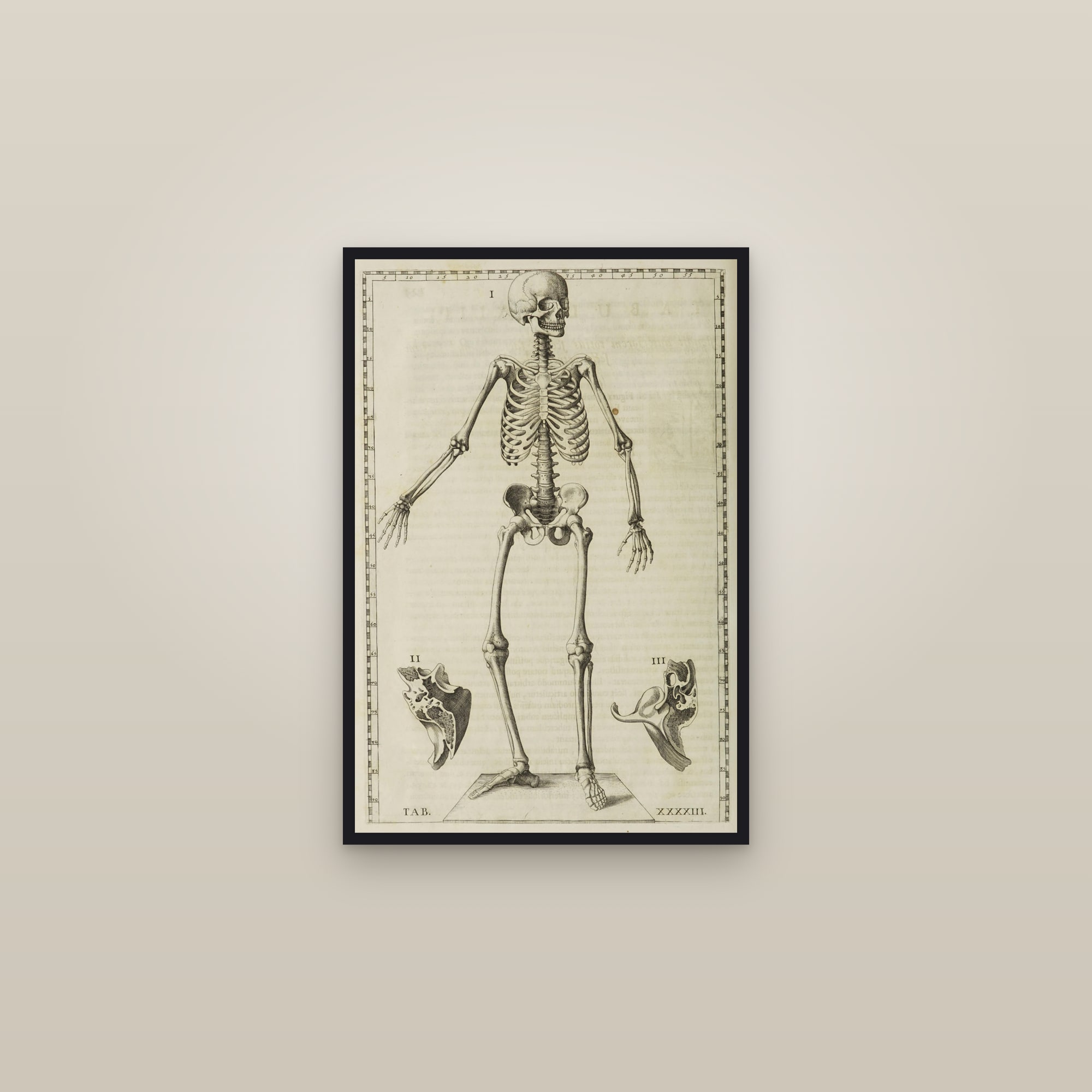
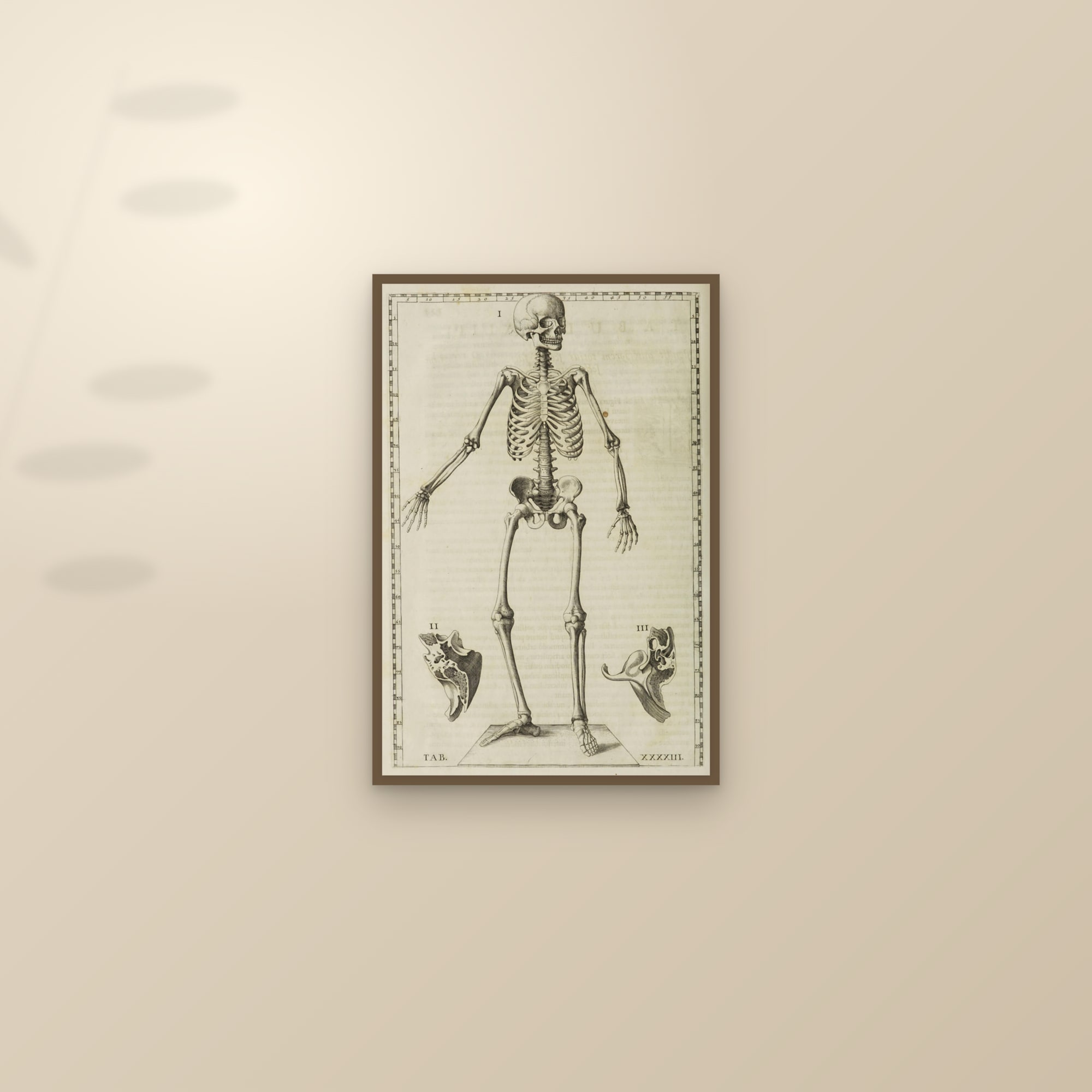
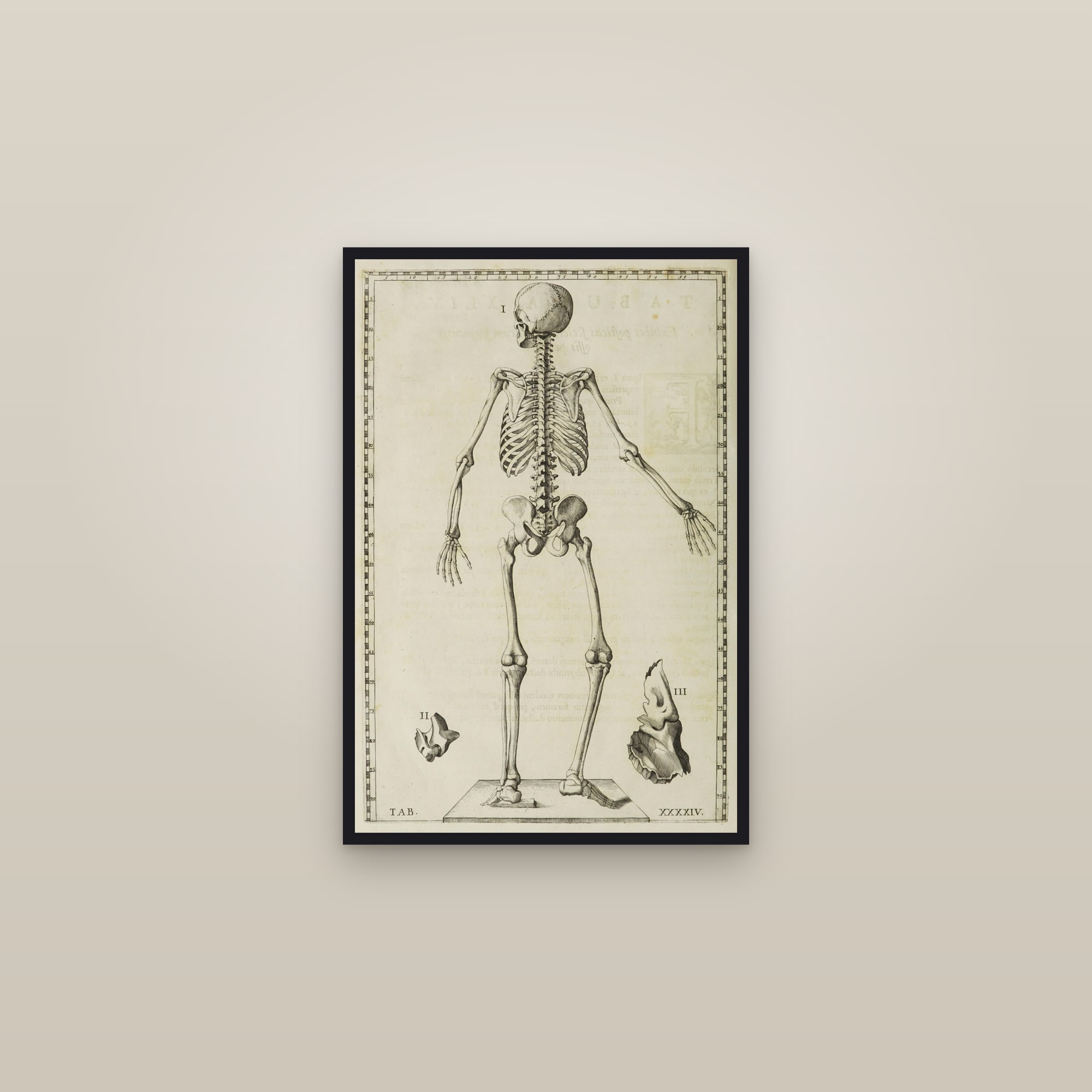
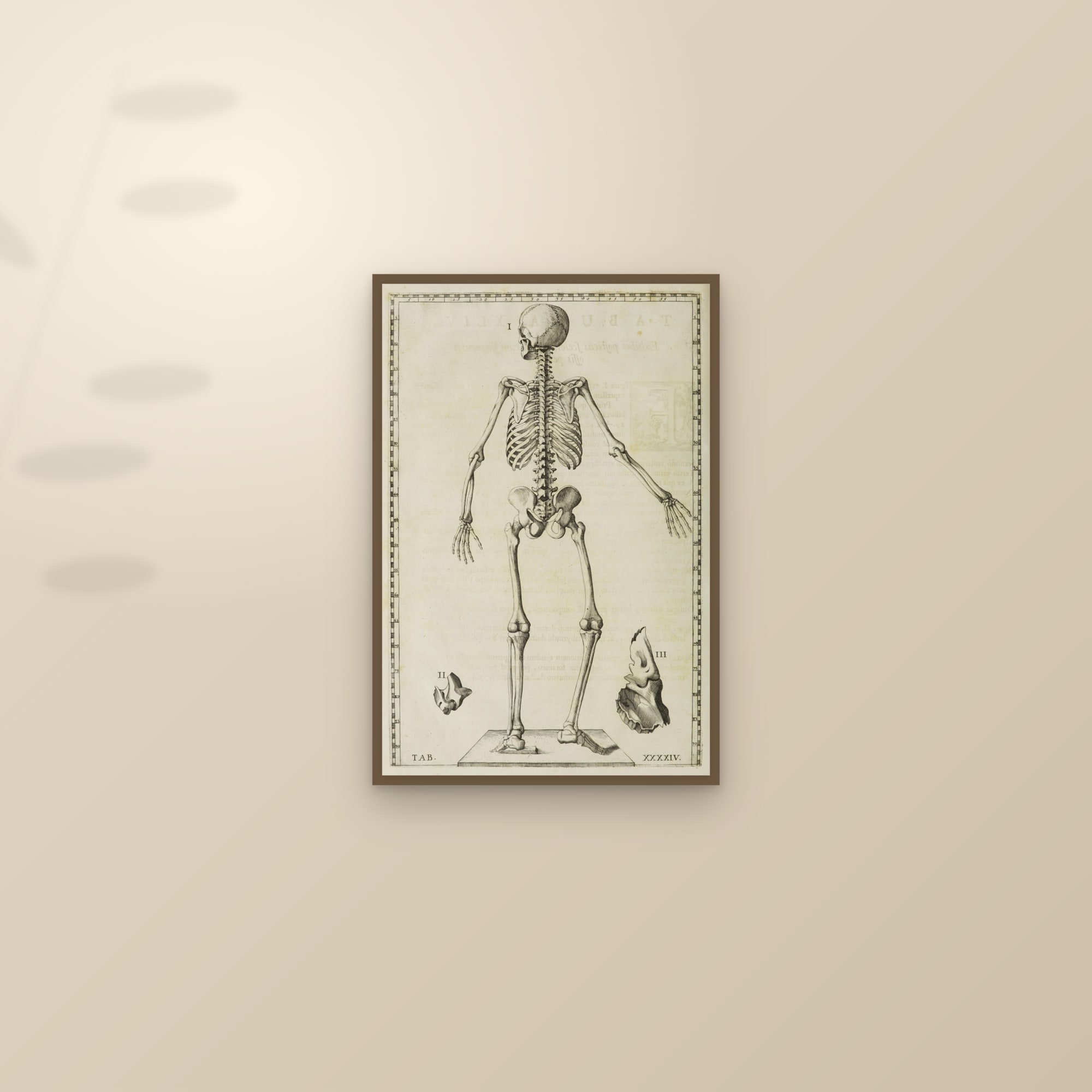
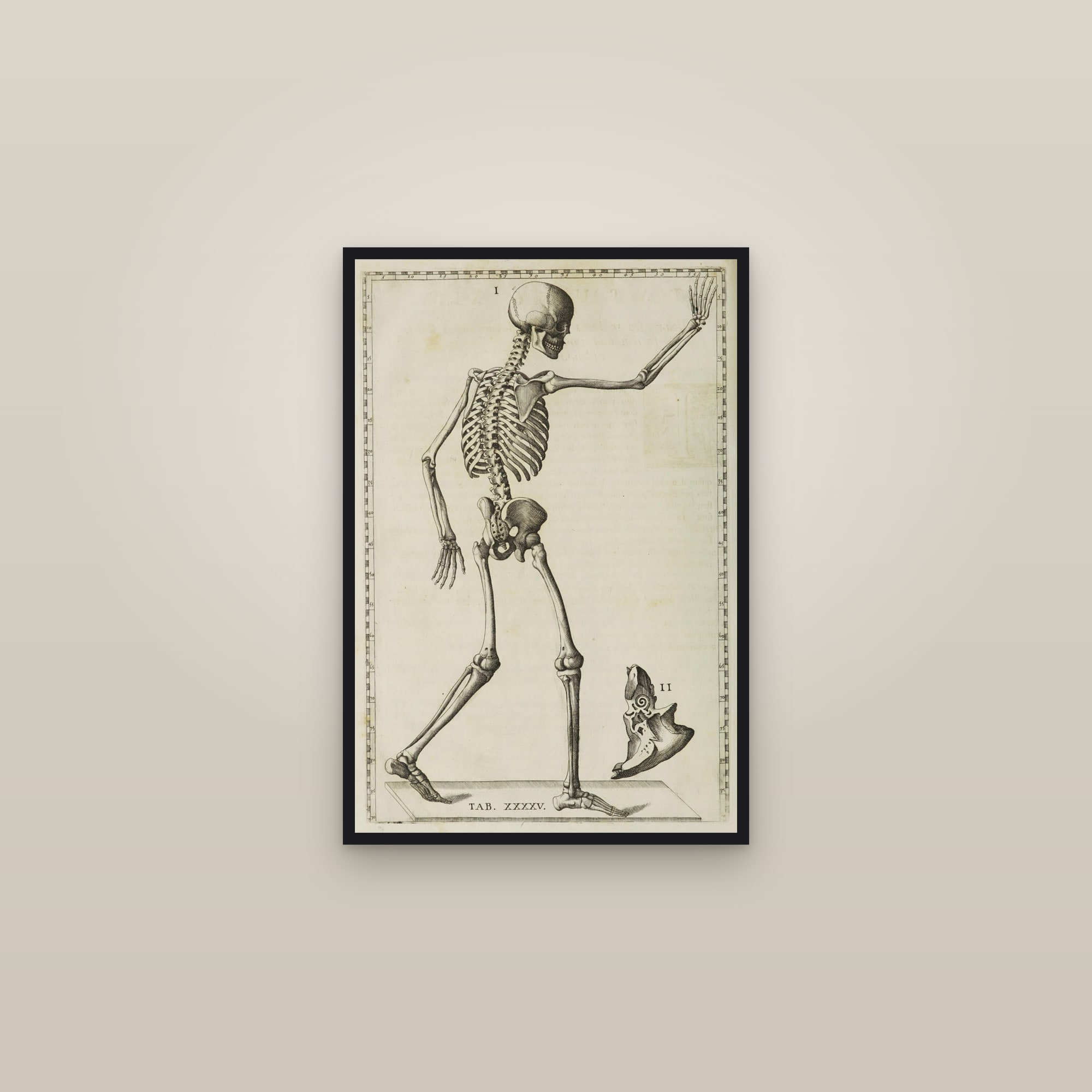
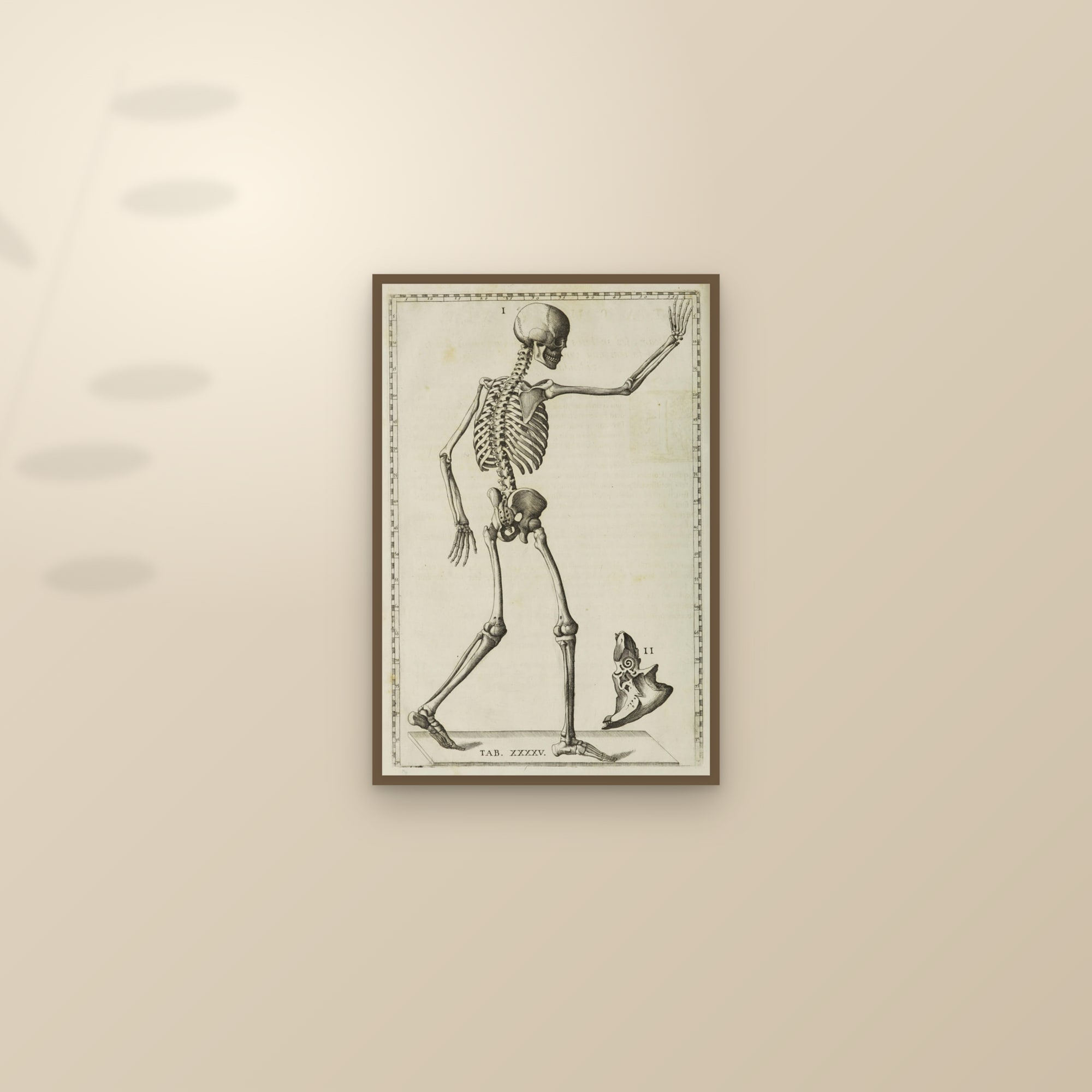
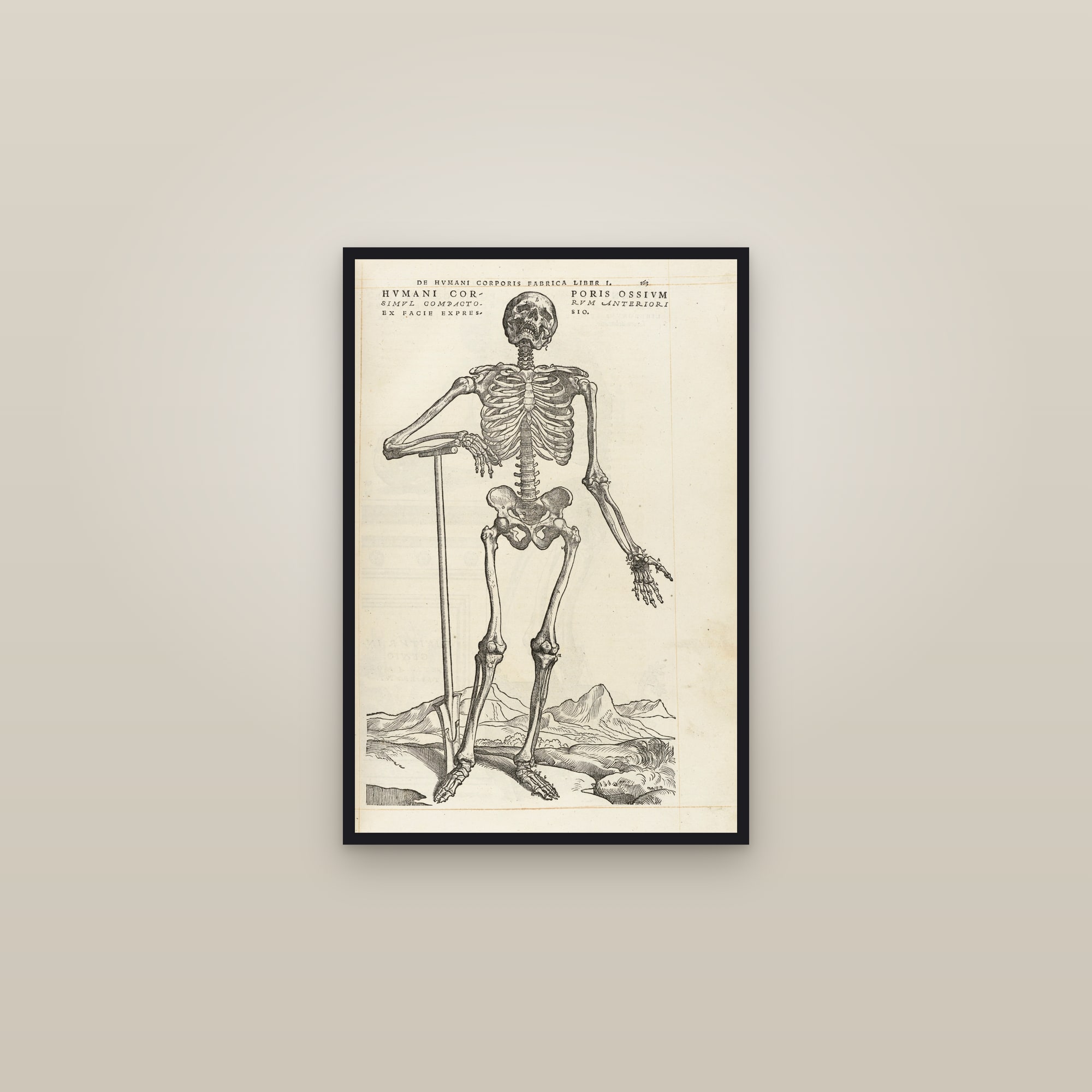
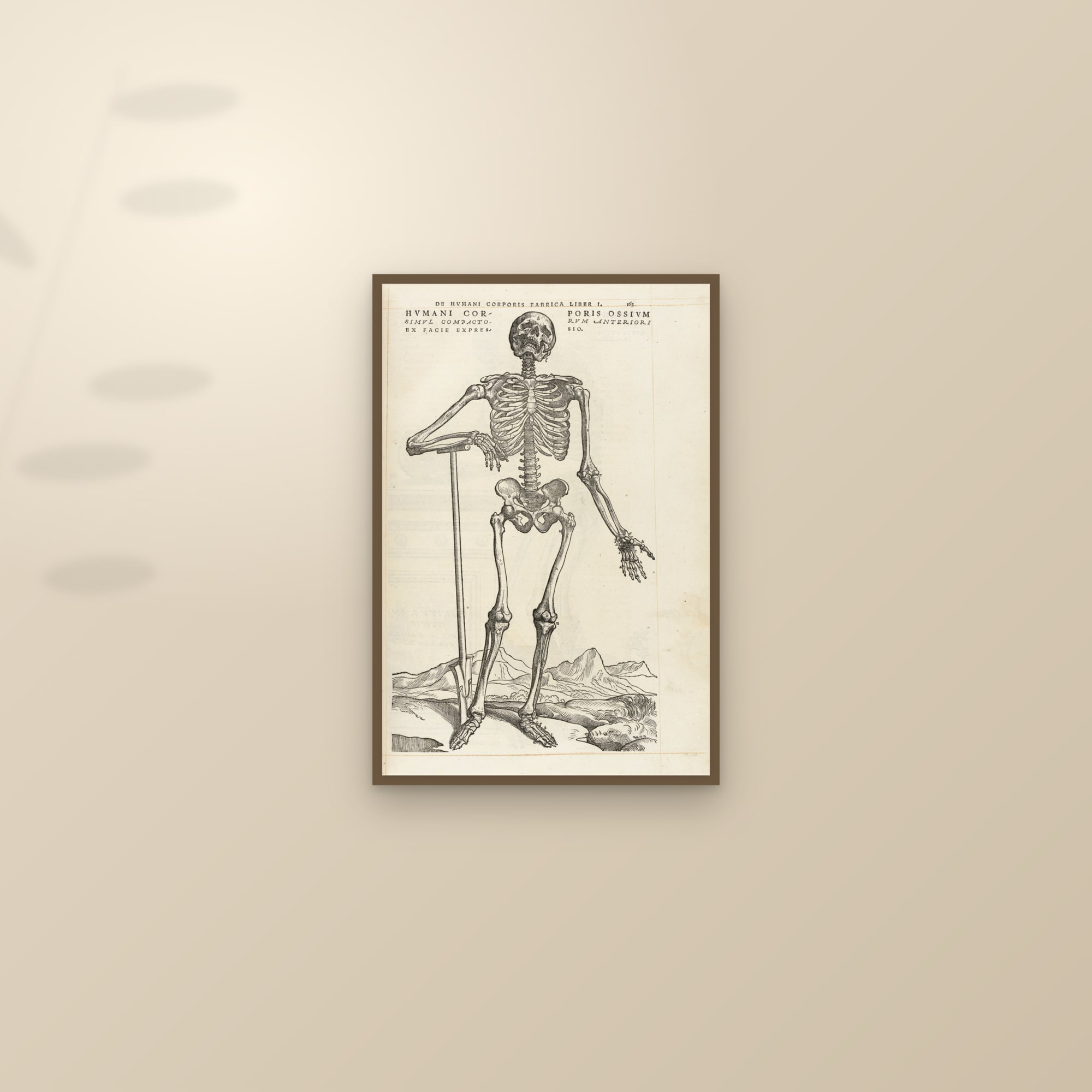
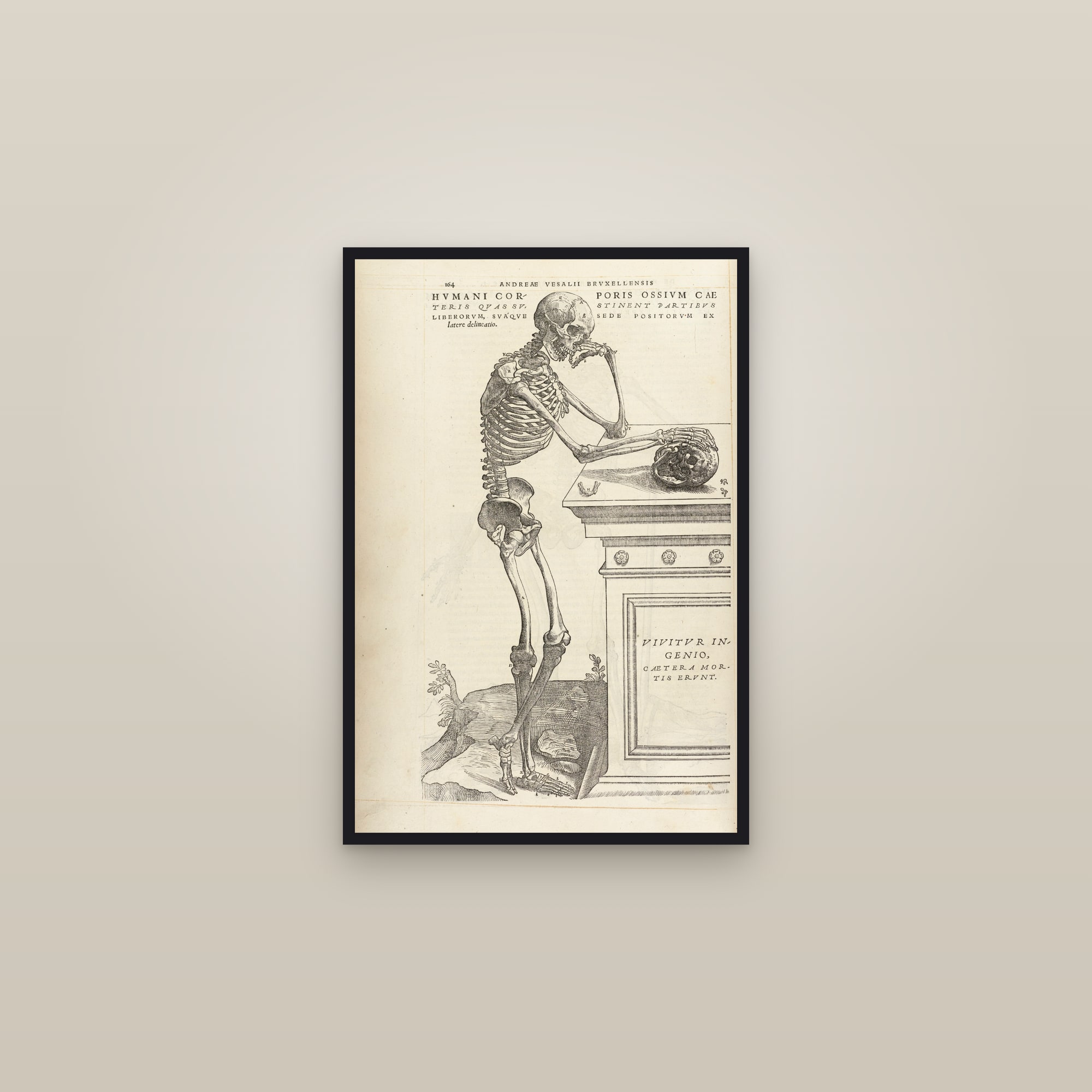
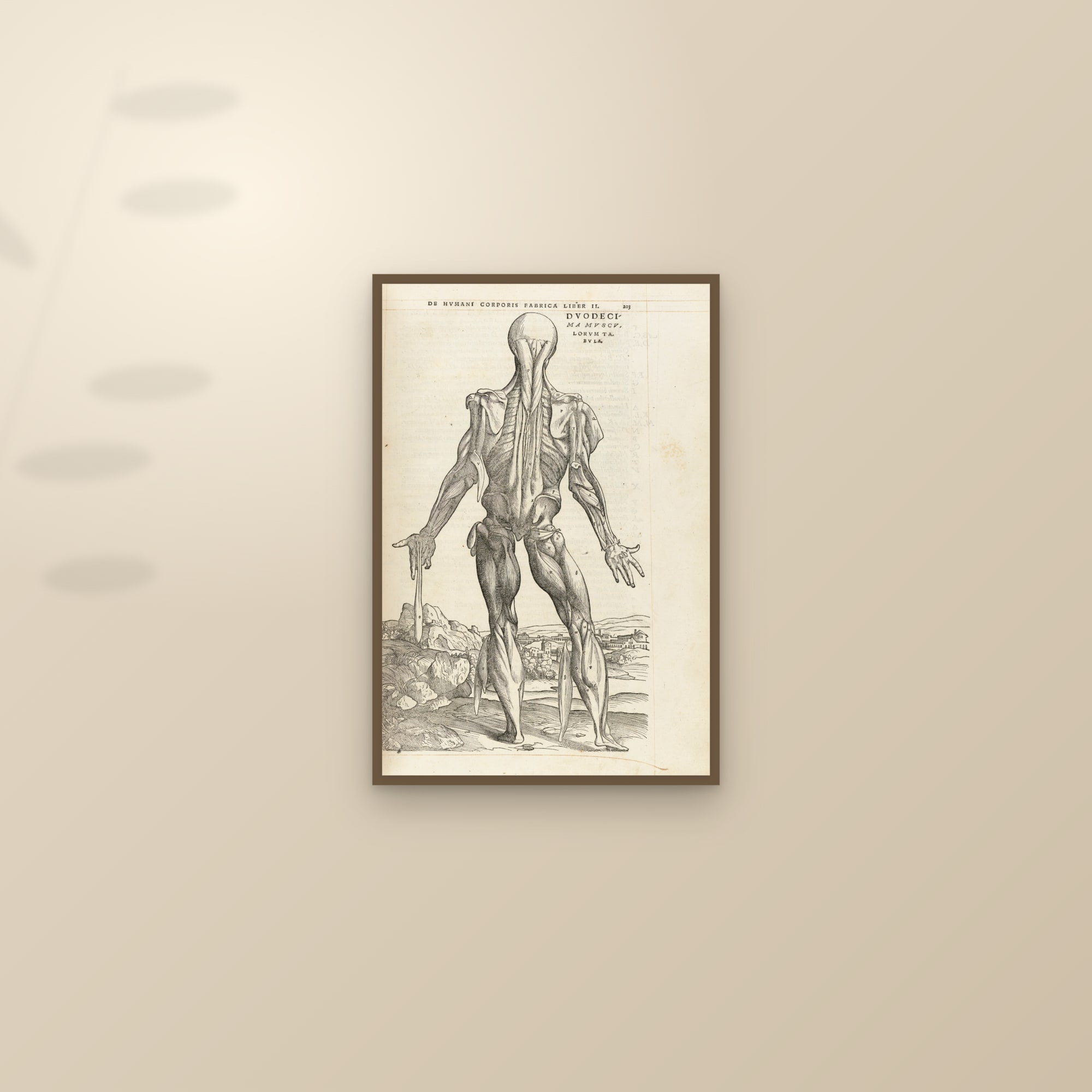
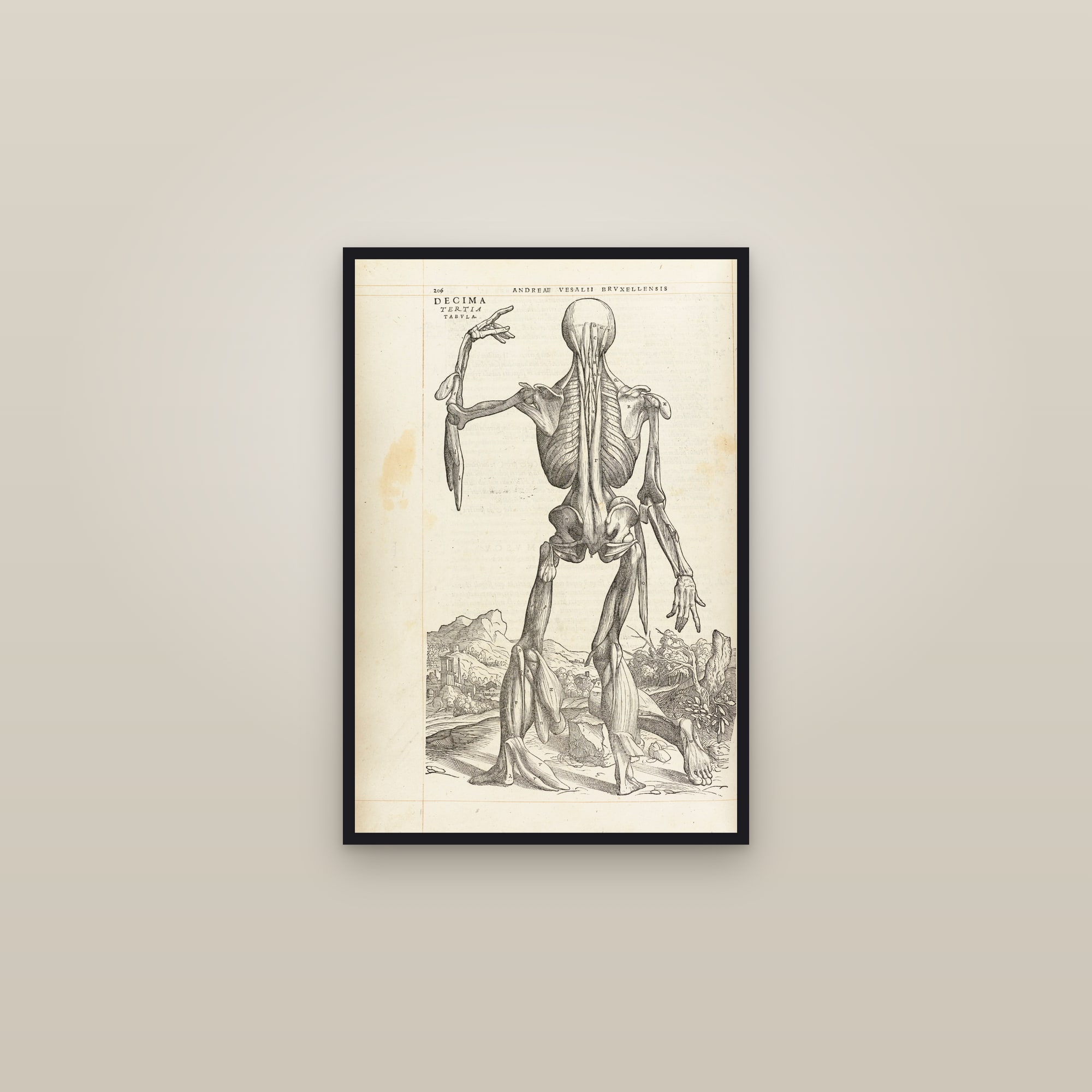
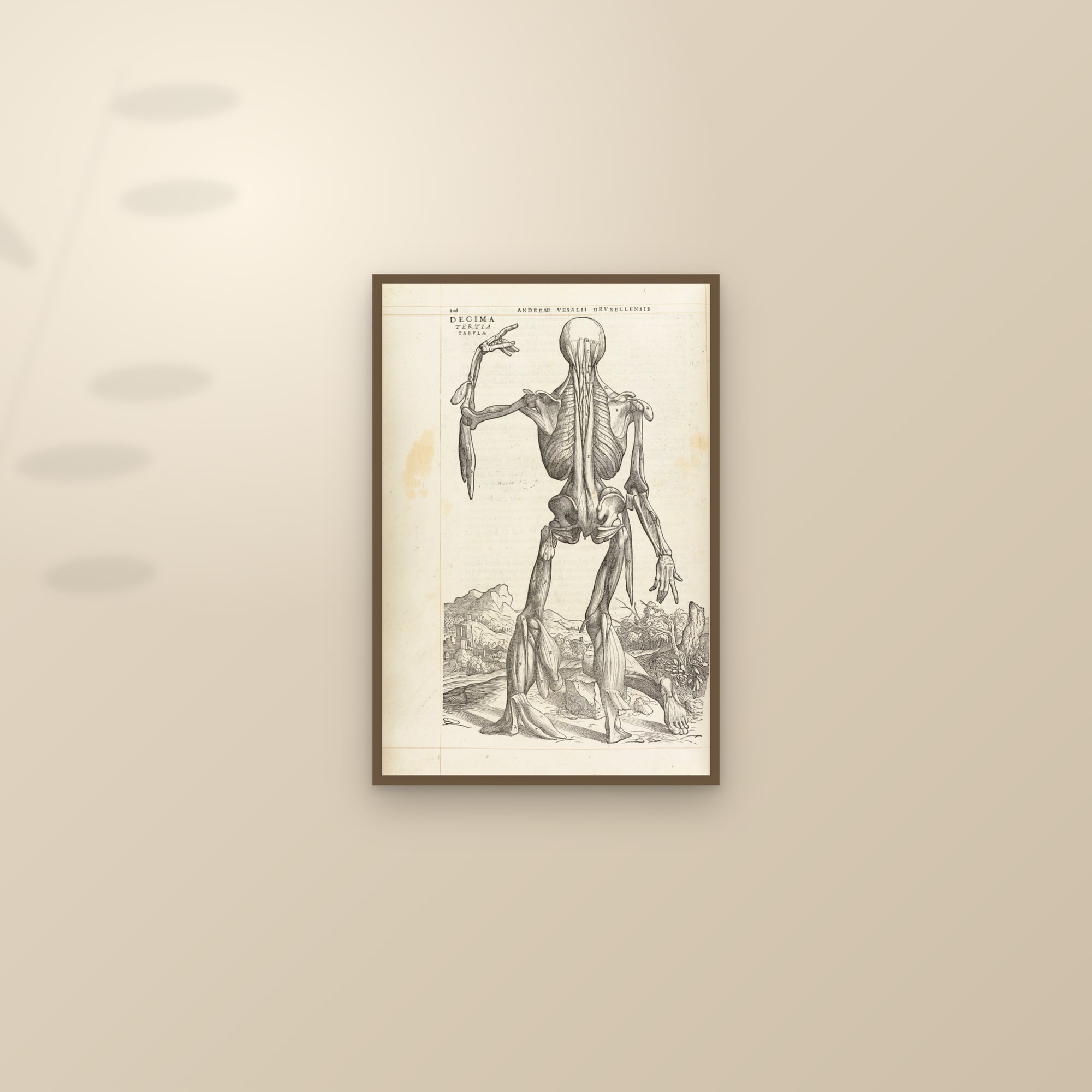
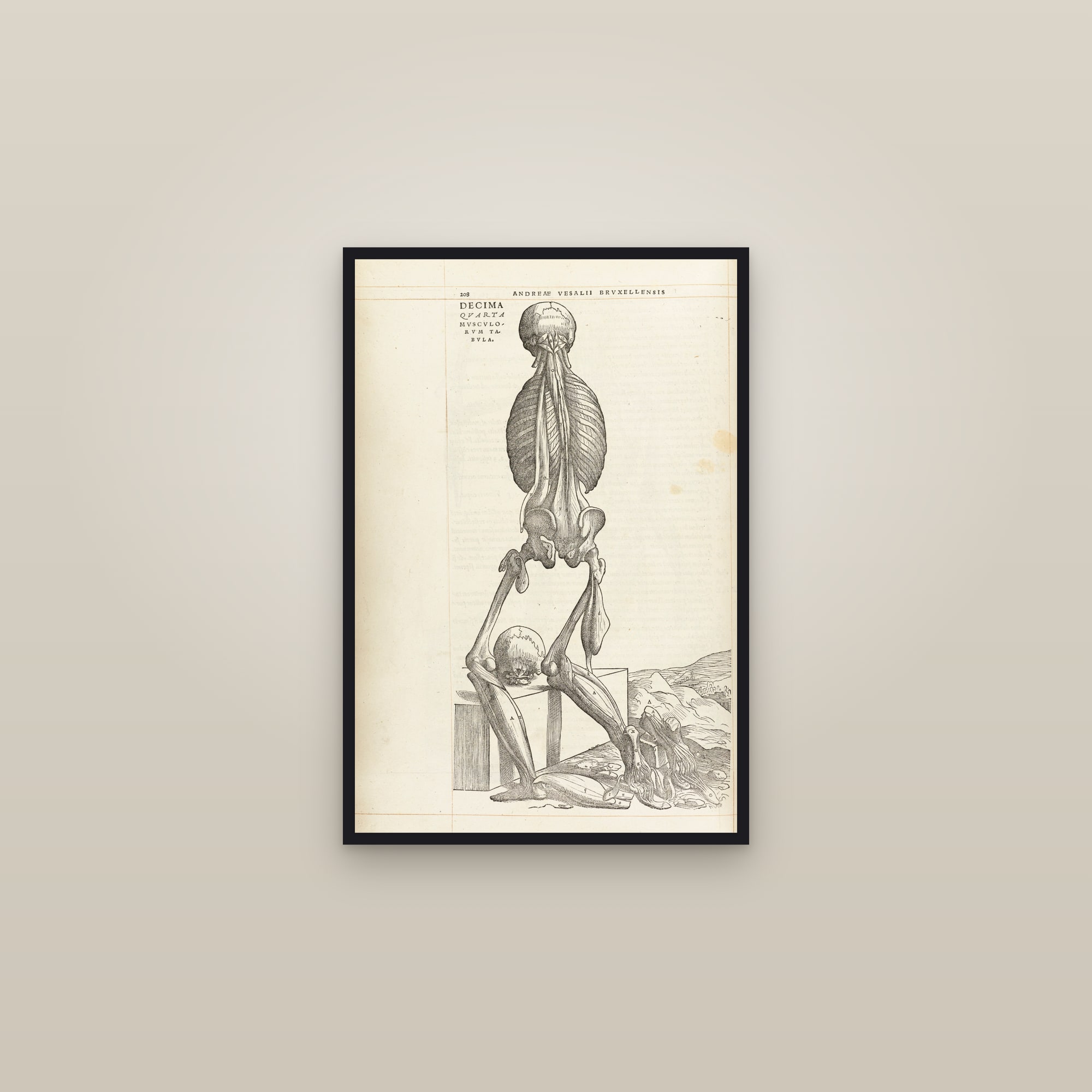
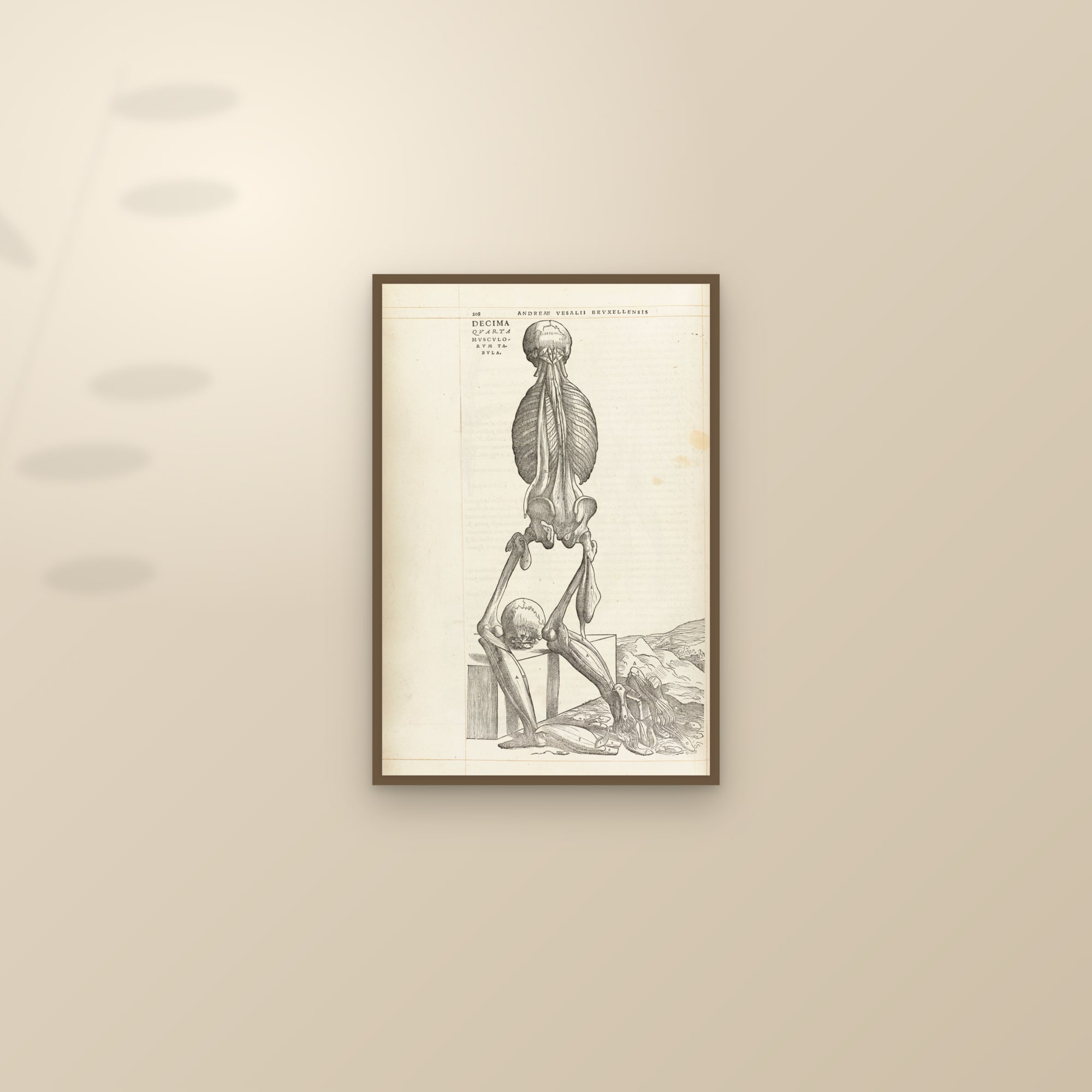
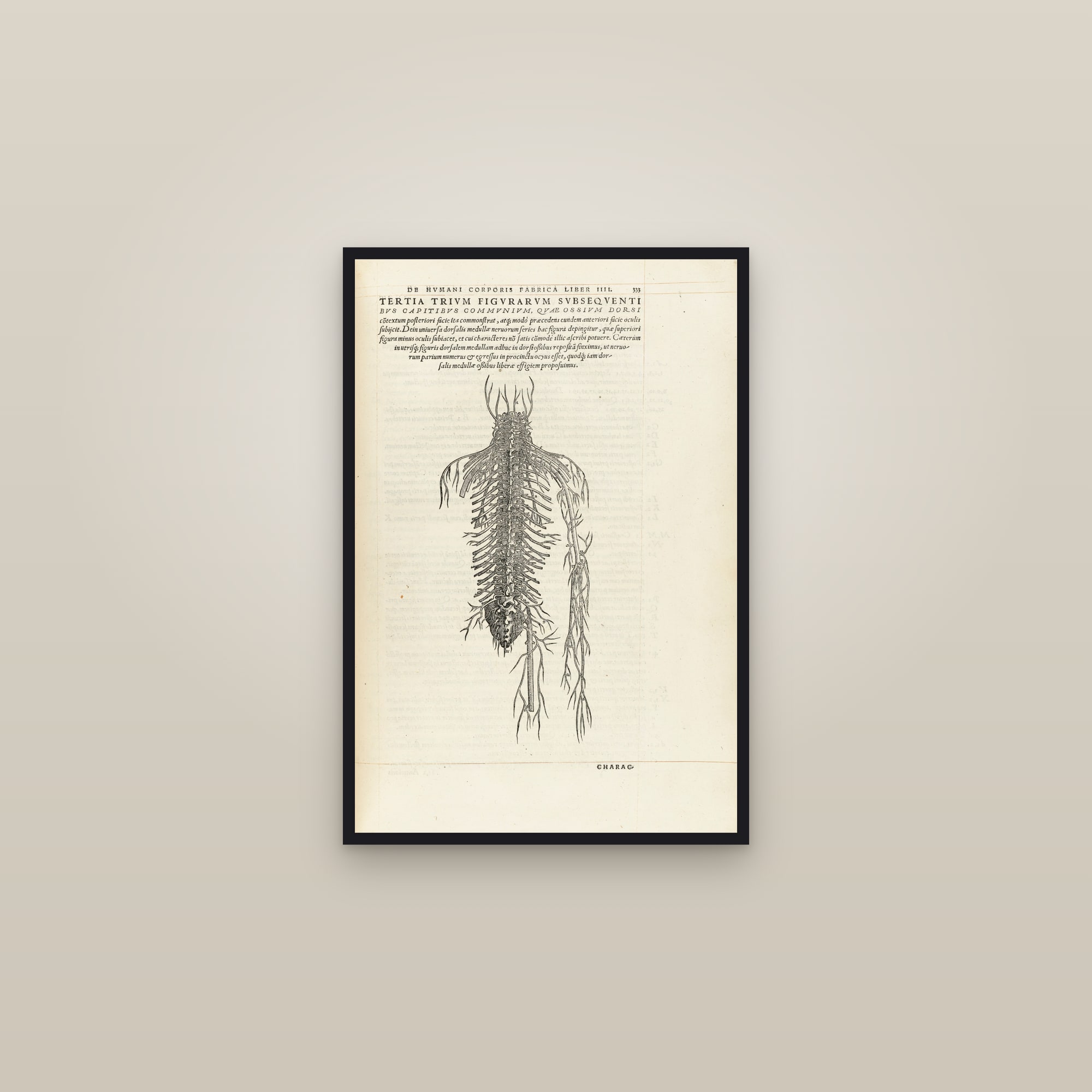
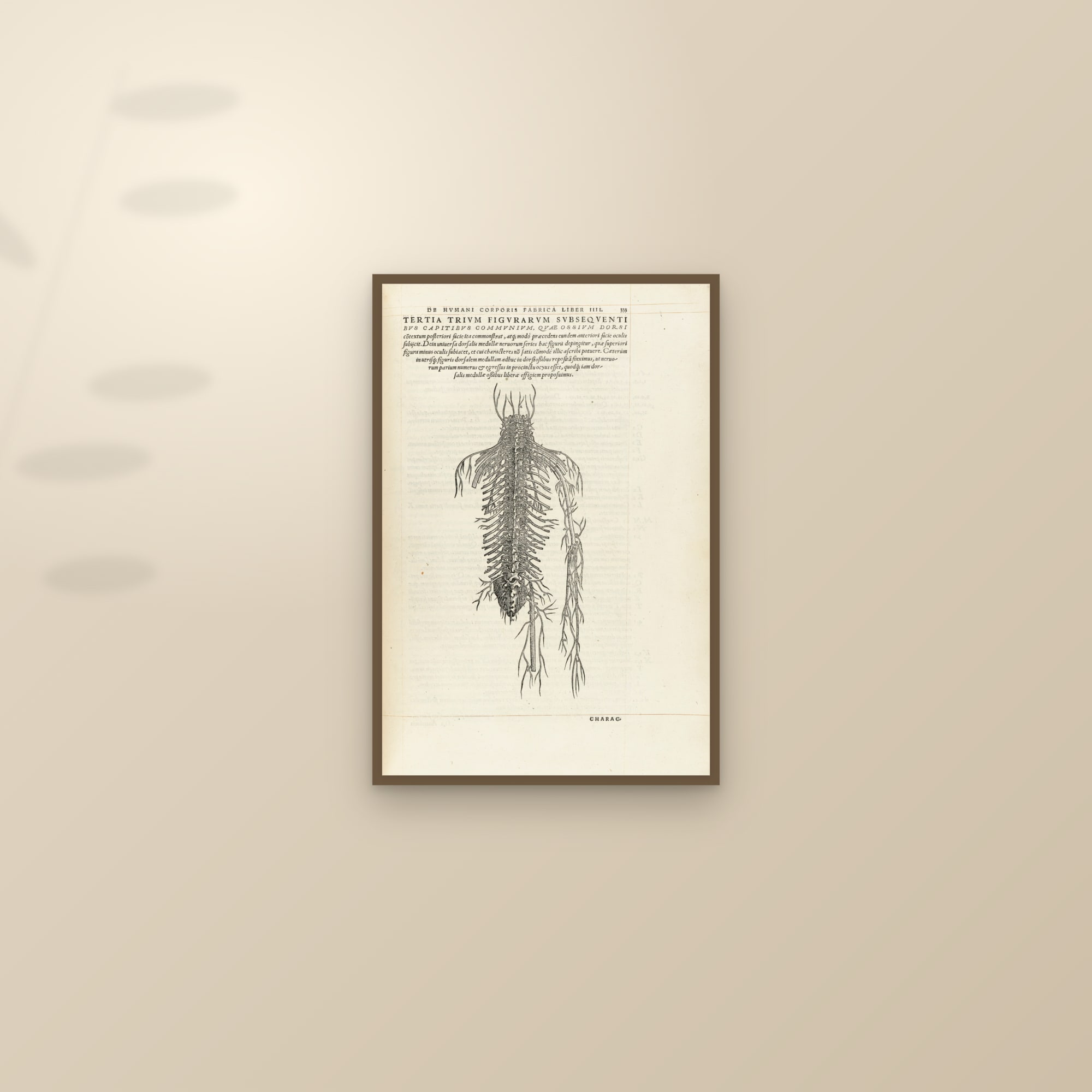
The plates a chiropractor, osteopath or spinal therapist hangs: the vertebral column in three views and the ligaments of the spine from Sobotta's 1919 atlas, the skeleton from the front, back and side by Albinus (1747), Vesalius (1543) and Eustachi (1714), the muscles of the back in superficial, second and deep layers, and Eustachi's spinal nerves seen from behind. Composed as wall art, so they hang in a treatment room without reading as a chart.
33 prints · printed to order on heavyweight matte paper · framed or unframed
What to hang in a treatment room
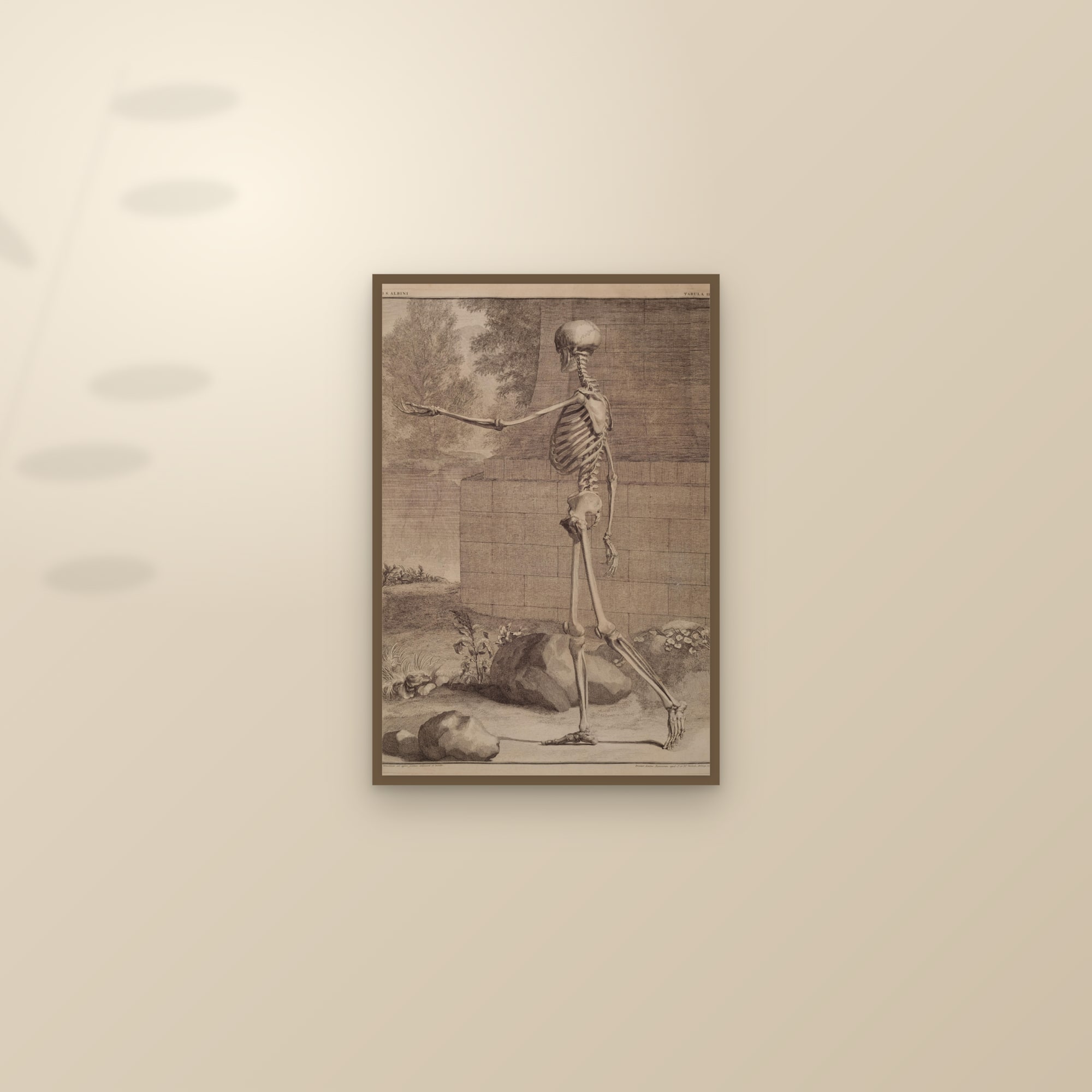
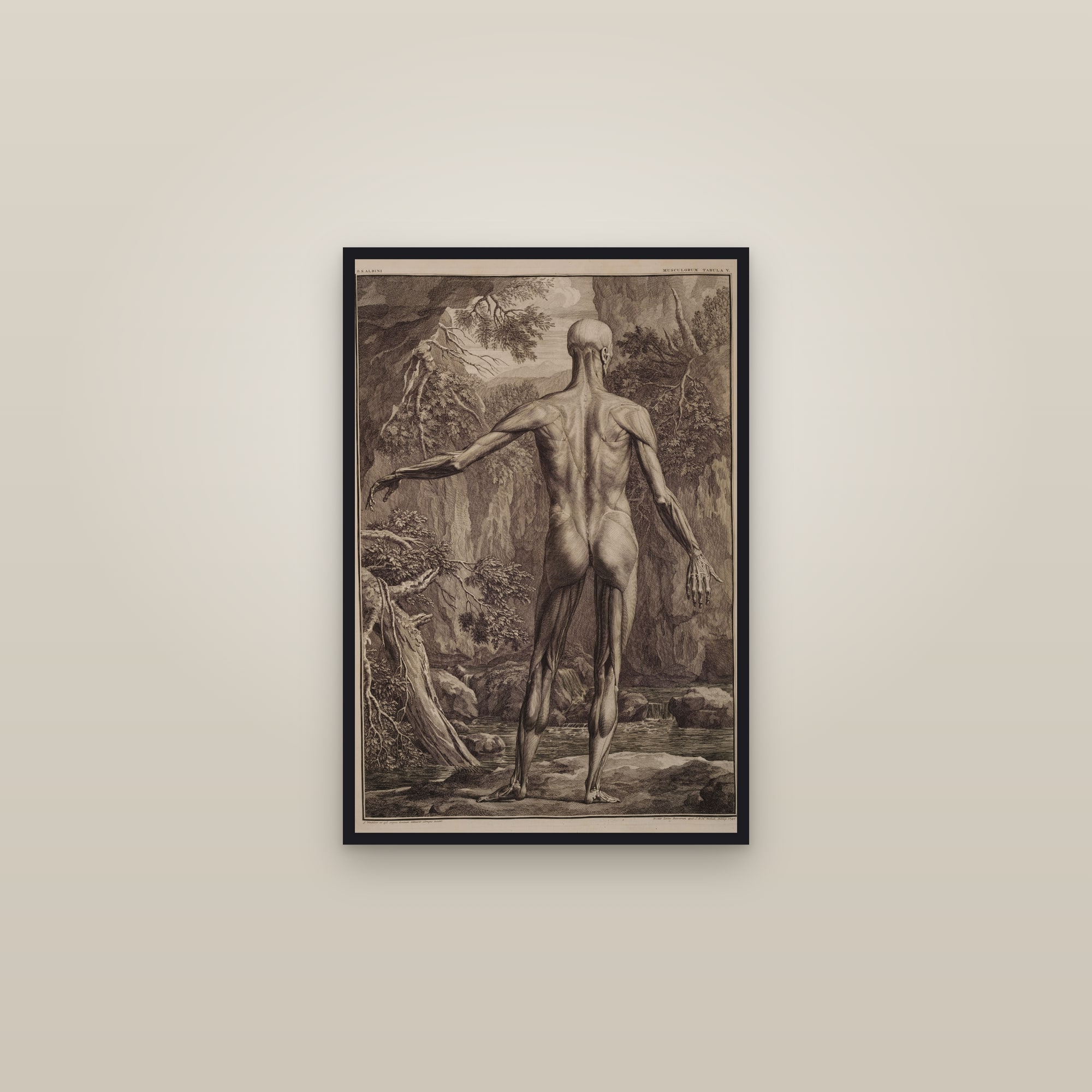
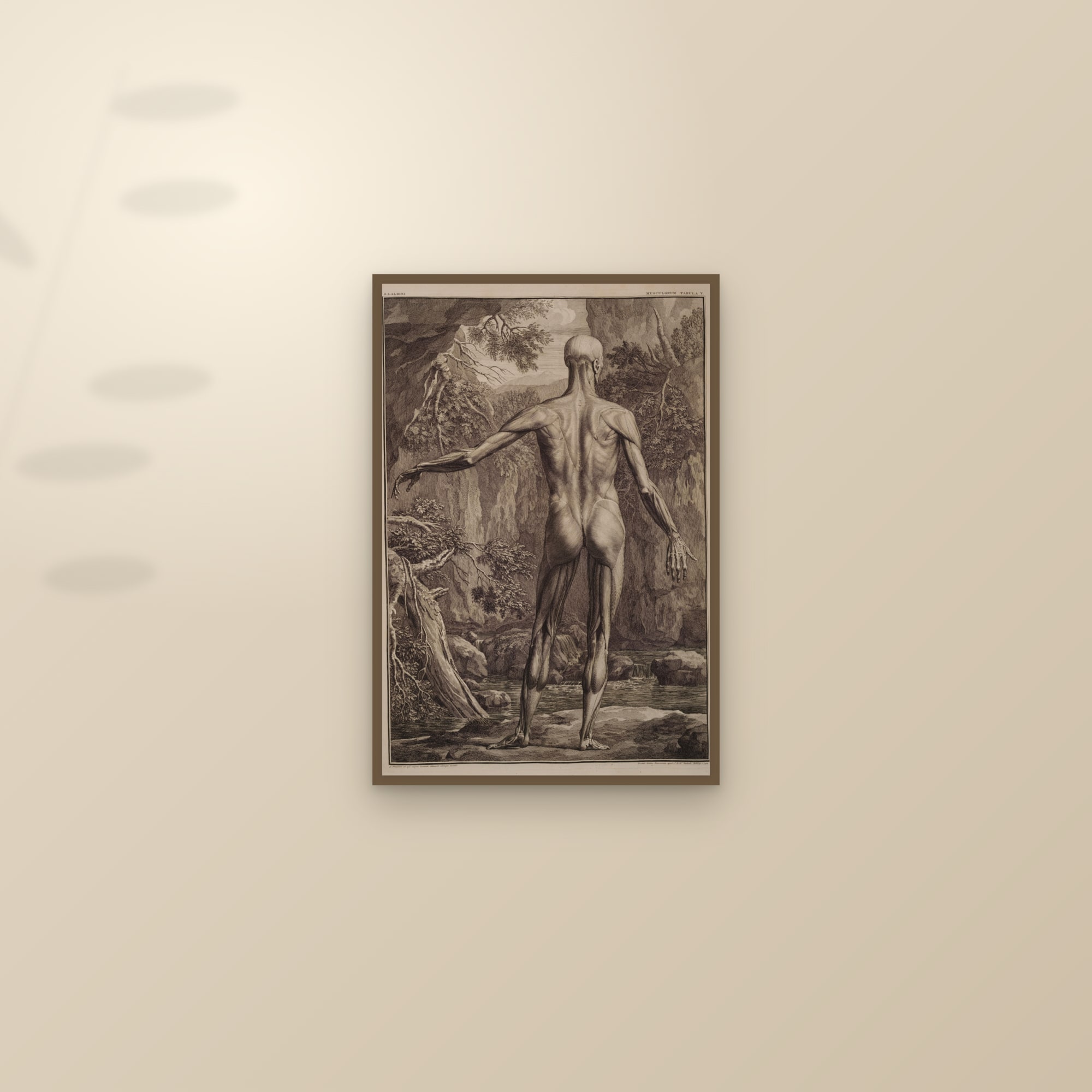
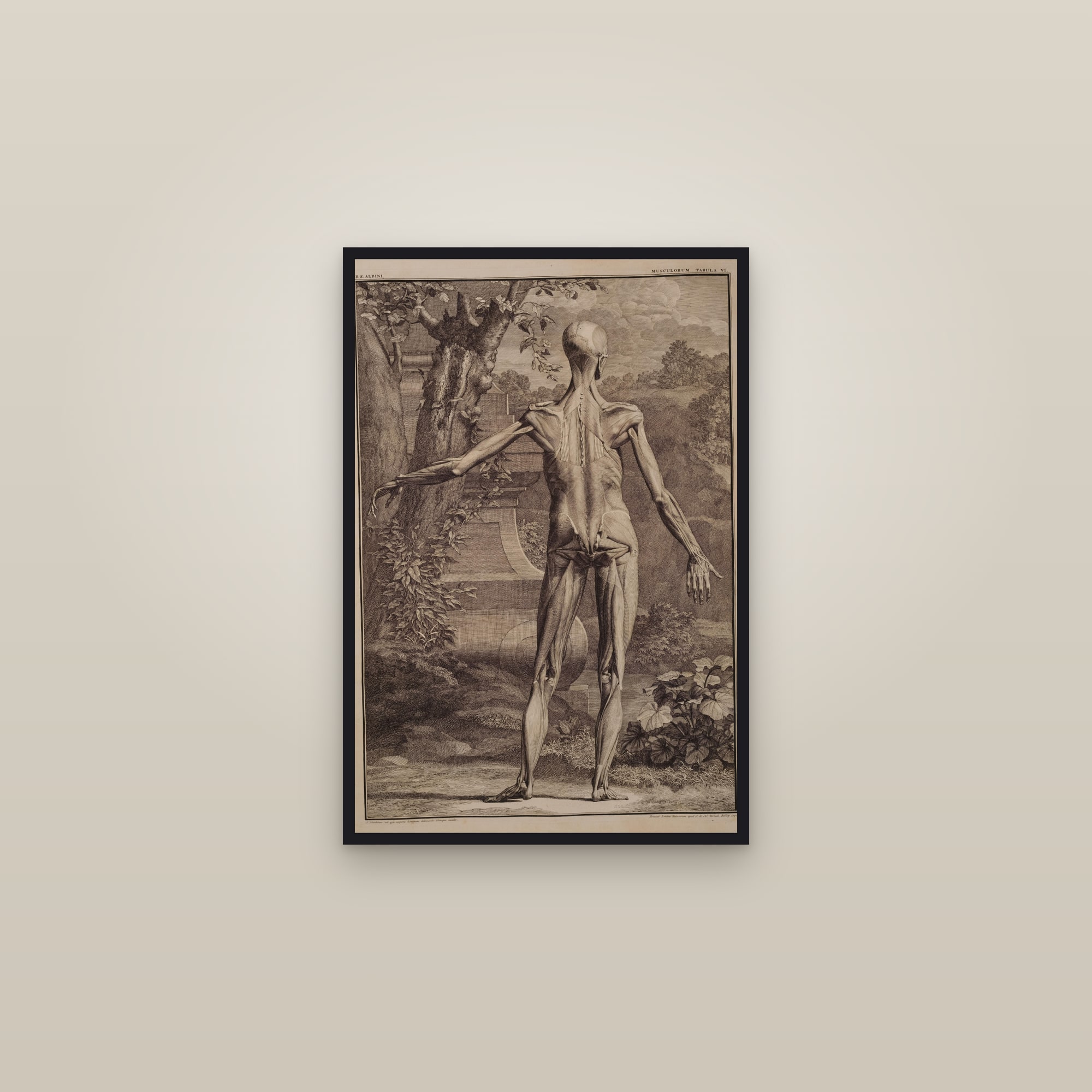
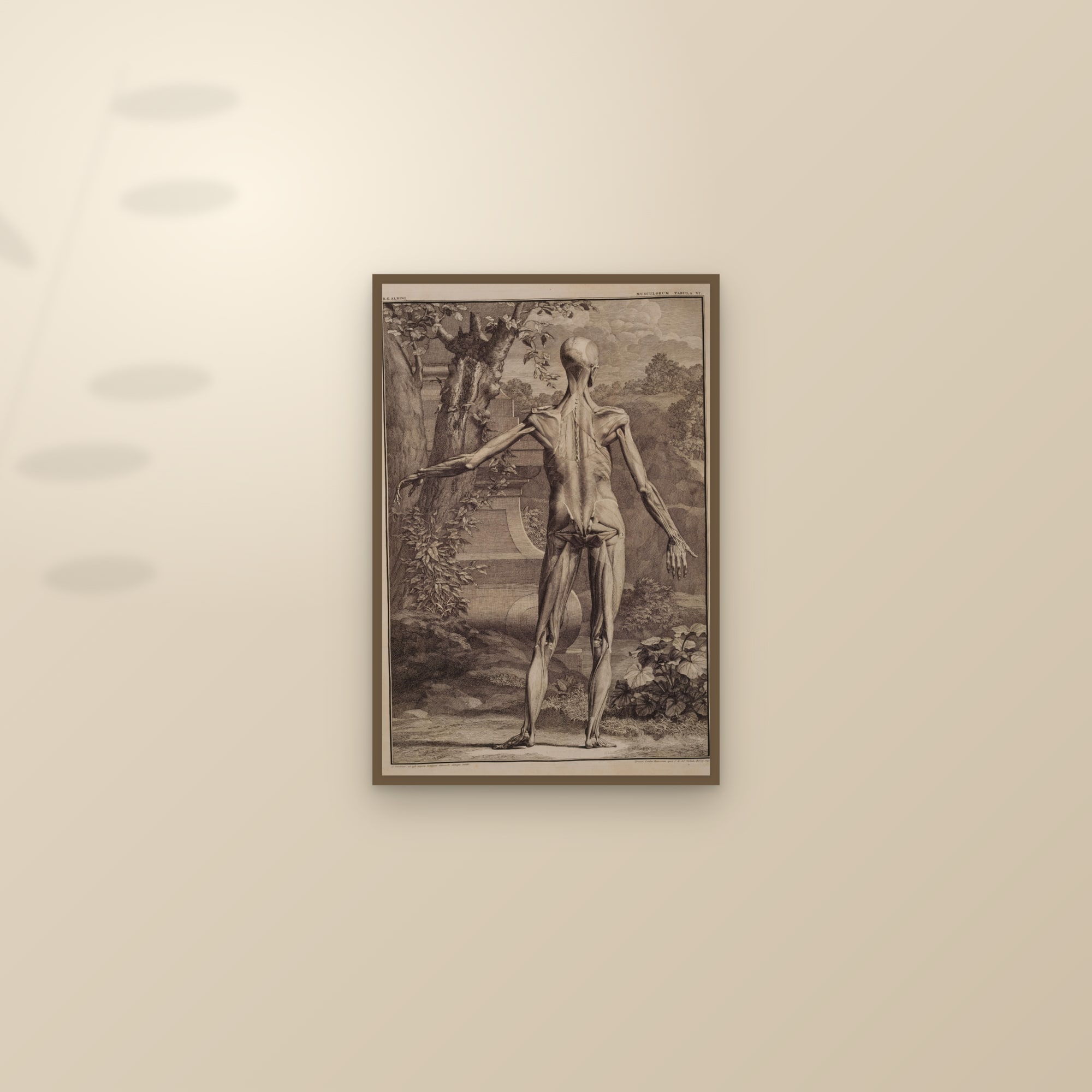
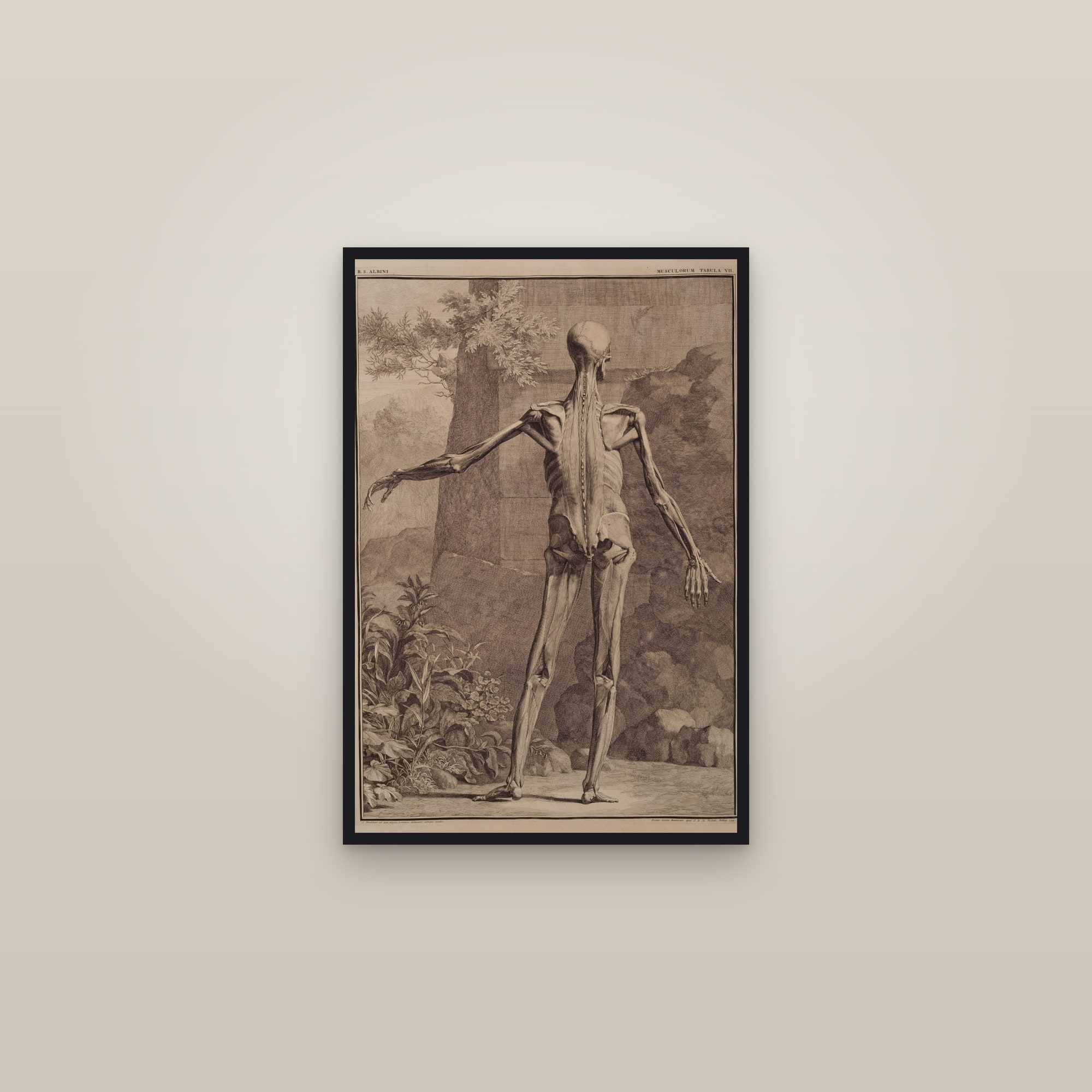
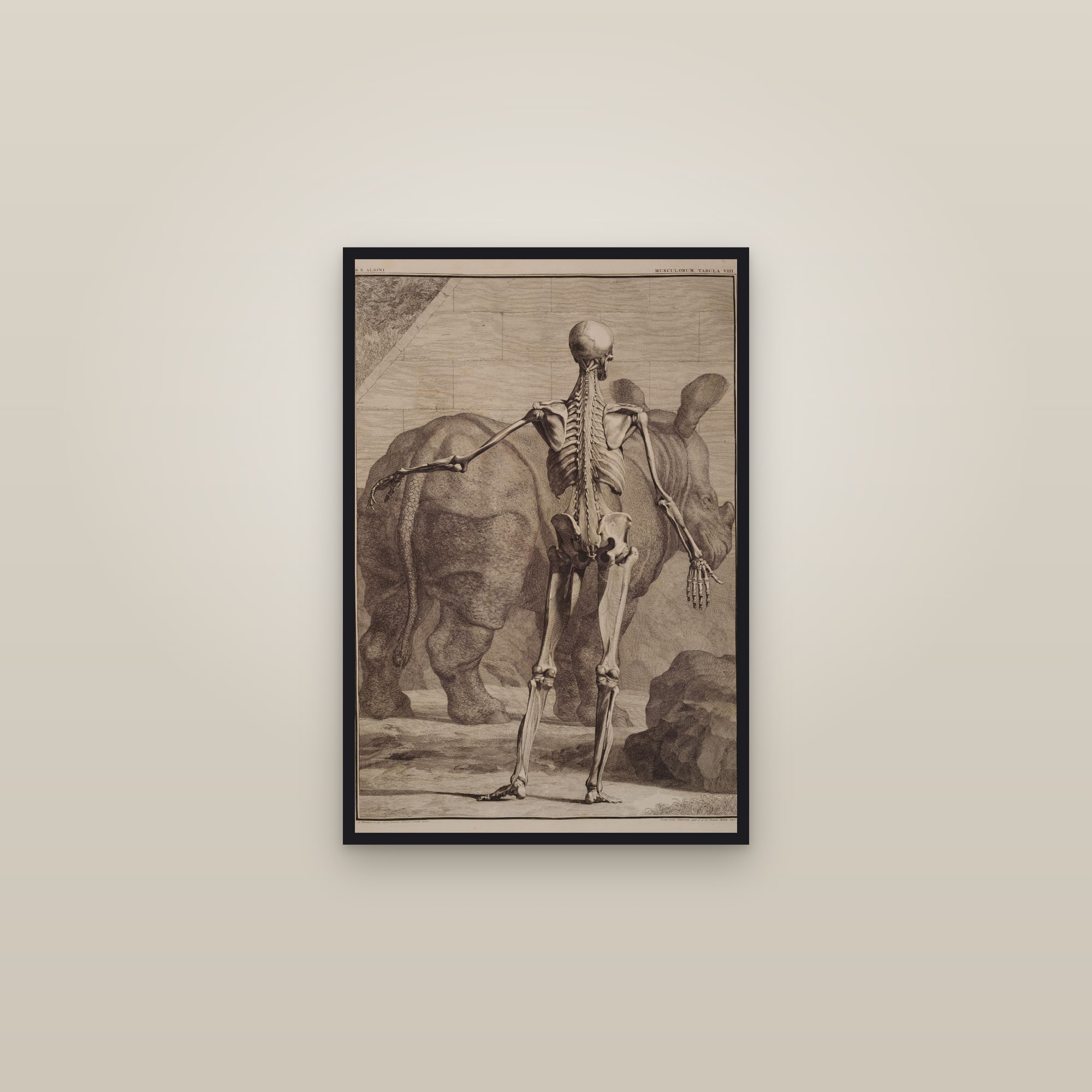
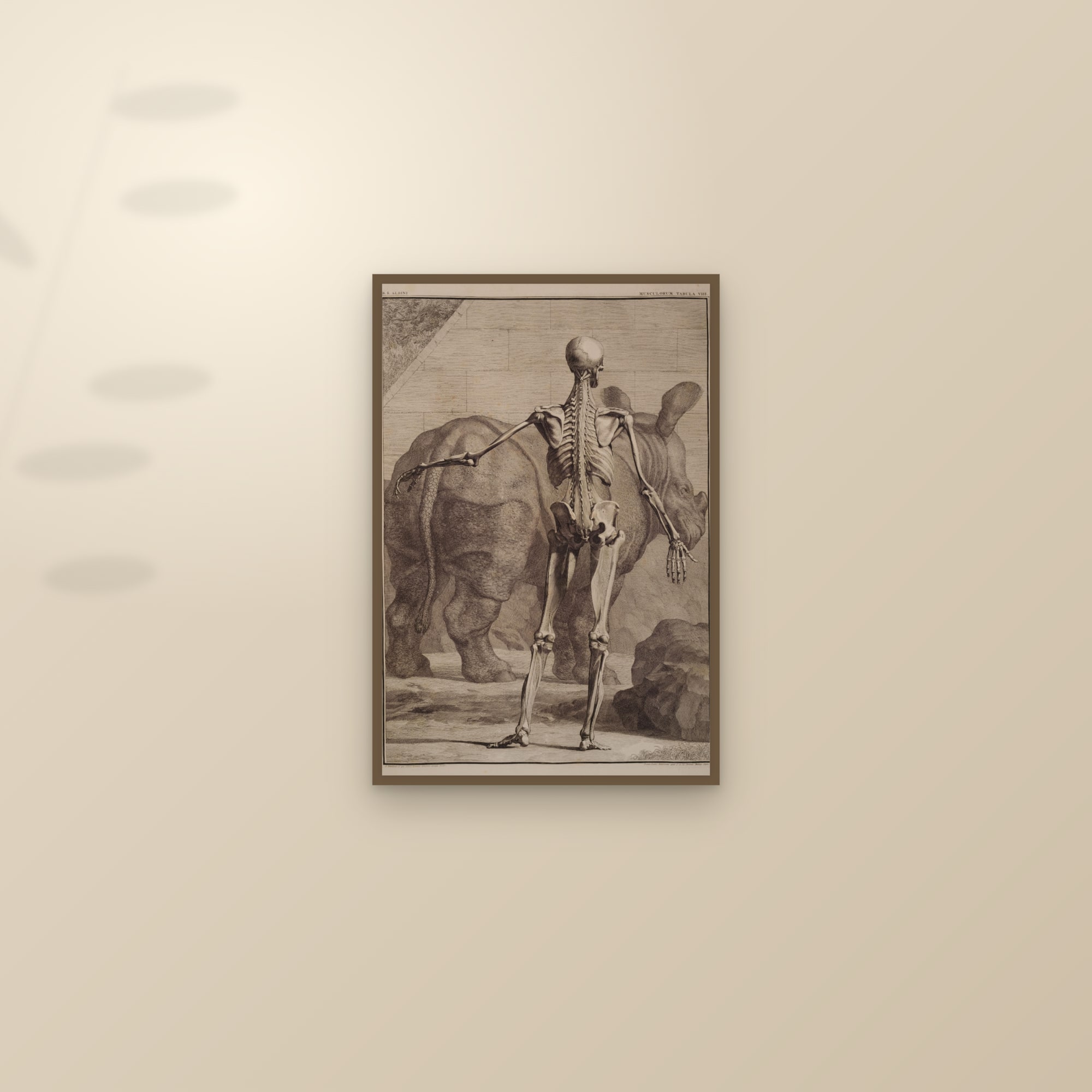
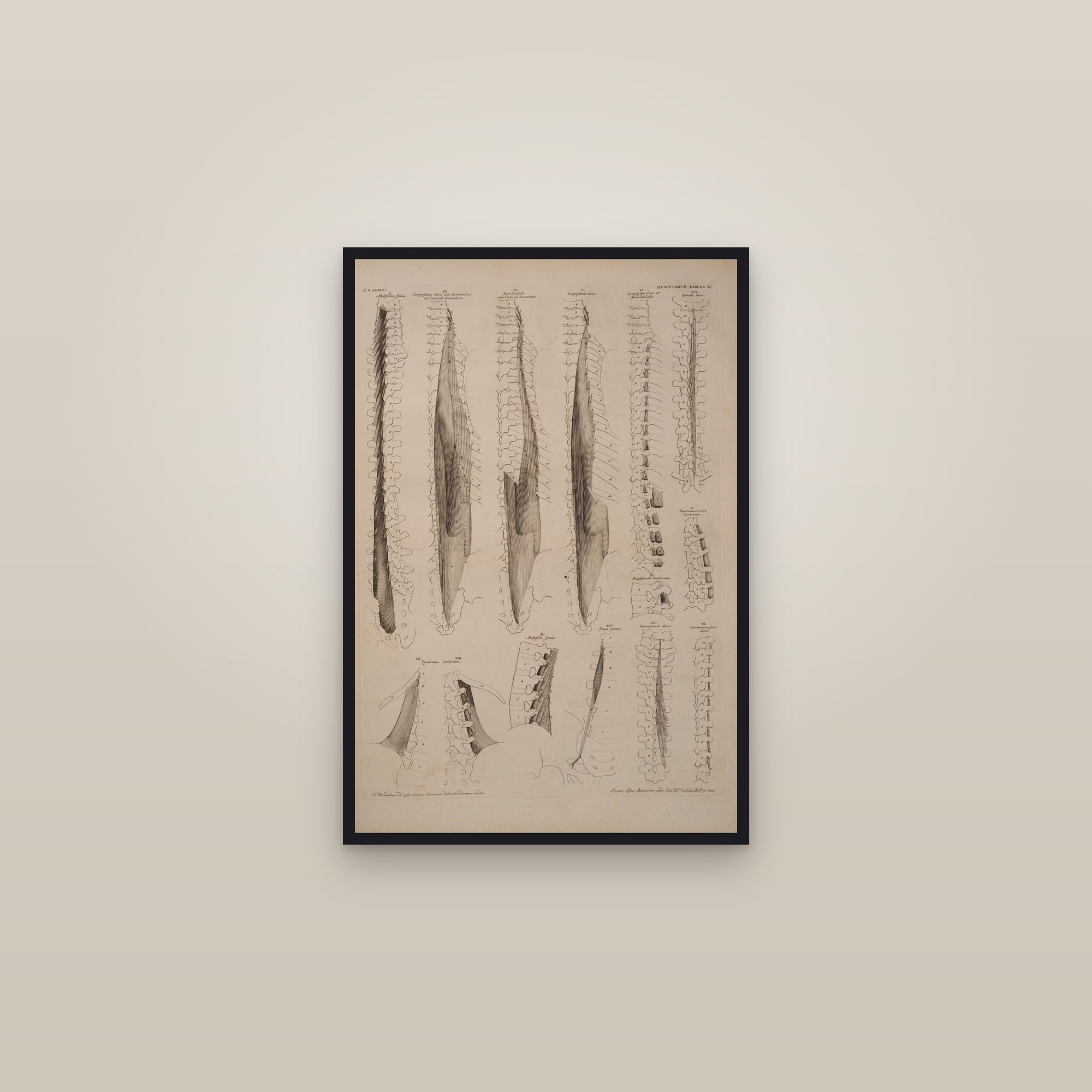
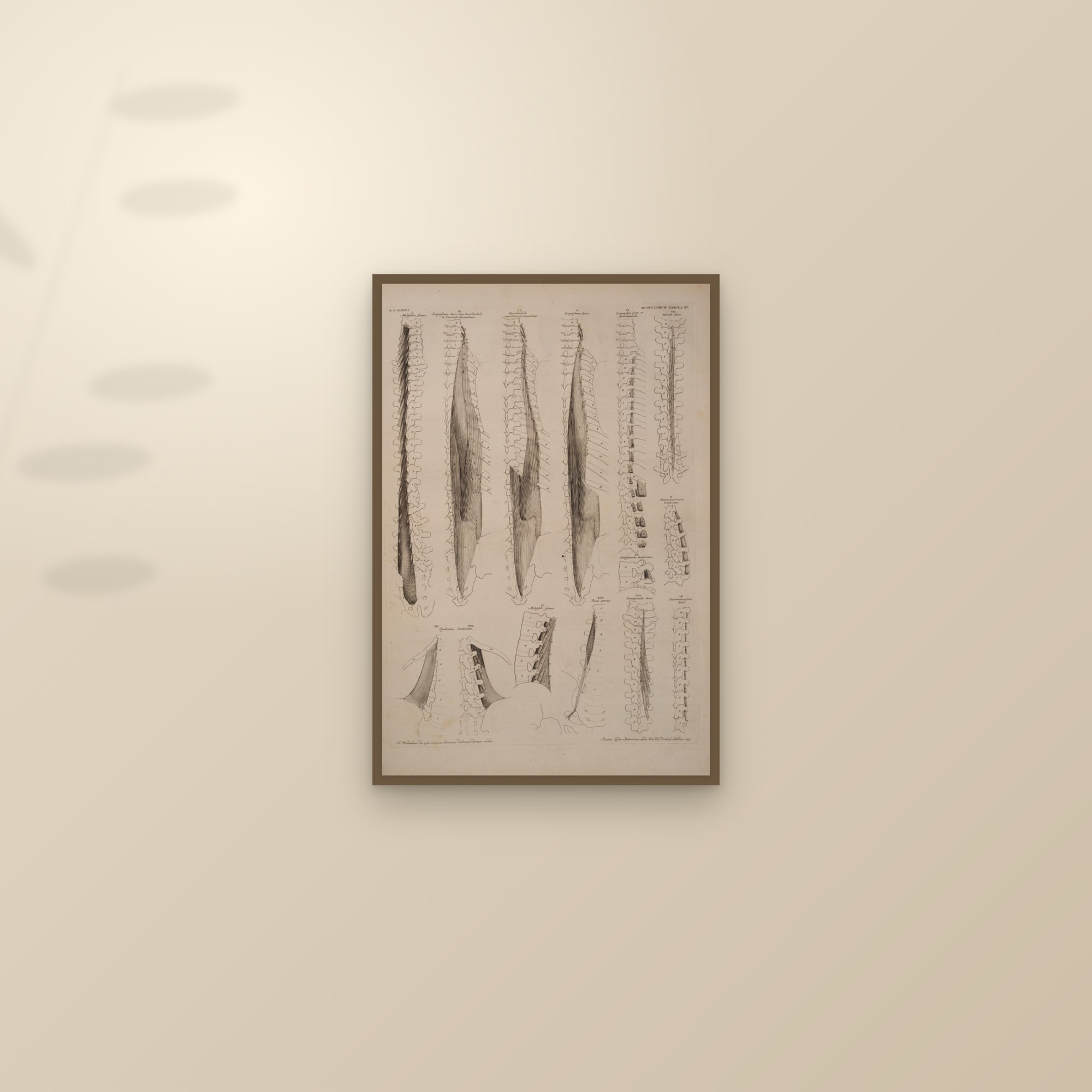
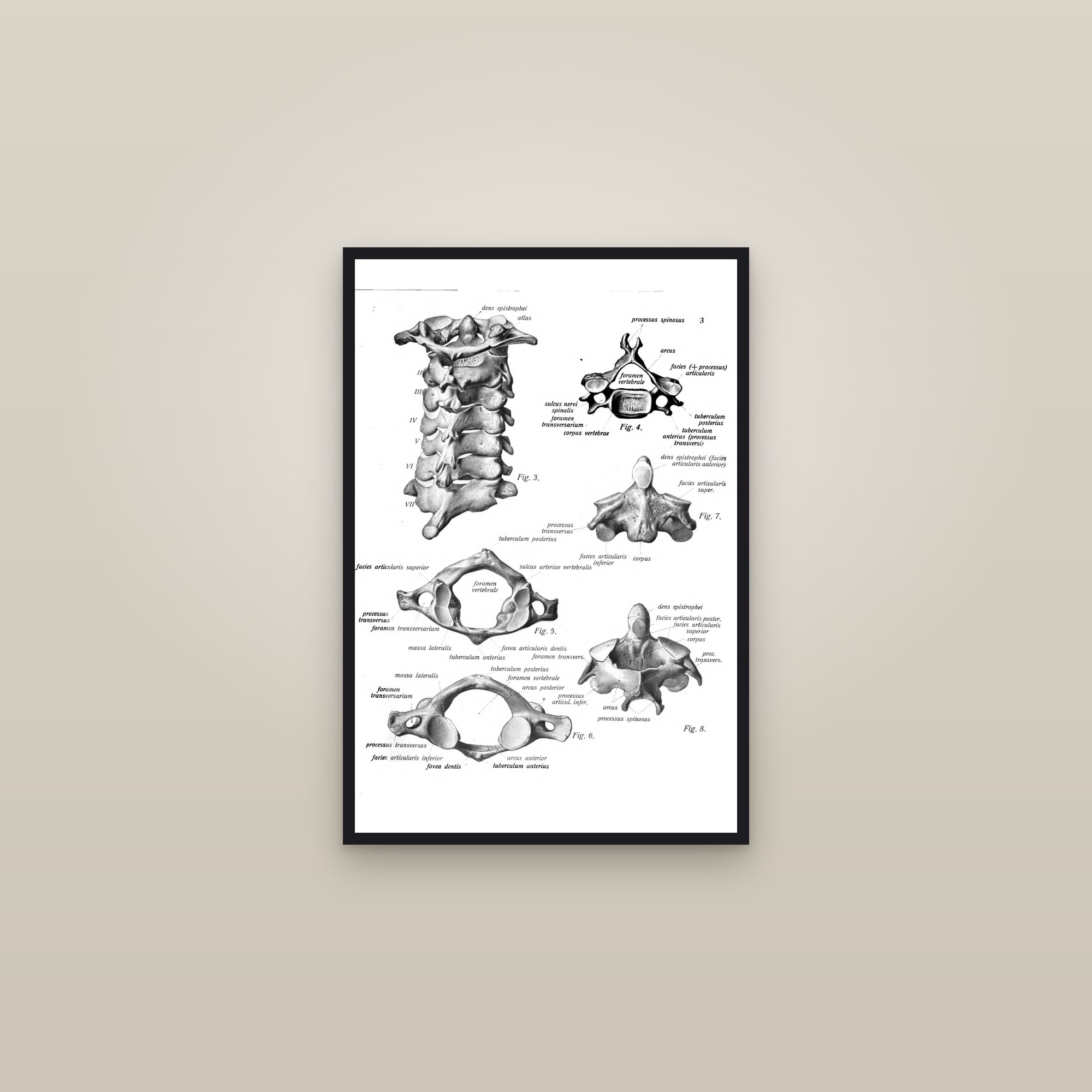
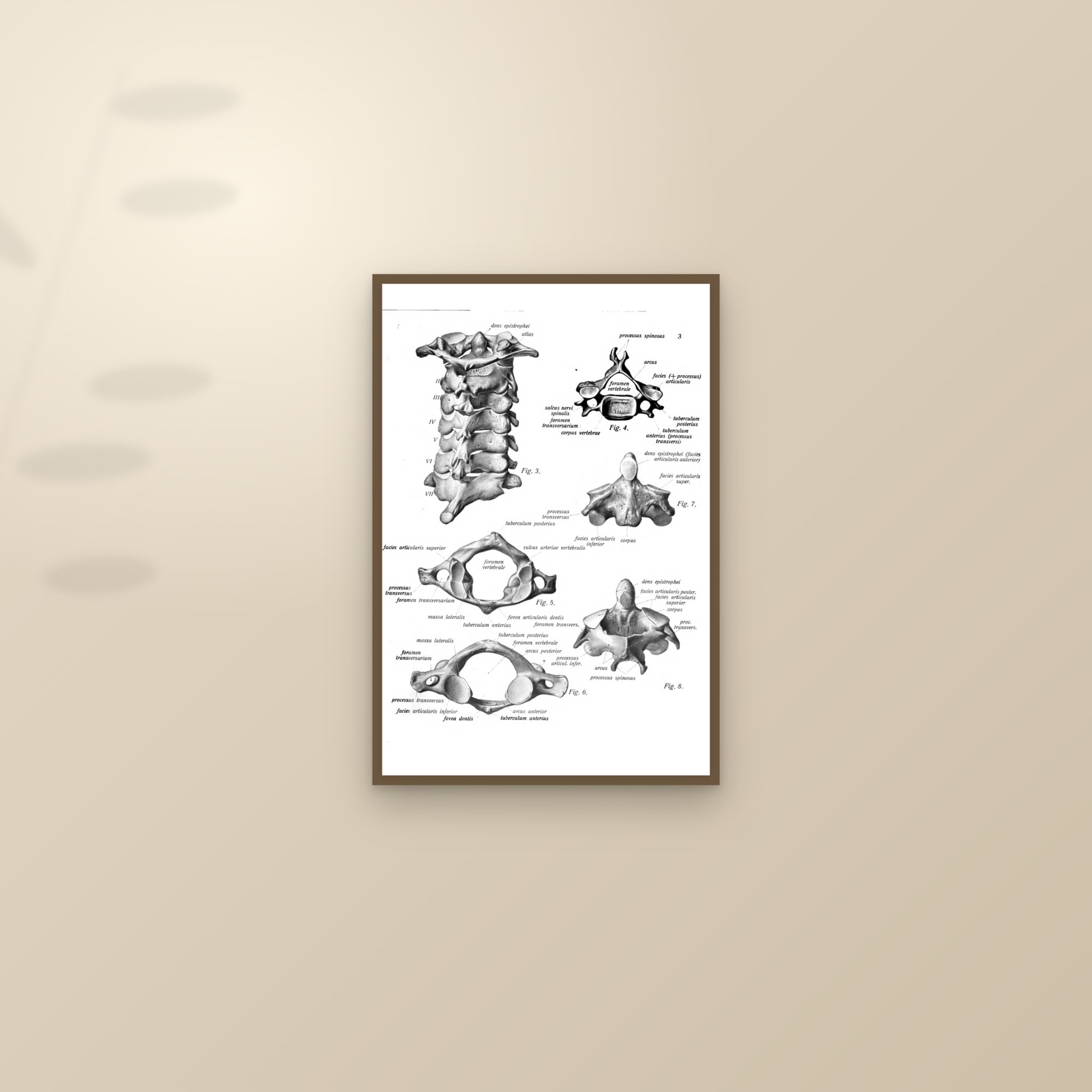
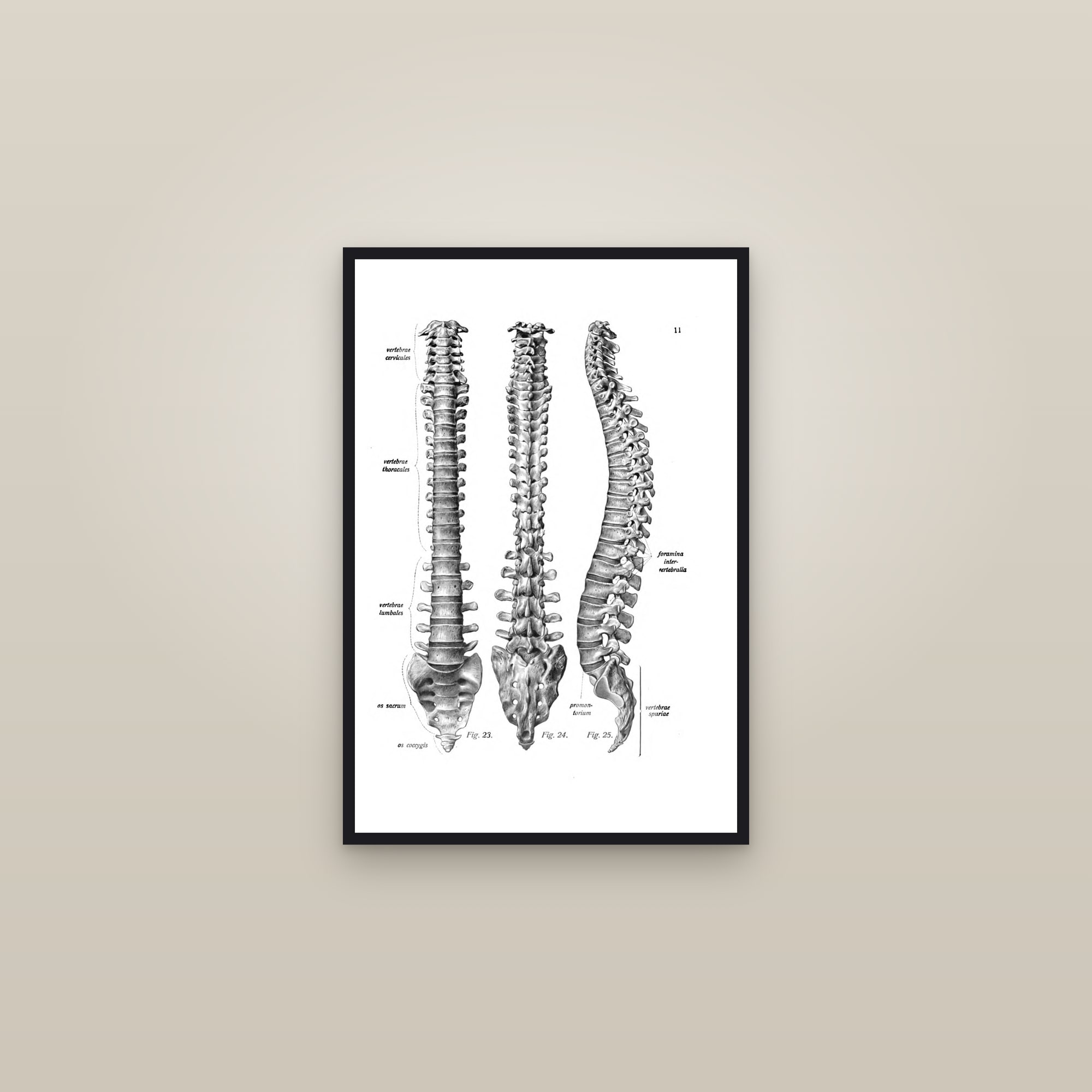
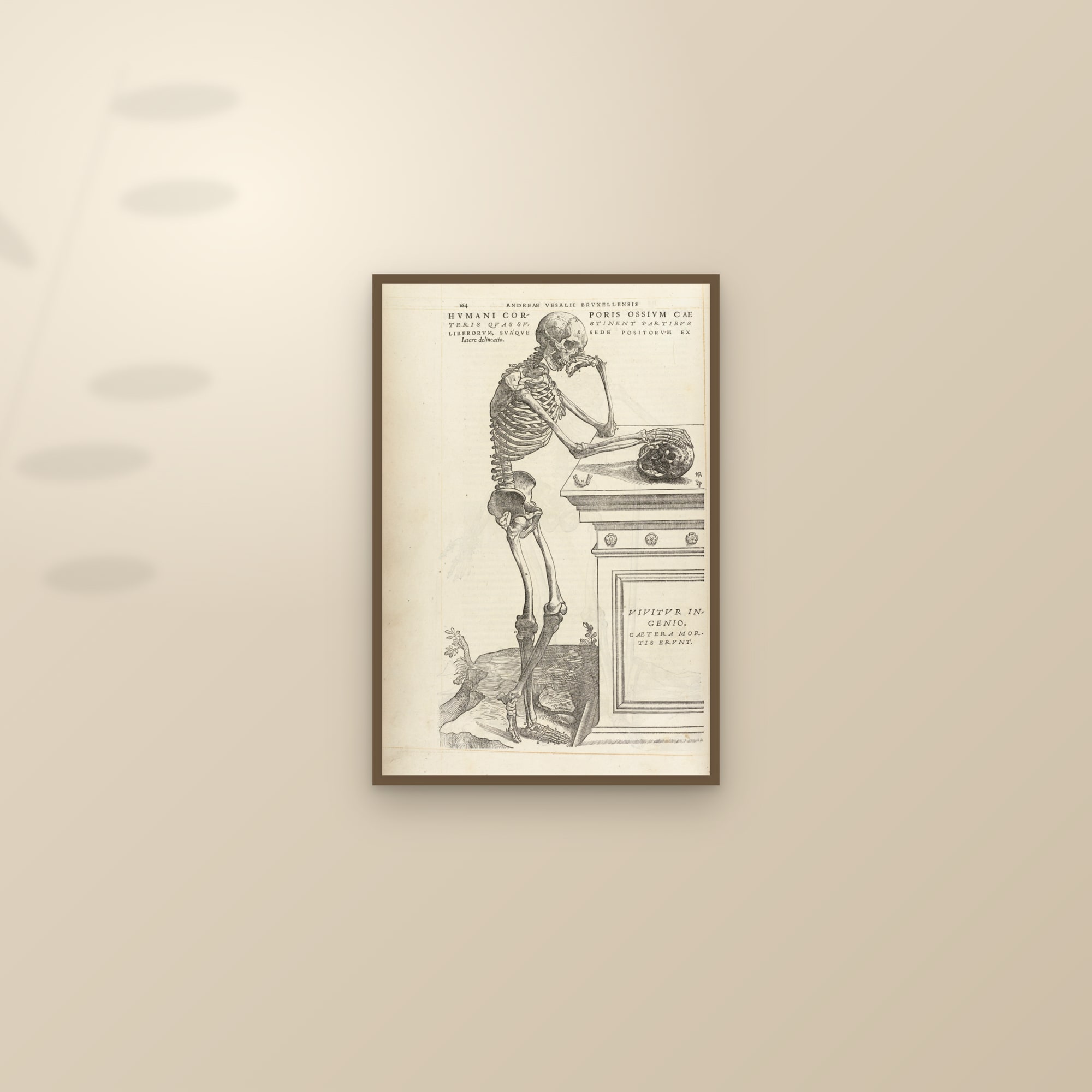
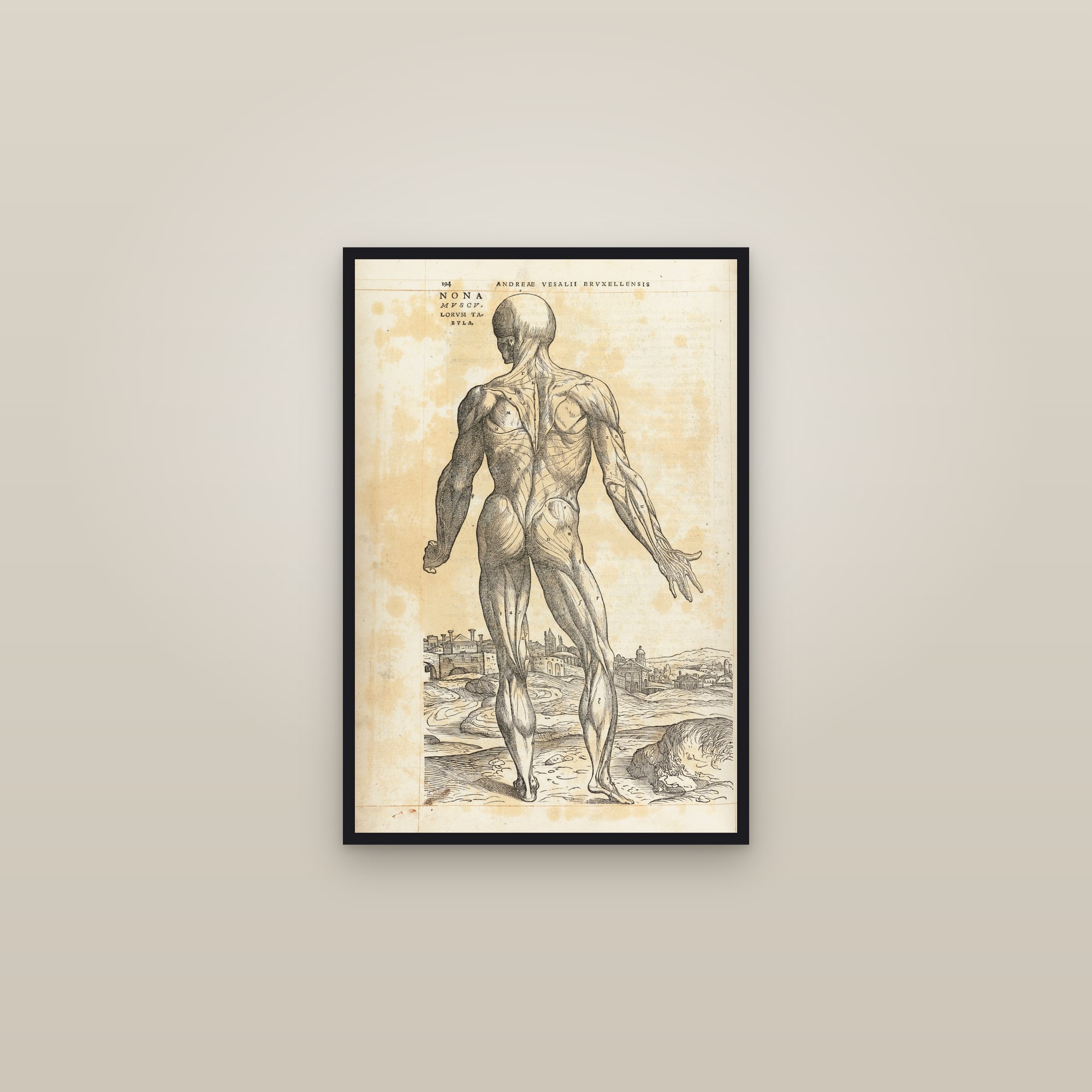
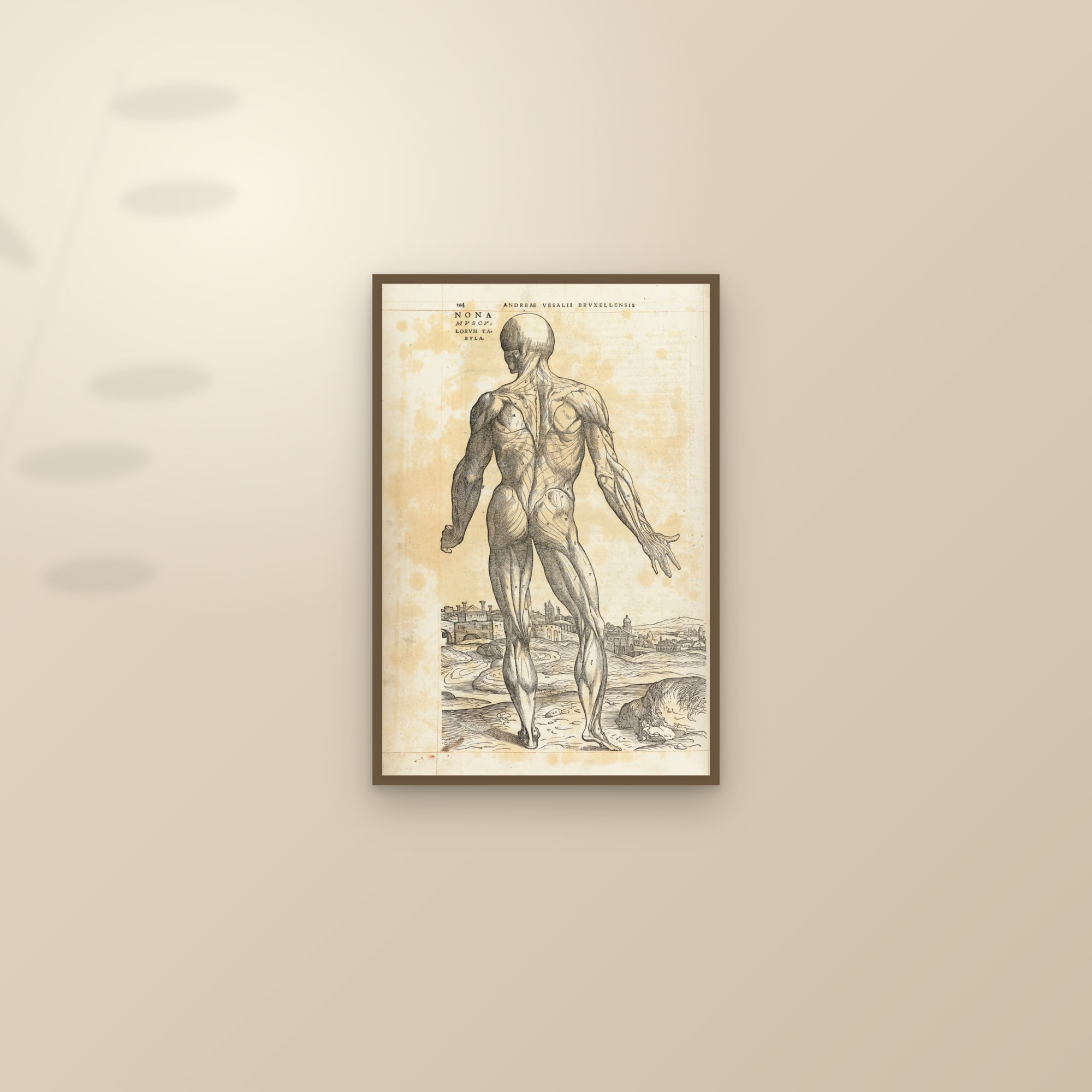
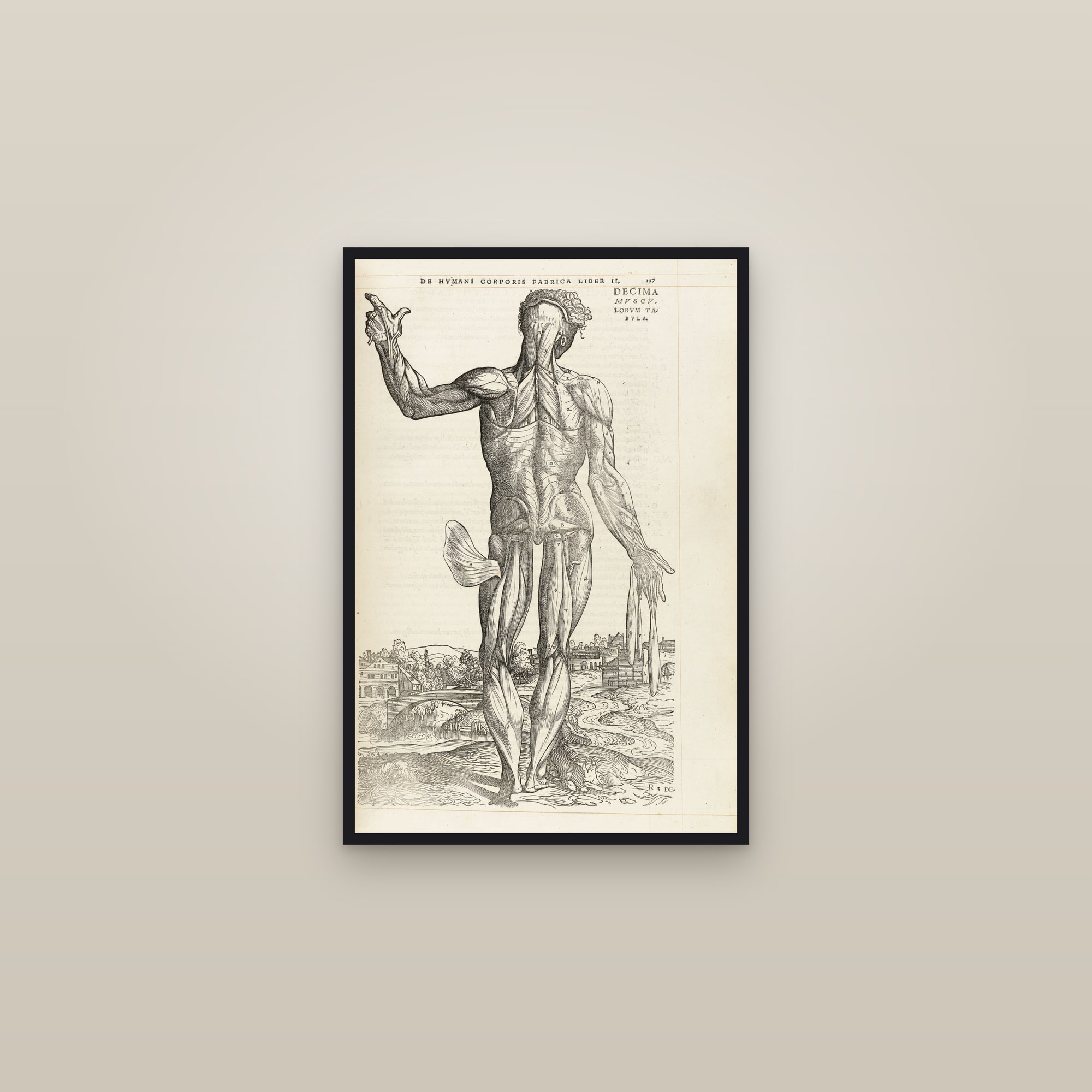
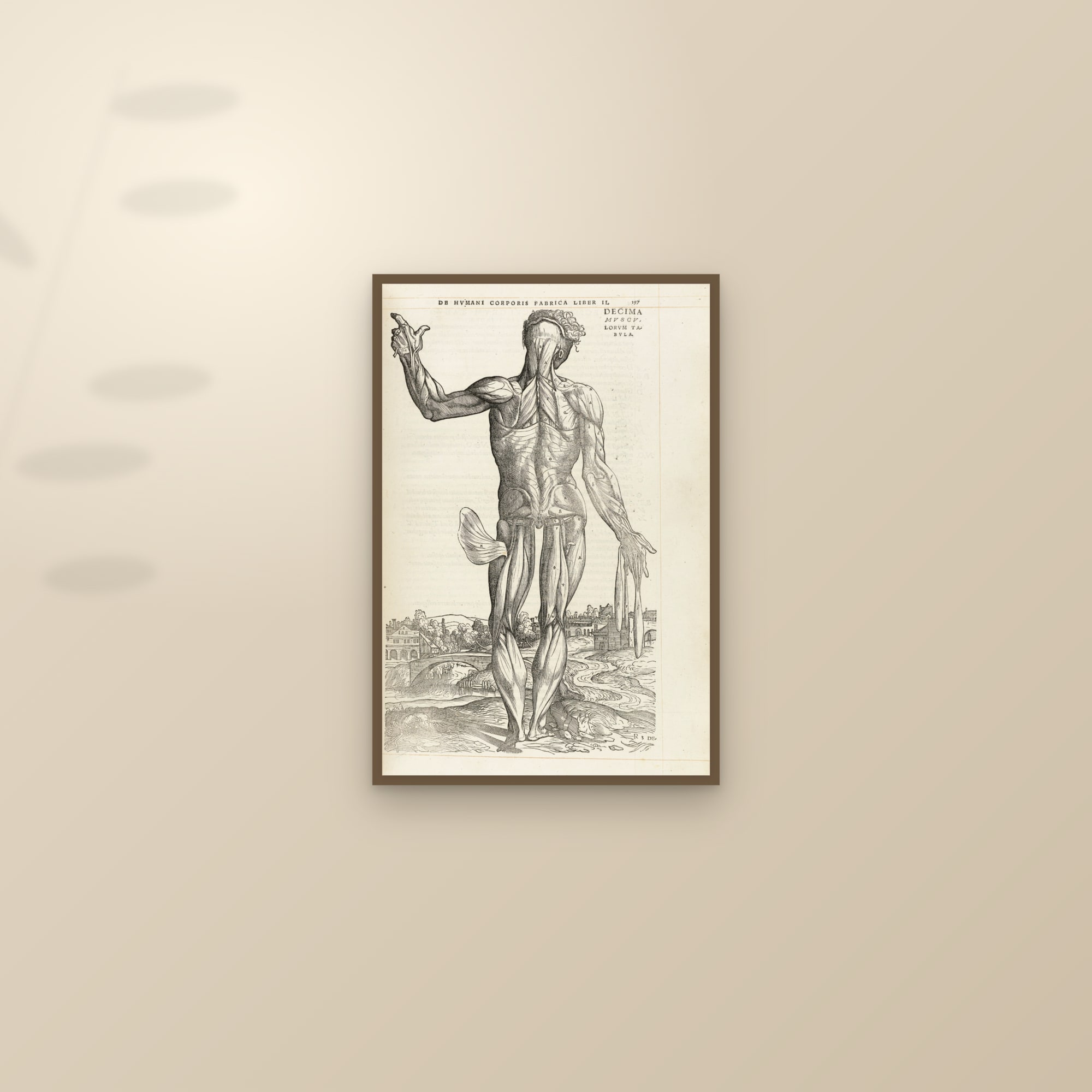
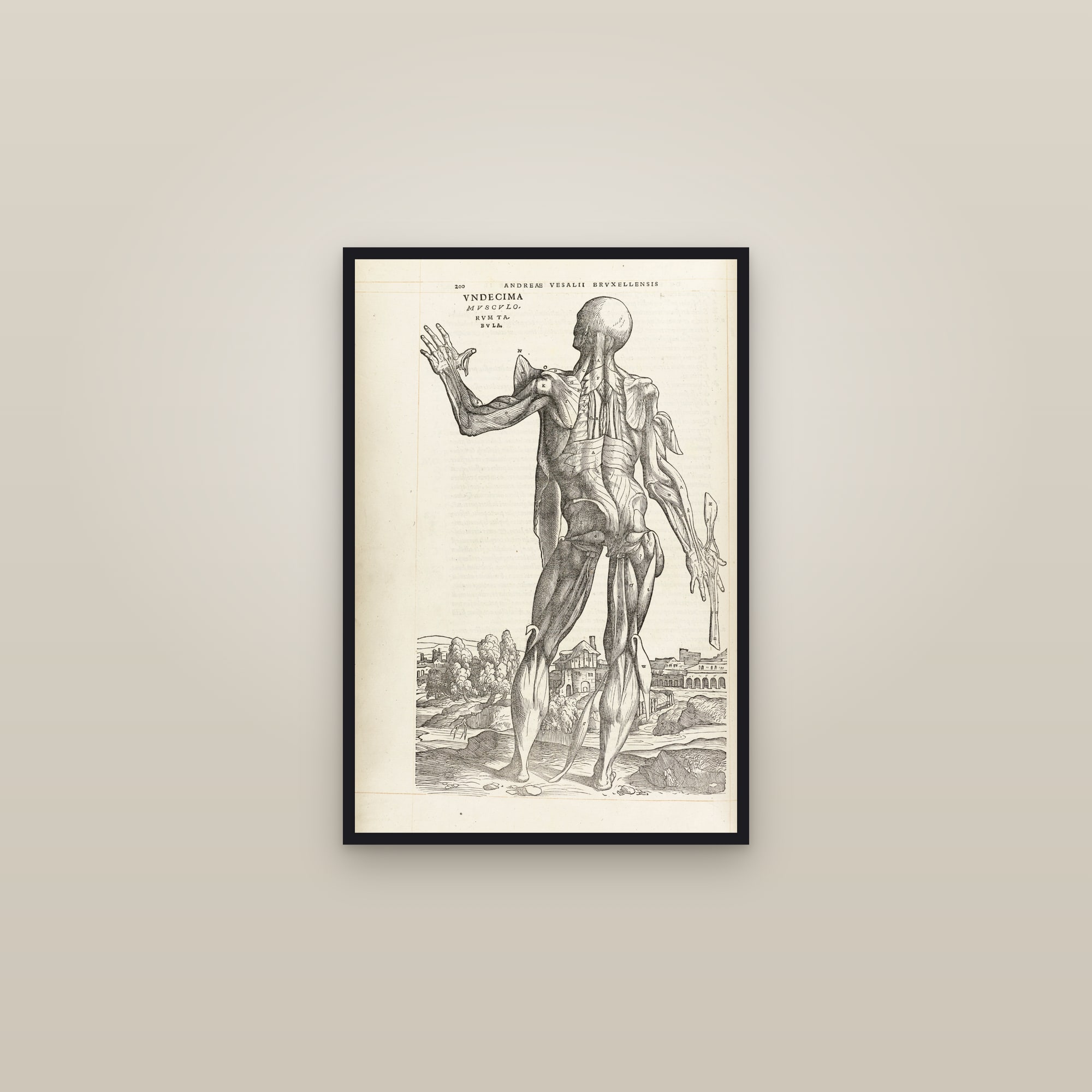
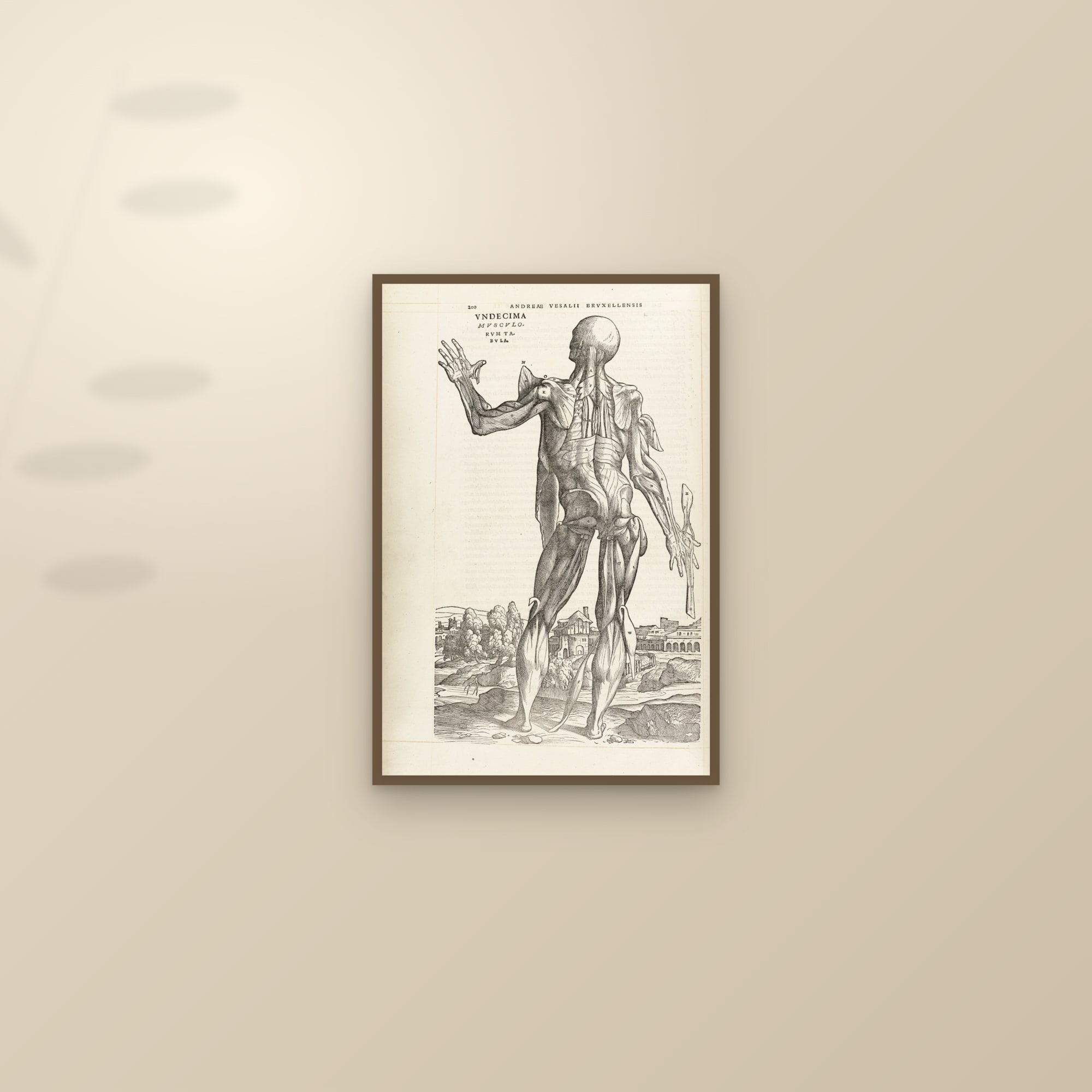
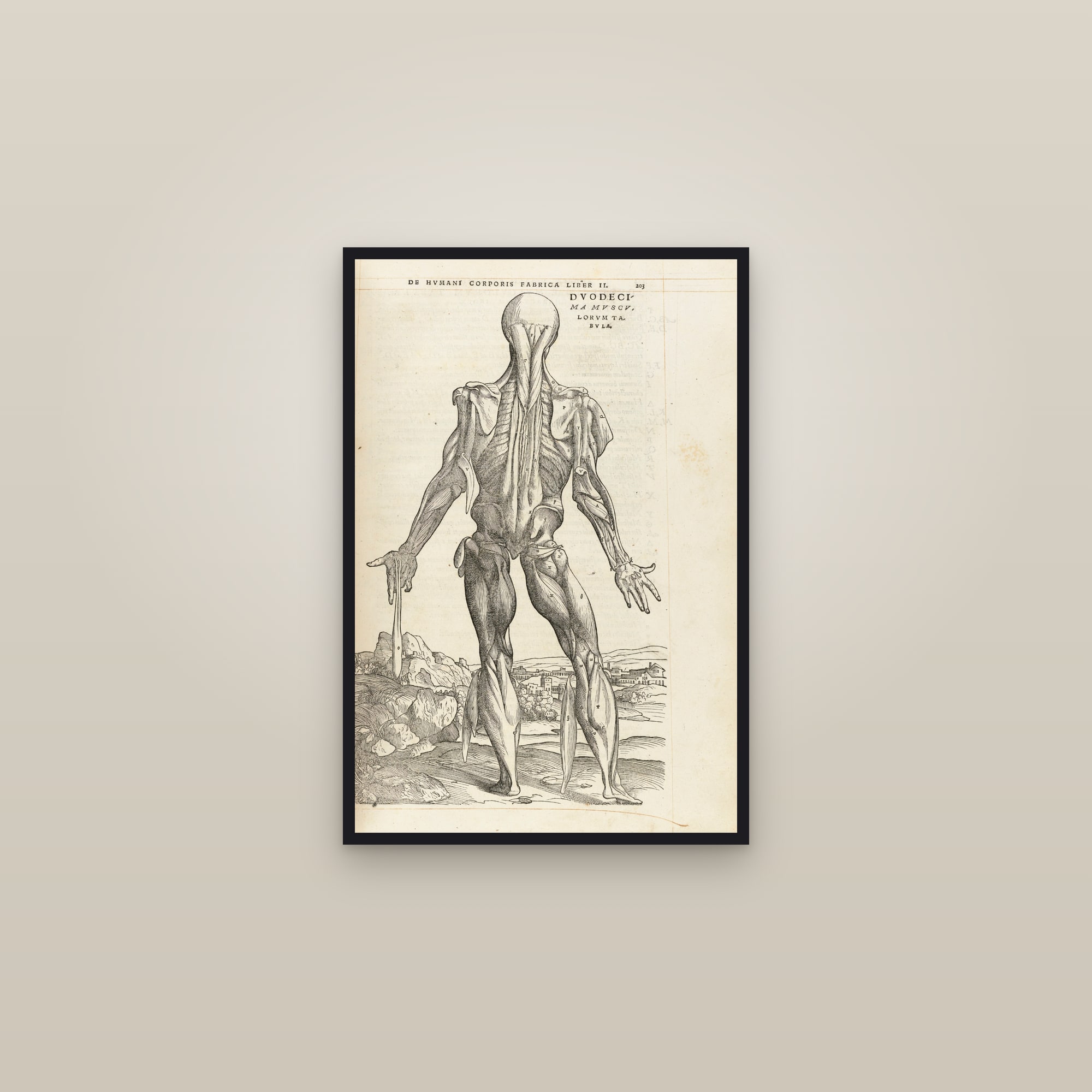
The three-view vertebral column is the plate most practices start with, hung at 24×36 where the patient on the table can see it; the cervical vertebrae and the ligaments of the spine beside it explain the two most common consultations. For the waiting room, a full skeleton, Albinus's back view in its landscape or Vesalius's skeleton leaning on a spade, reads as art first and anatomy second. The back-muscle plates, Sobotta's three layers or Albinus's deep muscles of the spine, suit the room where soft-tissue work is done.
The atlases behind them
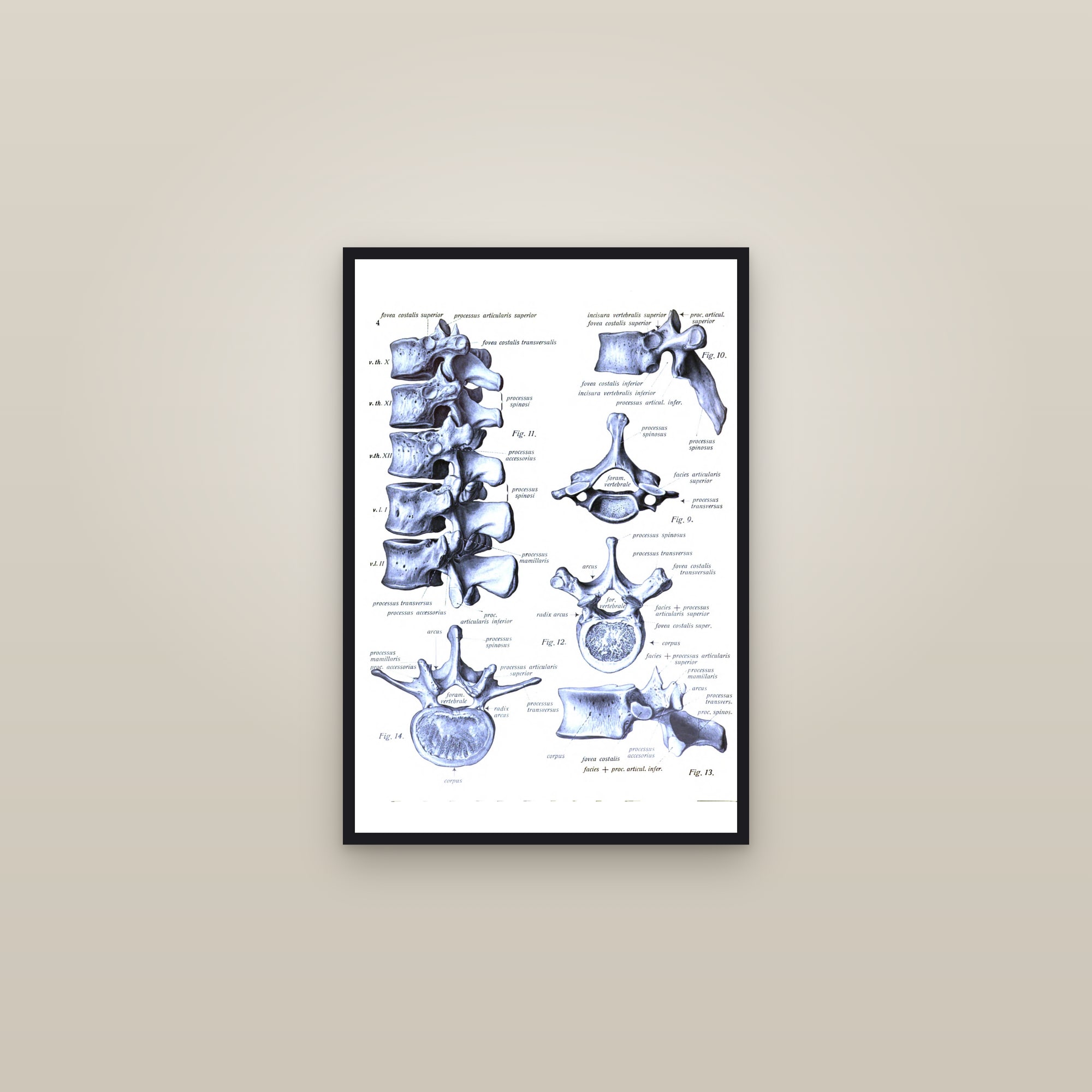
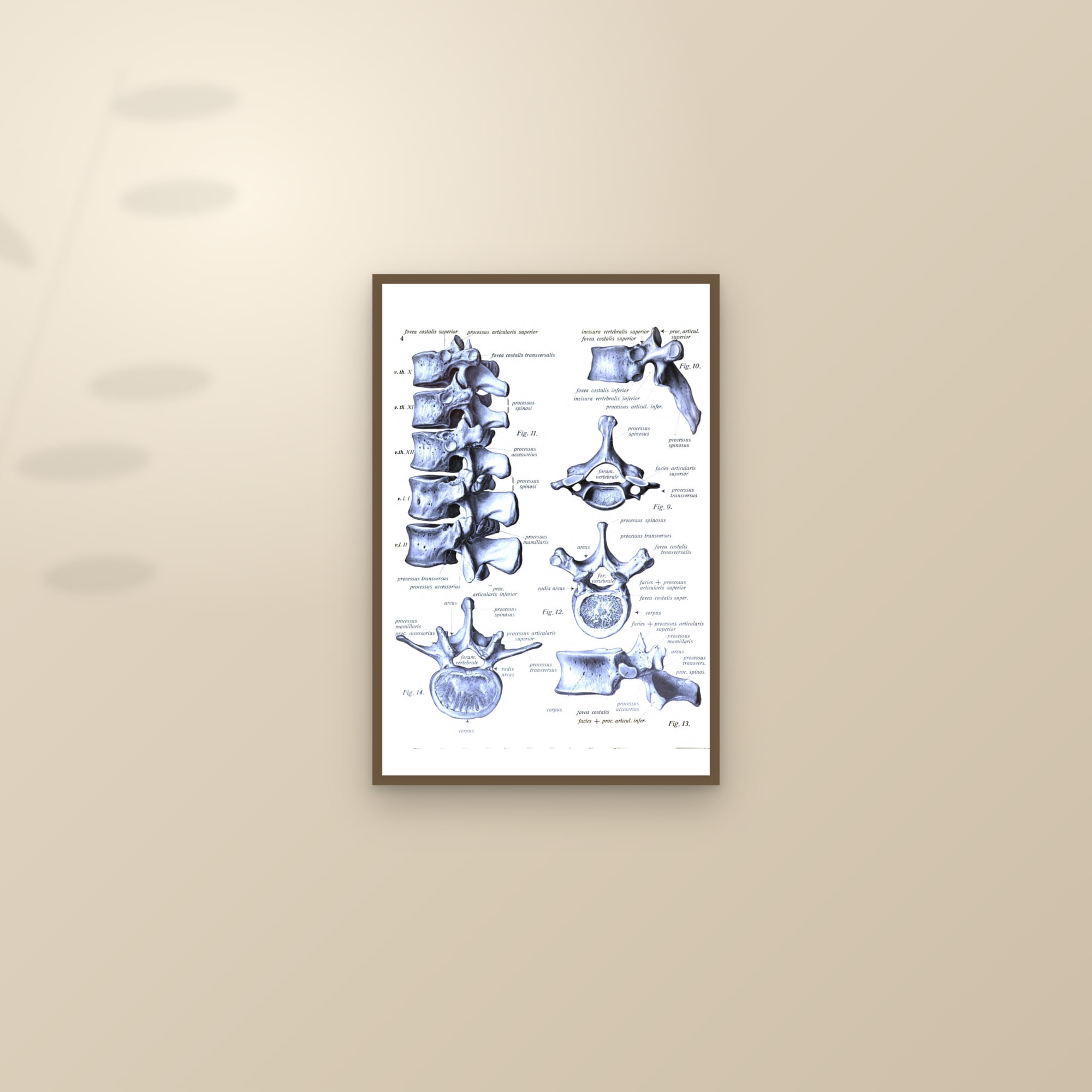
The colour plates are chromolithographs from Johannes Sobotta's Atlas der deskriptiven Anatomie des Menschen of 1919, one of the standard anatomical atlases of the twentieth century. The skeletons come from three older works: Andreas Vesalius's De humani corporis fabrica of 1543, in woodcut; Bartolomeo Eustachi's Tabulae anatomicae, engraved in the sixteenth century and published in 1714; and Bernhard Siegfried Albinus's Tabulae sceleti et musculorum corporis humani of 1747, among the most carefully drawn skeletons of the eighteenth century. Every plate carries its atlas, plate and date in the caption of its specimen edition.
Sizes, framing and sets
Sobotta, Albinus and Vesalius plates print up to 24×36; the Eustachi engravings up to 16×24. Each is offered full-bleed or as a captioned specimen on a cream ground, on 250 gsm archival paper, unframed or framed in black or dark wood with a plexiglass front and no mat. A spine, a skeleton and a back-muscle plate at 16×24 make the standard treatment-room trio, and three or more prints take 10% off automatically. Standard shipping is free.