Muscle Anatomy Prints
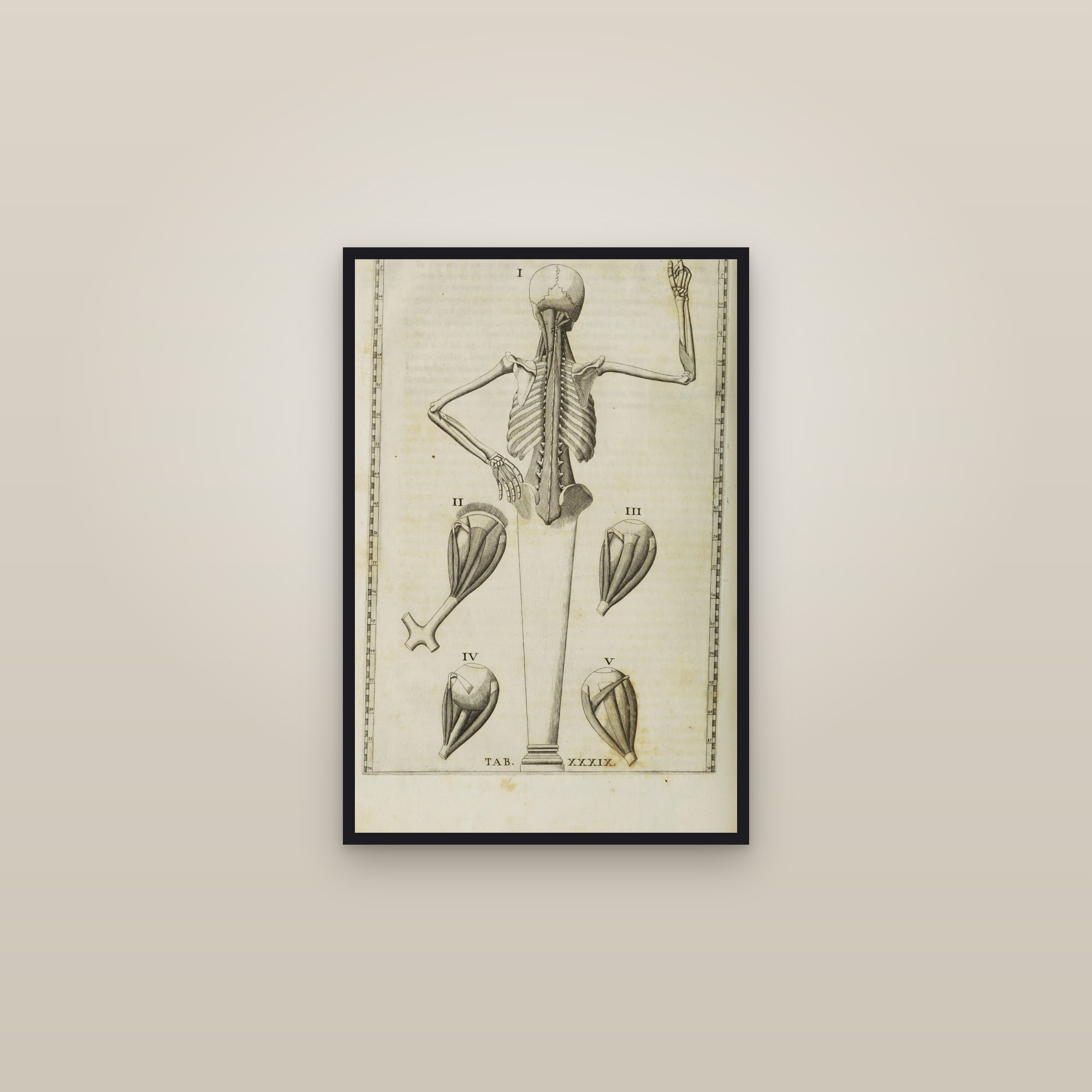
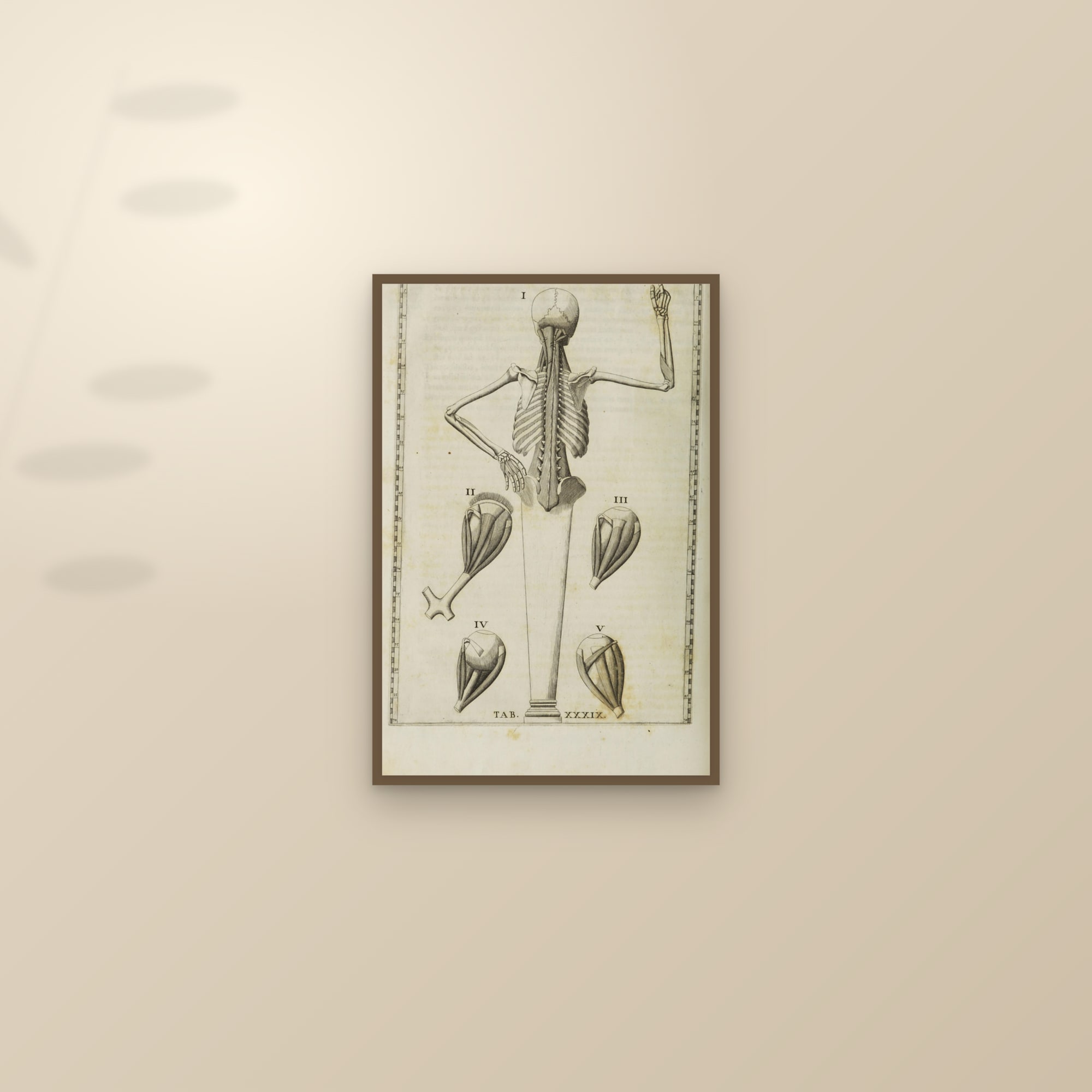
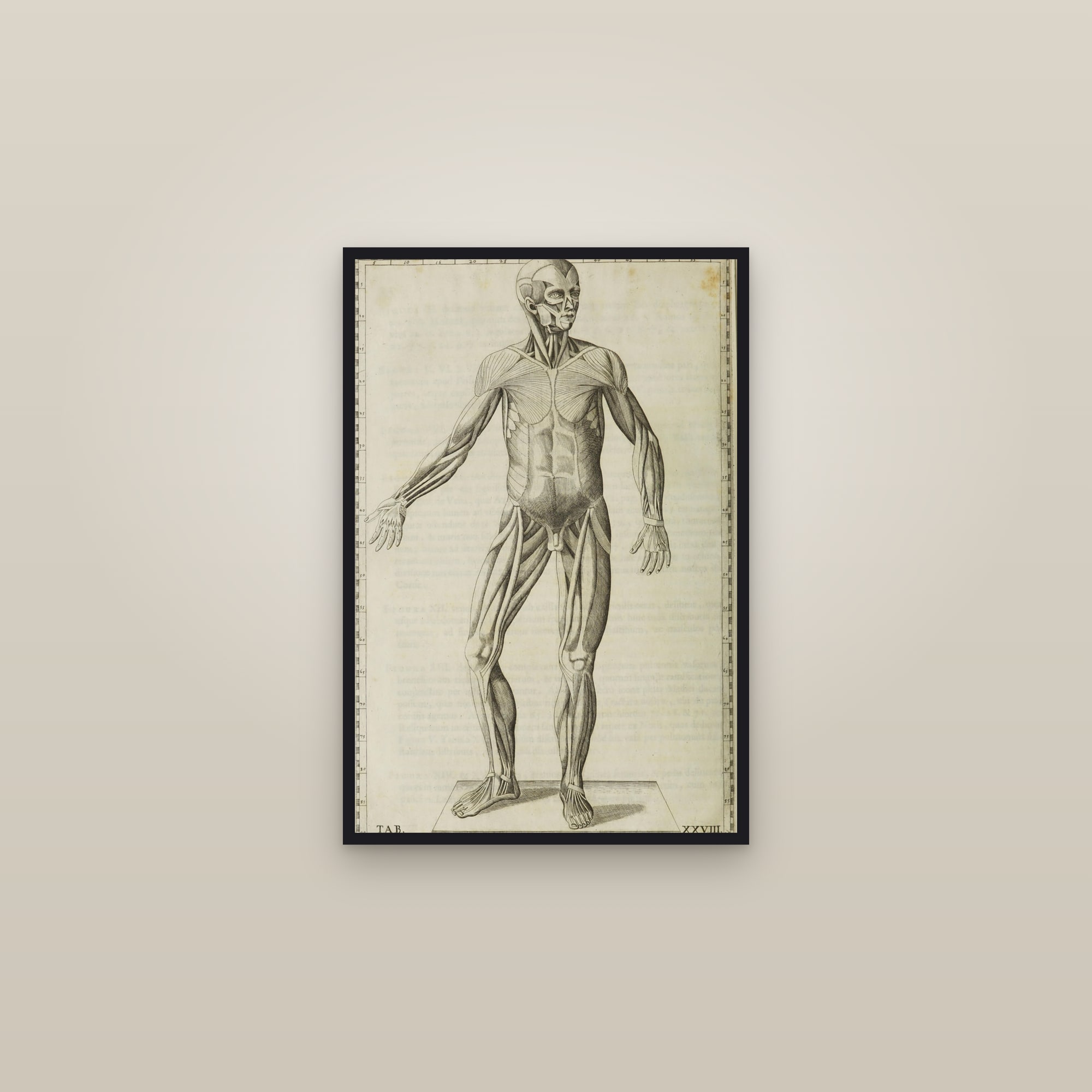
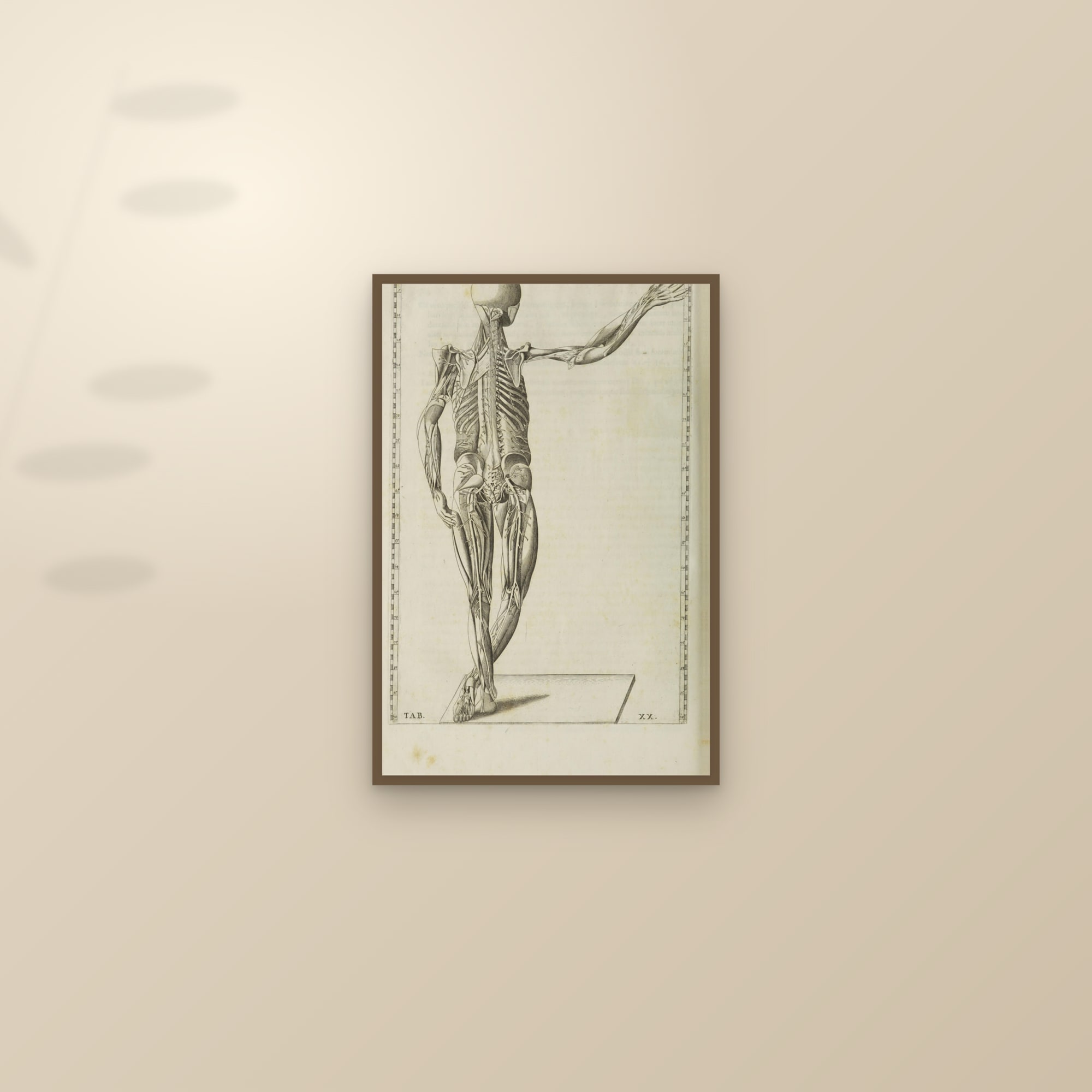
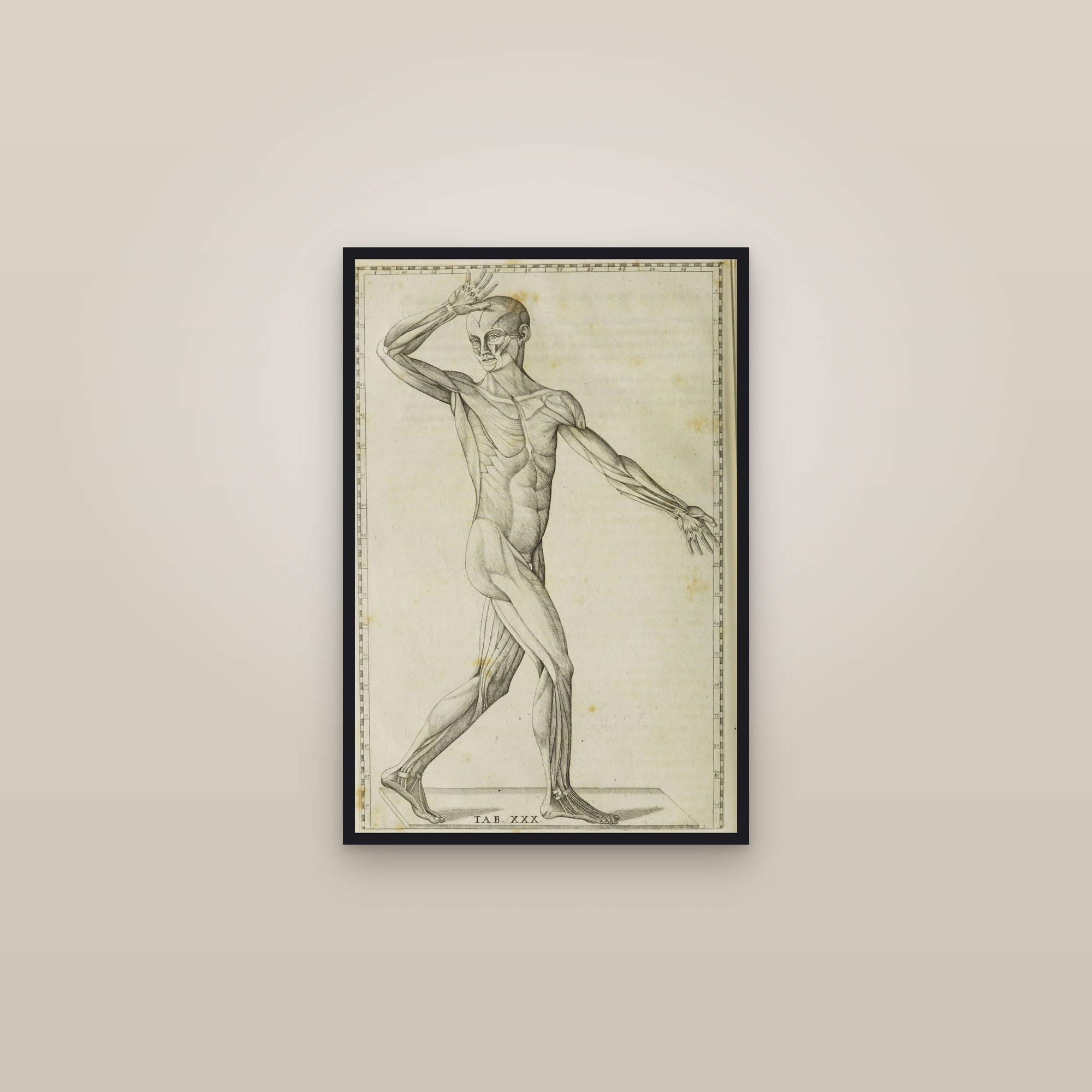
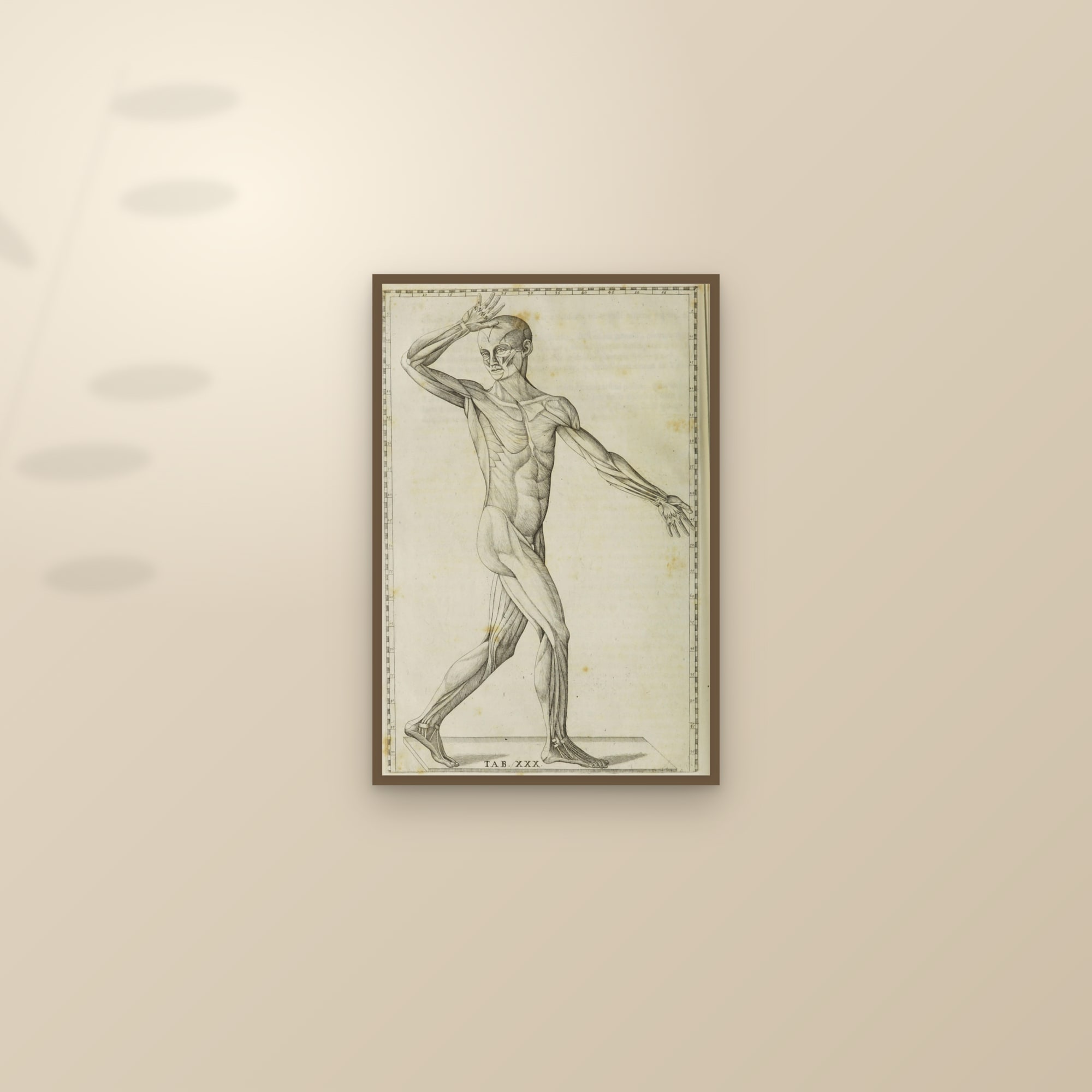
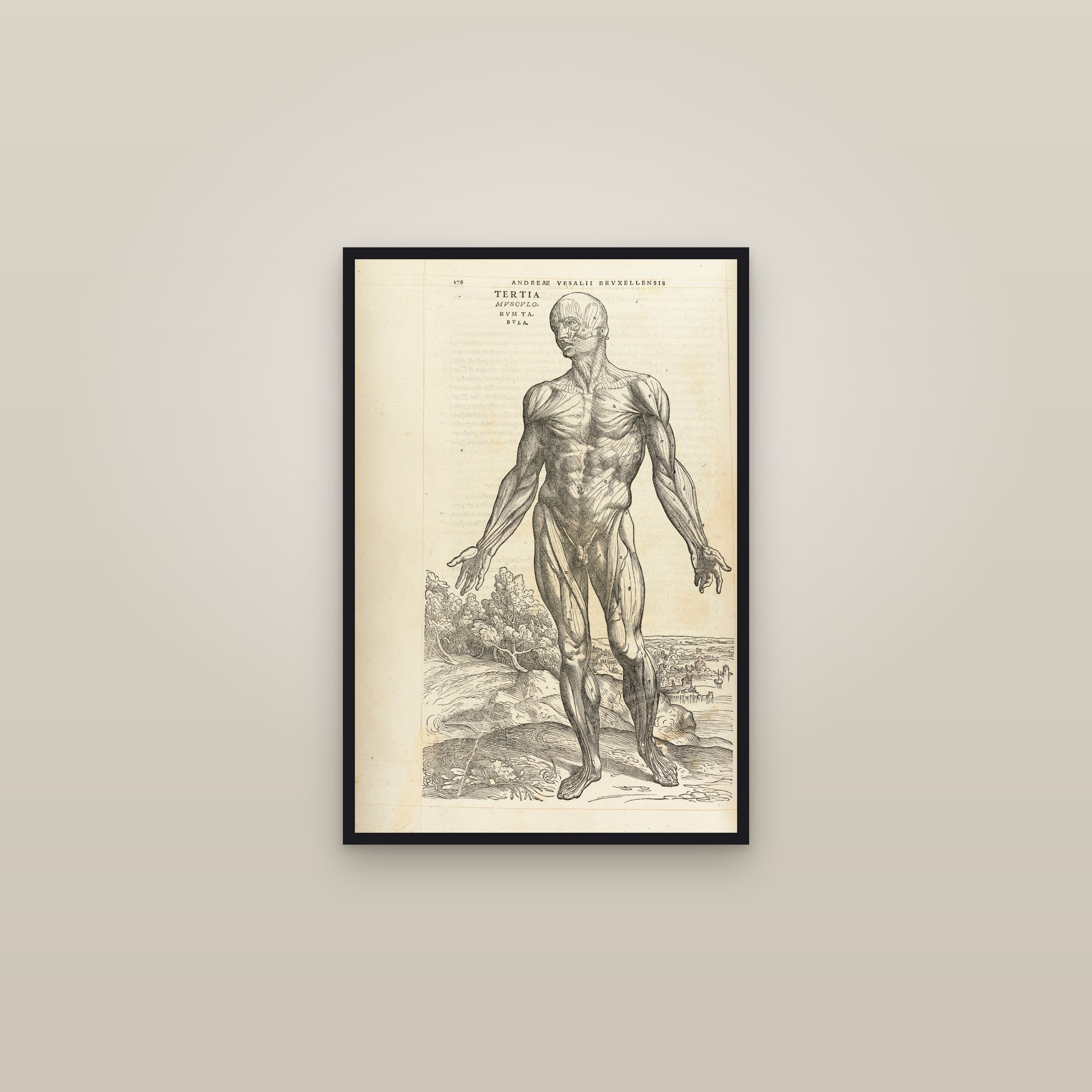
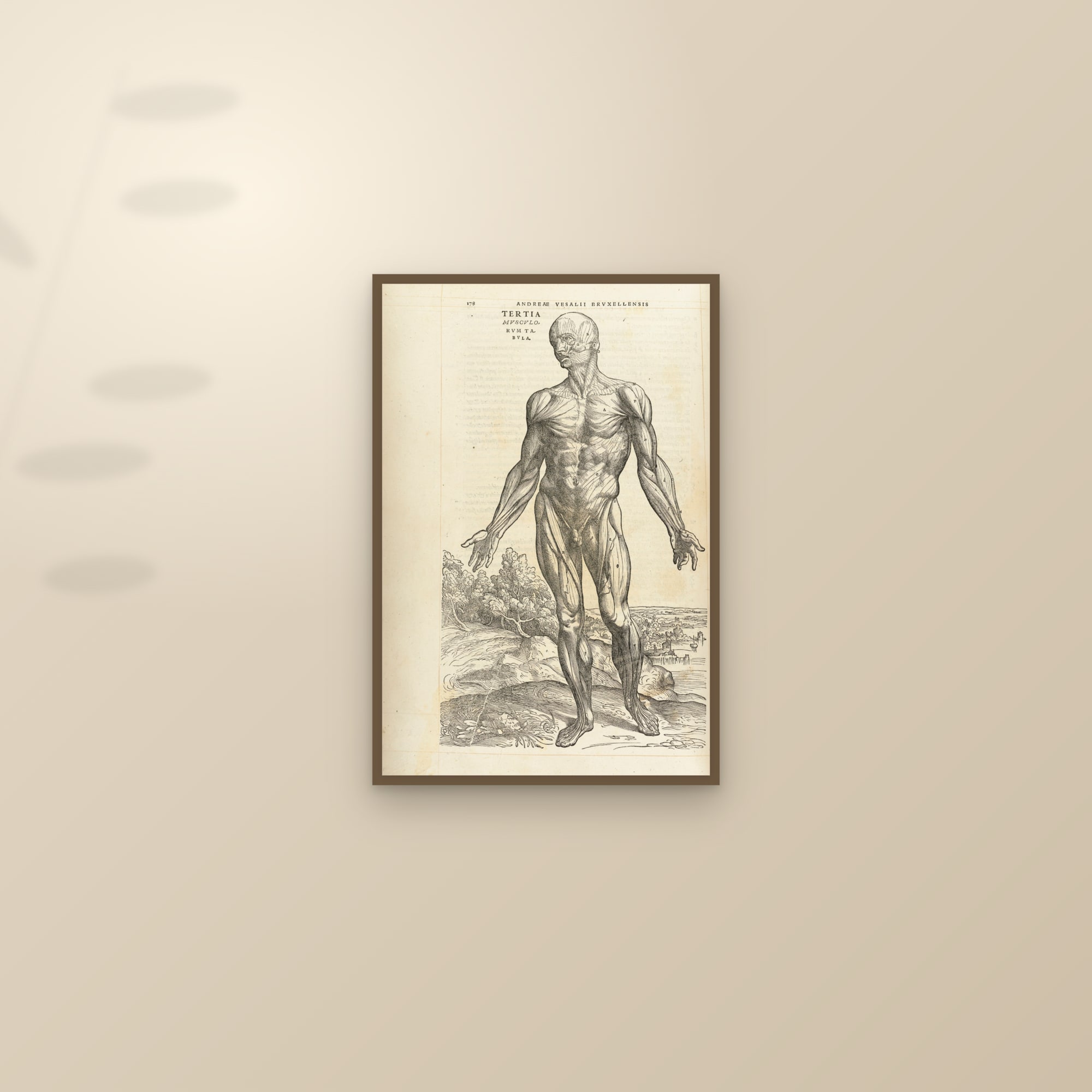
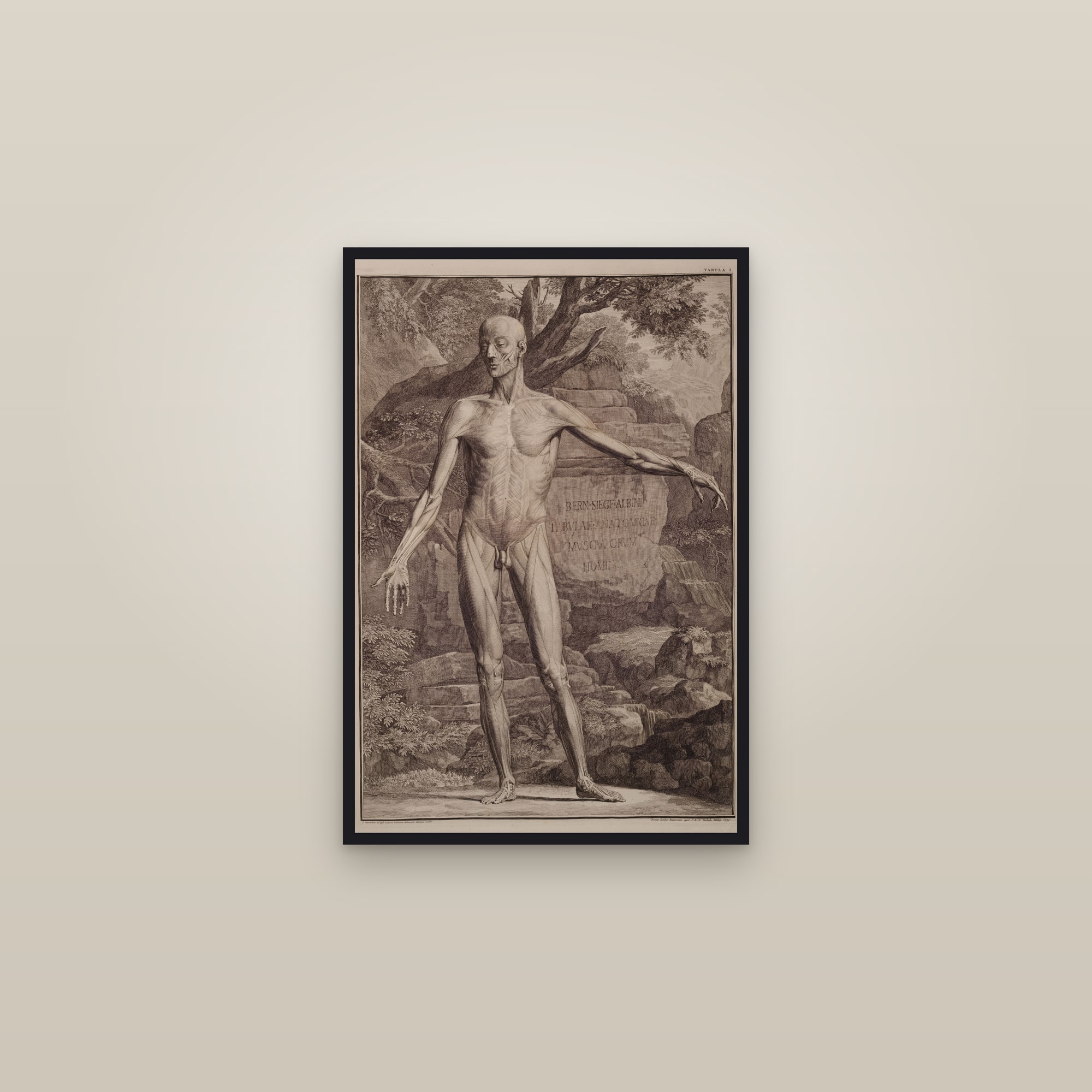
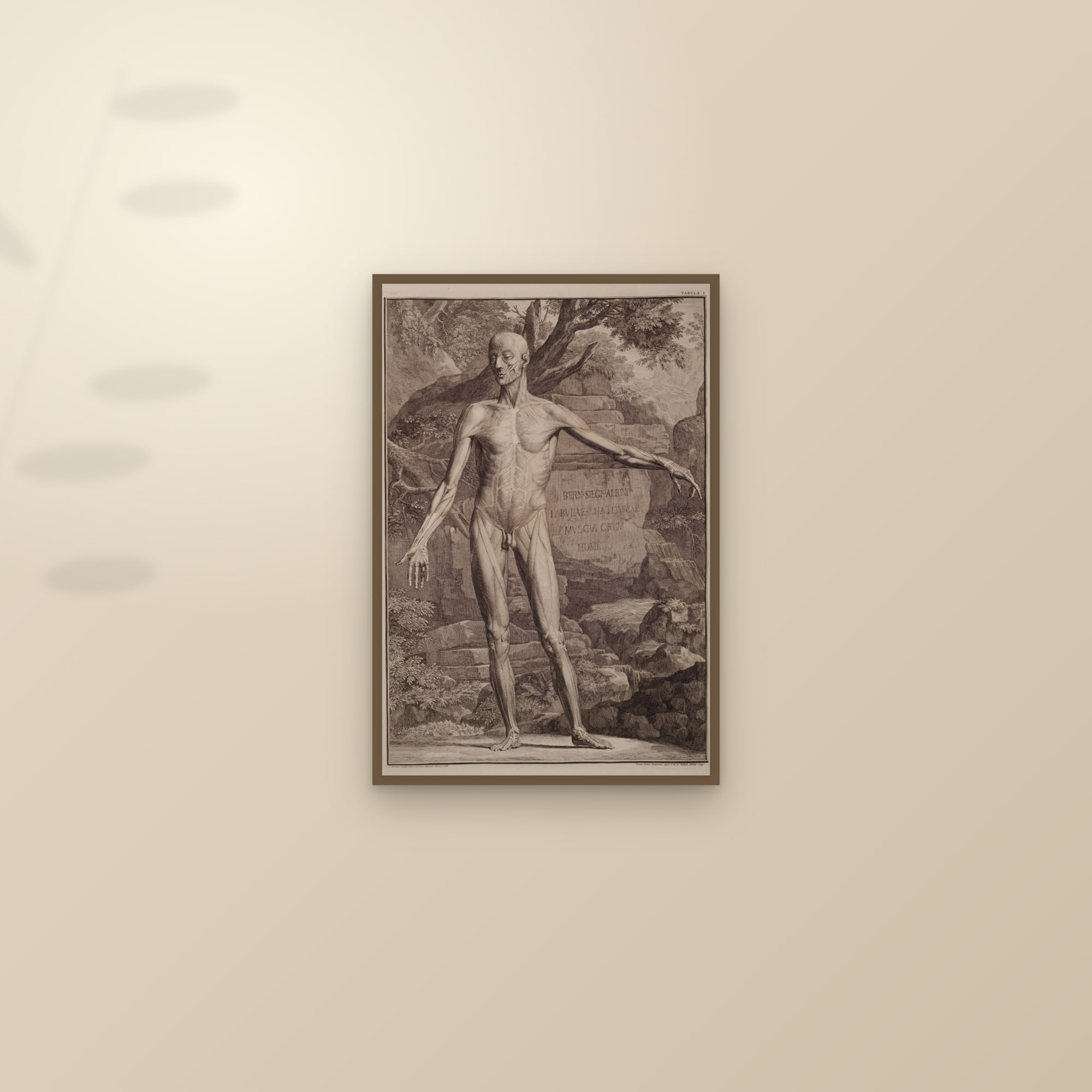
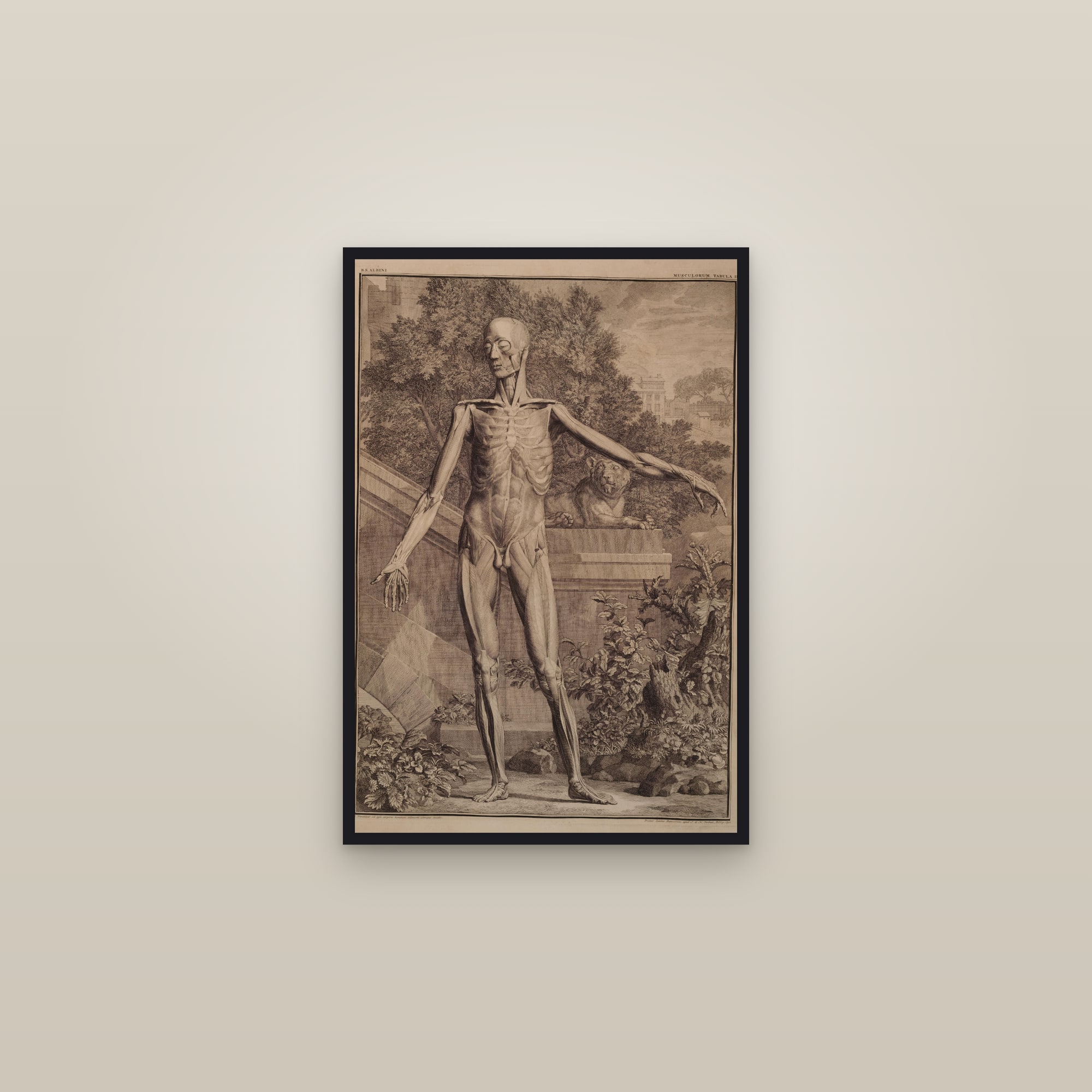
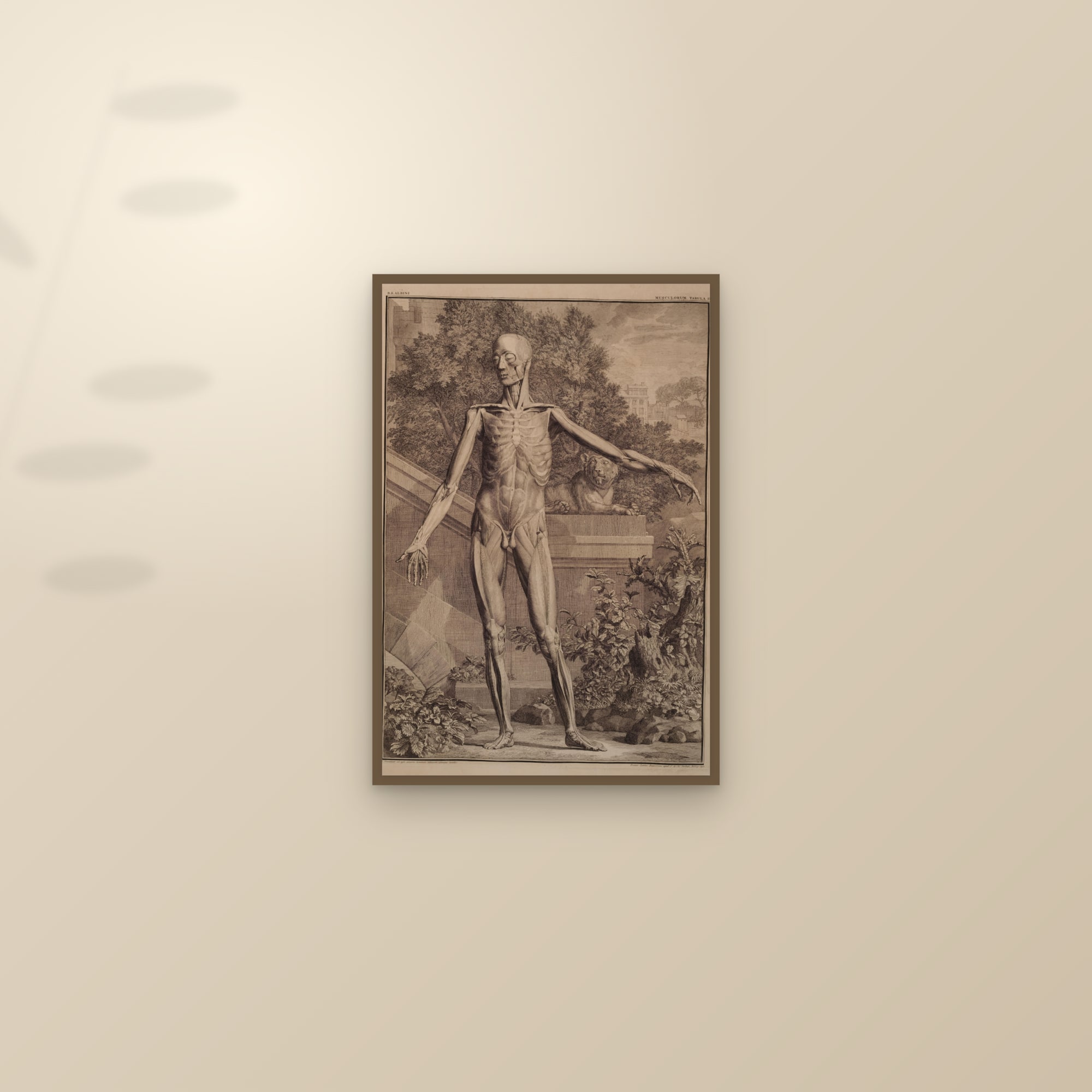
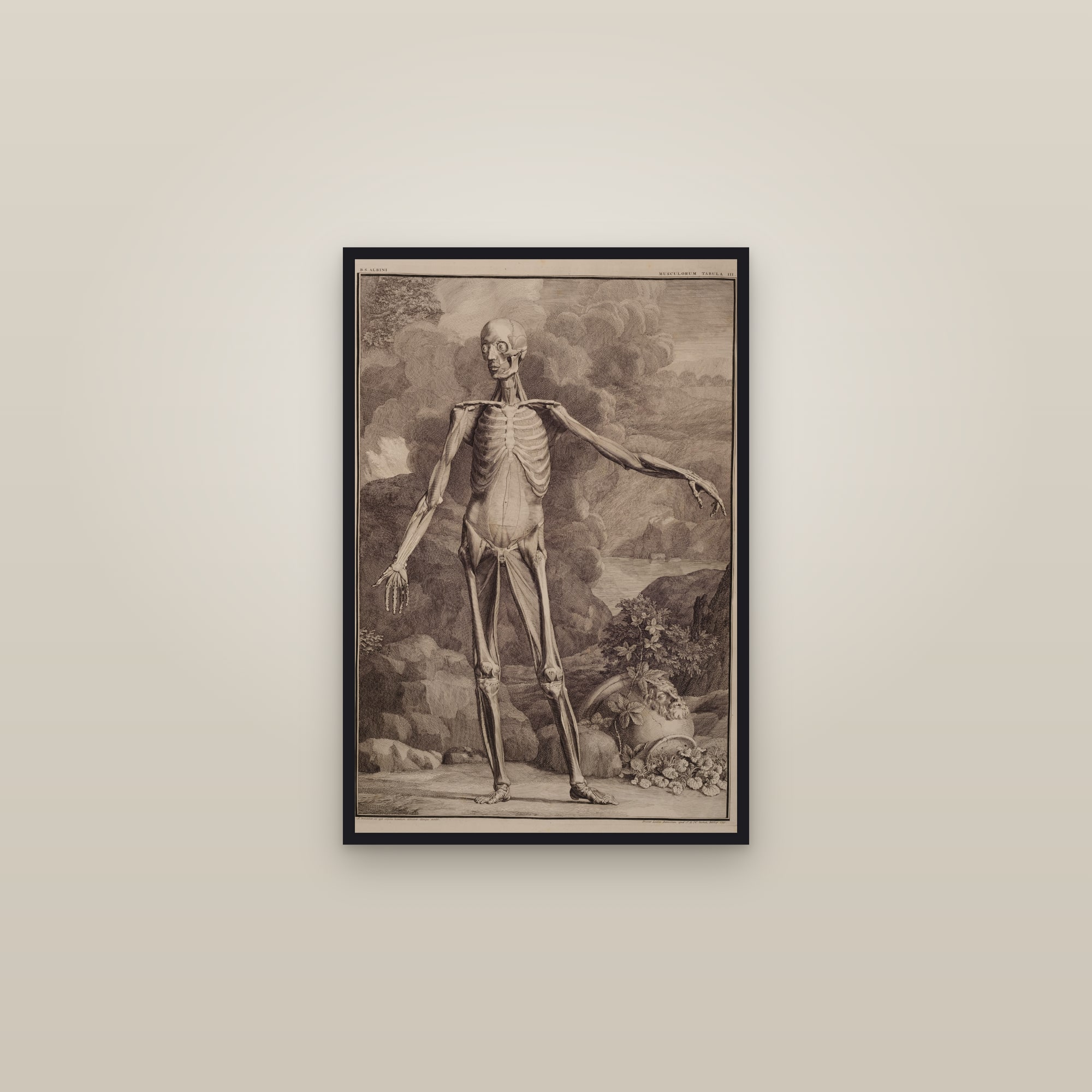
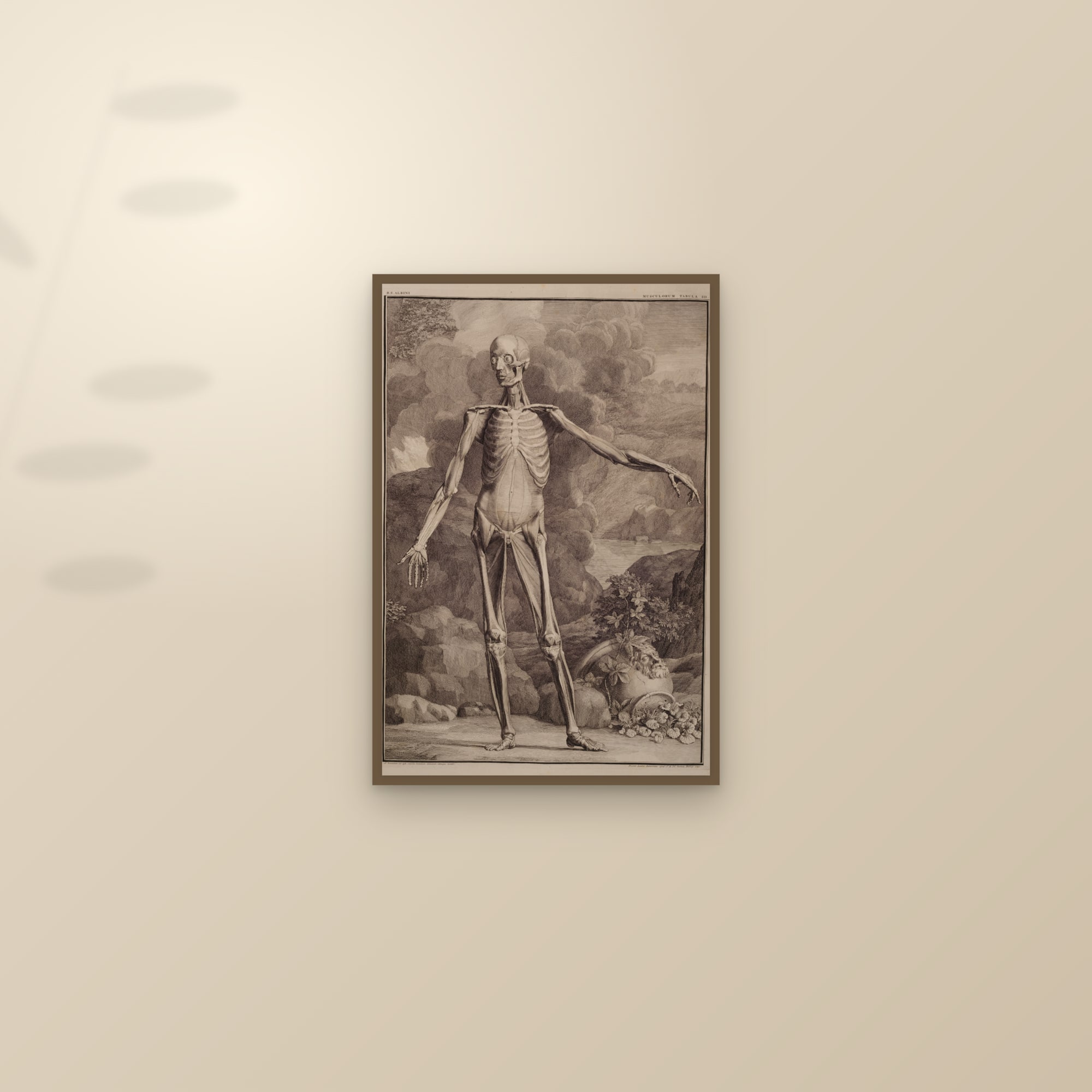
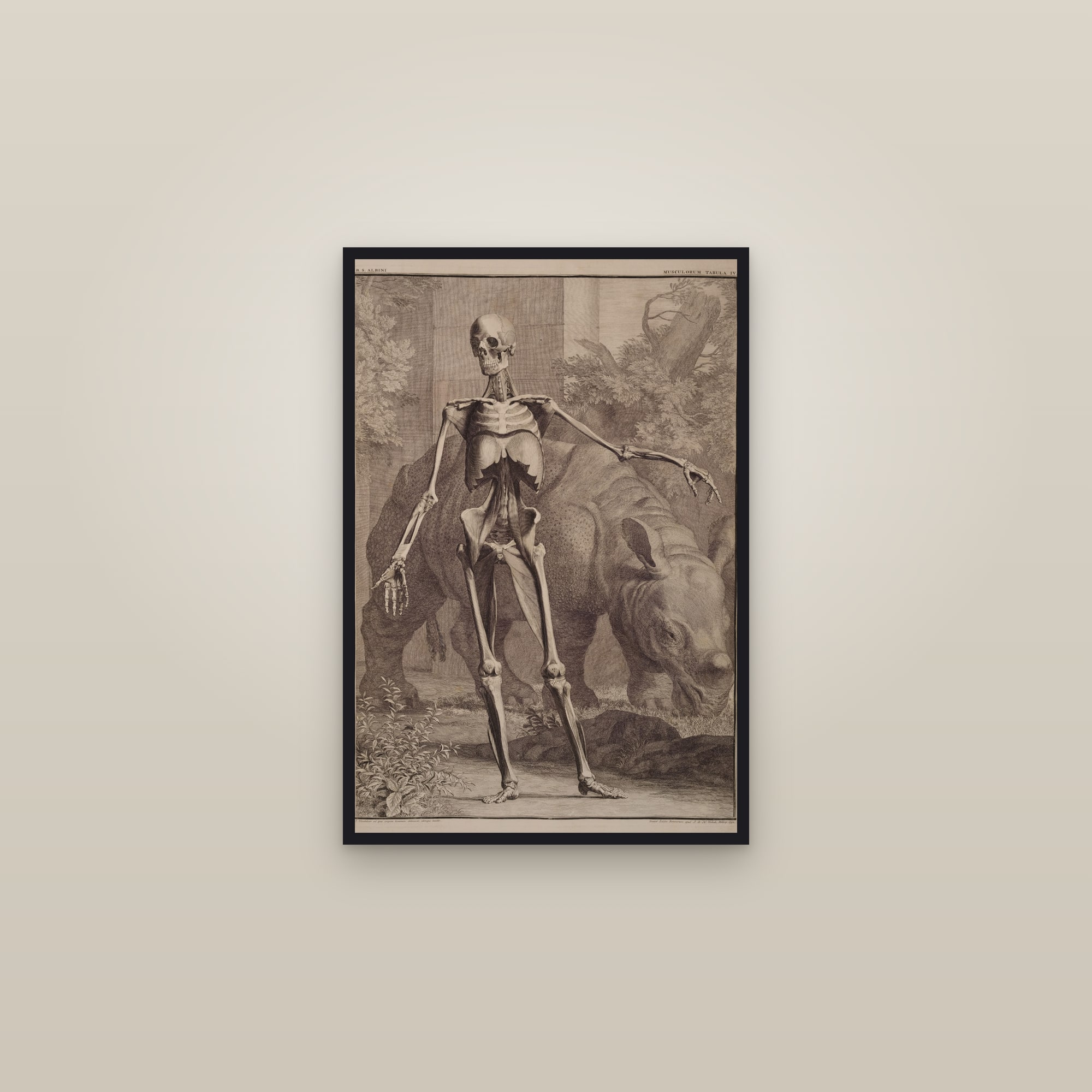
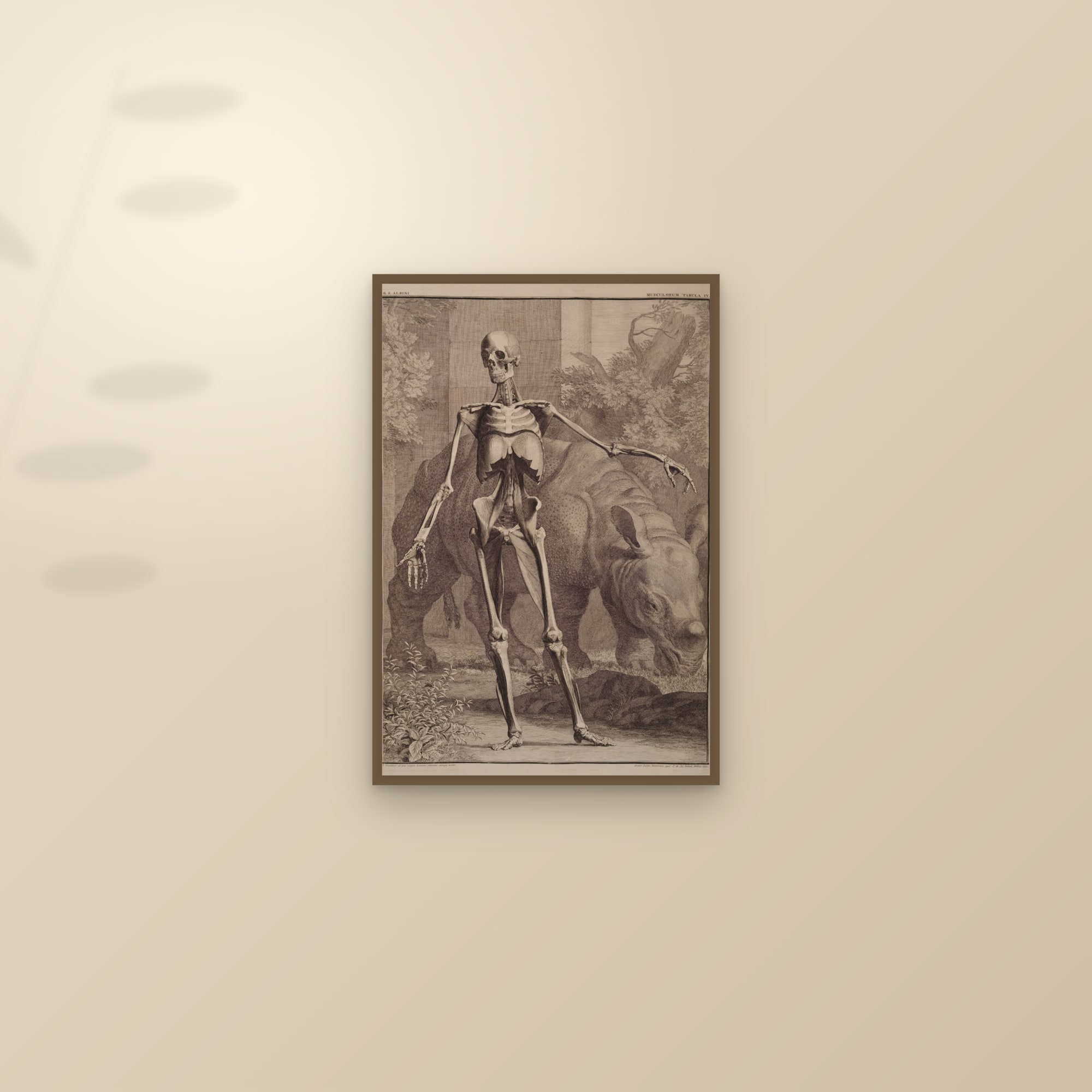
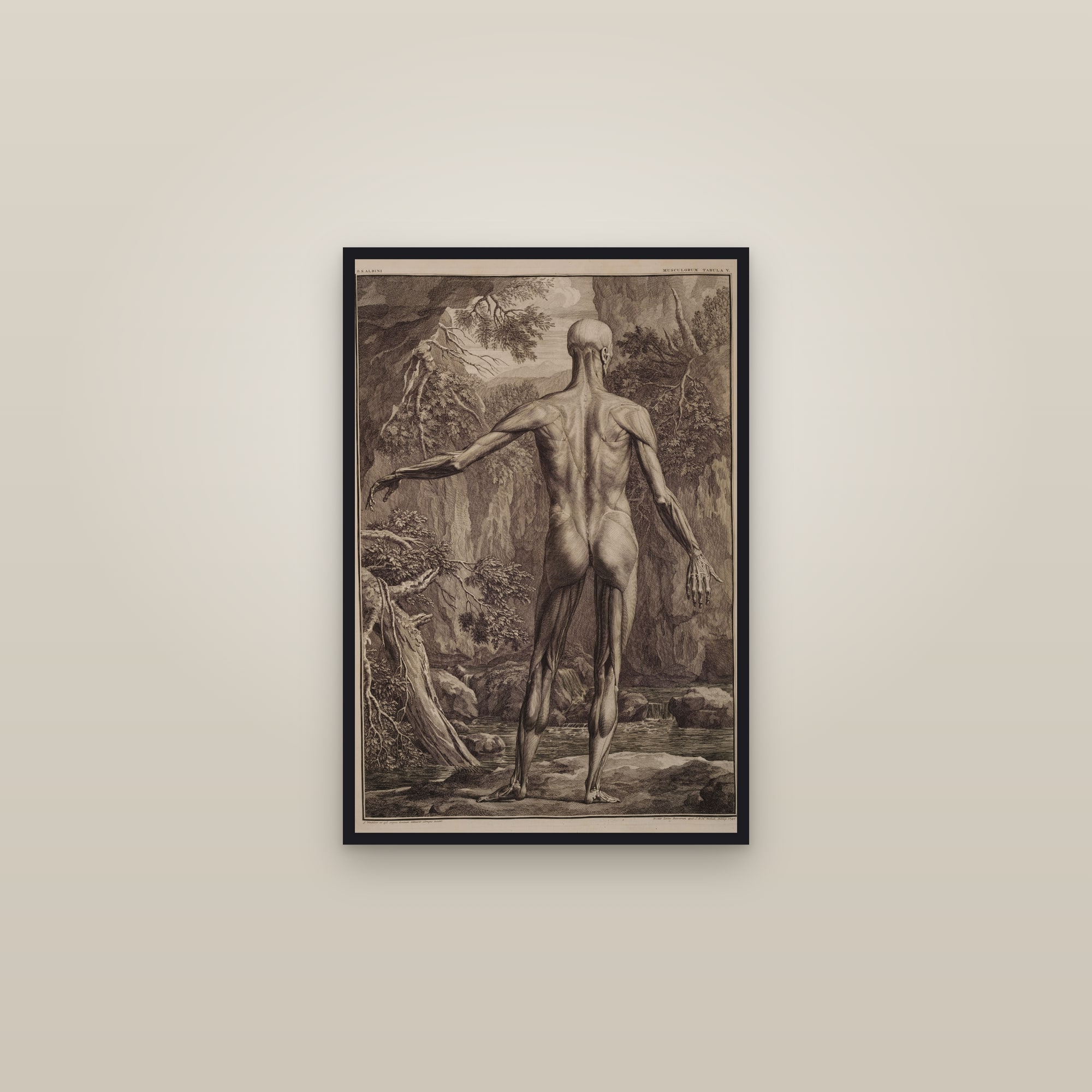
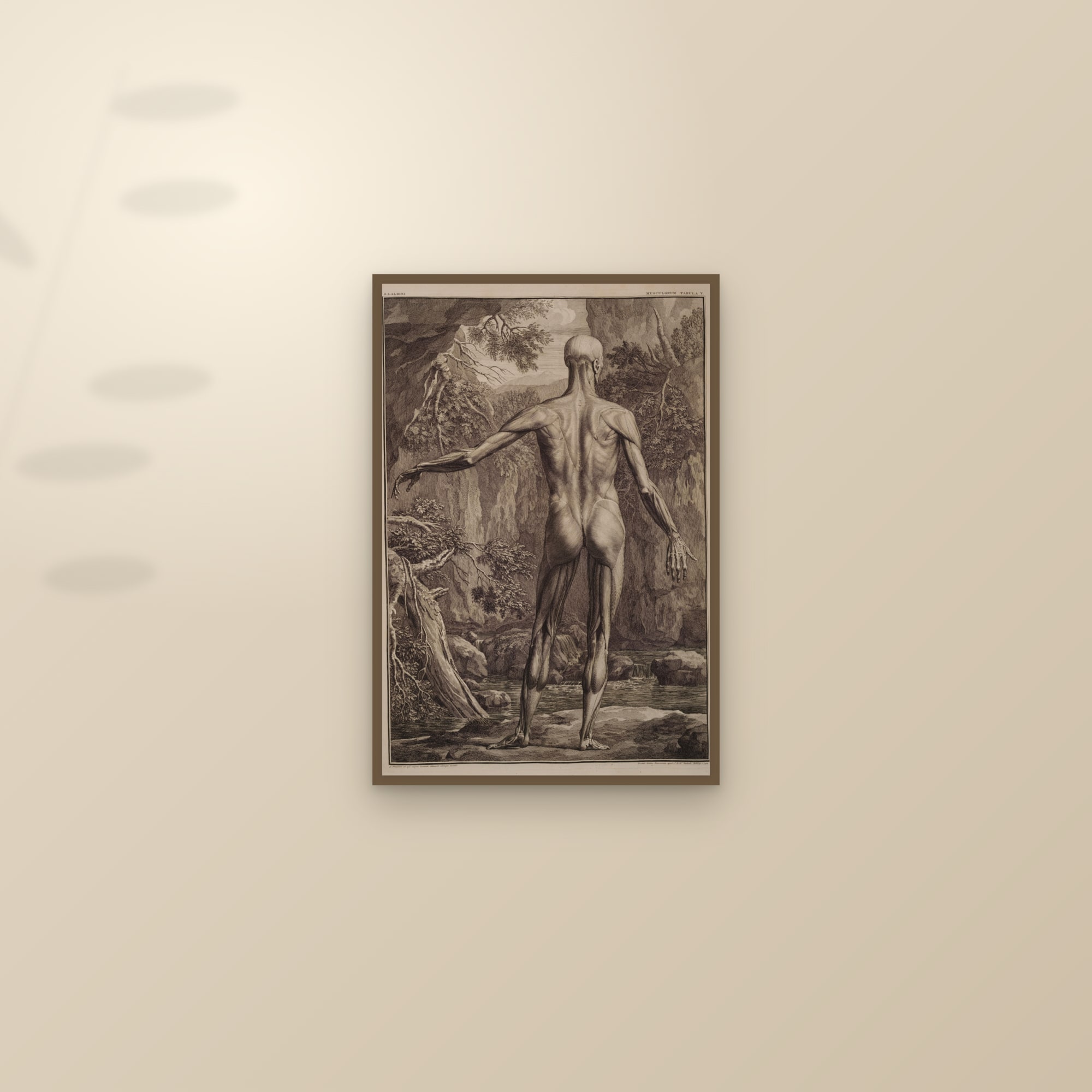
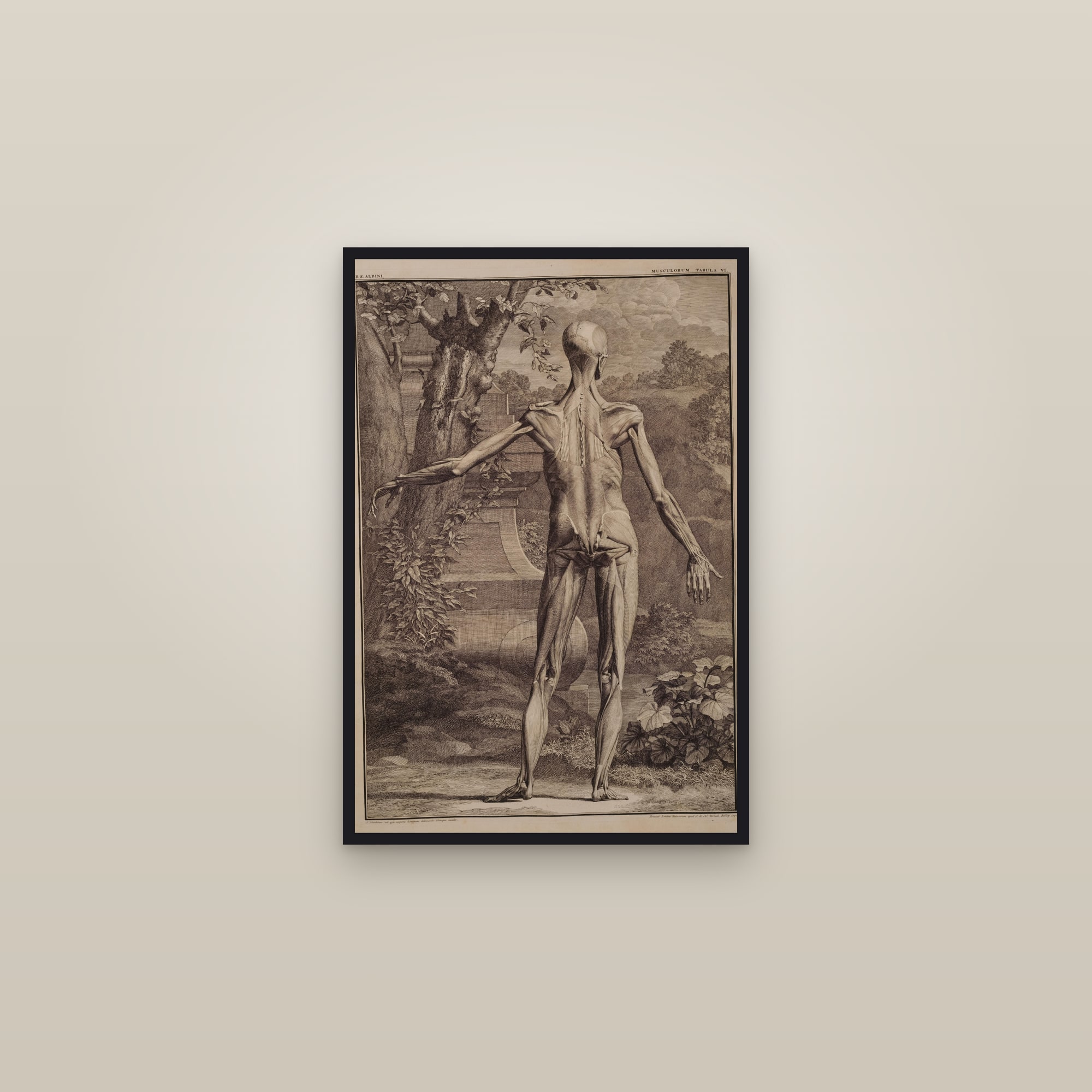
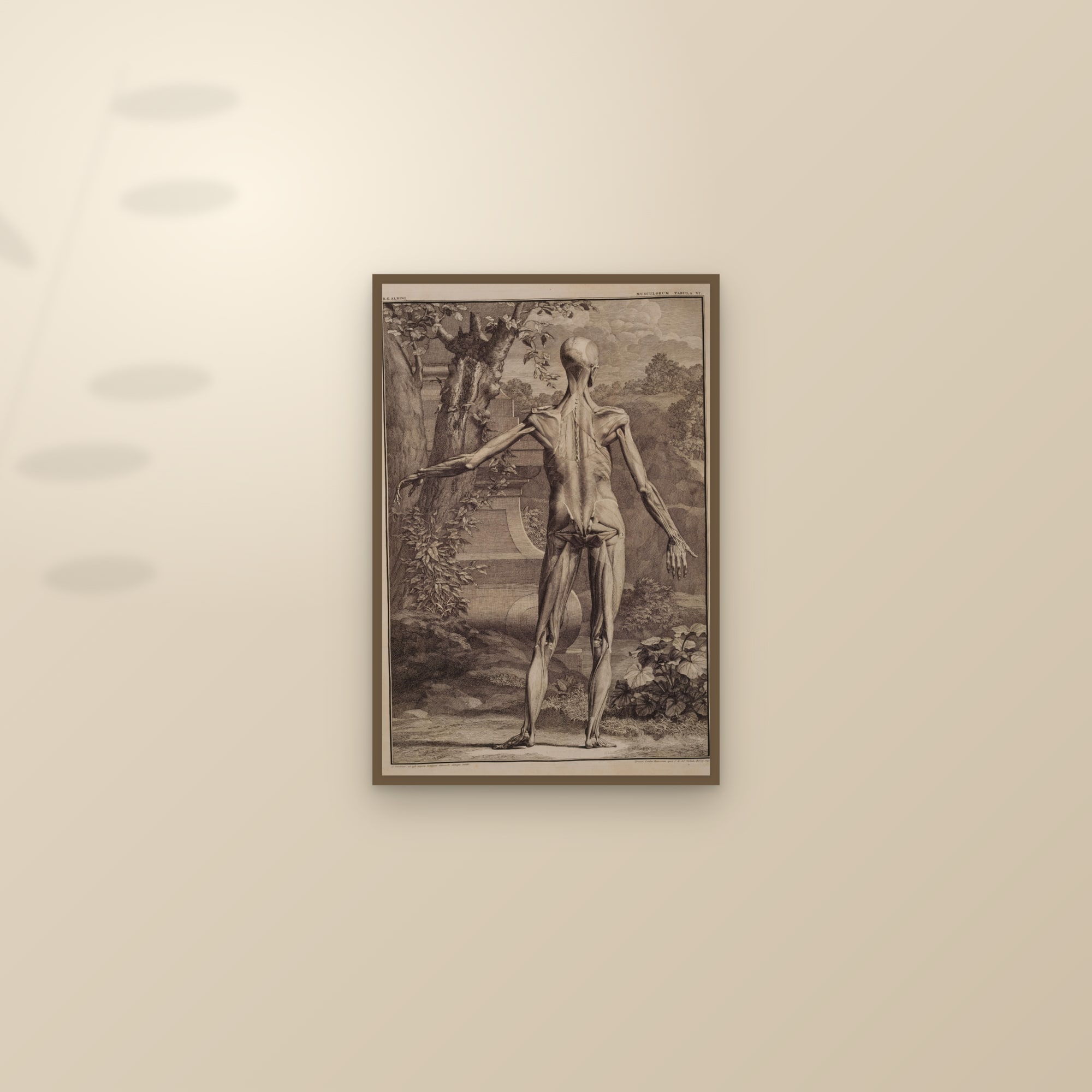
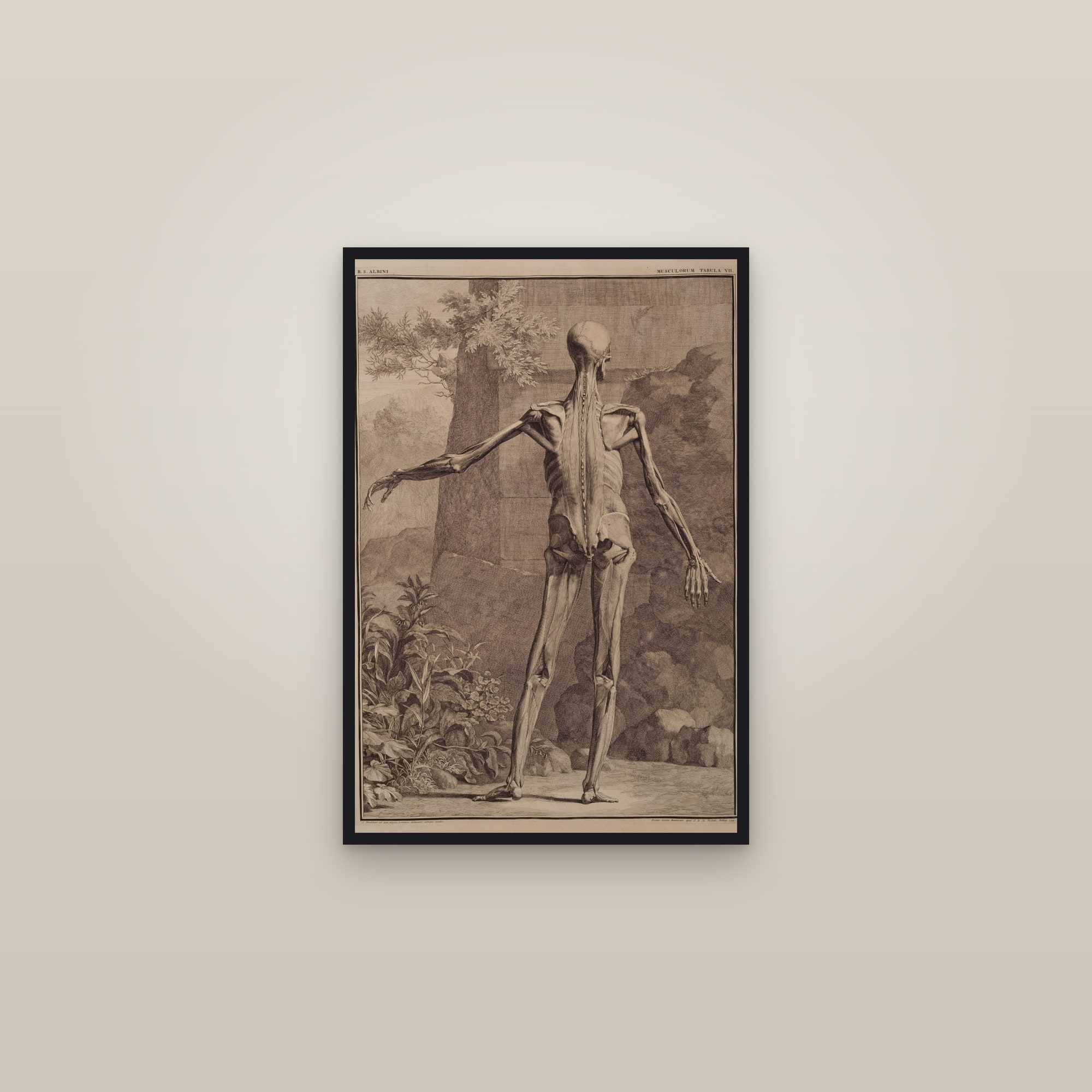
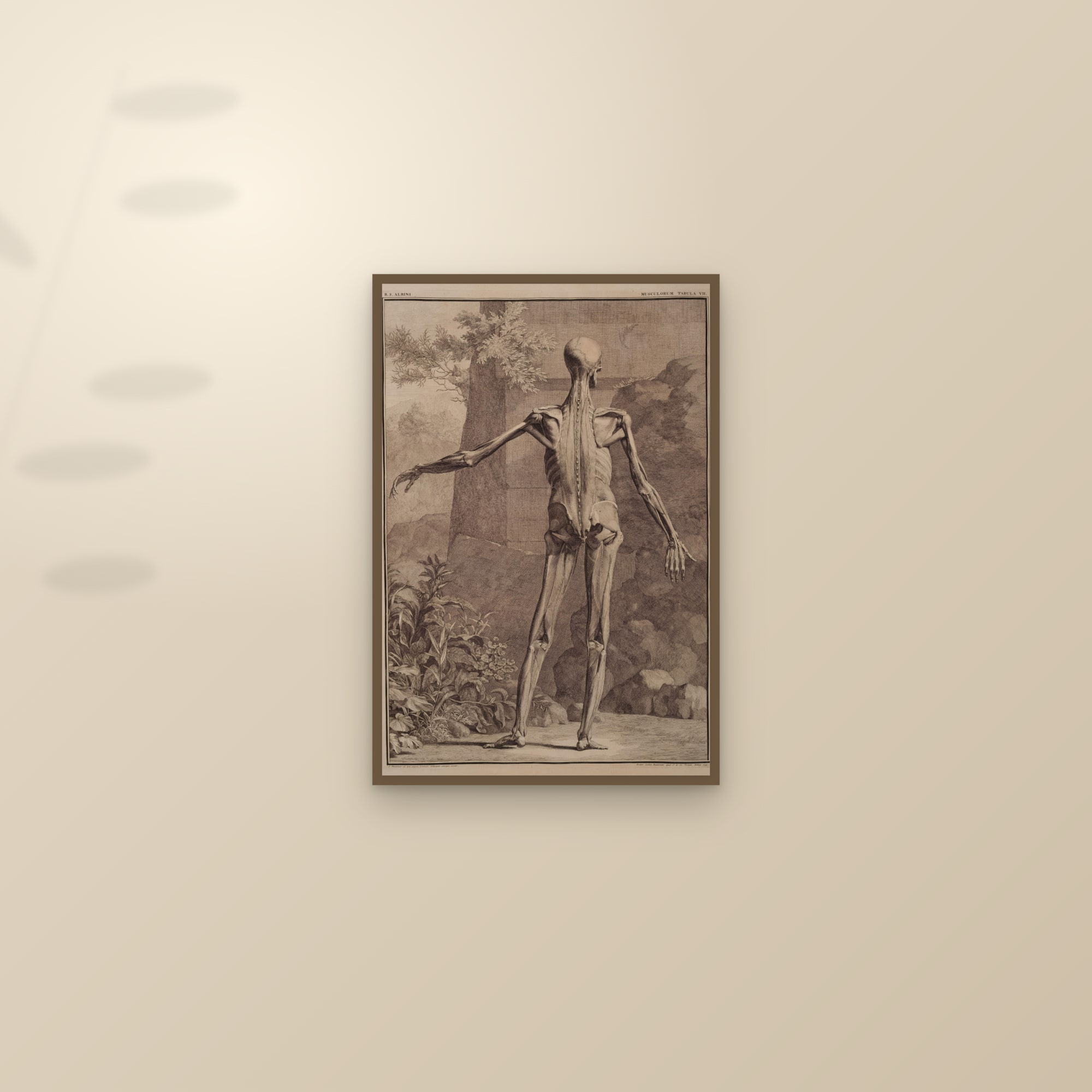
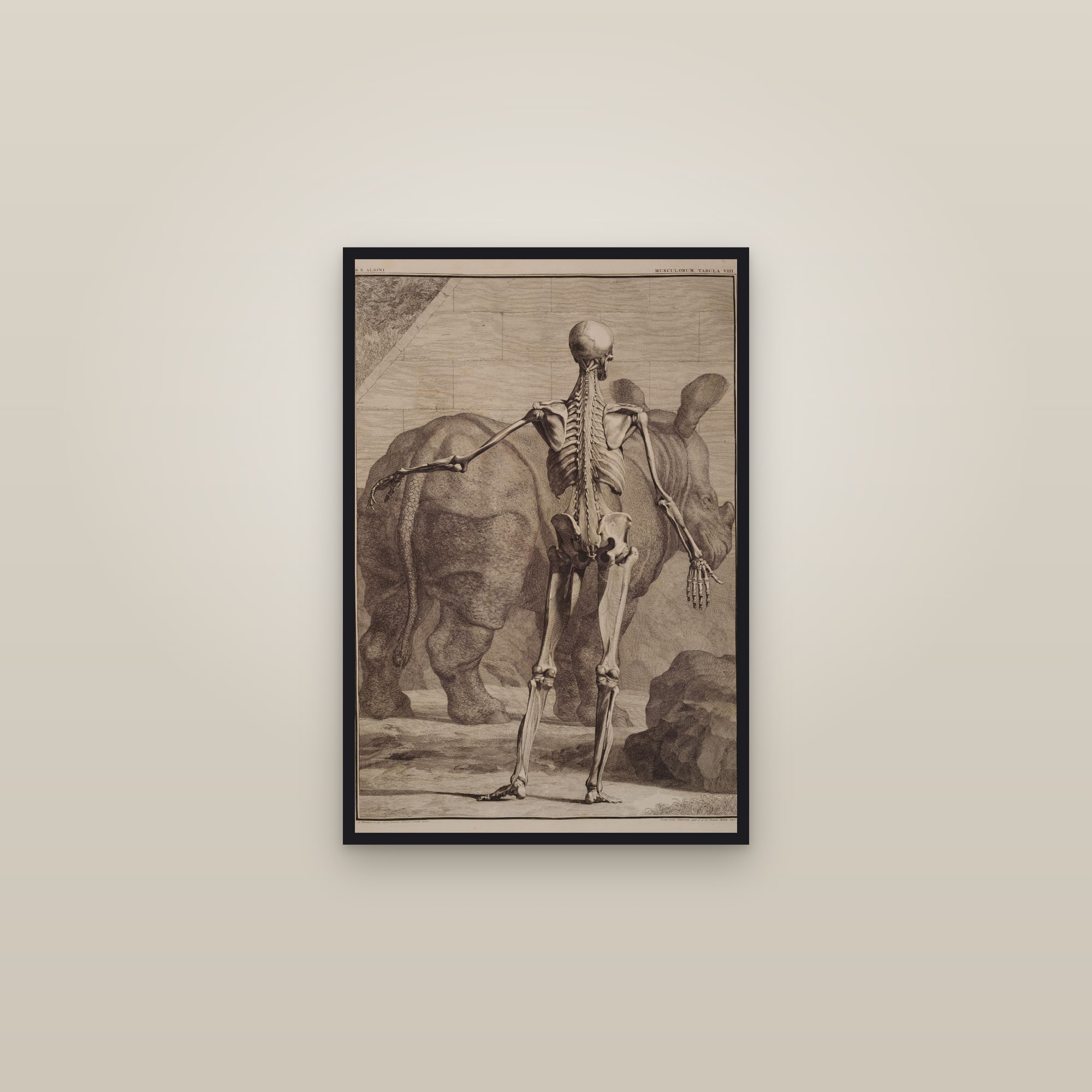
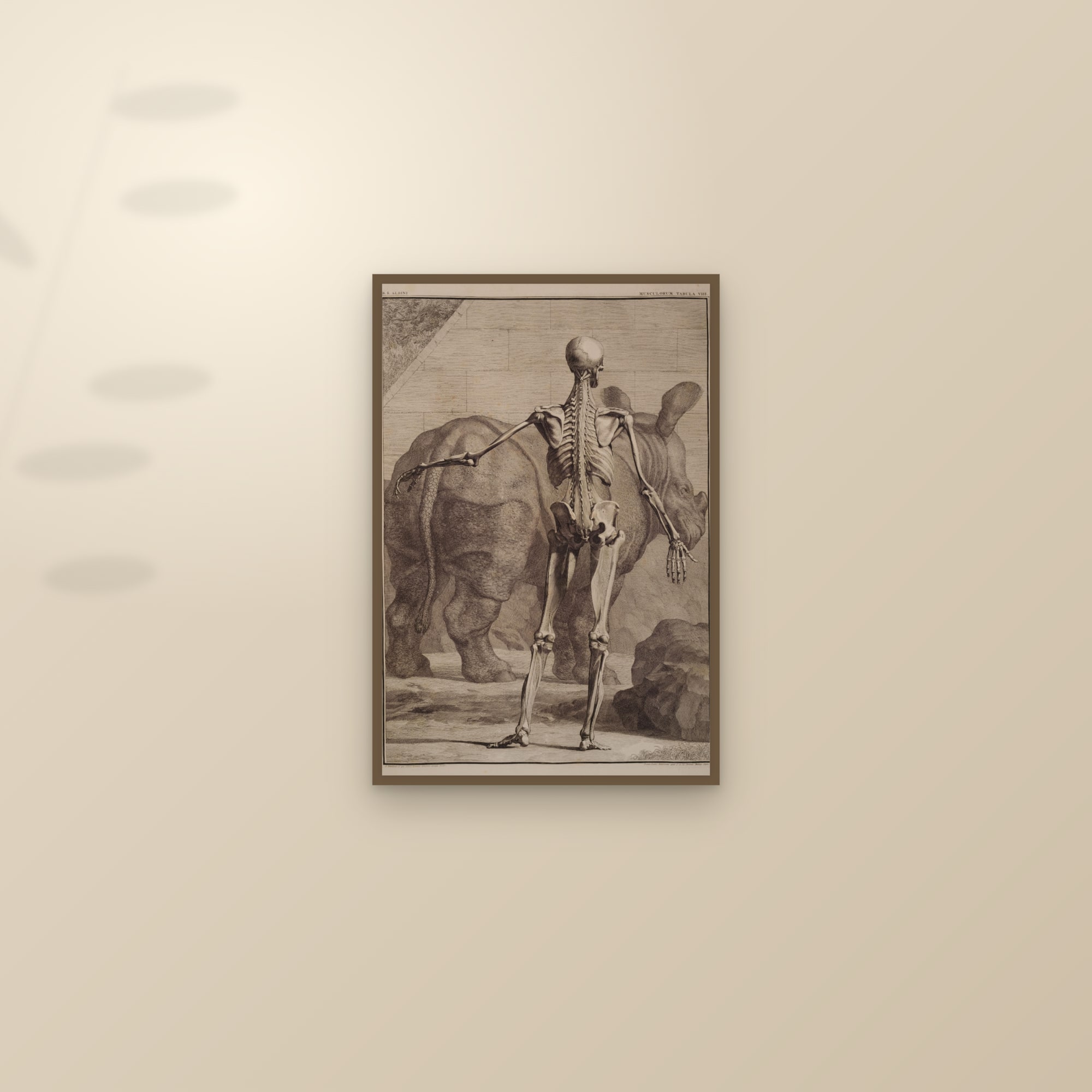
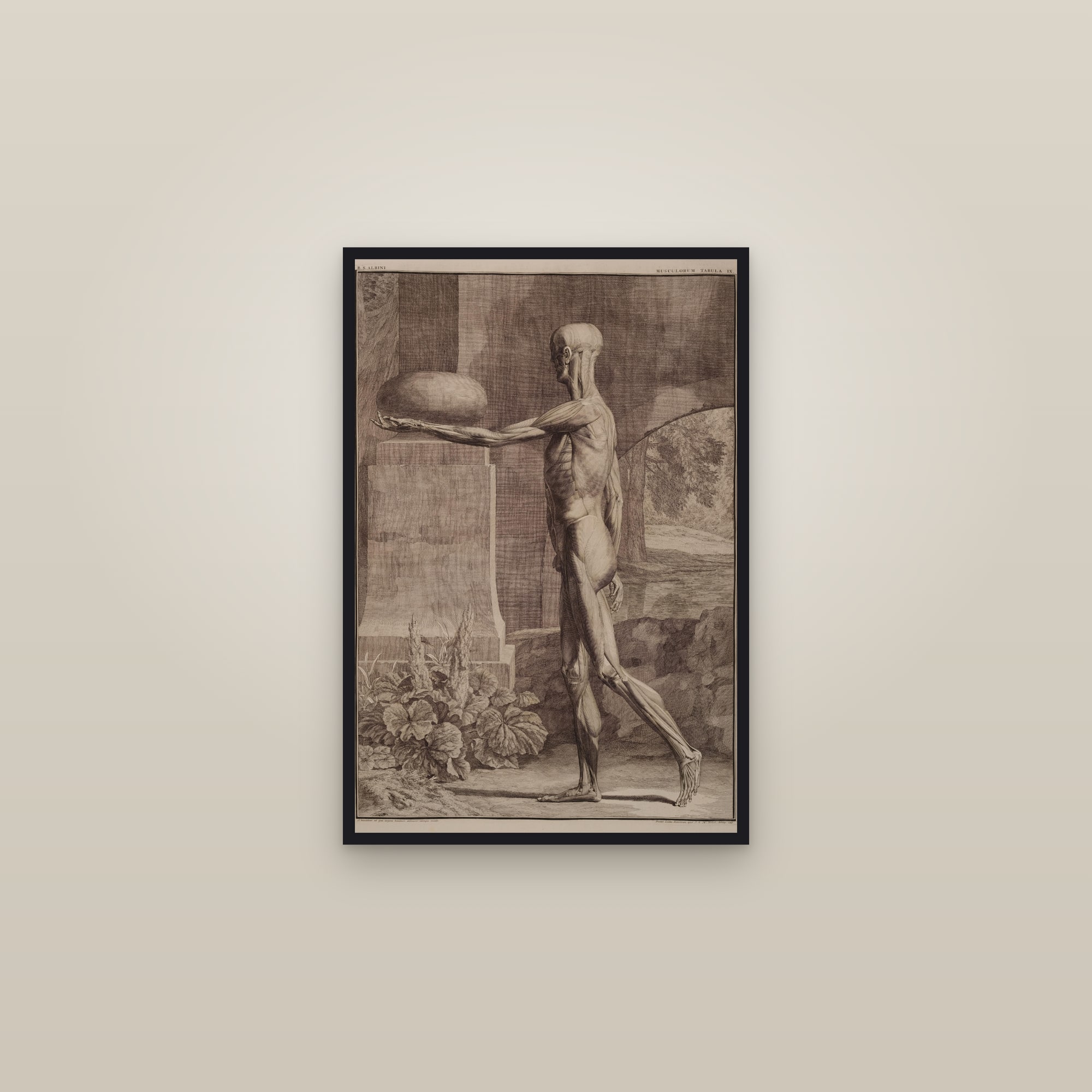
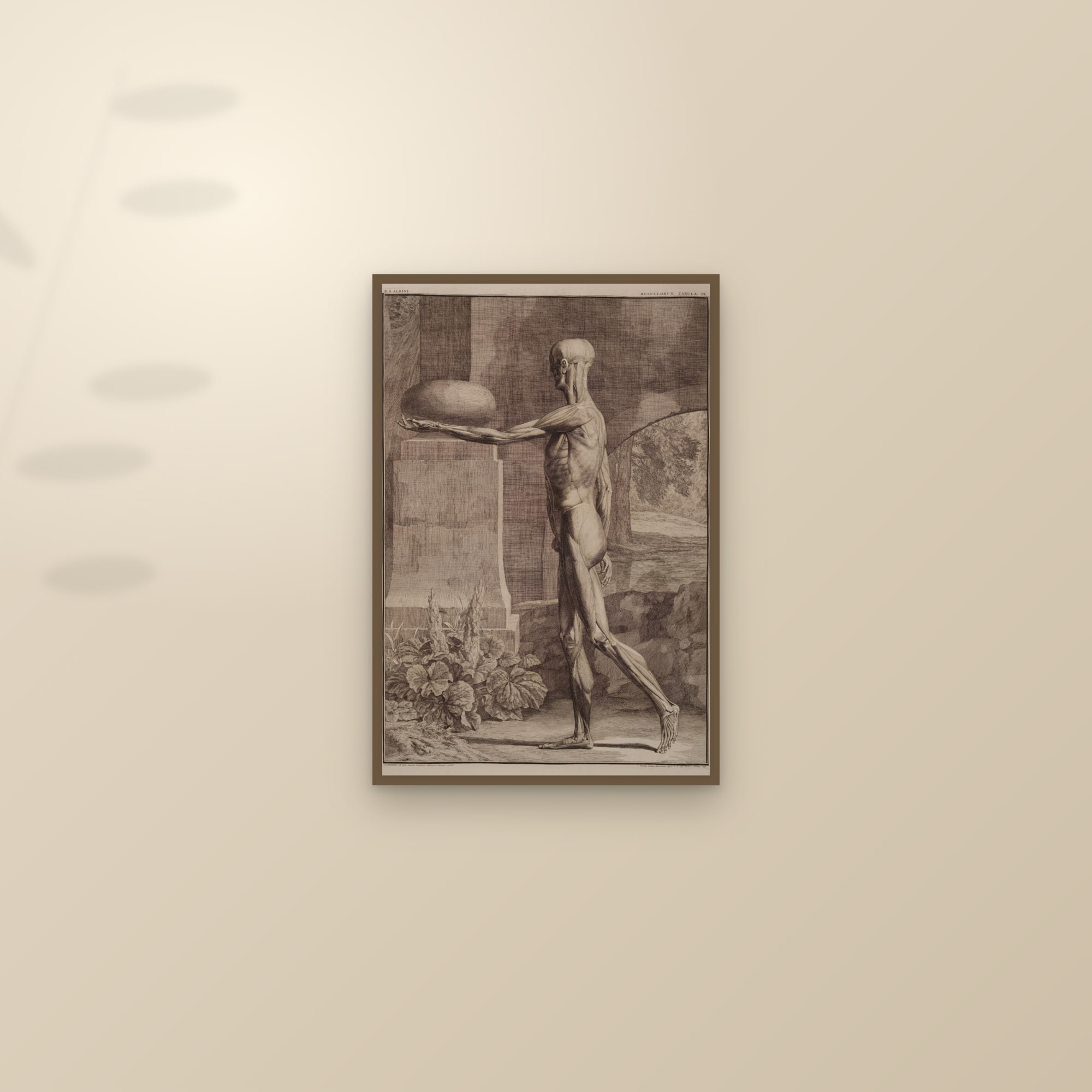
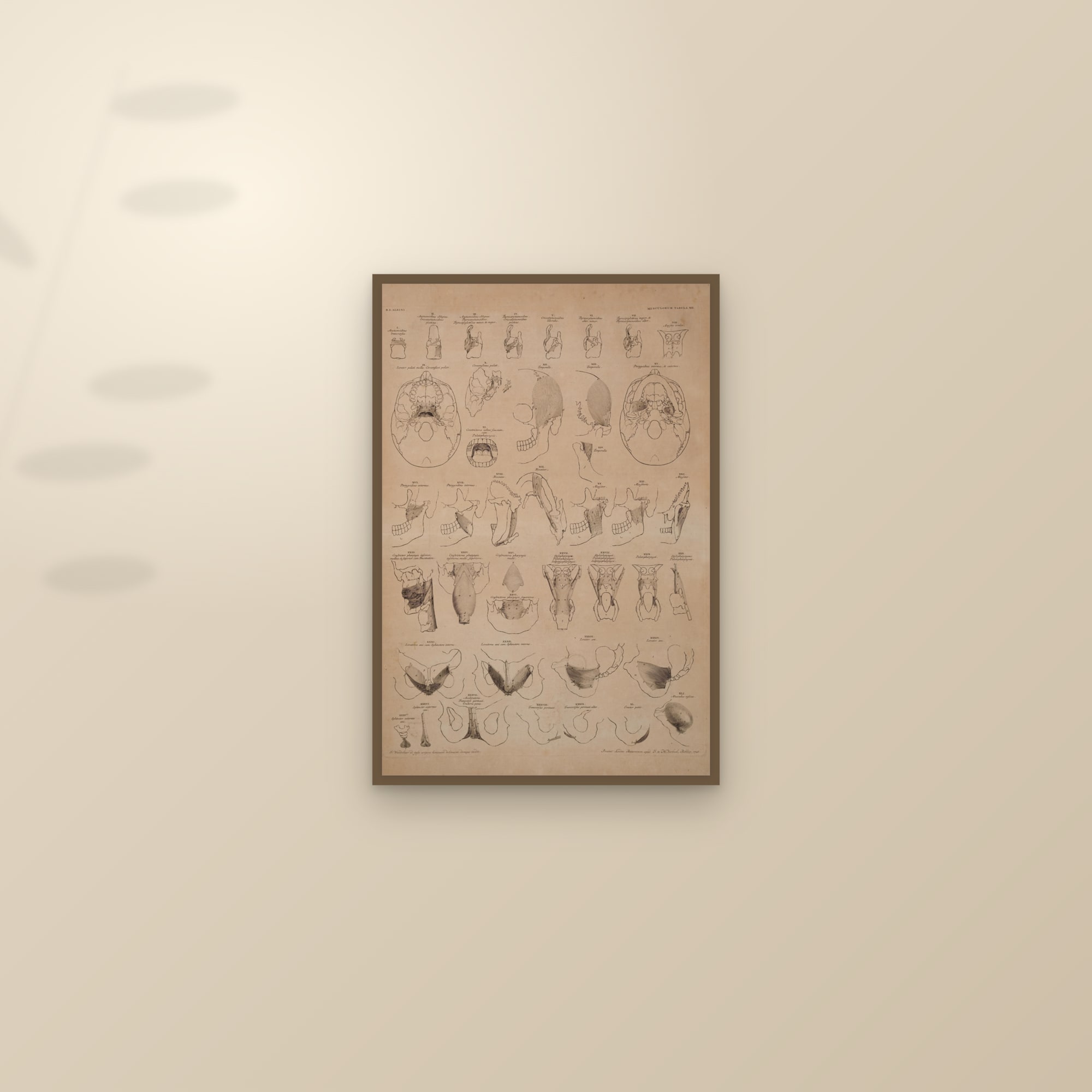
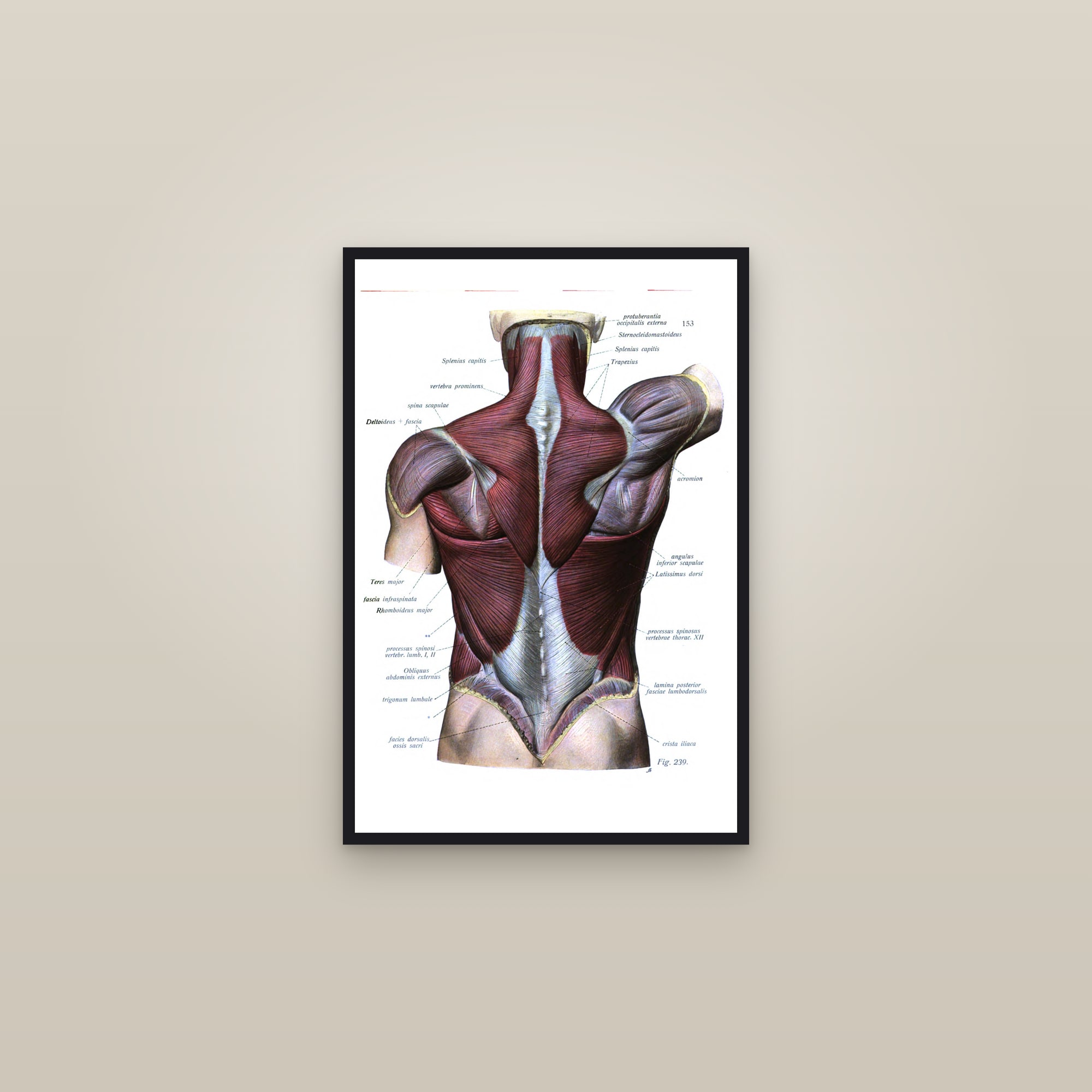
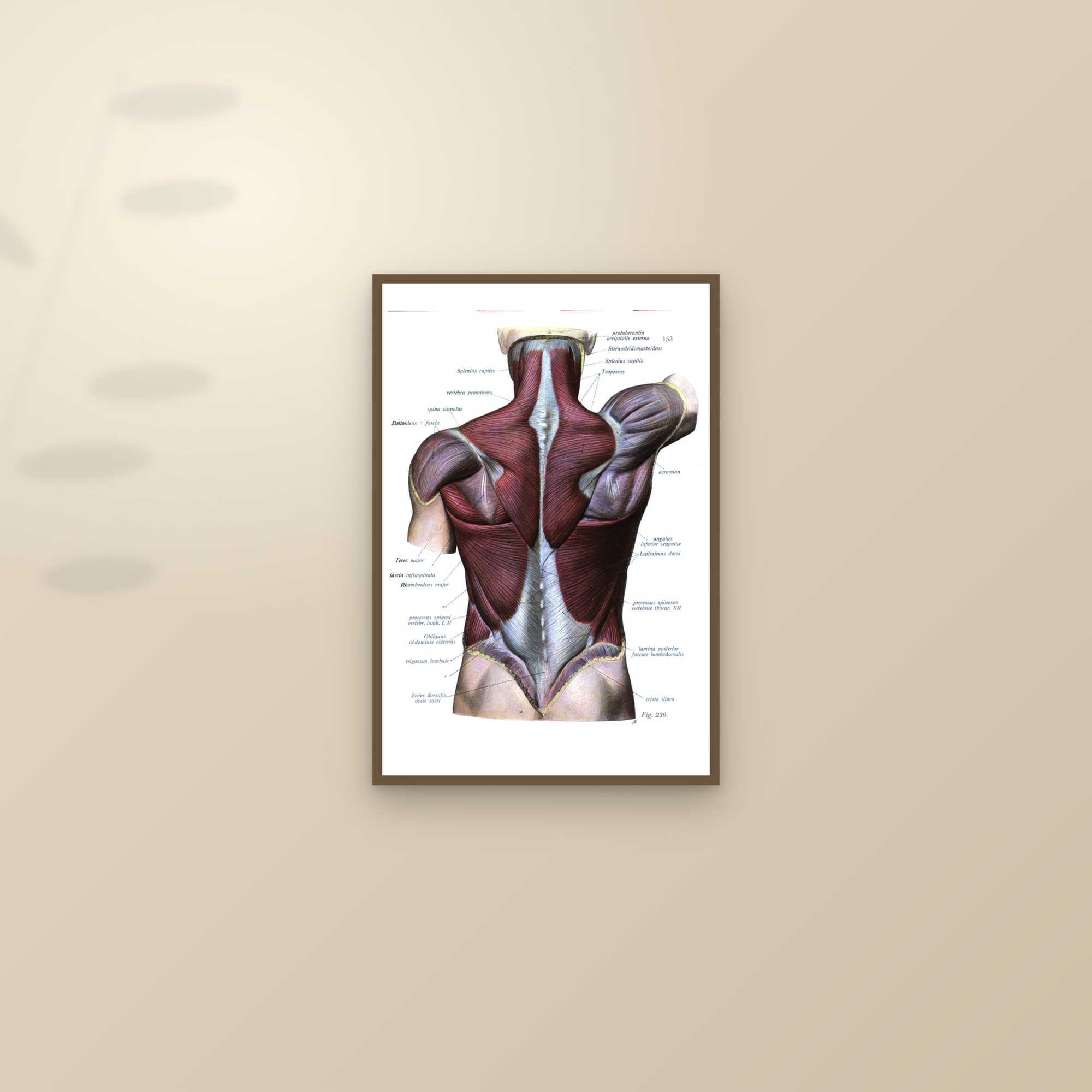
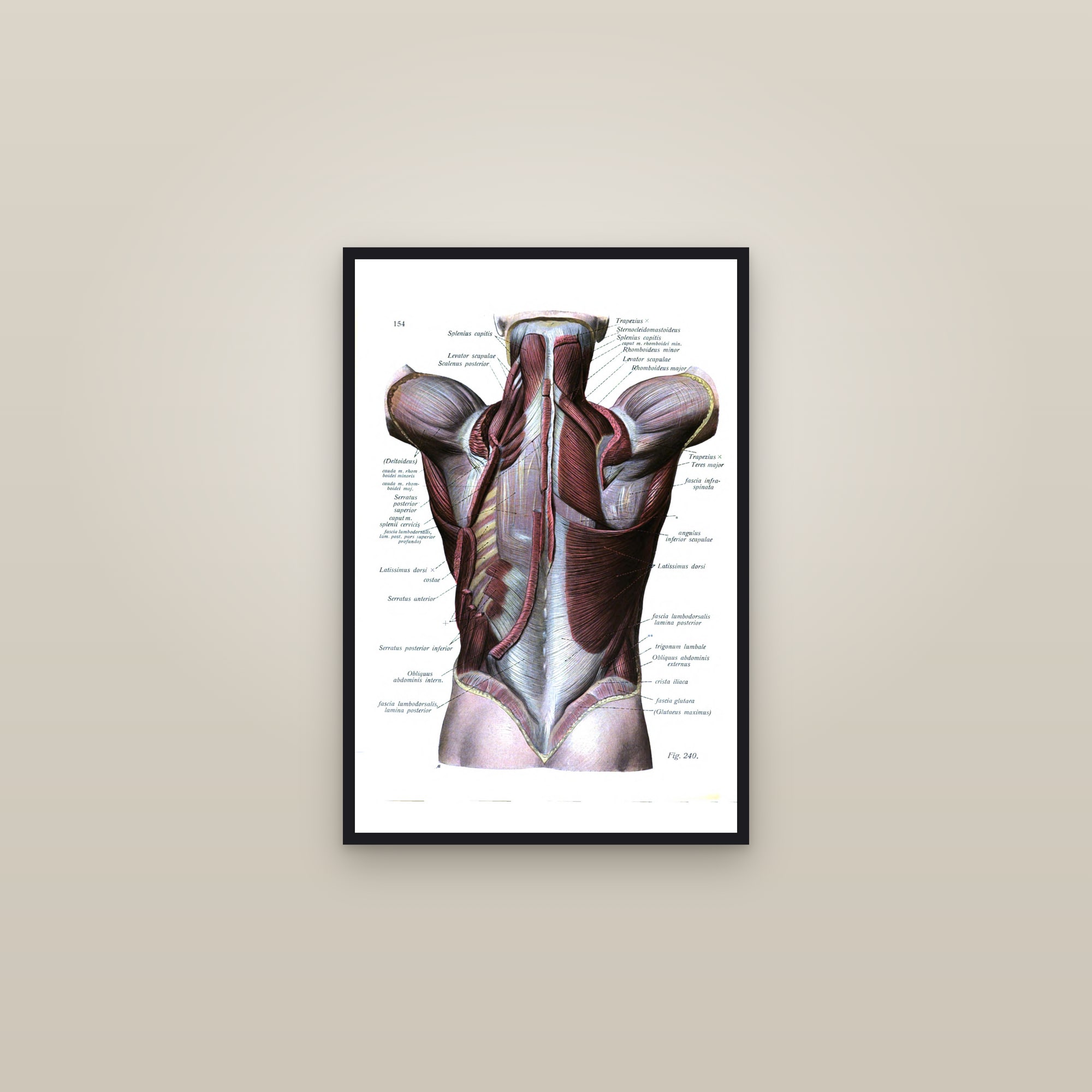
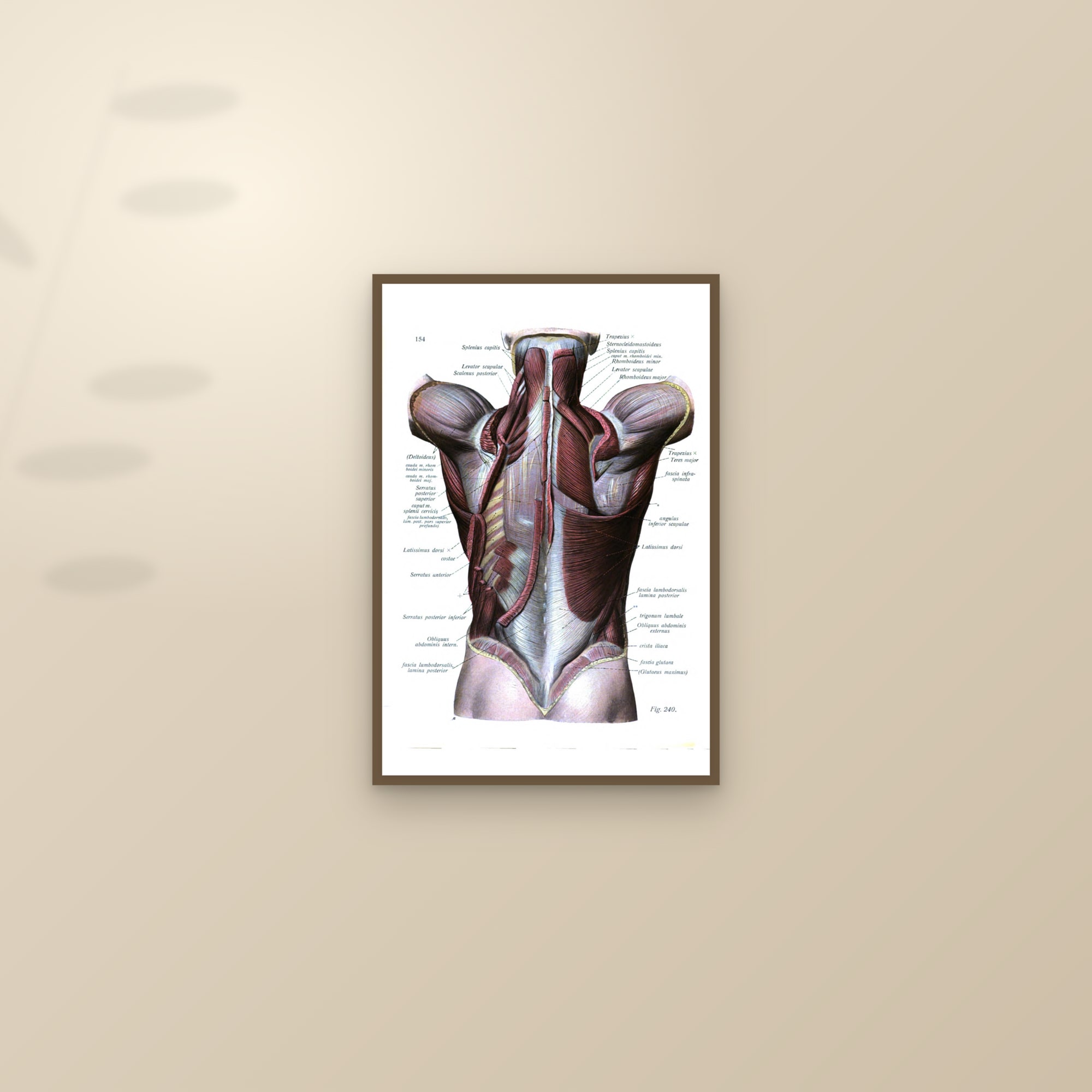
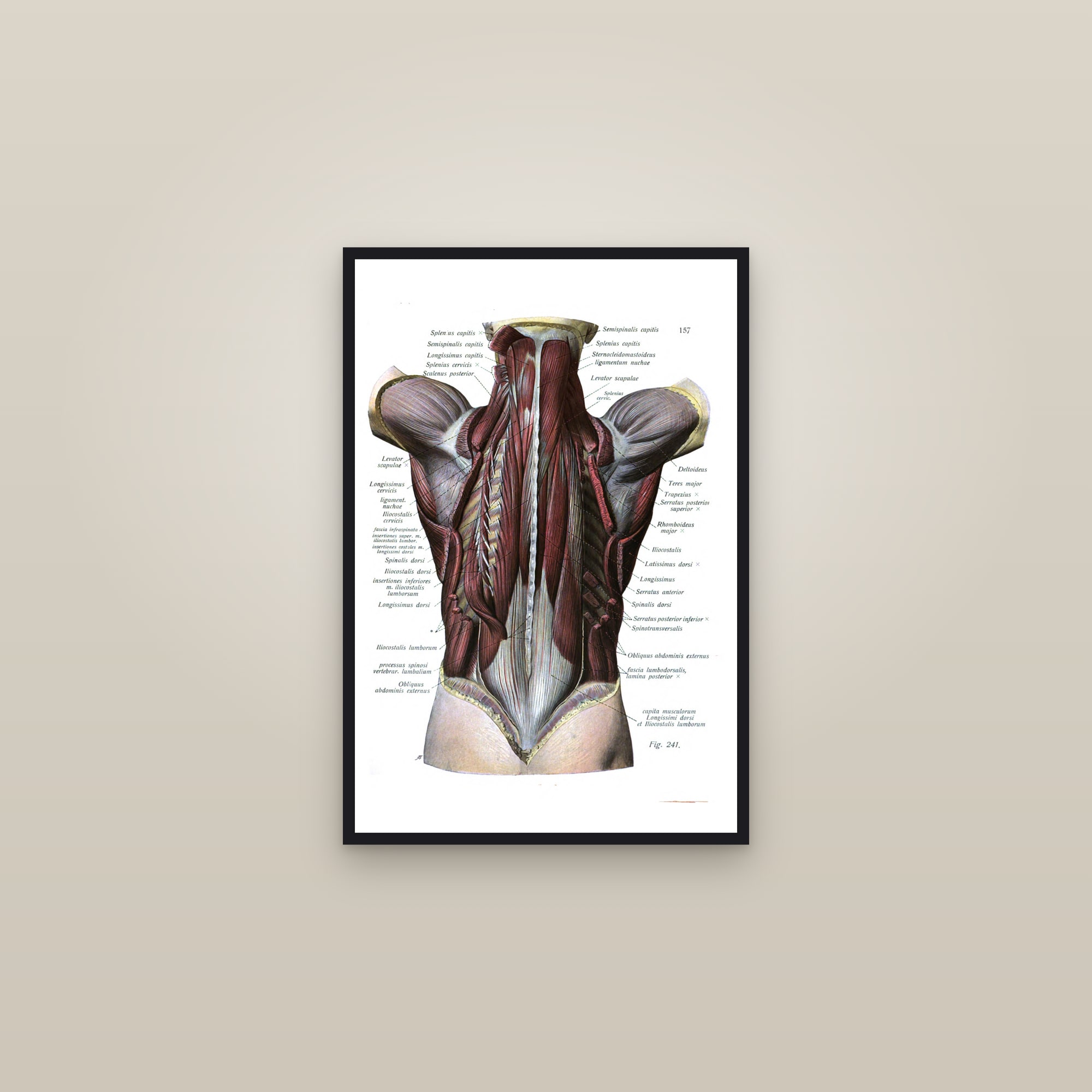
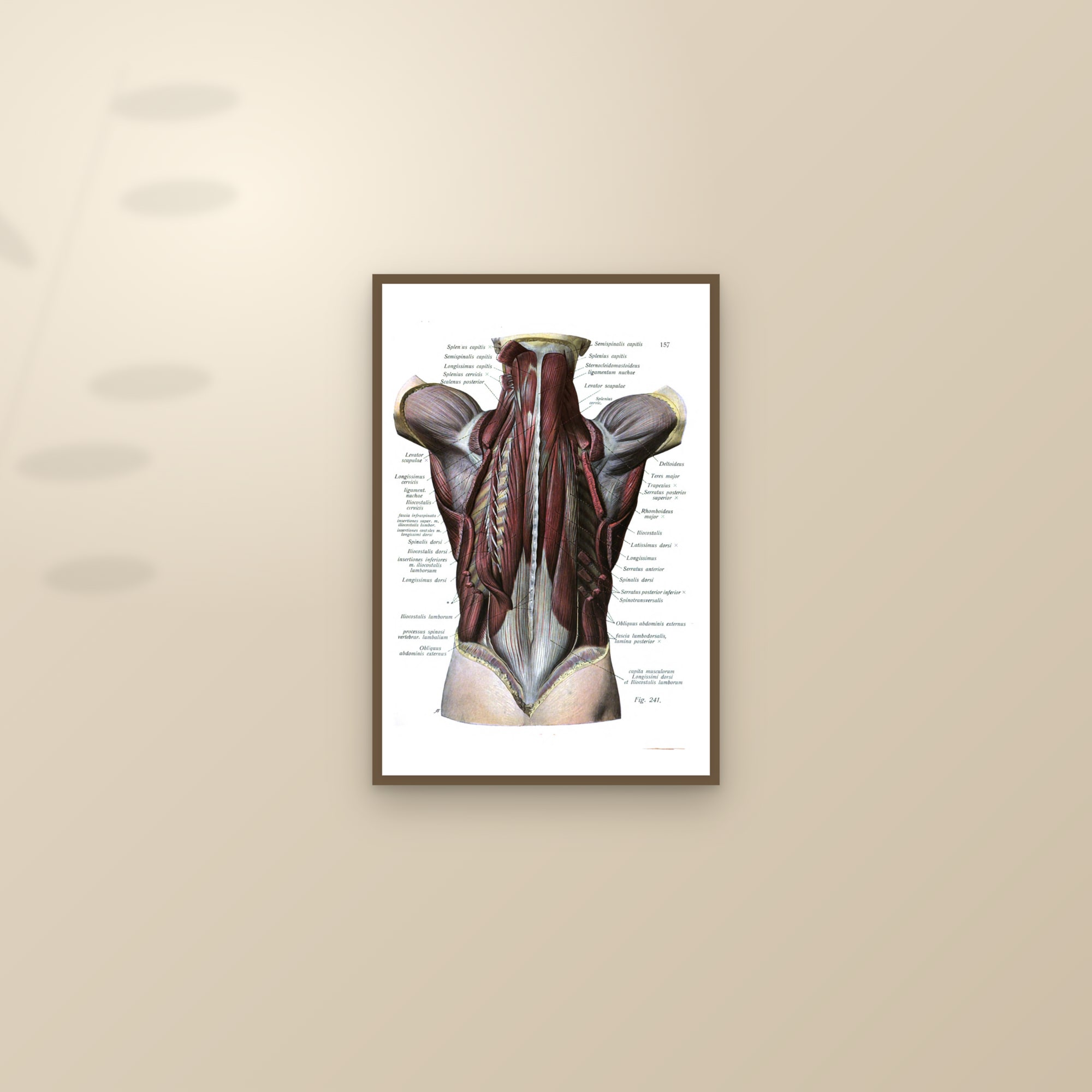
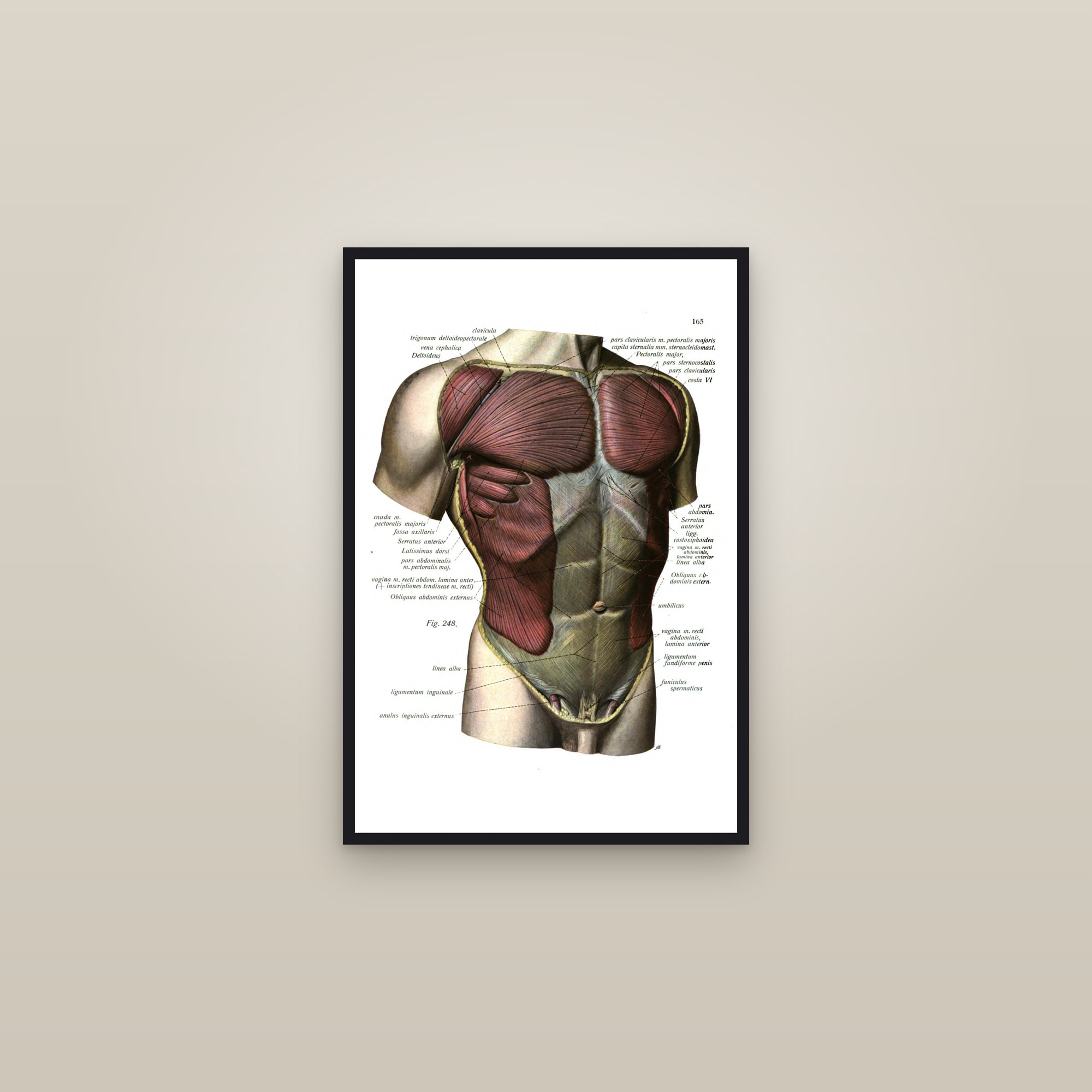
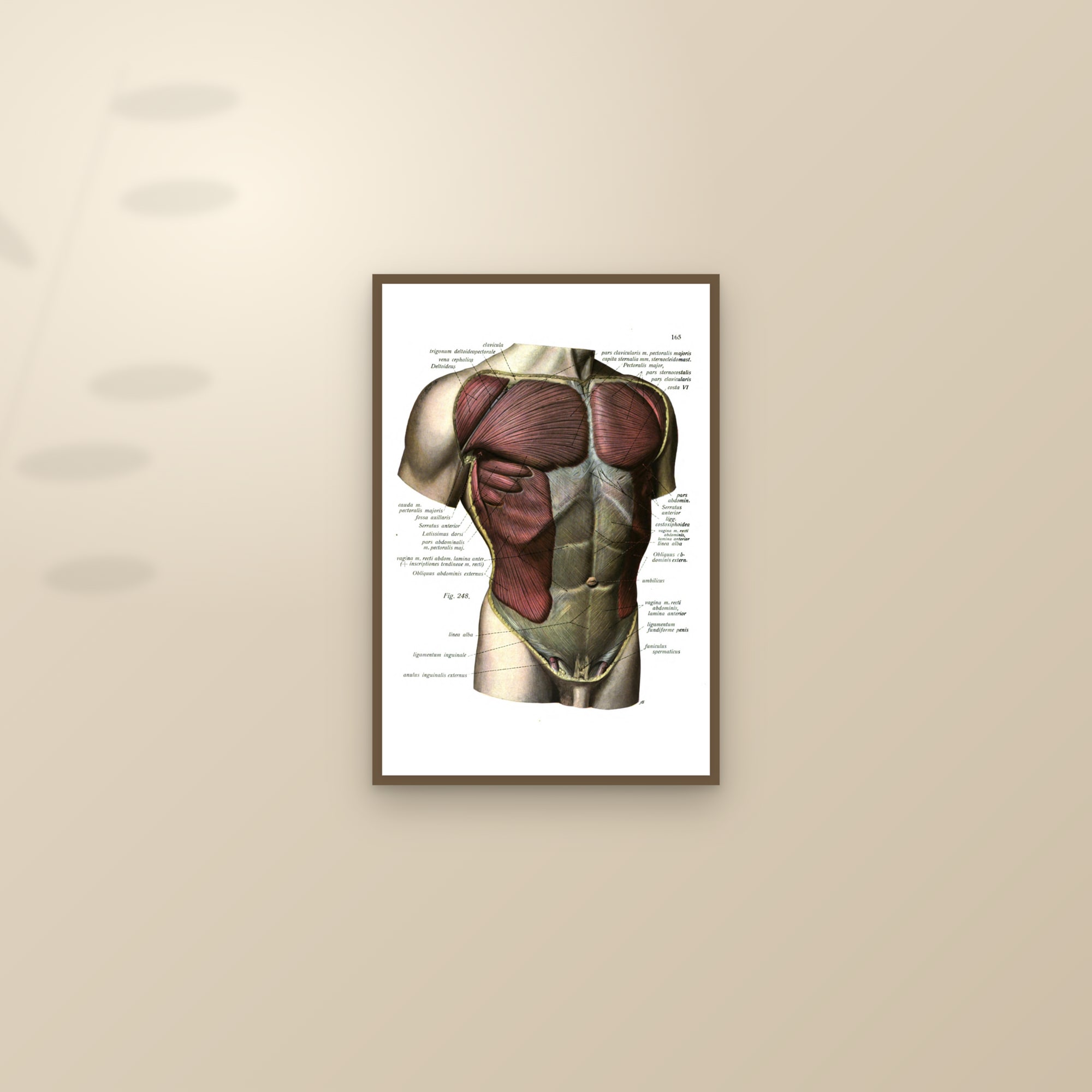
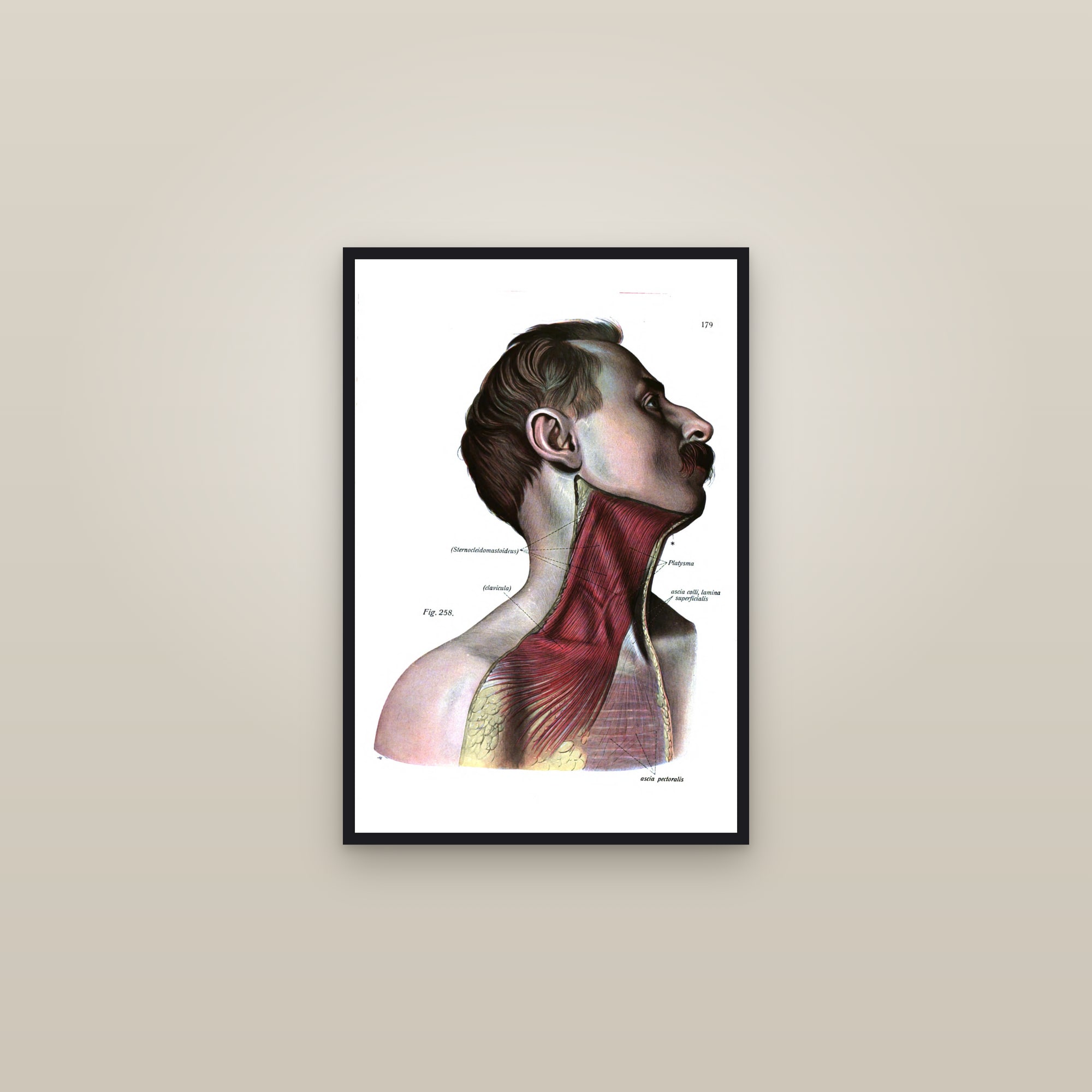
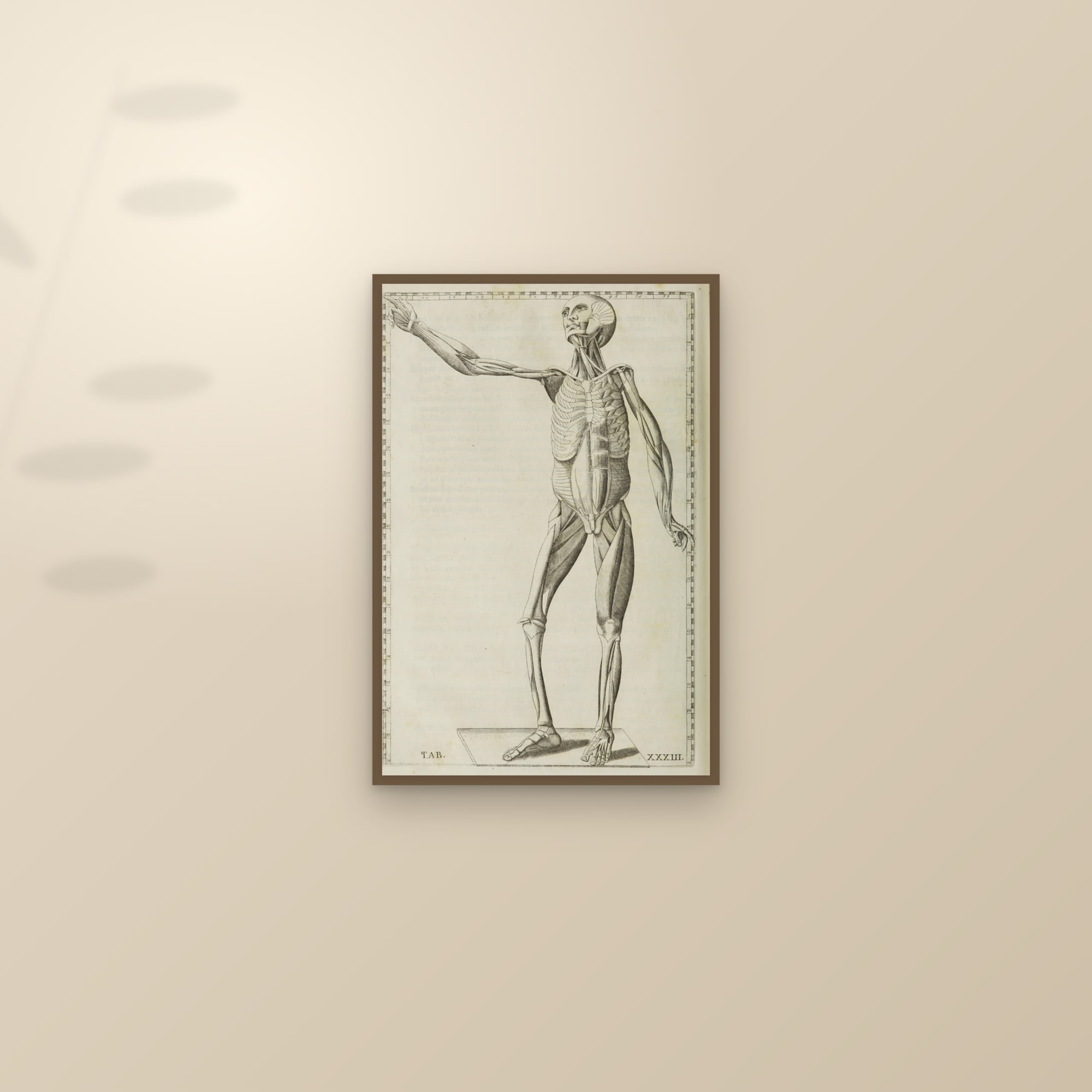
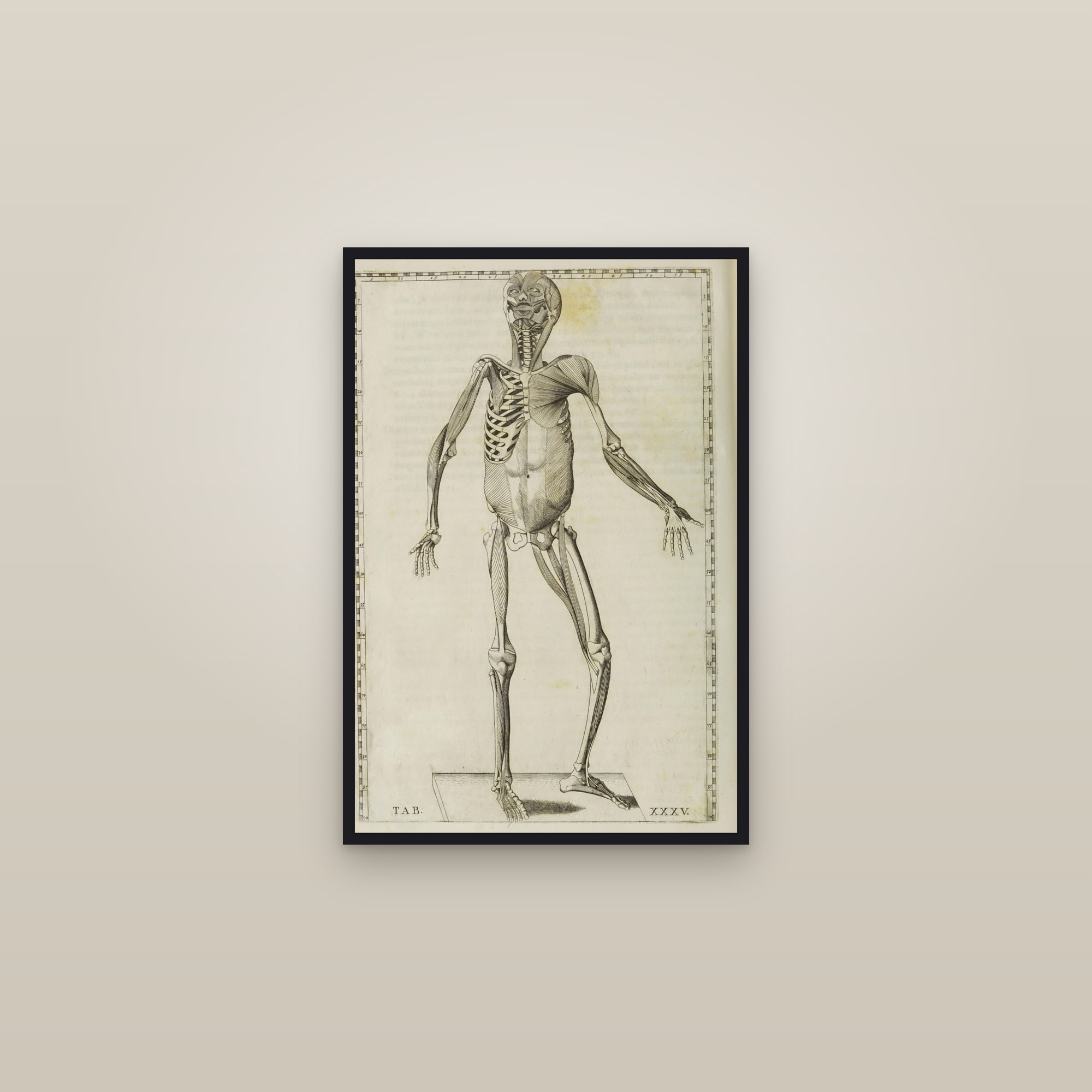
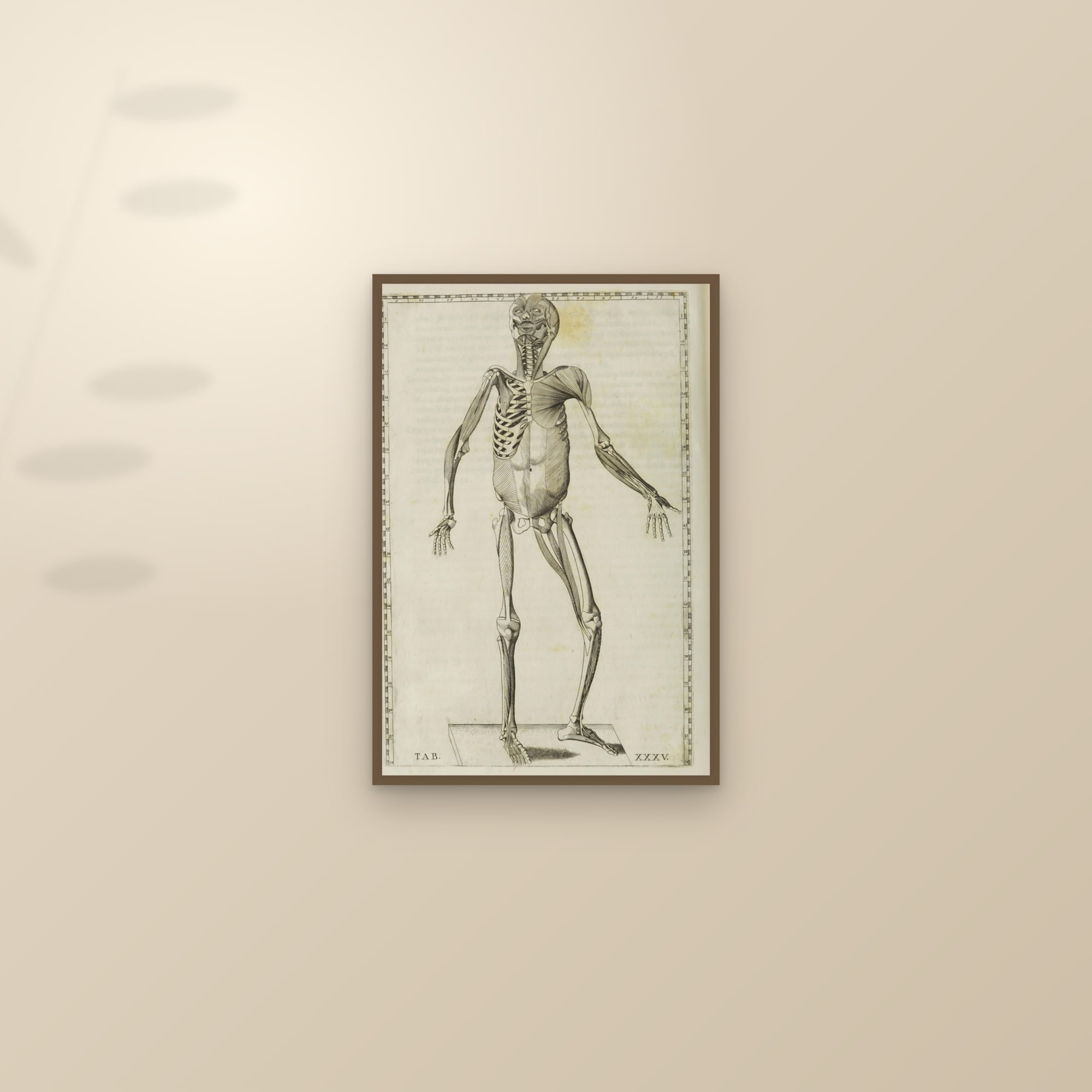
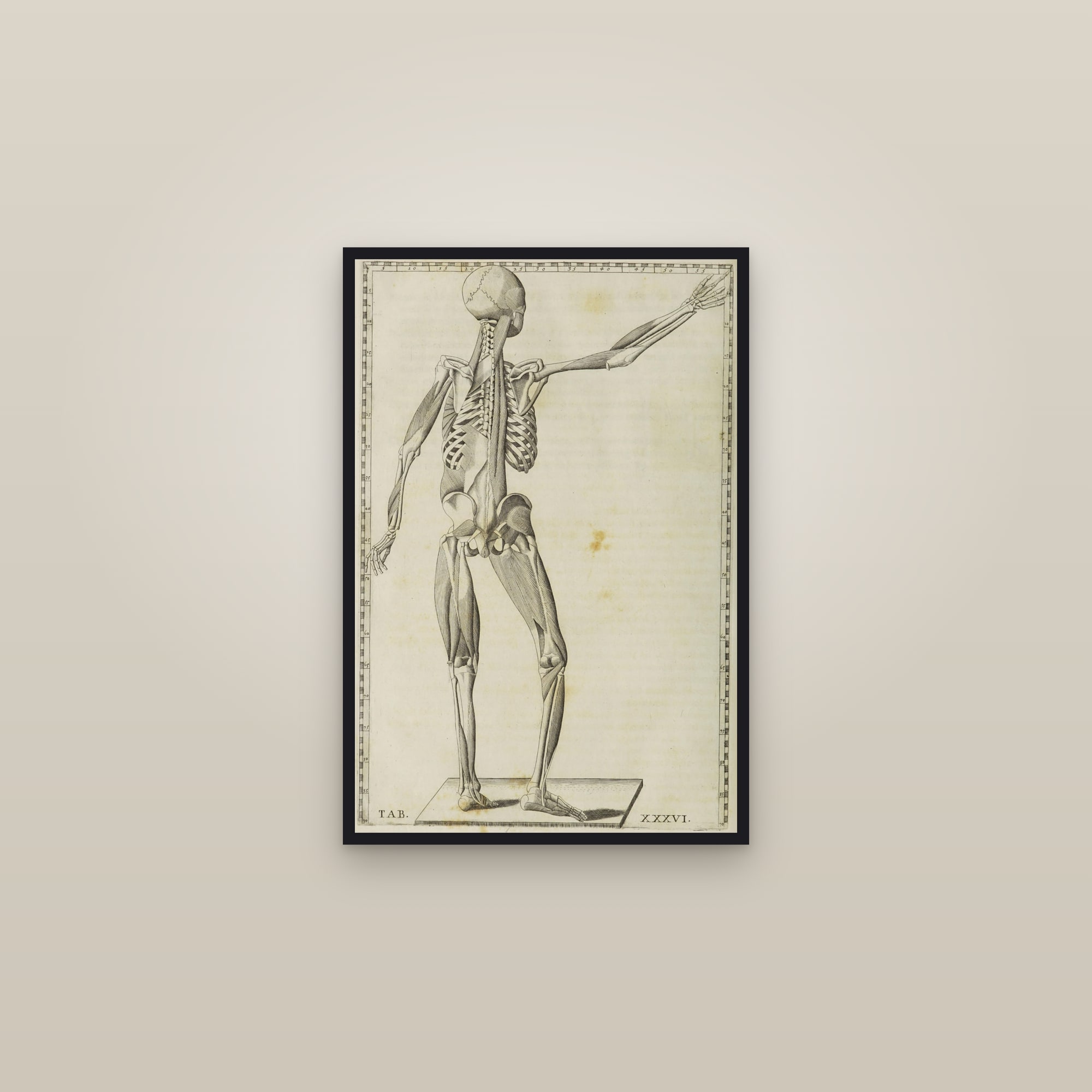
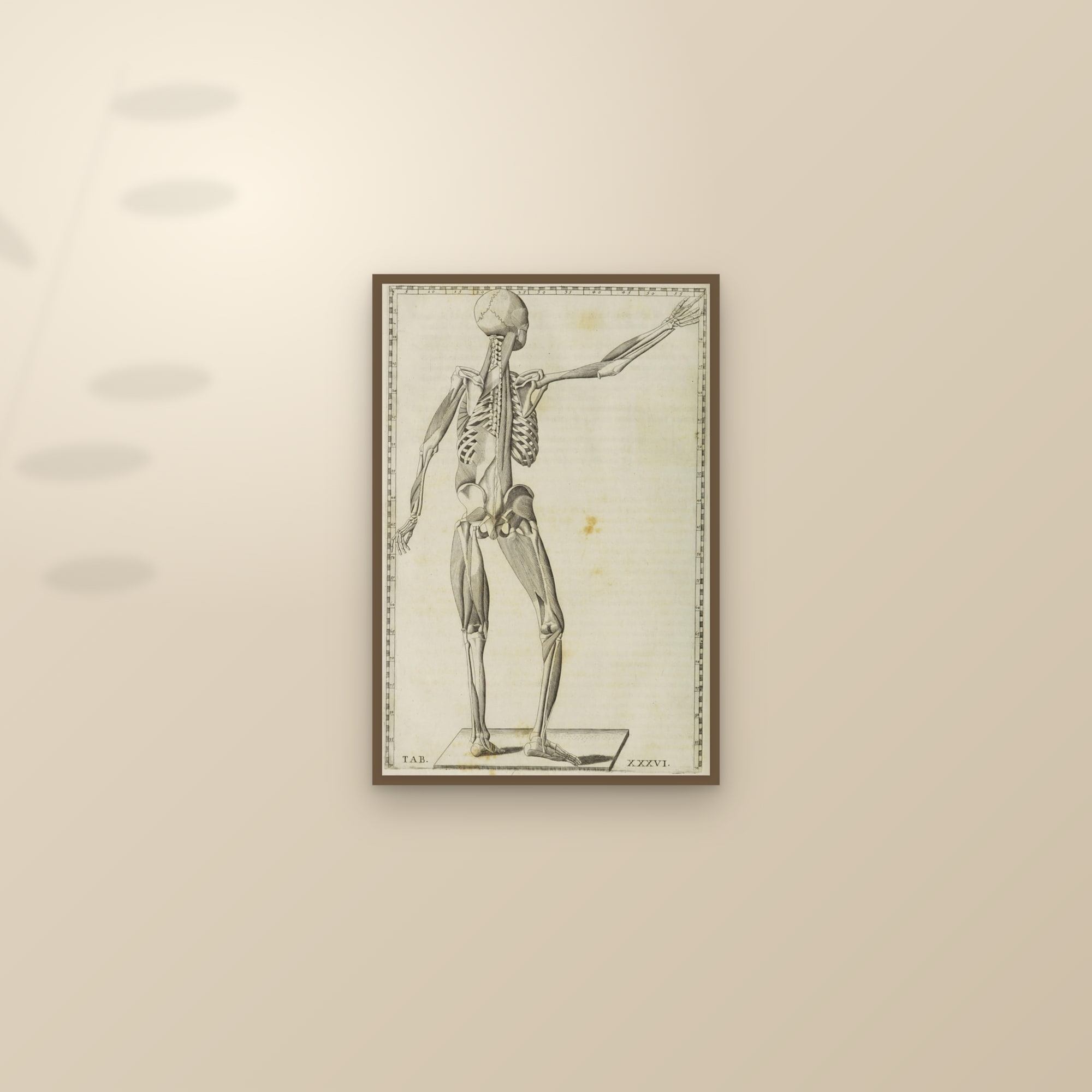
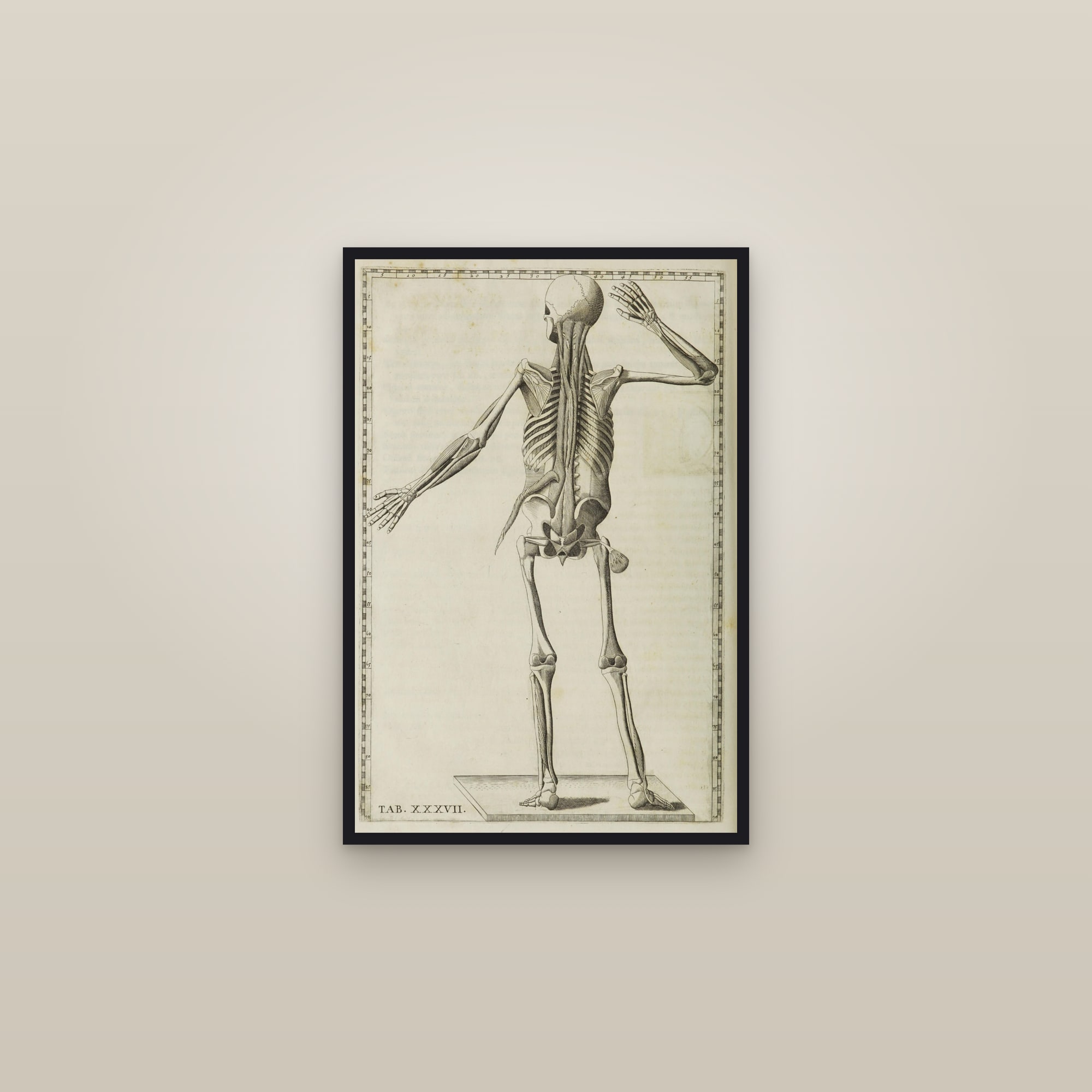
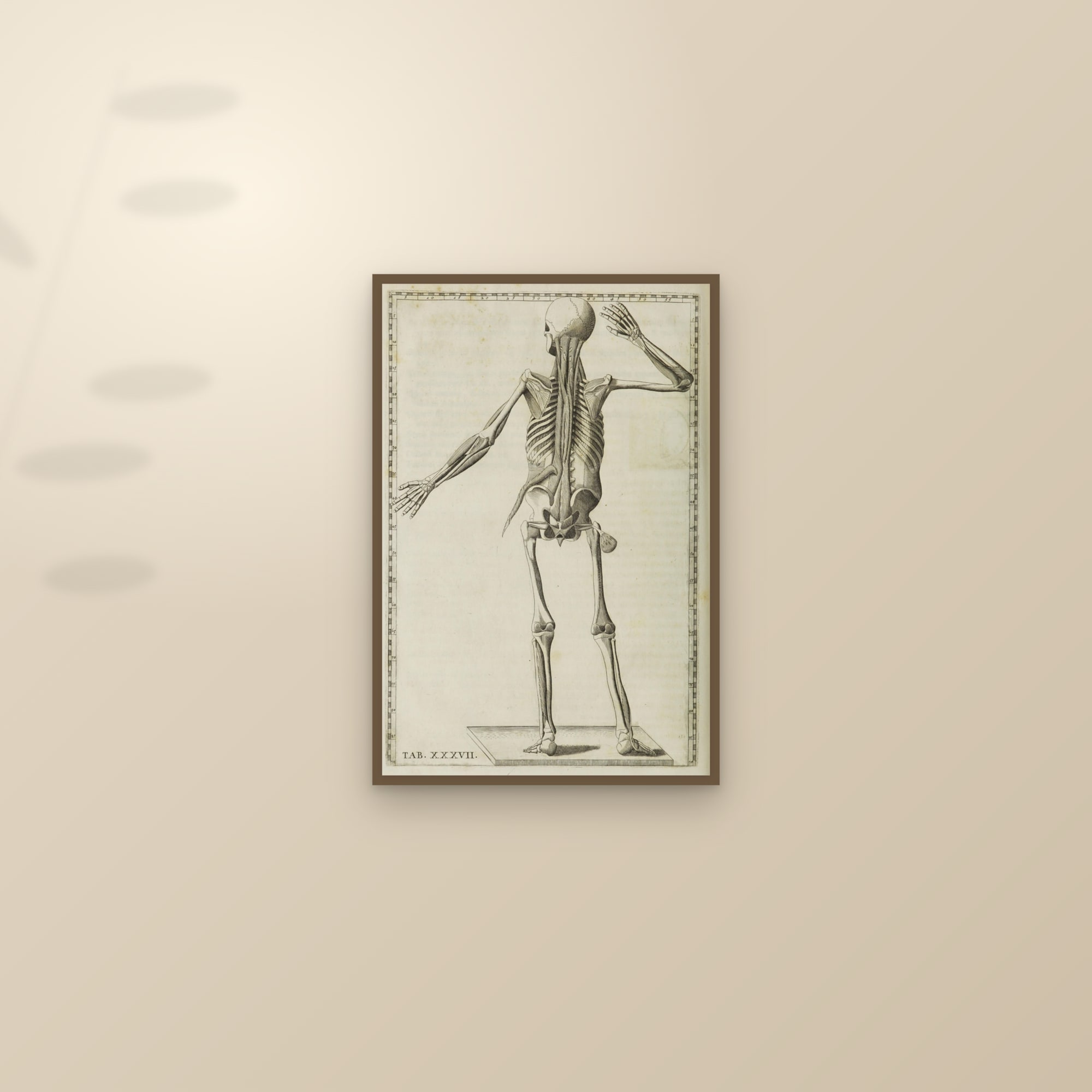
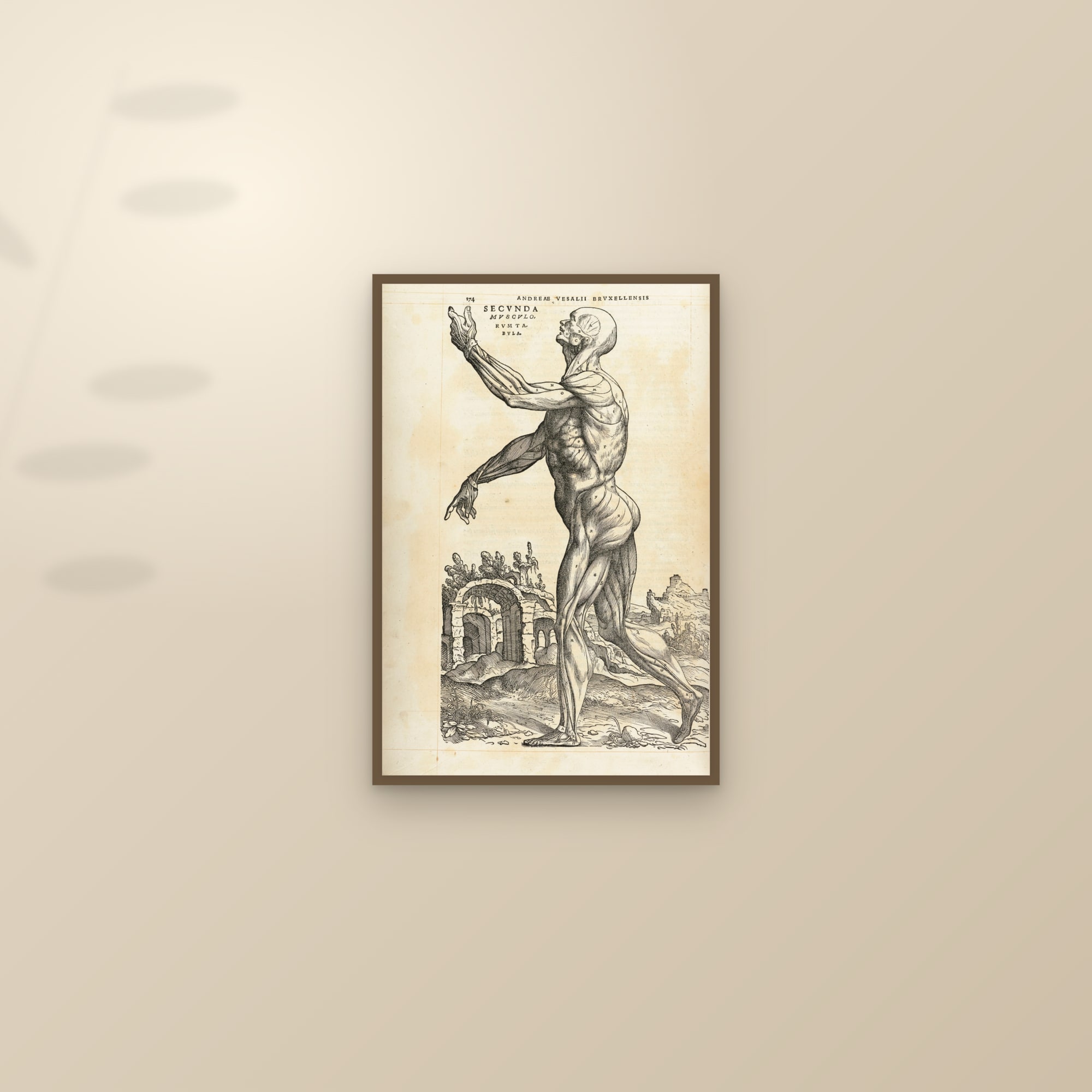
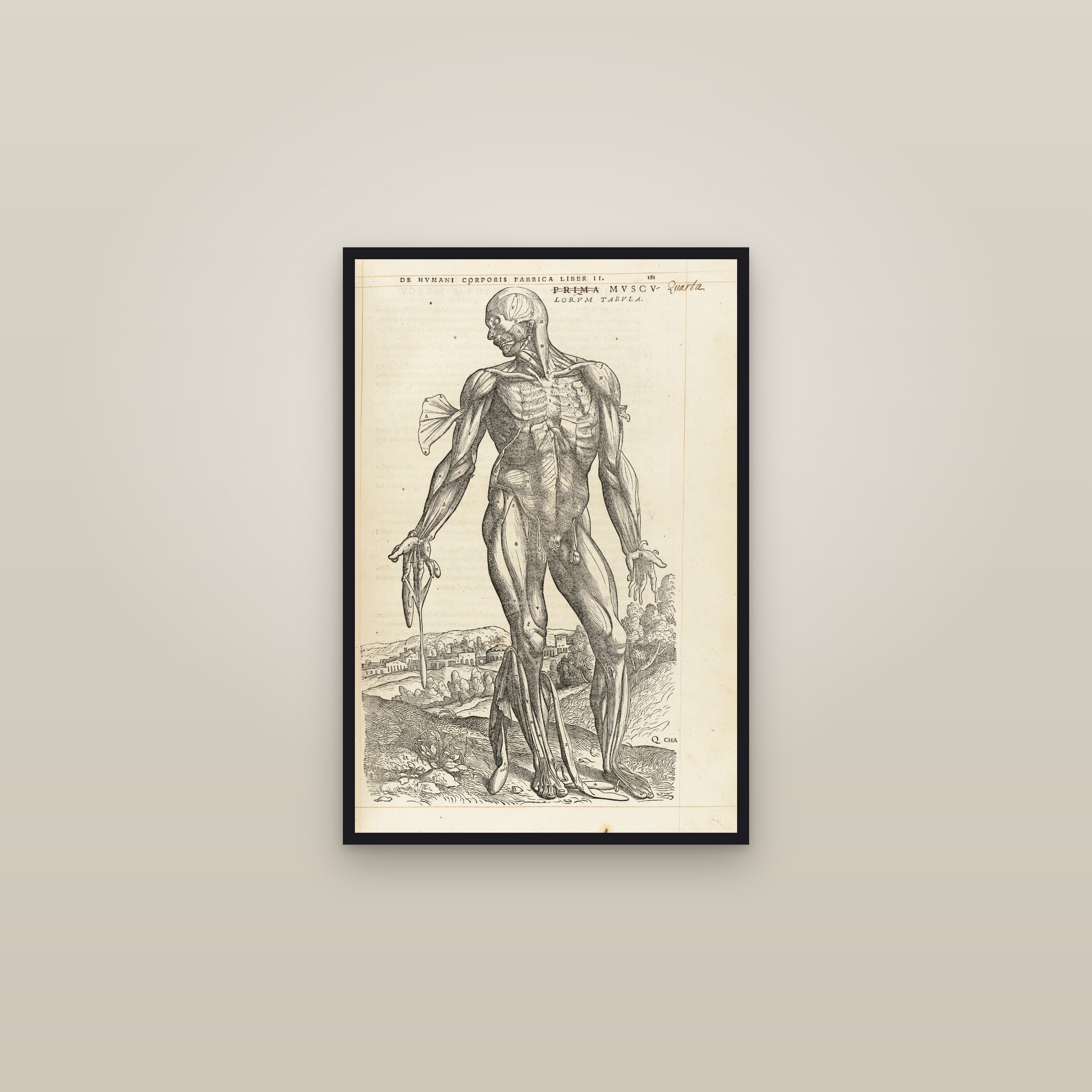
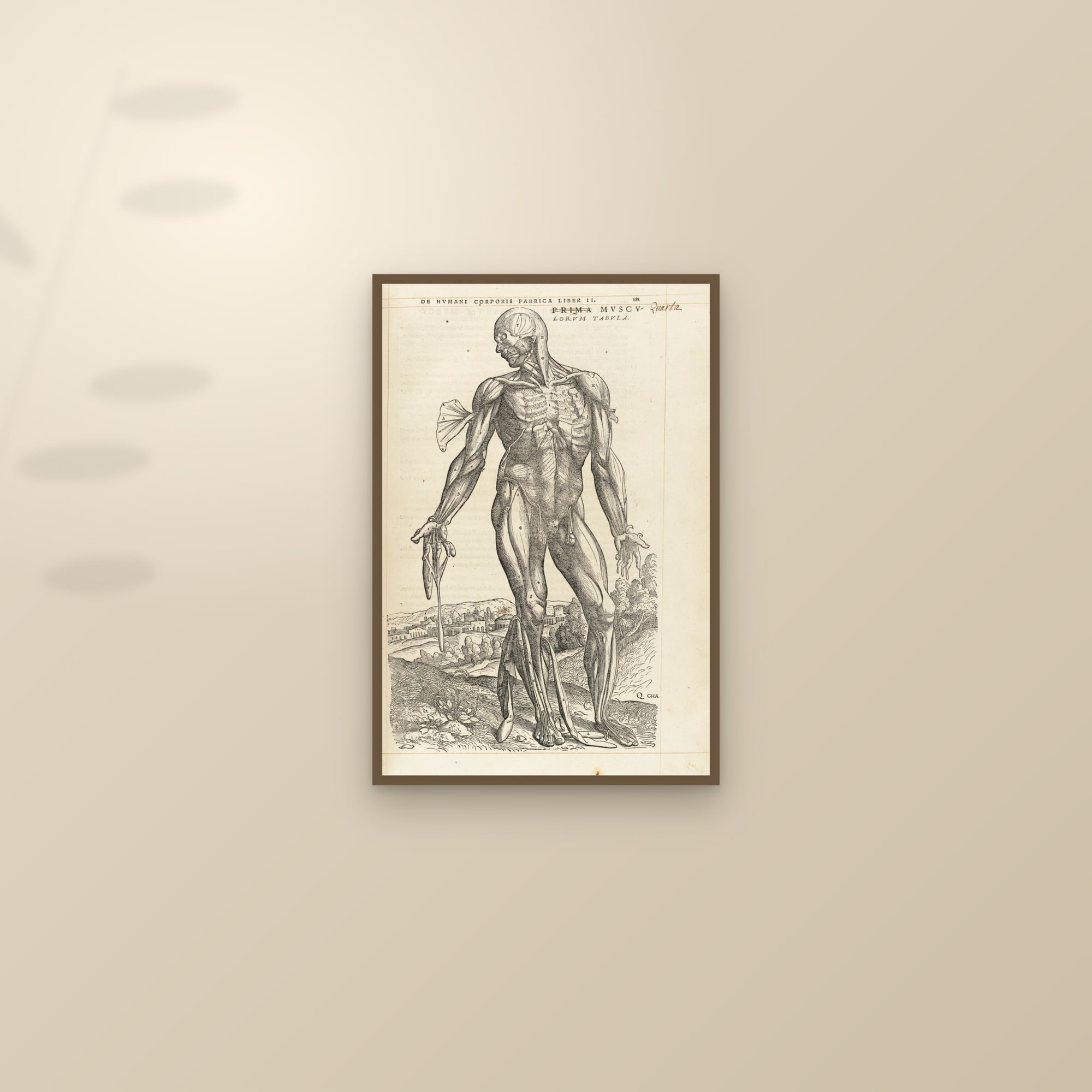
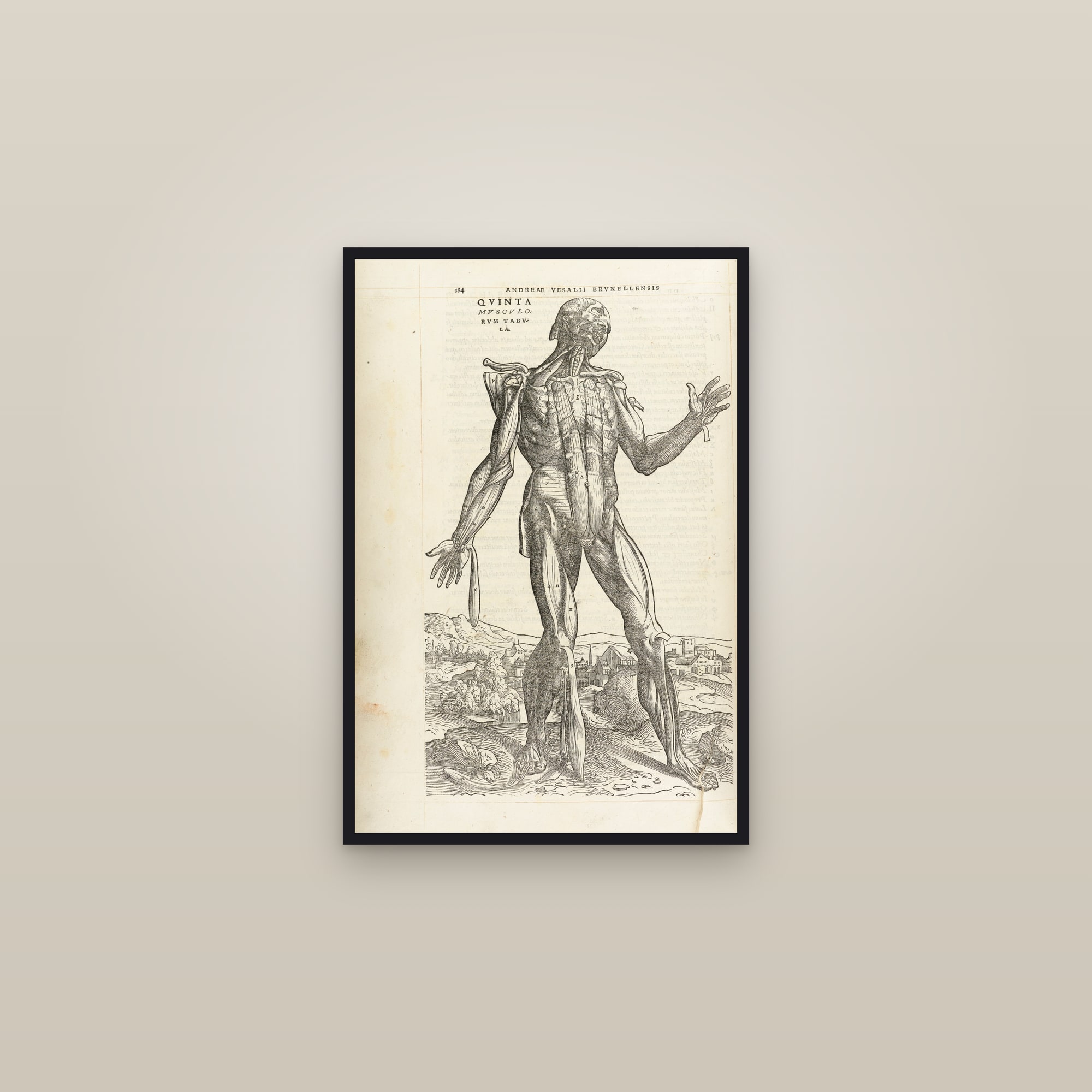
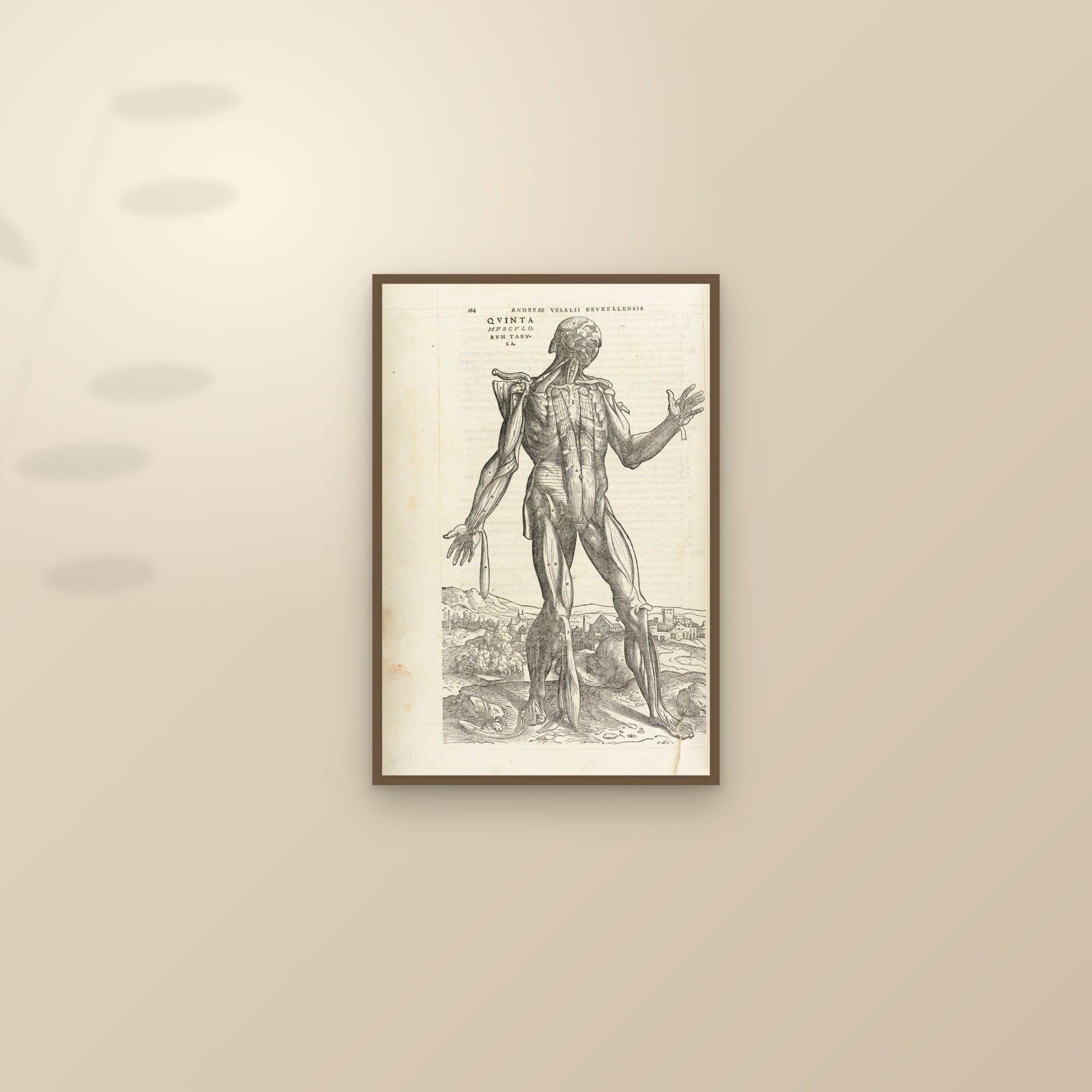
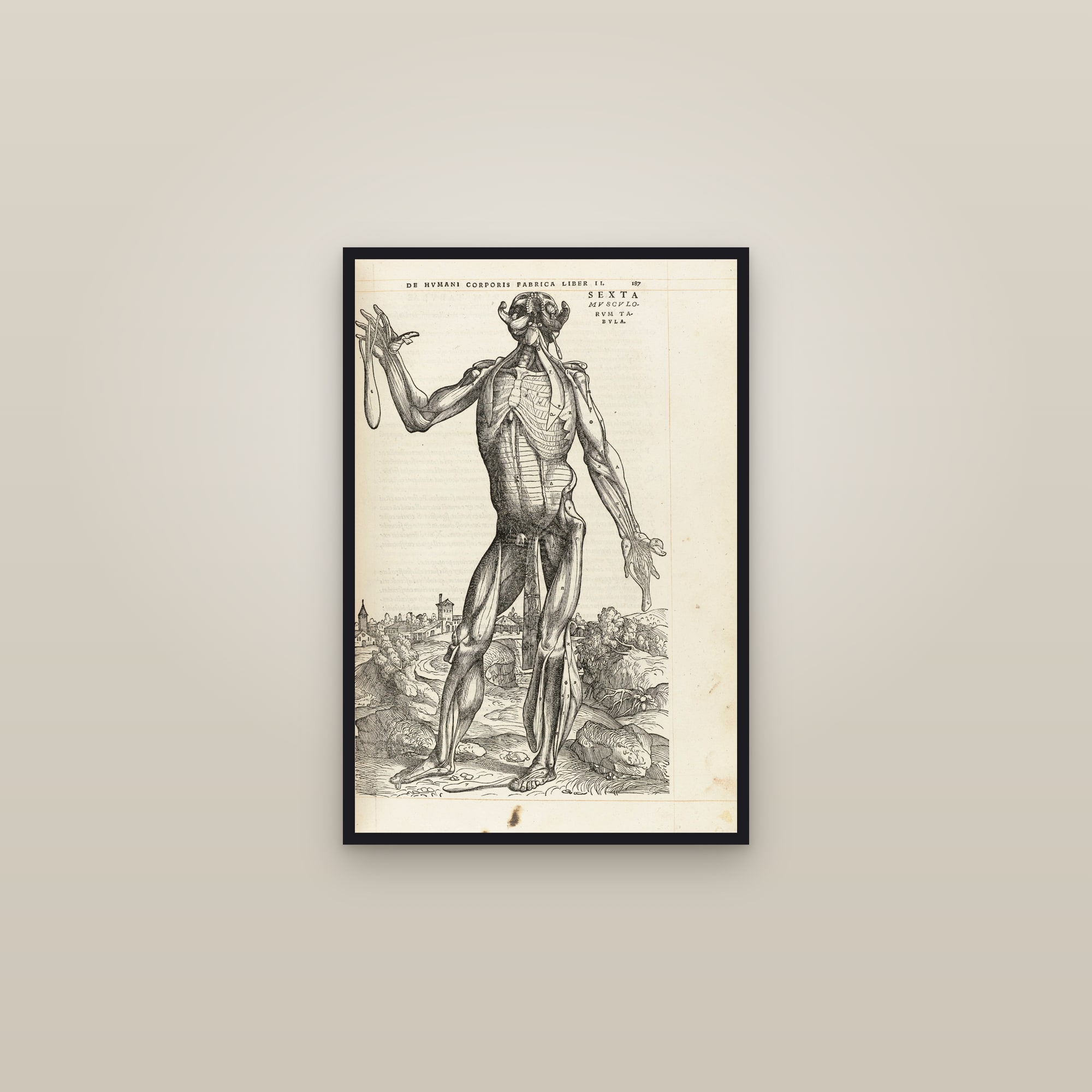
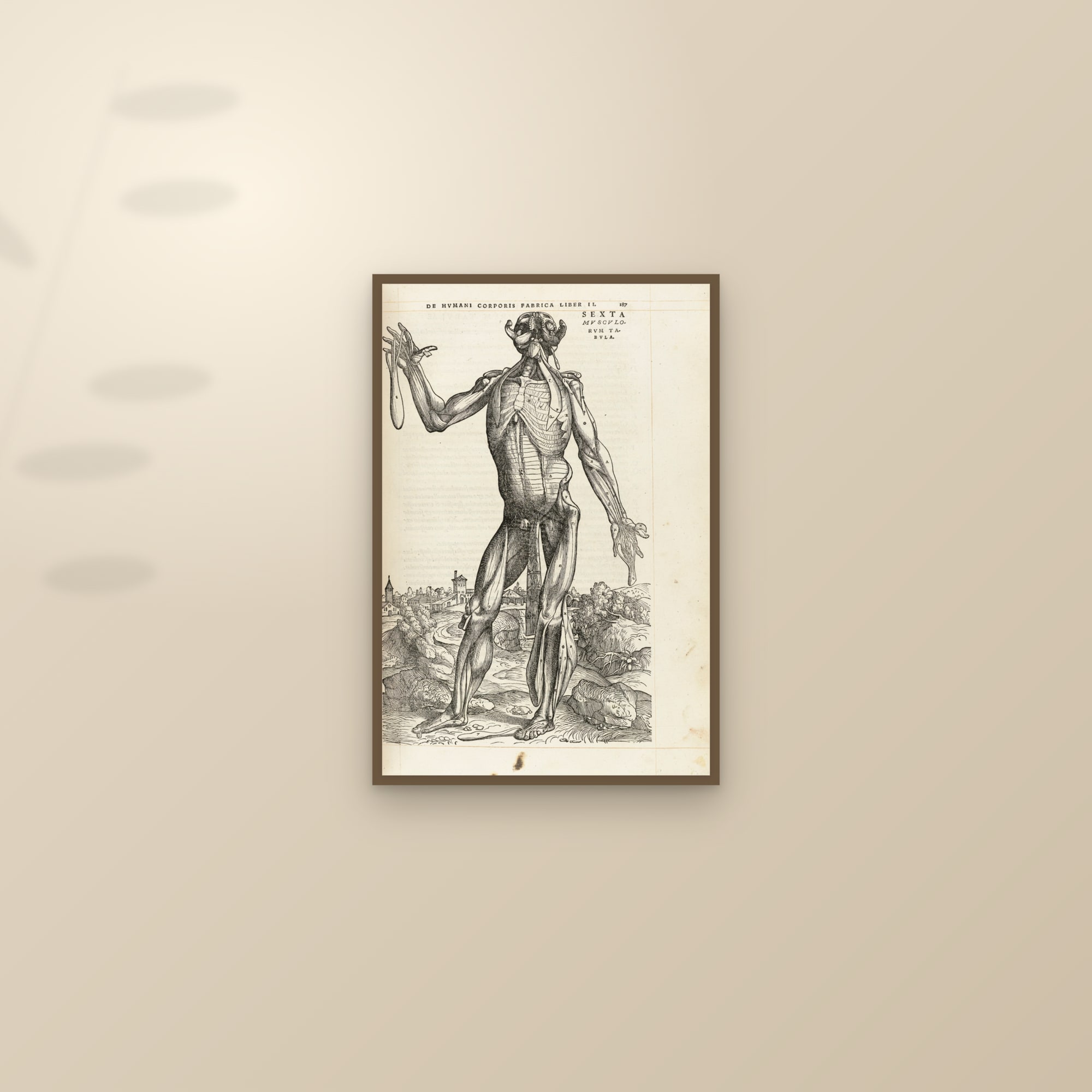
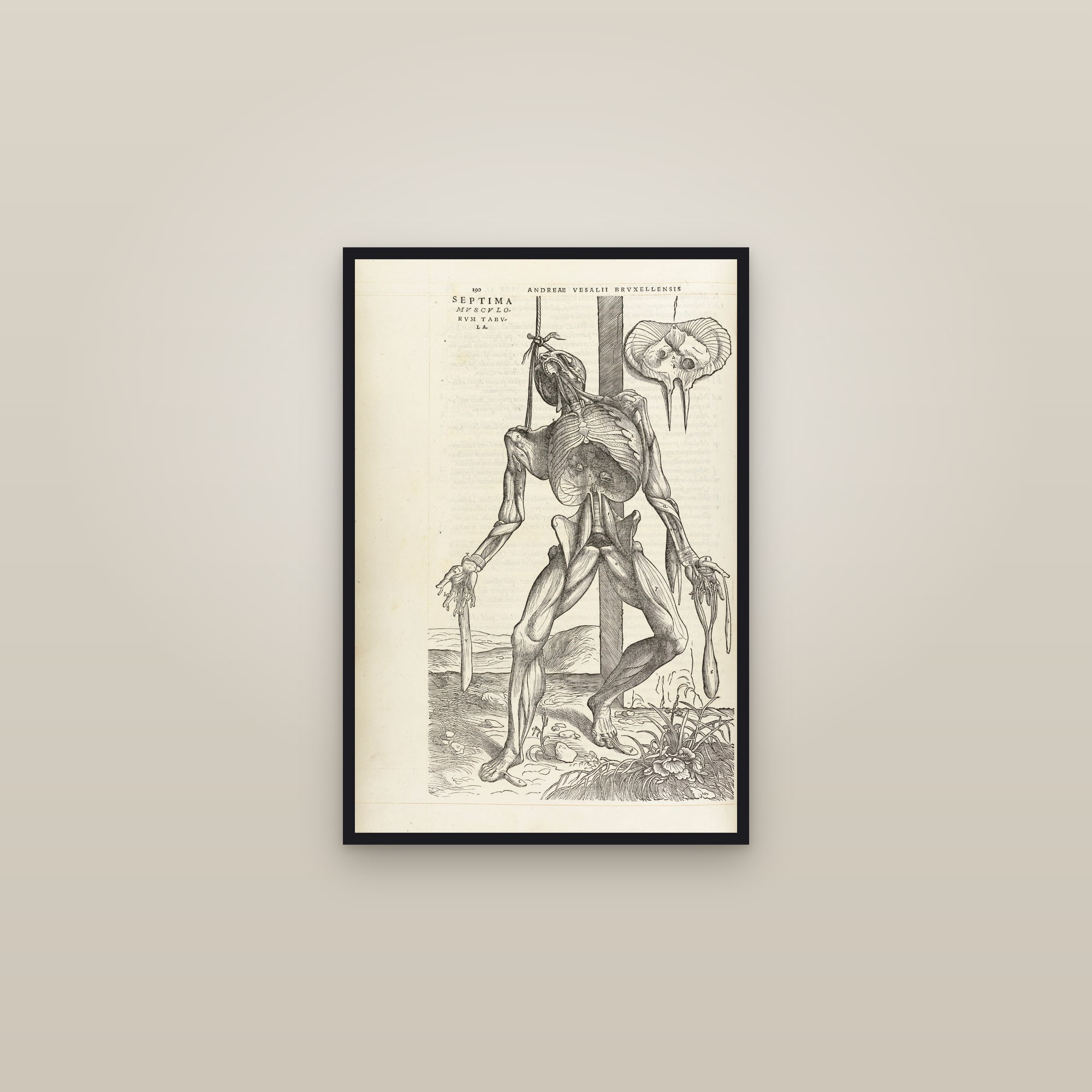
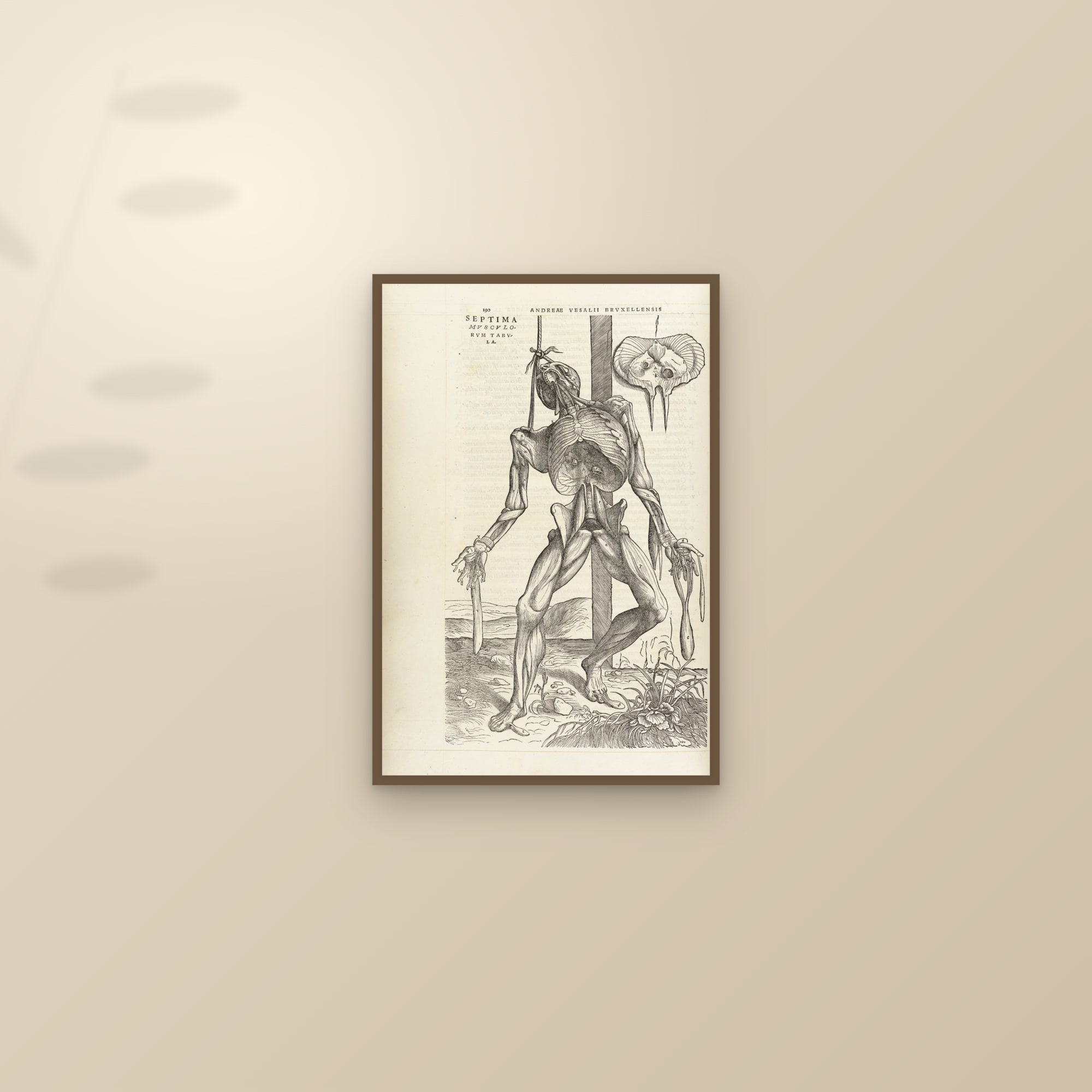
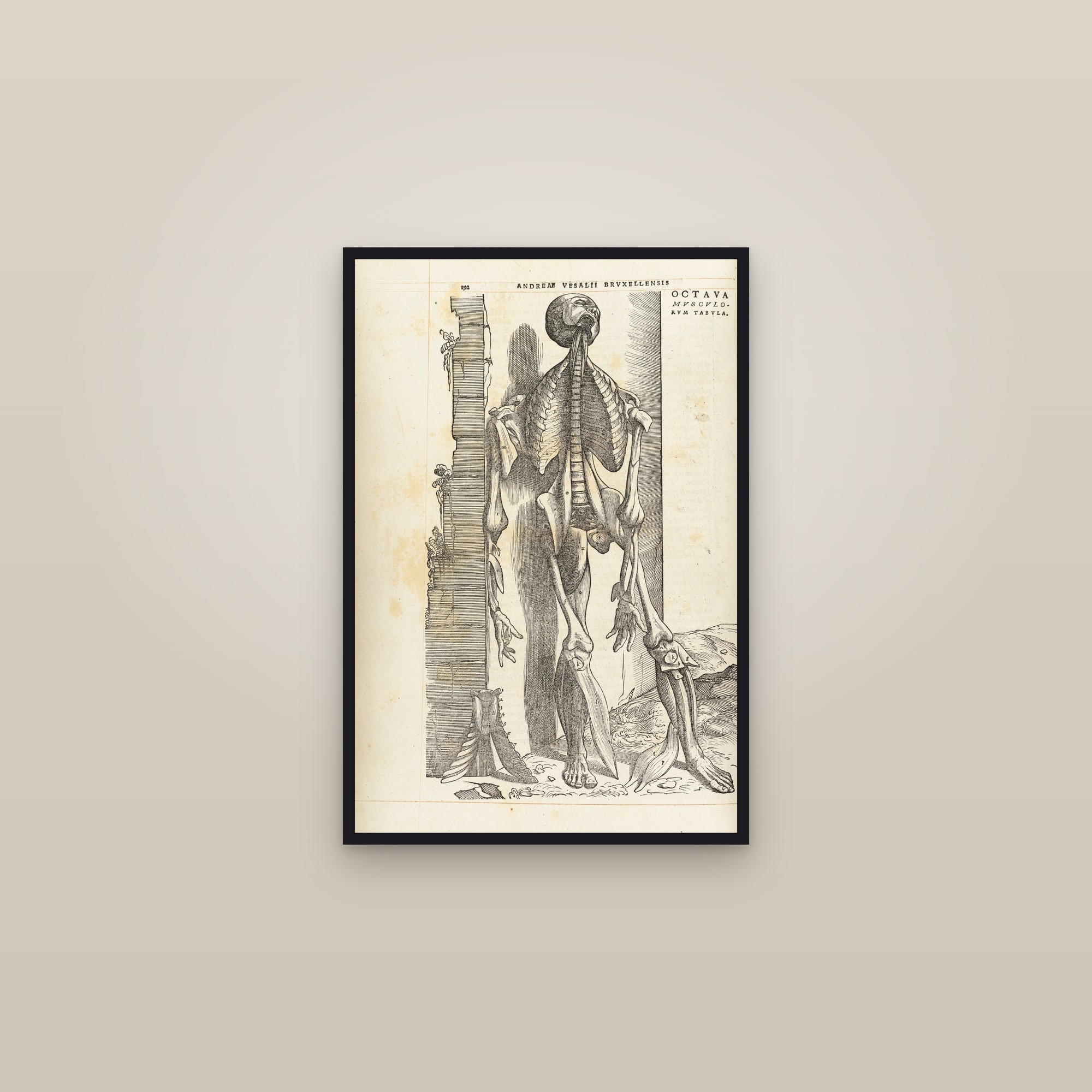
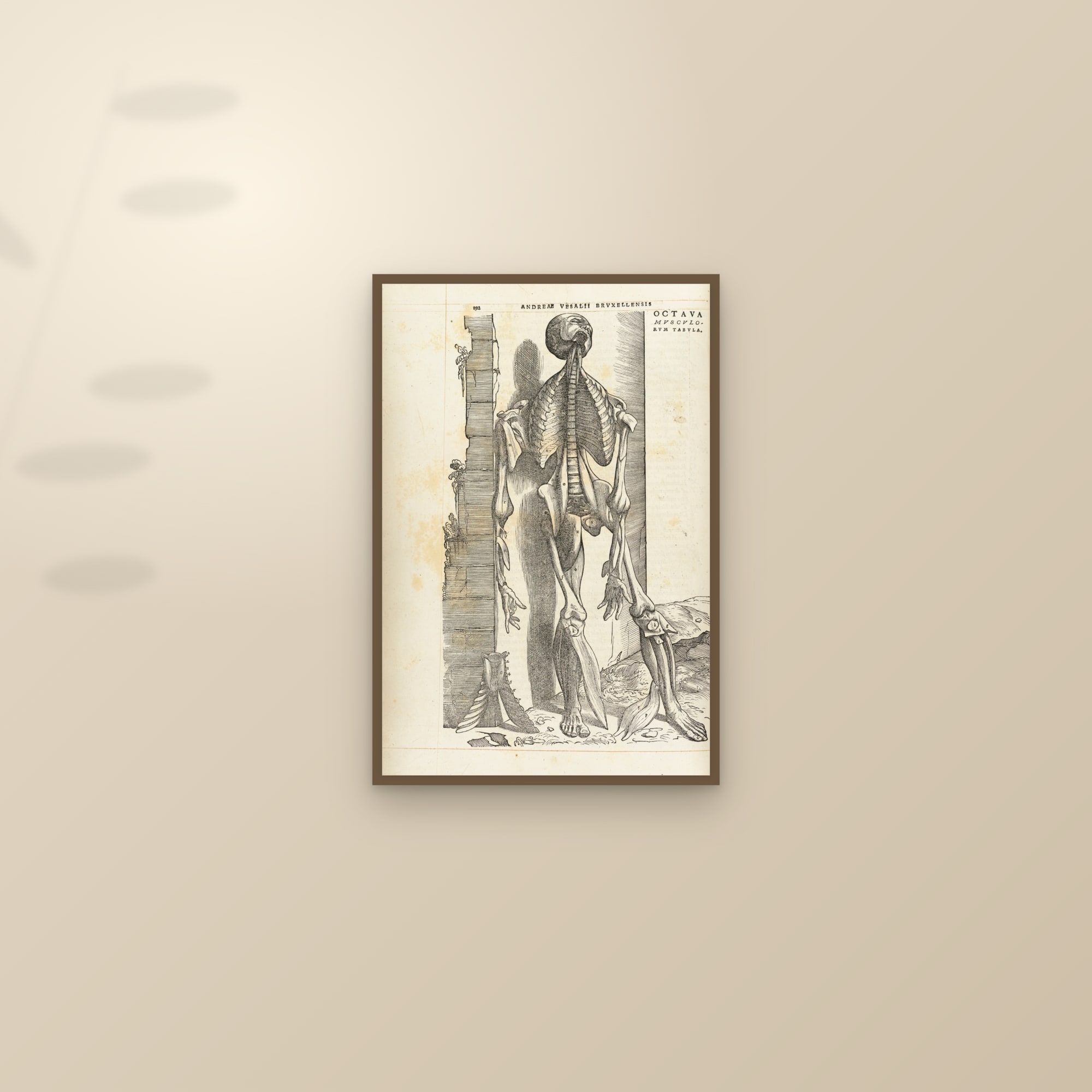
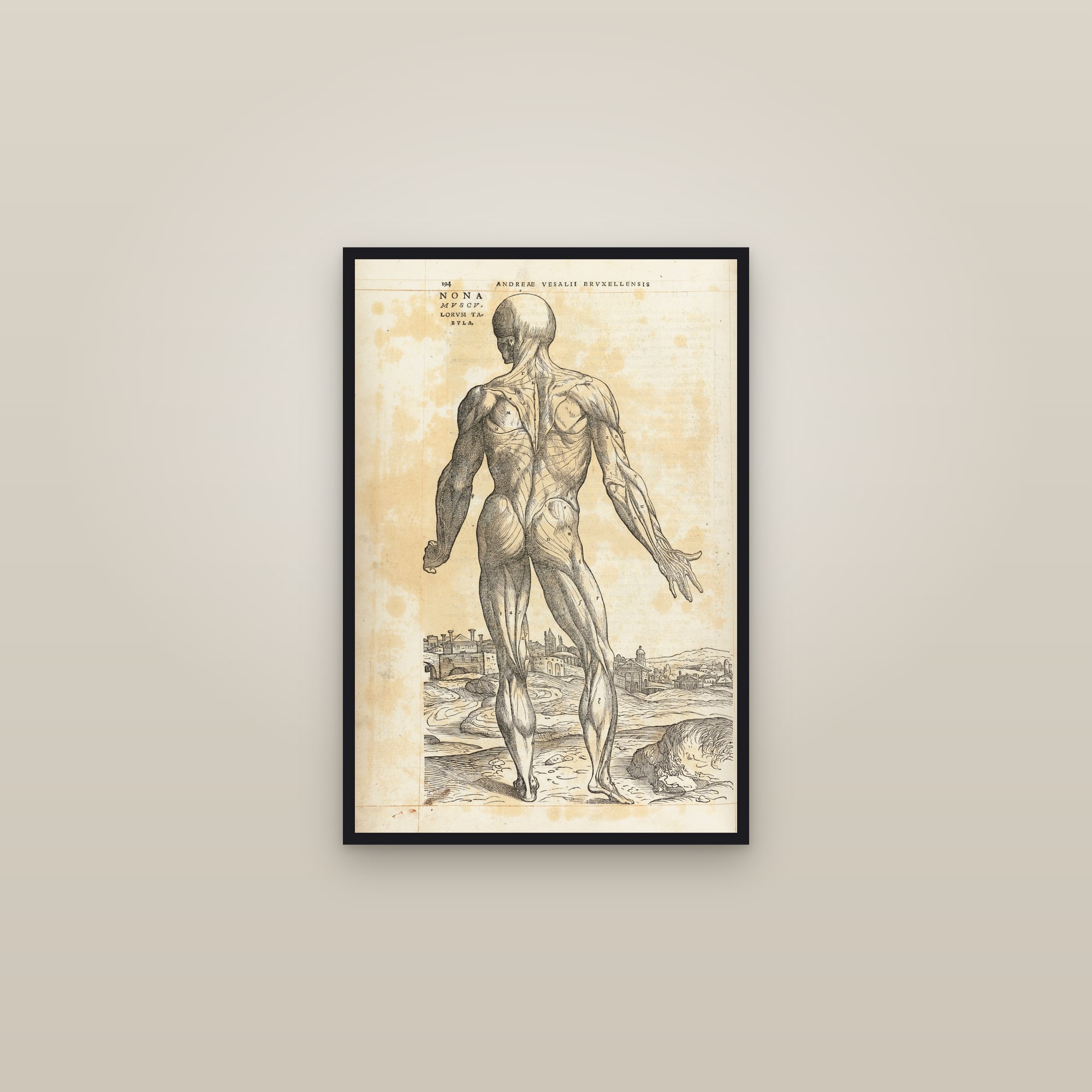
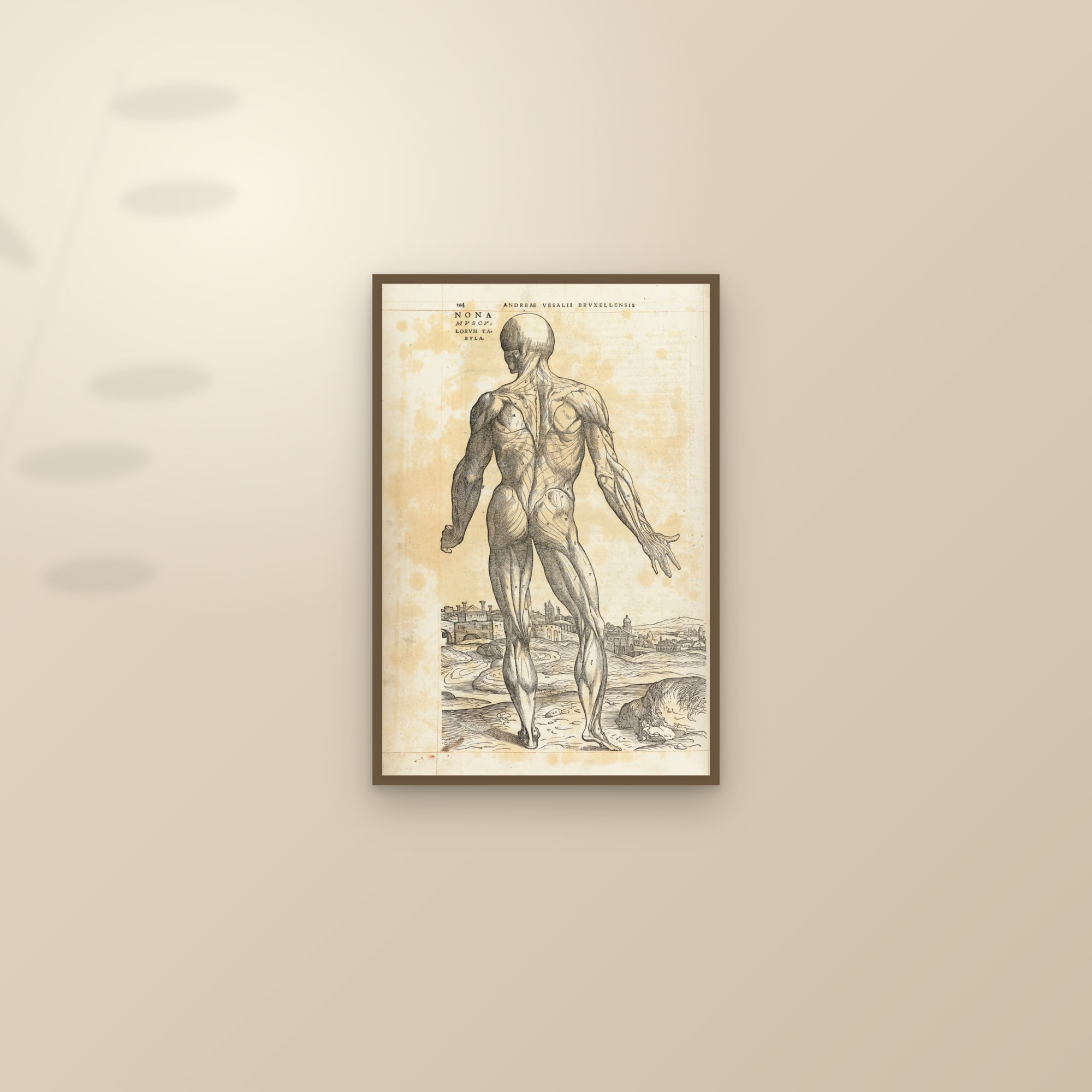
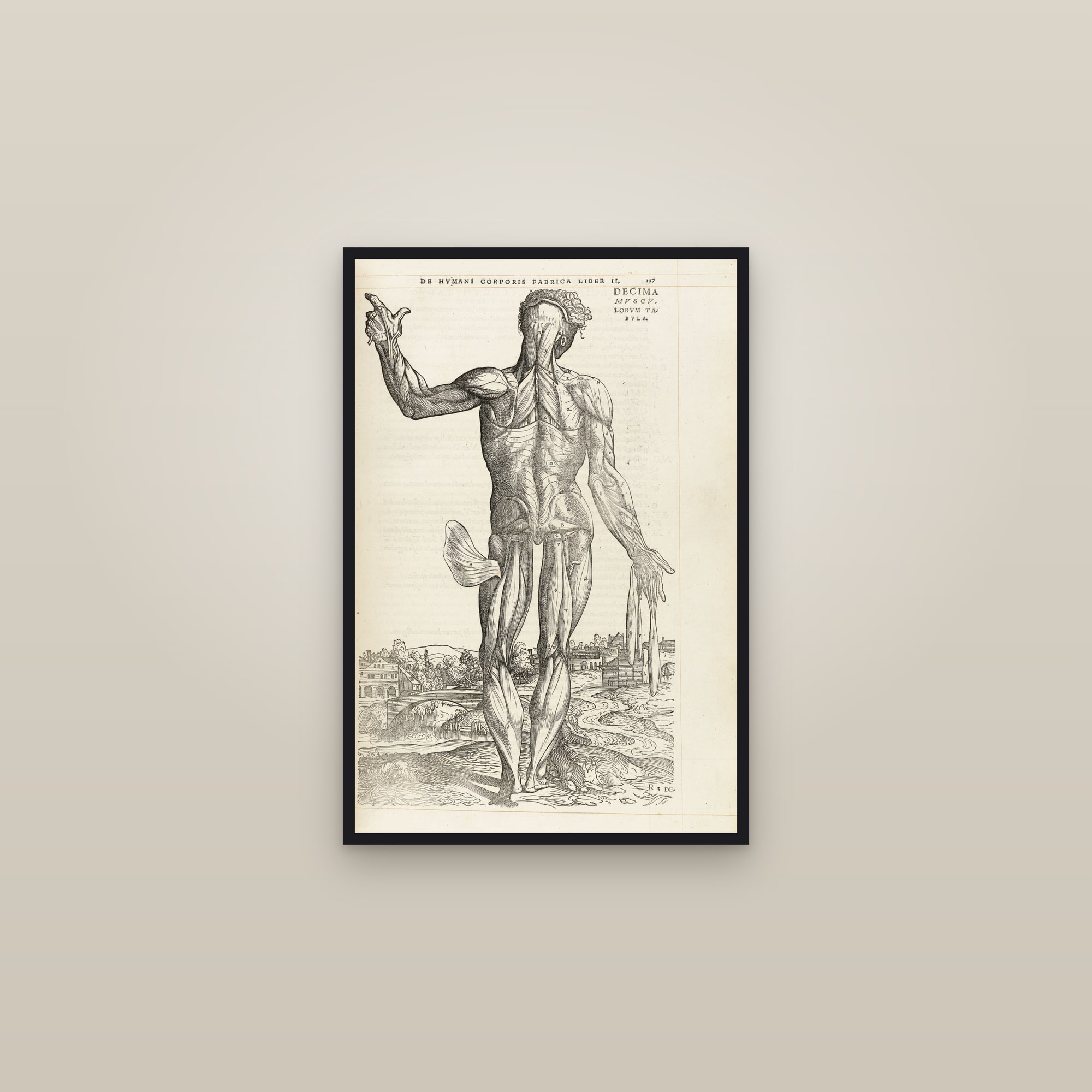
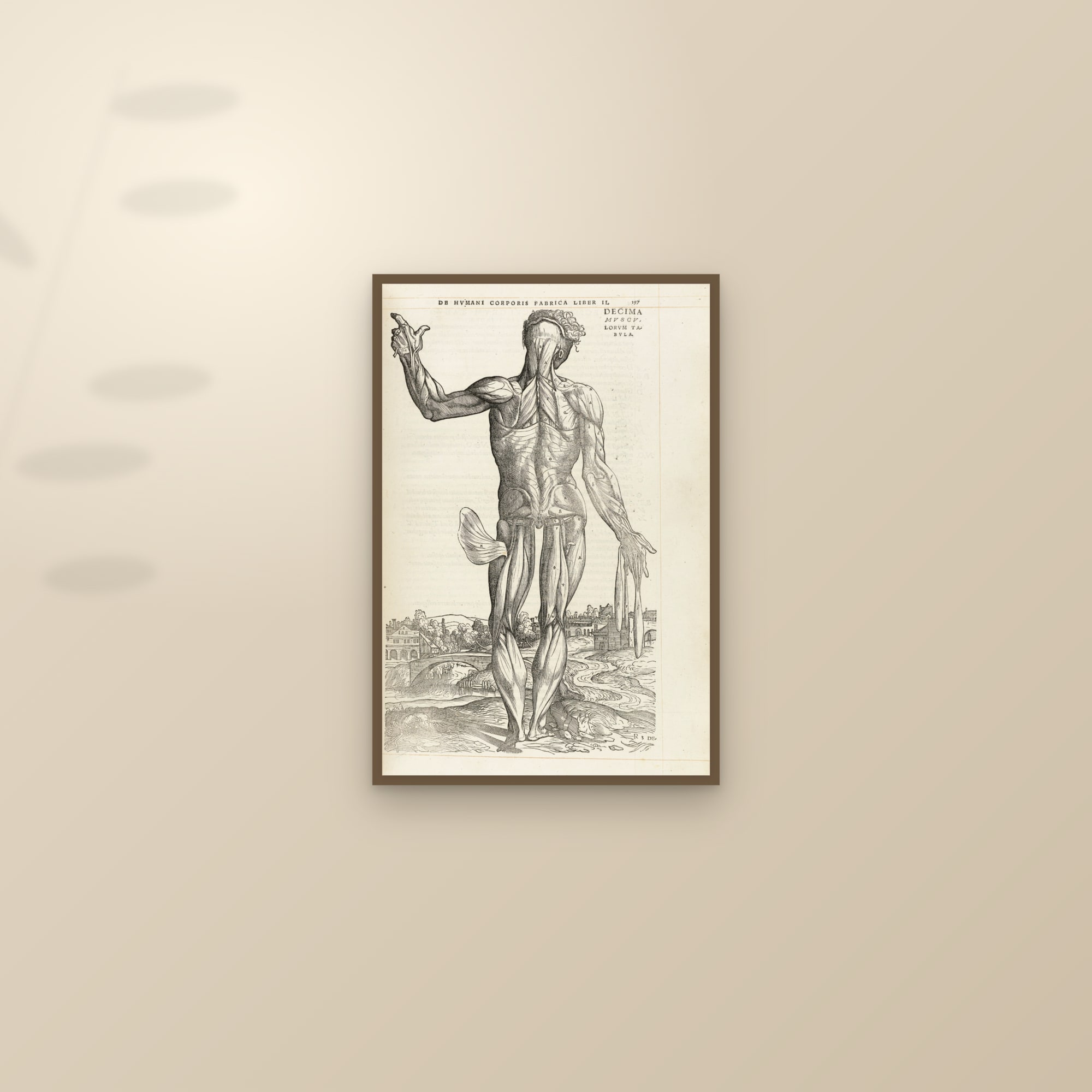
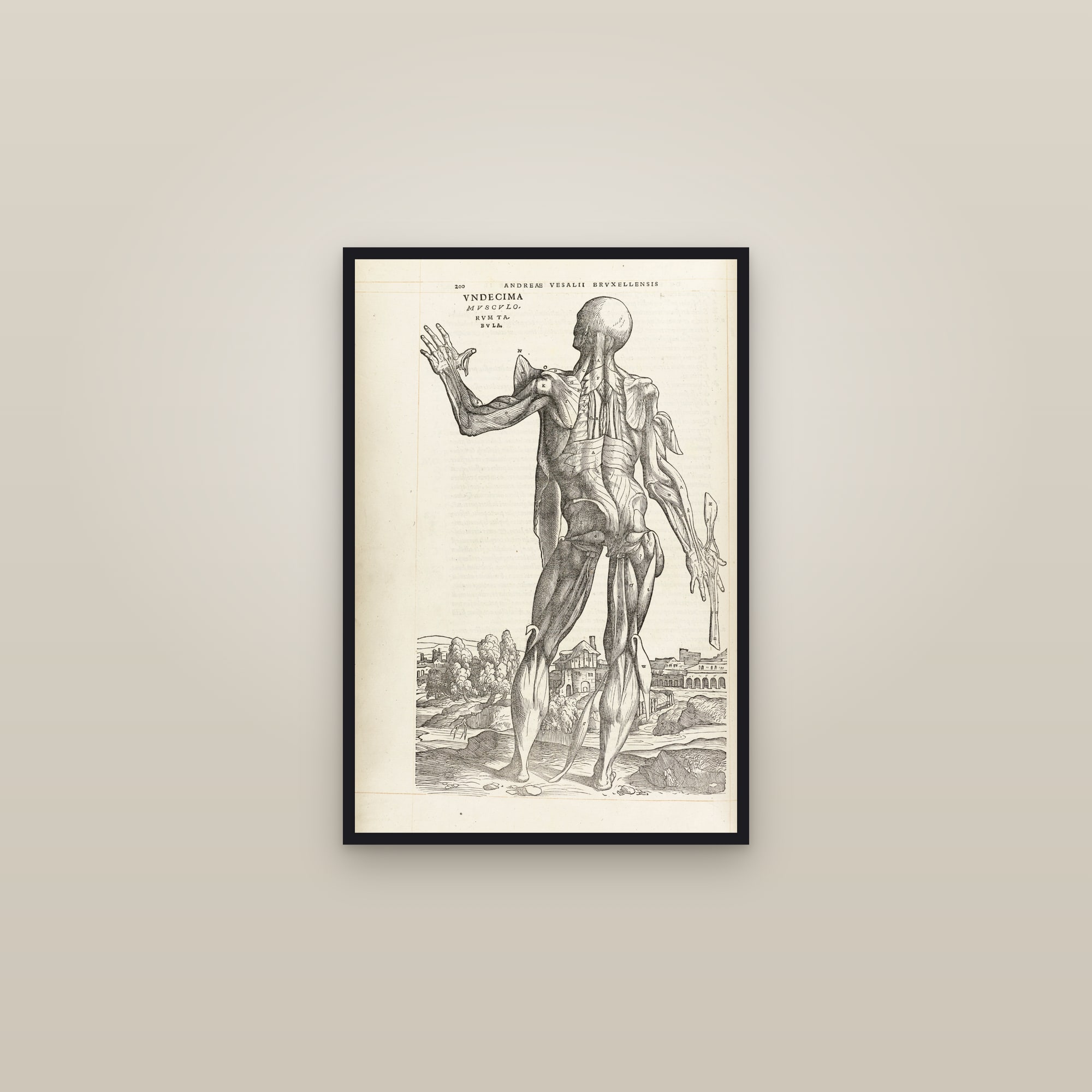
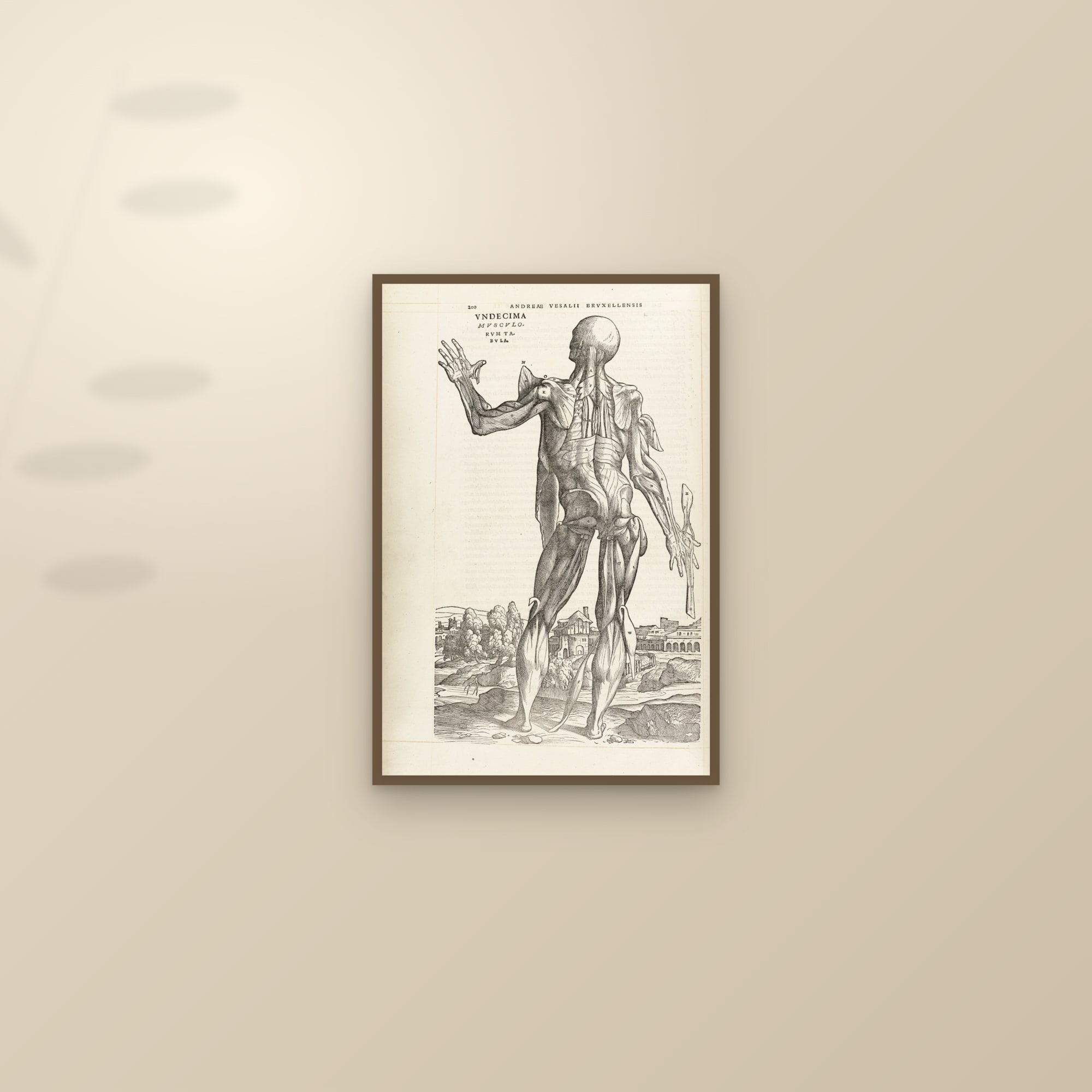
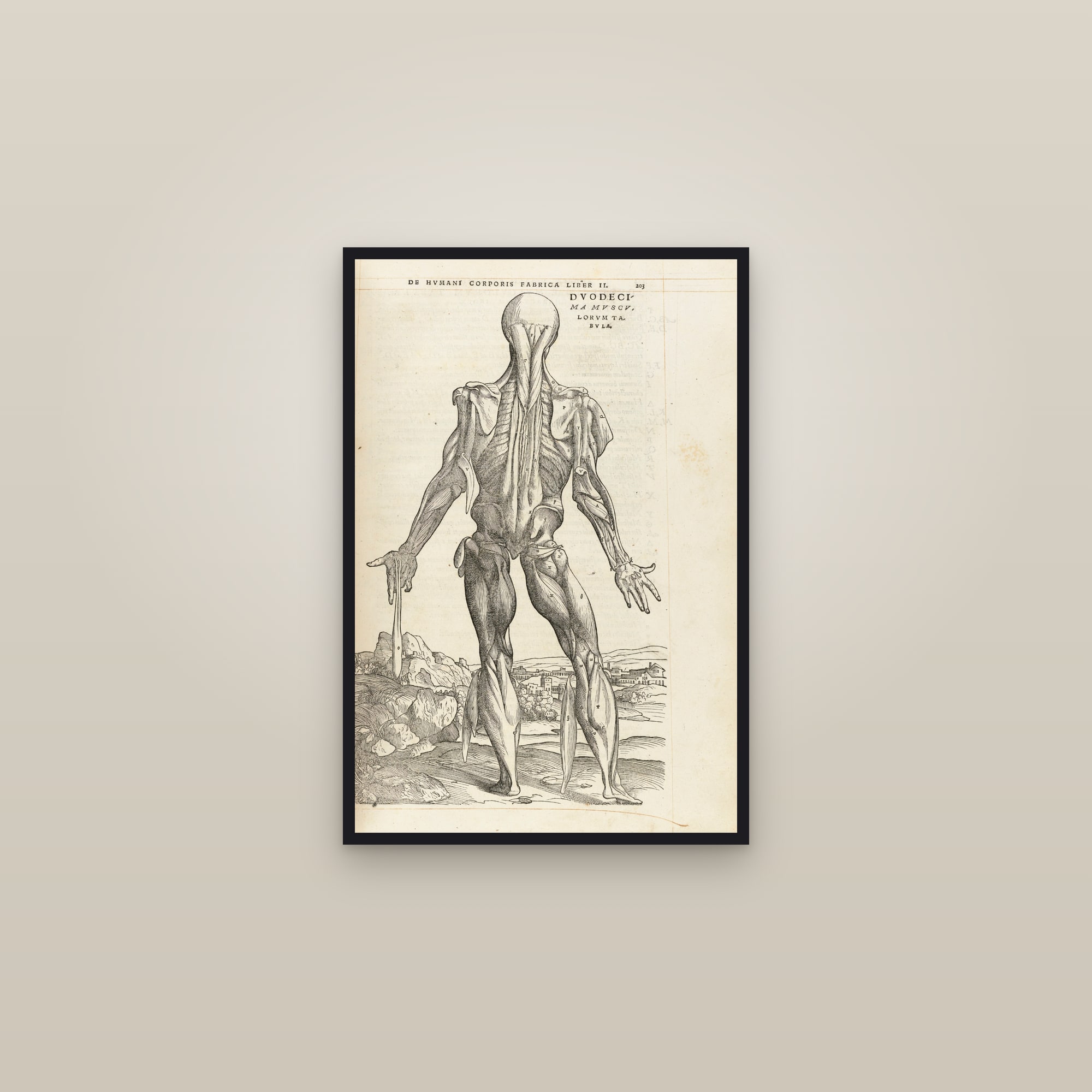
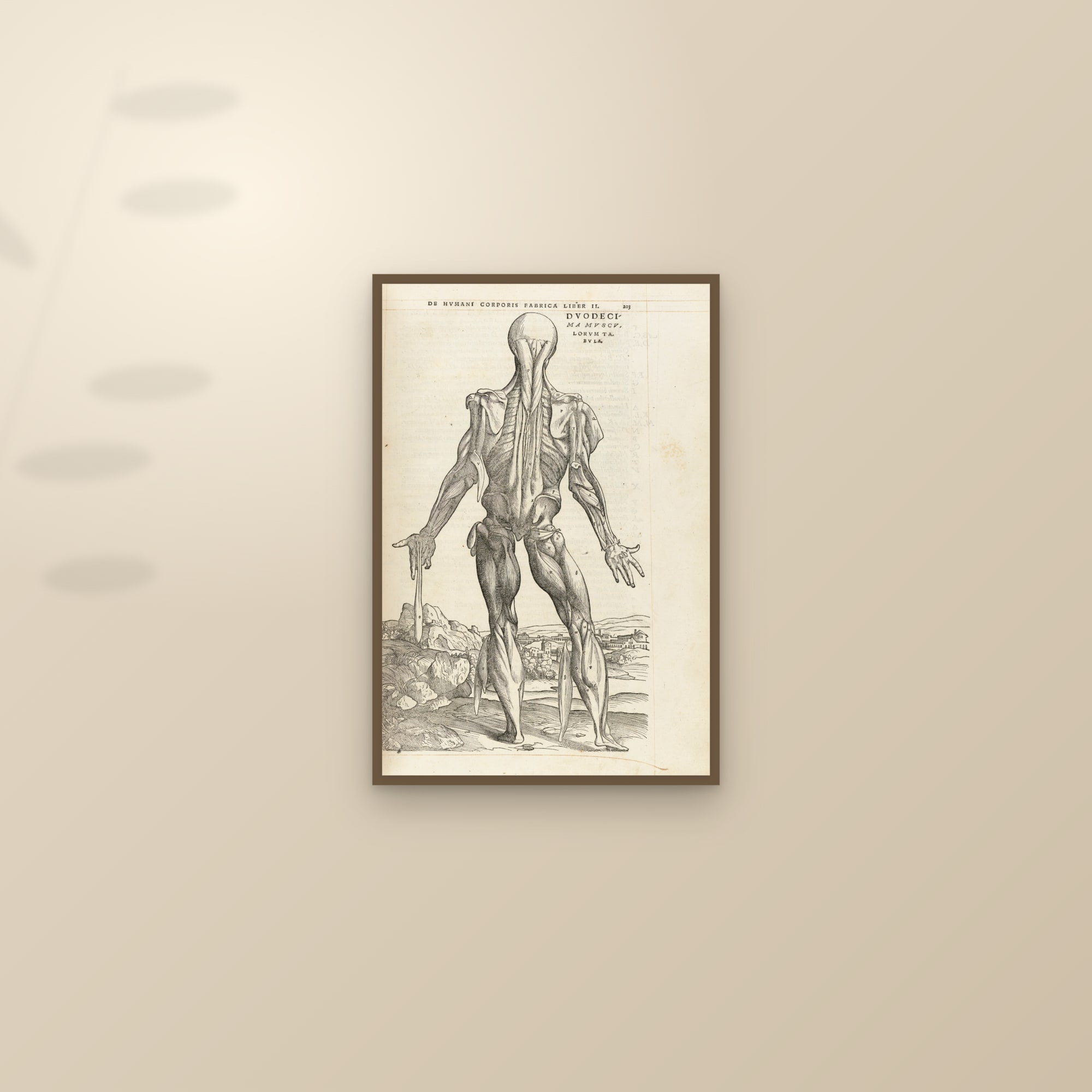
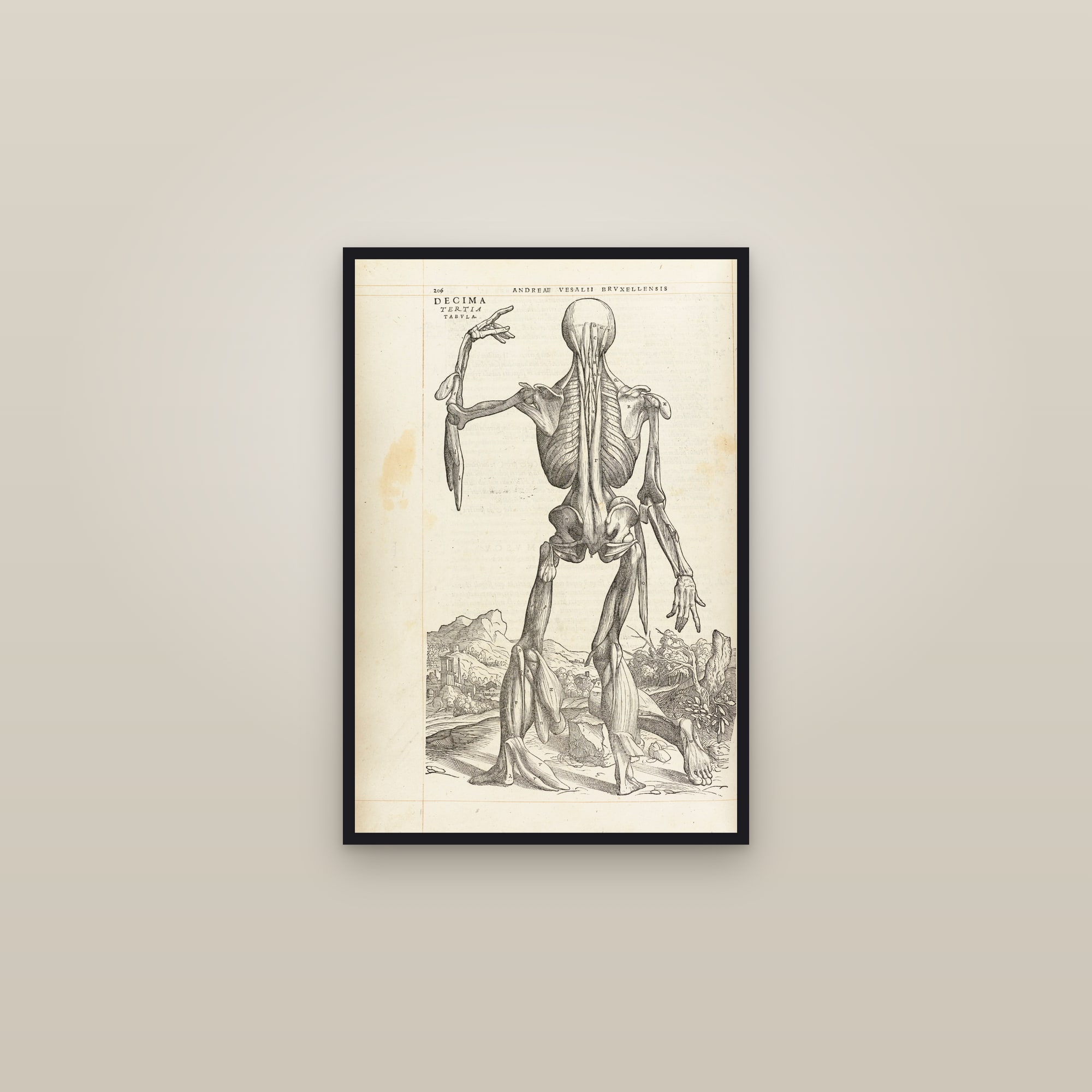
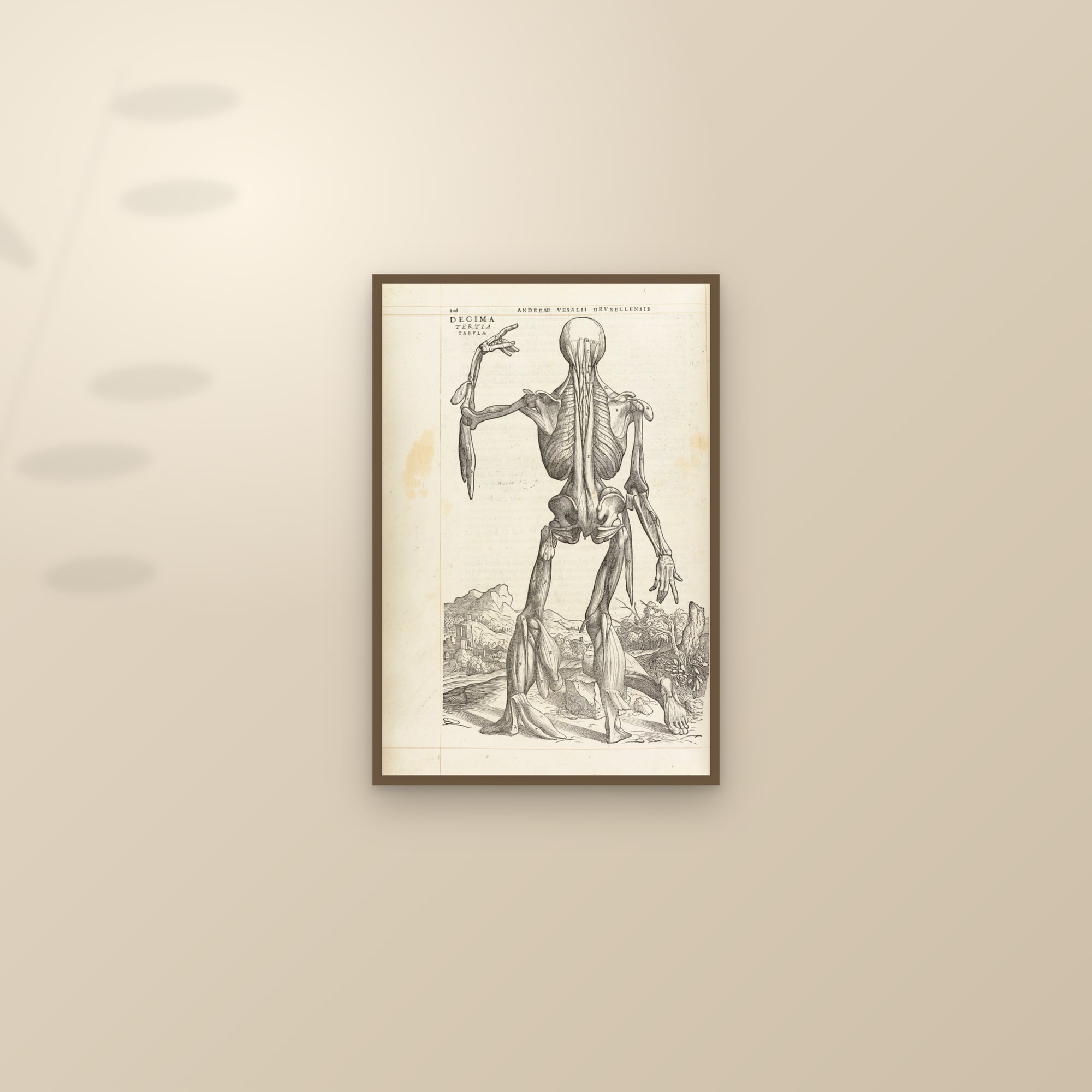
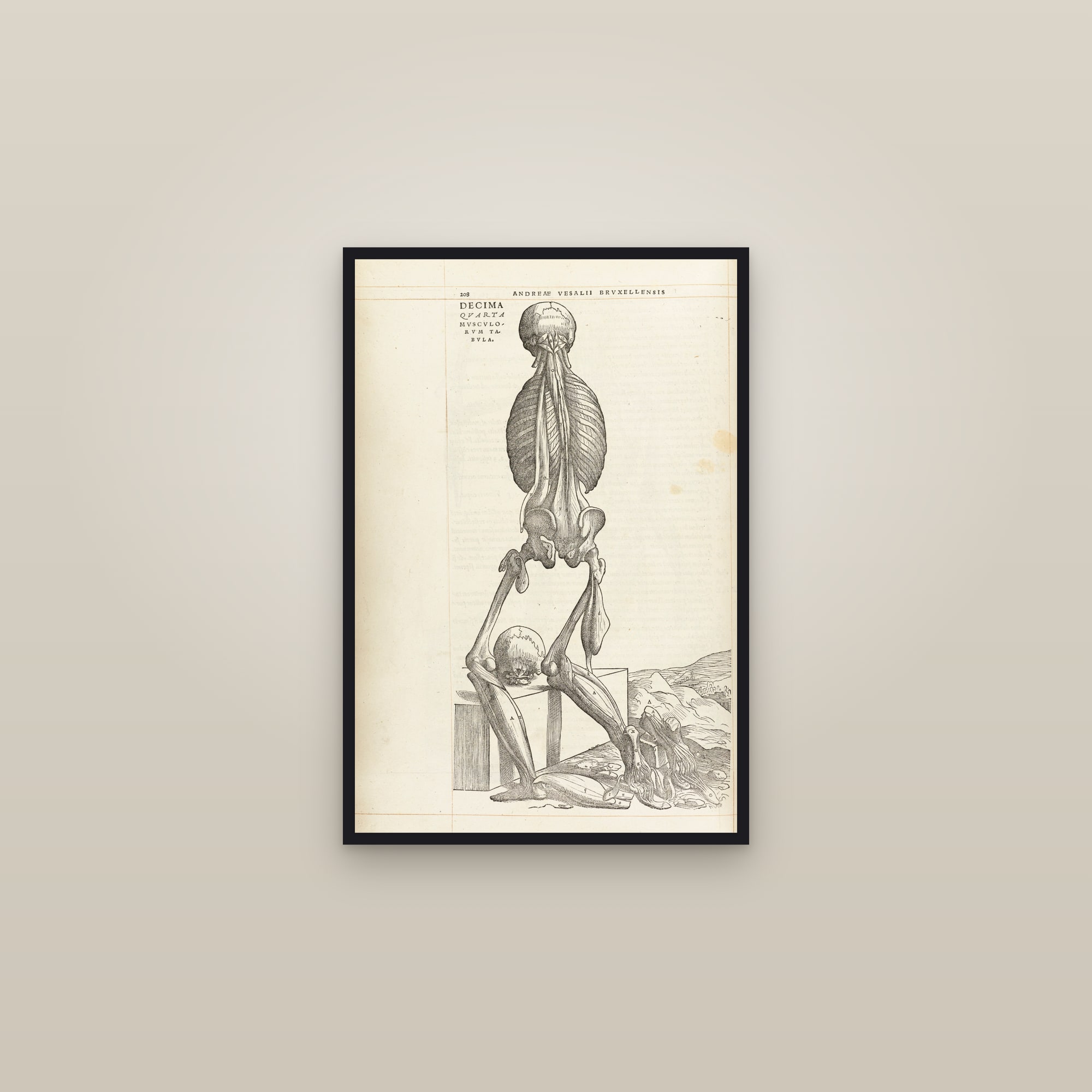
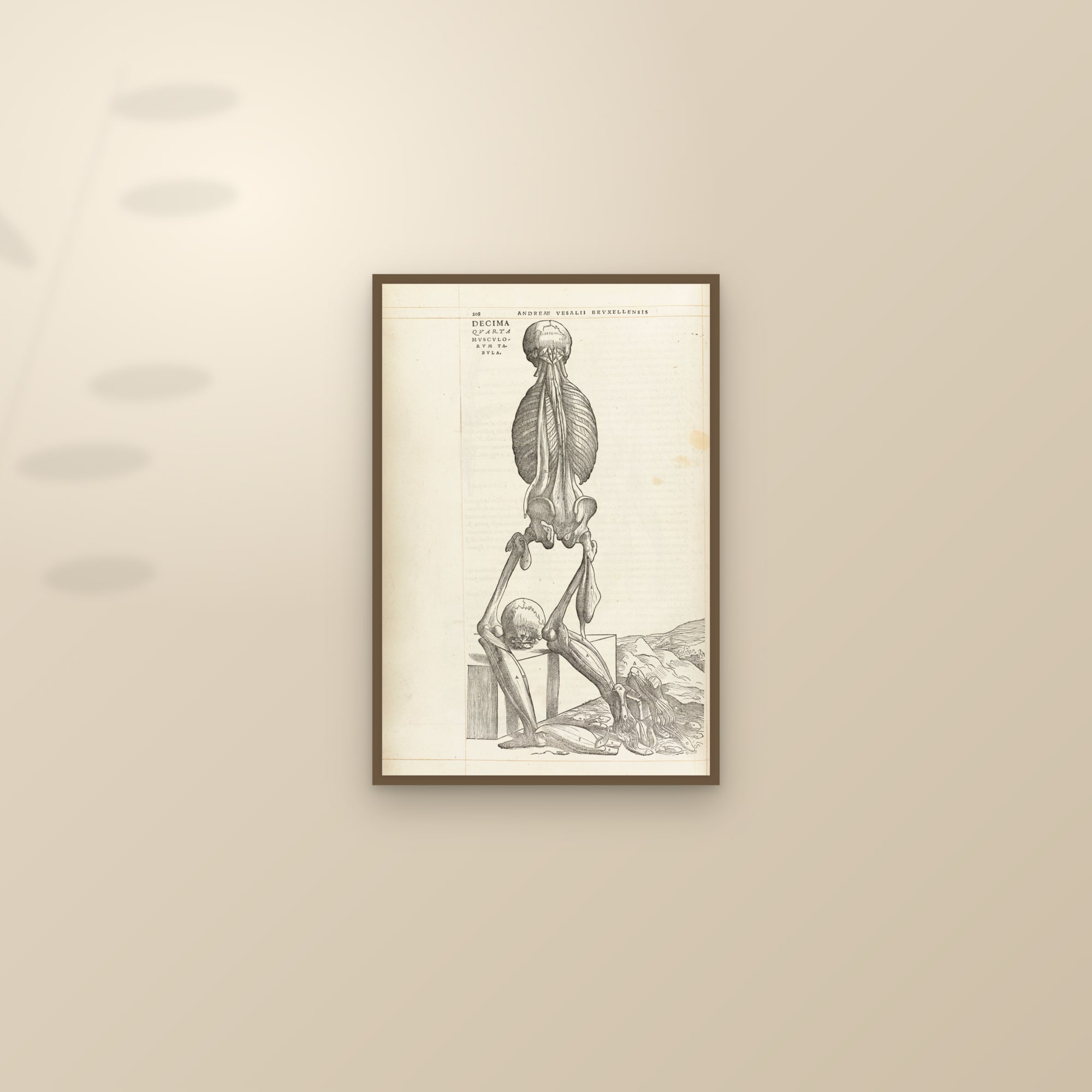
The muscular system from the four great atlases: Andreas Vesalius's fourteen muscle men, the woodcut figures of 1543 that strip the body layer by layer; Bernhard Siegfried Albinus's engraved muscle figures of 1747, front, back and side, in their landscapes; Bartolomeo Eustachi's écorchés and plates of the deep and deepest muscles, published in 1714; and Johannes Sobotta's colour plates of 1919, the muscles of the back in three layers, the chest and shoulder, the upper arm, the thigh, the head and neck.
43 prints · printed to order on heavyweight matte paper · framed or unframed
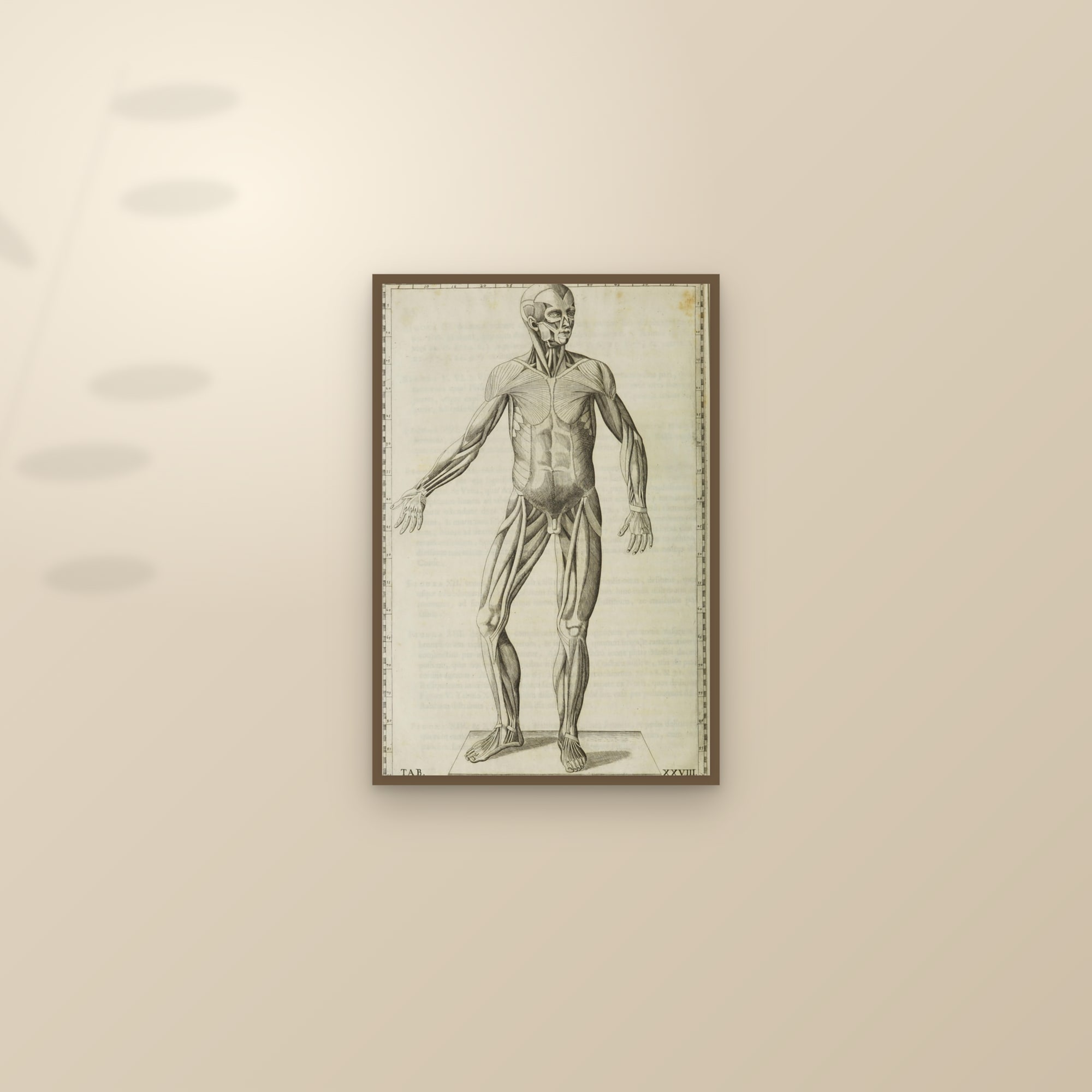
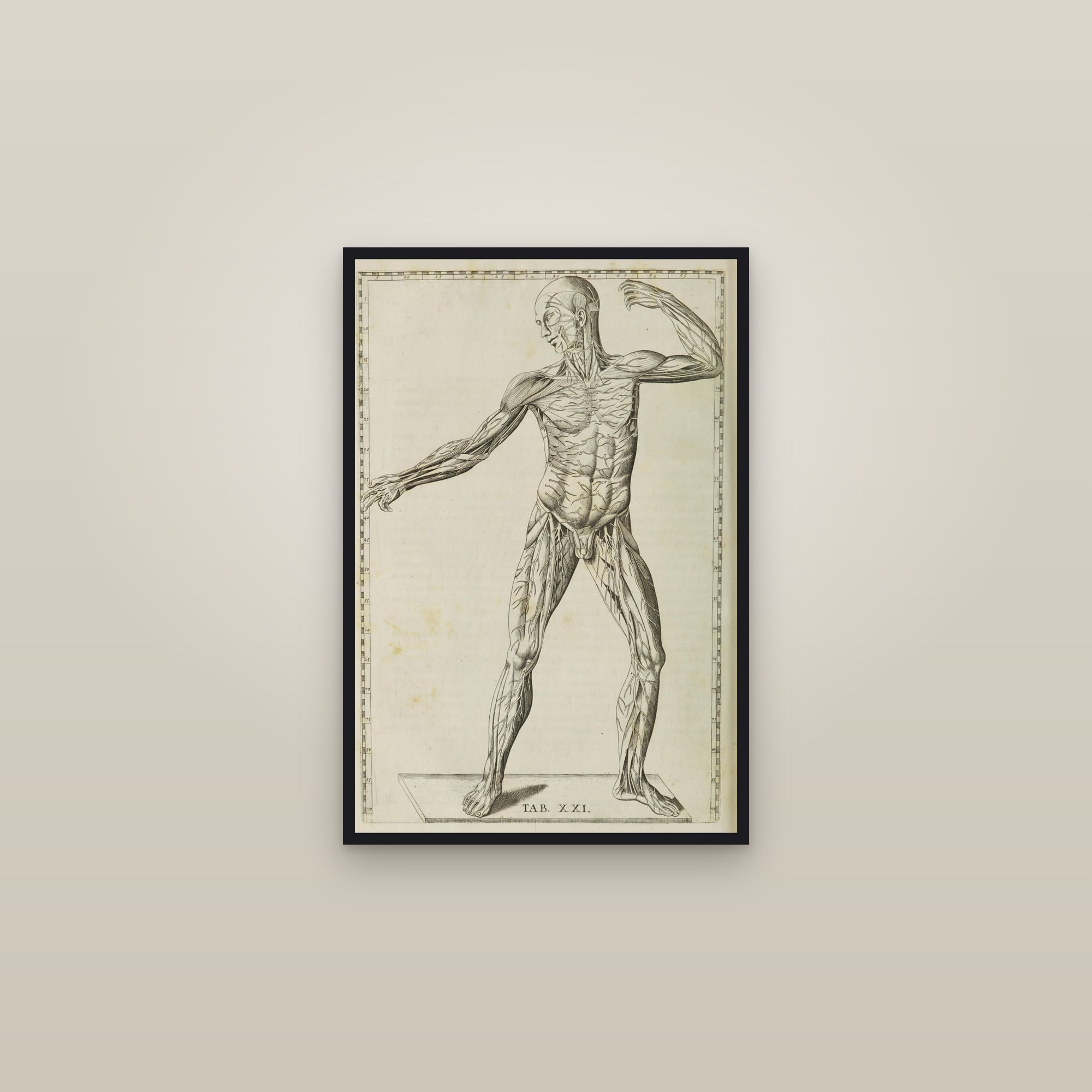
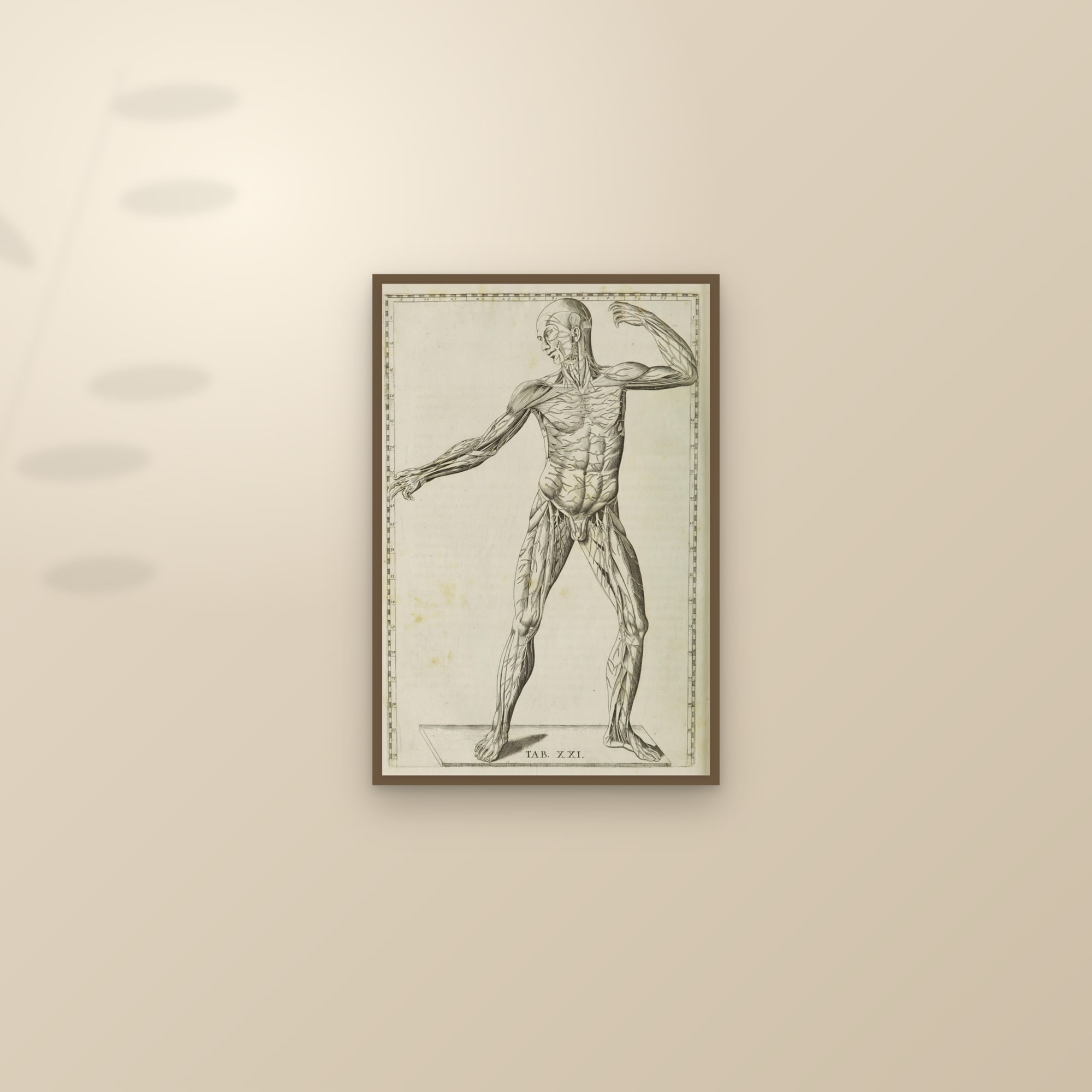
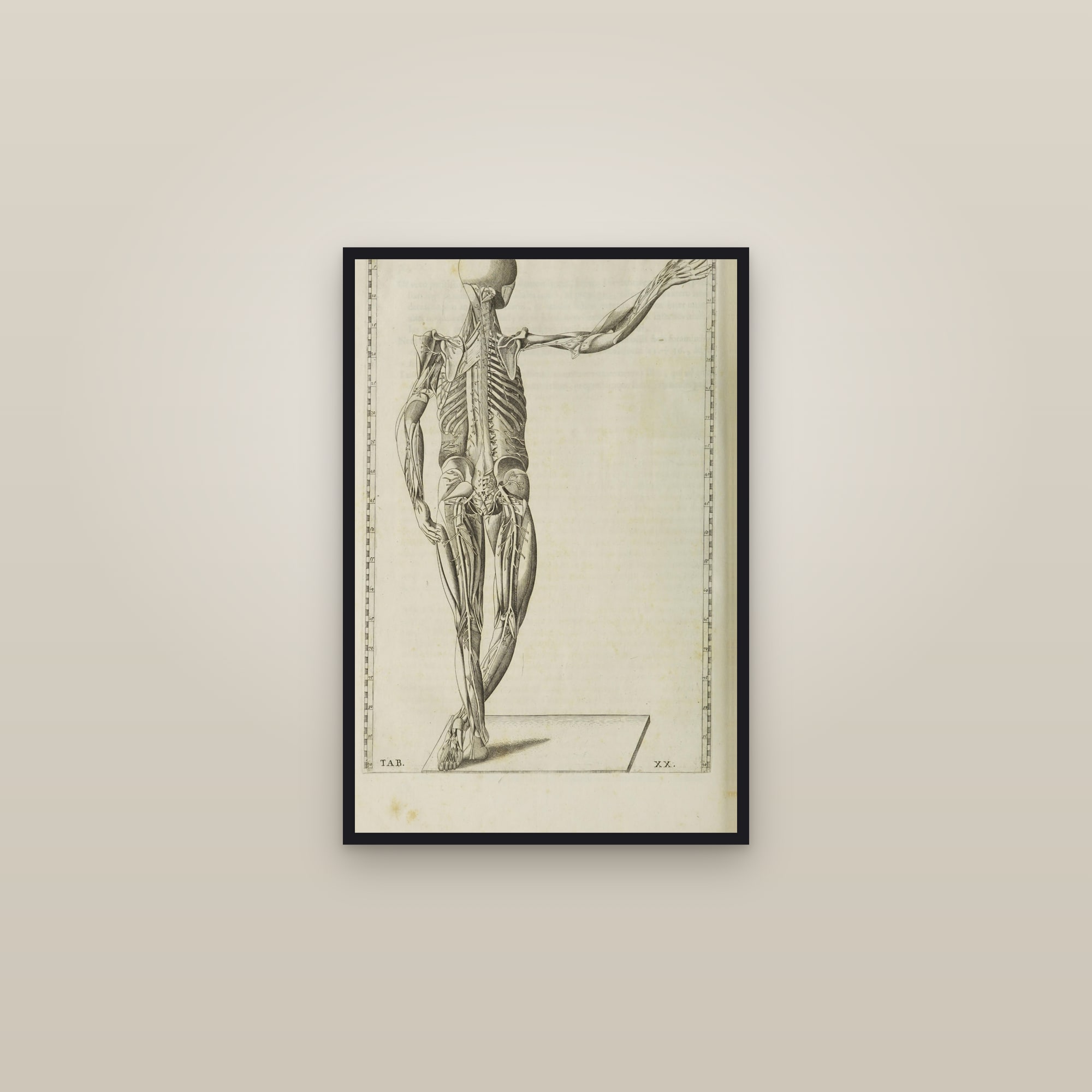
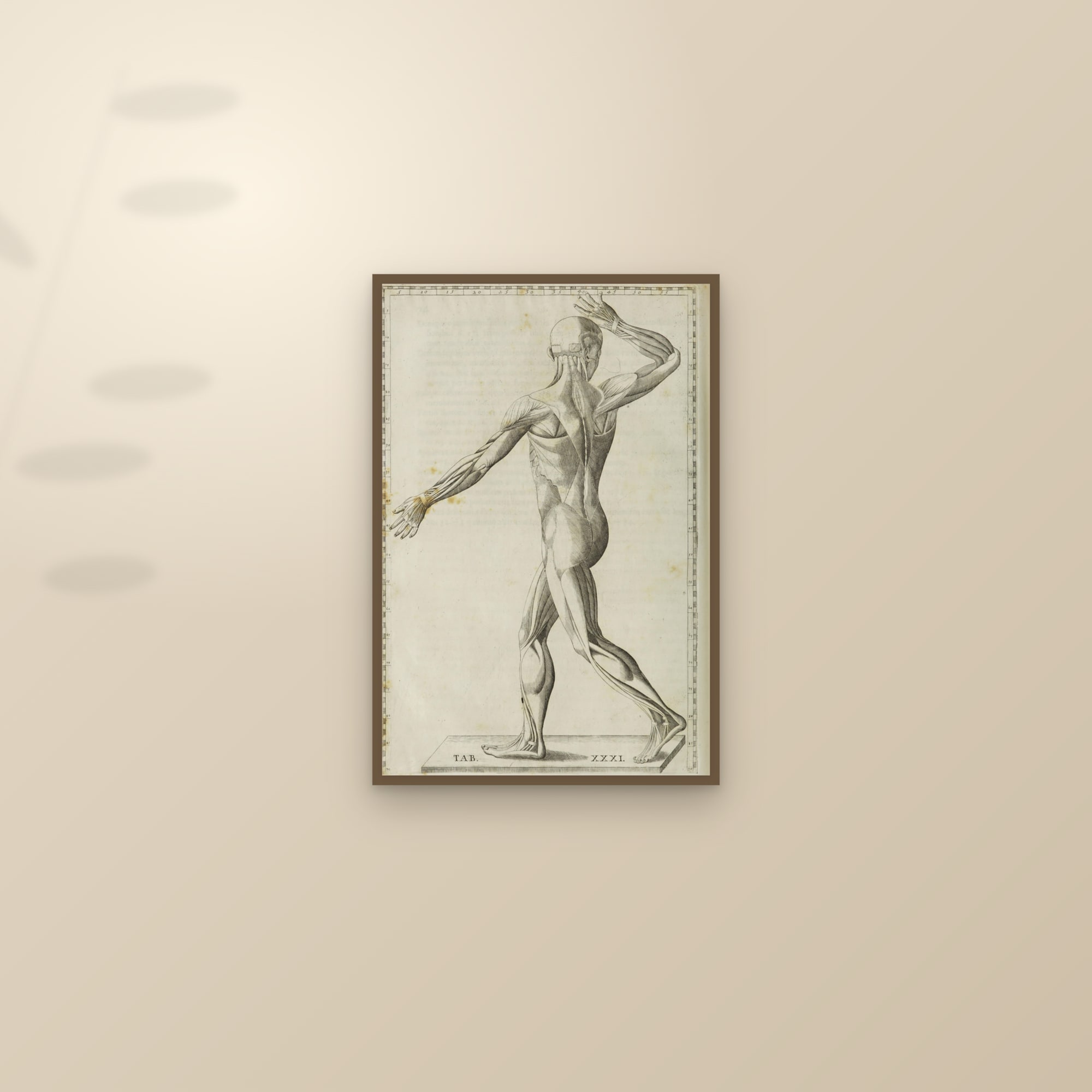
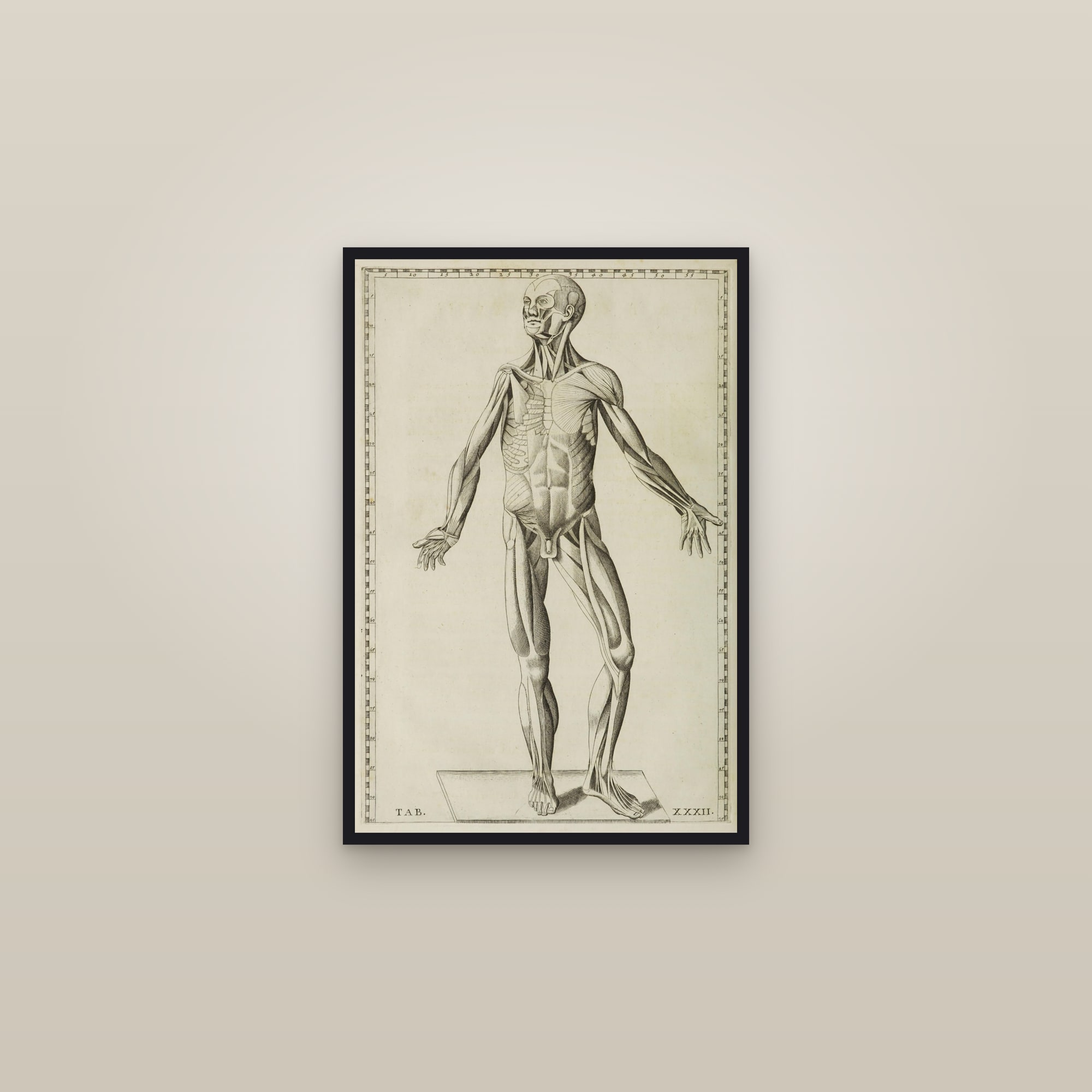
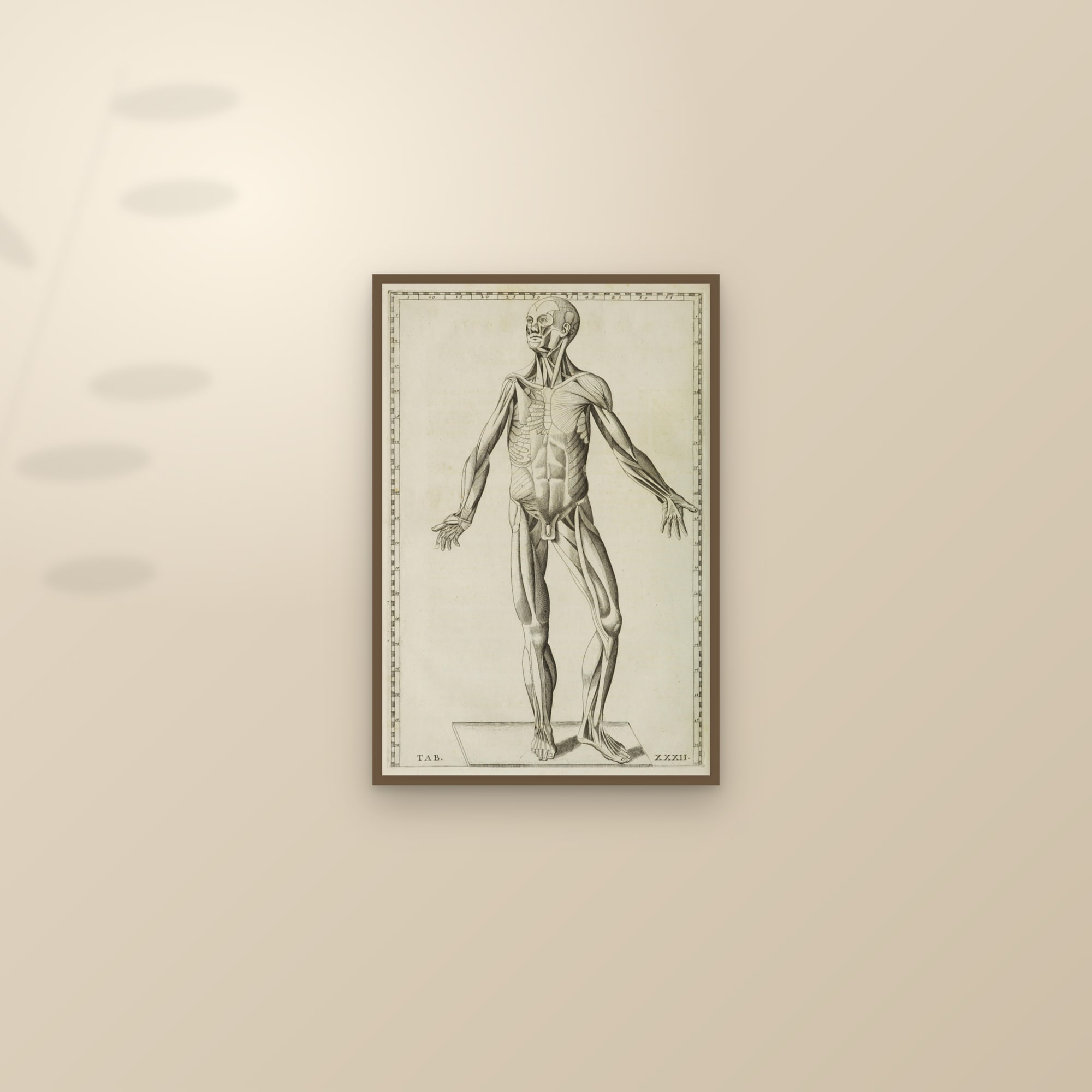
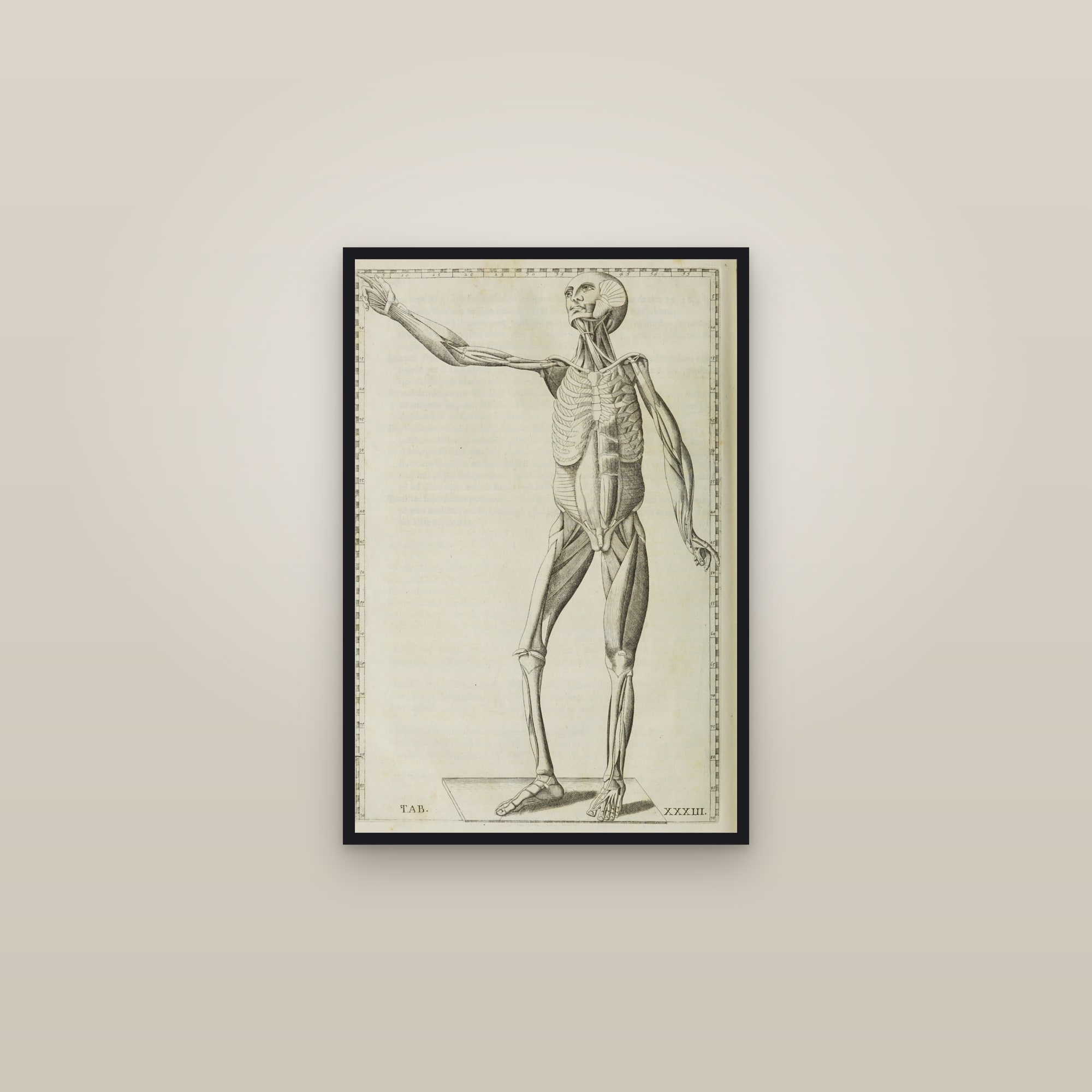
The muscle men
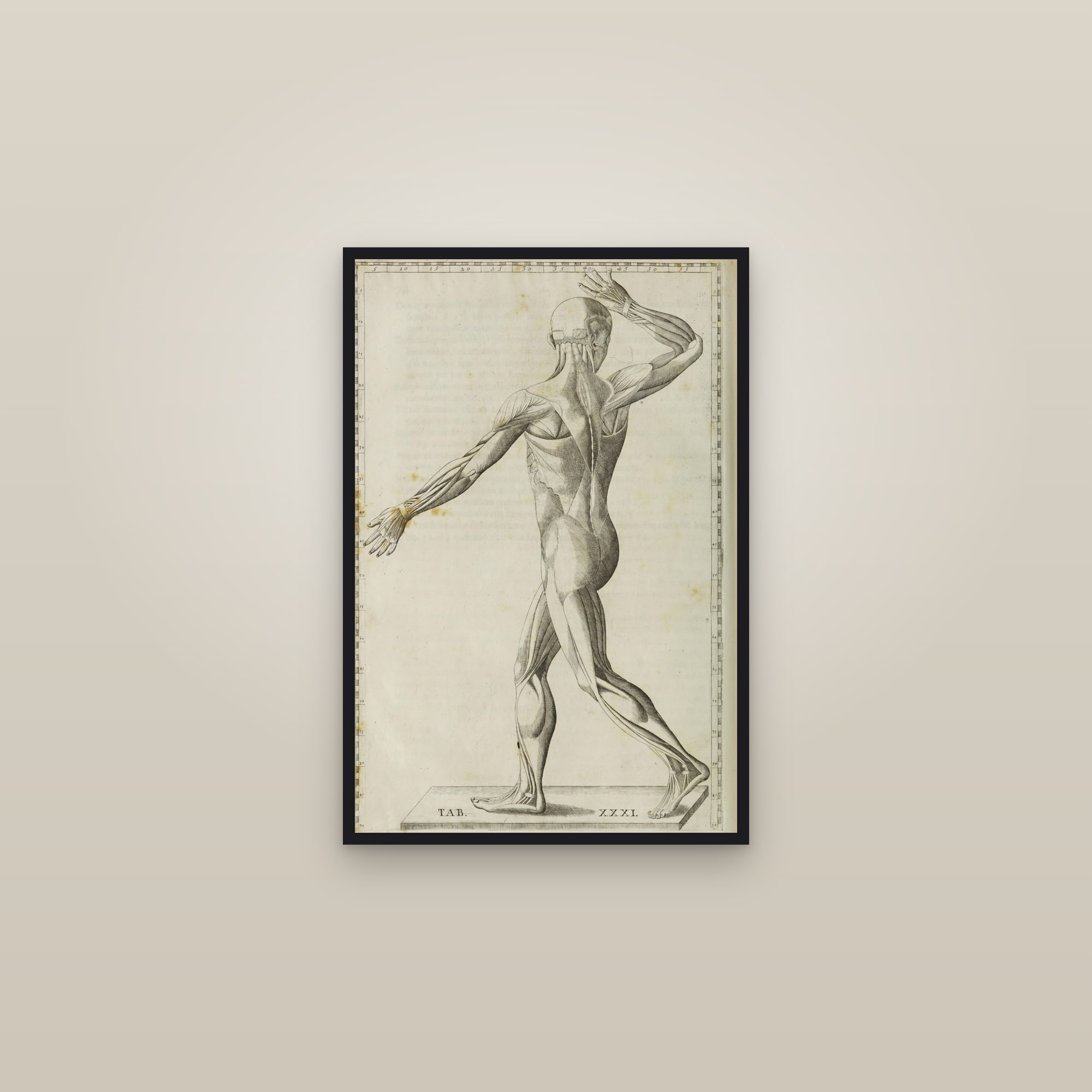
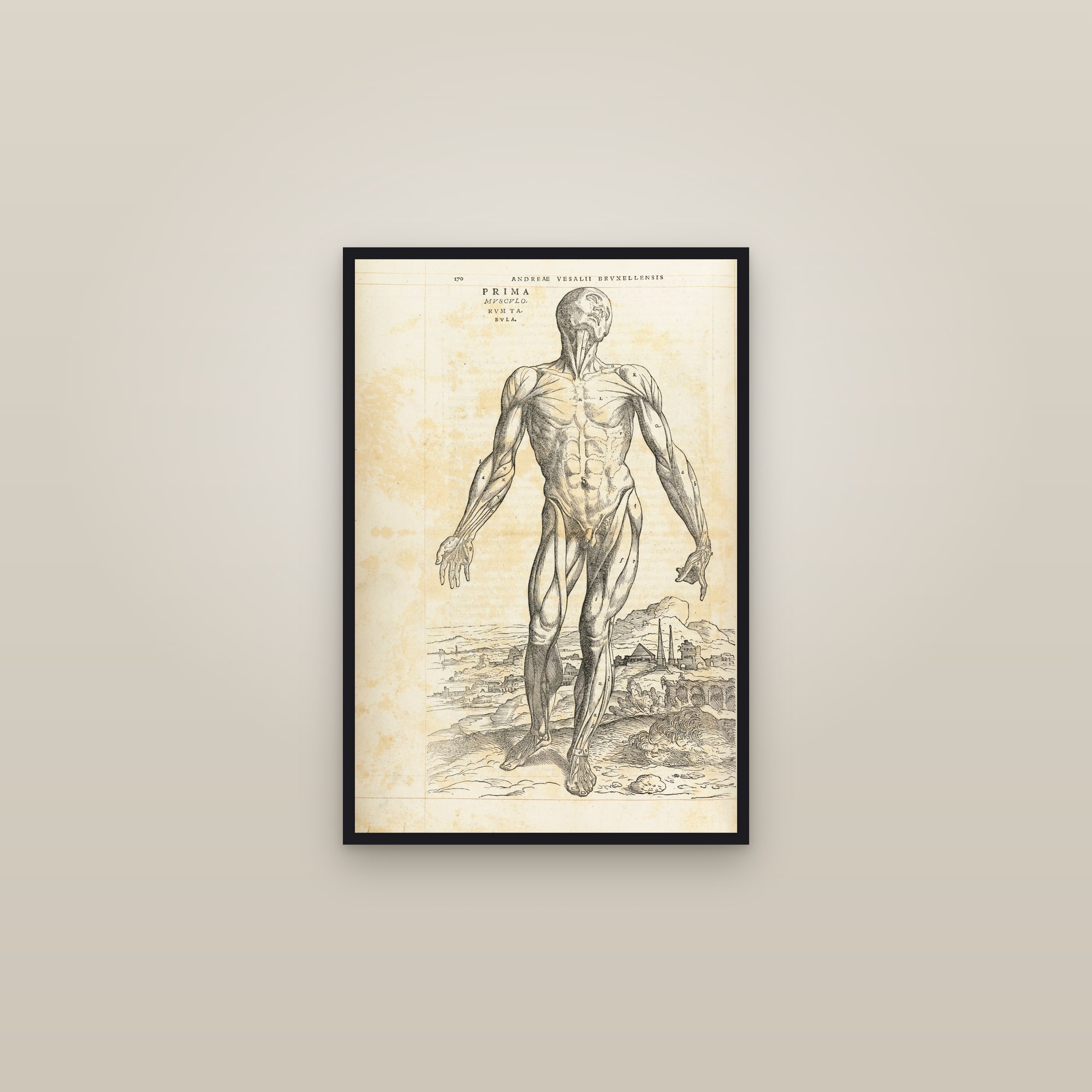
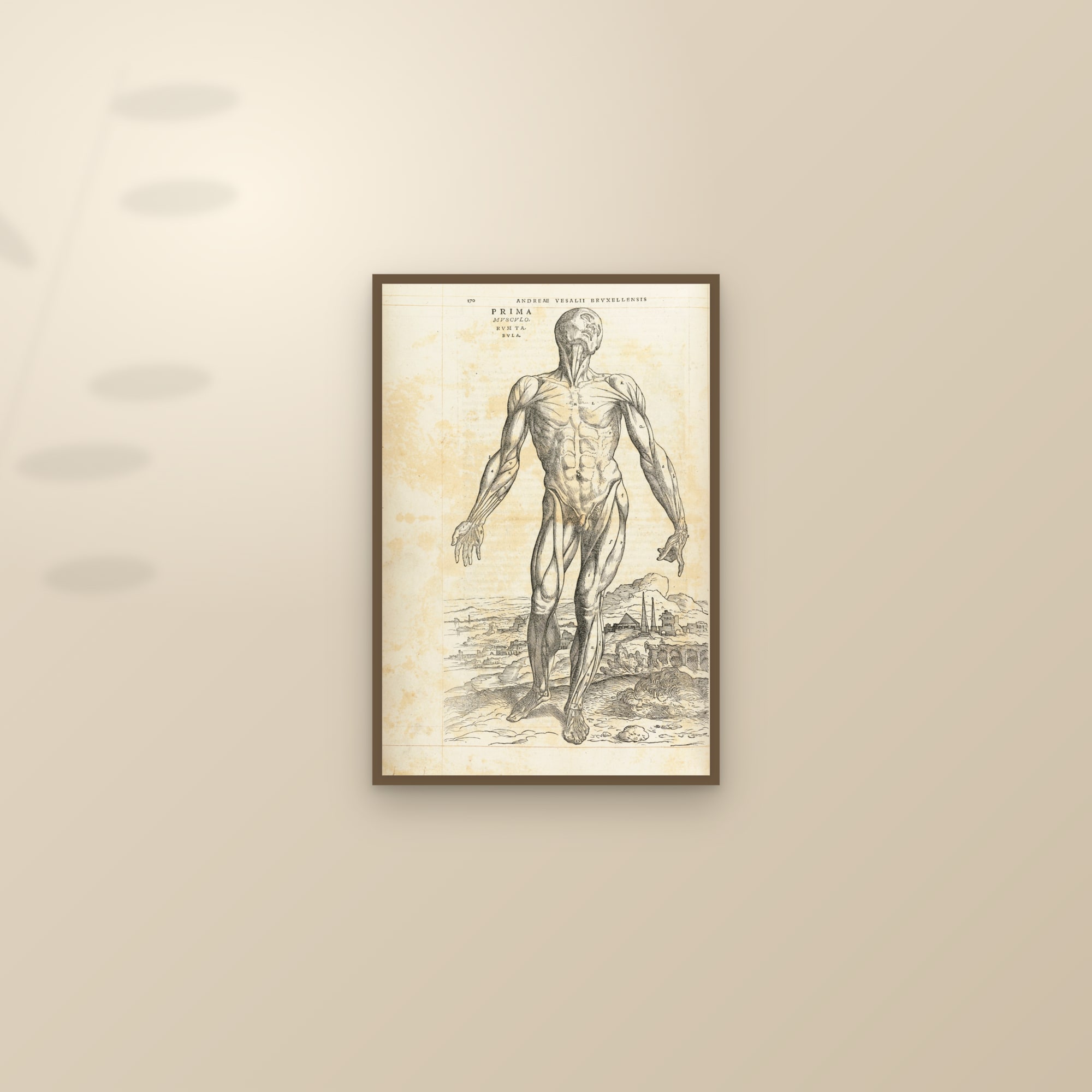
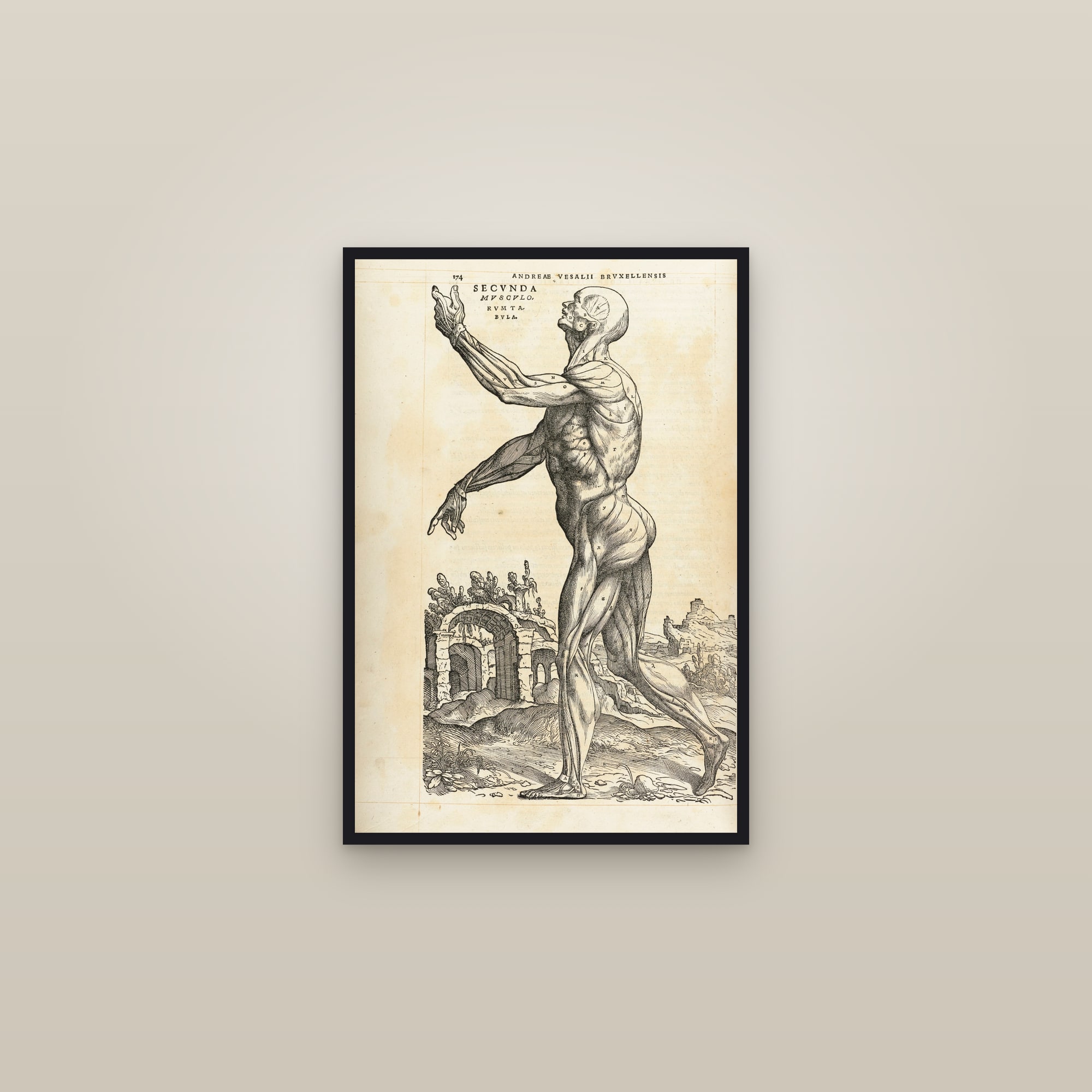
Vesalius's fourteen muscle tabulae from De humani corporis fabrica of 1543 are the foundation: a figure shown from the front and then from the back, each plate a layer deeper than the last, standing in a continuous landscape, until the deepest muscles hang from the skeleton. Albinus's Tabulae sceleti et musculorum of 1747 restated the sequence in engraving with a draughtsman's precision, the muscles of the body in four orders from the front and the back, two of them posed beside a rhinoceros. Eustachi's écorchés, published in 1714, include the posterior and turning figures and the second, deep and deepest layers over the skeleton.
Sobotta by region
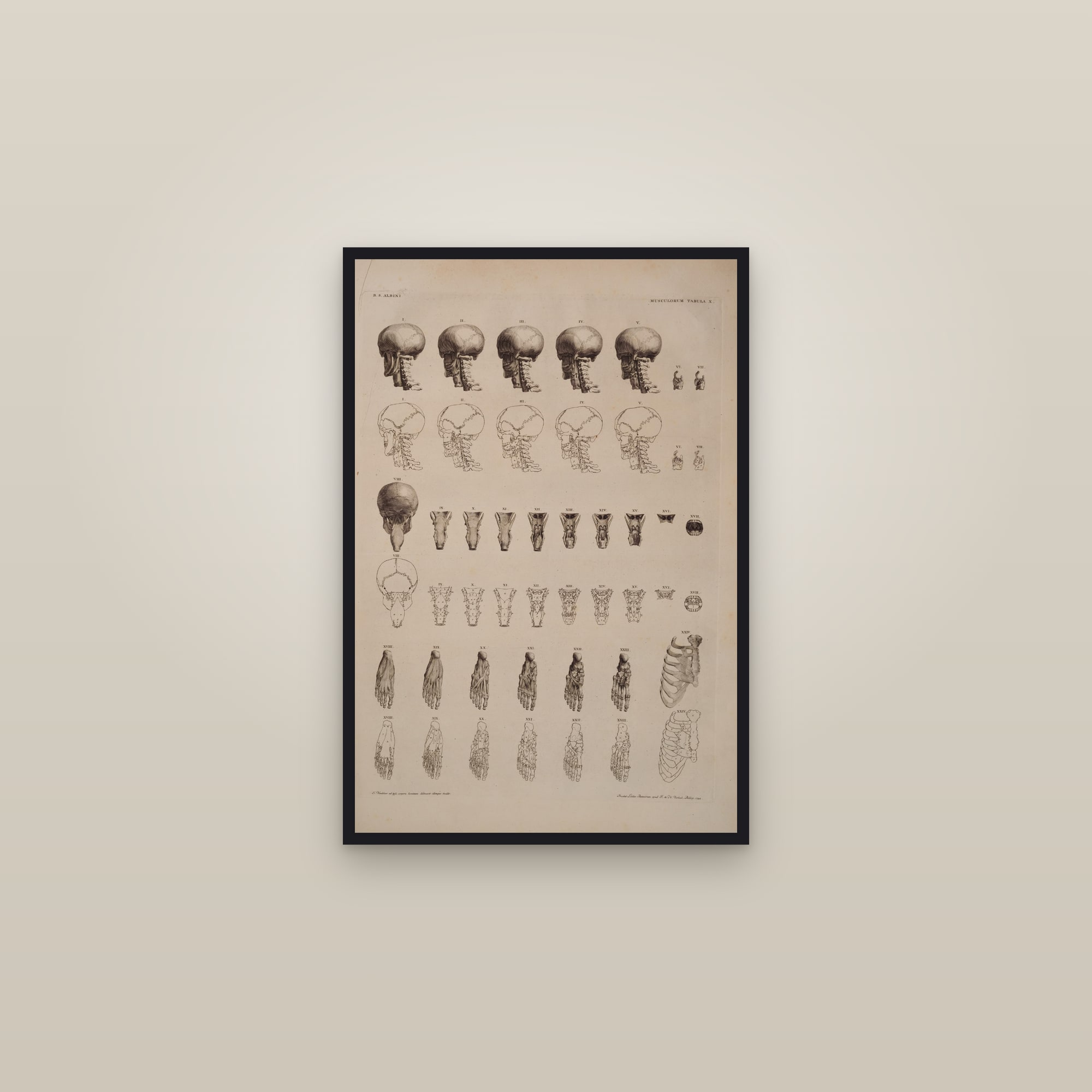
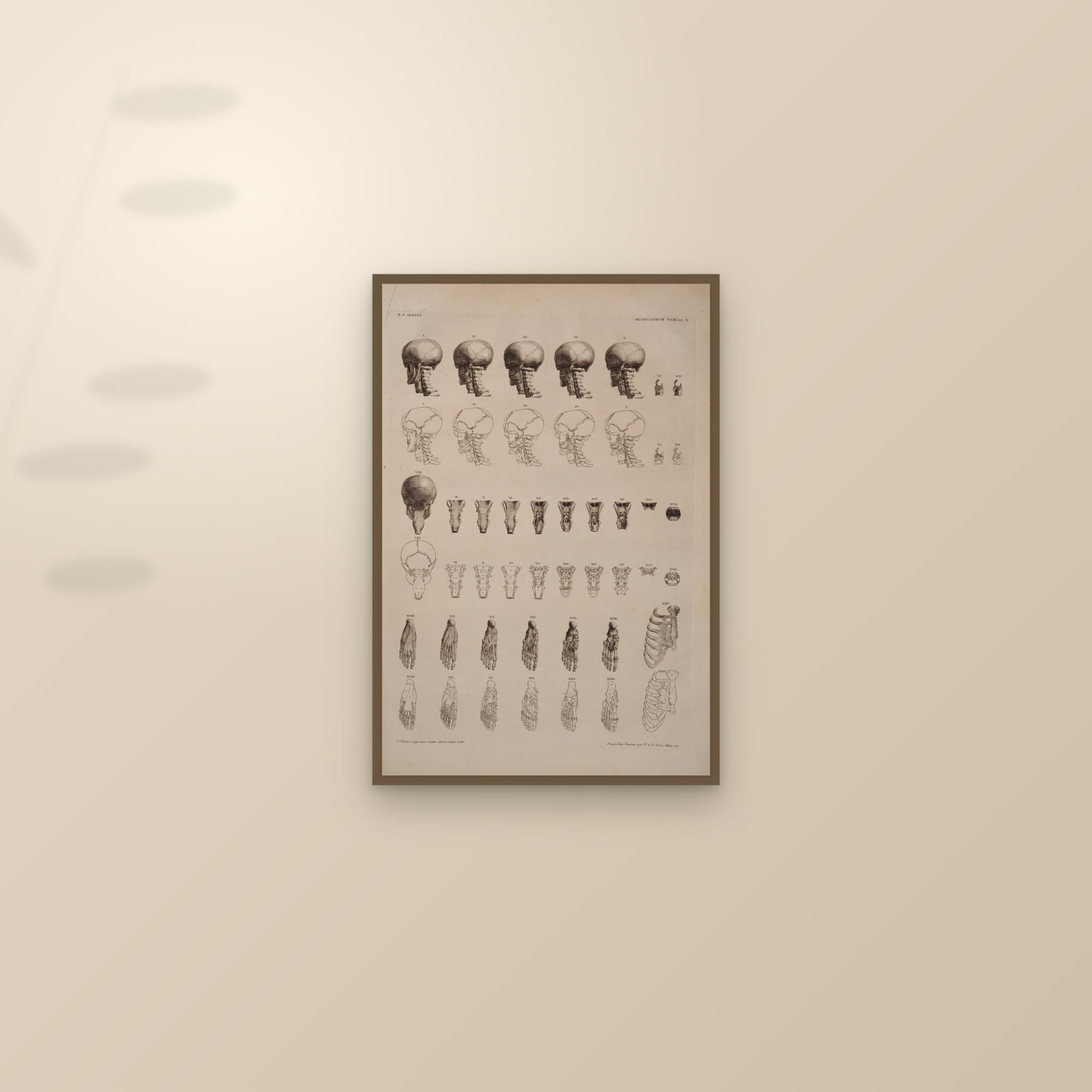
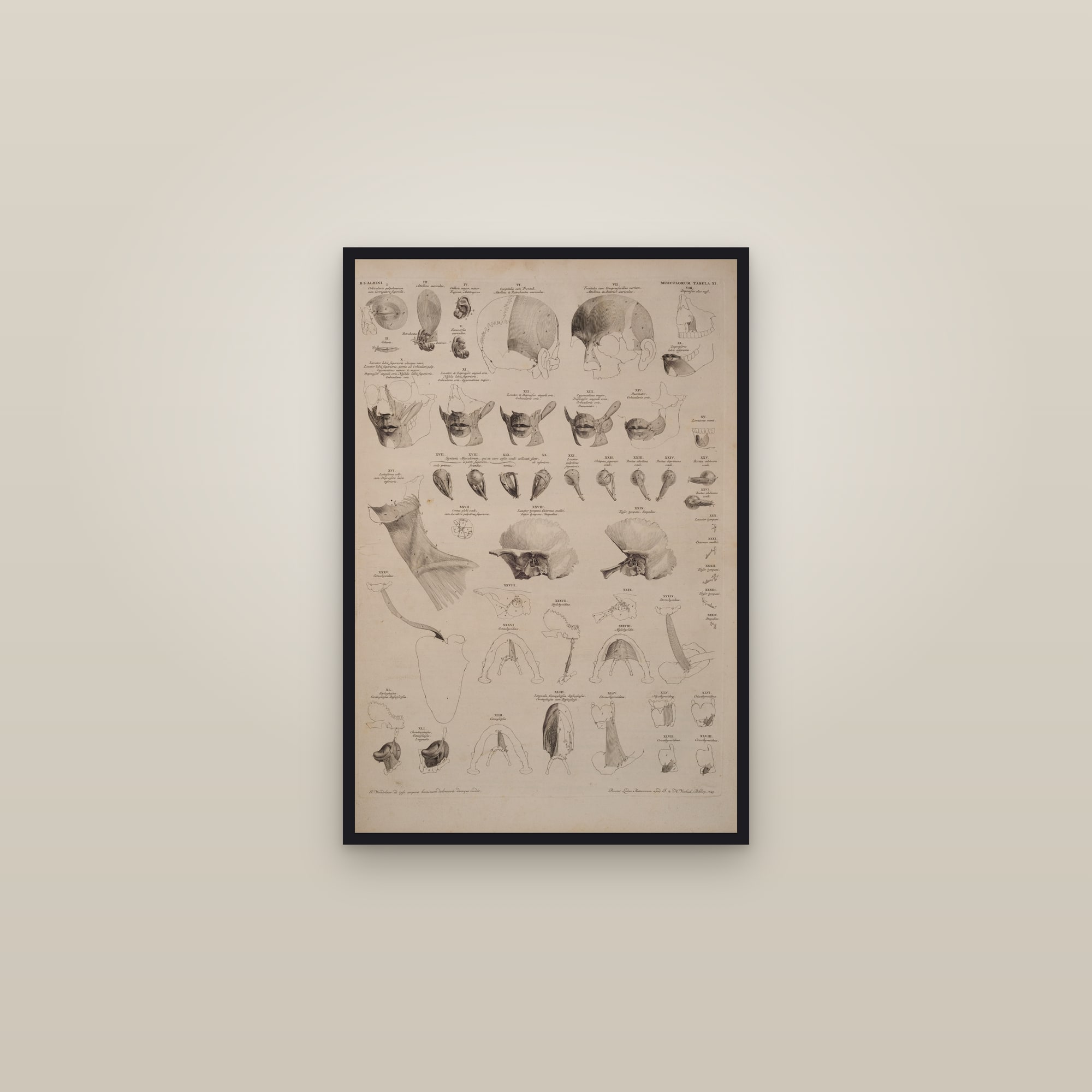
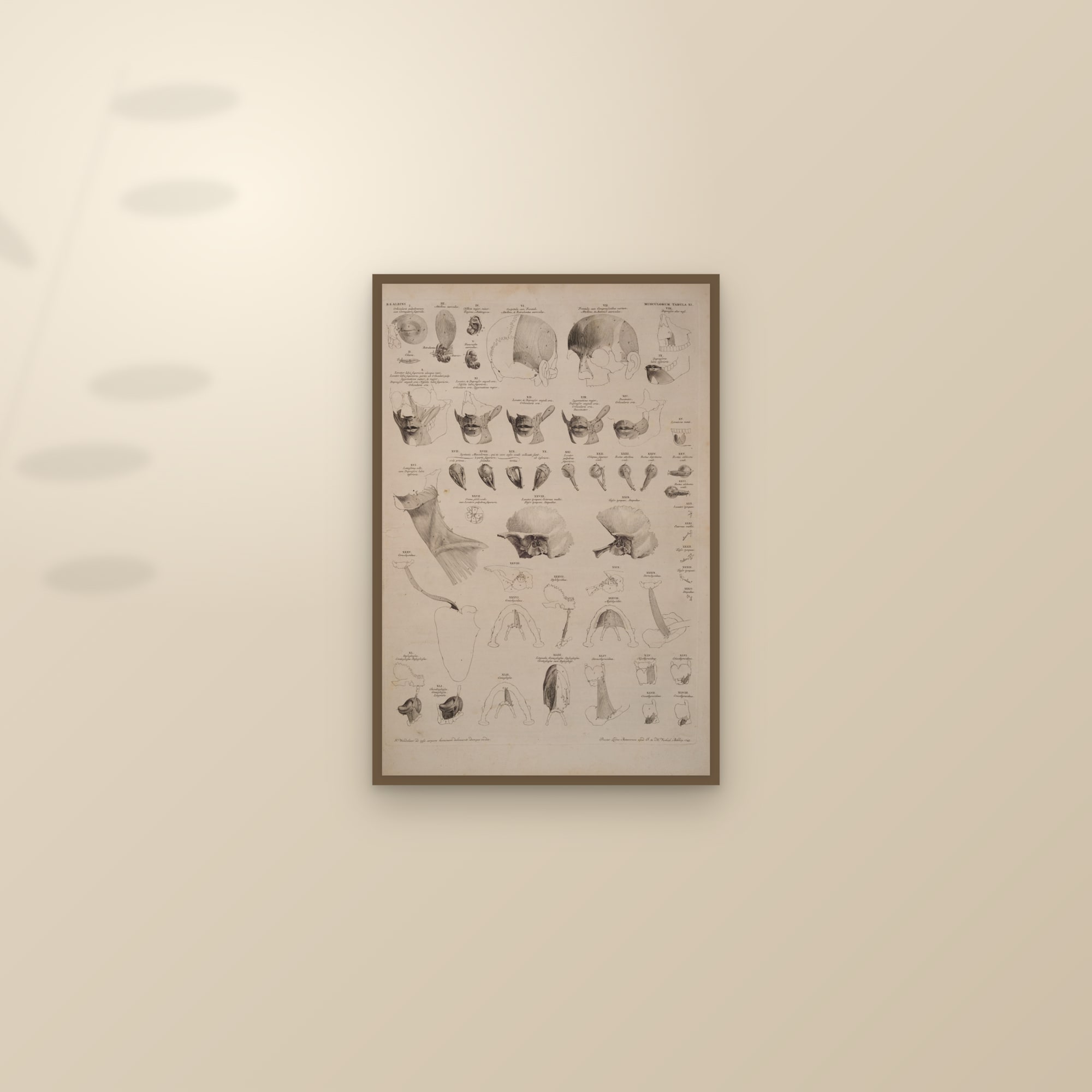
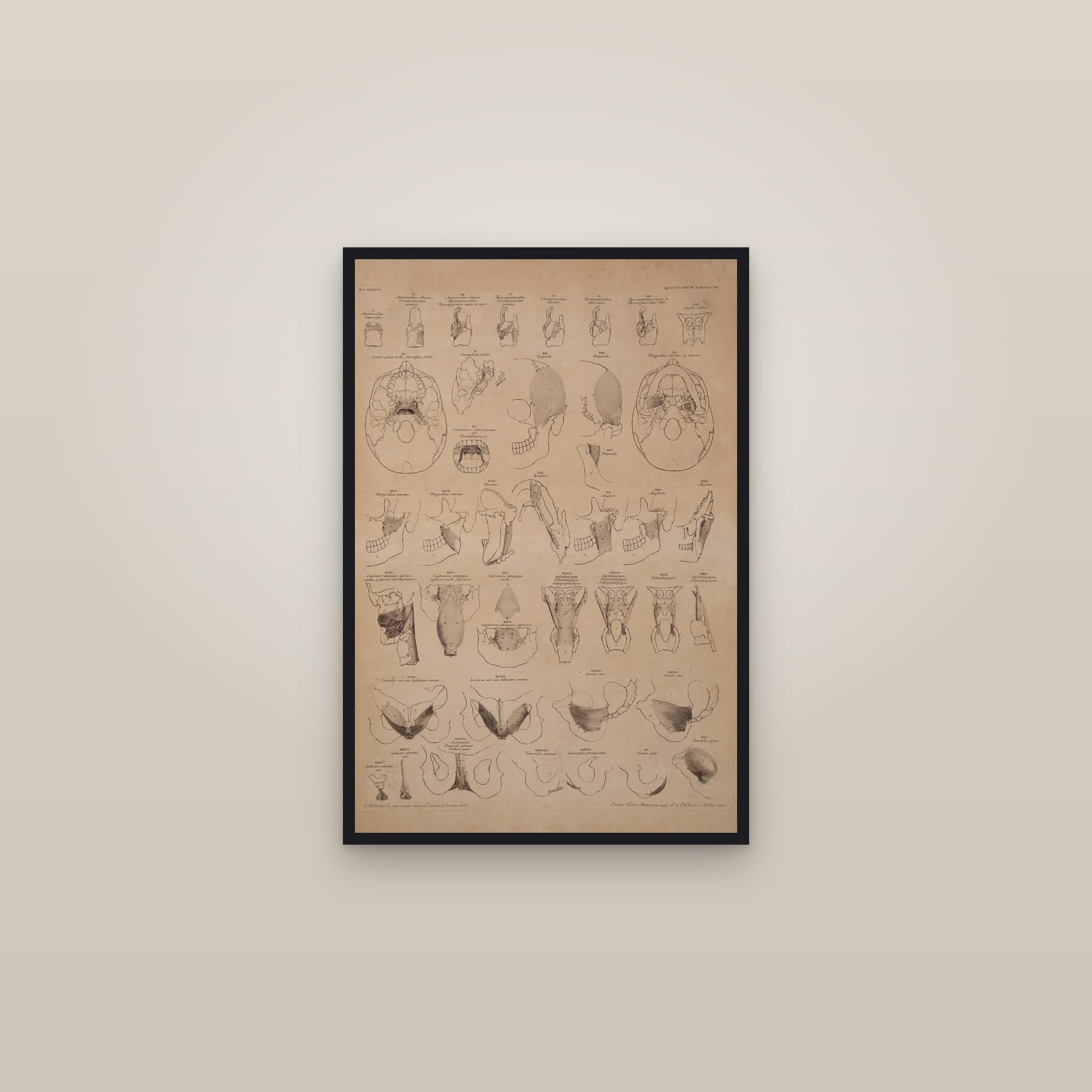
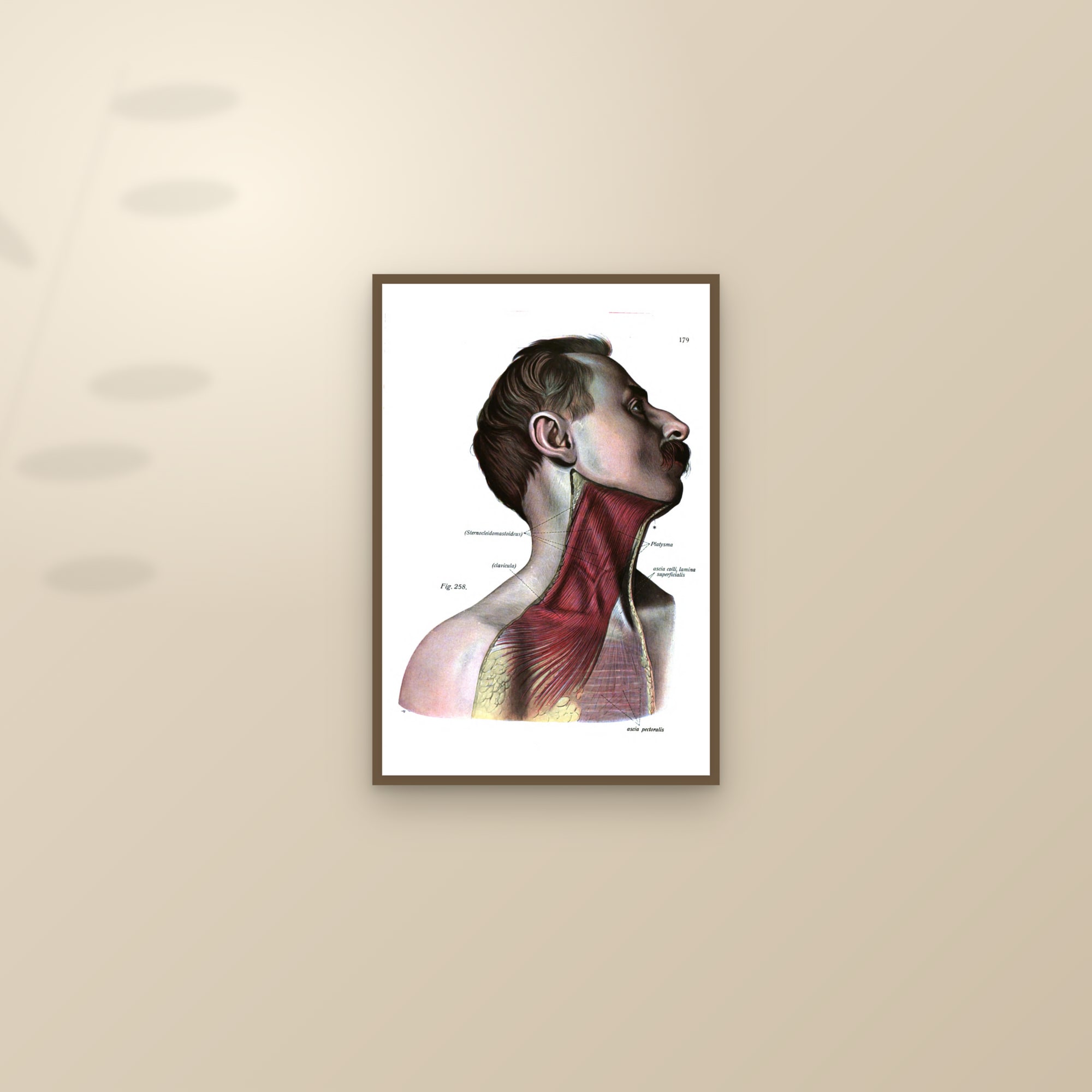
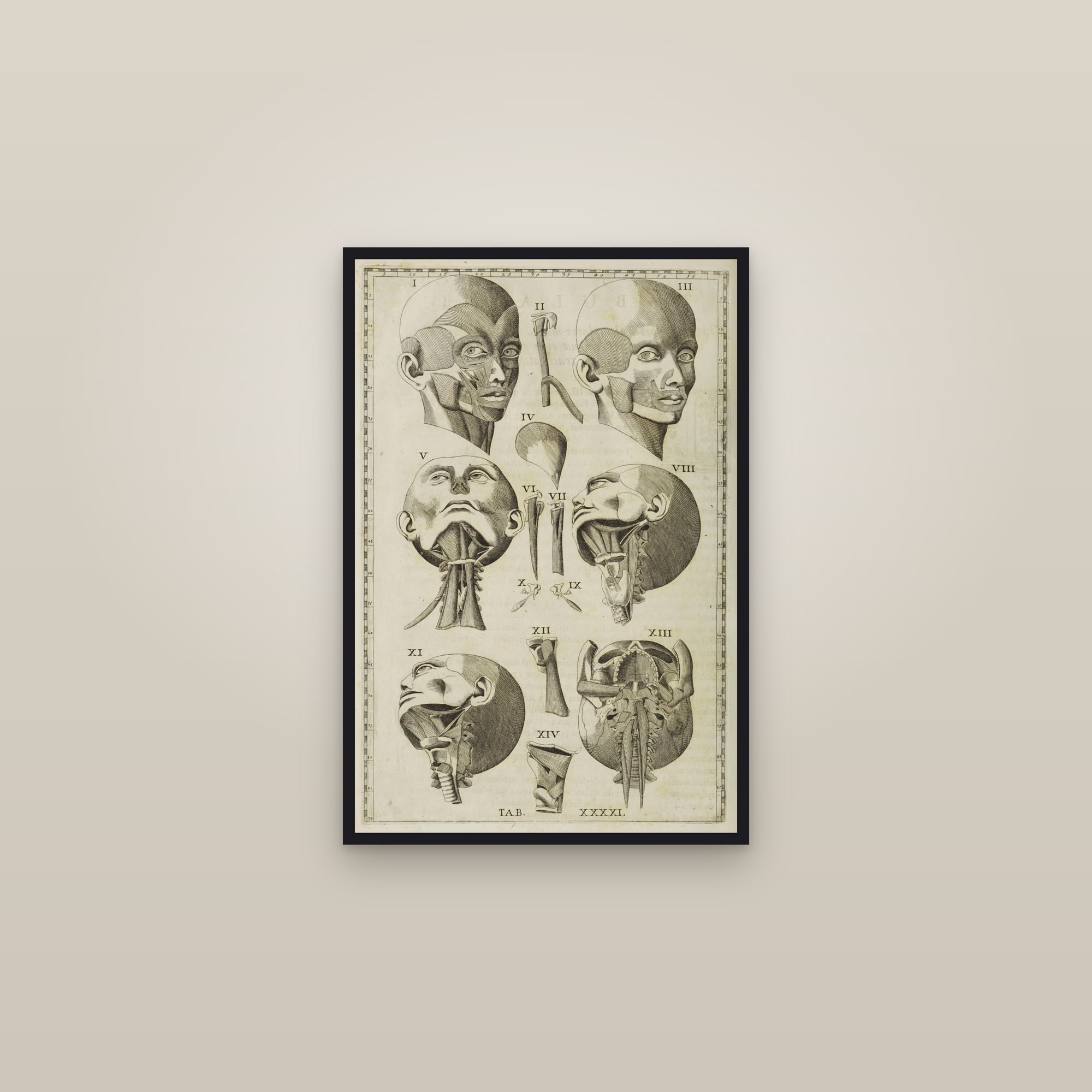
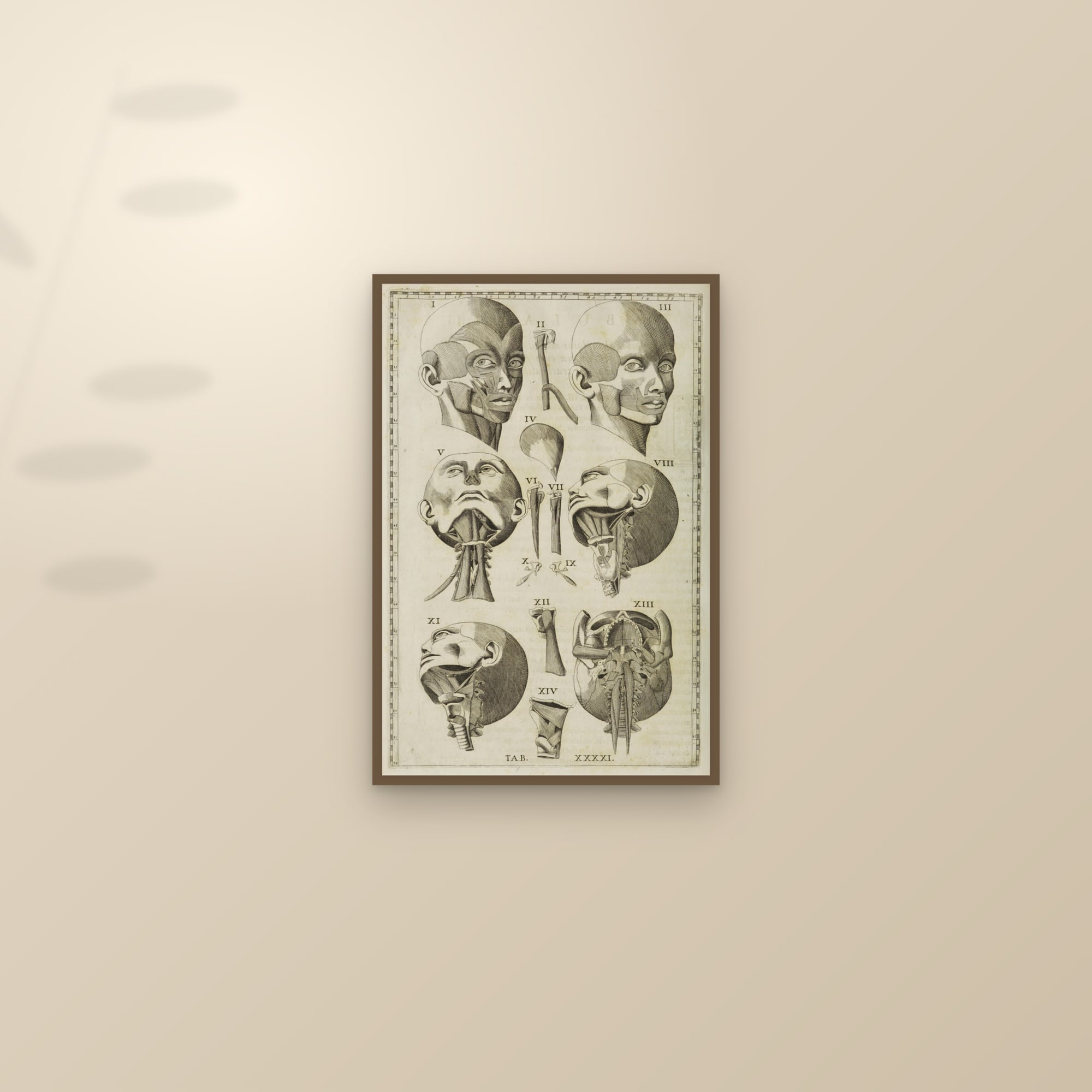
Where the older atlases show the whole figure, Sobotta's 1919 plates take the body a region at a time, in colour: the muscles of the back in a superficial, a second and a deep layer, the chest and shoulder, the upper arm front and back, the thigh front and back, the head and neck from the side, and the deep muscles of the neck and face. Albinus adds study plates of the face, jaw, larynx and neck. These are the plates a physiotherapist, massage therapist or trainer hangs where a client can see the muscle being worked.
Sizes and framing
The whole-figure plates read best large: 24×36 for a Vesalius or Albinus muscle man on the wall of a studio, a gym or a loft, or 16×24 as a front-and-back pair. Vesalius, Albinus and Sobotta plates print up to 24×36; the Eustachi engravings up to 16×24. Each comes full-bleed or as a captioned specimen on cream, on 250 gsm archival paper, unframed or framed in black or dark wood with no mat. The fourteen Vesalius men in sequence make a gallery wall; three or more prints take 10% off.