Adolphe Millot Prints
1857–1921 · French · Natural-history illustration
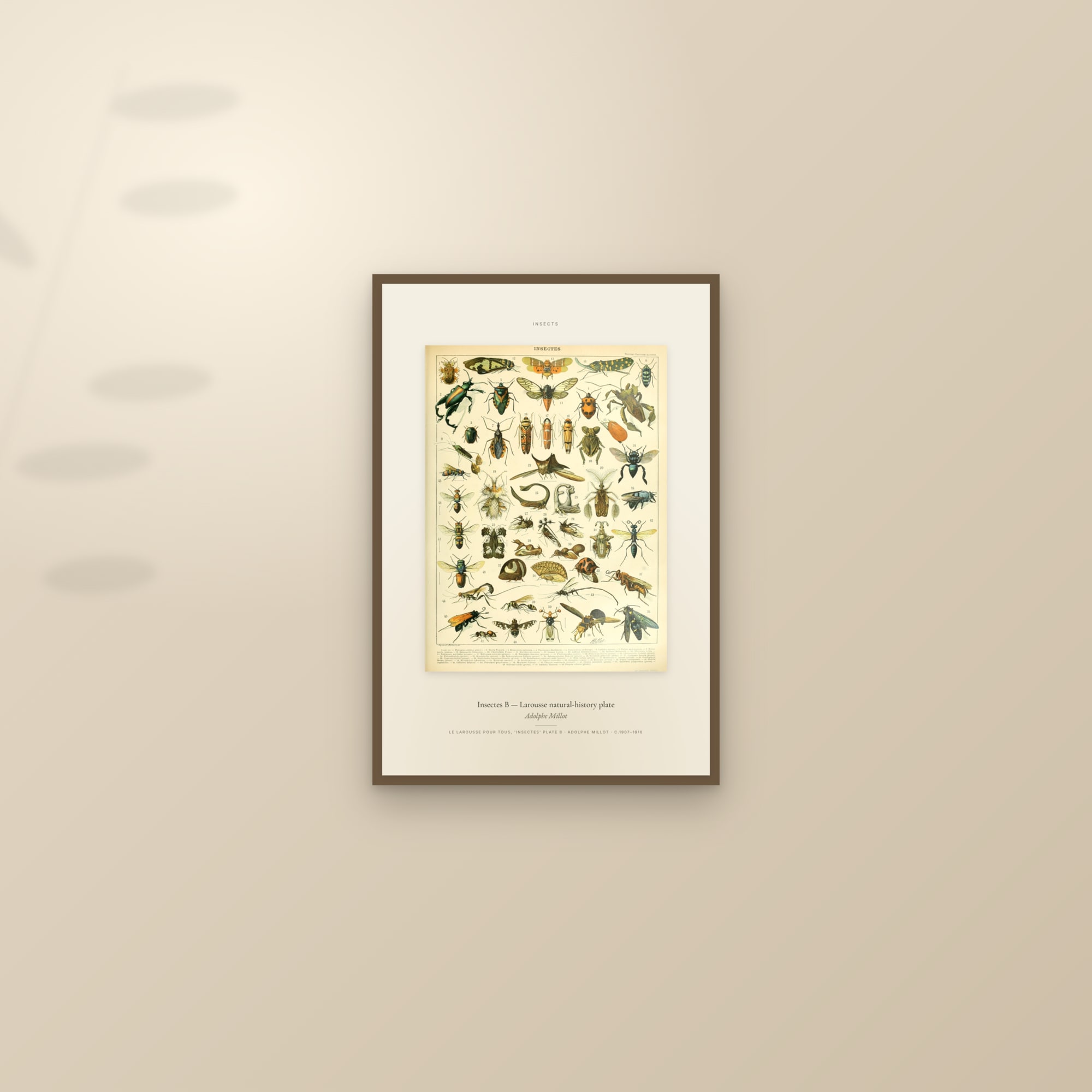
Adolphe Millot's plates for the Nouveau Larousse Illustré — butterflies, beetles, birds and flowers laid out in dense, jewel-like arrangements. Restored and printed to order.
8 prints · printed to order on heavyweight matte paper · framed or unframed
About Adolphe Millot
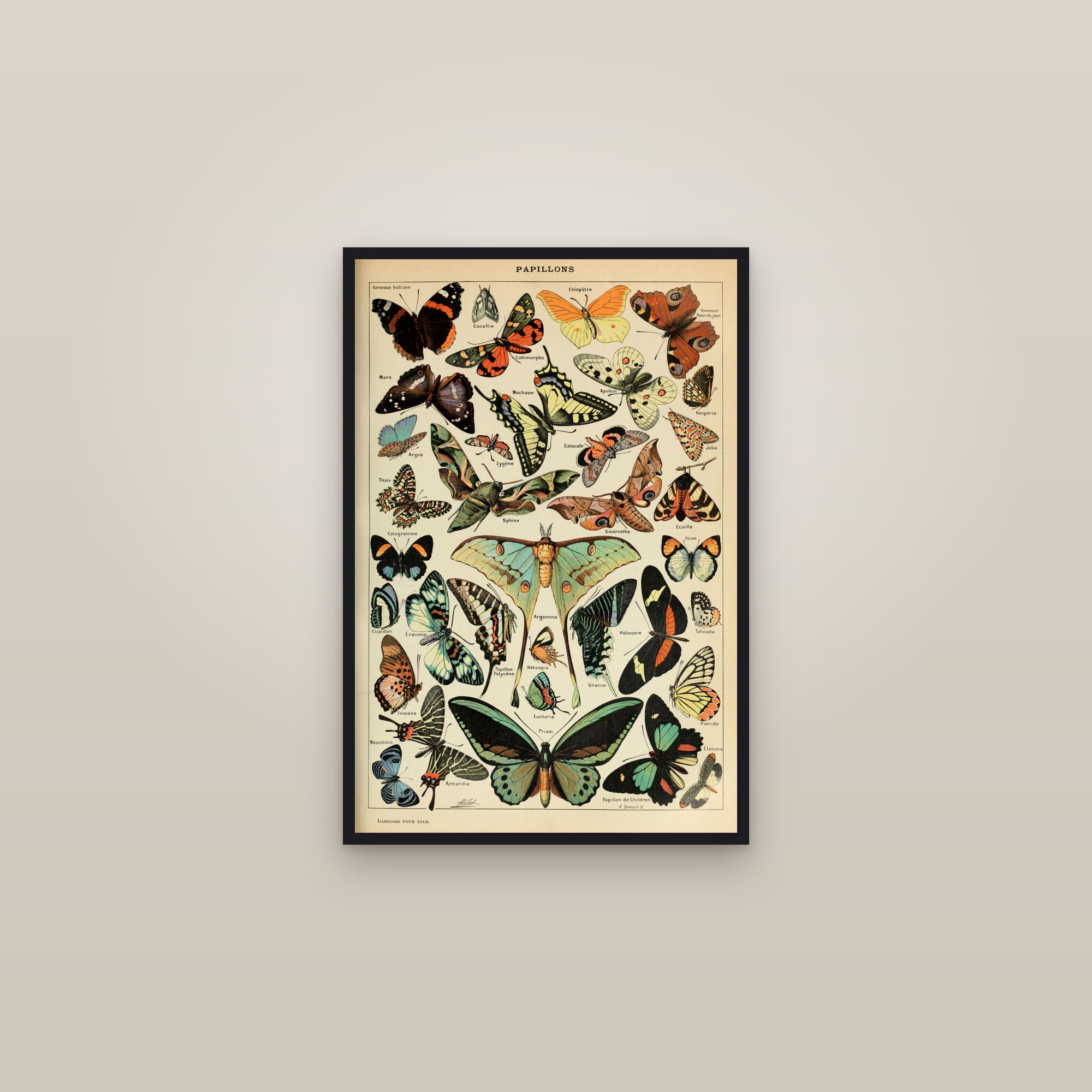
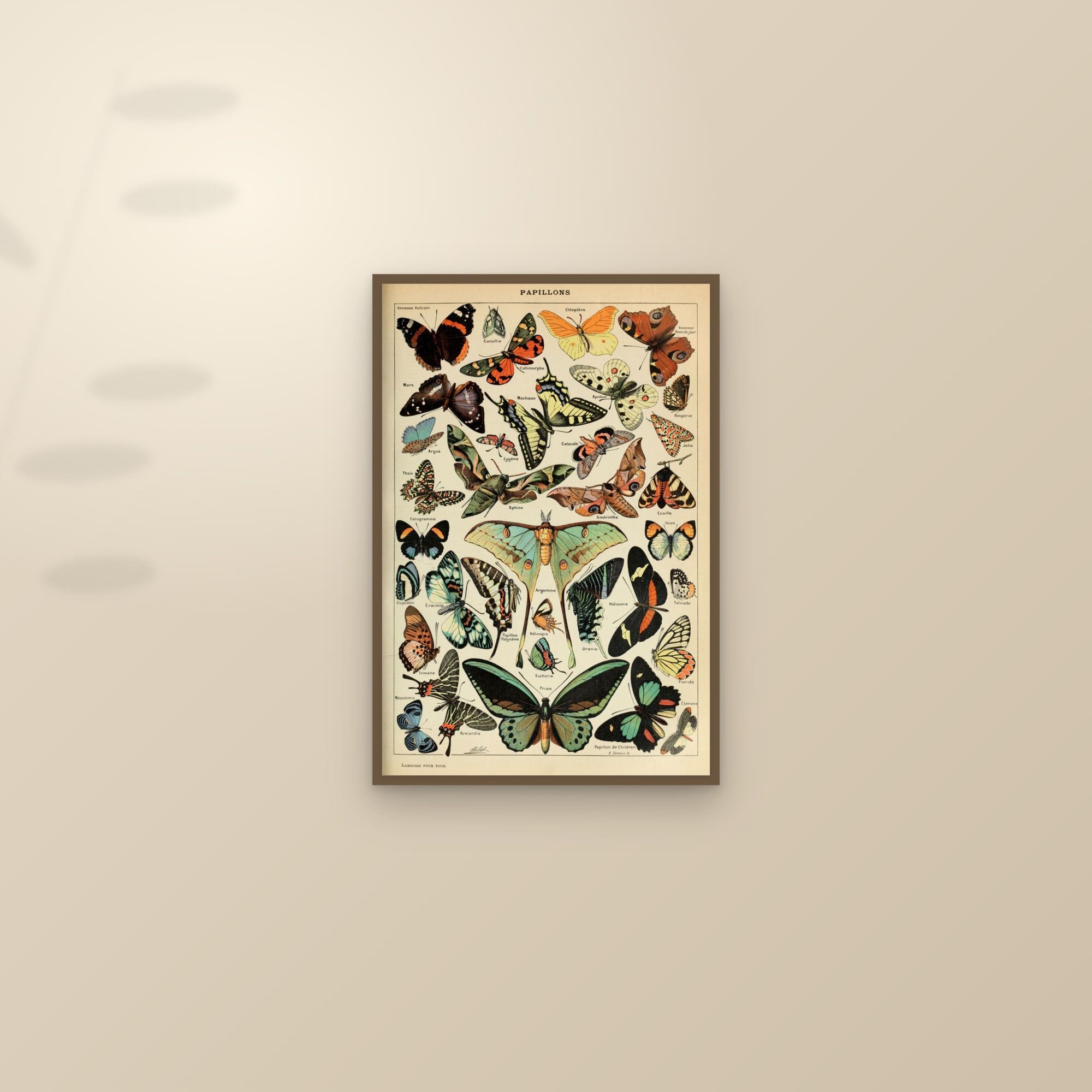
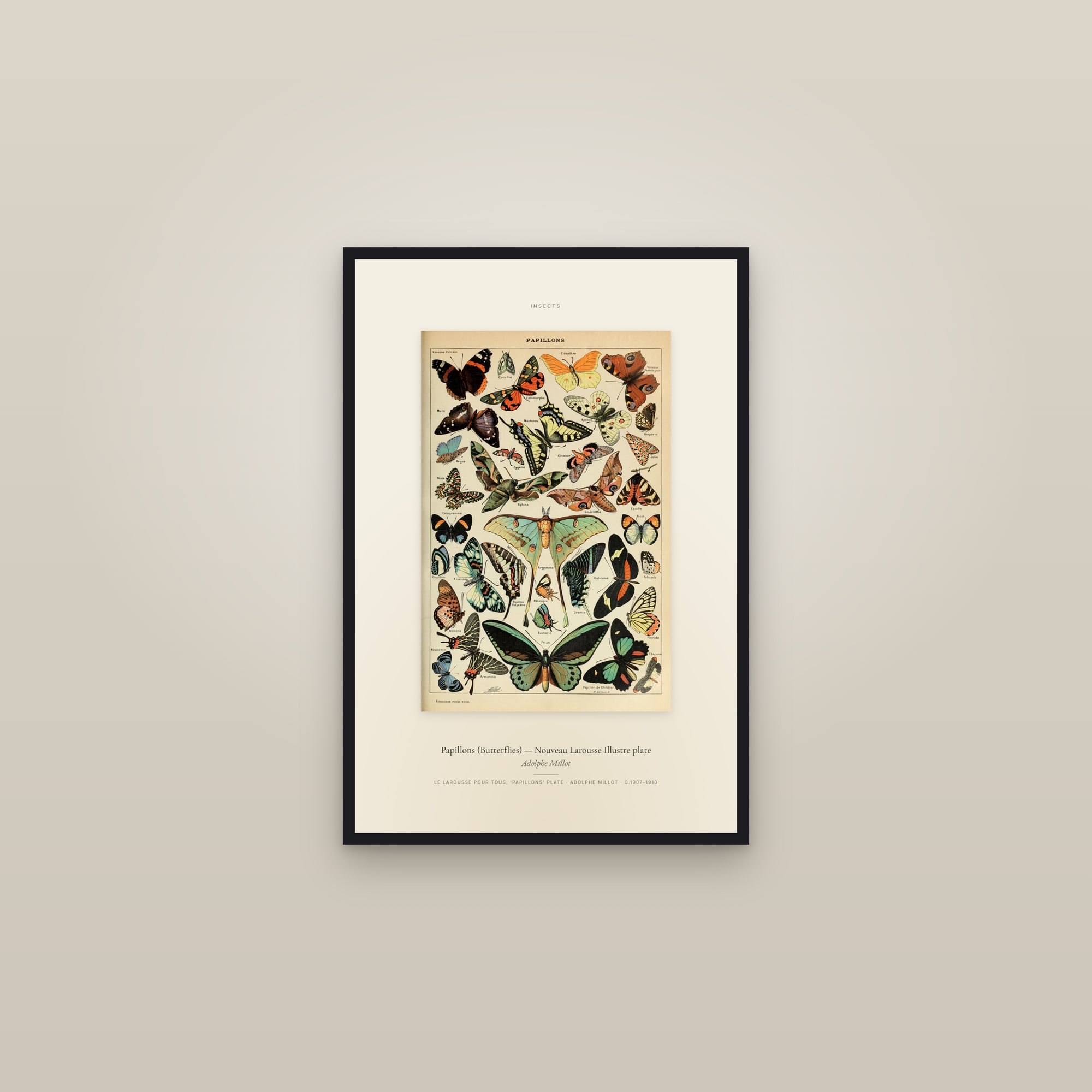
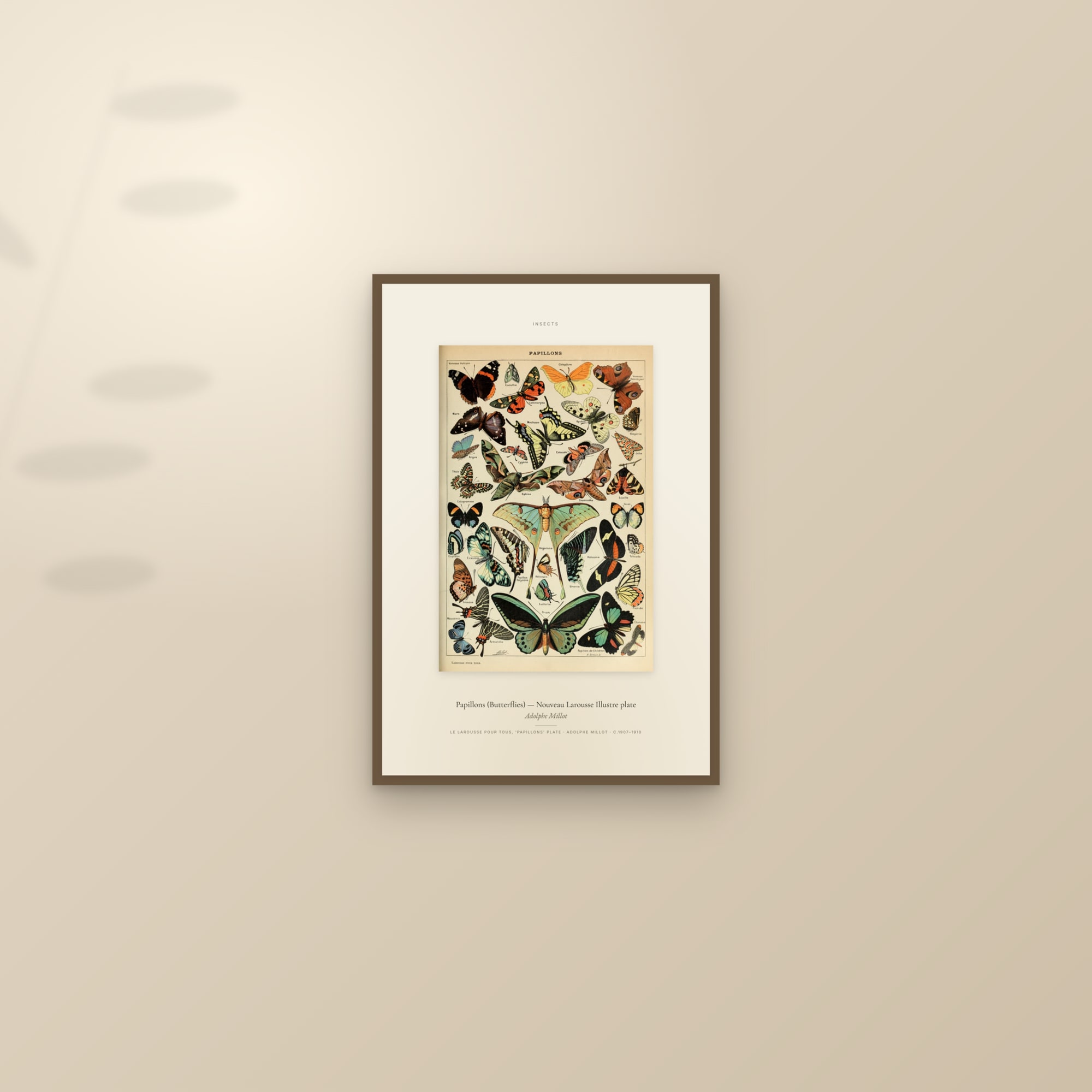
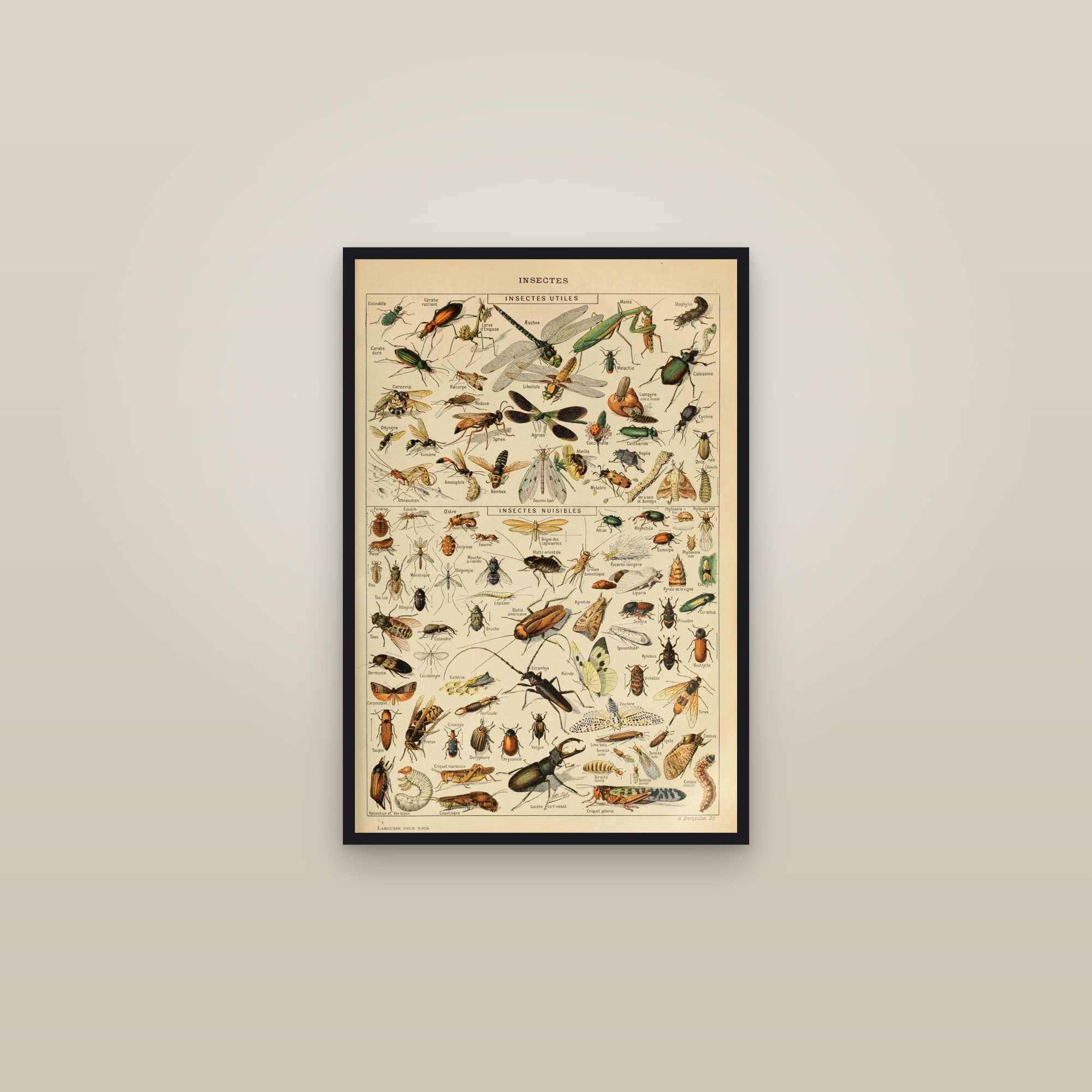
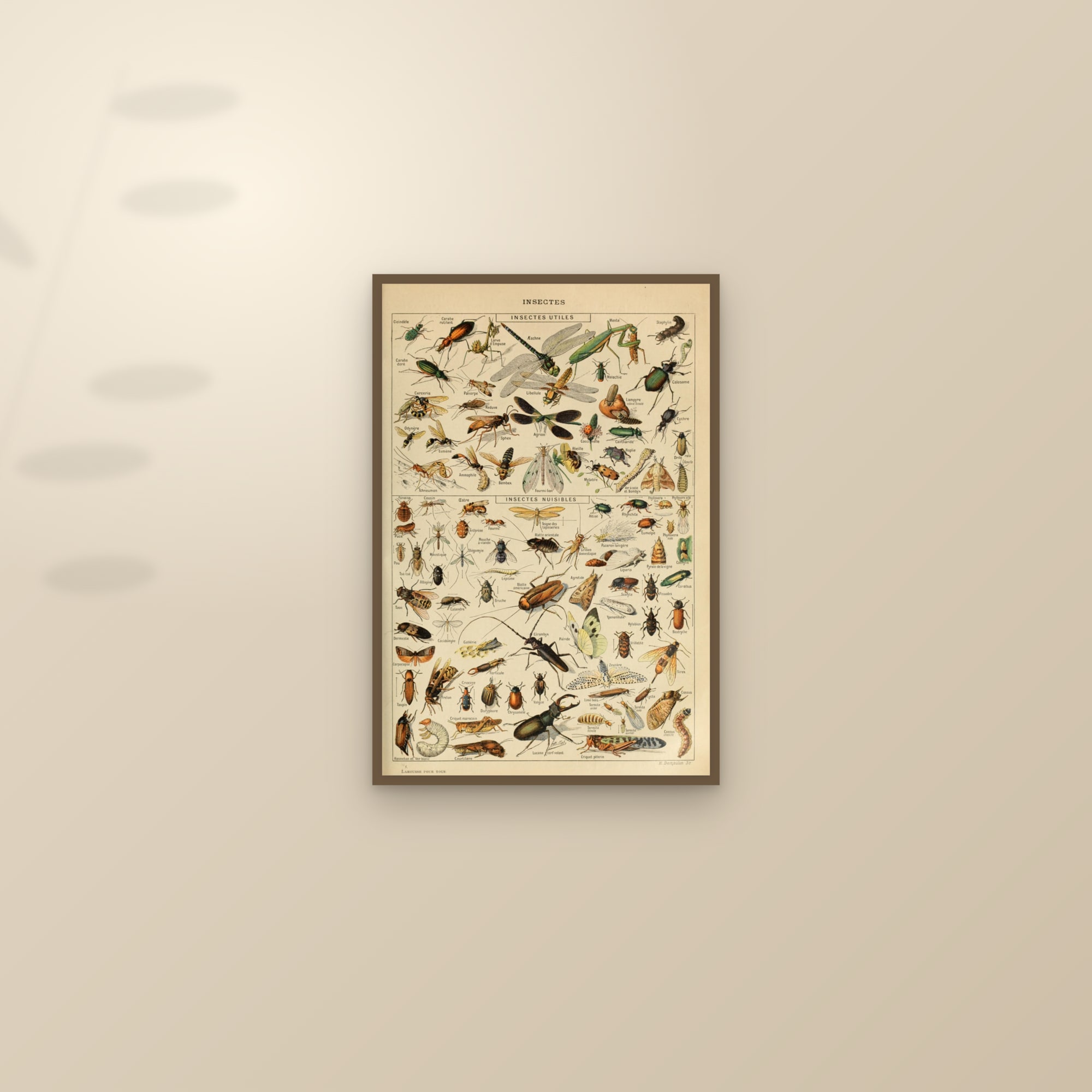
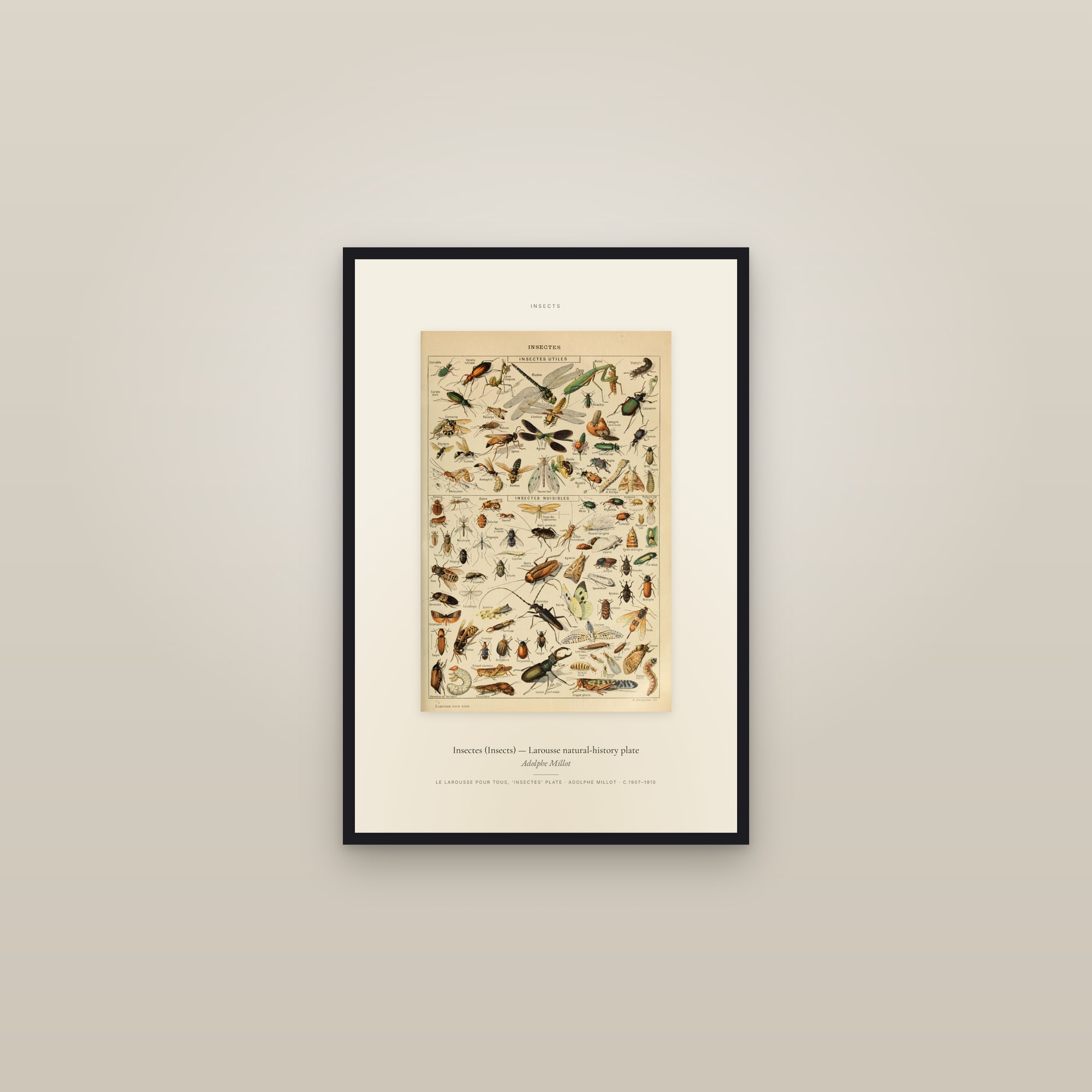
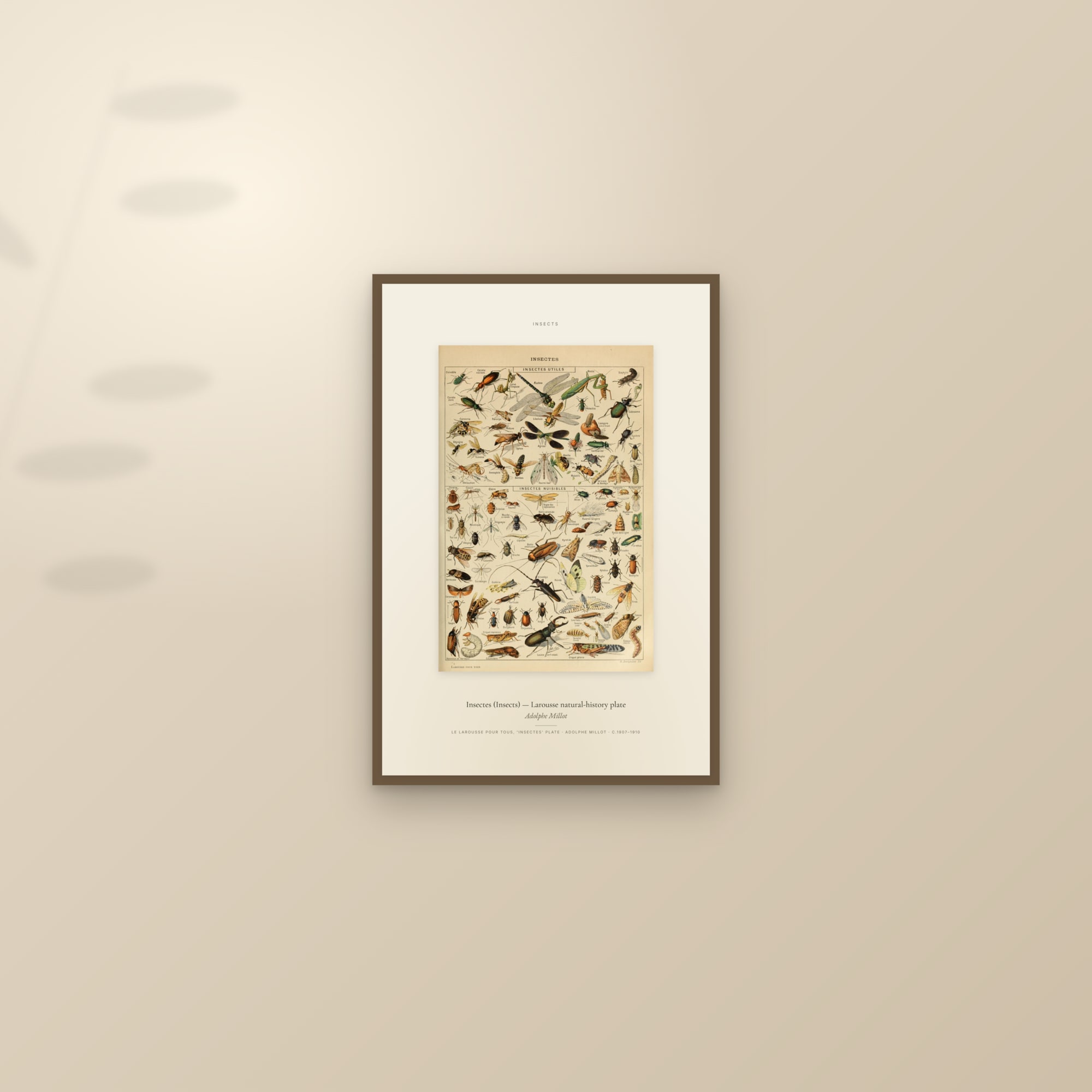
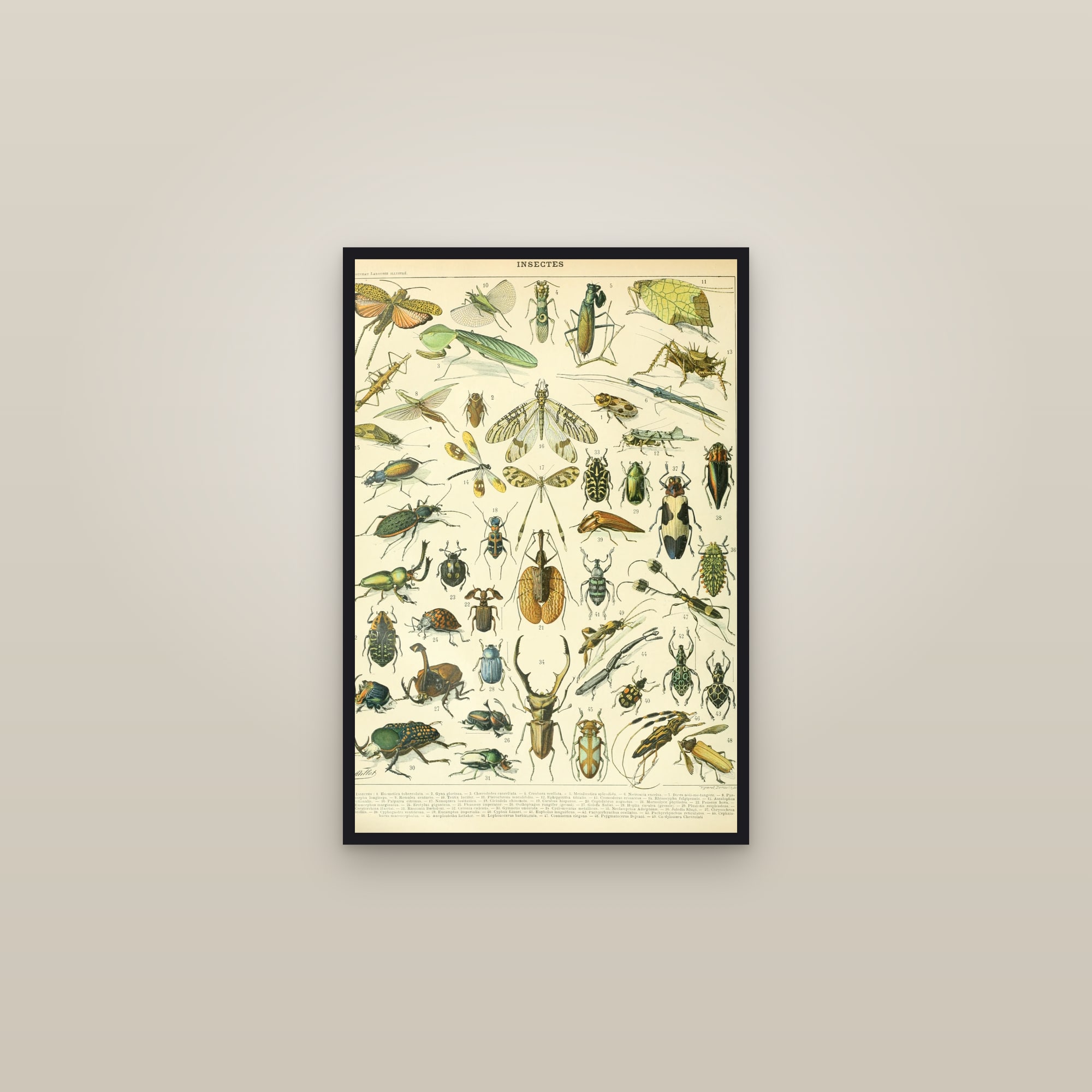
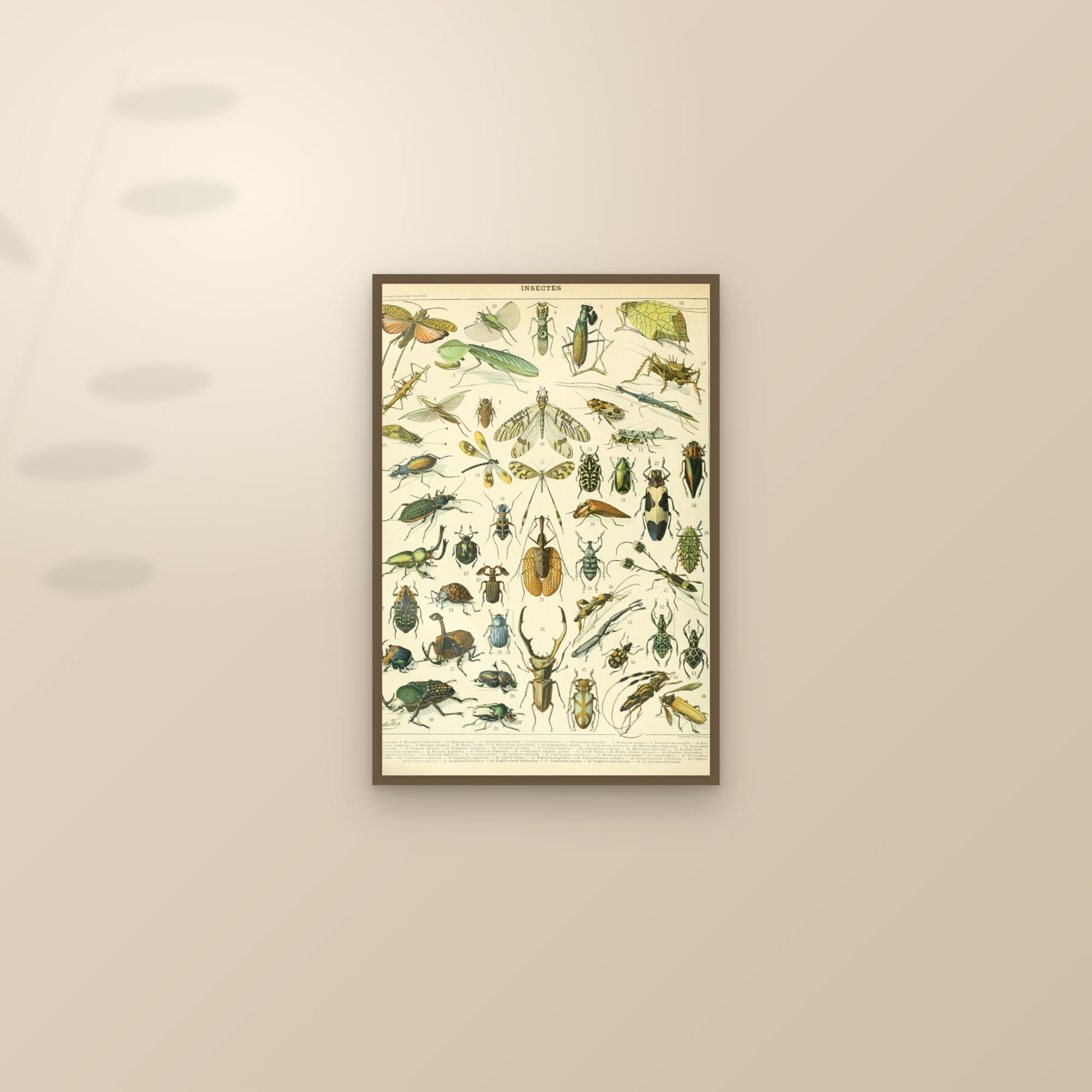
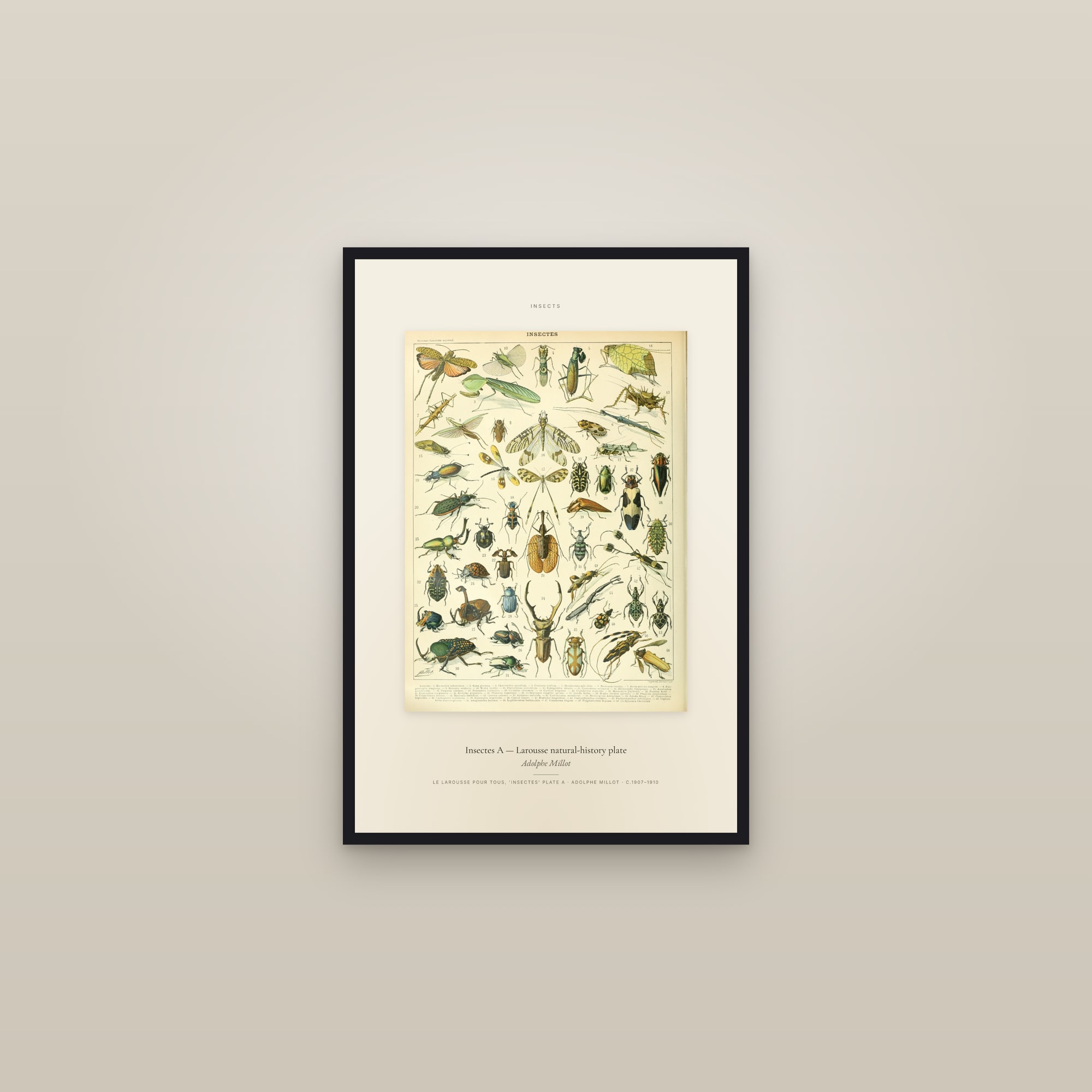
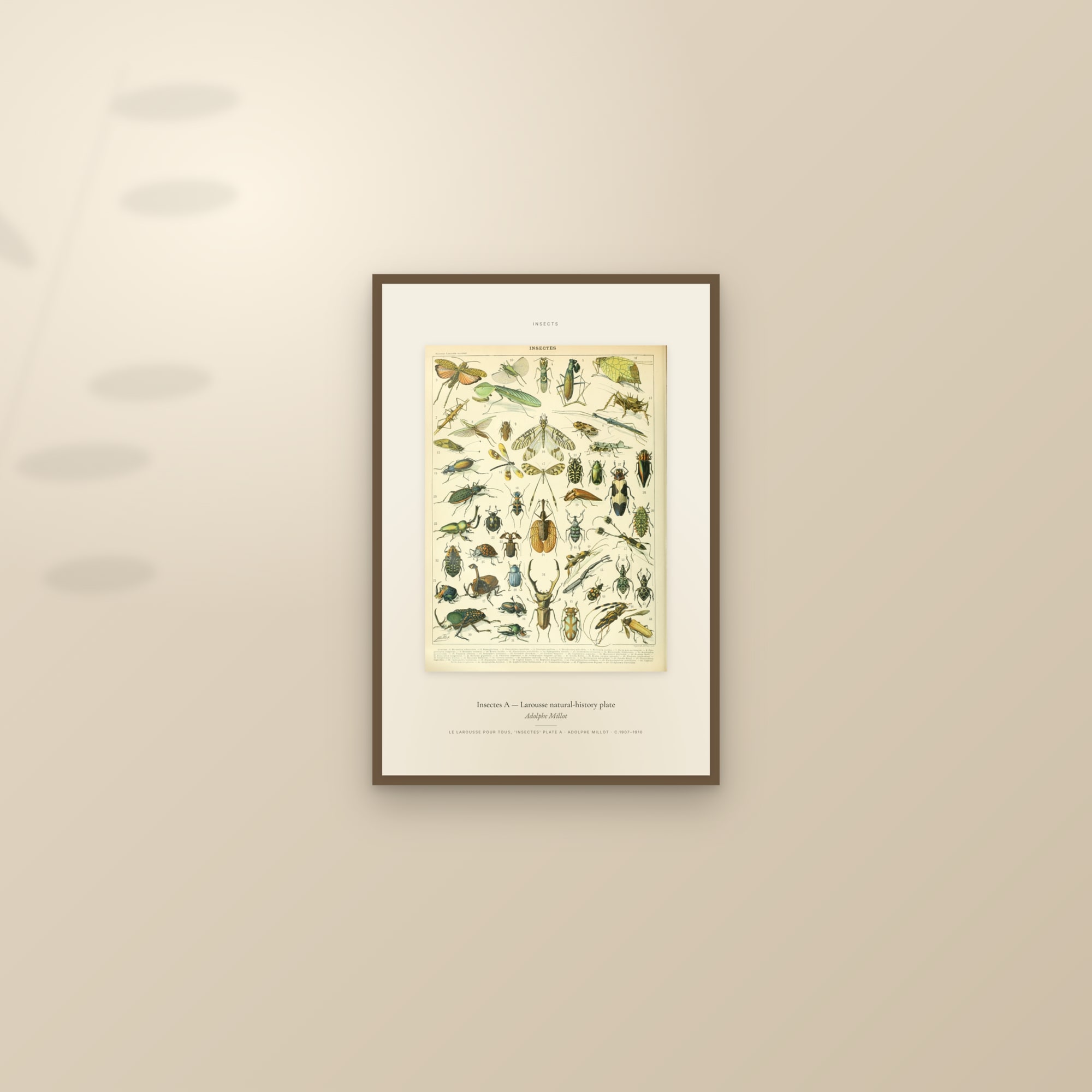
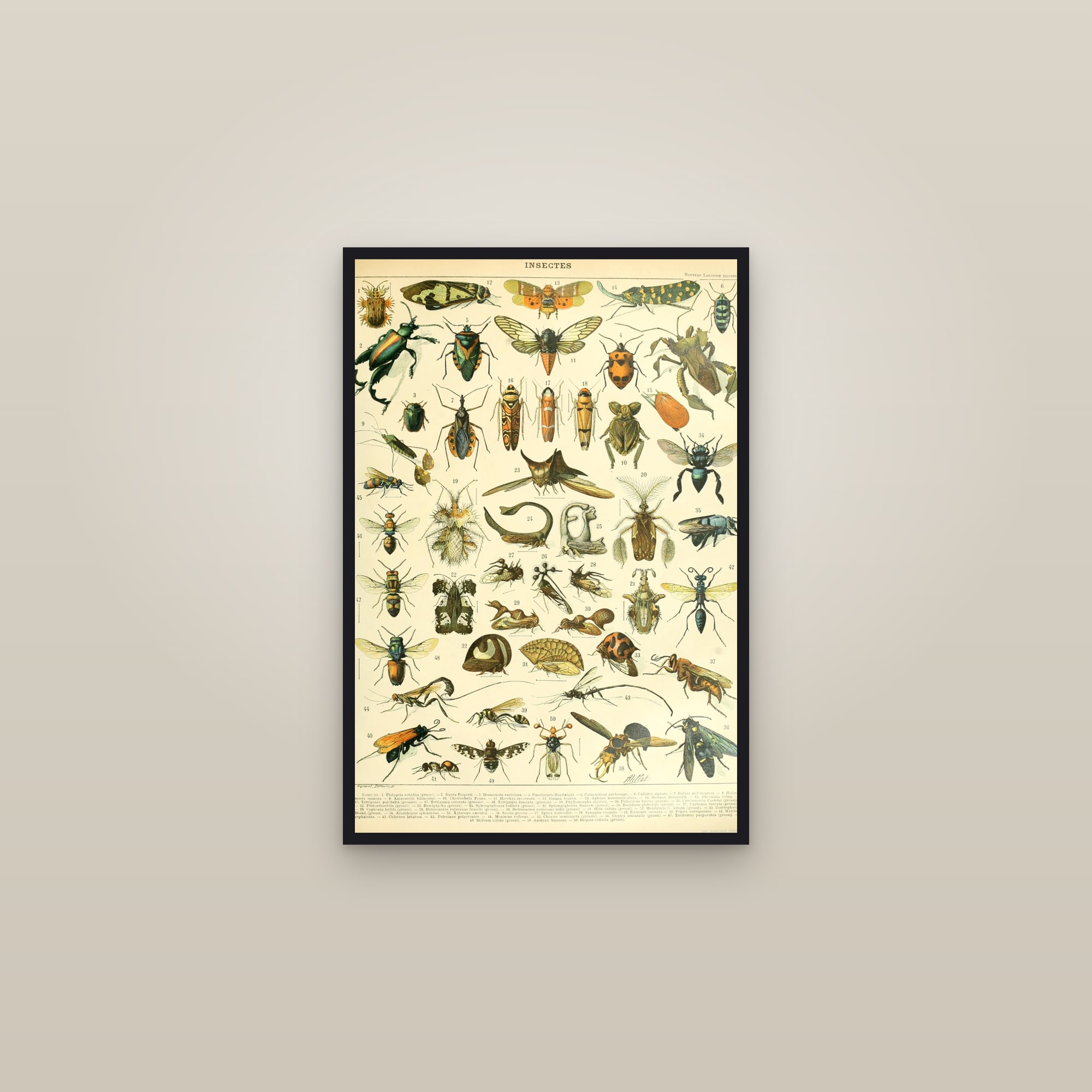
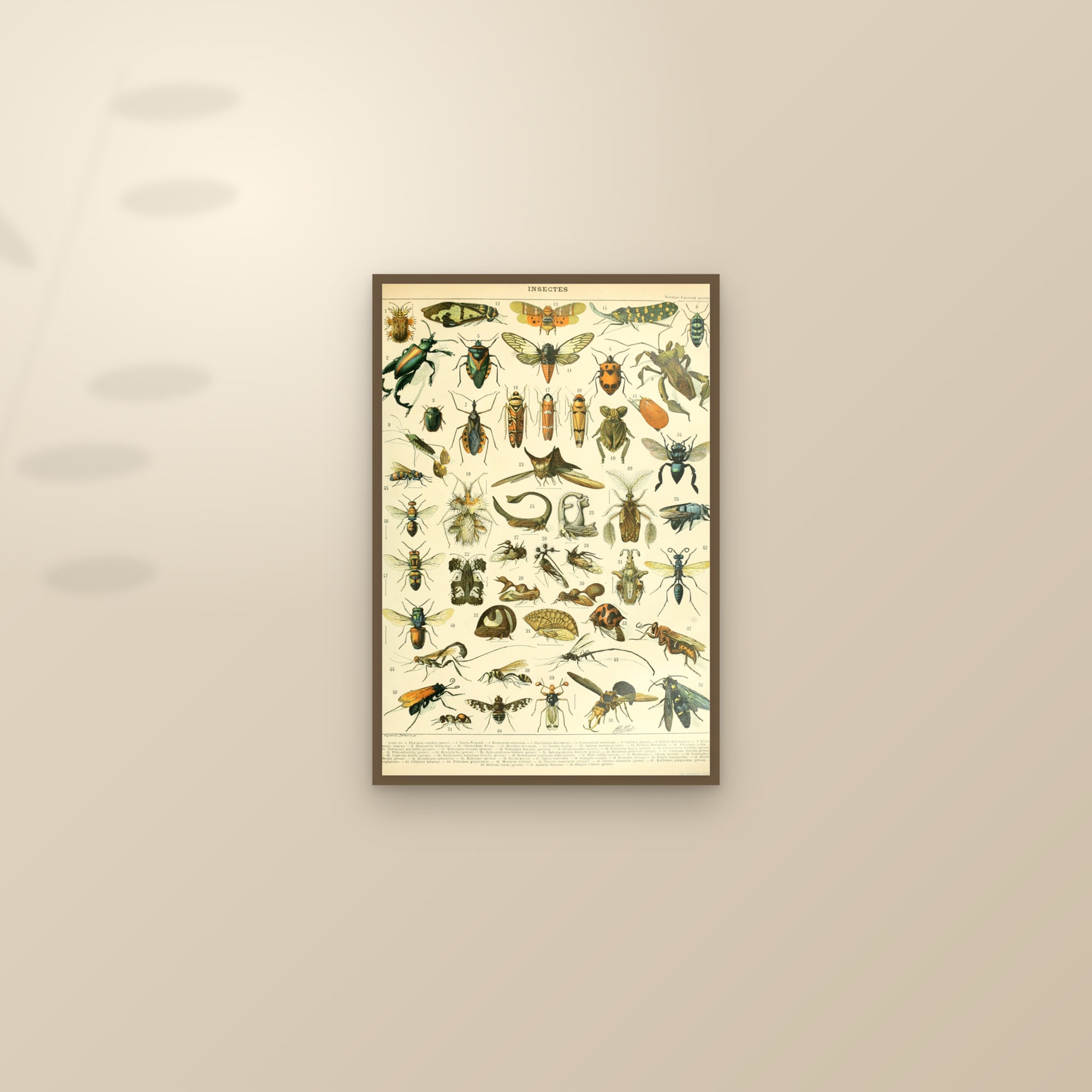
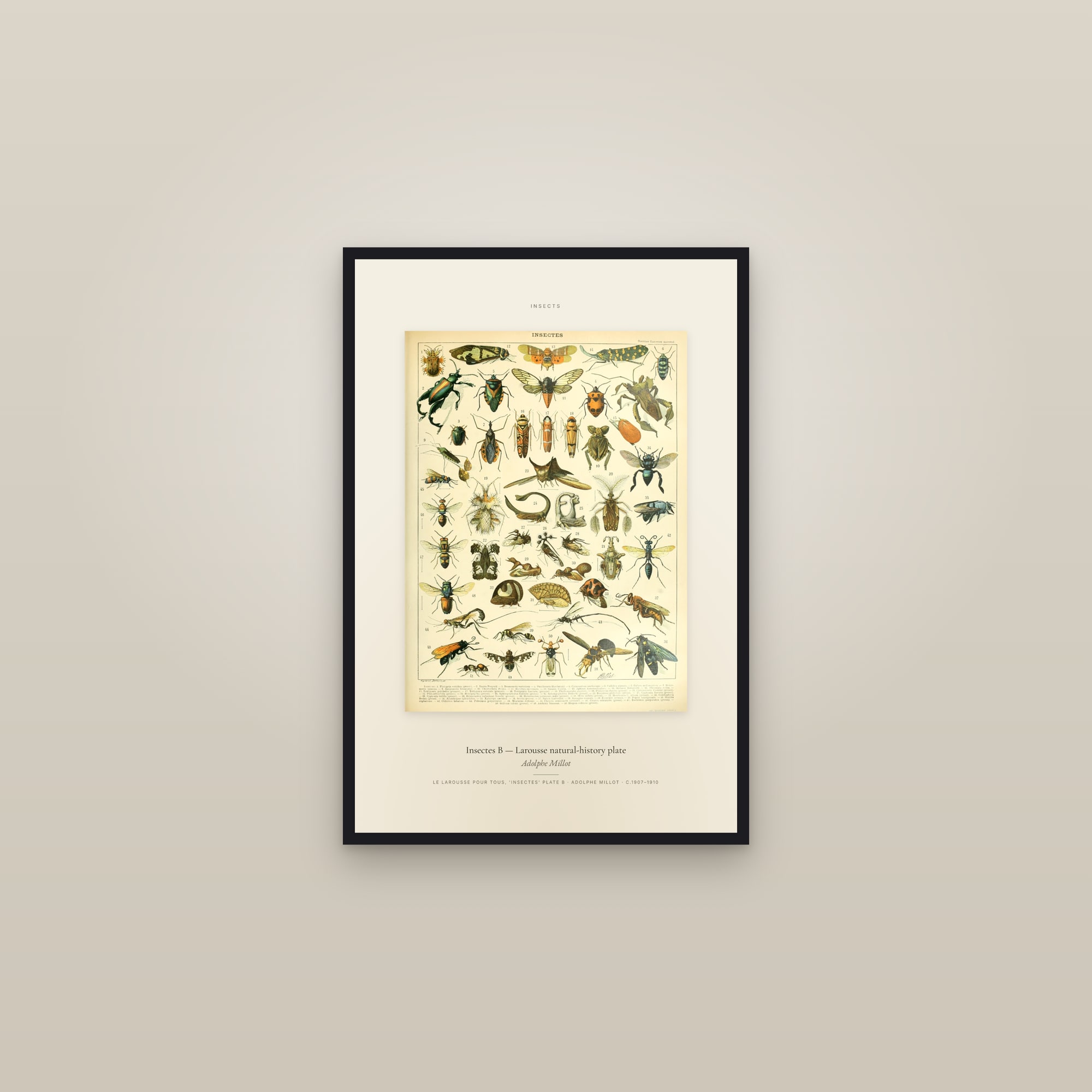
Adolphe Philippe Millot was born in Paris in May 1857 and spent his career there as a painter, lithographer and entomologist. He was senior illustrator at the Muséum national d'histoire naturelle, a member of the Société entomologique de France, and received an honourable mention at the Salon des Artistes Français in 1891. His fame rests on the colour plates he drew for the Larousse encyclopaedias: first for the Nouveau Larousse illustré, published in parts between 1897 and 1904, and then for the Larousse pour tous of 1907 to 1910 and the Petit Larousse that followed, where a single page had to show a whole category of nature at once. The Papillons plate packs dozens of butterflies and moths, European and tropical, into one composition; the Insectes plates do the same for beetles, dragonflies, bees and grasshoppers, and others cover mushrooms, flowers, feathers, shells, crustaceans, fruit and reptiles. Each specimen is drawn and coloured accurately enough to be identified, then arranged on the page so that the group reads as a pattern, with a numbered key beneath. Millot died in Paris in December 1921. His plates are the model for a whole genre of encyclopaedia illustration, and they hang as well as they were printed: dense, colourful and legible from across a room.