What is a giclée print, and is it worth it?
A marketing word from 1991 for a pigment inkjet print on archival paper. The word guarantees nothing; the ink, paper and scan do.
Contents8 sections
A giclée print is an inkjet print. The word was coined in 1991 by a printmaker who needed something grander than "inkjet" for a gallery mailer. It has come to mean, loosely, a fine-art inkjet print with pigment inks on archival paper, but nobody regulates it, so a seller can call anything a giclée. What matters is what the word is standing in for: pigment ink rather than dye, a heavy acid-free paper, a source scan wide enough for the size, and a printer who manages colour. If those four are right, the print is worth having. Paying extra for the word itself is not.
Where did the word come from?
In the late 1980s the Iris inkjet printer was a proofing machine for the commercial printing trade. A few people noticed that on heavy watercolour paper it made a very good reproduction of a painting. One was Jack Duganne, a printmaker at Nash Editions in California, the studio Graham Nash set up to make such prints for artists. Duganne wanted a word that would separate those fine-art prints from the ordinary proofs the same machine produced, and in 1991 he took it from the French gicler, to squirt or spray, which is what an inkjet head does.
The word stuck because it worked. "Inkjet" sounded like an office; "giclée" sounded like a gallery. By the 2000s it was on every art-fair label and on a great many prints that were nothing like what Duganne meant.
What does a giclée actually consist of?
Four things, and each can be done well or badly.
Ink. Inkjet printers use either dye inks or pigment inks. Dye dissolves into the carrier and soaks into the paper's coating; it is vivid and cheap and fades in years. Pigment is solid particles of colour suspended in the carrier and bonded to the surface; it fades in decades. A giclée worth the name is pigment. Ask.
Paper. "Archival" has a technical meaning: acid-free, lignin-free, conforming to ISO 9706, the standard for permanent paper. A paper mill states it in those words; Hahnemühle's listing for its Photo Rag, a 100 % cotton 308 gsm sheet, says "acid- and lignin-free" and "ISO 9706 conform." Weight is the other number: 200 gsm is a heavy poster, 250 to 310 gsm is a fine-art sheet, and anything much lighter is a poster whatever the label says.
Source. A print cannot be sharper than its file. A museum scan at 5,000 pixels wide prints at 24 inches with room to spare; a 1,500-pixel web image prints soft at anything over 10 inches. The word says nothing about this, and it is where most cheap "giclées" of famous paintings fail. How a fine-art print is made explains how we cap sizes by scan width.
Colour management. The printer must be profiled for the paper, so that a neutral grey prints grey. Done badly, every print has a cast. You cannot see this on a listing; you see it when the print arrives, in the paper margin against daylight.
How long will it last?
The independent authority on this is Wilhelm Imaging Research, a laboratory that has run accelerated fade tests on photographic and inkjet materials for over forty years and publishes display-permanence ratings: the number of years, under stated conditions, before fading or a colour shift becomes noticeable. The conditions are the point. Ratings assume indoor light, a print framed under glass, and no direct sun.
The manufacturers quote the lab. Epson states that its UltraChrome HDX pigment inks are rated by Wilhelm Research for "up to 200 years for color prints and up to 400 years for black-and-white prints," on specified papers, under glass. Canon's 2009 announcement for its imagePROGRAF iPF6100 with LUCIA pigment inks cited an average Wilhelm rating of more than 100 years for colour prints framed under glass. Earlier generations of pigment ink, and every dye ink, were rated far lower.
Treat the big numbers as a comparison, not a promise. A print in a sunny room with no glass will not get 200 years from any ink. A pigment print under glass, out of direct sun, will outlast the frame.
How does it compare with the other kinds of print?
| Kind | How it is made | What to expect |
|---|---|---|
| Giclée (pigment inkjet) | Inkjet, pigment ink, fine-art paper, printed one at a time | Decades of lightfastness; the best detail if the scan is good; the most expensive per sheet |
| Dye inkjet | Inkjet, dye ink, often photo paper | Vivid, cheap, fades in a few years in daylight; sometimes sold as giclée |
| Offset lithograph | A press, four ink plates, thousands of copies in a run | The ordinary poster or art-book plate; coated paper, visible rosette dot pattern under a loupe, fades |
| Poster print | Offset or large-format inkjet on thin coated stock | Cheapest; thin stock; curls, yellows, fades |
| "Canvas transfer" | A print (usually offset or dye) glued or laminated onto canvas, sometimes with a varnish pattern pressed in to imitate brushwork | Not a canvas print; a poster on cloth with fake texture. Avoid |
| Canvas print (pigment) | Pigment inkjet directly onto primed canvas, stretched on a frame | Real gallery wrap; fine for edge-to-edge art; see canvas wall art |
The offset poster is the one most people have owned, and it is the right object at poster money. What a fine-art print adds is the paper under your hand and a print that looks the same in ten years.
What should you ask a seller?
Five questions, and the answers you want.
- Pigment or dye? Pigment.
- What paper, what weight, is it acid-free? A named stock, 200 gsm or more, acid-free or ISO 9706.
- How wide is the source file, in pixels? For a 24-inch print, 3,500 or more; for 16 inches, 2,000 or more. A seller who does not know has not looked.
- Where did the scan come from? A museum or library open-access file, named. A "high-resolution image" with no source is a web image.
- Is it made to order, and what happens if it arrives damaged? Made to order is fine, it is how fine-art printing has always worked; what matters is a replacement policy in writing.
A seller who answers "it's a museum-quality giclée" has answered none of them.
What are Madten prints, then?
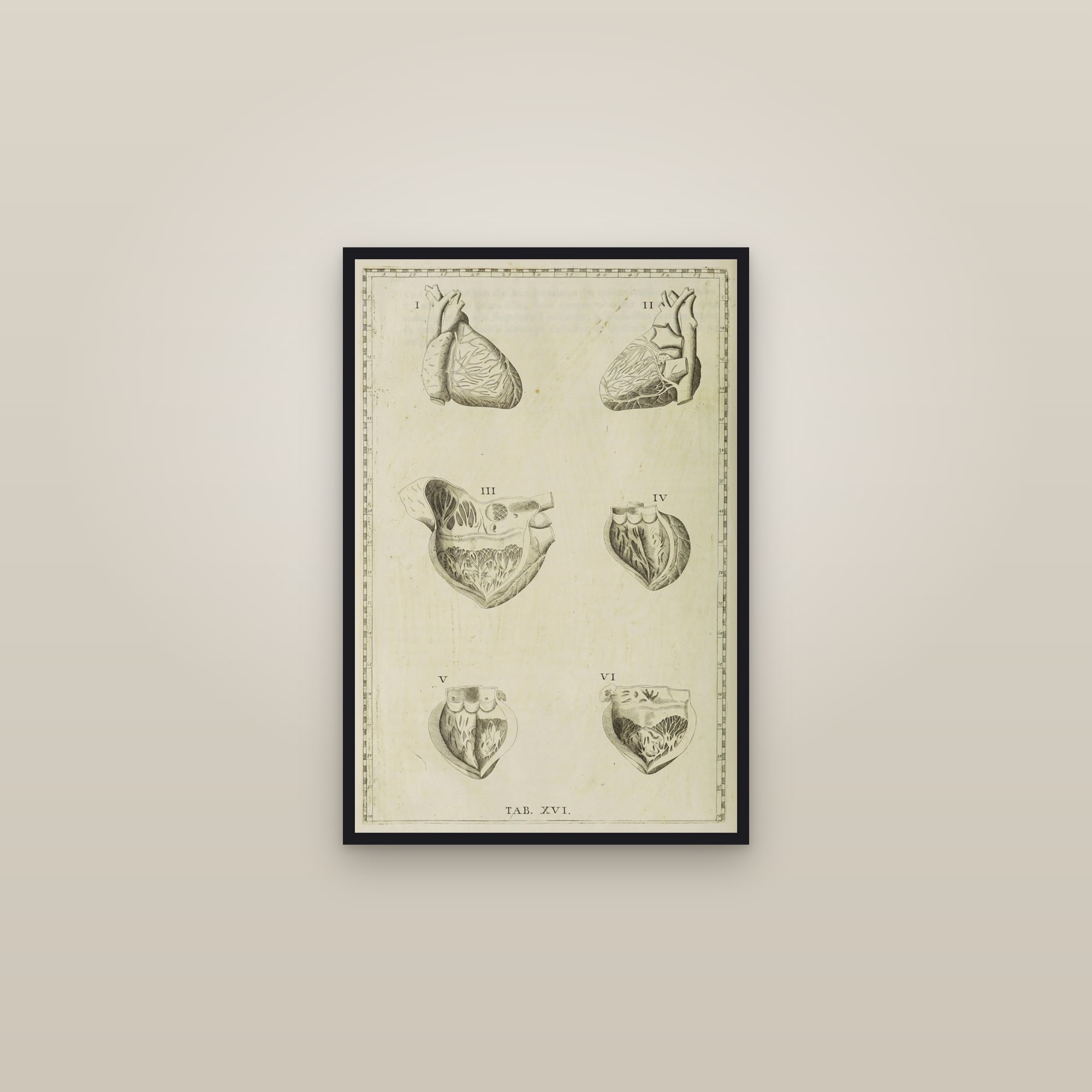
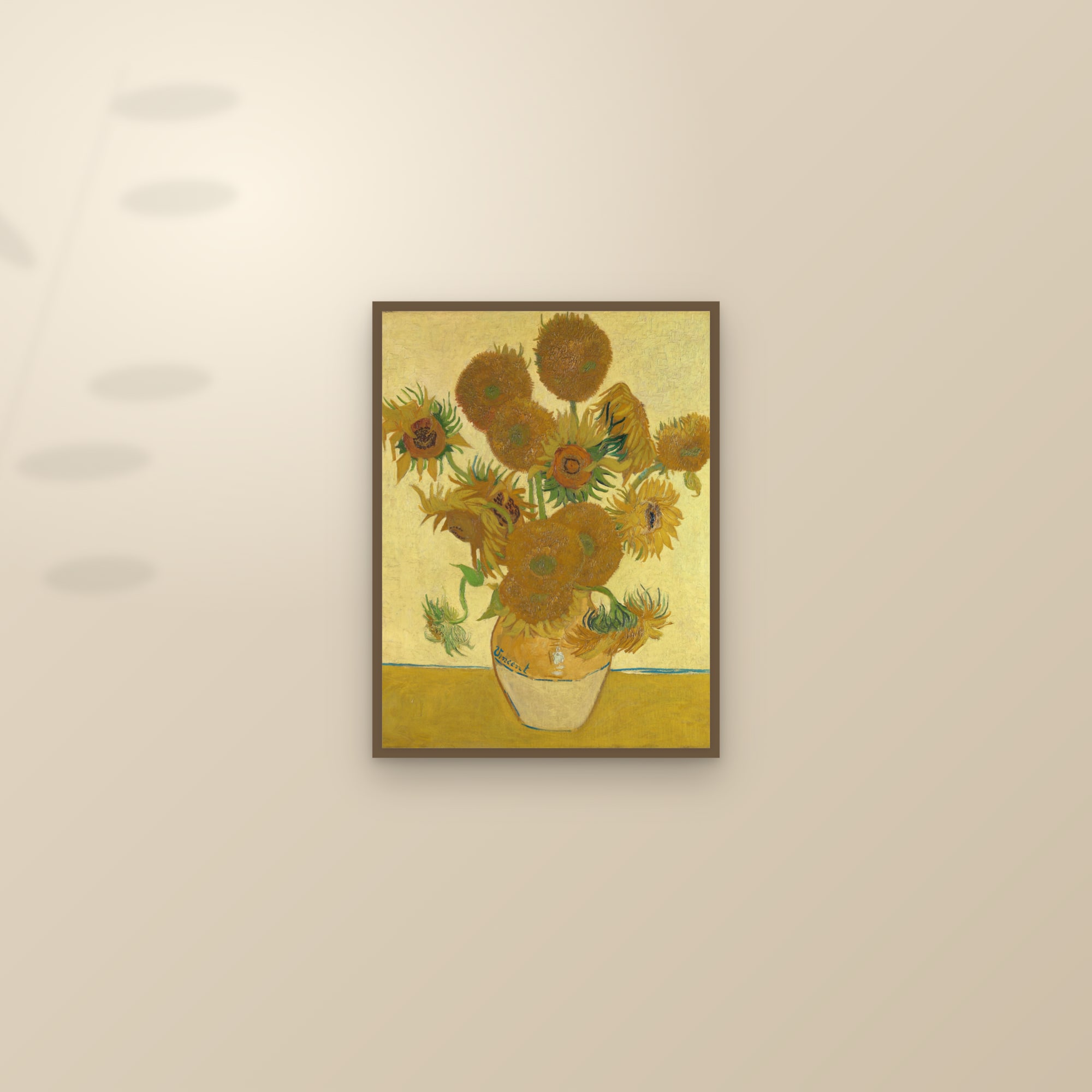
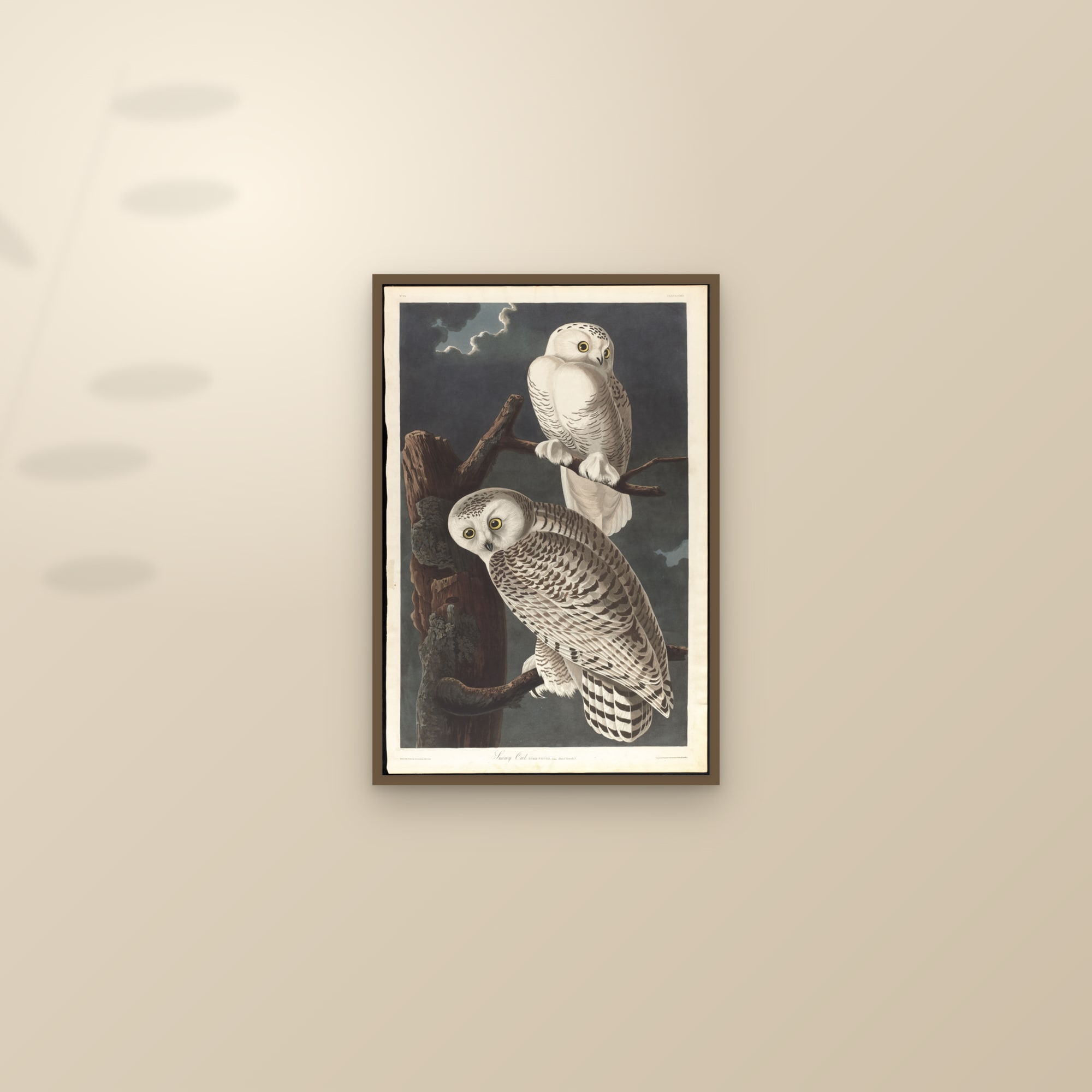
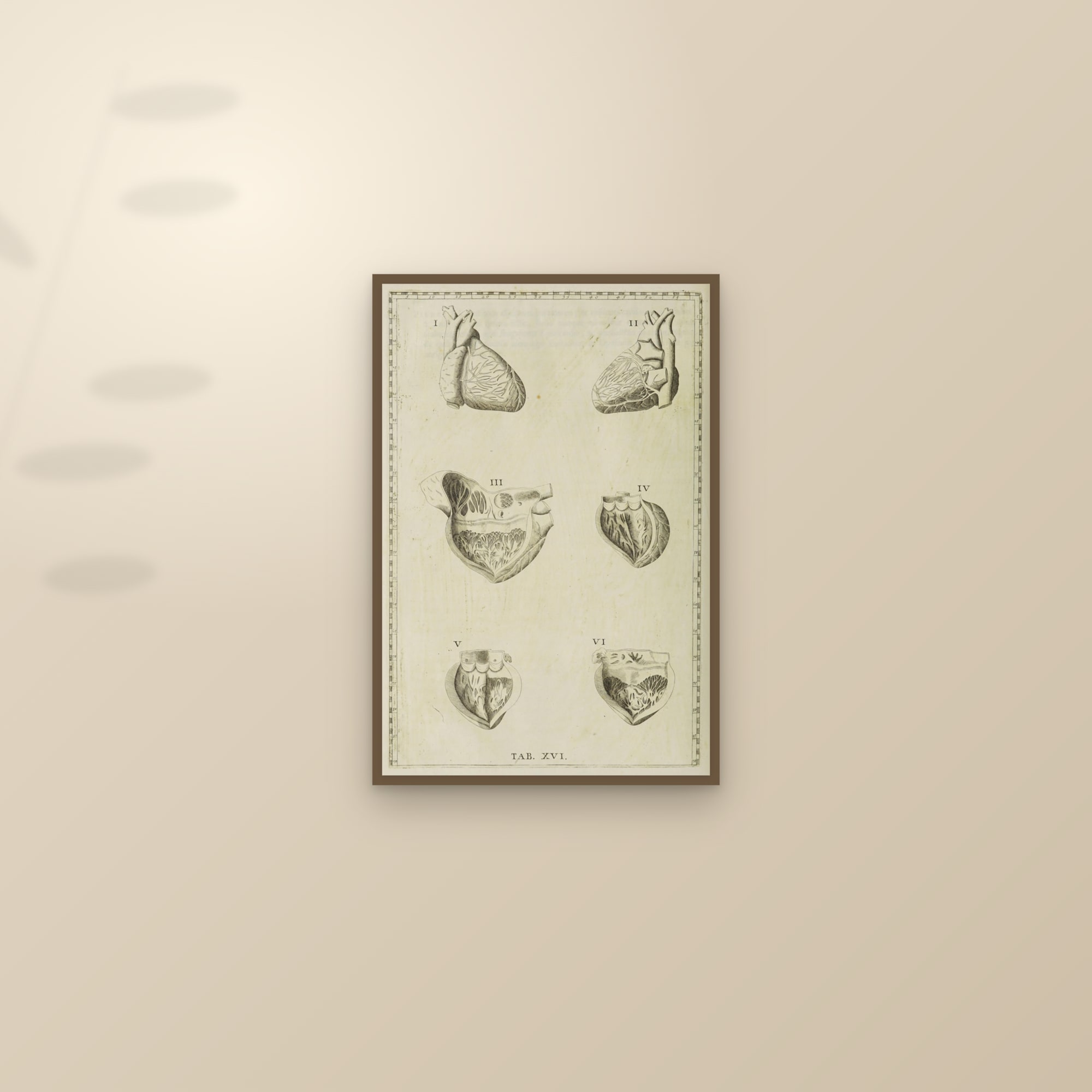
By the trade definition, giclées: pigment inkjet prints, made to order, on 250 gsm off-white archival paper for scans of real artworks (the paintings, the anatomy plates, the Audubon birds) and on 200 gsm bright-white matte for modern designs drawn in code. Sizes run 12 × 18, 16 × 24 and 24 × 36 inches on the 2:3 sheet, 12 × 16, 18 × 24 and 24 × 32 on the 3:4 sheet, and their landscape mirrors, from $39. Framed in black or dark wood, or stretched on gallery-wrap canvas where the edition runs to the edge.
We call them fine-art prints and avoid the word, because it tells you nothing you can check. Every product page instead names the source, the year and the book or museum, the paper, and the largest size the scan can carry. Those are the facts the word was invented to gesture at.
So is it worth it?
Yes, when the source is a real high-resolution scan and the paper is archival. The print will hold its colour for the life of the wall, the paper will feel like paper, and the detail will be the detail of the original, not of a web image. That combination costs more than a poster and should.
No, when "giclée" is the only specification given. The word costs nothing to print on a listing. If a seller cannot tell you the ink, the paper and the source, assume the worst of all three and pay poster money or walk away.
Shop the art in this piece
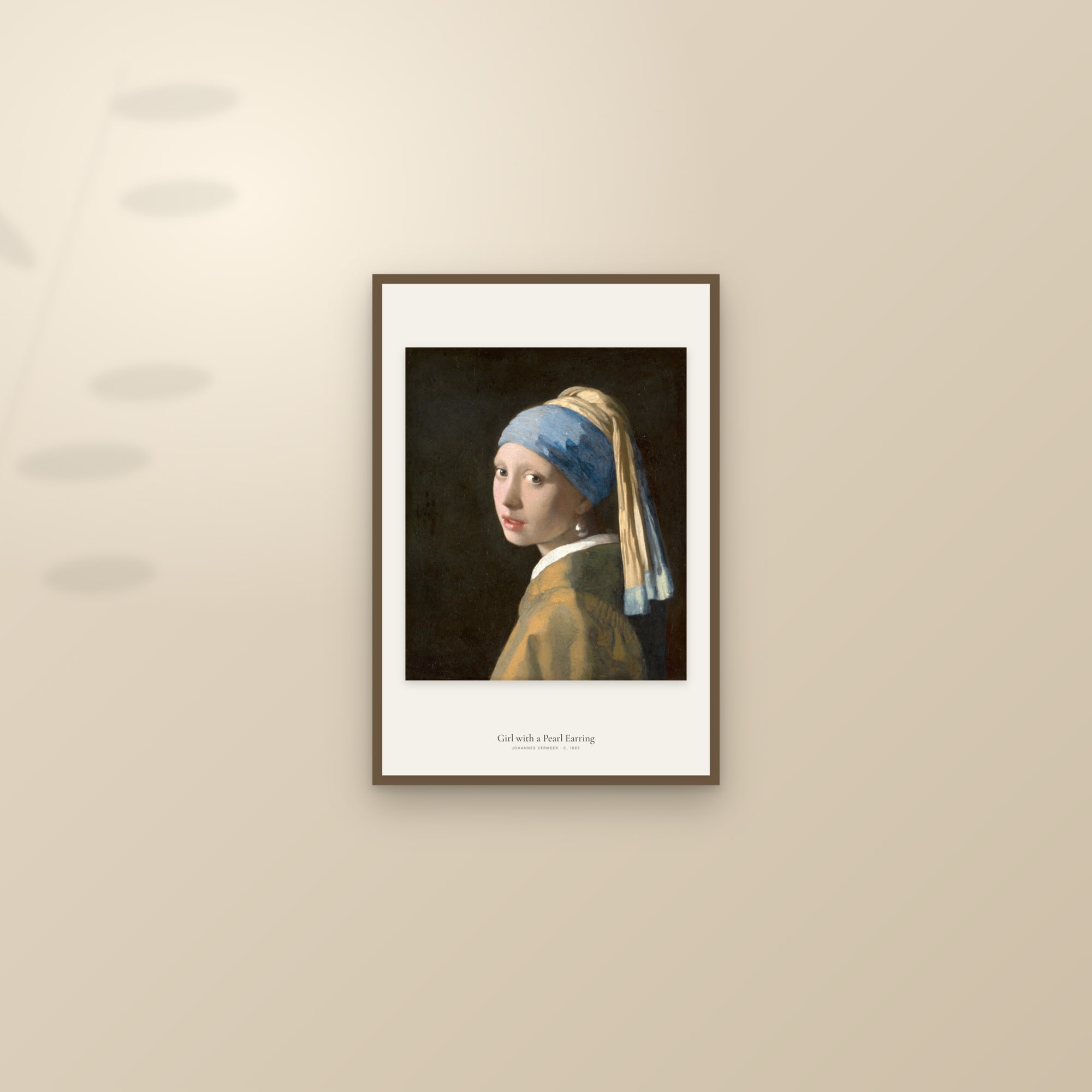
For framed, bare or canvas, see Framed, unframed or canvas; for the ratios, Print sizes and ratios explained.
Questions people ask
What does giclée mean?
It is a trade name, coined in 1991 by the printmaker Jack Duganne from the French gicler, to squirt, for fine-art prints made on an inkjet printer. In practice it means a pigment-ink inkjet print on archival paper, but the word is not regulated.
Is a giclée print better than a poster?
Usually, because posters are offset-printed on thin coated paper and fade. But the word alone does not make a print better. Ask what ink, what paper weight, whether the paper is acid-free, and how wide the source scan is.
How long does a giclée print last?
Pigment inkjet prints on archival paper, framed under glass and kept out of direct sun, are rated by Wilhelm Imaging Research in decades; manufacturers cite ratings of 100 to 200 years for colour on specified papers. Dye-ink prints fade far sooner.
Are Madten prints giclée prints?
Technically yes: pigment inkjet on 250 gsm off-white archival paper for scans of artworks, or 200 gsm matte for modern designs. We call them fine-art prints and state the ink, paper and scan instead of using the word.
Sources
- Merriam-Webster: giclée (from French gicler, to spurt; usage note credits the 1991 coinage to Jack Duganne)
- Wikipedia: Giclée (background only: Nash Editions, the Iris proofing printer)
- Large Format Review, Canon Receives High Print Permanence Ratings from Wilhelm Imaging Research (iPF6100 with LUCIA inks, 2009: over 100 years colour, over 200 black-and-white, framed under glass)
- Print Council of America: What is an original print?
- Wilhelm Imaging Research: print display permanence
- Epson SureColor P5000: UltraChrome HDX permanence ratings by Wilhelm Research
- Hahnemühle: Photo Rag 308 specification (acid- and lignin-free, ISO 9706)
Start hereHow a fine-art print is made: from a 1714 plate to your wall