Print sizes and ratios explained: 2:3, 3:4 and 4:3
Four size ladders and twelve sizes, in inches and centimetres; why a painting keeps its own ratio; and what 'largest size 16 × 24' on a product page really means.
Contents6 sections
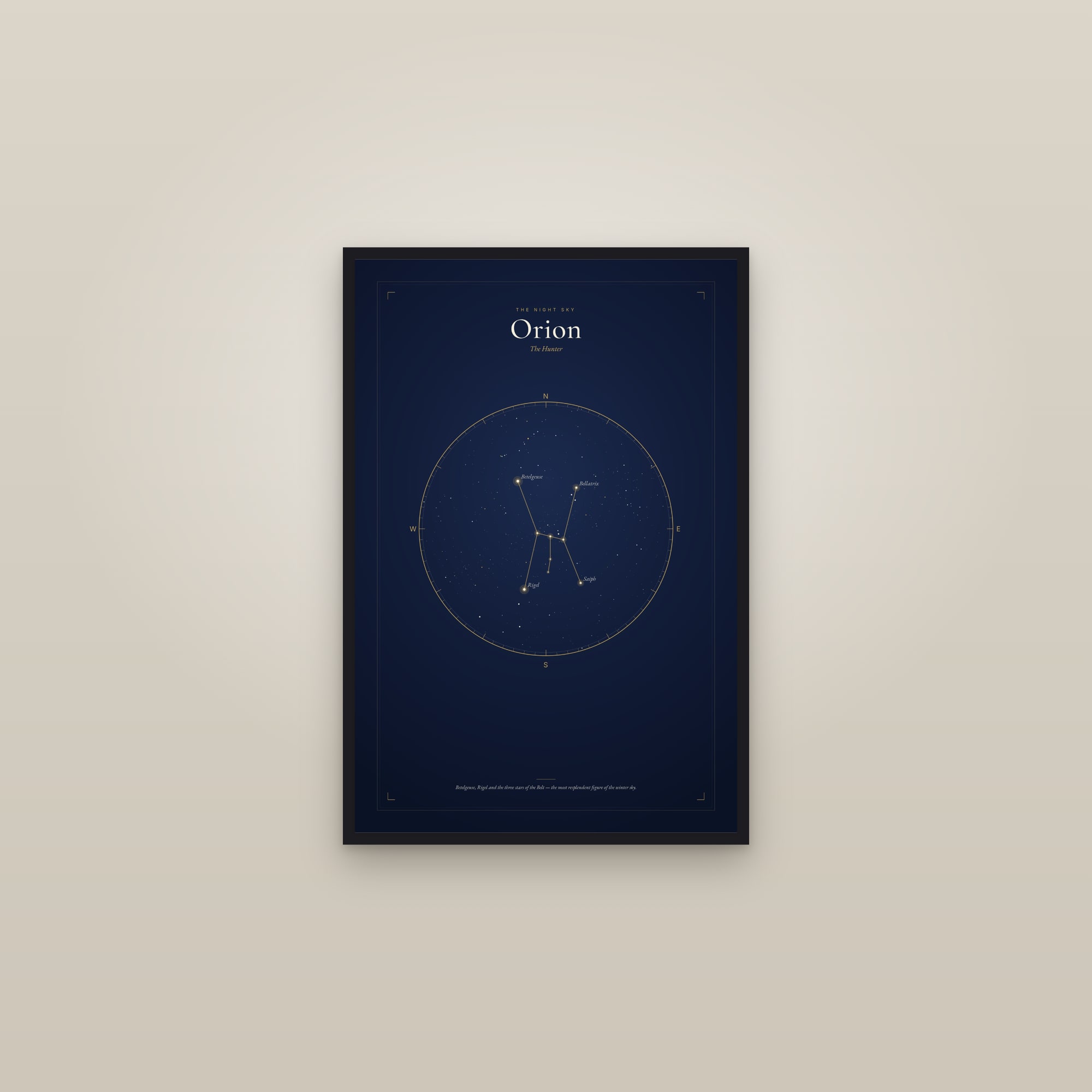
Every print here comes in one of four ratios, three sizes each. Upright 2:3 is 12 × 18, 16 × 24 or 24 × 36 inches; upright 3:4 is 12 × 16, 18 × 24 or 24 × 32; the wide ladders, 3:2 and 4:3, are the same sheets turned sideways. A work is printed on the ladder nearest its own shape, and a painting is never stretched or cropped to reach one. When a product page says "largest size 16 × 24," the museum scan is not wide enough to go larger, and we would rather say so than sell a soft print. The rest is the arithmetic.
What are the four ratios, and which sizes come in each?
A ratio is the sheet's width against its height. 2:3 is the classic poster shape, one and a half times as tall as wide; 3:4 is squarer; the wide ladders are those two rotated. The twelve sizes, with the metric sheet each is printed on:
| Ladder | Sizes (inches) | Sheet (centimetres) | Paper price |
|---|---|---|---|
| 2:3 upright | 12 × 18 · 16 × 24 · 24 × 36 | 30 × 45 · 40 × 60 · 60 × 90 | $39 · $59 · $79 |
| 3:4 upright | 12 × 16 · 18 × 24 · 24 × 32 | 30 × 40 · 45 × 60 · 60 × 80 | $39 · $59 · $79 |
| 3:2 wide | 18 × 12 · 24 × 16 · 36 × 24 | 45 × 30 · 60 × 40 · 90 × 60 | $39 · $59 · $79 |
| 4:3 wide | 16 × 12 · 24 × 18 · 32 × 24 | 40 × 30 · 60 × 45 · 80 × 60 | $39 · $59 · $79 |
The sheets are cut metric, so each is a few millimetres under the inch figure: 12 × 18 in is a 300 × 450 mm sheet. Framing, in black or dark wood, is offered at all twelve sizes as an uplift on the print; canvas at all twelve on editions that qualify, at $89, $119 and $179 on the 2:3 and 3:2 ladders and $89, $129 and $169 on 3:4 and 4:3.
Why is a painting printed at its native ratio and never forced?
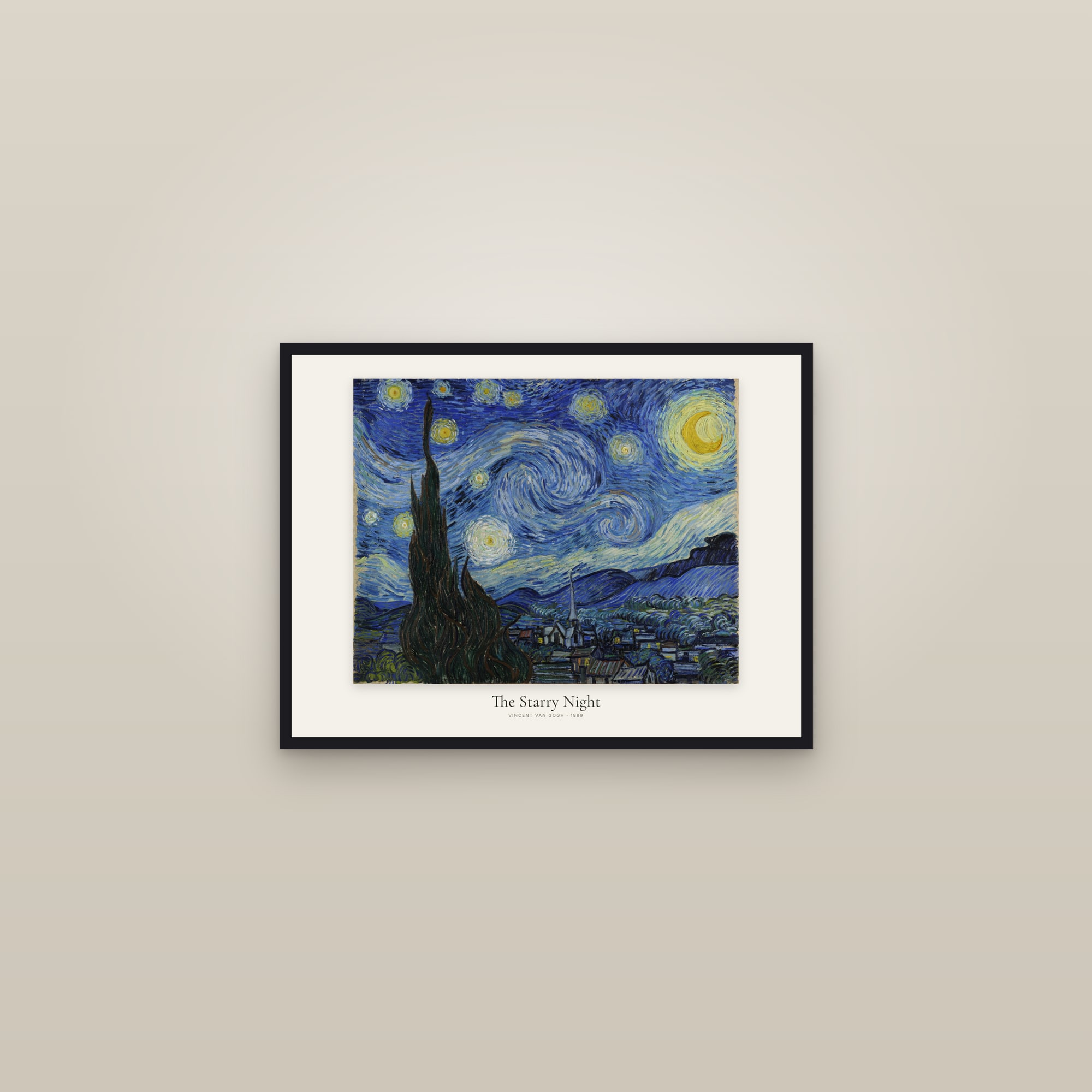
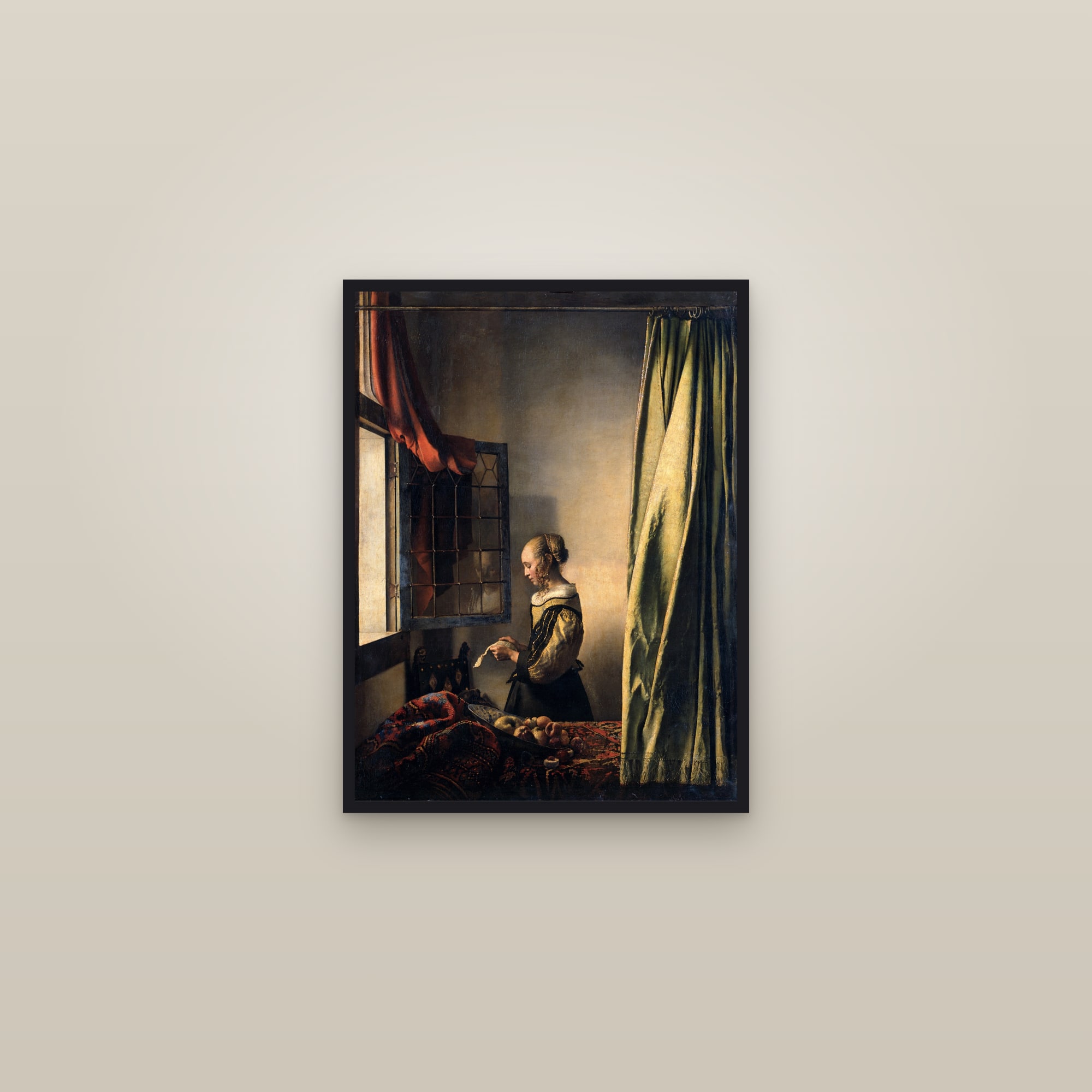
Because a painting is its composition. Cover-crop a Klimt, a Monet or a Van Gogh to a 2:3 poster sheet, enlarging it until it fills the sheet and trimming where it overhangs, and a band of the picture is gone: the edge of the pond, the top of the tree, the hand at the edge of the frame. The rule is short: never crop a famous painting. The gallery edition contains the whole work on a neutral ground, with the title and the painter's name beneath.
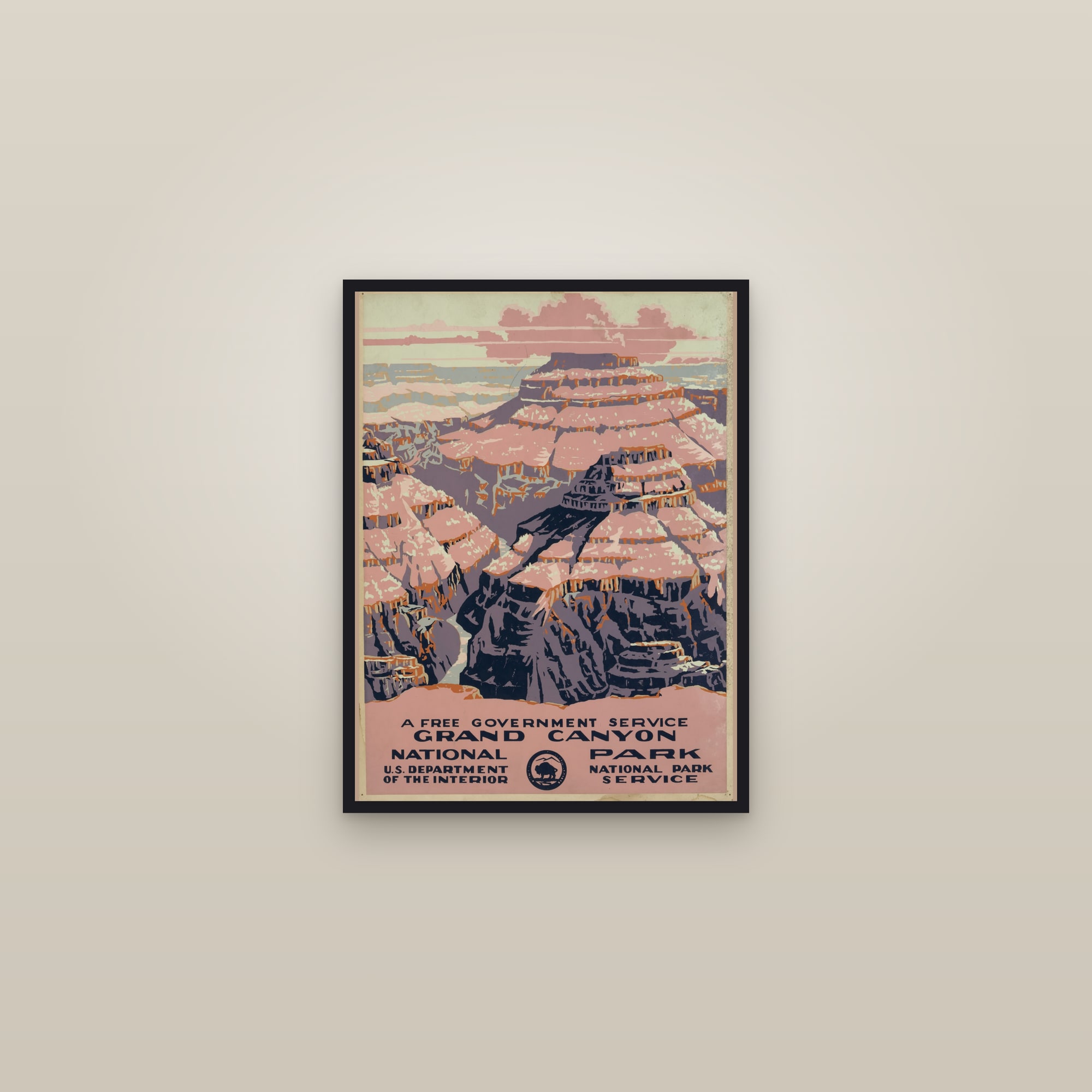
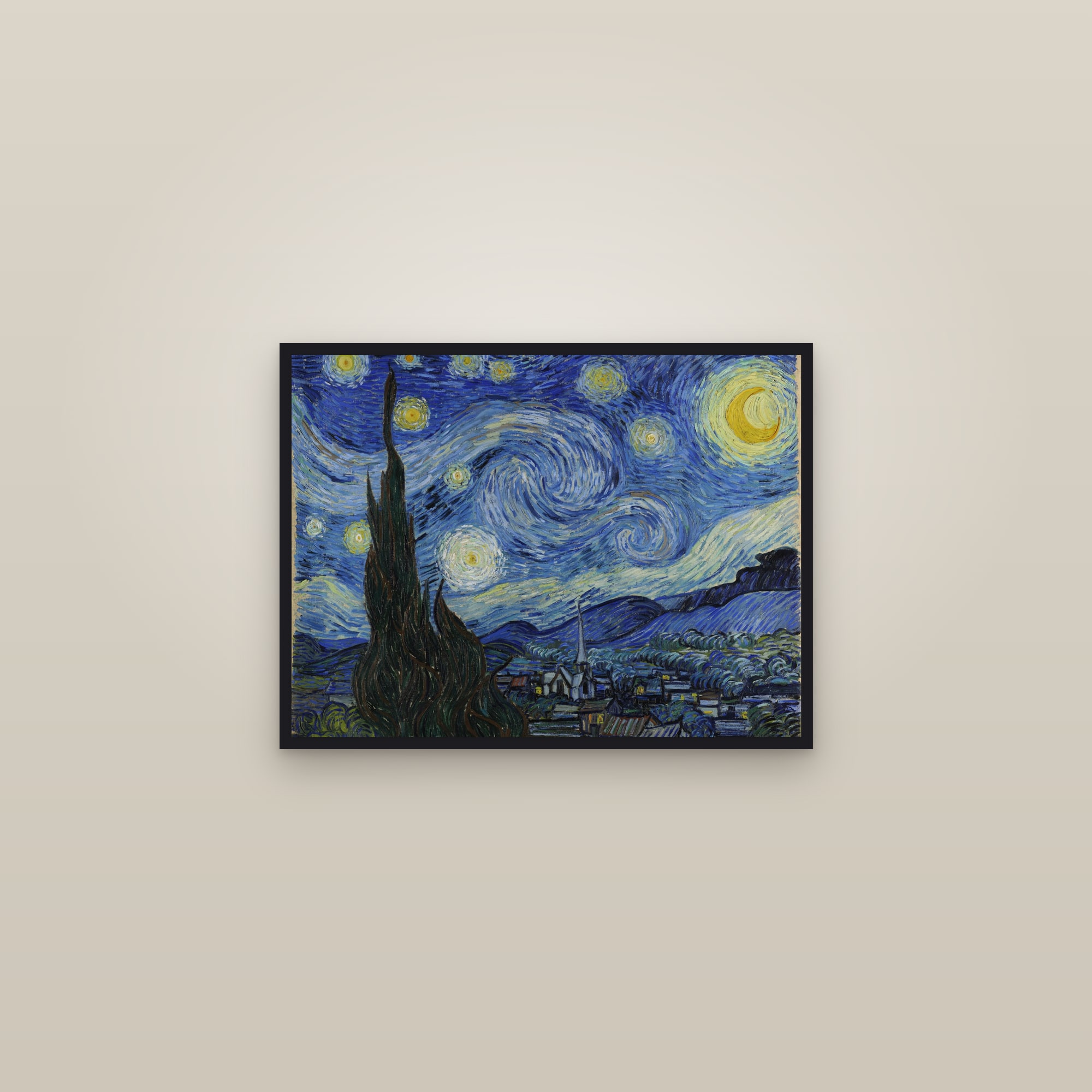
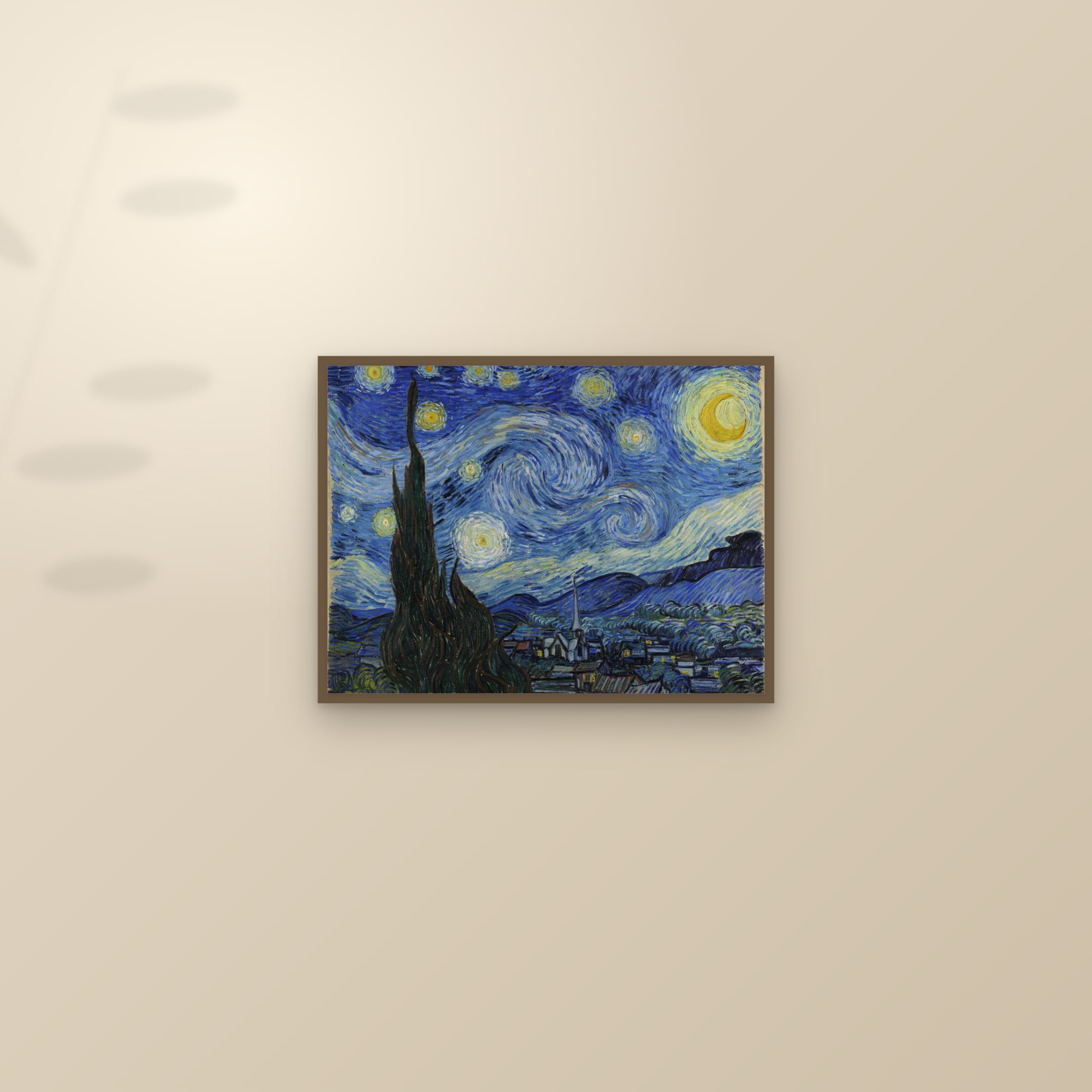
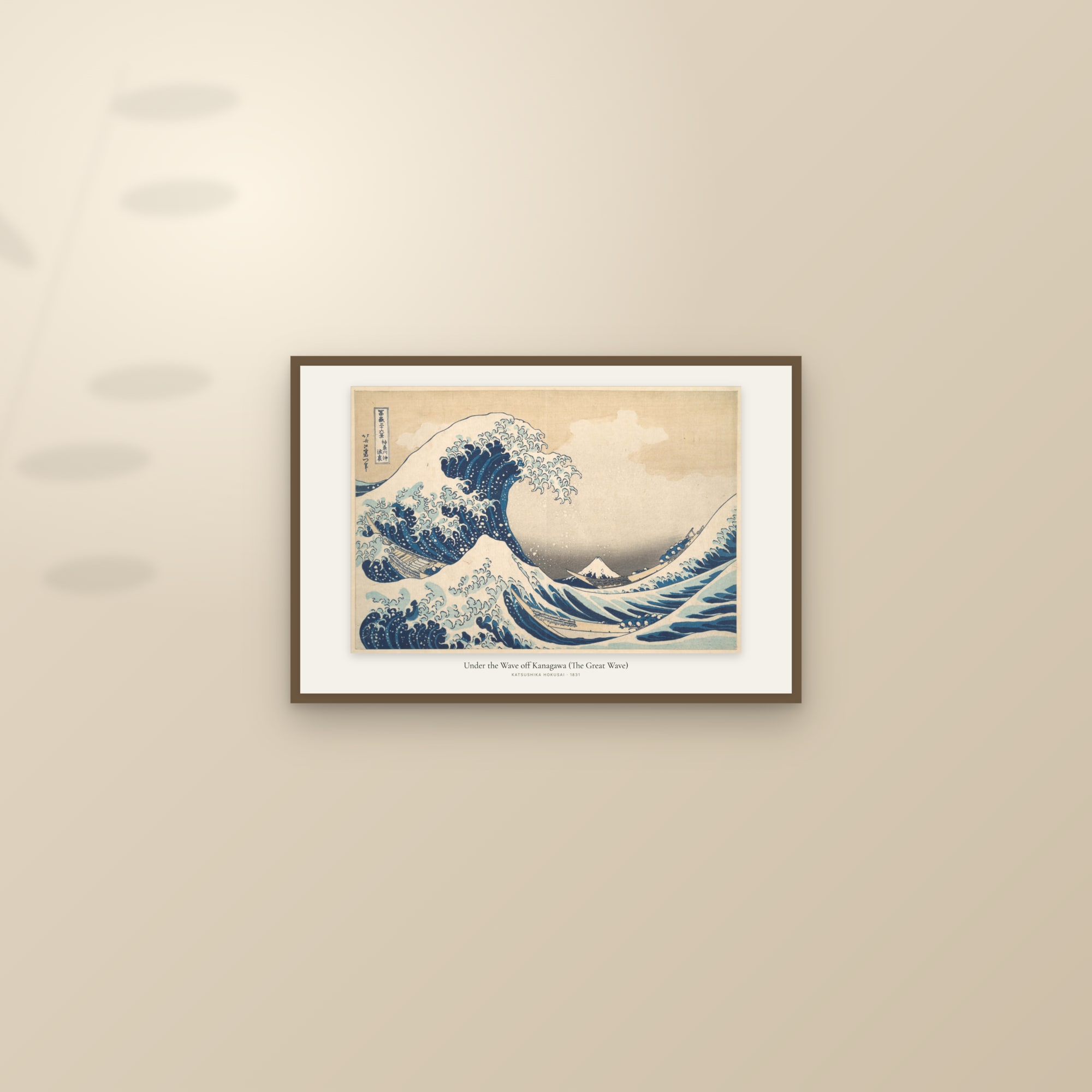
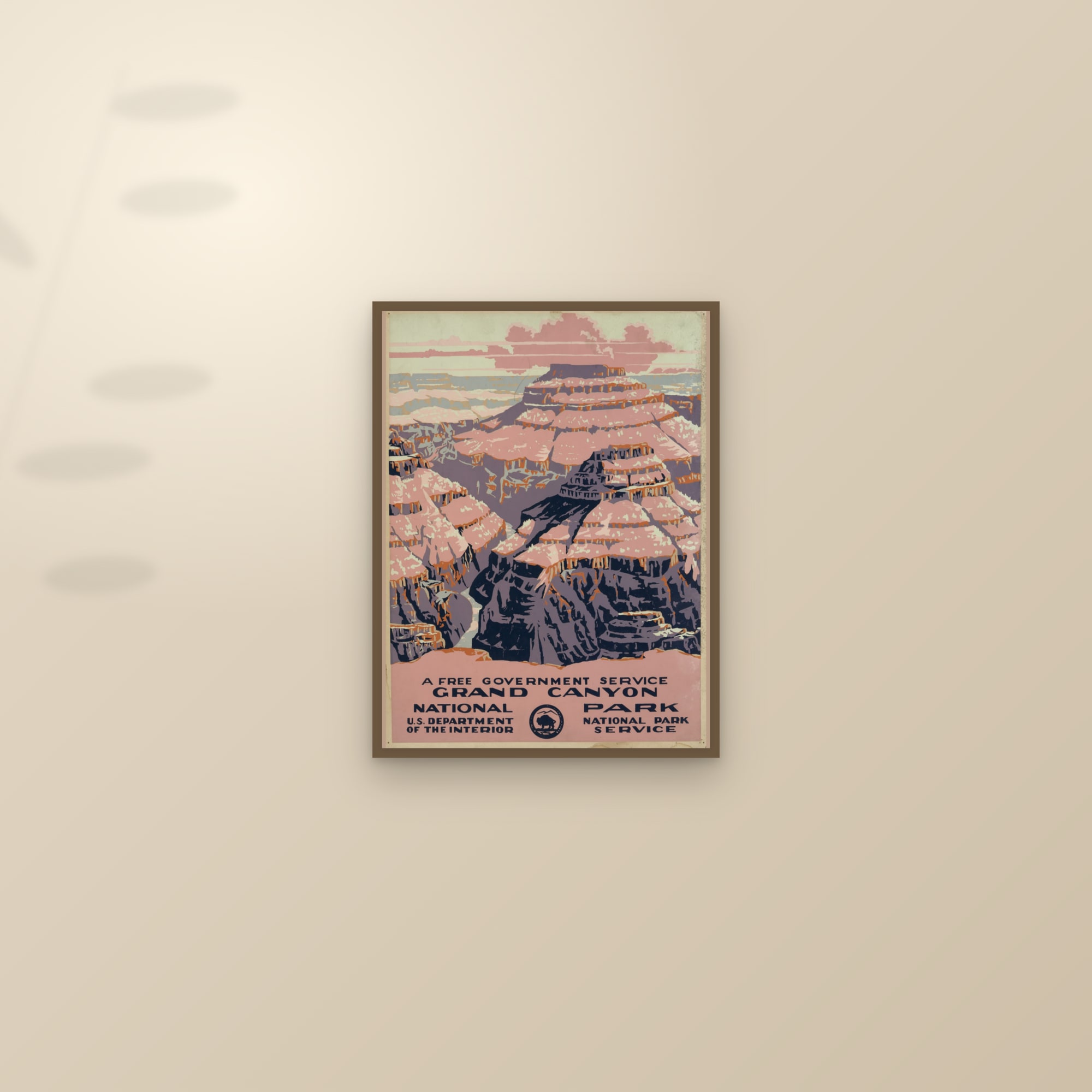
The same holds for posters. The 1930s WPA travel posters from the Library of Congress range from tall and narrow to nearly square; set every one on the same 3:4 sheet and the narrow ones get wide bands down each side. So each work is measured and snapped to the ladder nearest its own aspect: an upright poster to 2:3 or 3:4 (the split is at about 0.71), a wide painting to 3:2 or 4:3 (the split is at 1.41). The Grand Canyon National Park poster below is 48 × 36 cm in the Library's record, exactly 3:4, so it fills the 3:4 ladder with no band at all. Hokusai's Great Wave is a wide sheet near 3:2; The Starry Night is nearer 4:3.
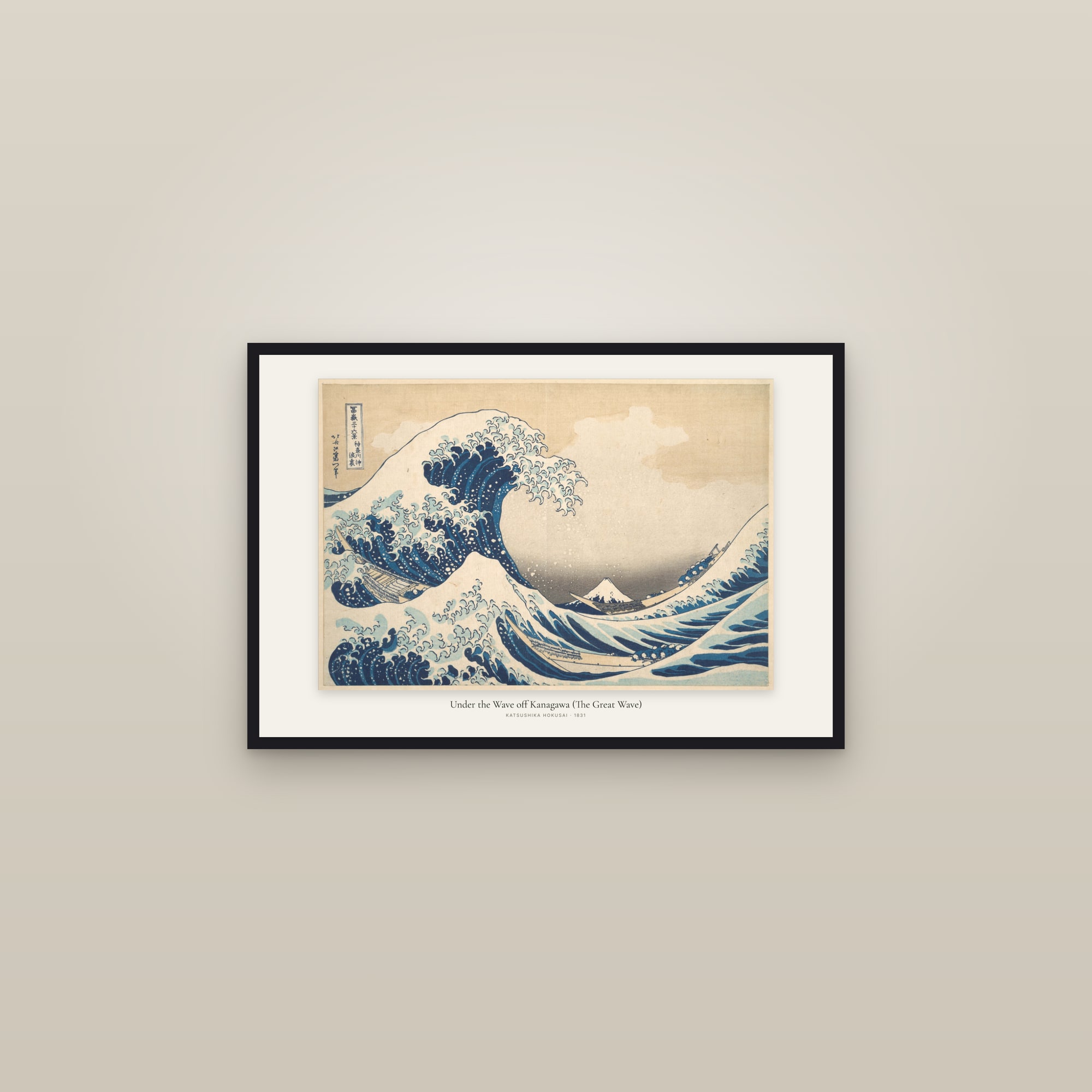
So there is no 24 × 36 of a painting that is nearer 4:3; what there is is a 32 × 24, the same sheet turned.
What is an edge-to-edge edition?
Some paintings happen to be very close to one of the four shapes. For those we make a third edition, marked "edge to edge" (-full in the address), in which the painting runs to the cut edge of the sheet with no ground and no caption. The rule: a work qualifies only when its aspect is within 6 % of a ladder, and the mismatch is always handled by a centred crop of at most about 3 % per edge, never by padding. A pale band two per cent wide along one side of a painting reads as a flaw at arm's length, and a crop of two per cent is invisible; so the edge-to-edge edition always loses a sliver rather than gaining a band.
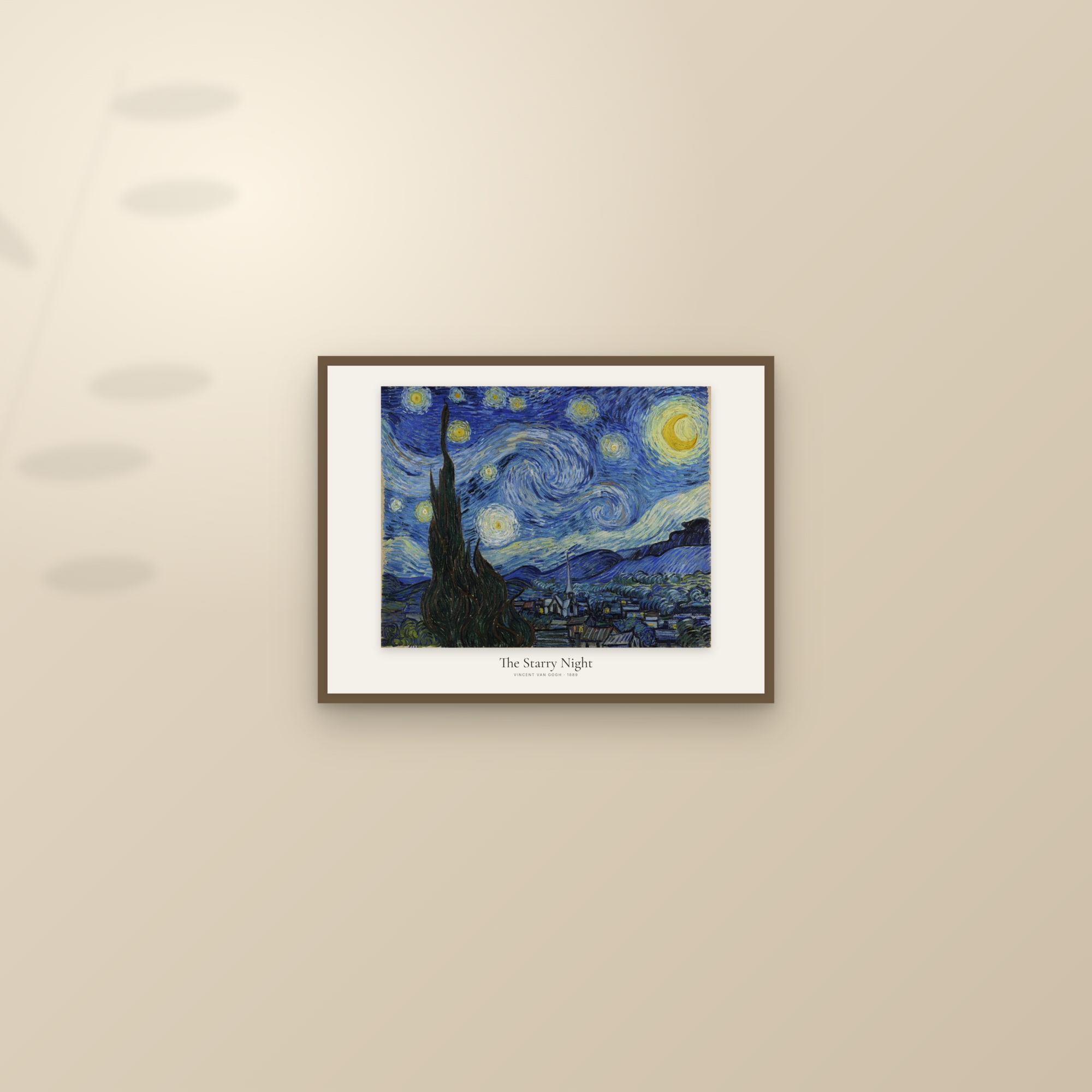
The Starry Night is the worked example. The canvas is a little squarer than 4:3; printed uncropped on that sheet it would leave bands totalling 5.3 % of the height, so the edge-to-edge edition trims about 2.7 % from the top and from the bottom, and the product page says "very slightly cropped," because it is. The Mona Lisa, which the Louvre records at 79.4 × 53.4 cm, is within half a per cent of 2:3 and loses almost nothing. A work further than 6 % from any ladder, Botticelli's Birth of Venus for one, gets no such edition.
The edge-to-edge edition is also the only painting edition that goes on canvas: a gallery wrap folds about 2.5 cm of the printed file round each side of the stretcher, so only art that runs to the edge can be wrapped without losing its ground or caption. The canvas collection is made of these.
How do you read "largest size 16 × 24" on a product page?
As a statement about the scan, not the art. Our master print file is 7200 × 10800 pixels for the 2:3 sheet, which is 24 × 36 inches at 300 pixels per inch (5400 × 7200 for 3:4; the wide ladders are those turned). A narrower scan is enlarged to fill it, and enlargement spreads the detail that exists over more paper without adding any. So every scanned work carries a cap, computed from the width of its source file and enforced on the product page, which never defaults to a size the scan cannot carry. The thresholds, by ladder:
| Ladder | Stops at the smallest size when the scan is under | Stops at the middle size when under | Full ladder from |
|---|---|---|---|
| 2:3 upright (width measured) | 2,000 px → 12 × 18 only | 3,500 px → 16 × 24 | 3,500 px → 24 × 36 |
| 3:4 upright (width measured) | 2,250 px → 12 × 16 only | 3,500 px → 18 × 24 | 3,500 px → 24 × 32 |
| 3:2 wide (long edge measured) | 3,000 px → 18 × 12 only | 5,000 px → 24 × 16 | 5,000 px → 36 × 24 |
| 4:3 wide (long edge measured) | 3,000 px → 16 × 12 only | 4,600 px → 24 × 18 | 4,600 px → 32 × 24 |
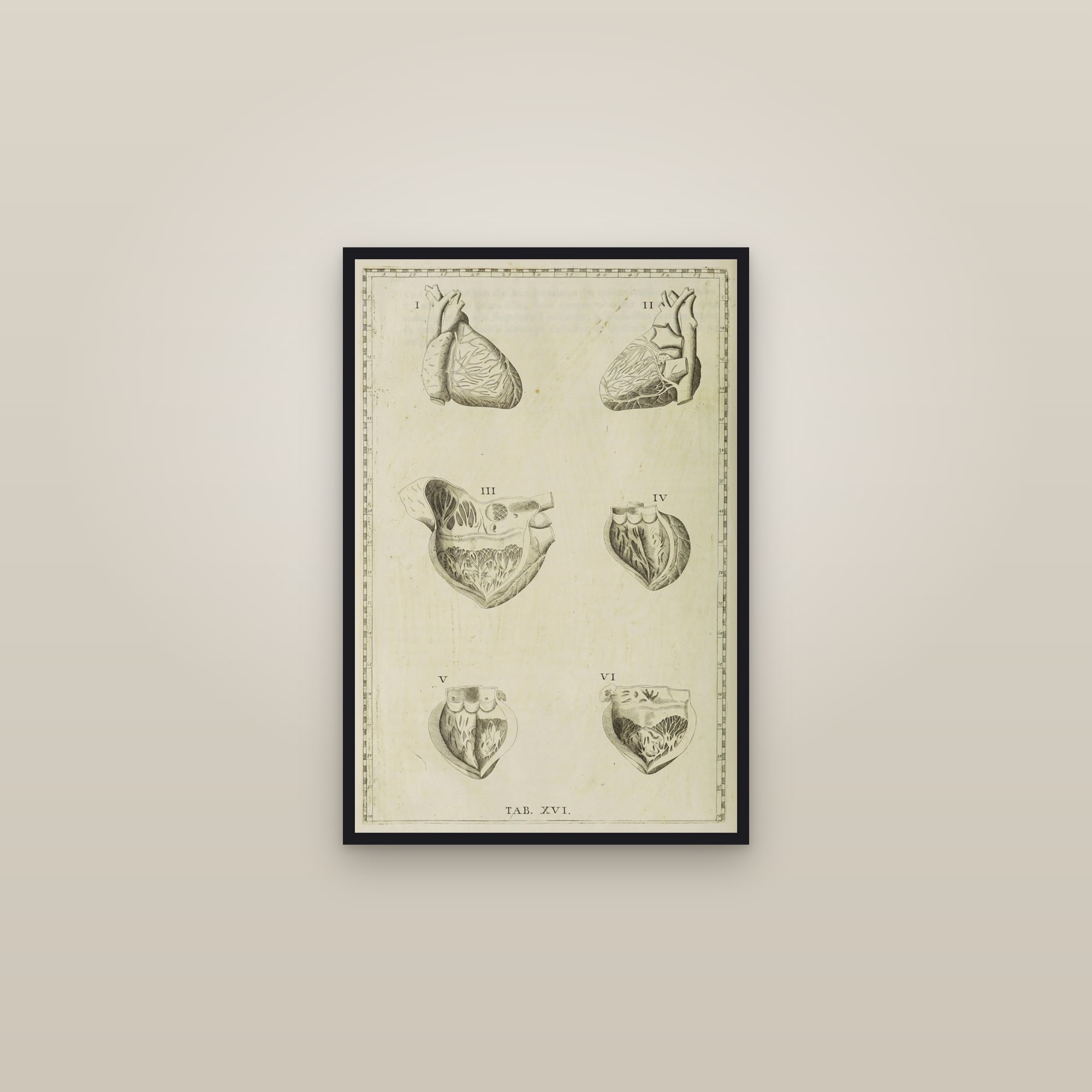
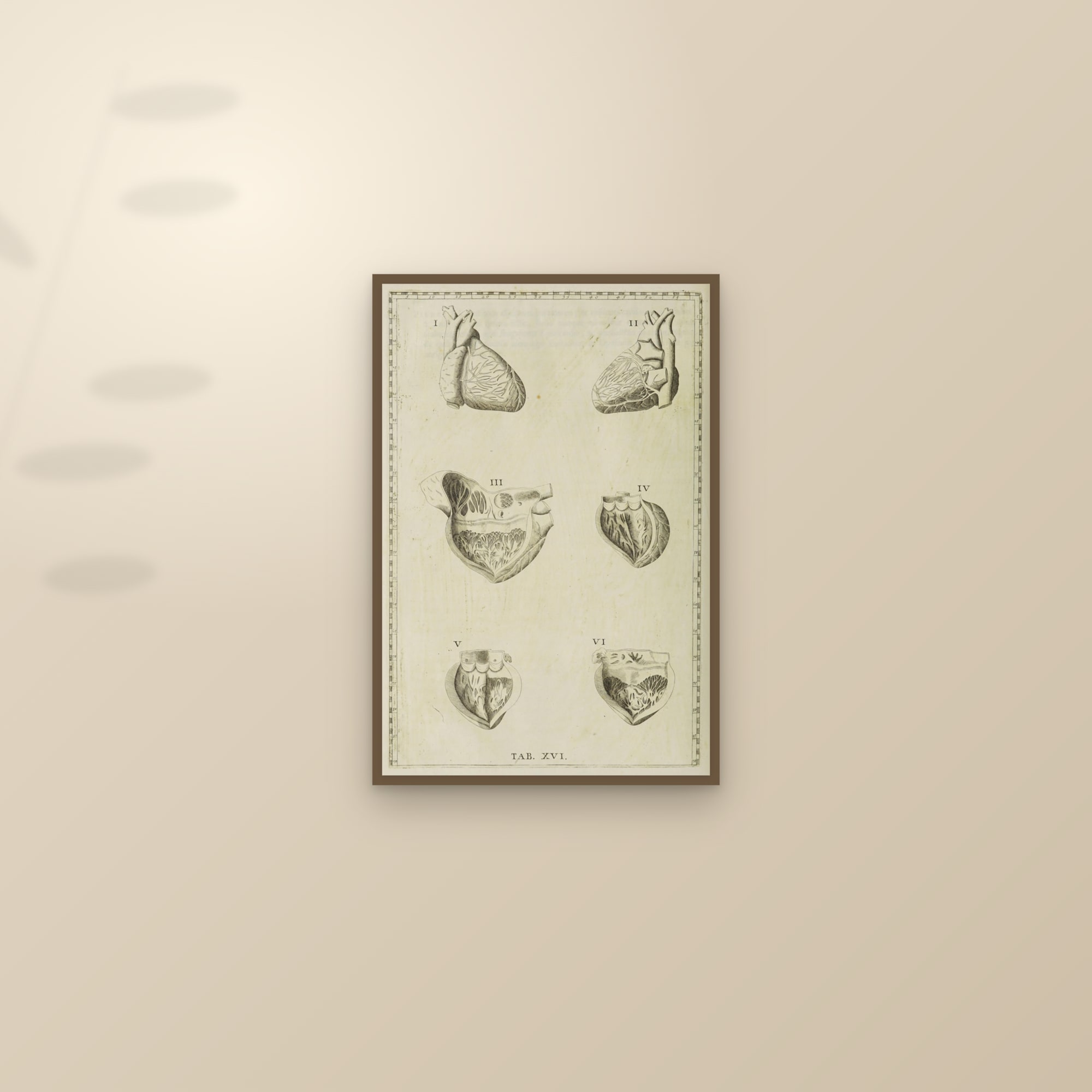
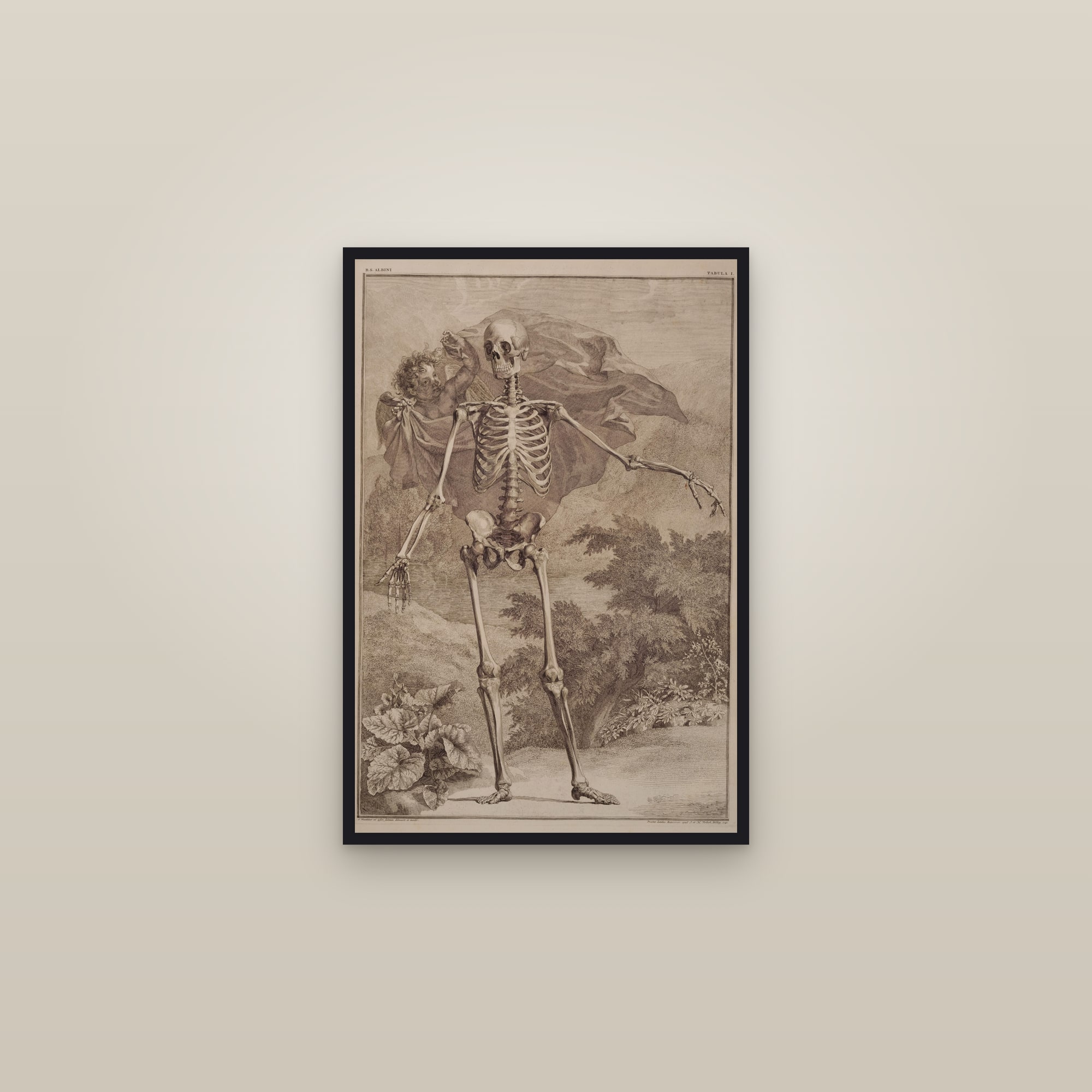
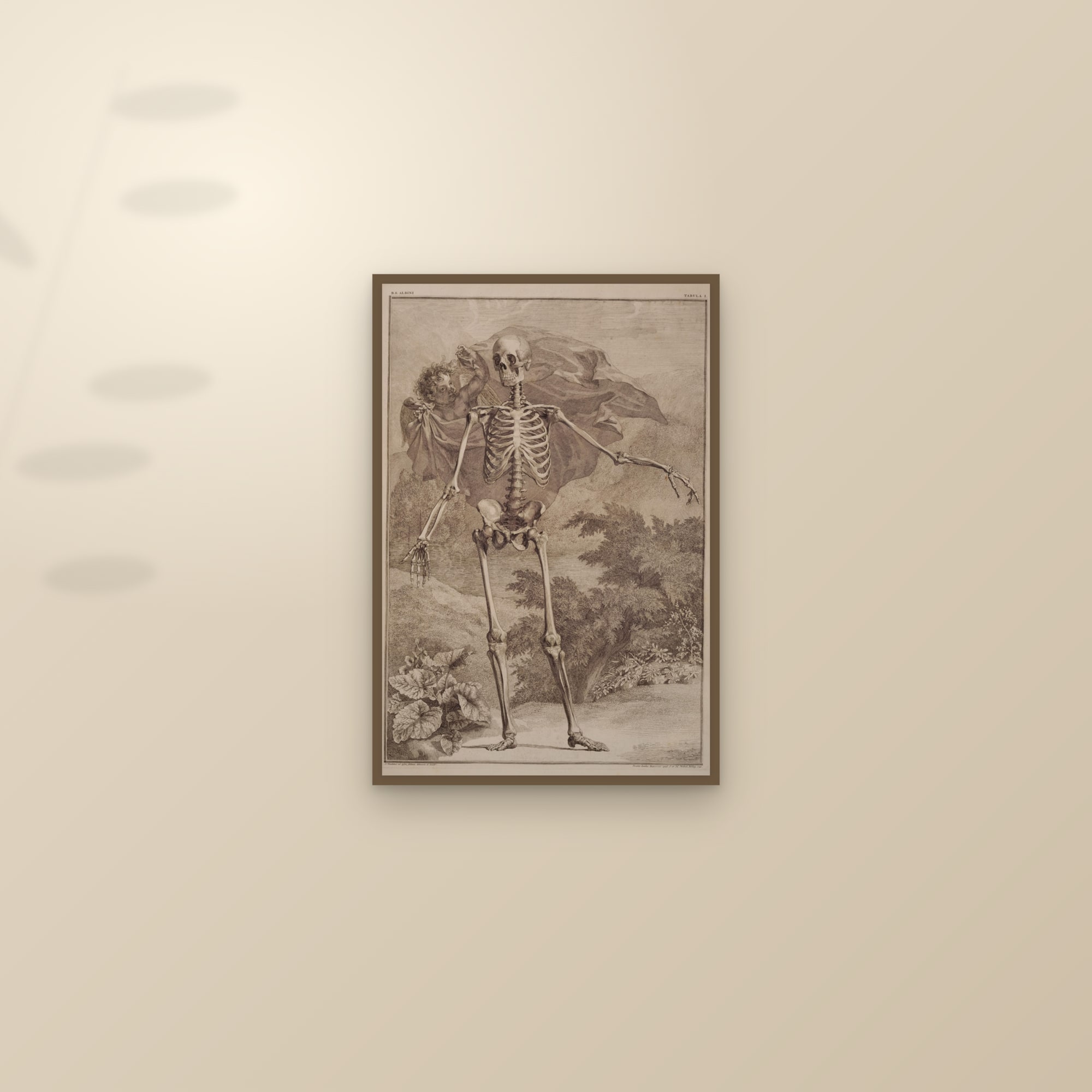
One rule produces all four rows: the middle size of a ladder must have about 125 pixels per inch along the measured edge, and the largest about 140 to 146. The arithmetic for the heart plate from Eustachi's Tabulae anatomicae, scanned by the Wellcome Collection at 2,656 pixels wide: 2,656 ÷ 12 in = 221 ppi, 2,656 ÷ 16 in = 166 ppi, 2,656 ÷ 24 in = 111 ppi. At 111 the engraver's cross-hatching begins to merge into tone, so the heart plate stops at 16 × 24. Albinus's skeleton from the 1747 Tabulae sceleti, scanned at 5,092 pixels, is 212 ppi at 24 inches and open to 24 × 36. Designs drawn in code rather than scanned have no cap; they are drawn at the master's full size.
How do you choose a size for a wall?
Start from the wall, not the menu. What size art goes above a sofa? has the rule and the table; the short form is that a single piece above furniture should span two-thirds to three-quarters of the furniture's width, which for most sofas means the top rung of a ladder, 24 × 36 upright or 36 × 24 and 32 × 24 wide. A 16 × 24 or 18 × 24 is a reading-chair or hallway size, and the size most scanned plates top out at. The 12-inch rungs suit a desk wall, a stair, or a set of three. The large prints collection holds only works whose scan reaches the top rung; horizontal wall art only the wide ladders.
Two measurements for checkout. A frame does not add to the size: the outside of the frame is the listed size, and the slim 12 mm moulding, in black or dark wood, sits over the edge of the sheet, so the visible print is about 2.4 cm smaller each way. A canvas keeps the whole face: the wrap is printed from a mirrored extension of the image, so the 2.5 cm sides continue the composition rather than eating it.
Shop the art in this piece
For the whole route from a museum scan to the sheet, see How a fine-art print is made; for what the ink and paper words mean, What is a giclée print?.
Questions people ask
What sizes do Madten prints come in?
Twelve, on four ladders. Upright 2:3: 12 × 18, 16 × 24, 24 × 36 in. Upright 3:4: 12 × 16, 18 × 24, 24 × 32 in. Wide 3:2: 18 × 12, 24 × 16, 36 × 24 in. Wide 4:3: 16 × 12, 24 × 18, 32 × 24 in. Each ladder is priced $39, $59 and $79 on paper.
What is the difference between a 2:3 and a 3:4 print?
The shape. A 2:3 sheet is one and a half times as tall as it is wide (16 × 24 in); a 3:4 sheet is squarer (18 × 24 in). A work is printed on whichever is nearer its own proportions, so the printed image is not distorted or cut.
Why is a famous painting not available at 24 × 36?
Either because its shape belongs to another ladder (The Starry Night is wide, so it prints at 24 × 18 or 32 × 24), or because the museum scan is not wide enough. The product page states the largest size the scan can carry.
What does 'largest size 16 × 24' mean on a product page?
That the source scan is between 2,000 and 3,500 pixels wide. At 16 inches that is 125 to 219 pixels per inch, which reads crisp; at 24 inches it would drop below 110 and the finest lines would soften, so the larger size is not offered.
Does a frame make the print bigger?
No. The outside of the frame measures the listed size. The slim 12 mm wood moulding, in black or dark wood, sits over the edge of the sheet, so the visible print is about 2.4 cm narrower and shorter than the sheet.
Sources
- Wellcome Collection: Tabulae anatomicae (Rome, 1714), the scan behind the heart plate, Public Domain Mark
- Library of Congress: Grand Canyon National Park, a free government service (WPA poster, ca. 1938), 48 × 36 cm
- Musée du Louvre: Portrait de Lisa Gherardini (Mona Lisa), oil on poplar, 79.4 × 53.4 cm
Start hereHow a fine-art print is made: from a 1714 plate to your wall