
How to hang a gallery wall: spacing, height and layouts
Three layouts that work, 2 to 3 inches between frames, the group centred at 57 inches, one frame colour, and paper templates before any nail.
Contents8 sections
You've got a bare wall and a few frames, and the temptation is to hang the first one and see how it goes. That's how a hallway ends up with eleven nail holes and four pictures. A gallery wall, a group of pictures hung close together, works when it's hung as one object.
So choose one of three layouts: a grid of equal frames, a salon hang (one large anchor piece with smaller frames around it), or a line at eye height. Keep 2 to 3 inches between every frame, centre the whole group about 57 inches from the floor, and use one frame colour. Tape paper templates to the wall first and move them until the group looks right; only then pick up the hammer.
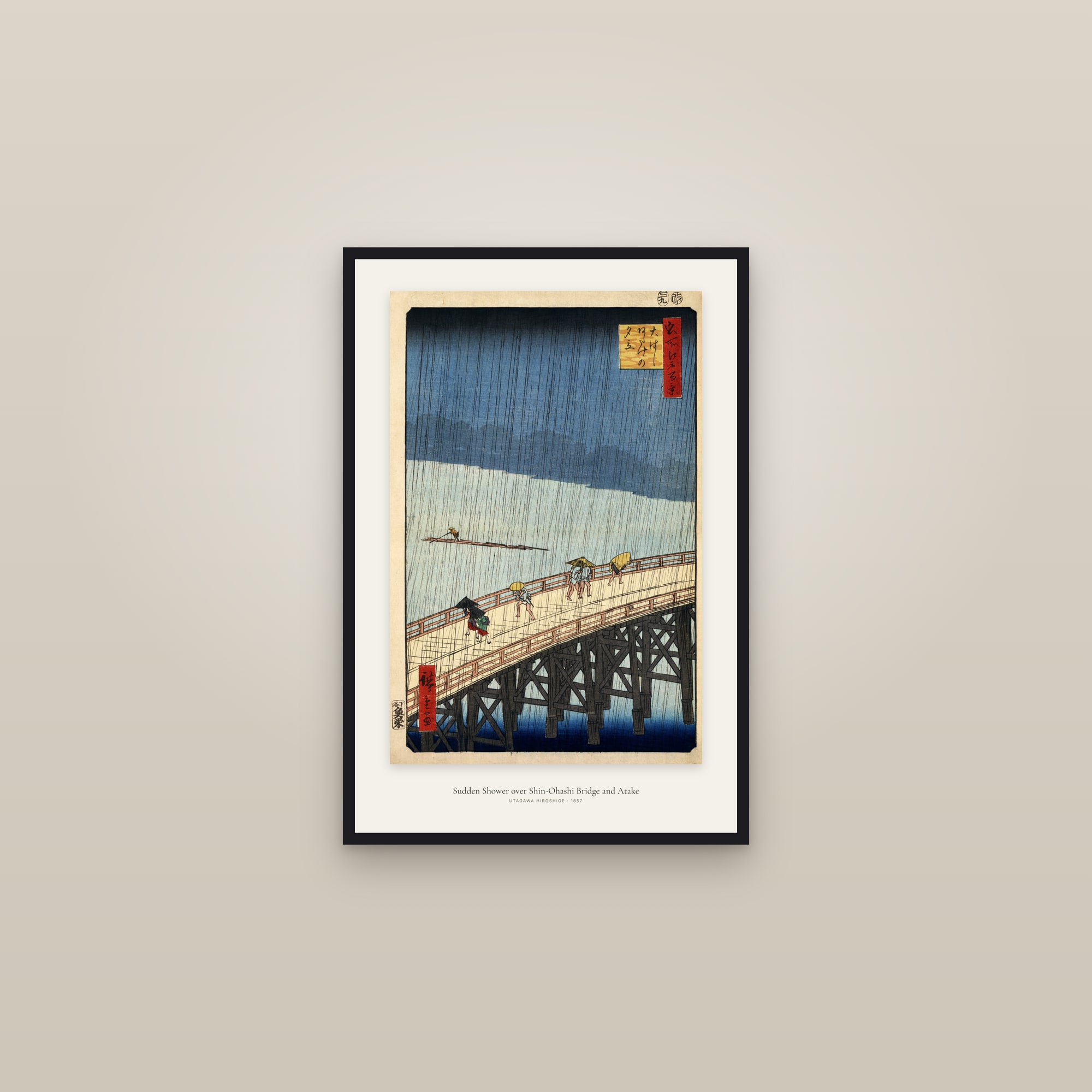
Which three layouts actually work?
Most gallery walls that fail have no layout at all. They're a collection of frames that arrived one at a time. Three arrangements reliably look intended, and almost every good wall is one of them.
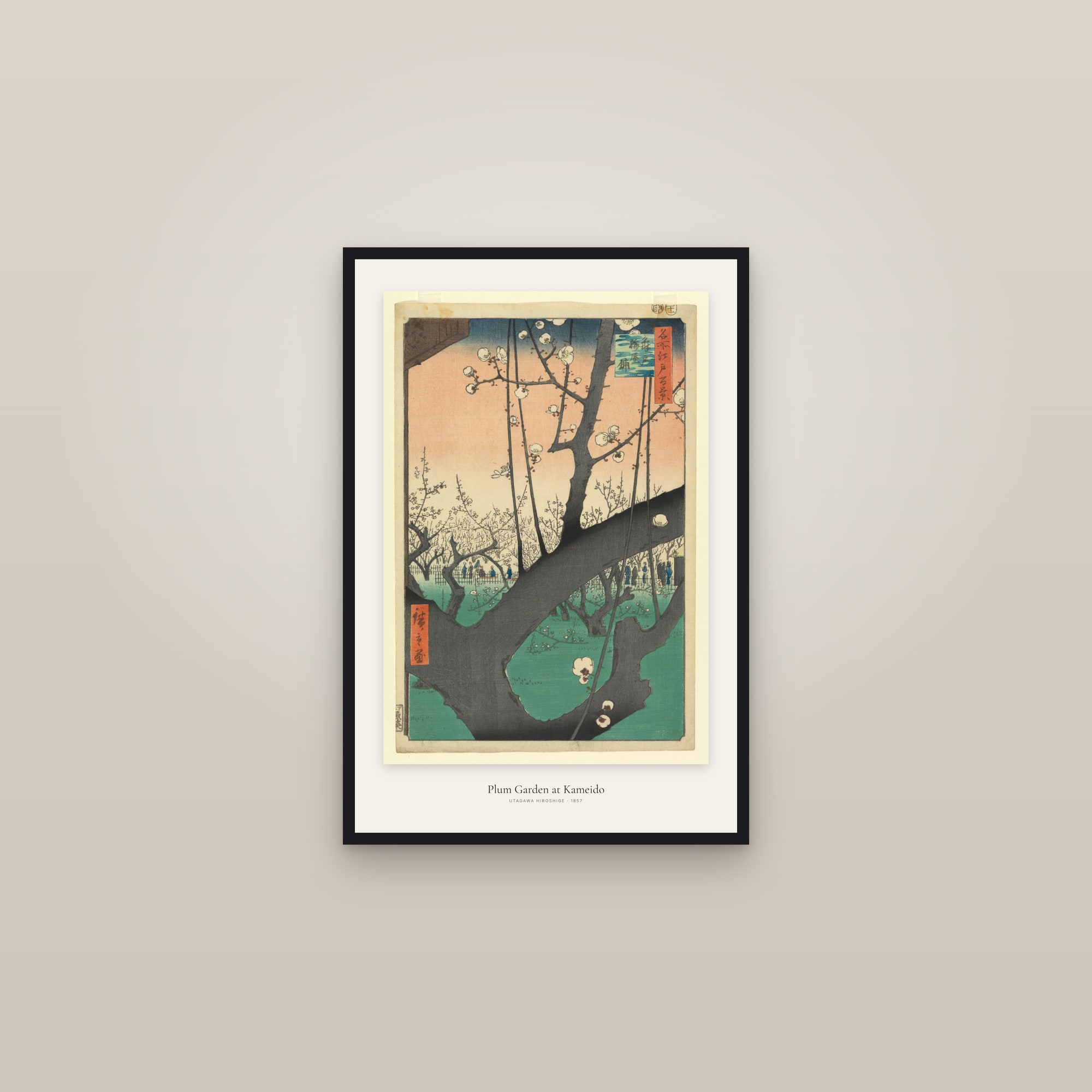
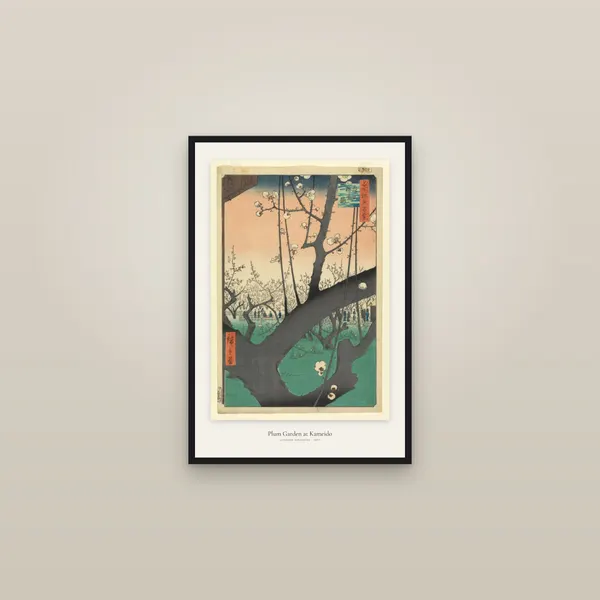
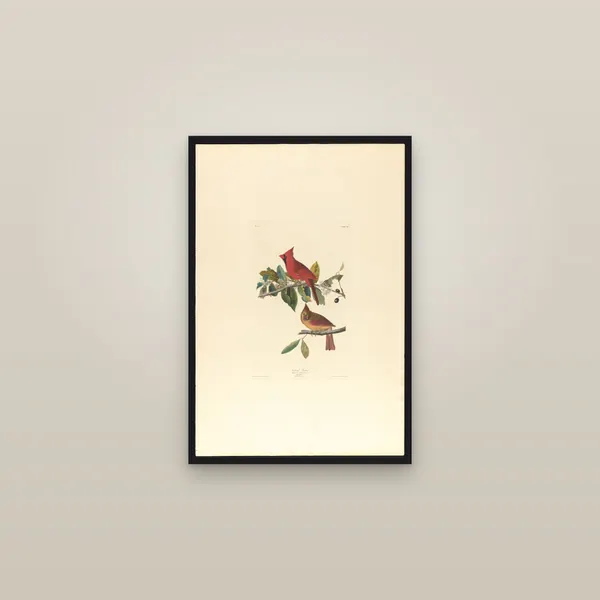
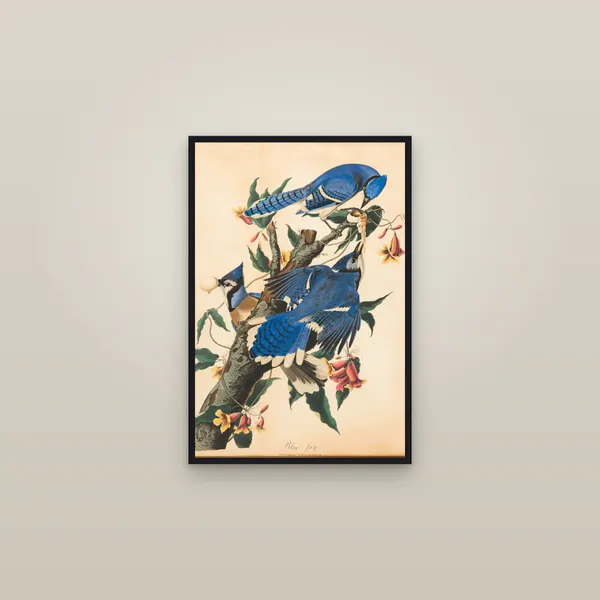
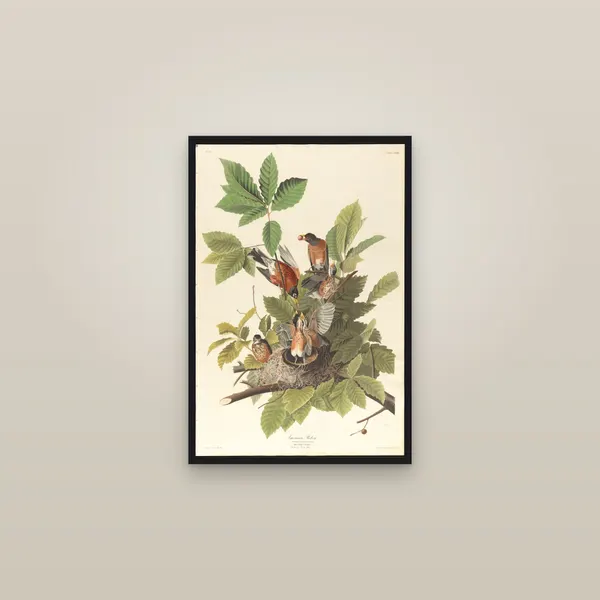
The grid of equals. Same size, same frame, same gap, in rows and columns. Six 12×18 portraits in two rows of three, with 3-inch gaps, make an object 42 inches wide and 39 inches tall; nine make 42 by 60. The grid is the most formal of the three and the most forgiving, because the eye reads the edges and the gaps rather than the pictures. It suits a family of related images: nine Audubon birds, six apples from the USDA watercolours, a set of woodblock stations. Everything in a grid must be the same size and the same ratio, the same shape of rectangle, or the gaps stop lining up and the whole point is lost.
The salon hang. Here you hang one large anchor piece first, with its centre at eye height, and arrange smaller frames around it. This is the layout that lets you mix sizes and ratios: a 24×18 landscape as the anchor, a 12×16 and two 12×18 portraits beside it, perhaps a small square mirror. What holds it together is a shared edge. Align the outside edges of the group into a rough rectangle, and align at least one edge of each small frame with an edge of its neighbour. A salon hang grows well, too; you can add a frame next year without rehanging the wall.
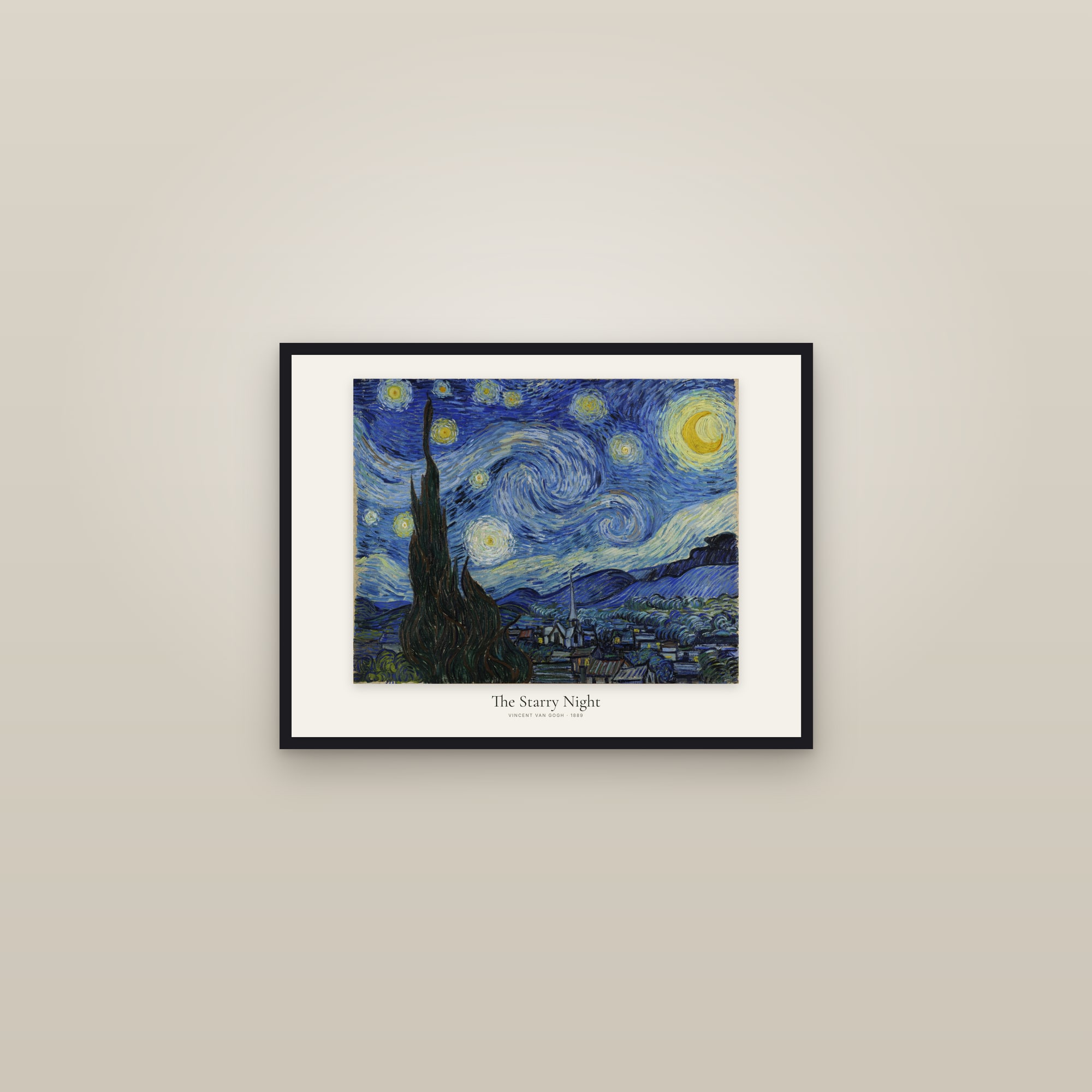
The line at eye height. Three, four or five frames in a single row, same size and frame, bottoms aligned, centres on one horizontal line. This is the hallway layout and the easiest to get right, and it also works above a long sideboard or a bed. A line is a gallery wall with the vertical axis removed, which is why it rarely goes wrong.
Which one you want depends on the wall. A square-ish wall with nothing under it takes a grid or a salon. A long, low wall, or any wall that's passed rather than looked at, takes a line. The hallway and entryway page is built around lines; the living room page around anchors.
How far apart should the frames be?
Two to three inches, frame edge to frame edge, and the same everywhere. This is the number PictureFrames.com gives as a maximum and the one most hanging guides land on; some, such as Simply Framed and Park West Gallery, allow up to six. We wouldn't go past four, and only for large frames. Below two inches the frames start to look like one panel with cracks in it. Past four the group loses its grip and becomes separate pictures with wall between them.
The gap also sets the group's size, so work that out before buying. Three 16×24 portraits in a line with 3-inch gaps are 54 inches wide; three 18×24s are 60. A grid of six 12×18s is 42 by 39. The frames add nothing to that, because the outside of our frame is the listed size. If the number is wider than the wall or the furniture can take, drop a size, not a gap.
How high should the group be hung?
Treat the group as one picture and put its centre about 57 inches (145 cm) from the floor. Galleries and interior designers use this convention for standing eye level, and Simply Framed and Park West Gallery both give it as a rule of hanging. No museum regulation sets it: some installers use 60 inches, and nobody will measure your wall. What it prevents is the universal mistake of hanging too high, which happens because people hang the top of the frame at eye level instead of the middle.
For a grid or a line, find the centre of the whole arrangement and put that at 57. For a salon hang, hang the anchor piece with its own centre at 57, then build out from it.
Above furniture the rule changes. A gallery wall over a sofa, a sideboard or a bed should start 6 to 10 inches above the furniture, and its width should sit around two-thirds of the furniture's width, the same fraction as for a single piece. The 57-inch centre gives way to the gap, because the furniture and the art must read together. The sister piece What size art goes above a sofa? has the table.
The planner below does this arithmetic for seven layouts: pick one, set the gap, and it lists every nail from the floor and from the centre line.
Hanger drop: measure from the top of the frame down to the hanger (on a sawtooth, to the middle of the teeth).
| # | Size | Nail from the floor | Nail from the left wall edge | Nail from the centre line | |
|---|---|---|---|---|---|
| 1 | Sunflowers (National Gallery, London) | 16 × 24 in | 65 in | 47½ in | 18½ in left |
| 2 | Cafe Terrace at Night | 16 × 24 in | 65 in | 66 in | on it |
| 3 | The Kiss | 16 × 24 in | 65 in | 84½ in | 18½ in right |
Try your own measurements above. The full tool, with the chart and every option: Gallery wall planner.
Why paper templates first?
Because the only way to see a layout is at full size on the actual wall. Cut kraft paper, newspaper or parcel paper to the outside size of each frame, write the picture's name on each sheet, and tape them up with low-tack tape. Stand where you usually stand, and move the sheets until the group looks right. Then mark the hook position on each sheet (measure from the top of the frame to the wire on the real frame) and nail through the paper. Tear the paper away afterwards.
It takes twenty minutes and saves every extra hole. It also tells you, before you've bought anything, whether three frames are enough for the wall or whether you need five, which is the question people most often get wrong.
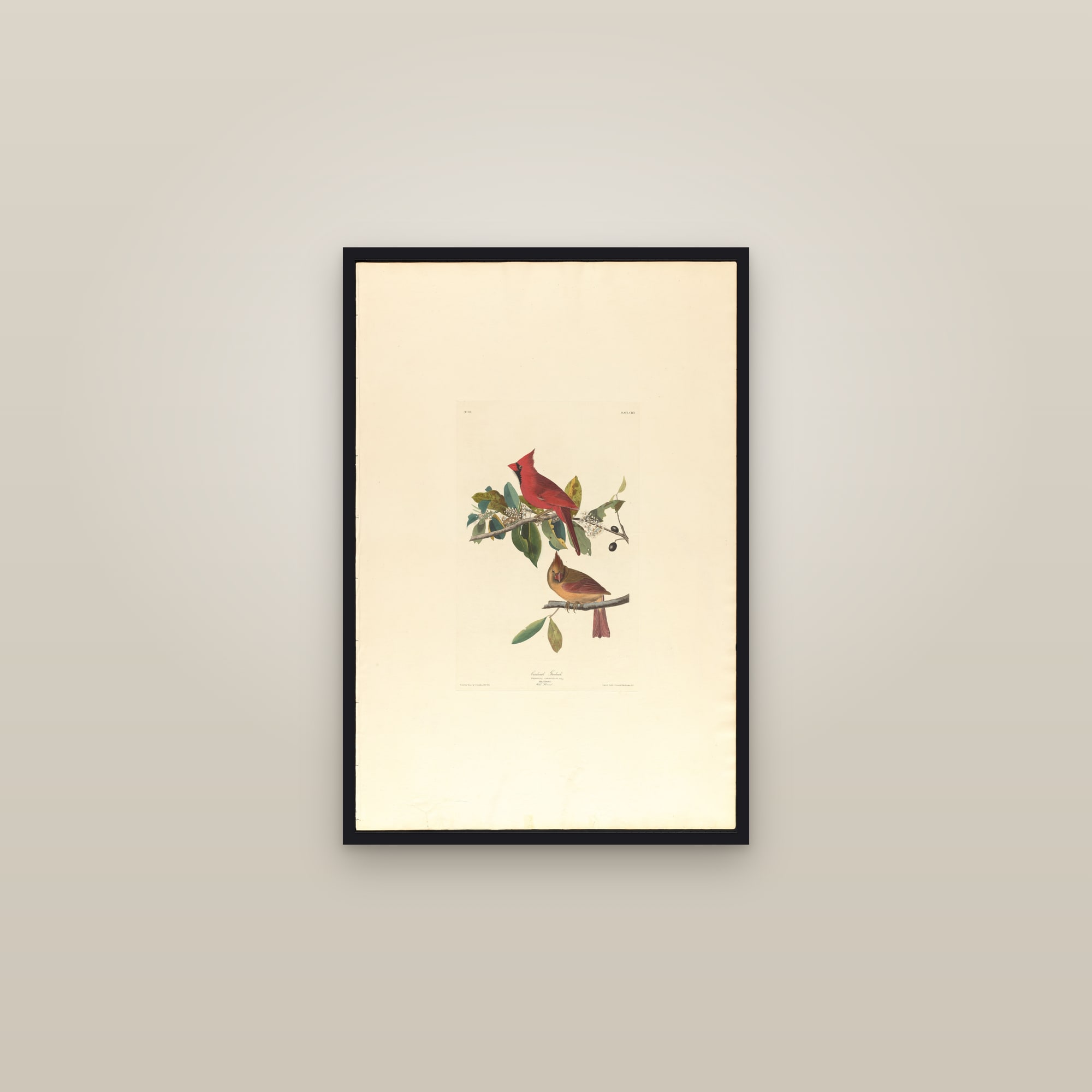
Can you mix sizes and ratios?
In a salon hang, yes; in a grid or a line, no.
Our prints come in two portrait ratios and their landscape mirrors, and each ratio has its own ladder, the run of sizes it comes in. The 2:3 ladder (two units wide for every three tall) is 12×18, 16×24 and 24×36, or 18×12, 24×16 and 36×24 on their sides. The 3:4 ladder is 12×16, 18×24 and 24×32, or 16×12, 24×18 and 32×24 on their sides. Within one ladder, every size is the same shape, so a 12×18 and a 16×24 sit together naturally. Across ladders, a 2:3 and a 3:4 frame look slightly different in shape, which is fine around an anchor and wrong in a row.
Here's a practical way to mix. Choose one ladder for the whole wall, use its landscape form for the anchor and its portrait forms for the satellites. A 24×18 landscape anchor with 12×16 portraits around it is all 3:4; a 36×24 anchor with 16×24 and 12×18 around it is all 2:3. Not every work reaches every size, since the size ladder follows the source scan, the digital copy of the original, so check the product page before you commit to a template.

Use one frame colour per wall
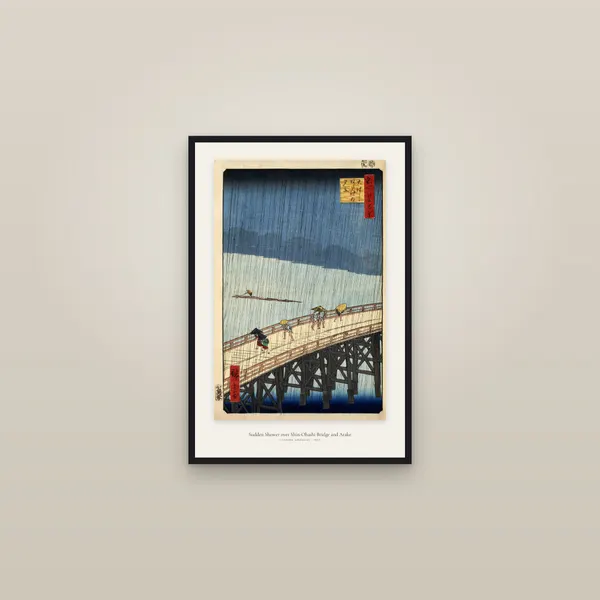
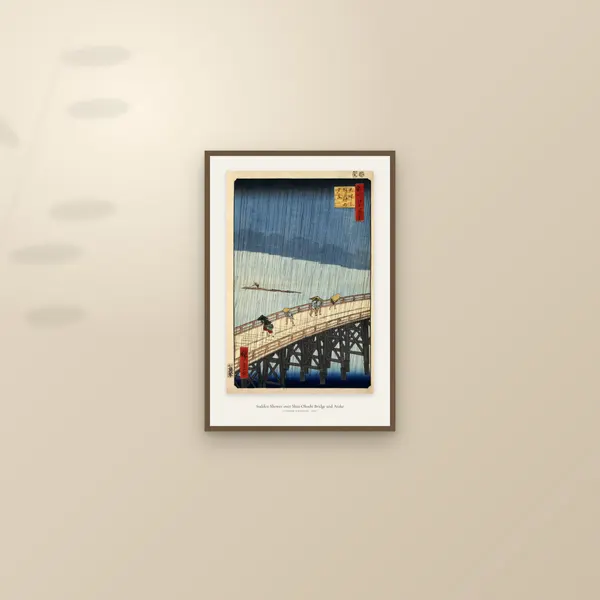
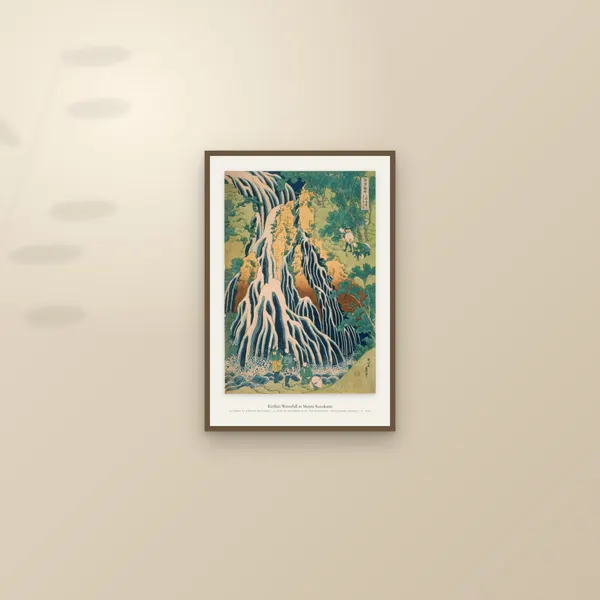
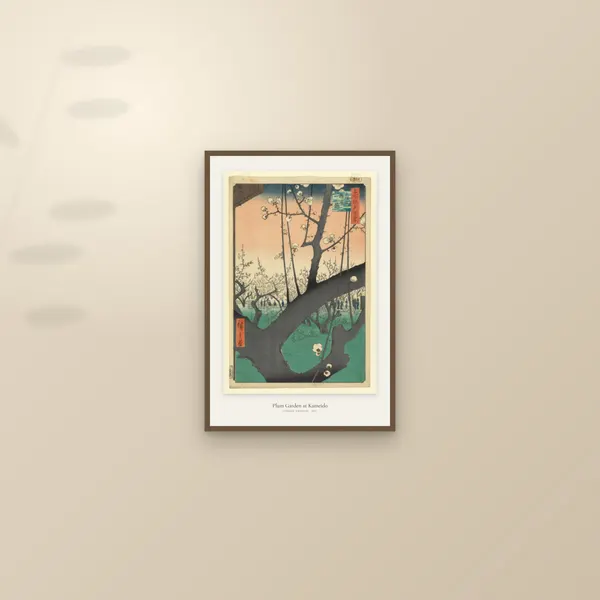
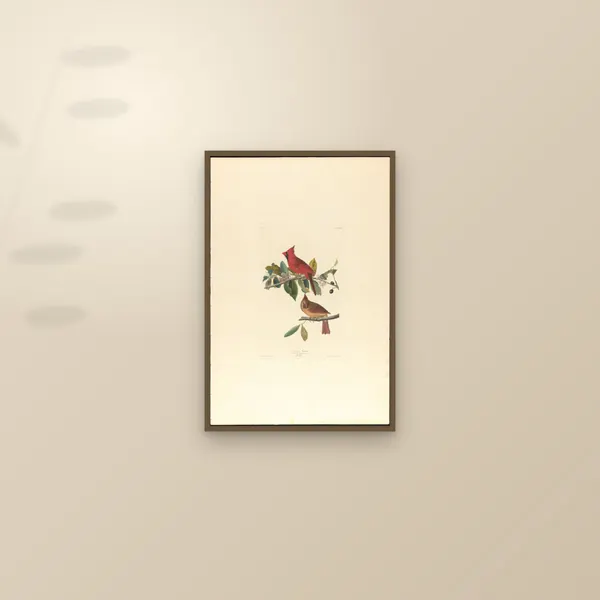
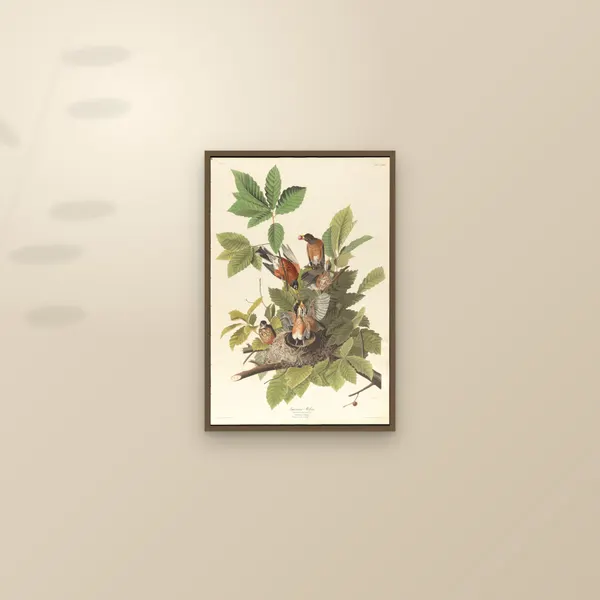
Black or dark wood: pick one for the whole wall. Black suits graphic, dark and modern work, such as woodblock prints, paintings with deep grounds and bold abstracts. Dark wood suits cream paper, warm grounds and most 18th- and 19th-century plates: Audubon, Redouté, the fruit watercolours. A wall of plates in dark wood and a wall of Japanese prints in black are both right; a wall that alternates the two is three decisions short of finished. If you already own frames in a third colour, hang them on another wall.
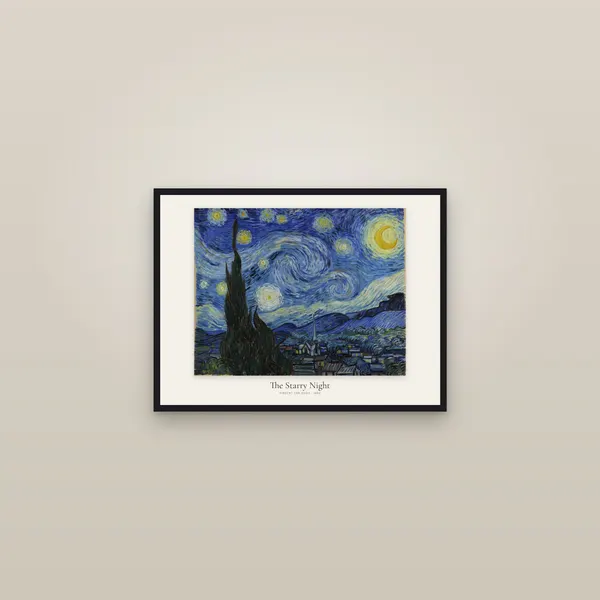
The same goes for mats, the white border some frames have between the print and the frame. Either every frame has a white mat, or none does. The specimen editions and most plates carry their own printed margin, so they don't need one; the full-bleed editions, printed right to the edge, have none and may want one.
The easiest gallery wall is a set of three
Hang three prints of the same size, the same frame and the same family in a line with 3-inch gaps. That removes every variable that makes gallery walls hard: no ratio decisions, no anchor, no mixed frames. Three Audubon birds for a kitchen, three Tōkaidō stations for a living room, three apples for a dining room, three upright Japanese prints for a hall. Our ready-made trios live at /sets, and the bird and famous painting set pages let you build your own from one family. Three or more prints in one order are 10 % off. The one big piece or a set of three piece covers when a trio beats a single picture.
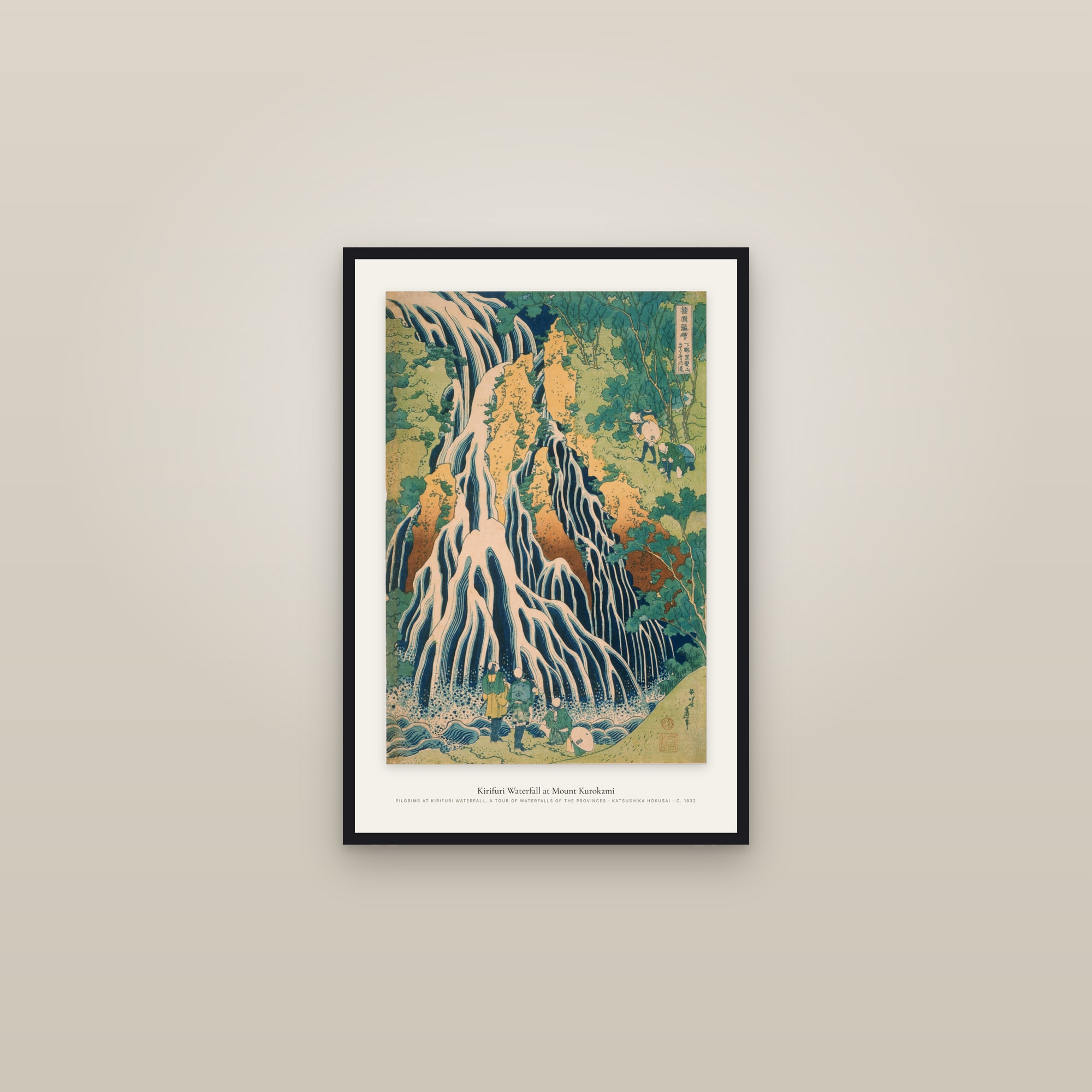
Once three are up, a gallery wall can grow from them: a second row below, or two smaller frames either side, and the set becomes the spine of a grid or a salon hang.
Gallery Wall Sets & Matching PrintsWhat usually goes wrong?
Too high. The group's centre belongs at about 57 inches, not its top. Above furniture, leave 6 to 10 inches of wall and no more. If in doubt, lower.
Too spread out. Gaps of five and six inches make a wall of separate pictures. Keep them to two to three inches, identical, every time.
Too many frame colours. One colour per wall. A gallery wall is a single object and a single object has one frame.
And there are three smaller ones: hanging a grid without templates and discovering it's six inches off-centre, starting a salon hang with the small frames instead of the anchor, and buying the frames before measuring the wall, so the group that was meant to be 42 inches wide is 54.


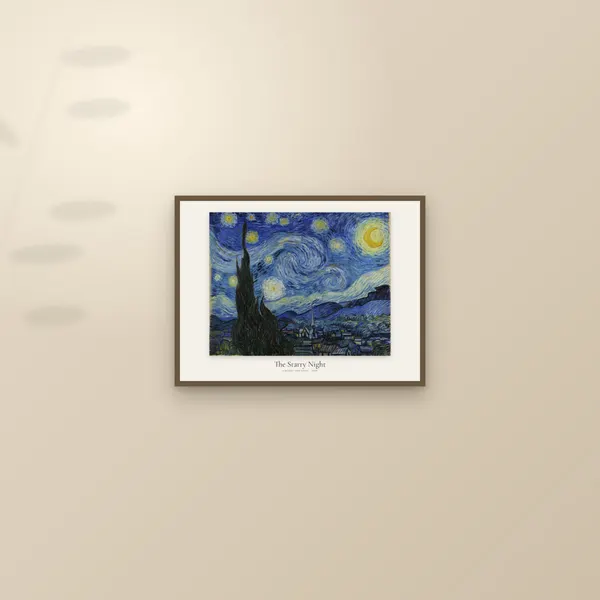
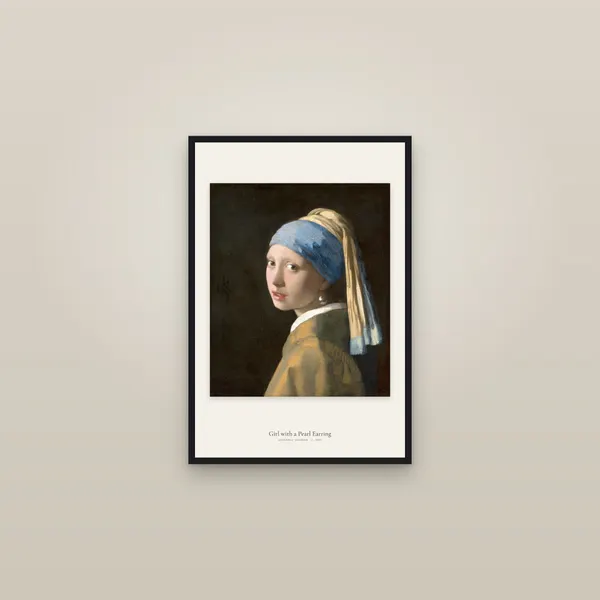

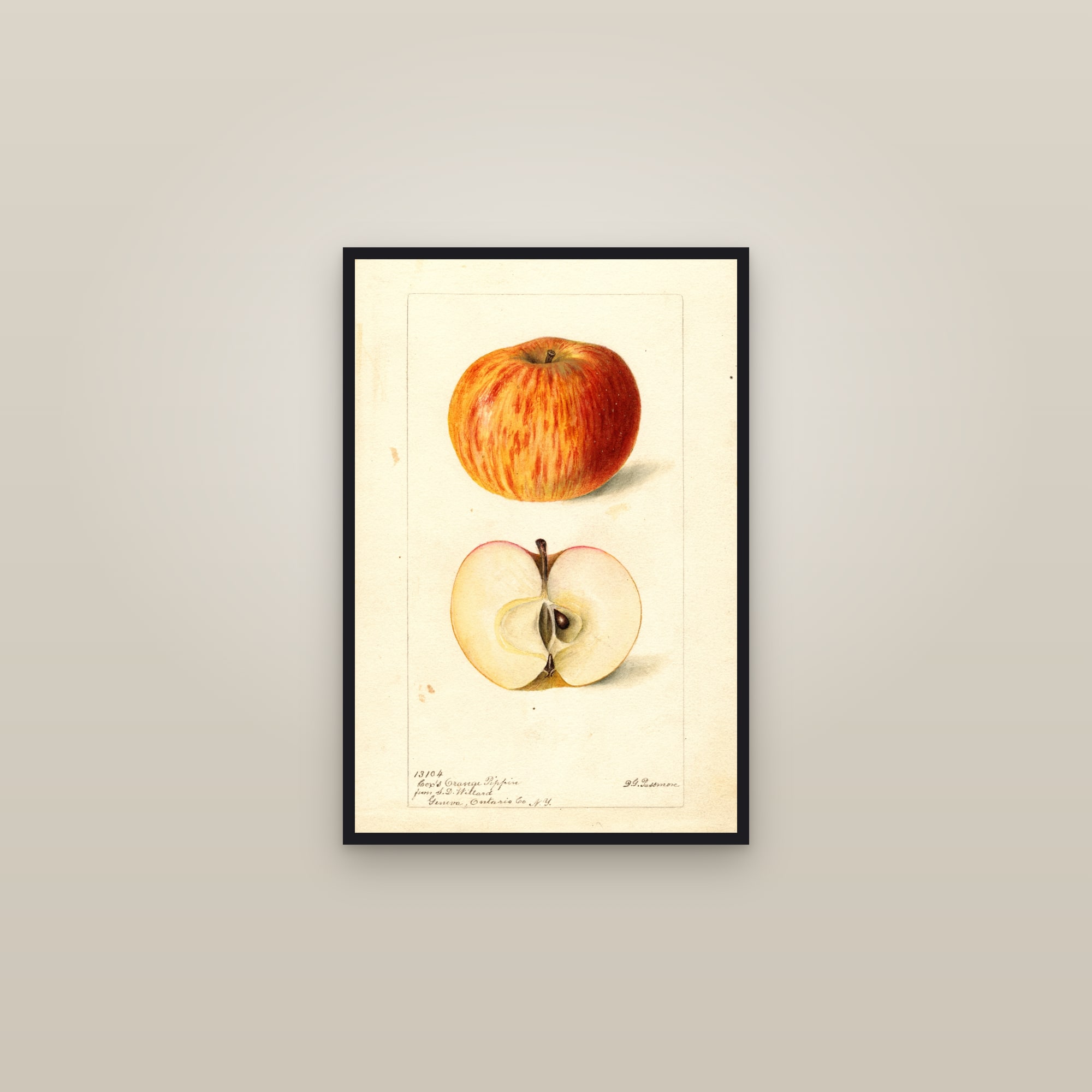
For the rest of the method, start with the pillar, the complete guide to choosing wall art. For the sofa wall in particular, what size art goes above a sofa. For the decision between one large picture and a trio, one big piece or a set of three.
Questions people ask
How far apart should pictures be on a gallery wall?
Two to three inches between frames, measured frame edge to frame edge, and the same gap everywhere in the group. Closer and the frames crowd each other; wider and the group reads as separate pictures.
How high should a gallery wall be hung?
Treat the whole group as one picture and put its centre about 57 inches (145 cm) from the floor. That is the convention galleries and designers use for standing eye level, not a museum rule. Above a sofa or sideboard, keep 6 to 10 inches of wall between the furniture and the lowest frame instead.
Can you mix sizes on a gallery wall?
Yes, in a salon hang: one large anchor piece with smaller frames around it. In a grid or a line, keep every frame the same size so the gaps and edges line up. Mixed ratios (2:3 beside 3:4) are fine in a salon hang and look wrong in a grid.
Should all the frames on a gallery wall match?
The colour should. Black or dark wood, one or the other for the whole wall. Frame widths can vary a little in a salon hang, but mixed colours turn one arrangement into a pile of pictures.
What is the easiest gallery wall for a beginner?
Three prints of the same size, same frame and same family, hung in a row with 3-inch gaps. It is a gallery wall with every variable removed, and it suits a hallway, a bed wall or a sofa wall.
Sources
- Simply Framed, How to Hang a Picture: Rule #1 (57 inches as the average sight line; 3 to 6 inches between pieces; 8 inches above furniture)
- Park West Gallery, Three Simple Rules for Hanging Art (centre at 57 inches; 6 to 8 inches above furniture; treat a grouping as one unit)
- PictureFrames.com, How to Group Pictures on a Wall (2 to 3 inches between frames; consistent mats and frames)
- Fine Art America, How High to Hang Art Above a Sofa (treat a group as one rectangle; 2 to 3 inches between frames, up to 4 for large pieces)
Start hereThe complete guide to choosing wall art for a home