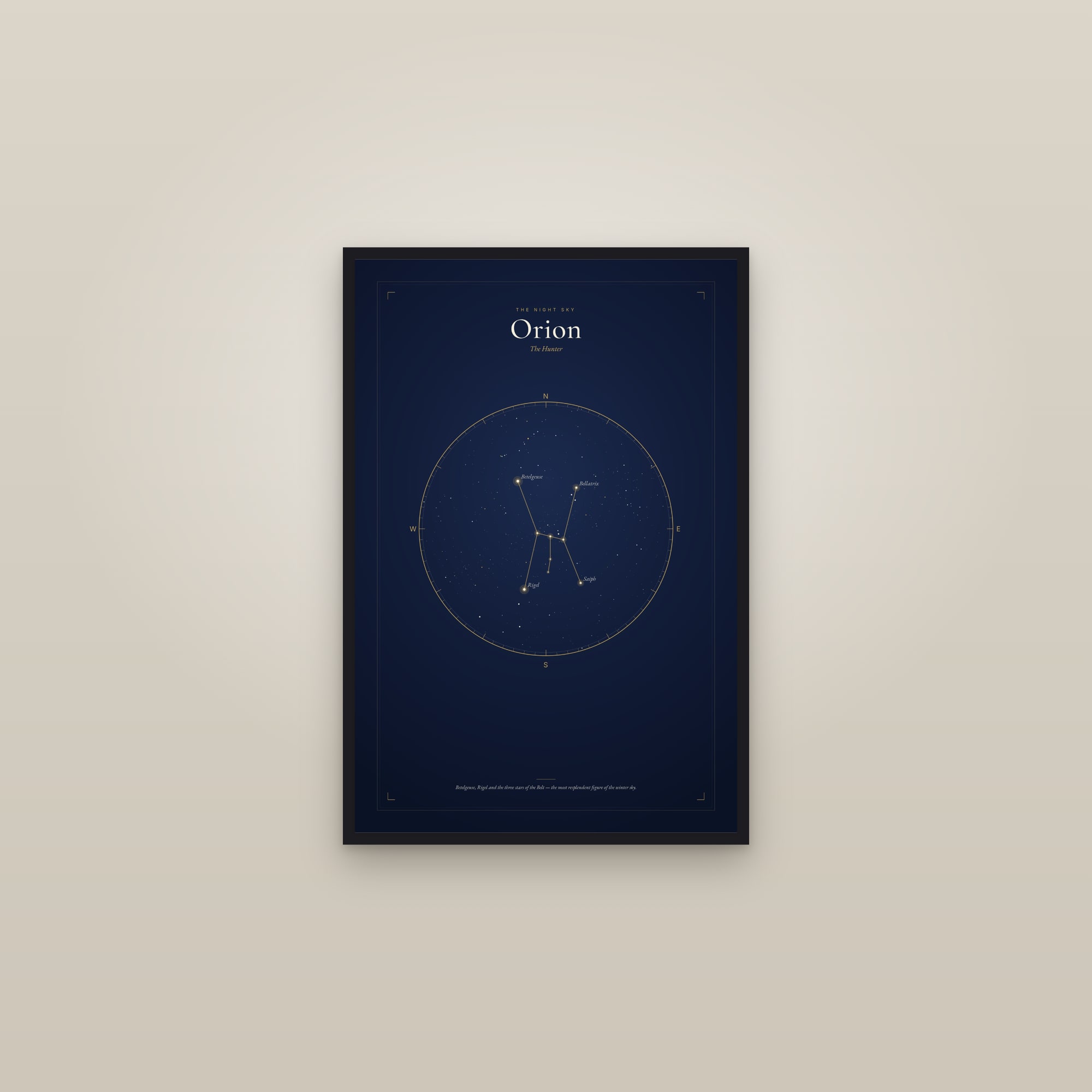
One big piece or a set of three?
The wall and the furniture decide: one piece at two-thirds of the furniture's width on a calm wall, three matched prints on a long one or a split budget.
Contents6 sections
Stand in front of the wall before you open the shop. The wall decides, not the picture. One large piece when the wall is calm, has a single job, and one print can reach about two-thirds of the width of the furniture beneath it. A set of three when the wall is long, when the budget is better spent over time, or when the room wants rhythm rather than one pause. A set only works if the three share a ratio, a size and a frame, and hang 3 inches apart as one object.
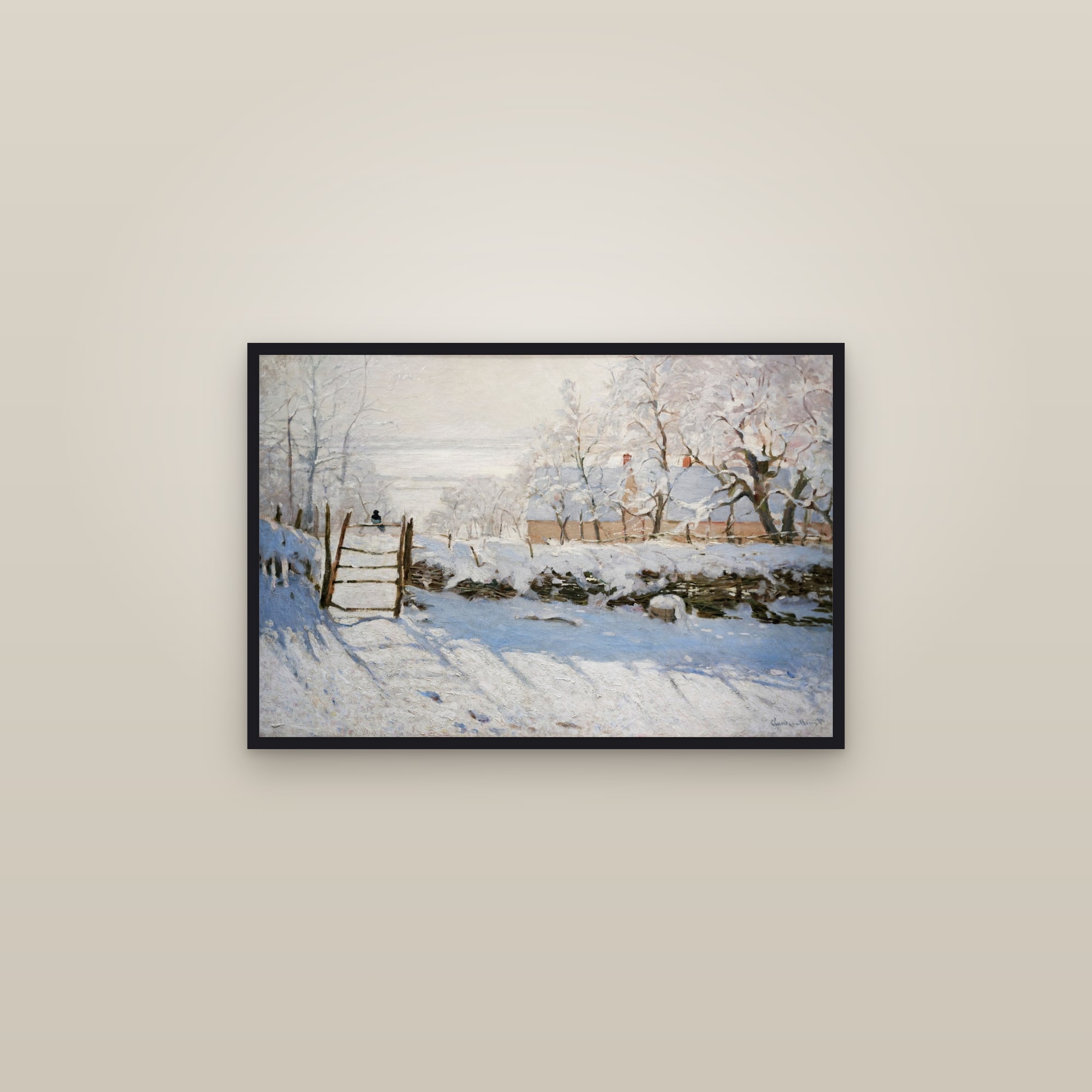
What decides it?
Three measurements, and then the room.
The furniture's width. Art above a sofa, a bed, a sideboard or a console should be 60 to 75 percent as wide as the furniture. That number is the whole decision. Our widest single print is 36 inches (the 36×24 and 24×36 sizes), so a single piece reaches the band for furniture up to about 54 inches: a loveseat, a chest, a console, a double bed. Above that, a single print falls under half the width and floats; three prints get you there.
The wall's shape. A tall or square-ish wall takes one piece well. A long, low wall, which is most hallway, landing and sideboard walls, takes a row. The line of three sets the eye moving along the wall, which is what a passage wants; one picture asks the eye to stop, which is what a sofa wall wants.
The wall's job. A wall seen from one chair, for hours, with one piece of furniture under it, is a backdrop: one picture. A wall passed at walking pace is a route: a row. A wall at the end of a corridor is a destination: one picture, centred.
Park West Gallery's hanging rules put the failure case plainly: a small piece over a long couch looks wrong, while a large work or a group works well. The choice between those two is this article.
When one big piece is right
A calm wall with one job. The sofa wall in a living room, the wall above a bed, the end of a hall, a chimney breast. One picture here gives the room a single subject and reads from the doorway, and it is the harder choice to get wrong, because there are no gaps to measure and no frames to match.
Buy the biggest size the ratio allows. If you are choosing between two sizes, take the larger one; walls forgive large art more readily than the eye expects in a shop. A 36×24 landscape above a 54-inch chest, a 24×36 portrait at the end of a corridor, a 32×24 above a double bed.
Landscape formats suit furniture, because furniture is wide and low. Portrait formats suit narrow walls and destinations. The large and oversized prints page is sorted for single pieces; the living room wall art page for the sofa wall.
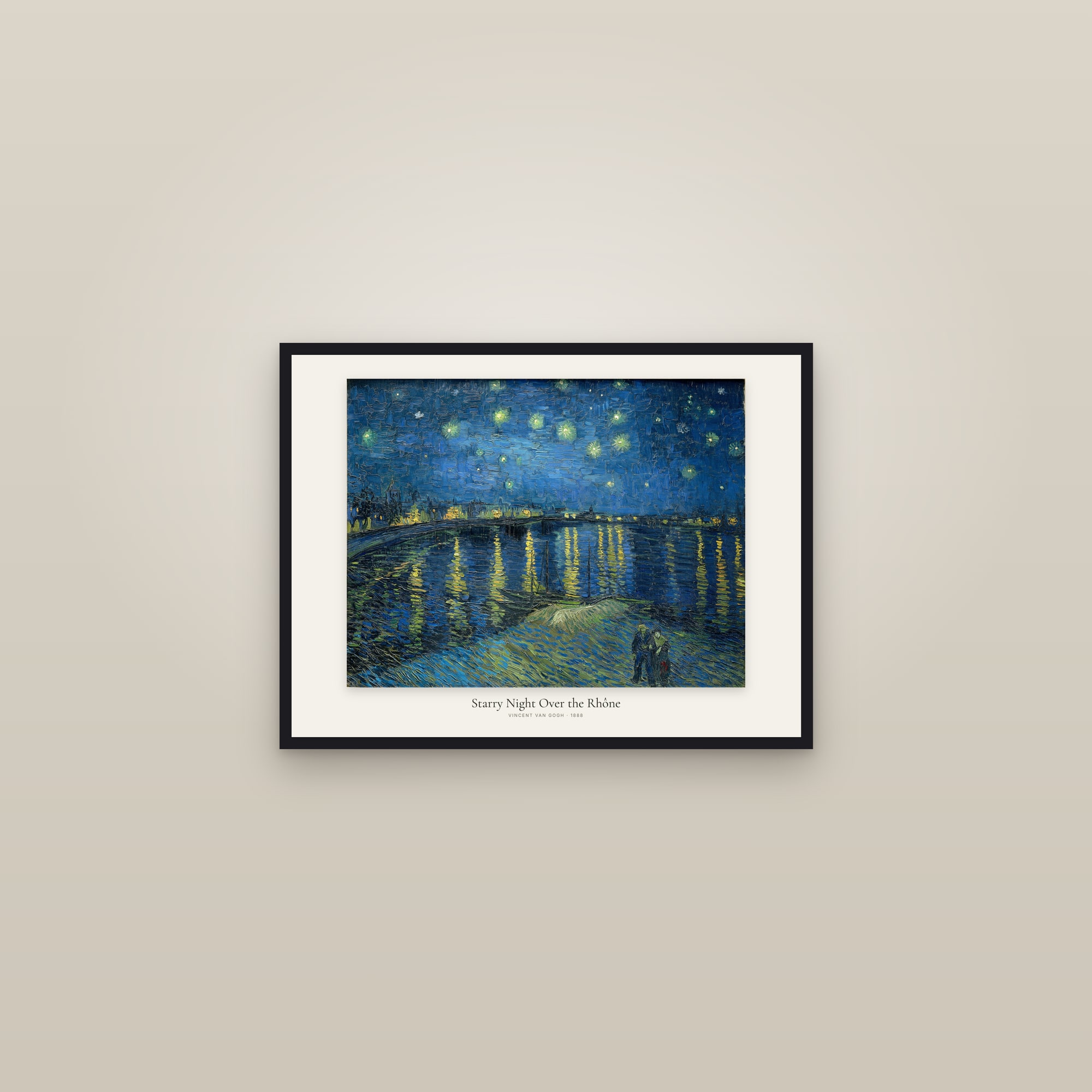
When a set of three is right
The wall is long. Over a standard 84-inch sofa the band is 56 to 63 inches; three 18×24 portraits with 3-inch gaps make 60. Over a 96-inch sideboard, the same. No single print we sell reaches those numbers, so the choice makes itself. The sister piece what size art goes above a sofa works the table out sofa by sofa.
The budget is split. Three 12×18 prints bought one at a time, over a few months, each from $39, end as a 42-inch group. Three or more prints in one order are 10 % off, so if you can buy together, do.
The room wants rhythm. A hallway, a landing, a dining room seen from the table, a long kitchen wall above the counter. Three beats in a row give the eye a path. One picture in those places sits alone between two expanses of wall.
A set of three is also the easiest gallery wall there is: every variable that makes gallery walls hard has been removed. If you later want a larger arrangement, the three become its spine; see gallery wall layouts.
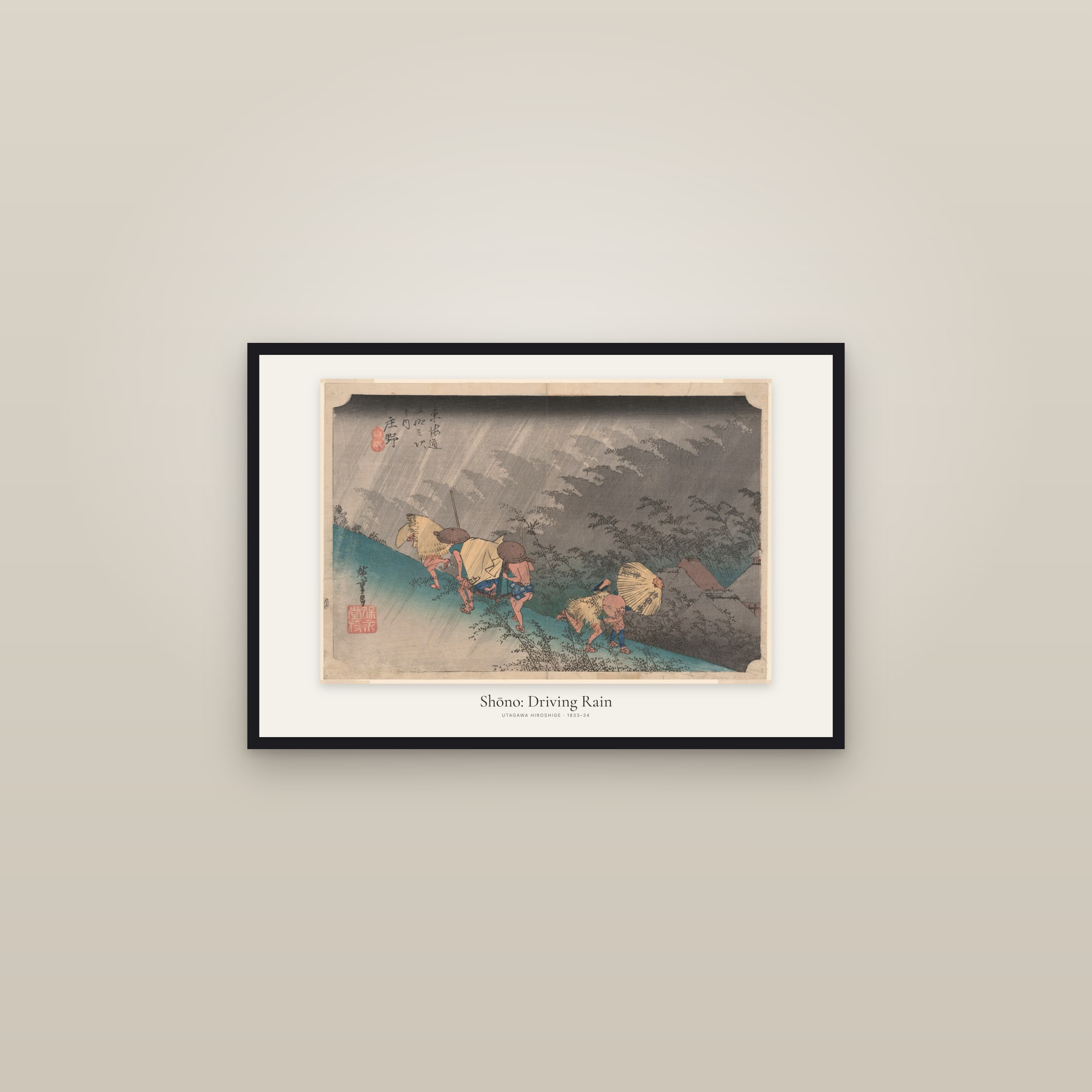
What makes a set a set?
One ratio, one size, one frame colour, one family.
One ratio. Three 2:3 portraits, or three 3:4 portraits, or three landscapes from one ladder. A 2:3 beside a 3:4 is a different shape and the edges will not line up. Our ready-made sets are built so that one size applies to all three, and the set page's picker sells them that way.
One size. Not two 16×24s and a 12×18. The middle one is not more important than the others.
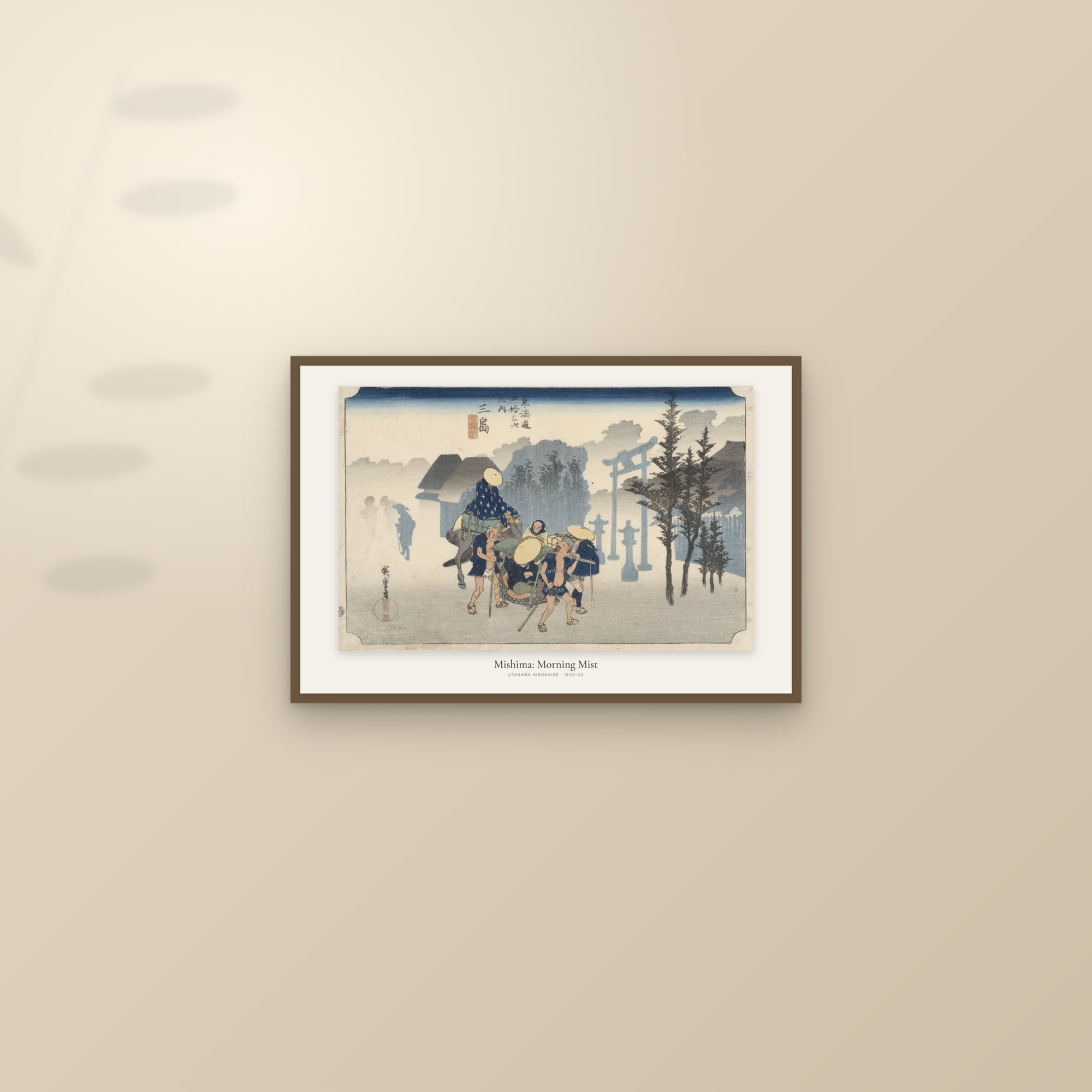
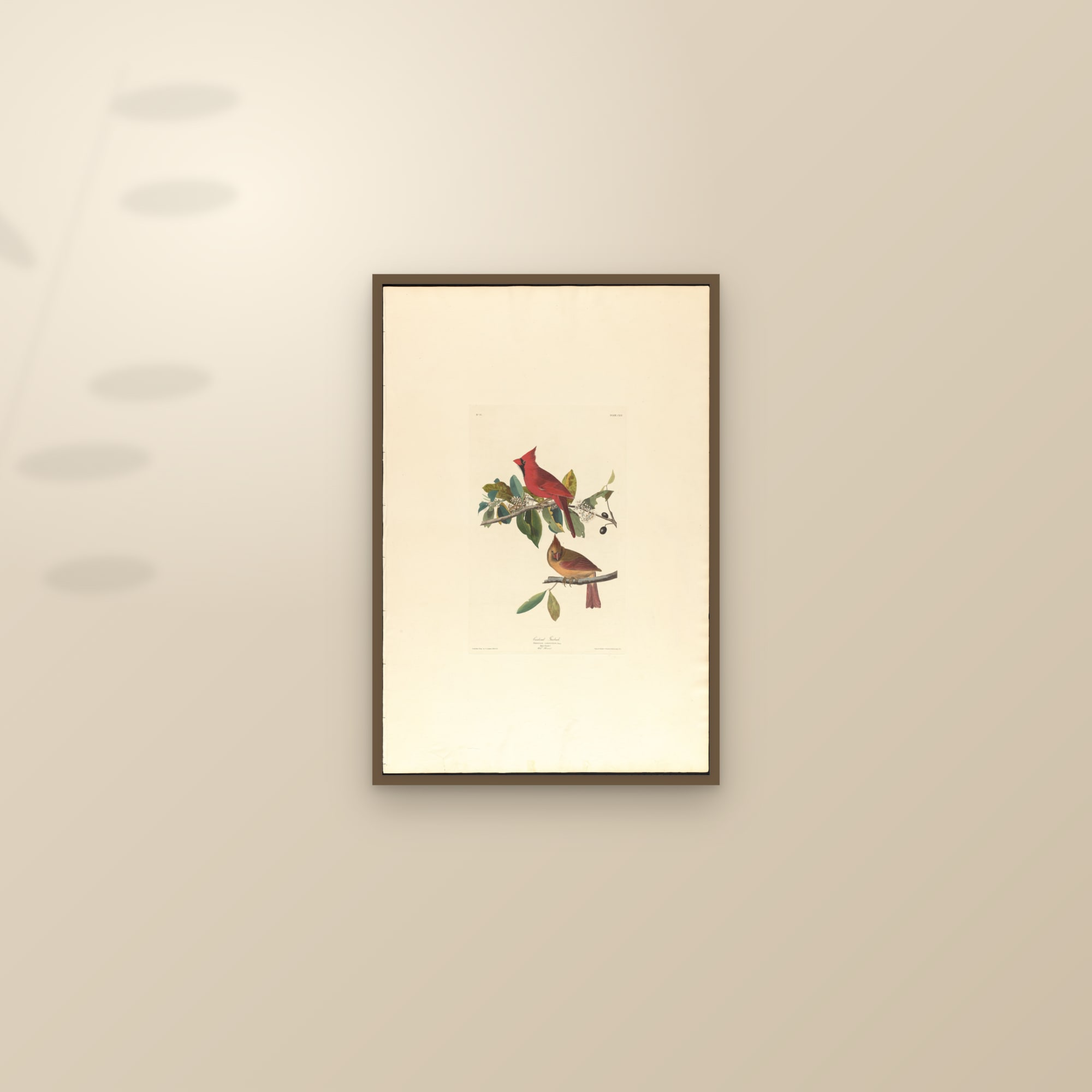
One frame colour. Black or dark wood, all three. Black for Japanese prints, dark grounds and modern work; dark wood for cream paper and old plates. Mixed frames turn three prints into three pictures.
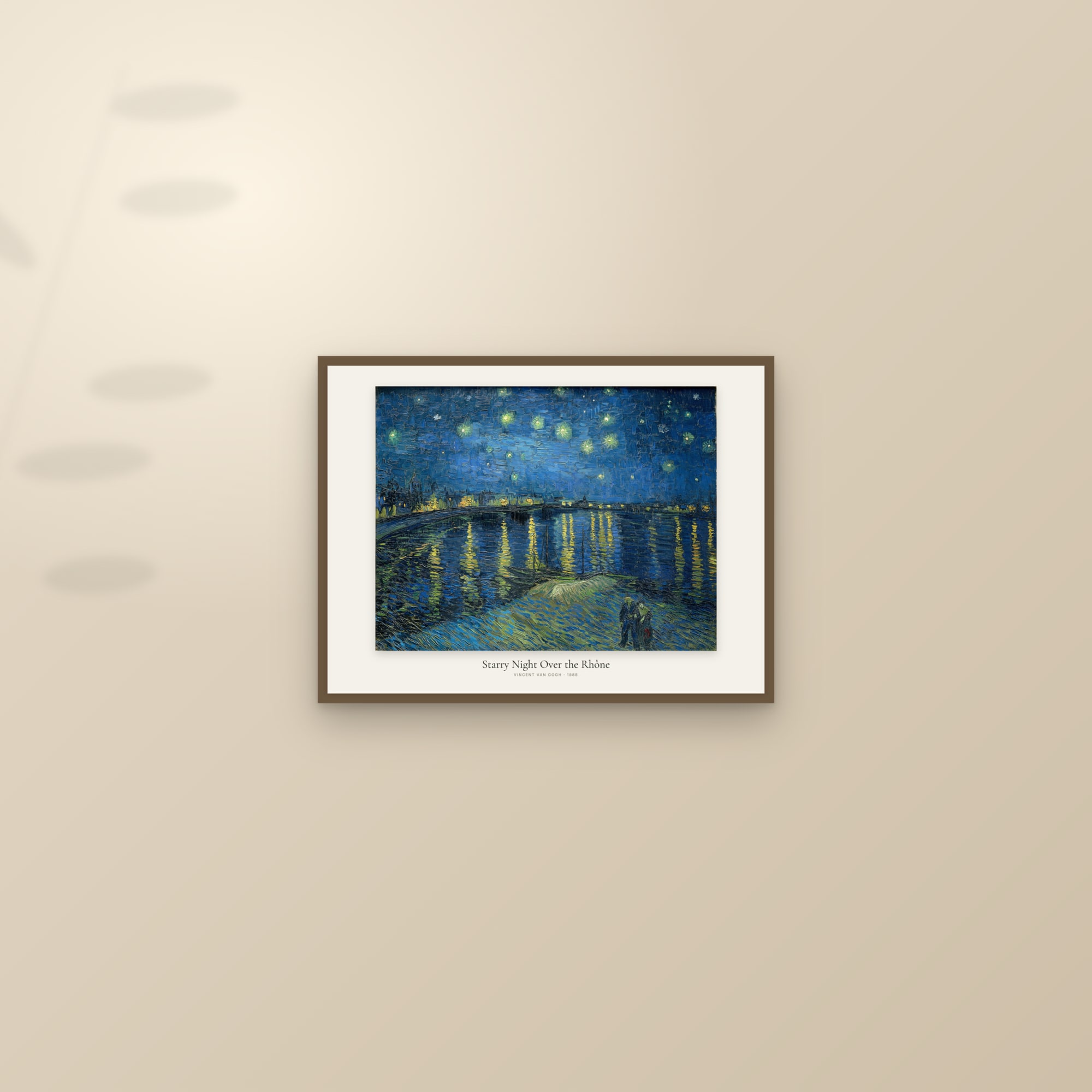
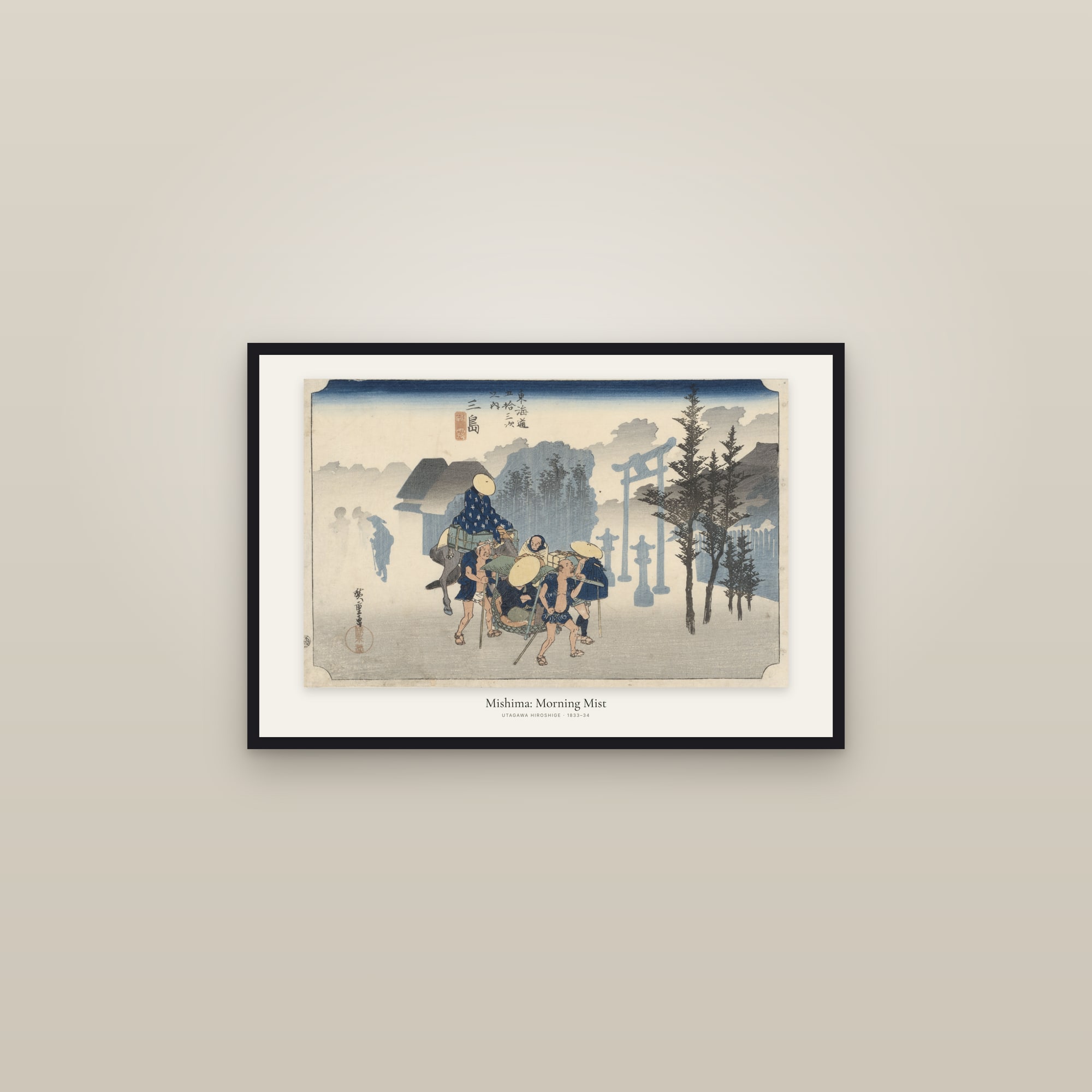
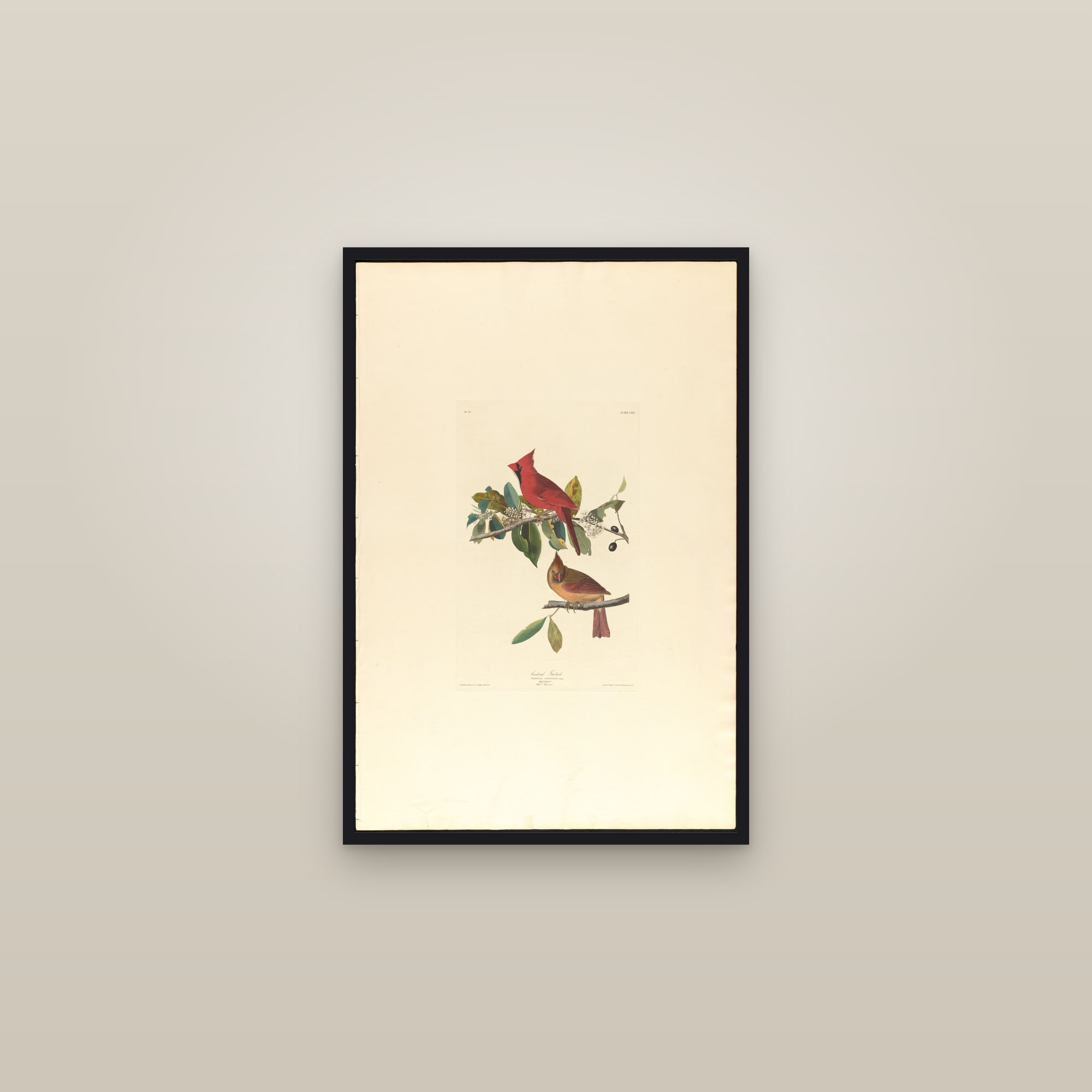
One family. Three birds from Audubon, three stations from Hiroshige, three apples from the USDA watercolours, three abstracts from one colourway. The subject can vary within the family; the register should not. A Van Gogh beside two Hiroshiges is a salon hang, not a set.
Hang them 3 inches apart, bottoms aligned, with the centre of the group about 57 inches from the floor or 6 to 10 inches above the furniture.
Which sets, for which walls?
A few of the ready-made trios, chosen for the walls they suit. Each set has its own page with a shared picker, so one size and one frame apply to all three.
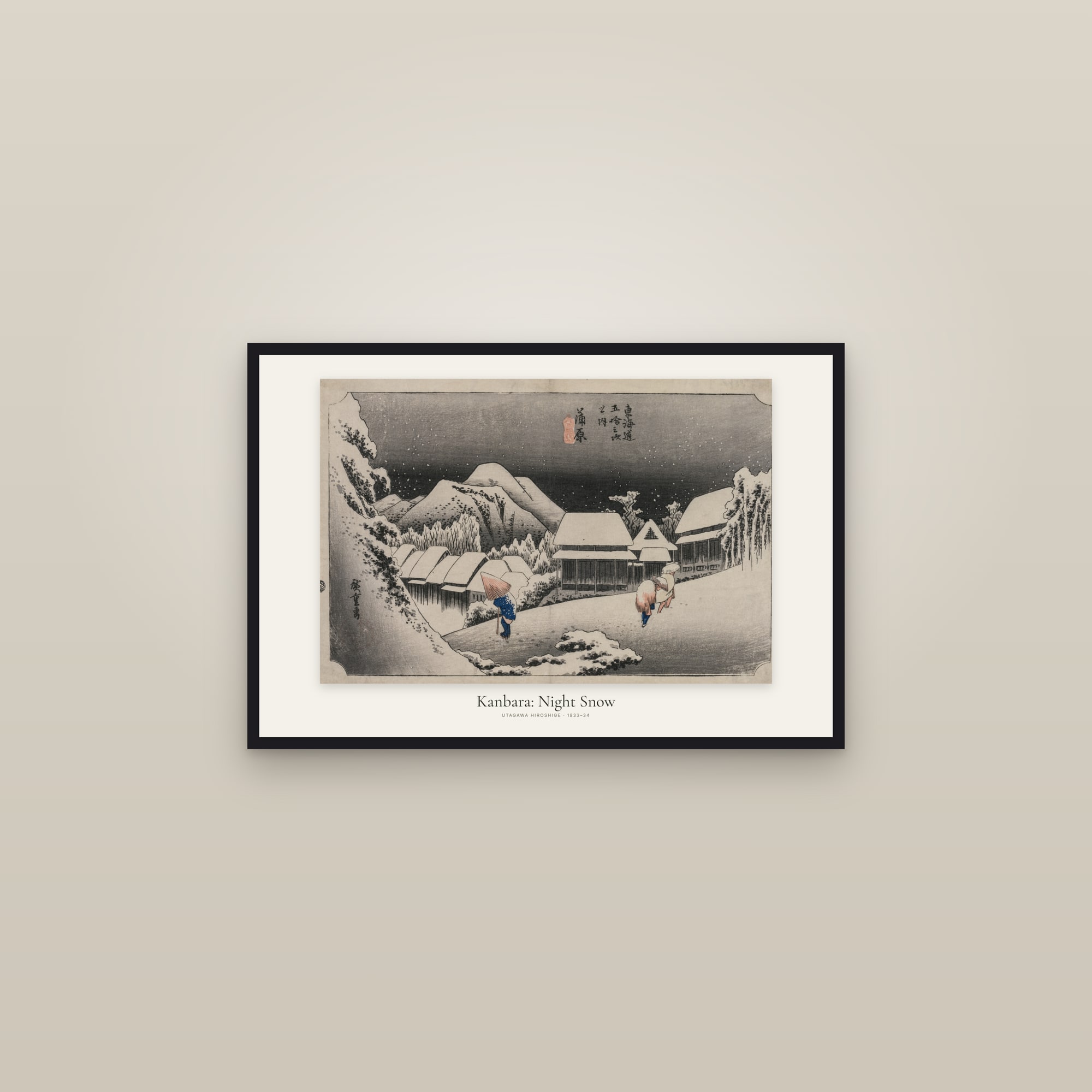
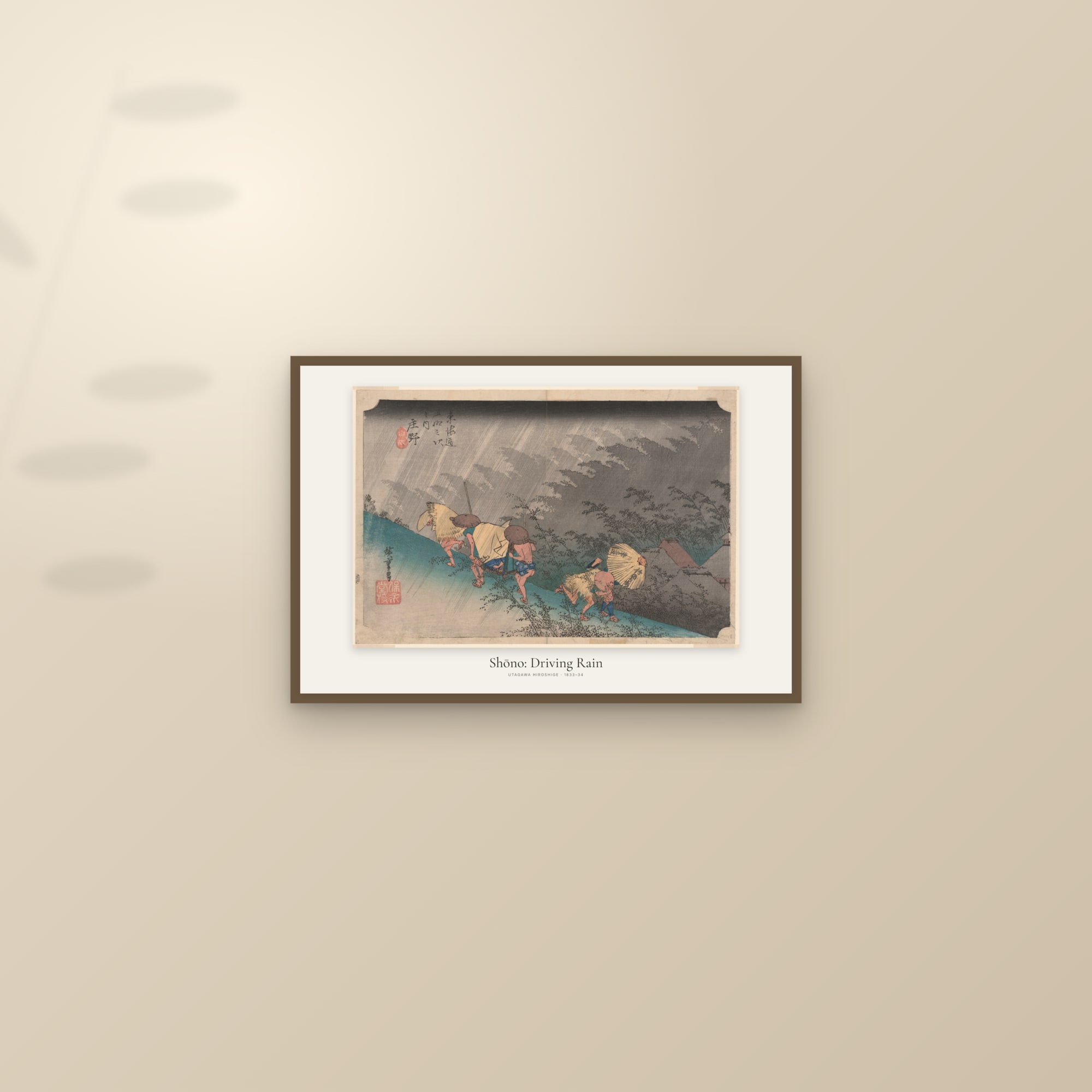
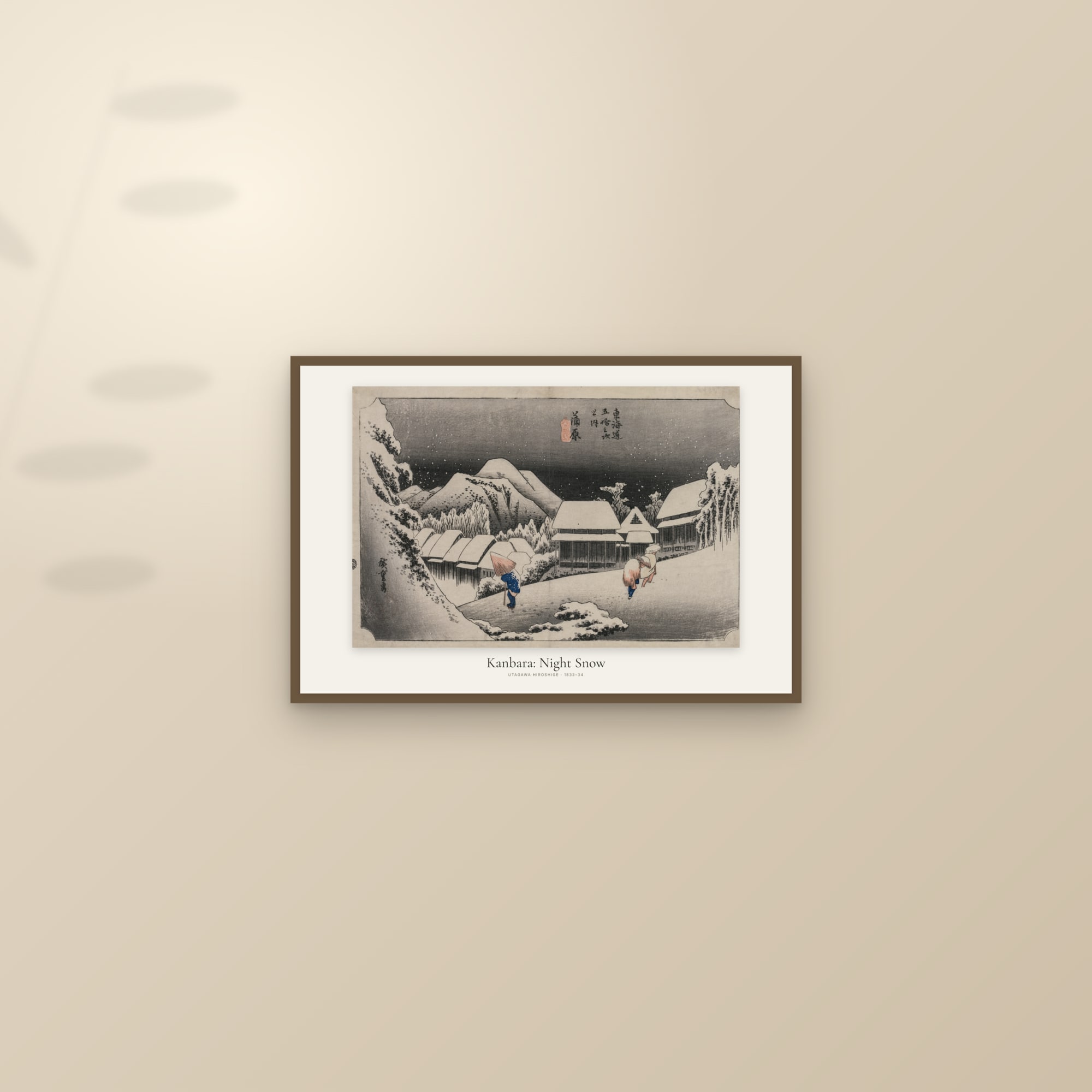
Tōkaidō Weather: Shōno in rain, Kanbara in snow, Mishima in mist. Three 3:2 landscapes, so the row runs wide: three 18×12s make 60 inches, three 24×16s make 78. That is a wall above a long sideboard or a sectional's main run. Hung one above the other in a stairwell, they make a column instead. From the famous painting sets family.
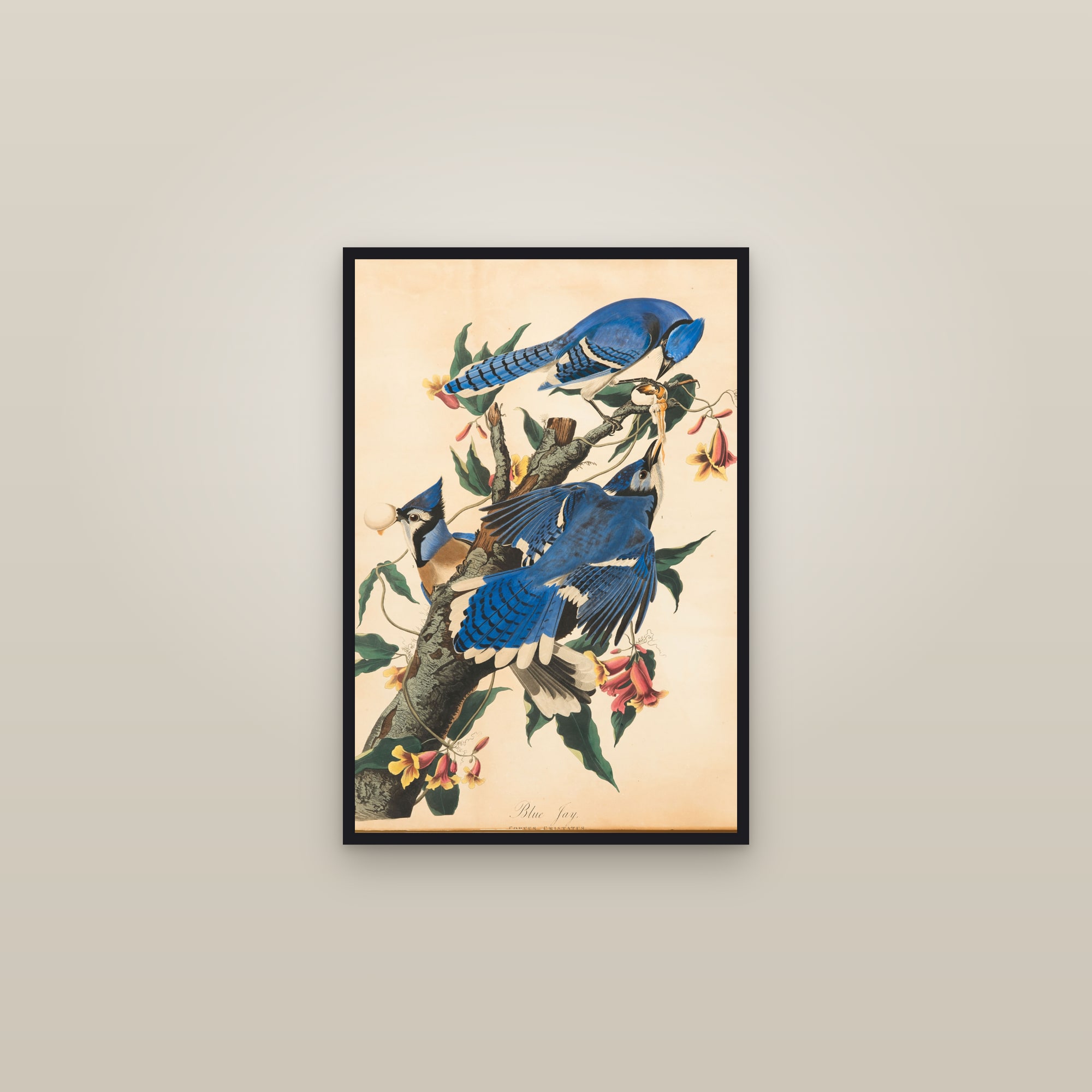
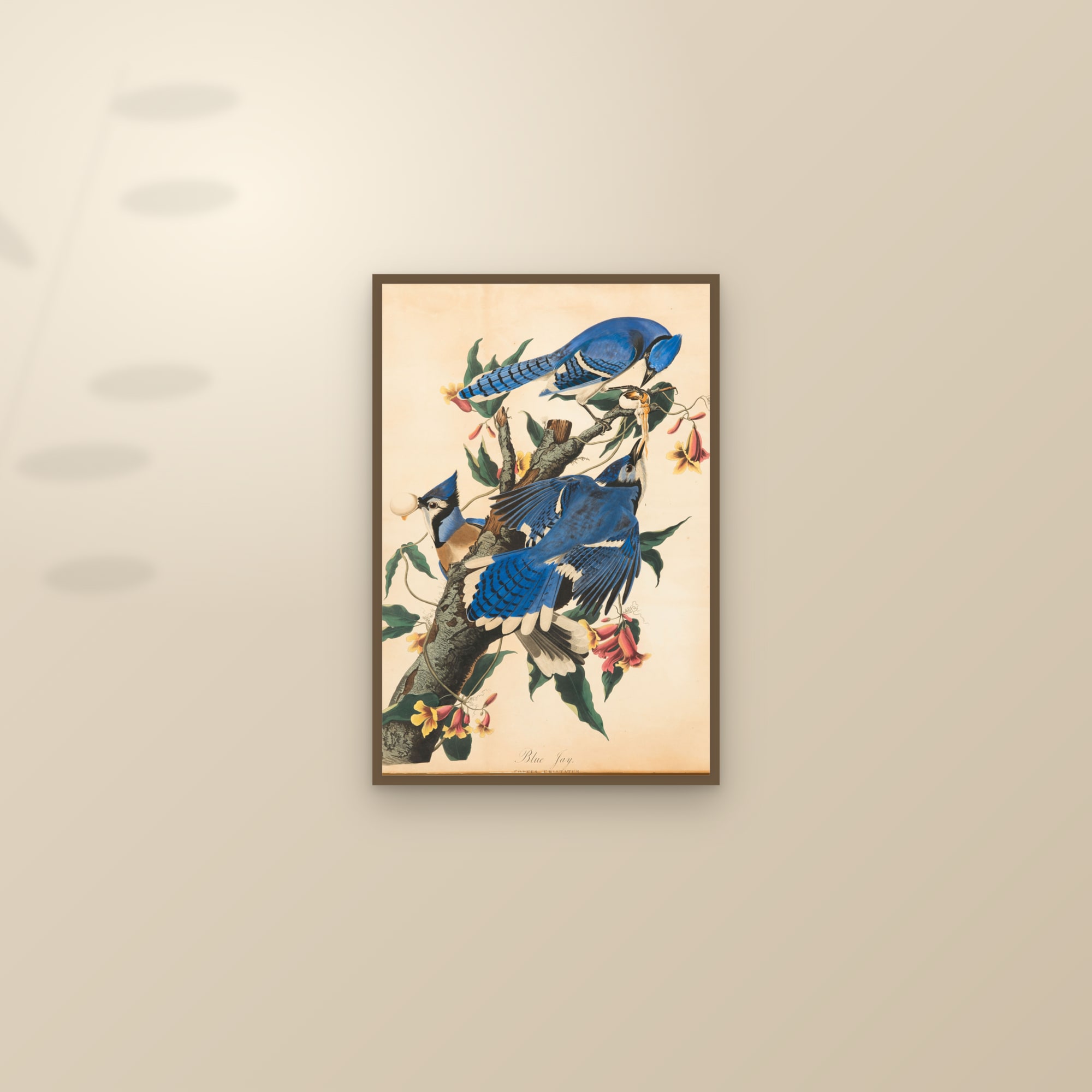
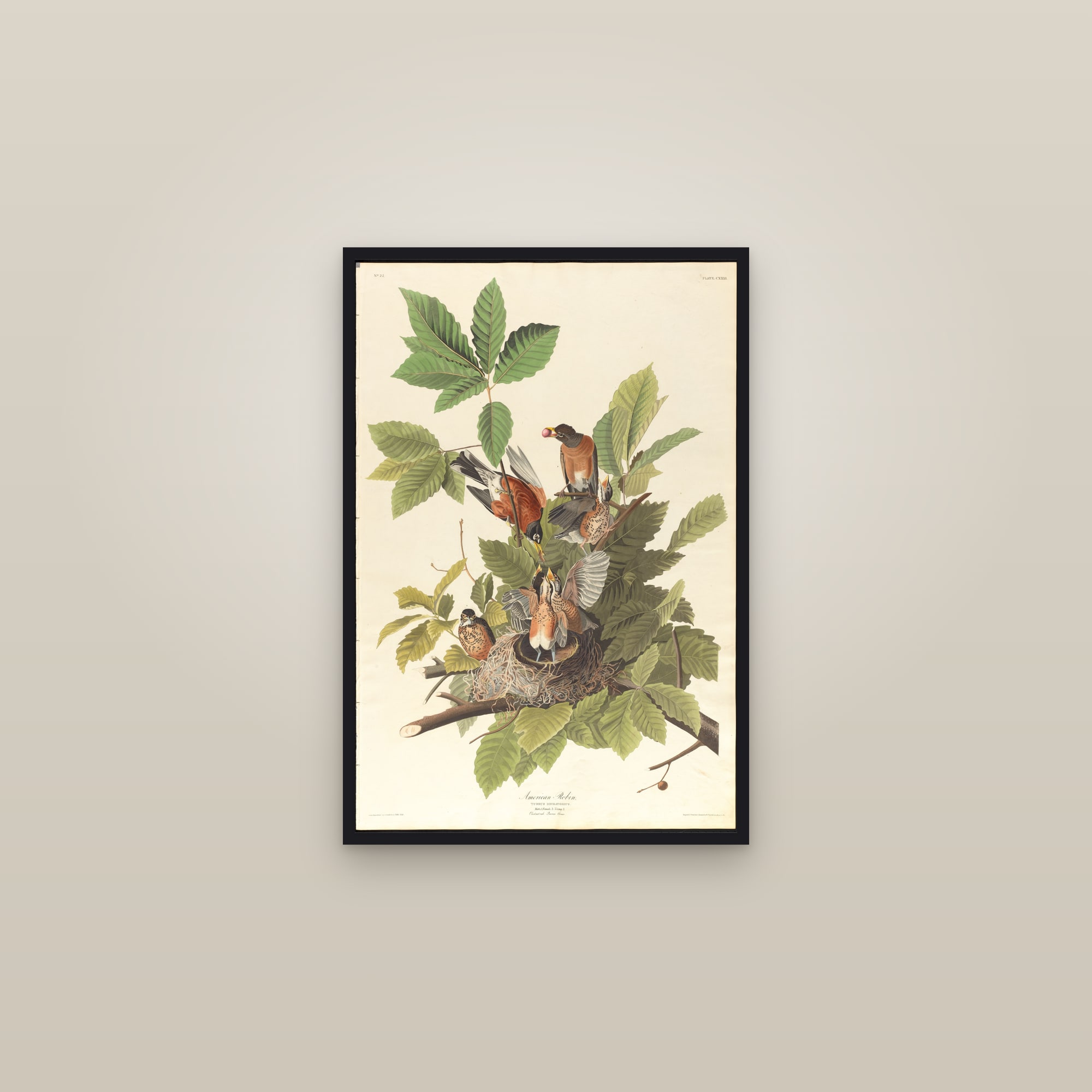
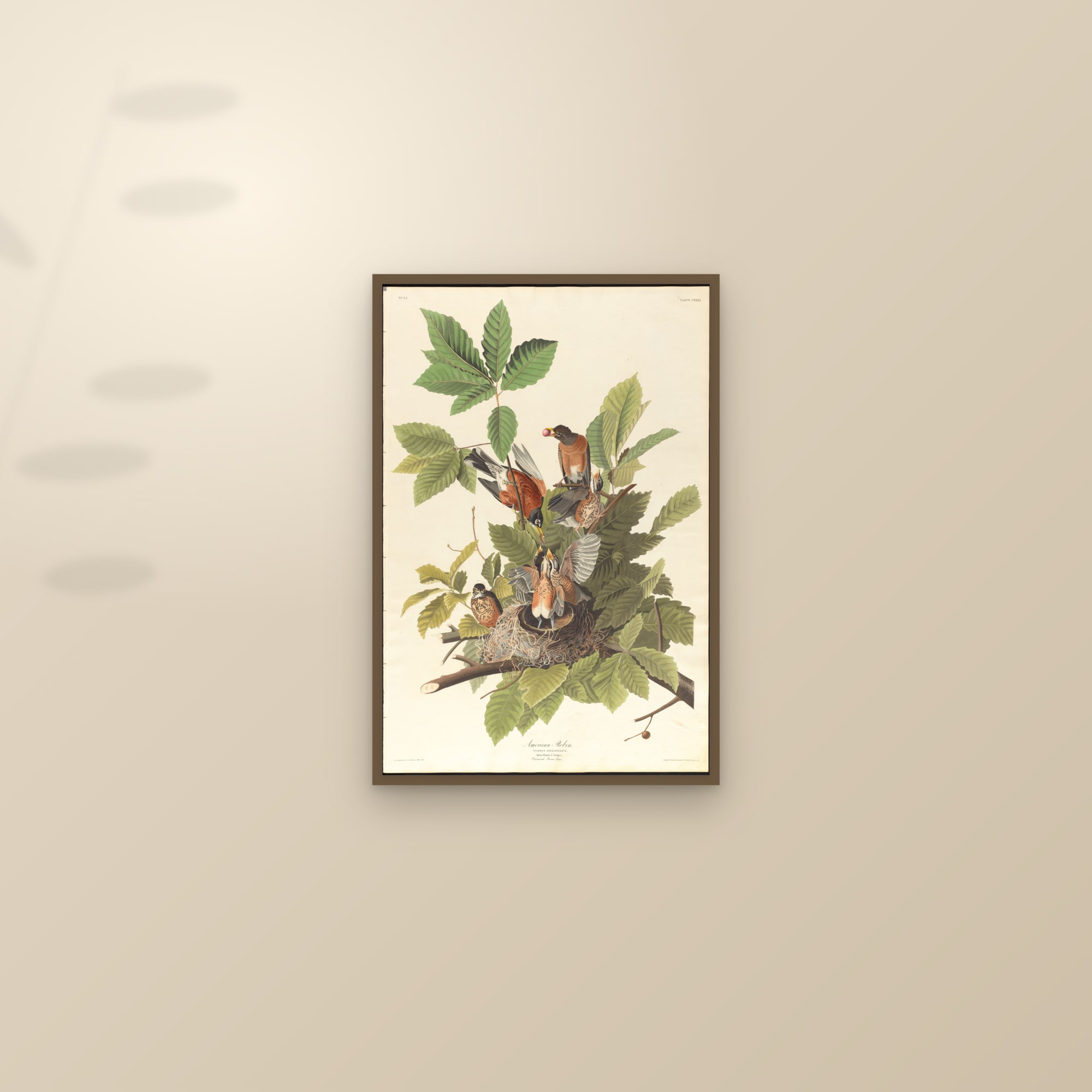
Backyard Birds: the Northern Cardinal, the Blue Jay and the American Robin, Audubon's three everyone can name. Portrait 2:3, so three 16×24s make 54 inches, the right width for a 72- to 84-inch sofa or a kitchen wall. Dark wood frames suit the cream sheets. From bird prints sets.
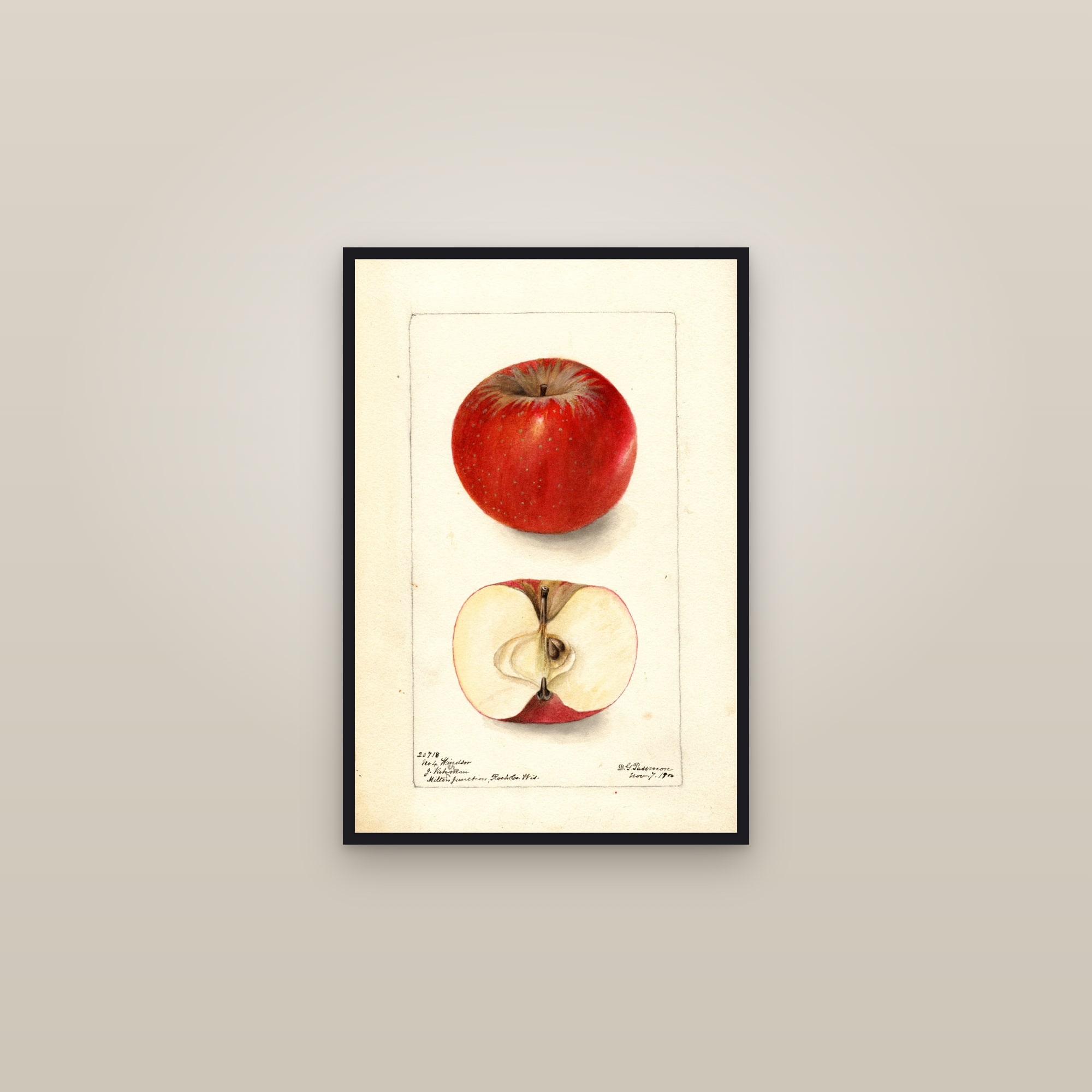
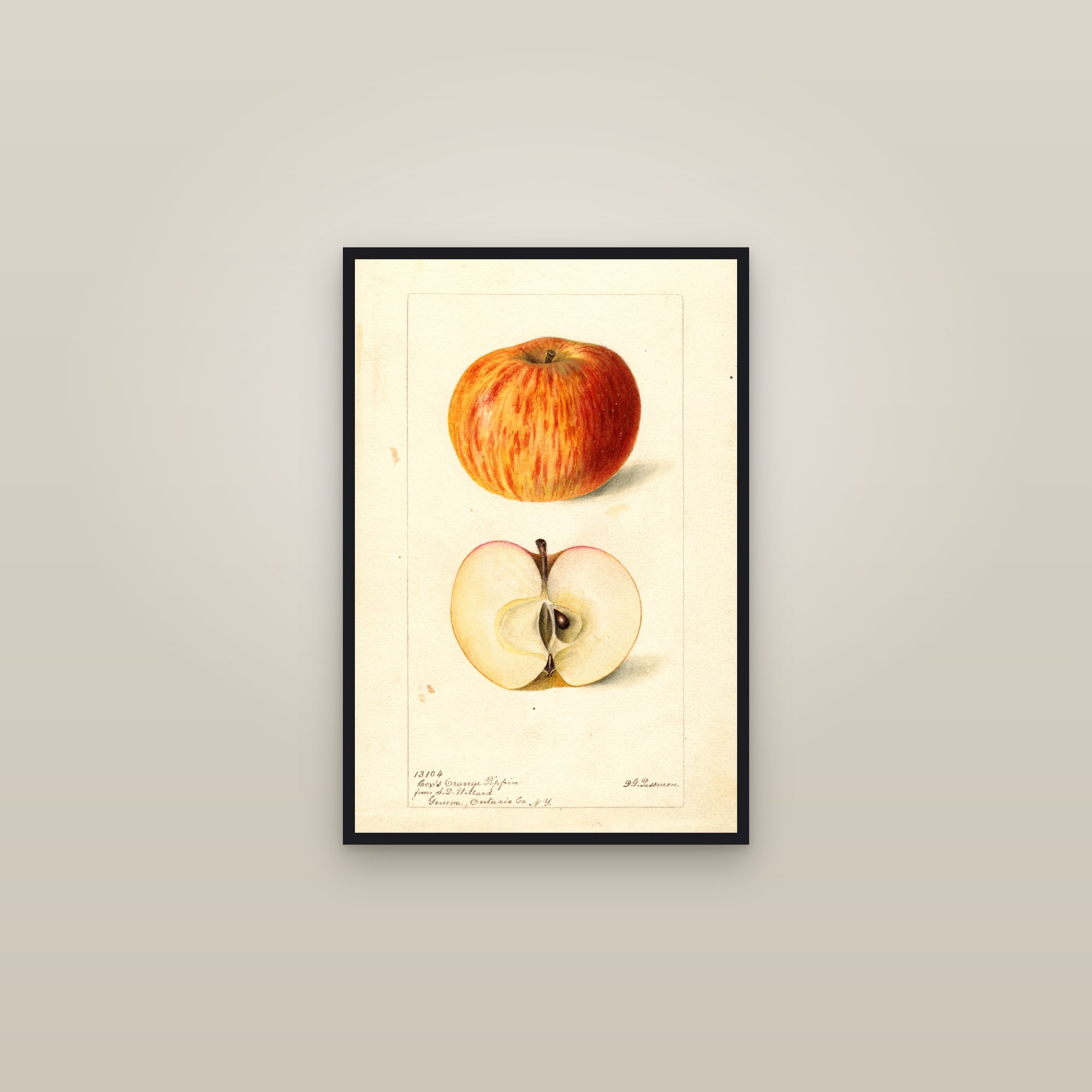
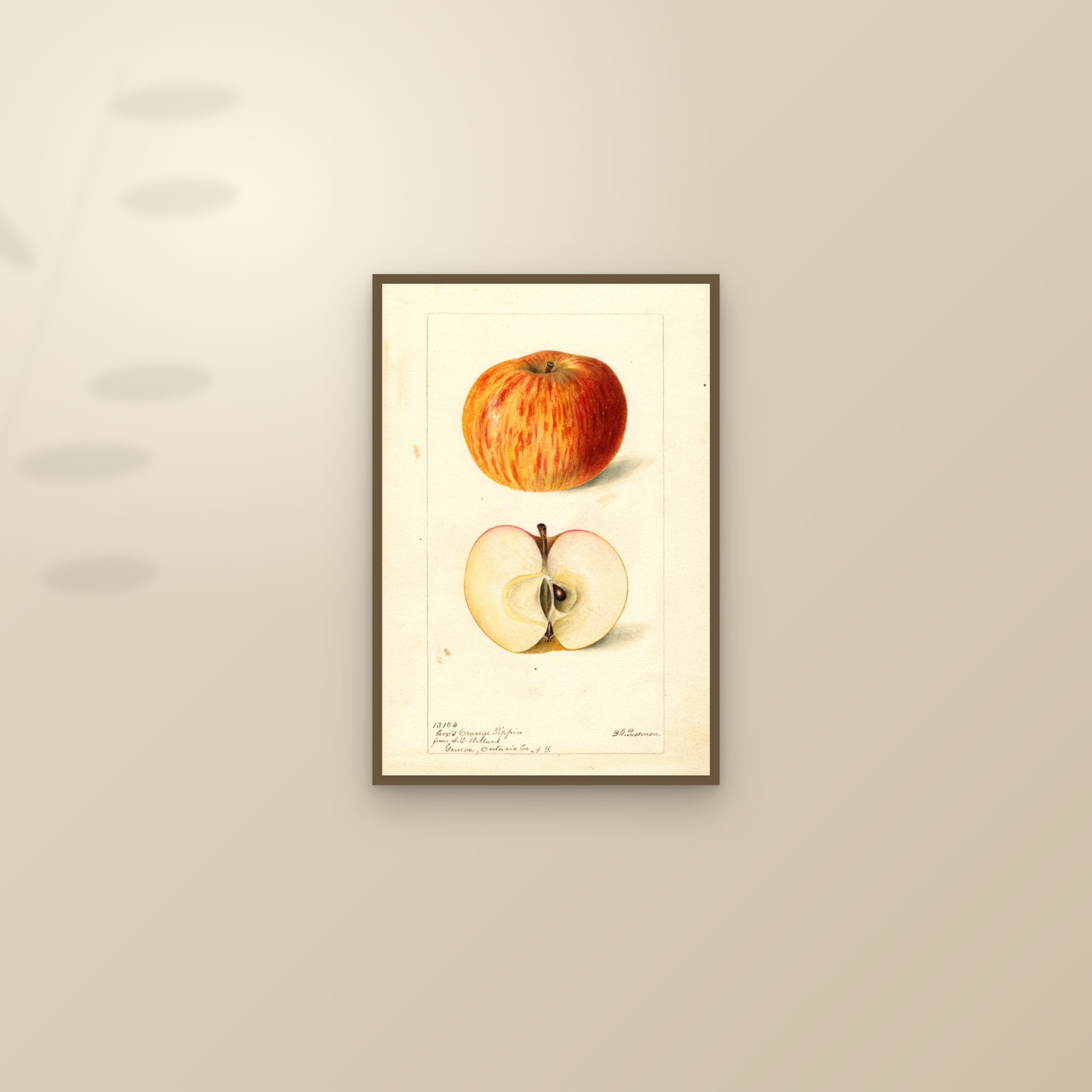
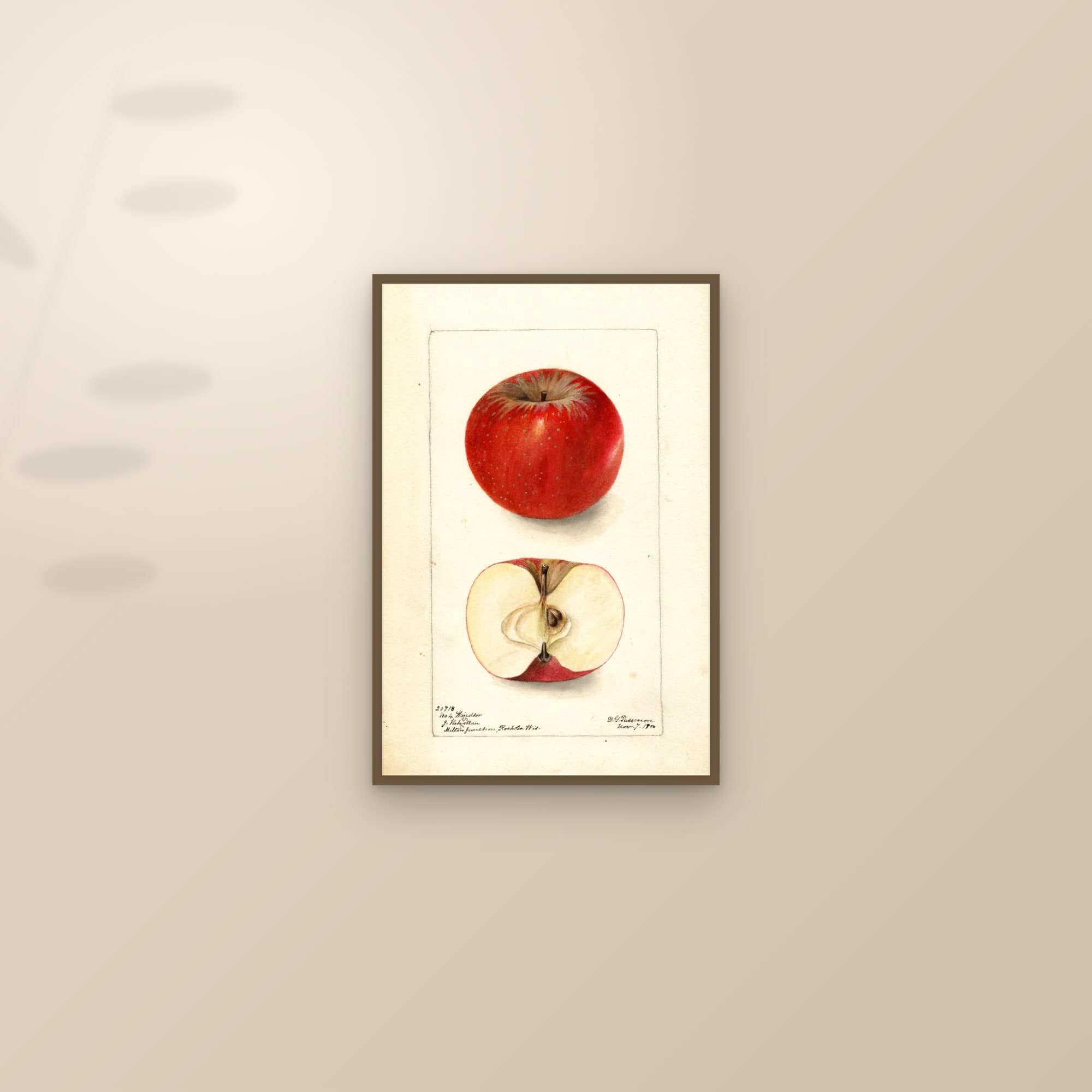
Three Apples: Cox's Orange Pippin, Maiden Blush and Windsor from the USDA pomological watercolours, each a whole fruit and a cut half on a cream sheet with the painter's note. These plates reach 16×24, so the group tops out at 54 inches: a dining room wall or the run above a kitchen counter. From kitchen print sets.
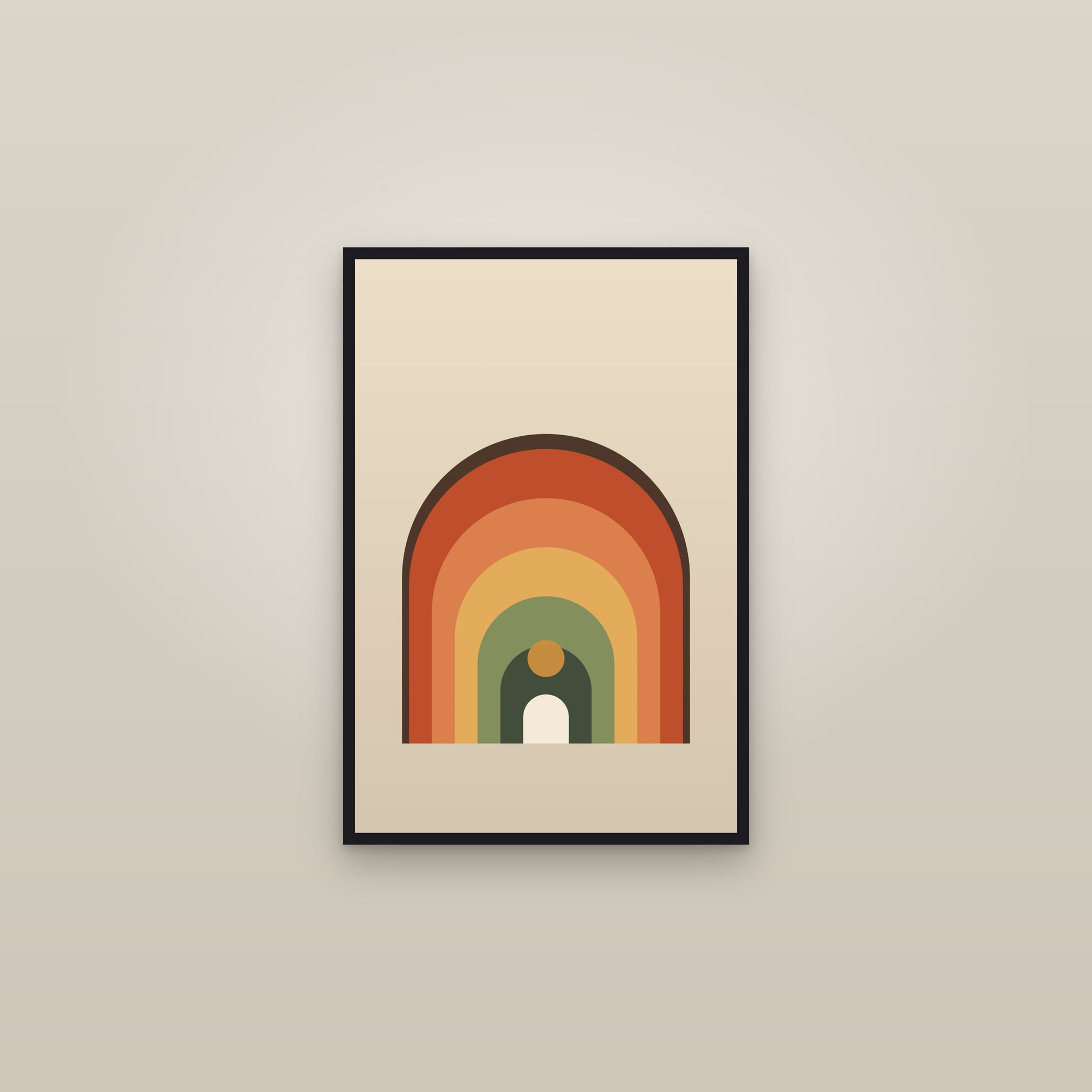
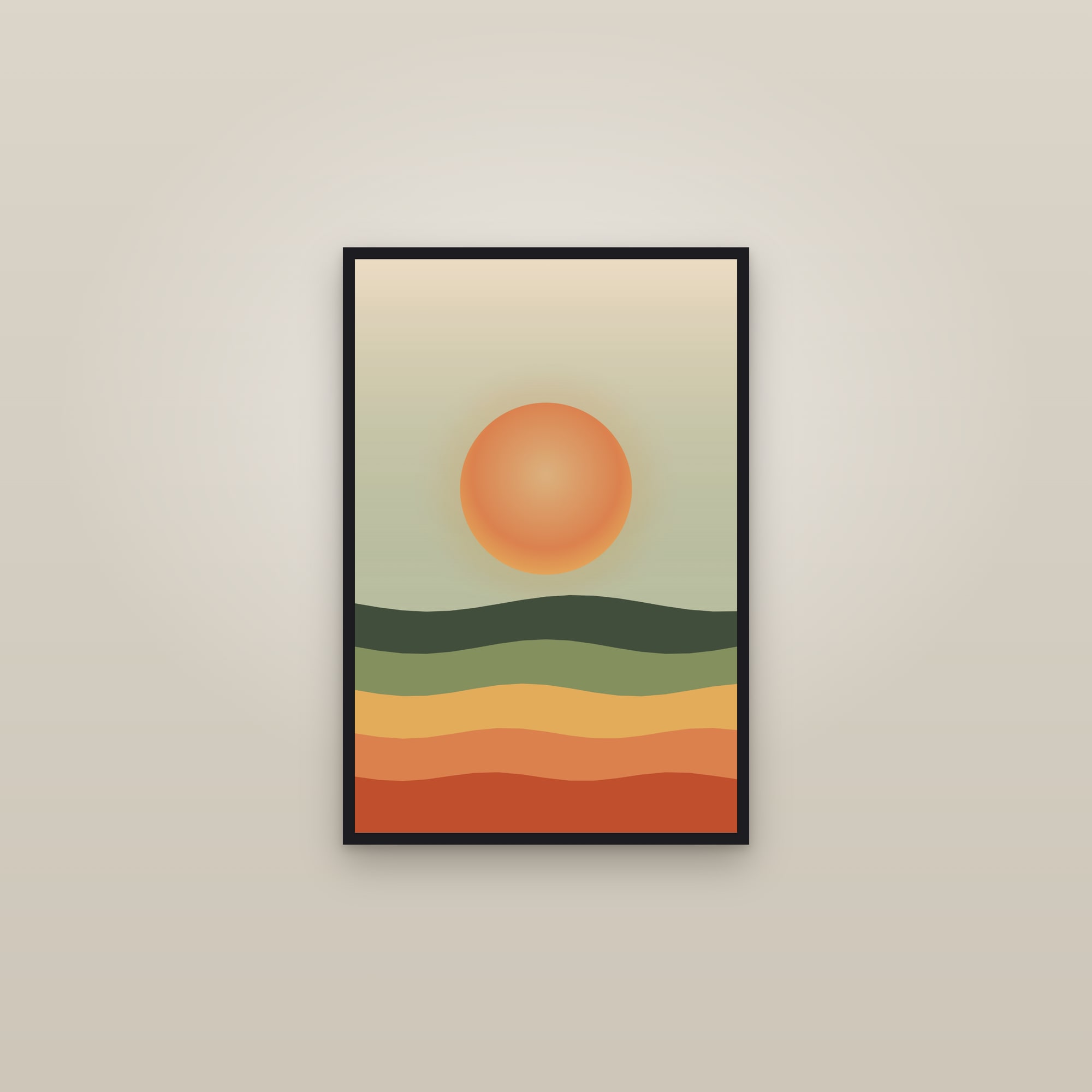
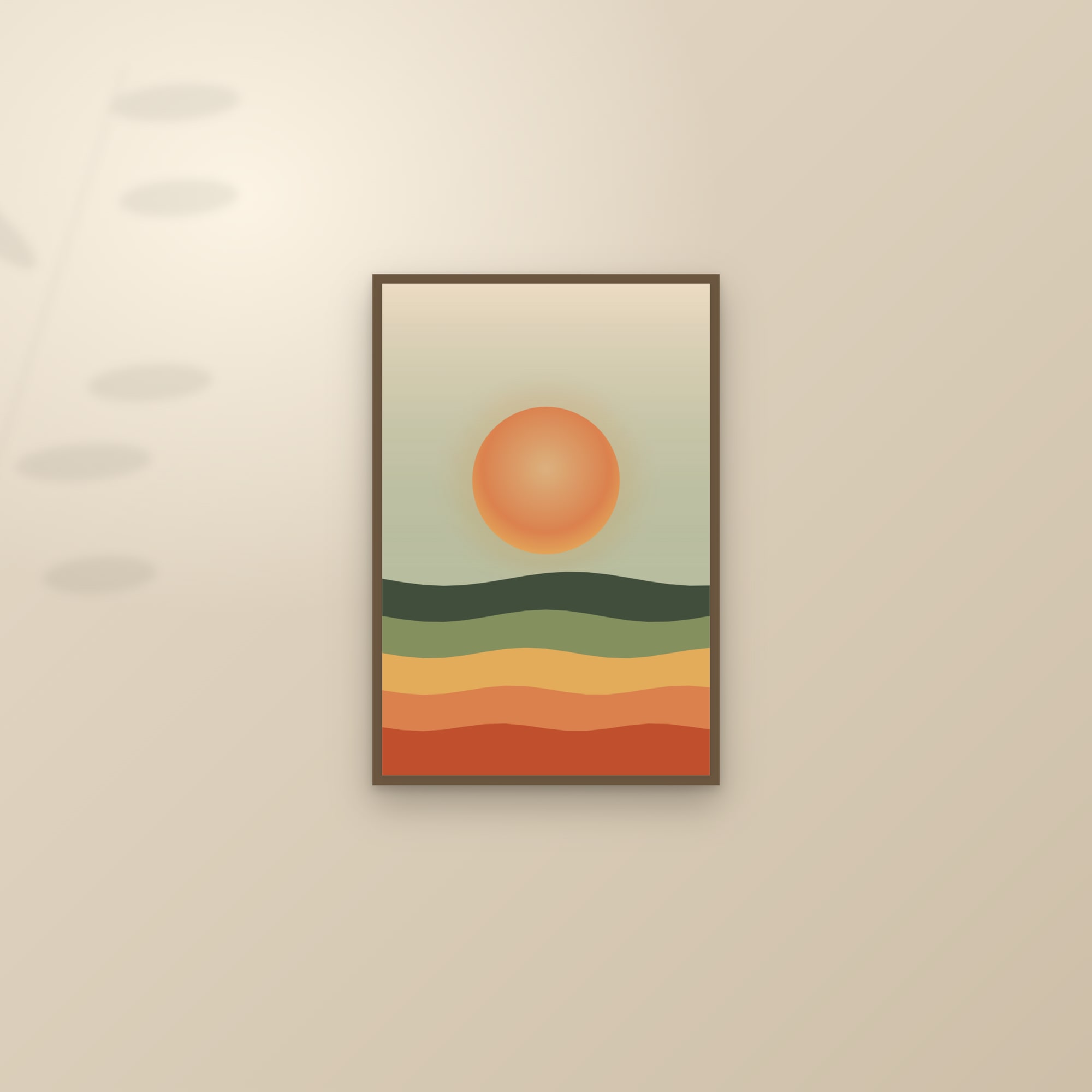
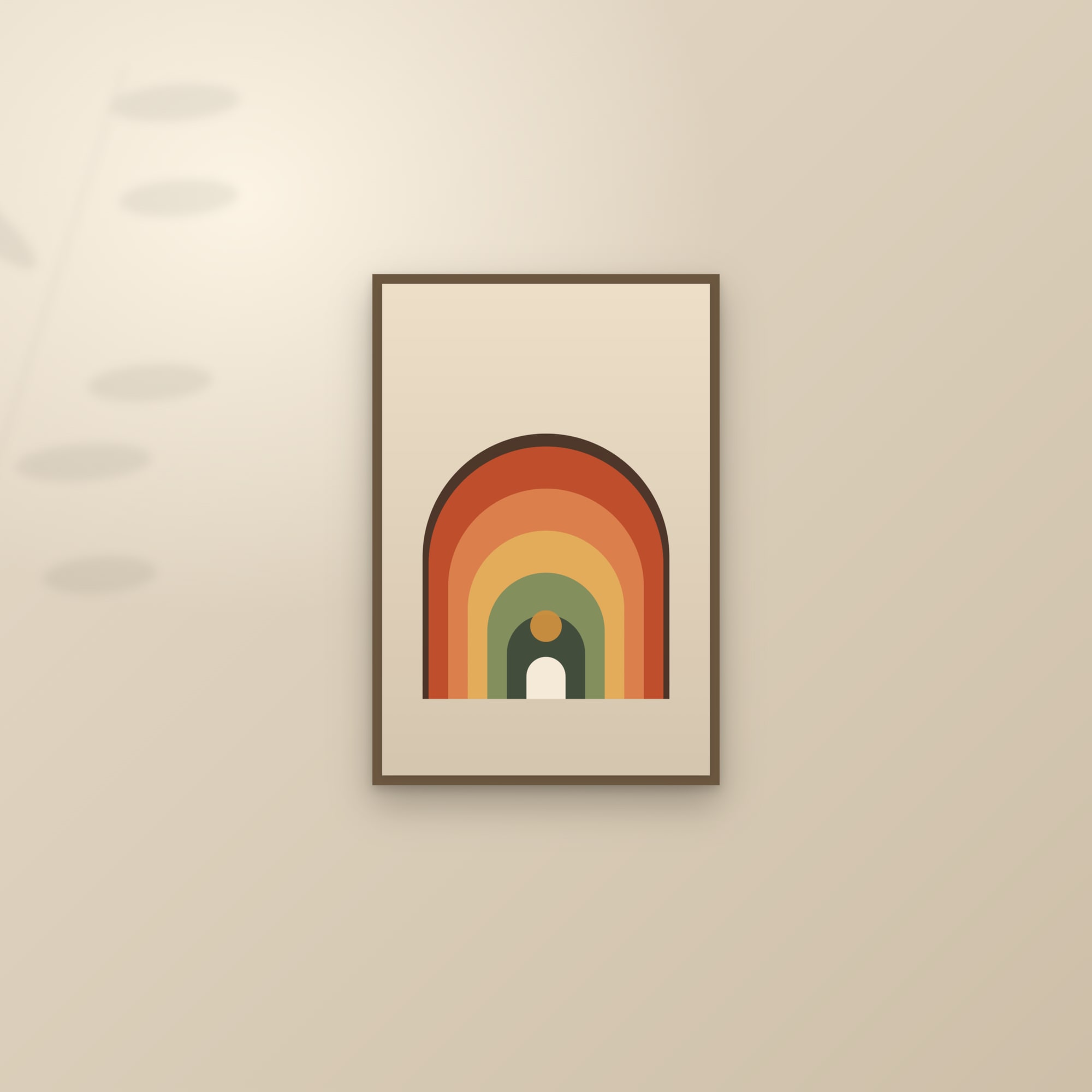
Terracotta Trio: an arch, a sun and brushstrokes in one terracotta colourway, on a pale ground. Modern, printed to the edge, and on canvas as well as paper, so three canvases with no frames is an option for a bedroom or a rented living room. From abstract print sets; the botanical sets are the equivalent in green.
The full list is at /sets, and each family page has a build-your-own picker for making a trio from any three prints of one ratio.
Gallery Wall Sets & Matching PrintsThe short version
Measure the furniture and take two-thirds. If a single print reaches that width, and the wall is calm, buy one, as large as the ratio allows. If it does not, or the wall is long or passed, buy three of one size, one ratio and one frame colour, and hang them 3 inches apart as one object. Three or more in one order are 10 % off. For the rest of the method, the pillar is the complete guide to choosing wall art.
Questions people ask
Is one large picture or three smaller ones better above a sofa?
One wide landscape if it reaches two-thirds of the sofa's width; our widest single print is 36 inches, so that is a loveseat. Over a 72- to 96-inch sofa, three matched portrait prints hung 3 inches apart reach the width a single print cannot.
What size should a set of three be?
Together, two-thirds to three-quarters of the furniture below. Three 16×24 portraits with 3-inch gaps are 54 inches wide; three 18×24s are 60; three 24×36s are 78. Choose the size whose group width lands in the band.
Do the three prints in a set need to match?
They need to share a ratio, a size and a frame colour, and they should come from one family: three Audubon birds, three Tōkaidō stations, three apples. Subject can vary; shape and frame cannot, or the three stop reading as one object.
When is a single piece the wrong choice?
On a long, low wall such as a hallway, a landing or the wall above a long sideboard, where one print leaves empty wings either side. And when the wall is seen in passing, where a row gives the eye something to follow.
Sources
- Fine Art America, How High to Hang Art Above a Sofa (two-thirds of the sofa's width; 6 to 10 inches of wall; treat a group as one rectangle, 2 to 3 inches between frames)
- Park West Gallery, Three Simple Rules for Hanging Art (centre at 57 inches; a small piece over a long couch looks wrong; treat a grouping as one unit)
- PictureFrames.com, How to Group Pictures on a Wall (2 to 3 inches between frames; same frames for cohesion; uneven numbers anchor furniture)
Start hereThe complete guide to choosing wall art for a home