Thornton’s Temple of Flora: The Plates, Painters and Engravers
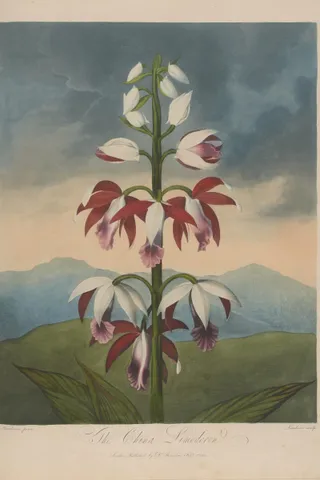
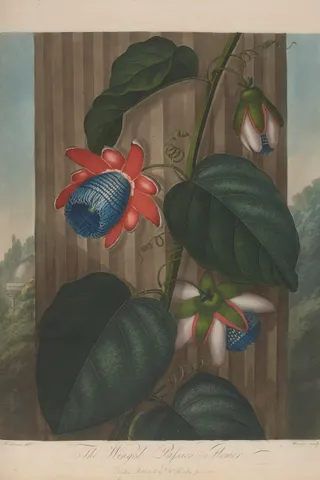
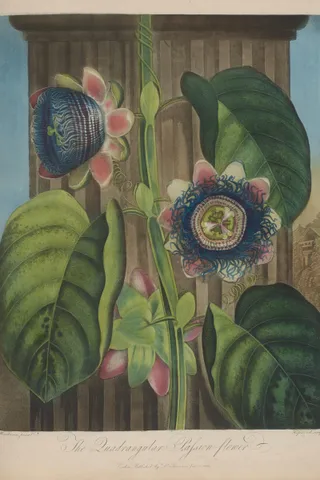
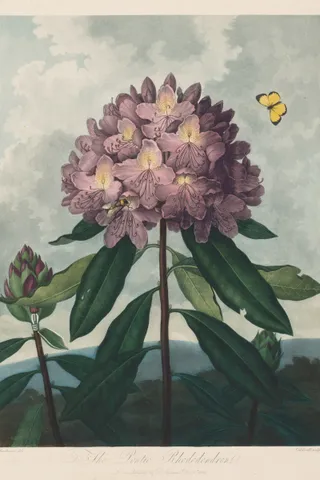
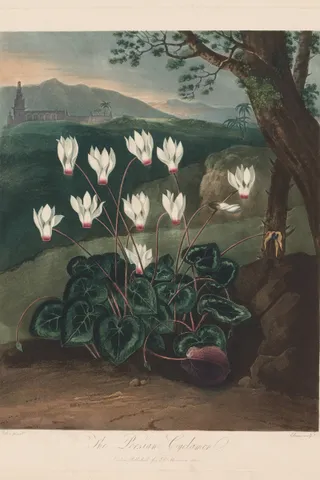
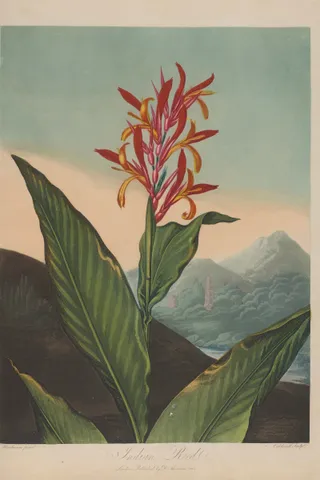
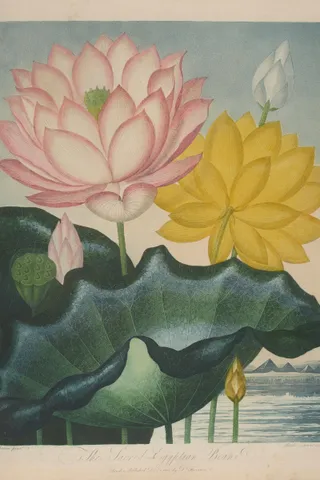
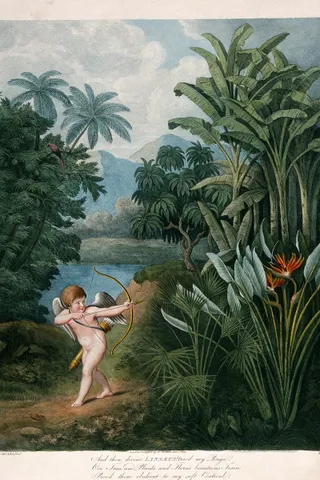
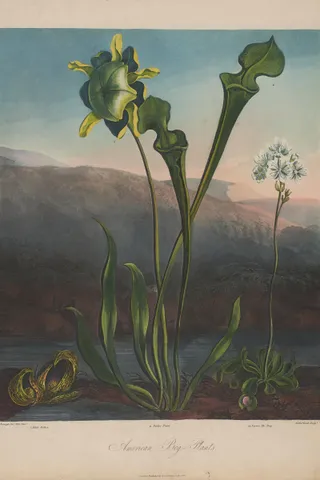
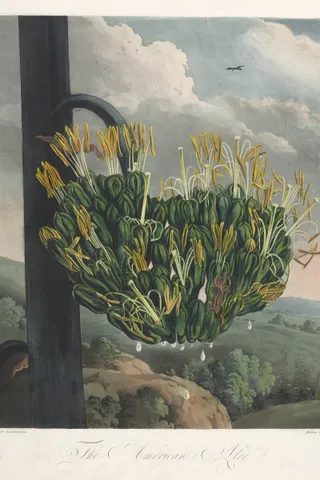
25 plates from Robert John Thornton’s book of flowers in dramatic landscapes, in publication order, with the painter, the engraver and the date engraved on each.
The Temple of Flora is a set of large coloured flower prints published in London between 1799 and 1807. It was made by Robert John Thornton, a London physician who wrote about botany.
It was the third and most ambitious part of a larger work, the New Illustration of the Sexual System of Carolus von Linnaeus. The first two parts explained how the Swedish botanist Linnaeus sorted plants by the parts of their flowers. The Temple of Flora was meant to show the flowers themselves.
Thornton planned seventy plates. Thirty-three were made, because too few people bought them.
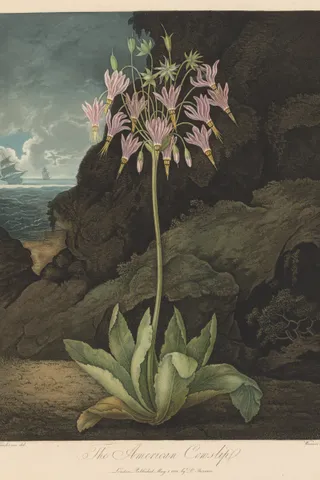
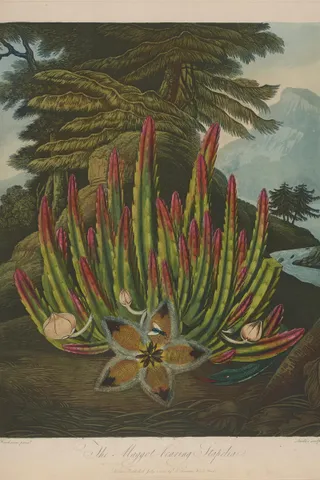
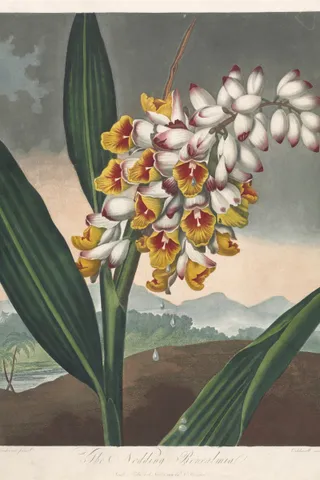
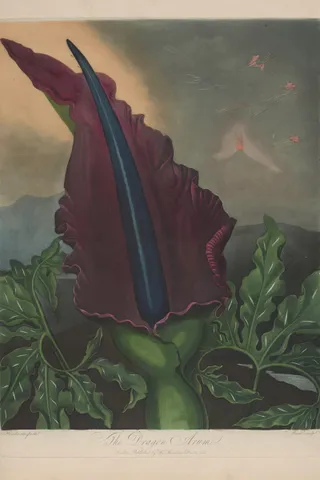
Each plate sets a flower in front of a dramatic scene: a moonlit river, a mountain, a stormy sky. Thornton had painters make the pictures and engravers to copy them onto copper plates, using aquatint, stipple and line engraving.
The book ruined Thornton. In 1811 Parliament allowed him to hold a lottery of his paintings and books, and even that did not save him. He died poor.
This page lists the 25 plates in our restored set, in the order they were published. For each one it gives the painter and engraver named on the plate and the date engraved under the title.
The painters
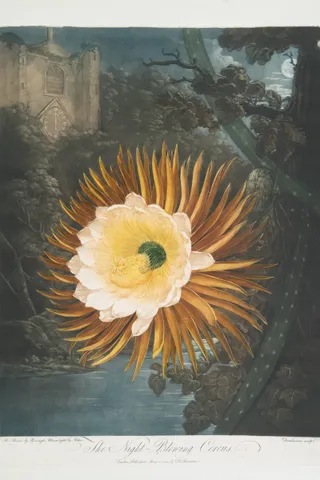
Thornton painted only one of these plates himself. The rest he commissioned. Counts are of plates on this page; the Night-Blowing Cereus counts for both Reinagle and Pether.
Peter Charles Henderson
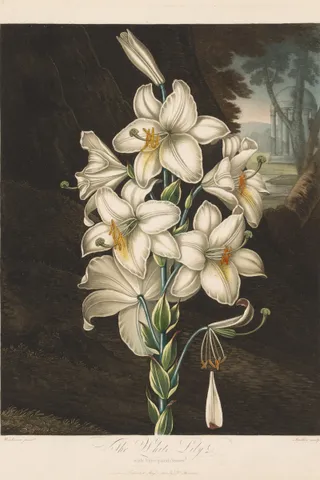
13 plates here1771–1829. He painted more of the plates on this page than anyone else. The plates sign him simply “Henderson”.
Philip Reinagle
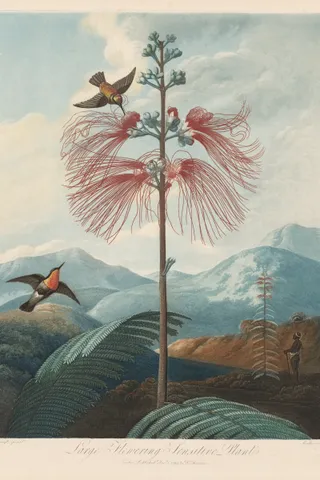
8 plates here1749–1833. A painter of animals, landscapes and botanical scenes, and a member of the Royal Academy. Later plates sign him “Reinagle Sen. A.R.A.”
Abraham Pether
3 plates here1752–1812. A landscape painter known for moonlit scenes. He painted the moonlight behind Reinagle’s Night-Blowing Cereus.
Robert John Thornton
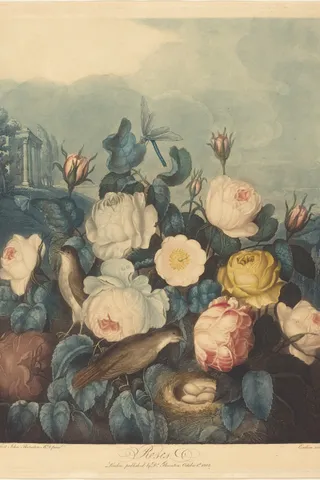
1 plate here1768–1837. The physician who planned the book and published it himself. He painted the Roses plate.
S. Edwards
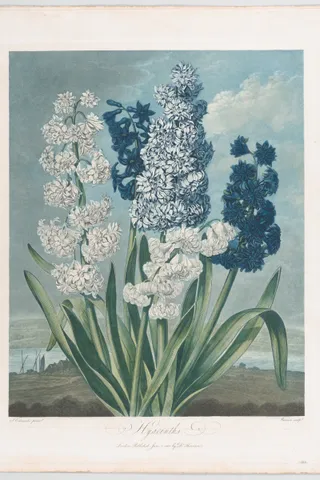
1 plate hereSigned “S. Edwards” on the Hyacinths plate.
The plates, in order of publication
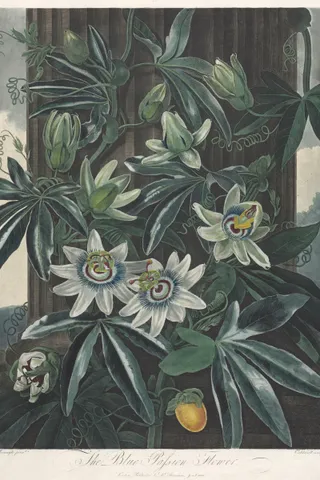
Title as engraved, the painter (marked “pinx.” or “del.” on the plate), the engraver (marked “sculp.”), and the date in the line “London, Published … by Dr. Thornton”. Each plate has its own anchor, for example #night-blowing-cereus.
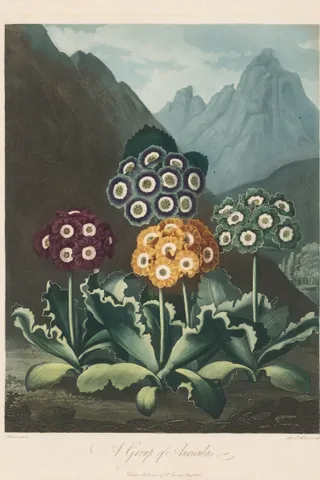
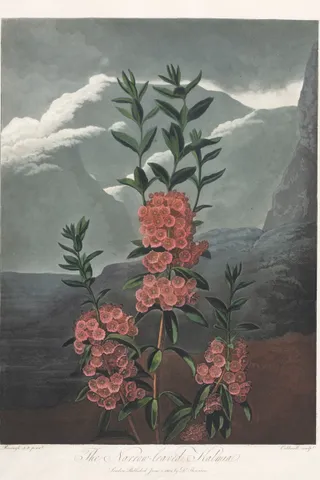
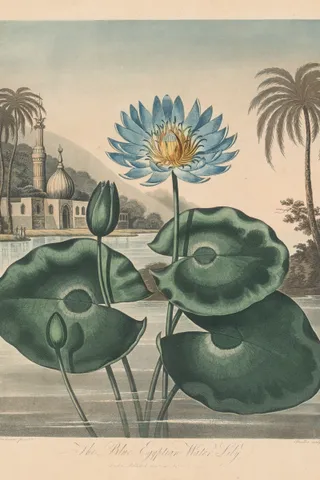
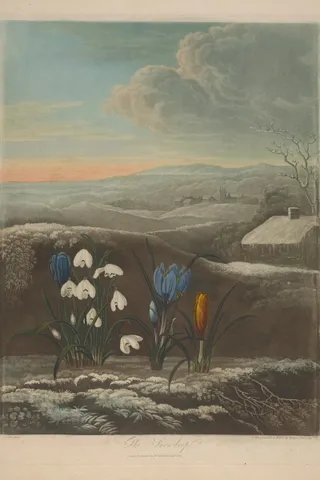
Reading the plates
The plates are not numbered. So a plate is best identified by its title and the date engraved on it, which is why this page lists them in date order.
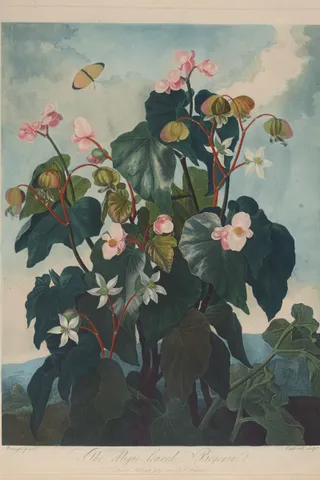
Each plate names its makers in small script under the picture. The painter is on the left, with “pinx.” (painted) or “del.” (drew). The engraver is on the right, with “sculp.” (engraved). Most give surnames only, and this page copies them as they appear.
Our copy of The American Aloe has no publication line, so its date is left blank.
Some catalogue records date a plate only to the whole run of the book, 1799–1807. This page gives the date engraved on the plate itself.
Sources & citation
- Robert John Thornton — Wikipedia
- Philip Reinagle — Wikipedia
- Abraham Pether — Wikipedia
- Thomas Medland — Wikipedia
- Cleveland Museum of Art, The American Cowslip (Peter Charles Henderson, 1771–1829; Thomas Warner)
- Cleveland Museum of Art, Large Flowering Sensitive Plant (Philip Reinagle, 1749–1833; Joseph Constantine Stadler)
- The Temple of Flora prints at the Cleveland Museum of Art (open-access collection search)
The original plates are in the public domain. The restorations shown here are Madten’s, at web resolution. To cite this page: Madten, “Thornton’s Temple of Flora: The Plates, Painters and Engravers,” https://www.madten.com/reference/thornton-temple-of-flora-plates, 2026-11-17.