How Audubon actually made The Birds of America
Wired birds on a gridded board, life-size watercolours, copper plates engraved in Edinburgh and London, and 435 plates sold five at a time from 1827 to 1838.
Contents7 sections
John James Audubon made The Birds of America in two stages, on two continents. In America he shot each bird, pushed wires through it to hold it in a living pose against a board marked with a grid, and painted it at life size. In Britain, engravers in Edinburgh and then London cut those paintings into copper, printed them on the largest sheets the trade made, and had them coloured by hand. The result, issued five plates at a time from 1827 to 1838, is 435 hand-coloured plates showing every bird at actual size. This is how each stage worked, what it cost, and what a copy sells for now.
How did Audubon pose a dead bird?
He started at Mill Grove, the Pennsylvania farm where he lived after arriving from France in 1803. His first attempt was to hang freshly shot birds on string, which gave nothing like life. He then "began to skewer the birds with sharp, pliable wires, fastening the ends to a board in the background," according to Audubon magazine's account of Mill Grove, and bent them into active poses. "On the board he plotted a grid to help him accurately fix the perspective and proportions he wanted."
Yale University Library describes the same method as posing birds "on wire and wood armatures" before drawing them, since there was no photography to stop a bird in motion. The Beinecke Library adds that he used pins as well as wires, and that the positions came from what he knew of each bird's habits. The finished pictures are watercolour over pencil and ink, worked up with pastel, graphite, oil paint and chalk where he wanted texture.
He did not paint every leaf himself. Yale's library notes that other artists painted many of the backgrounds, which was unusual in natural-history illustration at the time.
Why is every bird life size?
Because Audubon decided it would be, and then found a sheet big enough. The plates were printed on double-elephant paper; the four volumes of the copy Sotheby's sold in 2010 each measure about 97 by 64 cm. In March 1828 the Cambridge botanist John Stevens Henslow summed the project up for a friend in three words, "Birds natural size" (Henslow to Jenyns, 6 March 1828).
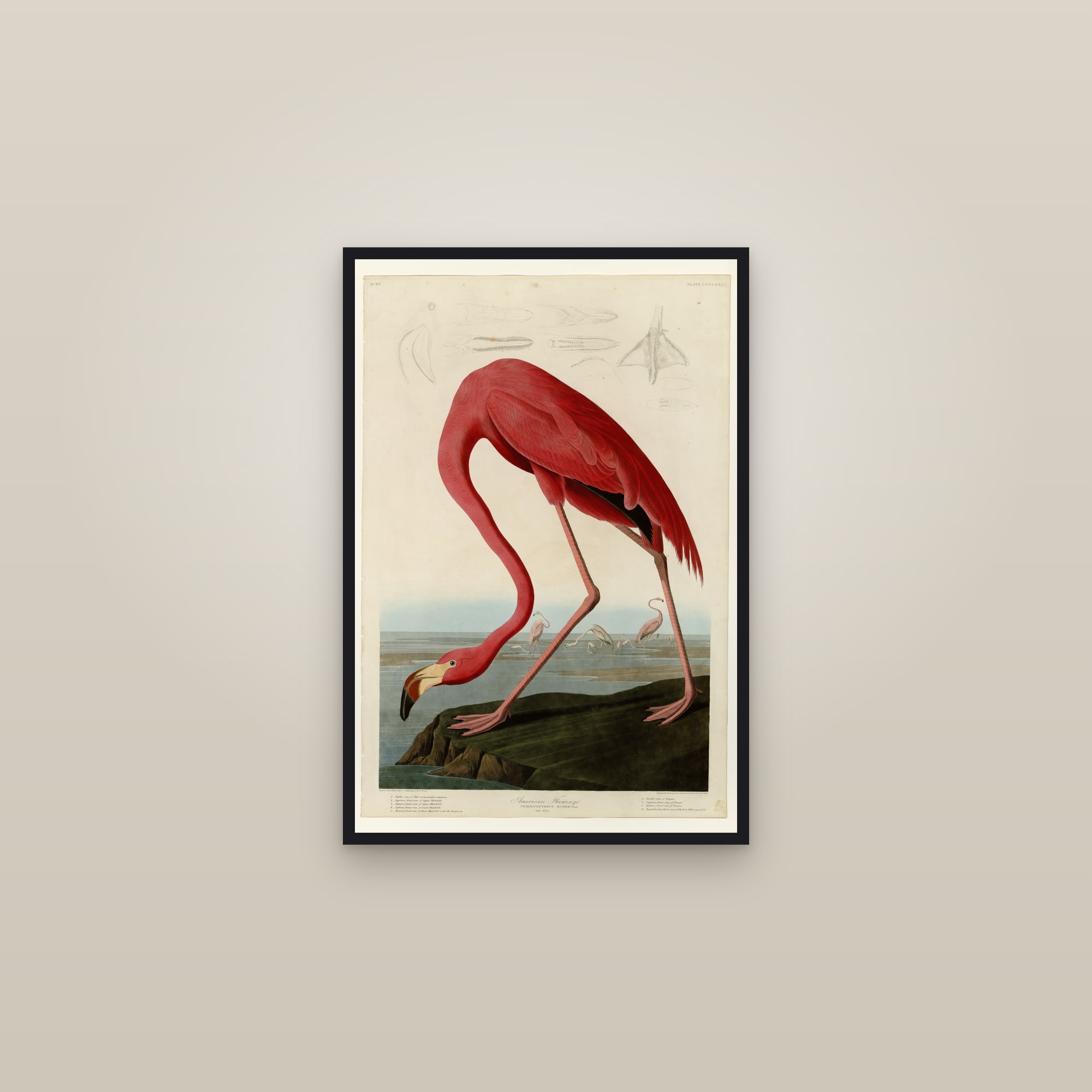
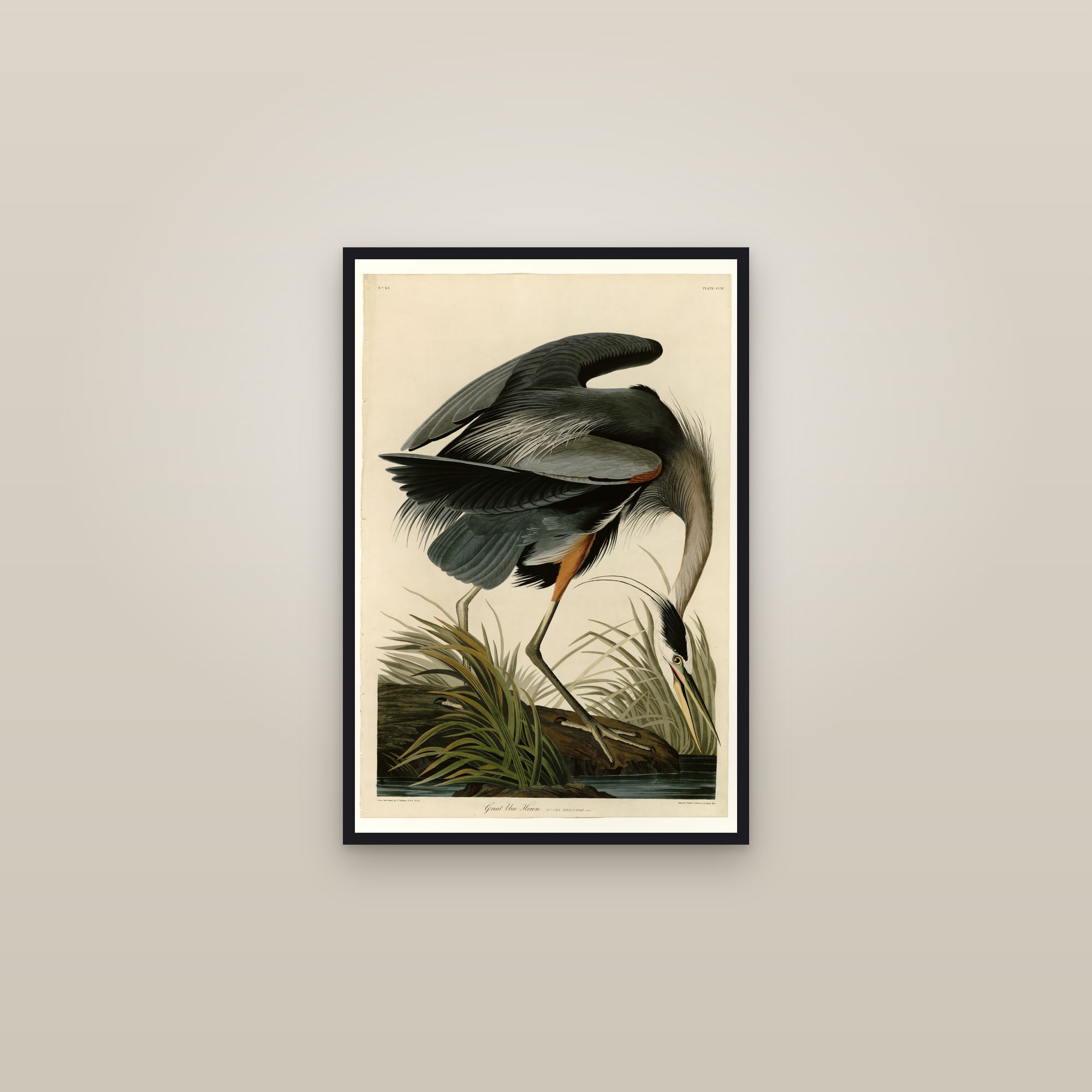
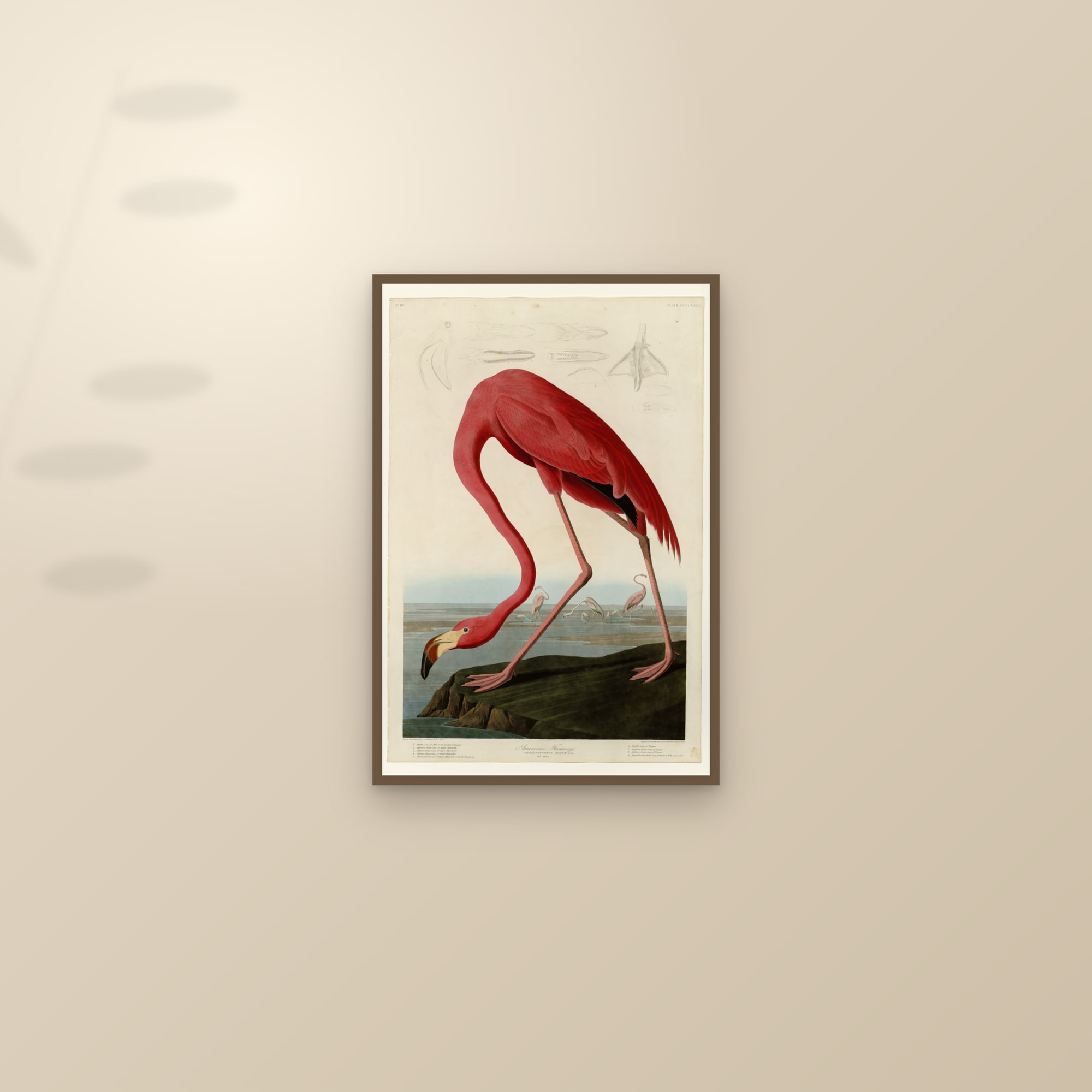
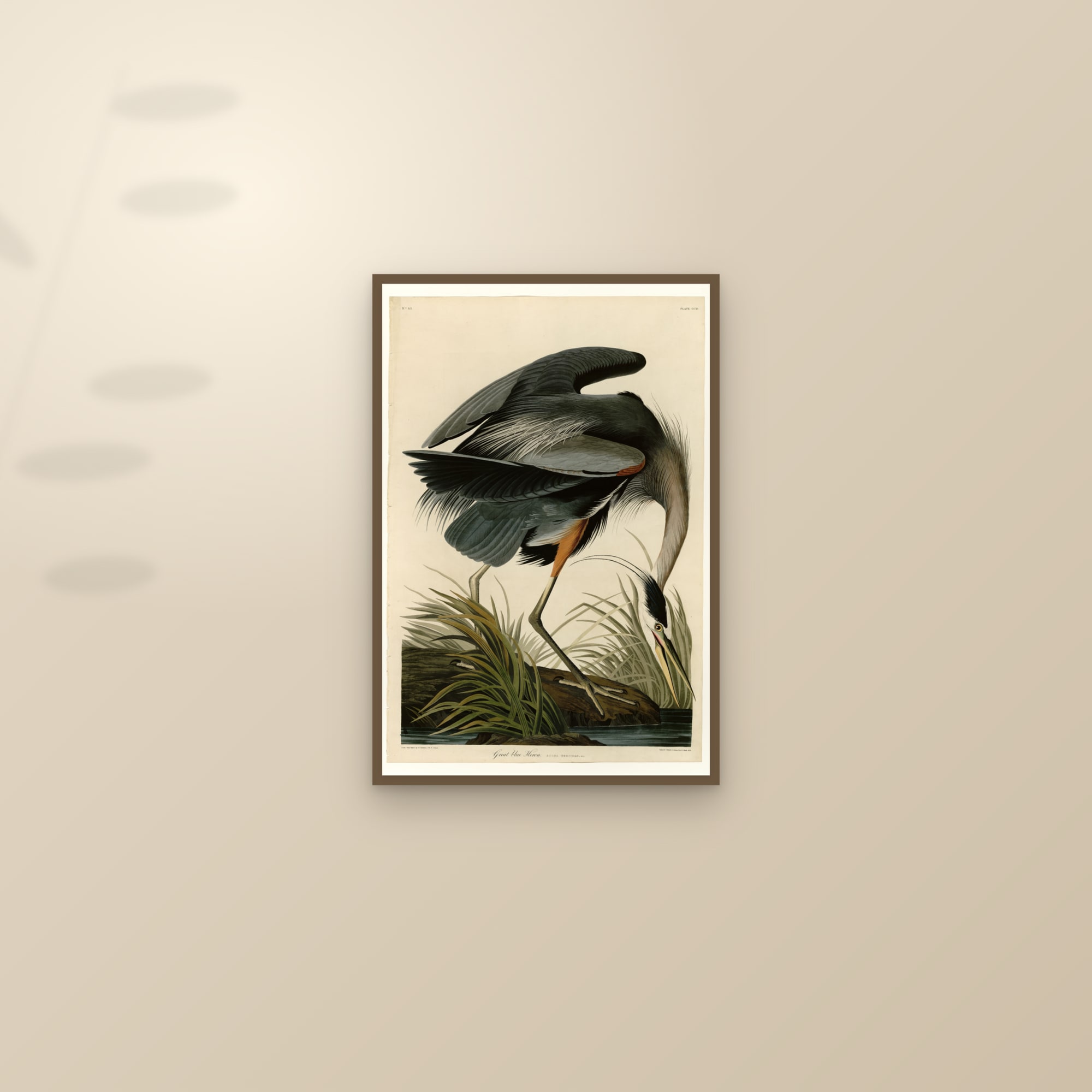
The largest birds are drawn bending. The American Flamingo is shown stooping, its neck curved down to the water; the University of Wisconsin-Madison's special collections note that large birds like it filled or overfilled the page, which is why Audubon chose the double-elephant sheet. The Great Blue Heron, on Plate CCXI, folds its neck down toward the reeds.
Who engraved the plates, and how?
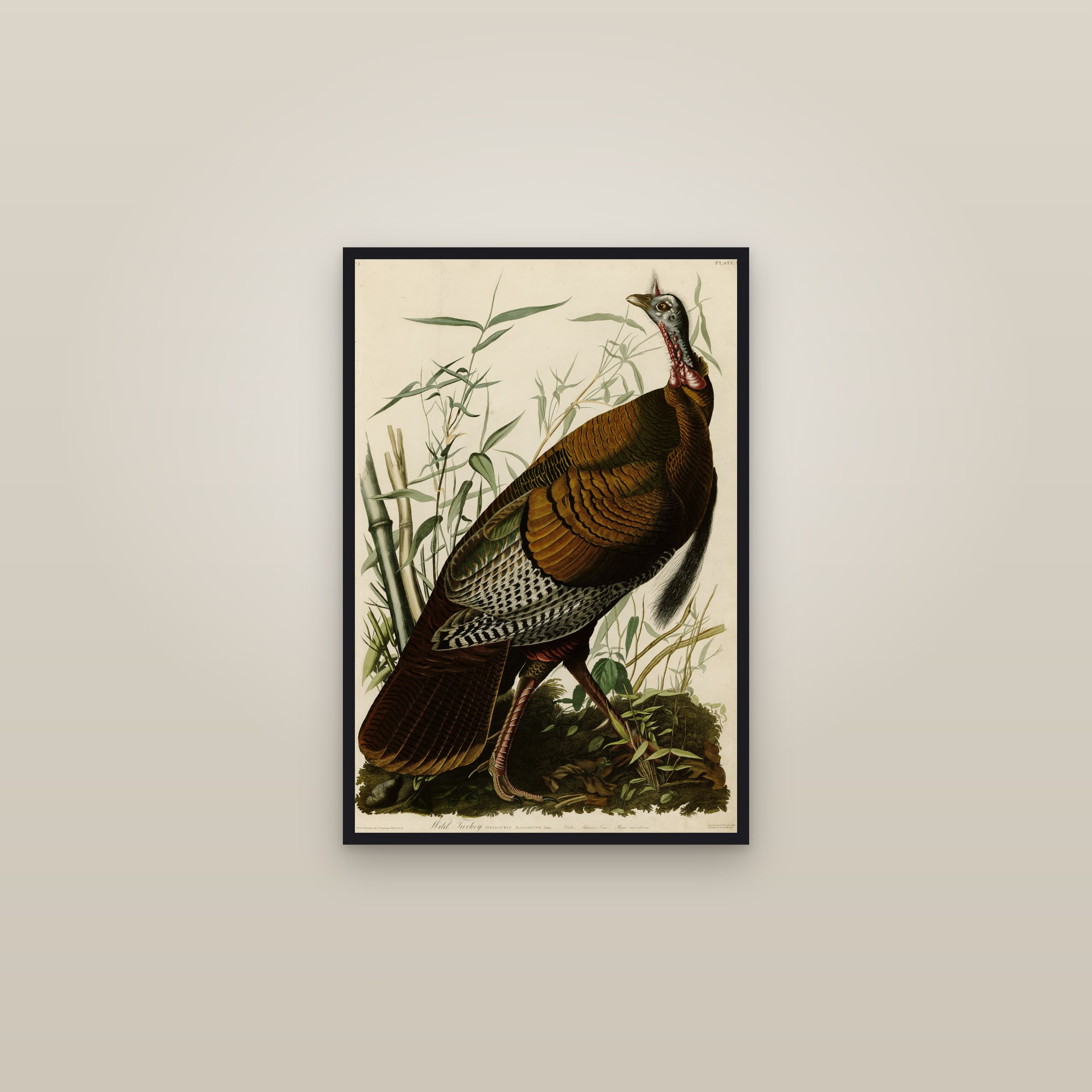
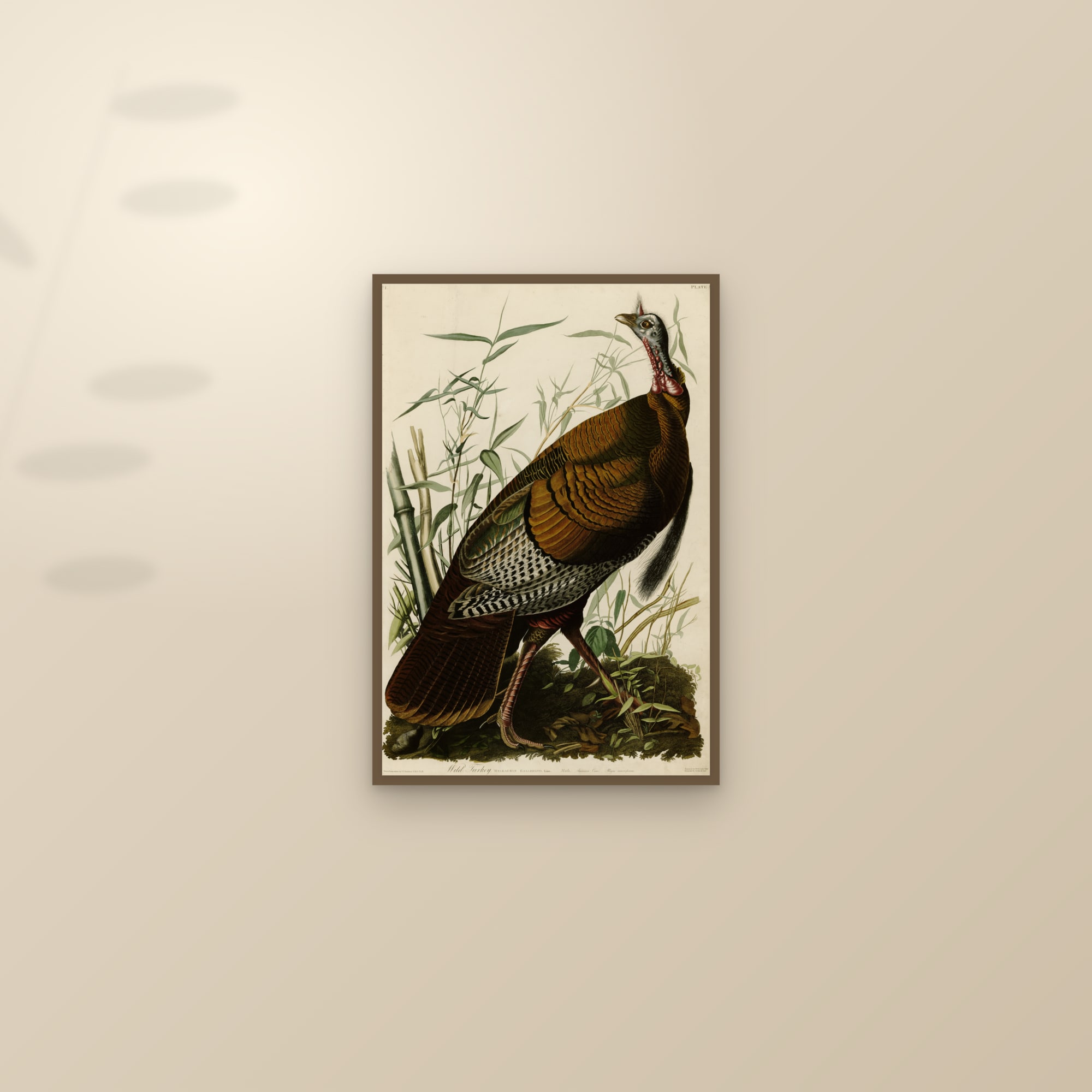
The first engraver was William H. Lizars in Edinburgh, who began with the Wild Turkey. After "several issues, especially with his colourers," Audubon moved the work to Robert Havell & Son in London, which printed and coloured the remaining plates, according to the Royal Danish Library, whose copy is the largest book in its collections. The library puts Lizars's share at the first ten plates; Yale's library says fifteen. Havell retouched Lizars's plates, and the line at the foot of our Plate I, the Wild Turkey, records both men.
Each plate was a copper plate worked in three techniques: etching and line engraving for the drawing, aquatint for the tones. Sotheby's catalogue describes the 435 as hand-coloured etched plates, with line engraving and aquatint. After printing, colour was laid on by hand with watercolour.
The three techniques do different jobs. Etching and engraving cut lines into the copper, which hold ink and print as the outlines, feathers and veins of leaves. Aquatint gives tone: the plate is dusted with resin, warmed so the grains stick, and bitten in acid, which eats the copper between the grains and leaves a fine grain that prints as an even wash of grey. Stopping out parts of the plate and biting again gives several depths of tone. The printed sheet is therefore a monochrome drawing with soft grounds already in place, and the colourists worked over it, so every copy differs a little in its colour. Our short history of the print sets the method beside woodblock and lithography. The Beinecke Library counts as many as 150 colourists over the life of the project, working in assembly-line fashion, each applying a single shade. Havell's firm, the Beinecke notes, prepared more than 400 of Audubon's paintings for publication.
How were the plates sold?
By subscription, five at a time. Each "number" held five plates, and in 1828 a number cost two guineas, five numbers a year, Henslow wrote. Yale's library says each package mixed one large bird, one medium and three small, and that a complete set cost a subscriber about $1,000 in all. At Henslow's two guineas a number, the 87 numbers would have come to 174 guineas.
Subscribers paid as they went and bound their own sets, and some died or gave up, so not every set was finished. Yale names European aristocrats and the US senator Daniel Webster among them. Audubon's final published list held 161 names, and the bibliographer Waldemar Fries concluded the edition was "less than 200," probably 175 to 200 copies, Sotheby's catalogue records; fifteen complete sets were left over when printing ended in 1838.
The text was published apart from the plates. The Ornithological Biography, Audubon's account of each species and of his travels, came out in five volumes in Edinburgh between 1831 and 1839, written with the naturalist William MacGillivray (Biodiversity Heritage Library). A smaller octavo edition followed in seven volumes from 1840 to 1844, the plates redrawn at about a quarter of the original size, according to the University of Wisconsin-Madison.
Where are the original watercolours?
In New York. The New-York Historical Society bought the 435 watercolours from Audubon's widow, Lucy Bakewell Audubon, in 1863 for $4,000, the Associated Press reported when the society put them on show in 2005. They were the models Havell's engravers worked from in London.
What is a copy worth now?
Complete copies are rare and almost all are in libraries. The 2006 census by Suzanne M. Low, quoted in Sotheby's catalogue, found 119 complete copies: 107 in institutions and 12 in private hands. The prices below are given as paid; the dollar sums are also given in today's money, September 2026 dollars by the US Consumer Price Index (BLS CPI-U). The CPI begins in 1913, so the nineteenth-century sums are not adjusted, and sterling sums are not adjusted either.
| Year | What | Price | In today's money | Source |
|---|---|---|---|---|
| 1827 to 1838 | A complete subscription, 87 numbers | 2 guineas a number, about $1,000 in all | not adjusted (before 1913) | Henslow, Yale |
| 1863 | The 435 watercolours, to the New-York Historical Society | $4,000 | not adjusted (before 1913) | AP |
| 1951 | The Witham copy, Christie's, bought for Lord Hesketh | £7,000 | not adjusted (sterling) | Sotheby's |
| 2000 | A complete copy, Christie's New York, 10 March | $8,802,500 | about $17.2 million | Guinness World Records |
| 2010 | The Hesketh copy, Sotheby's London, 7 December | £7,321,250 (about $11.4 million) | about $17.6 million | Guinness World Records |
The 2010 copy was bought by the London dealer Michael Tollemache, bidding in the room, and was then a record for any printed book at auction, the Associated Press reported; the AP gave the dollar figure as $11.5 million. Its first owner was Henry Witham of Lartington, County Durham, subscriber number eleven in Audubon's ledger. Guinness World Records still lists it as the most expensive natural-history book sold at auction. In today's money the 2000 and 2010 prices are close: the record moved by well under $1 million in real terms, against about $2.6 million in the headline figures.
What does a print of a Havell plate show?
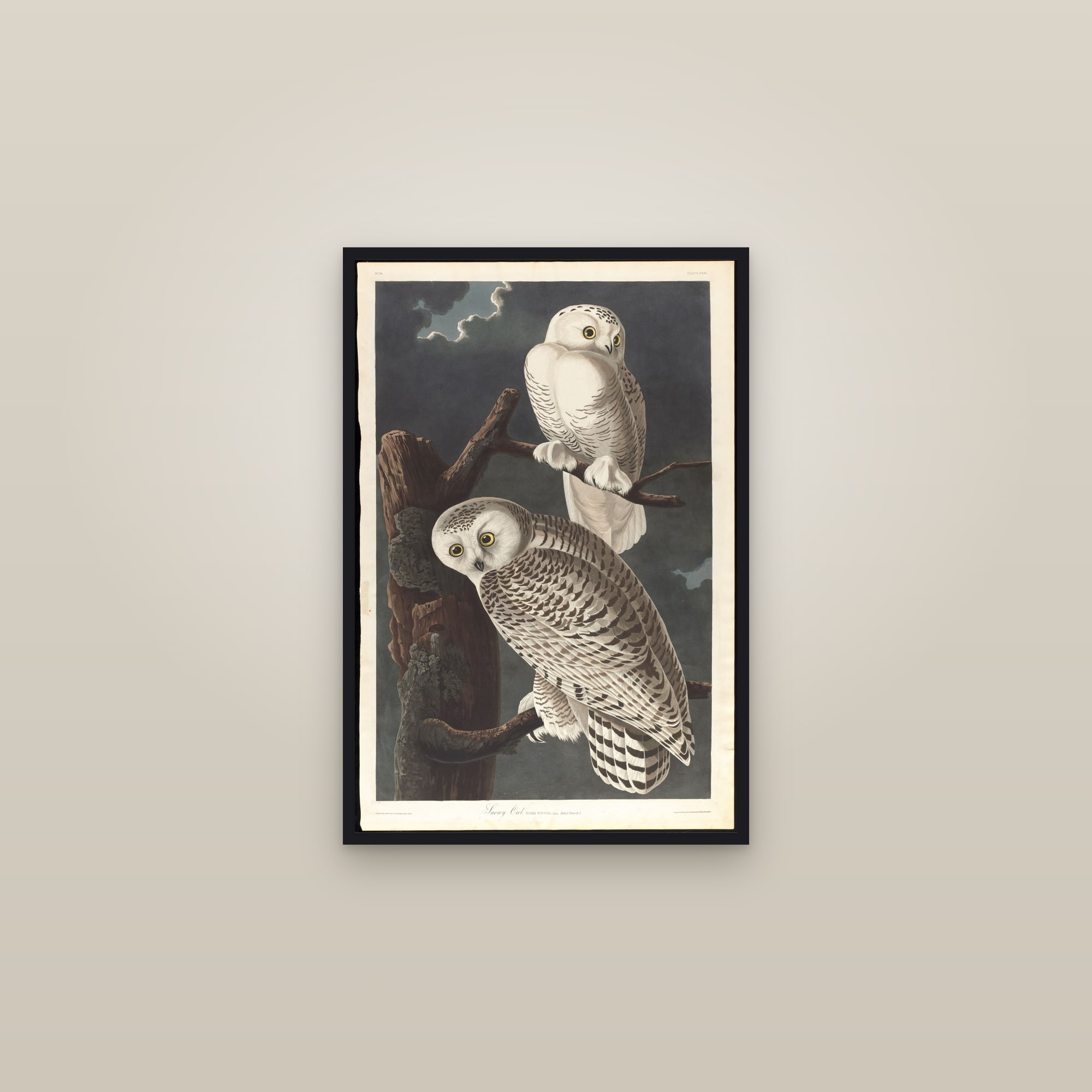
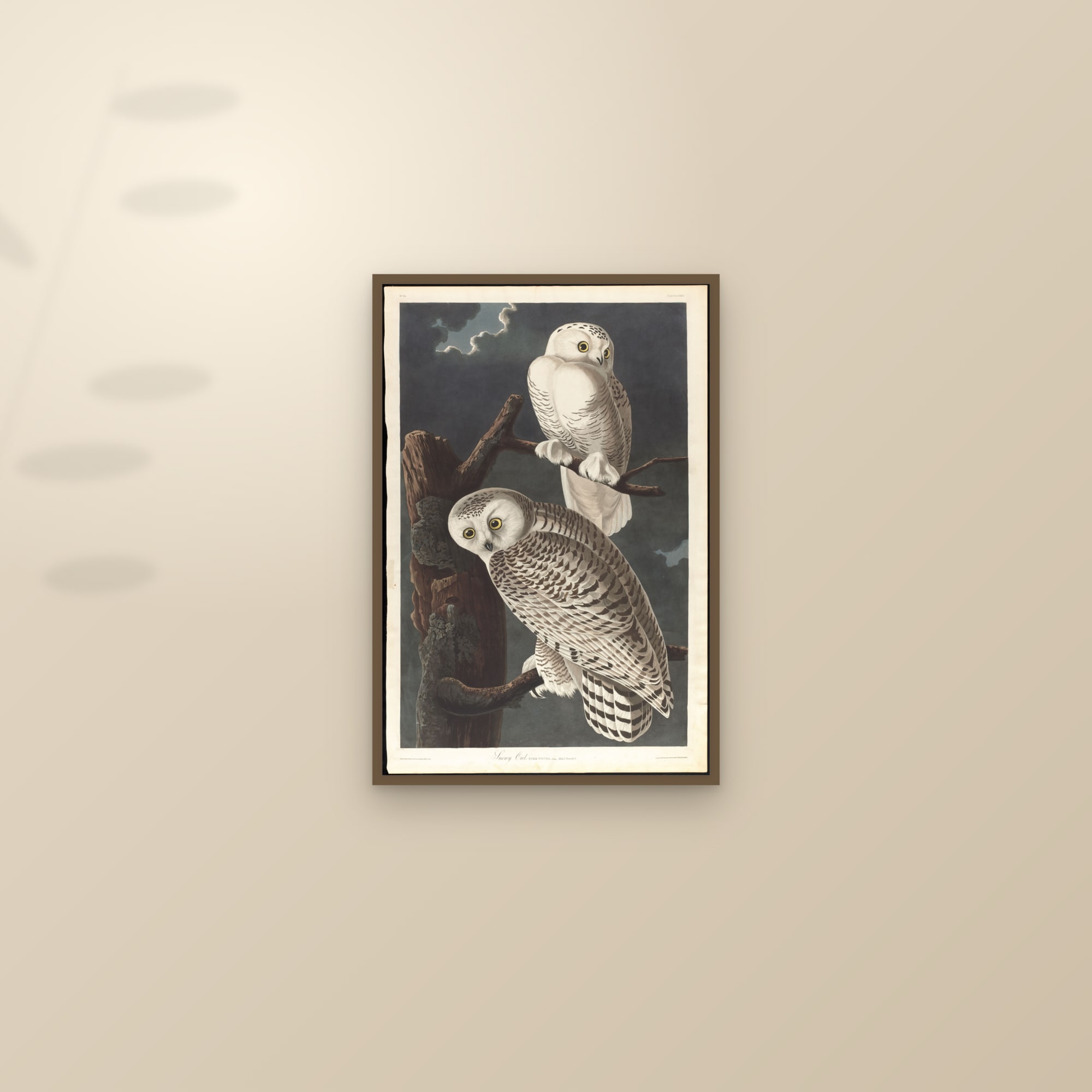
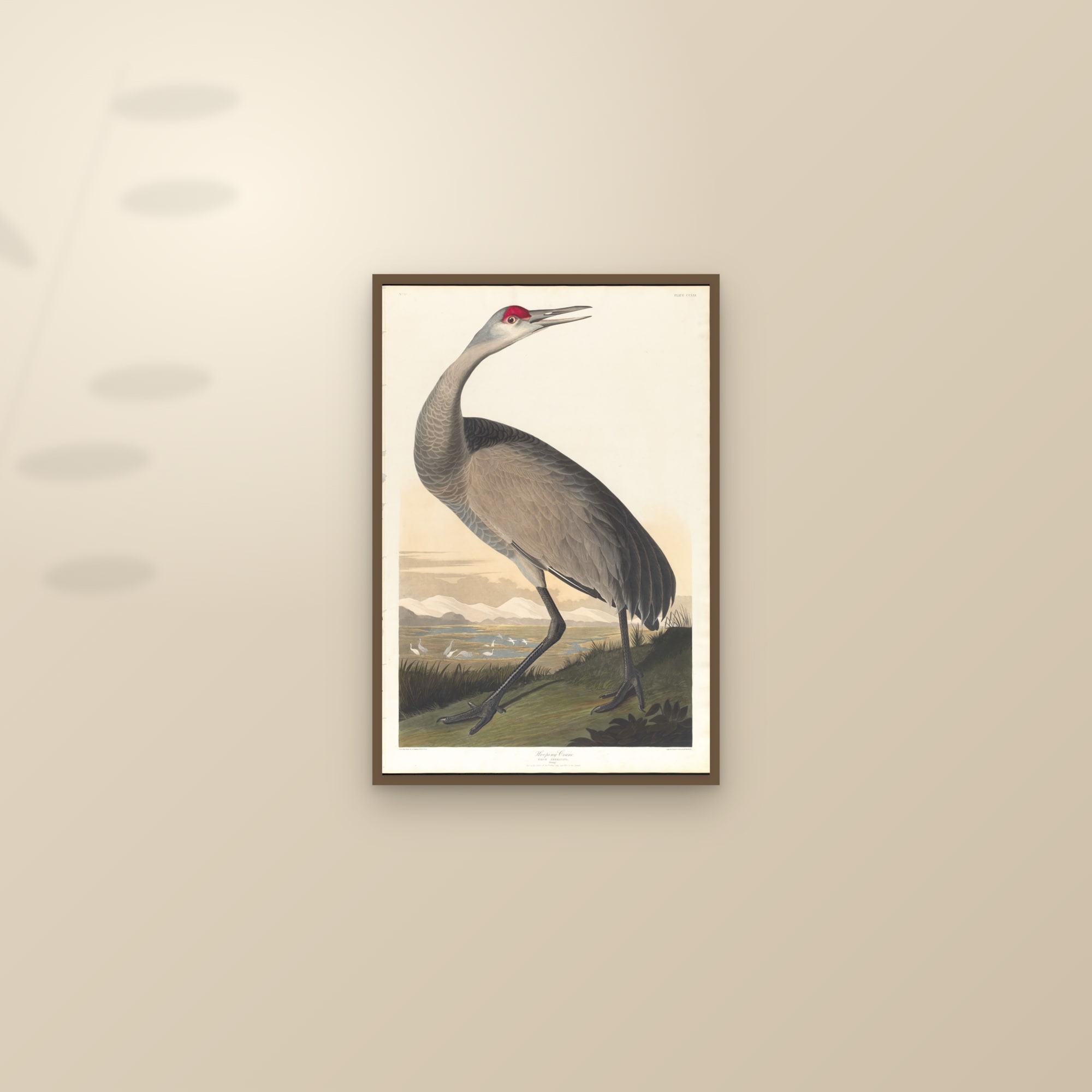
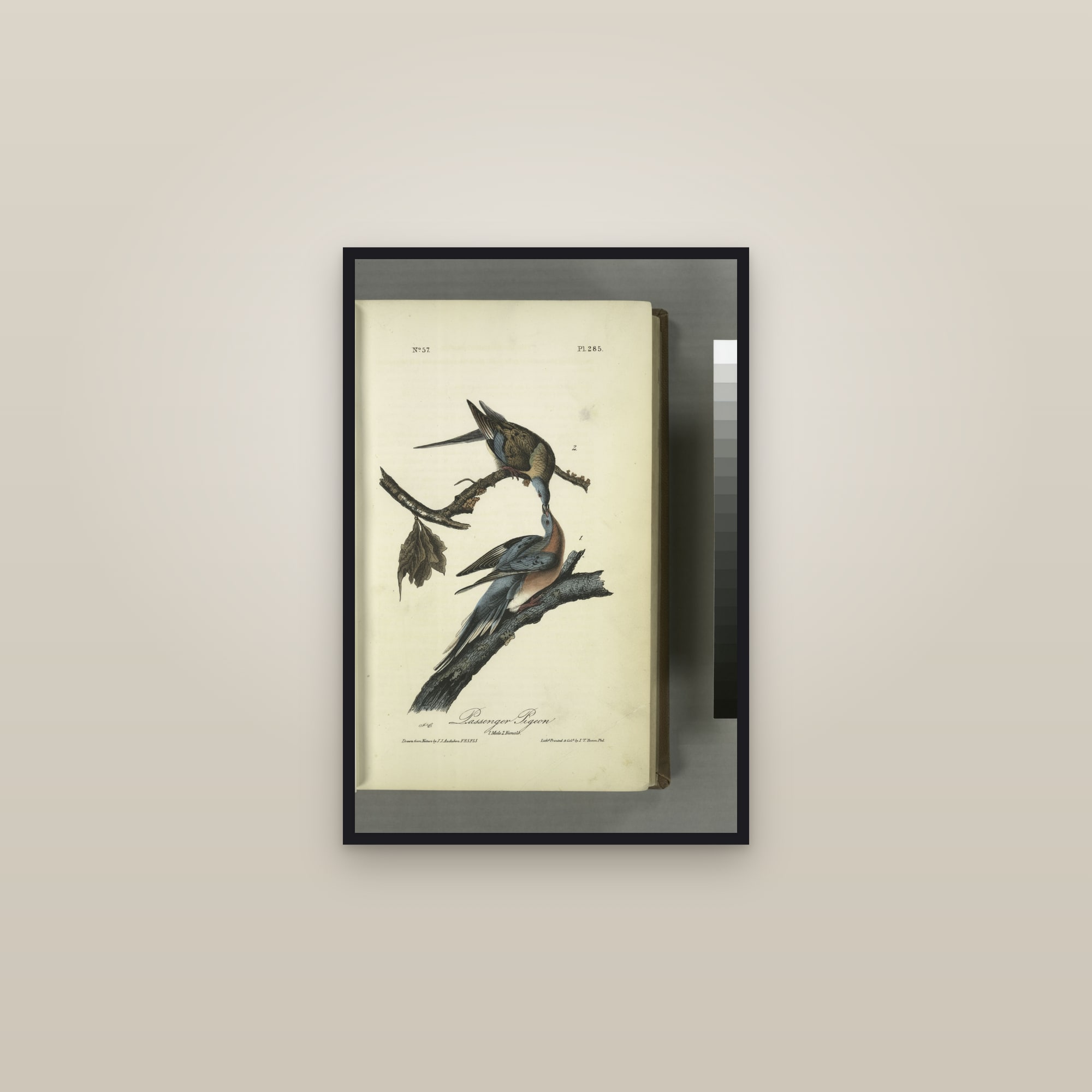
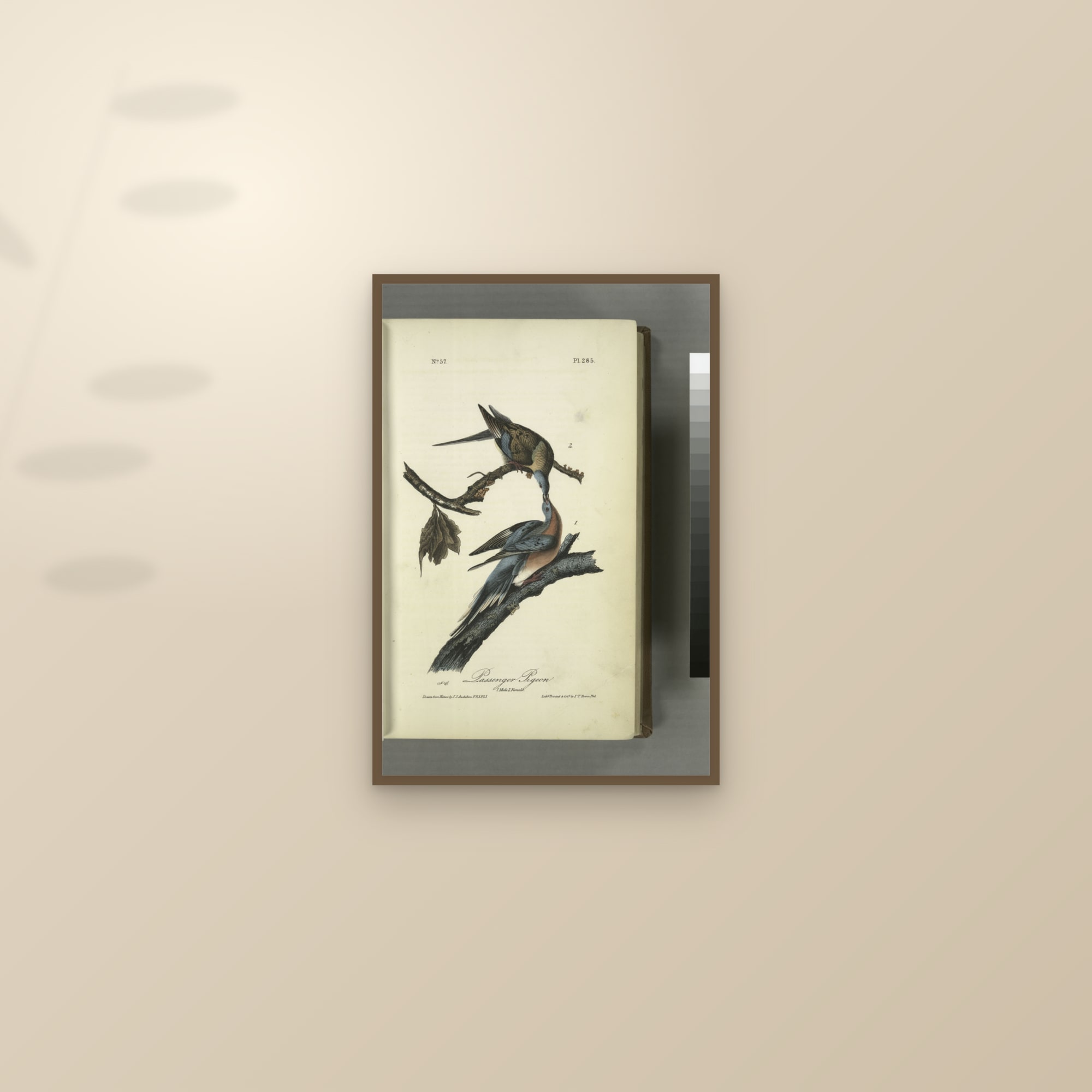
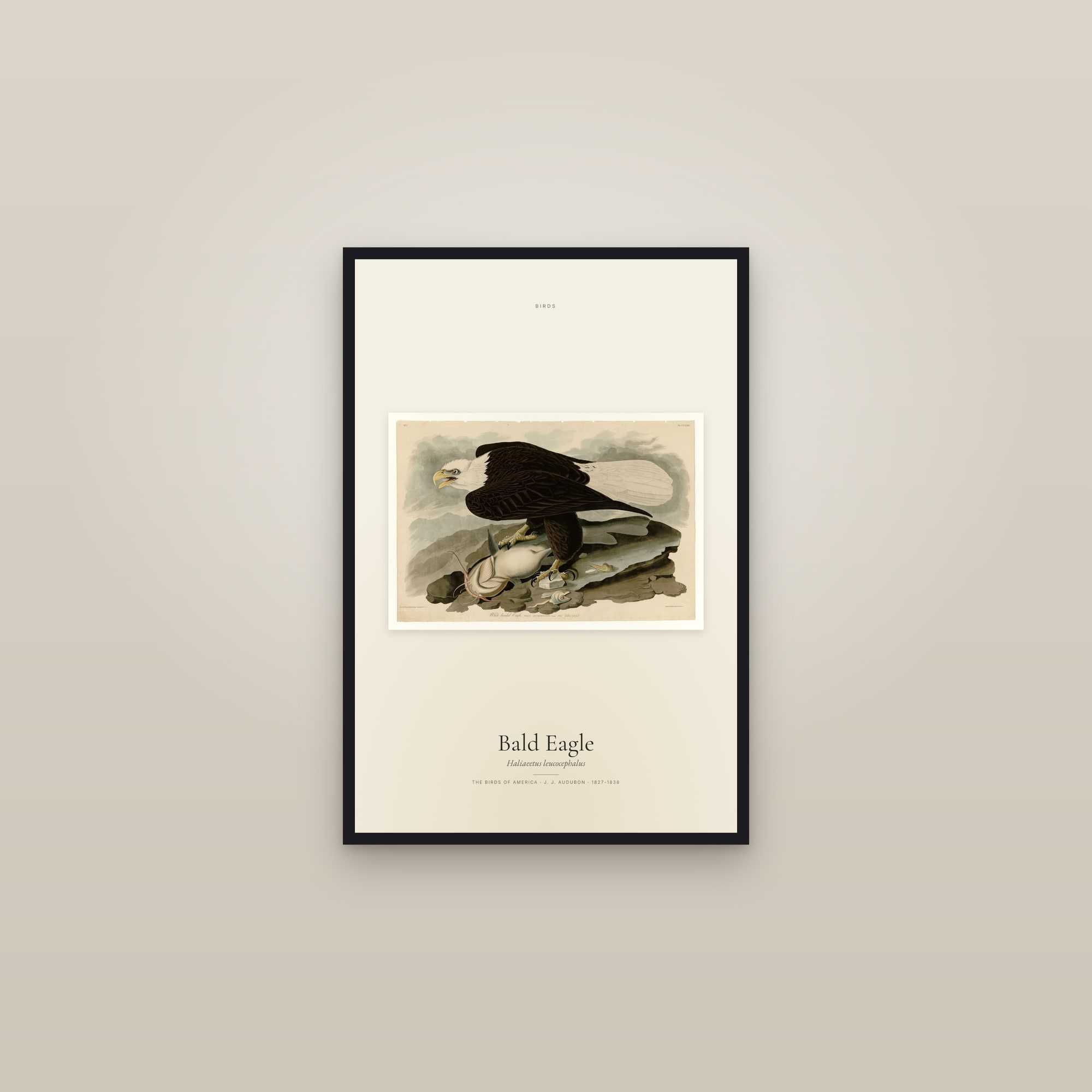
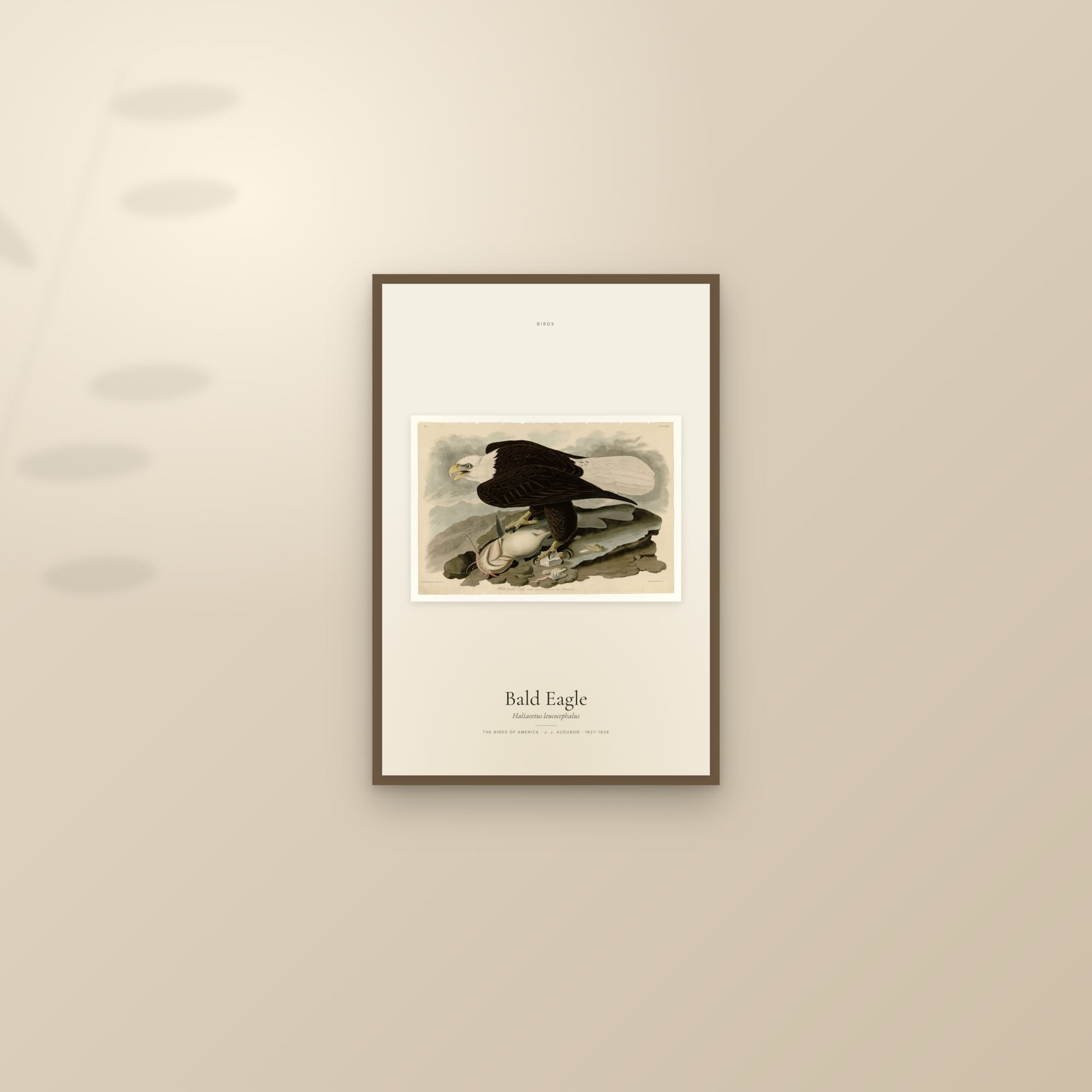
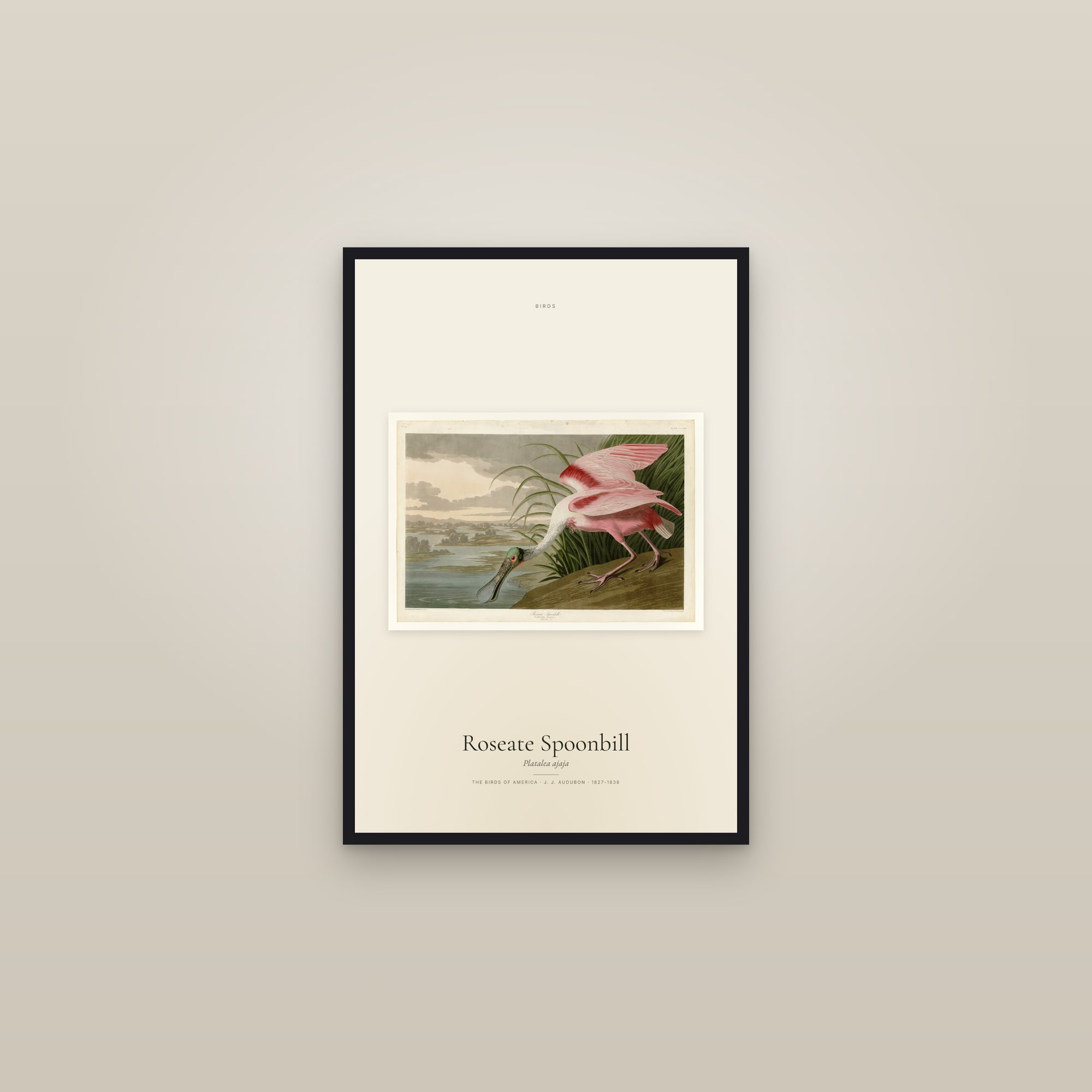
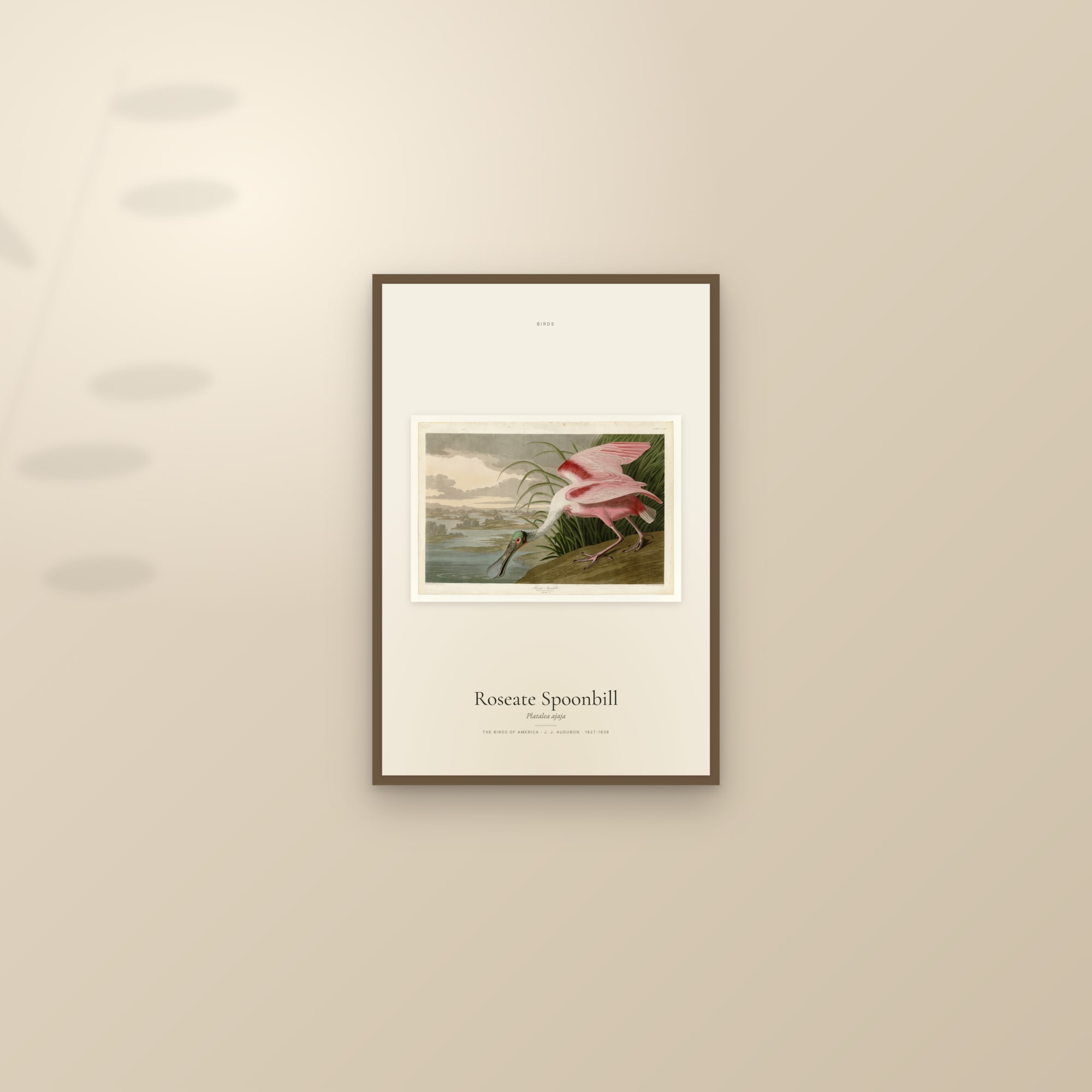
A print from one of our restored plates shows the Havell sheet as it was published: the bird at the size the copper allowed, the plate number in the corner, the number of the part it came in, and the engraved lines at the foot naming Audubon as the artist and Lizars or Havell as the engraver. The plate numbers are an order of publication, not a classification, which is why a heron and a warbler sit side by side; our Audubon plates reference lists every plate we have restored by its Havell number.
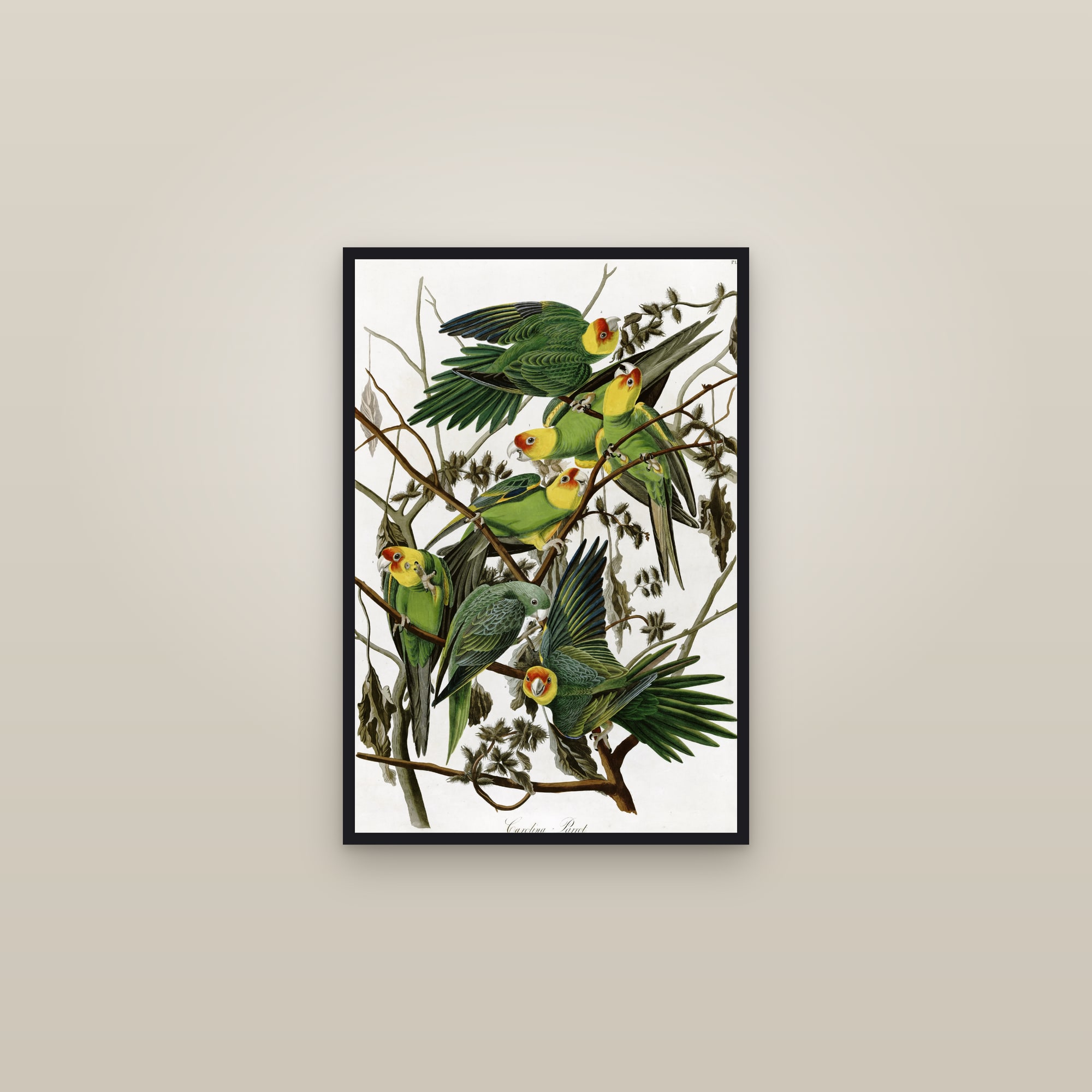
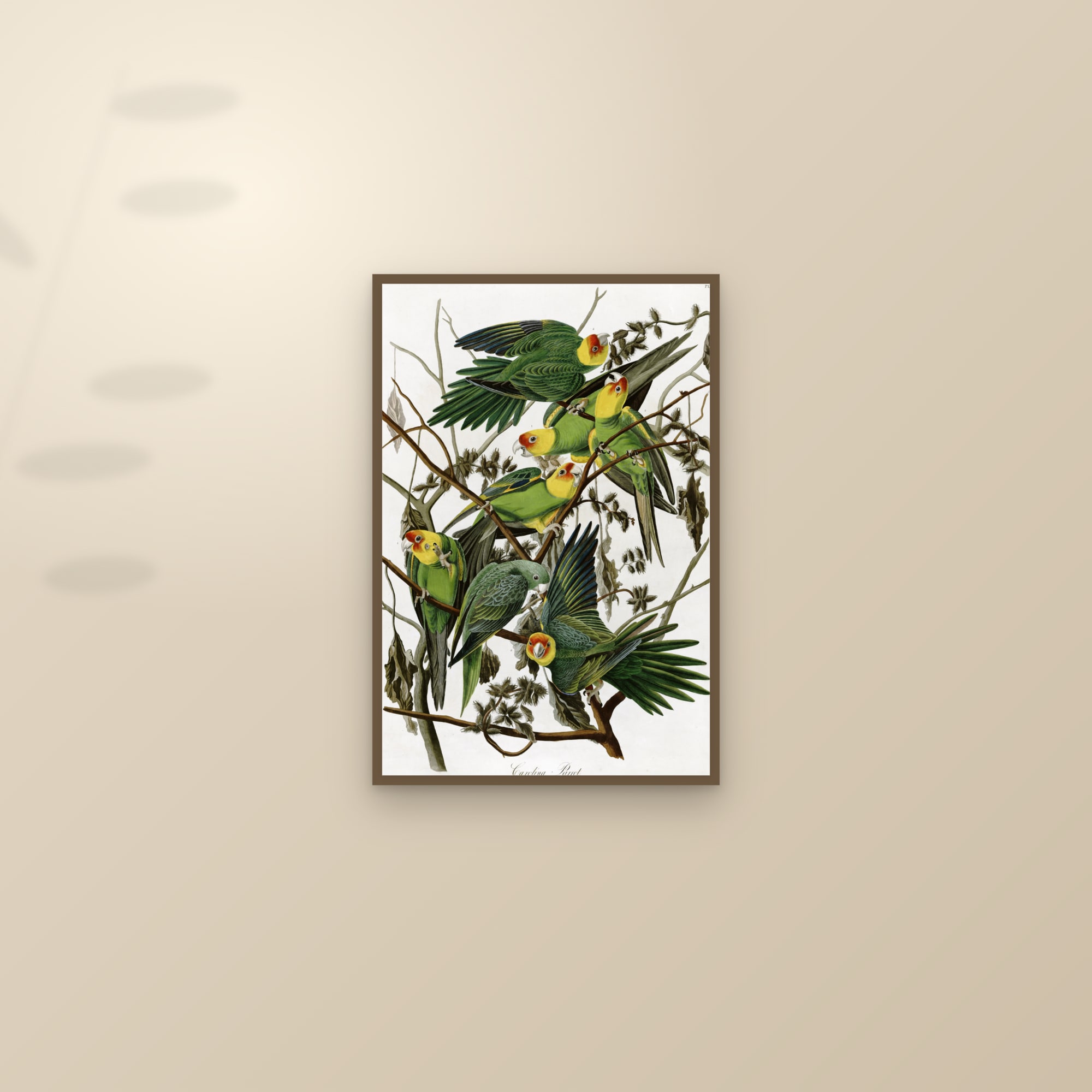
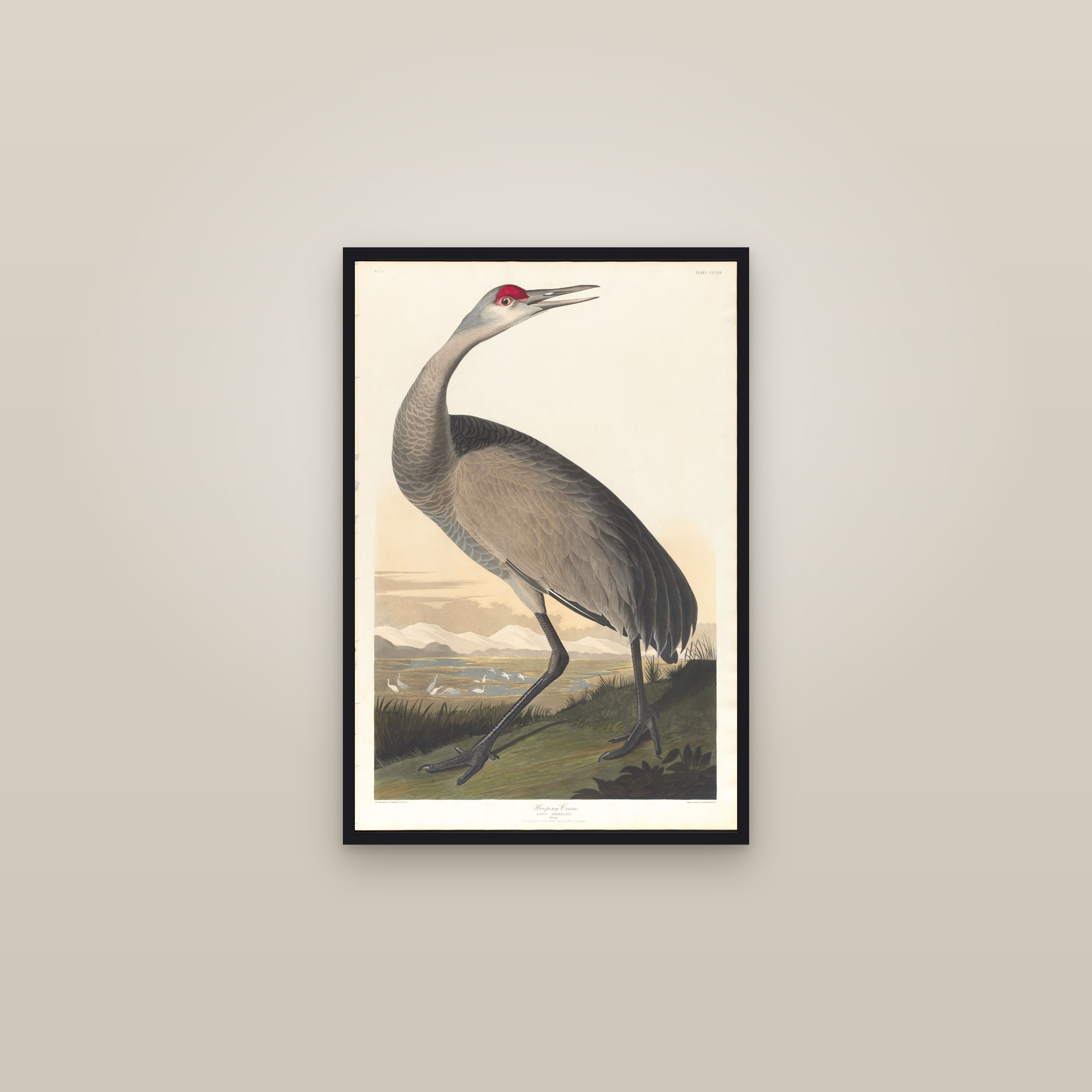
Most of the large birds read best large. The Wild Turkey, the Great Blue Heron, the American Flamingo and the Whooping Crane were drawn to fill a sheet nearly a metre tall, and at 24 by 36 inches they come close to it. Plates of smaller birds, such as the seven Carolina Parakeets on Plate XXVI, hold their detail at any size. Every Audubon plate we print is on 250 gsm archival paper, from $39, unframed or in a black or dark wood frame.
More in the Journal: a short history of the print and how we restore a 200-year-old plate.
Audubon Bird Prints — The Birds of America, Framed or Unframed Audubon Mammal Prints — The Viviparous Quadrupeds of North America Gifts for Bird LoversQuestions people ask
How did Audubon paint his birds?
From birds he had just collected. He pushed pliable wires through each specimen and fixed the ends to a board behind it, bending the bird into a living pose, and drew it against a grid marked on the board so the proportions and perspective came out true. He painted at life size in watercolour, with pastel, graphite and other media, and other artists painted many of the backgrounds.
How big is The Birds of America?
The plates were printed on double-elephant sheets; the four volumes of the copy Sotheby's sold in 2010 each measure about 97 by 64 cm. That size let Audubon show every bird at life size, from hummingbirds to the Wild Turkey, Great Blue Heron and American Flamingo.
Who engraved The Birds of America?
William H. Lizars of Edinburgh engraved the first plates, beginning with the Wild Turkey; after problems with his colourists Audubon moved the work to Robert Havell Jr. in London, whose firm engraved, printed and coloured the rest. The Royal Danish Library puts Lizars's share at ten plates; Yale's library says fifteen. The plates combine etching, line engraving and aquatint on copper and were coloured by hand.
How many copies of The Birds of America exist?
Fewer than 200 sets were produced. Audubon's final list named 161 subscribers, and fifteen complete sets were left over when printing ended in 1838. A 2006 census found 119 complete copies, 107 in institutions and 12 in private hands.
What is the most expensive copy of The Birds of America ever sold?
The Hesketh copy, sold at Sotheby's London on 7 December 2010 for £7,321,250, about $11.4 million at the time and about $17.6 million in September 2026 dollars. The previous record, also for The Birds of America, was $8,802,500 at Christie's New York on 10 March 2000, about $17.2 million today.
Sources
- Audubon magazine, November to December 2004: Audubon's legacy, where it all began (Mill Grove; string, then wires fixed to a board; the grid; life size)
- Yale University Library: John James Audubon, Birds of America (wire and wood armatures, backgrounds by other artists, parts of five, about $1,000, fewer than 200 sets, Lizars and Havell)
- Beinecke Rare Book and Manuscript Library, 28 August 2018: Audubon's creative process (wires and pins, media, Havell, as many as 150 colourists)
- Royal Danish Library: the largest book in the collections (Lizars's first ten plates, the colourists, Havell's 425)
- Sotheby's London, 7 December 2010, lot 50: Audubon, The Birds of America, the Hesketh copy (volume sizes, technique, 161 subscribers, 175 to 200 copies, 119 complete copies, provenance)
- John Stevens Henslow to Leonard Jenyns, 6 March 1828 (Epsilon, Cambridge): 2 guineas per number, five plates to a number, birds natural size
- University of Wisconsin-Madison Libraries, Special Collections, 28 July 2014: A matter of scale, the flamingo in Audubon's Birds of America (the octavo edition, 1840 to 1844)
- Biodiversity Heritage Library: Audubon, Ornithological Biography, Edinburgh, Adam Black, 1831 to 1839 (with William MacGillivray)
- Associated Press via NBC News, 16 February 2005: rare Audubon watercolors go on display (the 435 watercolours bought from Lucy Audubon in 1863 for $4,000)
- Guinness World Records: most expensive natural-history book sold at auction (£7,321,250, Sotheby's London, 7 December 2010; the $8,802,500 Christie's sale of 10 March 2000)
- Associated Press via NBC News, 7 December 2010: rare Birds of America book sells for $11.5M, breaks record
- US Bureau of Labor Statistics, Consumer Price Index (CPI-U, all items, CUUR0000SA0): annual averages 2000 and 2010 and September 2026, used for the today's-money figures
Start hereA short history of the print, from woodblock to giclée