
Vintage railway posters: who made them, and why
French and Swiss railways paid artists to paint the sea, the snow and the mountains so people would buy a ticket. How the posters were made, who drew them, and how to choose one.
Contents8 sections
A vintage railway poster is an advertisement a railway company paid for, to sell tickets. Between the 1880s and the 1930s, French and Swiss railways hired artists to paint the places their trains reached: the Riviera in winter, the Channel beaches in summer, the lakes and the snowfields of the Alps. Many were colour lithographs about a metre tall, pasted up in stations and on town walls. They rarely show a locomotive. They show a reason to go, and a season to go in. This piece covers who made them, how they were printed, and how to choose one for a wall.
Why did railways make posters?
Because a railway sells empty seats unless it gives people a reason to travel. The Bibliothèque nationale de France says transport advertising praised speed, convenience and comfort, but also the interest of the regions the line passed through. It ties the first tourism posters to two fashions of the age: sea bathing and the spa cure, both sold as good for your health.
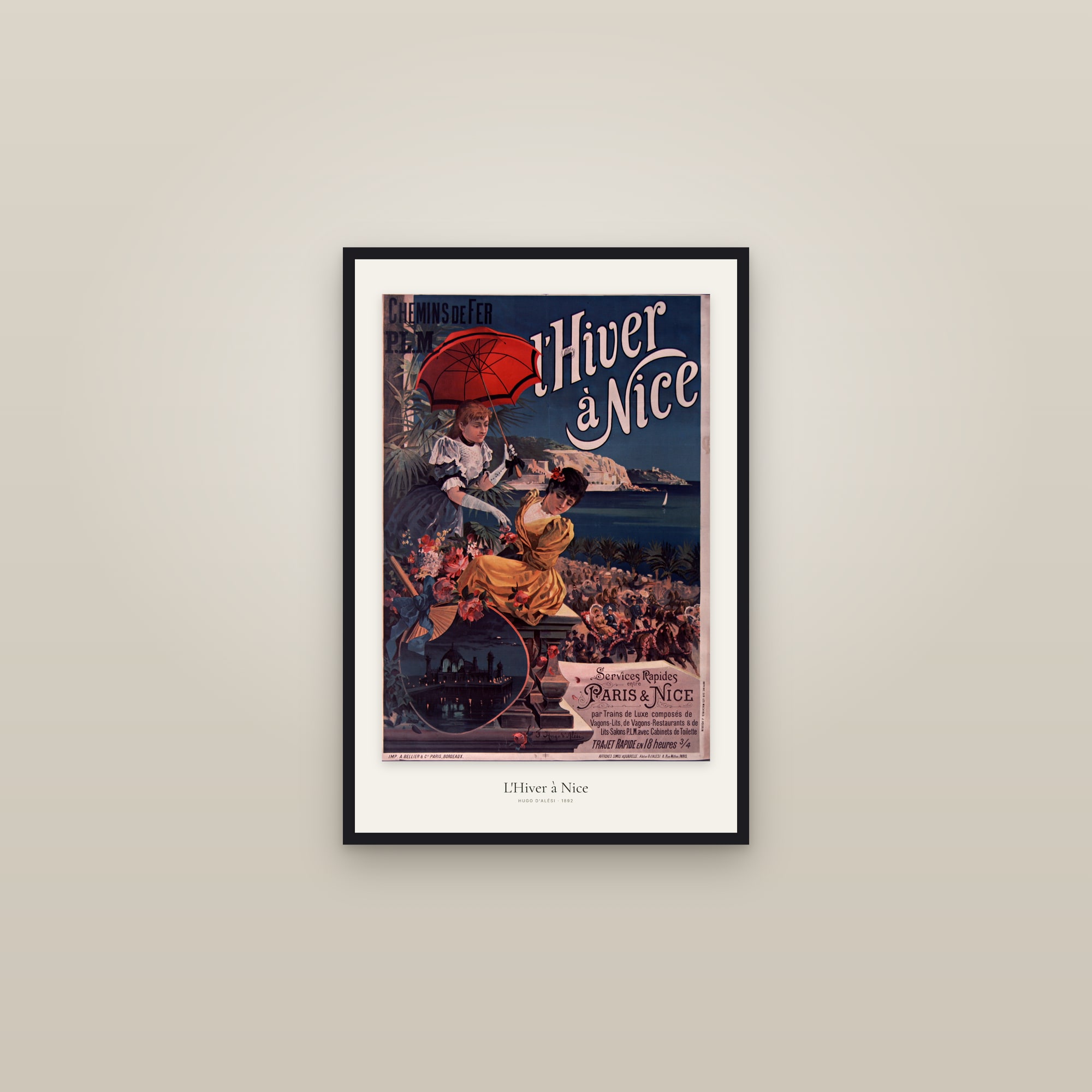
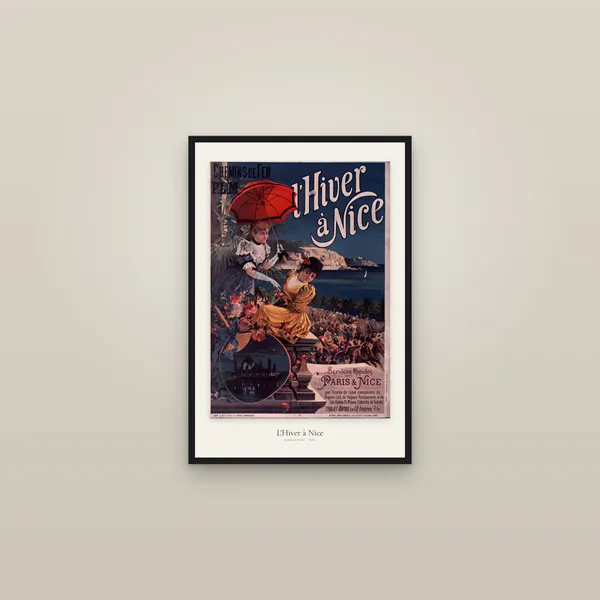
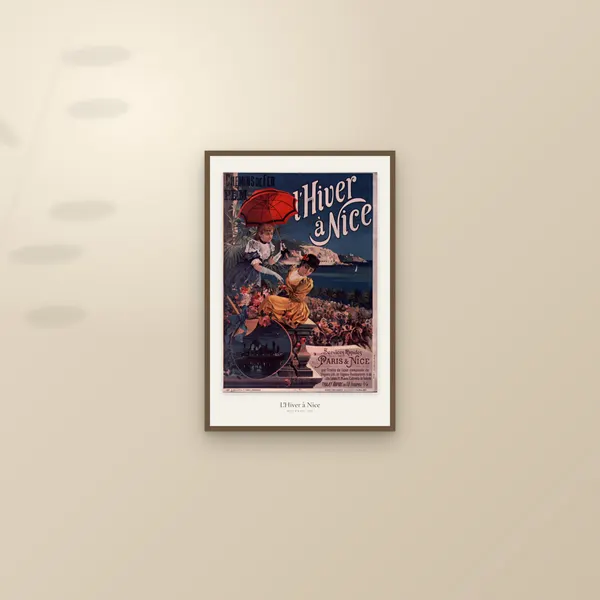
So the poster sold the destination first. Look at the small print on Hugo d'Alesi's L'Hiver à Nice. Under the women and the flowers, it lists the fast services between Paris and Nice, the luxury trains with sleeping cars, restaurant cars and saloon cars, and a journey time of 18¾ hours. The picture makes you want to go. The text tells you how.
Who were the PLM?
The biggest client was the Compagnie des chemins de fer de Paris à Lyon et à la Méditerranée, known as the PLM. According to the Science Museum Group, it was formed between 1858 and 1862 by merging two earlier companies. Its main line ran from Paris through Dijon, Lyon and Marseille to the Côte d'Azur. It was absorbed into the majority state-owned SNCF in 1938.
That route explains its posters. The PLM's map held the Riviera, the French Alps, Lake Geneva and the lakes of the Jura, so it commissioned pictures of all of them. Our French travel posters are mostly PLM sheets.
How was a railway poster printed?
By colour lithography, a method based on the fact that grease and water don't mix. The Victoria and Albert Museum explains it: the design is drawn in waxy crayon on a smooth slab of limestone. The stone is wetted, then rolled with oily ink. The drawn areas refuse the water and take the ink, and the ink then passes to paper.
Each colour needs its own stone, printed one after another on the same sheet. The sheet has to land in exactly the same place every time, or the colours slip. Our piece on chromolithography walks through it stone by stone.
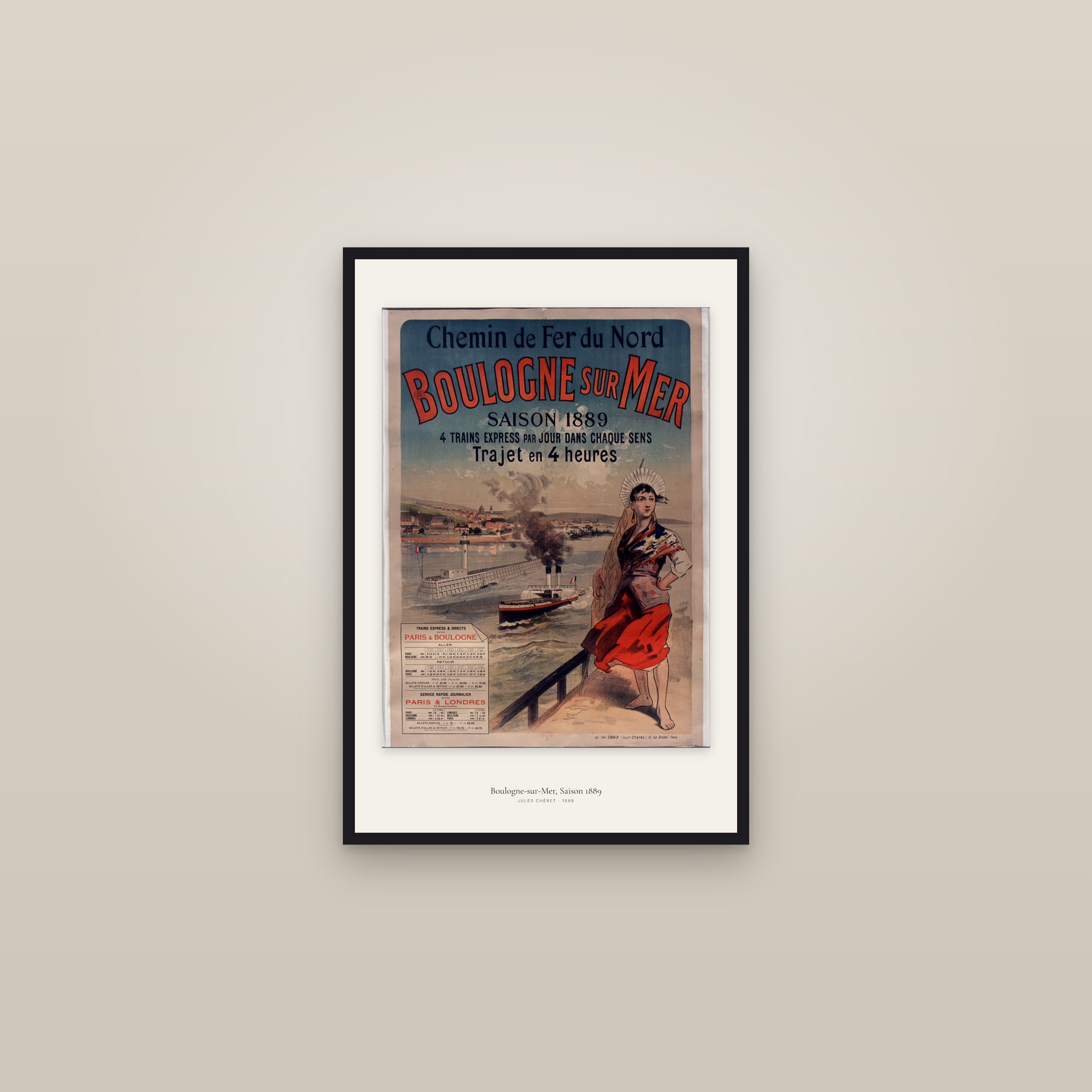
The man who made this a poster medium was Jules Chéret (1836–1932). The V&A says he opened his own lithographic press in Paris in 1866 and is known as the "Father of the poster". His breakthrough, the museum says, was a three-stone process with fairly transparent inks, so a few stones printed over each other made many colours.
Who was Hugo d'Alesi?
The PLM's most prolific painter of places. The BnF's catalogue gives his dates as 1849 to 1906 and credits his own firm, the "Ateliers Hugo d'Alési". A 2010 study by the historian Gudrun-Liane Ittu says he was born in Sibiu, in Transylvania, and came to Paris in 1876, where he began work at a lithographic firm.
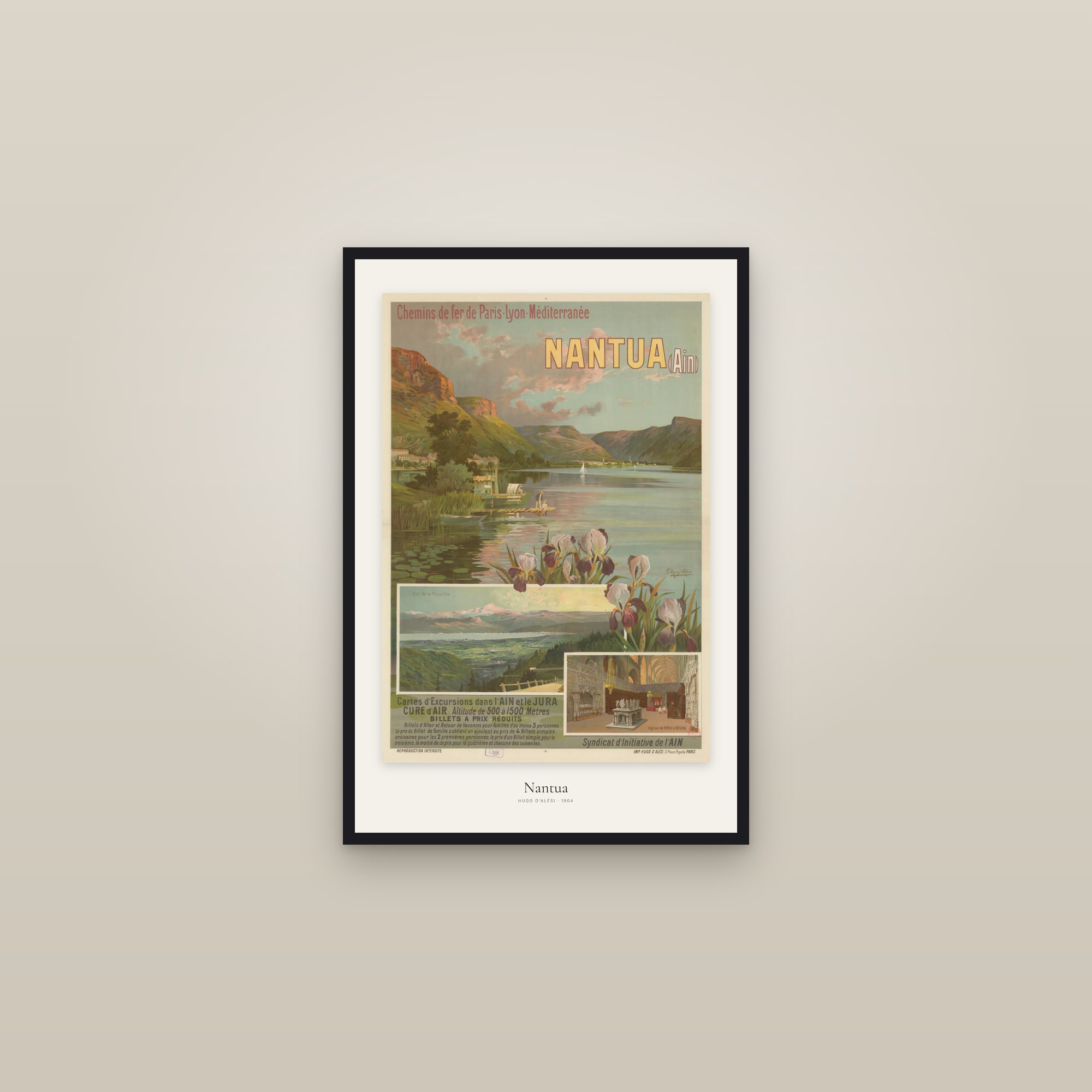
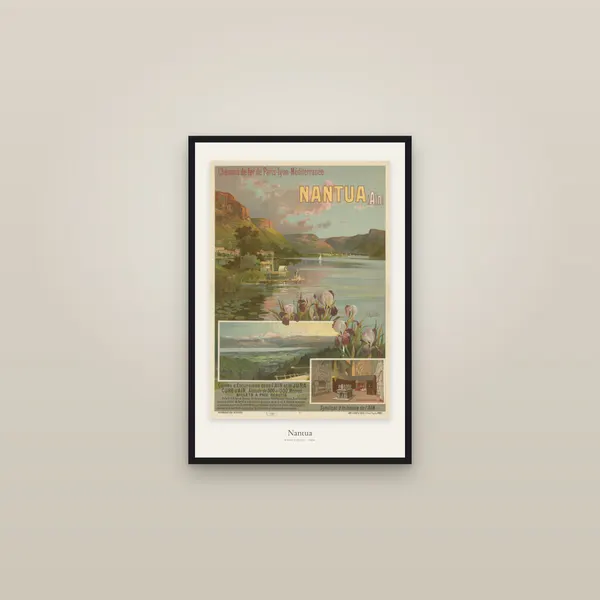
He made railway posters for several companies, and posters for the PLM between 1890 and 1904, according to Sofie Deckers. His style is easy to spot: a wide, bright landscape, often with a smaller view inset, and a block of practical text below.
He also built one of the strangest shows of the 1900 Paris Exposition. His Maréorama, Deckers writes, was a moving panorama staged as a steamship voyage across the Mediterranean, from Villefranche to Constantinople, with an orchestra on board. Visitors stood on a deck while painted coastlines rolled past. It was a travel poster you could stand inside.
What did the posters promise?
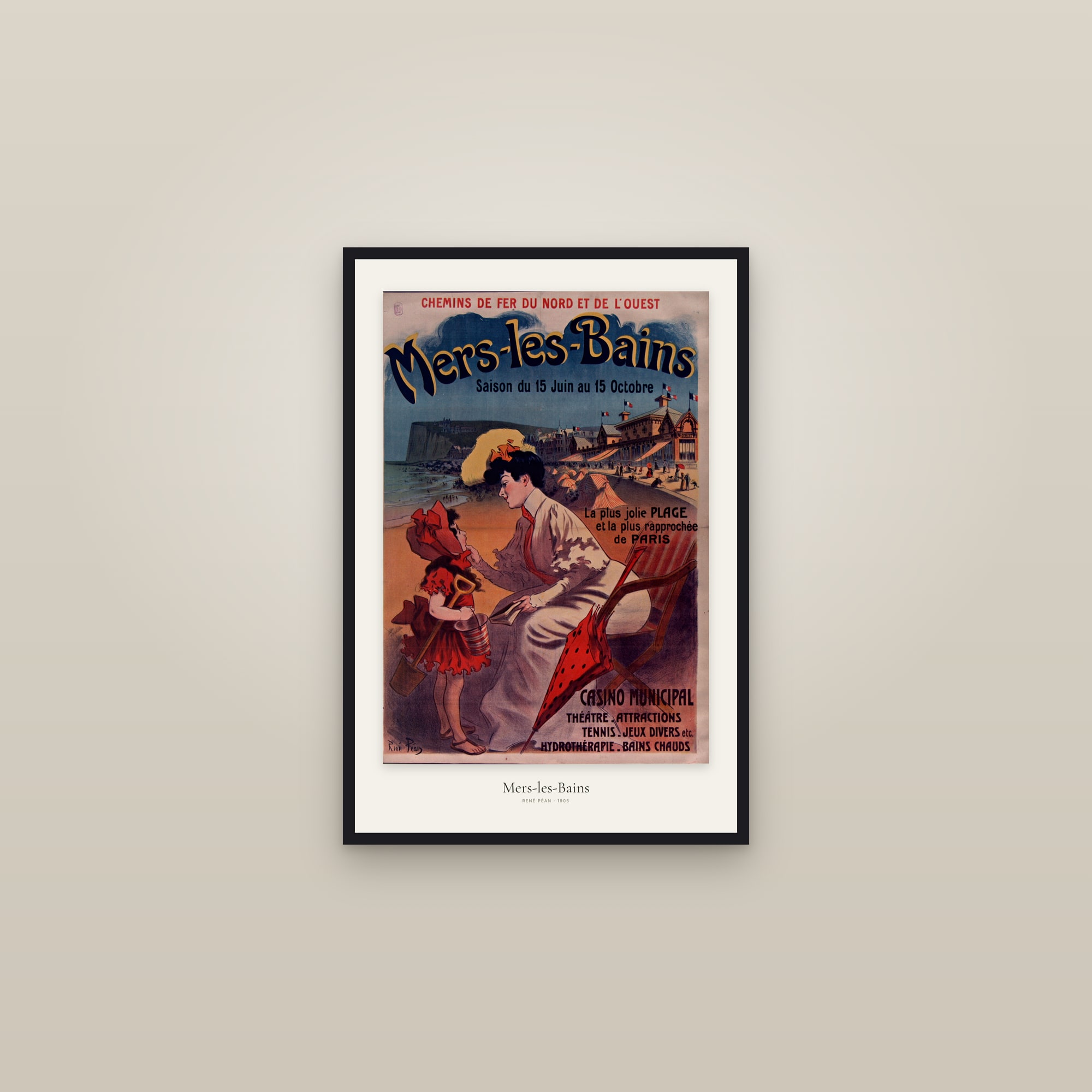
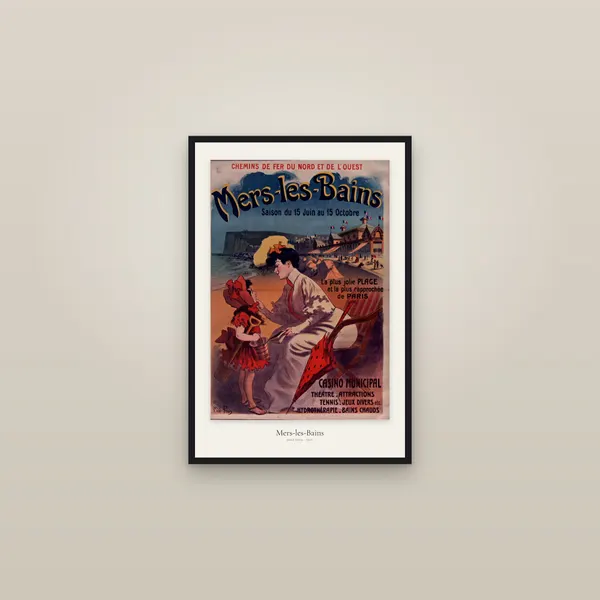
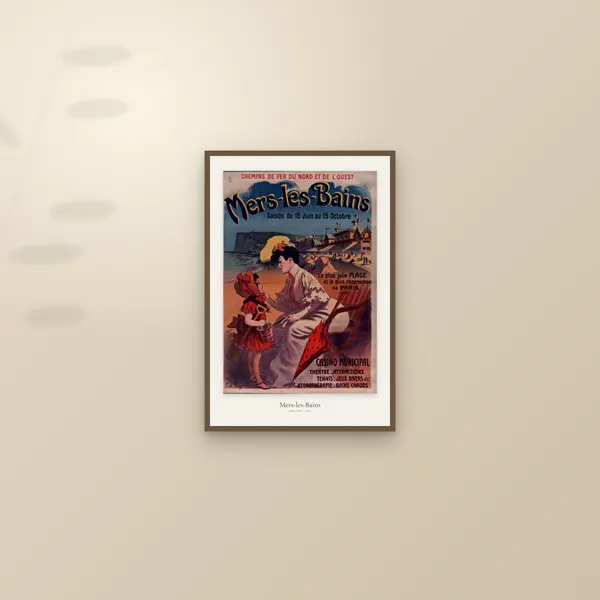
A season, as much as a place. Resorts lived on short, fixed seasons, and the posters print them. Pierre Péan's Mers-les-Bains of 1905 announces a season from 15 June to 15 October and calls it "the prettiest beach, and the nearest to Paris". The resort was new: the French heritage inventory says its seaside quarter grew from 1874, when the first plots were laid out below the cliff, and that its seafront clients were all holidaymakers.
Winter needed selling too. The Riviera was a winter destination for the wealthy, which is why d'Alesi's Nice poster is called L'Hiver à Nice, Nice in winter.
How did Swiss posters differ?
They began the same way and then changed. The Swiss National Library says Swiss resort posters date from about 1880 and were at first traditional, detailed and descriptive. In 1903 the Swiss railways held a competition for six promotional posters, won mainly by young artists, among them Plinio Colombi.
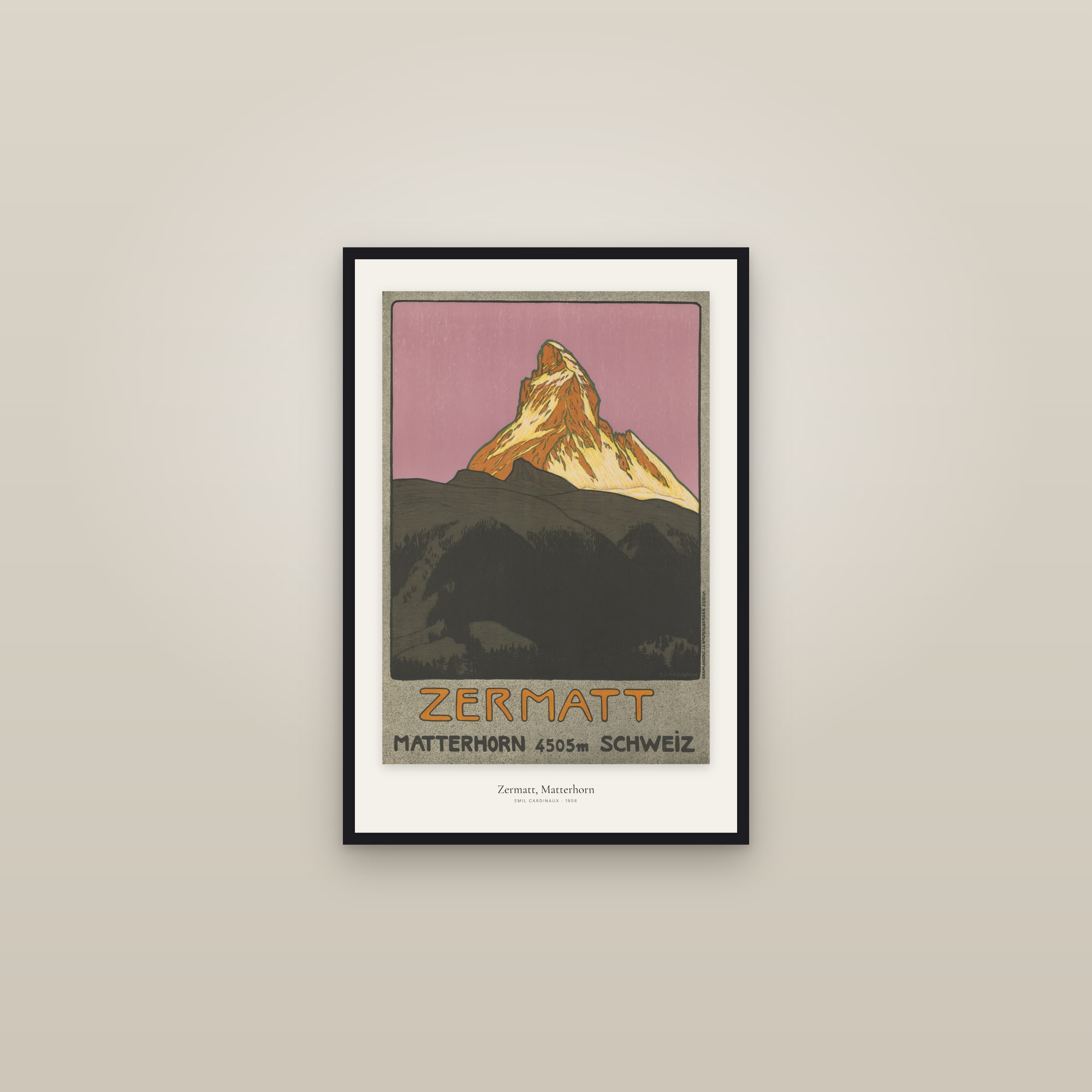
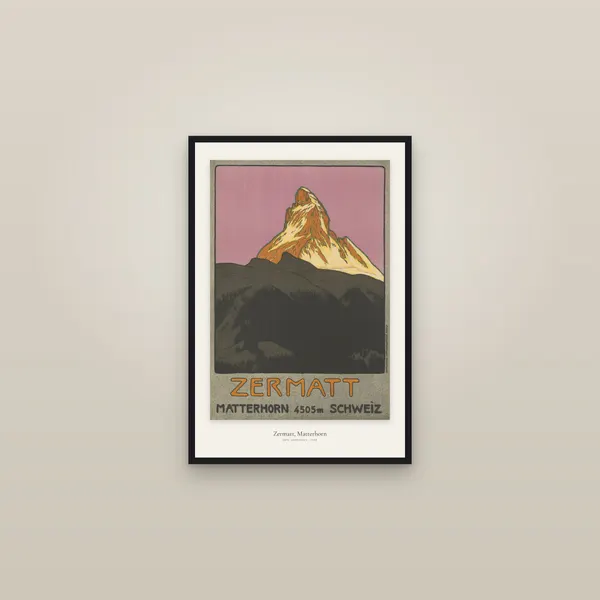
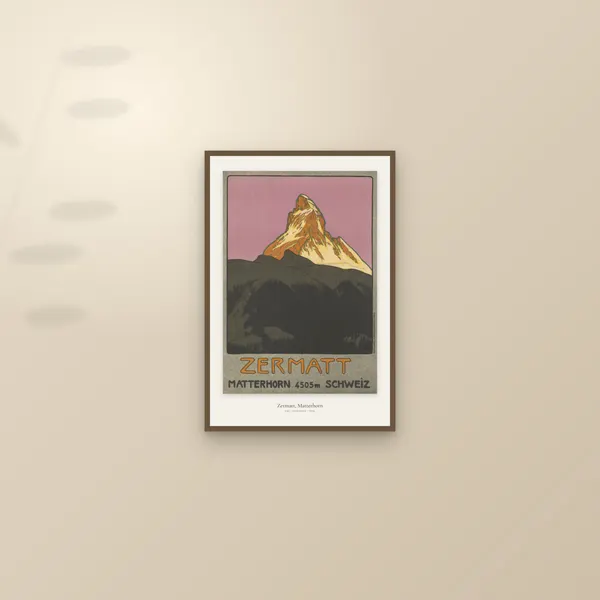
The turn came in 1908 with Emil Cardinaux's Zermatt, Matterhorn. The library calls it one of the most iconic posters of the era, "painted with simple lines in broad strokes of warm colour", and says it joined German monumentality to French colour and line. One mountain, one colour field of sky, one word. The library says it became a blueprint for a typically Swiss poster style.
The railways those posters sold were often brand new. The Gotthard tunnel opened on 22 May 1882 and the Simplon on 19 May 1906, according to the Swiss Confederation's AlpTransit portal. The Lötschberg line entered service in June 1913. The first train reached the Jungfraujoch on 1 August 1912, carrying some fifty people, according to the newspaper report the Swiss National Library quotes.
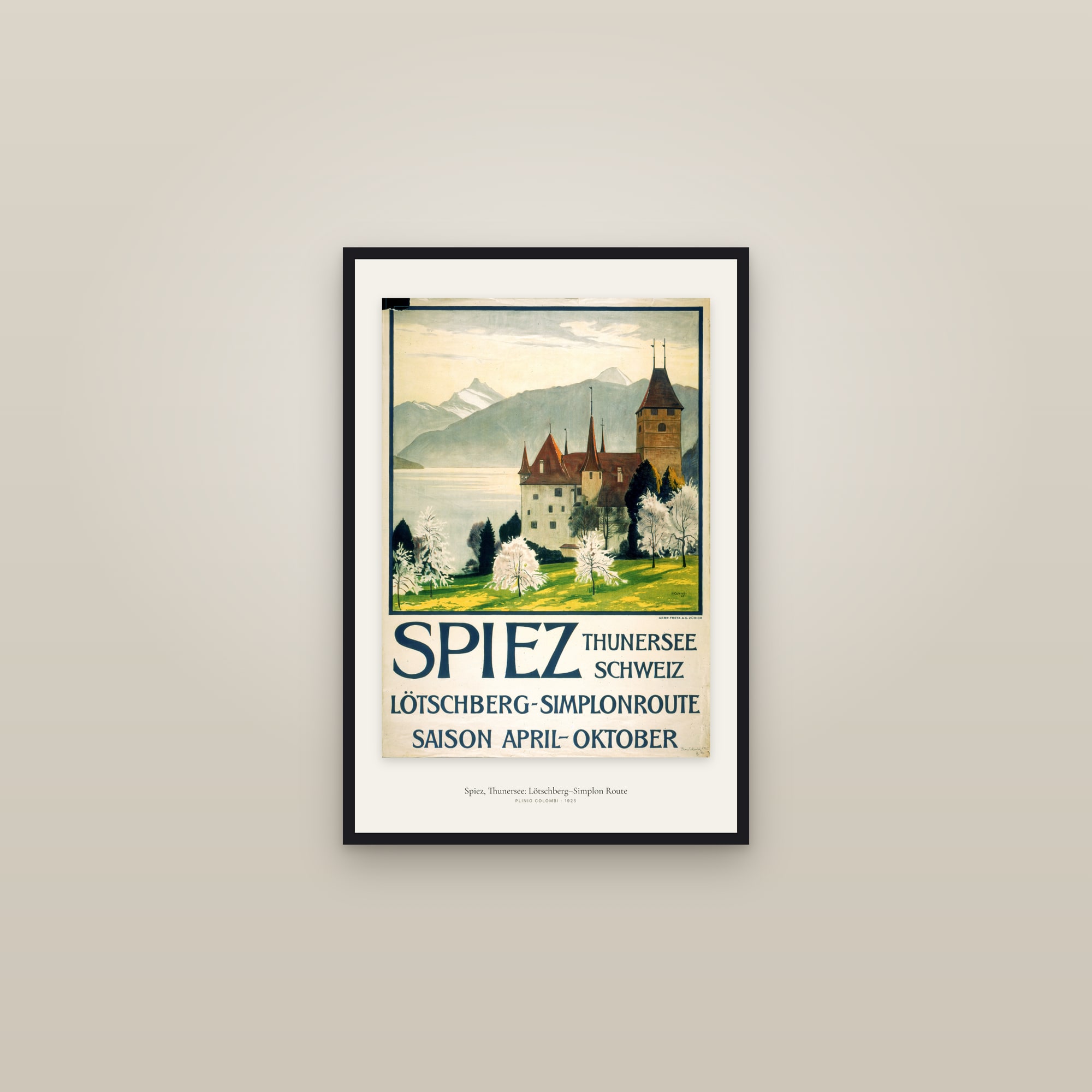
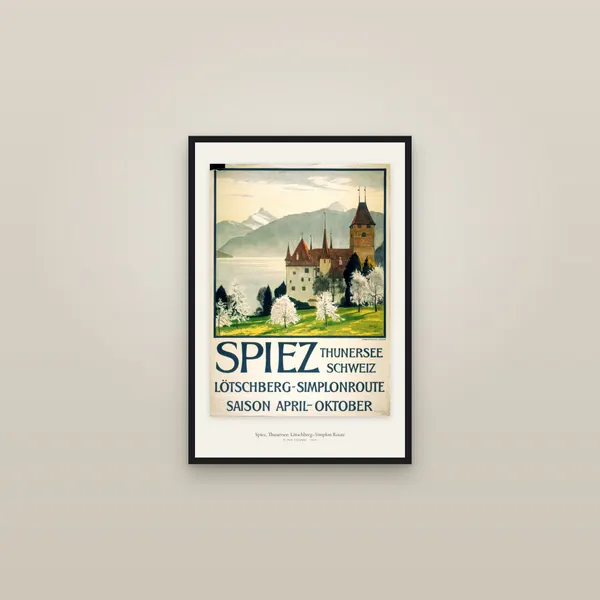
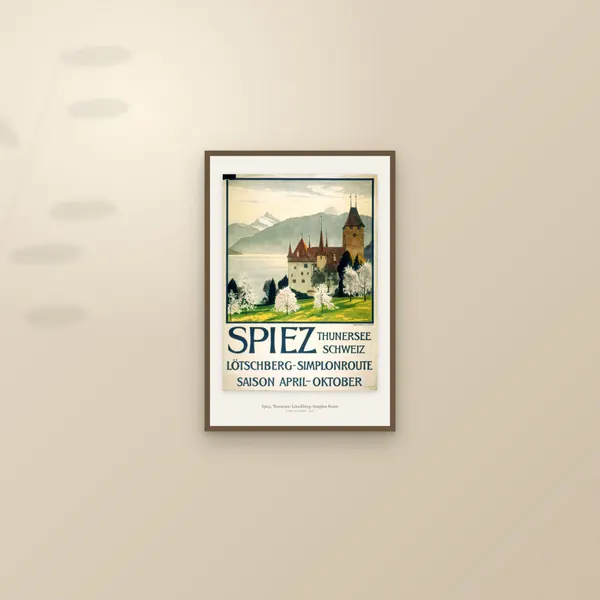
Plinio Colombi's Spiez of 1925 sells that Lötschberg–Simplon route with no train in sight: a castle on Lake Thun in blossom, snow on the peaks behind, and a season from April to October.
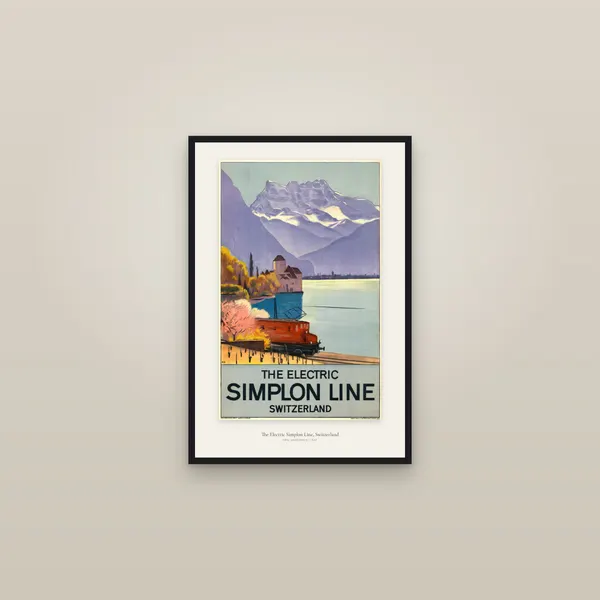
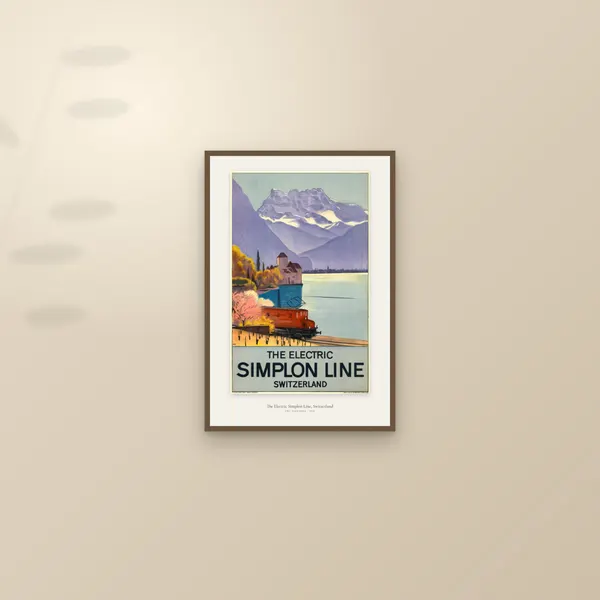
Cardinaux's The Electric Simplon Line, Switzerland of 1928 is one that does name the railway itself, and in English. Browse more in our Swiss travel posters and mountain travel posters.
How big were they?
Often about a metre tall. The BnF records a d'Alesi poster for Lourdes and the Pyrenees, c. 1896, at 107 by 76 cm, printed on a single sheet. That is larger than most prints sold for homes today, so the type was designed to be read across a station hall.
| Poster | Artist | Year | Sells |
|---|---|---|---|
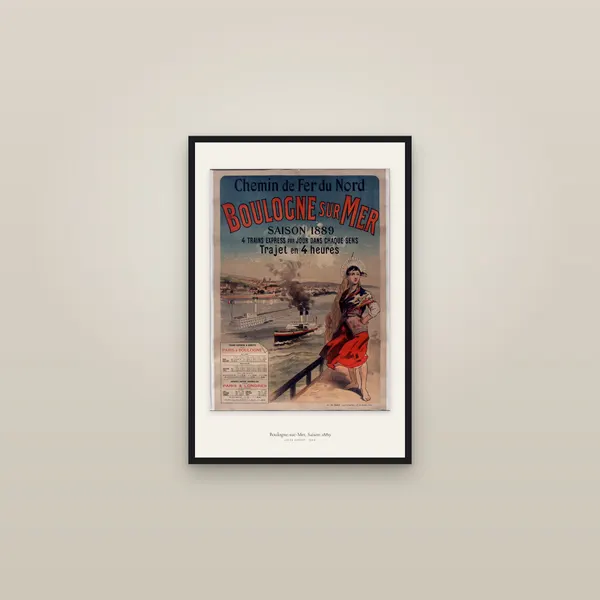
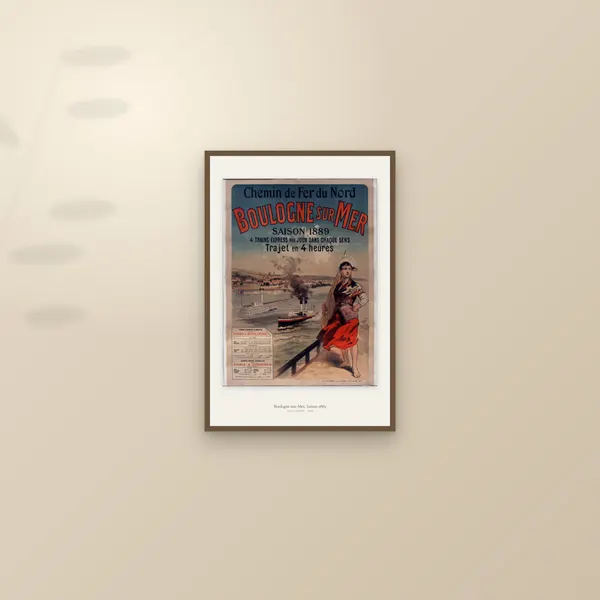
| Boulogne-sur-Mer, Saison 1889 | Jules Chéret | 1889 | A Channel port, 4 hours from Paris |
| L'Hiver à Nice | Hugo d'Alesi | 1892 | The Riviera in winter |
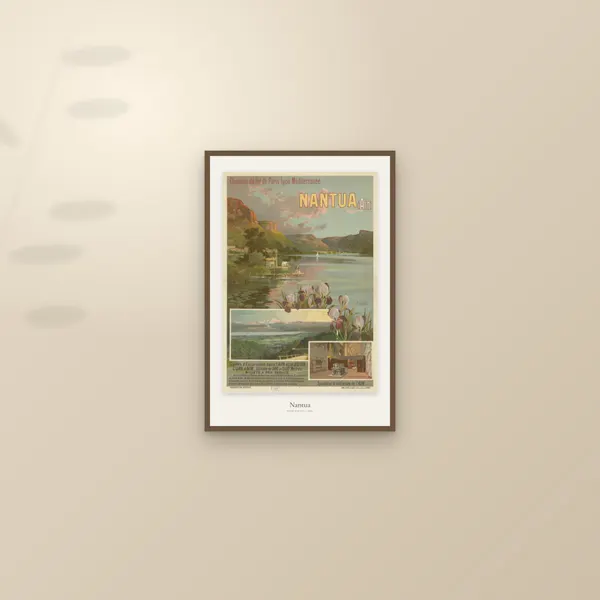
| Nantua | Hugo d'Alesi | 1904 | A lake and excursions in the Jura |
| Mers-les-Bains | Pierre Péan | 1905 | A beach, 15 June to 15 October |
| Zermatt, Matterhorn | Emil Cardinaux | 1908 | One mountain |
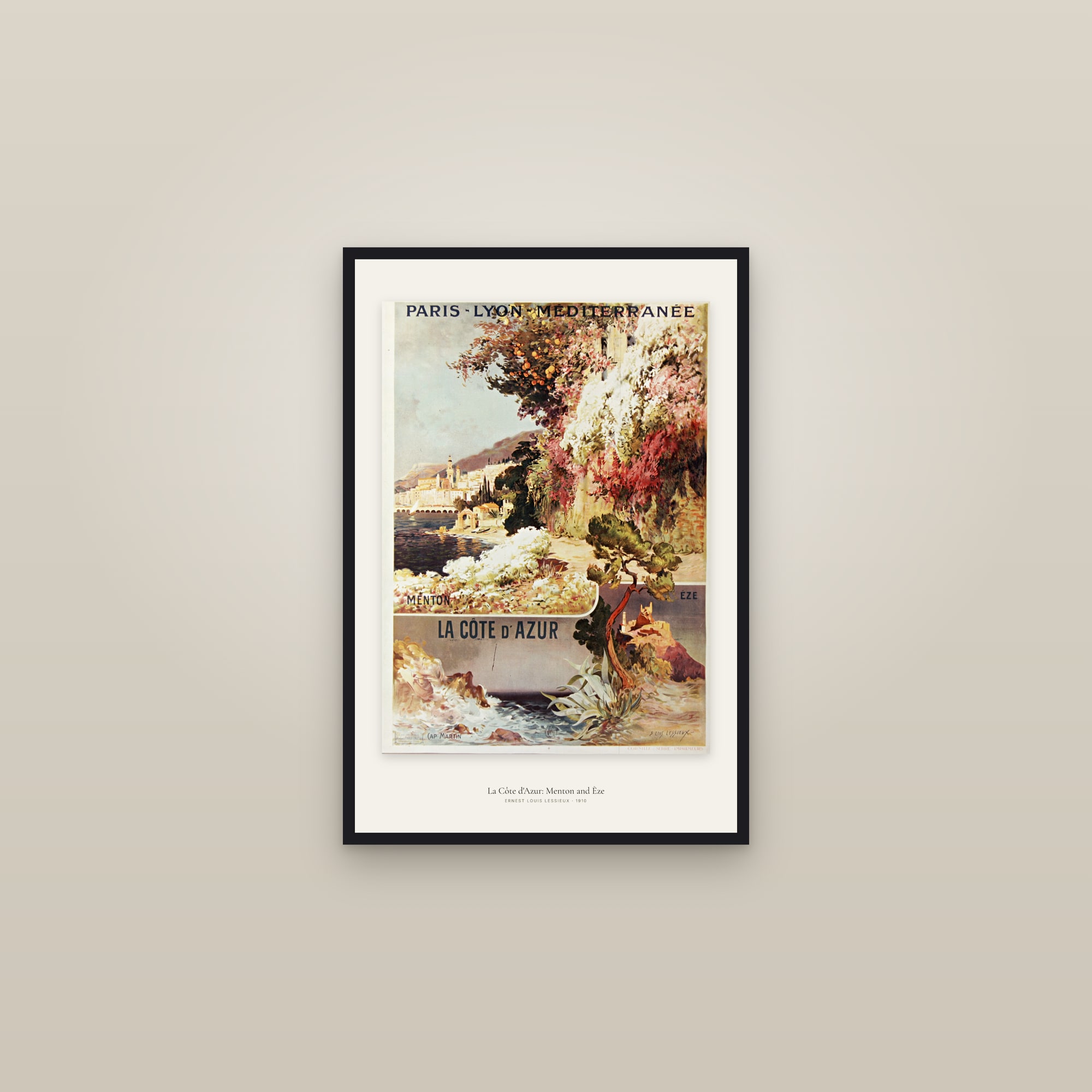
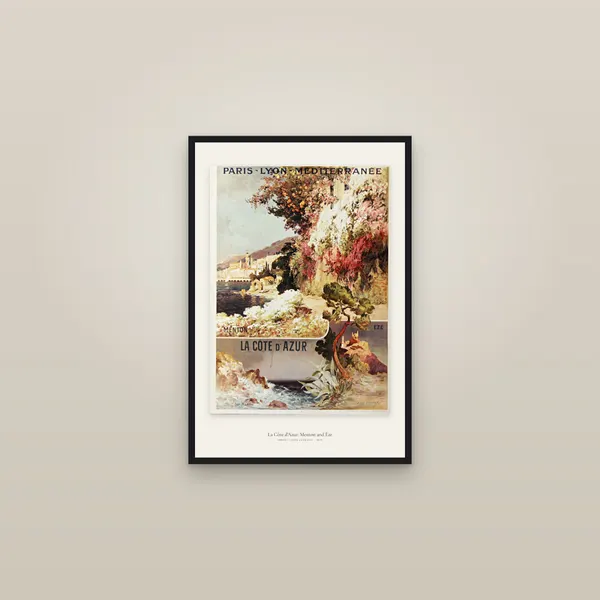
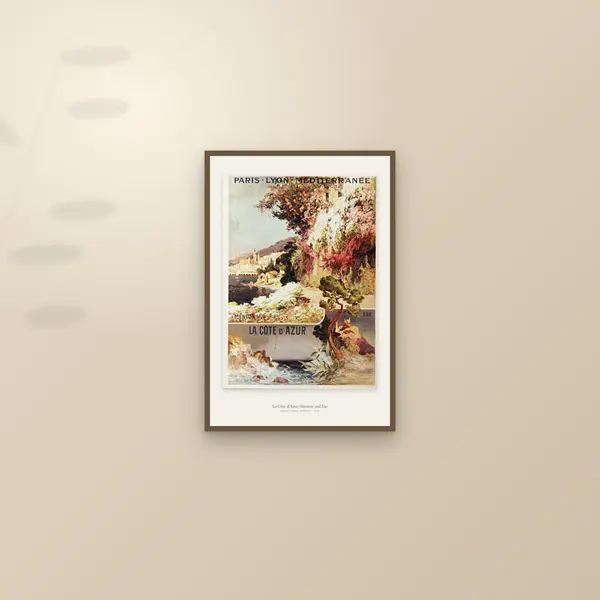
| La Côte d'Azur: Menton and Èze | Ernest Louis Lessieux | 1910 | The Riviera coast |
| Spiez, Thunersee | Plinio Colombi | 1925 | A lake, April to October |
| The Electric Simplon Line | Emil Cardinaux | 1928 | The railway itself |
How do you choose one for a wall?
Start with the place, not the artist. Most people who hang a railway poster have been there, or come from there, or are going. A poster of your own lake or coast reads as personal, not as décor.
Then decide how much lettering you want. A d'Alesi or a Chéret carries a lot of text and works where people stop and read: a hallway, a kitchen, a downstairs loo. A Cardinaux or a Colombi is closer to a painting with one word on it, and holds its own above a sofa or a bed.
These sheets are tall, so they suit narrow walls and the space beside a door. Every one we sell keeps the whole sheet, its border and its lettering, printed from a library or archive scan of the original. Sizes start at 12 by 18 inches unframed for $39, and the frames are black or dark wood. See the full range in railway posters, seaside travel posters and the wider vintage travel posters collection. For the American posters of the 1930s, read our piece on the WPA posters.
Questions people ask
What is a vintage railway poster?
An advertisement paid for by a railway company, usually between the 1880s and the 1930s, showing a destination its trains served. Many were colour lithographs about a metre tall, pasted up in stations and towns. They sold the place and the season more than the train itself.
Who made French railway posters?
Commercial poster artists working for the railway companies and their printers. Jules Chéret, who opened his own lithographic press in Paris in 1866, made posters for the Nord line. Hugo d'Alesi (1849–1906) made many for the Paris-Lyon-Méditerranée company between 1890 and 1904, and ran his own studio.
What was the PLM?
The Compagnie des chemins de fer de Paris à Lyon et à la Méditerranée, a private French railway built up by merger between 1858 and 1862. Its main line ran from Paris through Dijon, Lyon and Marseille to the Côte d'Azur. It was absorbed into the majority state-owned SNCF in 1938.
What is the most famous Swiss travel poster?
Emil Cardinaux's Zermatt, Matterhorn of 1908 is the usual answer. The Swiss National Library calls it one of the most iconic posters of the era, painted with simple lines in broad strokes of warm colour.
How were railway posters printed?
By colour lithography. The artist or a craftsman drew each colour on a separate stone with a greasy crayon. The stone was wetted and inked, the grease took the ink and the wet stone refused it, and each colour was printed in turn on the same sheet.
Can I buy a print of a vintage railway poster?
Yes. We print French and Swiss railway posters made in or before 1930 from library and archive scans: the whole sheet, lettering included, from $39 at 12 by 18 inches unframed, or framed in black or dark wood.
Sources
- Science Museum Group collection: Chemins de fer de Paris à Lyon et à la Méditerranée (merger of 1858–62, the main line through Dijon, Lyon and Marseille to the Côte d'Azur, absorbed into the SNCF in 1938)
- Bibliothèque nationale de France: Affiches de tourisme (what transport posters praised; sea bathing and spa cures)
- Victoria and Albert Museum: A short history of the poster (lithography explained; Chéret's three-stone process and transparent inks; Chéret 1836–1932)
- Victoria and Albert Museum: poster by Jules Chéret (his own lithographic press, 1866; 'Father of the poster')
- Bibliothèque nationale de France catalogue: Ateliers Hugo d'Alési, Lourdes and the Pyrenees, c. 1896 (Hugo d'Alési, F., 1849–1906; 107 × 76 cm, colour lithograph)
- Gudrun-Liane Ittu, Anuarul Institutului de Cercetări Socio-Umane Sibiu XVII (2010): Hugo d'Alesi, born in Sibiu, settled in Paris in 1876
- Sofie Deckers, FORUM+ 28:3 (2021): Hugo d'Alesi's Maréorama (PLM posters 1890–1904; the moving panorama at the 1900 Exposition)
- Swiss National Library: The beginnings: tourism posters (resort posters from 1880; the 1903 railway poster competition; Cardinaux's 1908 Matterhorn)
- Swiss National Library: The Jungfrau Railway (the first train to the Jungfraujoch, 1 August 1912)
- BLS: company history (the Lötschberg line in service in June 1913)
- AlpTransit portal, Swiss Confederation: the Gotthard tunnel opened 22 May 1882, the Simplon 19 May 1906
- Ministère de la Culture, Mérimée IA80001840: the seaside quarter of Mers-les-Bains (first plots 1874, last 1896)
Start hereA short history of the print, from woodblock to giclée