
What were the WPA posters, and why do they look like that?
Public notices made by out-of-work artists on the US government payroll, 1936 to 1943. What they were for, how many survive, and which park posters were WPA.
Contents9 sections
- What was the WPA, and what was its Federal Art Project?
- What were the posters for?
- How many WPA posters were made, and how many survive?
- Why do they look like that?
- Were the national park posters WPA posters?
- Who designed them?
- What does the Library of Congress say about rights?
- Where can you see the originals?
- Which should you hang, and where?
The WPA posters were public notices. They told Americans to see a play, visit the zoo, get a chest X-ray, borrow a library book or take a holiday at home. They were designed and printed between 1936 and 1943 by artists on the payroll of the Works Progress Administration, a United States government programme set up in the Great Depression to give unemployed people paid work. The government was not buying art for its walls. It was paying artists a wage, and posters were a useful thing for them to make. This piece covers what the posters were for, how many there were, why they look the way they do, and which of the famous park posters were really WPA.
What was the WPA, and what was its Federal Art Project?
The WPA was a jobs programme. President Franklin Roosevelt established the Works Progress Administration in 1935 "to put millions of unemployed Americans back to work," as the Library of Congress puts it. In September 1939 the name changed to Work Projects Administration, which is why both names turn up on the posters. The National Archives says the WPA employed about 8.5 million Americans over its seven-year history.
Most of those people built roads, schools and bridges. A small share were painters, actors, musicians and writers, and they needed work too. In July 1935 the WPA set up Federal Project Number One to run its arts projects. One of them was the Federal Art Project, which the Library of Congress says employed more than five thousand artists. Some painted murals. Some taught. Some went to the poster divisions.
The first poster division was already running. In 1934 New York City had created the Mayor's Poster Project to make posters for Mayor Fiorello LaGuardia's favourite causes. In 1935 the federal government absorbed it, and it became the country's first Federal Art Project poster division. By 1938 there were divisions in at least eighteen states. New York City, Chicago and Philadelphia had thriving divisions, and New York City's was the largest.
What were the posters for?
Whatever a government office needed to announce. The Library of Congress sorts its collection into five groups: health and safety programmes, cultural programmes such as art exhibitions, plays and concerts, travel and tourism, educational programmes, and community activities.
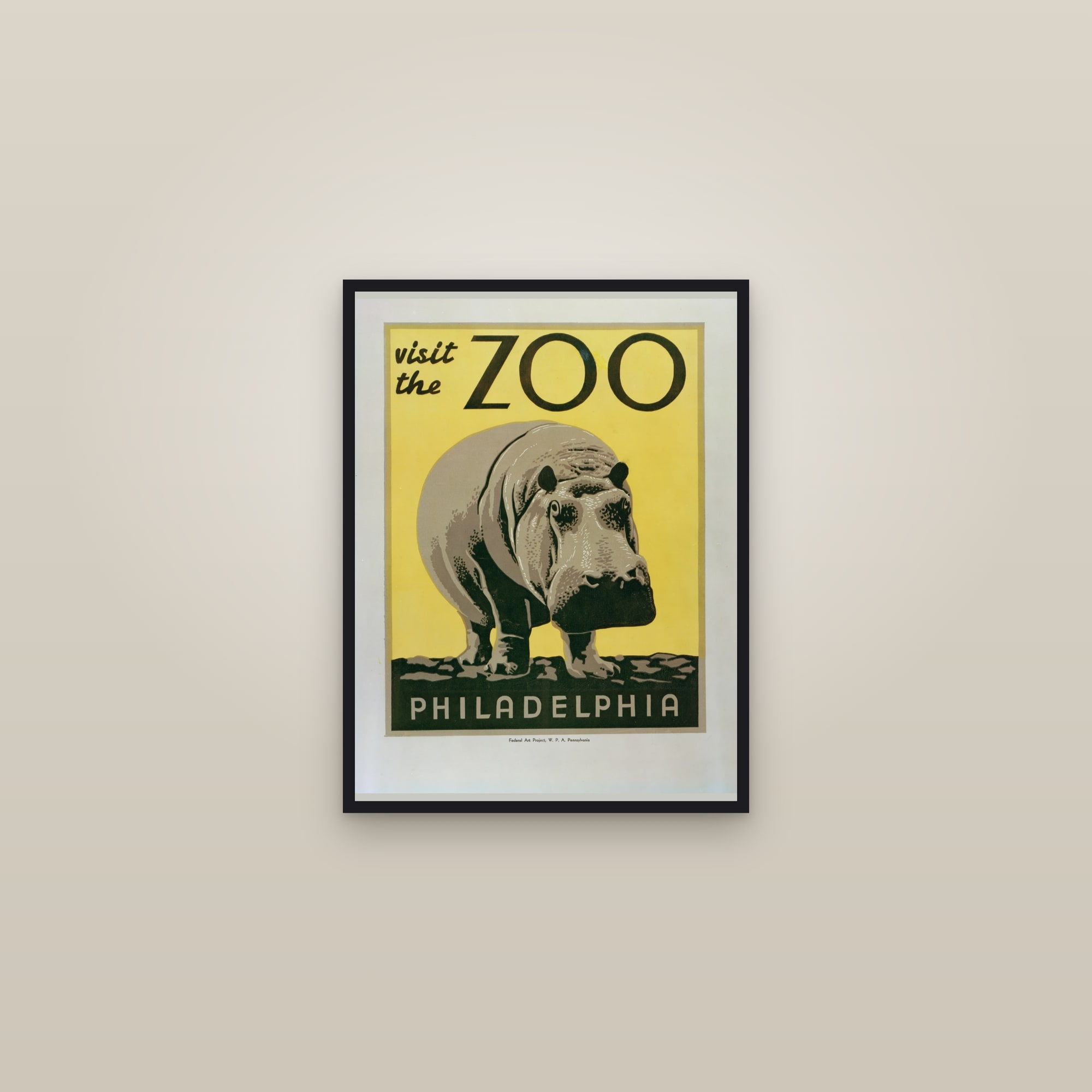
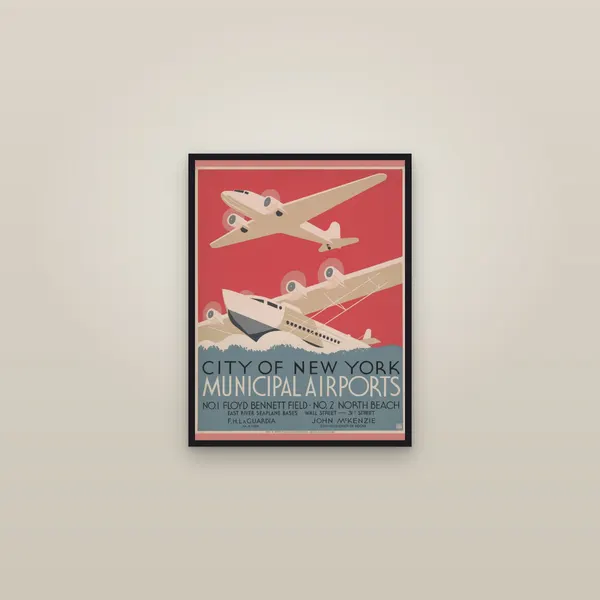
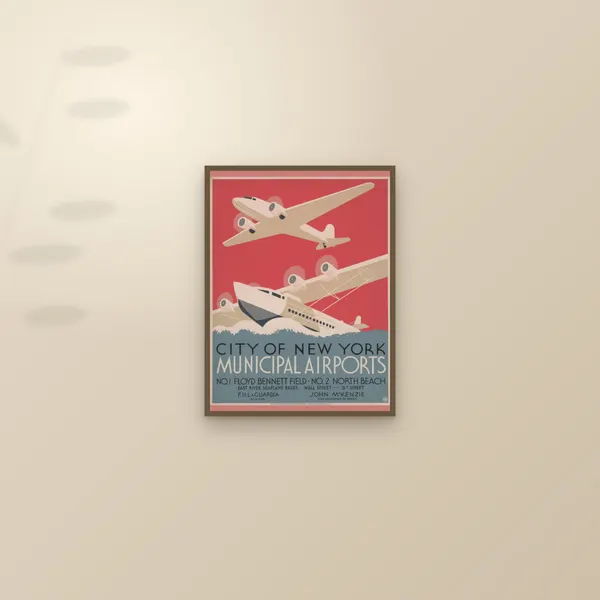
The titles in the Library's collection give the flavour: Amateur Contest for Children, Vacation Reading Club, Keeping Up with Science and, from 1943, Handle with Care. The divisions worked mainly for the other federal arts projects, the Library says, but city and state departments and other New Deal agencies ordered posters as well. That is how a zoo, an aquarium, a planetarium and a city airport all ended up with government-made posters.
They were not made to last. A poster went up, did its job and came down.
How many WPA posters were made, and how many survive?
The numbers are lopsided. According to the Library of Congress, "over two million posters were printed from thirty-five thousand designs" in the history of the WPA art projects. "Today, only about two thousand of the posters produced by all the poster divisions are known to exist."
The Library's own collection is the largest. It holds 907 posters, made between 1936 and 1943 in seventeen states and the District of Columbia, with the most from California, Illinois, New York, Ohio and Pennsylvania. They were added to the Library's holdings in the 1940s.
| Measure | Number | Source |
|---|---|---|
| Designs made by the WPA art projects | About 35,000 | Library of Congress |
| Posters printed | Over 2 million | Library of Congress |
| Posters known to exist today | About 2,000 | Library of Congress |
| Posters in the Library of Congress collection | 907 | Library of Congress |
| States with a poster division by 1938 | At least 18 | Library of Congress |
| Park posters surviving from the Western Museum Laboratories | About 40 | National Park Service |
The park posters fared worse than most. The National Park Service explains where they went: they faded on display and were thrown out, and some "were cut up for file drawer dividers" or used in plant presses for park herbarium specimens.
Why do they look like that?
Because of how they were printed. At first the posters were painted and lettered by hand, one at a time. That was slow. In 1936 a project artist in New York named Anthony Velonis adapted silkscreen printing for the job. The Library of Congress says he had used the process at Stern Brothers, a New York department store, where he made show cards. He asked the division's administrator for approval to set up a workshop and teach the others.
Silkscreen is a stencil method. A fine fabric is stretched on a frame. A stencil blocks the parts where ink is not wanted. A rubber blade pushes ink through the open parts onto a card underneath. Each colour needs its own stencil and its own pass. The National Park Service's printers listed their steps in 1939: preliminary design, completed design in colour, cutting the stencil, applying the stencil, registering the card in the press, running the colour and stacking the card in the rack.
That process explains the look.
- Flat colour. Each pass lays down one solid ink. Shading has to be built from separate flat shapes, so a canyon wall becomes three or four bands of pink and violet.
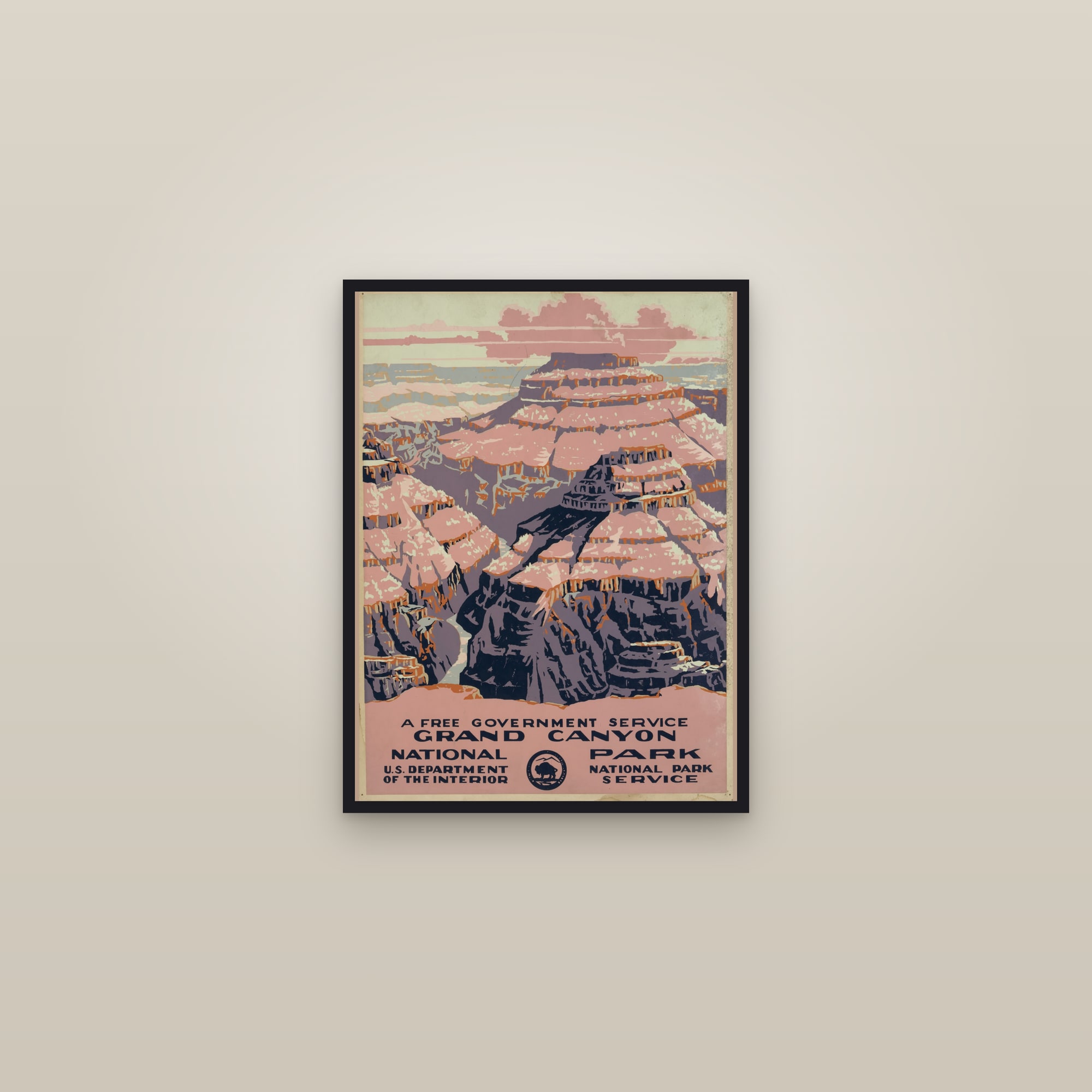
- Few colours. Every colour is another stencil and another pass. The park posters were usually six colours; the Grand Canyon poster used eight, the Park Service notes.
- Hard edges. Stencils were cut by hand, and a knife makes clean outlines more easily than soft ones.
- Big lettering. The posters had to be read from a distance by someone walking past.
It was also fast. With silkscreen, the Library of Congress says, "as many as six hundred posters were printed in a day."
There was a second influence. The New York division was led by Richard Floethe, a German-born industrial designer trained in the ideas of the Bauhaus. The Library of Congress says the freedom he gave the artists let them "experiment with bold colors and many different styles." Floethe himself wrote that the government had "unwittingly launched a movement to improve the commercial poster and raise it to a true art form."
Velonis went on to write a manual, Silk Screen Technique (1939), that the other divisions used. With the print curator Carl Zigrosser he coined the word serigraph for a silkscreen made as fine art.
Were the national park posters WPA posters?
Some were, and the most famous ones were not, or not exactly. Three different groups made the posters people call "WPA park posters," and it is worth knowing which is which.
Dorothy Waugh, 1934 to 1936. Waugh was an artist and landscape architect employed by the National Park Service. She designed 17 posters for national and state parks. The first six were printed around August 1934 for what the government had declared National Parks Year. The National Park Service is firm that she was not a WPA artist: at least eleven of her posters were made before the Federal Art Project was established on 29 August 1935. Her Pueblos of the Southwest dates from 1935.
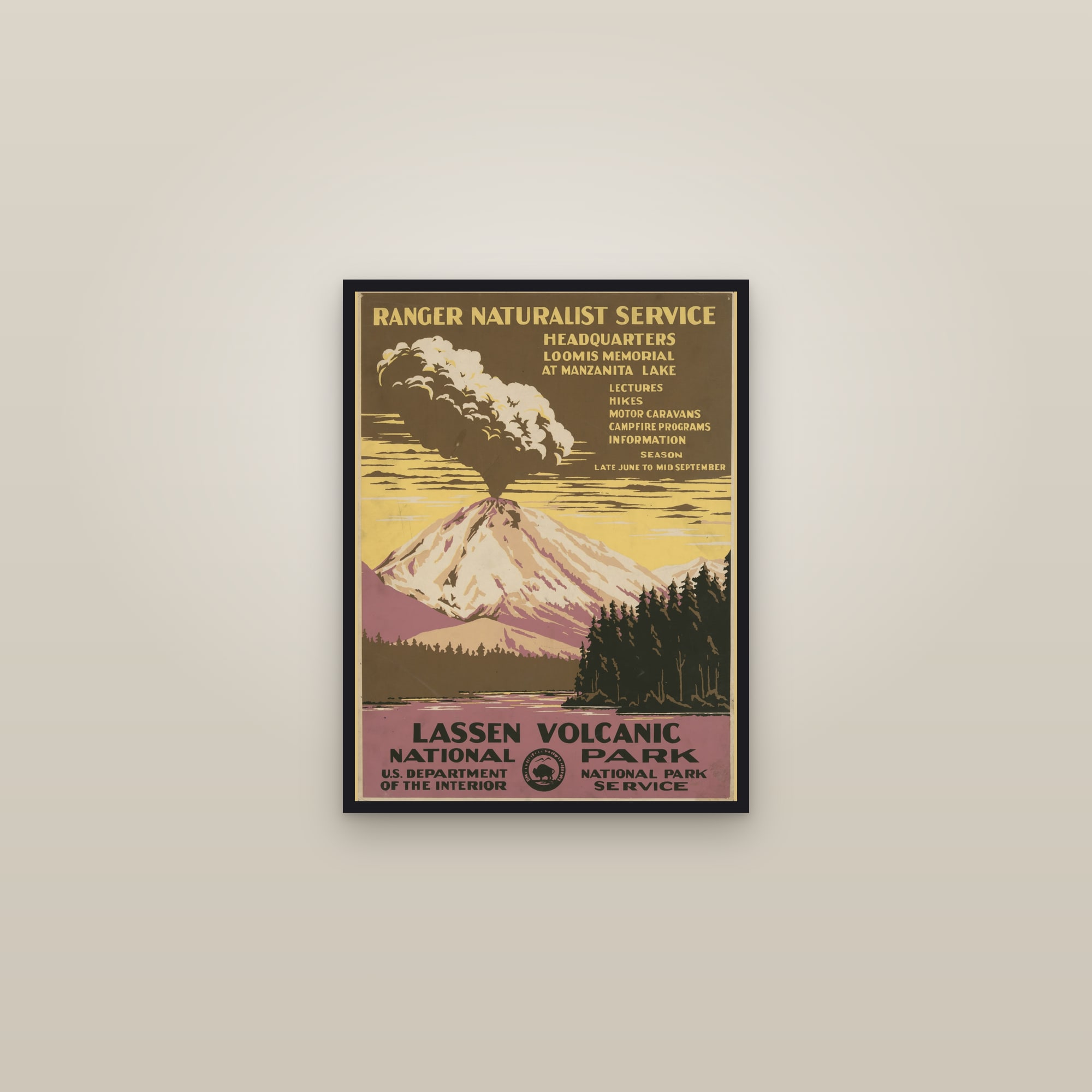
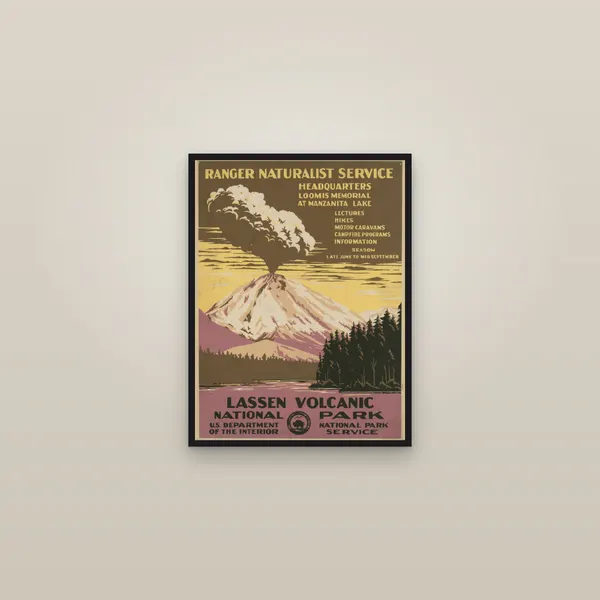
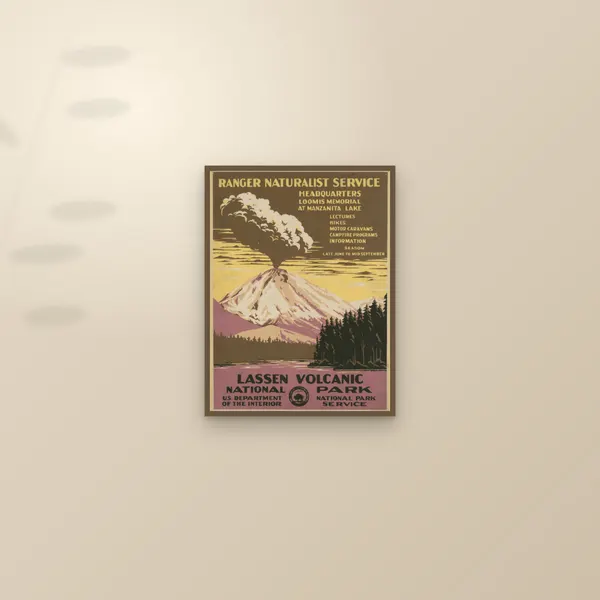
The Western Museum Laboratories, 1938 to 1941. These are the posters most people picture: a single park view under the banner Ranger Naturalist Service. They were made in Berkeley, California, by a National Park Service workshop that built museum exhibits for the western parks. Its workers were paid through the WPA, the Civilian Conservation Corps and the National Youth Administration. The Park Service's own history says that although they are usually called the WPA park posters, "they should rightfully be called 'the WML posters.'"
They were plain working tools. Parks ordered them to advertise ranger talks, hikes and campfire programmes. A run was typically 100 posters, and the price was 12 dollars per hundred, or 12 cents each. Some versions left a white box where a park could write in its schedule.
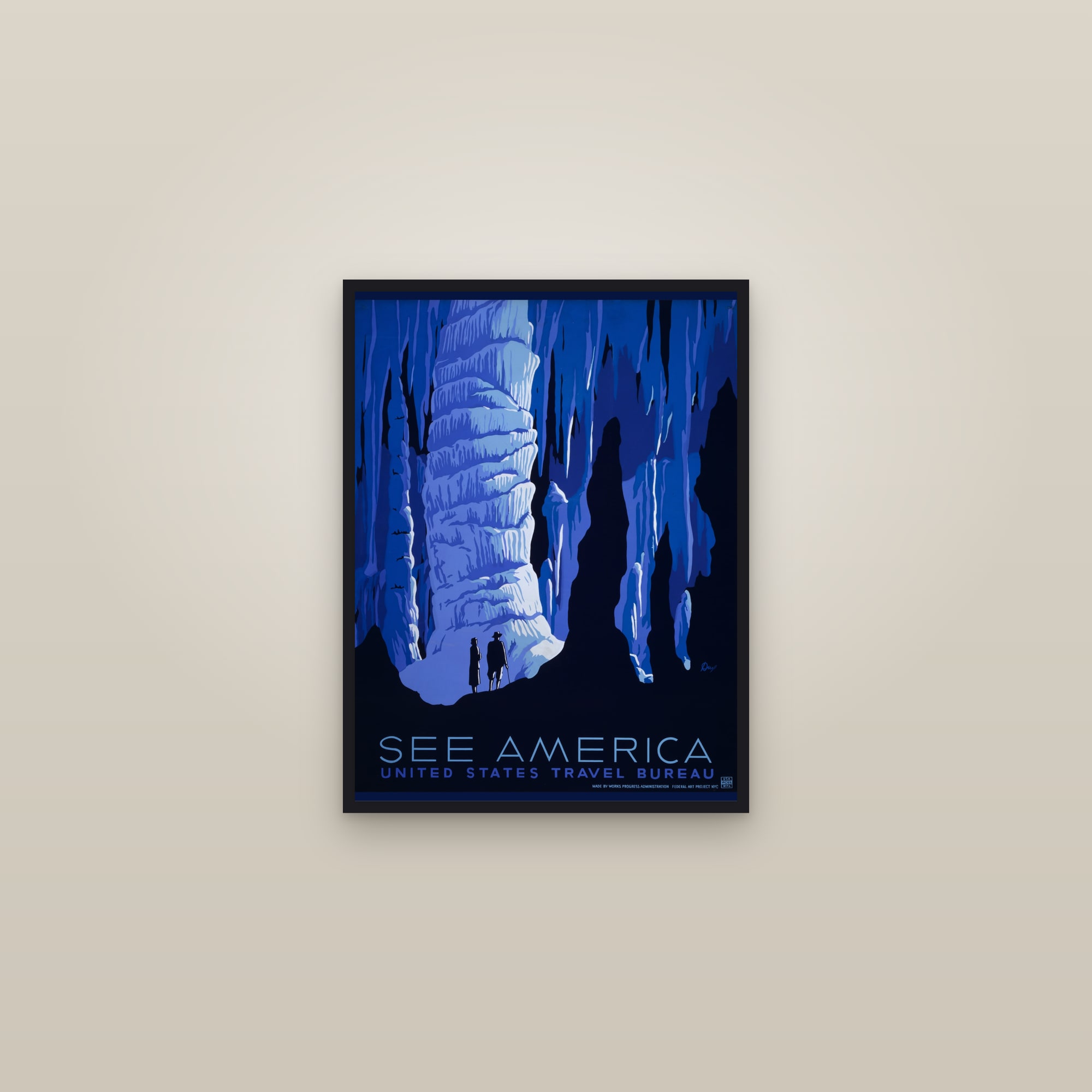
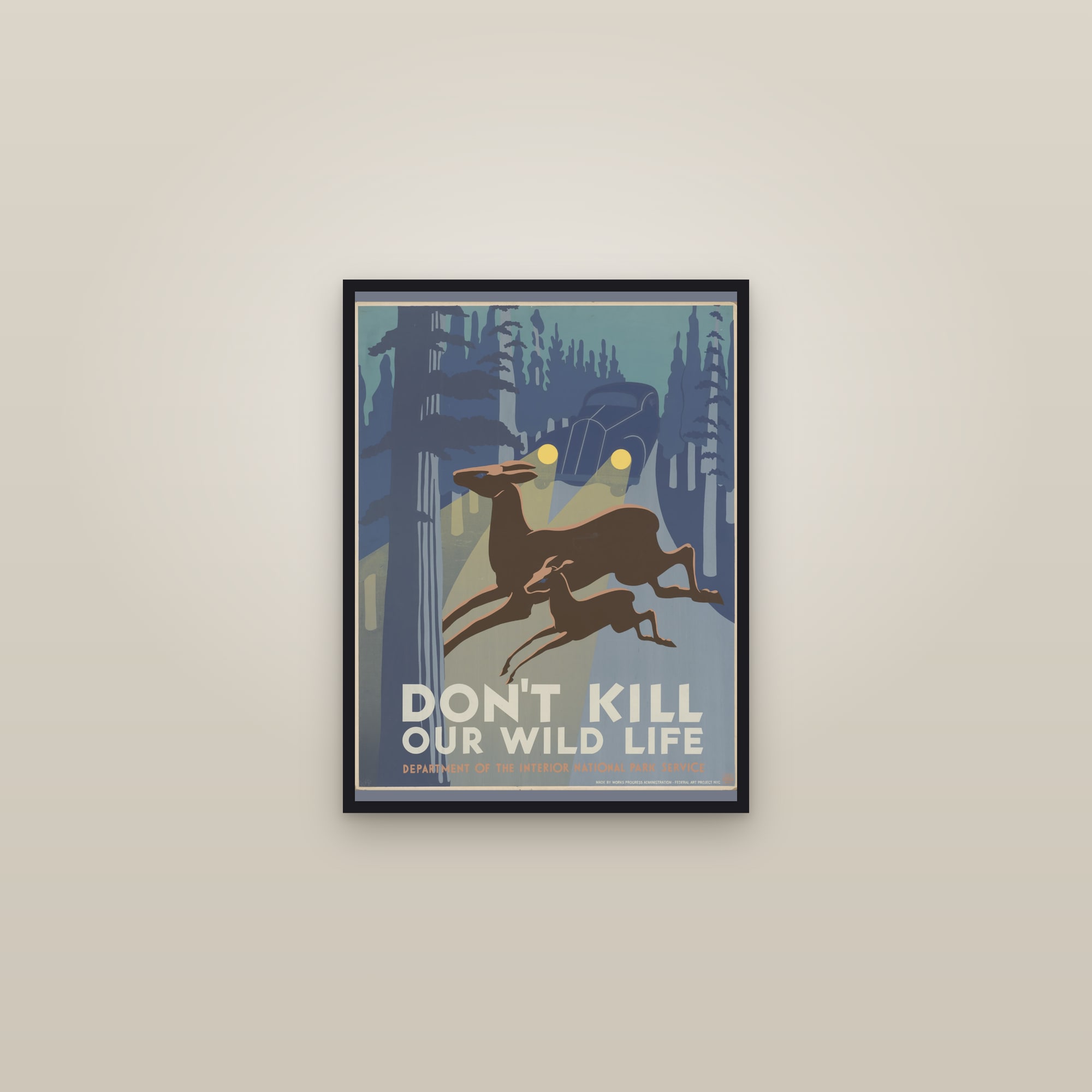
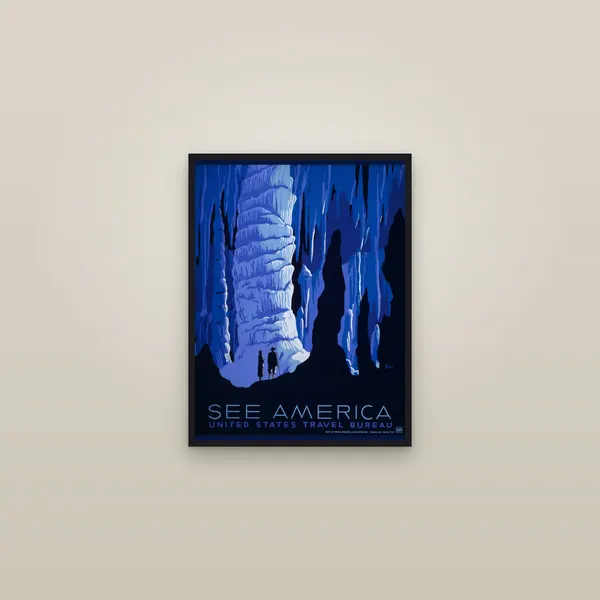
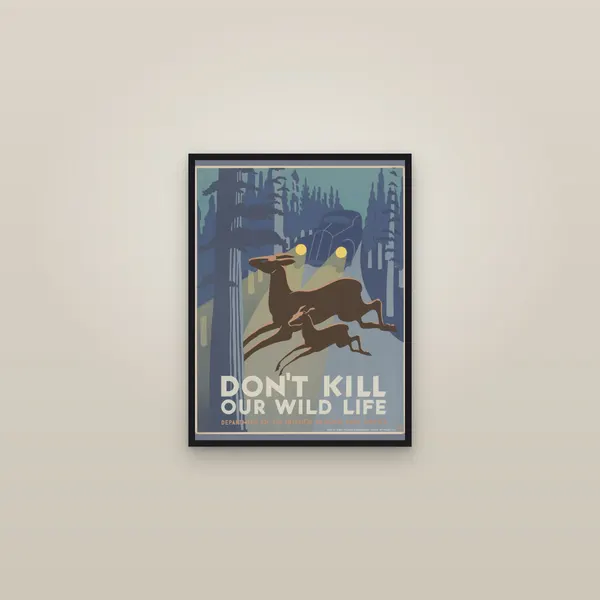
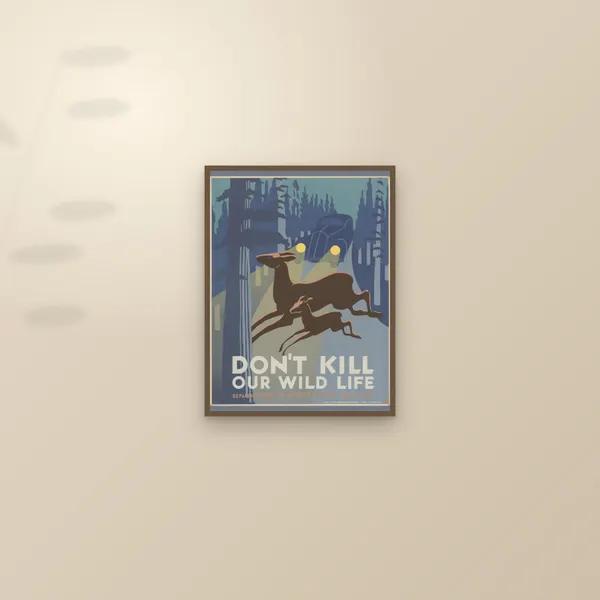
The New York City WPA Federal Art Project, 1936 to about 1940. This one is WPA in the full sense. Its artists made the See America series, which the Library of Congress records describe as posters "for the United States Travel Bureau promoting tourism". The same project made Don't Kill Our Wild Life. Its Library of Congress record gives the maker as the Works Progress Administration, Federal Art Project, in New York City, and the poster's lettering names the Department of the Interior, National Park Service.
Who designed them?
Often we know, and sometimes nobody does. Many Federal Art Project posters are signed in the print or named in the Library of Congress record: Alexander Dux, Martin Weitzman, Katherine Milhous, Robert Muchley, Louise Welsh. Others carry only the name of the project.
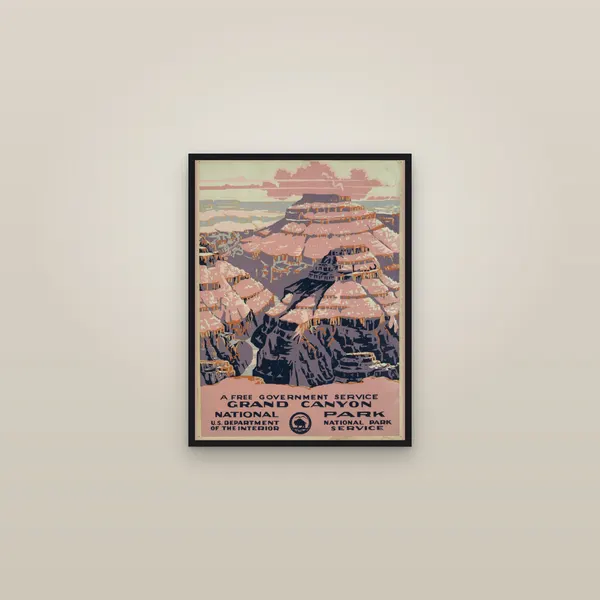
The park posters are harder. The Library of Congress record for the Grand Canyon poster names C. Don Powell as designer. Powell was a commercial artist, born in Kansas, who was left unemployed by the 1929 crash and, by the Park Service's account, found work as a flagman on a road crew before he was taken on as an artist. He did work at the Berkeley laboratories. But the Park Service, having since read his personnel file and the workshop's monthly reports, says the claim that he was the principal designer has "not been confirmed." When the Grand Canyon poster was made in November 1938 he was busy building a diorama for Zion. The designers did not sign the posters, it concludes, and "the only thing that can be said with certainty is that they were produced by the WML."
So our own table below gives the artist as the Library of Congress record gives it, and you should read the park attributions with that caution.
| Poster | Date | Made by | Artist in the Library of Congress record |
|---|---|---|---|
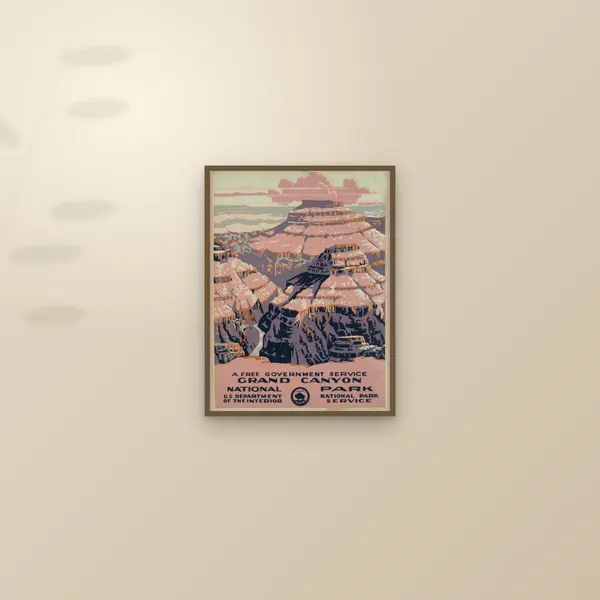
| Grand Canyon National Park | c. 1938 | Department of the Interior, National Park Service | C. Don Powell |
| Lassen Volcanic National Park | c. 1938 | Department of the Interior, National Park Service | C. Don Powell |
| Pueblos of the Southwest | 1935 | Not stated in the record | Dorothy Waugh |
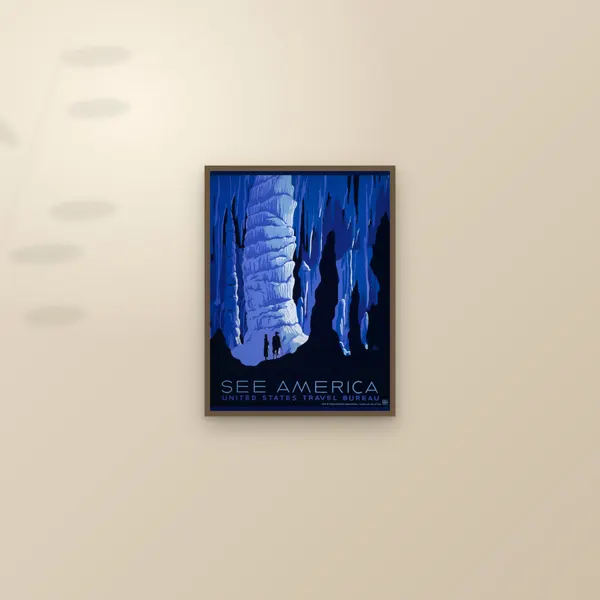
| See America (caverns) | 1936–39 | Works Progress Administration Federal Art Project, New York City | Alexander Dux |
| See America, Welcome to Montana | 1936–39 | Works Progress Administration Federal Art Project, New York City | Martin Weitzman |
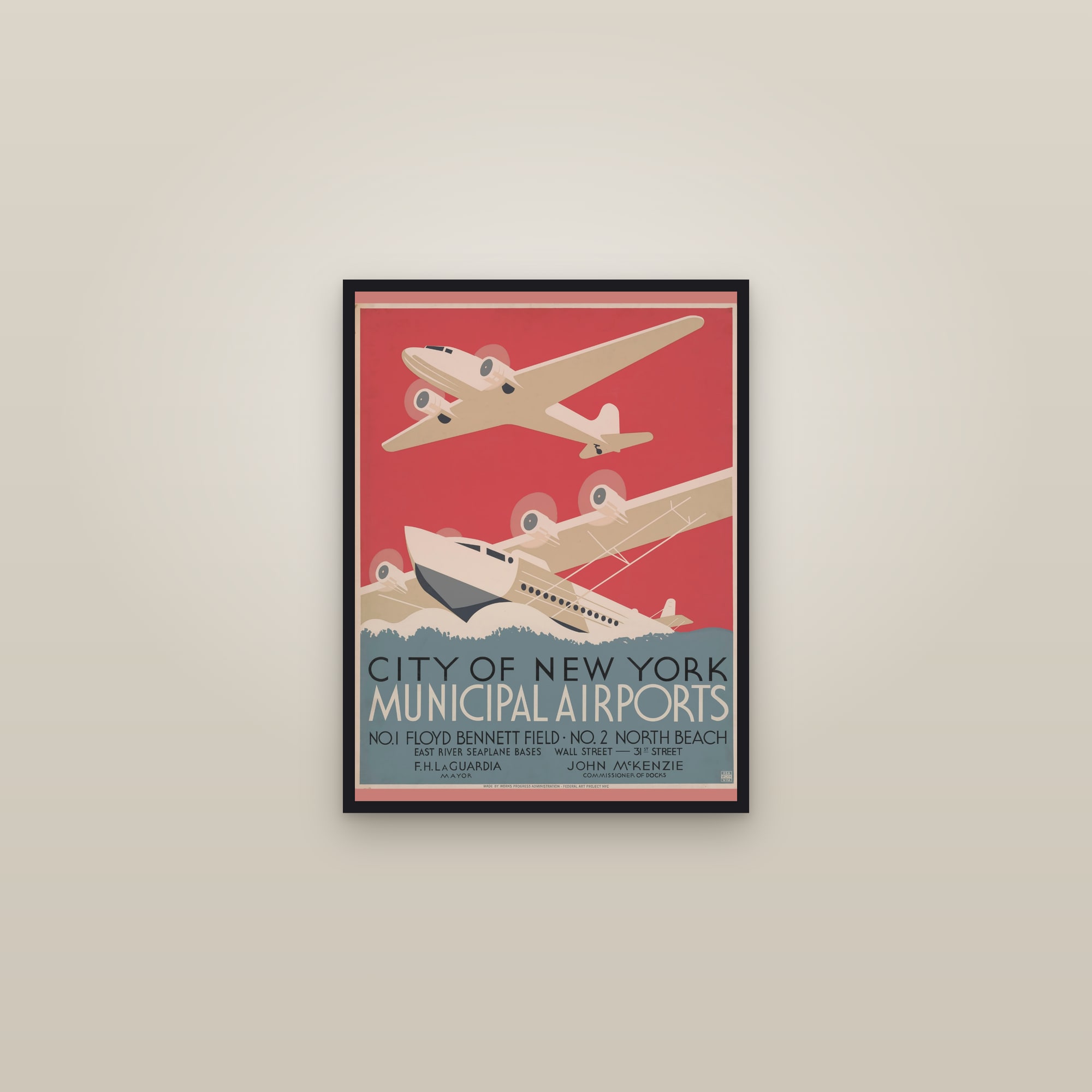
| City of New York Municipal Airports | 1936 or 1937 | Works Progress Administration Federal Art Project, New York City | Not named |
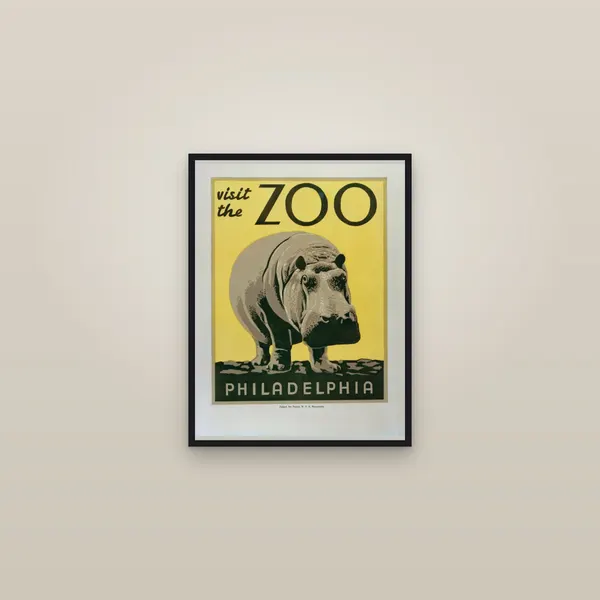
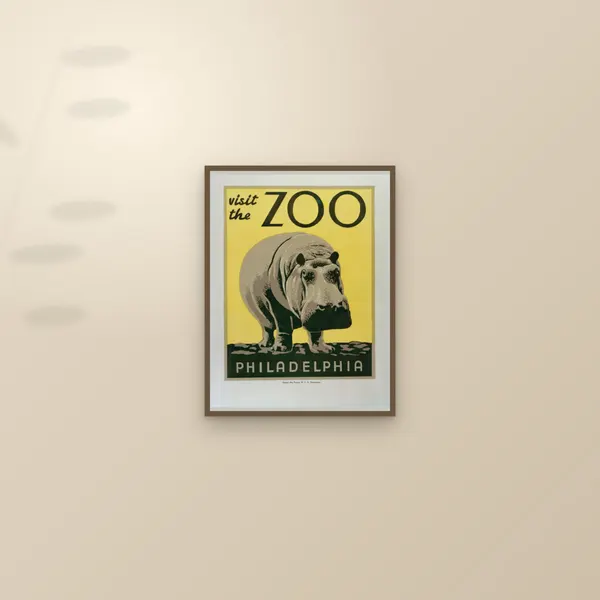
| Visit the Zoo, Philadelphia | 1936–41 | Federal Art Project, WPA, Pennsylvania | Not named |
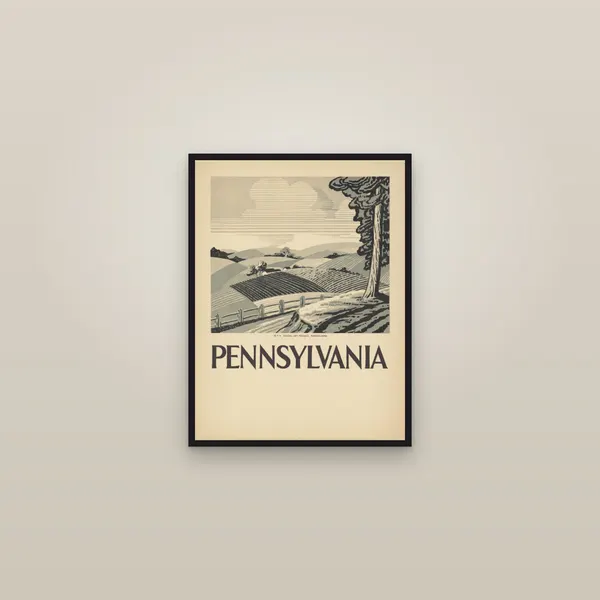
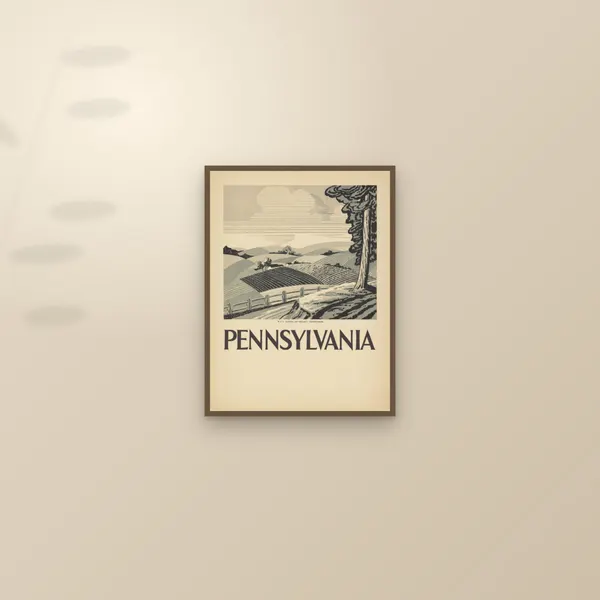
| Pennsylvania (farmland) | 1936–41 | WPA Federal Art Project, Pennsylvania | Robert Muchley |
The Park Service's workshop reports put the printing of the Lassen Volcanic poster in August and September 1939. Every poster we sell is listed with its date, maker and Library of Congress record on our reference page, WPA and National Park Service posters by state and park.
What does the Library of Congress say about rights?
It says it knows of no restrictions. The Library of Congress's rights statement for the collection reads: "Posters in this collection were made by artists working for the Work Projects Administration (earlier called the Works Progress Administration), a 'New Deal' program of the U.S. Government. There are no known restrictions on the use of these posters."
Note the wording. The Library says "no known restrictions." It also says, on the collection's rights and access page, that it does not own rights to material in its collections and that it is the researcher's obligation to assess copyright. Each poster's own record carries a rights line, and the four records cited in this piece read "No known restrictions on publication." Our piece on why we can sell Van Gogh explains how the public domain works for older art.
Where can you see the originals?
Online, at the Library of Congress. Its collection is published as Posters: WPA Posters. Its item records also list it under the title By the People, for the People: Posters from the WPA, 1936 to 1943. The originals are kept in the Prints and Photographs Division in Washington, which serves digital images in place of the original posters.
For the park posters, the National Park Service History Collection holds several, and so do park museums. Some are very rare. By the Park Service's count, four copies of the Grand Canyon poster are confirmed, and two each of the Lassen Volcanic and Fort Marion posters. No original of the Great Smoky Mountains poster has been found at all. It is known only from a black-and-white photograph taken on 5 May 1940.
Which should you hang, and where?
We print 47 restored posters from this period, each from a scan of the Library of Congress's copy and each at the poster's own proportion. About two thirds are close to 3:4 and the rest are 2:3, so nothing is cropped to fit a standard sheet. Sizes differ from poster to poster because the scans do. Each poster's page lists the sizes it holds sharply, and our guide to print sizes and ratios explains the shapes.
These posters were designed to be read from across a room, so they do well where people pass by.
- A hallway or entry. The park posters work singly. The Grand Canyon is all pink and violet and suits a pale wall. Lassen Volcanic is browner and warmer.
- A study or a den. The See America posters are darker and moodier. The caverns poster is almost entirely blue and looks sharp in a black frame.
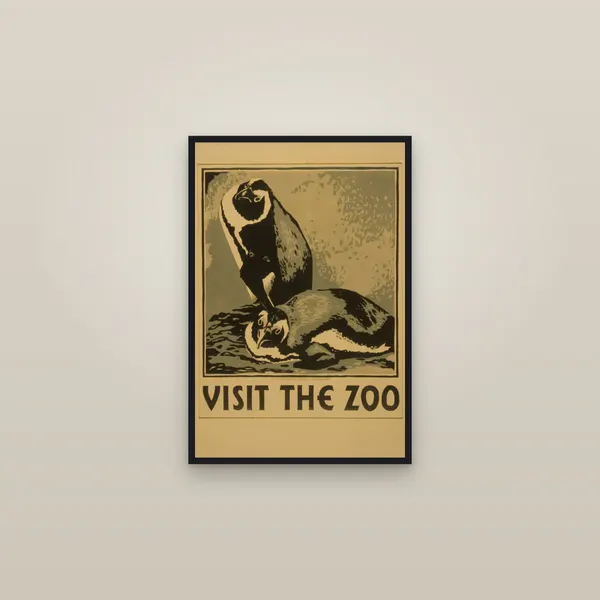
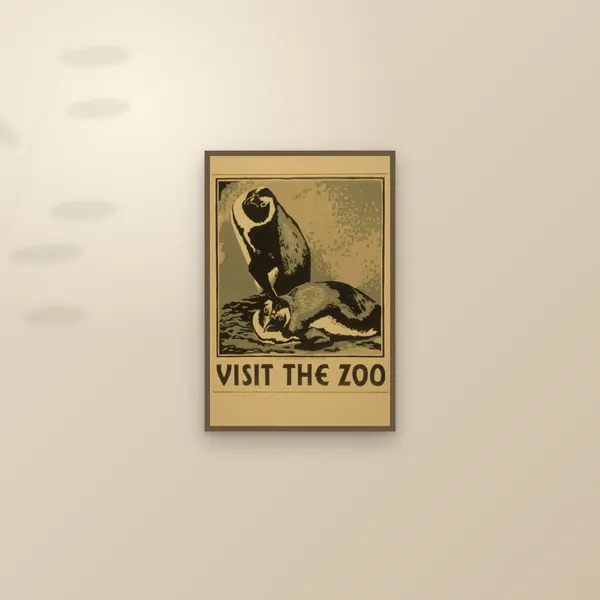
- A child's room. The zoo posters are the obvious choice: the Philadelphia hippopotamus on yellow, or the pair of penguins in soft greens and browns.
- A row of three. Pick posters from one project so the lettering matches: three See America designs, or three from Pennsylvania.
A black frame suits the bolder New York posters. Dark wood suits the park posters and the Pennsylvania woodcuts, which have warmer paper tones.
One last distinction. Our national park posters page also includes modern park posters that we draw ourselves in this style. Those are new designs, not WPA originals, and their pages say so. The restored originals are the ones in the table above and on the reference page.
Questions people ask
What were the WPA posters?
They were posters made between 1936 and 1943 by artists working for the Works Progress Administration, a United States government programme that created jobs during the Great Depression. They publicised health and safety campaigns, theatre and music, art exhibitions, travel, education and community events.
How many WPA posters were made?
The Library of Congress says over two million posters were printed from thirty-five thousand designs across the WPA art projects. It says only about two thousand are known to exist today. The Library's own collection holds 907.
Were the national park posters made by the WPA?
Not quite. Dorothy Waugh designed her park posters from 1934 to 1936 as a National Park Service employee, before the WPA's art project existed. The Ranger Naturalist Service posters of 1938 to 1941 were made by the National Park Service's Western Museum Laboratories in Berkeley, using workers paid by the WPA and other New Deal programmes. The See America posters were made by the New York City WPA Federal Art Project for the United States Travel Bureau.
Are WPA posters public domain?
The Library of Congress, which holds the largest collection, says the posters were made by artists working for the Work Projects Administration, a New Deal programme of the US Government, and that there are no known restrictions on their use. It also says it is the researcher's obligation to assess copyright for any item.
Why do WPA posters look the way they do?
Most were silkscreened. Each colour was pushed through a stencilled screen in its own pass, so designers worked in a handful of flat colours with hard edges and bold lettering. The posters also had to be read quickly from across a hallway or a street.
Where can I see original WPA posters?
The Library of Congress in Washington holds 907 in its Prints and Photographs Division and has put the collection online as Posters: WPA Posters. The National Park Service History Collection and several park museums hold original park posters.
Sources
- Library of Congress, Posters: WPA Posters, About this Collection (907 posters, 1936 to 1943; seventeen states and the District of Columbia; subjects; silkscreen, lithograph and woodcut; the WPA founded 1935 and renamed in September 1939; the Mayor's Poster Project of 1934; Richard Floethe; Anthony Velonis and silkscreen in 1936; six hundred posters a day; over two million posters from thirty-five thousand designs; about two thousand known to exist; added to the Library in the 1940s)
- Library of Congress, Prints and Photographs Division: Work Projects Administration Posters, Rights and Restrictions Information (made by artists working for the WPA, a New Deal program of the U.S. Government; no known restrictions on the use of these posters)
- Library of Congress, Posters: WPA Posters, Rights and Access (the Library does not own rights; the researcher's obligation to assess copyright)
- National Park Service, 50 Nifty Finds #39: An NPS Art Factory (the Western Museum Laboratories posters of 1938 to 1941; WPA, CCC and NYA labour; how the silkscreens were printed; runs of 100 at 12 dollars; dates and surviving copies of the Grand Canyon, Lassen Volcanic and Fort Marion posters; C. Don Powell's role unconfirmed; about 40 park posters survive)
- National Park Service, 50 Nifty Finds #7: The Waugh Factor (Dorothy Waugh, National Park Service employee; 17 posters between 1934 and 1936; the first six printed around August 1934 for National Parks Year; not a Federal Art Project artist; the Federal Art Project established 29 August 1935)
- Library of Congress record: Grand Canyon National Park, a free government service (Department of the Interior, National Park Service, c. 1938; colour screen print, 48 by 36 cm; C. Don Powell named as designer)
- Library of Congress record: See America, Alexander Dux (New York City, Works Progress Administration Federal Art Project, between 1936 and 1939; silkscreen; a poster for the United States Travel Bureau)
- Library of Congress record: Visit the zoo, Philadelphia (Pennsylvania, Federal Art Project, W.P.A., between 1936 and 1941; colour woodblock print on board)
- Library of Congress record: Don't kill our wild life (New York City, Works Progress Administration, Federal Art Project, between 1936 and 1940; silkscreen; note: Department of the Interior, National Park Service)
- National Archives, Milestone Documents: President Franklin Roosevelt's Radio Address Unveiling the Second Half of the New Deal (the WPA employed about 8.5 million Americans over its seven-year history; the first federal support for American art and culture)
Start hereA short history of the print, from woodblock to giclée