
Why we can sell Van Gogh: public domain, explained
Copyright in his paintings ended long ago, so it no longer stops anyone reproducing them. The EU, UK and US rules, museum photographs, and what public domain leaves out.
Contents7 sections
- How long does copyright last in the EU and UK?
- Why does the US use a different date?
- Is a museum's photograph of an old painting protected?
- Why does it matter where the file comes from?
- Does the same apply to other famous pictures?
- Why are some twentieth-century painters not here?
- What does public domain not cover?
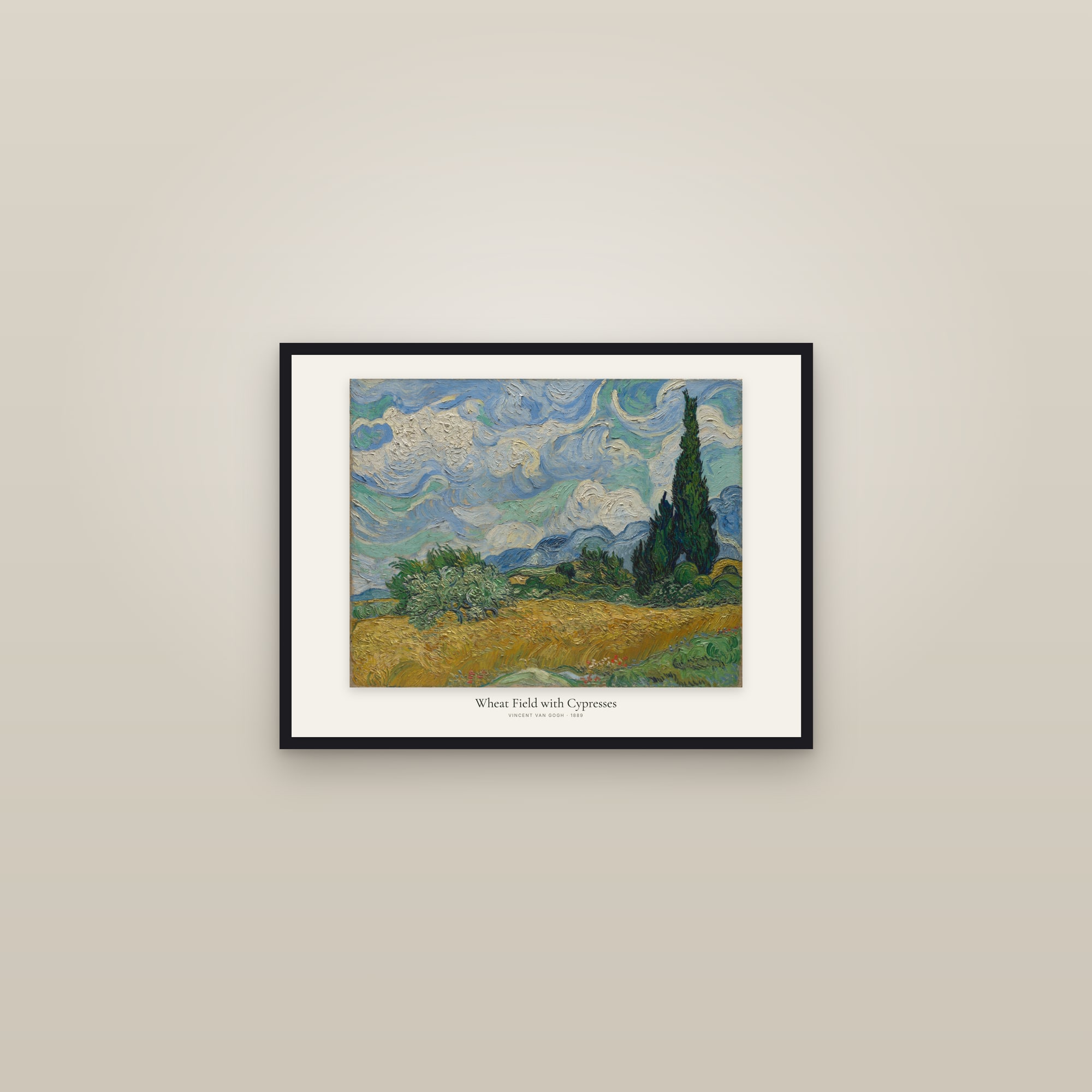
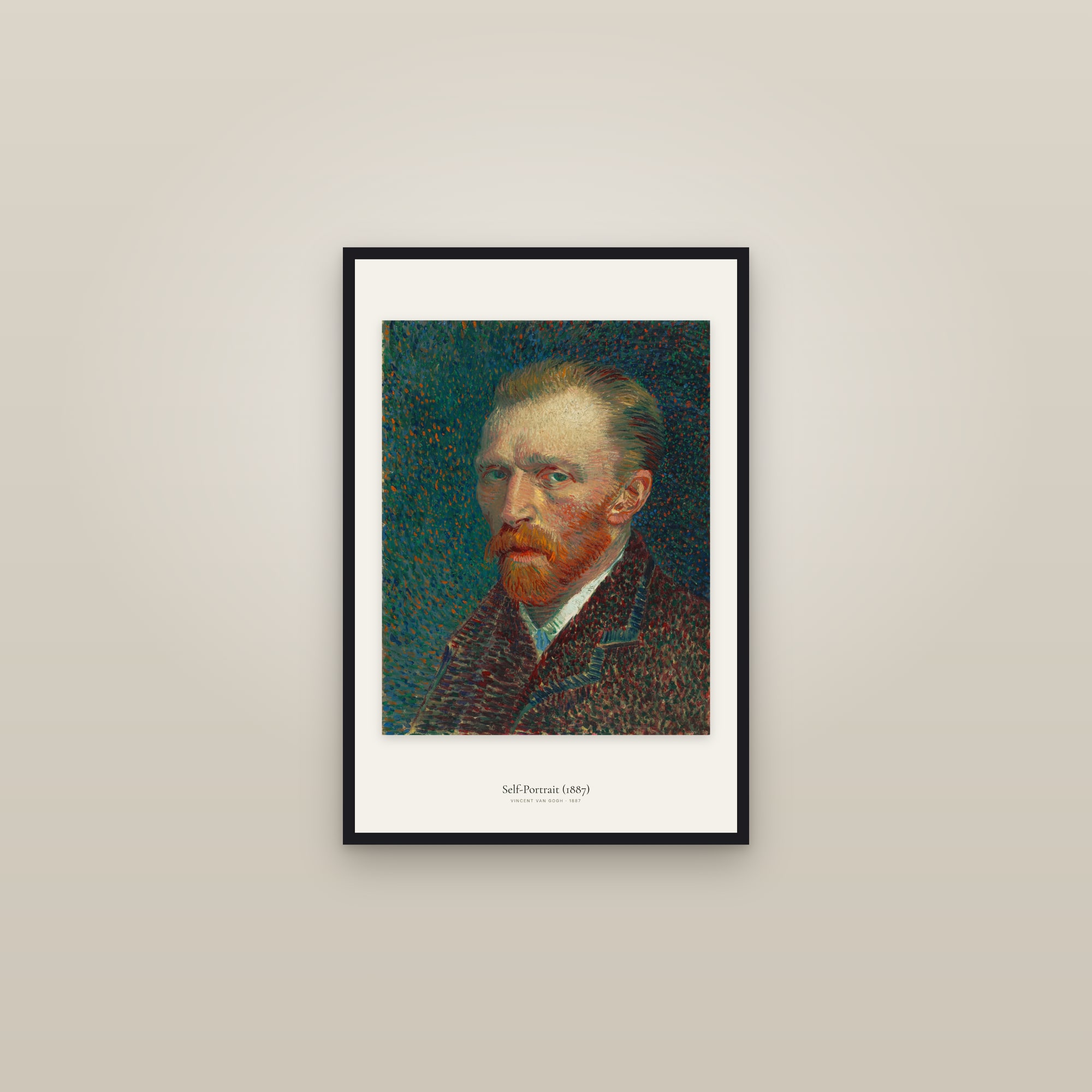
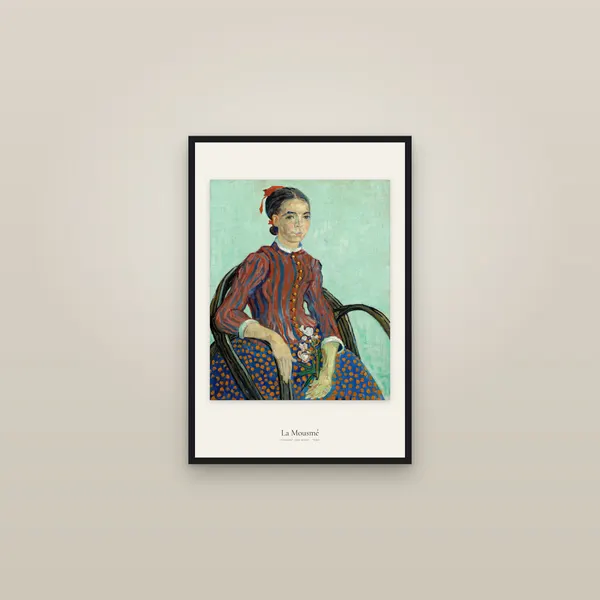
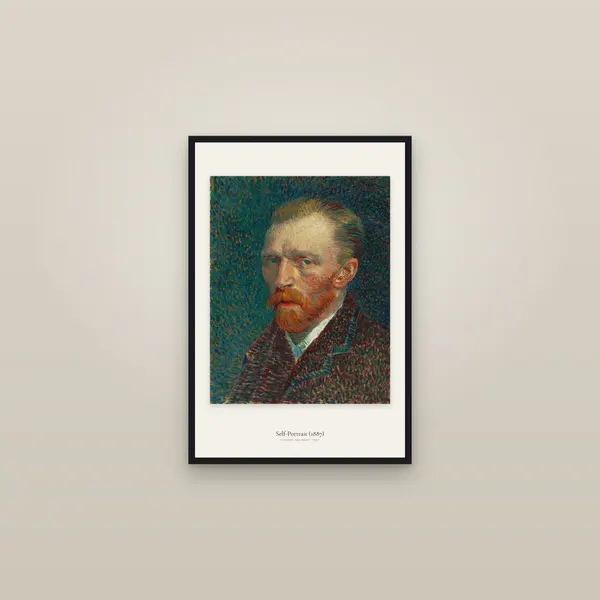
How can a shop sell prints of Van Gogh's paintings? Because copyright runs for a fixed term. Vincent van Gogh died on 29 July 1890, so any copyright in his paintings expired long ago: copyright no longer stops anyone reproducing them, and we pay no one for the right. That's what people mean when they say a work is in the public domain.
What you pay us for is restoration, printing and framing. The detail below includes the places where the law is less tidy than that sounds. This is a general explanation, not legal advice, and the rules differ by country.
How long does copyright last in the EU and UK?
The life of the author plus 70 years. In the EU, authors' rights run for life and 70 years after death, counted from 1 January of the following year. In the UK, copyright in an artistic work expires 70 years from the end of the calendar year of death. On that measure, Van Gogh's term ended at the close of 1960.
| Where | Rule | Clear on 1 January 2026 |
|---|---|---|
| EU and UK | Life of the author + 70 years | Author died in 1955 or earlier |
| US, published work | At most 95 years from publication | Published in 1930 or earlier |
| US, never published | Life of the author + 70 years | Author died in 1955 or earlier |
Why does the US use a different date?
Because for older works the US counts from publication, not death. Cornell's chart, dated 1 January 2026, lists everything published before 1931 as expired. The maximum term is 95 years, running to the end of the calendar year, so Duke's Center for the Study of the Public Domain counts 1930 works as protected through 2025 and clear on 1 January 2026. The cut-off moves one year each 1 January: 1931 follows in 2027.
That means a death date alone does not settle it. Duke notes that foreign painters such as Mondrian and Klee can receive the full term without notice or renewal, because of a 1996 provision restoring copyright in certain foreign works. Mondrian died in 1944, which is more than 70 years ago. A canvas he first published after 1930 can still be protected in the US.
"Published" has a special meaning too, and Duke calls the rules murky. Its test for art of this period asks whether the work was exhibited without restrictions on copying, circulated in an authorised catalogue or magazine, or offered for sale. A picture kept in the studio does not count. Van Gogh clears in both ordinary cases: published by 1930, the term is over; never published, Cornell's chart clears authors who died before 1956.
Is a museum's photograph of an old painting protected?
The painting may be clear while the photograph is a new object, and a print starts from the photograph, so that's a second question to answer. Three sources address it, and they do not go the same distance.
United States. In Bridgeman Art Library v. Corel (S.D.N.Y., a federal court in New York, 1999), the claimant's colour transparencies were exact copies of public-domain paintings. Judge Kaplan noted the claimant's own admission that they were "slavish copies" and found skill and effort but no spark of originality: "Copyright is not available in these circumstances." He added that the claim would also fail under UK law, while saying that point was moot. This is one federal trial court, ruling on exact copies. The same opinion accepts that most photographs are original enough for copyright.
European Union. Article 14 of the Digital Single Market Directive tells member states that when the term of a work of visual art has expired, "any material resulting from an act of reproduction of that work is not subject to copyright or related rights", unless that material is itself the author's own intellectual creation. Recital 53, one of the directive's explanatory passages, adds that museums may still sell reproductions such as postcards.
United Kingdom. Less settled. The government said in 2020 that the UK would not be required to implement the directive and had no plans to. THJ Systems v Sheridan (Court of Appeal, 2023) concerned charts produced by options-trading software, not paintings. It held that the originality test is the author's own intellectual creation, shown by free and creative choices, not "skill and labour", and that the author's-own-creation test is the more demanding. It mentions photographs only in passing, citing an EU case on portrait photographs, and it does not rule on photographs of paintings. The Intellectual Property Office's notice, which predates the case, thinks copyright in a merely retouched digital copy of an older work unlikely, and says plainly that only a court can settle the law.
Why does it matter where the file comes from?
Because a museum's own release removes that museum's claim on the file. The Met offers over 492,000 images of public-domain works under Creative Commons Zero, a waiver for unrestricted use. The National Gallery of Art offers more than 60,000 free of charge, for commercial use as well. The Rijksmuseum marks free material Public Domain or CC0 and flags any restrictions on its collection site. The Art Institute of Chicago offers over 50,000 under CC0.
None of these is a guarantee. The National Gallery says it "can only convey what rights it has", and the Art Institute leaves any third-party permissions to the user. Status is also set work by work, so a famous name does not mean a free file.
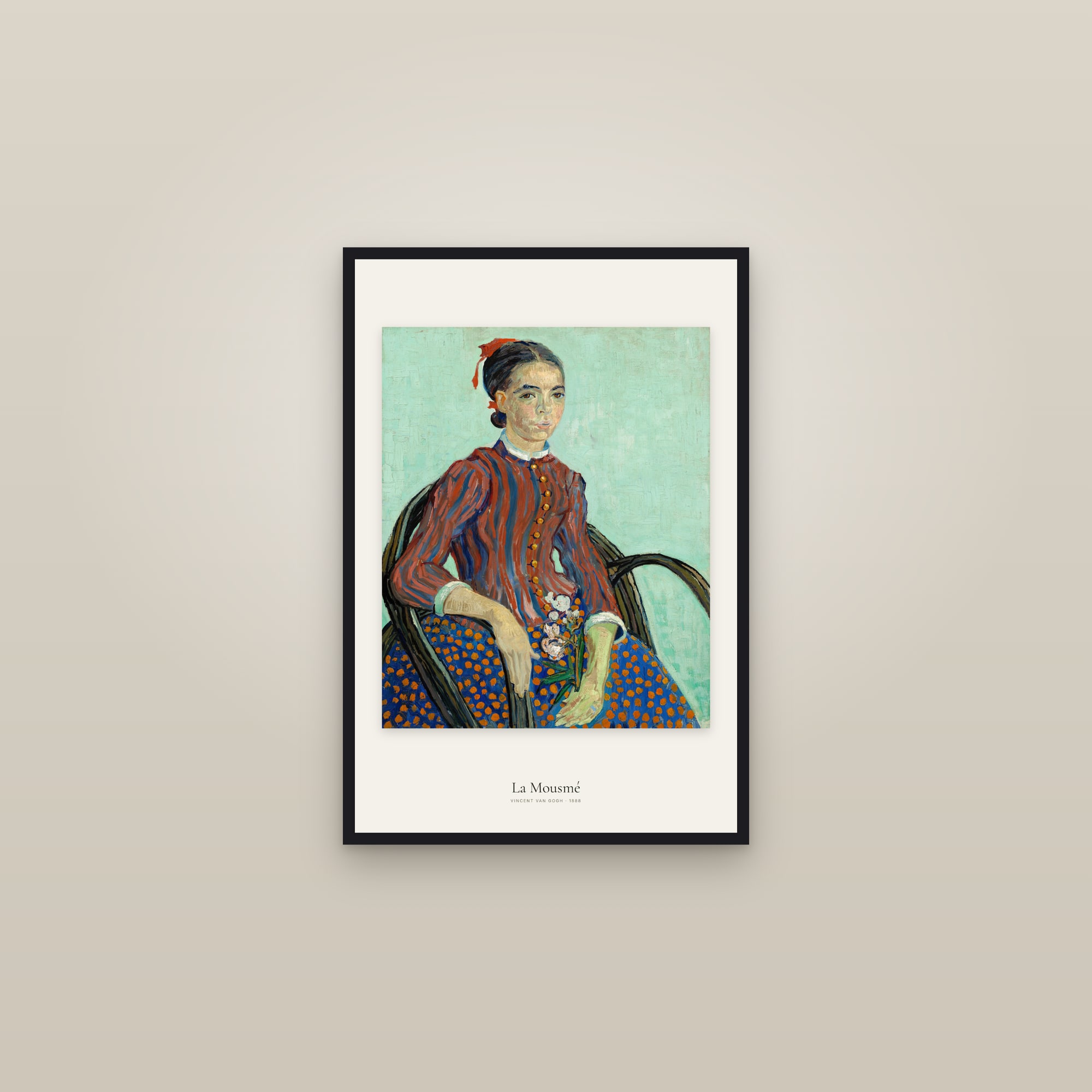
For paintings, we go to museum files first. Where none is open at a printable size, and for some older editions in the catalogue, we use a copy from Wikimedia Commons, and that file rests on the rules above, not on a museum's waiver. See the Van Gogh prints and the Met, Art Institute and Rijksmuseum pages.
Does the same apply to other famous pictures?
Yes, wherever the painter has been dead long enough. The Starry Night, which Van Gogh painted in June 1889 and which hangs at the Museum of Modern Art in New York, is as free of copyright as his other paintings. We print the whole painting, uncropped, on museum-quality archival paper.
Johannes Vermeer died in 1675, so no copyright term reaches Girl with a Pearl Earring, painted around 1665 and now at the Mauritshuis in The Hague. Katsushika Hokusai died in 1849, and his Great Wave is a woodblock print that survives in many impressions. Our guide to which version of the Great Wave to buy explains how to choose a print of it. Older still, Sandro Botticelli died in 1510, and The Birth of Venus, painted around 1485 for Florence and now in the Uffizi, has never been under copyright in the modern sense.
Why are some twentieth-century painters not here?
Because they fail one test or cannot be shown to pass it. Edward Hopper died in 1967 and Georgia O'Keeffe in 1986, so the life-plus-70 ceiling runs through 2037 and 2056. Both painted long after 1930. In the US, work published from 1931 to 1963 lasts 95 years if renewed, and work from 1964 to 1977 lasts 95 years if published with notice. A missed renewal could free a particular picture in the US, and possibly elsewhere, since the EU and UK can cap a foreign author's term at the home-country term. That is a records question for each work, and we do not sell on a guess.
Our working rule for painters active in the twentieth century: dead more than 70 years, and the work made and first shown or reproduced in 1930 or earlier. It is a careful rule. It does not make any catalogue free of all risk.
Alphonse Mucha shows the rule at work. He died in Prague in 1939, more than 70 years ago, and the posters and decorative panels people look for, from Gismonda of 1895 to The Seasons of 1896, were printed in Paris decades before 1931. They are on our Art Nouveau prints page, beside Klimt's The Kiss.
What does public domain not cover?
The end of copyright in a painting doesn't clear away every other right. Three are worth knowing.
Trademarks. A trademark identifies the source of goods or services, and it is a separate right from copyright. The end of copyright in a painting says nothing about a name or logo used as a brand. The National Gallery also asks users of its open data not to use its logo or imply its endorsement. We have no connection with the museums we name.
Heritage rules. Copyright is not the only possible claim. Italy's cultural-heritage code lets public collections ask a fee for commercial reproductions of works they hold, and a Venice court enforced it against a puzzle maker in 2022. A later German ruling kept it within Italy, and how it sits with Article 14 is unresolved.
A seller's new material. Under US law, copyright in a derivative work, a new work built on an older one, extends only to the material its author contributed, so a new caption or essay can be protected while the painting stays free. Restoration is harder to call: the UK office doubts a merely retouched copy qualifies, and elsewhere it would turn on the choices involved. Either way, restoring a scan gives no one rights in the painting.
So what a buyer pays for is work: the restoration of the scan, the printing and the framing. The rights were never for sale.


Questions people ask
Is Van Gogh's art public domain?
Yes, on the rules set out here. He died on 29 July 1890. Life plus 70 years ended at the close of 1960, and in the US works published in 1930 or earlier have expired, as has the life-plus-70 term for unpublished work by authors who died before 1956. This is a general explanation, not legal advice.
When does a painting enter the public domain?
In the EU and UK, generally 70 years after the end of the year the painter died. In the US, it depends on publication: as of 1 January 2026, works published in 1930 or earlier are clear, and the cut-off moves one year each 1 January. Older US works can have lapsed earlier for lack of notice or renewal.
Can a museum own copyright in a photograph of an old painting?
It depends on the country and the photograph. Bridgeman v. Corel (New York, 1999) found no copyright in exact copies. Article 14 of the EU directive removes it unless the reproduction is itself original. In the UK, the Intellectual Property Office thinks protection unlikely but says only a court can settle it.
If a painting is public domain, what am I paying for?
The work done on the reproduction: finding and restoring the scan, printing it to order, and framing it if you choose. You are not paying for rights in the painting, and neither you nor the seller gets any.
Sources
- Van Gogh Museum: Van Gogh's death (29 July 1890)
- The Museum of Modern Art: Vincent van Gogh, The Starry Night, June 1889
- Mauritshuis: Johannes Vermeer (1632 to 1675), Girl with a Pearl Earring, c. 1665
- The Metropolitan Museum of Art: Katsushika Hokusai (1760 to 1849), Under the Wave off Kanagawa
- Directive 2006/116/EC on the term of protection, Articles 1, 7 and 8
- UK Copyright, Designs and Patents Act 1988, section 12
- Cornell University Library: Copyright Term and the Public Domain, as of 1 January 2026
- Duke Center for the Study of the Public Domain: Public Domain Day 2026
- Bridgeman Art Library v. Corel Corp., 36 F. Supp. 2d 191 (S.D.N.Y. 1999), opinion text
- Directive (EU) 2019/790 on copyright in the Digital Single Market, recital 53, Articles 14 and 29
- THJ Systems Ltd v Sheridan [2023] EWCA Civ 1354, Court of Appeal judgment
- UK Intellectual Property Office: Copyright notice, digital images, photographs and the internet (updated 4 January 2021)
- UK Parliament: written answer UIN 4371 on the EU Copyright Directive, 21 January 2020
- The Metropolitan Museum of Art: Open Access
- National Gallery of Art: Free Images and Open Access
- Rijksmuseum: Information and Data Policy
- Art Institute of Chicago: Open Access Images
- 17 U.S.C. section 103, compilations and derivative works (Cornell Legal Information Institute)
- US Patent and Trademark Office: Trademark, patent, or copyright
- National Gallery of Art: open data, terms of use
- Kluwer Copyright Blog: the Vitruvian Man ruling and Italian cultural heritage law, 2023
- COMMUNIA Association: the Italian heritage code in the courts, 25 November 2024
Start hereHow a fine-art print is made: from a 1714 plate to your wall