
Kitchen wall art: what works near heat, steam and a white wall
Keep art away from the hob, the kettle and direct sun; frame paper behind acrylic; go for fruit, herbs and food. Where it can hang, what size, and which prints suit a kitchen.
Contents6 sections
A kitchen is the room people stand in longest and look at least. The wall by the breakfast table, the strip beside the window and the space above a sideboard all wait for something, and most of them stay bare because a kitchen seems a risky place for a picture. It isn't, if you keep away from three things. Hang art away from heat, steam and direct sun, frame anything on paper, and choose subjects that belong to the room, such as fruit, herbs, spices and food.
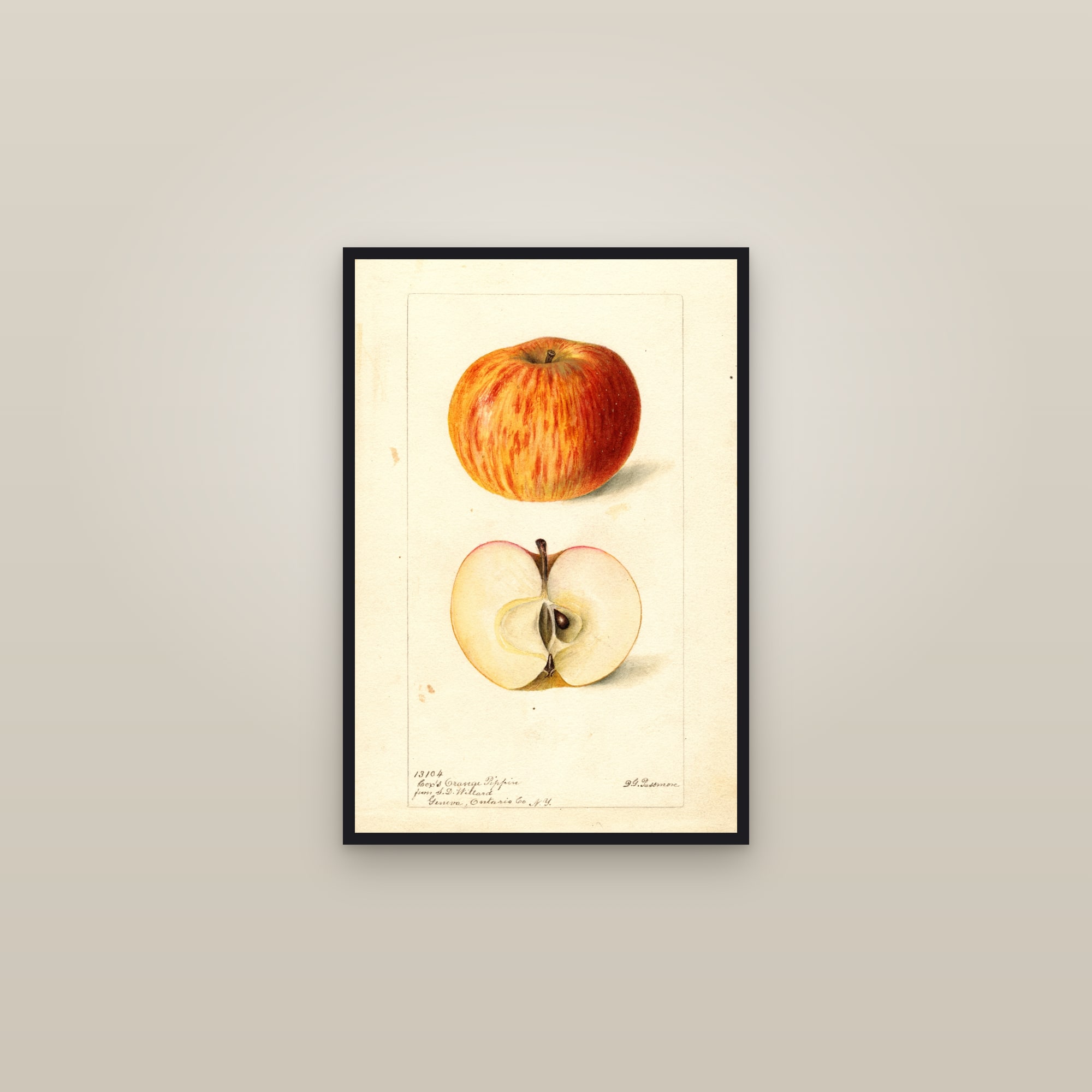
Where can art go in a kitchen, and where can't it?
Start with the cooker. Heat rises off the hob and the oven door, and it carries steam and fine grease with it. Anything hung above or beside them takes all three every day. The kettle, the toaster, the rice cooker and the open dishwasher door do the same on a smaller scale. Leave those spots to tiles and shelves.
The Library of Congress gives the same advice for any framed work on paper: hang it away from working fireplaces and radiators, on interior walls rather than outside ones, and out of direct sun. The Print Council of America adds why. Warm, moist air speeds up the ageing of paper and lets mould start, and most moulds need humidity above 65 percent. A kitchen reaches that next to a pan of pasta, then falls again an hour later.
That leaves plenty of good wall. The best places in most kitchens are these:
- the wall behind a breakfast table or bench, where people sit and actually look;
- the space above a sideboard, a dresser or open shelving at the dining end;
- the strip beside a doorway, which takes one tall print;
- the end of a run of cabinets, away from the cooker.
Light matters too. All light damages paper a little at a time, and the damage adds up, says the Print Council. Kitchens are often the brightest room in the house. Keep prints off the wall that takes the afternoon sun through the window. Our prints are on matte paper, so overhead lights don't glare off the sheet itself.
Framed, unframed or canvas?
Framed is the default for a kitchen. Our frames come in black or dark wood. In the US the frame is a premium wood one with real glass and the print is on cotton-rag paper; elsewhere the frame is slim, with acrylic glazing. Either way the print arrives ready to hang. The glazing keeps steam and splashes off the paper, and it wipes clean when the kitchen leaves a film on it.
Unframed is fine at the far end of the room, pinned or clipped above a desk corner or a dresser. It isn't fine near the cooking, because steam makes an unframed sheet cockle and grease settles on it.
Canvas has no glazing at all. That is its strength on a bright wall, since there's no glass to reflect the window, and its weakness near the hob, since anything in the air lands on the print. Keep a canvas at the dining end. Many of the edge-to-edge plates come on canvas; the framed, unframed or canvas guide explains which editions do and why.
What size works on a kitchen wall?
The same rules as any other room, and kitchens rarely need anything large.
Above a sideboard, a bench or a table pushed against the wall, the art should be two-thirds to three-quarters of that piece's width. Leave 6 to 10 inches of wall between its top and the bottom of the frame. On a bare wall with nothing under it, put the centre of the picture 57 inches from the floor. Prints in a row hang 3 inches apart; in a gallery wall, 2 to 3 inches.
In practice:
| Where | What fits | Width |
|---|---|---|
| A narrow strip by a door or window | one 12×18 portrait | 12 in |
| A 60-inch sideboard or bench | three 12×18 portraits, 3 in apart | 42 in |
| A 72-inch sideboard or table | three 16×24 portraits, 3 in apart | 54 in |
| A long wall behind a breakfast table | a grid of six 12×18, two rows of three | about 41 in wide |
Allow a little extra width for frames. Put in your own sideboard and the calculator below draws the options with real prints.
Hanger drop: measure from the top of the frame down to the hanger (on a sawtooth, to the middle of the teeth).
| # | Size | Nail from the floor | Nail from the left wall edge | Nail from the centre line | |
|---|---|---|---|---|---|
| 1 | Water Lilies | 24 × 36 in | 77 in | 46½ in | 13½ in left |
| 2 | Girl with a Pearl Earring | 24 × 36 in | 77 in | 73½ in | 13½ in right |
Try your own measurements above. The full tool, with the chart and every option: Sideboard.
What art suits a kitchen?
Pictures of food, and of the plants it comes from. They belong to the room's work, and they have the right scale: one apple, one pear, one sprig, drawn life size or close to it.
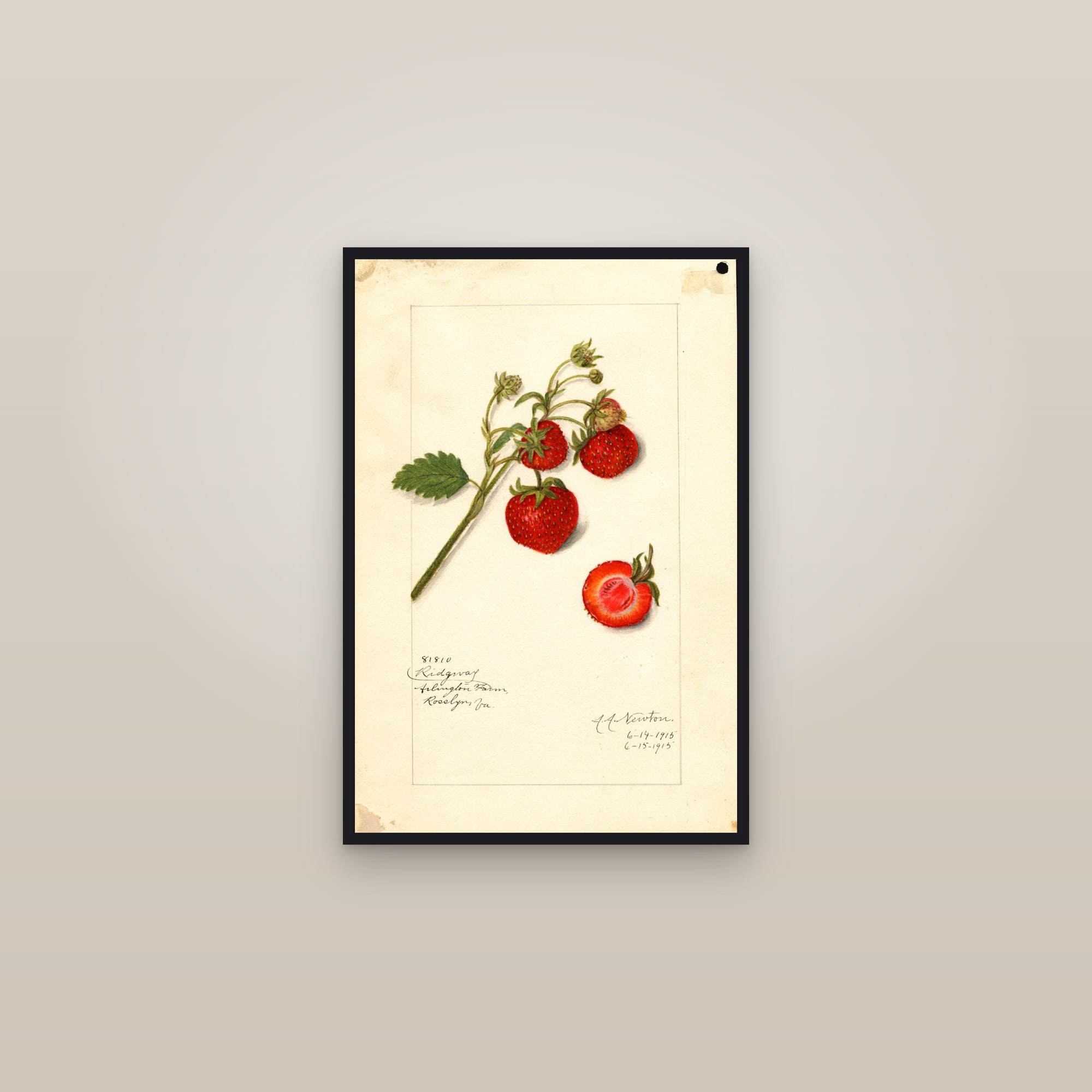
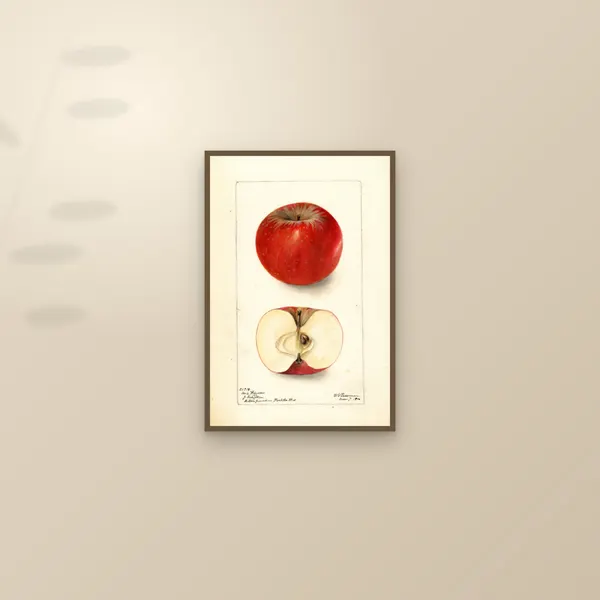
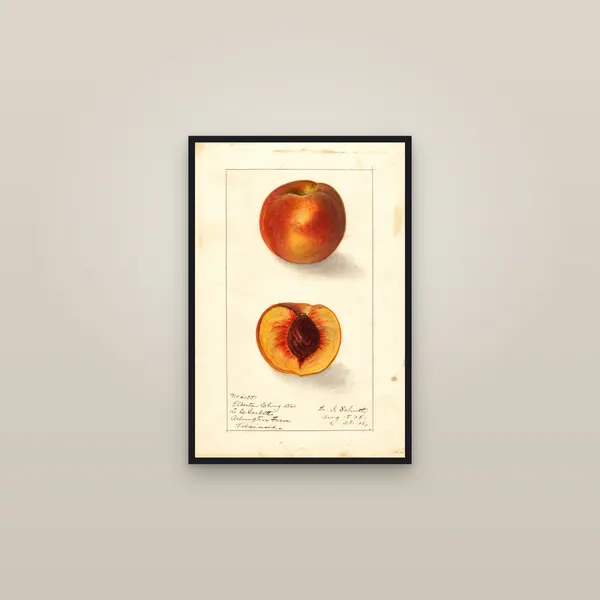
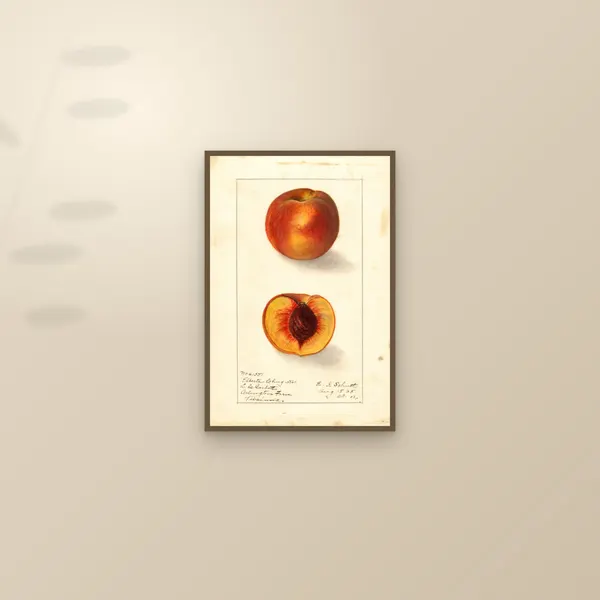
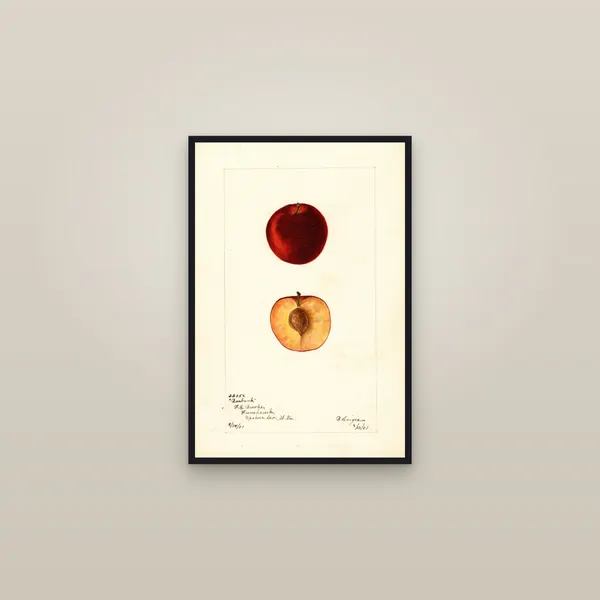
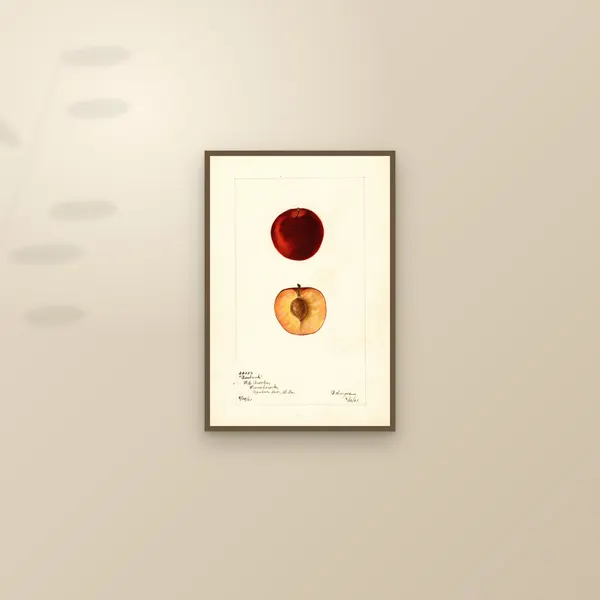
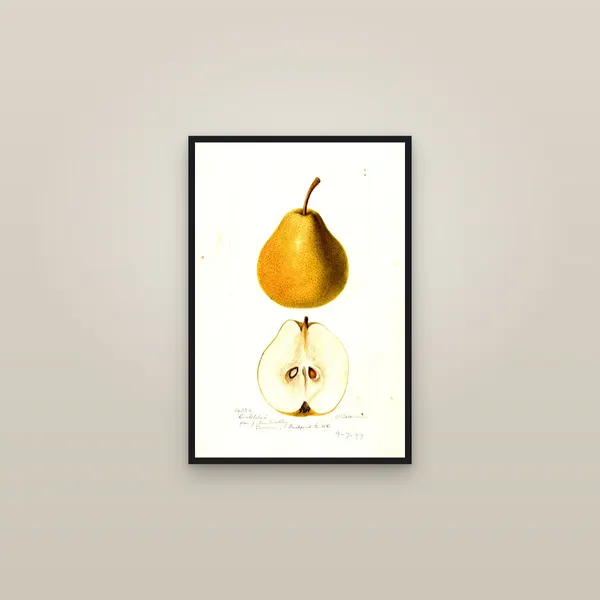
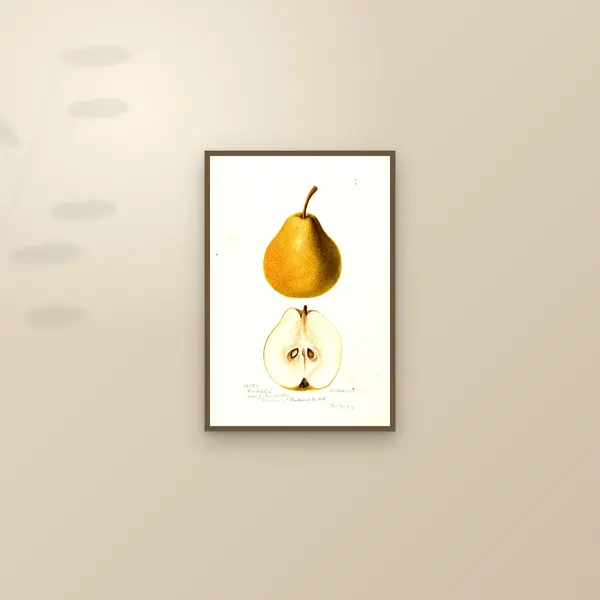
Fruit watercolours. Between the 1880s and the 1930s the US Department of Agriculture hired about 50 artists to paint fruit for its bulletins, so growers could see a new variety exactly. The National Agricultural Library holds about 7,000 of these paintings today. Each sheet shows a real specimen, usually whole and cut in half, with the painter's pencil note of where it came from. Our Ridgway Strawberry came from the department's Arlington Farm in Virginia and was painted by Amanda Newton in June 1915. Newton was the granddaughter of Isaac Newton, the first US Commissioner of Agriculture. The plates are on vintage fruit prints; they print up to 16×24, which is the right scale for a kitchen anyway.
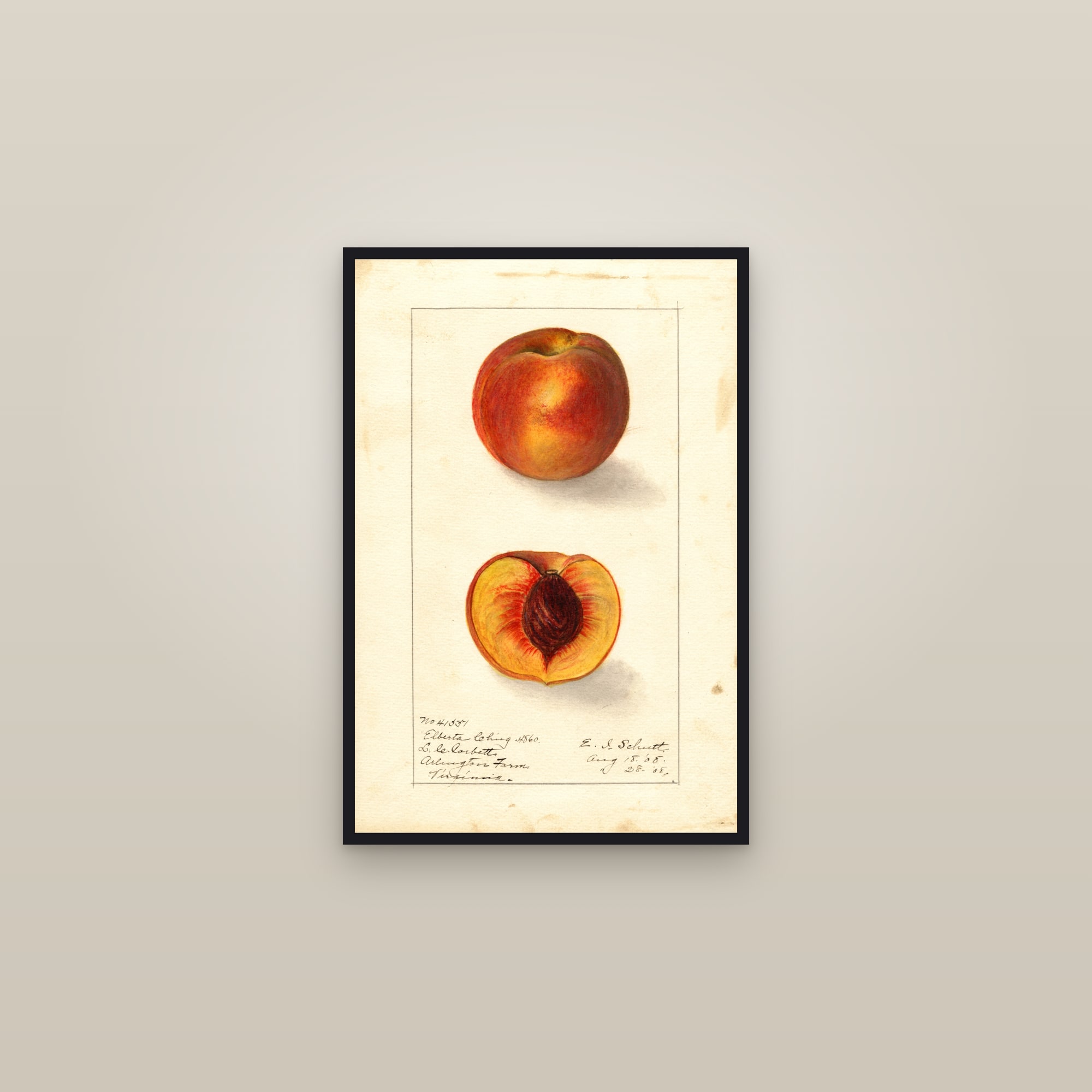
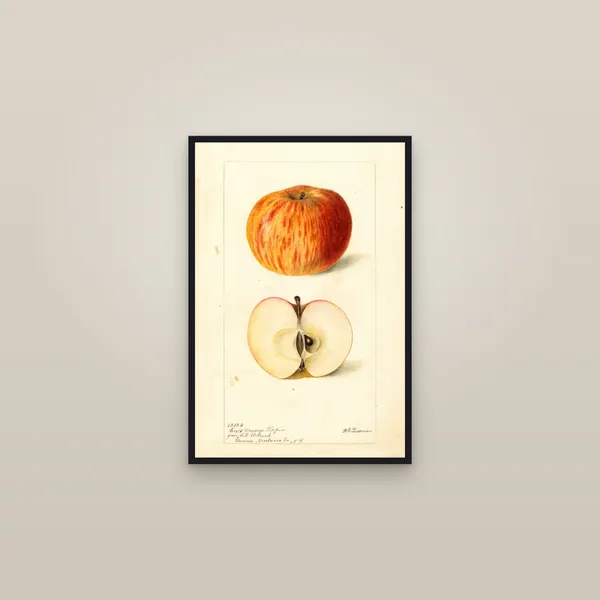
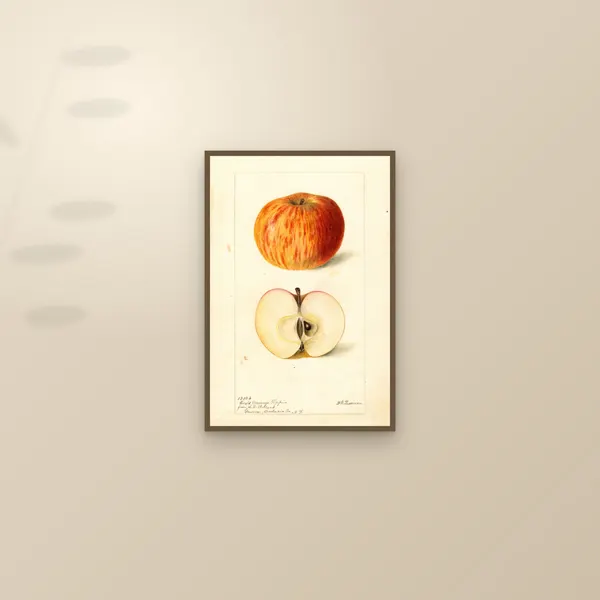
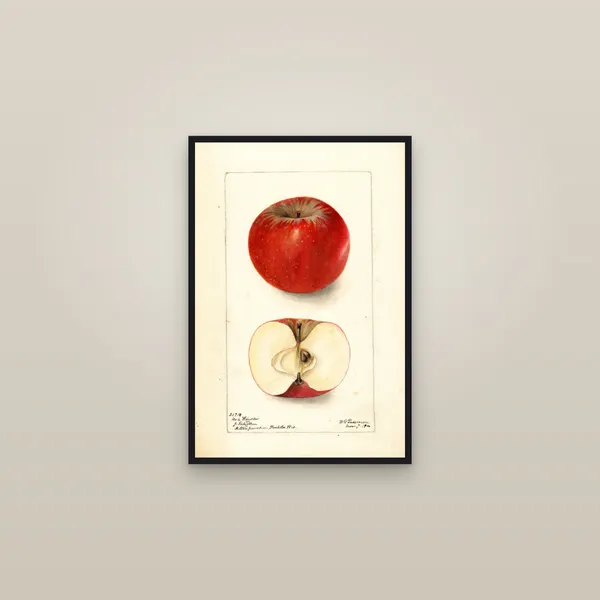
Three in a row. A matched trio is the classic kitchen wall: three apples, or three stone fruits. The Three Apples set is Cox's Orange Pippin, Maiden Blush and Windsor; Stone Fruit is the Elberta peach, the Burbank plum and the Carnation cherry. More trios are on kitchen prints, set of 3.
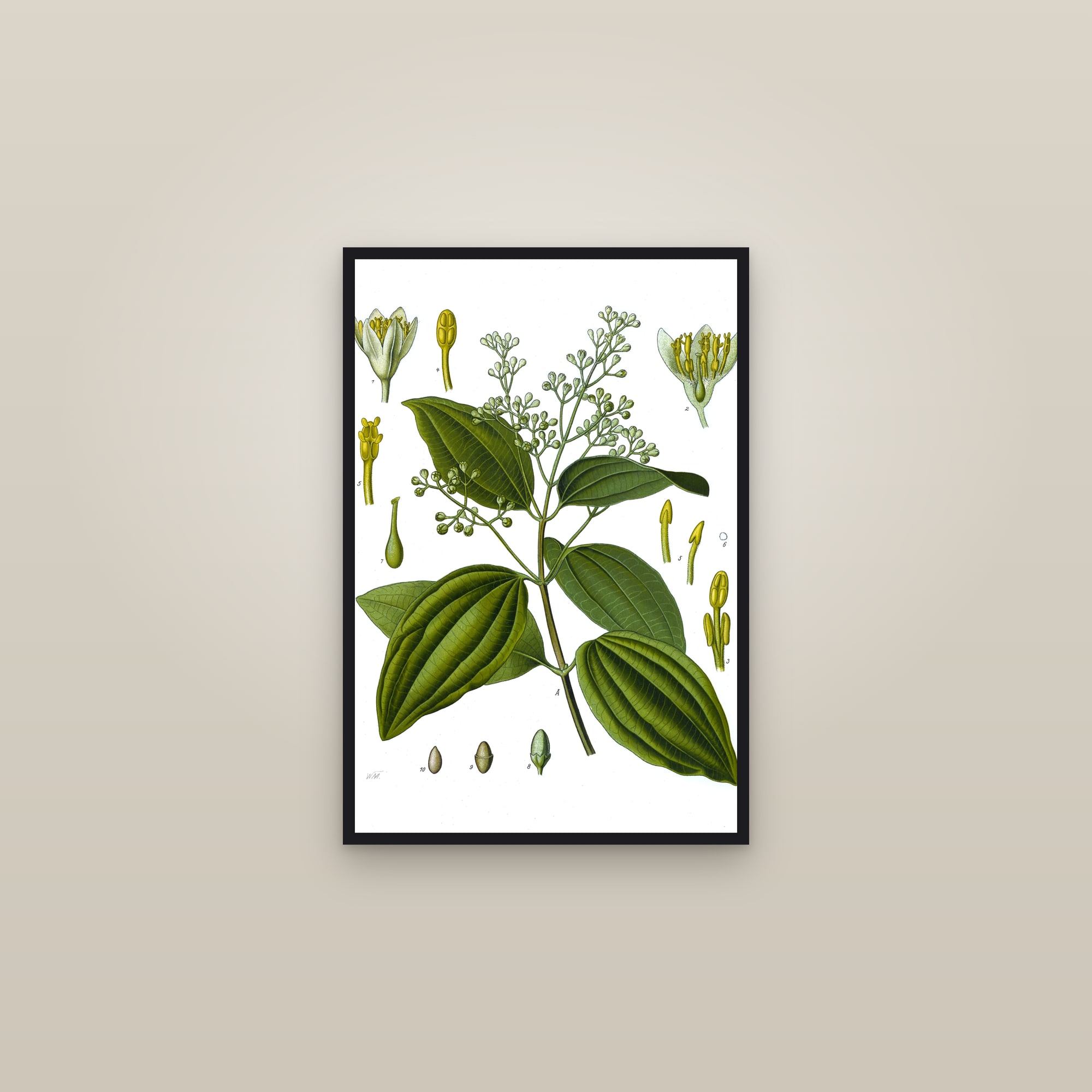
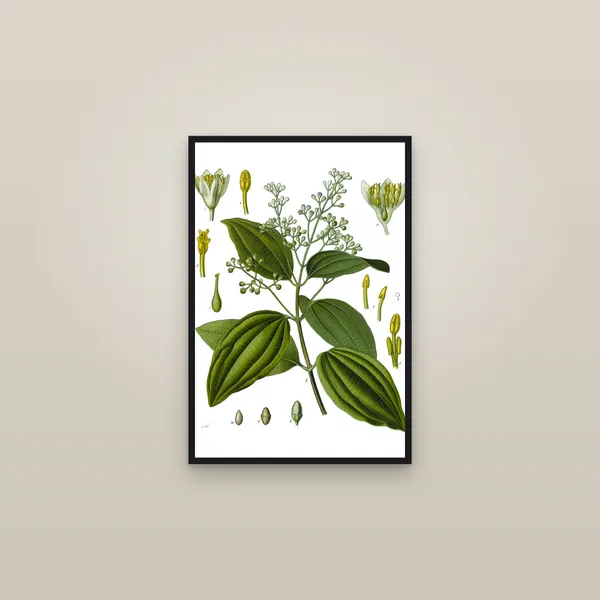
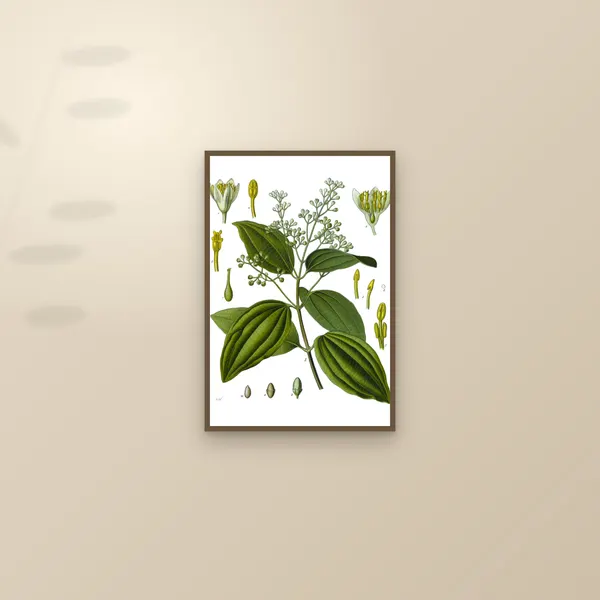
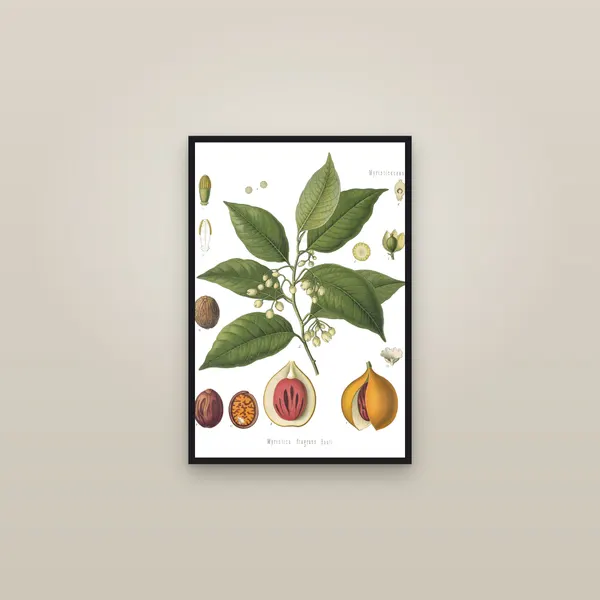
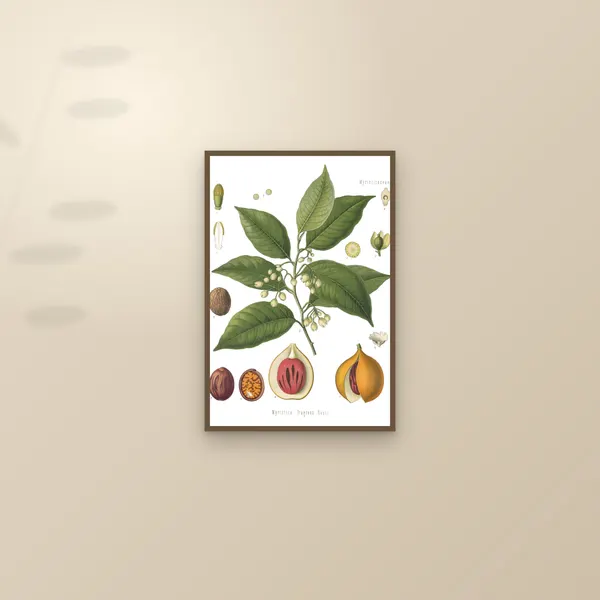
Spice and herb plates. Franz Eugen Köhler's medicinal-plant book of 1887 drew the plants behind the spice rack: cinnamon, ginger with its knobbly root, and nutmeg, its seed shown whole and split open. They're on a white ground, so they suit a modern kitchen, and black frames suit them. More are on kitchen wall art.
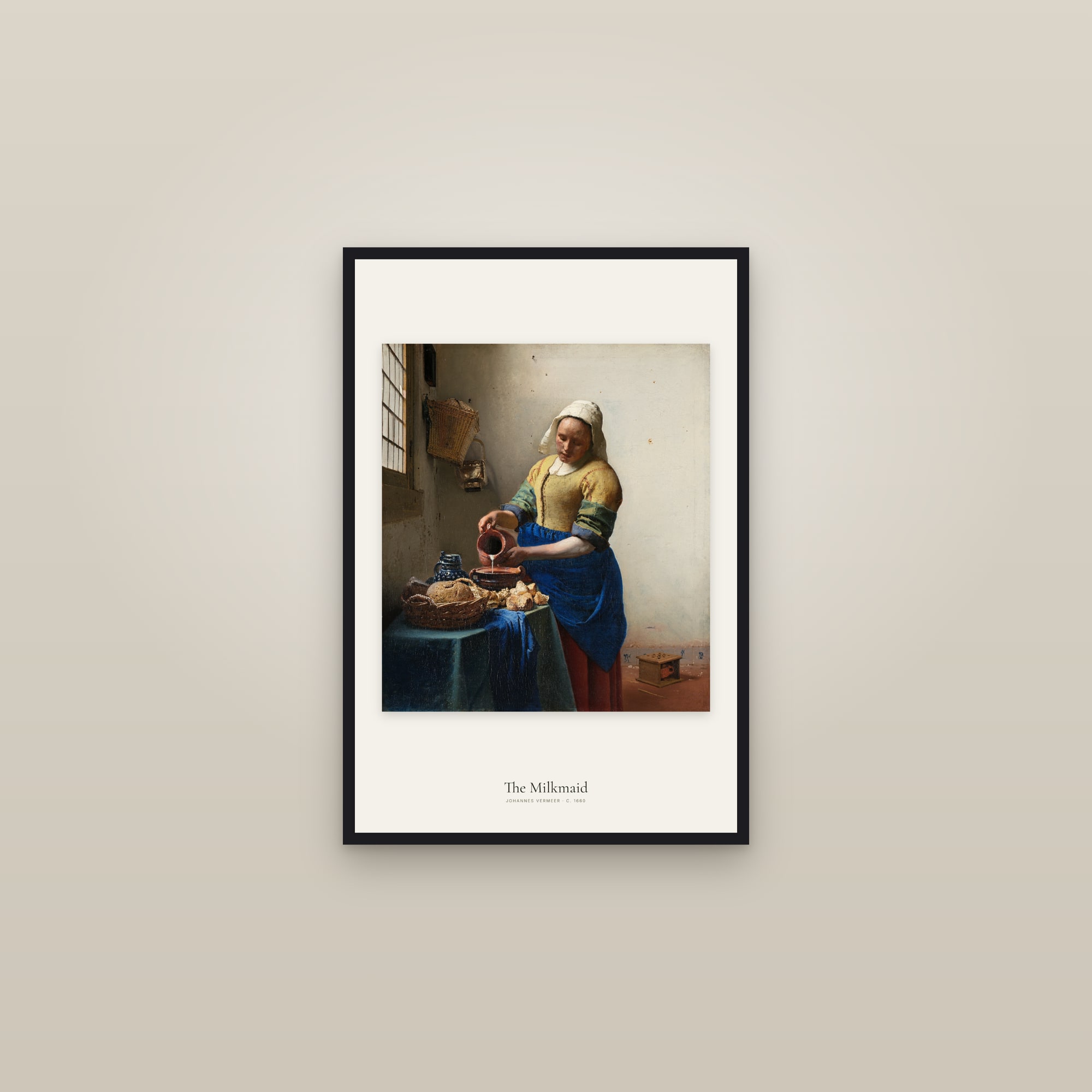
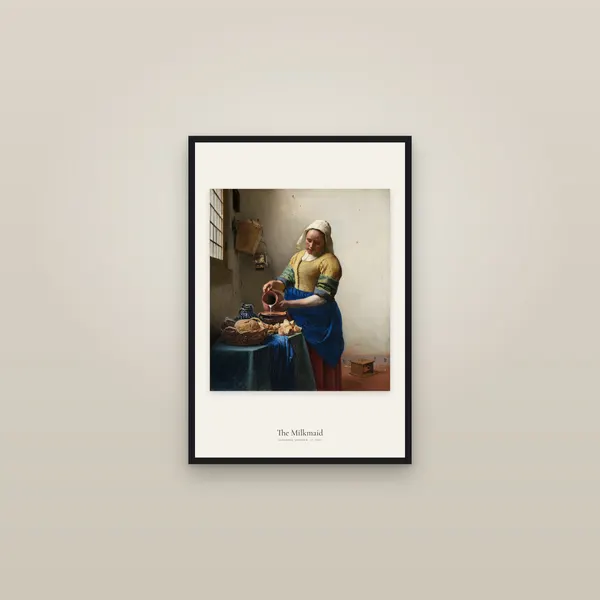
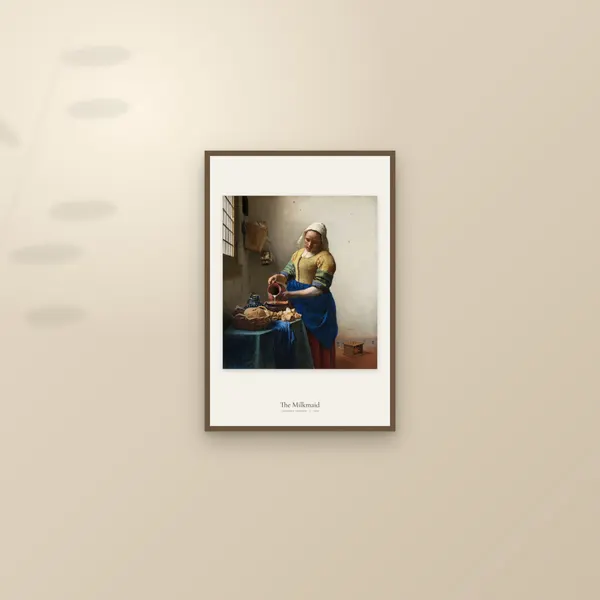
A kitchen painting. Vermeer's The Milkmaid is a kitchen: a maid pouring milk by a window, with bread on the table and a foot-warmer on the floor. The Rijksmuseum dates it to about 1660 and bought it in 1908 from the heirs of the Six family, together with 38 other paintings. For a darker, quieter still life, Zurbarán's lemons, oranges and a rose lines up a plate of lemons, a basket of oranges and a cup on a saucer, on a table against black. More are on still life paintings.
Something useful. Kitchen Essentials is a cream reference sheet with boiled-egg times, oven temperatures, conversions and steak doneness, drawn in-house. Hang it framed, near where you cook but not above the hob. For the drinks corner, the Art Deco cocktail chart sets out eighteen classics in gold on black; more are on cocktail and bar cart prints.
What works on a white kitchen wall?
Most kitchens are white, and white walls are easy. Two choices work, depending on the room.
Warm it. The fruit watercolours are on old cream paper, and we print scans of real artworks on an off-white archival paper. On a white wall a cream sheet in a dark wood frame reads as warm and old, like a page from a ledger. This suits wooden worktops, copper and open shelves.
Contrast it. For a sharper look, choose a dark ground. Most of the fruit plates also come in a "With label" look: the whole sheet on a deep forest-green ground with a printed label, chosen on the same product page. The Zurbarán and the cocktail chart are dark too. In a black frame on a white wall they give a white kitchen a single strong point, which suits flat-fronted cabinets and steel.
Either way, keep to one family per wall: three fruits, or three spices, in matching frames. Mixed subjects on a small kitchen wall look like a noticeboard.
The short version
Keep art away from the hob, the kettle, the dishwasher door and the sun. Frame paper behind acrylic, in black or dark wood, and keep canvas at the dining end. Size it to the furniture below, two-thirds to three-quarters of its width and 6 to 10 inches above it, or centre it at 57 inches on a bare wall. Choose food and the plants it grows on. For the rest of the house, see the complete guide to choosing wall art; for a row of three, one big piece or a set of three; for a grid above the breakfast table, gallery wall layouts.
Questions people ask
Where should you not hang art in a kitchen?
Not above or beside the hob, the oven or the toaster, not where the kettle or the dishwasher breathes steam, not on a wall in direct sun, and not on a cold outside wall if you have an inside one. Heat, moisture and light are what age paper, and a kitchen has all three in a few spots.
Should kitchen art be framed?
Paper prints, yes. Glazing keeps steam, splashes and grease off the sheet and wipes clean. Our frames are black or dark wood with acrylic glazing. An unframed print is fine only at the far end of the room, away from the cooking.
Can you hang a canvas in a kitchen?
Yes, at the dining end or on a wall well away from the cooking. Canvas has no glazing, so grease and steam land on the print itself, but it also has no glass to reflect a window, which helps on a bright wall.
What size art for a kitchen wall?
Above a sideboard, bench or table, art two-thirds to three-quarters of that piece's width, 6 to 10 inches above it. On a bare wall, centre it at 57 inches from the floor. Three 12×18 prints 3 inches apart make 42 inches, which suits a 60-inch sideboard.
What kind of art suits a kitchen?
Pictures of food and the things that grow it: fruit watercolours, spice and herb plates, a still life, or a reference chart you actually use. On a white wall, a cream sheet in a dark wood frame warms the room; a dark ground in a black frame gives it contrast.
Sources
- Library of Congress, Preservation: Matting and Framing for Art and Artifacts on Paper (hang away from working fireplaces and radiators, on interior walls, out of direct sun; the object should not touch the glazing)
- Print Council of America, Care of Art on Paper (warm, moist conditions speed deterioration and encourage mould; most moulds need humidity above 65 percent; do not hang near heating or cooling sources; all light damage to paper is cumulative)
- USDA Agricultural Research Service, Agricultural Research magazine, September 2000: the Pomological Watercolor Collection (about 50 illustrators; Amanda A. Newton was the granddaughter of Isaac Newton, the first Commissioner of Agriculture)
- National Agricultural Library, USDA Pomological Watercolor Collection finding aid (about 7,000 watercolours; artists hired from 1887 to illustrate USDA bulletins)
- Rijksmuseum, Amsterdam: Johannes Vermeer, The Milkmaid, c. 1660 (SK-A-2344; bought in 1908 from the Six family heirs with 38 other paintings)
Start hereThe complete guide to choosing wall art for a home