
Mark Catesby, the naturalist who etched his own book
An Englishman painted the wildlife of the American Southeast from life, then etched nearly all 220 plates himself. How and why, largely in his own words.
Contents13 sections
- Who was Mark Catesby?
- Who paid for the second journey?
- What was the work like in the field?
- Why the Bahamas?
- Why did a naturalist learn to etch?
- What was new in the pictures?
- How was the book published and coloured?
- Which of his animals are gone?
- How did Linnaeus use the book?
- Did Audubon know Catesby's book?
- What happened to the book after Catesby?
- Why do some plates sit sideways?
- The plates now
Mark Catesby was an English naturalist who went to colonial America, painted what he found there, and came home to make a book of it. The Natural History of Carolina, Florida and the Bahama Islands has 220 hand-coloured plates of the birds, fish, snakes, insects and plants of the American Southeast and the Bahamas. It came out in London in parts between 1729 and 1747.
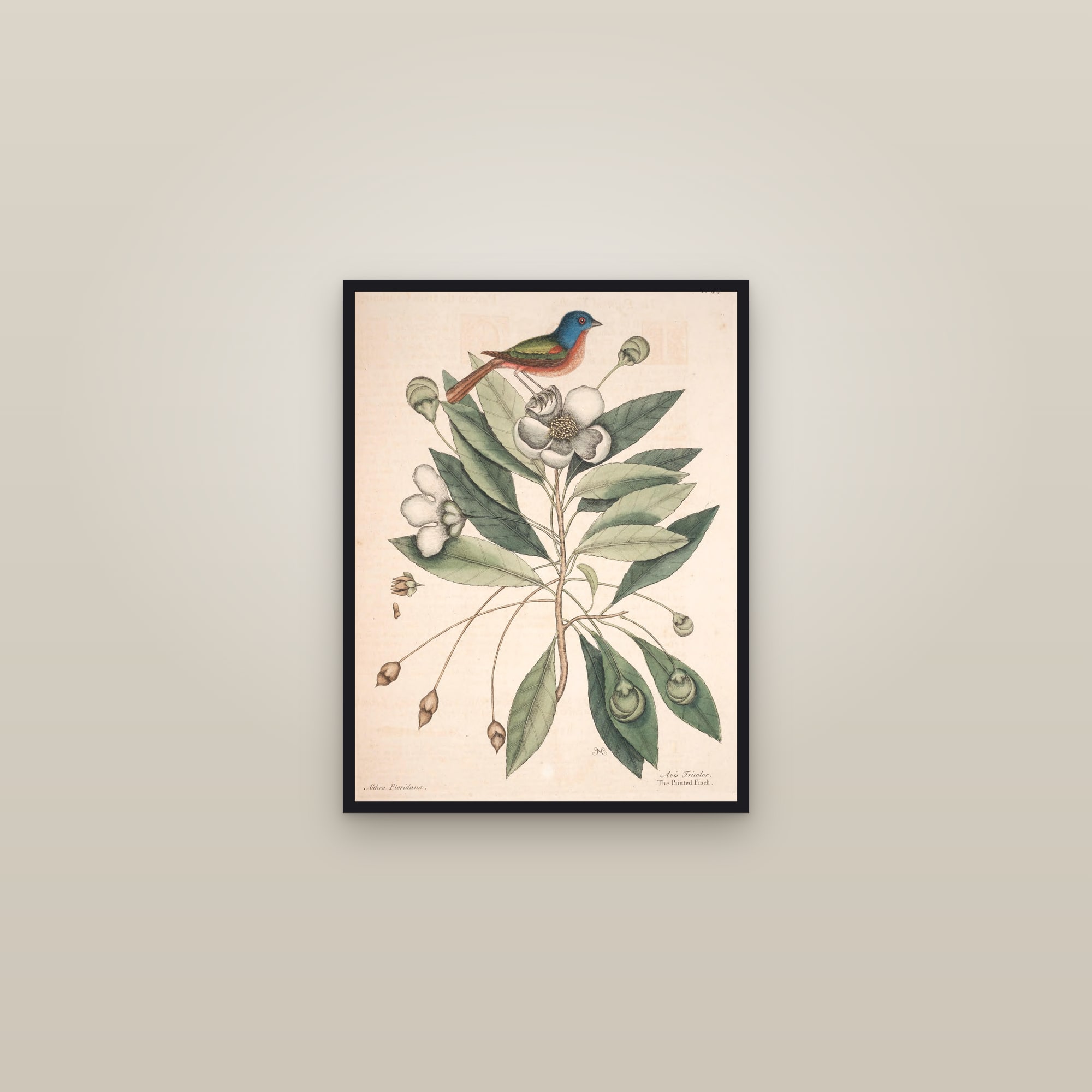
It matters for three reasons. The Smithsonian Libraries call it the first fully illustrated work on the plants and animals of southeastern North America. Catesby painted most of his birds alive and set each on a plant from its own country, a way of showing a bird that Audubon would still be using a century later. And the plates record animals nobody will see again: the passenger pigeon, the Carolina parakeet, the ivory-billed woodpecker.
He also made the prints himself. He was not a trained artist, and nobody he consulted thought he could afford to publish. This is the story of how he did it anyway, told mostly from his own preface.
Who was Mark Catesby?
He was born in Essex in 1683 and died in London on 23 December 1749, according to the Dictionary of Scientific Biography. He seems not to have gone to university, the University of North Carolina Libraries note. What he had was a strong taste for plants and animals, and relatives in Virginia.
He landed there on 23 April 1712, by the date in his preface. He stayed seven years, based in Williamsburg, where his sister and her husband lived. He had no plan for a book. "I am ashamed to own it," he wrote later: he spent those years looking and admiring.
He did send things home. Dried plants, and living ones in tubs of earth, went back to England for a Mr. Dale, an apothecary and botanist in Braintree, Essex. Dale passed Catesby's notes to William Sherard, in Catesby's words one of the most celebrated botanists of the age. When Catesby came home in 1719, Sherard befriended him, and on Sherard's advice he resolved to make the book.
Who paid for the second journey?
A group of patrons. The preface names twelve of them, from the Duke of Chandos to Sir Hans Sloane, then President of the Royal Society. They include Sherard and Colonel Francis Nicholson, the governor of South Carolina, and six of the twelve are marked in the list as Fellows of the Royal Society or its President. The University of North Carolina describes the trip as made with the backing of members of the Royal Society.
Catesby sailed in 1722 and reached Carolina on 23 May. The voyage was not dull. The crew caught sharks and struck porpoises, dolphins, bonitos and albacores. They ate the last three when they could, and the sailors, tired of salt meat, ate the shark and porpoise too. In mid-ocean, at least 600 leagues from land by his reckoning, an owl appeared over the ship. Owls have short wings, he noted, and he found its stamina the most surprising thing of all.
What was the work like in the field?
Long, and in company. He spent the first year in the settled coastal country. Then he moved up to Fort Moore, a small fort on the Savannah River, and made several journeys with Native American hunters up the rivers toward the mountains.
The preface gives the kit. He employed a Native American guide to carry his box, which held paper, paints, and the dried plants and seeds he gathered on the way. He lived on what his companions shot. When rain came, their first care was to put up a bark hut to keep him and his cargo dry.
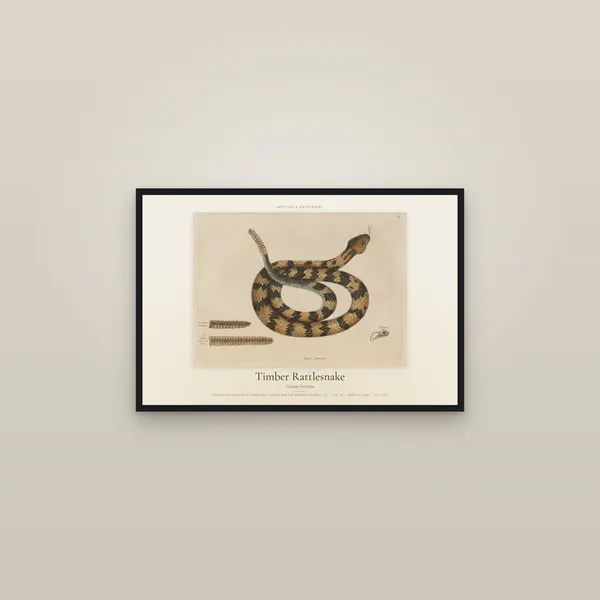
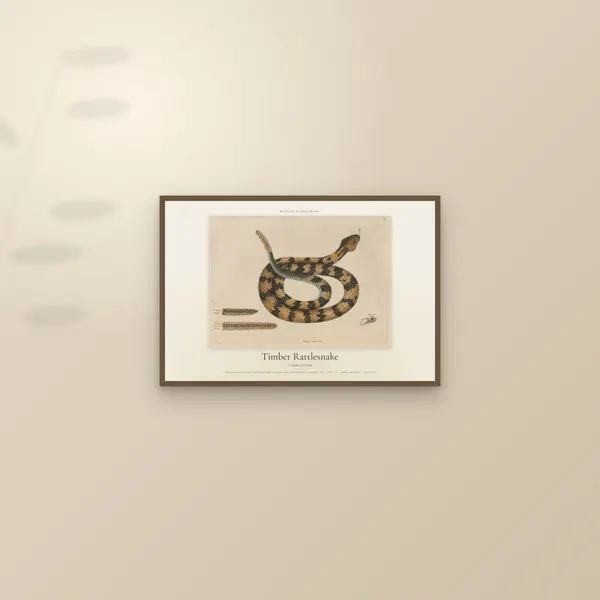
Snakes came with the country. It was not uncommon, he wrote, for them to come into houses. In February 1723, in the house of a Colonel Blake, a servant turned down the sheets of the bed Catesby had left a few minutes before and found a rattlesnake coiled in the middle of it. He tells the story in the second volume, in the text for the rattlesnake plate.
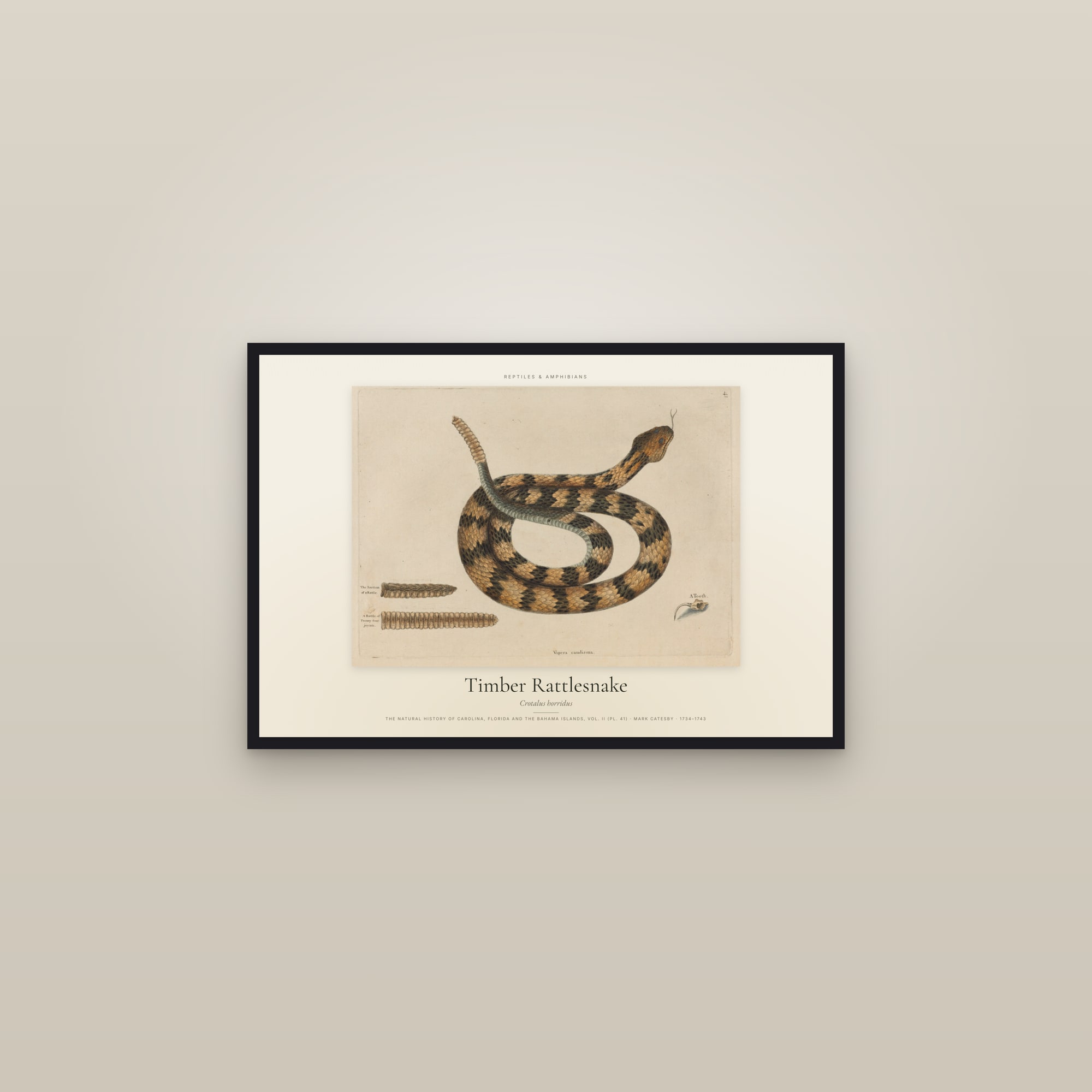
The plate is a lesson as well as a portrait. He wanted readers to understand how the rattle works, so he added a rattle cut in section. The text explains that its horny cells sit loosely one inside another and knock together when the snake shakes its tail.
Why the Bahamas?
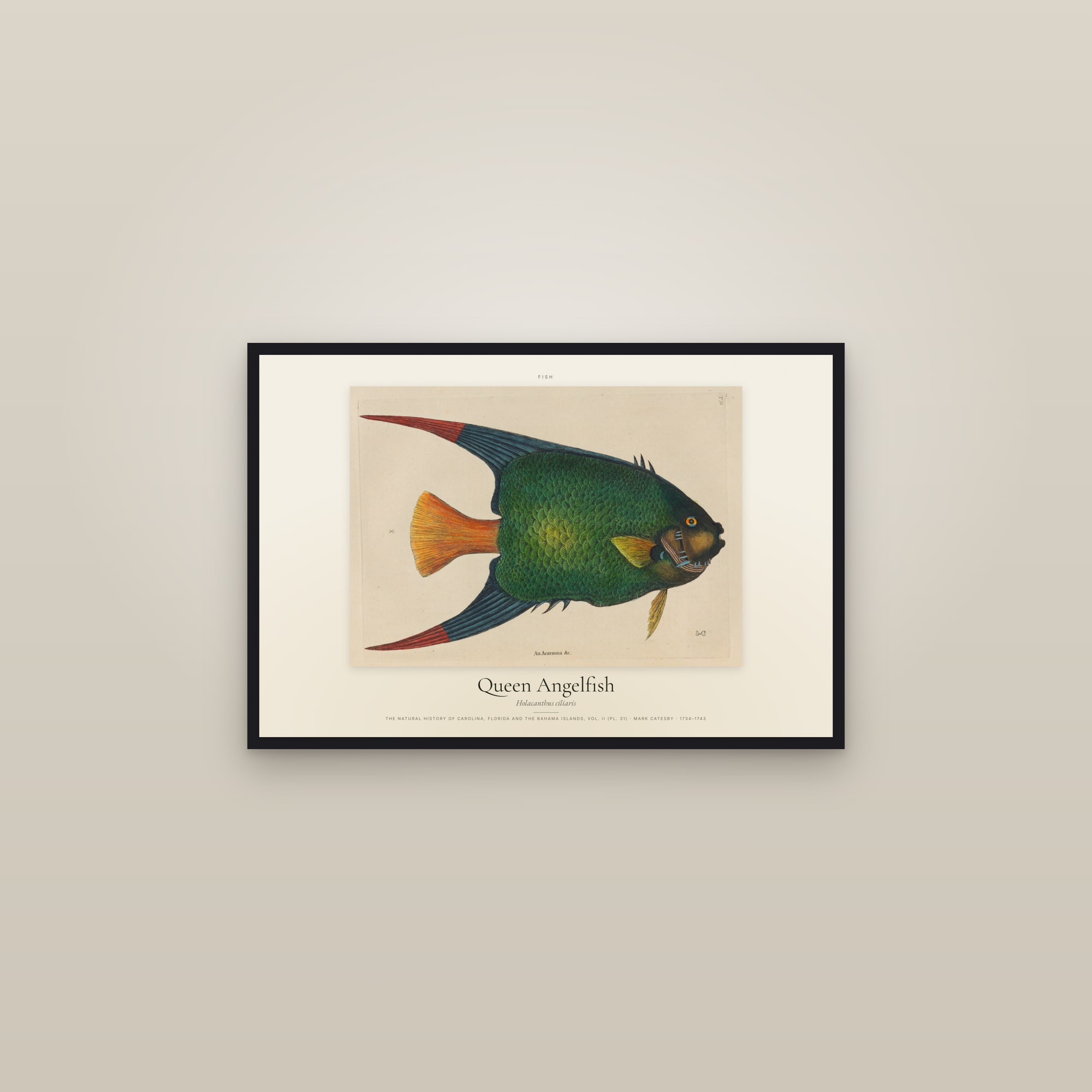
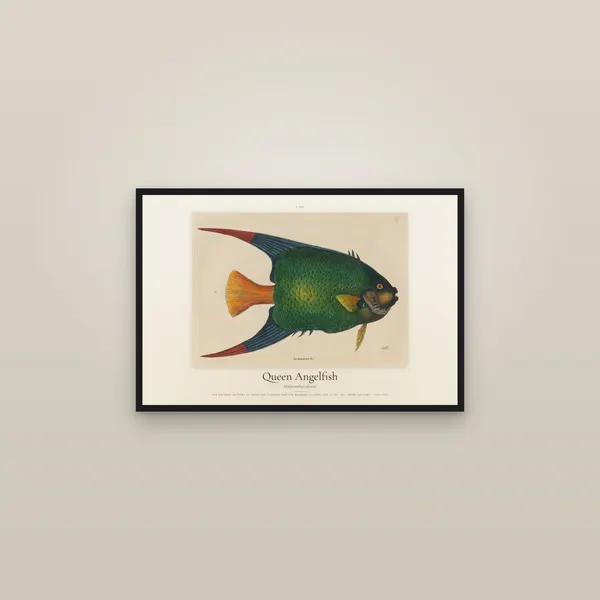
For the fish. The governor, Charles Phinney (as Catesby spells the name), invited him to New Providence, and from there he visited Eleuthera, Andros and Abaco. The islands have few mammals and birds, he wrote, which left him time for the fish, and few or none of those had been described by any author. He had been told they were remarkable, and was still surprised by how lavishly they were marked and coloured.
Fish were the hardest subjects. A fish loses its colour soon after it leaves the water, so he painted each one at several sittings, with fresh fish brought in as the earlier ones faded. Snakes were easy by comparison. Reptiles can live for months without food, so he could paint them alive at leisure.
The islands also gave him an idea. In September 1725, lying on the deck of a sloop in a bay at Andros, he and his companions heard flocks of rice birds pass over three nights running, heading north. These are the bobolinks of Vol. I, Plate 14. He reasoned that they were flying from Cuba, after its earlier rice crop, to Carolina, where the rice was just ripe. At the time, as the Royal College of Surgeons' library notes, many people believed birds spent the winter hidden away in caves, hollow trees or the mud of ponds. Catesby later wrote on the subject for the Royal Society: Of Birds of Passage, printed in its Philosophical Transactions in 1747. He returned to England in 1726.
Why did a naturalist learn to etch?
Because he was told the book could not be paid for. On his return the patrons admired his drawings. They also told him, in his words, that "the expence of graving" would make the book too heavy an undertaking. He had planned to have the plates engraved in Paris or Amsterdam. That plan was given up.
Then the painter Joseph Goupy offered advice and lessons, and Catesby learned to etch the plates himself. He chose not to imitate the engravers' cross-hatching and instead to "follow the humour of the Feathers", so his lines follow the lie of the feathers. He admitted this was more laborious. He also apologised in advance for faults of perspective. He was "not bred a Painter", he wrote, and he believed a flat but exact picture served natural history better than a bold, painterly one.
The Linda Hall Library says nearly all the plates were drawn and etched by Catesby himself. A few came from others, among them Georg Dionysius Ehret's southern magnolia, Vol. II, Plate 61. Our piece on copper engraving explains how an etched line differs from an engraved one.
What was new in the pictures?
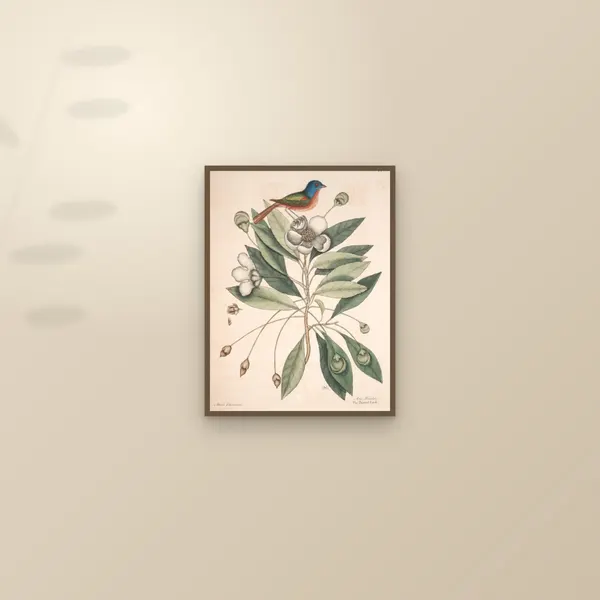
The pairing. "Where it could be admitted," Catesby wrote, "I have adapted the Birds to those Plants on which they fed, or have any relation to." He painted the plants fresh and the birds, with very few exceptions, alive. The Royal College of Surgeons' library calls him the first to draw birds with the plants that go with them, and the book the earliest coloured book on American birds.
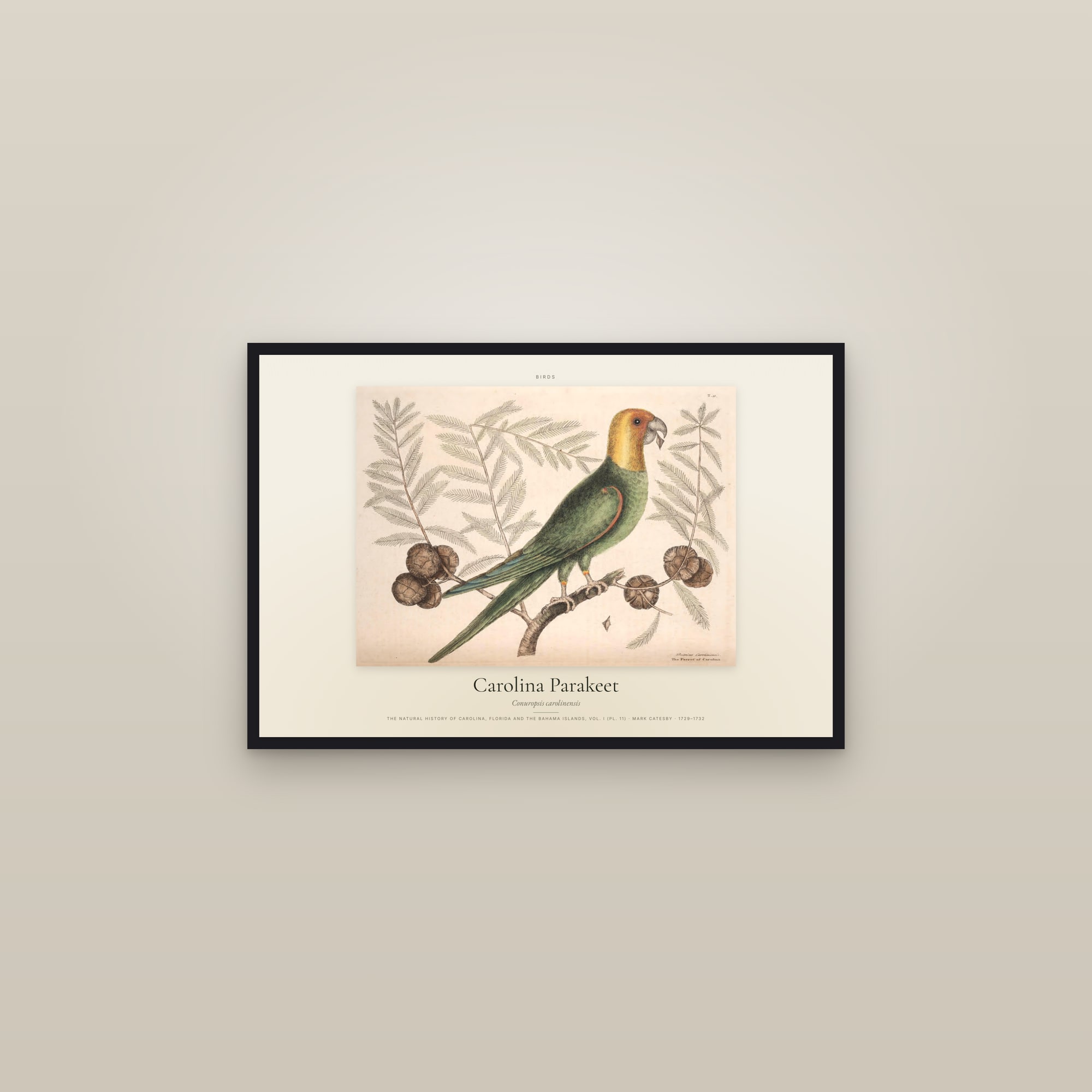
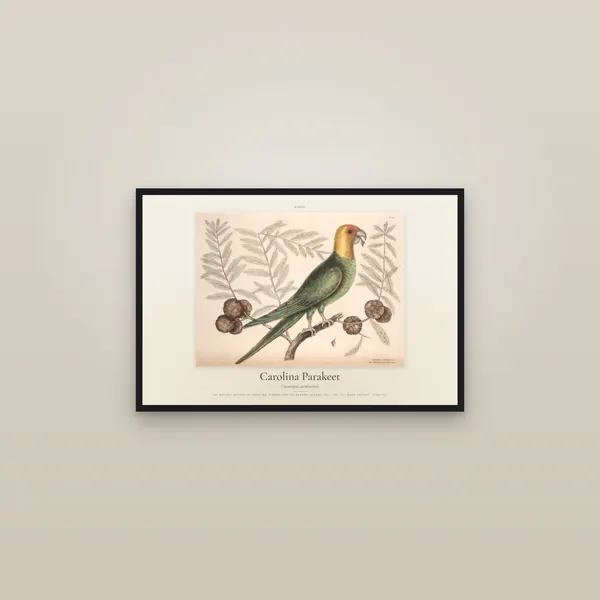
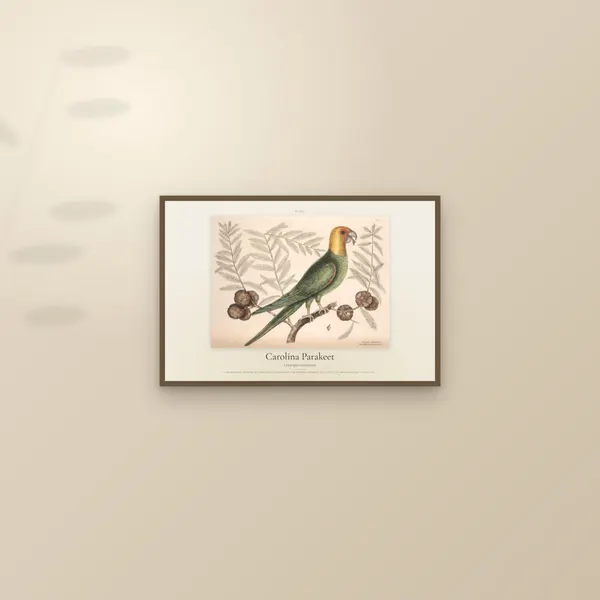
The plant is information, not decoration. His Carolina parakeet sits on a branch of the American cypress, whose seeds it ate. His text adds that the bird weighed three and a half ounces, raided orchards in autumn for apple seeds, and that "their guts are certain and speedy poison to cats".
How was the book published and coloured?
In instalments, by subscription. The Biodiversity Heritage Library sets out the schedule:
| Part | Contents | Years |
|---|---|---|
| 1 to 5 | Volume I, 100 plates, almost all birds | 1729 to 1732 |
| 6 to 10 | Volume II, 100 plates: fish, crabs, reptiles, mammals, insects, plants | 1734 to 1743 |
| 11 | Appendix, 20 plates | 1747 |
Each part held twenty plates with their text, printed in English and French side by side. Subscribers could take plain black-and-white plates, or coloured plates at two guineas a part. Catesby oversaw the colouring of every plate, according to the Dictionary of Scientific Biography. The same entry says the Quaker Peter Collinson lent him money to keep the book out of the hands of booksellers.
He thought hard about paint. In the preface he says he chose greens that looked natural and would last, and rejected brighter ones that faded. He also warns readers before they compare a plate with a living leaf. A plant's green, he notes, is yellow and bright in spring, deeper in summer and darker toward autumn.
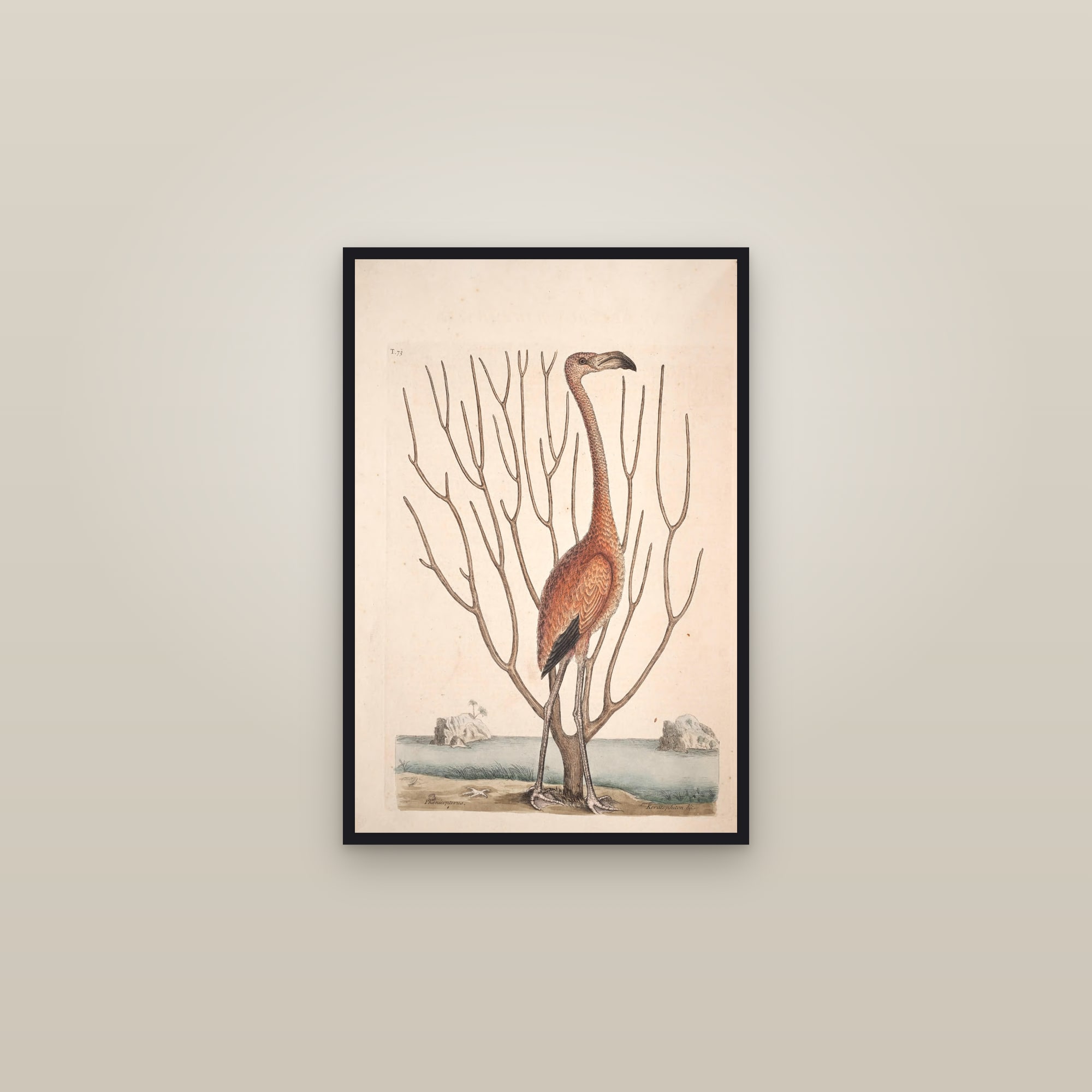
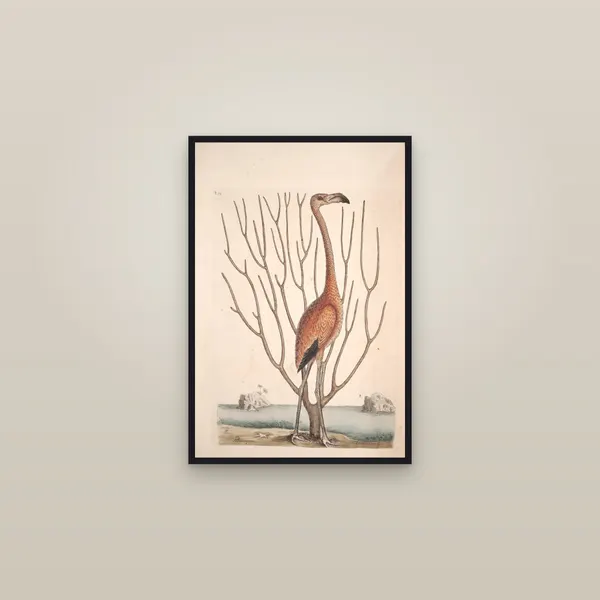
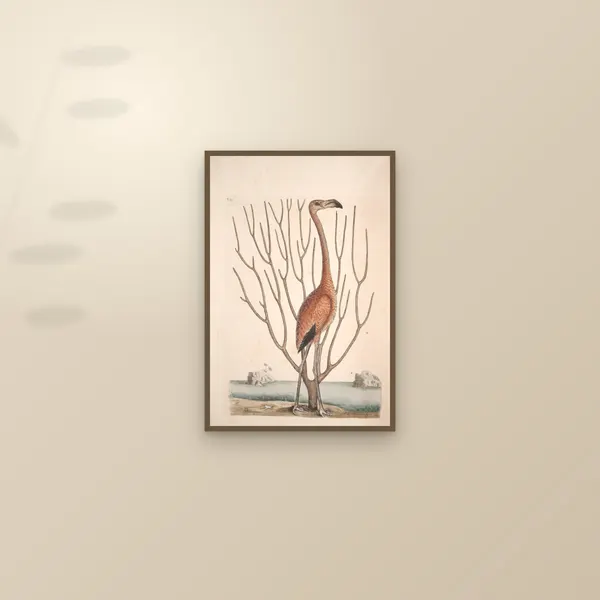
The texts are often practical. The flamingo's flesh, he reports, is delicate and tastes most like partridge. Native peoples in Canada prized ivory-billed woodpecker bills, he says, and set them round a wreath, points outward, as coronets for their leaders and warriors. Having no such birds in the north, they bought the bills from southern peoples at two or three buckskins each.
Which of his animals are gone?
Three of his birds have gone, or almost certainly gone. The passenger pigeon (Vol. I, Plate 23) and the Carolina parakeet (Vol. I, Plate 11) are extinct. The ivory-billed woodpecker (Vol. I, Plate 16) has not been reliably seen for decades but has not been declared extinct. Our piece on the birds we lost tells each story, with the dates and the record behind them.
How did Linnaeus use the book?
As a source. Carl Linnaeus built his system of two-part Latin names in the 1750s, and for many American birds Catesby's book was his source, the Dictionary of Scientific Biography notes. The Smithsonian Libraries say Linnaeus cited more than a hundred of Catesby's species descriptions.
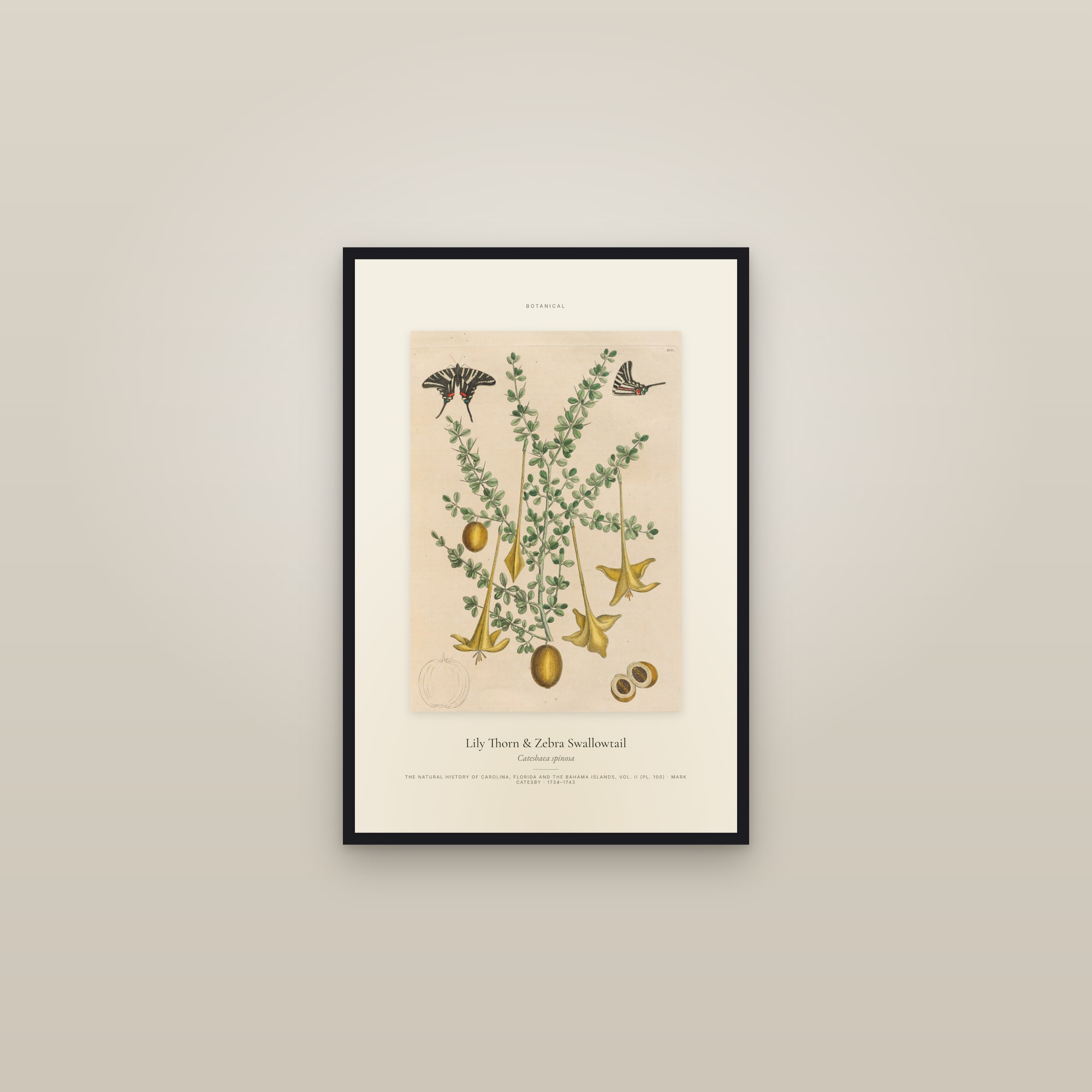
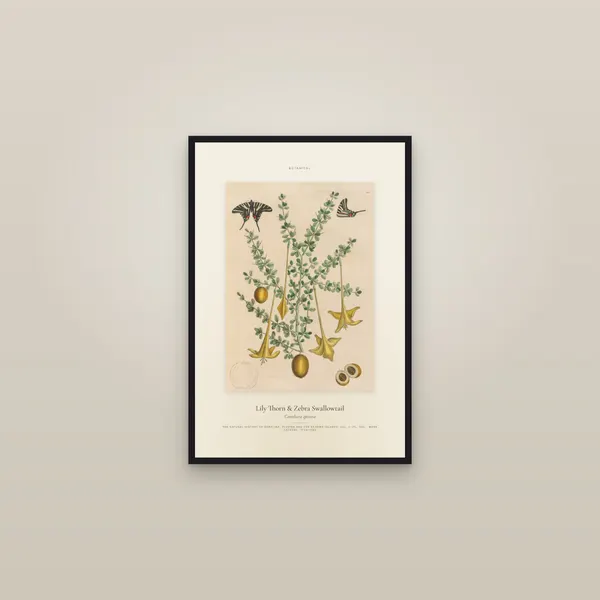
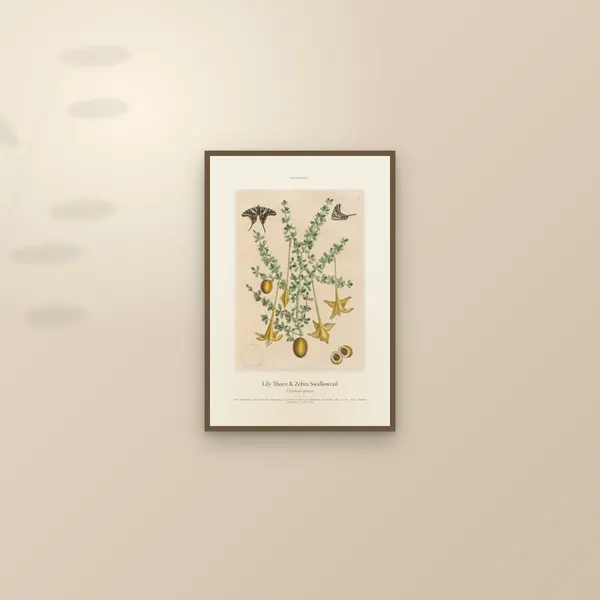
He also gave Catesby a plant. In Species Plantarum in 1753 Linnaeus named the lily-thorn Catesbaea, based on Vol. II, Plate 100, according to the Biodiversity Heritage Library. The 1771 edition of the book added a catalogue of the Linnaean names for its plants and animals, according to the University of North Carolina Libraries.
Did Audubon know Catesby's book?
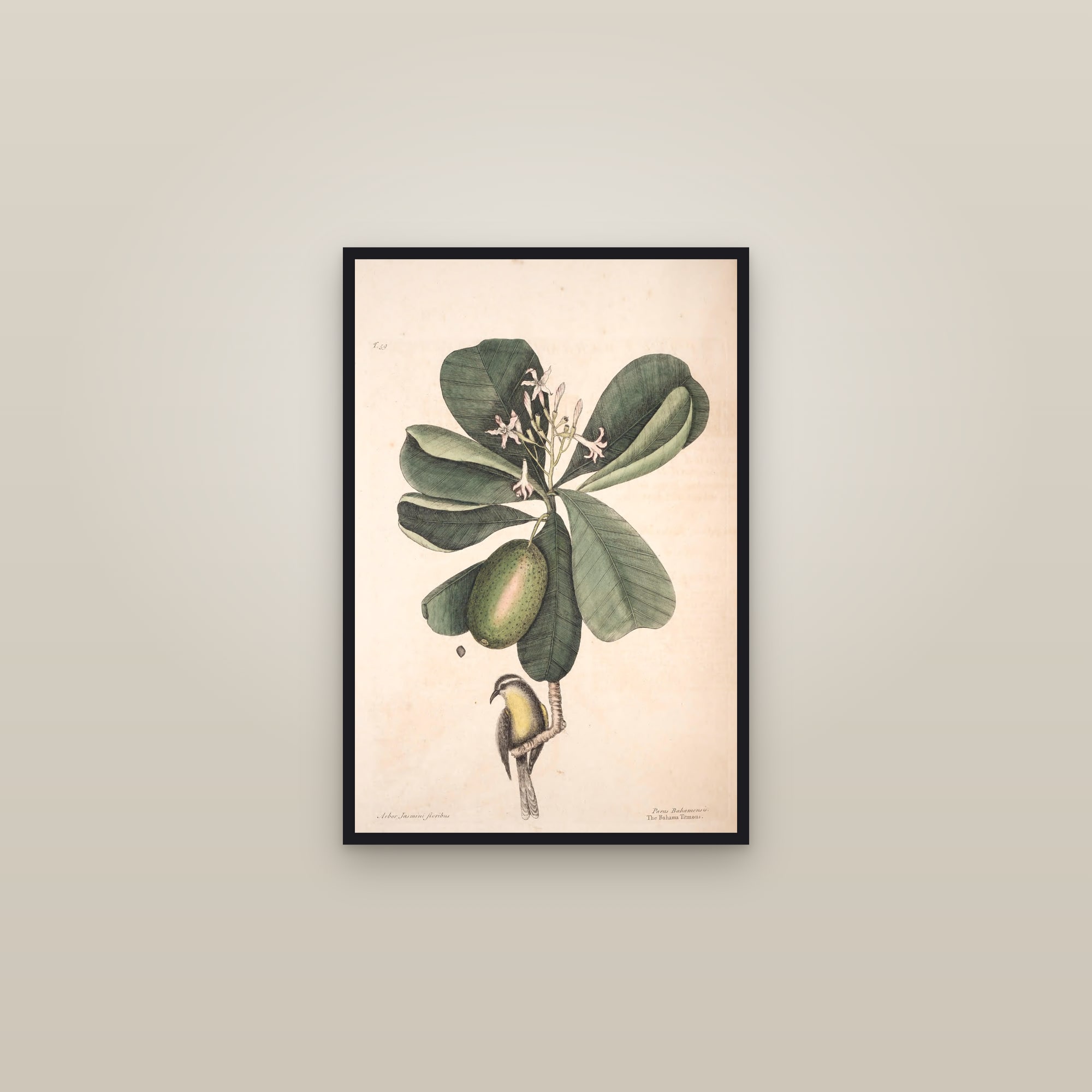
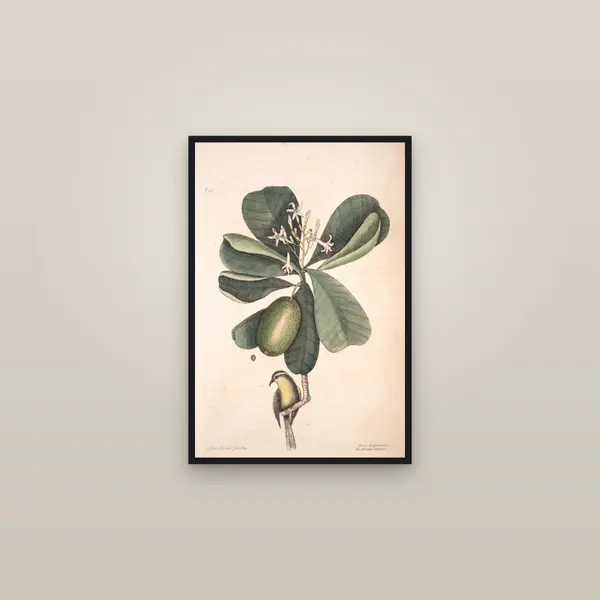
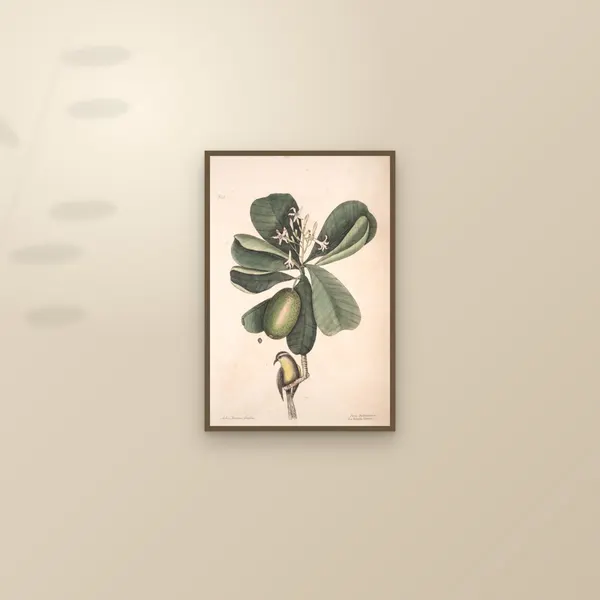
Yes, and he cited it. Audubon's The Birds of America came about a century later, and he too set his birds on plants. In his Ornithological Biography of 1834, describing his Mangrove Cuckoo, Plate CLXIX, he named the plant the bird sits on in one line: The Seven Years' Apple, Catesby, plate 59.
Catesby's Plate 59 is the Bahama Titmouse, the bird now called the bananaquit, hanging from that same shrub. In his text Catesby admits he never learned why the islanders called it the Seven Years Apple. He had watched it flower and fruit without a break for nine months. Our piece on how Audubon made The Birds of America tells the rest of that story.
What happened to the book after Catesby?
It outlived him. The book was reissued in London in 1754 and again in 1771, according to the Dictionary of Scientific Biography. The original watercolours were bought by King George III in 1768, and the Biodiversity Heritage Library notes that their colours have stayed remarkably bright. Free scans of the first, second and third editions are listed on our reference page.
Why do some plates sit sideways?
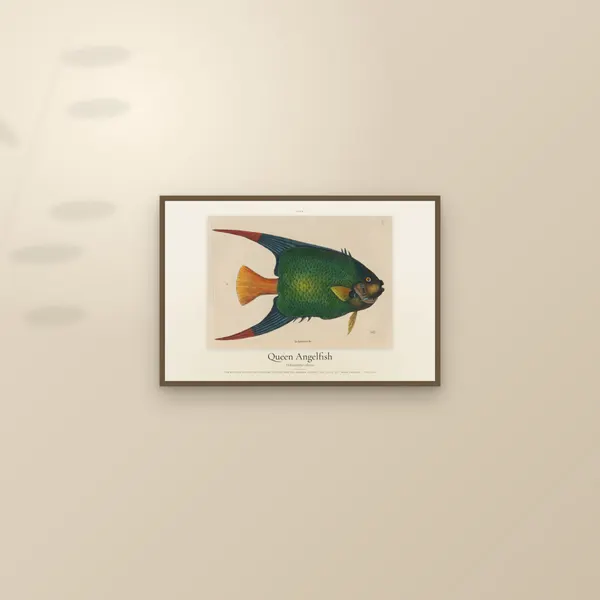
Because the page is upright and many of his subjects are long. By our count, 69 of the 220 plates were engraved turned on their side: 27 of fish, 16 of birds, 15 of snakes, 3 of sea turtles, 4 of mammals, 2 of crabs, 1 of a legless lizard and 1 of a plant. The plate number and the engraved names run up the page instead of across it. We print each of these the way its captions read, so the animal lies or swims as Catesby drew it. On the angelfish and the rattlesnake above, the plate number in the corner still runs sideways, as engraved.
The plates now
We hold every plate in the book. The Catesby plates reference lists all 220 by volume and plate number, with the species each shows, its Latin name and the year. It is the place to start if you are matching a plate in another copy or looking for one animal. The Mark Catesby collection shows them as prints.
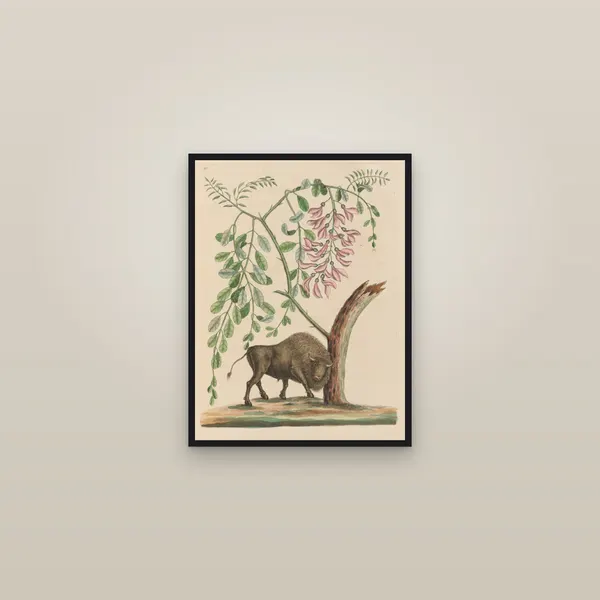
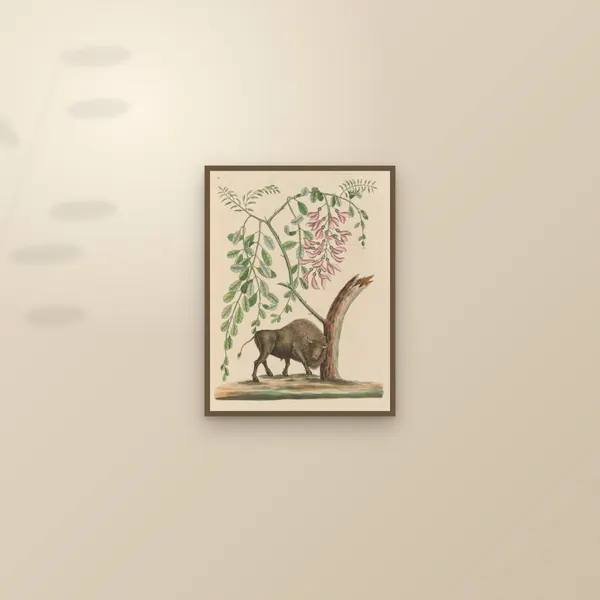
Each print starts from a scan of an original plate. Catesby's plate number, his engraved names and, on many plates, his monogram stay where he put them. Prints are on 250 gsm archival paper, unframed or in a black or dark wood frame, and many of the upright plates also come on canvas. The bison that ends the Appendix, a bull rubbing his head on a broken trunk under pink blossom, is Appendix, Plate 20.
Questions people ask
Who was Mark Catesby?
An English naturalist and artist, born in Essex in 1683 and died in London on 23 December 1749. He spent about eleven years in colonial America and published The Natural History of Carolina, Florida and the Bahama Islands, the first fully illustrated work on the plants and animals of southeastern North America.
How many plates are in Catesby's Natural History of Carolina?
220. Volume I has 100, almost all birds. Volume II has 100 more: fish, crabs, turtles, snakes, lizards, frogs, mammals, insects and plants. The Appendix of 1747 adds 20. They were issued in 11 parts of 20 plates between 1729 and 1747.
Did Mark Catesby make the prints himself?
Nearly all of them. Told that professional engraving would make the book too expensive, he learned to etch from the painter Joseph Goupy and etched the copper plates himself. He also oversaw the hand-colouring of every plate. A few plates were drawn by others, including Georg Dionysius Ehret's southern magnolia.
What is the difference between Catesby and Audubon?
Catesby worked about a century earlier, from the 1720s to the 1740s, and painted most of his birds alive. Audubon's Birds of America (1827 to 1838) shows every bird at life size. Both set birds on plants. Audubon knew Catesby's book: in 1834 he named the plant on his Mangrove Cuckoo plate by citing Catesby's plate 59.
Which species in Catesby's book are extinct?
The passenger pigeon (Vol. I, Plate 23) and the Carolina parakeet (Vol. I, Plate 11) are extinct. The ivory-billed woodpecker (Vol. I, Plate 16) has not been reliably seen since 1944 but has not been declared extinct.
Sources
- Mark Catesby, The Natural History of Carolina, Florida and the Bahama Islands, Vol. I (1729 to 1732), Smithsonian Libraries copy, Internet Archive: the preface (arrival in Virginia 23 April 1712, the patrons, arrival in Carolina 23 May 1722, the Indian guide and the box, the Bahamas, the return in 1726, the cost of engraving, Goupy, painting birds alive on their plants) and the plate texts quoted
- Mark Catesby, The Natural History of Carolina, Florida and the Bahama Islands, Vol. II and Appendix (1734 to 1747), Dumbarton Oaks copy, Internet Archive: the rattlesnake text, February 1723
- Biodiversity Heritage Library, Digitizing Catesby's Magnum Opus (November 2012): 11 parts of 20 plates, the dates of each volume, two guineas a coloured part, Catesbaea named from Vol. II, Plate 100, the drawings bought by George III in 1768
- Smithsonian Libraries, Journeys over Land and Sea: Linnaeus cited more than a hundred of Catesby's species descriptions; the first fully illustrated work on the flora and fauna of southeastern North America
- Mark Catesby, Of Birds of Passage, Philosophical Transactions of the Royal Society 44 (1747), pp. 435 to 444
- George F. Frick, Catesby, Mark, Complete Dictionary of Scientific Biography: born 1683 at Castle Hedingham, died in London 23 December 1749, Collinson's loan, the colouring, the 1754 and 1771 editions
- University of North Carolina at Chapel Hill Libraries, About Mark Catesby's Natural History: Williamsburg 1712 to 1719, Charleston in May 1722, the 1754 and 1771 editions and the 1771 catalogue of Linnaean names
- Royal College of Surgeons of England, Library blog, Mark Catesby (1683 to 1749): birds drawn with the plants they relate to; the earliest coloured book on American birds
- Linda Hall Library, The Grandeur of Life, Mark Catesby: plates nearly all drawn and etched by Catesby; the southern magnolia drawn by Georg Ehret; the 1754 reissue
- John James Audubon, Ornithological Biography, Vol. II (Edinburgh, 1834), Internet Archive: the Mangrove Cuckoo, Plate CLXIX, and 'The Seven Years' Apple, Catesby, plate 59'
Start hereA short history of the print, from woodblock to giclée