
Copper engraving: what it was and how it worked
The finest line printing could make, and how paintings and anatomy reached people who never saw the originals. How plates were cut, inked and worn, shown through Eustachi and Albinus.
Contents10 sections
- Step 1: cut the plate
- Step 2: ink and wipe
- Step 3: the roller press
- Step 4: the plate wears
- How do etching and aquatint differ?
- Eustachi: engraved, and kept for 162 years
- Albinus: line engraving at full stretch
- Audubon's plates: three techniques on one copper
- Why Vesalius does not belong here
- What does this mean for a reproduction?
A copper engraving is a picture printed from lines cut by hand into a metal plate, and people wanted it because nothing else could print so fine a line. Yale's history of printing says "no mark in printing can compare with a fine intaglio line" (intaglio means the ink sits in cuts below the surface of the plate). Engravings became common in the 1500s and dominated fancy printing until the Industrial Revolution.
That line changed who could see what. A painting hangs in one place. Engravings were often used to reproduce paintings, and the National Gallery of Art says of Dutch portrait prints that they were relatively affordable and more widely disseminated than paintings, reaching collectors, scholars who put them in their books, and artists studying masterpieces. Demand for engravings of popular paintings grew in the eighteenth century, according to Oxford's History of Science Museum, which also says prints spread standardised information and made complex ideas accessible. That's what an anatomist needed: every reader looking at the same picture. By the mid-nineteenth century the museum describes a boom in the print market, driven by a new literate middle class hungry for knowledge and the status of owning printed material.
For artists it cut two ways. Oxford credits Dürer, Lucas van Leyden and Andrea Mantegna with developing engraving as an original art form in the fifteenth and sixteenth centuries. But it was so hard to do well that it also produced a class of engravers who, in Yale's words, were "not artists but craftsmen", spending their skill on other people's paintings.
Here's the method in brief. The engraver pushes a steel burin, a pointed cutting tool, through polished copper. Ink is worked into the cuts and wiped off the surface, and damp paper is forced into the lines under a roller press, which also stamps the outline of the plate into the sheet as a plate mark. It's the reverse of a woodcut, where what stands up prints. The anatomy plates of Eustachi and Albinus are catalogued as engravings. Audubon's are something more mixed, and Vesalius does not belong here at all.
Step 1: cut the plate
An engraving is an intaglio print: the ink sits below the surface of the plate. The plate is polished first, so that only intended lines will print. The tool is the burin, which the Metropolitan Museum of Art describes as a steel shaft with a bevelled diamond-shaped tip, set in a rounded wooden handle that sits against the palm. The plate rests on a sandbag or pillow, so that the engraver can move the copper to make a curve. Pressure drives the point forward, a thin curl of metal lifts away, and a groove is left behind.
Two things follow from that action. The first is the look of the line. The harder the engraver presses, the thicker the groove, so a single stroke can swell and thin along its length.
The second is the way tone is made. A burin makes only marks, so every grey in a pure engraving is hatching: lines, dots and dashes set closer together hold more ink and print darker. Everything is also cut backwards, because the print comes out as the reverse of the plate.
Step 2: ink and wipe
Ink is spread across the whole plate. Then it comes off again. The printer wipes away the excess with heavily starched cloths, each cleaner than the last, and often finishes with the palm or the side of the hand. Yale's The Printed Picture explains why this works: the wiping gradually clears the surface while the grooves stay full. This is skilled labour, repeated for every sheet in the edition.
Step 3: the roller press
Damp paper goes on the plate and felt blankets over the paper, and the whole sandwich rolls through the press. The damp sheet is forced down into the cuts and takes up the ink. Yale notes that the pressure was great enough that the plate's edges had to be bevelled, or sloped off.
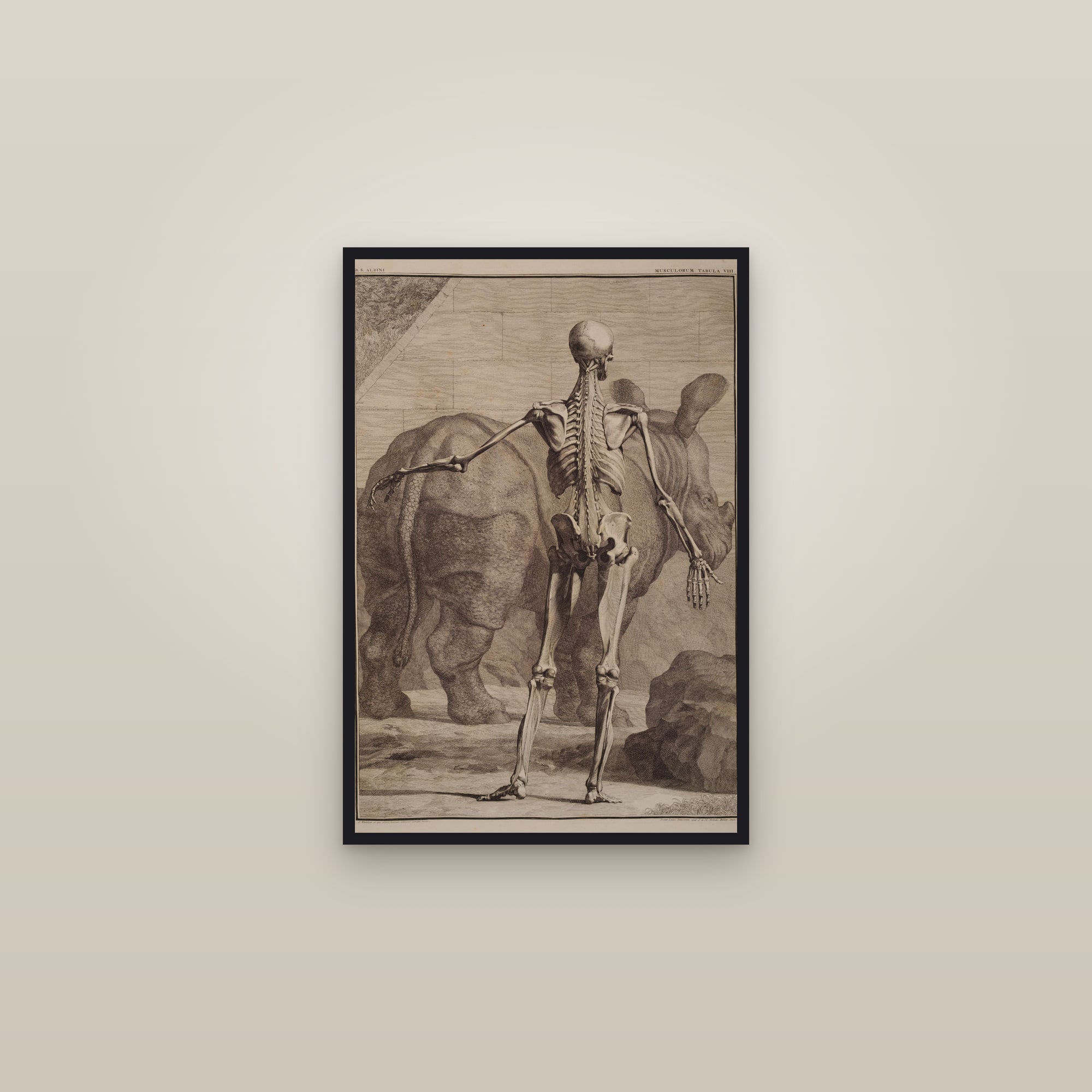
The pressure also leaves the signature of the method. The edges of the plate press a rectangle into the paper, the plate mark. Print rooms record it as a real measurement: Wellcome Collection gives the plate mark of Albinus's eighth muscle table as 56 by 40 cm.
Step 4: the plate wears
Every pass of the rag and the press takes a little from the copper. Yale says plates wear out with use, and that a print grows gradually lighter through an edition.
How long a plate lasts is the subject of some folklore. A Folger Shakespeare Library post by Erin Blake collects the usual guesses, which run as low as a few dozen, and sets the record against them. Christopher Plantin budgeted on 1,000 impressions between reworkings. Karen Bowen and Dirk Imhof followed a single engraved title page for Cesare Baronio's Annales ecclesiastici through the payments. It stayed in use from 1601 to 1658, and it took an initial engraving and four reworkings to deliver 18,257 impressions, up to 6,425 in one stretch. That is one plate, not a rule.
So an old edition is not one uniform thing, and because a plate could be reworked, quality does not simply fall in a straight line.
How do etching and aquatint differ?
All three are intaglio and all print the same way. The difference is what makes the mark.
| Technique | What makes the mark | How it looks | On our plates |
|---|---|---|---|
| Engraving | A burin cuts the metal by force | Controlled lines that thicken and thin with pressure | Eustachi, Albinus |
| Etching | A needle exposes metal through a ground; acid bites the line | Freer lines that can turn within one stroke | Audubon, with line engraving, for the drawing |
| Aquatint | Acid bites a fine array of cells into the plate | Tone in gradations, not lines | Audubon, for tone |
Etching coats the plate in an acid-resistant varnish or wax, the ground. The artist scratches through it with a needle, and acid eats the exposed metal; time in the acid sets the depth, and so the darkness. Yale says the line itself can give the print away, since a needle can change direction freely within one stroke.
Aquatint solved a different problem: printing tone without lines. Yale classes it as a form of etching, a plate of fine cells bitten to different depths. Our piece on how Audubon made The Birds of America describes the resin and the acid baths.
Eustachi: engraved, and kept for 162 years
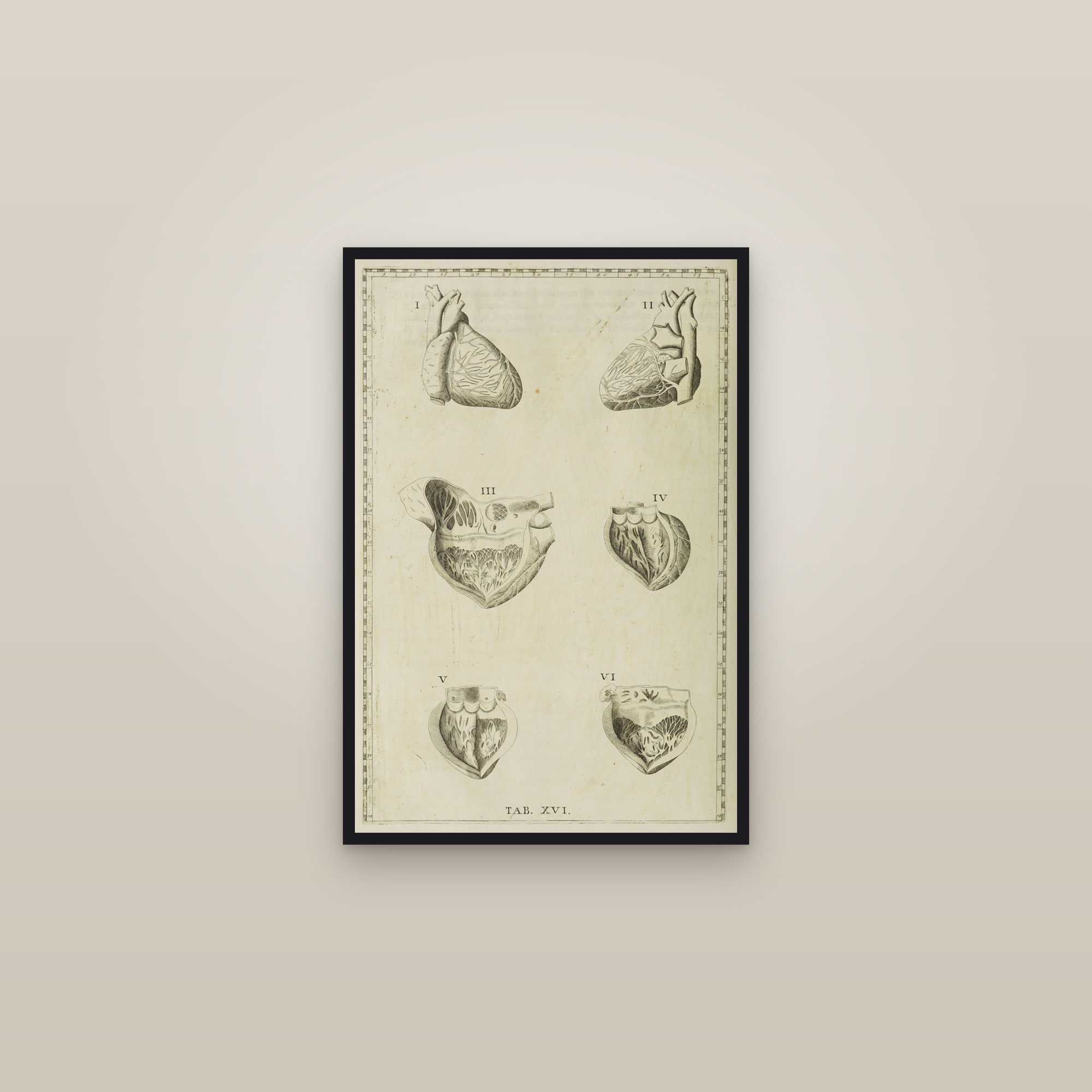
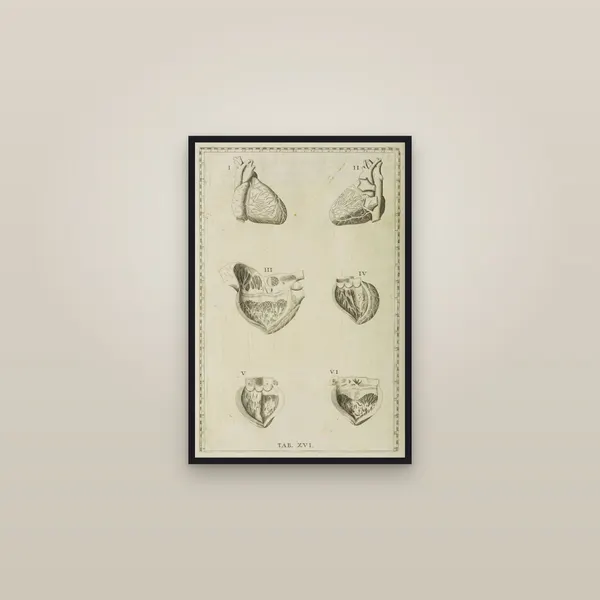
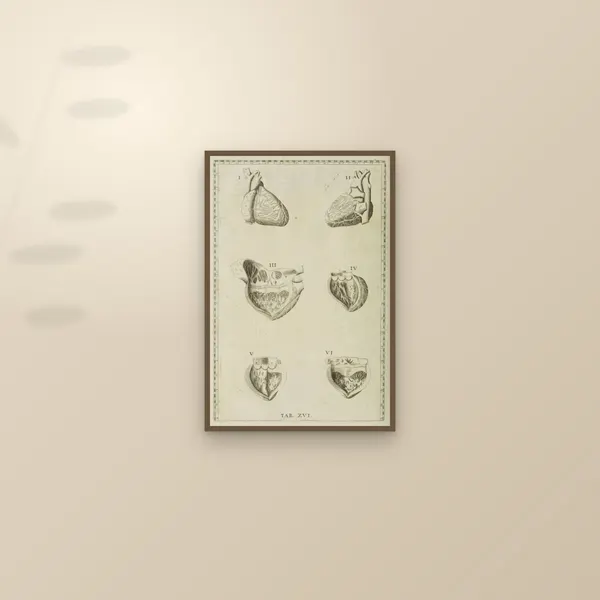
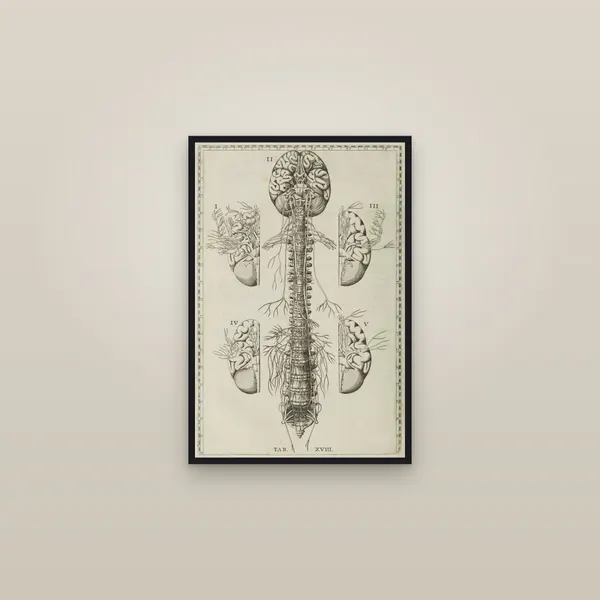
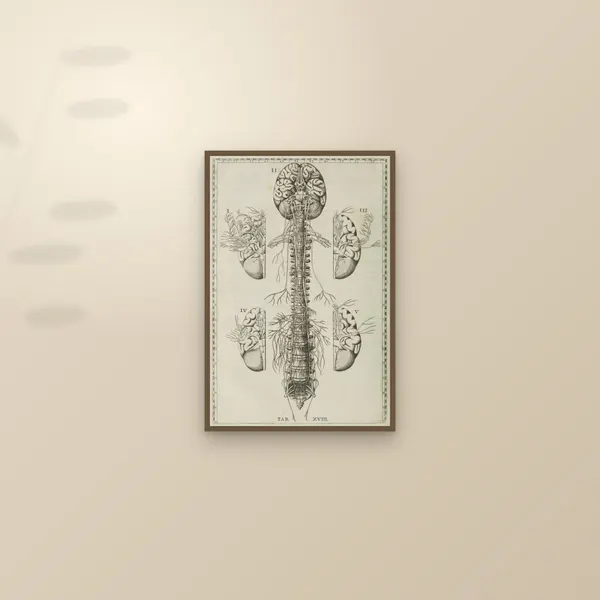
Bartolomeo Eustachi's plates are copper engravings by every source we checked. Wellcome Collection describes them as engravings made by 1552, first published in full by Giovanni Maria Lancisi in Rome in 1714. The National Library of Medicine names the engraver, Giulio de' Musi. It says eight plates appeared in 1564 and that Lancisi later found another thirty-eight copperplates. An unused plate does not wear, and copper cut by 1552 could still print 162 years later.
The feature to look for is the rule. The plates have printed, numbered rulers on their edges, so a text could point to a structure by its coordinates and the figure needed no letters. On The Human Heart and The Nervous System, that scale is part of the plate, alongside the anatomy.
There are cautions for anyone buying the old sheets. Albinus issued his own edition of the plates in Leiden in 1744, with Jan Wandelaar working on it. And some copies changed medium entirely. G. Bickham's London versions of 1743 are etchings, with an added shaded ground and numbers in place of Eustachi's grid. "A Eustachi" needs a date and a technique before it means much.
Albinus: line engraving at full stretch
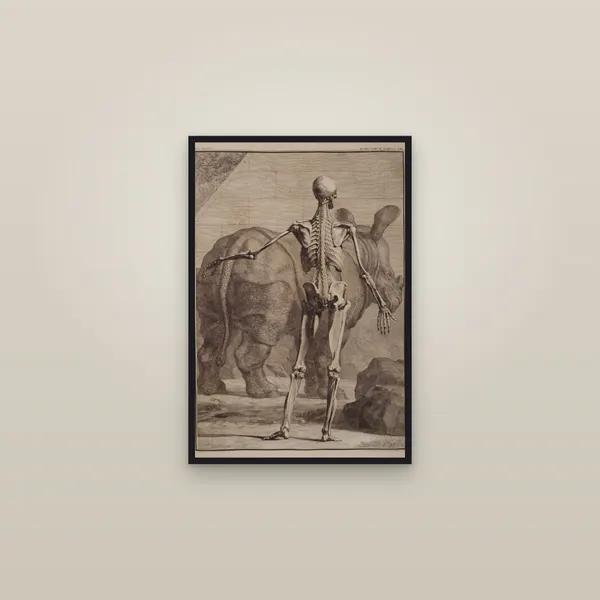
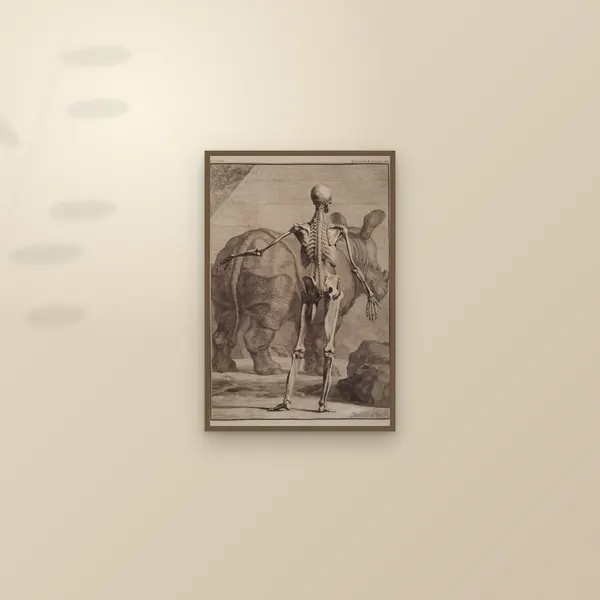
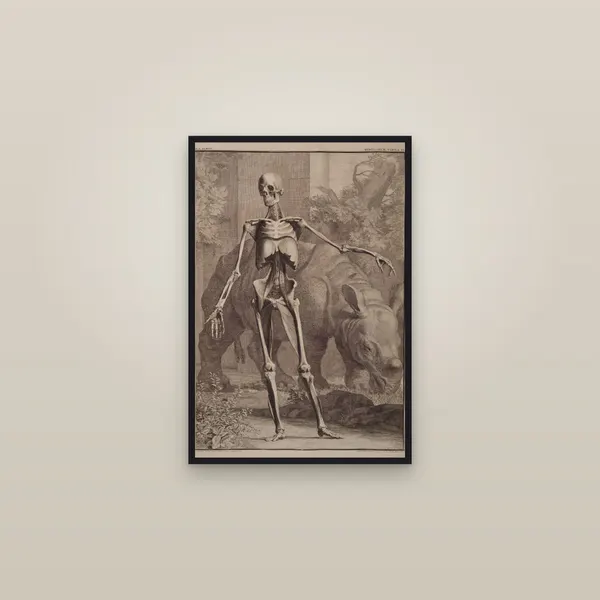
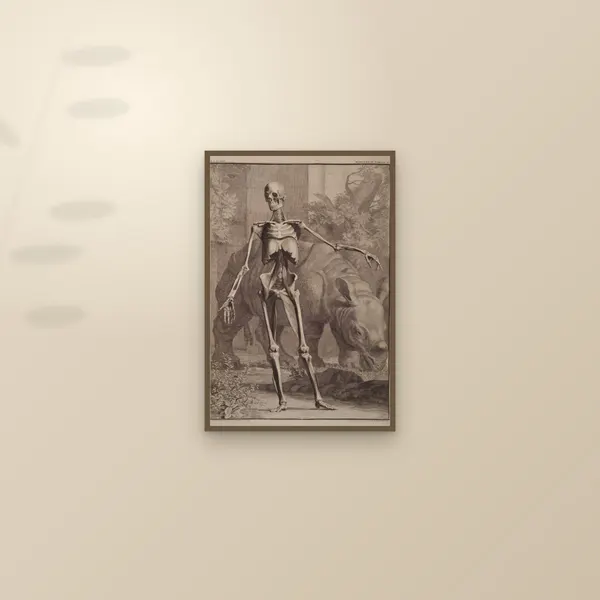
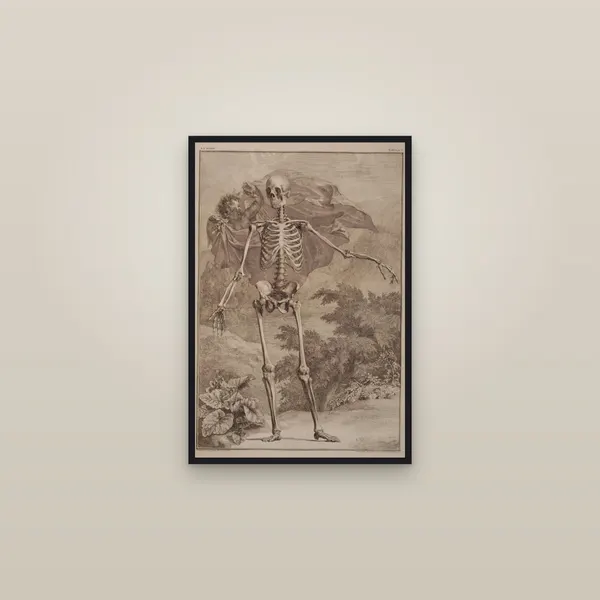
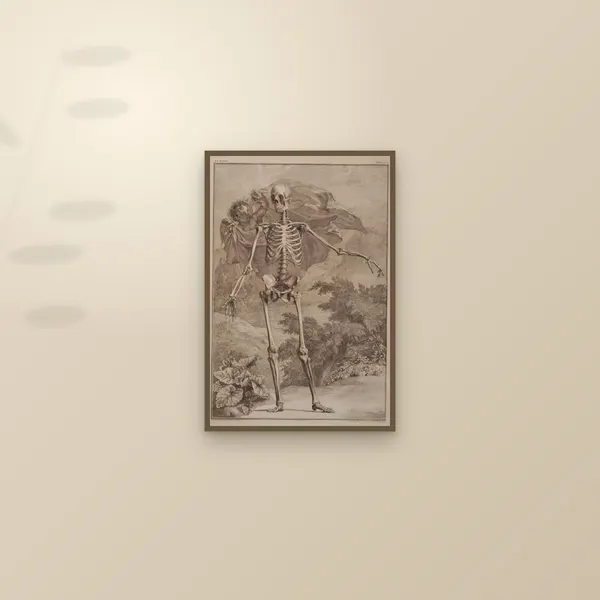
Bernhard Siegfried Albinus and Wandelaar are known for drawing their figures through grids of cord, a method told in the short history of the print. The copper is the other half of the achievement. The foot of the eighth muscle table reads "J. Wandelaar ad ipsa corpora hominum delineavit: idemque incidit": he drew it from the bodies themselves, and cut it as well.
Wellcome Collection catalogues this sheet as a line engraving and dates it 1742, the date on the plate; the complete book came out in 1747. The sources we opened record no etching in these plates, and a technique cannot be settled from a reproduction, so we describe them as Wellcome does. Look closely at the wall, the rock and the hide of the rhinoceros Clara. The tone you see is lines, laid close together.
Audubon's plates: three techniques on one copper
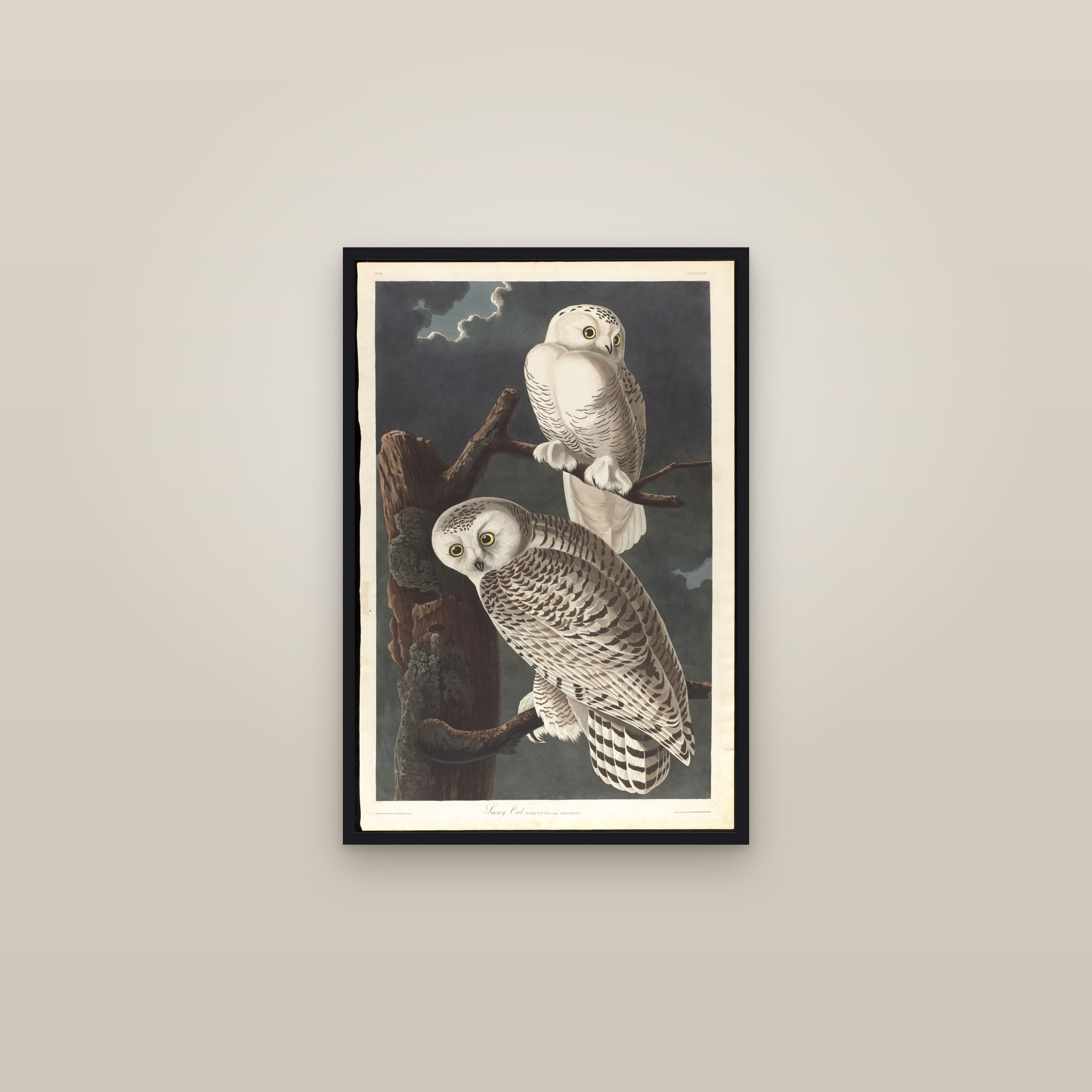
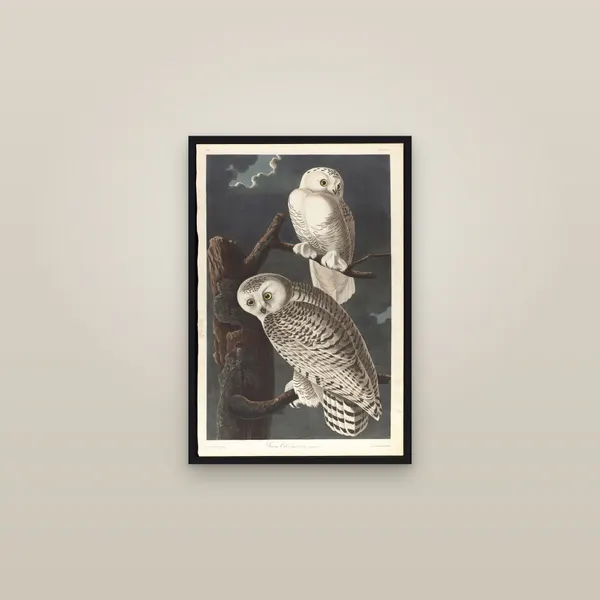
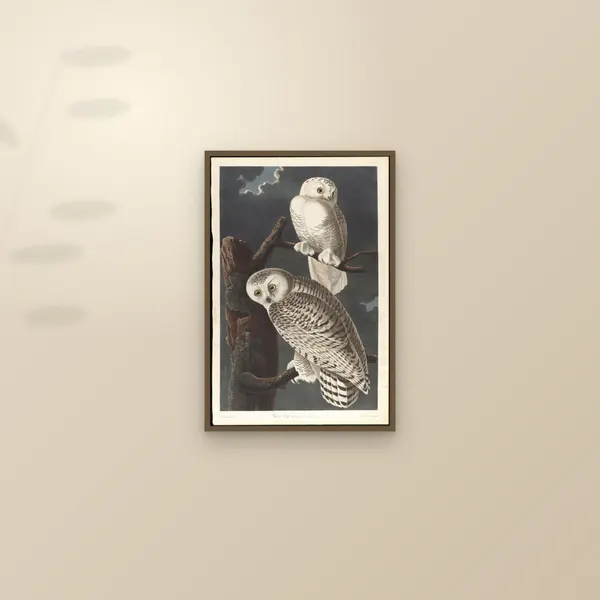
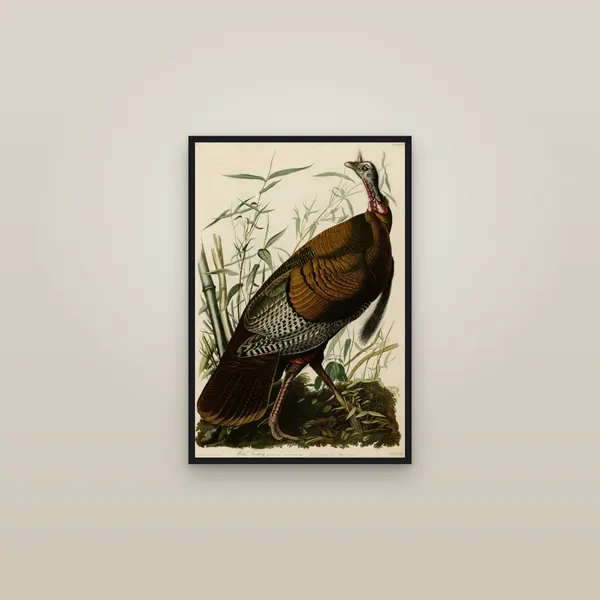
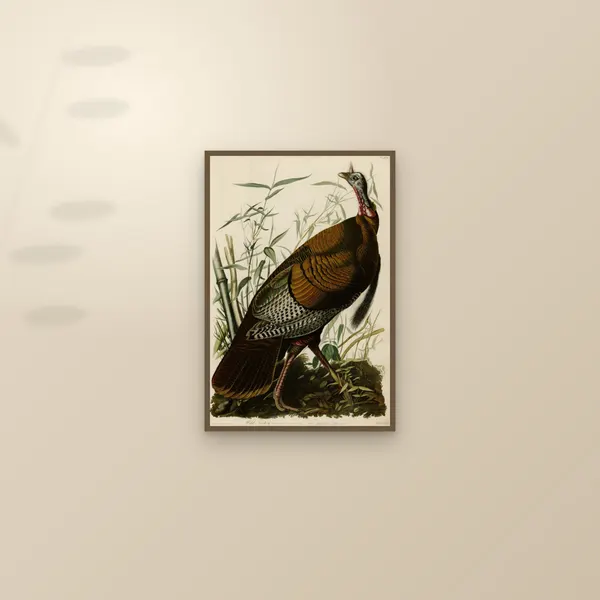
Are the Birds of America engravings? Partly. Sotheby's catalogue for the 2010 sale describes hand-coloured etched plates with line engraving and aquatint, by W. H. Lizars of Edinburgh and by Robert Havell and Robert Havell Jr of London. All of it was worked on copper, printed, and then coloured by hand.
The lettering is less exact than the catalogue. The foot of Plate CXXI, the Snowy Owl reads "Engraved, Printed, & Coloured by R. Havell, London". Read that "Engraved" as a trade credit, not a statement of technique: it covers the whole working of the plate. The full story of the plates is in how Audubon made The Birds of America.
Why Vesalius does not belong here
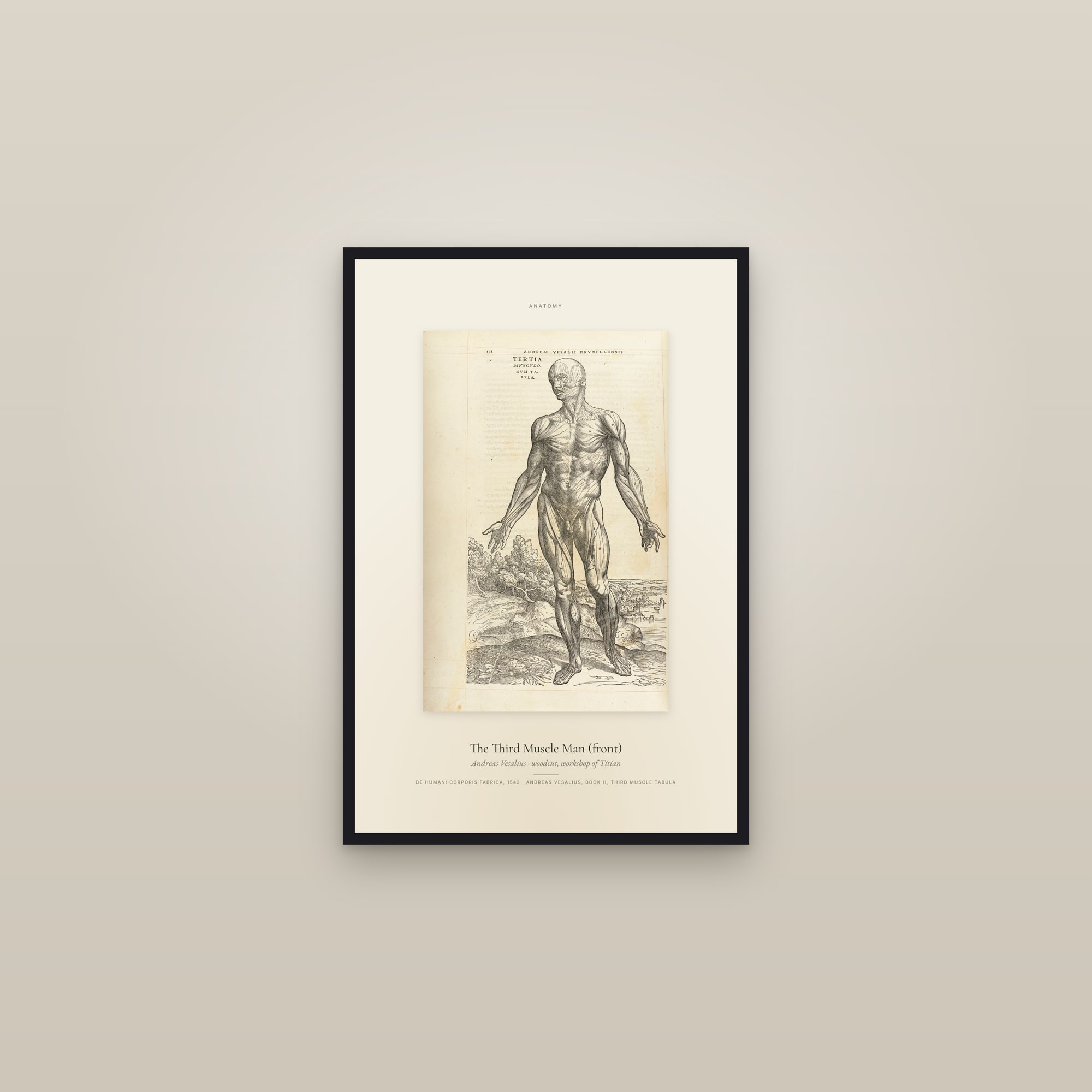
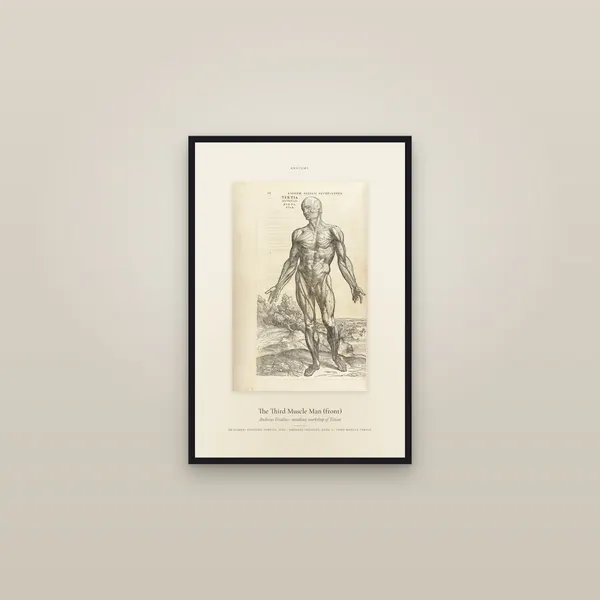
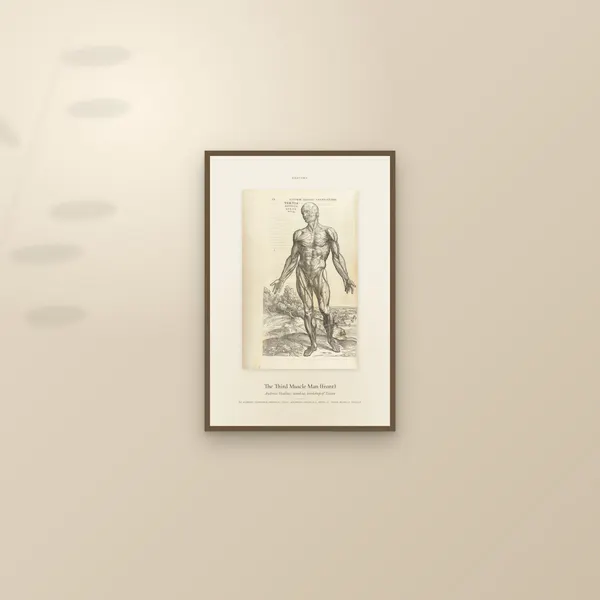
The most famous anatomy book of all is not an engraving. The National Library of Medicine writes of the famous woodcut illustrations of De humani corporis fabrica, printed by Johannes Oporinus in Basel in 1543. The page shows it: The Third Muscle Man shares its sheet with a running head and a typeset title, and the line is the bold, even line of a block.
The Vesalian figures did reach copper, as copies, and the copyist links this whole story. For the Leiden edition of Vesalius's works of 1725, edited by Herman Boerhaave and Albinus, the woodcuts were re-engraved on copper by Wandelaar. Wellcome's record of his nervous system, dated 1726 on its title line, treats that job as the start of his long association with Albinus.
What does this mean for a reproduction?
The prints on this site are reproductions, printed to order from restored scans. They reproduce the look of a particular sheet, including any plate mark the scan caught, but a reproduction has no plate mark of its own, so these physical tests apply only to the old sheets. Browse the anatomy collection, or see how we restore a plate.
This is one chapter of a short history of the print. Its neighbours are the Japanese woodblock, which prints what the carver leaves standing, and chromolithography, which involves no cutting at all.
Questions people ask
How does copper engraving work?
The engraver pushes a steel burin through a polished copper plate, cutting lines that hold ink. Ink is spread over the plate and wiped from the surface so it stays only in the cuts. The plate then goes through a roller press under damp paper and felt blankets, and the pressure forces the paper into the lines. The printed image is the reverse of the plate.
What is a plate mark?
The outline of the plate's edges, pressed into the paper by the printing press. Engravings, etchings and aquatints show one unless the sheet has been trimmed inside it, so it is a useful first check for an intaglio print.
What is the difference between engraving and etching?
An engraver cuts the line into the metal by force with a burin. An etcher draws through an acid-resistant ground with a needle, and acid bites the exposed lines. An engraved line thickens and thins with the pressure of the tool, while an etching needle can change direction freely within one stroke. Both plates print the same way.
How many prints could a copper plate make?
More than is usually said, and it depends on the plate. Christopher Plantin budgeted on 1,000 impressions between reworkings. One title-page plate traced by Karen Bowen and Dirk Imhof gave 18,257 impressions from 1601 to 1658, with an initial engraving and four reworkings, and as many as 6,425 in one stretch.
Are Audubon's Birds of America plates engravings?
They combine three techniques on copper. Sotheby's catalogue describes them as hand-coloured etched plates with line engraving and aquatint. The credit on a Havell plate says 'Engraved', a trade credit that does not separate the techniques.
Did Vesalius use copper engravings?
No. The illustrations in De humani corporis fabrica (Basel, 1543) are woodcuts, according to the National Library of Medicine. They reached copper only as later copies, such as the engravings Jan Wandelaar made after them for the Leiden edition of 1725.
Sources
- The Metropolitan Museum of Art, Materials and Techniques: Engraving (polishing, the burin, hatching, inking, wiping, the press)
- The Metropolitan Museum of Art, Materials and Techniques: Etching (ground, needle, acid, reversed image, plate mark)
- Yale University Art Gallery, The Printed Picture: intaglio and planographic printing (wiping, the press, bevels, plate wear, etched lines, aquatint)
- Erin Blake, The Collation (Folger Shakespeare Library), 4 February 2013: Myth-busting early modern book illustration, part two (Plantin's 1,000; Bowen and Imhof's 18,257)
- National Gallery of Art, Washington, Citizens of the Republic: Portraits from the Dutch Golden Age (2012 library exhibition; prints relatively affordable and more widely disseminated than paintings)
- History of Science Museum, Oxford: Engraving (Dürer, Lucas van Leyden and Mantegna; reproductive prints; demand in the eighteenth century)
- History of Science Museum, Oxford: Prints (standardised information and complex ideas made accessible)
- National Library of Medicine, Historical Anatomies: Eustachi, Tabulae anatomicae (eight plates in 1564, thirty-eight copperplates by Giulio de' Musi, numbered rulers)
- Wellcome Collection: The muscles of the human body, after Eustachius, etching by G. Bickham, 1743 (engravings made by 1552, first published 1714; the copy's changes)
- Wellcome Collection: Albinus, Musculorum tabula VIII, line engraving by J. Wandelaar, 1742 (platemark 56 x 40 cm, lettering, the rhinoceros Clara)
- National Library of Medicine, Historical Anatomies: Vesalius, De humani corporis fabrica (the woodcuts)
- Wellcome Collection: The nervous system of the human body, engraving by J. Wandelaar, 1726, after a woodcut, 1543 (the 1725 Leiden edition of Vesalius; Albinus's 1744 edition of Eustachi)
- Sotheby's London, 7 December 2010, lot 50: Audubon, The Birds of America (hand-coloured etched plates with line engraving and aquatint)
Start hereA short history of the print, from woodblock to giclée