
The birds we lost: extinct species in Audubon and Catesby
Eight birds that Audubon or Catesby painted are gone or almost certainly gone. What each one was, when it was lost, and four animals that were saved.
Contents10 sections
Eight birds that John James Audubon or Mark Catesby painted in America are now gone, or almost certainly gone. Six are extinct: the passenger pigeon, the Carolina parakeet, the Labrador duck, the great auk, the heath hen and Bachman's warbler. Two more, the Eskimo curlew and the ivory-billed woodpecker, have not been proved alive for decades but have not been declared extinct.
Catesby's Natural History of Carolina, Florida and the Bahama Islands came out between 1729 and 1747. Audubon's The Birds of America followed between 1827 and 1838. Both books set out to record what lived in America, and both show these birds as part of an ordinary living country. This list takes each lost bird in turn: what it was, what the plate shows, and when and why it disappeared. It ends with four animals from the same books that were pulled back from the edge.
Passenger pigeon
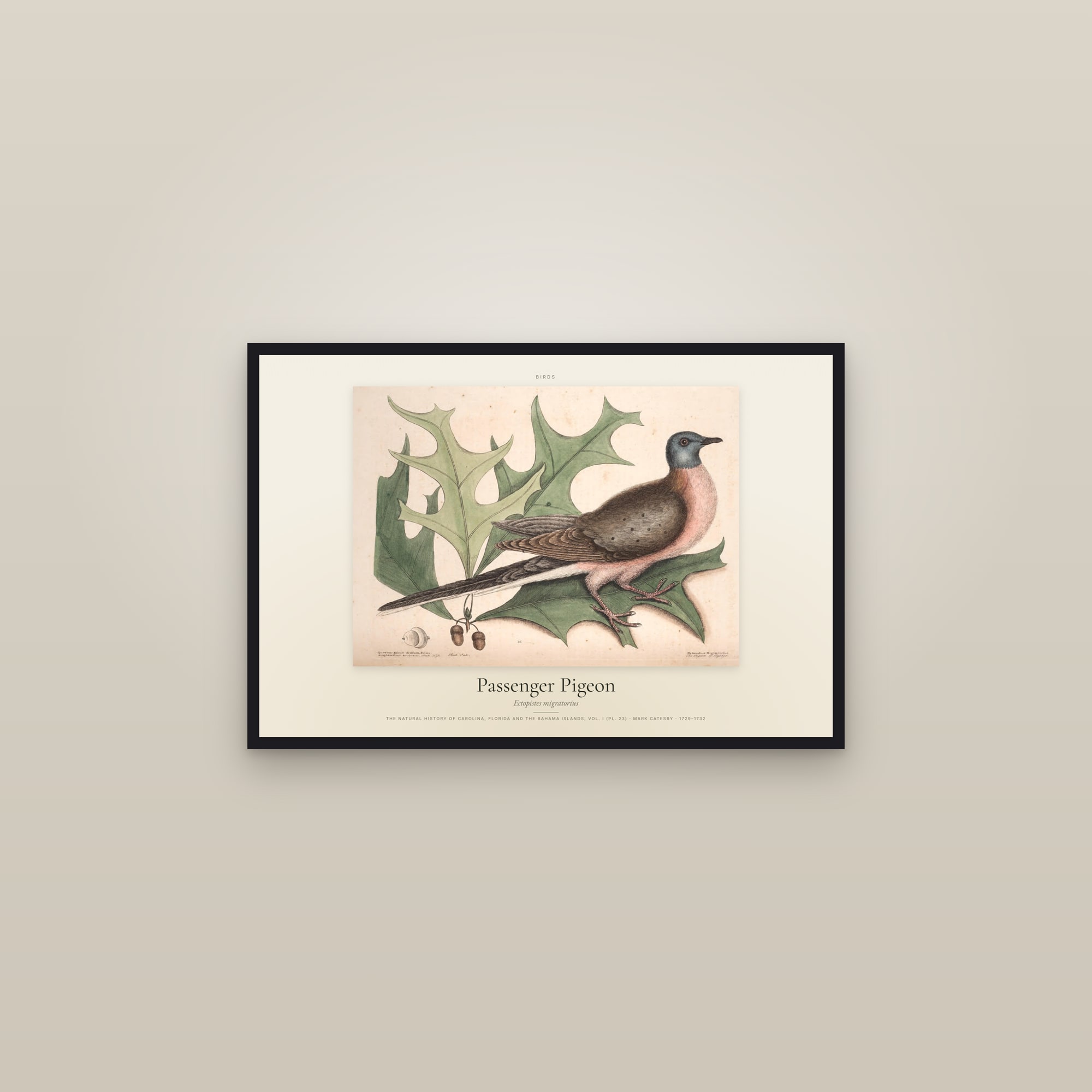
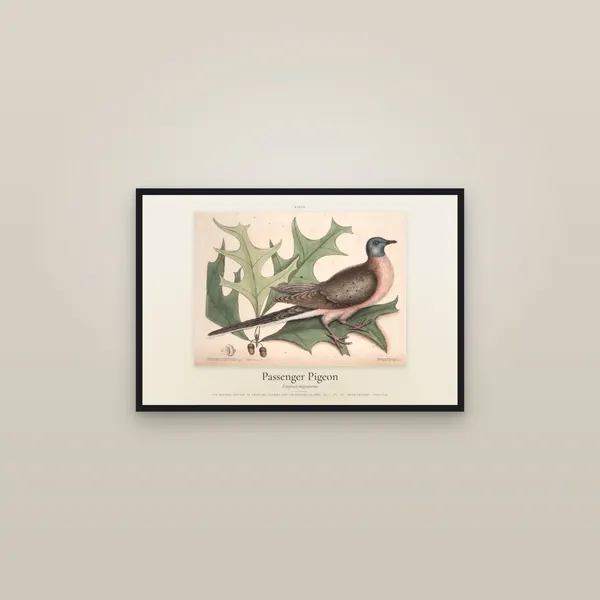
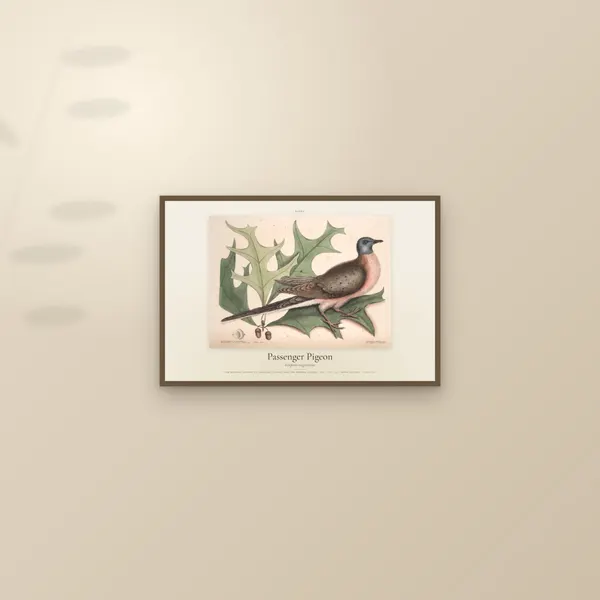
A long-tailed wild pigeon of central and eastern North America, once seen in numbers hard to picture. The U.S. Fish and Wildlife Service calls it the most abundant bird on the continent, once numbering in the billions, in flocks of hundreds of millions.
It was hunted in huge numbers for its meat, and the forests it needed were cleared. The New York State Museum records that the last wild bird known was shot in Ohio in 1900. The last of all, a captive bird named Martha, died at the Cincinnati Zoo on 1 September 1914.
Catesby drew it nearly two centuries before Martha died. He called it "the Pigeon of Passage" and set it on big lobed leaves beside hanging acorns: Vol. I, Plate 23.
Carolina parakeet
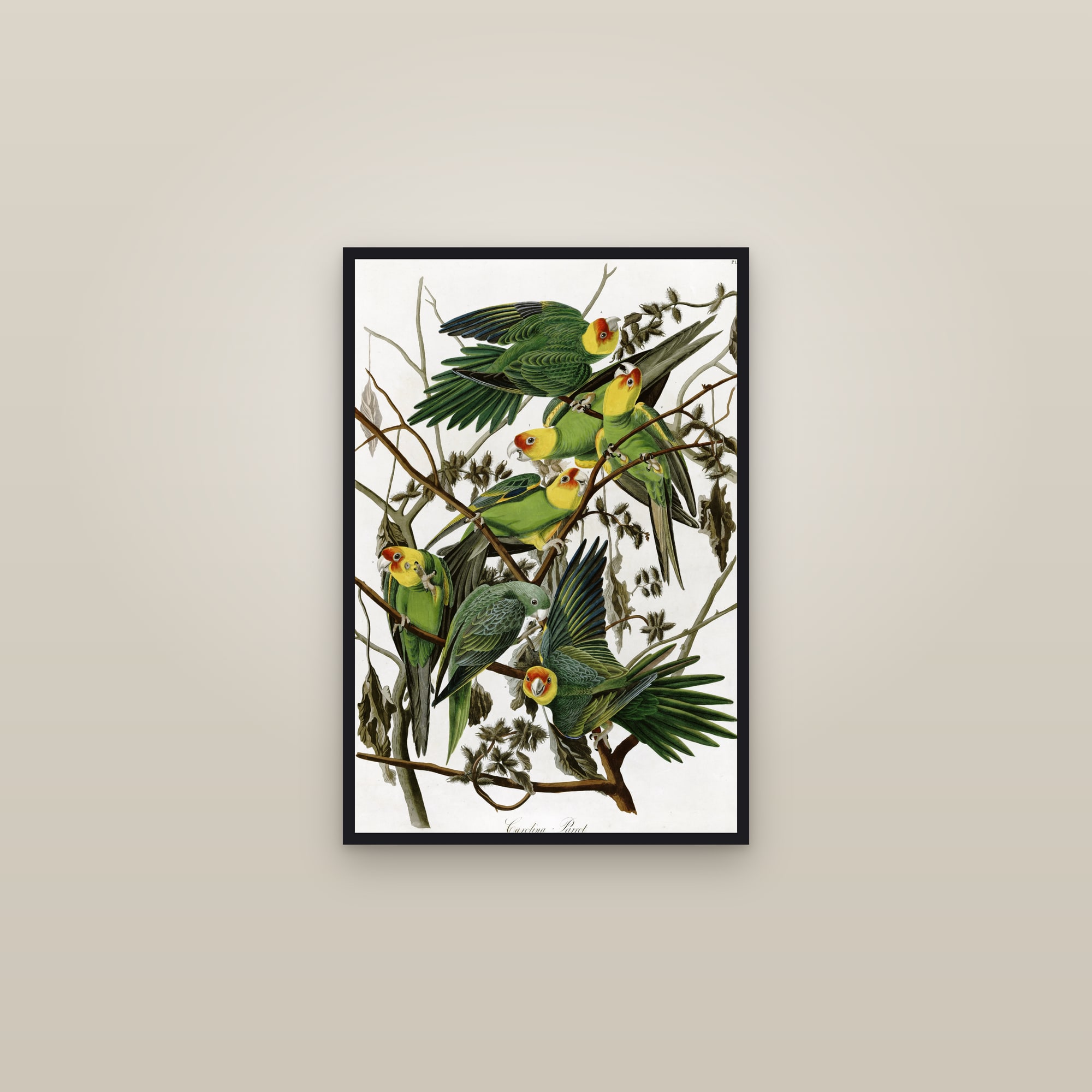
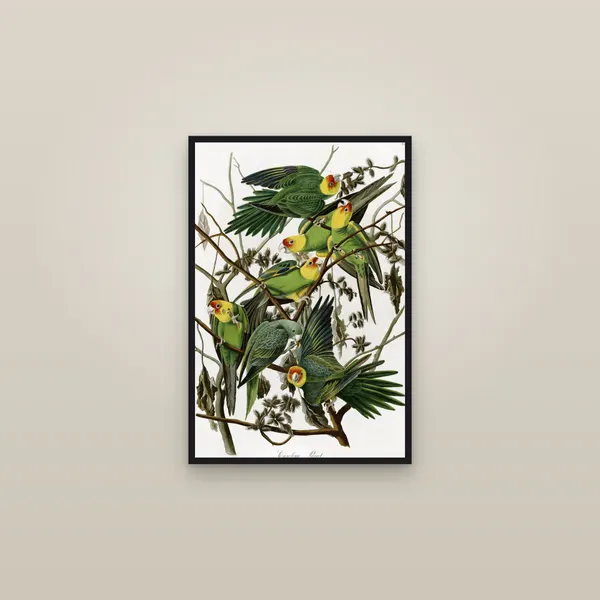
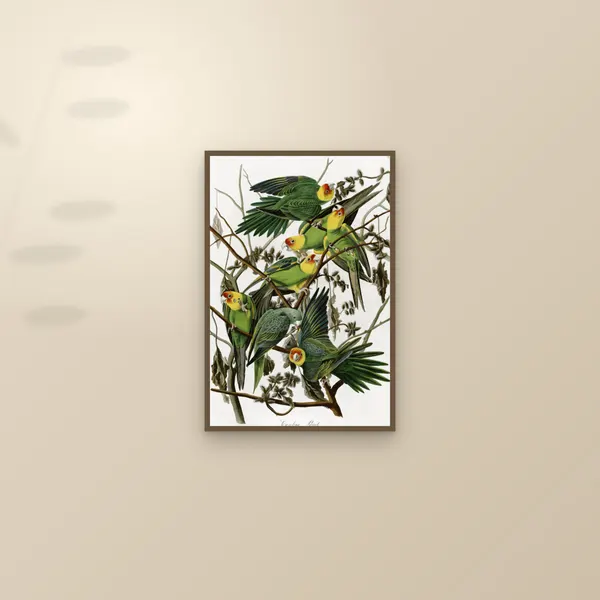
A green parrot with a yellow and orange head that lived in noisy flocks. Its range ran from southern New York and Wisconsin to the Gulf of Mexico. No flock was seen after 1918, and the Fish and Wildlife Service dates its extinction to about 1920.
Audubon's Plate XXVI, shown at the top of this piece, is a crowd of seven birds. Catesby painted one alone, "the Parrot of Carolina", on a branch hung with round brown cones: Vol. I, Plate 11.
Labrador duck
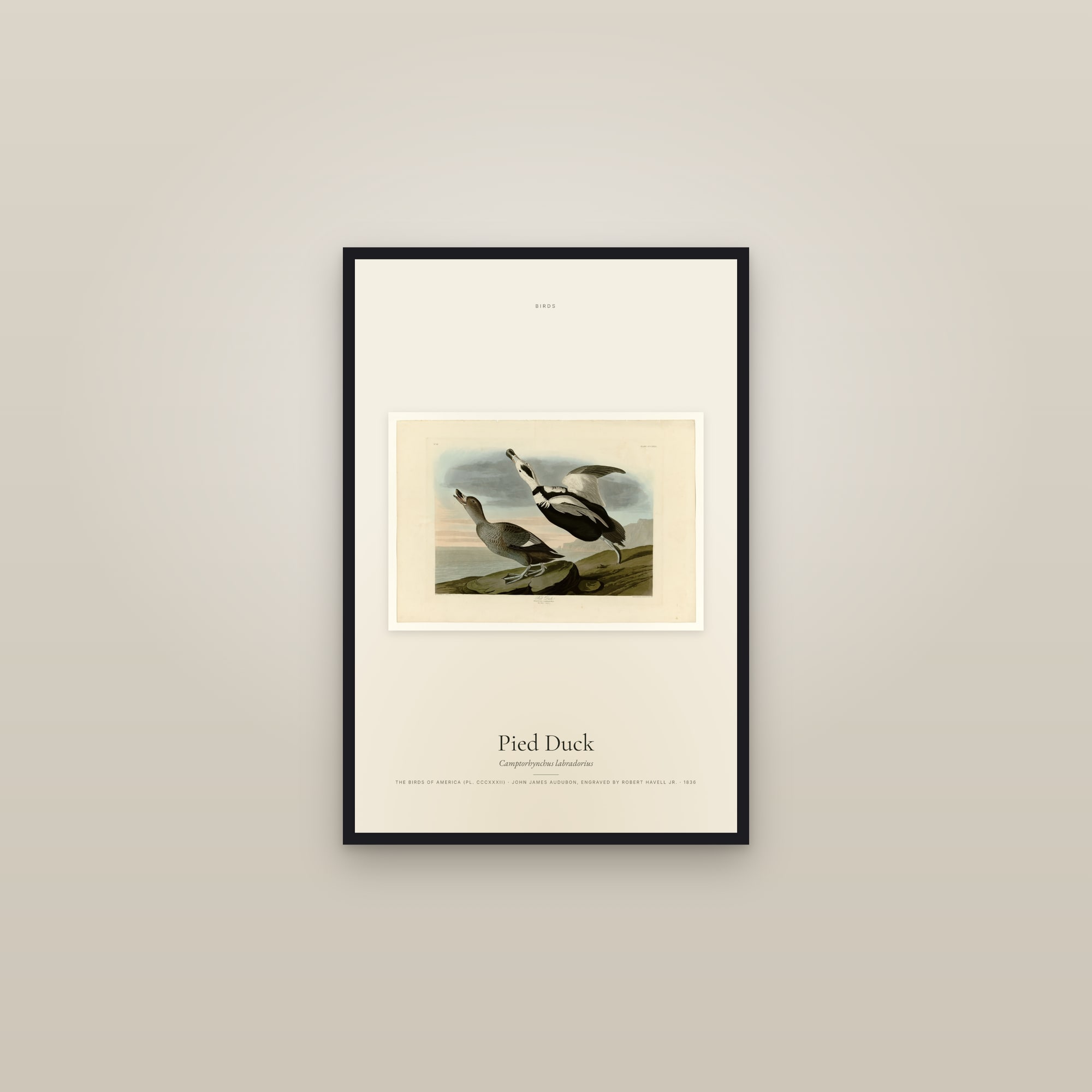
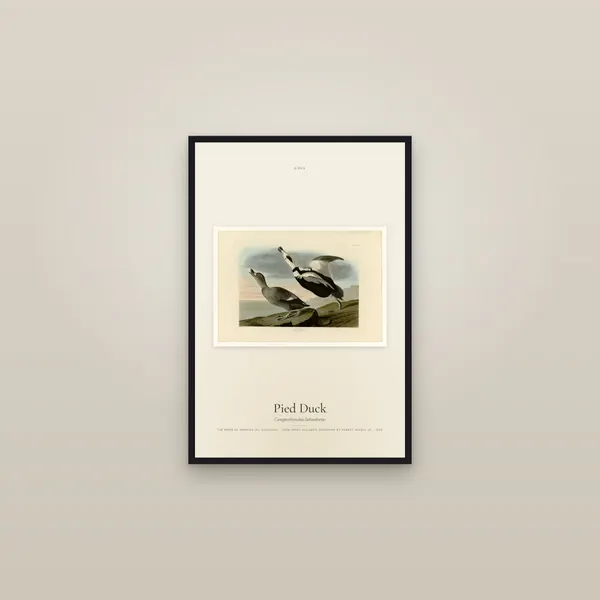
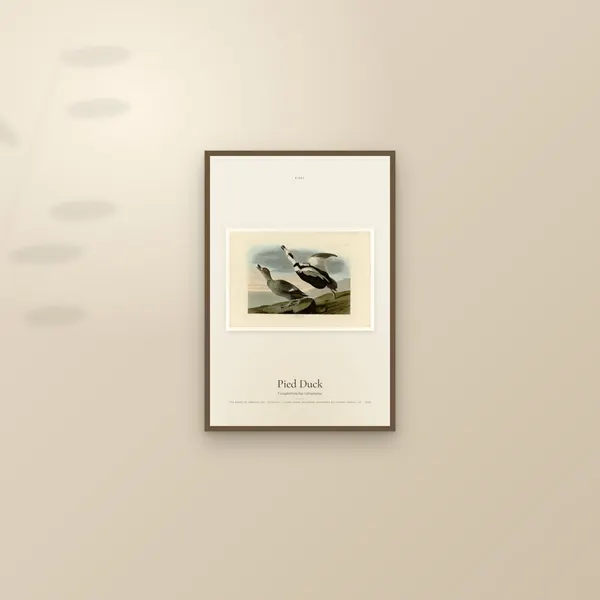
A sea duck of the Atlantic coast. The drake was boldly black and white, which is why Audubon called it the Pied Duck. The New York State Museum puts the last known sighting at Elmira, New York, in 1878.
Audubon's Plate CCCXXXII shows a pair on a rocky shore.
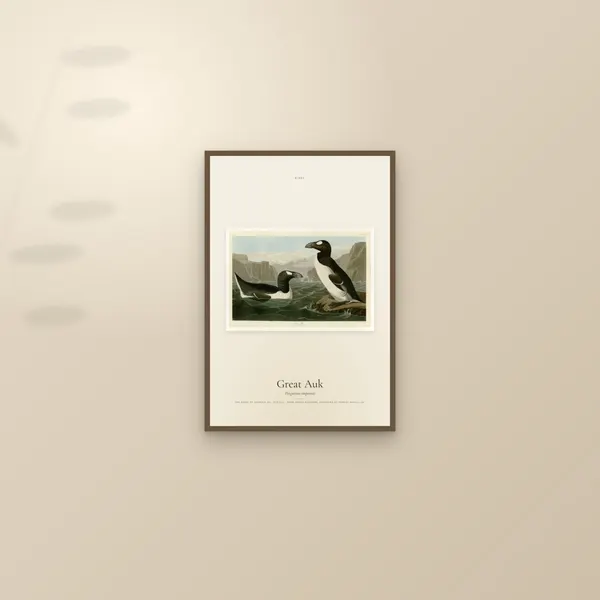
Great auk
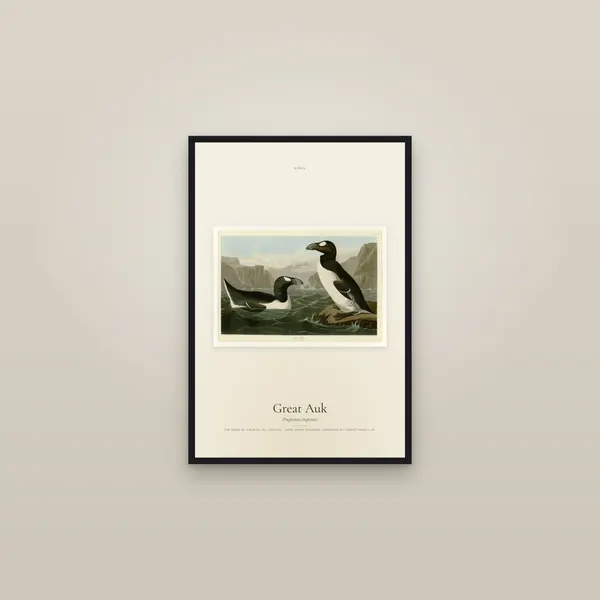
A large black and white seabird of the North Atlantic that could not fly. It bred on islands off Newfoundland, Iceland and Scotland. People hunted it for eggs, meat and, from the late 1700s, feathers, according to a 2019 study in eLife. As it grew rare, collectors wanted specimens. The last breeding pair reliably recorded was killed in June 1844 on Eldey, an island off Iceland, for a museum collection.
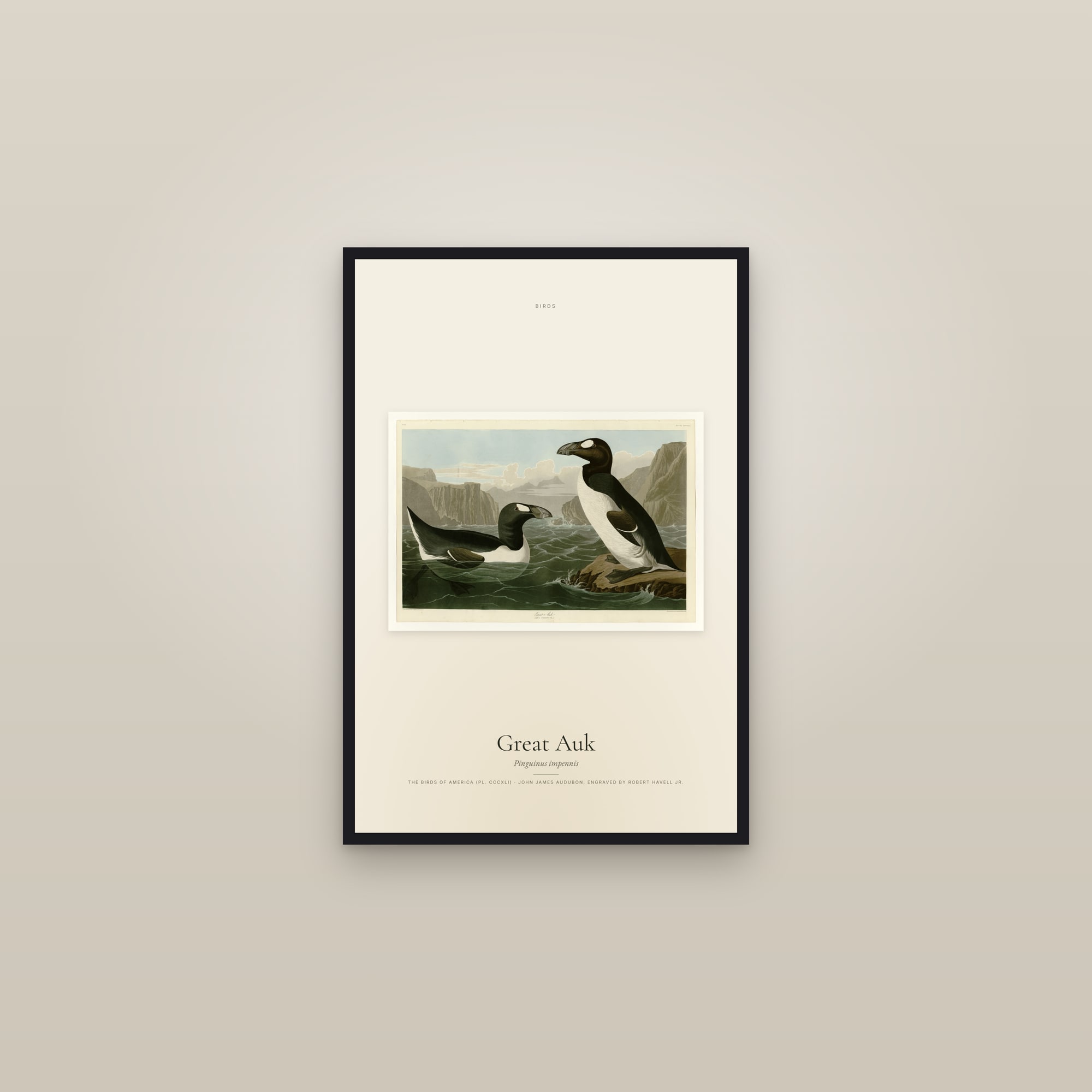
The plate is Plate CCCXLI.
Eskimo curlew
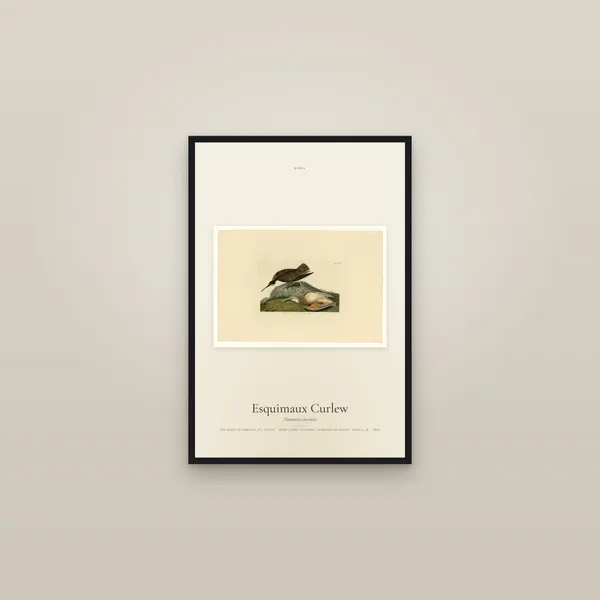
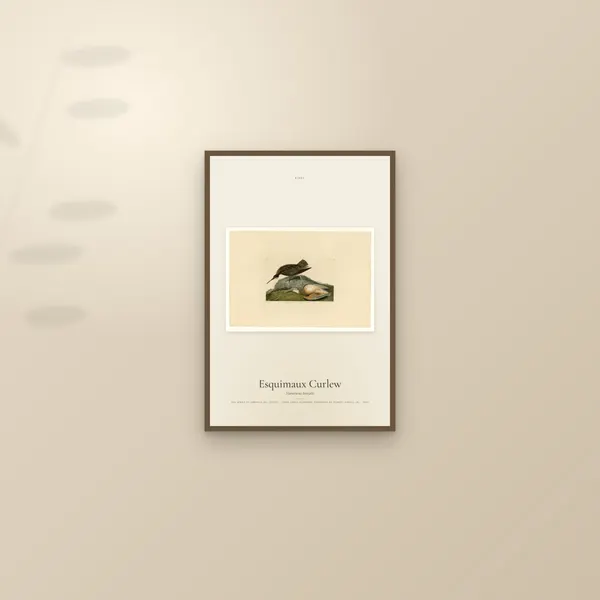
A small curlew with a curved bill. It nested on the Arctic tundra of northern Canada, flew nonstop across the western Atlantic to winter in South America, and came back north each spring over the American prairies. The Fish and Wildlife Service's 2011 review says it numbered at least in the hundreds of thousands and crashed in the late 1800s. The causes it gives are heavy hunting and the loss of prairie stopover habitat.
The last record backed by physical evidence is a bird shot in Barbados in 1963. There have been 39 unconfirmed sightings since, the latest in 2006. The Service judged the chance that the curlew survives "extremely low", but would not declare it extinct, because its Arctic range has never been fully searched. It is still listed as endangered. A new review opened in April 2026.
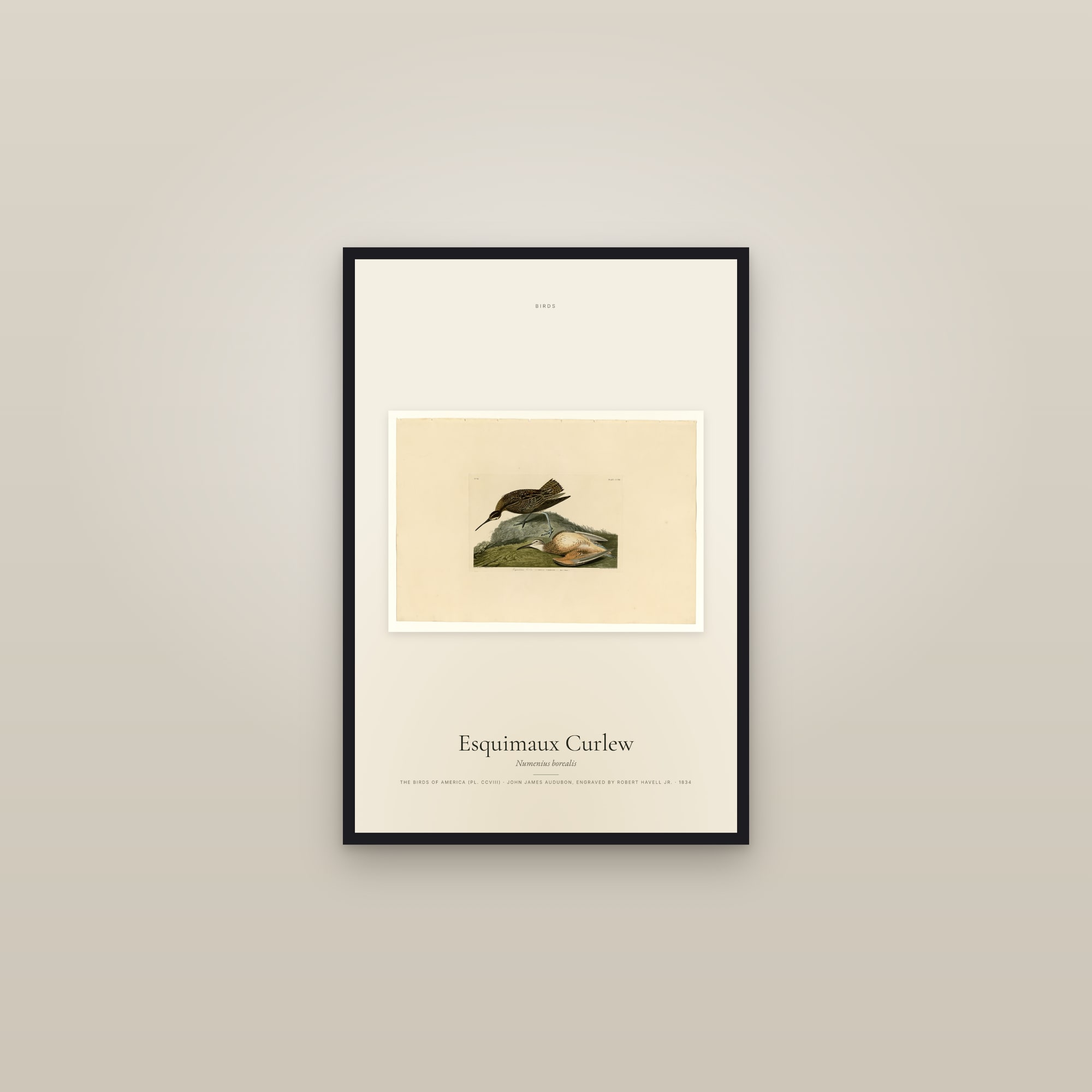
The plate is Plate CCVIII.
Heath hen
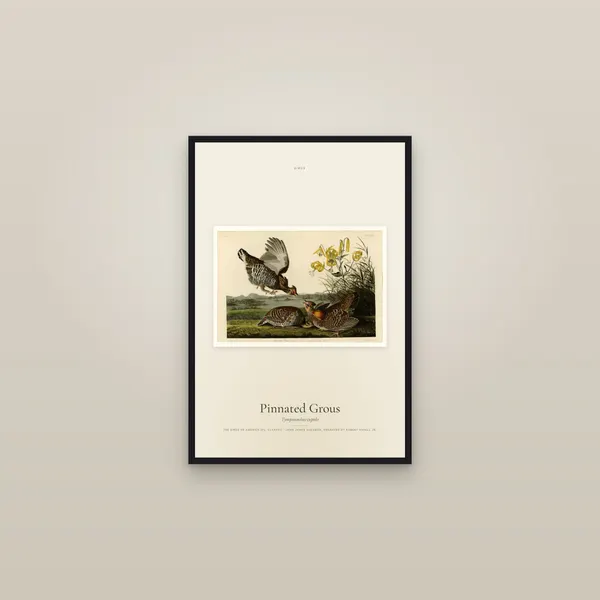
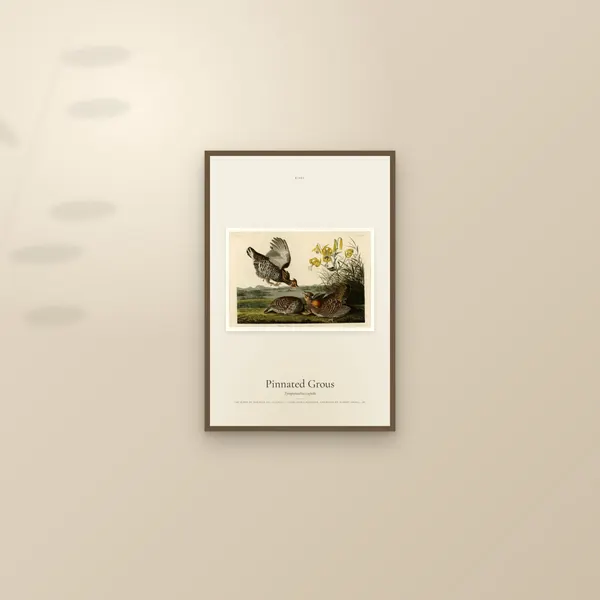
The eastern form of the greater prairie-chicken, a grouse of the eastern United States. Its last birds lived on Martha's Vineyard, Massachusetts. The very last, a male known as Booming Ben, died there in 1932, the year both the Fish and Wildlife Service and the New York State Museum give for its extinction.
Audubon's Pinnated Grous, Plate CLXXXVI, shows the species: one bird dropping in on open wings, two on the ground below, one of them a male with his orange neck sacs swollen for display, under a spray of yellow lilies. The species survives. Its eastern form does not.
Ivory-billed woodpecker
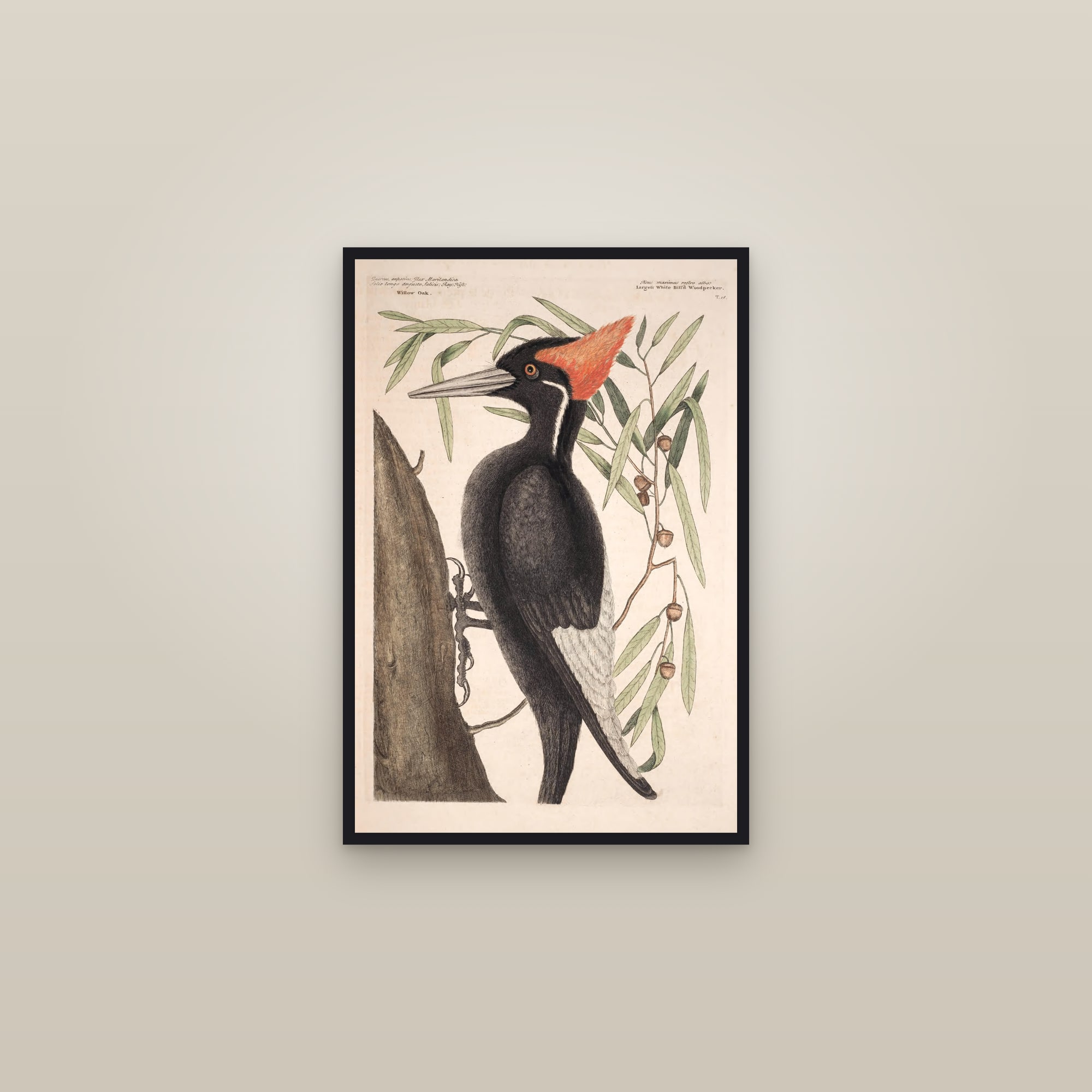
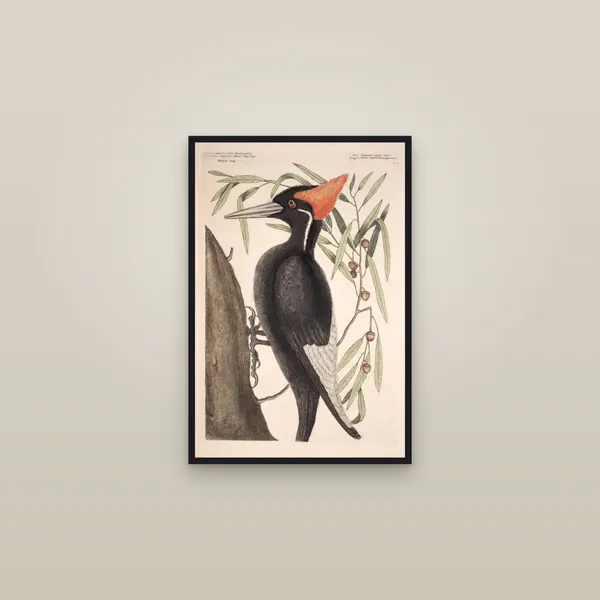
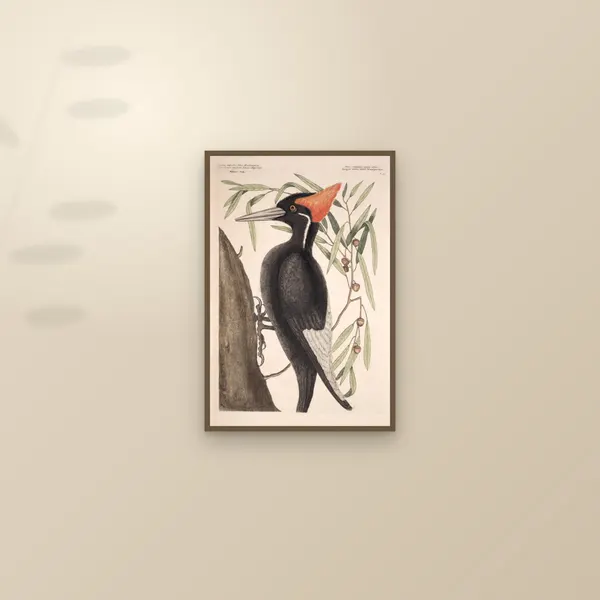
A big black and white woodpecker with a pale bill, living in old forest across the Southeast. It needed mature forest with many dead and dying trees. Logging took that forest, and collectors took birds. The Fish and Wildlife Service says the last sighting most scientists agree on was on the Singer Tract in northeast Louisiana in April 1944.
Its legal status is unsettled, and the record says exactly this:
- 2021: the Service proposed removing it from the endangered list as extinct.
- 2022: it extended the decision by six months and reopened comments.
- 2023: the final rule of 17 October delisted 21 other species but held this one back, citing "substantial disagreement among scientists". The Service said a separate decision would follow.
No such decision appears in the Federal Register as of November 2026, so the ivory-bill is still listed as endangered.
Catesby called it the "Largest White Bill'd Woodpecker": Vol. I, Plate 16.
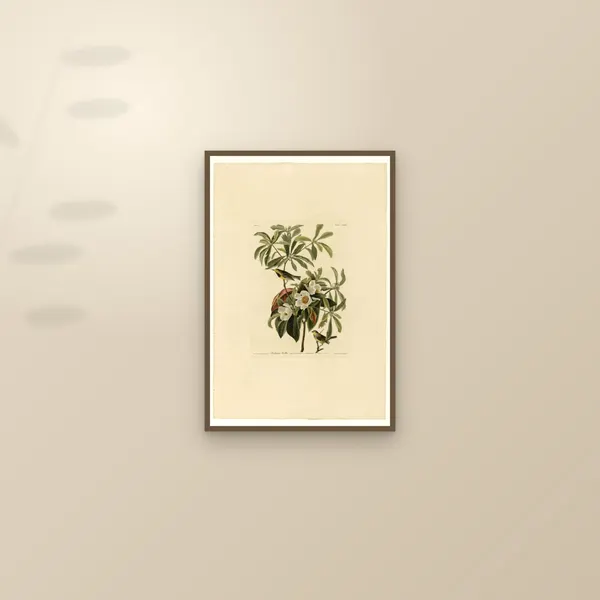
Bachman's warbler
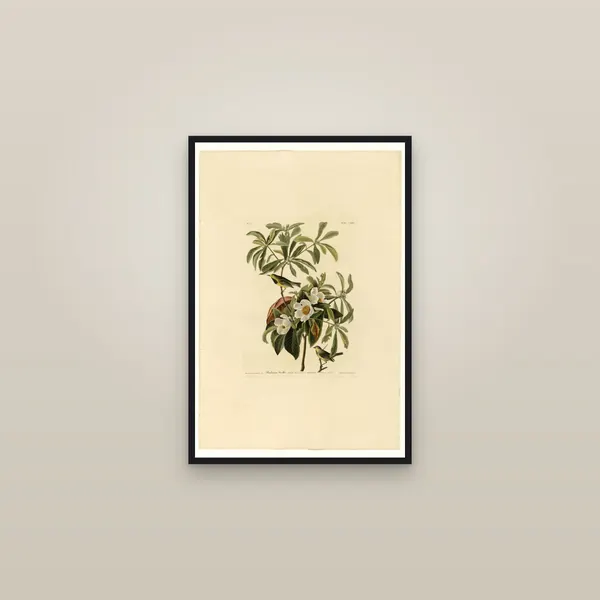
A small yellow and olive warbler of southern swamps and canebrakes. The Reverend John Bachman found it in South Carolina in 1832, and Audubon named it after his friend, according to the South Carolina Encyclopedia.
The 2023 federal rule gives the history. The last confirmed nest was found in 1937. No United States report after 1962 has been accepted. Its swamp forests were cleared from the 1800s, and old bottomland forest was logged for the war effort. In Cuba, where it wintered, lowland forest was cleared for sugarcane. The Service removed it from the endangered list as extinct, effective 16 November 2023.
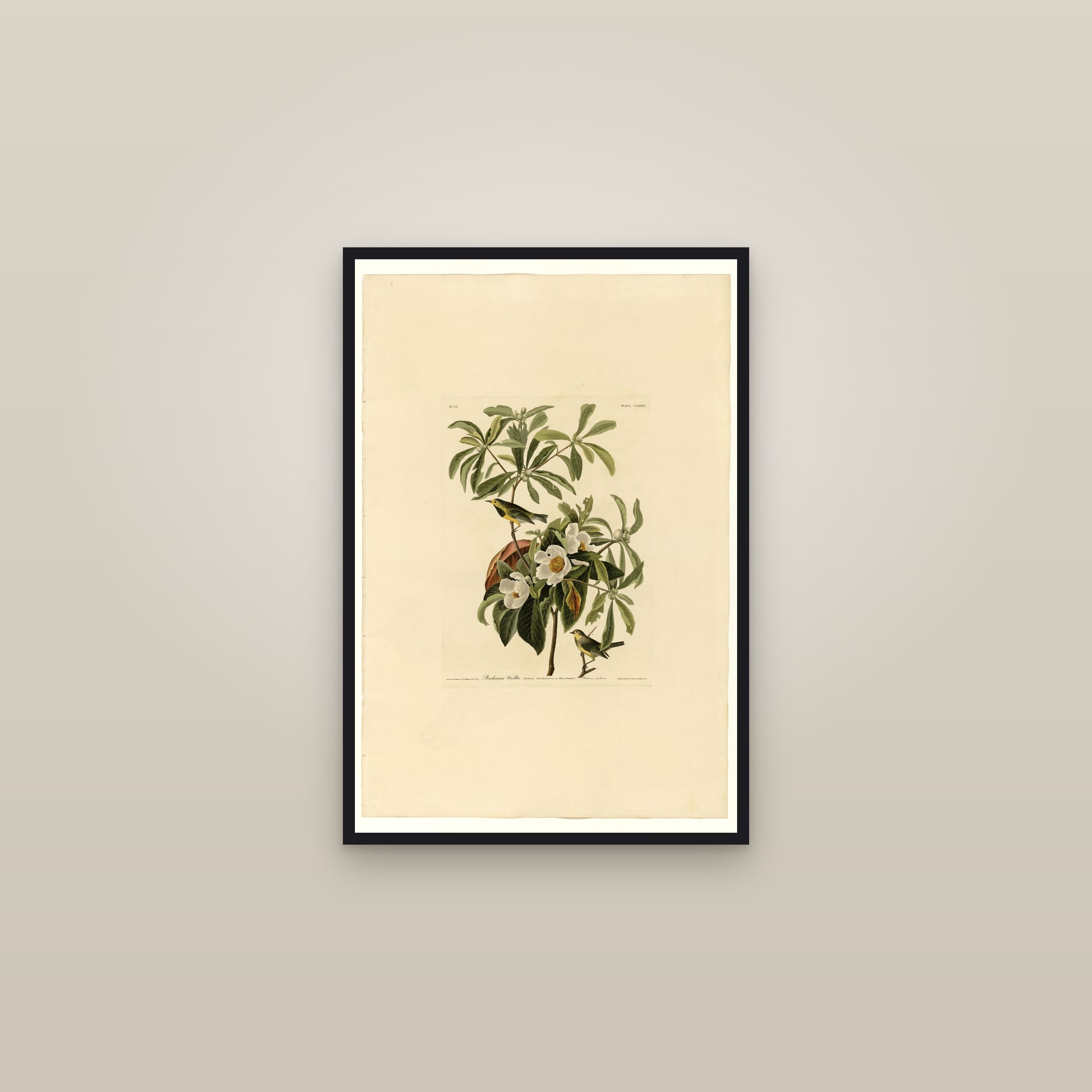
The plate is Plate CLXXXV.
Four that came back
Each of these was close to the edge, and each was pulled back by people deciding it should not go. Three of the four are still listed as endangered. Back is not the same as safe.
Whooping crane. A tall white crane with a red crown. Every whooping crane alive today descends from 15 birds that wintered at Aransas, Texas, in 1941. Protection and habitat work followed. In winter 2025 to 2026 the Service estimated about 540 on the Texas coast. Catesby drew its head and neck beside a branch of dark berries: Vol. I, Plate 75.
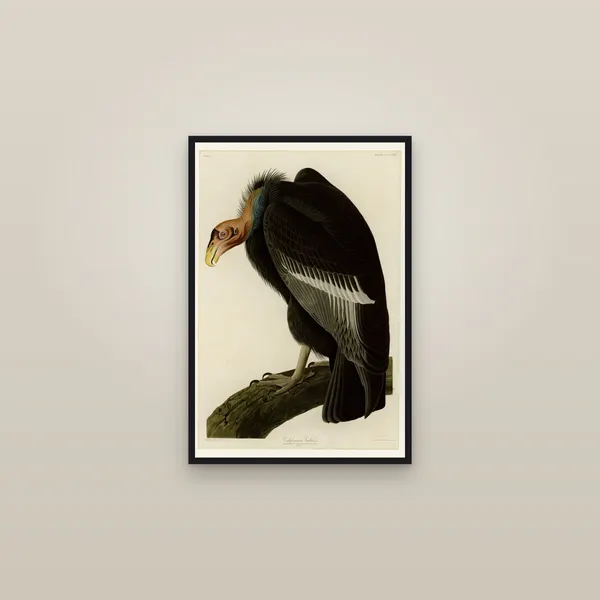
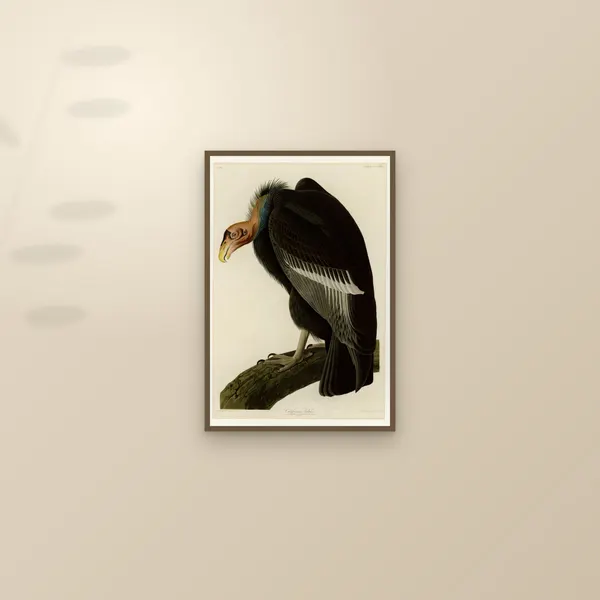
California condor. By 1982 only 23 condors were left in the wild. In 1987 biologists caught every one that remained and bred them in zoos. The Service's count for the end of 2025 is 607 condors, 392 of them flying wild. Lead from spent ammunition, eaten with carcasses, is still the leading threat.
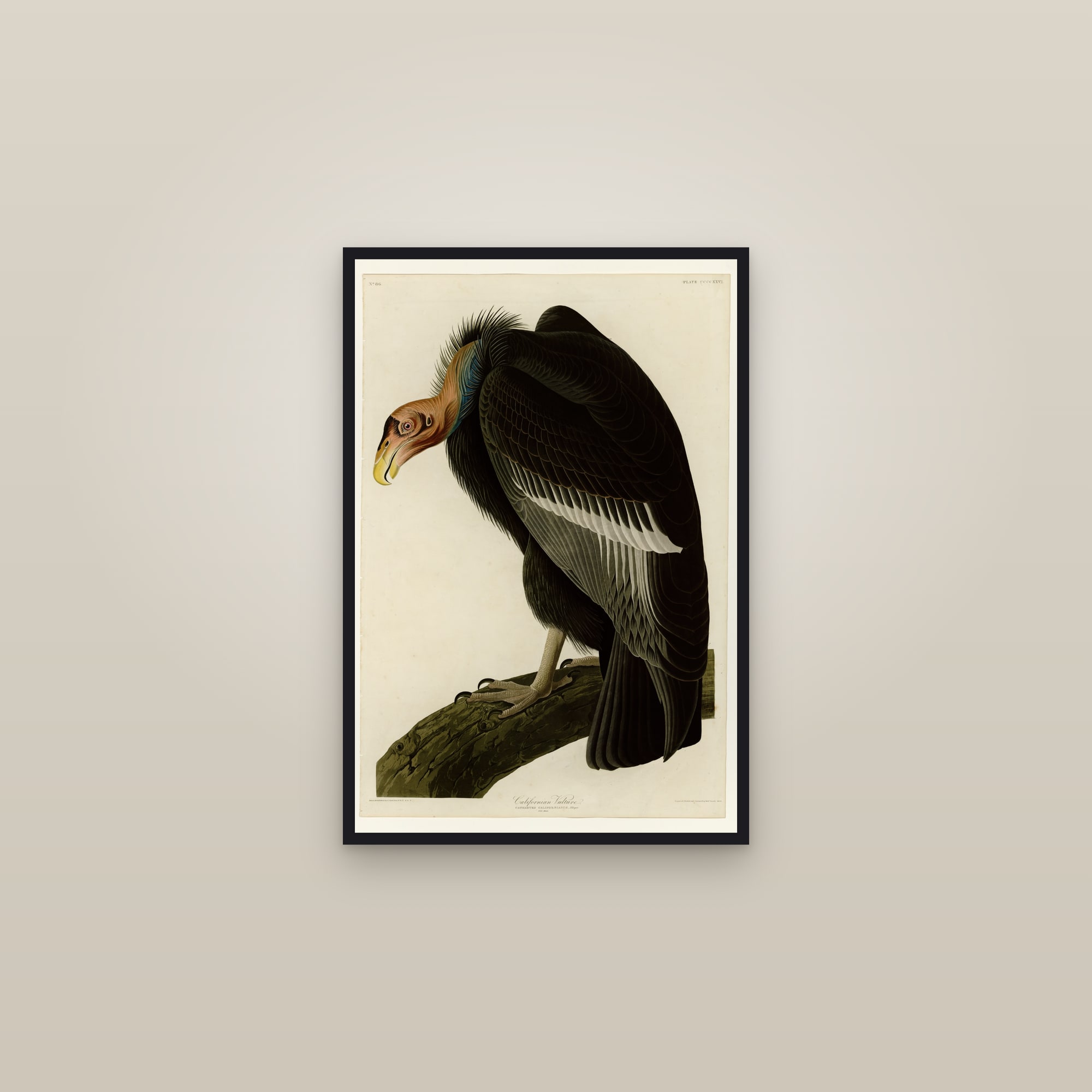
Audubon's Plate CCCCXXVI comes near the end of the book's 435 plates.
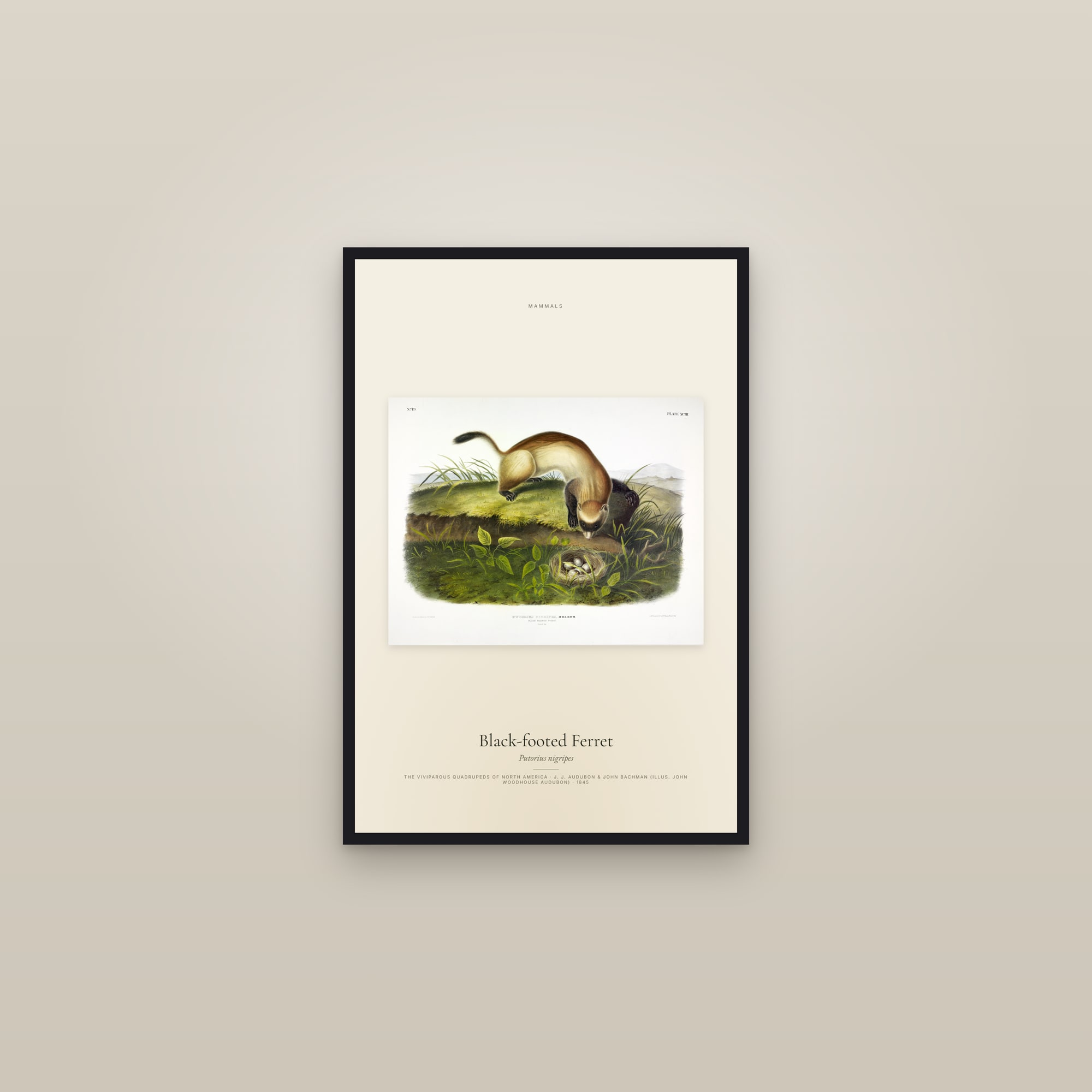
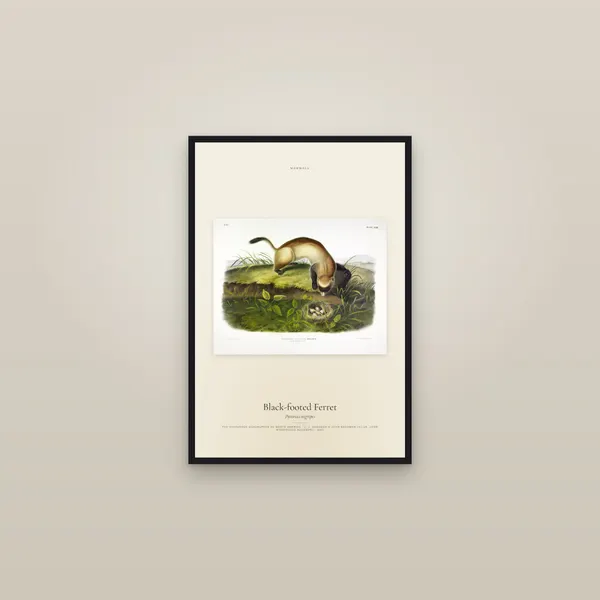
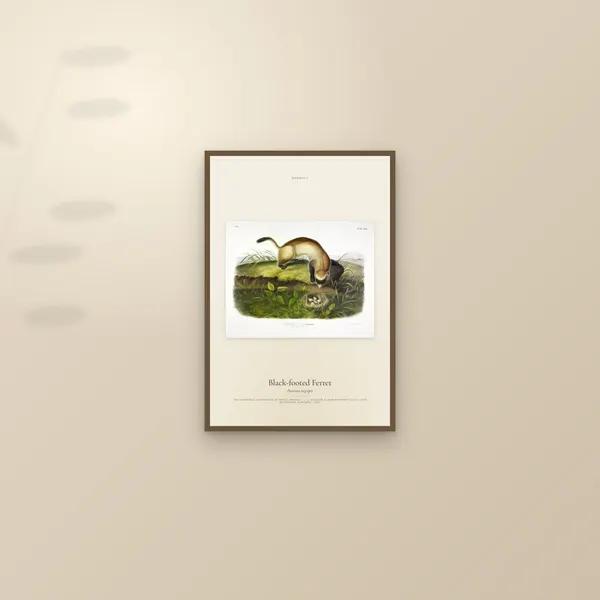
Black-footed ferret. A prairie weasel that lives in prairie dog burrows and eats prairie dogs. Farming and prairie dog poisoning brought it so low that it was presumed extinct by the late 1950s. In 1981 a small population turned up near Meeteetse, Wyoming. Disease cut it to 18 animals by 1986, and all were taken into captivity to breed. Their descendants are released each year across the West, and about 280 live in breeding centres. Plague remains the hardest threat.
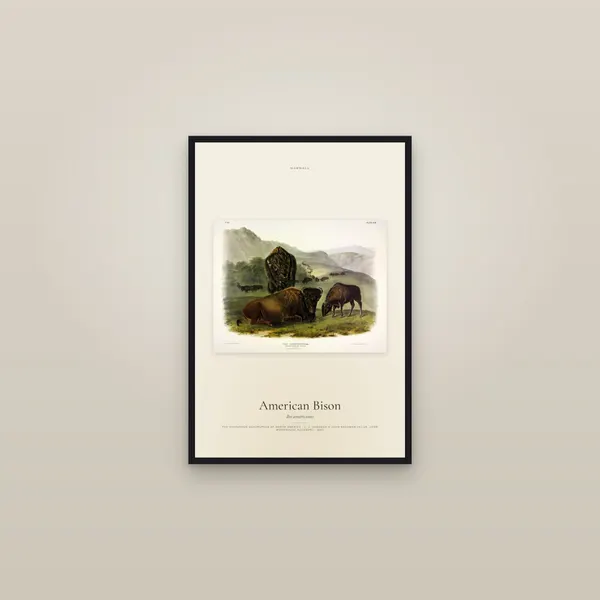
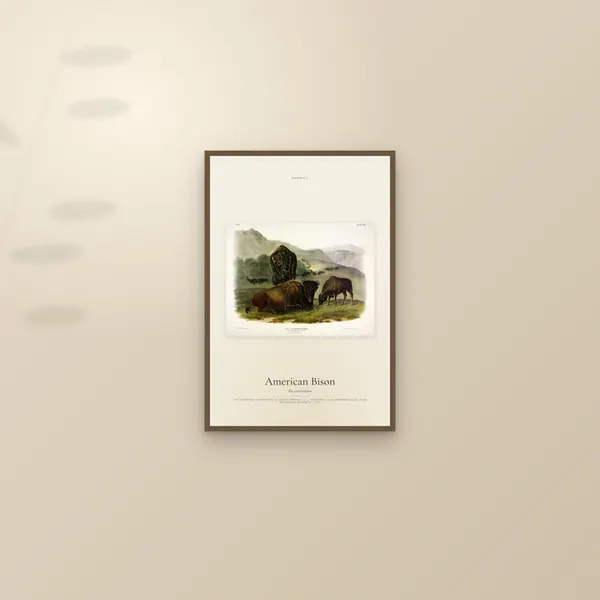
American bison. Railways, rifles and the hide trade took the bison from an estimated 30 to 60 million to fewer than 1,000 by the 1890s. A few private citizens kept small herds, and those became the stock for public herds. About 31,000 bison now live as wildlife in public herds in the United States and Canada. Audubon's Quadrupeds plate shows bison lying and grazing below hills strung with distant herds. Catesby's, a bull rubbing against a broken tree under pink blossom, is Appendix, Plate 20.
What the plates are now
When Catesby and Audubon drew these birds, every one of them was still alive somewhere. The plates are a record made in that time, and nobody can make that record again. For several of these species they are now among the ways people know what the living bird looked like.
Each print here starts from a scan of the original book. Every plate is checked at full size, centred on its own paper, and left as published: the plate number, the engraved lines and the marks of age stay. Our piece on how we restore a plate explains the process. The Audubon plates reference and the Catesby plates reference list every plate we hold by number. Our piece on how Audubon made The Birds of America tells the story of the book itself. Prints are on 250 gsm archival paper, from $39, unframed or in a black or dark wood frame.


Questions people ask
Which birds in Audubon's Birds of America are extinct?
The passenger pigeon, the Carolina parakeet, the Labrador duck (Audubon's Pied Duck), the great auk and Bachman's warbler. The heath hen, the eastern form of the bird on his Pinnated Grous plate, died out in 1932. The Eskimo curlew and the ivory-billed woodpecker have not been proved alive for decades but have not been declared extinct.
Is the ivory-billed woodpecker extinct?
Not officially. The U.S. Fish and Wildlife Service proposed removing it from the endangered list as extinct in 2021, extended its decision in 2022 because scientists disagreed about the evidence, and left it out of the 2023 rule that delisted 21 other species. No final decision has been published since, so it remains listed as endangered. The last sighting most scientists accept was in Louisiana in April 1944.
When did the passenger pigeon go extinct?
On 1 September 1914, when Martha, the last known passenger pigeon, died at the Cincinnati Zoo. The last wild bird known was shot in Ohio in 1900.
Did Mark Catesby paint birds that are now extinct?
Yes. His Natural History of Carolina, Florida and the Bahama Islands (1729 to 1747) includes the passenger pigeon, the Carolina parakeet and the ivory-billed woodpecker, about a century before Audubon painted the same birds.
Which endangered animals in Audubon's books recovered?
The whooping crane, the California condor and the black-footed ferret, all through captive breeding and protection, and the American bison, saved by a few private herds and then public ones. The crane, condor and ferret are still listed as endangered.
Sources
- U.S. Fish and Wildlife Service, From Many, to Few, to None (2014): the passenger pigeon, Martha's death on 1 September 1914, and the Carolina parakeet after 1918
- U.S. Fish and Wildlife Service, Midwest Region, Extinct species list (archived 2012): Carolina parakeet extinct about 1920, heath hen 1932, passenger pigeon 1914
- New York State Museum, Extinction and Conservation timeline: last wild passenger pigeon 1900, Labrador duck 1878 at Elmira, heath hen 1932, Eskimo curlew 1963 in Barbados
- Thomas et al., Demographic reconstruction from ancient DNA supports rapid extinction of the great auk, eLife 8 (2019): hunting history and the last breeding pair killed on Eldey, June 1844
- U.S. Fish and Wildlife Service, Eskimo curlew 5-year review, 31 August 2011: decline, the 1963 Barbados specimen, 39 unconfirmed sightings
- Federal Register, 8 April 2026: initiation of 5-year status reviews for the Eskimo curlew and other species
- Federal Register, 30 September 2021: proposed removal of 23 extinct species, including the ivory-billed woodpecker (last agreed sighting April 1944) and Bachman's warbler
- Federal Register, 7 July 2022: 6-month extension of the final determination on the ivory-billed woodpecker
- Federal Register, 17 October 2023: removal of 21 species, including Bachman's warbler; the ivory-billed woodpecker left to a separate decision
- South Carolina Encyclopedia (University of South Carolina): Bachman's warbler, discovered by John Bachman in 1832 and named by Audubon
- U.S. Fish and Wildlife Service, Whooping crane species profile: all living whooping cranes descend from 15 birds at Aransas in 1941
- U.S. Fish and Wildlife Service, 17 June 2026: about 540 whooping cranes wintered on the Texas coast in 2025 to 2026
- U.S. Fish and Wildlife Service, Condor 550: 23 wild condors in 1982, all captured in 1987, lead as the leading threat
- U.S. Fish and Wildlife Service, California Condor Recovery Program, 2025 annual population status (as of 31 December 2025)
- U.S. Fish and Wildlife Service, Black-footed ferret species profile: presumed extinct, rediscovered at Meeteetse in 1981, threats
- U.S. Fish and Wildlife Service, National Black-Footed Ferret Conservation Center: 18 ferrets left in 1986, about 280 in captive breeding
- National Park Service, People and Bison: 30 to 60 million to fewer than 1,000, and about 31,000 in public herds today
Start hereThe most famous paintings in the world and where to see them