
Trouvelot, the astronomer who let loose the spongy moth
Étienne Léopold Trouvelot drew the planets and comets for Harvard and Scribner's. In Medford he also let a European moth escape. Both stories, from the record.
Contents10 sections
- Who was Trouvelot?
- Why was he raising moths?
- How did the moths escape?
- How did one escape become a national pest?
- Why is it called the spongy moth now?
- How did a silk breeder become an astronomer?
- Why draw when you could photograph?
- What is in the Scribner set?
- What happened to him afterwards?
- The plates now
Étienne Léopold Trouvelot was a French-born artist and naturalist who became an astronomer in Massachusetts by drawing what he saw through the telescope. His fifteen Astronomical Drawings, published by Charles Scribner's Sons in 1881 and 1882, show the Sun, the Moon, three planets, a comet, a meteor shower, an aurora and the Orion Nebula as a trained eye saw them, at a time when cameras could not.
He is also the man who let the spongy moth loose in America. In 1868 or 1869, European moths he was keeping for silk experiments escaped from his house in Medford, near Boston. The insect, called the gypsy moth until 2022, became what a USDA Forest Service leaflet calls one of the most notorious pests of hardwood trees in the eastern United States.
Both stories come from the same habit: a man who watched living things closely and wrote down what he saw. This piece tells them in order, from the record.
Who was Trouvelot?
He was born in Guyencourt, in the Aisne department of northern France, on 26 December 1827. The Dictionary of Scientific Biography says little is known of his life before he came to America in 1857. It finds no sign of an early interest in astronomy.
He settled in Medford, Massachusetts. The state's 1896 report on the moth places his house near Glenwood station, at what is now 27 Myrtle Street. The same report calls him a French artist, naturalist and astronomer.
Why was he raising moths?
He wanted an American silk. In an 1867 article in The American Naturalist, Trouvelot wrote that North America had eight or ten species of silk-spinning moths. He judged that only one deserved attention: the polyphemus moth, whose caterpillar spins a strong cocoon closed at both ends.
He began collecting polyphemus cocoons in 1860. By 1865, he wrote, a million caterpillars could be seen feeding in the open air on bushes covered with netting. Five acres of woodland were swarming with them.
Birds were his main problem. The 1896 report repeats an account from 1870: he put two thousand caterpillars on a small tree in front of the house, and within a few days robins and catbirds had eaten them all. He was obliged to shoot birds to protect his "infant industry", as the account puts it.
How did the moths escape?
At some point he brought European moths into the experiment. The 1896 report, by Edward H. Forbush and Charles H. Fernald, gives the date as 1868 or 1869. It quotes Dr. Hagen, an entomologist in Cambridge, who remembered hearing Trouvelot tell how the insects had escaped from him after he imported them.
The details of the escape were already uncertain by 1896. Neighbours said he imported some insects' eggs around 1869, and that some were blown out of a window of the room where he kept them. Others said the caterpillars got out. The report thought the eggs the likelier version. It also records that Trouvelot knew the danger, tried and failed to recover the insects, and then gave public notice that the moth had escaped.
The record shows the escape was noticed at the time. In 1870 the entomologist Charles V. Riley noted that a European moth had been accidentally introduced into New England "by a Massachusetts entomologist". The Dictionary of Scientific Biography gives 1869 for the import of live egg clusters.
What exactly he hoped to do with them is less clear. The 1896 report says only that he introduced European species for the same purpose as his native silk moths. Later accounts, such as the University of Wisconsin Extension's history, say he was trying to breed a hardier silkworm. The early record does not spell out his plan.
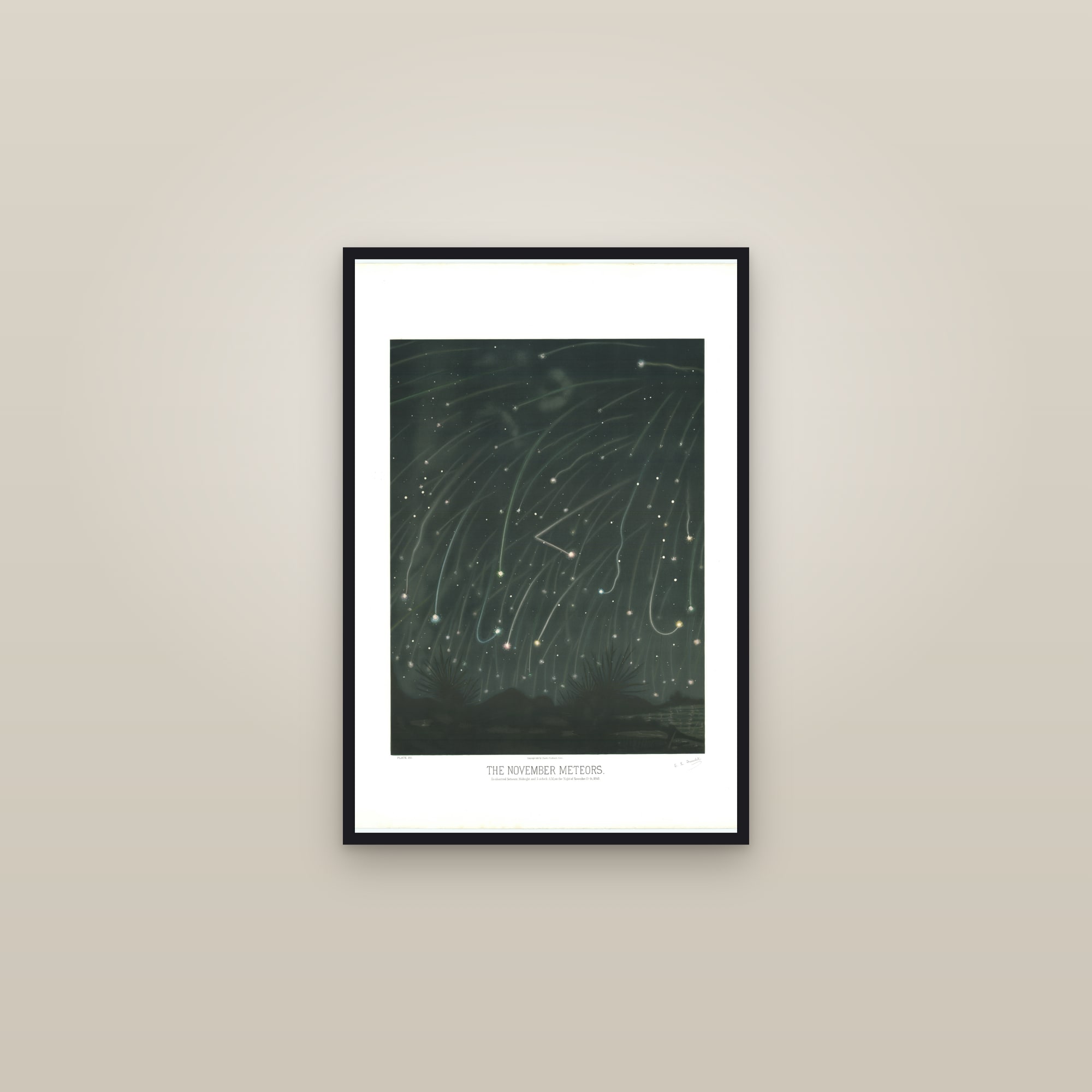
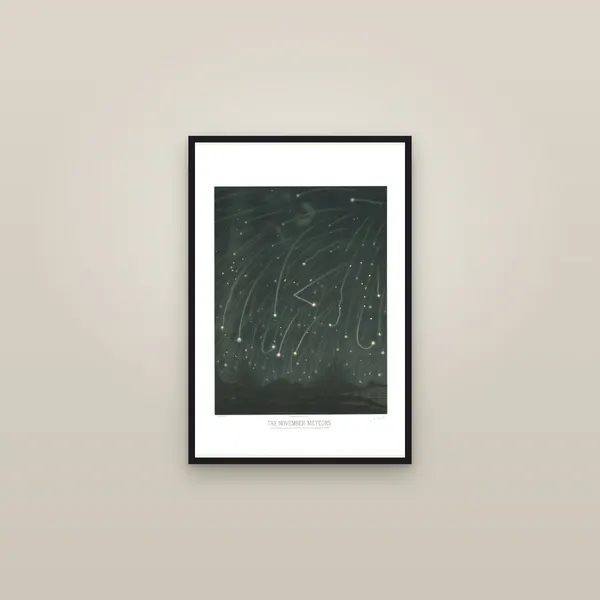
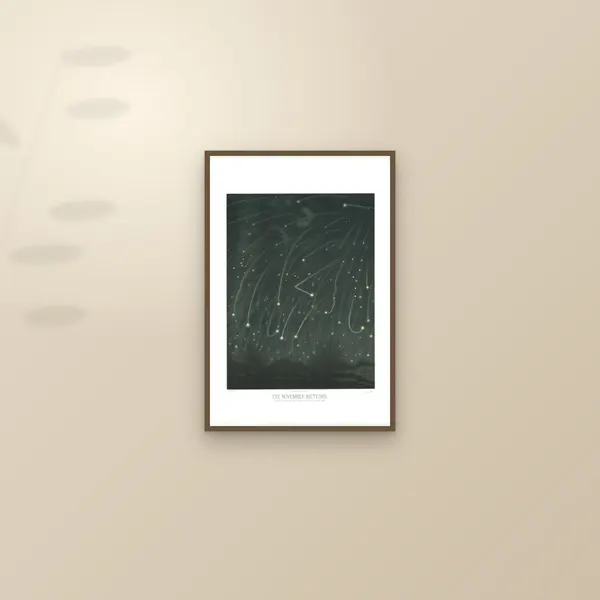
The same house appears in his astronomy. On the night of 13 to 14 November 1868 he watched a meteor shower from a north window, counting more than three thousand meteors between midnight and sunrise. The Smithsonian's Air & Space Quarterly places that window at 27 Myrtle Street. In his Manual he calls the plate an ideal view: the meteors were all seen that night, but not all at the same moment.
How did one escape become a national pest?
Slowly, and then all at once. The 1896 report says that for about ten years no one except Trouvelot is known to have noticed the moth. Within twelve years it had become a serious nuisance to the people living near his house, but they took the caterpillar for a native. Within twenty years it had spread into thirty townships without attracting public attention.
The first large outbreak came in Medford in 1889, when the caterpillars stripped the street trees in Trouvelot's old neighbourhood. By then he was living in France.
The damage since has been measured in millions of acres:
- 1981: the moth defoliated a record 12.9 million acres, an area larger than Rhode Island, Massachusetts and Connecticut combined, according to the USDA Forest Service leaflet.
- 2017: 923,000 acres were defoliated in Massachusetts alone, according to UMass Extension.
- 2023: the Forest Service reported the moth established in more than 20 eastern and midwestern states. Its caterpillars can feed on about 300 species of trees and shrubs, and a couple of rounds of complete defoliation will usually kill a tree.
Why is it called the spongy moth now?
The Entomological Society of America removed "gypsy moth" from its list of common names in July 2021, because "gypsy" is an ethnic slur. On 2 March 2022 it adopted "spongy moth" for Lymantria dispar. The new name comes from the French spongieuse, used in France and French-speaking Canada. It describes the moth's egg masses, which look like small pads of sponge. Older documents, including the 1896 report, use the old name.
How did a silk breeder become an astronomer?
Through his drawings. According to Princeton University Library's Graphic Arts Collection, Joseph Winlock, director of the Harvard College Observatory, invited him to draw with its telescopes. He worked there from 1872 to 1874 with the fifteen-inch refractor. About a thousand of his sunspot drawings went to the observatory, and his drawings were engraved for Volume VIII of its Annals.
In the autumn of 1875, Rear Admiral Charles Henry Davis invited him to use the 26-inch refractor at the U.S. Naval Observatory in Washington, Trouvelot thanks the "late Admiral C. H. Davis" for it in the preface to his Manual. He also used the 26-inch telescope built for the University of Virginia while it was still with its makers, Alvan Clark & Sons.
In 1876 a series of his large pastel drawings was shown in the Massachusetts exhibit at the Centennial Exhibition in Philadelphia. In 1878 he led a government expedition to observe the total eclipse of the Sun. In 1881 he was elected to the American Academy of Arts and Sciences.
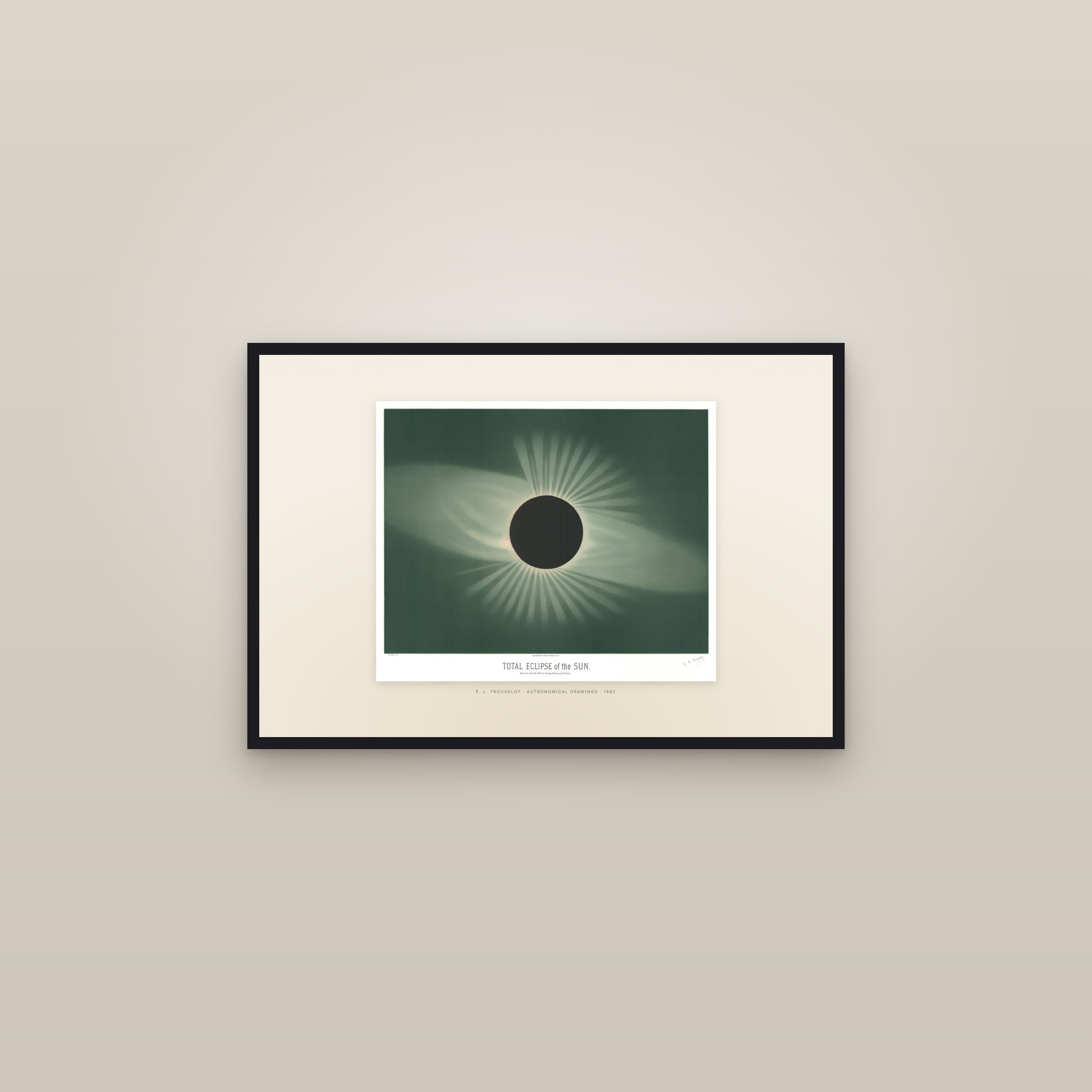
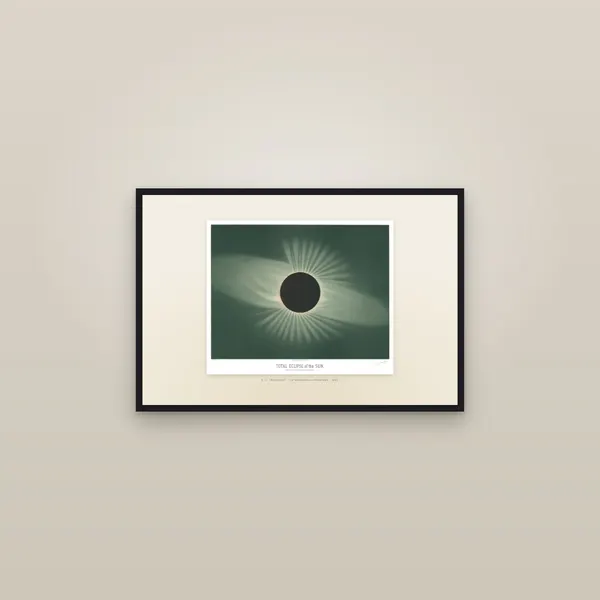
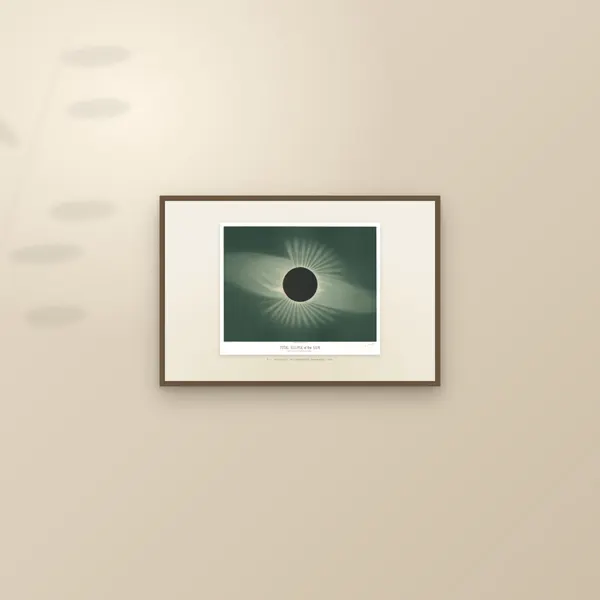
He drew the eclipse at Creston, in Wyoming Territory, for the Naval Observatory, through a telescope of 6⅓ inches aperture. He shows it a few seconds before totality ended. The corona looked to him, and to Professor William Harkness beside him, a pale greenish colour. He added that the two long wings looked considerably larger in the sky than he could draw them.
Why draw when you could photograph?
Because in his day the camera could not see what he could. In the Manual he answers readers who assumed all astronomical pictures were photographs. Photography helped with the Sun and the Moon, he wrote, but for other subjects its results were "so blurred and indistinct" that no details of great value could be had. A trained eye could seize detail that the slightest change in the air would hide.
He kept his proportions true with a simple tool. A glass reticule ruled in fine squares sat at the focus of the telescope, and he drew on paper ruled with matching squares. The reticules came from William A. Rogers of the Harvard College Observatory.
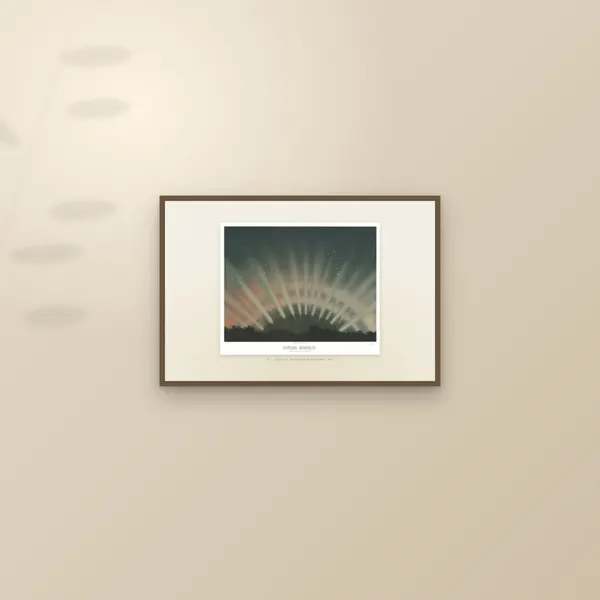
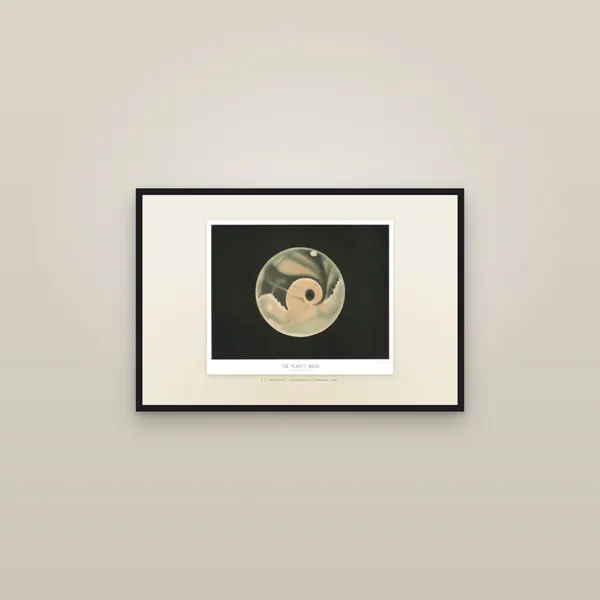
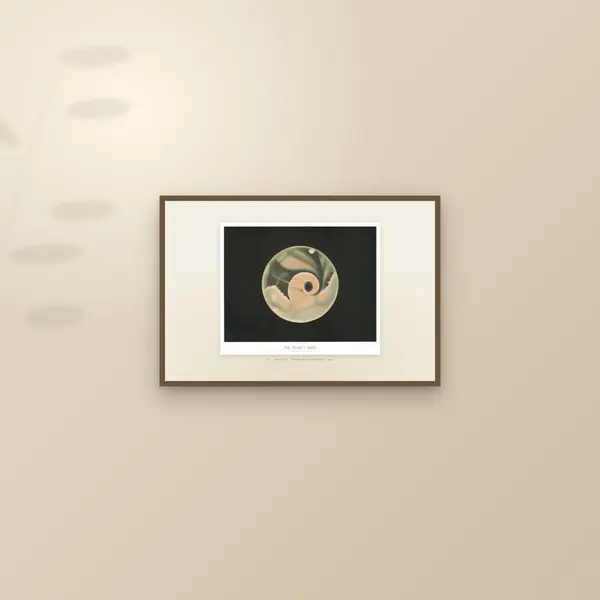
He also drew the telescope's view as it is, upside down. In the planets, the Sun and the Moon, south is at the top and east on the right, as a refracting telescope shows them. The comet, the Milky Way, the lunar eclipse, the aurora, the zodiacal light and the meteors are drawn as the naked eye sees them, though he used the telescope to see the comet's structure.
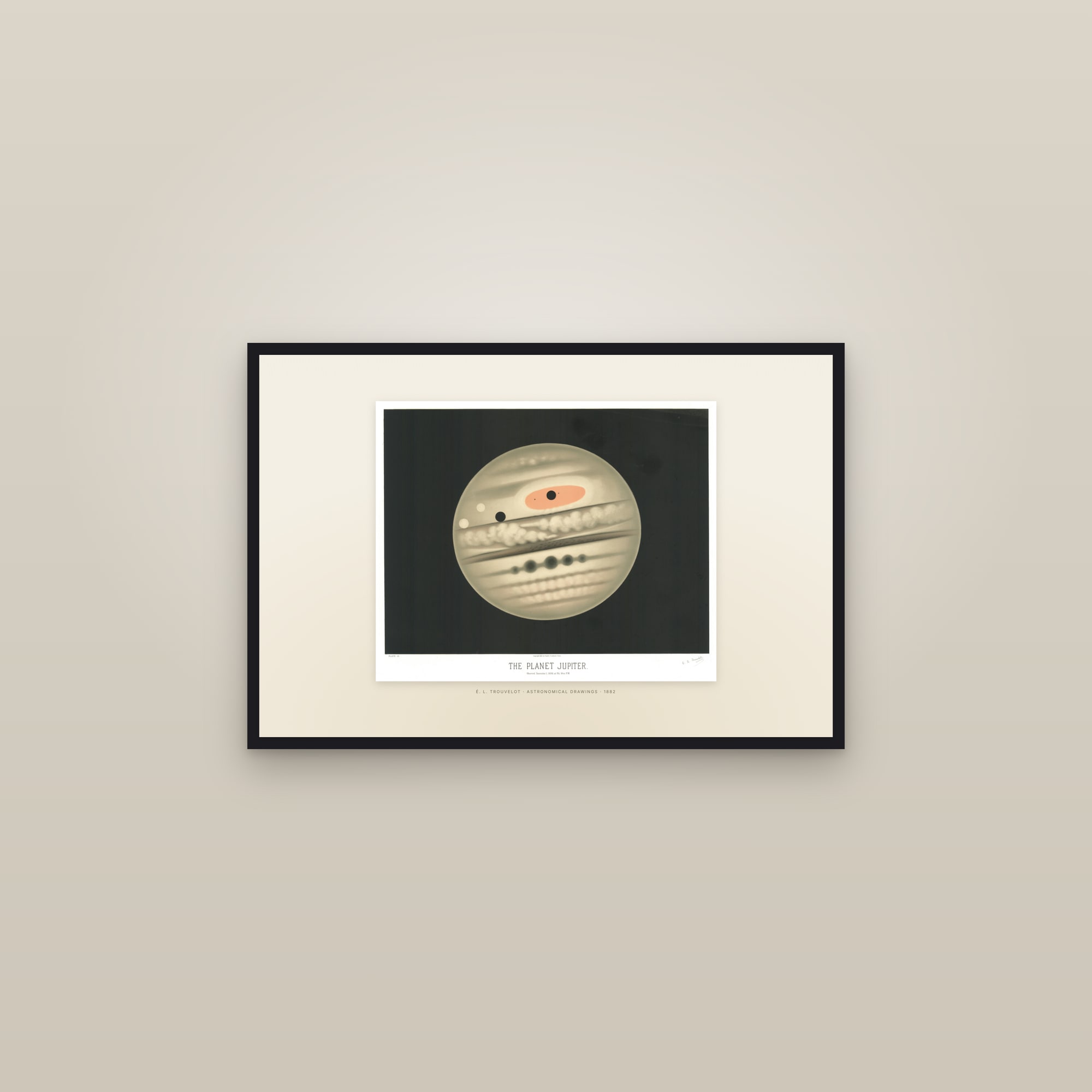
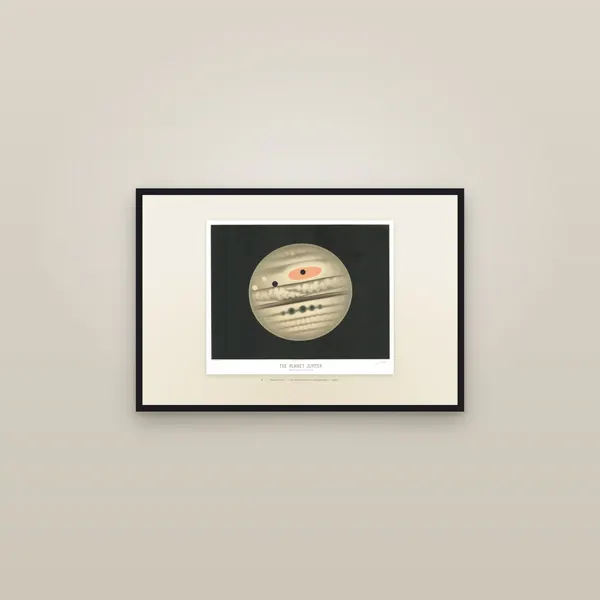
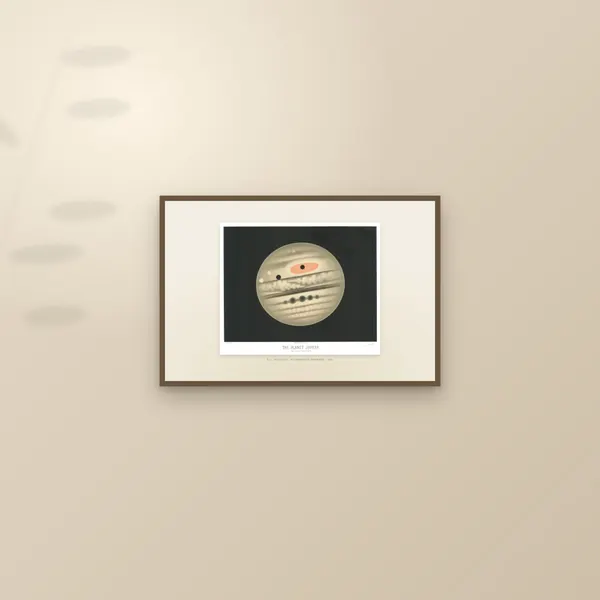
His Jupiter is a record of a new feature. The Great Red Spot, he wrote, had been seen since July 1878. In November 1880 he noticed two small black specks on it, which Alvan Clark Jr. saw again the following January. Both are on the plate.
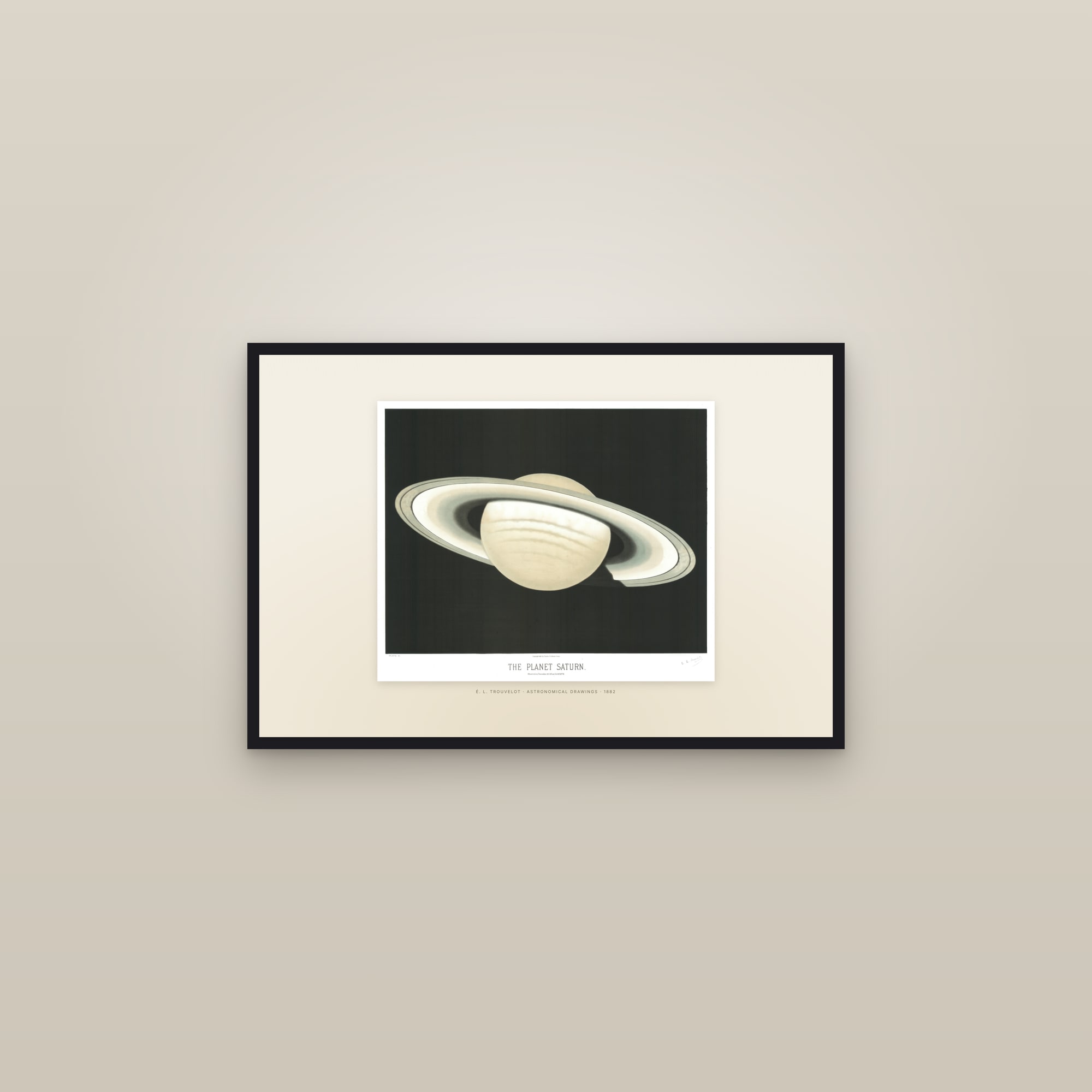
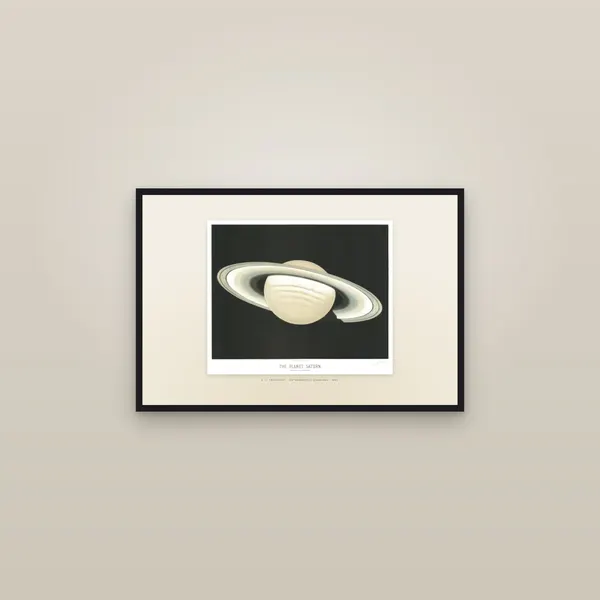
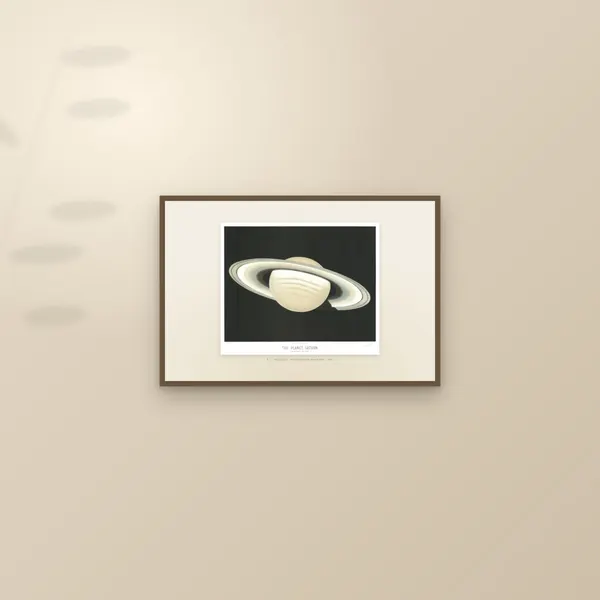
In Saturn he recorded a detail that observers argued about. The edge of the planet's shadow on the rings bends sharply near the outer edge of the middle ring. Some put this down to a trick of the light. Trouvelot took the notch as a sign that the surface of the rings rises and falls.
What is in the Scribner set?
Fifteen plates, reproduced from his pastels under his supervision. The Manual names the printer as Armstrong & Company, at the Riverside Press in Cambridge, Massachusetts. Each plate carries a copyright line reading 1881 and Trouvelot's signature, and the Manual's preface is dated Cambridge, March 1882. That is why the set is dated 1881 to 1882.
The plates were a small selection. Trouvelot made thousands of drawings; Princeton's Graphic Arts Collection puts the total at about 7,000. The Manual says the fifteen are only part of the pastels shown at Philadelphia. In it he credits his Harvard drawings with teaching him the craft, though he writes that "no drawings made while I was so connected" were used for the series. Since several plates are dated from his Harvard years, he seems to have meant the drawings he made for the observatory.
Every plate prints the date of the observation, and the Manual's list gives them as follows.
| Plate | Subject | Observed |
|---|---|---|
| I | Group of Sun Spots and Veiled Spots | 17 June 1875 |
| II | Solar Protuberances | 5 May 1873 |
| III | Total Eclipse of the Sun | 29 July 1878, Creston, Wyoming Territory |
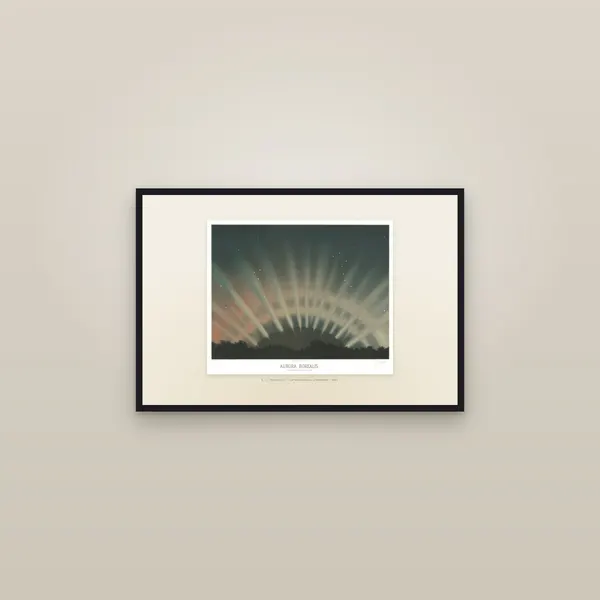
| IV | Aurora Borealis | 1 March 1872 |
| V | The Zodiacal Light | 20 February 1876 |
| VI | Mare Humorum | A study made in 1875 |
| VII | Partial Eclipse of the Moon | 24 October 1874 |
| VIII | The Planet Mars | 3 September 1877 |
| IX | The Planet Jupiter | 1 November 1880 |
| X | The Planet Saturn | 30 November 1874 |
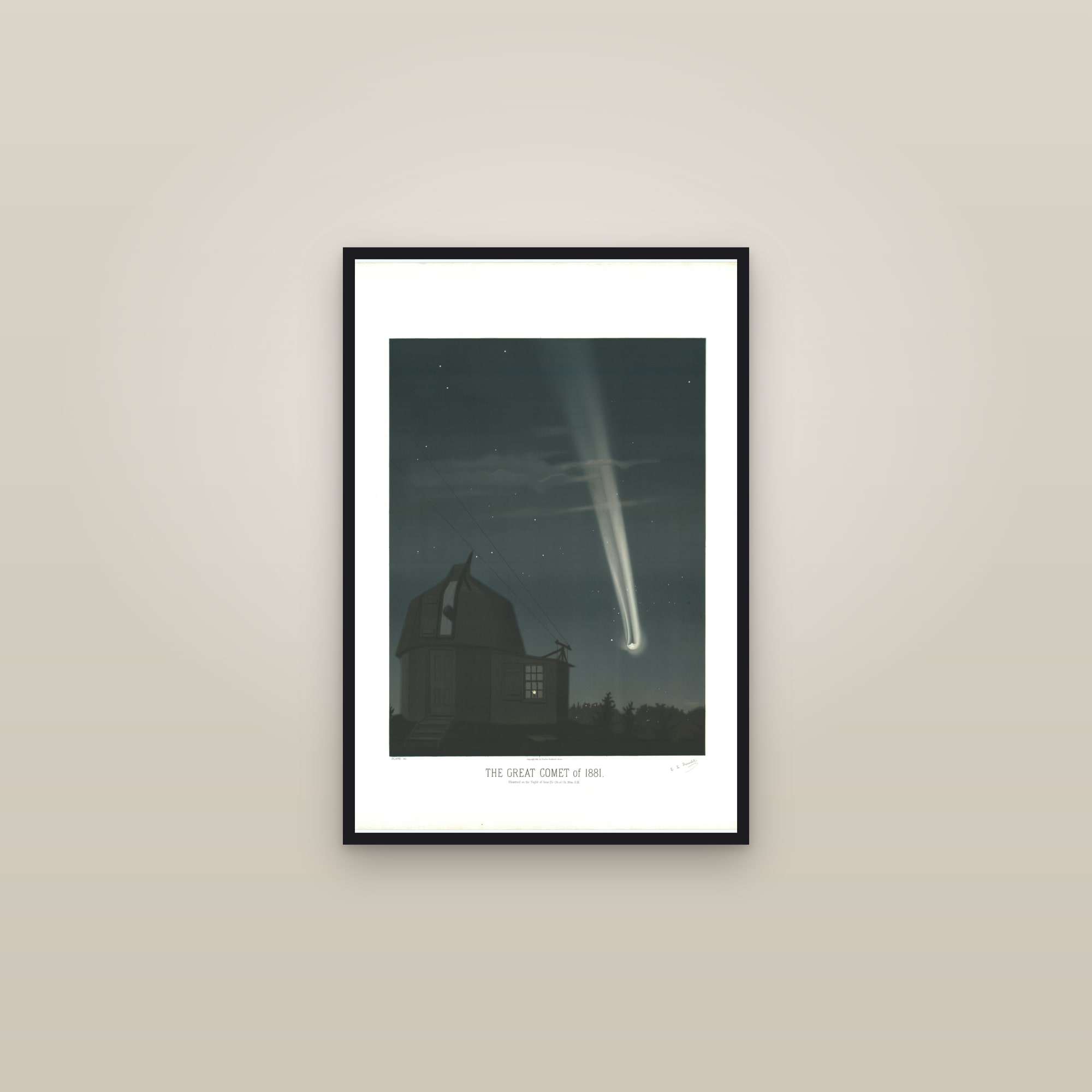
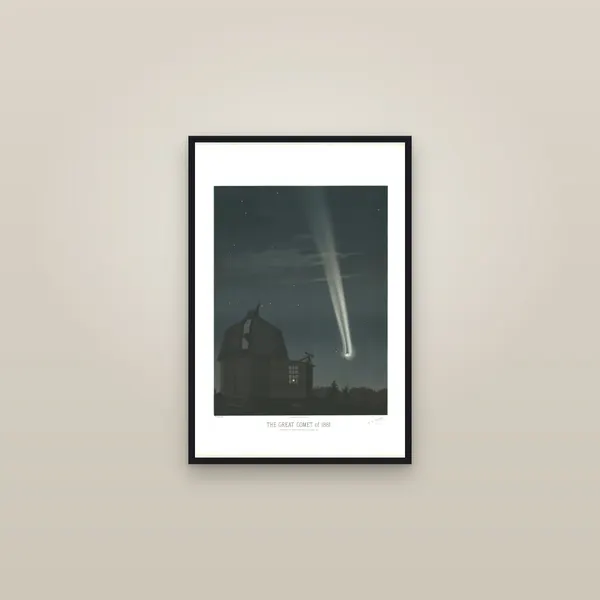
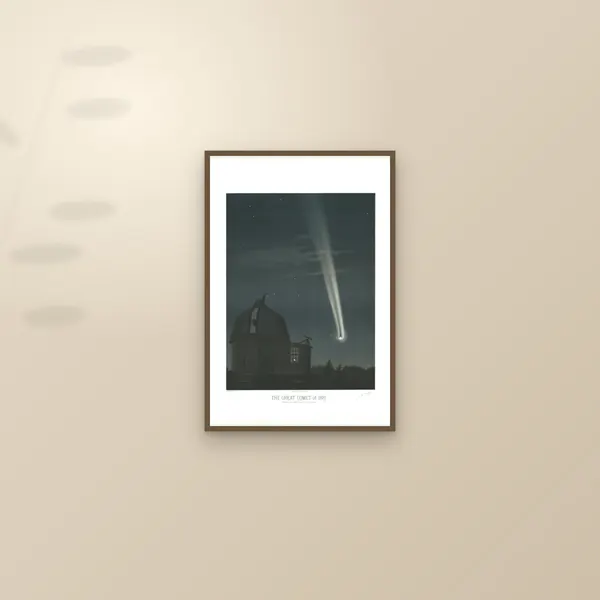
| XI | The Great Comet of 1881 | Night of 25 to 26 June 1881 |
| XII | The November Meteors | Night of 13 to 14 November 1868 |
| XIII | Part of the Milky Way | Studies made in 1874, 1875 and 1876 |
| XIV | Star Cluster in Hercules | A study made in June 1877 |
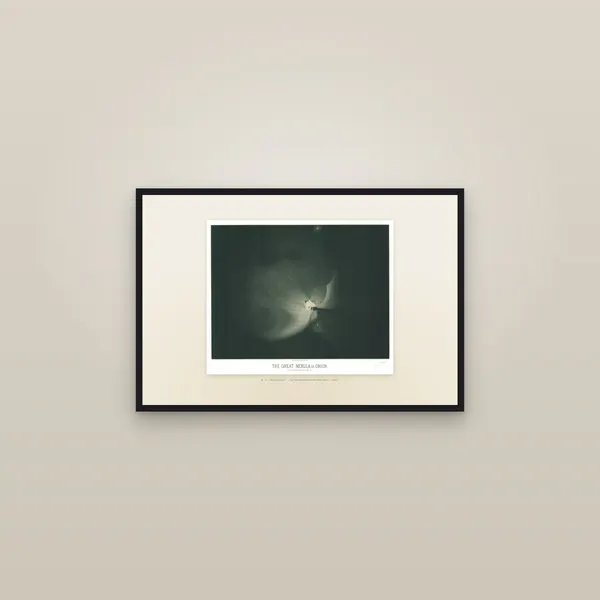
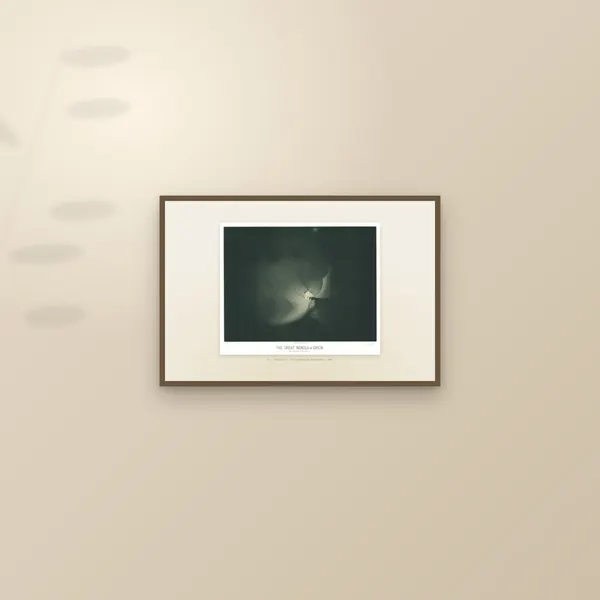
| XV | The Great Nebula in Orion | Studies made from 1873 to 1876 |
Princeton's Graphic Arts Collection and the Smithsonian both describe the plates as chromolithographs: colour prints from lithographic stones, one for each colour. Our piece on chromolithography explains how that worked.
What happened to him afterwards?
In 1882 he went back to France to join the new observatory at Meudon, outside Paris, where he was especially successful at observing solar prominences. In 1883 he travelled to the Caroline Islands in the Pacific to observe a total eclipse. He published about fifty astronomical papers, and his last, on the transit of Mercury, was read at the French Academy of Sciences in November 1894. He died at Meudon on 22 April 1895.
The next year Massachusetts published its report on the campaign to destroy the moth. Its history of the insect in America opens with his name.
The plates now
Each print here starts from a scan of an original plate. Every plate is checked at full size and left as published: the plate number, the printed title and date, the copyright line and Trouvelot's signature all stay. They print on 250 gsm archival paper, unframed or in a black or dark wood frame, and six of the upright plates also come on canvas. Our Trouvelot plates reference lists all fifteen by number with their dates, and the celestial prints collection sets them beside star maps and Cellarius's atlas of 1660.
Questions people ask
Who was Étienne Léopold Trouvelot?
A French-born artist, naturalist and astronomer, born in Guyencourt, Aisne, on 26 December 1827. He came to the United States in 1857, raised silk moths in Medford, Massachusetts, and drew astronomical subjects at Harvard College Observatory from 1872. He returned to France in 1882 to work at the Meudon observatory and died there on 22 April 1895.
Did Trouvelot introduce the gypsy moth to America?
Yes, by the record closest to the event. The Massachusetts report by Forbush and Fernald (1896) says he brought the moth to Medford in 1868 or 1869 during his silk experiments, that it escaped by accident, and that he gave public notice of the escape. The first large outbreak came in Medford in 1889.
Why is the gypsy moth now called the spongy moth?
The Entomological Society of America removed the old name from its list of common names in July 2021 because 'gypsy' is an ethnic slur. On 2 March 2022 it adopted 'spongy moth', from the French 'spongieuse', which refers to the moth's sponge-like egg masses.
How many plates are in the Trouvelot Astronomical Drawings?
Fifteen. They show sunspots, solar prominences, the total solar eclipse of 1878, an aurora, the zodiacal light, Mare Humorum on the Moon, a partial lunar eclipse, Mars, Jupiter, Saturn, the Great Comet of 1881, the November meteors of 1868, part of the Milky Way, the star cluster in Hercules and the Orion Nebula.
How did Trouvelot keep his drawings accurate?
He put a glass reticule ruled with fine squares at the focus of the telescope and drew on paper ruled with matching squares. Views through the telescope are shown upside down, south at the top, as a refracting telescope shows them. The comet, Milky Way, lunar eclipse, aurora, zodiacal light and meteors are drawn as seen in the sky.
Sources
- E. L. Trouvelot, The Trouvelot Astronomical Drawings Manual (New York: Charles Scribner's Sons, 1882), Project Gutenberg: the pastels and the 1876 Centennial, the plates reproduced by Armstrong & Company, the telescopes, photography, the reticule, the list of plates and observation dates, the 1878 eclipse at Creston
- E. Dorrit Hoffleit, Trouvelot, Étienne Léopold, Complete Dictionary of Scientific Biography: birth and death, arrival in 1857, the 1869 egg clusters, Harvard 1872 to 1874, the American Academy, Meudon from 1882
- E. H. Forbush and C. H. Fernald, The Gypsy Moth (Boston: Wright & Potter, for the Massachusetts State Board of Agriculture, 1896), Internet Archive: introduction in 1868 or 1869, Riley's 1870 note, 27 Myrtle Street, the escape, the first ten years, the 1889 outbreak
- L. Trouvelot, The American Silk Worm, The American Naturalist 1 (March 1867), Internet Archive: polyphemus moths from 1860, a million caterpillars on five acres in 1865
- USDA Forest Service, Forest Insect and Disease Leaflet 162, Gypsy Moth (McManus, Schneeberger, Reardon and Mason), copy hosted by the New Jersey Department of Agriculture: introduced in 1869, first outbreak 1889, a record 12.9 million acres defoliated in 1981
- USDA Forest Service, Spongy moth a growing forest health threat, keeping managers on their toes (23 January 2023): more than 20 states, some 300 host species
- UMass Extension, Spongy Moth fact sheet (updated 28 March 2025): escape from Trouvelot's home in Medford, 923,000 acres defoliated in Massachusetts in 2017
- University of Wisconsin Extension and Wisconsin DNR, Spongy Moth in Wisconsin, History and Spread: the hardier-silkworm account, the 1889 defoliation in Medford
- Entomological Society of America, Spongy Moth Transition Toolkit: the old name removed in July 2021, spongy moth adopted on 2 March 2022, from the French spongieuse
- Carolyn Russo, An Artist Sketches the Heavens, Air & Space Quarterly, National Air and Space Museum (Fall 2023): the 1868 meteors from 27 Myrtle Street, Harvard in 1872, the Naval Observatory's 26-inch in 1875
- Julie Mellby, Trouvelot's chromolithograph of the 1878 eclipse, Graphic Arts Collection, Princeton University Library (17 August 2017): Winlock's invitation, about 7,000 drawings, 15 published by Scribner's
Start hereA short history of the print, from woodblock to giclée