
The women who drew the natural world
Merian's insects, Elizabeth Gould's toucan, Matilda Smith's orchids, the USDA's fruit painters and Dorothy Waugh's swan: who made them, for whom, and why.
Contents8 sections
- Why did a 52-year-old painter sail to Suriname?
- Whose hand is behind "J & E Gould"?
- How did 2,300 plates end up signed "M.S."?
- Why did the US government pay women to paint fruit?
- What did Dorothy Waugh have to do with a swan?
- Why were so many of them left uncredited?
- How are their names coming back?
- The prints now
Before colour photography, the way most people learned what a far-off plant or animal looked like was a printed picture. Science needed those pictures to be exact: a reader had to be able to name the species, the fruit variety or the stage of an insect's life from the page alone. Many of them were made by women.
This piece follows the women whose work we print. Maria Sibylla Merian sailed to South America to watch caterpillars turn into butterflies. Elizabeth Gould learned to draw on stone for her husband's bird books. Matilda Smith drew Kew's new plants for four decades. A group of women in Washington painted the country's fruit for the Department of Agriculture. Dorothy Waugh made posters to save a swan. For each one: who she was, what she drew and for whom, and what of hers you can hang today.
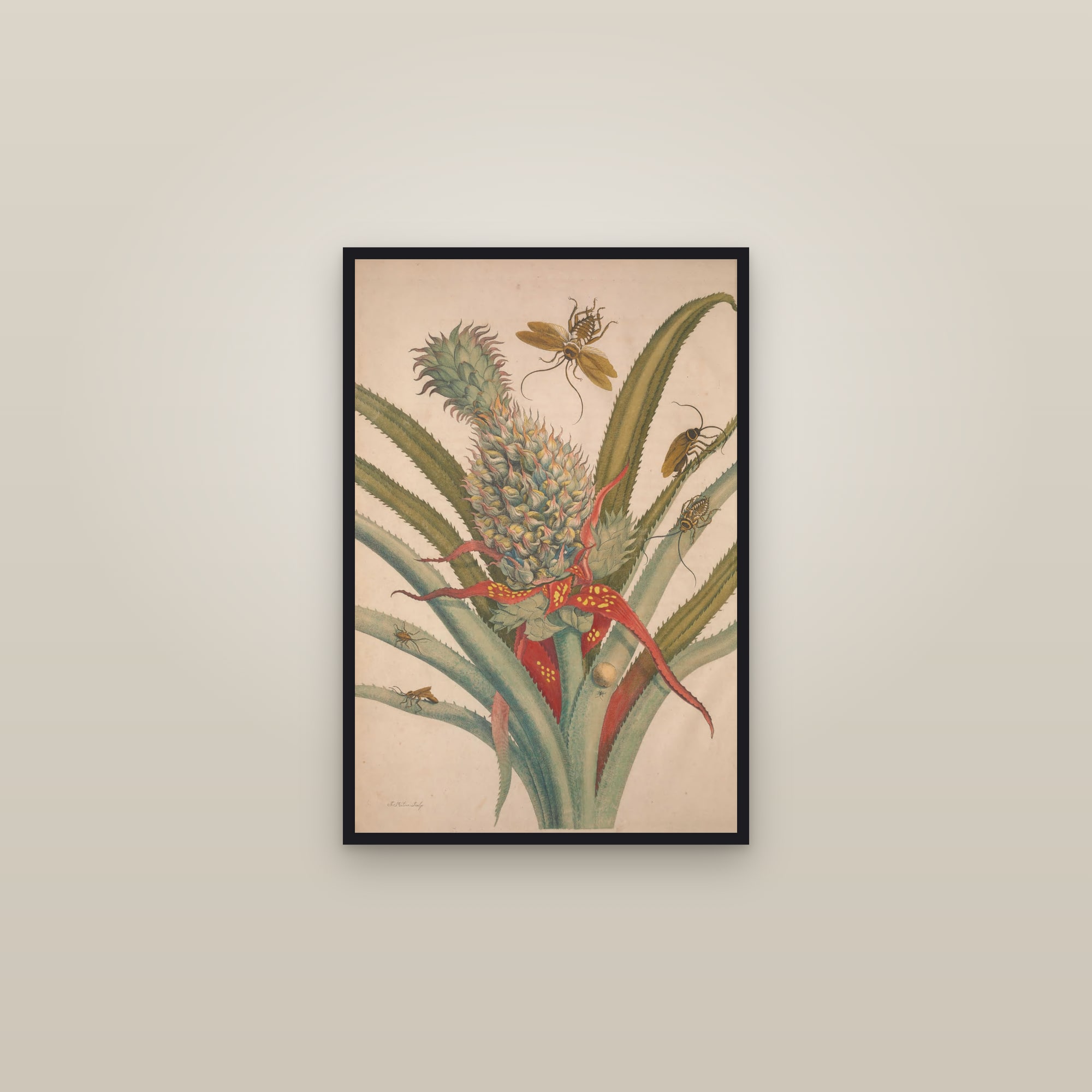
Why did a 52-year-old painter sail to Suriname?
To see insects change. Merian was born in Frankfurt on 2 April 1647. She trained in the studio of her stepfather, Jacob Marrel, a painter of flower pieces, according to the Natural History Museum in London. In 1679 she published a book of 50 engravings showing caterpillars on the plants they ate, through to the moth or butterfly.
In 1699, aged 52, she sailed to Suriname, then a Dutch colony, with her younger daughter, Dorothea Maria. The Natural History Museum calls it the first purely scientific expedition to the colony. To pay for it she sold her paintings, made her will and secured a small stipend from the Dutch government.
She stayed two years. In 1701 she fell ill, possibly with malaria, and went home, according to the Rijksmuseum. Her book on what she had seen, the Metamorphosis Insectorum Surinamensium, came out in Amsterdam in 1705: 60 hand-coloured engravings in a volume more than half a metre tall.
The work was not hers alone. The Natural History Museum notes that she drew heavily on the knowledge and help of enslaved people on the colony's sugar plantations, and her notes record how harshly they were treated.
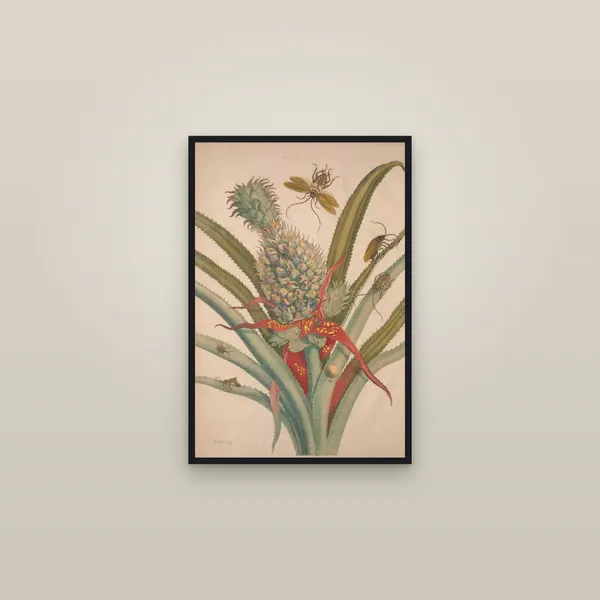
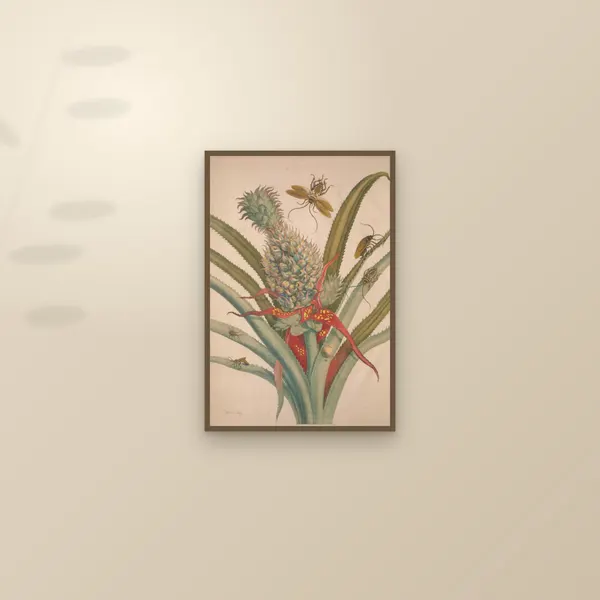
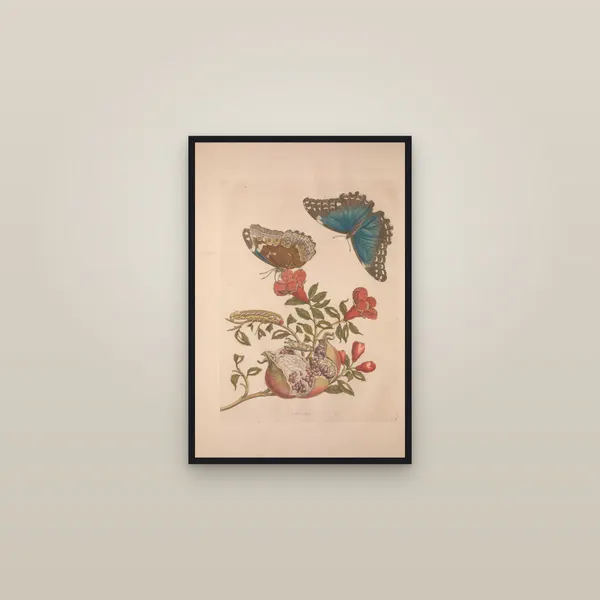
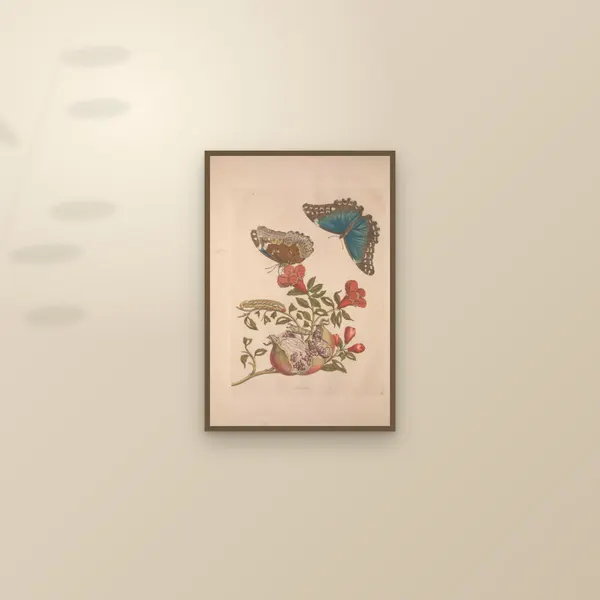
Plate 1 opens the book with the pineapple. The only name engraved on the plate itself is the engraver's: "J. Mulder sculp." at lower left. Plate 9 sets two blue morpho butterflies, one showing its blue upper wings and one its brown, eye-spotted underside, over a pomegranate branch with red flowers and a split fruit. The Royal Collection identifies the butterfly as the Menelaus blue morpho.
Linnaeus later cited her pictures for more than 100 new animal species. She died in 1717, in poverty.
Whose hand is behind "J & E Gould"?
Elizabeth Gould's, to a large degree. Born Elizabeth Coxen in Ramsgate, Kent, on 18 July 1804, she married the naturalist John Gould in January 1829. The Australian Museum says she learned lithography to make the plates for his first folio, with help from the young Edward Lear.
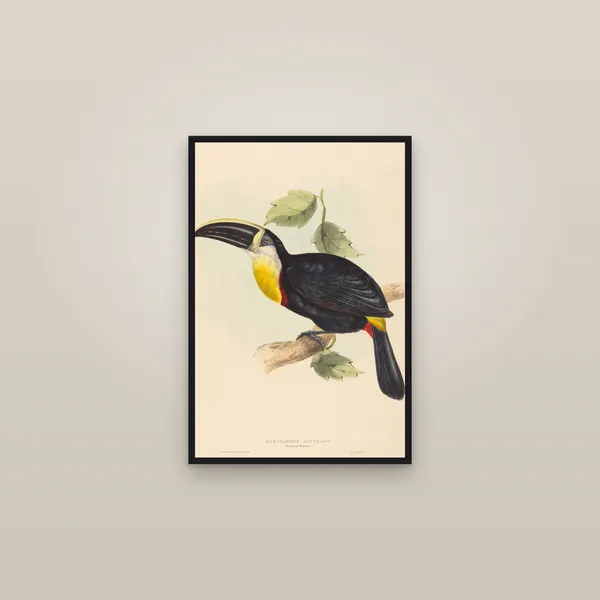
Lithography meant drawing the image in greasy crayon on a slab of limestone, from which the plate was printed and then coloured by hand. She did this for book after book: birds of the Himalayas, birds of Europe, toucans in 1834, trogons, and 50 plates of birds for the account of Charles Darwin's Beagle voyage.
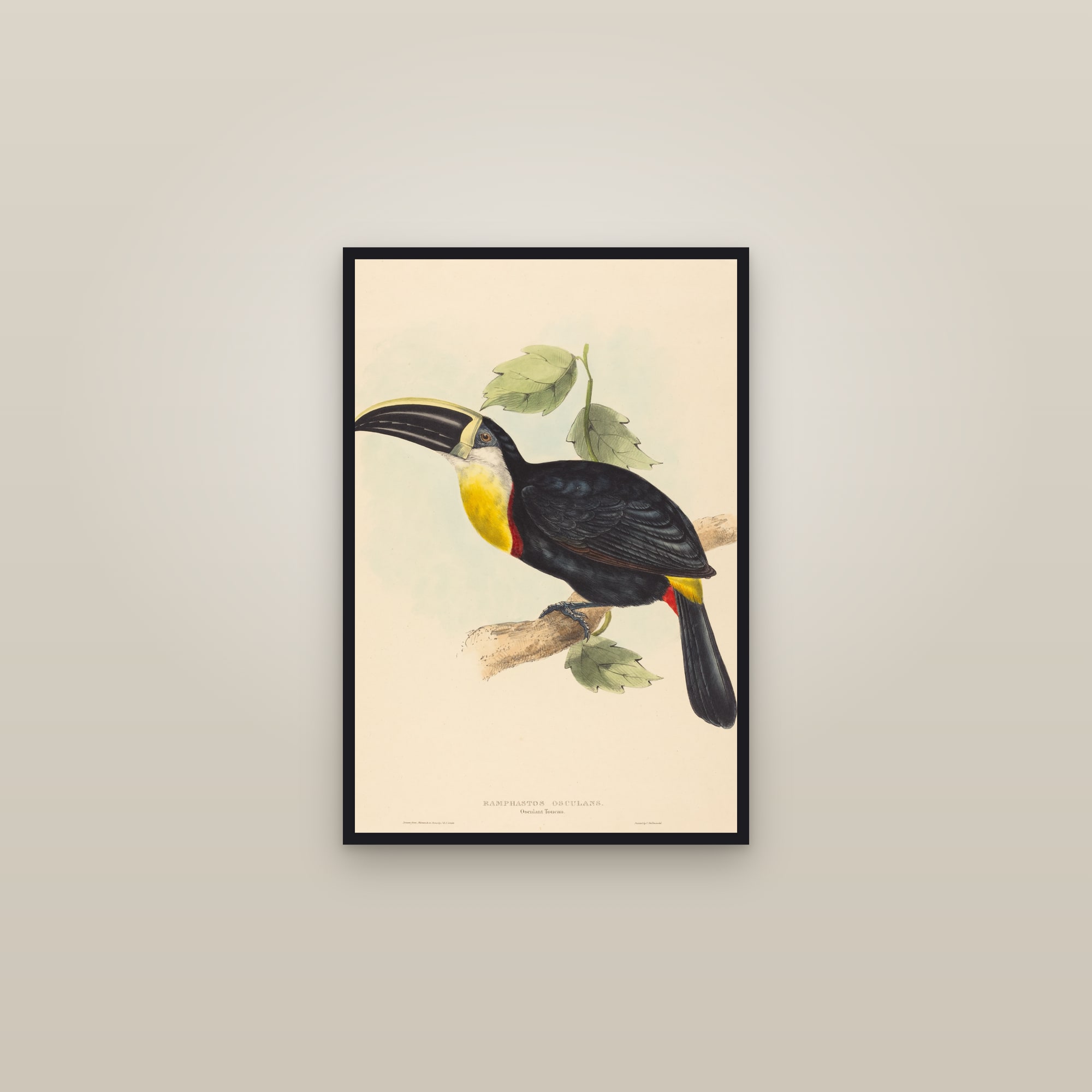
In 1838 she went with John to Australia for two years, leaving three of their children with her mother. Back in England she worked on The Birds of Australia and finished 84 of its plates. She died on 15 August 1841, aged 37, of fever after the birth of her eighth child.
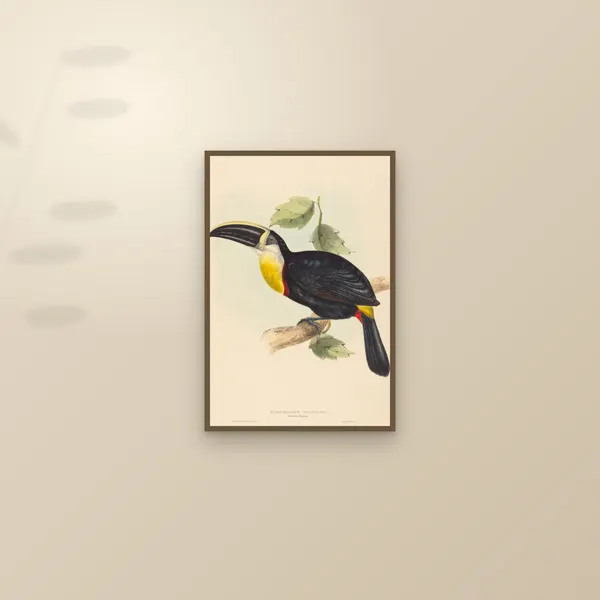
For about a century her part was mostly forgotten. Interest returned when descendants found her letters in 1938. The Australian Museum now calls her the principal artist behind John Gould's early publications. Our John Gould prints start from her toucan.
How did 2,300 plates end up signed "M.S."?
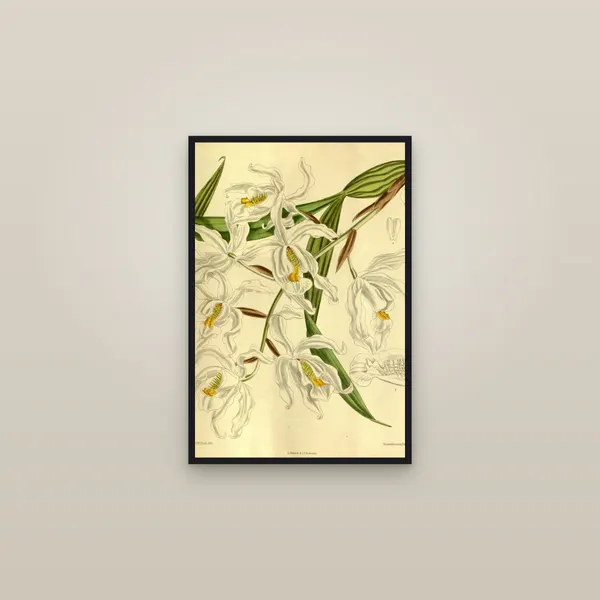
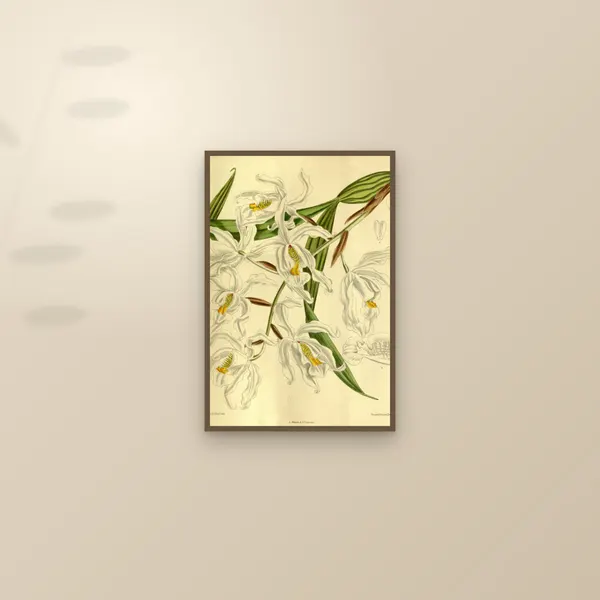
That is how Matilda Smith signed them. She was born in 1854 and became the main illustrator of Curtis's Botanical Magazine, the long-running botanical magazine edited at Kew, from 1878 to 1923. In those 45 years she drew more than 2,300 of its plates, according to Tulane University's botanical illustration exhibit. She was appointed the first botanical artist of Kew Gardens, and she drew the first corpse flower ever grown there. The plant genus Smithiantha is named for her.
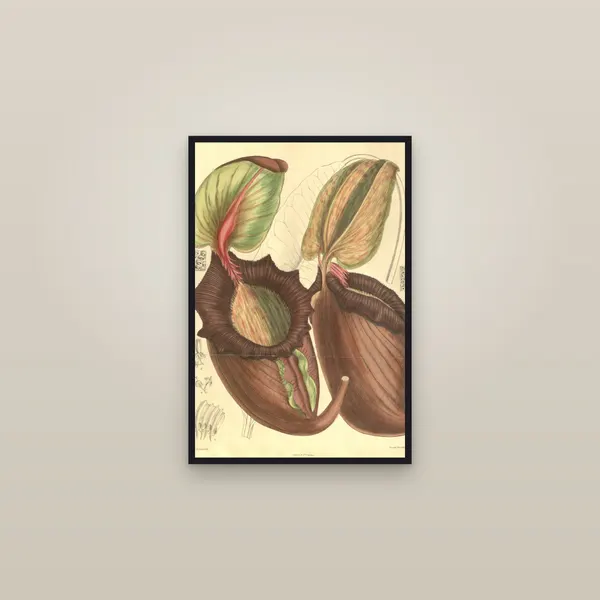
Look at the foot of one of her plates and you find her credit: "M.S. del.", Latin for "M.S. drew it". Beside it is the lithographer, "J.N. Fitch lith.", who transferred her drawing to stone.
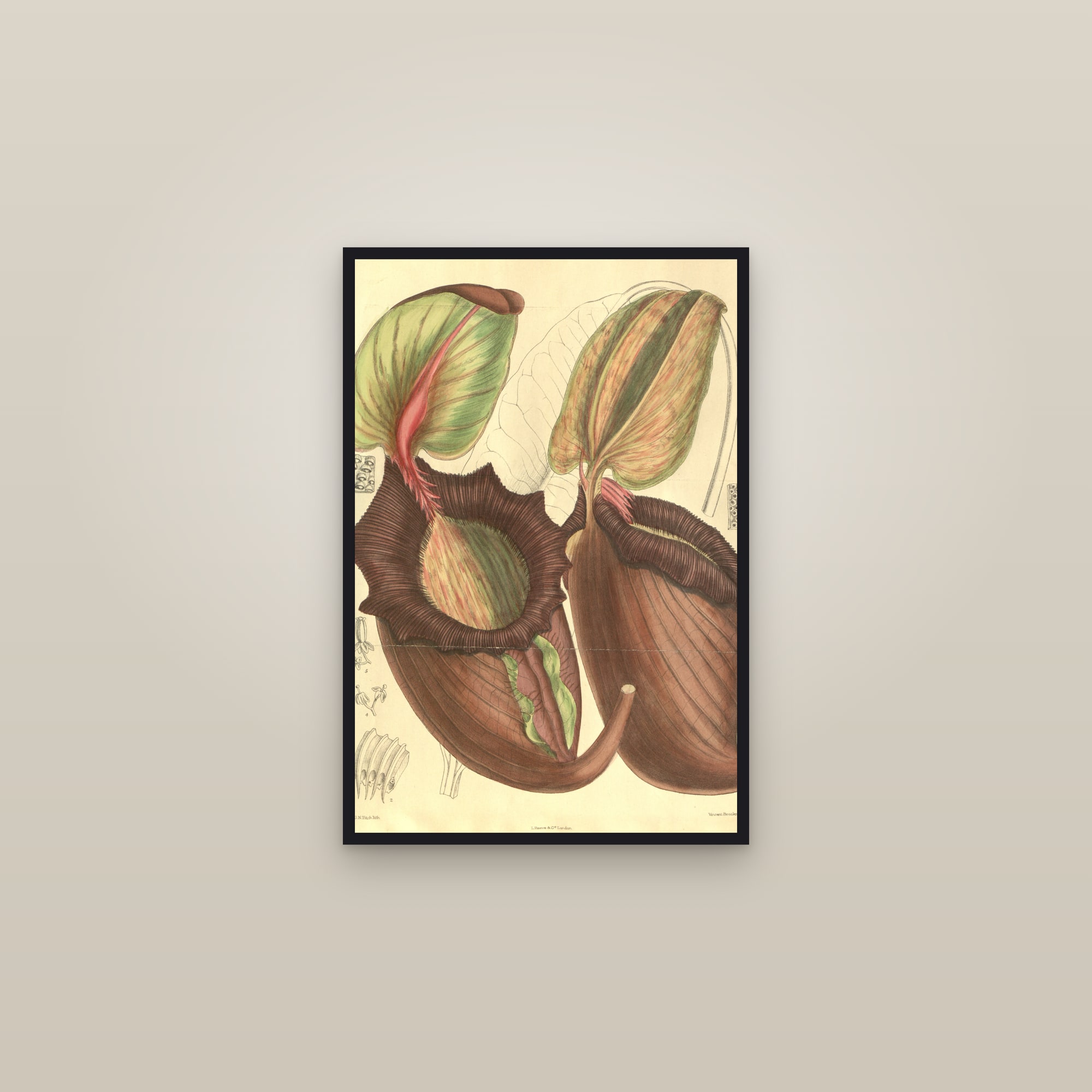
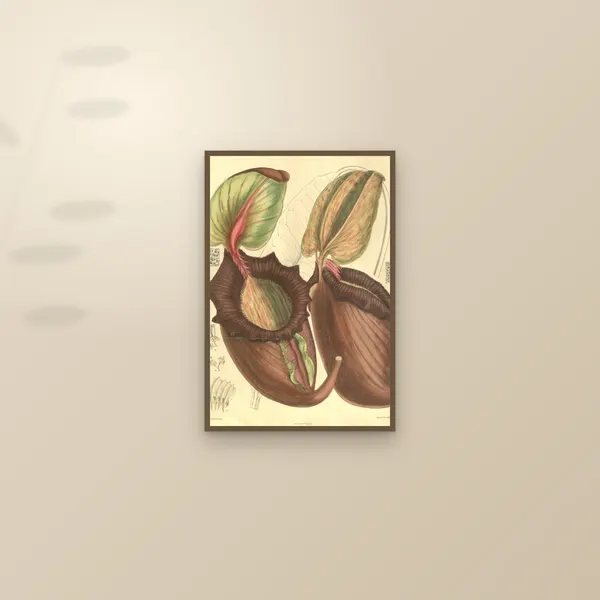
We print four of her plates: the giant pitcher plant above, the Angel Orchid (1913), the Red Himalayan Poppy (1907) and the Socotran Hibiscus (1902). The rest of the magazine is in our Curtis's Botanical Magazine prints.
Why did the US government pay women to paint fruit?
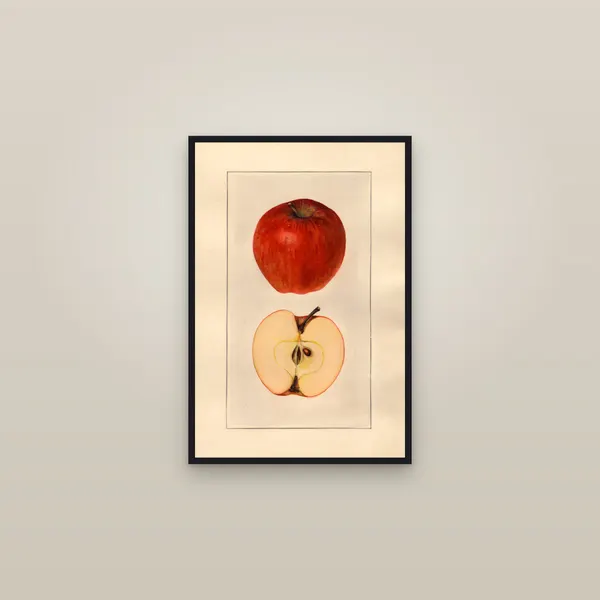
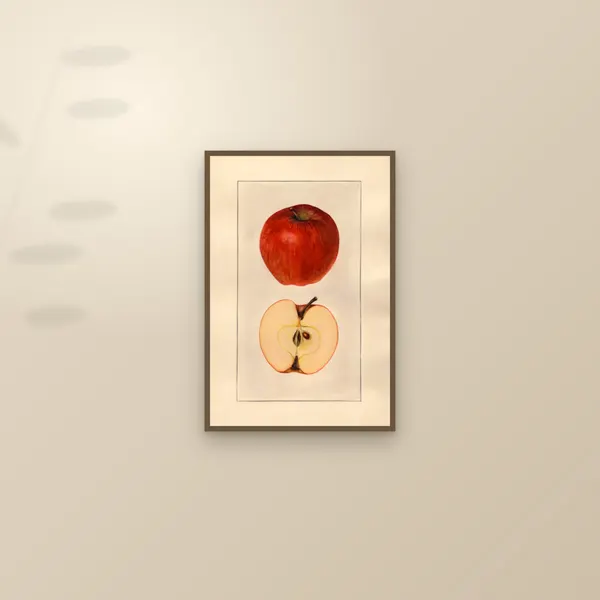
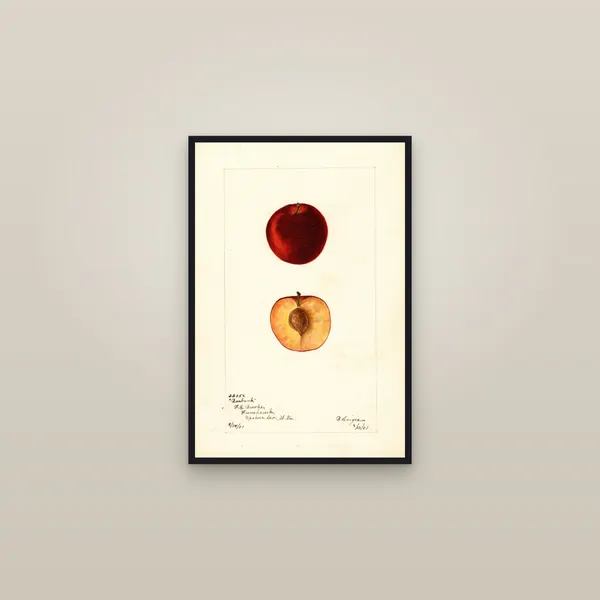
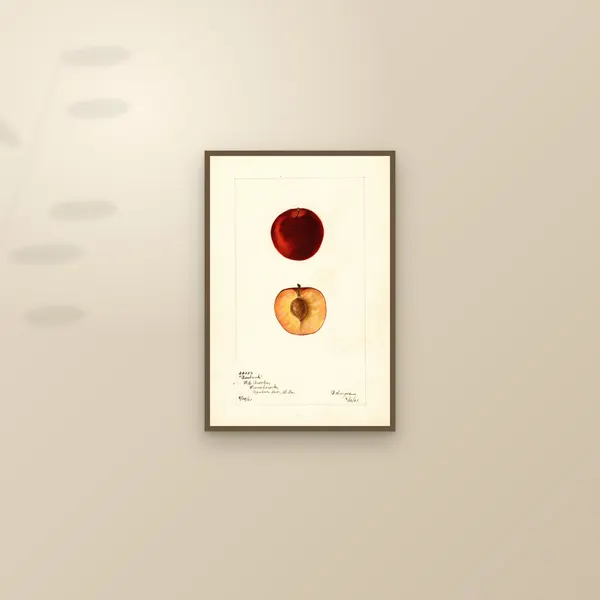
Because American farming needed a record of every new variety, and the camera could not yet give one in colour. From 1887 the Department of Agriculture's Division of Pomology hired artists to paint fruit for reproduction, according to the National Agricultural Library's finding aid. Growers and plant explorers sent in specimens. An artist painted each one, often whole and cut in half, and wrote on the sheet who grew it and where. Some of the paintings were printed as colour plates in the department's Yearbook between 1902 and 1913.
The botanists James White and Erik Neumann put the reason plainly in 1982: these watercolours were made "before the widespread use of color photography". The collection now holds 7,497 watercolours made between 1886 and 1942, and most of them, Issues in Science and Technology notes, were painted by women.
White and Neumann named thirteen illustrators as most closely tied to the collection. Seven were women. Their job titles included clerk and modeler.
Deborah Griscom Passmore, the head painter
Passmore was born in Delaware County, Pennsylvania, on 17 July 1840 and grew up among Orthodox Quakers, according to the National Agricultural Library. She trained in Philadelphia, studied under Thomas Moran, and on a year in Europe admired Marianne North's botanical paintings at Kew. She joined the department in 1892, rose to head artist, according to the Linda Hall Library, and painted more than 1,500 watercolours in nineteen years. She died at home in Washington on 3 January 1911.
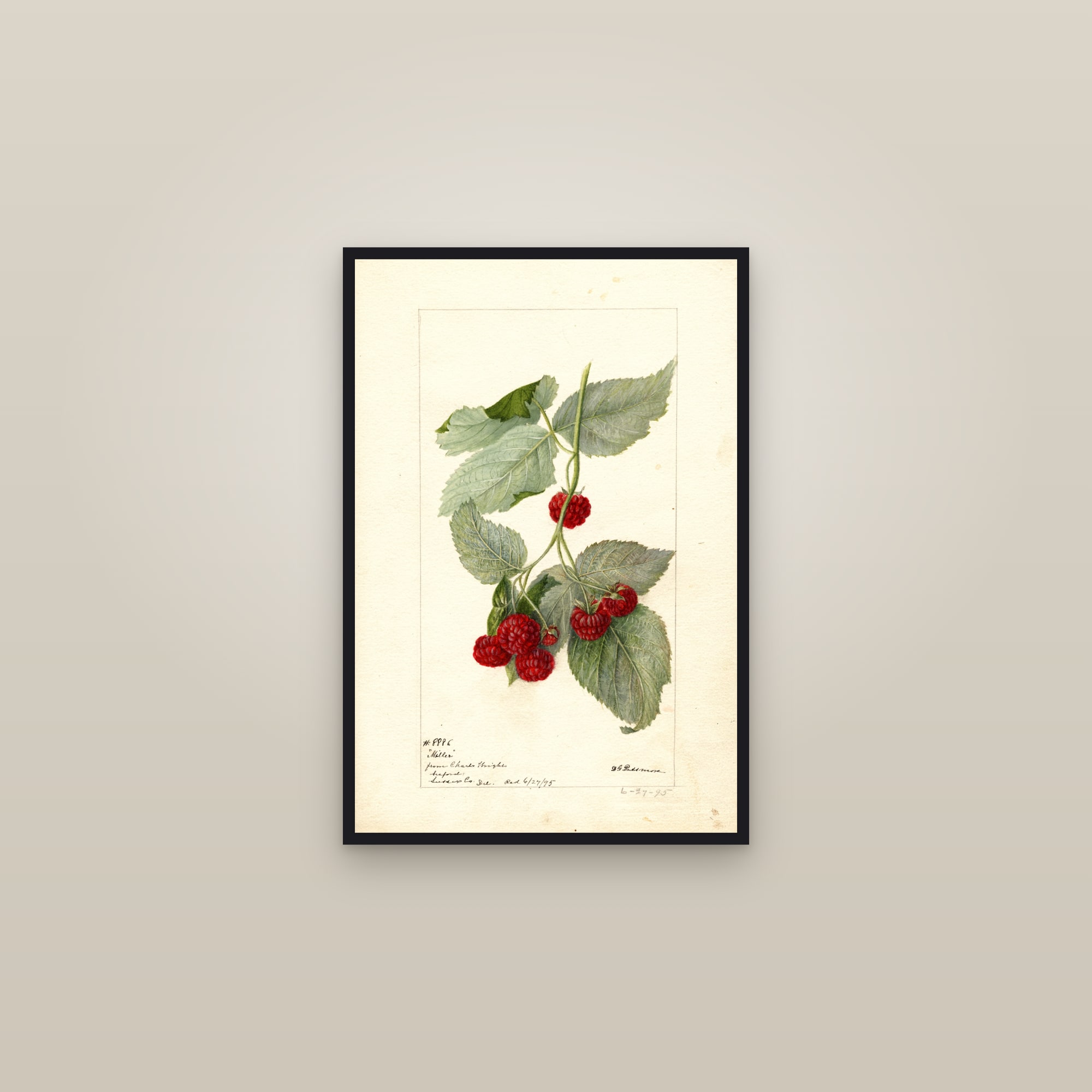
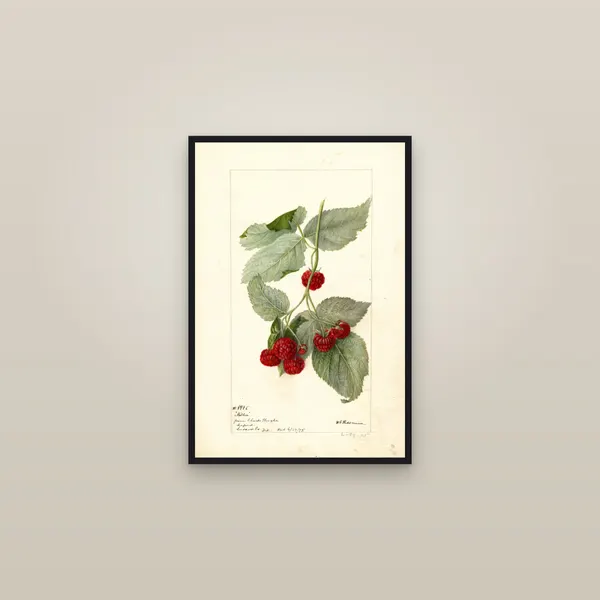
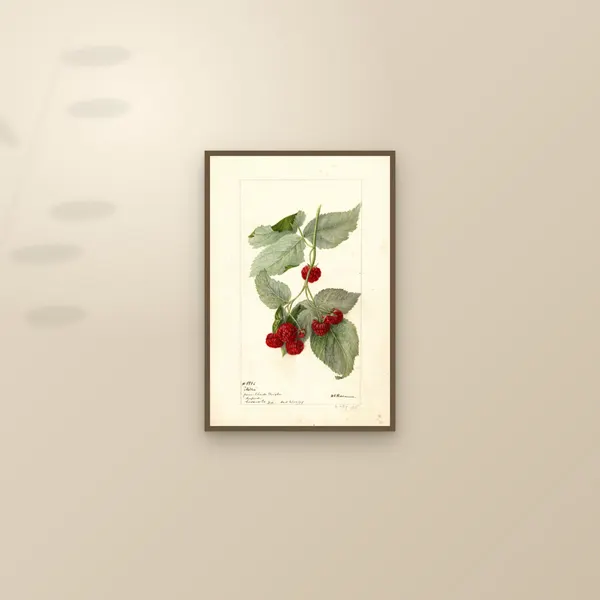
The National Agricultural Library hangs a print of her Miller raspberry of 1895 in its main reading room. We hold 180 of her plates; her reference page lists them all.
Amanda Almira Newton and the whole-and-half apple
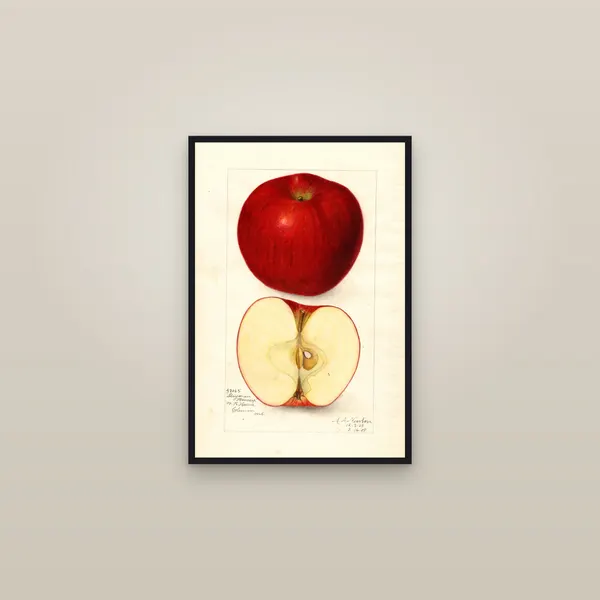
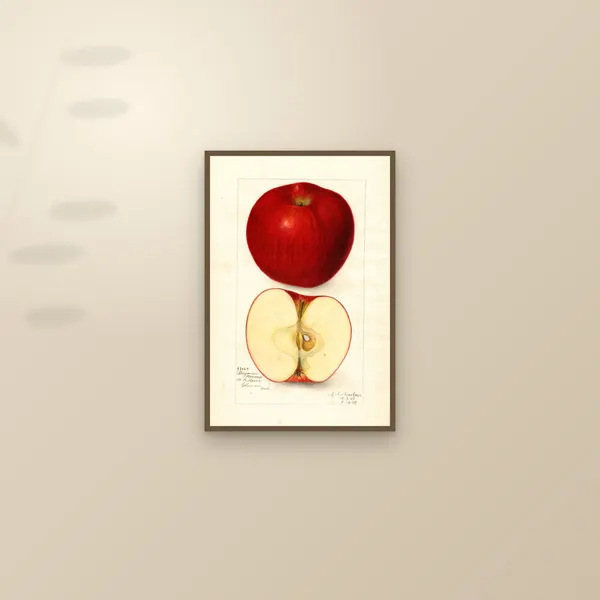
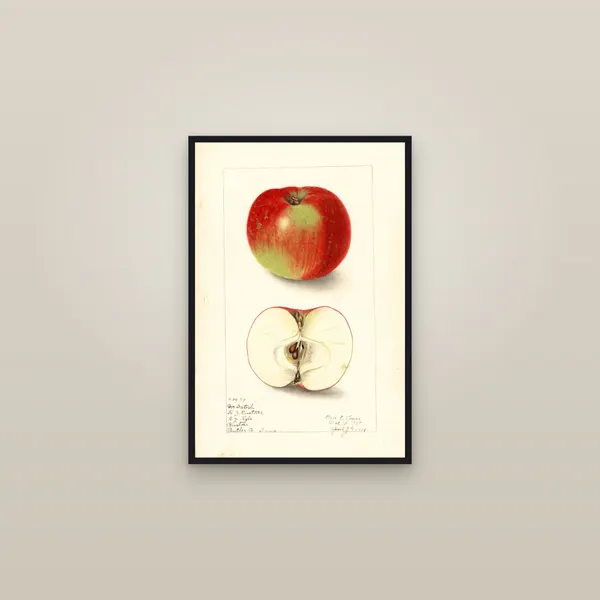
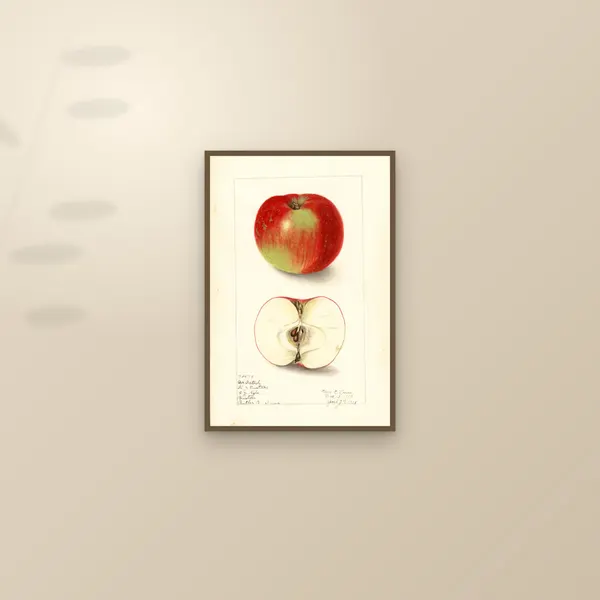
Newton was the granddaughter of Isaac Newton, the first U.S. Commissioner of Agriculture, according to the department's own Agricultural Research magazine. She painted for the department from 1896 to 1928. Many of her plates are apples, and they show the layout the collection is known for: the whole fruit above, the cut half below.
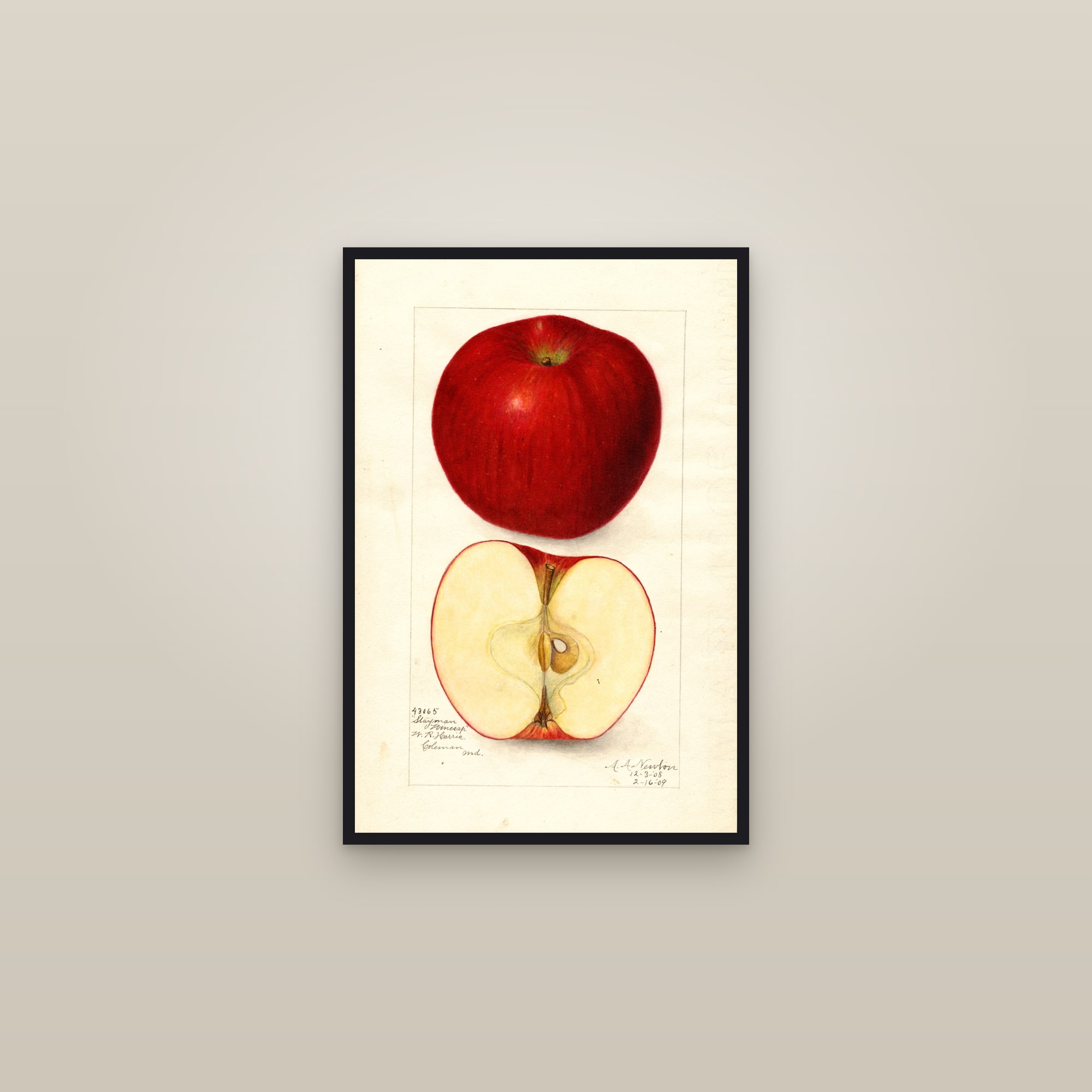
Her reference page lists our 119 plates.
Mary Daisy Arnold, known from one obituary
Arnold painted for the department for some forty years, from 1904. Almost everything known about her life comes from one source. White and Neumann found only a 1955 notice in the Washington Evening Star, headed "Miss Mary Arnold, former illustrator at agriculture". It says she had studied painting in New York.
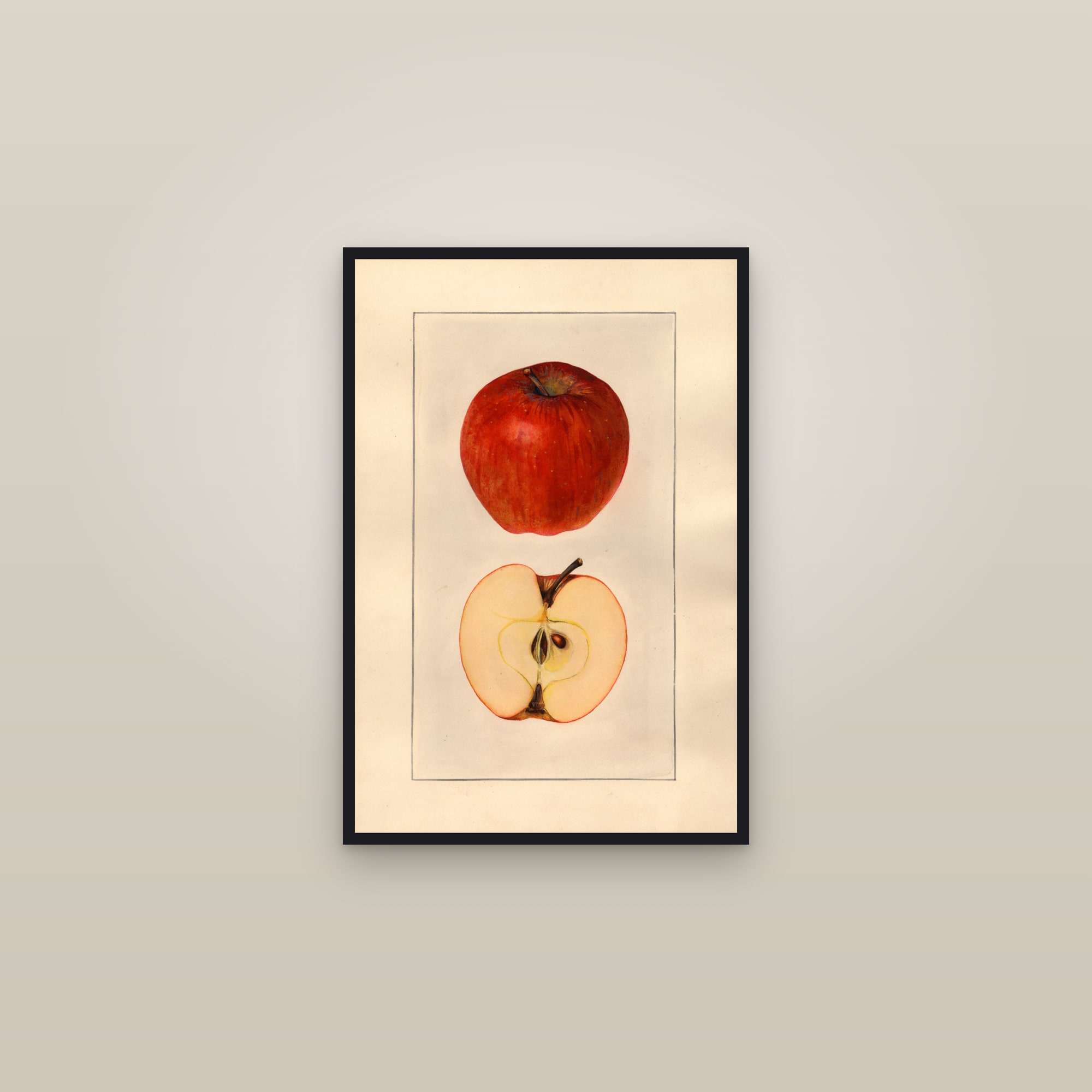
We hold 109 of her plates; see her reference page.
Bertha Heiges, the least documented
White and Neumann record only that Heiges was born in Pennsylvania and was active from 1896 to 1907. The Database of Scientific Illustrators adds one address: in 1899 she was a government illustrator living at 908 K Street in Washington. We hold 130 of her plates, the second-largest group in our set.
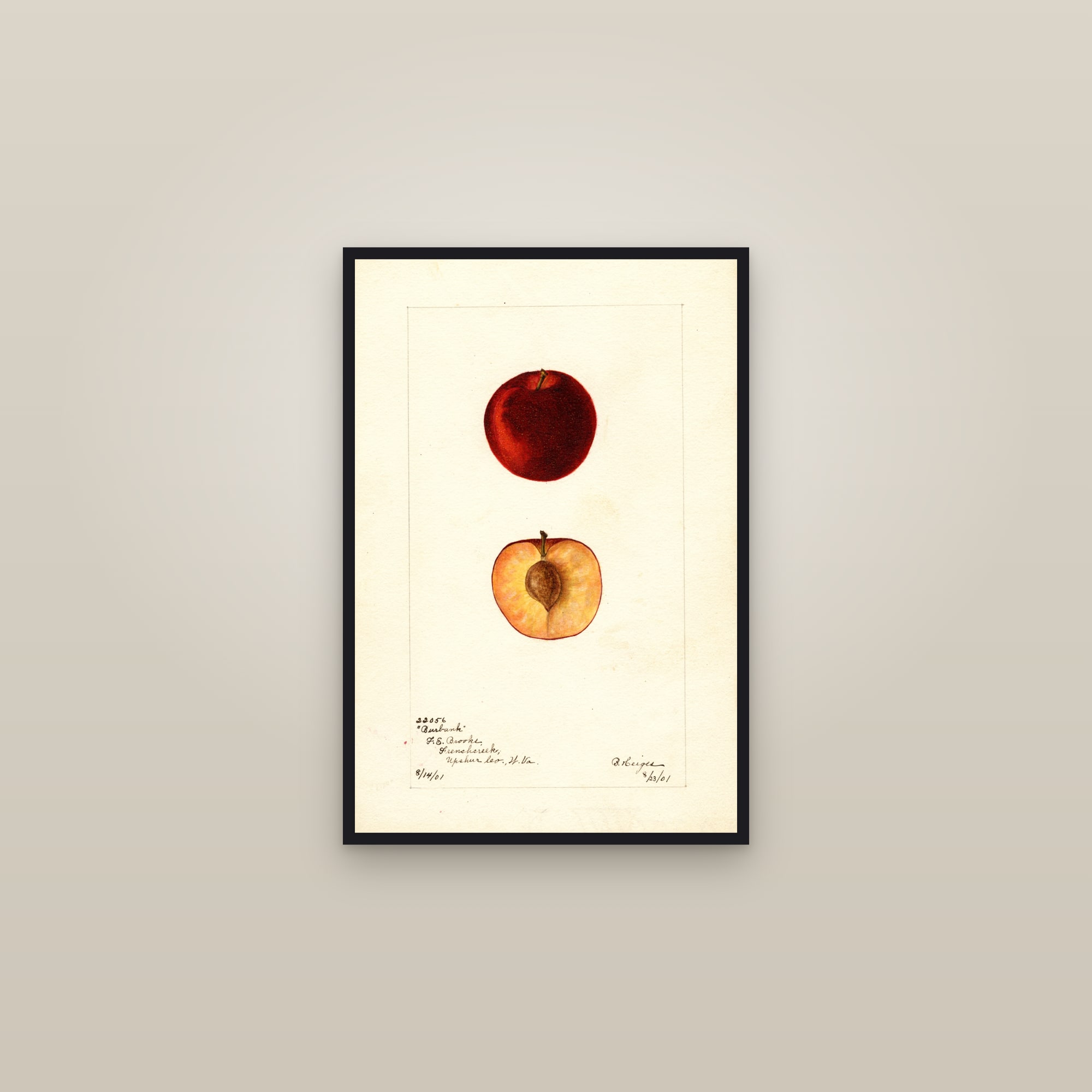
Her plates are on her reference page.
Ellen Isham Schutt, Elsie Lower and Harriet Thompson
Schutt (1873 to 1955) painted for the department from 1904 to 1914, then spent a year at the University of California's Department of Pomology. There she painted 286 apples for teaching, many showing cold-storage damage, core rot and moth damage, according to UC Davis Library. We print her Washington Navel Citrus and Jonathan Apple, among 64 plates on her reference page.
Elsie Lower graduated from the Corcoran art school in Washington and joined the department at 20. She painted fruit there until about 1912. She married the pomologist Carl Stone Pomeroy and moved with him to Riverside, California. In 1937, as Elsie Lower Pomeroy, she painted five watercolours of the citrus industry and later gave them to the University of California, Riverside. The university lost track of them; in 2000 four were found in one of its buildings, Batchelor Hall, according to UCR Magazine. Her USDA plates include the McIntosh Apple (1908) and the Hachiya Persimmon (1909); there are 27 on her reference page.
Of Harriet L. Thompson the record keeps one line: born in Illinois, active 1915. Her plates, among them the Champion Plum, are all stone fruit from that summer; see her reference page.
What did Dorothy Waugh have to do with a swan?
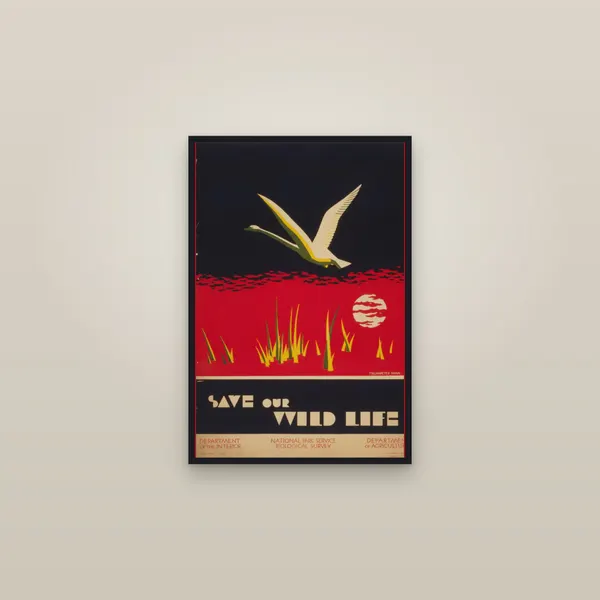
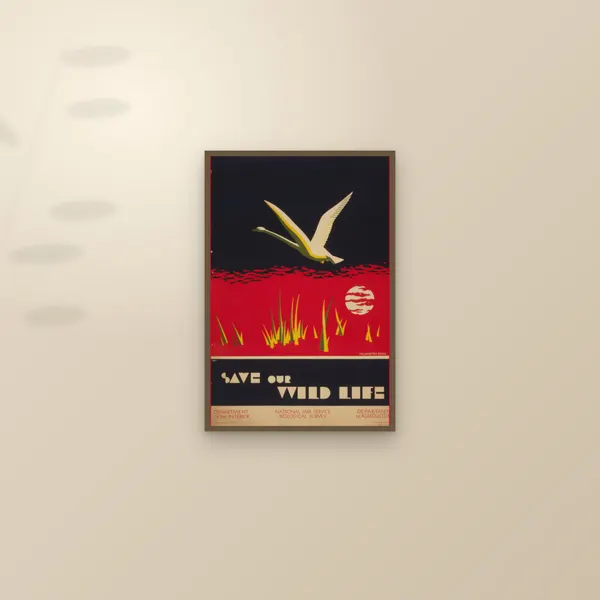
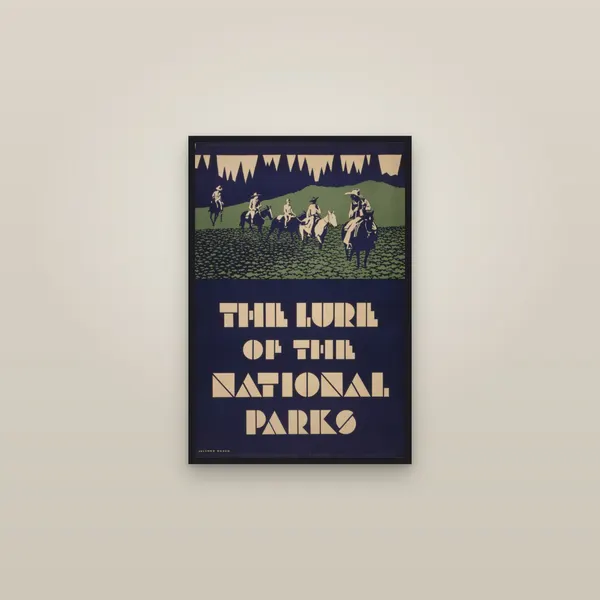
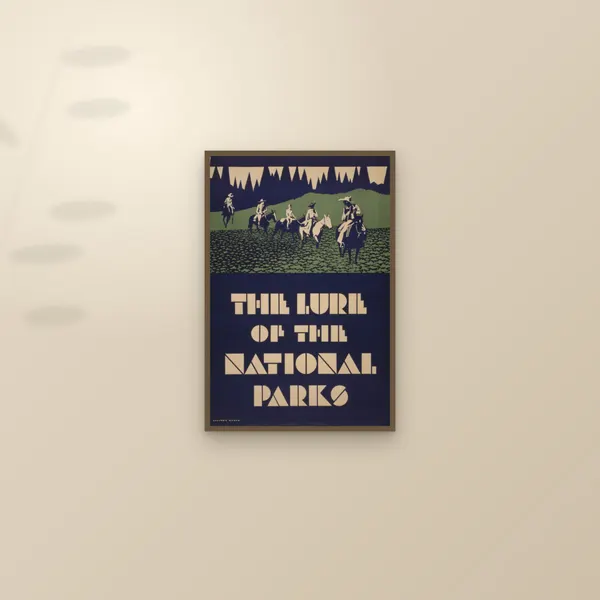
She drew one to help save it. Waugh was born in Burlington, Vermont, on 23 September 1896 and trained at the Art Institute of Chicago. Around 1933 the National Park Service hired her as a landscape architect and artist, according to the Park Service's own history. Between 1934 and 1936 she designed 17 posters for it.
In 1935 she made Save Our Wild Life for the Park Service and the Biological Survey. That year scientists knew of only 69 trumpeter swans in the lower 48 states, and President Roosevelt set up Red Rock Lakes National Wildlife Refuge, near Yellowstone, where most of them nested. Alaska alone now has more than 20,000.
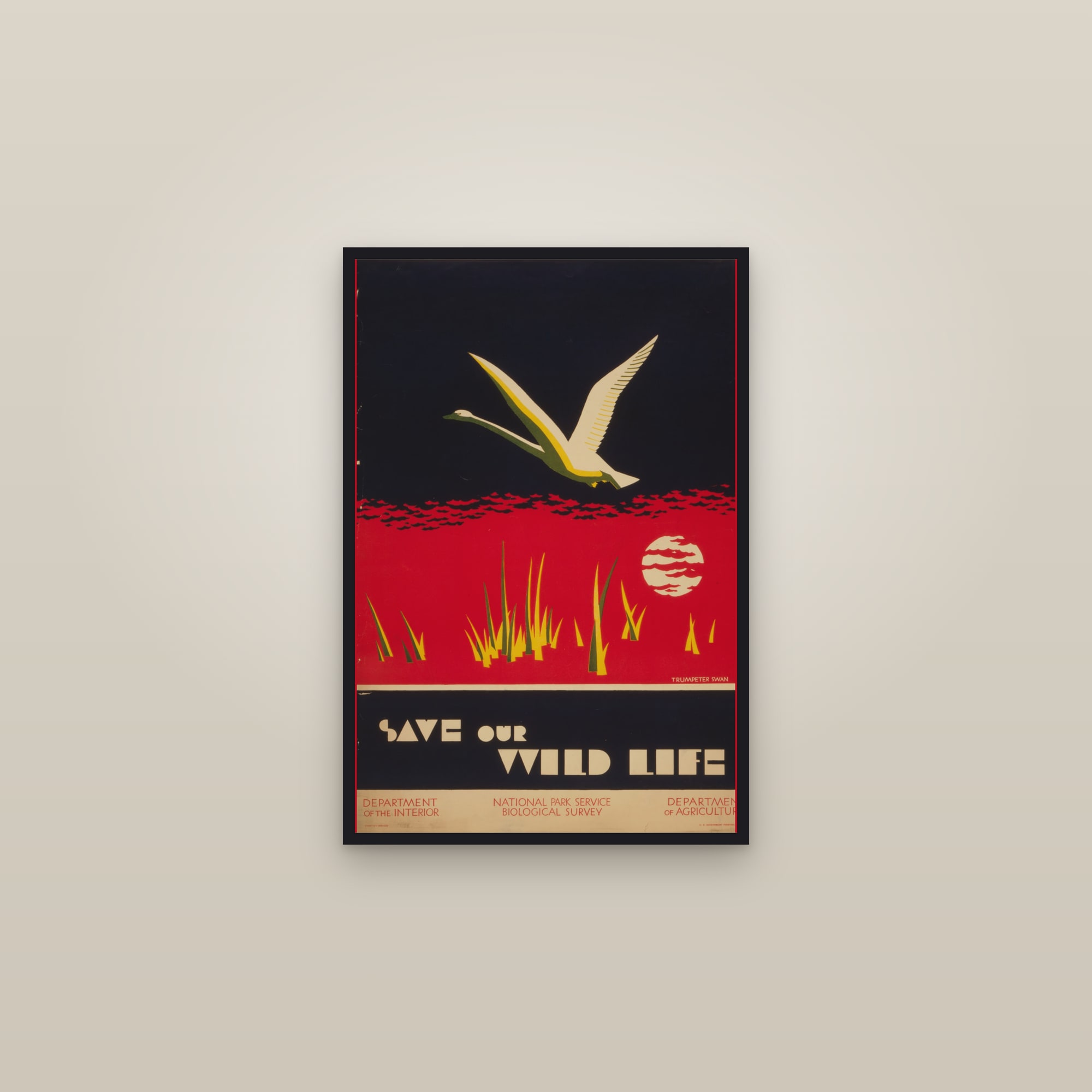
Her name was soon detached from the work. The Park Service director's 1934 annual report describes her posters without naming her. Later sources often credited the series to the WPA's Federal Art Project, though at least eleven of the posters were made before that project began in August 1935. We print six of hers, including The Lure of the National Parks and Mystery Veils the Desert; the rest are in our national park posters. She died in 1996, aged 99.
Why were so many of them left uncredited?
The record shows several ways a name could drop off.
- The plate credited someone else. Merian's pineapple carries only the engraver's name. Gould's toucan says "J & E Gould", and the books went out under John's name.
- The credit was an initial. "M.S. del." stood for more than 2,300 plates.
- The paperwork was thrown away. USDA personnel records from before 1921 were destroyed under the regulations of the time, White and Neumann report, which is why so little is known about Heiges, Arnold or Thompson.
- The official account left her out. The Park Service's 1934 report described Waugh's posters and did not name her.
How are their names coming back?
Mostly through the sheets themselves. The USDA painters signed their watercolours, and the National Agricultural Library has put the collection online, so each painter's work can be found and counted. White and Neumann's 1982 survey gathered what could still be found about each artist. The Australian Museum rebuilt Elizabeth Gould's part from her letters. The Park Service published Waugh's history from its own files.
Our USDA painters reference gives each painter a page with a biography and every plate we hold. Seven of its twelve painters are women, and they painted 643 of the 840 plates in our set that carry a painter's name.
The prints now
Each print here starts from a scan of the original plate, book page or poster. Every sheet is checked at full size and left as made: Passmore's note about Charles Wright's raspberries, Newton's two dates, Smith's "M.S. del." and Waugh's swan all stay. Our piece on how we restore a plate explains the process, and a short history of the print covers the engraving and lithography that carried these pictures into books. Prints are on 250 gsm archival paper, unframed or in a black or dark wood frame.
Questions people ask
Who were the most important women natural history illustrators?
Among those whose work survives in print: Maria Sibylla Merian (1647 to 1717), who painted the insects of Suriname; Elizabeth Gould (1804 to 1841), who drew and lithographed birds for John Gould's books; Matilda Smith (1854 to 1926), Kew's botanical artist, who drew more than 2,300 plates for Curtis's Botanical Magazine; and Deborah Griscom Passmore, Amanda Newton and Mary Daisy Arnold, the USDA's three most prolific fruit painters.
Why did the USDA paint fruit instead of photographing it?
The Division of Pomology began hiring artists in 1887 to record new fruit varieties, before colour photography was in wide use. A watercolour could show a variety's exact colour, shape and cut section, and some were printed as colour plates in the department's Yearbook.
Were the USDA pomological painters mostly women?
Yes. Of the thirteen illustrators that the botanists White and Neumann named in 1982 as most closely tied to the collection, seven were women: Mary Daisy Arnold, Bertha Heiges, Elsie Lower, Amanda Newton, Deborah Griscom Passmore, Ellen Schutt and Harriet Thompson.
What did Elizabeth Gould do for John Gould's bird books?
She was the principal artist of his early books. She learned lithography to make the plates, drew for the toucan and trogon monographs and the birds of Darwin's Beagle voyage, and finished 84 plates of The Birds of Australia before she died in 1841. The plates are signed 'J & E Gould'.
Why is Dorothy Waugh's name often missing from National Park Service posters?
The 1934 National Park Service annual report described her posters without naming her, and later sources often credited the series to the WPA Federal Art Project. The Park Service's own history now names her as the designer of 17 posters made between 1934 and 1936, most of them before that project existed.
Sources
- Natural History Museum, London, Maria Sibylla Merian: metamorphosis unmasked by art and science: birth 1647, the 1679 caterpillar book, the 1699 voyage at 52, how she paid for it, enslaved and Indigenous knowledge, Linnaeus, death in poverty
- Rijksmuseum, Maria Sibylla Merian's insects of Suriname: illness in 1701, 60 hand-coloured engravings, a book more than half a metre tall
- Royal Collection Trust, Pomegranate and Menelaus Blue Morpho Butterfly (RCIN 921162): a version of Plate 9, the voyage with Dorothea, return in 1701
- Australian Museum, Elizabeth Gould 1804 to 1841: birth, marriage, lithography, the toucan monograph, the Beagle birds, 84 plates of The Birds of Australia, death in 1841, the letters found in 1938
- Australian National Herbarium, Matilda Smith (1854 to 1926): botanical illustrator for Curtis's Botanical Magazine, 1878 to 1923
- Tulane University Libraries, botanical illustration exhibit, Matilda Smith: more than 2,300 plates, first botanical artist of Kew, the first corpse flower grown at Kew, Smithiantha
- J. White and E. Neumann, The collection of pomological watercolors at the U.S. National Arboretum, Huntia 4(2), 1982: colour photography, the Yearbook plates, the illustrators' titles and names, records before 1921 destroyed, Mary Daisy Arnold's obituary, Appendix I
- National Agricultural Library, Rare and Special Collections, USDA Pomological Watercolor Collection finding aid: hiring from 1887, the credit written on each sheet
- Issues in Science and Technology, The Pomological Watercolor Collection (gallery): 1886 to 1942, 7,497 watercolours, mostly painted by women
- National Agricultural Library, Deborah Griscom Passmore Watercolors: birth 1840, Quaker upbringing, Philadelphia training, USDA from 1892, the Miller raspberry (1895) in the main reading room, death in 1911
- Linda Hall Library, Scientist of the Day: Deborah Griscom Passmore: Marianne North at Kew, head artist of the Pomology Division, more than 1,500 watercolours
- USDA Agricultural Research Service, Pomological Watercolors: A Wealth of Beauty and Detail, Agricultural Research (September 2000): Amanda Newton, granddaughter of Isaac Newton
- Database of Scientific Illustrators 1450 to 1950, University of Stuttgart: Bertha Heiges, government illustrator at 908 K Street in 1899
- UC Davis Library, Special Collections: Ellen Isham Schutt, USDA 1904 to 1914, 286 apple watercolours for the University of California, 1914 to 1915
- UCR Magazine, Bittersweet (Spring 2024): Elsie Lower Pomeroy, the 1937 citrus series and the four paintings found in 2000
- National Park Service, 50 Nifty Finds #7: The Waugh Factor: Dorothy Waugh's life, her NPS job, 17 posters from 1934 to 1936, the Federal Art Project attribution
- U.S. Fish and Wildlife Service, Triumph of the trumpeter swans: 69 known in 1935, Red Rock Lakes refuge founded that year
Start hereA short history of the print, from woodblock to giclée