
Strange superstitions people believe, and where they came from
Ten superstitions still kept today, from the bird dropping that means money to the twelve grapes at midnight, with what the record shows about each one.
Contents11 sections
- A bird dropping on you means luck, or money
- Keep a Good Friday bun for a year
- Hide your thumbs when a hearse passes (Japan)
- Leave hospital on a lucky day (Japan)
- Twelve grapes at midnight (Spain)
- Three on a match
- The person in the middle of a three-person photo dies first (Japan)
- Don't chew gum at night (Turkey)
- An acorn at the window keeps lightning out
- A sudden silence means an angel is passing
- Why people keep them
A superstition is a rule kept just in case. Nobody quite believes that a grape can buy a good March, but almost everyone in Spain eats one at midnight on 31 December anyway. Most of these rules began as a way to protect something: your parents, your house, your luck for the year ahead. Here are ten that people still keep, where each one comes from, and what the written record actually shows. Where a popular version turned out to have no early record, we say so and give the one that does.
A bird dropping on you means luck, or money
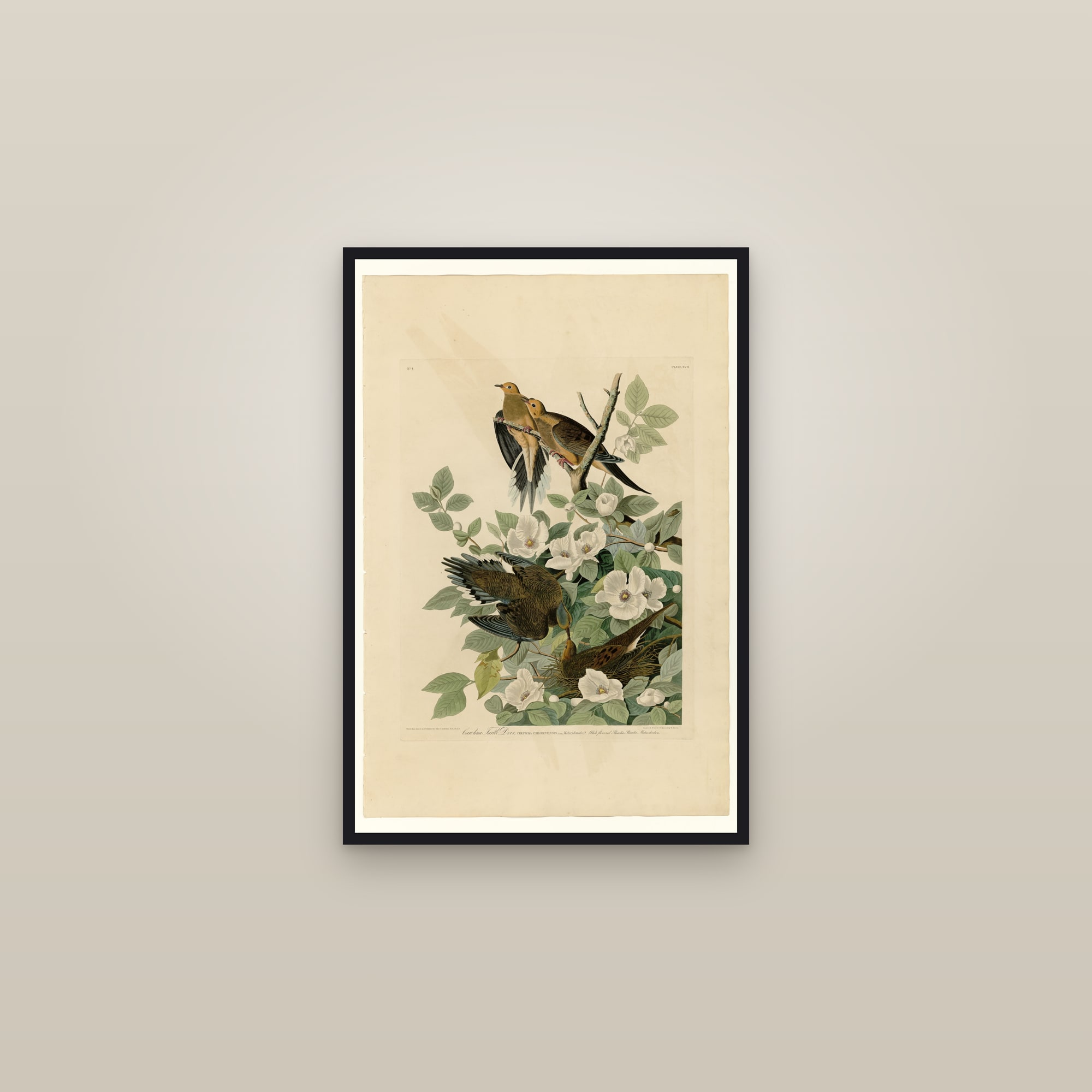
The oldest written version is English, and it comes with a scene. In 1878 a correspondent to Notes and Queries was riding on the box of a coach in North Yorkshire. A passing bird hit the knee of the young man beside him. "It's a pity this isn't Easter Day," the young man said, because in Cleveland a bird dropping on you at Easter meant luck all year. He added that on Whitsunday the birds would aim at anyone not wearing at least one new piece of clothing.
The money version is the one people quote now. Turkey's Ministry of Culture and Tourism lists it plainly: a bird dropping on your head means you are lucky and will earn money. In Russia the saying is so familiar that Komsomolskaya Pravda used it in 2024 to open an interview with a lung doctor about the diseases city pigeons carry.
No early source says why. It reads like consolation: an unlucky moment, turned around by agreement.
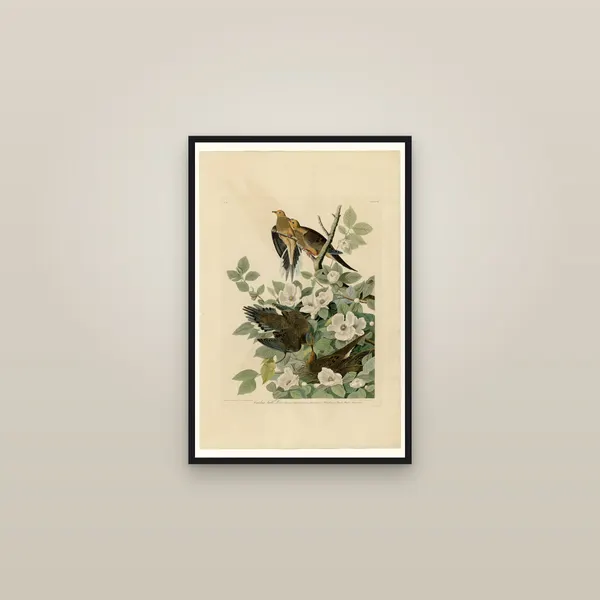
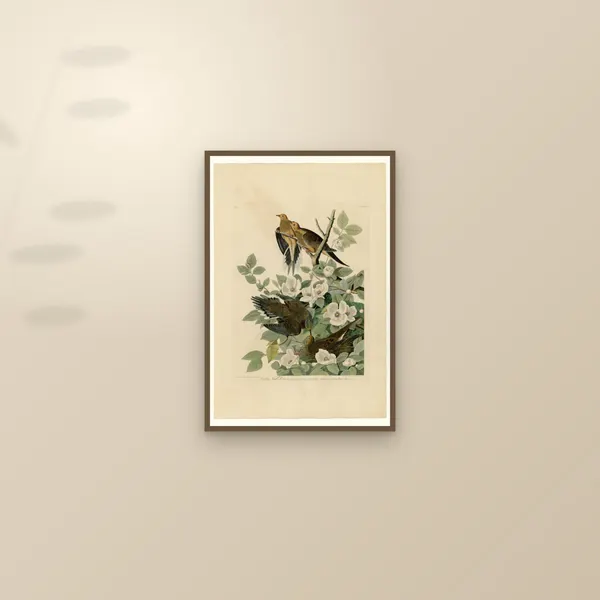
If you would rather have your birds at a safe distance, the doves, jays and songbirds in our Audubon bird prints stay on the wall.
Keep a Good Friday bun for a year
Buns baked on Good Friday were thought never to go mouldy. In 1826 William Hone's Every-Day Book described families who kept a Good Friday bun "for luck". Some hung a hard cross-marked cake from the ceiling until the next Good Friday replaced it, and Hone was told it preserved the house from fire.
The custom survives in a pub. At the Widow's Son in Bromley-by-Bow, east London, a net of old buns hangs over the bar, and the Historic England listing mentions it. The legend says a widow baked a bun for her sailor son, who was due home at Easter and never came back, and she kept adding one every year. For years sailors of the Royal Navy have come on Good Friday to put in a new one. Nobody has proved the widow existed.
Hide your thumbs when a hearse passes (Japan)
This one is usually told as passing a graveyard, but in Japan the trigger is a hearse. The Japanese word for thumb, oya yubi, means parent finger. Tuck it into your fist, the rule goes, and you protect your parents from an early death. A darker version says the spirits travelling with the hearse can slip into your body under the thumbnail. All About Japan gives the rule in its plainest form: hide your thumb, or your parents will die young.
Leave hospital on a lucky day (Japan)
A rule often repeated in English says to go into hospital on a Wednesday and leave on a Monday, and never to leave on a Saturday, because you will soon be back. No folklore collection we could check records it. Its nearest documented cousin is about moving house: "Saturday's flitting makes a short sitting", written down by Irish schoolchildren for the National Folklore Collection.
There is, though, a hospital superstition that has been measured. Japan's old calendar runs in a six-day cycle. Taian is the day of good fortune and the favourite day for weddings; Butsumetsu is bad luck in all respects. A 1998 study in the BMJ went through three years of discharges from Kyoto University Hospital, 23,677 patients. An average of 25.8 patients left on each Taian day and 19.3 on each Butsumetsu. The authors concluded that patients were staying longer to go home on a lucky day, at a cost to the hospital of about 7.4 million yen a year.
Twelve grapes at midnight (Spain)
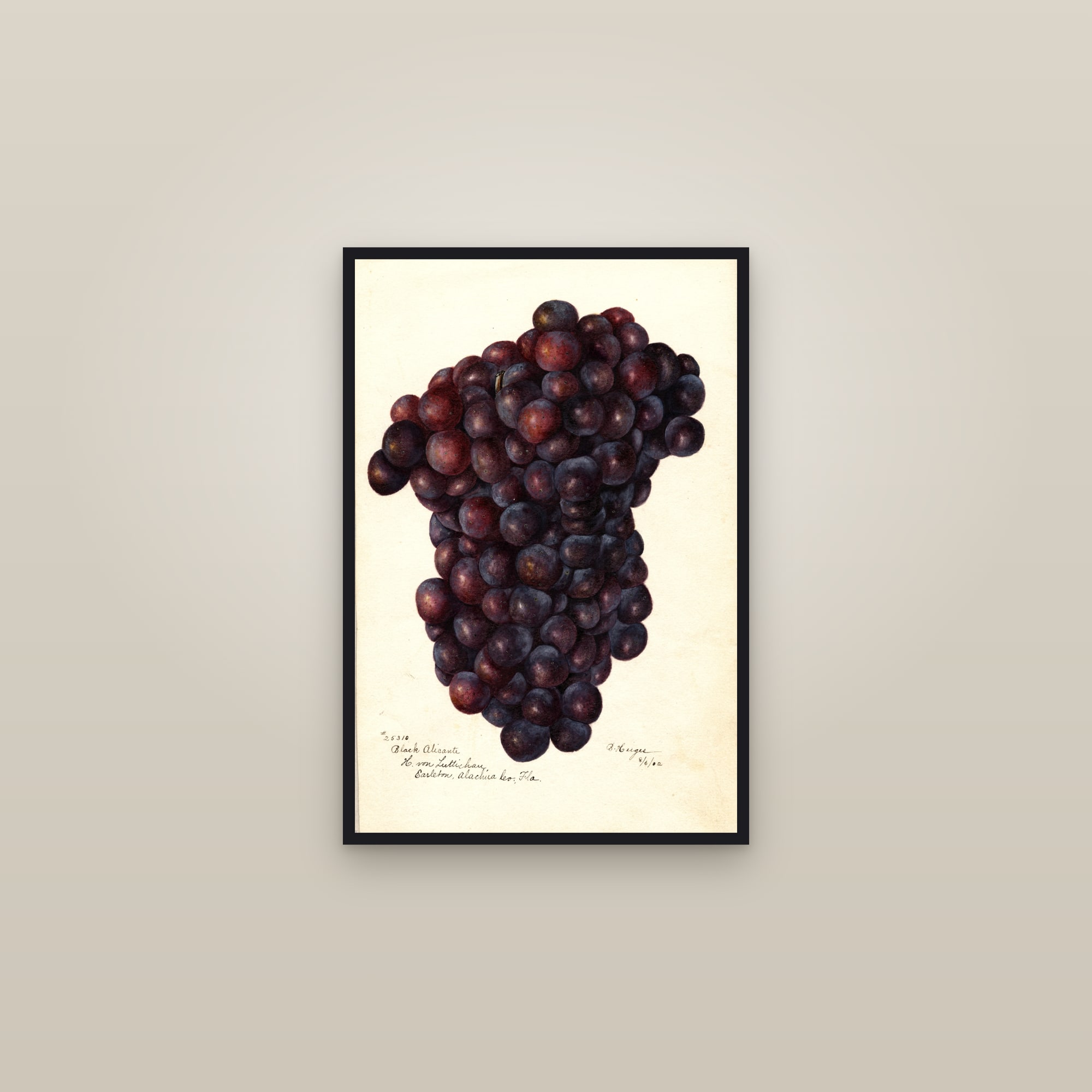
On New Year's Eve Spaniards eat one grape at each of the twelve chimes of midnight, one for each month of the coming year. The usual explanation is a glut: in 1909 growers had a huge harvest and sold the surplus as lucky grapes.
The record is older. National Geographic traces it to Madrid in the 1880s, when better-off families ate grapes with champagne at dinner and crowds at the Puerta del Sol took up the habit in mockery. Newspapers mention it from 1882. By 1894 one called it "the enduring custom". The 1909 harvest helped it spread; it did not invent it.
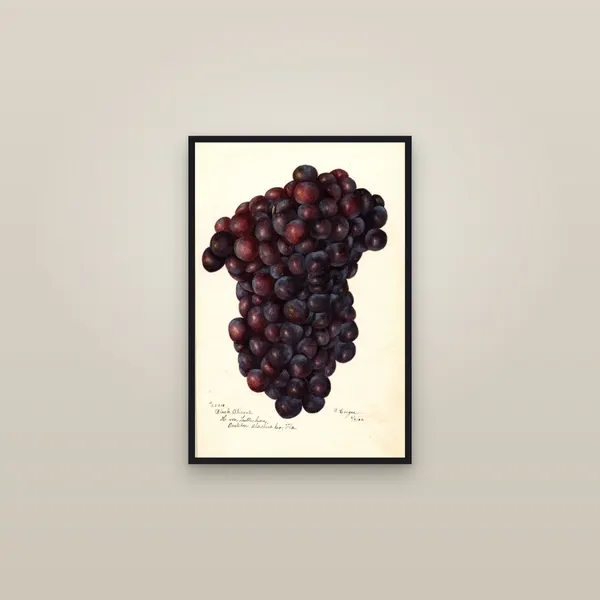
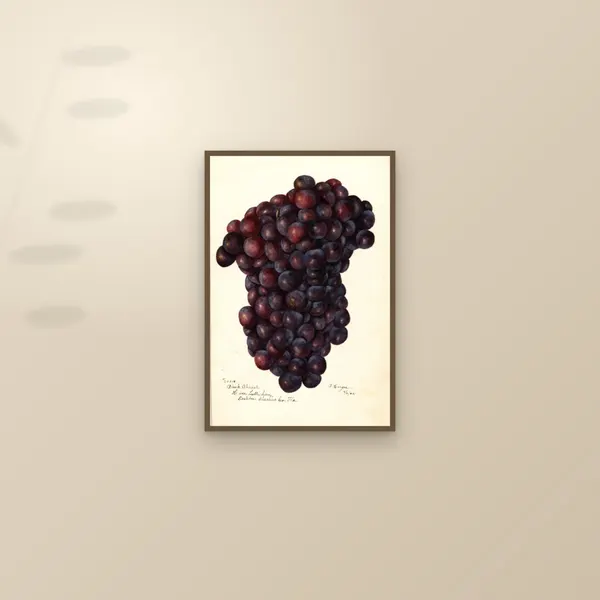
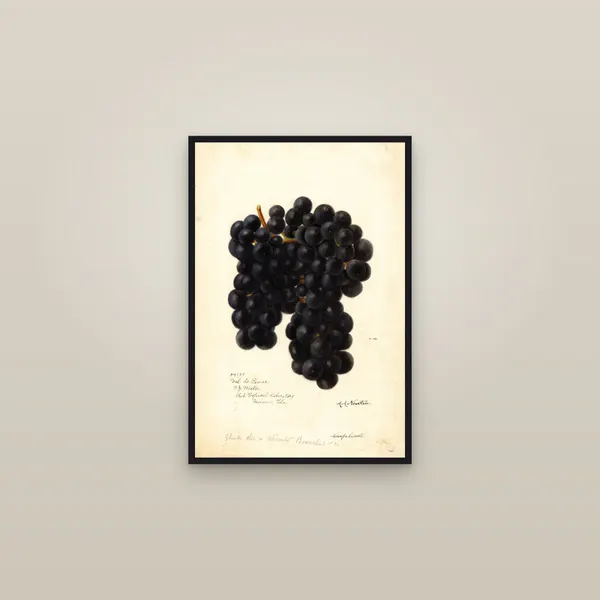
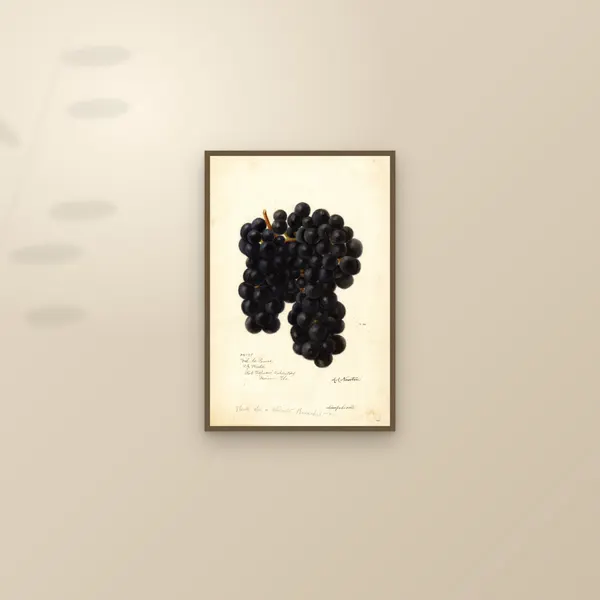
Two of the grape watercolours painted for the US Department of Agriculture carry Spanish place names: Heiges's Black Alicante, above, and Amanda Newton's Valdepeñas, with a pencilled note underneath that reads "Think this is Alicante Bouschet". Both are among our vintage fruit prints.
Three on a match
Never light three cigarettes from one match. The story usually told is that it comes from the Boer War of 1899 to 1902: a sniper saw the first light, aimed on the second and fired on the third.
The belief is older than that war. In 1894 John G. Bourke, who had commanded the army post at Fort Ringgold on the Texas border, published the beliefs of the Mexican families living along the Rio Grande in the Journal of American Folk-Lore. One reads: if three men light their cigarritos from the same match, "bad luck will surely overtake one of them soon." The sniper came later, as a reason for a fear people already had.
The person in the middle of a three-person photo dies first (Japan)
People in Japan still avoid standing three in a row for a photograph, as The Japan Times noted in a 2013 column on superstitions. Two explanations are usually given, and All About Japan offers both. Early cameras focused sharply only on the centre, and a sharper picture was thought to take more of your soul. And the middle place went to the oldest and most respected person, who was, naturally, the first to die.
Don't chew gum at night (Turkey)
In Turkey gum is not chewed after dark. Whoever chews gum at night, the Ministry of Culture and Tourism records, is chewing the flesh of the dead. No source we found gives an origin, which is usual for a rule passed on by word of mouth.
An acorn at the window keeps lightning out
The version usually repeated says that carrying an acorn keeps you young. We found no early record of that. What the record does show is acorns against lightning.
The Cuming Collection in south London holds a small bone blind pull carved as an acorn, its cup unscrewing to take the cord. The museum's note says the type was used all over England in the early twentieth century as a charm against lightning. People believed lightning came into a house through the windows, so acorns went on blind cords, tassels, curtain poles and even umbrellas. The reasoning, in the museum's words: oaks were thought to be the home of the thunder god, so an acorn, or anything made in its shape, was a charm against lightning.
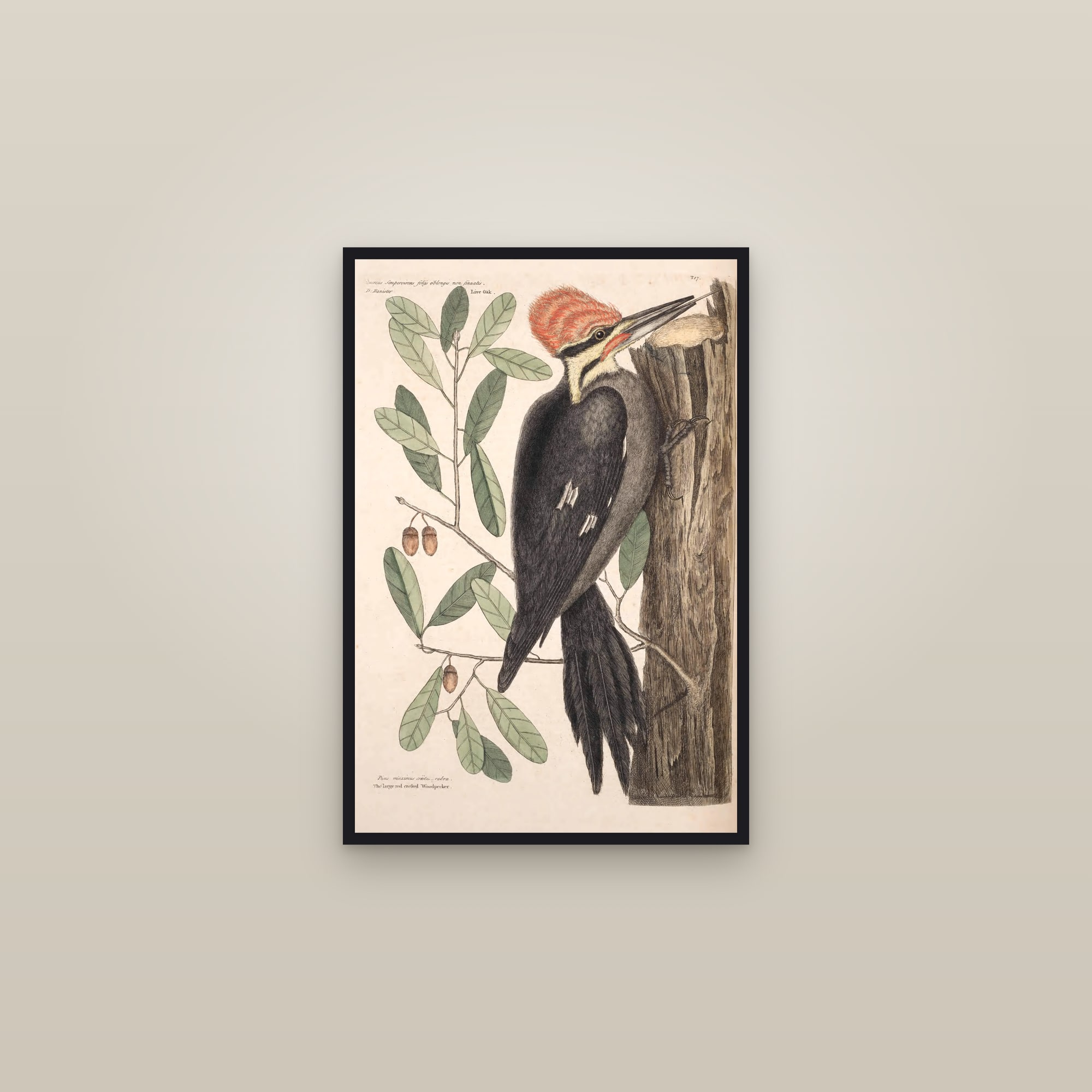
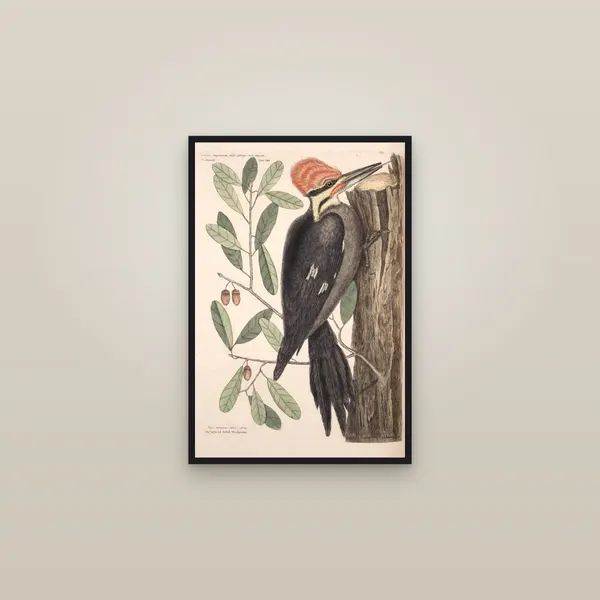
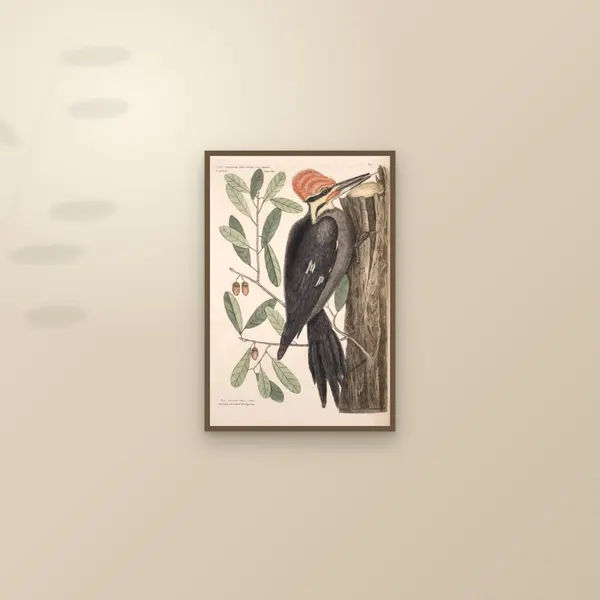
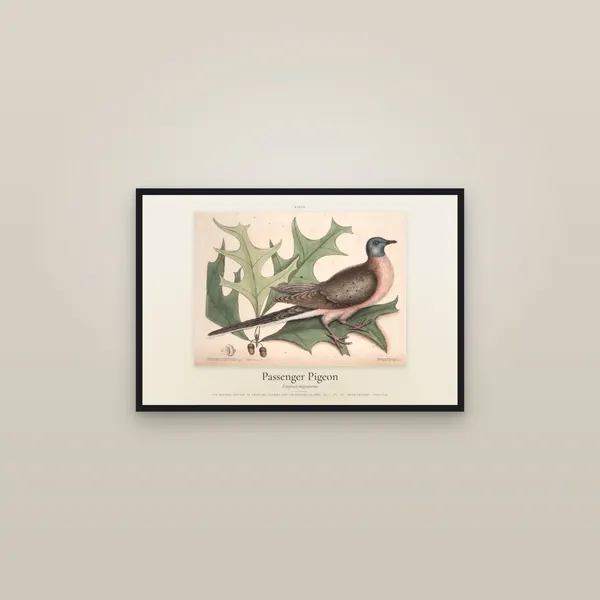
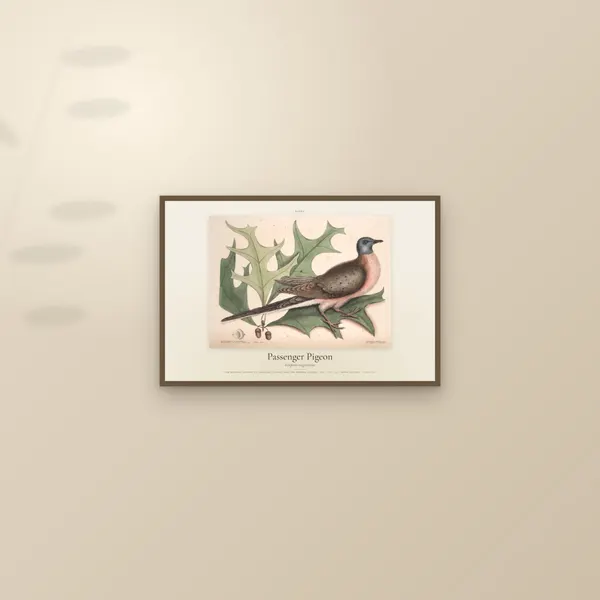
Catesby set his birds among the acorns more than once. His passenger pigeon stands on lobed leaves above a pair of them, and the Catesby plates reference lists the woodpecker by plate number.
A sudden silence means an angel is passing
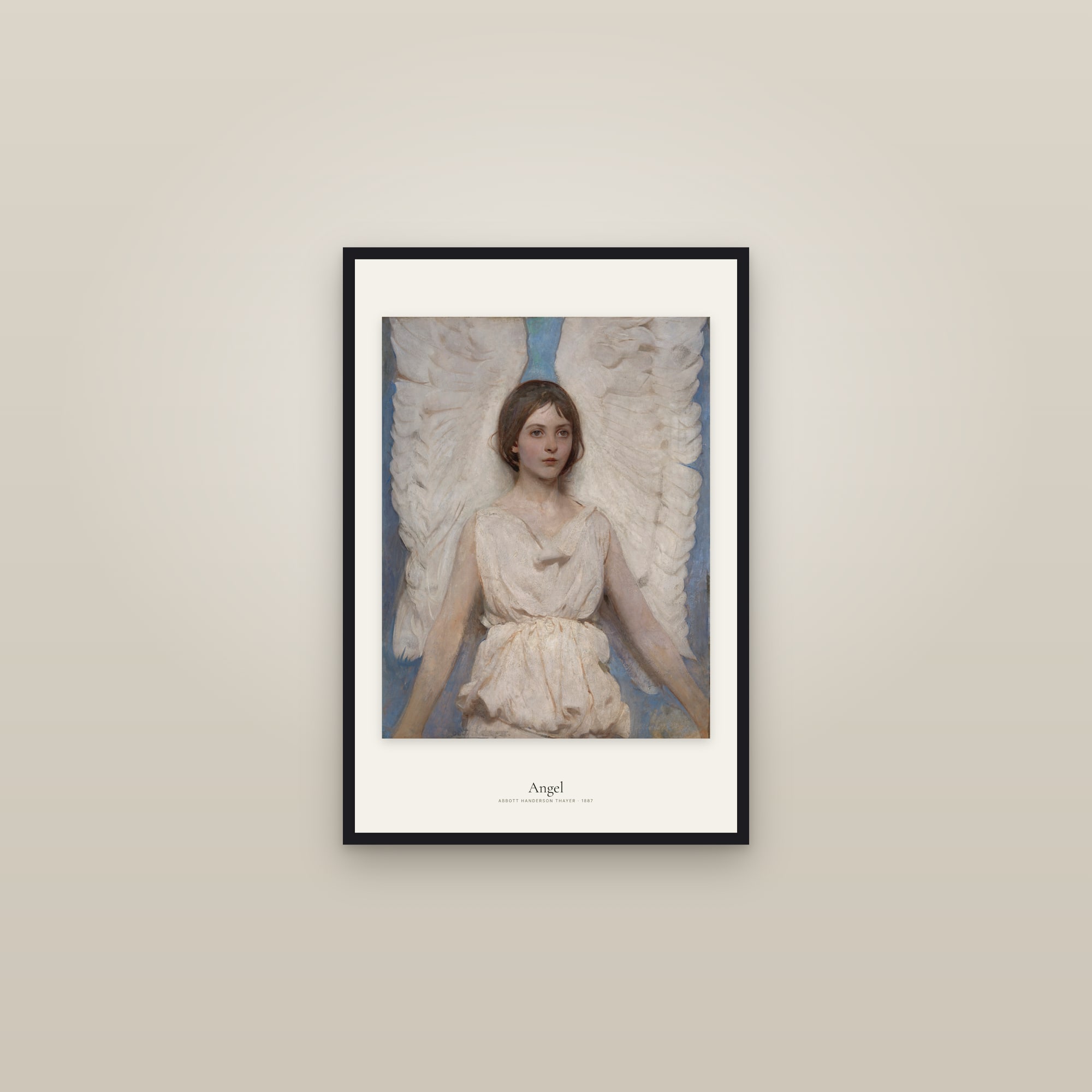
When a conversation stops dead, the French say un ange passe, an angel is passing, and the Germans say an angel flies through the room. Nobody knows where the angel came from. But the idea is very old. About 1,900 years ago Plutarch wrote in his essay On Talkativeness that when silence falls in a gathering, people say Hermes has come in. Hermes was the messenger of the gods; the angel may simply be his Christian replacement.
If the silence itself had a picture, it might be Vilhelm Hammershøi's Interior, Sunlight on the Floor (1906, Tate): a closed door, a bright window and a patch of sun on bare boards, with nobody in the room.
Why people keep them
Almost every rule here guards something specific. The thumb guards a parent, the bun guards a house, the grape guards a month, the acorn guards a window. They cost nothing and take a second, and that is why they last. The oldest records in this piece come from people who wrote down what their neighbours said, and those notes are often the only reason anyone knows where a belief began.
Every print here starts from the original plate, watercolour or painting, and is printed on 250 gsm archival paper, unframed or in a black or dark wood frame. More birds are in our Audubon bird prints, and the story of the lost ones is in The birds we lost.




Questions people ask
Is it good luck if a bird poops on you?
In folklore, yes. The oldest English record, from North Yorkshire in 1878, says a bird dropping on you on Easter Day brings luck all year. Turkey's Ministry of Culture and Tourism lists the belief that a bird dropping on your head means you will earn money, and the same saying is current in Russia.
Why do Spanish people eat 12 grapes at New Year?
One grape is eaten at each of the twelve chimes of midnight, for luck in each month of the new year. Madrid newspapers mention the custom in the 1880s, when better-off families ate grapes with champagne and crowds at the Puerta del Sol copied them. A large grape harvest in 1909, sold as lucky grapes, helped spread it across Spain.
Why is three on a match unlucky?
The usual story is that a sniper saw the first light, aimed at the second and fired at the third. But the belief was recorded among Mexican residents of the Texas border in 1894, before the Boer War where the sniper story is set. No early source explains why three.
Why do Japanese people hide their thumbs when a hearse passes?
The Japanese word for thumb, oyayubi, means parent finger. Hiding it is said to protect your parents from an early death. Another version says the spirits travelling with the hearse could enter your body under the thumbnail.
What does it mean when people say an angel is passing?
It is said when a conversation suddenly falls silent. The French say un ange passe and the Germans say an angel flies through the room. The Greek writer Plutarch recorded an older form about 1,900 years ago: when a gathering falls silent, people say Hermes has come in.
Sources
- Notes and Queries, 5th series, vol. 10 (1878), p. 287: 'Cleveland Folk-Lore', the bird dropping on Easter Day
- Republic of Türkiye Ministry of Culture and Tourism: Superstitions (bird droppings and money; gum at night)
- Komsomolskaya Pravda, 12 September 2024: a pulmonologist on pigeons and the saying that a bird dropping on the head means money
- William Hone, The Every-Day Book, vol. 1 (1826): the Good Friday bun kept for luck and said to preserve the house from fire
- Historic England, list entry 1065801: The Widow's Son public house, Devons Road (hanging buns and sailor's hat over the bar)
- Spitalfields Life, 18 April 2014: the widow's buns at Bow, placed by sailors of the Royal Navy
- LIVE JAPAN: hiding your thumbs from a hearse, oya yubi or parent finger
- All About Japan: the three-person photograph and the hearse
- The Japan Times, 20 October 2013, Mark Schreiber: You may find 'mei' mystifying (Japanese superstitions)
- Hira K. et al., Influence of superstition on the date of hospital discharge and medical cost in Japan, BMJ 317 (1998): 1680-1683
- National Folklore Collection (Dúchas), Schools' Collection, St Brigid's Convent, Celbridge, Co. Kildare: Saturday's flitting makes a short sitting
- National Geographic (Spanish edition), 27 December 2024: why twelve grapes are eaten on New Year's Eve
- John G. Bourke, Popular Medicine, Customs, and Superstitions of the Rio Grande, Journal of American Folk-Lore 7 (1894), p. 138: three cigarritos from one match
- Southwark Heritage (Cuming Collection), LDCUM1916.001.011: acorn-shaped blind pull, a charm against lightning
- Plutarch, On Talkativeness (Moralia 502-503), Loeb translation on LacusCurtius: silence and Hermes
- Expressio: un ange passe, meaning and the German ein Engel fliegt durchs Zimmer
Start hereThe most famous paintings in the world and where to see them