The paintings that were cut down, painted over, or found underneath
The Night Watch lost 64 cm to fit between two doors, Vermeer's Cupid spent centuries under grey paint, and a Van Gogh turned up on the back of another. What the museums found, and what a print shows.
Contents13 sections
- Why was The Night Watch cut down, and what did the Rijksmuseum put back?
- What happened to Rembrandt's other anatomy lesson?
- Who painted over Vermeer's Cupid, and why did Dresden take it off?
- What is under the black background of Lady with an Ermine?
- Why does Ginevra de' Benci have no hands?
- How did Goya's Black Paintings get off the wall?
- What did the Ghent Altarpiece's Lamb look like before the sixteenth century?
- Were any paintings made bigger instead of smaller?
- What did the attacks on Danaë and the Rokeby Venus leave behind?
- What lies under Picasso's Blue Period canvases?
- How was Van Gogh's hidden self-portrait found?
- How do conservators see under a painting?
- What does this mean when you buy a print?
The painting on the museum wall is not always the painting the artist finished. Some were cut down to fit a doorway or to sell as two pictures. Some were painted over by a later owner who preferred a plainer wall, a darker background or a less strange animal. Some carry a second picture on the back or underneath, because canvas cost money and the painter had an idea. Museums have spent the last fifty years finding this out with X-rays, infrared cameras and scalpels. This is the short account of the famous cases, the technique behind each one, and what it means for the print you hang: a print reproduces the painting as it survives today, whole, and nothing else.
Why was The Night Watch cut down, and what did the Rijksmuseum put back?
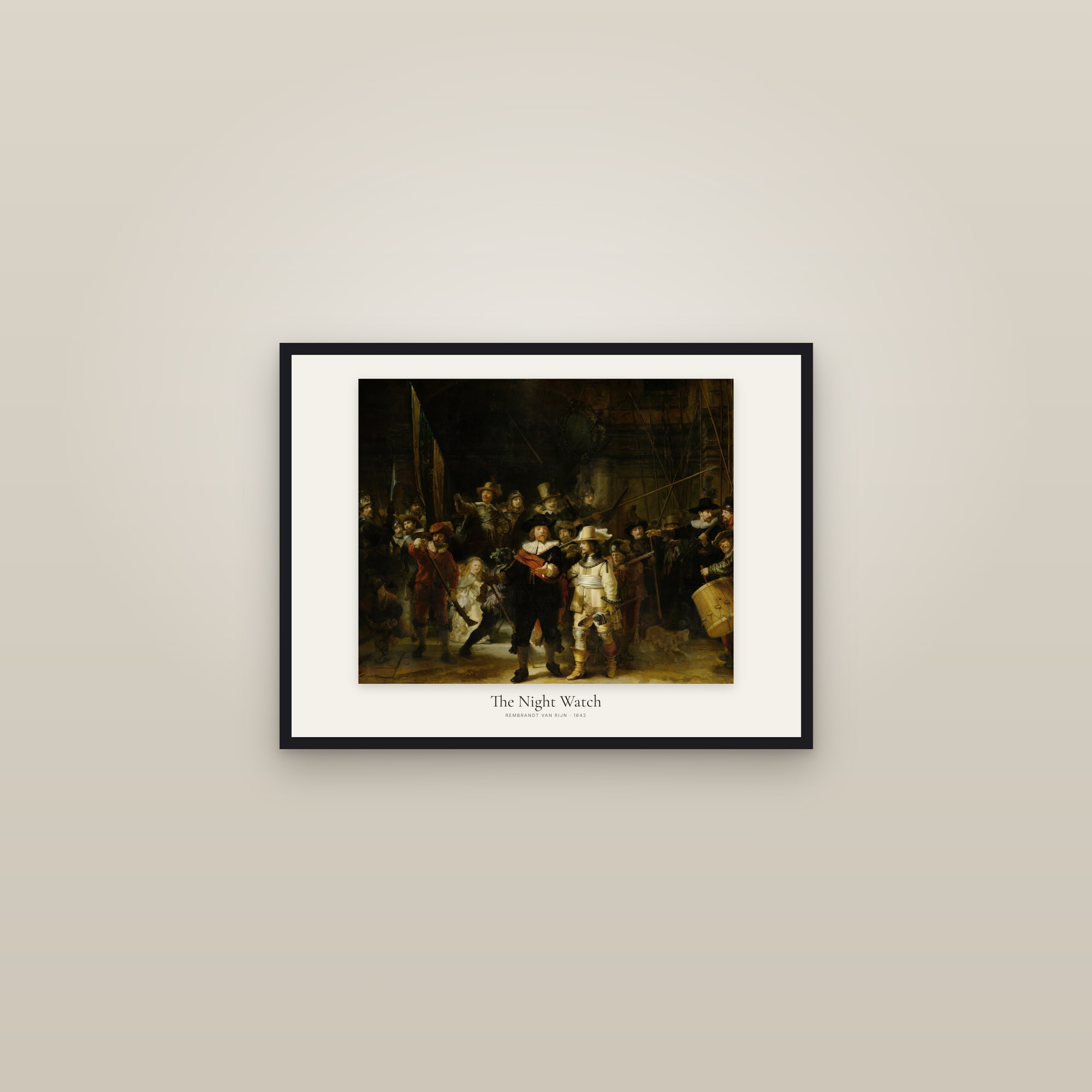
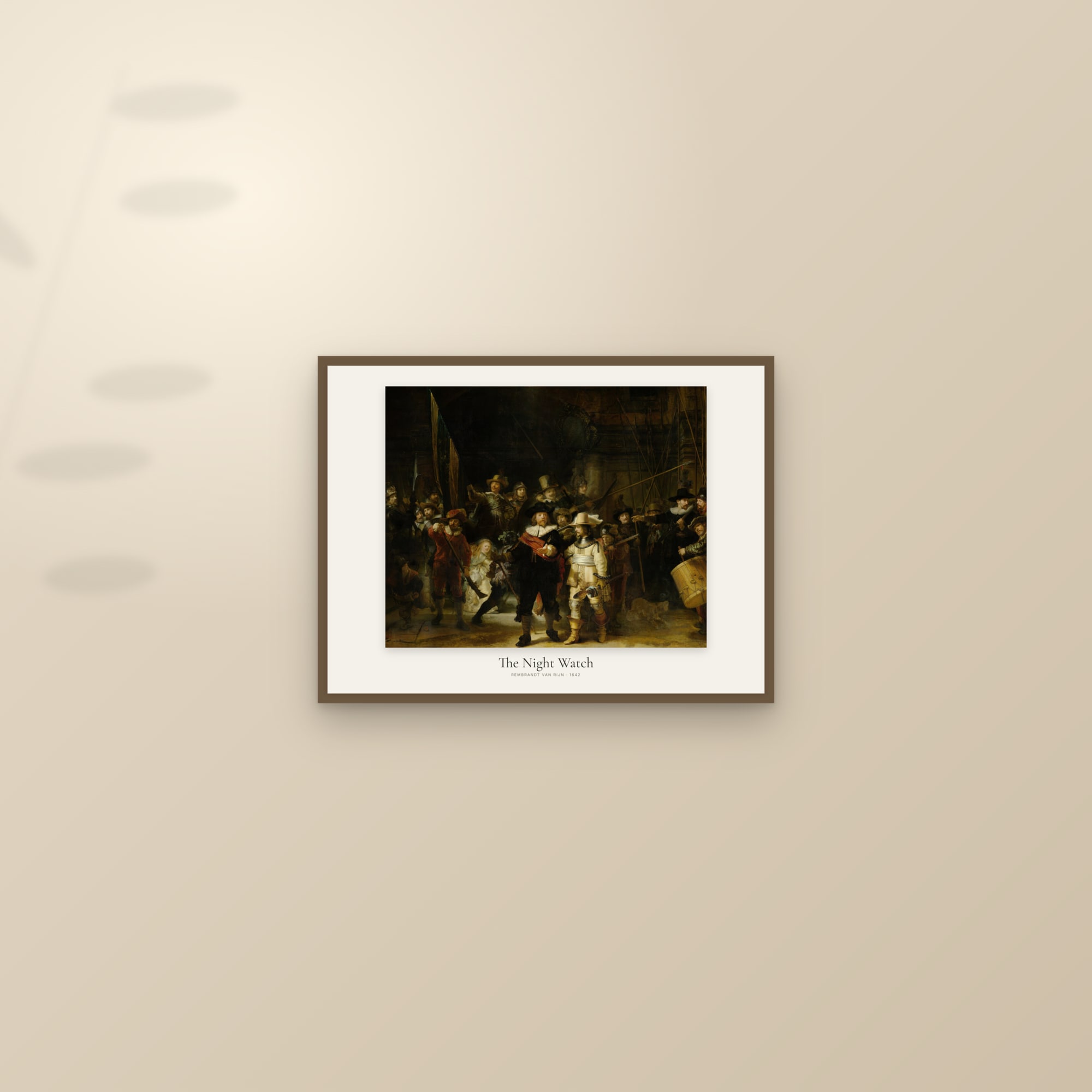
Rembrandt finished the militia portrait of Captain Frans Banninck Cocq's company in 1642 for the Kloveniersdoelen, the arquebusiers' hall in Amsterdam. In 1715 the city moved it to the Town Hall on Dam Square, now the Royal Palace, where, in the words of the Rijksmuseum's collection record, "it had to fit in between two doors in its new location." According to the Rijksmuseum's press release of 23 June 2021, strips were cut from all four sides: 64.4 cm from the left, 23.3 cm from the top, 11.3 cm from the bottom and 7 cm from the right. The pieces have never been found. What survives measures 379.5 by 436 cm by the press release's figures (the museum's collection record lists the painting at 379.5 by 453.5 cm), and that is the picture everyone knows.
The museum knows what was lost because a small copy, attributed to Gerrit Lundens and painted between about 1642 and 1655 for the captain himself, shows the full composition. It is on loan from the National Gallery, London. In 2021, as part of Operation Night Watch, the Rijksmuseum used that copy to rebuild the strips: the team trained artificial neural networks on Rembrandt's technique and colour, and the computer reproduced the missing areas in his style at full scale, 393.1 by 507.4 cm with the original in the middle. The museum was explicit that the printed strips were a research project, shown beside the painting for a few months, and not part of its restoration. Our gallery edition of The Night Watch is the painting as it hangs: the 1715 cut, not the 2021 reconstruction.
What happened to Rembrandt's other anatomy lesson?
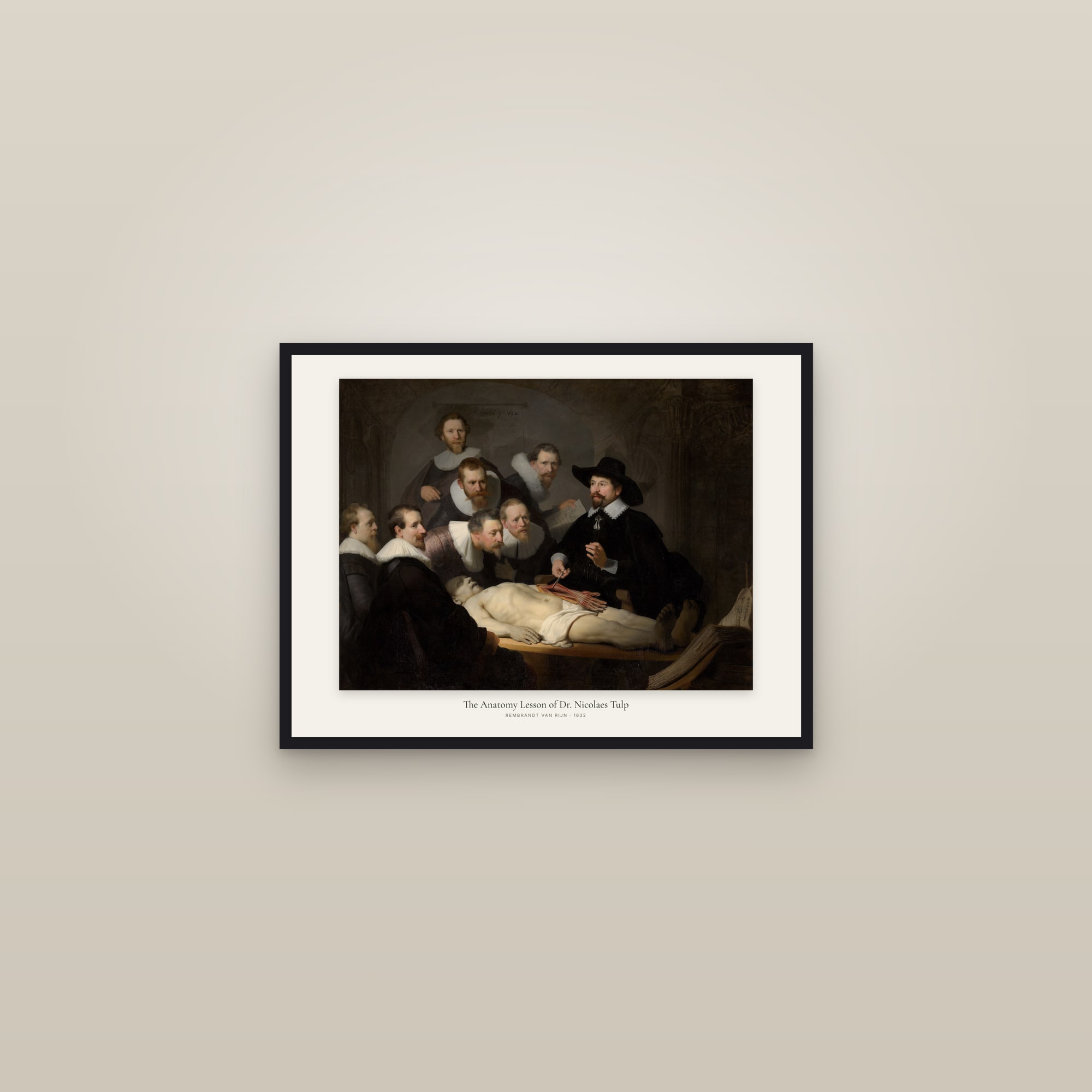
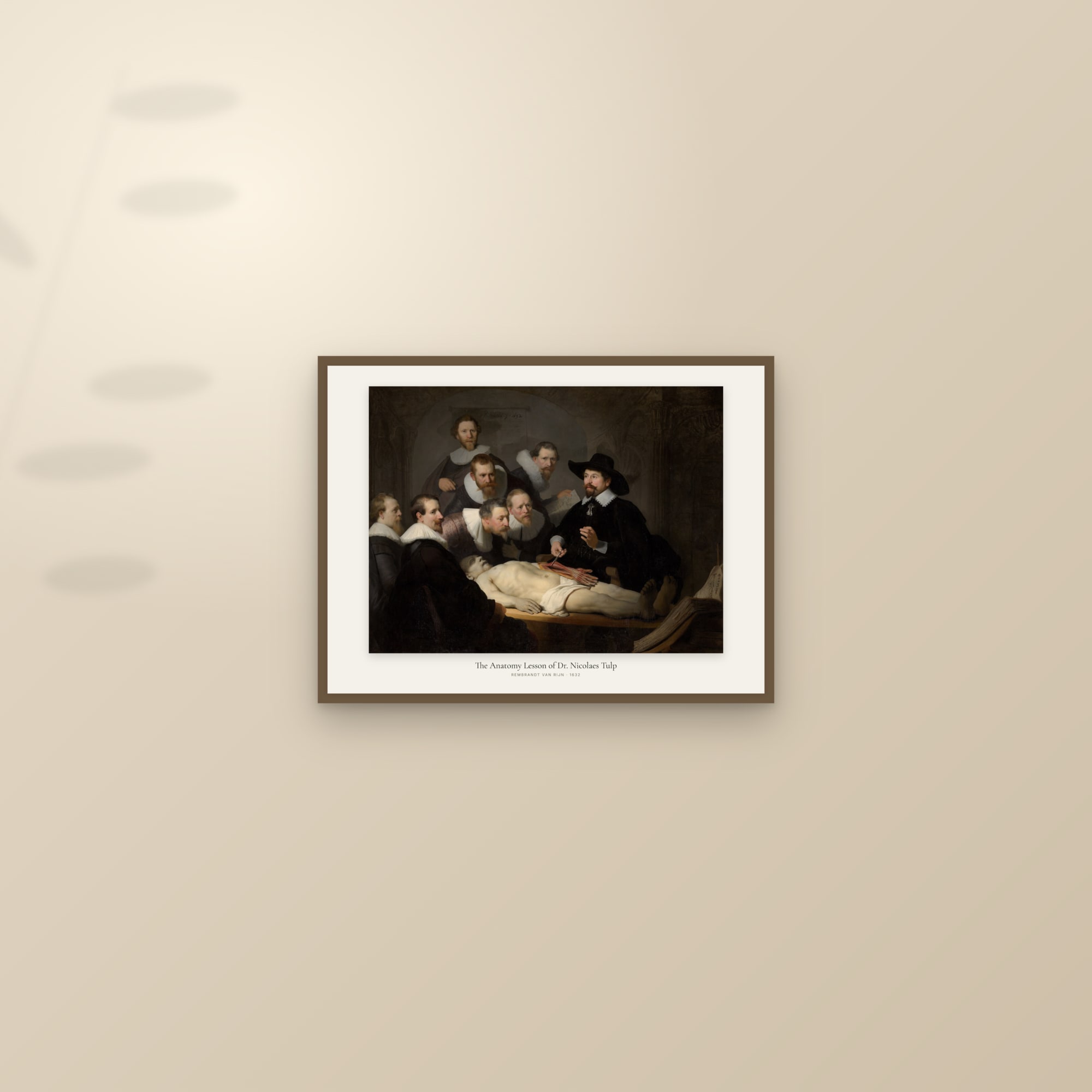
Rembrandt painted two anatomy lessons for the Amsterdam surgeons' guild. The first, The Anatomy Lesson of Dr Nicolaes Tulp of 1632 in the Mauritshuis, is complete. The second is a fragment. The Anatomy Lesson of Dr Jan Deijman of 1656 was, according to the Amsterdam Museum, once one of Rembrandt's largest paintings at about 245 by 300 cm, with eight surgeons at the autopsy of the brain of the executed criminal Joris Fonteijn. In 1723 a fire in the Anthoniswaag, the weigh-house on the Nieuwmarkt, destroyed most of it. What was saved is the centre: the corpse, Deijman's hands at the brain, and an assistant holding the top of the skull. The fragment hung in the Rijksmuseum from 1885 until that loan ended in 1993, and it has been in the Amsterdam Museum since. It is a painting cut down by accident rather than by a carpenter.
Who painted over Vermeer's Cupid, and why did Dresden take it off?
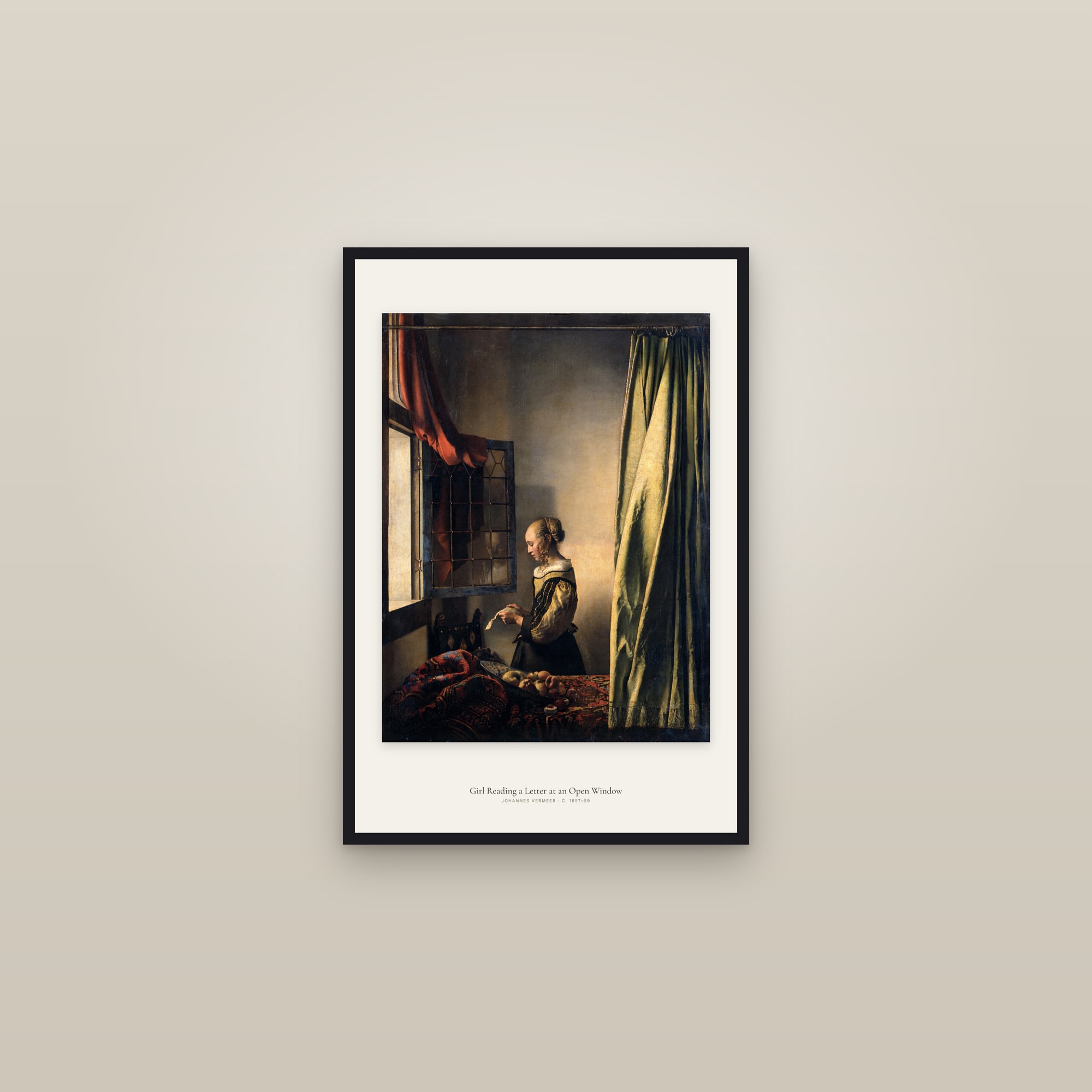
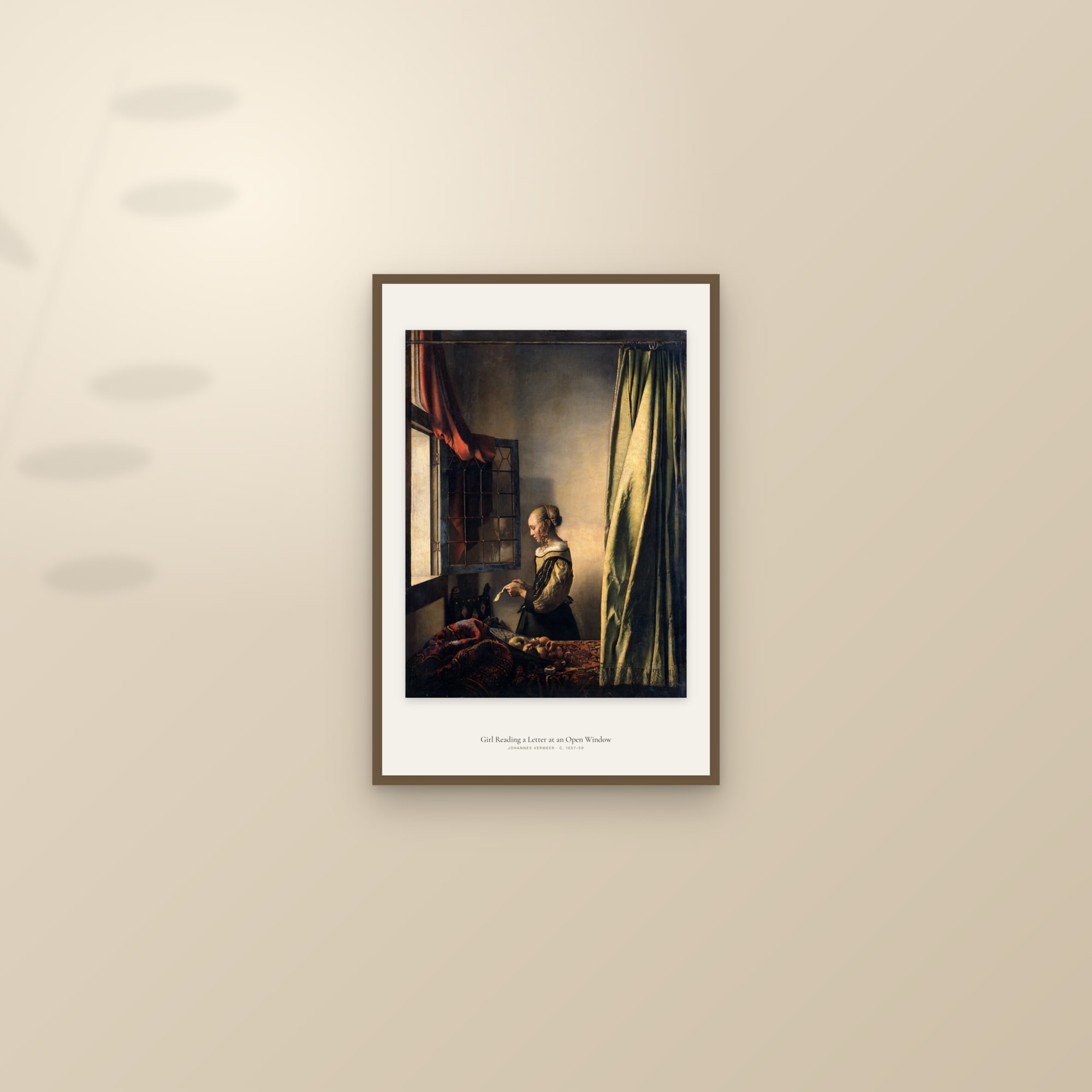
For two and a half centuries Girl Reading a Letter at an Open Window showed a young woman against a bare grey wall. An X-ray taken in 1979 showed a painting hanging on that wall: a standing Cupid with his bow, a picture-within-a-picture of the kind Vermeer used elsewhere. Annaliese Mayer-Meintschel published the finding in 1982, and the assumption for the next thirty-five years was that Vermeer had painted it out himself.
He had not. The Staatliche Kunstsammlungen Dresden began a restoration and research project in 2017, re-examined the X-rays, took paint samples to the Dresden Academy of Fine Arts' archaeometry laboratory, and in 2017 made a full-surface X-ray fluorescence scan with the support of the Rijksmuseum. The museum's press release of 24 August 2021 states the conclusion plainly: "it was not Vermeer himself who painted over the background," and the overpaint was applied "at least several decades after the painting was made," so after the artist's death in 1675. With that established, the museum decided in early 2018 to remove it. Conservator Christoph Schölzel took the grey off under the microscope, and the Cupid, with his bow and arrows and the two masks he treads on, has hung in the Gemäldegalerie Alte Meister since the exhibition that opened on 10 September 2021. Our print of the painting is the restored state.
What is under the black background of Lady with an Ermine?
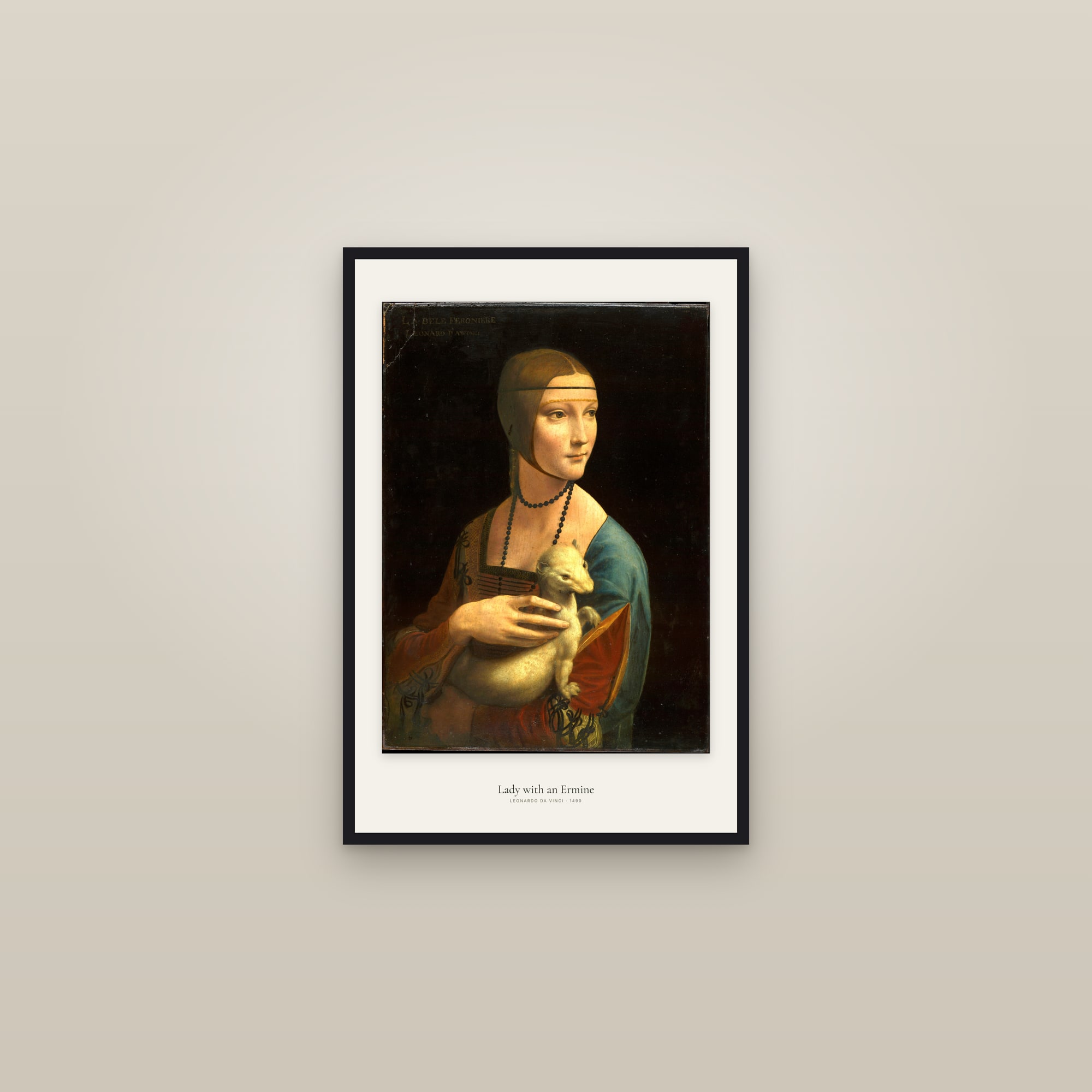
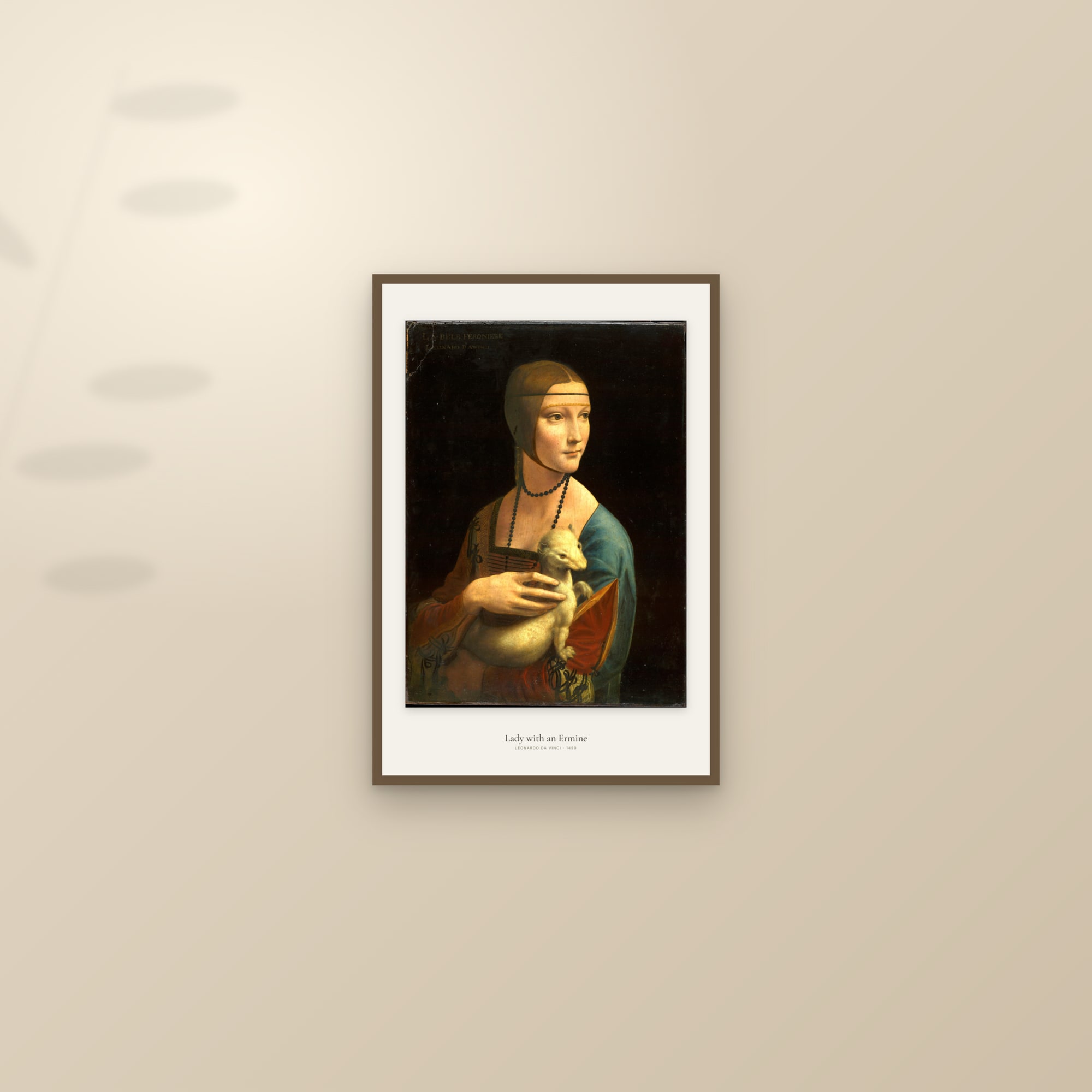
Leonardo's portrait of Cecilia Gallerani, painted in Milan around 1490, is one of the few paintings where the overpaint is still there. The National Museum in Kraków, which owns it and shows it at the Czartoryski Museum, describes the background as repainted in the nineteenth century; in Leonardo's version, the museum says, the background was modelled with light, so that the figure emerged from semi-darkness rather than standing against a flat black. The panel was bought in Italy around 1800 by Adam Jerzy Czartoryski and was on show in the family's Gothic House at Puławy from 1809. The museum identifies the sitter as Cecilia Gallerani from archival research done at the end of the nineteenth century: her letters to Isabella d'Este and a sonnet by Bernardo Bellincioni, who died in 1492. The black has not been removed. It is part of how the picture now reads, the pale face and the white animal cut out of the dark, and it is how we print it.
Why does Ginevra de' Benci have no hands?
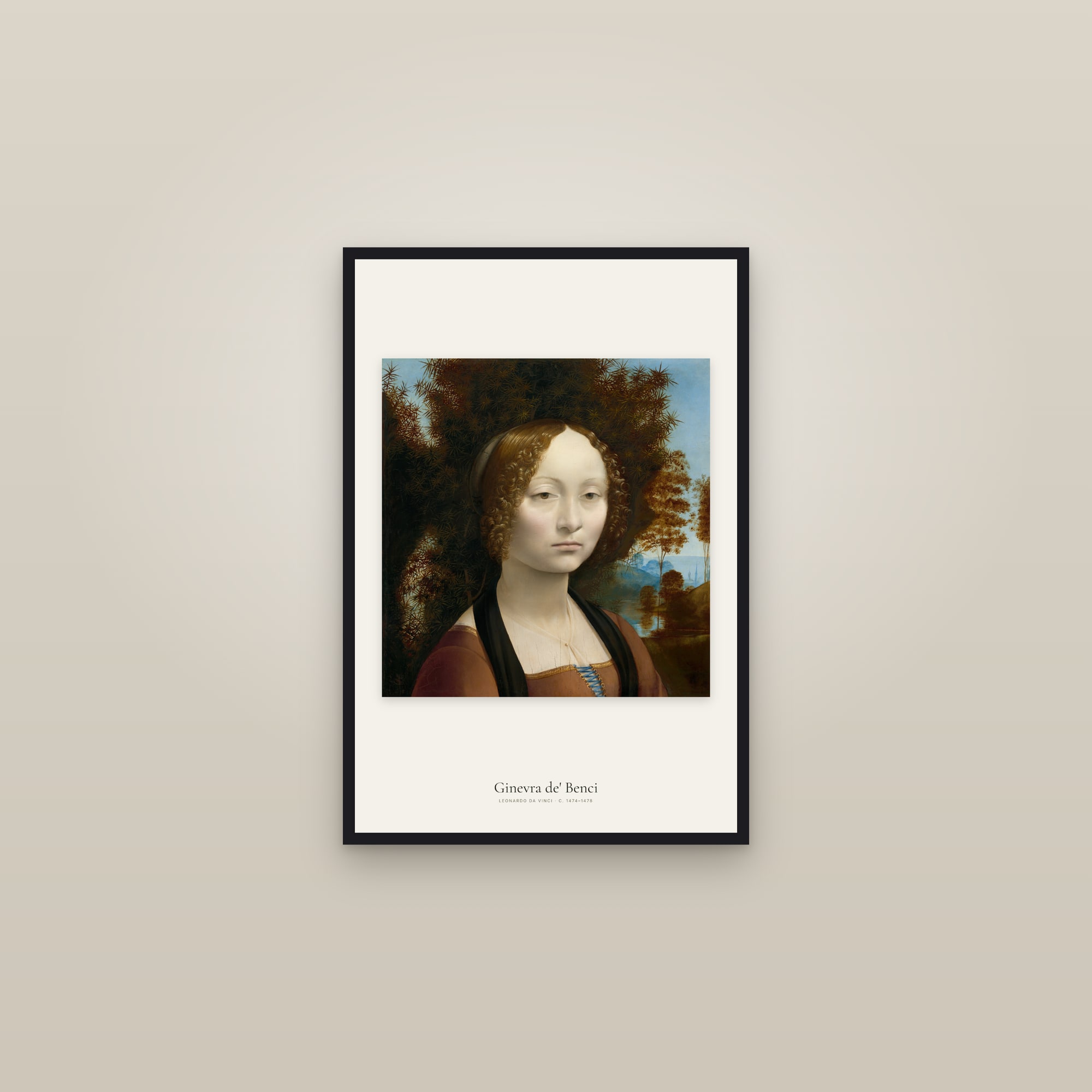
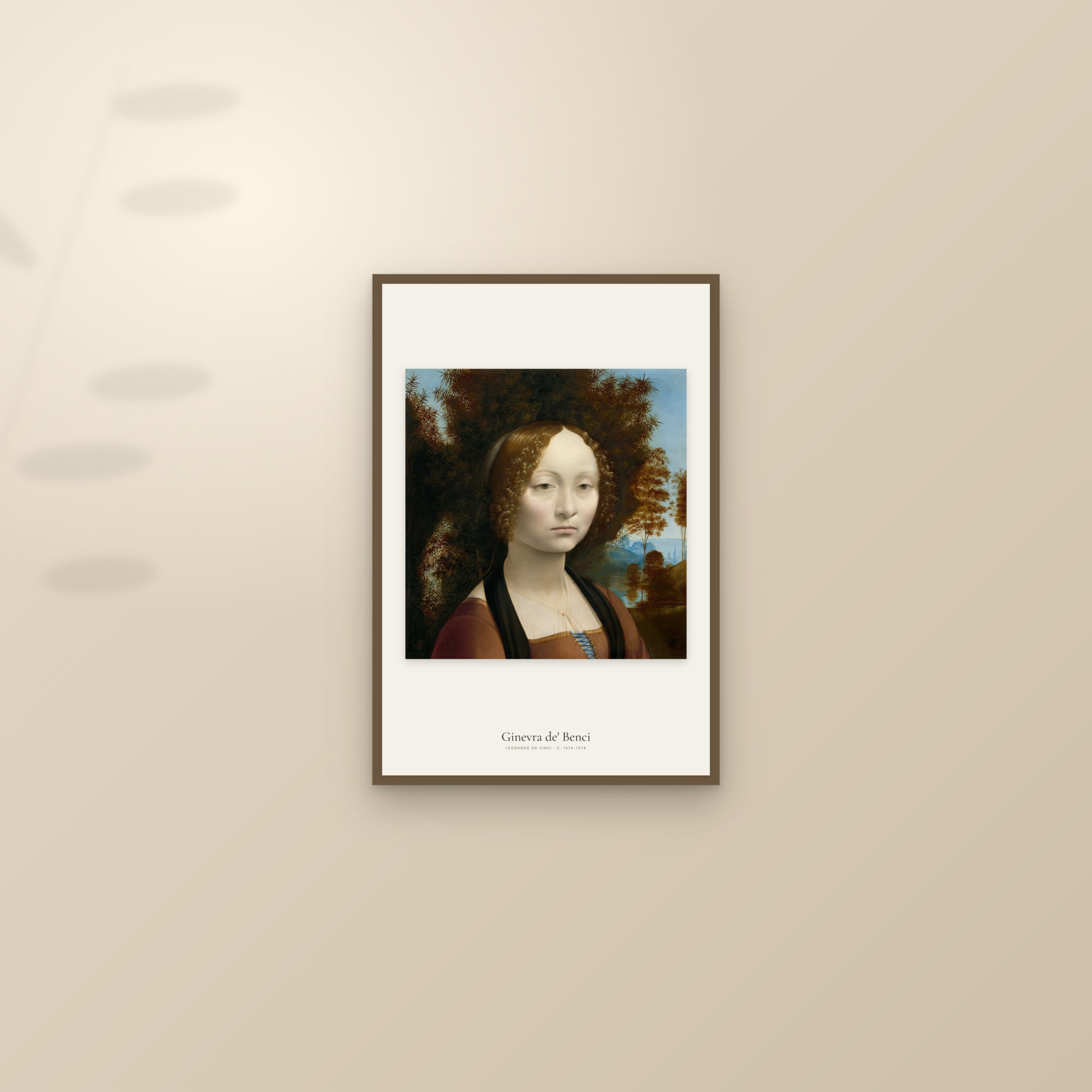
The only Leonardo in the Americas is nearly square, 38.1 by 37 cm according to the National Gallery of Art's object record, and that is not how he left it. The gallery in Washington, which bought the panel from Prince Franz Josef II of Liechtenstein in 1967, says in its account of the painting that "at some point, the panel was cut down along the bottom," and that a surviving drawing by Leonardo suggests he painted Ginevra's hands cradled at her waist, perhaps holding a small flower. The back of the panel carries a wreath of laurel and palm round a sprig of juniper (ginepro, a pun on her name) and a scroll reading, in Latin, "beauty adorns virtue". The gallery does not say when the panel was cut, or by whom. It was in the Liechtenstein collection by 1712, and a red seal on the reverse marked it as theirs in 1733. The portrait we print is the square that survives.
How did Goya's Black Paintings get off the wall?
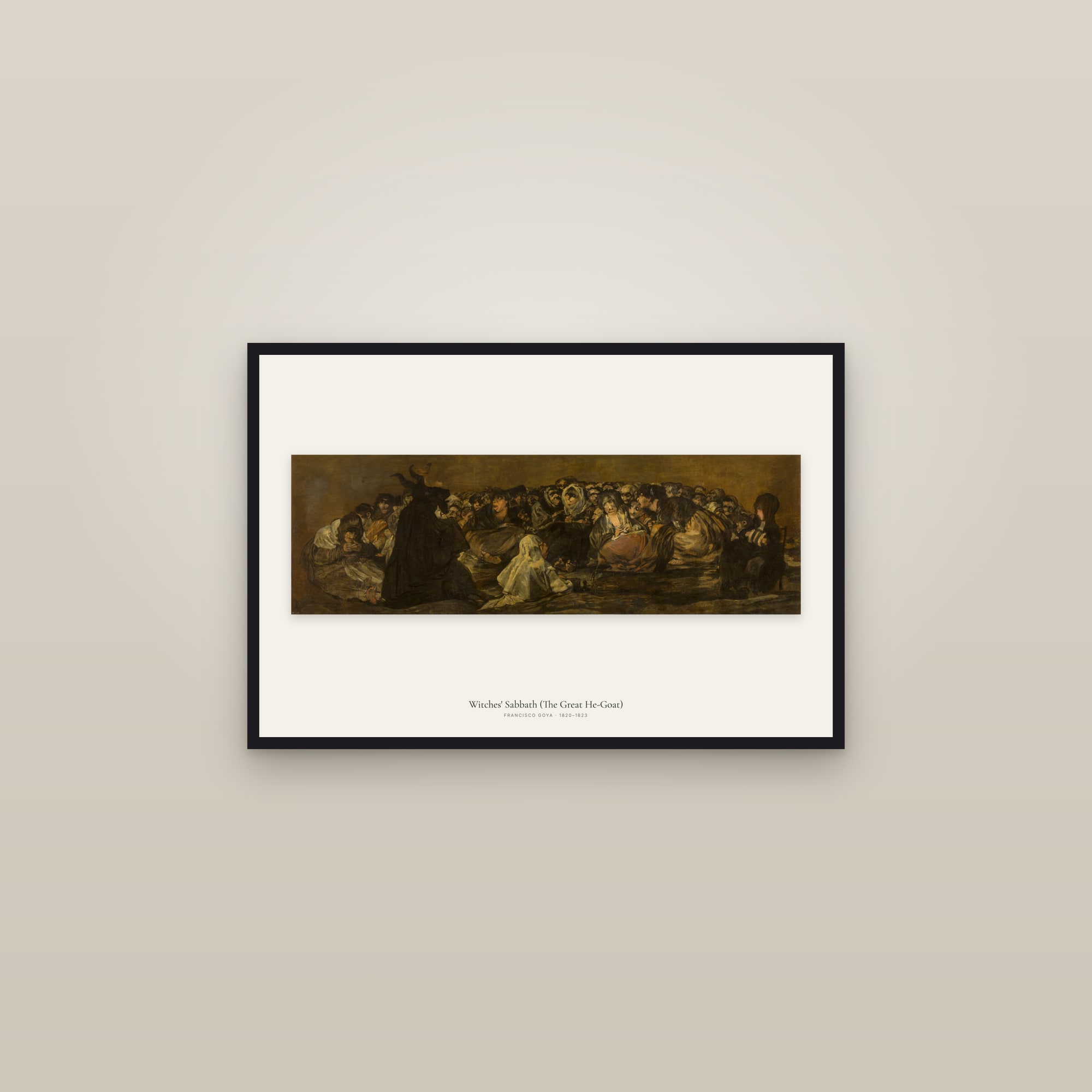
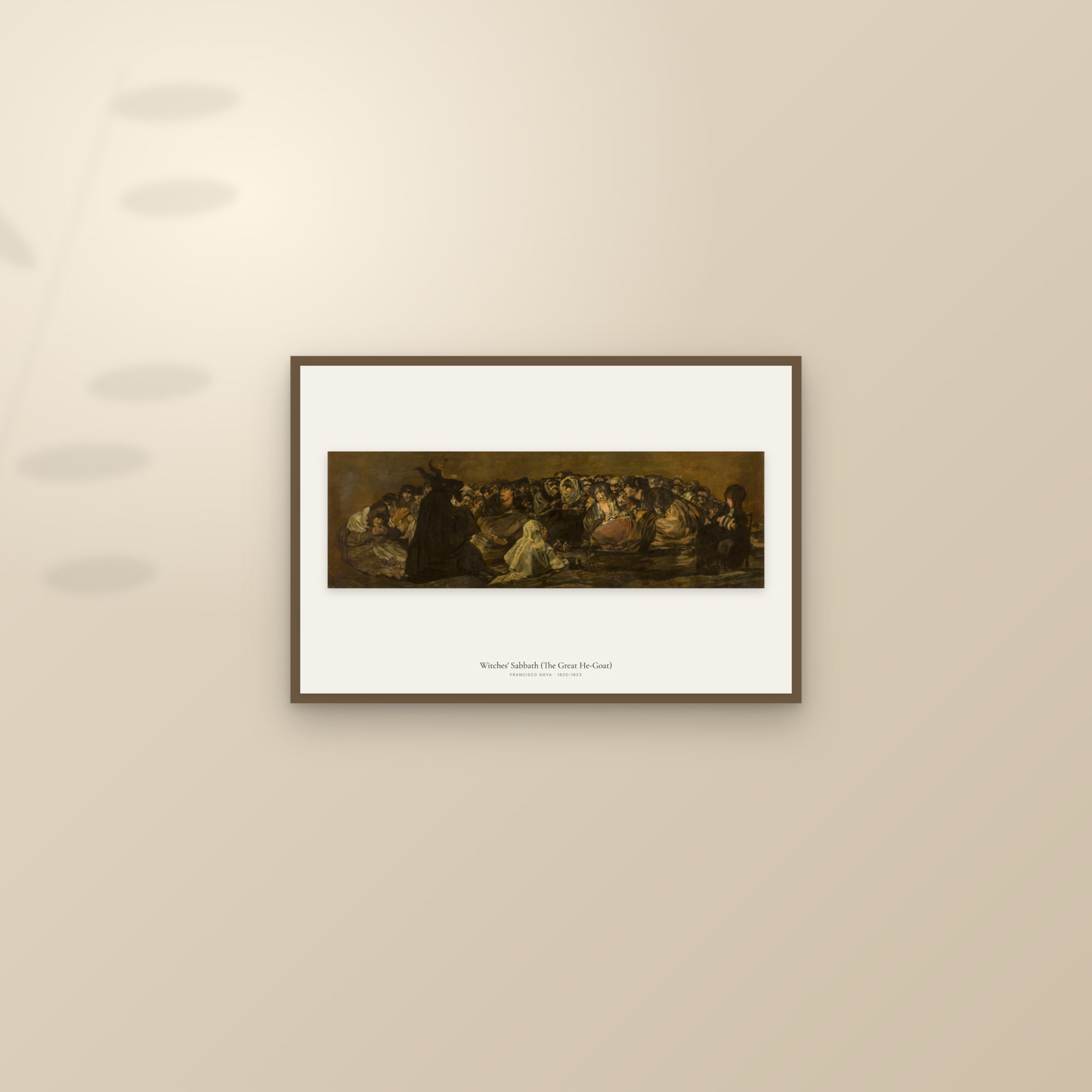
Between 1819 and 1824 Goya painted fourteen pictures directly onto the walls of the two floors of his house outside Madrid, the Quinta del Sordo. They were never meant to be moved. According to the Prado, Baron Émile d'Erlanger, the Parisian banker who later owned the house, commissioned the painter and restorer Salvador Martínez Cubells to transfer the murals to canvas; the paintings were shown at the Paris Universal Exhibition of 1878, given by d'Erlanger to the Prado in 1881 and put on view there in 1889; the house itself was demolished in 1909. The transfer was a strappo: the paint layer is glued to a facing, pulled off the wall, and glued down again onto canvas. The Prado's own entries record that the works "suffered enormously in the process," losing a large amount of paint, that they were cut down, and that the numerous losses were restored.
The widest of them shows what else a transfer can cost. Witches' Sabbath, or the Great He-Goat, is now 140.5 by 435.7 cm, a long low strip with a seated young woman at the far right edge. The Prado's catalogue entry says that when the work was taken off the wall more than 1.4 metres of the composition were cut off, so that the young woman, who sat at the centre of the composition in Charles Yriarte's description of the house, now sits where the picture stops. The print reproduces that strip, at a 3:2 ladder, because that is the painting.
What did the Ghent Altarpiece's Lamb look like before the sixteenth century?
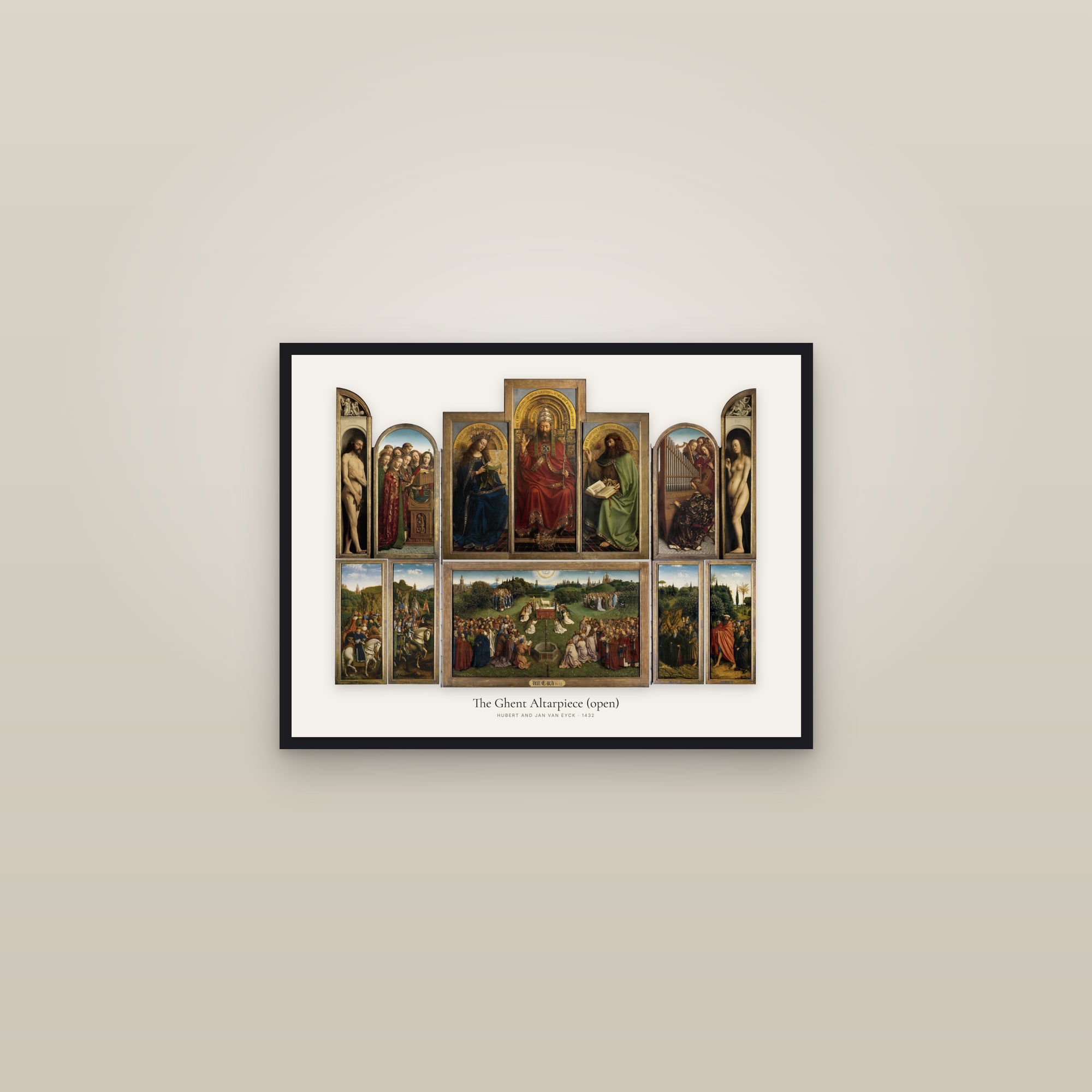
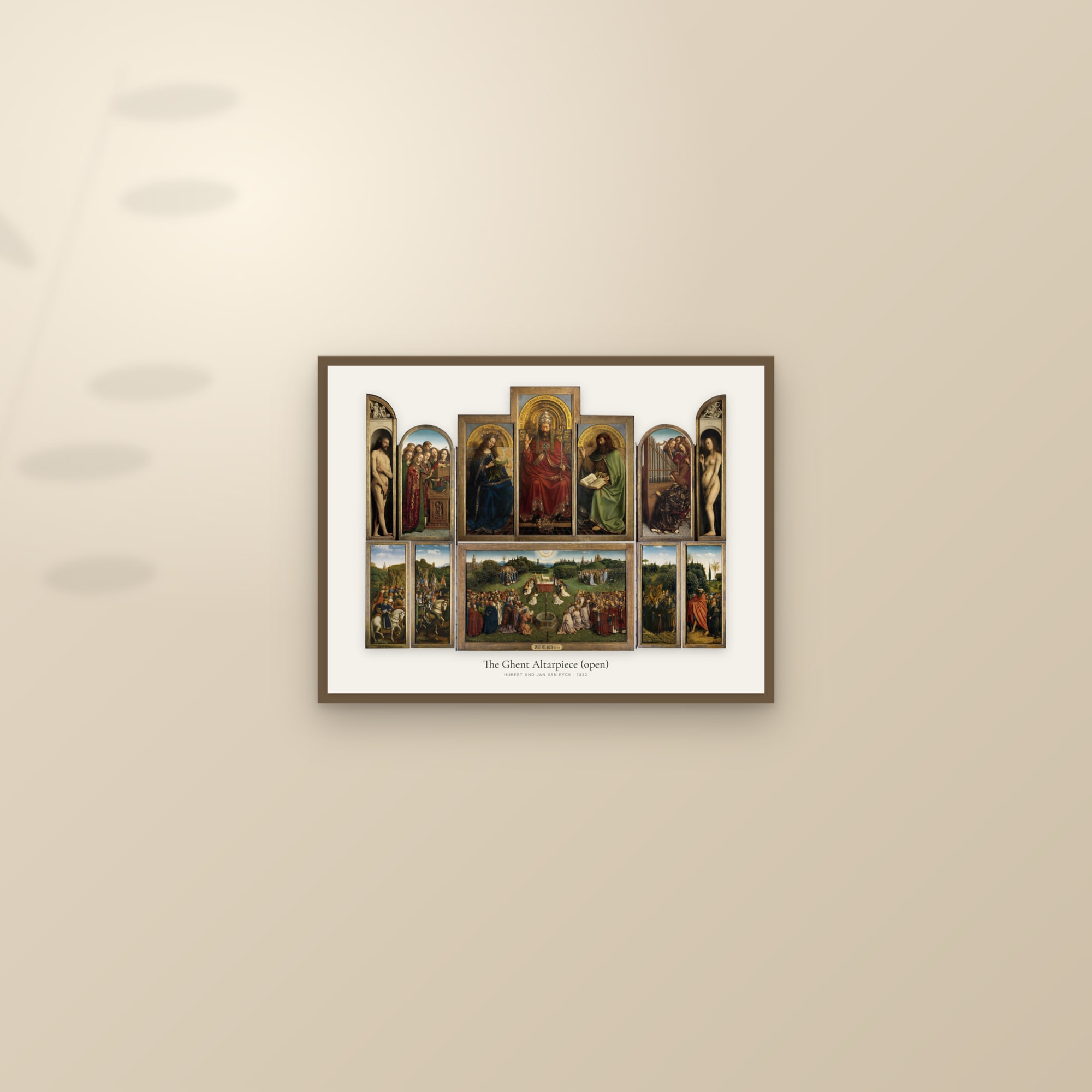
The Lamb of God on the central panel of the Ghent Altarpiece, finished by Hubert and Jan van Eyck in 1432, has been three different animals. The one most people knew, with a wide forehead, large ears and a neutral expression, was a mid-sixteenth-century overpaint. A 1951 restoration removed green overpaint round the head and exposed the original, smaller ears, which gave the Lamb four ears for more than sixty years. Then, in the second phase of the altarpiece's restoration, the Royal Institute for Cultural Heritage in Brussels (KIK-IRPA) removed the rest. Its press release of 19 June 2018 presented the Van Eycks' Lamb: a graphically defined snout and large, frontal eyes that look straight out of the picture. The same release reports that around 45 per cent of the central panel's surface had been overpainted in the sixteenth century, mostly sky, buildings, hills, draperies and the altar cloth, and that only about 3 per cent of the original paint was lost beneath it, which is why removal was possible. It was done centimetre by centimetre with surgical scalpels under a stereo microscope, and the finished lower register was presented on 17 December 2019. Our open altarpiece is from the restored state; at print size the Lamb is small, and the face is a thing to look for rather than a thing the print is about.
Were any paintings made bigger instead of smaller?
Yes. Velázquez's The Spinners, or the Fable of Arachne, painted between 1655 and 1660, was enlarged in the eighteenth century: a wide strip carrying an arch and an oculus was added at the top, with narrower strips on the left, right and bottom. The Prado's entry states that Velázquez painted only the surface occupied by the figures and the tapestry, and that the additions are not visible in the current presentation. We do not print The Spinners, but it is the case to remember when a reproduction looks larger than the painting you saw in Madrid.
What did the attacks on Danaë and the Rokeby Venus leave behind?
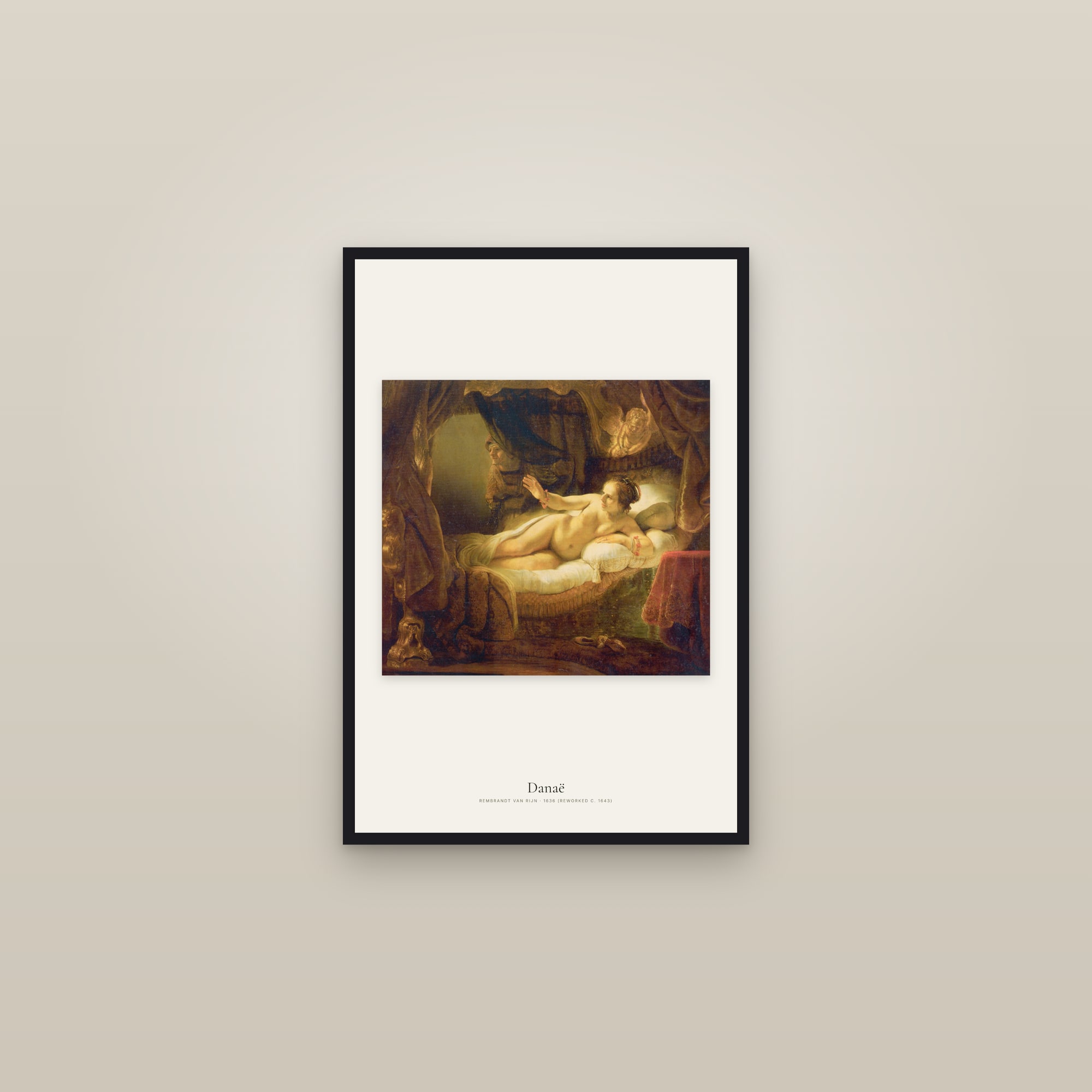
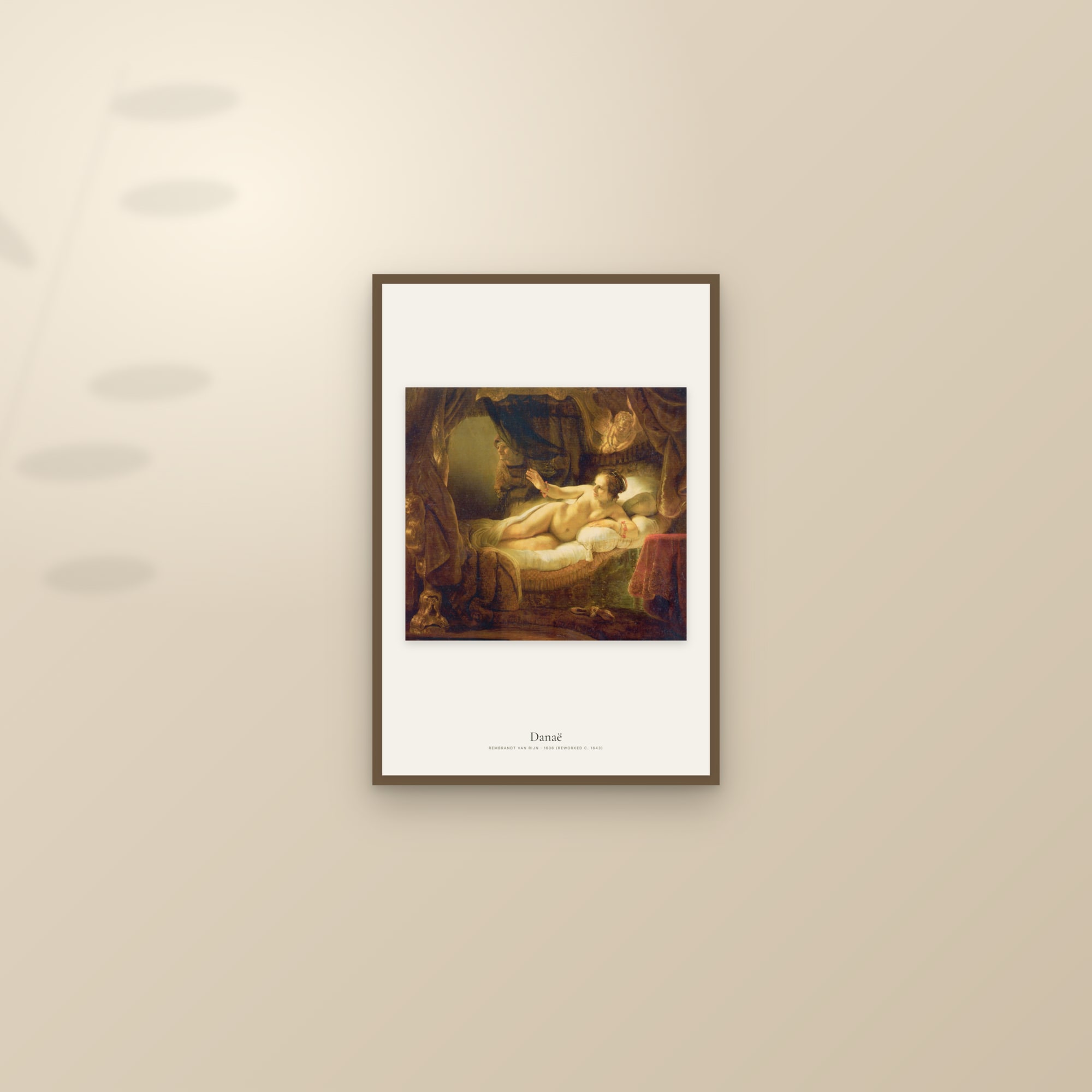
Not every loss is old. On 15 June 1985 a man poured acid over Rembrandt's Danaë of 1636 in the Hermitage and cut it twice with a knife. The Hermitage's own account describes the whole central part of the composition turned into "a mixture of brown raised spots with a mass of splashes, vertical incrustations and areas of lost paint." Restoration began the same day, with the canvas kept vertical and washed with water on the chemists' advice, and ran from 1985 to 1997; the painting returned to view in 1997, the losses filled in oil on a layer of varnish that keeps Rembrandt's paint separate from the retouching. The museum says the losses "did not exceed the percentage where one may speak of the destruction of a work of art," and that paint was applied only to the damaged places that broke the picture's integrity. What you see, and what we print, is Rembrandt's picture with a restorer's hand in its middle.
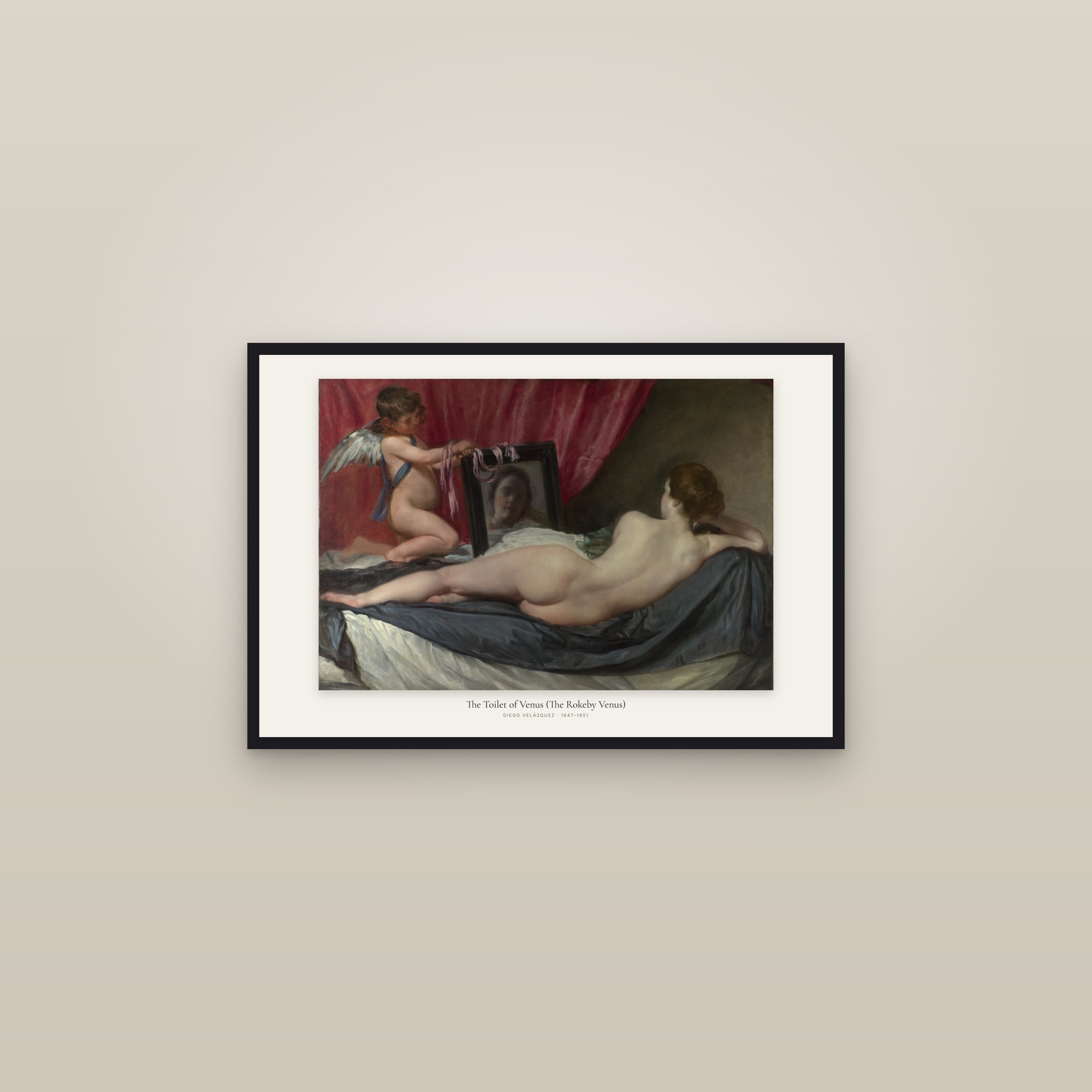
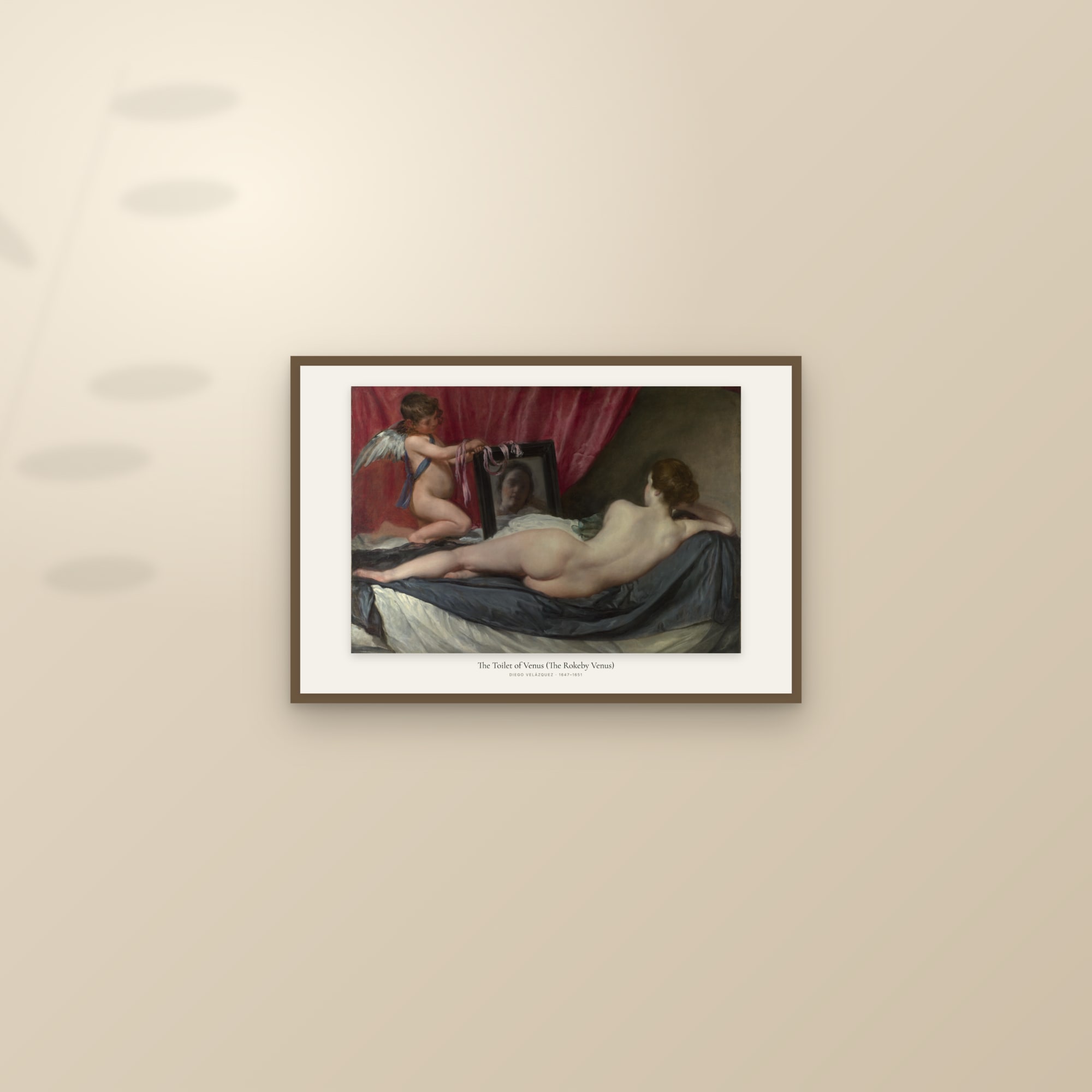
In London, the National Gallery's Toilet of Venus, the Rokeby Venus, was, in the gallery's own words, "cut multiple times by a suffragette in 1914," one of a group of damaged pictures the gallery listed in March 2022 when the artist Ali Cherri made work about them. Both are nudes, and neither belongs in a child's room; they are for a bedroom, a study or a hall.
What lies under Picasso's Blue Period canvases?
Picasso's work is not public domain (he died in 1973), so we do not print it, but his early canvases are the textbook of painting over. The Art Institute of Chicago's The Old Guitarist, painted in Barcelona in late 1903 and early 1904 according to the museum's object record, hides three figures from an older picture beneath the blue, found by infrared examination: a young woman with a child, an older woman and an animal, perhaps a cow or a sheep, according to the museum's own account, which notes that the young woman's face can be seen, like a ghost, beside the guitarist's head. In Toronto, the Art Gallery of Ontario's La Miséreuse accroupie of 1902 has been known since a 1992 X-radiograph to sit on a landscape, perhaps by a Barcelona painter. In 2018 hyperspectral infrared reflectography by the National Gallery of Art in Washington and X-ray fluorescence scanning by the Northwestern University and Art Institute of Chicago centre showed more: Picasso matched the woman's back to the landscape's hills, and he first painted her with a bare right arm, hand raised, holding a circular piece of bread, then covered arm, hand and bread with the cloak. The AGO's press release gives the detail. Canvas was dear.
How was Van Gogh's hidden self-portrait found?
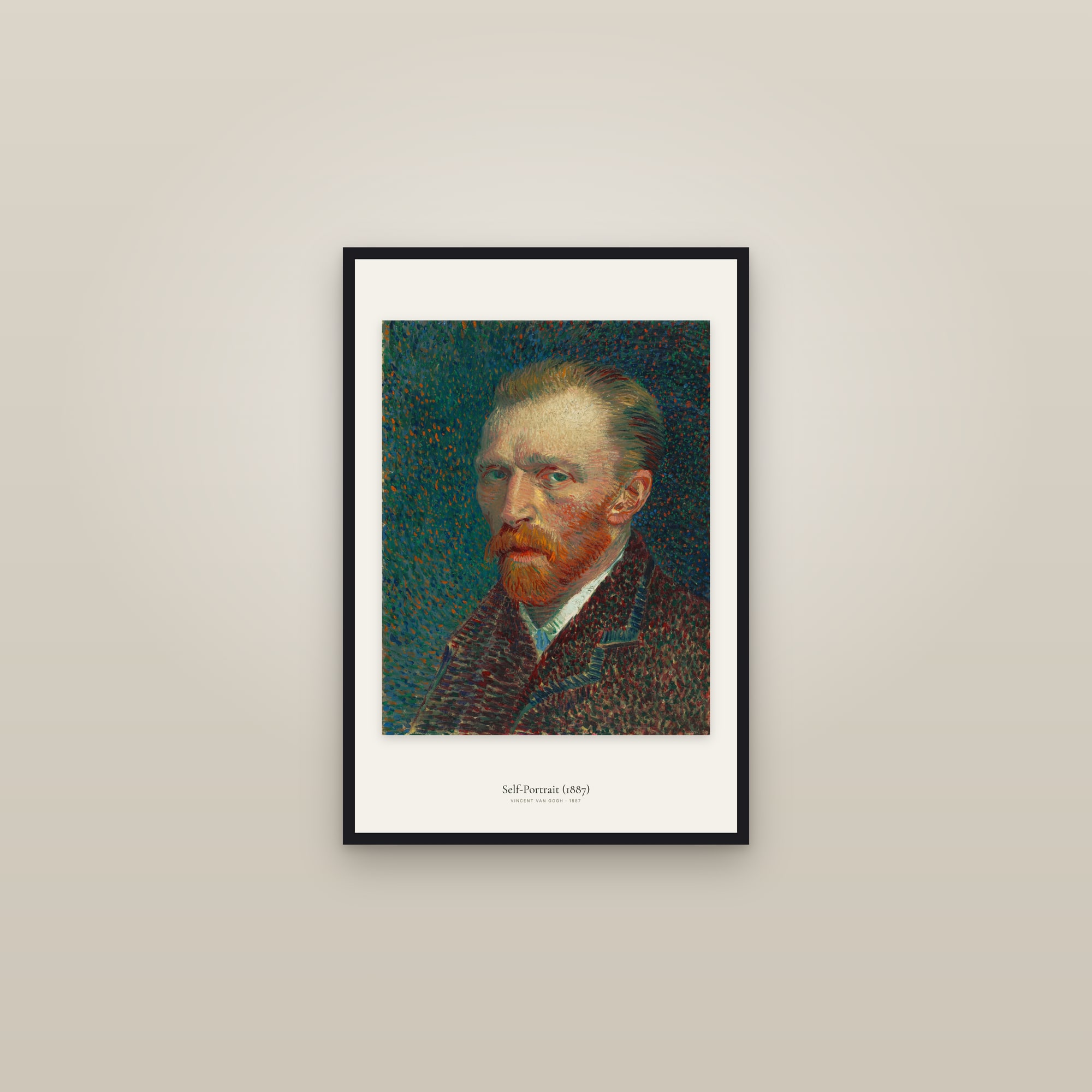
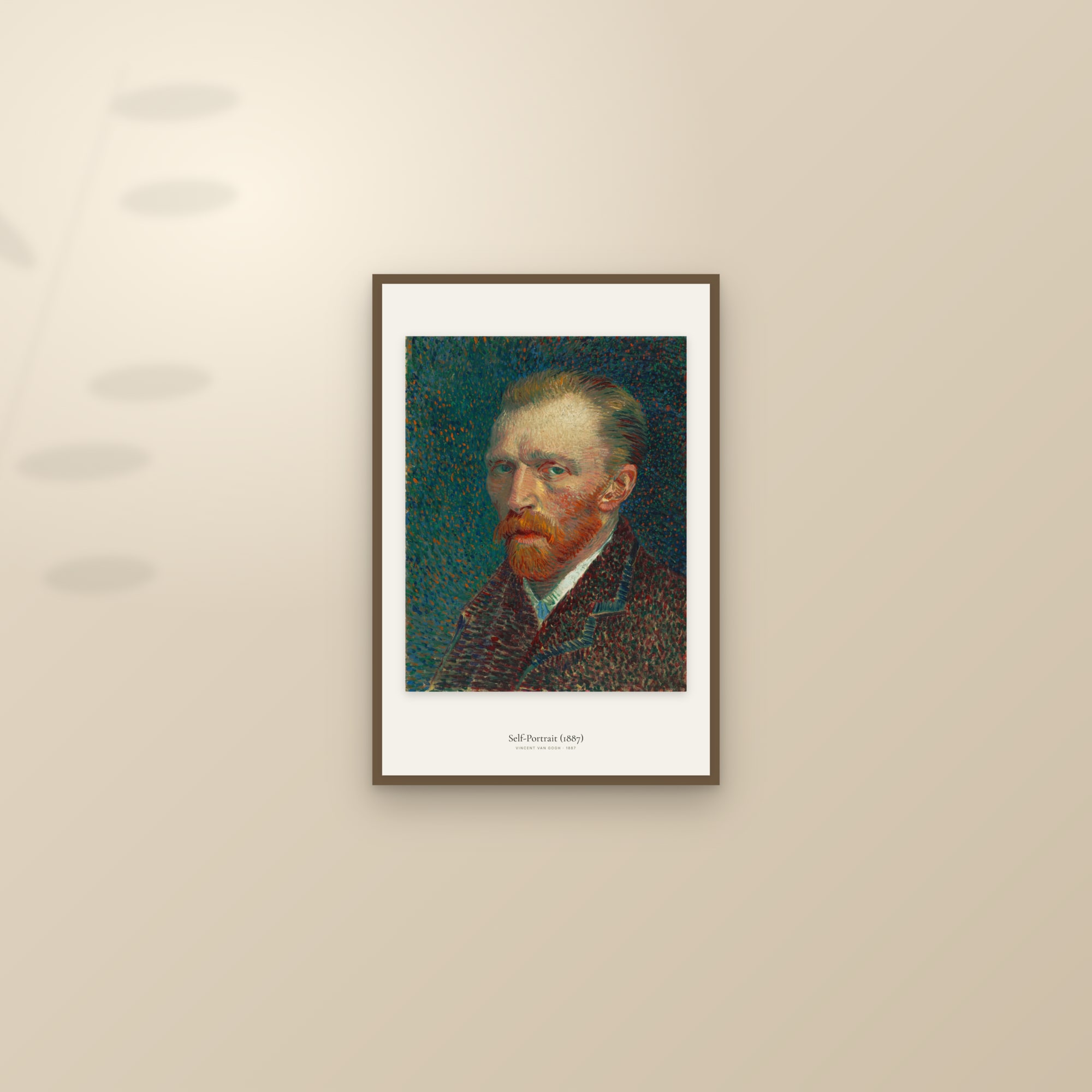
Van Gogh saved money the other way round: he turned the canvas over. On 14 July 2022 the National Galleries of Scotland announced that an X-ray taken while its conservators examined Head of a Peasant Woman of 1885, ahead of the exhibition A Taste for Impressionism, had revealed a bearded man in a brimmed hat with a neckerchief at his throat on the back of the canvas: almost certainly a self-portrait, painted later than the peasant study, in Paris, where he saw the work of the Impressionists. It had been hidden for more than a century under layers of glue and cardboard, which the gallery believes were applied before an exhibition early in the twentieth century. Removing them without harming the painting on the front is a conservation problem still being worked on; in the meantime the X-ray itself was shown in a lightbox. The nearest thing we print is the 1887 self-portrait in Chicago, from the same Paris years.
How do conservators see under a painting?
Four tools do most of the work above, and each answers a different question.
X-radiography passes X-rays through the whole object onto a detector. Lead-based paint blocks them, so anything painted in lead white shows up pale, including a composition that is now covered. It found Vermeer's Cupid in 1979, the landscape under the Picasso in 1992 and the Van Gogh on the back in 2022. It cannot say which layer is on top.
Infrared reflectography uses a camera sensitive beyond red light. Many paints are transparent there and carbon black is not, so the underdrawing, and any earlier picture in carbon, appears through the surface. The figures under The Old Guitarist are an infrared find; hyperspectral imaging is the same idea at many wavelengths at once.
X-ray fluorescence (XRF) scanning reads the elements that fluoresce back from the surface, point by point, so a hidden arm in lead white can be mapped under thick paint. Dresden's 2017 scan and the Northwestern instrument used in Toronto are XRF.
A cross-section is a physical sample, a flake from an edge or an existing loss, set in resin, polished and viewed in a microscope. It shows the layers in order. Dirt or old varnish between two of them means the upper one was applied long after the lower had aged, and no X-ray can show that.
Two older interventions matter as much. Relining glues a new canvas to the back of a weak one. Transfer moves the paint itself to a new support, as the Black Paintings were moved from plaster to canvas; it is the most invasive thing that can be done to a picture, and the Prado's losses show why.
What does this mean when you buy a print?
A print is a photograph of one object on one day. Every painting on this page is reproduced as it survives now, in the state its museum shows: The Night Watch at the 1715 size, Ginevra without her hands, the Great He-Goat as a strip, the Vermeer with the Cupid and the Leonardo with the black. We do not crop a famous painting to fit a ratio, and we do not extend one; the gallery editions contain the whole surviving work on a plain ground. The 2021 Night Watch reconstruction and every "what it originally looked like" image are research pictures, and they are not what we sell.
The consequences are small but worth knowing. A cut-down painting often has an unusual proportion: a square Ginevra or a 1:3 He-Goat suits a different wall from a 2:3 portrait, so the product page gives each work its own size ladder; a black or dark-wood frame suits all of them. A restored painting carries the restorer's hand in the scan, as the Danaë does, and we leave that alone: it is the painting's history, not a flaw in the file. And a painting whose overpaint has just come off is, for the first time in centuries, available as its painter intended. The Dresden Vermeer has only been that picture since 2021. Prices start from $39 unframed.
Further reading in the Journal: a short history of the print explains how a museum scan becomes a giclée, and the most famous paintings in the world ranks the works above among their peers.
Famous Painting Prints Dutch Golden Age Paintings Renaissance PaintingsQuestions people ask
Why was The Night Watch cut down?
In 1715 the painting was moved from the Kloveniersdoelen to Amsterdam's Town Hall, now the Royal Palace on Dam Square, and it had to fit between two doors. Strips were cut from all four sides, the largest, 64.4 cm, from the left. According to the Rijksmuseum, the pieces have never been found; a copy attributed to Gerrit Lundens, painted between about 1642 and 1655, records the full composition.
Did Vermeer paint over the Cupid in Girl Reading a Letter at an Open Window?
No. The Dresden Gemäldegalerie's 2017 to 2021 investigation found that the grey wall covering the Cupid was applied at least several decades after the painting was made and after Vermeer's death. The museum removed it, and the picture-within-a-picture of a standing Cupid trampling masks has been on view since September 2021.
What is under the black background of Lady with an Ermine?
A background modelled with light, according to the National Museum in Kraków, which owns the panel. The flat black was painted over it in the nineteenth century. The museum has not removed it; the portrait is shown, and printed, with the black.
How do conservators see under a painting without touching it?
X-radiography, which passes through the canvas and is blocked by lead-based paint, so an earlier composition in lead white shows up as a ghost; infrared reflectography, which looks through thin paint to carbon underdrawing; and X-ray fluorescence scanning, which maps each chemical element across the surface. A paint cross-section, a sliver the size of a grain of sand viewed in a microscope, shows the layers in the order they were applied.
Does a print of The Night Watch show the missing strips?
No. Our gallery edition reproduces the painting as it exists in the Rijksmuseum today, whole, at the size the 1715 cut left it. The 2021 reconstruction with the missing strips was a research project made with artificial neural networks and a seventeenth-century copy, shown beside the painting for a few months, not a change to the painting.
Do you print Picasso's Blue Period paintings?
No. Picasso died in 1973 and his work is still in copyright, so we do not reproduce it. The paintings here are all public domain, which is why we can print them from museum scans at 300 dots per inch.
Sources
- Rijksmuseum collection record SK-C-5: The Night Watch, 379.5 × 453.5 cm
- Rijksmuseum, press release, For the first time in 300 years The Night Watch is complete again (23 June 2021)
- Rijksmuseum, collection record SK-C-1453, Copy of The Night Watch, attributed to Gerrit Lundens (the 1715 cut and the two doors)
- Amsterdam Museum, Masterpieces from the Amsterdam Museum now on display at the Rijksmuseum (The Anatomy Lesson of Dr Jan Deijman)
- Staatliche Kunstsammlungen Dresden, press release, Revealing Cupid: Restoration of Vermeer's Girl Reading a Letter at an Open Window completed (24 August 2021)
- National Museum in Kraków, Lady with an Ermine (collection entry)
- National Gallery of Art, Washington, 10 Surprising Facts About Leonardo da Vinci's Ginevra de' Benci (25 January 2024)
- National Gallery of Art, Washington, Ginevra de' Benci [obverse], object record 1967.6.1.a (dimensions and provenance)
- Museo Nacional del Prado, Witches' Sabbath, or the Great He-Goat (collection entry)
- Museo Nacional del Prado, La Quinta del Sordo. Philippe Parreno (exhibition page, history of the Black Paintings)
- Museo Nacional del Prado, The Spinners, or the Fable of Arachne (collection entry)
- KIK-IRPA, press release, Presentation of the original Lamb of the Van Eycks on the Ghent Altarpiece (19 June 2018)
- KIK-IRPA, press kit, Restoration and research of the lower register of the open Ghent Altarpiece, phase 2 (17 December 2019)
- State Hermitage Museum, The Return of Rembrandt's Danae to Public Viewing after the Restoration Work (1997)
- National Gallery, London, press release, 2021 Artist in Residence: Ali Cherri (issued March 2022; list of damaged paintings, incl. The Rokeby Venus, 1914)
- Art Gallery of Ontario, press release, Research unlocks hidden secrets beneath AGO Picasso painting (1 June 2018)
- Art Institute of Chicago, The Old Guitarist (object record, late 1903 to early 1904, Barcelona)
- Art Institute of Chicago, A Life Measured Canvas by Canvas (The Old Guitarist, infrared findings)
- National Galleries of Scotland, Hidden Van Gogh self-portrait discovered (14 July 2022)
Start hereA short history of the print, from woodblock to giclée