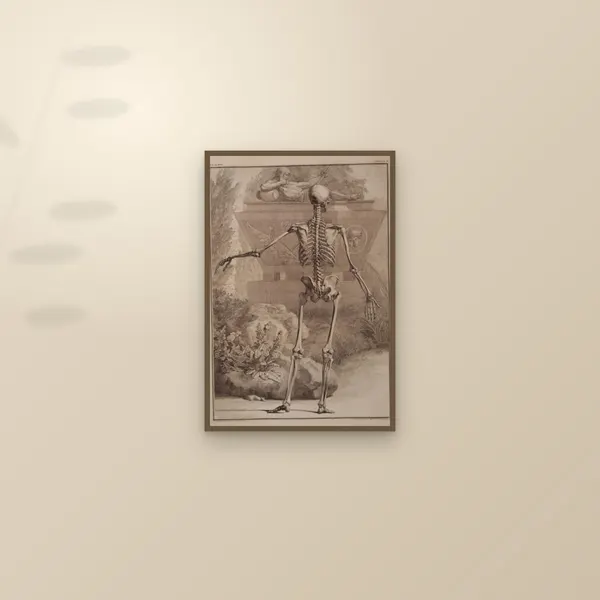
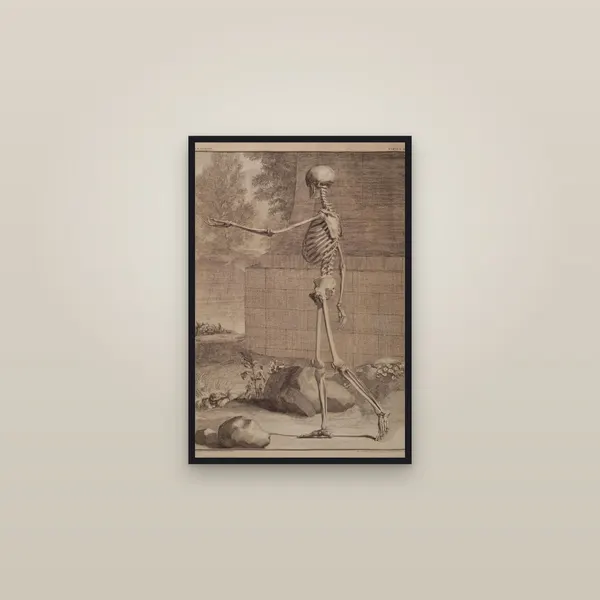
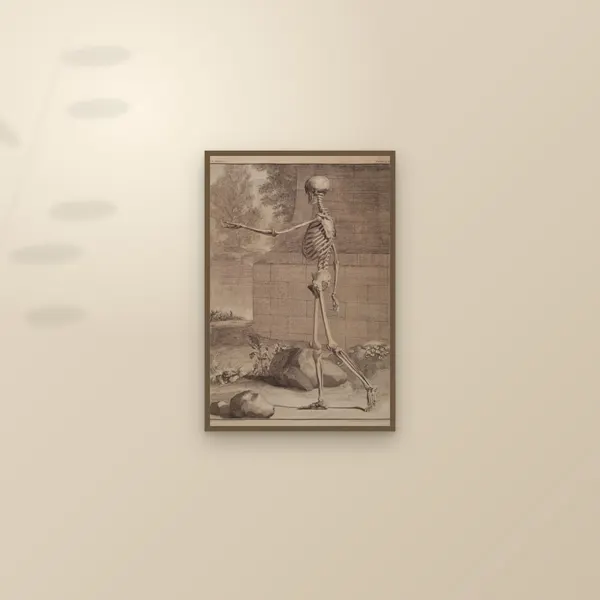
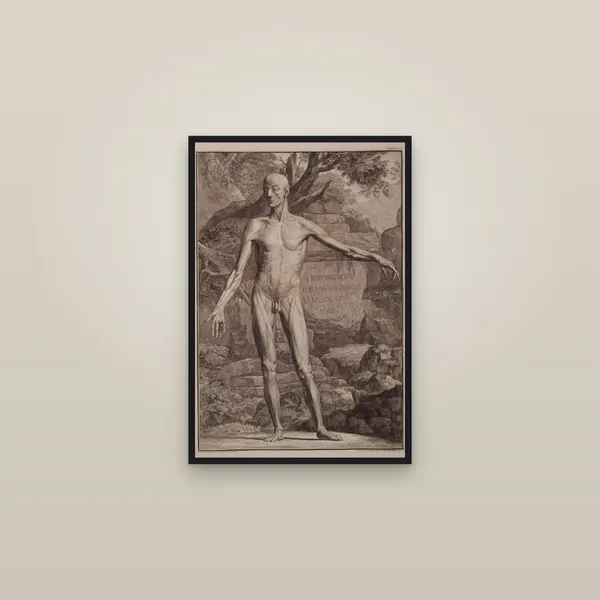
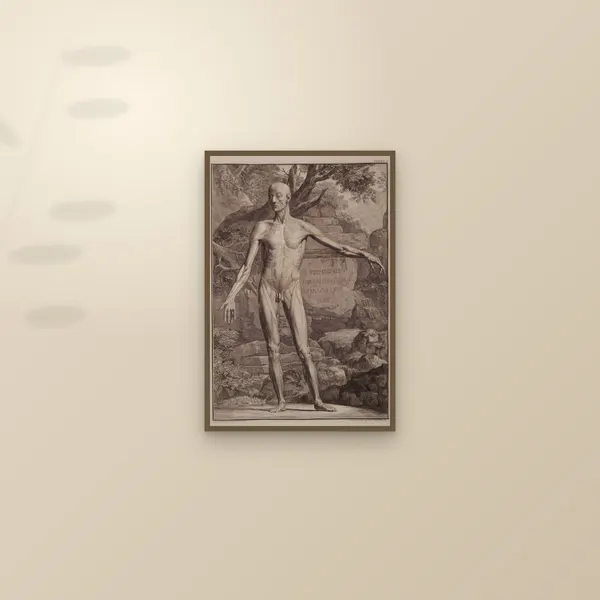
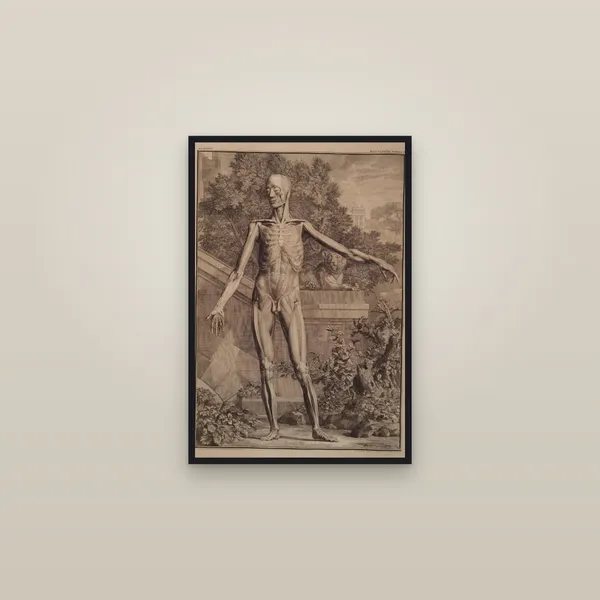
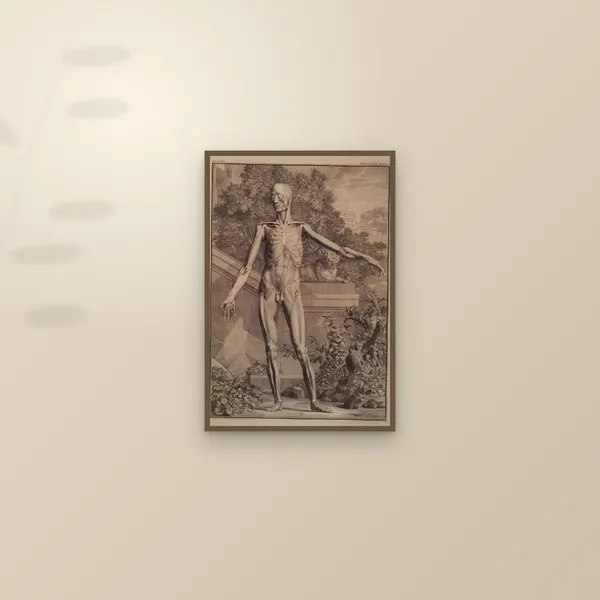
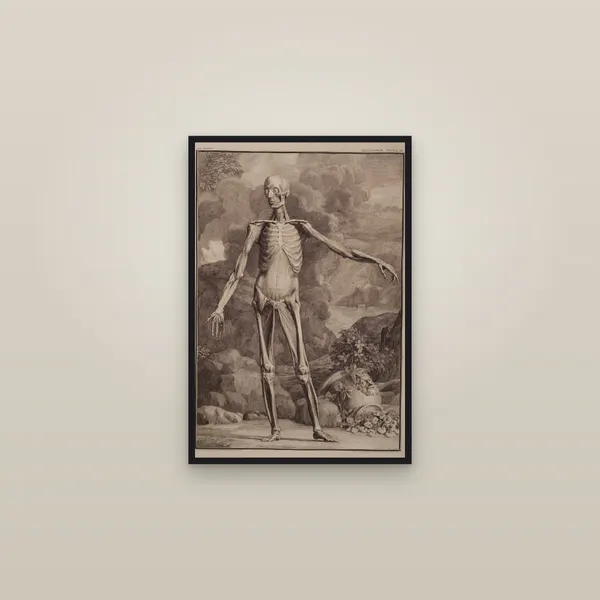
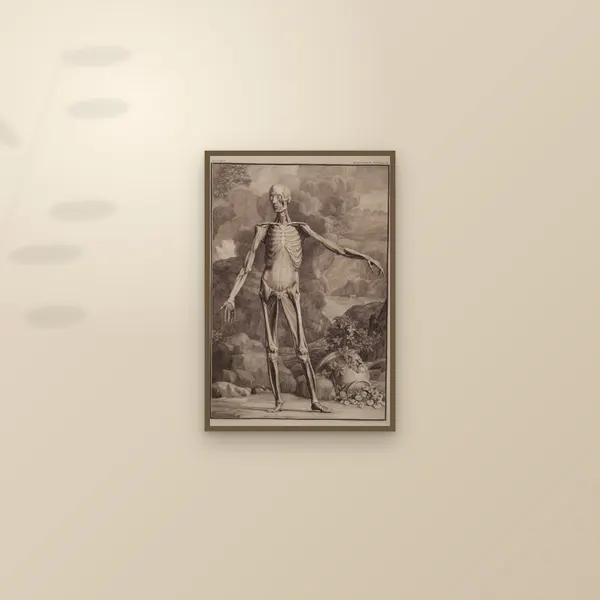
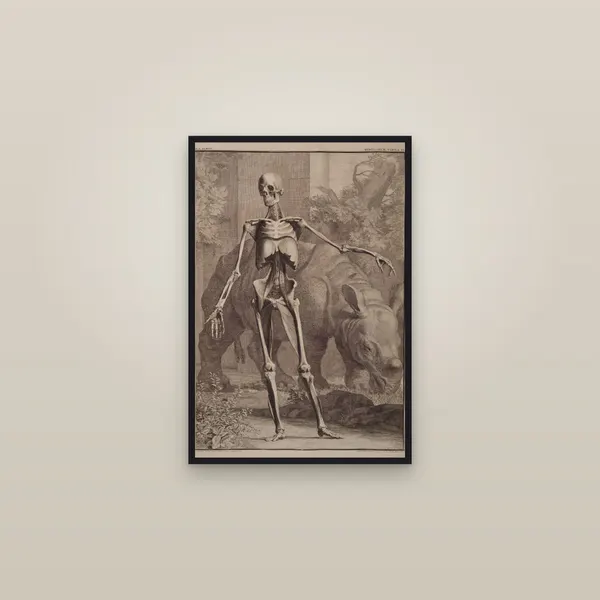
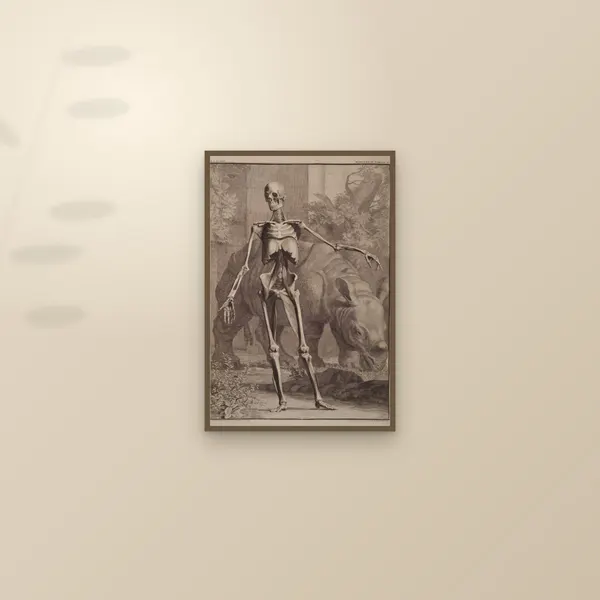
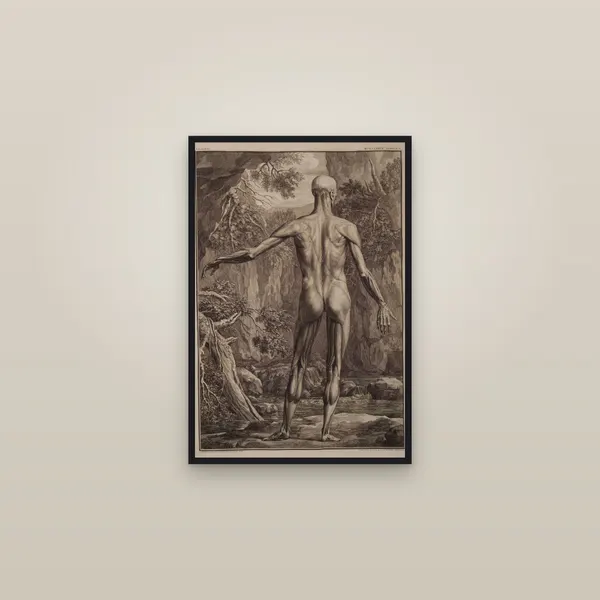
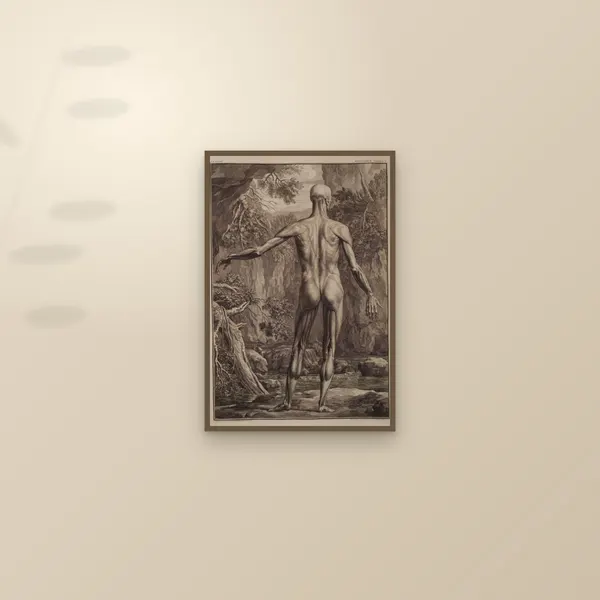
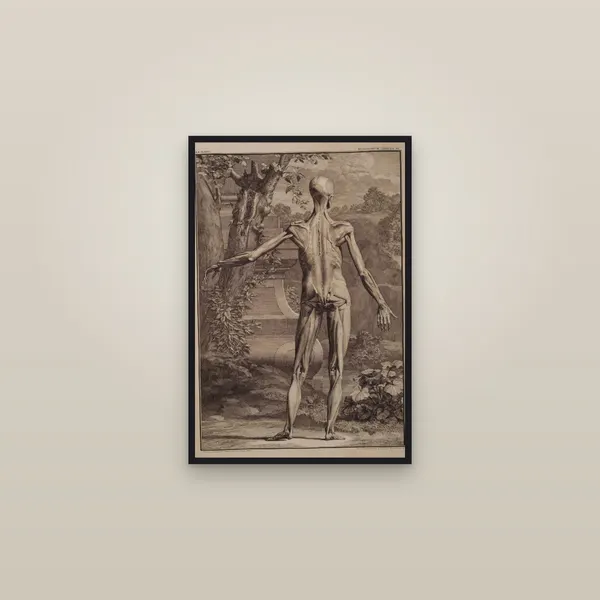
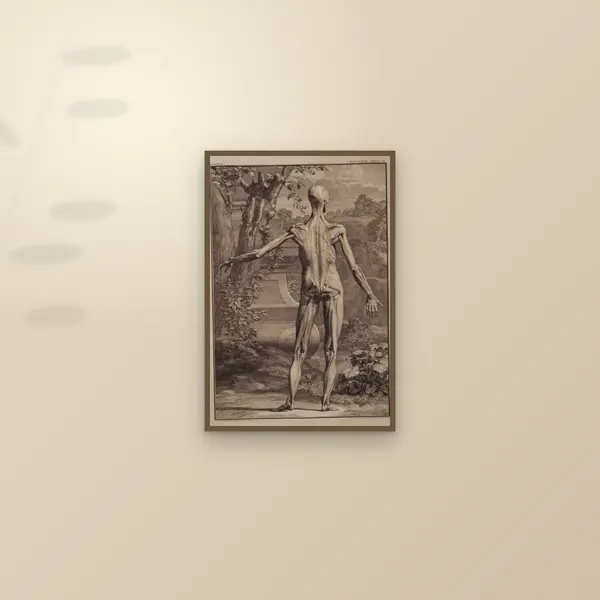
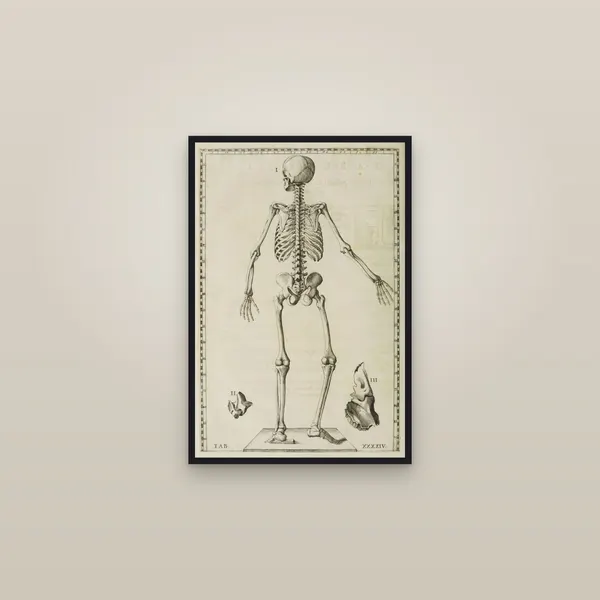
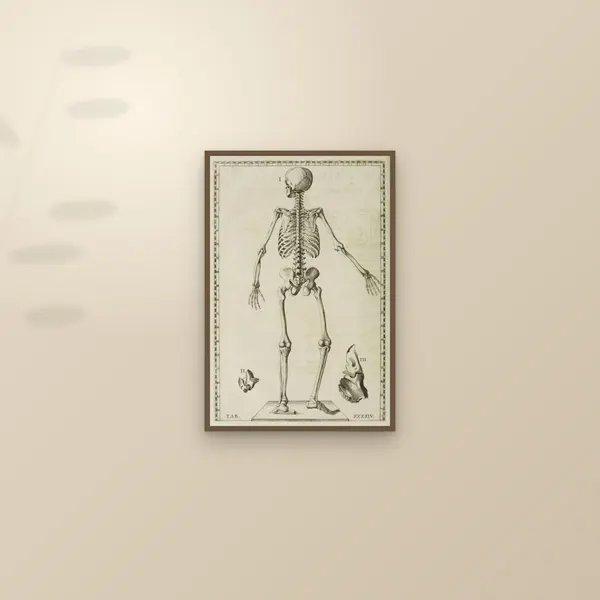
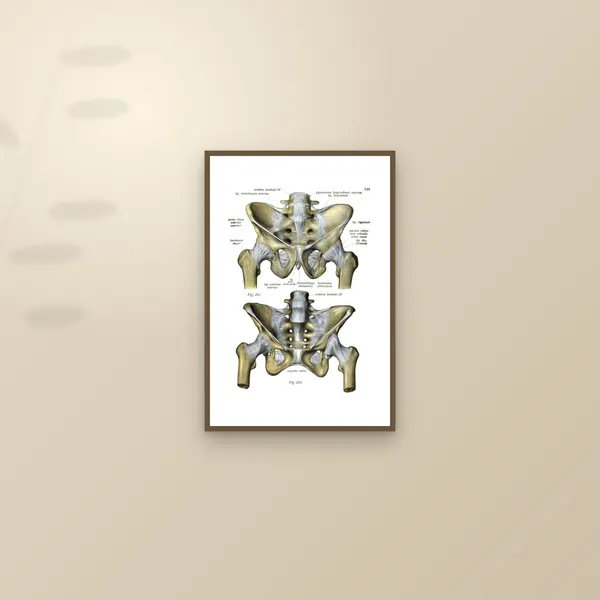
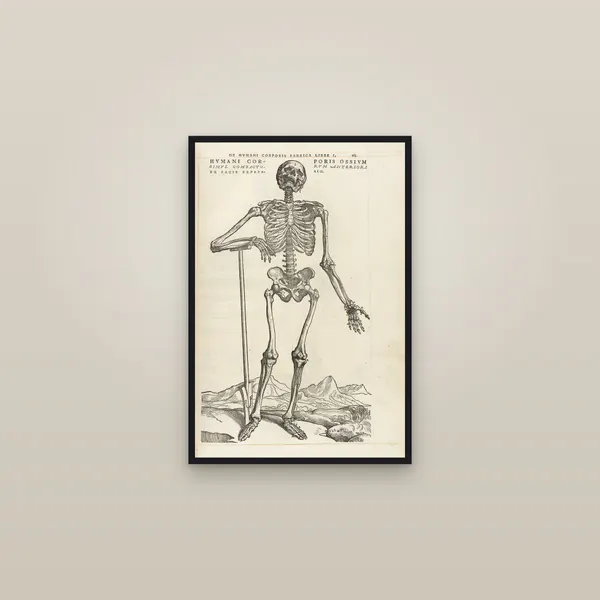
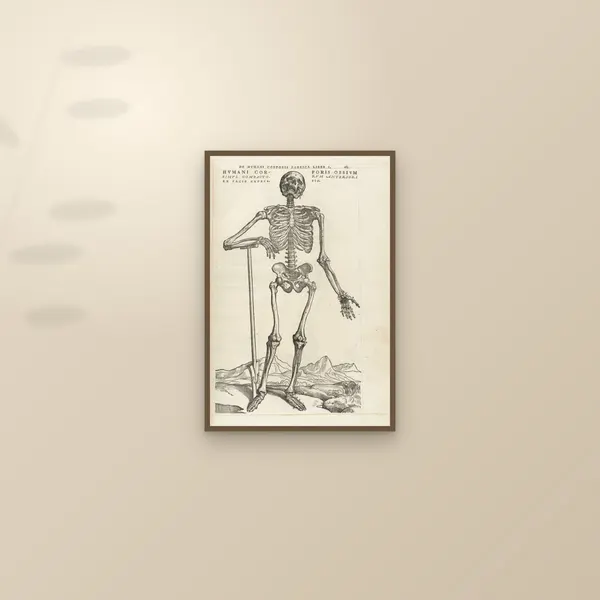
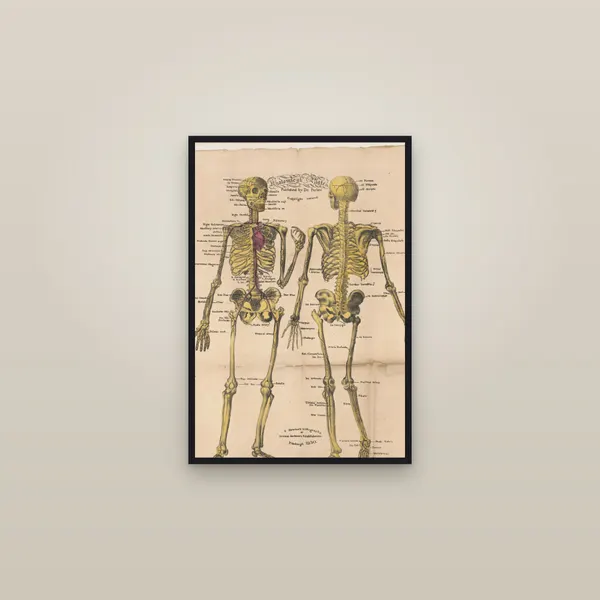
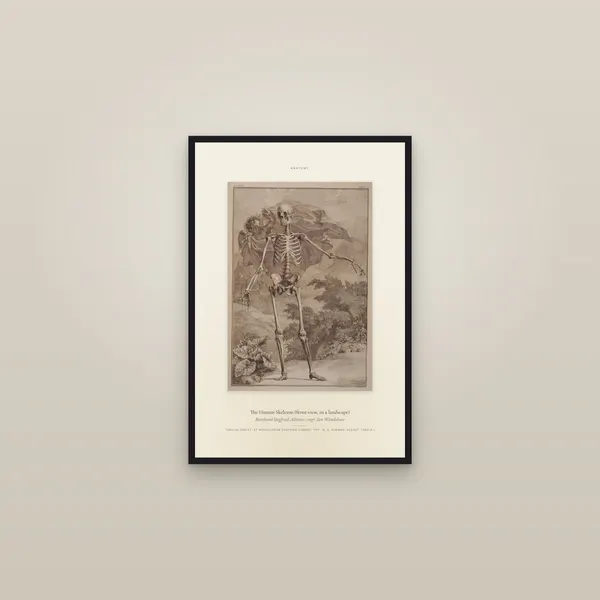
The Human Skeleton (front view, in a landscape)
The Human Skeleton (front view, in a landscape) (Bernhard Siegfried Albinus · engr. Jan Wandelaar) — Tabulae sceleti et musculorum corporis humani, 1747 · B. S. Albinus, Sceleti Tabula I.
The whole plate on a cream ground with a museum-style label.
Museum-quality archival paper: heavyweight, acid-free, resists yellowing
Dark wood frame, no mat. In the US: a premium wood frame (1.8 × 2.6 cm) with real glass, on 300 gsm cotton-rag paper, assembled and ready to hang. Elsewhere: a wood frame 12 mm wide and 22 mm deep, with a plexiglass front, 16 × 24 in overall.
- Printed to order, arrives in 4–9 business days
- Ships to the US, Canada, the UK, Ireland, 28 countries in Europe, Australia, New Zealand, Japan, Singapore and South Korea
- Arrives perfect or we reprint it, free
- Secure checkout with Stripe
- Questions? hello@madten.com
 This print

Sizes and prices
The Human Skeleton (front view, in a landscape) is from Tabulae sceleti et musculorum corporis humani (sceleti Tabula I), by B. S. Albinus (1747). It is sold here as a print made to order from a high-resolution scan of the original plate, restored in-house. It comes borderless or with a museum label (the whole plate, uncropped).
Every version comes in three sizes: 12x18, 16x24 and 24x36 inches.
- 12 × 18 in: $39 unframed, $99 framed, $89 on canvas
- 16 × 24 in: $59 unframed, $129 framed, $119 on canvas
- 24 × 36 in: $79 unframed, $219 framed, $179 on canvas
Paper prints are on museum-quality archival paper (heavyweight, acid-free, resists yellowing). Frames are black or dark wood, with no mat. Canvas comes borderless only: artist canvas, gallery-wrapped on FSC wood, ready to hang. Standard shipping is free and takes 4–9 business days (up to 13 business days to the rest of the EU, up to 10 outside the US, UK and EU, 10–18 business days to Japan, Singapore and South Korea); a print that arrives damaged or flawed is reprinted or refunded.
About this plate
- From
- Tabulae sceleti et musculorum corporis humani
- Plate
- Sceleti Tabula I
- Artist
- B. S. Albinus
- Year
- 1747
- Medium
- Engraving
Where it works
Albinus's 1747 skeleton faces us in a lakeside landscape while a winged putto lifts a billowing cloth behind it, engraved in black line on cream. Hang it in a study with The Human Skeleton (back view, in a landscape) at 24×36 in a black frame.
Size, framing & materials
- Style
- Antique anatomical plate
- Era
- 18th century (1747)
- Orientation
- Portrait
- Palette
- black, cream, sepia
- Mood
- dramatic, classical
- Rooms
- study or library, home office, classroom
- Good gift for
- scientists, men, him, doctors & nurses
Size. We'd hang this one at 24×36. Prints at 12×18, 16×24, 24×36 in — 12×18 for a shelf, desk or a gallery-wall grid; 16×24 above a desk, console or in a hallway; 24×36 as the statement piece above a sofa or bed. See it to scale on your wall →
Framing. A slim black or dark wood frame with no mat (black sharpens an engraving, dark wood warms a colour plate), hung at eye level so the plate can be read.
Pairing. Hangs alone or as a matched pair; three or more prints are 10% off.
- Restored in-house from the original public-domain plate, cleaned and colour-trued at museum resolution
- Museum-quality archival paper: heavyweight, acid-free, resists yellowing
- Framed option: black or dark wood, no mat. In the US: a premium wood frame (1.8 × 2.6 cm) with real glass, on 300 gsm cotton-rag paper, assembled and ready to hang. Elsewhere: a wood frame 12 mm wide and 22 mm deep, with a plexiglass front; its outside measures the listed size.
- Made to order; colours may vary slightly from screen
Shipping & returns
Which versions are there?
Which plate is this, and where is it from?
When was it made, and how?
Is The Human Skeleton (front view, in a landscape) in the public domain?
Is this the whole plate, or a crop?
What is it printed on?
What size works above a sofa or bed?
About this plate: historical anatomy plates by body part, with the source of each
In the Journal: Copper engraving: what it was and how it worked · A short history of the print, from woodblock to giclée · How a fine-art print is made: from a 1714 plate to your wall